Wine 968
Discovering the Perfect Wine for Your Astrological Sign: Expert Opinions from Astrologers
Your best sip is written in the stars.
Our personalities and many of our individual features are a mix of nature and nurture, and we evolve a lot as we grow. However, we’re born with certain innate features, including our hair and eye color, our unique fingerprint, and our birthdate. That last factor determines our astrological sign and zodiac sign, which some swear can help steer our dispositions and preferences.
“Your astrological blueprint, or birth chart, absolutely colors your likes and dislikes,” says Maressa Brown, a Los Angeles, California-based astrologer and the author of Raising Baby by the Stars: A New Parent’s Guide to Astrology. “Even if you’re not familiar with your whole birth chart, knowing your sun sign is enough to get a read on the what flavors and aromas you might gravitate toward.”
Commonly known as a “zodiac sign,” this indicator is in fact your sun sign, or the position of the sun at your birth. This corresponds to your self-perception and essential identity, which are fundamental aspects that determine your food and drink preferences, according to Brown.
“Doctors in ancient times often gained astrological knowledge concurrently with their medical education, and used individuals’ birth charts to guide dietary recommendations. The intersection of astrology, nutrition, and the human body boasts a lengthy and complex history”, articulates Alice Smith, an astrologer at Alice Smith Astrology based in Seattle, Washington.
Your preferences for smells and tastes also influence your enjoyment of different beverages. Following our instruction on the next meal you should prepare relative to your zodiac sign, we sought advice from Smith and Brown for selecting the most suitable wine based on your zodiac sign.
As the air sign whose modern ruler is Uranus, the planet of change, those who fall under Aquarius are innovative and future-minded, according to Brown. They often skew from the obvious and enjoy flavors that are dry yet complex and that evolve over time. Aquarius veer towards exotic scents and tastes that might be “eyebrow-raising to others”. Many orange wines check all of those boxes.
The best wine for Aquarius: Stolpman Vineyards Love You Bunches Orange ($28, Wine.com)
Ruled by Neptune, the planet of spirituality and dreams, Pisces are highly imaginative, empathic, and sensitive. Whimsical, romantic flavors and aromas are appealing, along the lines of white flowers, vanilla, pastry, and lavender, according to Brown. For this reason, a sparkling, energetic-yet-elegant rosé is a great fit.
The best wine for Pisces: Billecart Salmon Brut Rosé Champagne ($80, Drizly)
Related: 5 Common Mistakes Almost Everyone Makes When Serving Champagne
No need to be subtle with fiery members of the Aries family. They’re bold, warm, and unapologetically vivacious—and prefer flavors that speak to those qualities. Aries often prefer in-your-face wines, like a Cab, Brown says. And they’ll probably also enjoy getting into heated debates with friends and family about tasting notes or which vineyard creates the best version, she adds.
The best wine for Aries: Grounded by Josh Phelps Cabernet Sauvignon ($18, Grounded Wine Co.)
This earth sign is ruled by Venus, the planet of pleasure, so those who are born under the Taurus sign are often down-to-earth. At the same time, they’re all about quality—in terms of the beauty they surround themselves with, the depth of their relationships, and the amount of pleasure they like to subtly sneak into their lives. Taurus tend to prefer rich, smooth, and velvety sensations. In fact, Smith believes that Taurus individuals practically invented “quiet luxury;” they want the good stuff that’s truly a pleasure to imbibe—not just for show. An under-appreciated grape like Viognier is a perfect match, as it presents a lovely perfume-like scent that’s rich in citrus, rose, and stone fruit notes. (Think of it like Chardonnay’s quiet yet beautiful sibling.)
The best wine for Taurus: Illahe Viognier ($23, Illahe Vineyards)
As the air sign ruled by Mercury, the planet of communication and information-gathering, Brown says that Geminis are buzzy, social, cerebral, active, and curious. Smith and Brown agree that the best wine for Geminis is something that’s light, fresh, and ideal to accompany a long, lovely conversation. A low-ABV option that’s fruity, fun, lively, and a little bit bubbly, like a Vinho Verde, is a brilliant pick.
The best wine for Gemini: Vera Vinho Verde Branco ($16, Wine.com)
Since Cancers are ruled by the moon, they’re often family-oriented, foodies who adore sharing a table—along with many traditions and memories—with others. They know how to select a wonderful wine to sip on its own and also pair with a wide variety of foods. Sentimental and heartfelt, Cancers may enjoy something with a hint of sweetness, like a Riesling featuring honey or lychee aromas, Brown says. Bonus points for anything that’s from a winery with a long history, Smith adds (as a hat tip to that Cancers yen for nostalgia.
The best wine for Cancer: Brooks Willamette Valley Riesling ($24, Brooks Wine)
Related: 11 Romantic Food and Wine Dinner Menu Pairings for Date Nights at Home
As a bold fire sign, Leos are known for their charm and generosity of spirit, confidence, optimism, and fun-loving nature. Since they adore spring and summer, Leos love flavors and experiences that remind them of those warm, sunny months. Citrusy, bright, and zippy Sauvignon Blancs—preferably poured and enjoyed alongside friends—are a winning choice.
The best wine for Leo: Hall Napa Valley Sauvignon Blanc ($29, Drizly)
Due to the fact that Virgos are an earth sign ruled by Mercury, the information-gathering planet, they’re frequently detail-oriented, analytical, and sensitive. They love analyzing the subtleties of wine, including the many layers of flavor and aroma in complex wines like Txakoli (aka Txakolina). Virgos will delight in noticing and savoring the dried herb and saline notes tucked underneath the stronger citrus and green apple flavors (the exact features others might overlook). And since Virgos gravitate towards balanced flavors, they’ll adore the way that nearly all Txakolis fall in the middle of the dry to sweet range.
The best wine for Virgo:
Ameztoi Getariako Txakolina ($27,
As the air sign ruled by Venus, the planet of relationships and beauty, Libras love popping open a bottle to share with a dear friend or partner. Balance reigns supreme for Libras, too; their social nature means that they seek out foods and drinks that are all about harmony, approachability, and lightness. Since it’s crafted to be enjoyed now (rather than cellared for later), is a stunning salmon hue, and pairs well with a wide array of foods, a medium-bodied French rosé is among the best wines for Libras.
The best wine for Libra:
Amici Olema Côtes de Provence Rosé ($15,
Related: 7 Recipes Starring Rosé Wine That Think Outside the Bottle
Scorpios are the water sign co-ruled by Pluto, the planet of transformation, and Mars, the planet of action and energy. As such, they want a drink as dark, complex, and mysterious—just like them. Scorpios crave an intense experience, like the one they’ll find when sipping a savory, spicy Syrah. (It falls on the bold end of the red wine spectrum.)
The best wine for Scorpio: Bouchaine Las Madres Vineyard Syrah ($65, Bouchaine)
As the most adventurous fire sign, Sagittarius treasure the opportunity to transport to other lands and learn more about cultures via their recipes and regional-favorite drinks. They also adore diversity. That’s just what’s on offer in most Spanish Grenache wines, which range from stone and citrus fruit to licorice and spices.
The best wine for Sagittarius: Breca Garnacha ($14, Total Wine)
As the earth sign ruled by Saturn, the “taskmaster” planet, according to Brown, Capricorns love the classics. Just like vintage clothing and furniture feel like solid investments, Capricorns appreciate celebrating high-quality, classic grapes like often-overlooked Cabernet Franc. As one of the “parents” of hybrid Cabernet Sauvignon (alongside Sauvignon Blanc), Cabernet Franc is a traditional sommelier favorite that’s medium-bodied, beautifully aromatic, and packs just enough structure to hold up well to aging for 10 to 15 years.
The best wine for Capricorn: Hester Creek Old Vine Cabernet Franc ($20, Hester Creek)
For more Better Homes & Gardens news, make sure to sign up for our newsletter!
Read the original article on Better Homes & Gardens.
“Total Wine Challenges FTC Subpoena in US Court Citing Alarming Implications”
REUTERS/Benoit Tessier
Nov 15 (Reuters) – National wine and spirits retailer Total Wine & More has asked a U.S. judge to deny a request for corporate records from the Federal Trade Commission, which is investigating the practices of one of the company’s wholesalers.
Attorneys for Retail Services & Systems, which does business as Total Wine, said in a
on Tuesday in Alexandria, Virginia, federal court that
was “overbroad and unnecessary.”
Maryland-based Total Wine said it is not a target of the FTC’s investigation into Southern Glazer’s, the country’s largest alcohol wholesaler. It said it has already produced thousands of records to the FTC for its inquiry into whether Southern Glazer’s has discriminated in its pricing practices. Total Wine operates in 28 states.
The FTC’s probe of Southern Glazer’s, which began in 2022, has attracted attention from law firms and others closely tracking the agency’s enforcement efforts.
The FTC has dusted off a decades-old law, the Robinson-Patman Act, to look at whether Florida-based Southern Glazer’s is discriminating against smaller or independent retailers in how the company prices its goods.
Southern Glazer’s on Wednesday did not immediately respond to a request for comment. The company has not been accused of any wrongdoing.
Total Wine said in a statement last month that it “made substantial efforts to cooperate with the FTC’s investigation and respond in good faith to most of its data and document requests.”
An FTC spokesperson declined to comment. The agency has said Total Wine’s failure to fully respond to the FTC’s subpoena has “impeded and delayed the FTC’s investigation.”
Total Wine’s attorneys at Gibson, Dunn & Crutcher told the court that it has produced purchase-related transaction data to the FTC and called the scope of the FTC’s information demand “truly alarming.” Total Wine has opposed sharing information that includes email communication, business strategies and assessments of competitors.
The company’s Tuesday filing said “no business expects to be excused from the responsibility to produce reasonably relevant documents,” but they do not expect to be treated “like the enemy simply because they happen to be a successful business or the customer of a target.”
A hearing is scheduled for Dec. 11 before U.S. District Judge Anthony Trenga.
The case is Federal Trade Commission v. Retail Services & Systems d/b/a Total Wine & More, U.S. District Court, Eastern District of Virginia, No. 1:23-mc-00028.
For FTC: Patricia McDermott of the FTC
For Total Wine: Michael Dziuban and Stephen Weissman of Gibson, Dunn & Crutcher
Read more:
FTC sues retailer Total Wine for records in industry pricing probe
Jumpstart your morning with top legal news delivered straight to your inbox from The Daily Docket.
Our Standards: The Thomson Reuters Trust Principles.
The Essential Factors to Consider When Purchasing Wine: Expert Advice
‘The World in a Wineglass’ by ‘Food & Wine’s Ray Isle is out now
People / Fred Hardy
Walking through a wine shop can feel intimidating, especially when you don’t know where to start.
In his book The World in a Wineglass, out now, Ray Isle, the executive wine editor at Food & Wine, invites readers to look past the things people say about wine and instead interrogate characteristics like where the wine comes from and the people who make it. (Food & Wine is PEOPLE’s sister publication under Dotdash Meredith.)
“The book is about really paying attention to what matters: where a wine comes from, who made it, and why they made it the way they made it,” Isle tells PEOPLE.
Marc Fiorito
Rather than focusing on subjective information like tasting notes or the Wine Spectator 100-point scale, which assigns bottles a score based on blind tastings of the wine, Isle suggests understanding more about where the wine originates – its climate, its soil, its history – as well as learning about how it’s produced.
“The power of point scores for wines has started to diminish,” he writes in the book. “Chalk it up to a savvier wine audience, the influence of social media, wine score grade inflation, you name it. There are a number of reasons, but among them is a greater interest in questions like how a wine was made or how the grapes for it were grown.”
“Today, most sommeliers and restaurant wine buyers don’t pay the slightest attention to scores,” he adds.
Throughout his book, Isle explores concepts in sustainability like biodynamic and natural wine making and regenerative agriculture.
“What I am hoping to do here is celebrate a specific realm of wines: ones whose grapes are grown with care and with concern for the environment; ones that express the character of the place they are from and the sensibility of the person who made them; ones that, if you let them, offer rewards beyond simple flavor,” Isle writes. “These are wines that can answer three simple questions: Where does it come from? Who made it? How did they grow their grapes, and how did they make their wine? If a wine can answer those questions, and the answers feel good to you, then it’s time to find a corkscrew, get a glass, and drink it.”
Scribner
The World in a Wineglass features chapters on dozens of wine regions across the world, from Bordeaux to Portugal, Lebanon, the west coast of the United States and more.
Focusing on affordable and accessible wines, rather than expensive collector items, in each chapter, Isle introduces the reader to a number of vintners throughout the region and helps shape the understanding of the wines they create. Isle only recommends wines from owners he’s talked to personally, or from wineries he’s visited (or both).
The bottles mentioned are labeled with a price indicator, and most are under $100.
“The truth is that you can live an absolutely wonderful life of drinking wine without ever buying a bottle that’s over $100,” he writes.
The World in a Wine Glass is available now.
For more People news, make sure to sign up for our newsletter!
Read the original article on People.
Uncovering Affordable Luxury: Top 5 American Thanksgiving Wines Under $20
Wines recommended this week for Thanksgiving. (Photo by Ken Ross)
When it comes to eating and drinking, few American holidays come close to Thanksgiving.
Perhaps picnics on the Fourth of July?
Maybe Christmas or New Year’s Eve?
Sorry, but Thanksgiving is the Super Bowl of holiday feasts.
That’s probably why I’ve often been asked the same question many times over the years.
What wines go best with Thanksgiving dinner?
It’s a great question.
If you’re going to all this effort to make an elaborate feast, it makes sense that you want to have great wine with your meal.
It’s also probably the reason why you can find numerous articles this time of year about which wines are the “best” Thanksgiving wines.
It’s interesting to read these articles. Because right away, one thing becomes perfectly clear.
No one seems to agree on which wines are perfect for Thanksgiving.
Some recommend pinot noir.
Others recommend chardonnay or anything but chardonnay, including sauvignon blanc, cabernet franc or melot.
There’s even a school of thought that you should serve low-alcohol wines, sparkling wines or rose wine.
Starting to get the picture?
There’s no “perfect” wine for Thanksgiving.
Practically any wine goes great with this massive, multi-course meal.
So most years that I have written this weekly wine column for the past 11 years, I have done my best to try to offer a few Thanksgiving wine suggestions.
In the past, I have written about different wines ideal for Thanksgiving dinner, including a wide range of red, white and sparkling wines, including wines for leftovers.
Another year, I wrote about 5 classic Thanksgiving white wines and 5 classic Thanksgiving red wines.
I’ve even written about which Thanksgiving wines you might like based on your favorite Thanksgiving movie. (Like “Planes, Trains and Automobiles”? Try an Australian Shiraz since “you clearly have a great sense of humor and love oddball comedies.”)
This year, I decided to take a slightly different approach.
This year’s Thanksgiving wine column features five American wines for under $20 a bottle. The wines include one sparkling wine, two whites and two reds. The whites feature a chardonnay (the most popular white wine grape in the country) and another white wine. The reds feature a cabernet sauvignon (the most popular red wine grape in America) and another red wine.
I also included a slightly more expensive bonus wine for dessert as well.
Hope you enjoy.
SPARKLING WINE
Mumm Napa Brut Prestige ($19.99 at Table & Vine in West Springfield)
California winery founded by Champagne house of G. H. Mumm in the 1970s, this crisp, refreshing, dry sparkling wine has a beautiful, clean finish with hints of citrus and vanilla. If you love really dry wines, get this beautiful “brut” for your Thanksgiving feast.
CHARDONNAY
2021 Sonoma-Cutrer Sonoma Coast Chardonnay ($19.99 at Table & Vine)
I know many people unfairly either love or hate chardonnay. Hopefully, this delicious wine from California’s Sonoma County will change a few minds. Flavors here include hints of straw, roasted almonds, honeydew melon and green apple, which all go great with turkey.
ANOTHER WHITE WINE
2021 Justin Sauvignon Blanc ($18.99 at Table & Vine)
One of my favorite California wineries, Justin’s sauvignon blanc has a wonderful blend of soft, understated flavors, including hints of ripe green apple mixed with a slight, subtle tartness and a dash of sea salt. A great lighter wine for a traditionally heavy meal.
CABERNET SAUVIGNON
2021 Duckhorn Vineyards Decoy Cabernet Sauvignon ($17.99 at Table & Vine) or 2021 Bread & Butter Cabernet Sauvignon ($16 Suggested Retail Price)
I’m recommending two California cabernet sauvignon since everyone has different tastes. The Decoy is on the drier side and was featured a few weeks ago in my article about cabernet sauvignon wines from around the world. The second wine’s perfect for people with a sweet tooth – dashes of cherry, milk chocolate and, no kidding, bubblegum.
ANOTHER RED WINE
2019 Duckhorn Decoy Merlot ($17.99 at Table & Vine)
Tasting Notes – I don’t normally recommend two wines from the same winery in these roundups, but this outstanding wine deserves the spotlight. Here, the flavors are soft, subtle, and muted and include hints of plums and blackberries. Let me add this wine still tastes great several days after first opening the bottle – perfect for Thanksgiving leftovers.
BONUS WINE – DESSERT WINE
2014 Dutcher Crossing Dry Creek Valley Port ($35 SRP 375 ML Bottle)
Portugal might be best known for port. However, wineries in many other places make this distinct dessert wine, including this one from California. This black licorice-like port made with zinfandel grapes has a slightly spicy and nutty finish that’s perfect for sipping and lingering around the dining room table after a rich, hearty holiday feast.
Cheers!
Wine Press by
Ken Ross
appears on
Masslive.com
every Monday and in The Republican’s Weekend section every Thursday.
If you purchase a product or register for an account through a link on our site, we may receive compensation. By using this site, you consent to our
User Agreement and agree that your clicks, interactions, and personal information may be collected, recorded, and/or stored by us and social media and other third-party partners in accordance with our
Unveiling the Secrets of French Wine: A Guide for Beginners
French wine is often deemed the best in the world. This widely held opinion has developed, in part, due to France’s unique geology and geography as Meninger’s International recorded wine writer Andrew Jefford explaining: “It is the only major wine-producing nation on earth which covers both propitious cool-climate, high-latitude zones and warmer-climate, mid-latitude zones […] There is no land mass which has the positional advantages of France.”
For centuries, French vintners have taken advantage of their country’s unique characteristics to produce an array of world class reds, whites, rosés, and sparkling wines. These wines have bewitched generations of oenophiles but, to the average consumer, French wine often appears more intimidating than enticing. Due to its reputation, French wine is perceived as being incredibly sophisticated and many people fear that a failure to understand or enjoy it reflects their own lack of refinement.
While many people fret about French wine, it, just like any other wine, is made to be enjoyed. With that in mind, and with the use of wine experts and expert sources, we have put together a beginner’s guide to this, the most prestigious of wine country. This article won’t make you an expert, but it will give you the information you need to sit back, relax, and simply enjoy the wine in front of you.
Read more: The Ultimate Vodka Brands, Ranked
France is renowned as the ultimate standard in the global wine landscape, primarily due to the worldwide dissemination of its grape varieties. French grape species such as syrah, cabernet sauvignon, and malbec have found their way across continents from North America to Australia where they are widely cultivated for wine production. This fact, however, has not deterred these wines from displaying vast differences from their French counterparts despite being produced from identical grape varieties.
The ubiquitous presence of French grape varieties across global vineyards can be traced back to colonial times. European colonists attempted to reproduce their beloved wines in the continents they invaded and settled in, including North America, by introducing European vines. This aspiration to reproduce French wine did not dim but instead has flourished over centuries. Figures like Thomas Jefferson particularly championed this objective. As a result of these early efforts, a good number of French grape varieties have gone on to form the cornerstone of New World wine production.
The successful adaptation of malbec, one of the French grape varieties, especially in foreign terrains serves as an excellent example. This variety was introduced in Argentina in 1868 and has thrived, thanks to the arid, sunny conditions and the beneficial effects of high altitude. Given these optimal conditions, it is not surprising that Argentina now hosts 70% of all global malbec plantations.
In contrast to practices in the United States and several other wine-producing countries, French wine labels do not usually feature the grape variety. Instead, they primarily state the location of wine production. French winemakers maintain this approach on the premise that the region of wine production significantly impacts the final characteristics of the wine, more so than the grape variety.
The concept of terroir, or the environmental conditions in which grapes are cultivated, varies greatly across France and even within a single region of wine production. Notably, the terroir for one Burgundy wine producer might vary greatly from a producer located just few miles away. Furthermore, unique wine production methods adopted by different French villages markedly affect the final product. By naming wines based on their geographical origin rather than the grape variety, connoisseurs with sufficient knowledge can take these differences into consideration when choosing a wine.
The practice of using place names rather than grape varieties, while well embraced by those knowledgeable in French wine regions, can be frustrating and daunting for the majority of consumers. These individuals usually do not have the means to predict the taste of the wine without first uncorking the bottle.
The French wine industry’s emphasis on terroir has led to the creation of different classifications of wine, which are denoted by specific terms on each bottle. AOC, or Appellation d’Origine Contrôlée, is perhaps the most crucial of these terms. Wines labelled AOC must comply with a stringent set of regulations specific to their production area, covering aspects from harvesting time to the grape varieties that can be used.
There are also sub-classifications under the AOC label, which reveal the region, sub-region, and sometimes even the specific village the wine originates from. Wines made from exceptional vineyards often bear the ‘premier cru’ designation, whilst the ‘grand cru’ label indicates that the grapes were sourced from the top vineyards within the appellation.
Wines that fail to meet the criteria for AOC classification can opt for the Indication Géographique Protégée or IGP status. These wines are still made under stringent rules governing the grape sourcing and wine production process. However, they typically allow for more grape varieties and have a broader geographical production area. This provides wineries with more room for creativity.
Vin de France is the lowest classification for wines in France. This classification guarantees only that the wine originated from France. Often, such wines are made from grapes harvested from various parts of the country and therefore, lack a unique sense of terroir.
Bordeaux, being France’s most renowned wine-producing region, enjoys the reputation of being one of the world’s leading wine production areas. Bordeaux is particularly famous for its red wines, which are blended from up to six grape varieties, including cabernet sauvignon, merlot, and cabernet franc. These blended red wines account for approximately 90% of the region’s total production. Even though they originate from the same region, the red wines from Bordeaux exhibit variation, as demonstrated by the region’s 57 appellations and 61 grand cru classes.
The Gironde estuary divides the Bordeaux region in half. The wines produced on the left bank generally comprise a higher proportion of cabernet sauvignon, yielding a potent, highly tannic profile. Conversely, the wines from the right bank incorporate a larger percentage of merlot, making the wine more appropriate for immediate consumption. Médoc, located on the left bank, and Saint-Emilion, situated on the right bank, are two of the most prestigious sub-regions.
Bordeaux’s wine industry is primarily known for its red wines, but the region also produces wonderful white wines. Sauternes stands out as a well-regarded white dessert wine from Bordeaux, made unique by a fungus named Botrytis cinerea. This fungus, often referred to as noble rot, causes the grapes to dehydrate, leading to more concentrated flavors and sugars. The outcome is a dessert wine with a sweet yet tangy profile, offering hints of apricot and honey.
In contrast to Bordeaux, the principal wine from Burgundy is white, mostly made from the Chardonnay grape. White Burgundy, derived from the sub-regions – with Côte de Beaune being the most prestigious one – exhibits rich and complex flavors, owing to an aging process in oak barrels.
Even though white wine dominates Burgundy’s production, the most coveted wines of the region are red, made entirely from Pinot Noir grapes. These red Burgundies, or simply, Burgundy, have won the hearts of wine lovers worldwide for their striking expression of terroir.
The variation of the soil composition across Burgundy plays a significant role in showcasing terroir. For instance, the high clay content at Pommard leads to a robust Burgundy, which differs dramatically from a Burgundy from Pouilly-Fuissé, known for its limestone-rich soil. Along with a vivid display of terroir, Burgundy wines also impress with their aromatic bouquet, light color, and pronounced acidity.
While Bordeaux is dominated by large wineries, the vast majority of wine produced in Burgundy comes from small plots due to inheritance laws that were passed in the 1800s. This, when combined with the difficulty in producing these wines, often results in Burgundy being prohibitively expensive.
France’s wine industry is built upon centuries of tradition, but this does not mean that the industry is stagnant or resistant to change. In fact, French winemakers were at the forefront of the biggest wine trend of recent times, natural wine.
Natural wine is a subgroup of the industry that uses minimal intervention throughout growing, harvesting, and processing as explained to Club Oenologique by sommelier Charles Carron Brown: “Natural wine is a form of viticulture and winemaking where there is minimal manipulation, both in the vineyard and within the winemaking practices. It’s more of a concept than a rigidly defined term.”
While natural wine was the de facto offering before the mechanization of farming, these traditional processes were brought back to the fore by a group of French vintners in Beaujolais during the 1960s. Slowly, excitement around these wines began to grow. They tasted remarkably different to the wines of the time, packed with expression and energy. Before too long, natural wine began to trend with vintners across the world adopting old-fashioned practices. Those who had remained dedicated to them all along were quickly catapulted towards the top of the proverbial pyramid. The global natural wine trend shows no sign of abating, especially as consumers grow in their appreciation of products that are made in socially and environmentally sustainable ways.
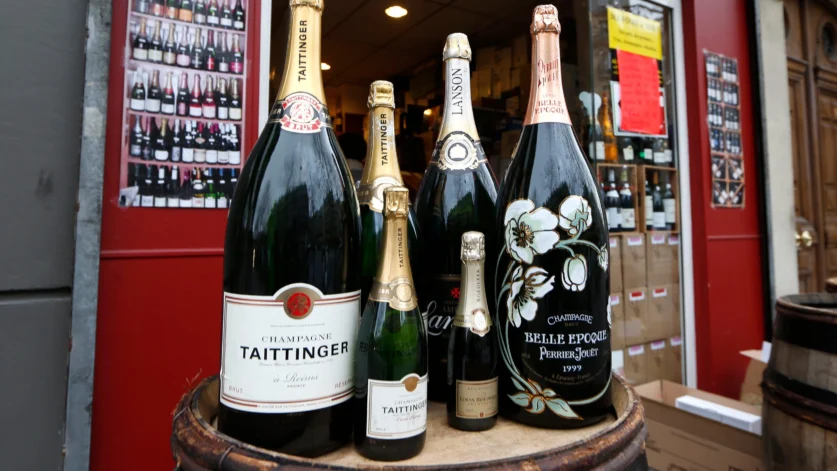
Champagne is the one wine that even those disinterested in the industry have heard of. This is thanks to the beverage’s long and illustrious history. Since the 5th century, it has been associated with French royalty. In the centuries since, its connections with luxury only grew as was highlighted to Harper’s Bazaar by the director of the United Kingdom’s Champagne Bureau Francoise Peretti: “Its reputation continued to spread throughout the 19th century – a time of prosperity and celebration when no high-society event was complete without it. Wherever people partied, they partied with champagne.”
To be called Champagne, the wine must be produced in Champagne, a region just east of Paris. The wine is usually made from three different grape varieties: chardonnay, Pinot Noir, and Pinot Meunier. While initially fermented separately, the wines from these grapes are mixed together along with some reserved wines to create a blend. This blended wine is then placed inside bottles alongside a mixture of yeast, yeast nutrients, and sugar, which causes the wine to undergo secondary fermentation.
The only time reserve wine is not used in the production of Champagne is when a vintage wine is being produced. This Champagne is composed solely of wine produced in a single year. Single-vintage Champagne is generally deemed more prestigious than blended Champagne and is subsequently more expensive.
As a wine region, Beaujolais was previously known for its production of Beaujolais nouveau, a bright wine that was designed to be drunk only a few weeks after the grapes were harvested. Unfortunately, the success of these wines led to a catastrophic drop in quality as Anne McHale, a master of wine, explained to the BBC: “It was a huge success based on marketing. But it declined in the 1990s when too many producers jumped on the bandwagon and the quality declined, getting weaker and more acidic.”
In the subsequent years, wine producers have rejuvenated the region by creating intricately detailed wines that retain the vibrant, lighthearted nature that first brought them recognition. Just like before, most of these wines are crafted from the gamay grape.
A lot of connoisseurs argue that the superior Beaujolais wines originate from the region’s ten crus. Among the most notable is Brouilly, a cru known for manufacturing fruity, robust wines that pair perfectly with the classic, hearty meals typically served in French brasseries. With the introduction of inventive vintners in this cru and others, Beaujolais is frequently acclaimed as the most thrilling wine region throughout France. Moreover, many of these vintners still carry forward the custom of natural wine, a trend that was initiated here in the 1960s.
Muscadet is a regularly underestimated white wine made in the western extremities of the Loire Valley. This wine is made uniquely from melon de Bourgogne, a grape that is not distinctive for any particular features other than high acidity and a tolerance for cool climates. When cultivated in the Loire Valley, nevertheless, melon de Bourgogne evolves into the ideal medium for expressing local terroir. The outcome is a wine that is extremely acidic, driven by mineral, and utterly devoid of fruitiness. These traits make Muscadet the ultimate white wine for pairing with seafood.
From a production viewpoint, muscadet is aged on lees, signifying that the wine is matured while still mixed with dead yeast particles. Over time, this yeast decomposes, adding complexity to the wine. In spite of this process, and the persistent efforts of vintners, muscadet is still seen as a basic, affordable wine.
One strategy producers have used to combat negative perceptions is proposing the establishment of nine crus in the region. While several have already been approved, not all are ready to abandon Muscadet’s unfavorable image. Winemaker Thierry Martin emphasized this point in his discussion with Meninger’s International. He states the current problem is that people’s familiarity with Muscadet isn’t positive. Even vintners tend to distance the crus from Muscadet thinking it’s hard to position our wines among the elites.
Melon de Bourgogne isn’t the only underutilized French grape. Several varieties are rarely used, for instance, the Mauzac grape from Languedoc. Despite having a captivating green apple flavor, Mauzac is nearly exclusively employed in the production of blanquette de Limoux, France’s original bubbly wine.
Some French grape varieties lack a traditional product to assure their persistence. Thanks to committed conservationists, like the 800-member strong Plaimont Cooperative, these varieties haven’t entirely faded away. They’ve rescued numerous neglected grapes including tardif and manseng noir. Nowadays, these grapes contribute to wine production. Manseng noir is even proposed as a potential alternative for the climate-sensitive tannat grape.
Regional grape varieties and the wines they produce are frequently underestimated. Négrette, for instance, originates from the Toulouse vicinity but is generally shunned nationwide. It’s unfortunate, as it yields red wines rich in character. Young négrette is eerily similar to Beaujolais. Additionally, the négrette grape can be used to craft wines that age well, displaying immense intensity.
Rosés from Provençe have become one of France’s most popular wines in the 21st century. High demand has led to increased production and value. For example, in 2009, a hectoliter of Provençe rosé cost around €134, but by 2020, this price had doubled. Much of this price increase is due to the luxury image of rosé, bolstered by celebrity endorsements, closely associating it with idyllic summers in the south of France.
The warm, sunny climate of Provençe is ideal for producing rosé that dreams are made of. While the characteristics differ across the different sub-regions, generally, the hot, dry weather conditions create a beautifully pale wine with the aroma of berries. Rather than being overly sweet, these rosés are delightfully crisp with an inherent minerality, making them incredibly refreshing.
Provençal rosé’s inherent attributes make it highly versatile and hence, marketable. This fact was highlighted by Philippe Schaus, CEO of Moët Hennessy, to Wine Spectator: “Provence is increasingly becoming to rosé wines what Champagne is to sparkling wines. These wines have found their place not only in the apéritif consumption moment, but also in fine dining and high energy bars and clubs.”
French winemakers’ products are heavily influenced by the weather, and climate change is progressively modifying weather conditions throughout the year. This new climate has led many producers to witness firsthand the changes in their wines. For winemakers lucky enough to have vineyards in Bordeaux, current climate changes are proving beneficial. Hot summers and cool, moist winters are resulting in fuller tasting wines. However, like all vintners, those in Bordeaux encounter risks due to climate change as explained by climate scientist Andrew Wood to National Geographic: “France is being hit with wildfires, which affects other Mediterranean wine regions like California and Australia, and smoke is really bad for wine. You can actually taste the smoke in grapes.”
French vineyards are increasingly grappling with water scarcity and the changing behaviour of vines which now yield smaller, sweeter, and stronger grapes during warmer summers. While certain wine producers are trying numerous methods to address these issues, a few have chosen to invest in alternate grape species that are better adjusted to these evolving conditions. However, these novel varieties often violate strict regulations set by various appellations.
There is no denying the fact that certain grapes and wines may not survive the ongoing climate crisis. Many regard the French Merlot as the grape that will first succumb. But, as some give up, others will flourish. Ultimately, it is up to the winemakers to optimise the available choices.
The Languedoc, or Languedoc-Roussillon as it is officially known, is the largest wine-producing region in France. The quantities are immense; it is estimated that Languedoc’s annual wine production stands at 1.36 billion litres. Interestingly, this is more wine than what Australia produces in a year.
The huge production results in a wide variety of wines. For a layperson, this could be quite overwhelming. To simplify understanding of the region, the wines of Languedoc can be conveniently divided into two categories: Appellation Contrôlée wines and IGP Pays d’Oc.
Languedoc’s Appellation Contrôlée wines in France are crafted under rigorous guidelines which regulate the location of the vineyards, the selection of grape varieties, and the taste of the wines. However, many connoisseurs are particularly interested in Languedoc’s IGP Pays d’Oc. This variety allows the use of 58 different grape varieties and offers a vast geographical cultivation area. Bruno Le Breton, a winemaker, shared with Decanter, the freedom and flexibility this grant provides to producers. A significant amount of IGP Pays d’Oc is also produced using organic and low-intervention methods, contributing to a dynamic and innovative wine industry in the region. The passion for this wine variety is palpable when you savour Languedoc’s IGP Pays d’Oc wine.
Despite red wine often being associated with France, the nation’s consumption of this variety has dipped considerably over recent years. In 1995, around 8 million hectolitres of red wine was sold in the country, a figure that halved by 2020.
This decline in red wine consumption could be attributed to the growing trend towards sobriety, and an increased preference for rosé wines. Winemaker Thomas Montagne expressed to The Guardian that, despite the ‘French paradox’ of the 1990s where red wine was touted as beneficial to health, contemporary tastes, especially amongst younger generations, are shifting towards rosé wines for their easy-drinking quality, lower tannin content, and festive association.
This fall in demand is affecting wineries across the country. The French government has even started an uproot program that pays farmers €6,000 per hectare of vineyard they rip up in an effort to decrease the country’s production totals. These grants are being accepted by vintners across the country including hundreds of those working in France’s most prestigious wine regions like Bordeaux.
In the interim, huge amounts of excess wine is being destroyed to maintain the product’s value. The French government has committed €200 million to the project, supplemented by €160 million from the European Union. Alcohol from the destroyed wine is being sold for use in products like hand sanitizer; an ignominious end for some of the world’s finest wine.
Read the original article on Daily Meal.
Expert Tips: Making Delicious Sangria with Affordable Wine
You may have come across recipes where they insist on using the best quality wine merely for a teaspoon. While it might seem like those recipe creators are just channeling their love for top-quality ingredients, the reality might not necessarily agree, especially for something like sangria where wine is a main component. Take the example of Ramon Manglano, the wine director at a Michelin-starred restaurant, The Musket Room, located in Manhattan’s trendy NoLita neighborhood. Manglano advocates that there is no need to use expensive booze for your sangria.
Manglano’s advice on choosing a wine for sangria proved that one can go for a cheaper bottle. He further explained that adding mix-ins to the wine, one considerably alters the taste of the wine. In contrast to a recipe requiring just a teaspoon of wine where the rest could potentially be enjoyed separately, for sangria, you’re more likely to use the entire bottle, with no leftovers for solo enjoyment.
For more such insights, read: Popular Vodka Brands Ranked From Worst To Best
So it’s settled. A sangria should use a cost-friendly wine. So, yes, both Aldi’s Winking Owl and Trader Joe’s Two-Buck Chuck are potential picks. If planning for classic red sangria, consider merlot or pinot noir. Steer clear of cab sav or shiraz as they may be too high in tannins and might not taste their best when cold. If looking for something non-traditional, consider grenache or malbec.
For white sangria, the ever-popular pinot grigio would work quite well, as would the blanc sisters, chenin and sauvignon. A tart and fruity riesling would pair well with summery fruits such as strawberries, while a light-bodied rose could be used to add some pretty pink color. For an extra-festive take on sangria, you can give it a little bit of the bubbly (bonus points if you know which famous wrestler’s catchphrase this is) by using sparkling wine. You may choose to opt for a brut or Spanish Cava if you prefer a less sugary drink or plan to add additional sweeteners to the mix, but if you like things super-sweet, you could pick a less dry prosecco or spumante.
Read the original article on Mashed.
Unwrapping the Holidays: Top 8 Sustainable Wine Bottle Gifts for 2023
During the holiday season, although it is a period of fun and merriment, the amount of waste produced increases significantly. This includes everything from gift wrappings to the shipment of goods. However, it is not necessary for all packages to contribute to environmental degradation. As a case in point, consider these eight wines wrapped in sustainable, reusable, or environmentally friendly packages.
These wine bottles provide an eco-friendly option for gifting this season, featuring recyclable sleeves and responsibly sourced labels. Here are eight examples of sustainably packaged wines.
Ruinart’s second skin is an environmentally conscious cover that elegantly packages Ruinart’s signature champagne bottle. Its purpose is to keep the Ruinart bubbles intact until they are ready to be released. The 100% natural wood-fiber recyclable casing replaced traditional individual Champagne gift boxes in 2020, symbolizing the Maison’s commitment to the environment and waste reduction. Ruinart Blanc de Blancs and Rosé bottles are available in a second skin version which offers the choice between the house’s signature freshness or a hint of fruitiness. SRP $102, premierchampagne.com
Juliet launched in the summer of 2022 with a mission to create high-quality, eco-friendly wine. They have received accolades for bringing attention to the significant waste problem in the wine industry. Their 100% recyclable and reusable packaging generates 84% less waste than a glass bottle. When refilling, since the cylinder can be recycled, Juliet offers a pouch-only option for consumers wishing to order just the wine, reducing energy consumption during transport. Cabernet Sauvignon and Chardonnay have been added to their Sauvignon Blanc, Dry Rosé, and Pinot Noir portfolio just in time for the holiday season. SRP $35, drinkjuliet.com
Ancestor is the flagship wine of this Paso Robles winery. It’s a Bordeaux-style reserve blend dedicated to the Ancestor Tree, the largest Coast Live Oak on record. The winery is environmentally-conscious, using lightest weight bottles available to reduce transportation energy and avoiding bottle foils, thereby reducing waste. SRP $85, shop.halterranch.com
The story of the next winery was inspired by the effects of bourbon barrel aging on wine. The journey started with their Zinfandel in 2014. Being a certified B-Corp, 1000 Stories shows a strong commitment to the environment, demonstrated by their partnership with The Bison Project for bison conservation at Yellowstone National Park and their use of Forest Stewardship Council (FSC) certified paper for labels. SRP $18.99, 1000storieswine.com
Nestled in the Russian River Valley, Ron Rubin Winery has been on a mission to heal the planet. They have released a premium sustainable wine in a 750mL bottle made of 100% recycled material and is fully recyclable. The eco-friendly wine is available in four 2022 vintages: Vin Rosé, Pinot Grigio, Chardonnay, and Sauvignon Blanc. SRP $15, bluebin.wine
Champagne Telmont’s commitment to sustainability is evidenced in their extensive campaign: “In the name of Mother Nature.”. They have discontinued the use of gift boxes and the production of transparent bottles, instead choosing green bottles made from 85% recycled glass that are fully recyclable. In an effort to reduce CO2 emissions, their bottles will be shipped to the U.S via Neoline ships—a wind-powered maritime transport. In 2026, Telmont will release their 800g bottles, which have been heralded as the lightest-ever Champagne bottle. SRP $71.99, reservebar.com
This iconic Napa Valley winery satisfies the environmentally friendly with their 2019 Estate Cabernet Sauvignon that is packaged in glass predominantly sourced from California (thus reducing carbon emissions during transportation) and labeled with paper created through a hydropower plant in upstate New York. The wine commences with a fresh floral aroma, evolving towards raspberry, blueberry, and cedar flavors in the palate, ending with a gentle finish and a hint of coffee. It’s priced at $200 (suggested retail price) and can be purchased at montelena.com.
When it comes to Veuve Clicquot, there are two environmentally friendly options based on the recipient’s preference. The Clicquot Ice Box was designed in 2000; made from FSC-accredited cardboard with an inner, waterproof layer derived from 70 percent recycled materials, the chill box can be reused up to ten occasions. The Veuve Clicquot Fridge draws inspiration from the 1950s and was created in conjunction with industrial designer SMEG, intended to showcase the golden label in a recyclable, plastic-free tin that can maintain any bottle chilled for up to two hours. Its suggested retail price is between $72-76 and can be obtained at wine.com.
Unveiling Single Vineyard Bottling: The Tale of Some of the Oldest Cabernet Sauvignon Vines in the Wine World
Grape bunches on old vine
For the first time in a long time, the locals felt excited as they were on the edge of a precipice that was at once terrifying yet thrilling. The isolation that was like an iron-clad cage around their desolate town would be destroyed, and they would be free to connect to a wider world while also losing the safety of only being among the close-knit community of multi-generational neighbors. These hardworking and newly hopeful people lived in a sub-region called Apalta Valley within the region of Colchagua in central Chile. Apalta is shaped like a horseshoe with mountains and rivers surrounding it, moderating temperatures. In the local dialect, apalta means “bad soil,” – referring to the low fertility of the land, so, very little in the way of crops could grow, except wine grape vines. It wasn’t ideal as their yields would be low, but at least they could sell grapes to make wine that would be exported to Argentina, and a whole new opportunity would open up for the next generation, as they would have enough money to send their kids to school.
circa 1940: An electric train on the Transandine Railway between Argentina and Chile
It was the turn of the 20th century in the country of Chile, where the Pactos de Mayo agreement, combined with the opening of the Transandine Railway, would deter a war between Chile and Argentina as well as normalizing business relations that would include a free trade agreement between the two countries. But that would never come to pass, as the winegrowers in Argentina, many immigrants from Europe, fiercely fought the agreement, and in the end, it never came to fruition. Most of the 20th century in Chile involved instability within their government with excessive taxes and a tremendous amount of regulation that created insurmountable barriers, ultimately preventing the wine industry in Chile from taking off. And so, those low-yielding Cabernet Sauvignon vines planted in poor soil – encouraging low yields of concentrated grapes within an area with a wonderful balance between enough sunlight and moderated temperatures, sat safely in obscurity until a well-known French family discovered them.
Casa Lapostolle’s Clos Apalta winery with Cabernet Sauvignon vines and cover crop
In 1994, Alexandra Marnier Lapostolle, part of the famous spirits and wine Marnier Lapostolle family, and her husband Cyril de Bournet, wanted to push the envelope by looking for vineyards with a great sense of place, aka terroir; when they found themselves in the Apalta Valley looking at Cabernet Sauvignon grapes planted in 1909 that has survived a semi-dry Mediterranean climate without any irrigation, they realized that they discovered their great terroir.
It was such an incredible shock to see such old Cabernet Sauvignon vines, as in the wine region of Bordeaux in France, they are typically replanted once a vine is around 35 years old, and over 50 is considered old vines. It is ironic to think that a well-known French spirits and wine family would find some of the oldest Cabernet Sauvignon vines in Chile, especially considering back in the 1990s when it was not considered a premium winemaking country.
But Chile’s wine image would drastically improve with the help of Alexandra Marnier Lapostolle and Cyril de Bournet, one of the producers making Apalta an unofficial grand cru area with their iconic Clos Apalta wine and the premium lineup of their Lapostolle Wines.
Clos Apalta Winery
Coming from a family that courageously launched Grand Marnier – an initially criticized yet ultimately successful blend of fine cognac and orange-flavored liqueur, Alexandra was never deterred by popular opinion when it came to passion projects. Recognizing the potential in Chile’s unique terroir, she was unafraid of potential backlash from the French fine wine fraternity.
Andrea León
The key to success was choosing the right individual to manage their precious vineyards and produce exceptional wines. This is where Andrea León comes in, a seasoned head winemaker and viticulturist with diverse winemaking experiences in France, Italy, the US, and New Zealand. Eventually, her Chilean roots beckoned her home. Andrea’s deep affection for the land, fused with her artistic upbringing, naturally directed her towards creating a masterpiece from nature – wine.
Andrea undoubtedly appreciates collaborating with such astounding vineyards, particularly the uncommon aged Cabernet Sauvignon. However, she would not classify their old vines as the oldest of this grape variety, since there might be older plots globally. One such example is located in Australia’s Barossa Valley: Penfolds Cabernet Sauvignon Kalimna Block 42, believed to originate from approximately 130-year-old vines. Another factor is their adoption of a method referred to as marcottage in France and known as layering elsewhere. Marcottage is a lengthy process in which a cane from a vine is buried, sprouting roots to grow another plant. This technique helps sustain these incredibly old plants, which lose about 3% each year. Hence, each plant is an extension of one planted in 1909, meaning it could be considered over a century old by some. Nevertheless, regardless of the technicalities, its manifestation in the wine is what truly counts.
This distinct section of old Cabernet Sauvignon vines primarily contributes to the iconic Clos Apalta wine. However, for excellent vintages from this valuable plot, another bottling under the name ‘la Parcelle 8’ is released within the Lapostolle line. As of now, only the second bottled edition for the US market, the 2018 vintage, has become available. Andrea highlighted that the 2018 vintage is one of this century’s “greatest cold vintages,” as optimal conditions allowed grapes to ripen longer on the vine. This process resulted in full maturation of the fruit and development of complex flavors while preserving acidity.
Sunset over vineyards
Looking back to the Apalta area over a hundred years ago, when the Cabernet Sauvignon vines were first planted owing to the inability of other crops to grow in the inferior soil provides a perception. Although it seemed like a curse, it turned out to be a blessing. Not only was the barren soil a serious disadvantage when food was essential, but Chile’s isolation also diminished prospects for a thriving industry to better the farmers’ lives. Despite being a strikingly beautiful area, it was difficult for locals to appreciate amidst their struggle for survival. The absence of a flourishing wine industry in Chile led to these vines never being replaced by younger, more productive ones. Consequently, when a member of a renowned French family, seeking the potential of Chilean vineyards, discovered the exceptional treasure of the ‘la Parcelle 8’ block, they did not hesitate to make a significant investment in Chilean wine.
And today, that golden-hued, saffron-colored horizon created by the sunset that seems to kiss the mountains in Apalta, is almost the same as that which desperate farmers gazed upon over one hundred years ago. But in those days, it represented the end of another hopeless day filled with backbreaking labor that amounted to very little. Yet, today, it is a breathtaking display of the area’s magnificence that fine wine connoisseurs worldwide appreciate.
Lapostolle ‘Cuvée Alexandre’ Cabernet Sauvignon and ‘la Parcelle’ 8
‘la Parcelle’ 8 & ultra-premium ‘Cuvée Alexandre’ wines:
2018 Lapostolle ‘la Parcelle 8’
2018 Lapostolle ‘la Parcelle 8’ Apalta, Colchagua Valley, Chile: 100% Cabernet Sauvignon. A wine that balances power and finesse beautifully with the deeply concentrated black fruit that is highlighted by a mixture of savory, tapenade, with enchanting notes, violets, that is at once decadently delicious with flavors of cocoa powder, and aristocratically pleasing with aromas of cigar box, all laced with an intense minerality and finely etched tannins.
2021 Lapostolle ‘Cuvée Alexandre’ Cabernet Franc, Apalta, Colchagua Valley, Chile: This Cabernet Franc ‘Cuvée Alexandre’ bottling is a new release for Lapostolle and it should hit the market in December of this year. Andrea León said that they have been very happy with how well their Cabernet Franc has been showing throughout the years, and that it finally deserved its own bottling; such an elegant wine with pretty aromas of jasmine with hints of blackcurrant leaf that has a fine structure with juicy blueberry fruit on the palate.
2021 Lapostolle ‘Cuvée Alexandre’ Cabernet Sauvignon
2021 Lapostolle ‘Cuvée Alexandre’ Cabernet Sauvignon, Apalta, Colchagua Valley, Chile: 85% Cabernet Sauvignon, 7% Cabernet Franc, 4% Merlot and 4% Petit Verdot. Multilayered dark fruit with cardamom and anise seed spices giving an aromatic lift to the fruit that has fresh sage herbs intermixed along the silky tannins that give enough structure for an overall elegant quality.
2021 Lapostolle ‘Cuvée Alexandre’ Carménère, Apalta, Colchagua Valley, Chile: 85% Carmenère, 6% Cabernet Franc, 5% Syrah, and 4% Grenache. Ripe, juicy plum fruit from the first sip with complex notes of green peppercorn and crushed granite with nicely manicured tannins that caress the palate.
Iconic ‘Clos Apalta’ and its second wine ‘Le Petit Clos’:
Le Petit Clos and Clos Apalta
2019 Clos Apalta, Apalta, Colchagua Valley, Chile: 70% Carmenere, 18% Merlot, 8% Cabernet Sauvignon, and 4% Petit Verdot. An exquisitely expressive nose with rich blackberry fruit interlaced with delectable notes of blueberry scone that has a creamy texture balanced by bright acidity with notes of smoldering earth and sweet tobacco that has a long and flavorful finish.
2019 Clos Apalta, Le Petit Clos, Apalta, Colchagua Valley, Chile: 49% Carmenere, 30% Merlot, 18% Cabernet Sauvignon and 3% Petit Verdot. Being the second wine for Clos Apalta, it exhibits a savory nose with hints of singed herbs and toasted cumin seeds. The palate teases with a round, alluring texture enthused with velvety tannins and a prolonged, aromatic finish that resonates with spices.
Consider these reasonably priced Lapostolle wines:
2022 Lapostolle ‘Grand Selection’ Sauvignon Blanc, Rapel Valley, Central Valley, Chile: 100% Sauvignon Blanc. Its nectar-sweet aroma of citrus blossom and white nectarine makes this wine delectable from the get-go and only intensifies the taste on the palate with succulent peach flavors.
2022 Lapostolle, le Rosé
2022 Lapostolle, le Rosé, Apalta, Colchagua Valley, Chile: 44% Cinsault, 38% Grenache, 12% Syrah and 6% Mourvèdre. Delicately pale color with hints of wildflowers and red strawberries with a dry, fresh finish that leaves notes of crushed rose petals and wet stones in one’s head.
2021 Lapostolle, Apalta Red, Colchagua Valley, Chile: 54% Cabernet Sauvignon, 23% Merlot, 10% Carmenère, 7% Cabernet Franc and 6% Syrah. Pristine red and black fruit with baking spices and a touch of dried herbs that is round and juicy on the palate.
Celebrating 11 Years of Ramona Art and Wine Festival: A Sold-Out Success!
At the 11th Ramona Art and Wine Festival, almost 400 participants had an opportunity to appreciate both art and various types of wine.
Kicking off at 11 in the morning and lasting up to 5 in the evening, the event had about 50 artists and sellers, local musicians, top-notch chefs and a dozen or so regional vineyards and cider factories at Begent Ranch. Time seemed to fly as festival attendees were spoilt for choice.
A local guitar player, Sam Powell, welcomed visitors to the first section inside the main barn, filled with tranquil classical music. The 2Create Gallery displayed a range of paintings and art pieces that provided a visual treat.
Full-time artists and enthusiasts alike had stalls outdoors, selling their handmade goods, including paintings, jewelry, home decorations, wine accessories, ceramics, plants, candles, soaps, leather bags, hats and charcuterie boards.
Jamie Dougherty had her mixed-media art displayed near the food vendors who offered small bites to eat. This year was Dougherty’s fourth time at the Ramona Arts and Wine Festival. Her painting of a guitar with grape vines crawling up and a wine glass beside it was one of the two honorable mentions for the festival’s commemorative art competition.
“I’ve exhibited and done their auctions in the past and I’ve been a working artist for 20 years,” Dougherty said.
Nature is one of the inspirations for Dougherty’s art, and she said she has found no shortage of it in Ramona, where she was born and raised. Being a working artist is more than just selling artwork, Dougherty said. Traveling to teach classes and working with manufacturers to design products is another part of it.
Other artists, like Shannon Robinson, owner of Winsome and Wicked Handmade Soapery, use art as a fun side Hobby to support other small businesses.
“Almost a year ago I was watching a Tik Tok video of someone making soap and was like ‘I could do that,’” Robinson said. “Then I started my venture.”
Over time Robinson, who is engaged in the field of marketing, self-taught how to make soap through a cycle of trial and error and soon identified wine as her soap’s unique component.
Among these creations are Chardy Party, a soap that is infused with Pamo Valley Winery chardonnay; Portentous soap which incorporates Pamo Valley Winery port and emits an aroma of chocolate and dark cherries; and Surprise Me, a soap that is fused with Hatfield Creek Vineyards & Winery’s wine.
“The sheer enjoyment comes from the process of exploring my potential to create something and successfully doing so,” Robinson shared.
Local wineries generously poured wine throughout the afternoon. One such winery was Sky Valley Cellars, which graced this year’s festival with their 2021 Sangiovese Rose, 2020 Sangiovese, Petit Syrah, and Syrah. Houman Dahi, Sky Valley Cellars’ owner, indicated that 2020 marked the winery’s debut in commercial wine production, having only been open for tasting sessions for the past half-year.
“We are just starting out, but we’ve already experienced considerable success in regional wine competitions,” expressed Dahi.
Their Rose Sangiovese received commendable recognition as Best of Class Double Gold at the DC Commercial Wine Competition with an impressive score of 96. Moreover, their 2020 Sangiovese won a silver award amidst 2,000 entries from California at the previous year’s Orange County Wine Competition.
In Dahi’s perspective, winemaking appeared to be a tranquillizing past-time after concluding his duties in his primary profession as a physician.
“I was completely wrong,” he said with a laugh. “I get moments of relaxation, it’s not bad.”
Relaxation seemed to float through the air as gentle music could be heard outside by bands Dirty Confetti and Frank and Rob.
Event-goer Chris Ingalls brought his whole family to the festival. Ingalls, who lives in San Clemente, said he camps at Hatfield Creek Vineyards & Winery all the time and plays guitar there.
“It’s awesome, it’s always great,” he said. “We’ve been probably four or five years in a row and we love it here.”
Ingalls expressed his gratitude for having everything consolidated in one location this year, eliminating the need to drive from one winery to another. He said that he particularly relished the Zinfandel and Fonzi blend from Hatfield Creek this year.
In the past, he bought a painted barrel which was adorned with scenic illustrations of Ramona.
He added, “We set it up in the small lounge area of our house. It serves as a small piece of Ramona in our home.”
Unveiling the Secrets of Fine Wine Investment: Stability, Sustainability, and Profitability
Alexander Westgarth is the founder and CEO of WineCap, an investment platform that makes wine investment affordable, transparent and simple.
Between April 2020 and September 2022, the average bottle of fine wine rose 43.5% in value. While the wine market has dipped and corrected since, the general trajectory has historically pointed upwards.
Since 2004, Liv-ex data shows that the average bottle price tag has risen by 329.9%. While it can be a good investment, better still, I see fine wine as a great means to plug the gaps left by struggling assets, helping to steady and raise performance across a whole investment portfolio. In July, my company conducted a survey where we found that 92% of U.S. wealth managers believe demand for fine wine will increase over the next year.
As business owners are already aware, knowledge is power. I’ve found three distinct reasons behind the current demand for wine. Here is how to take advantage of this asset’s potential for stability, sustainability, and profitability.
We live in uncertain times. In the last year, U.S. businesses have had to cope with rocketing energy bills, inflation and interest rates. In times of hardship, people want something solid. Literally. Tangible assets like property, gold or fine wine tend to feel more precious during market downfalls. My company’s survey found that 56% of wealth managers invest in wine to add stability to portfolios across different market conditions.
It is not only wine. Across the entire investment landscape, I see a hunger for reliability. In the past few months, gold prices have been rallying too. When the gold prices go up, this often indicates that investors are looking to preserve their wealth and shield it from market shocks.
At the same time, investors have been shying away from bullish investments like technology stocks. Apple, for example, has suffered significant dips. Microsoft shareholders have endured wobbly turbulence (though, at the time of this writing, the company is beating financial expectations). Likewise, the tech-heavy Nasdaq Composite has been on a rocky ride over the past months.
As the choppy waters continue, many investors want steady ships to ride out the storm—not fancy speedboats.
With its historically low volatility, fine wine could deliver just that. Unlike stocks or bonds, fine wine prices do not tend to fluctuate massively as the market operates with its own dynamics. Regions like Champagne are currently seeing high levels of demand, not only because of the quality of the wines but the stability the region has historically offered.
Similarly, wines from Bordeaux, Tuscany and the Rhône may be more solid. However, not all fine wines are made the same. Extremely rare and highly coveted wines can make a great investment but remain a riskier asset if stability is what you are after.
My company’s survey also found that investors are prioritizing environmentally friendly assets, and 56% say they invest in fine wine because it is a sustainable asset class with a low carbon footprint. This trend is hardly surprising; 2023 has been the hottest summer on record.
Dozens of wildfires are actively blazing through the USA. Meanwhile, elsewhere, the excess water caused by melted ice caps means that flooding and torrential rains are washing away entire communities. In August, flash floods tore through Pennsylvania, killing five people. Naturally, investors are keen to put their money into assets that will mitigate some of the climate risks.
I assert that the intrigue for fine wine can be attributed in part to environmental considerations. Vineyards contribute positively to soil health and support pollinators, both vital aspects of biodiversity. It is noteworthy that a hectare of vineyard absorbs an impressive 2.84 tonnes of carbon annually. The finest winemakers employ age-old sustainable techniques, often preferring to use a horse and cart rather than disrupting the landscape with a tractor.
Certain renowned organic producers include the Burgundy Domaine Leflaive and the Bordeaux Fifth Growth, Château Pontet-Canet. Albeit not officially certified, Domaine de la Romanée-Conti from Burgundy adheres to organic and biodynamic principles as well. In the meantime, some wine producers are making strides towards sustainability by reducing the weight of their bottles, such as the Burgundy négociant Albert Bichot, which has cut down the weight of its bottles from approximately 700 grams to 450 grams.
Investors attuned with the climate can keep a lookout for wineries that are investing in a more environmentally friendly future.
At times, it can be stimulating to treat yourself with risk, to experience the thrill of adding a thrilling new stock to your portfolio. However, there are instances when things boil down to practicality. As of the current situation, many investors are in a pragmatic mindset, and according to a survey from my company, nearly half of them are investing in fine wine for its robust returns.
Historically, fine wine has often provided generous returns over prolonged periods without compromising quality or environmental values. Obtaining historical data, critic ratings, and current prices can assist an investor in determining whether a wine is a good investment. Things to keep in mind include brand reputation, price per point, appreciation over different time periods, and drinking windows. Experts who understand the complexities of the market, use the most recent technology, and keep up with trends can also be of assistance.
Investors today are seeking stability, sustainability, and profitability. Unlike last year, I noticed that they are less inclined to invest in cutting-edge technologies for the future. Instead, many are aiming for reliable investment returns—preferably ones they can keep. Fine wines are a perfect fit for this need. Even though it is already included in 45% of HNW portfolios, with average allocations of 13%, I believe fine wine will become increasingly popular. Like a traditional vintage Champagne, the market is ready to pop.
Thanks to its variety and the growing interest from experts, producers, and wine lovers, fine wine could be well-positioned to cater to investors’ shifting priorities in the coming years.
The information supplied here is not investment, tax, or financial advice. For advice about your specific situation, you should seek advice from a licensed professional.
Forbes Business Council is the foremost growth and networking organization for business owners and leaders. Do I qualify?