Wine 1106
Experts’ Guide to Chicago’s Top Wine Destinations: From Wine Bars to Fine Dining
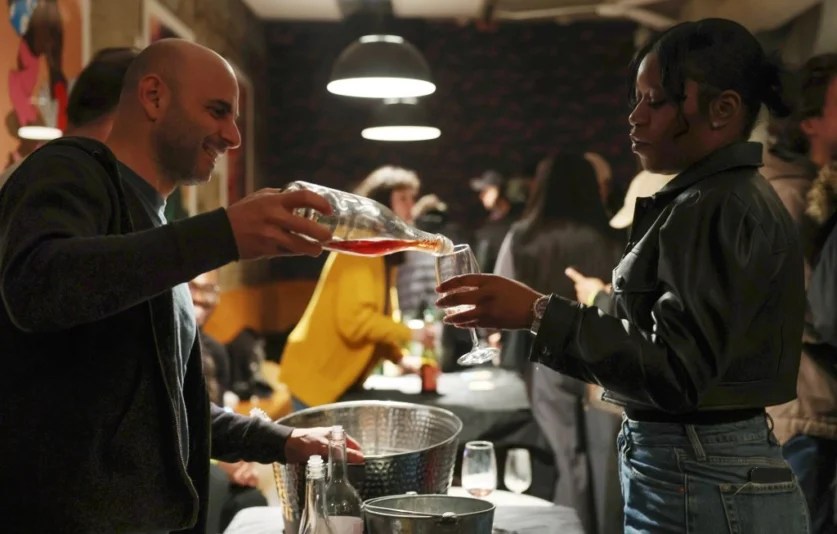
During his free time, the former Michelin-starred Elizabeth’s wine director and sommelier based in Chicago, Derrick Westbrook, would likely be expected to unwind in similar high-end locations.
Westbrook confesses that after several years of service in restaurants, he relishes the unique perspective of being a fine dining guest. Nonetheless, Westbrook does not usually patronize venues boasting extensive assortments of classified Bordeaux or high-end steakhouses with a specialty in cult Napa cabs, when he’s off-duty.
“I’m probably most apt to be having wine or beer at the Bronzeville Winery,” declares Westbrook. “My judgment may be slightly skewed because I developed the wine list there.” Westbrook, however, finds Bronzeville to be an inviting and jovial location where he loves to bring friends, who may or may not know anything about wine.
Westbrook states as a principle, “I have a preference for places that are subtly intelligent. Places that prioritize excellent food and beverages.” He finds himself attracted to bars and restaurants with wine lists that “are well-considered and selected by someone who genuinely understands and is passionate about wine.” He prefers places that don’t require discussions about appellations or classifications, he adds.
Bronzeville showcases a unique and intelligent collection of wines. You might not find Champagne, but you could discover Thierry Tissot’s 2018 extra-dry rosé, a méthode traditionelle sparkling mix of gamay and mondeuse from Bugey in eastern France. Instead of usual Cabernet Sauvignon from California or France, there’s a vintage 1995 Quinta do Poço do Lobo from Bairrada, Portugal. There are numerous wines, “that wouldn’t typically be poured elsewhere,” states the sommelier. These are unique or aged wines that need attentive staff to showcase them consistently. Many of the wines are offered by the glass or in affordably priced flights. It’s a location that invites exploration of new and distinctive wines without much investment.
The chance to uncover small, family-run producers who are not part of mainstream or industrial beverage production attracts industry experts. This is conveyed by Dila Lee, a sake and spirits manager in Chicago for Komé Collective, which imports premium Japanese beverages.
Lee, with years of restaurant management experience in Chicago and San Francisco, now spends most of her time traveling across the country visiting restaurant accounts. In her spare time, she’s attracted to places where the beverages “narrate the tale of their origin and the people who create them,” and where “the staff are truly enthused about them.”
For more than twenty years, Webster’s Wine Bar has been a reliable spot for Chicago’s wine and beverage industry, according to Lee. The cozy Logan Square venue, which moved from its original Lincoln Park location in 2014, “is an industry playground,” adds Westbrook. Webster’s Wine Bar is where sommeliers go to immerse themselves in their craft. However, it’s not famous for grand-cru Burgundy or grande-marque Champagne, instead, it’s known for wines like Louis-Antoine Luyt’s El Mismo from Chile’s Maule Valley, and J.B. Becker’s Wallufer Walkenberg Spätlese Riesling from the Rheingau, a graceful wine produced by one of Germany’s most elusive winemakers.
BYOB nights are a common occurrence when beverage professionals gather, as shared by Eduard Seitan, a renowned sommelier and associate of One Off Hospitality. One Off Hospitality runs nine prestigious eateries in Chicago such as avec and Publican Quality Meats.
Seitan has been hosting routine BYOB dinners at Four Seasons Dumplings located in Bridgeport for some time now. This venue is his favorite spot for entertaining visitors or hanging out with buddies. Despite the lack of an enchanting ambiance, the place offers delectable, authentic Chinese cuisine. He mentions that it’s an exceptional chance to share exquisite bottles with individuals who are knowledgeable and also love good quality wines. The cost usually doesn’t exceed $25, which includes a hefty tip. His only demand is that each guest must bring a bottle of natural wine.
Natural wines are unquestionably loved by beverage professionals in Chicago. Seitan mentions that many of them have championed this for two decades. The natural wine trend that originally emerged in cities like New York, Paris, and San Francisco finally made its way to Chicago. Seitan adores the exciting and delicate umami flavors he finds in natural wines. Additionally, the growing fondness for these wines coincides with the beverage industry’s increasing endorsement of regenerative farming practices and least interventionist production techniques.
For those who think the above is too overbearing, Westbrook suggests trying Easy Does It located in Logan Square. It’s a natural wine bar and lounge that puts great emphasis on fun. They hold an open-jam session every Monday, have a DJ booth, and a raw-bar pop-up on the patio on Sundays. “If you’re in search of something funky, they truly embrace that style” he quotes. “For me, it’s always a pleasure to sample an array of these wines and exercise my brain.”
Easy Does It also serves an excellent selection of beer, cider, kombucha and cocktails. “Chicago’s dining scene has grown so much in the past decade,” says Lee. “It’s not just about really cool wine lists, but craft cocktails and beer, spirits and sake, too, but all done really well,” she says.
As a sake specialist, Lee favors Jinsei Motto, the sushi bar and izakaya housed in the CH Distillery (home to the Chicago icon, Jeppson’s Malört). Located in the West Loop, “it’s the largest by-the-glass sake program in Chicago by far,” says Lee, but more importantly, it’s a place where the list is “dynamic and constantly evolving,” a rare chance in America to catch up on the latest sake trends from Japan.
Bronzeville Winery (Bronzeville)
4420 S. Cottage Grove Ave., 872-244-7065, bronzevillewinery.com
Easy Does It (Logan Square)
2354 N. Milwaukee Ave., 773-420-9463, easydoes.it
Four Seasons Dumplings (Bridgeport)
3205 S. Halsted St., 312-265-0568, 4seasonsdumpling.com
Jinsei Motto (West Loop)
564 W. Randolph St., 312-884-9602, jinseimotto.com
Webster’s Wine Bar (Logan Square)
2601 N. Milwaukee Ave., 773-292-9463, websterwinebar.com
Apolonia (South Loop)
Apolonia is South Loop’s popular Mediterranean restaurant. Lee describes wine director Jelena Prodan’s wine list as “an open box” of these “extraordinary, hidden gems in the wine world.” There’s a vast selection of wines by the glass, “both classic and nouveau regions, in all kinds of styles and different producers” so “there’s something for everyone, wine nerds, the natty orange-wine crowd or even the fine-wine snobs,” Lee says.
2201 S. Michigan Ave., 312 363 2431, apoloniachicago.com
avec (River North)
Seitan, a father to a 2-year-old and a volunteer pilot for the charitable animal rescue organization Pilots N Paws, finds his evenings quieter than before. He spends his weekends indulging in brunch at his own dining place, avec River North, with his family and friends. He boasts of it as the city’s top brunch spot. Mimosas and bloody marys are a brunch favourite, yet Seitan also recommends avec’s unique and affordable wines; like the Portuguese red field blend, Casa de Mouraz’s Chibu, made with almost 20 different kinds of red and white grapes, or Tchotiashvilli Kisi, a Georgian orange wine which is fermented in qvevri, old amphorae.
141 W. Erie St., 312-736-1778, avecrestaurant.com
Miru (Lakeshore East)
Miru is a Japanese restaurant located on the 11th floor of the St. Regis Chicago, opened last spring. It boasts a 12-seat marble sushi bar. Kat Hawkins, its wine director, is lauded for her meticulous pairing of wine with Japanese dishes. Lee shares that ensuring the wine acts as the best supporting actor to these dishes and flavors is a challenge considering the subtlety of fresh ingredients and deeply flavored umami components inherent to Japanese cuisine.
401 E. Wacker Drive, 312-725-7811, mirurestaurant.com
Nine Bar (Chinatown)
Seitan loves this craft cocktail bar hidden behind the Chinatown mainstay Moon Palace Express. Lily Wang and her partner, Joe Briglio, run the second-generation enterprise, which her parents ran for over 30 years. It’s the kind of place where “everything about their cocktails just feels perfect, where sweetness and acidity, everything is just in balance,” Seitan says.
216 W. Cermak Rd., 312-225-4081, ninebarchicago.com
Printers Row Wine Shop (South Loop)
A neighborhood wine shop since 2004, Printers Row is also a beer and wine bar specializing in low-intervention wines, unique spirits and local craft beer. “It’s one of the places I recommend the most,” says Westbrook. “The wine list is really cool, it’s unpretentious and homey, but you’re going to find really dope stuff,” including some “unique wines from Central and Eastern Europe that I love.”
719 S. Dearborn St., 312-663-9314, printersrowwine.com
Proxi (West Loop)
Proxi is a culinary tribute by Chef Andrew Zimmerman to the street foods he has encountered on his journey. The focus is particularly on Wine Director Alex Ring’s beverage menu characterized as “diverse yet tightly curated” which includes wine, craft cocktails, beer, and sake. This borderless cuisine provides an extraordinary chance to pair and experience a versatile range of unexpected flavor combinations.
565 W Randolph St., 312-466-1950, proxichicago.com
Soif (Logan Square)
The “speakeasy-like wine bar” Soif, is hidden in a basement that can be accessed via an unmarked staircase in its sister restaurant, the Roman cucina Testaccio, as per Seitan. The wine list predominantly features French wines and is surprisingly affordable, emphasizing small producers and natural wines.
2456 N. California Ave., 773-895-6558, soifchicago.com
Anna Lee Iijima is a freelance writer.
Compromise Proposal to Allow Mixed Spirits Sales Alongside Beer and Wine Returns

In a new bill, ready-to-drink pre-packaged cocktails could not exceed 8% ABV to be sold alongside beer and wine in the state of Alabama. (Dan Gleiter | dgleiter@pennlive.com)
MONTGOMERY — Sen. Bobby Singleton, D-Greensboro, reintroduced a bill recently that would permit the sale of ready-to-drink mixed spirits wherever beer and wine are sold, though this time, with a compromise.
Senate Bill 259 would allow for RTD spirits with an alcohol by volume of up to 8% to be sold in grocery stores, convenience stores, or wherever else beer and wine are sold. The bill would expand the availability of such drinks from less than 1,000 locations to more than 4,600 statewide.
If you purchase a product or register for an account through a link on our site, we may receive compensation. By using this site, you consent to our User Agreement and agree that your clicks, interactions, and personal information may be collected, recorded, and/or stored by us and social media and other third-party partners in accordance with our Privacy Policy.
Discover Six Easter-Perfect Red Wines for Every Special Occasion
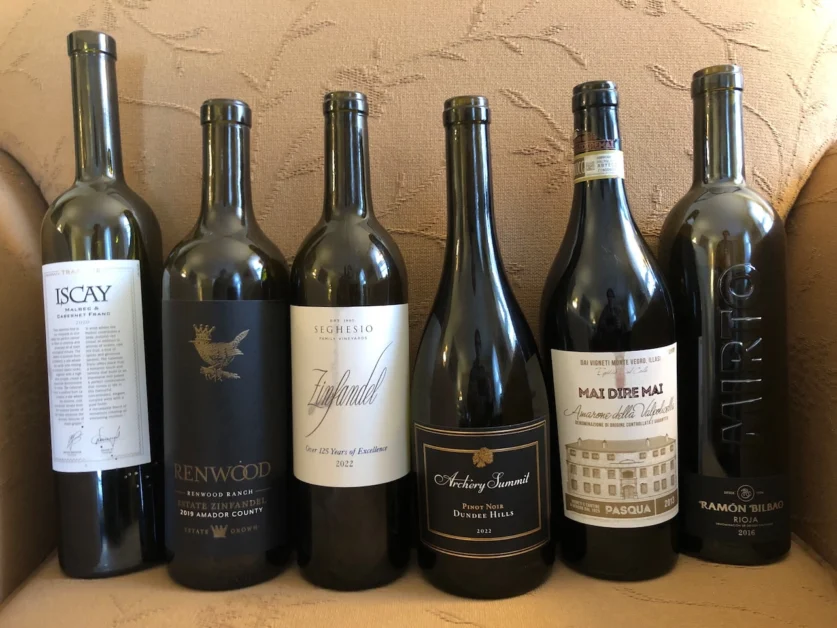
Great wines always make special occasions even more special.
That’s why I often recommend several great wines worth splurging on for the holidays every December.
But why wait until then to break out a great wine?
There are so many special occasions between now and then.
This month, there’s Easter.
Next month, there’s Passover.
And if you don’t celebrate either holiday, I’m sure there’s something worth celebrating soon.
In fact, I firmly believe that opening a great bottle of wine can be a special occasion itself.
So whatever the occasion, here are six great red wines for Easter or any special occasion.
Let me add that these are all outstanding wines I have tasted within the past three months.
And don’t get too hung up on which wines to pair with which foods.
Ham, turkey and duck (which are often served on Easter) all go well with many different types of red and white wines.
And if you’re specifically looking for kosher wines, I promise I will recommend several kosher wines before Passover begins on April 22.
Hope you enjoy.
2022 Seghesio Family Estates Sonoma County Zinfandel ($26 Suggested Retail Price)
Region: Sonoma County, California
Grapes: 100% zinfandel
Tasting notes: Red zinfandel wines from California often get overlooked as over-the-top high-alcohol wines. But when done right, these wines can be just as elegant as any California cabernet sauvignon. This particular gem has a bold array of subtle flavors, including hints of blackberry, cherry and toasted almonds.
2019 Renwood Ranch Estate Zinfandel Amador County ($28 SRP)
Region: Amador County, California
Grapes: 100% zinfandel
Tasting notes: Made with zinfandel grapes from California’s Amador County southeast of Sacramento, this delightful, opulent zin has many fascinating flavors, including hints of smoked cedar, dark chocolate, roasted almonds and cherries.
2022 Archery Summit Dundee Hills Pinot Noir ($65 SRP)
Region: Dundee Hills, Willamette Valley, Oregon
Grapes: 100% pinot noir
Tasting notes: Oregon’s Willamette Valley has a well-earned reputation for producing outstanding pinot noirs. This bright, lively pinot starts out slightly spicy but quickly takes on more soft, understated flavors, including a delicate blend of plums, cherries and roasted walnuts.
2016 Ramon Bilbao Mirto Rioja ($80 SRP)
Region: Rioja, Spain
Grapes: 100% tempranillo
Tasting notes: Elegant yet earthy flavors, including subtle hints of blackberry, roasted coffee beans, black licorice and dark chocolate that last at least half a minute after each taste. An outstanding Rioja ready to drink now.
2013 Pasqua Mai Dire Mai Amarone Della Valpolicella ($85 SRP)
Region: Amarone Della Valpolicella, Italy
Grapes: 65% corvina, 15% corvinone, 10% rondinella, 10% oseleta
Tasting notes: Red wines from Italy’s legendary Amarone region consistently deliver outstanding, austere flavors mixed with beautiful hints of vibrant fruit notes, including ripe blackberries, cherry and cedar in this particular powerhouse of a wine from Italy’s historic Pasqua winery.
2020 Trapiche Iscay ($110 SRP)
Region: Mendoza, Argentina
Grapes: 50% malbec, 50% cabernet franc
Tasting notes: Bold, full-bodied Bordeaux-style blend that tastes like a combination of a powerful Argentinian malbec and a subtle French cabernet franc. Flavors include subtle hints of blueberries, blackberries, lavender and espresso. Absolutely outstanding.
Cheers!
Wine Press by Ken Ross
appears on Masslive.com every Monday and in The Republican’s Weekend section every Thursday.
If you purchase a product or register for an account through a link on our site, we may receive compensation. By using this site, you consent to our User Agreement and agree that your clicks, interactions, and personal information may be collected, recorded, and/or stored by us and social media and other third-party partners in accordance with our Privacy Policy.
The Uncertain Future of the US Wine Industry: Beyond California Boomers
All the growth in American production is now in other states. Maybe the key to counteracting the industry’s slump is there too.
Wineries need to be closer to where consumers live.
A pleasant way to spend a few minutes (or hours if you’re deeply interested) is to check out the American Viticultural Area Map Explorer hosted by the Treasury Department’s Alcohol and Tobacco Trade and Tax Bureau, aka the TTB. The most dense congregation of these official wine regions — the more relaxed next of kin of France’s appellations d’origine contrôlée — are unsurprisingly located in California, which also boasts the most iconic one, the Napa Valley American Viticultural Area. However, most other states are starting to have them too.
The biggest appears to be the Ozark Mountains AVA, which covers about 55,000 square miles (142,000 square kilometers) in Arkansas, Missouri and Oklahoma; the smallest is reportedly the Cole Ranch AVA in California’s Mendocino County, which is less than a quarter of a square mile and is owned in its entirety by a guy named Mike. The oldest is the Augusta AVA in the western outskirts of St. Louis, which was established in June 1980, two years after the Treasury Department finalized the rule creating the designations and seven months before Napa Valley got the nod. The newest is the Contra Costa AVA in the eastern suburbs of San Francisco, established this month. There’s an Ulupalakua AVA on the island of Maui, a Texoma AVA on the Texas-Oklahoma border, a Tip of the Mitt AVA in Michigan and a Martha’s Vineyard AVA off the coast of Massachusetts. And so on.
Seaswept Wine Blend: The New Favorite for Gen Z Drinkers
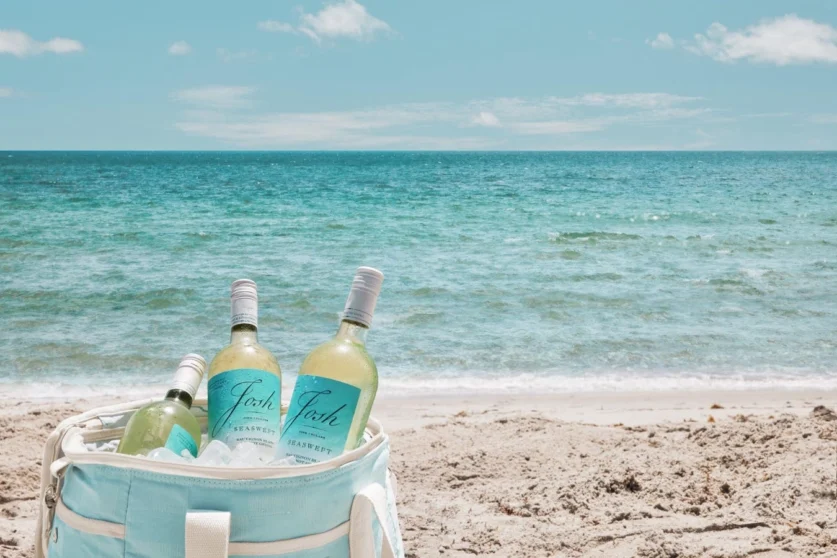
Seaswept is a new Sauvignon Blanc and Pinot Grigio wine blend that boasts an 11.5 percent ABV.
Sauvignon Blanc and Pinot Grigio seem like two varietals that should have always hooked up and gotten together.
And now, they have, in Seaswept, an exciting new wine blend from Josh Cellars.
“We felt there was an opportunity to refresh the rules of wine by creating a crisp and easy-sipping wine,” says Wayne Donaldson, global head of production, Deutsch Family Wine & Spirits, which owns Josh Cellars. “That’s why we decided to utilize California’s lightest white varietals, Sauvignon Blanc and Pinot Grigio.”
The two wine varietals complement each other beautifully, according to Donaldson. The Sauvignon Blanc contributes a crisp minerality and vibrant citrus aromatics, while the Pinot Grigio adds a softer, even cooling sensation. When blended together, they produce a light-bodied, refreshing wine that’s an ideal accompaniment to a summer daytime gathering with friends.”
The laid-back vibe is precisely what Josh Cellars aims to achieve with Seaswept. “This wine could sit well with other lively beverages that have gained popularity among the younger generation,” Donaldson explains. “We saw a chance to rewrite the wine rules by creating a crisp, smooth-sipping wine that can match other high-energy, social drinks that are currently in vogue.”
The grapes are all procured from the cooler regions of the Sacramento delta. “The cool nights and afternoon breezes provided perfect growing conditions, paired with access to varying soil types such as sand, clay, loam, granite, volcanic ash, seabed soil, and river-run gravel,” Donaldson elaborates.
Seaswept is particularly targeted at the younger demographic, adds Dan Kleinman, Chief Brand Officer at Deutsch Family Wine & Spirits.
Josh Cellars carried out an exclusive Occasions Framework Study, involving over 25,000 participants, reveals an interesting revelation about the drinking preferences of the younger generation. The study suggests a stark difference in the energy and mood associated with their drinking activities.
Addressing this, Kleiman states, “If we plan on capturing the attention of Gen Z drinkers, particularly during their ‘hanging out’ moments, we must present alternatives that are both lively and enjoyable.” On the contrary, wine has always been considered formal and not at all reflecting these attributes, in the perspective of these young consumers.
Seems like Josh Cellars has a strategic plan to combat this perception. Kleiman informs that by banking on their approachable nature and innovative spirit, they aim to bring forth an experience through Seaswept that mirrors the simplicity and joy of beach day. This positions their new low-alcohol wine as an outdoor beverage of choice during warm seasons, closely aligning it with the likes of seltzer, RTD, or beer.
Kleiman expects this venture to broaden their customer base with younger wine aficionados, primarily since this wine actually resonates with the high-energy events typical of this generation.
“For example, Seaswept is presented in a way that resonates more with other beverage alcohol categories that emphasize refreshment, like spending the day at the beach or hanging out with friends in the afternoon,” says Kleiman.
Because Seaswept is “the ideal festival drink,” Josh Cellars is launching an extensive experiential tour at popular music festivals across the country. “This will keep pace and engage our target audience at their comfort zones,” says Kleiman.
Centennial Wine Producer Crafts Rioja Wine From Ancient Vines
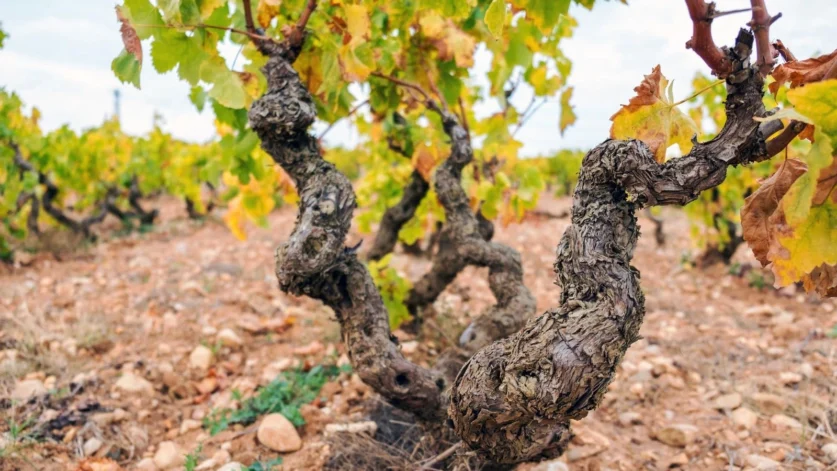
Old grape vine in Rioja, Spain
The tiny, precious hands of the little girl were shaking as she clung to the trunk of a young Tempranillo grape vine. Her grandmother guided the dirt into the hole, securing the new vine’s place in their family’s lineage. The process, a time-honored tradition shared from grandmother to granddaughter, was both a journey through the past and an investment in the future. The girl appreciated the strength and gentleness in her grandmother’s weathered hands, a testament to years of laboring in the vineyard and nurturing her family. She aspired to inherit these superhero-like attributes, epitomized by her amazing grandmother.
Old vine in black and white
In 1882, the wine region of Rioja, Spain, witnessed a sudden rise in wine sales due to an unfortunate circumstance. The vineyards in France were severely affected by a crop pest, phylloxera, which led the French producers to turn to the Spanish wines of Rioja. Taking advantage of this situation, the families of Rioja increased the production of their beloved native Tempranillo red grape variety. The grandmother narrated these exciting times to her little granddaughter, sharing stories of their ancestors’ hard work finally gaining recognition. She also instilled hope of a brighter, prosperous future that wouldn’t be just a mere dream, but her granddaughter’s reality.
By the year 1893, the pest phylloxera had reached Rioja, attacking and feeding on the roots of the cherished Tempranillo grape vines. This had a dire impact, stunting the growth and killing some of the vines. With this devastating event, the hope for the region nosedived. A young lady of 18 years was left to herself as the lone guardian of their small vineyard following the death of her grandmother from immense stress. Faced with the likelihood of having the vineyard replaced with grain plantations by her parents, she pleaded to no avail for the preservation of a cherished vine she’d planted with her grandmother, her only vivid memory of time spent with her. A local young man, who’d shown interest in her for years, stepped in during this crisis to console her, eventually asking her to marry him and move to Madrid for a shot at better opportunities. Overcome by grief and disappointment, she accepted his proposal and went to Madrid, dousing the hope of ever returning home.
In the meantime, a man by the name of Ramón Bilbao from Etxebarri, a small town located around 60 miles north of Haro, the major town in Rioja, made the move to Haro to set up his own business. Risky as it was owing to the previous devastation from phylloxera, he decided to open a grain warehouse as well planting vines in the year 1914.
Entry into Ramón Bilbao estate
Following the death of Ramón in 1929, five years after the establishment of the winery Bodega Ramón Bilbao, his ambition was fulfilled by Enrique, his son. Enrique successfully continued his father’s legacy, turning Bodega Ramón Bilbao into a successful wine producer in Rioja which celebrated its 100th anniversary. The winery not only owned its vineyards, but also worked hand in hand with multiple-generation grape cultivators in the area to broaden their grape source base to a wide range of small plots. Notable among these are their 80 to over 90 year old Tempranillo grape vine plots. Their wine, Mirto, stands as the perfect showcase of this beautiful collaboration.
Harvesting the grape bunches by hand
The first vintage of Mirto was in 1999, when the technical and general director, Rodolfo Bastida, joined Bodega Ramón Bilbao. He had been walking through the vineyards with a local grower in the sub-region of Rioja Alta, discussing the 1999 vintage, and the grower said to him, “Año de mirto año de vino,” which translates into English, “year of myrtle, year of wine.” Then he pointed to all the myrtle plants growing on the edge of the plot. It is a local expression that means thriving myrtle plants are an excellent sign for the vines and when the myrtle is great, the wine will be great. So Rodolfo decided to make a 100% Tempranillo wine sourced from multiple old vine plots and call it Mirto and the 1999 Mirto was a lovely wine out of the gates and after many years of cellaring, still impresses.
Mirto is just one of the projects that Rodolfo is spearheading as Ramón Bilbao founded a winery in 2019 called Lalomba (translating to hill), which is devoted to the exploration of a single vineyard estate called Lalinde which is located on a hill in the most eastern sub-region named Rioja Oriental. A section of the vineyard makes an ultra-premium rosé wine that is a field blend of the local red Garnacha grape and the white Viura grape made from vines that are almost half a century old. It makes a concentrated rosé wine with lots of freshness and minerality that improves with age.
Rodolfo Bastida
Rodolfo, a Rioja native, stands as the third generation in his family to follow the path of winemaking. He feels a sense of completion in spending the greater part of his time in the vineyards, reminiscent of the 1800s when local winemakers resided amongst their vineyards. With the advent of professional wineries, a shift occurred. His grandfather, who like many others, spent his days in labs, wearing a white coat, rigorously testing samples to ensure the marketability of the wines. His father split his time between the lab and the vineyards, marking a resurgence of appreciation for winemaking as a symbiosis between tradition and technology.
The narrative shifts back a century, to a young woman who parted with her roots in Rioja during the late 1800s in pursuit of her destiny. By 1938, she was already a grandmother, a widow amidst the throes of the Spanish Civil War, left alone to fend for her daughter and granddaughter. In a desperate plea for help and connection, she seeks to journey back to her roots, sending word to her estranged parents through a friend headed to Rioja.
Returning to her childhood home, she is greeted by her parents who have revived their connection with the land, replanting their vineyards. Their actions speak volumes, as they take her through their emotions and day-to-day lives without exchanging a single word. The poignant moment arrives when the mother invites her daughter and granddaughter to plant grapevine saplings with her, welcoming them back into the cradle of family tradition without a word of reproach. On this day, forgiveness goes unsought.
The connective threads of these narratives weave through the vineyards that Rodolfo Bastida treads daily, shaping the wines he crafts for Bodega Ramón Bilbao. They are tales that commemorate the generations who came before him while driving his mission to honor their stories.
Lineup of Ramón Bilbao Mirto wines
Lalomba by Ramón Bilbao
2017 Lalomba rosé wine by Ramón Bilbao
2017 Lalomba, Finca Lalinde, Monte Yerga, Rioja Oriental, Rioja, Spain: A blend of 90% Garnacha and 10% Viura from the single vineyard estate named Lalinde. A stunning rosé with a pale pink color with highlights of copper with grapefruit and lemon zest aromas with creamy lemon meringue and candied violet flavors on the palate with bright acidity and intense minerality.
2022 Lalomba, Finca Lalinde, Monte Yerga, Rioja Oriental, Rioja, Spain: This unique rosé is a blend of 90% Garnacha and 10% Viura. It hails from Lalinde, a vineyard estate perched on the slopes of Yerga mountain range. The wine dazzles with its smoky minerality, an aromatic bouquet reminiscent of wildflowers, and delicious flavors of mixed berries and juicy, white peaches. It leaves a refreshing aftertaste, hinting at the sensation of wet river stones.
Mirto by Ramón Bilbao
1999 Ramón Bilbao ‘Mirto’ Villalba, Rioja Alta, Rioja, Spain: This complex wine is made entirely of Tempranillo. It is sourced from vineyards around the village of Villalba, near the town of Haro. These vines are approximately 70 years old. The nose is multi-layered, featuring smoldering cigar, fresh tobacco leaf, a touch of bacon fat, and broken earth. Your palate is greeted with rich blackberry flavors entwined with exotic spice, all smoothed out by very fine tannins.
2006 Ramón Bilbao ‘Mirto’ Villalba, Rioja Alta, Rioja, Spain: This variant also 100% Tempranillo and drawn from the same vineyards around Villalba village, only this time, the vines are closer to 80 years of age. The nose is delighted by beautiful fruit aromas tinged with hints of licorice and fresh herbs. The palate succumbs to the fleshy flavors of black cherry fruit coupled with a broad body.
2010 Ramón Bilbao ‘Mirto’ Ábalos, Rioja Alta, Rioja, Spain: 100% Tempranillo. It comes from plots in the village of Ábalos near the town of Haro with old vines around 80 years old. Wafting notes of espresso and cocoa nibs entice with its delicious aromas, plush texture, generous fruit flavors, and complex cigar boxes and tar notes.
2016 Ramón Bilbao ‘Mirto’ Cuzcurrita, Rioja Alta, Rioja, Spain: 100% Tempranillo. From plots in the village of Cuzcurrita near the town of Haro with old vines over 90 years old. An enchanting bouquet of violets on the nose with delectable blueberry tart flavors on the palate with very silky tannins that are finely sculpted and has a long, flavorful finish.
Celebrate Tradition with 100-Year-Old Wine Producer’s Rioja Made from Antique Vines
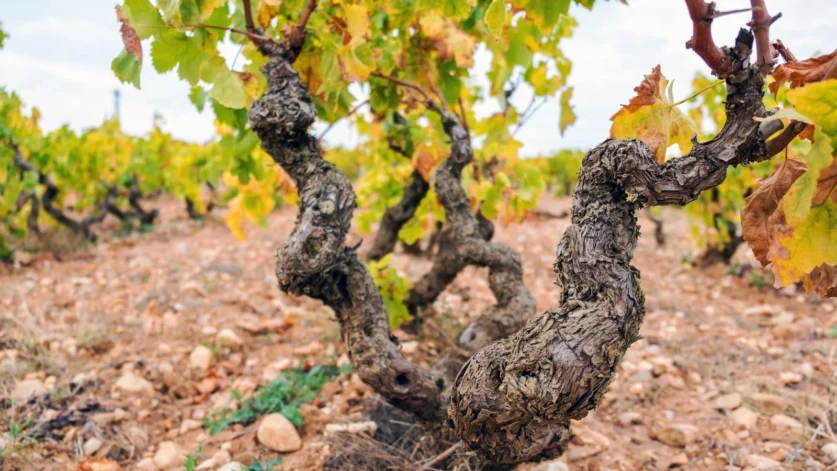
Old grape vine in Rioja, Spain
The tiny, precious hands of the little girl were shaking as she held on to the trunk of a baby Tempranillo grape vine while her grandmother pushed dirt into the hole where the young vine was being held so they could plant this vine together, as for many generations, it has been passed on from grandmother to granddaughter. The little girl was always in awe of her grandmother’s beautiful hands, which were strong yet gentle, depending on whether she was laboring in the vineyards or stroking her granddaughter’s hair. She hoped that one day she could have such hands, the hands of a superhero, as there was no one else as amazing as her grandma.
Old vine in black and white
In 1882, the wine region of Rioja, Spain, enjoyed a boom in wine sales as French producers were buying the wines of Rioja to help supplement their own demand, as many of their vineyards had been destroyed by the pest, phylloxera. So, the multi-generational grape growers in Rioja planted more vines of their cherished native Tempranillo red grape variety. It was a very exciting time; the grandmother told her precious little grandchild that the incredible vineyards of their people were finally receiving the glory they deserved and that her granddaughter would have a much better life that would be unimaginable, even to her grandmother.
By 1893, phylloxera had made its way down to Rioja a few years earlier and this pest started to feed on the roots of locals’ beloved Tempranillo grape vines, where it would either kill or stunt the growth of some of the vines. It seemed that the hope for the region had plummeted overnight and the grandmother passed away from the intense stress, leaving her 18-year-old granddaughter alone as the sole guardian trying to protect their small plots of vines as her parents wanted to rip out the vines so they could plant grain instead. With tears running down her face, she begged her mother not to pull out the one vine she had planted with her grandmother but in the end, it was torn out of the ground, destroying the most precious memory she had of her childhood with her hero. A local young man who had been courting this 18-year-old lady for years saw his opportunity to comfort her. He asked her to marry him and to move to Madrid for better opportunities. Overwhelmed with grief and the great disappointment of her parents killing something so precious, she went to Madrid with this young man. She married him, feeling at that moment that she would never return home again.
During this time, a man named Ramón Bilbao from a small town called Etxebarri in northern Spain, around 60 miles north of Haro—the main town of Rioja—moved to Haro to start his own business. He opened a grain warehouse as well as planted vines in 1914, which was a gamble considering that something else, like the devastation of phylloxera, could happen again in the vineyards.
Entry into Ramón Bilbao estate
Unfortunately, in 1929, five years after the winery, Bodega Ramón Bilbao, opened, Ramón passed away, leaving his son Enrique to fulfill his dream, which he did with Bodega Ramón Bilbao becoming a very successful wine producer in Rioja, celebrating their 100th anniversary this year. Not only do they own their own vineyards but they have had a long-term partnership with multi-generational grape growers in the area to expand their sourcing of grapes from a wide range of small plots that include Tempranillo grape vines that are 80 to over 90 years old. No other wine showcases that beautiful partnership as does their wine, Mirto.
Harvesting the grape bunches by hand
The first vintage of Mirto was in 1999, when the technical and general director, Rodolfo Bastida, joined Bodega Ramón Bilbao. He had been walking through the vineyards with a local grower in the sub-region of Rioja Alta, discussing the 1999 vintage, and the grower said to him, “Año de mirto año de vino,” which translates into English, “year of myrtle, year of wine.” Then he pointed to all the myrtle plants growing on the edge of the plot. It is a local expression that means thriving myrtle plants are an excellent sign for the vines and when the myrtle is great, the wine will be great. So Rodolfo decided to make a 100% Tempranillo wine sourced from multiple old vine plots and call it Mirto and the 1999 Mirto was a lovely wine out of the gates and after many years of cellaring, still impresses.
Mirto is just one of the projects that Rodolfo is spearheading as Ramón Bilbao founded a winery in 2019 called Lalomba (translating to hill), which is devoted to the exploration of a single vineyard estate called Lalinde which is located on a hill in the most eastern sub-region named Rioja Oriental. A section of the vineyard makes an ultra-premium rosé wine that is a field blend of the local red Garnacha grape and the white Viura grape made from vines that are almost half a century old. It makes a concentrated rosé wine with lots of freshness and minerality that improves with age.
Rodolfo Bastida
Rodolfo, a Rioja native and winemaking heir, spends most of his time in the vineyards, reminiscent of the old-world winemakers in the 1800s. As the region industrialized winemaking, his grandfather spent his days in the lab ensuring the viability of their product. His father balanced these worlds, spending time both in the lab and vineyards. Today, Rodolfo works among Rioja’s rich history, personally tending to the ancient vines that are their prized possession.
Years after a young woman left Rioja in the late 1800s, she finally wrote a letter home through a friend, announcing her intention to visit with her daughter and granddaughter. By 1938, death and war had left them alone, and they were returning to their roots. At the family vineyard in Rioja, her parents had begun replanting.
The stoic greeting from her mother was a stark reminder of the years she’d lost. Wordlessly, she followed her mother out to the waiting vineyard, her daughter and granddaughter trailing behind. As her mother dug a hole for a new vine, the silence was thick. But as the earth was pushed back in around the vine, each generation of women adding to the effort, the past was left behind. The gesture was more potent in its silence, with no need for stated forgiveness.
This notion of honoring a lineage, contemplating the history rooted in the vineyards, guides Rodolfo in his winemaking for Bodega Ramón Bilbao. He carries their stories in every walk through the vineyard, crafting wines that pay homage to his heritage.
Lineup of Ramón Bilbao Mirto wines
Lalomba by Ramón Bilbao
2017 Lalomba rosé wine by Ramón Bilbao
2017 Lalomba, Finca Lalinde, Monte Yerga, Rioja Oriental, Rioja, Spain: A blend of 90% Garnacha and 10% Viura from the single vineyard estate named Lalinde. A stunning rosé with a pale pink color with highlights of copper with grapefruit and lemon zest aromas with creamy lemon meringue and candied violet flavors on the palate with bright acidity and intense minerality.
2022 Lalomba, Finca Lalinde, Monte Yerga, Rioja Oriental, Rioja, Spain: A blend of 90% Garnacha and 10% Viura from the single vineyard estate named Lalinde situated on a hillside on the Yerga mountain range. This fascinating rosé has smoky mineral characteristics and a bouquet of wildflowers on the nose accompanied by delicious mixed berries and juicy white peaches, ending with a refreshing finish with undertones of damp river stones.
Mirto by Ramón Bilbao
1999 Ramón Bilbao Villalba, Rioja Alta, Rioja, Spain: 100% Tempranillo. Originating from plots in the village of Villalba close to the town of Haro with matured vines around 70 years old. The nose presents multiple facets with smoldering cigar, fresh tobacco leaf, a hint of bacon fat and splintered earth, rich in blackberry flavors intermingled with exotic spice, and very fine tannins that gently swipe the palate.
2006 Ramón Bilbao ‘Mirto’ Villalba, Rioja Alta, Rioja, Spain: 100% Tempranillo. Sourced from plots in the village of Villalba close to the town of Haro with matured vines around 80 years old. The nose boasts splendid fruit aromas with whiffs of licorice and fresh herbs, it flaunts fleshy black cherry fruit flavors within a broad body.
2010 Ramón Bilbao ‘Mirto’ Ábalos, Rioja Alta, Rioja, Spain: 100% Tempranillo. It originates from plots in the village of Ábalos close to the town of Haro with ancient vines approximately 80 years old. The tantalizing notes of espresso and cocoa nibs lure in with its delightful aromas, opulent texture, ample fruit flavors, and intricate cigar boxes and tar notes.
2016 Ramón Bilbao ‘Mirto’ Cuzcurrita, Rioja Alta, Rioja, Spain: 100% Tempranillo. It comes from plots in the village of Cuzcurrita near the town of Haro with old vines over 90 years old. A captivating bouquet of violets on the nose with delicious blueberry tart flavors on the palate accompanied by very silky tannins that are neatly sculpted and offers a long, tasty finish.
Introducing French Bloom’s Single-Vintage Non-Alcoholic Sparkling Wine Launch

The allure of zero-proof bubbles lie in their collectability and aging potential, akin to vintage Champagne.
As an enthusiast of wine, discovering novel cuvees and tasting unique brews intrigue me. But there are days when my bodily systems crave a respite. However, quite a few non-alcoholic beverages fail to cater to my taste buds, relegating me to settle for sips of tea, or even plain water.
A similar vacuum was observed by Maggie Frerejean-Taittinger. Having spent a significant part of her professional life leading the international endeavors of the Michelin Guide and visiting global foodie hotspots, she found the choices wanting during her pregnancy. She found her glass often unfulfilled, as the non-alcoholic options failed to match up to the stellar courses she savored.
“From the perspective of someone who is fond of wines, adores Champagne – fortunate because my spouse happens to be a vintner – and savors the fine art of pairing, it felt as if my experience was falling short,” shares Maggie.
So in 2019, she collaborated with her spouse, winemaker Rodolphe Frerejean-Taittinger, and Constance Jablonski to introduce a sophisticated, Champagne-like drink: French Bloom. The fizzing wine brand’s Le Blanc and French Bloom Le Rosé – all non-alcoholic, captivated enthusiasts by providing the effervescence and precision of French fizzing wine while staying firmly in the non-alcoholic arena (all bottles have 0.0% ABV).
The French house has now introduced its latest product: a vintage-dated non-alcoholic sparkling wine.
La Cuvee encapsulates the character of a vintage Champagne in a non-alcoholic form.
La Cuvée Vintage Blanc de Blanc 2022 (available for $119 or €109) is masterfully created to complement gastronomy, drawing inspiration from well-matured Champagnes and wines from Jura—wines that feature complexity and particular flavor design.
Want a high-quality non-alcoholic wine? Consult Frerejean-Taittinger, the brains behind Chef de Cave at Frerejean Frères, an independent Champagne House. He is a pro at maturing Champagnes for up to a decade, and also runs Coutanseaux Aîné in Cognac.
However, aging a non-alcoholic sparkling wine poses a challenge. French Bloom, therefore, has to replicate aging through sourcing and the process. Their La Cuvée was created using Chardonnay from a few vineyards in Languedoc, which according to Rodolphe, is the capital of natural wine.
He further explains that they need to maximize their still wines to an extreme level for the flavors and nuances to outlast the dealcoholization process. This procedure removes the alcohol and dampens the flavors and aromas of the wine.
“We had to develop a wine that had a high alcohol content, even a couple of weeks before harvesting,” he notes. “Our challenge was also with acidity since we couldn’t rely on Champagne’s cool climate. We achieved the needed acidity by harvesting earlier and re-acidifying the wine through classic methods like acid tartrate. We’ve remained natural all the way—every product is 100% organic and lacks sulphites and preservatives.”
The zero-proof sparkling wine is full of golden bubbles.
Using low-temperature vacuum distillation, the brand conducts three rounds to carefully and gradually take away the alcohol content from the wine until it reaches 0.0% alcohol. The complete absence of alcohol is a significant aspect, enabling pregnant women or people aiming for sobriety to enjoy without any worry.
Interestingly, a large portion of the brand’s core customers are not abstainers, but are discerning consumers enjoying a temporary pause whether for an evening or a lunch. As Rodolphe emphasizes, “80% of our customers are flexi-drinkers: they drink wine, they drink Champagne, and sometimes they don’t drink at all—they just moderate, When you drink fine wine, the alcohol content is secondary—it’s about the flavor.”
The resulting blanc de blanc presents a mature and rich flavor profile, boasting robust aromas and layers of flavor rarely found in zero-proof wines. It has a honey-like color, with a fresh rhubarb tang and appealing hints of umami and dried apricot, contributing to its profound complexity. Only 17,000 bottles will be available.
At present, the main offerings of French Bloom are served on high-end airlines such as La Compagnie and can be found in 32 countries. Their wines are also enjoyed at Michelin-starred eating establishments like Jungsik in New York and Cheval Blanc in Paris, as well as at renowned culinary venues like the Ritz in Paris, The Carlyle, and the Beverly Hills Hotel. They also feature at events such as Coachella. Their efforts are well-received within the wine sector too, with Jean-François Moueix of Petrus being an early investor in the company.
Discover Three New Natural Wine Bars in San Jose, San Anselmo and El Cerrito

Over the past decade or so, natural wine bars have proliferated around the Bay Area, clustered mainly Oakland and San Francisco but slowly spreading to other communities in the region. Here are three wine bars to try that have opened within the past year in San Jose, San Anselmo and El Cerrito.
So what is natural wine? “The best way to think about naturalness in wine is as an ideal: wine made from grapes with nothing added and nothing removed,” says Aaron Ayscough in The World of Natural Wine: What it is, Who Makes It, and Why it Matters (Artisan, 2022). There are levels of “naturalness,” of course, but generally speaking, these wines have some or all of these characteristics: They’re produced from organically-farmed grapes, fermented in native yeasts, contain no or very low levels of sulfites or other additives, and have not been fined or filtered.
Here’s where to taste them:
As it nears its first anniversary, Steven and Ann Huynh’s wine bar is all about inclusion and accessibility. Steven’s Asian American upbringing didn’t include much exposure to wine or to the etiquette and knowledge expectations he says often accompany a traditional wine tasting.
“Natural wine, for me, breaks down those barriers,” he says. “It doesn’t really have a barrier to entry – you don’t need to know anything about grapes or wine varietals. (You can) have a fun experience, where you can learn if you want or just drink a good product and enjoy your time out.”
They even have a Goodtime Bar Run Club, so you can get your exercise in first.
What to try: Made with organic viognier grapes, the 2021 Les Parcelles Pétillantes Bouteillou from France’s Les Chemins de Bassac is sparkling and refreshing. Pair it with the arancini ($14), made with Japanese curry, kimchi mayonnaise and fontina cheese and topped with nasturtium leaves.
Details: Opens at 4 p.m. Monday and Wednesday-Friday and 2 p.m. weekends at 30 Fountain Alley #160 in San Jose; goodtimebarsj.com.
The atmosphere is electric and the fireplace cheerily lit at a wine and low-ABV cocktail bar this fine Saturday evening. This bar, which opened in December, is known for its specialty in natural wines and sophisticated food to complement them.
This lovely spot, nestled within the town’s legendary Cheda Building (dating back to 1911), features wall-to-wall windows. In 1914, the structure was transformed into San Anselmo’s first movie theater, and over the years, it hosted a variety of businesses, including drugstores, a lounge, and an office. Today, it has transformed once again and is known as Voyage Bar, adorned with elegant reclaimed Douglas fir, redwood accents, and vintage lighting fixtures.
What to try: Although the menu is subject to rotation, the roasted root veggies dish ($15) is a delectable dish to share. A lively debate may ensue among your group over the difference between Romesco and Romanesco, as both are present in the dish. (Note: Romesco refers to a Spanish style tomato-based sauce while Romanesco is a cruciferous vegetable with a distinct geometric appearance.) A chilled red wine like the refreshingly unique blend of zinfandel and carignan from Glassmaker, produced in Mendocino, is recommended. Alternatively, the COS “Nero di Lupo”, a light and smooth biodynamic red from Sicily, is worth a try.
Details: Voyage Bar is open daily from 5 to 10 p.m., except on Tuesdays. It is located at 500 San Anselmo Ave. in San Anselmo. More information can be found at voyagebar.com.
Banter impresses with its modern, yet retro vibe. Launched a year back by Claire Sullivan and Devin Hohler, the facade might fool you into thinking it’s just another store. However, once you cross the threshold, you are treated to a spectacular throwback to the ’80s – complete with old-age music posters, daring wall coverings, and a communal assortment of VHS cassettes and vinyl disks. Not to miss, the back room sports an old-school, coin-operated pinball machine.
The bar’s offerings include a changing array of natural wines. You might want to try their flight of three half-glasses that comes for $22 – a value-for-money way to experience several flavors. Their menu is a concise collection of petite servings, featuring meats, cheese, hummus, and anchovies coming at a reasonable price of $14.
Must-try: Give the Oest Wines “Ruckus” a shot – it’s a light bubbly red. The Guignier Beaujolais Villages Gamay from France is an exquisite bouquet of fruitiness and fragrance. For the adventurous, they’ve got an eccentric orange Artana Rkatsiteli from Georgia, meant for the unflinching who don’t mind terms like “vegetal” and “funky”. Just in for a quick bite? Combine it with a slice of Acme’s “hella wet” levain bread for $5, served with salted butter from Straus.
The Basics: Banter is open from 4 to 9 p.m., Tuesday through Saturday, located at 10368 San Pablo Ave., El Cerrito; banterwine.com.
New York Native Unveils Wine Label Before Debut Season with the New York Yankees

Today—March 18th—marks the debut of Le Carénage, a California-based wine project spearheaded by award-winning MLB pitcher, Marcus Stroman. After making his Major League debut and taking MLB by storm back in 2014, Marcus quickly fell down the wine rabbit hole thanks to his generous veteran teammates who would regularly bring captivating bottles of wine into the clubhouse to share. This season Stroman joins the New York Yankees for the first of a two year contract, signed in January 2024.
Le Carénage’s inaugural wines include a Provence-inspired rosé, a refreshing Sauvignon Blanc, and a classic Knight’s Valley Cabernet Sauvignon.
Click here to acquire Le Carénage inaugural release wines by joining the mailing list
Courtesy of La Carénage
View the 3 images of this gallery on the original article
Le Carénage Rosé is inspired by the great pink-hued wines of Provence. Crafted from a blend of 51% Cinsault and 49% Mourvèdre, fruit for this refreshing, acid-forward wine hails from responsibly-farmed vineyards planted in Lodi. At just 12.9% ABV, the wine’s light-on-its-feet nature makes it ideal for sipping all day long. 490 cases were produced.
Le Carénage Sauvignon Blanc hails primarily from Napa County, with a hint of Sémillon thrown in for good measure. At 12.1% ABV, the wine is easily enjoyable with or without food, though its pronounced acidity is undoubtedly a perfect match for freshly shucked oysters and pungent goat cheeses. 120 cases were produced.
The Le Carénage Knight’s Valley Cabernet Sauvignon is the first of three single-vineyard Cabernet bottlings to be released, and shows the best of what Sonoma County has to offer. Packing all the dark-fruited and cassis notes, while staying light, nimble and ready to enjoy with minimal aging. At 12.9% ABV, this wine represents a balanced, fresh and classic Cabernet that harkens back to how wine was made in Napa and Sonoma back in the heyday heralded vintages of the ‘70s and ‘80s. 580 cases were produced.
Future plans will bring two additional Cabernet Sauvignons to the line-up: the two single-vineyard Napa Cabernets will serve as the project’s higher-end Reserve bottlings, produced from Glass Rock Vineyard in the Coombsville AVA and a prestigious site in the heart of Oakville.
Matt Naumann, owner of Newfound Wines and previously the winemaker for Wade Cellars, is the proud hands behind the bottles at Le Carénage. Naumann’s winemaking philosophy is rooted in working with the best vineyards possible and allowing the fruit to speak for itself.
Click here to acquire Le Carénage wines by joining the mailing list
Marcus is a native of New York who didn’t discover his love for wine until later in life. He went to Duke University and was selected by the Toronto Blue Jays in the 2012 draft. Marcus began his professional career in 2014 and since then has played in both New York for the Mets and Chicago for the Cubs. This season he will be returning to his hometown, having signed a multi-year contract with the New York Yankees. He discovered his passion for wine after sharing many bottles with his fellow teammates, falling in love not just with the drink itself, but also the camaraderie and joy it brought to their gatherings.
Marcus started making regular visits to wine regions from his Florida offseason base in 2015, frequently jetting off to the West Coast. His appreciation for Napa Cabernet evolved into a love for the great wines from Old World locations like Bordeaux, Barolo, and Tuscany. As his passion for wine grew, Marcus set out on a mission to make wine more down-to-earth and easy to access, all without reducing the quality in any way.
A special thank you to Marcus for taking the time from his jam-packed Spring Training schedule to record video responses to my interview questions.