Wine 1106
Exploring the Growing Popularity of Wine among the 30-Something Demographic: A New Study Unveils

30-Something Millennials Enjoying Wine
The death of wine among U.S. Millennials is grossly exaggerated, according to a new study by Wine Market Council, a non-profit research firm. Though other recent reports have bemoaned the fact that Millennials (ages 27 to 42 in 2023) are not adopting wine at the rate of other generations, now that the majority are in their 30’s, that trend is reversing.
In fact, not only are 30-something Millennials consuming more wine, but high-end Millennial consumers spend more per bottle on average than Baby Boomers. At a recent conference, Wine Market Council (WMC) Director of Research, Christian Miller, commented on these findings.
“Despite all of the concerns in the press, this study shows that the Millennial generation has not underperformed in terms of their population as wine drinkers across time,” said Christian Miller.
The study, known as the U.S. Wine Consumer Benchmark Segmentation Survey, has been run by WMC every one to two years since 1997, making it the longest continual survey of the American wine consumer, having completed 18 studies to this point.
In the 2023 study, a sample of 4,470 legal drinking age Americans were surveyed, which included 1,584 wine consumers. I, as the President of Wine Market Council, assisted in analyzing the results. However, the survey was conducted by research provider, Caravan OmniBus.
This year’s WMC study incorporated a longitudinal analysis by Miller that compared the average wine consumption rates of Gen X, Millennials, and Gen Z consumers as they came of legal drinking age at 21 years old.
The below graph illustrates how Millennials lead in the 2023 average consumption rates at 36%. It also captures the ‘Covid Hangover’ effect, somewhat due to some Americans beginning to drink less alcohol generally as a result of increased consumption during the worst of the pandemic, among other reasons.
Percent of Wine Consumption by American Generation Across Time
In addition, this analysis highlights an interesting phenomenon in that both Millennials and Gen Z embraced wine at higher levels when they first turned age 21, only to have that decline. However, with Millennials, wine consumption has since increased.
This supports other wine lifecycle research showing that young adults enjoy experimenting with different beverages when they first reach legal drinking age, but generally do not adopt wine as a more regular part of their lifestyle until they reach their 30’s, when they are more settled, and often have higher-paying jobs, mortgages, and a family.
Indeed, the 2023 WMC study showed that 71% of American wine drinkers own a home, 60% are married, 53% live in the suburbs, and 36% have children under the age of 18 living at home.
It’s interesting to note that now, high-income millennials are emerging as competition for high-income baby boomers (those aged 60+) in terms of wine consumption significance. Commenting on this revelation, we have insight from Danny Brager, a seasoned wine business analyst and prior senior vice president of Nielsen’s Beverage Alcohol Practice Area, who also serves on the WMC Advisory Board.
“Core wine consumers, those who consume wine at least once a week or more, consist of one-third upper-income millennials. This group now represents a larger sector of the essential Core wine consumer segment than high-income baby boomers,” Brager revealed. “Add to that, the millennial generation’s size has now surpassed that of the baby boomers.”
High-Income Millennials Now Outpacing Boomers as Fundamental Wine Consumers
Looking deeper, when we categorize consumers into premium wine consumers who regularly part with $20 or more on a bottle of wine, millennials in their 30s will shell out an average of $65.80 per bottle. In comparison, baby boomers aged 60+ are only willing to part with an average of $36.67 on special wine for special occasions.
Given the fact that wine sales volume has decreased in the U.S. in the last few years, I reached out to several winery professionals to see if they were experiencing the same increases in Millennial wine consumption and purchasing behavior. They confirmed that it was true, especially with higher-priced wine, wine that falls in the ‘better for you category,’ and wine that is more inclusive.
“The 30-something group, surprisingly young and responsible for 83% of purchases over $15, illustrates a vibrant, opportunity-filled market landscape far from the pessimistic portrayal of younger wine enthusiasts,” reported Karen Daenen, Director, Research & Consumer Insights, Jackson Family Wines.
At Scheid Family Wines, Heidi Scheid, Executive Vice President, said, “Millennials and Gen Z share a different relationship with wine then their parents did. They appear to embrace moderation, which is actually a good thing! The greater focus on health and wellness from the younger generations inspired our development of our zero sugar, low alcohol wine option, Sunny with a Chance of Flowers.”
Tapping into the growing diversity of the U.S. population, Ceja Vineyards, a Mexican-American family owned winery in Napa Valley, is finding success with food and wine pairings.
“At Ceja Vineyards, we’ve noticed an uptick in the number of millennials who are members of our Casa Ceja Wine Club and who turn out for our quarterly wine release gatherings. Our Mexican roots are central to our approach, and we take pride in matching authentic Mexican food with our well-balanced wines. How about Mole Poblano with a Cabernet Sauvignon? It’s an invigorating change for millennials in pursuit of novel wine experiences!” said Dalia Ceja, who is in charge of marketing.
In contradiction to earlier observations that millennials were not adopting wine to the same extent as other age groups, it seems that now, as they move into their 30s, millennials are increasingly integrating wine into their lifestyles. The question that arises now is whether or not Gen Z will follow in their footsteps. Considering only about a third of them are of legal drinking age (21 – 26), it might be some time before we know how they respond to wine marketing strategies.
Ceja Vineyards has found success in attracting millennial consumers by offering wine pairings with Mexican food.
Unleashing Divine Flavors with Wine Decanters: Enhance Your Wine’s Taste Today!
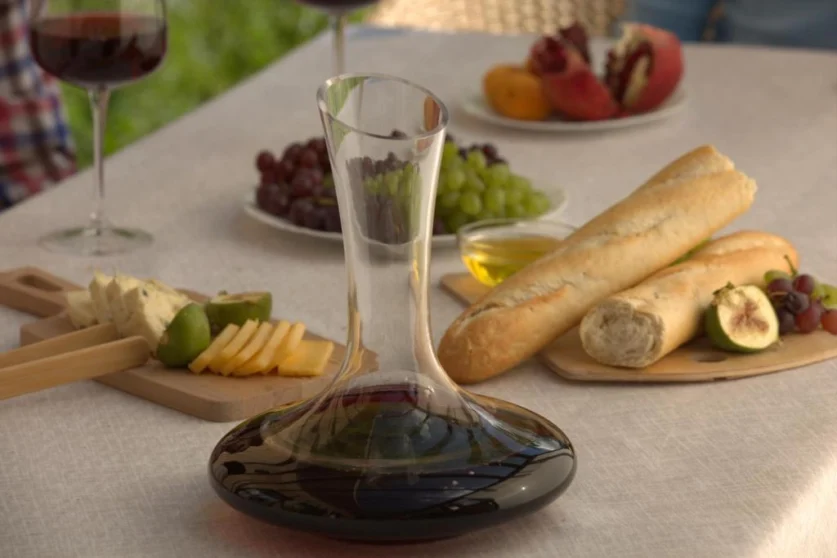
If you are a wine enthusiast, it’s likely that a wine decanter is present in your home. However, you may have been using it merely as a display piece without fully utilizing its potential. The following information may inspire you to make the decanter an integral part of your regular wine enjoyment.
Decanter usage guidelines
Describing the significance of decanting requires mentioning two primary reasons, though their order of importance is subject to debate:
Decanting works to separate the wine from the sediment. The natural sedimentation process that occurs during wine fermentation and aging may result in residue in the wine. Although harmless, this sediment can produce an unpleasant bitter taste in the wine. Hence, it’s vital to pour the wine cautiously into the decanter to prevent the sediment from being transferred as well.
Decanting amplifies the attributes of wine. Aeration not only gets rid of undesirable smells but also mellows the tannins and merges the varied tastes and faint fragrances that contribute to equilibrium and intricacy. These traits may not have been activated unless the wine was decanted. The period of decanting a wine does not have a set rule. However, older red wines, around 15 to 20 years aged, should typically be decanted for a duration between 30 minutes to an hour. On the other hand, young, tannic full-bodied reds need about two to three hours. Light reds like Gamay and Pinot Noir, along with light-bodied white wines, may enhance within 20 to 30 minutes. For wines that demand more than 30 minutes, sampling every half an hour is advised to prevent over oxidization.
The dimension of the decanter has significance. They are available in assorted forms and sizes. Separate decanters should be employed for different types of grapes. For instance, full-bodied reds like Cabernet Sauvignon, Nebbiolo and Petite Sirah are best suited with larger decanters since it provides greater exposure to oxygen.
Weighing convenience against durability, decanters are generally manufactured from two kinds of glass – crystal and standard. Conventional glass decanters usually have plain designs and thicker glass, while crystal ones are normally larger with modern styles. Although simple glass decanters are easier to clean, the ones made from crystal are more durable. However, both cannot survive a fall.
Advice on Decanting
If you have a special bottle of wine to decant, planning ahead is especially crucial if the wine has been laid flat. Leaving the bottle to stand upright for a period of one to two days will let all the sediment settle at the bottom before decanting.
When pouring the wine into the decanter, sustain a steady flow and angle the bottle at 45 degrees. Pay attention to any sediment that may approach the neck of the bottle. If this occurs, straighten the bottle and resume decanting slower than before. A helpful technique to detect sediment movement is using a backlit candle or any light source behind the bottle.
It’s advisable to stop pouring once a half to three-quarters of an inch of sediment remains in the bottle to ensure the best taste.
For anyone in need of a decanter, there’s a wide range of designs available.
Mallard Duck
This duck-shaped decanter features a top handle that keeps the surfaces fingerprint free. The wine also won’t warm from your hands, separated by the handle from the vessel while pouring. Truebrands, $44, amazon.com.
Veloce
A new design with casual dining in mind from Riedel, the Veloce can be used for a variety of red and white wines. $55, riedel.com.
Le Chateau
Conceived for the aeration of red wine, this crystal decanter’s uncomplicated design ensures it fits in seamlessly at both casual and sophisticated gatherings. Find it at Le Chateau for $45.
Mosel
Viewed as one of Riedel’s more customary shapes, this easy-to-operate decanter is suitable for both youthful and mature wines, can accommodate up to a magnum of wine, and is designed to withstand dishwasher cleaning. Check it out on Riedel for $99.
Eve
Named after Eva Riedel, every decanter is handblown, designed to aerate young, robust wines. $725, riedel.com.
Decanting the decanter
Recently, I had the chance to converse with Georg Josef Riedel, the tenth-generation proprietor of Riedel Glass Company, about how decanters enhance the flavor of wine.
First, when and why did Riedel decide to make wine decanters?
Riedel pioneered and has been making decanters in Austria since 1957. The main reason was simple; decanters are an essential part of the wine service, and we saw them as an extension of our concept of wine-friendly glassware. We have continued to innovate our decanter offerings every year.
Does Riedel follow a protocol in making new decanters?
Riedel’s glassmakers are the ones who develop our decanters through a rigorous process of trial and error. The most skilled artisans in our company are tasked with bringing to life the inspirations of my son Maximilian or myself – representatives of the 11th generation of our family-run business. These recent years have brought more unique and complex designs forward, emphasizing fun, practicality, and creativity. We create decanters that break from the traditional, expected designs on the market. Our commitment to high standards, originality, innovative thinking, and a freehand approach is what truly sets us apart in the industry.
What are things people may not know about using a decanter?
Some people might be intimidated to use a decanter because they fear it is difficult to wash or because they simply do not know how to clean it. It is actually very simple. The process includes an initial rinse and overnight soak in warm, distilled water, followed by a gentle hand wash with soap on the outside of the decanter only. It is important to always use distilled water, which helps to avoid water stains. Following the handwash, the outside of the decanter can be gently dried and polished using microfiber cloths. For an additional tip to avoid water stains, you can simply run your hair dryer over the vessel to complete the drying process. We provide clear instructions on how to clean decanters on our website.
There is not a single wine which would not improve with decanting. Decanting makes wine softer and rounder. If a softer perception is something the consumer would like to achieve with their wine, decanting should always be a key step in their wine service.
Overall, what is your favorite Riedel decanter and why?
My favorite Riedel decanter is our Eve decanter because it is truly unique. It is a more advanced decanter and requires the user to thoroughly understand the art of decanting. The Eve’s functionality allows it to ‘double decant’ the wine, making it perfect for young and fuller-bodied wines. This decanter is a true show piece, and it turns serving wine into a theatrical performance.
Peg San Felippo is a certified sommelier who served as a judge at the recent Los Angeles Invitational Wine & Spirit Challenge, the annual American Fine Wine Competition, South Florida’s home-grown national wine event; and THE Rosé Competition.
Your input doesn’t include any narrative to rewrite or HTML elements to strip. Could you please provide an appropriate HTML content?
Exploring the Limited Number of Wine Estates Within Napa City Limits: An Overview

El Veredicto Estate Vineyards spans 47 acres in the Stanly Ranch area of Napa in the south of the city. It is among the rare wine estates located within the city limits.
Chardonnay. Merlot. Pinot Noir. These are some of the wine grapes that the Napa Valley is known for producing, reaching over 100,000 tons annually.
Within the city of Napa, numerous tasting rooms can be found, the majority of which showcase creations made using the county’s signature product. However, almost none of these examples come from within the city boundaries.
On the streets, pedestrians can be seen strolling past Migration Winery in Napa. This winery, located near Stanly Road, is included in the shortlist of wineries that is situated within the city limits, as opposed to the traditional, agriculture-driven lands of unincorporated Napa County.
Migration Winery is distinguished as being among the few wineries to house its vineyard, tasting room, and production facility within city boundaries. This unique establishment belongs to the Carneros AVA, a region celebrated for its Pinot Noir and Chardonnay grapes.
In 2020, this winery officially introduced its Napa vineyard and tasting room, located on Stanly Lane. Fast forward to two years later, Migration acquired the neighboring 47-acre El Veredicto Estate Vineyard. This piece of land formerly comprised part of Stanly Ranch, a renowned expanse of farmland near Napa’s southern extreme, incorporated into the city around the 1960s.
Zach Rasmuson, who acts as Migration’s chief operating officer, stated that this position aligns perfectly with their “small-lot wine making approach”.
Only a few other wine estates can claim a location on the city’s periphery, such as Reid Family Wineries and Crane Family Vineyards. Reid takes up residence in Napa’s northwest corner. On the other hand, Crane Family Vineyard’s appeal lies partly within the city premises, more specifically, a portion of its vineyard, as opposed to the winery itself.
Rex Stults, vice president of industry relationships for the Napa Valley Vintners, shared that vineyards located within city boundaries are not subjected to the same regulations as those found in the unincorporated areas of Napa County.
Specifically, wineries operating within cities are exempt from the Winery Definition Ordinance which oversees wineries in the agricultural preserve of Napa County. This ordinance, established in 1990, details what activities are permissible and those not allowed by wineries. In general, wineries situated within the agricultural preserve or unincorporated areas are prohibited from hosting events and weddings which do not contribute to the consumer’s education or development.
Stults added that, “These city-based wineries are not under the jurisdiction of these laws, hence offering them greater flexibility in terms of marketing ventures, the possibility to host weddings and the liberty to combat any regulations posed within their city of operation.”
However, space constraints exist. Primarily, municipal authorities display a stronger inclination towards domestic construction within their jurisdictions. This is due to the considerable restrictions on residential developments within the Ag Preserve.
Stults likes to describe the Napa Valley as a sea, with the five cities in the county acting as islands. “The commercial residential development takes place on those islands,” he said, “and the rest of the sea is for ag.”
Each city in Napa County has a different philosophy on allowing vineyards and have zoned their lands to accommodate those differences.
Odlon Rojas works at Migration Winery in south Napa on Friday, March 22.
For instance, the general plan of St. Helena includes a generous amount of land zoned for farming. According to St. Helena’s Senior Planner Aaron Hecock, this is because the city’s concerns lie more in preservation.
“St. Helena has a long and rich agricultural history, and long-range planning documents over the years have sought to protect the rural, small-town quality and agricultural character,” Hecock wrote in an email.
In the case of Napa, Senior Planner Michael Walker explained in an email that vineyards are only allowed in Agricultural Reserve zoning areas, which are on the edges of town.
Napa’s general plan, intended to govern local land uses for the next two decades, also provides a vision of the city’s priorities and future growth outlook. The plan sets aside dedicated areas for farming and conservation, but one of Napa’s guiding principles as a city is a focus on ensuring workers and residents have adequate housing.
The plan declares that “the lack of adequate workforce housing is also an economic development issue, as businesses struggle to retain and attract workers.”
Guests arrive for a tasting at Migration Winery in Napa on Friday, March 22.
A community can’t have farmworkers without agriculture or agriculture without farmworkers, and farmworkers need housing. This is one of the priorities the city of Napa is addressing.
From the perspective of the Napa Valley Vintners, Stults says that a prime reason for the scarcity of farming within Napa’s city limits is housing.
“We know that the top concern among our community members is lack of affordability and workforce housing,” he said. “That’s something that needs to be constructed within city limits. It’s difficult to argue against using limited land available for this purpose.”
Napa’s commitment to commercial and residential activity, compared to preservation and agriculture in St. Helena and Calistoga, boils down to what past generations of Napans envisioned for the future of the valley.
In the 1960s, Napa Valley’s capacity to grow into a bustling suburban area seemed exponential.
According to Napa City Manager Steve Potter, residents were concerned that what happened to Santa Clara County in its pre-Silicon Valley days could also unfold in wine country.
“All the farmland was down there, and the urban sprawl just took it all away,” said Potter, a Napa native. “It was all developed. We didn’t want that to happen in Napa.”
Stults confirmed that long-ago vision of the future.
“There was talk of major development, exploding the population of Napa County, major highways beyond Highway 29, maybe even a big airport,” he said.
Wine barrels are seen being moved at Migration Winery in Napa on Friday, March 22. Migration is just inside the city limits and close to unincorporated Napa County land, where non-farm land uses are strictly limited.
Two major developments came from that urge to preserve Napa County’s rural character: the agricultural preserve and the rural-urban limit line.
The community of Napa Valley resisted significant urbanization, which led to the establishment of the Napa Agricultural Preserve in 1968. This preserve declared that farming was the optimal use of Napa County’s unincorporated land, significantly limiting non-agricultural land use. According to Stults, the preserve plays a key role in preserving the unique character of Napa and other towns within the county.
Further to this, once the preserve was established, the local residents passed a measure transferring power from the county’s Board of Supervisors to the residents themselves. This gave them the authority to propose exceptions to the preserve’s restrictions on land use, including large housing projects and commercial buildings.
Stults elucidated the process that would need to be undertaken for substantial development within the preserve, including obtaining approval through a countywide vote.
Each proposal requires thorough planning, signature collection to get it on a ballot, and potentially fundraising to run a successful campaign. “Basically, you have to draft a measure and collect signatures and get it on the ballot,” he said. “If you want to have a chance of it passing, you’d have to raise money and run a campaign.”
The agricultural preserve kept Napa Valley a major grapegrowing region, and gave commercial vineyards designated areas to grow grapes, preventing urban sprawl from overtaking the landscape.
Similarly, the rural-urban line also is intended to keep development control in the hands of the people. First established in 1975, the RUL requires urban growth outside of a city’s line to be approved by a popular vote, the city council and the city planning commission.
Migration Winery, seen on Friday, March 22, is one of a few winemaking operations based inside the city of Napa rather than in the unincorporated county.
Such laws are some of the reasons the Napa Valley looks the way it does and why estate vineyards generally stay outside of cities, and have informed many decisions on how to develop Napa in the years since.
The Stanly Ranch region is a unique part of Napa. Vin Smith, the city’s community development director, mentioned that the way the property was annexed into the city in 1964 would not be possible today based on current regulations.
Smith referred to multiple past propositions of potential developments for this land, such as being a golf course community. However, after extensive deliberation over many years, the Napa City Council endorsed a master plan in 2010. This encompassed strategies for the modern Stanly Ranch resort and future possibilities of vineyards like Migration leveraging the farmland in this area.
Migration therefore, secures a one-of-a-kind spot in this city that doesn’t offer much space for similar initiatives. The residents of Napa County prefer agricultural continuity and the preservation of natural land. This is evident by past local regulations which contain the development within cities and allocate most of the viniculture activities to regions outside the city’s jurisdiction.
Noting the dynamic sentiments of the locals, the city manager of Napa, Potter confirmed that the past generations had different perspectives on the evolution of their valley.
“Different times have different tolerances,” he said.
Have you seen the new Napa Wine Train “green” locomotive travelling along the Valley railroad tracks? This remarkable acquisition which cost a whopping $2.4 million is notable for using far less fuel and reducing emissions by 90%.
Spotted on March 22, Migration Winery joins a select few winemaking operations located within the city limits of Napa, as opposed to being situated in the unincorporated county.
Among the hardworking individuals contributing to this thriving industry, we have Odlon Rojas who is employed at Migration Winery in south Napa.
Guests arrive for a tasting at Migration Winery in Napa on Friday, March 22.
Wine barrels are seen being moved at Migration Winery in Napa on Friday, March 22. Migration is just inside the city limits and close to unincorporated Napa County land, where non-farm land uses are strictly limited.
Pedestrians walk past Migration Winery in Napa on Friday, March 22. The winery near Stanly Road is one of the few to be based within city limits, rather than in the traditionally agriculture-focused lands of unincorporated Napa County.
Facilities technician Andy Beltran is seen working at Migration Winery in Napa on Friday, March 22.
Part of the tasting room at Migration Winery in Napa is seen on Friday, March 22.
An employee is seen working at Migration Winery in Napa on Friday, March 22.
The barrel room at Migration Winery in Napa is seen on Friday, March 22.
Guests arrive for a tasting at Migration Winery in Napa on Friday, March 22.
The barrel room at Migration Winery in Napa is seen on Friday, March 22.
An employee is seen working at Migration Winery in Napa on Friday, March 22.
Migration Winery in Napa on Friday, March 22.
Migration Winery in Napa on Friday, March 22.
Migration Winery in Napa on Friday, March 22.
Reach Riley Palmer at 707-256-2212 or rpalmer@napanews.com.
Subscribe to our Daily Headlines newsletter.
Reporter
{{description}}
Email notifications are only sent once a day, and only if there are new matching items.
Two females died after a shooting in Napa Saturday night, and Napa Police are seeking witnesses to the incident, the department announced.
Brad Rowell was arrested Friday on a warrant alleging 21 counts of sexually abusing a minor, three days after his initial arrest and release.
A longtime teacher and running coach at American Canyon High School was arrested Tuesday for the suspected sexual abuse of a student, according to authorities…
A fight outside a restaurant ended with two injuries and a Napa man’s arrest early Sunday morning, according to police.
Napa County considered constructing a huge, new downtown Napa headquarters. It chose a more modest approach.
Celebrating the 30th Annual Wine & Herb Event at Cayuga Lake Wine Trail

ROMULUS — Springtime is blooming on the Cayuga Lake Wine Trail and the 30th annual Wine & Herb Event is opening its doors. It is scheduled to take place on April 27-28 and May 4-5, offering a rich blend of flavours, aromas, and gardening delights to wine aficionados and foodies alike.
The present year’s event theme is “Drink. Eat. Garden. Repeat.” Participants will have a chance to taste dishes infused with herbs paired with choice wines. A complimentary recipe collection revealing secrets behind the prepared foods will also be available. The main goal of the event is to inspire the start of the amazing herb gardens, presenting visitors with a chance to collect potted herbs and veggies directly linked with the food samples provided across the ten participating wineries.
Katherine Chase, the executive director of the Cayuga Lake Wine Trail mentioned, “The Wine & Herb event stands as a beloved tradition for locals and tourists, it offers a unique mix of food exploration and gardening wisdom, set within the beautiful landscape of our wine trail”.
Attendees will select a winery that will serve as the starting point of their journey. From there, they will be presented with a keepsake wine glass and the first potted herb or vegetable plant. They are then free to explore the trail at their own speed, collecting plants and relishing the flavours that lie ahead.
This year, we’re thrilled to reveal an eclectic mix of herbs and vegetable plants, such as basil, broccoli, cauliflower, cilantro, Cherokee purple tomato, dill, oregano, parsley, rosemary, and sweet banana pepper,” Chase announced. “These fragrant additions are set to enhance the gastronomic journey and inspire garden enthusiasts regardless of their gardening abilities.”
Tickets are obtainable now, with individual tickets offered at $65 and couples tickets at $95 (tax and service fee not included). Each ticket covers one food and wine pairing at each winery, three extra wine samples per winery, one potted herb or vegetable plant for each winery for each ticket, a recipe anthology, and a commemorative wine glass. Discounted tickets for designated drivers are also up for grabs for $45, which include all the benefits excluding the wine, and a DD travel mug.
For additional information and to buy tickets, check out www.CayugaWineTrail.com.
Wineries taking part
Americana Vineyards
Buttonwood Grove Winery
Cayuga Ridge Estate Winery
Hosmer Winery
Knapp Winery
Lucas Vineyards
Montezuma Winery
Six Mile Creek Vineyard, Swedish Hill Winery
Thirsty Owl Wine Co.
Recipe sneak peek
Pineapple Mango Salsa, Asian Broccoli Ramen Coleslaw, Sweet Banana Pepper Bruschetta, Roasted Cauliflower with Lemon Parsley Dressing, Red Skinned Potato Salad with Dill.
The Finger Lakes Times mobile app brings you the latest local breaking news, updates, and more. Read the Finger Lakes Times on your mobile device just as it appears in print.
The Empowering Women Leading the Rise of Texas Wine Industry

Even though Texas is the fifth largest wine producing region in the country, you would be hard pressed to hear it when rattling off some of the U.S. AVAs. While Napa, Sonoma, the Finger Lakes, Paso Robles and Willamette Valley may be some of the first to pop in your head, there is a strong community of women in wine down in Texas that are making sure Texas Hill Country AVA is getting the recognition it deserves.
Courtesy of Narra Vineyards & Kalasi Cellars
“Growing grapes in Texas is not for the faint of heart,” says Nikhila Narra Davis, owner of Narra Vineyards & Kalasi Cellars located in Brownsfield, TX. “Every vintage can bring various obstacles to grape growing such as late freezes, hail storms, and harmful sprays from neighboring farms. These issues create a challenge but also mean we never get bored; It is always an adventure.”
Courtesy of Uplift Vineyards
Claire Richardson, a winemaker at Uplift Vineyards in Burnet, TX, says, “Texas weather often gives you all the extremes. These types of weather patterns are not ideal for grape growing; however, adaptive and proactive farming practices allow us to grow quality fruit, despite the challenges.”
Despite the challenges, the allure of winemaking in Texas has caught the hearts of Richardson, Davis, and Janet Miertschin, who co-owns and also makes wine in Johnson City, TX-based Portree Cellars. All three took different and intriguing journeys to Texas Hill Country: Davis honed her skills on Napa Harvests and served as a winemaker at Cakebread Cellars; Richardson developed a passion for fermentation in her food science program at Texas A&M University; and Miertschin, an artist and cook, used the abilities she acquired throughout her life to transition into winemaking. “I fell in love with the Texas wine industry and with winemaking as I discovered more about it,” she adds.
While weather may be the main deterrent, being a nascent wine region is another challenge. However, working to change that perception has been a fun-filled task for the winemakers. Miertschin recounts that watching the surprise and delight on the faces of people as they discover that Texas produces high-quality wines has been a rewarding experience for her, especially given that she believes Texas wines don’t get the attention they deserve, despite the plethora of award-winning wines coming from the AVA.
“The quality of Texas wines has drastically improved over time and it’s unfortunate that numerous people in Texas and beyond haven’t acknowledged the progress made by the industry. I would encourage everyone to try blind tastings and discover what they find,” she challenges.
Richardson emphasizes a similar viewpoint and states overcoming the stereotypes has not been simple; however, she urges those who enjoy wine to remain receptive to what Texas currently provides.
“There’s a vast array of microclimates and soil compositions within Texas, presenting us with the opportunity to cultivate various grape types. Consequently, numerous quality wines are produced locally. We’ve made significant strides beyond the sweet red blends still frequently associated with Texas,” Richardson comments.
Confronted with such a challenge, Richardson has taken a decidedly imaginative approach. She details that one of her preferred aspects of vinification in Texas is the liberty to experiment since the region remains relatively new.
“There aren’t any enforced regulations or laws that restrict the types of grapes we can grow or the winemaking techniques we can implement. This freedom aids vintners and viticulturists in experimenting and innovating in ways set to further evolve our region,” Richardson adds.
Compliments of Uplift Vineyards
Varieties from Italy are evidently popular, as indicated by Miertschin’s successful cultivation of Fiano, Aglianico, Teroldego, and Montepulciano. Davis exhibits preference for Sagrantino and Teroldego, alongside the cultivation of eight different Cabernet Sauvignon clones.
“Each clone imparts a distinct aroma and flavour to every wine, surprising numerous consumers – not all Cabernet Sauvignons are identical,” claims Davis.
Richardson discloses that she commonly works with Italian varieties since they are compatible with the Texan climate. However, she is also fond of working with Roussanne and Marsanne. Nevertheless, she strongly believes that one grape variety, emerging from Texas, deserves the spotlight.
“Statewide, I think Tannat is the rising star of Texas. It has no trouble surviving the extreme weather and always produces a standout wine, even in the most difficult years,” Richardson says.
But no matter what challenges are faced, these Texas women in wine know that the community they have joined – and help develop – is there to help.
“Women have a strong presence in Texas wine. There are numerous women-owned and women-led wineries, brands, vineyards, and organizations. We are fortunate that the Texas wine industry is a tight-knit community. With that comes a lot of support, exchange of ideas and information, and opportunity,” Richardson says.
Unveiling the World’s Finest Wines: Highlights from the 2024 London Wine Competition

Top honors at the 2024 London Wine Composition were awarded to Cat Among the Pigeons Fat Cat Tawny.
This Australian produced wine was recognized as the best in the world at the 7th annual 2024 London Wine Competition (LWC).
On March 18-19, respected UK Masters of Wine, Master Sommeliers, and wine buyers convened in the Marylebone district of London. The panel of judges included five Master Sommeliers as well as nine Masters of Wine.
David Round, MW, praised the LWC, stating:
From distinguished business-orientation to the ability to magnetize Masters of Wine and Master Sommeliers, this competition sets a high bar for the quality of its judges.
Beans Boughton, MW, praised the flawless organization and named “Moldova” as the star region he tasted in the 2024 competition.
No less than 2000 wine brands competed for recognition in this year’s competition. The top five countries that submitted entries were Australia, Italy, Portugal, Spain, and France. Nevertheless, the entries represented every corner of the globe, from Moldova to Mexico. The top five grape varieties were Shiraz, Cabernet Sauvignon, Chardonnay, Pinot Noir, and Merlot.
Sid Patel, the initiator and lead of the London Wine Competition, shared:
The judges not only applauded the quality of this year’s entrants but also felt that the criteria used to judge the competition, where the wines are assessed on their packaging, design and commercial viability, as well as taste, give the awards more credibility and gravitas.
2024 London Wine Competition Winners:
The Wine of the Year is Cat Among the Pigeons Fat Cat Tawny. The wine scored 98/100 points to take top honors.
Australian Tawny Ports, also known simply as “Tawnies,” are fortified wines produced in Australia using similar methods to those used for Portuguese Tawny Ports. However, there are some key differences between the two styles.
Australian Tawny Ports are generally composed of a variety of red grape blends, for example, Shiraz, Grenache, and Mourvèdre, whereas Portuguese Tawny Ports largely use native Portuguese grape varieties such as Touriga Nacional, Touriga Franca, and Tinta Roriz (Tempranillo). Certain Australian Port producers also employ Portuguese varietals.
The climate in Australia tends to be warmer and less moist than in Portugal’s Douro Valley, which is the primary source of Portuguese Tawny Ports. This difference in climate influences the respective grape varieties intended for Tawny Port production, making them riper and sweeter in Australia. Consequently, the wines produced from these grapes also differ significantly in terms of ripeness and flavor profile.
Both Australian and Portuguese Tawny Ports undergo aging in oak barrels, however, the maturation conditions in Australia are typically drier and hotter, with more distinct day-night temperature fluctuations compared to Portugal.
Furthermore, Australian Tawny Ports are frequently matured using a “solera” system, in which newer wines are mixed with older wines over an extended period to maintain a uniform flavor profile. Although Portuguese Tawny Ports can also be aged using a solera system, they are more often aged in barrels without blending.
The unique flavors of Australian Tawny Ports are cherished for their profound, caramel-like tastes, combined with elements of dehydrated fruits, matured oak, and nuts. These ports typically possess a viscous, syrup-like consistency, and exhibit a potent palate density. In contrast, Portuguese Tawny Ports accentuate a notable nuttiness in addition to the infusion of dried fruits, spices, and a subtle tint of chocolate.
Cat Amongst the Pigeons Fat Cat Tawny is a concoction of authentic Portuguese grapes, consisting of Touriga Nacional, Tinta Barroca, and Tinta Roriz, all harvested from first-rate vineyards located in the southern expanse of Australia.
With the application of the age-old solera technique, Tawny Pine is matured in oak barrels. In this method, junior wines are methodically amalgamated with vintage ones, giving rise to a wine with an intense, multifaceted flavor profile over the course of time.
The ensuing flavor contour is marked by an abundance of matured, succulent fruit flavors, inclusive of dark berries and raisins. Complimenting these are the accents of caramel, toffee, and roasted nuts. The wine’s magnificently lavish texture and an enduring, seamless finish make it an irresistible selection to be savored standalone or to accompany desserts such as a slice of tempting chocolate cake or some distinctive blue cheese.
Judging the 2024 London Wine Competition
The second ranked wine was also a Port-style wine: Mt Pleasant Wine Tawny Port Vol XXIII a non-vintage wine from the United States, 97/100 points.
The top ranked (non-fortified) red wine was Landmark 2022 Grand Detour Pinot Noir, 96/100 points.
Landmark Vineyards is a California winery located in the Sonoma Valley. Established in 1974, Landmark is known for producing high-quality, small-lot wines, with a focus on Chardonnay and Pinot Noir.
The winery uses grapes from various vineyards across California’s wine territories, such as the Sonoma Coast, Russian River Valley, and Santa Lucia Highlands.
The wines of Landmark are lauded and known for their elegance, harmony, and complexity. A broad spectrum of wines is provided by the winery, which include single-vineyard choices as well as blends that exhibit the exceptional terroir of California’s wine regions.
Other top rated red wines include O’Leary Walker Wines, 2022 Armagh Shiraz Polish Hill River (Australia); Lost Wolf Wine Company, Lost Wolf 2019 Grenache (Australia); SCEV Domaine du Chateau de Meursault, 2022 Corton Grand Cru Les Marechaudes (France); and Justin Vineyards & Winery, Justin 2021 Cabernet Sauvignon (US), 95/100 points.
All the leading ranked white wines were Chardonnay. The highest graded white wine is Singlefile Wines, Singlefile ‘The Vivienne’ Denmark Chardonnay (Australia), with 96/100 points.
Other top ranked white wines are Tasman Vintners, Sandy Bay Estate Chardonnay (Australia) and Trinity Hill Wines, Trinity Hill Single Vineyard 125 Gimblett Chardonnay (New Zealand).
A complete list of the 120 top ranked wines from the 2024 London Wine Competition is available at the competition’s website.
Although the LWC draws entrants from all over the world, it has an exceptional array of outstanding Australian wines. If your palate leans towards Australian wines, there are plenty of new and interesting wines to explore among the LWC Gold Medalists.
Cheers
Exploring the Wine Selections of 7 Champion Golfers at The Masters Dinner

Golf fans may recognize the Azalea cocktail as the official beverage of the four day Masters Tournament held at Augusta National Golf Club—the fruity mix of vodka, lemonade and grenadine are undeniably tempting in Georgia’s heat—but wine connoisseurs might be more interested in what the reigning champion selects to pair with their menu for the Masters Tournament Champions Dinner.
2023 Masters Champion, Jon Rahm, celebrates with his trophy.
Every year, the Augusta National Golf Club hosts a dinner in honor of the previous year’s champion on the Tuesday of tournament week. The menu is completely customized by the honoree and traditionally pays homage to the former champion’s native from plate to palate.
This year, 2023 Masters Champion Jon Rahm showcased the bounty of his home country of Spain by pairing Imperial Gran Reserva 2012 and Contino Blanco 2020 from Compañía Vinícola del Norte de España winery (C.V.N.E) with six tapas and pintxos (small plates) inclusive of Iberico ham, tortilla de patatas and chicken croquettes, before a Basque crab salad, then a choice of Basque ribeye or turbot and finally crema de nata for dessert.
Before the dinner, with the help of celebrity chef José Andrés, Rahm expressed that Imperial Gran Reserva is “a tale that deeply connects me to my grandfather.” The 2023 Masters Champion is the grandchild of an Athletic Club de Bilbao delegate who had a preference for Imperial Gran Reserva, an exquisite red wine only made during exceptional vintages in Rioja, Spain. The wine became a symbol of family achievements when Rahm received two bottles of the 1994 vintage, the year of his birth, from his father on his wedding day, and another bottle when his first child was born.
Contino Blanco is a white wine from Rioja that comprises Viura and Garnacha Blanca grapes. This wine embraces the style of more traditional Rioja white wines with its capacity to age and its freshness.
The subterranean wine cellar underneath Augusta National’s clubhouse holds some of the world’s most exclusive wines. In 2020, the Irish professional golfer Rory McIlroy, was quoted by Irish Golfer as saying that gaining access to Augusta’s wine collection was one of the week’s best experiences, apart from golf itself.
“We’ve tasted a variety of wines there. I do recall one time when we went with Jimmy Dunne and he selected a bottle from Dunn Vineyards,” he recounted, also mentioning a more than 30-page inventory book.
Over the years, it’s not surprising that previous champions have enjoyed their victories with premium wines, picking from esteemed labels from regions like Australia and South Africa.
The Masters Tournament Champions Dinner in November 2020, which happened later due to the pandemic, was an occasion for 2019 Champion Tiger Woods, who celebrated his fifth green jacket triumph, to relish two wines from Napa Valley. These were a 2015 Shafer Chardonnay, Red Shoulder Ranch and a 2015 Shafer Cabernet Sauvignon, Hillside Select.
Former Champion of 2018, Patrick Reed, mirrored a similar preference for Napa Valley wines during his 2019 dinner. He selected a 2016 Chardonnay from Chateau Montelena and a 2013 Cabernet Sauvignon 41st anniversary version from Caymus Vineyards, matching these drinks with delicious mac and cheese, corn creme brulee, and a hearty bone-in cowboy ribeye.
Showing off a bit of his Spanish background, Sergio Garcia served a 2016 Sketch Albariño from Rias Baixas and a 2014 Pinea Tempranillo from Ribera Del Duero in 2018.
Jordan Spieth went all American with Texan BBQ at his 2016 Masters Tournament Champions Dinner, pairing Napa Valley favorites; 2011 Cakebread Reserve Chardonnay and 2010 Caymus Vineyards, Special Selection Cabernet Sauvignon.
When Adam Scott was honored in 2014, the Australian leaned into his heritage with a main course of Australian Wagyu complemented by South Australia’s premier producer, Penfolds—a 2009 Yattarna Chardonnay and 2005 Grange Shiraz.
Charl Schwartzel won his green jacket in 2011, so in 2012 he nodded to his South African roots with 2010 Cape of Good Hope, Van Lill & Visser Chenin Blanc as well as 2007 Anthonij Rupert Cabernet Sauvignon to wash down a packed seafood tower inclusive of jumbo lump crab meat, shrimp and King Crab claws and sliced Biltong, a specialty of his native.
Only time will tell what wine region will be showcased in 2025, pending the 2024 Masters Champion, but Scott’s advice for Garcia back in 2016 is perhaps an evergreen mantra: “Serve good wine,” Scott told Garcia. “I learned that’s most important.”
Decoding the 100-Point Wine Scoring System: What Does it Really Mean?

Often, when one is contemplating which drink to partner with their meticulously prepared food, wine is the initial beverage that surfaces. Nevertheless, while the taste of the meal presents a good initial guide for this choice, selecting wine can be challenging particularly if you do not favor a particular type.
Indeed, you should certainly taste wines for yourself before making a judgement, but there is a helpful shortcut available, thanks to Robert Parker, a wine critic from the 1970s. He introduced a 100-point grading system for wines that has now become the norm in the industry. However, before you head off to the wine shop you should be aware that Parker’s system won’t help you find the world’s most ideal wine. It mainly identifies the unique qualities of a wine’s taste and compares a bottle to the ideal version of that year’s wine.
Read more: The Ultimate Vodka Brands, Ranked
If you are a budding winemaker worried about the idea of your wine being subjected to a 100-point test, you can find solace in the fact that wines never score less than 50. Additionally, a large majority of wines achieve high 80s (‘barely above average to very good’), which means the mean score for a wine ranges from around 87 to 89 (90-95 is deemed ‘outstanding’ and any score above this is ‘extraordinary’).
Understanding how reviewers critique wine using this system can be challenging, but it can be comprehended better if you visualize your wine as a show dog. In dog shows, the dogs that win the most prizes are those that meet a strict set of breed standards. Similarly, for wines, the highest scores are given to wines that resemble the best possible expression of a certain type of grape. Factors such as climate can influence a wine’s score. For instance, the weather conditions in 2018 were favorable for grape cultivation, resulting in multiple Californian wines of that year receiving high scores.
The existing status of the 100-point wine scoring system vastly differs from Robert Parker’s original concept. When he began assigning numbers to wines, he revitalized the art of wine critique. Most reviews were vague, focusing on the wine’s intangible qualities, while Parker pinpointed the specific fruits characterizing a wine’s flavor.
The 100-point scoring system, devised by Parker, has deviated from its original form over time. Currently, less than ever score below 80. However, Parker’s original concept designated wines of average quality in the 70s, with any wine scoring above 90 considered exceptional. Though this rating system offers a convenient way to identify excellent wines, it’s essential to be cognizant of the score inflation over time, and to familiarize oneself with a wine’s flavor rather than relying solely on the number. It’s important to recognize that not all wine connoisseurs endorse Parker’s system. In the 2013 film “Escaping Robert Parker,” wine producers both for and against the scoring system analyze its worth in the modern era of wine critique.
Read the original article on Daily Meal
Exploring 3 Great Italian Red Wines Made with Sangiovese Grapes: A Wine Press Review

Last week, I wrote about three Sicilian red wines made with the same wine grape – nero d’avola.
This week, I thought we would stay in Italy and learn more about an even more popular red wine grape – sangiovese.
All three wines featured this week are made with this versatile grape.
What makes these wines even more interesting, I think, is that they’re made by the same winery (Carpineto) but come from three different, distinct wine-growing subregions in Italy’s Tuscany region – Chianti Classico, Montepulciano and Montalcino.
Hope you enjoy.
History of Carpineto Winery
Founded in 1967, Carpineto produces wine from five different estates that include more than 1,200 acres of vineyards in Italy’s Tuscany region – Chianti, Chianti Classico, Montepulciano, Montalcino, and Maremma.
Sangiovese grape
Sangiovese is the premier and most abundantly grown wine grape in Italy’s Tuscany region. “Wine Grapes”, a book by authors Jancis Robinson, Julia Hardin, and Jose Vouillamoz, brings to light that the cultivation of this grape dates back as far as the 1600s. In the present day, Sangiovese is unparalleled in popularity among Italian wine grapes. Apart from Italy, Sangiovese vineyards can be discovered on a much smaller scale in regions like California, Argentina, and various locations globally.
The Chianti Classico Wine Region
Situated within the broader Chianti region of Tuscany is the Chianti Classico. This area is composed of seven minor subregions set between Siena and Florence. A wine earns the classification of a Chianti Classico when it preserves a minimum of 80% sangiovese grapes, with these grapes grown in the seven subregions of Chianti — nestled between Siena and Florence. Additionally, higher grade Chianti Classico wines, also referred to as Riserva wines, must undergo a maturation process for at least 24 months prior to being bottled.
The Montelpulciano Wine Region
Montelpulicano is another remarkable wine-growing area in Tuscany, Italy, situated south of Chianti. Interestingly, montepulciano is also a type of grape typically found in the Montelpulciano region. Wines labeled as Vino Nobile di Montepulciano, such as the one suggested this week, originate from Tuscany’s Montepulciano area and must contain at least 70% sangiovese grapes. Moreover, a mix of other grapes, including 10% to 20% canaiolo nero and local varieties like mammolo, is used. The wine must be matured for at least 24 months, with 12 months spent in oak barrels, to bear the title Vino Nobile di Montepulciano wine.
Montalcino wine region
Montalcino wines hail from the Montalcino region in Tuscany, located east of Montepulciano. If you’re savoring a Montalcino wine, chances are it’s a Brunello di Montalcino. Much like Montepulciano d’Abruzzo, Brunello di Montalcino has a “designation of origin”. However, Brunello di Montalcino is a “Denominazione di origine controllata e garantita” or DOCG, signifying that the wine adheres to higher standards. This is likely why Brunello di Montalcino is often pricier than other Italian wines. To be branded a Brunello di Montalcino with the DOCG badge, the wine must meet strict criteria: it must be produced in Montalcino, near Siena, Italy; it must be crafted solely with sangiovese grapes; and, it must be aged in oak barrels for at least three years.
Wine Tasting Notes
2019 Carpineto Chianti Classico Riserva ($28 Suggested Retail Price)
Region: Chianti Classico, Tuscany, Italy
Grapes: 100% sangiovese
Tasting notes: Earthy yet light red wine with intense, powerful fruit flavors that manage to somehow be elegant and intense. Velvet-like flavors range from hints of cherry and plum to flinty notes of dark chocolate and almonds.
2019 Carpineto Vino Nobile Di Montepulciano Toscana Reserva ($36 SRP)
Region: Montepulciano, Tuscany, Italy
Grapes: 90% sangiovese, 10% canaiolo
Tasting notes: Voluptuous, plump, lively wine with wonderful, earthy, fresh fruit flavors, including hints of cherry and violets. A big, fleshy wine that’s not overpowering with a long, elegant finish that remains vibrant from one taste to the next.
2019 Carpineto Brunello Di Montalcino ($72 SRP)
Region: Montalcino, Tuscany, Italy
Grapes: 100% sangiovese
Tasting notes: Dense, dark, intense red wine bursting with big, beautiful flavors, including generous helpings of blackberry, cherry, raspberry and black licorice. Flinty at times with a dry, elegant finish, this wine tastes great now and will age gracefully for decades as well.
Cheers!
Wine Press by Ken Ross appears on Masslive.com every Monday and in The Republican’s Weekend section every Thursday.
If you purchase a product or register for an account through a link on our site, we may receive compensation. By using this site, you consent to our User Agreement and agree that your clicks, interactions, and personal information may be collected, recorded, and/or stored by us and social media and other third-party partners in accordance with our Privacy Policy.
Why One of Natural Wine’s Biggest Advocates No Longer Supports It

This story is from an installment of The Oeno Files, our weekly insider newsletter to the world of fine wine. Sign up here.
In a gray knit Carhartt hat and Joe Beef sweatshirt, Patrick Cappiello appears nervous as he glances at the camera and begins to speak: “So I’m going to get to my point pretty quickly here, but last week I talked to you about being transparent and telling you everything that happens in the winery, and I spent this weekend really struggling with next steps and wanting to be honest.” Cappiello’s Instagram reel, which at the time of this writing had received over 2,900 likes and more than 400 comments, most of them supportive, went on to explain that after tasting some of the older vintages of his Monte Rio Cellars wine, the sommelier-turned-winemaker found that they were “not only not good, but undrinkable,” leading him to realize he needed to filter his wines and add sulfur to make them stable.
More from Robb Report
The 9 Best German Rieslings to Buy Right Now
China Is Lifting Its Tariffs on Australian Wine
Dom Pérignon’s Chef de Cave Takes Us Inside the Making of Its New Vintage Rosé
Former co-owner and wine director of New York City’s Pearl & Ash and Michelin-starred Rebelle, Cappiello went to Sonoma in 2017. His career started as a dishwasher and busboy at 15 years old. Upon moving to New York, he quickly climbed the ladder of wine professionals, starting as a waiter, then moving to sommelier at the Tribeca Grill, and later becoming the wine director at Gilt, which received two Michelin Stars during his time. After 2013, Pearl & Ash quickly gained fame for its comprehensive wine list, lively soundtrack and Cappiello’s routine sabering of champagne bottles; Rebelle, which opened two years later, was awarded a Michelin star. Cappiello was named sommelier of the year by several publications. After closing his two Lower East Side restaurants, he relocated to the west coast to work his first grape harvest and started training with Pax Mahle at Pax Wines in Sebastopol. He decided to trade his suit for T-shirts when he left Gilt to open Pearl & Ash, a casual uniform he has maintained, adjusting only to accommodate weather changes.
In a phone interview, Cappiello discussed working with Mahle, where he continues to produce Monte Rio and co-owns Skull Wines. He mentions Mahle’s winery as an incubator for several successful brands. Initially, Mahle took charge of the first two vintages of Monte Rio, but from 2020 onward, Cappiello has been overseeing all winemaking decisions at Monte Rio.
Cappiello, in his Instagram video, said he chose to speak out against the sommelier community of his past, which he believes is dominated by purists who dictate what characterizes a wine as natural. He states, “I am trying to call out sommeliers who have never made a bottle of wine or risked their lives and finances to start a winery. I’m not going to play by their rules anymore.” Cappiello discussed the inner workings of Monte Rio Cellars and explained his perceived departure from natural wine.
What was the main point you were trying to make with this video?
My intention is to challenge the rigid ideology surrounding natural wines. It seems to me that there’s an overwhelming focus on ticking off a checklist of certain practices or traits. Whether the wine is all carbonic, zero-zero, and the like; these become critical deciding factors for a natural winemaker and the curators of natural wine at shops and restaurants.
Why do you feel the need to be transparent?
My drive towards transparency has grown as I aim for financial stability. This requires engaging in broader conversations with those less gripped by dogma, individuals who value the actual flavor in the glass and the ability to market it. This is imperative for economic stability, especially when the wine is served by the glass in restaurants. It became clear to me that making a reliable wine product was more vital than adhering to the preconceived notions of so-called natural wine enthusiasts who perhaps lack practical winemaking experience or true understanding of what natural wine entails. I’ve always held this view, but haven’t been vocal about it until now. For instance, I’ve been implementing the cross-flow technique for a while, and 2021 marked the first time I used it for a white wine. It’s rather irrational, but I can’t help feeling somewhat guilty after doing it, as if I’ve done something forbidden.
What part of the wine community did you think was going to take the most issue with your transparency?
My objective was to shake things up among those who were crafting a narrative about natural wine and what they believe others should be doing. And this can significantly influence other buyers. I am well aware how daunting and bullying this culture can be, whether it’s about what constitutes natural wine, or what is considered trendy or quality wine. It’s unfortunate but sommeliers and wine merchants aren’t always kind to one another. The domineering nature and gatekeeping tactics get passed down. In my eyes, it resembles the dogmatic religious approaches used while I was growing up in a born-again Christian family. With these influences, it’s often just word of mouth and divine insinuation that we pass onto others as important. This idea grows increasingly corrupt when you realize it’s people who think they know better imposing their opinions and interpretations. With wine, it’s no different. Too many individuals dictate how things should be.
Do you consider yourself a natural winemaker?
I’ve always perceived myself as someone who makes wine naturally, rather than being a natural winemaker. To begin with, this term is still undefined, and using it to label something as natural wine can be risky since there’s no set definition and it has been a debate for a long time. Also, it was a community I wasn’t keen to join. The idea of being a natty wine producer, to bro it down, didn’t gel well with me. If you ask me whether I consider myself a natural winemaker now, I am not certain. I used to think I was, but perhaps now that’s a decision others will have to make for me.
Best of Robb Report
Why a Heritage Turkey Is the Best Thanksgiving Bird—and How to Get One
9 Stellar West Coast Pinot Noirs to Drink Right Now
The 10 Best Wines to Pair With Steak, From Cabernet to Malbec
Sign up for Robb Report’s Newsletter. For the latest news, follow us on Facebook, Twitter, and Instagram.