Wine 1106
The Alarm Bells of Vague Wine Bottle Labels: What You Need to Know
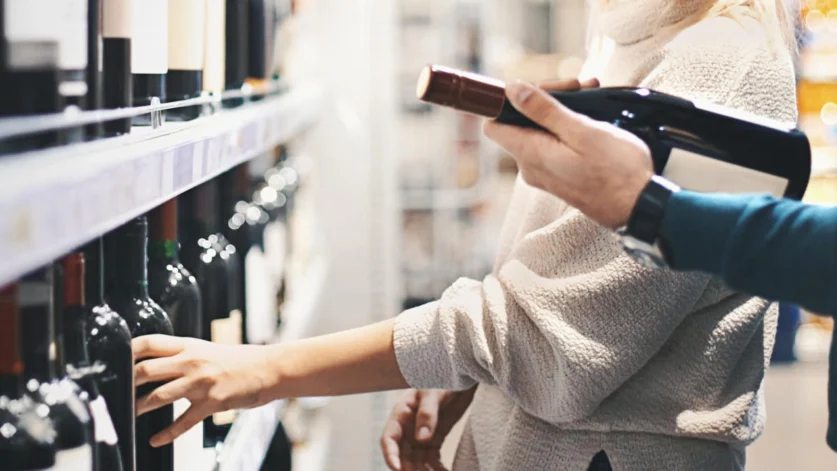
The role of a wine label is to inform the customer about what the bottle contains. However, in practice, this is not always the case. If your wine label simply mentions ‘wine of California’ or a vague geographical area like that, you may be left wondering about the actual content of the bottle. Whether you’re visiting a winery or trying to find a good grocery store wine, it is important to inspect the bottle carefully. A reliable wine label should provide information about the producer, region, vintage (the year the grapes were picked), types of grapes, and ABV.
The location where the grapes were harvested matters significantly because it pertains to terroir. Terroir (not to be confused with “minerality,” which doesn’t exist) refers to the impact of the natural environment on a specific wine. For example, various factors like the altitude, sun exposure, soil type, weather conditions, and cold nights, influence the taste of the grapes. Understanding the climatic conditions of the wine-producing region can provide valuable insights into the taste and feel of the wine, regardless of whether the grapes come from well-known wine-producing regions like Napa Valley or, increasingly, Wisconsin.
Read more: 15 Popular Hard Seltzer Brands, Ranked Worst To Best
Fortunately for today’s consumers, it’s not necessary to remember all the unique characteristics of different wine regions; leave that to the experts. If you’re browsing wines in a shop, feel free to refer to your smartphone. A quick search like ‘2019 Syrah Morocco’ can help you find a wine that you’re likely to enjoy. Similarly, if the label says ‘estate-bottled,’ you can find more details by looking up that specific estate. Estate-bottled wines must only include grapes grown on the estate’s vineyard and carry an official appellation if the wine is blended with other varietals.
If the only thing you know about your wine is that it’s a “merlot,” it might be a budget-friendly bottle (which rocks), but if you’re trying to guarantee a certain profile from your wine, vagueness in a label is not encouraging in that capacity. Even if a particular bottle of wine uses a hybrid blend of wine grapes, like a CMS blend (cab, merlot, syrah), the label should indicate what percentage of each grape varietal is in the finished wine.
To take it one step further, wines from some regions like Piedmont, Italy or Bordeaux, France might come with a D.O.C. label so fans can be sure they’re getting the real deal. Protected quality guarantees a wine’s provenance, authenticity, style, and quality, allowing consumers to make educated decisions about which bottles to purchase.
Read the original article on Tasting Table
Unveiling the Riches of Jordan Wine Estate in Stellenbosch, South Africa
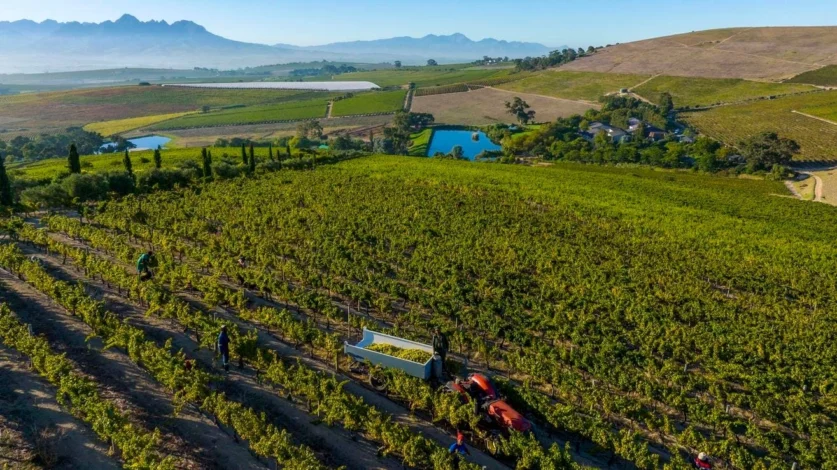
STELLENBOSCH, SOUTH AFRICA – An aerial view of Jordan Wine Estate. This iconic destination seamlessly combines the art of winemaking, culinary excellence and unparalleled hospitality, creating a one-of-a-kind experience that deeply engages the senses and creates a memorable impact.
In the heart of South Africa’s Cape Winelands, Jordan Wine Estate epitomizes the region’s abundance of riches. Not only is the winery (or wine farm as they are called in South Africa) among the most acclaimed in Stellenbosch, but it’s also home to a world-class restaurant. And for those seeking the ultimate winelands getaway, Jordan Wine Estate offers some of the most sought-after accommodation in the area. This iconic destination seamlessly combines the art of winemaking, culinary excellence and unparalleled hospitality, creating an immersive experience that captivates the senses and leaves a lasting impression. Discover for yourself why Jordan Wine Estate is the place to visit in Stellenbosch.
Jordan Wine Estate is a family-owned winery well-known for making exceptional wines that showcase the unique terroir of the region.
The Winery and Wines
Jordan Wine Estate is a family-owned winery well-known for making exceptional wines that showcase the unique terroir of the region. What sets Jordan Wine Estate apart is its unique location and landscape. The estate’s slopes not only face the warmer north and west but also the cooler south and east directions, with vineyards lying at altitudes between 160 and 410 meters above sea level. This multifaceted orientation permits a wide variety of microclimates, which in turn allows the cultivation of an impressive range of grape varieties.
Furthermore, the estate’s proximity to both the Indian and Atlantic Oceans provides an additional layer of complexity to the terroir. The vineyards also reap the benefits of coastal fog and cool breezes, which help to moderate temperatures and ensure a slow, even ripening process. The result: grapes with excellent purity and balance, which translate into wines of exceptional quality.
But don’t take my word for it. The best way to discover Jordan’s unparalleled assets in terms of landscape and location is to see (and taste!) them for yourself by going on a 360° tour of the vineyards. Just one of the activities offered by the winery, this exclusive vineyard and cellar experience takes you on a guided tour through the vineyards in an open safari-style game viewing Land Rover. Along the way, you’ll enjoy spectacular views of False and Table Bays, as you sip and savor some of Jordan’s top vintages. Or do a guided wine tasting under the cover of ancient trees overlooking the lake (you might just catch a glimpse of a rare Cape chameleon in the bushes).
Jordan’s wine portfolio is diverse and impressive, offering something for every palate, including chenin, sauvignon blanc, chardonnay, merlot, cabernet sauvignon, and Syrah. Each wine varietal shows off the nuances and personality of the terroir to its fullest. Two especially notable wine lines from Jordan are the Sophia and Timepiece. The Sophia is a premium Bordeaux-style blend named after the legendary mother of Faith, Hope, and Charity. Deeply layered, this wine offers an opulent finish. Timepiece wines highlight Jordan’s heritage, featuring only single-vineyard varietals from vines over 35 years old.
The Jordan Restaurant with Marthinus Ferreira is a culinary gem.
The Restaurant
The Jordan Restaurant with Marthinus Ferreira is a culinary masterpiece. The skillful chef Ferreira, replacing former chef George Jardine, provides guests an unparalleled formal dining experience with an immaculate blend of outstanding flavors. The tasting menu is a parade of the latest, tastefully delicious farm cuisine enhanced with supreme flavors, structures, and techniques. The dishes are so elegantly presented, it leaves you wondering if Ferreira was a painter in his previous life. With the availability of an open kitchen, you can witness first hand Ferreira’s zeal for food as he prepares your meal. Unexpected color and texture mixes and inventive plating techniques contribute to visually appealing masterpieces that are almost too lovely to eat. Almost.
Savor dishes such as the excellently cooked seared yellowfin tuna adorned with lumpfish roe and escabeche. The sous vide springbok loin offers unimaginable tenderness, the pleasure of which can make you emotional. And the chocolate marquise, topped with malted fudge caramel sauce, will be something you’ll reminisce for weeks after the feast. For a heightened dining experience, opt for the wine pairing and entrust your taste buds to sommelier Richard Chitukutuku. His carefully selected wines and real hospitality will enhance what is already an ideal meal.
So, what could possibly make this meal any better? Leave it to Jordan to take things up a notch with a wall of floor-to-ceiling windows (in summer, the windows slide fully open) that guests can look through to take in sunset over a lake hugged by undulating vineyards and the tranquil beauty of the Stellenbosch winelands. It’s jaw-droppingly beautiful and the vista makes for an ideal meal companion.
For a truly immersive stay in Stellenbosch, you’d do well to book a couple of nights at Jordan Wine Estate’s luxury suites, which overlook the vineyards and Stellenbosch mountains.
The Accommodation
For a truly immersive stay in Stellenbosch, you’d do well to book a couple of nights at Jordan Wine Estate’s luxury suites, which overlook the vineyards and Stellenbosch mountains. Tucked away discretely among the natural mountain fynbos of the region, you’re just steps from the winery and restaurant — though you’ll feel like you are miles away hidden in a verdant oasis. In fact, Jordan Wine Estate belongs to the Cape Floral Region, a UNESCO World Heritage site famous for its amazing biodiversity. This region, despite being the smallest of the world’s six floral kingdoms, boasts an exceptional array of plant species, many of which are found nowhere else on earth.
The comforts inside are just as inviting as the beauty outside. Large rooms with king-size beds, high-quality Egyptian cotton bedding, and floor-to-ceiling windows make up each unique suite to guarantee a memorable and luxurious stay. A number of suites feature a soaking tub, wood-burning fireplace with firewood provided, and a separate lounge area. Every room has a private veranda for you to enjoy the provided bottle of Jordan wine while taking in the breathtaking scenery of vineyards and mountains. This is a place to truly immerse yourself in the serene uniqueness of South Africa’s Stellenbosch region.
Launch of Wine 9.8: Featuring Mono Updates and Enhanced ARM Improvements

Another biweekly development release for the Windows compatibility layer is here, with Wine 9.8 now available.
Highlights of this release include:
The changes from Wine Mono 9.1.0:
There’s 22 bugs noted as solved from this Wine development release including a bug from all the way back in 2005, which was for the Microsoft Office 97 installer. There’s also fixes for Battle.net, Corsair iCUE 4, Installshield and various other miscellaneous apps and Windows compatibility issues.
Exploring the Unique World of Texas Wine

Here’s the engaging narrative I crafted about Texas’s wine culture:
Individuals outside Texas can harbor any perception about the state’s wine. It could sway towards love, indifference, or even disdain. Yet, for a true Texan, these views are inconsequential. They stand firm in their enjoyment and adoration for Texas wines.
While it’s uncertain how much of this narrative is factual, I cannot turn a blind eye to the ongoing rivalry between Texas and New York for the fourth rank in terms of wine production volume. What’s remarkable is the exponential growth of Texas’s wineries, from merely 20 in the 1980s to a whopping 450 today. These wines may not regularly grace the shelves of retailers or restaurant wine lists, yet they are consumed in significant volumes. Undoubtedly, it’s not the non-Texans who are relishing these Texan wines.
White, Red, Rosé wine glasses
Several weeks ago, I hosted a gathering of friends and wine enthusiasts to sample a selection of wines from Texas. For many, it was their first encounter with Texan wines. Given the unfamiliarity, it was expected to face some level of doubt about the quality of these wines, heightened by personal preferences for renowned international wines from regions like Spain, Italy, and Oregon.
As we each approached the tasting experience, we held onto a mix of preconceived notions and expectations, all impacting our perceptions of the Texan wines being tried. Throughout the course of the tasting, we discovered, articulated, and challenged these biases, concluding with some shared insights about the sampled Texan wines.
Just a note: this informal tasting wasn’t designed to cover a comprehensive range of Texan wines. I’m certain a different set of wines would elicit different reactions and evaluations. However, from our selection that evening, the red wines definitely impressed us. Although we tried white and rosé wines, we found our attention swiftly shifting back to the reds. Memorable in particular was the 2021 Montepulciano Reserve from Hillmy Cellars. It’s distinct notes of dusty leather, plum, tamarind, and horseradish reminded some of us of beloved Spanish reds, with added unique flavors. Multiple tasters expressed that any winery, regardless of geographical identity, would be proud to offer this particular wine.
The intrigue and novelty of these wines sometimes sparked exceptional and imaginative interpretations about the tasting experience. For instance, Hillmy’s Montepulciano Reserve was noted for tamarind and horseradish flavors, while the 2021 Invention LB from Heath Family Brands was described as more French than Italian, with flavors of red pepper seed and even reminiscent of grape jelly in a peanut butter and jelly sandwich.
One of the most flattering comments I received during the evening pertained to participants suggesting they would intentionally consume a certain wine, implying that they would deliberately search for it even if it wasn’t adventitiously provided at this group sampling. This was accurate for the Montepulciano and Invention LB wines as well as the 2021 Nichol from Airis’Ele Vineyards, a fusion of Petite Sirah and Petit Verdot. One tester declared it to be the star of the evening, while another testified to its authenticity, indicating an agreeable interaction between aroma and flavor: the scent showed potential and the taste fulfilled that potential.
Unusual Chase: Man Savors Wine in Forklift as Driver Evades Police in Downtown Auburn

Two men suspected of stealing a forklift and driving Sunday in downtown Auburn were arrested after the vehicle smashed into the fence of a business, according to the police.
The event unfolded around 2 a.m. when police received a report of a stolen forklift at Lincoln Way and High Street, in connection with the Western State Endurance Run.
Police officers spotted the forklift travelling down Lincoln Way towards Harrison Avenue. One man was operating the machinery while his companion was seen drinking wine from a bottle in the passenger’s seat, as reported by the Auburn Police Department online.
According to the police, they attempted to stop the forklift, but the suspects fled on foot. The deserted forklift started to roll back and smashed a fence.
One individual was apprehended under the speculation of owning a stolen vehicle, evading detention, and driving whilst under the influence. Another individual was apprehended under the speculation of possessing a stolen vehicle and resisting detention. Both individuals are currently not in jail, as per the information available on online detainee records.
Organizers name the Western States Endurance Run as the oldest 100-mile race in the world. The race starts in Olympic Valley and concludes in Auburn.
Basketball Royalty Ventures into Wine Industry with Support from Renowned Winery
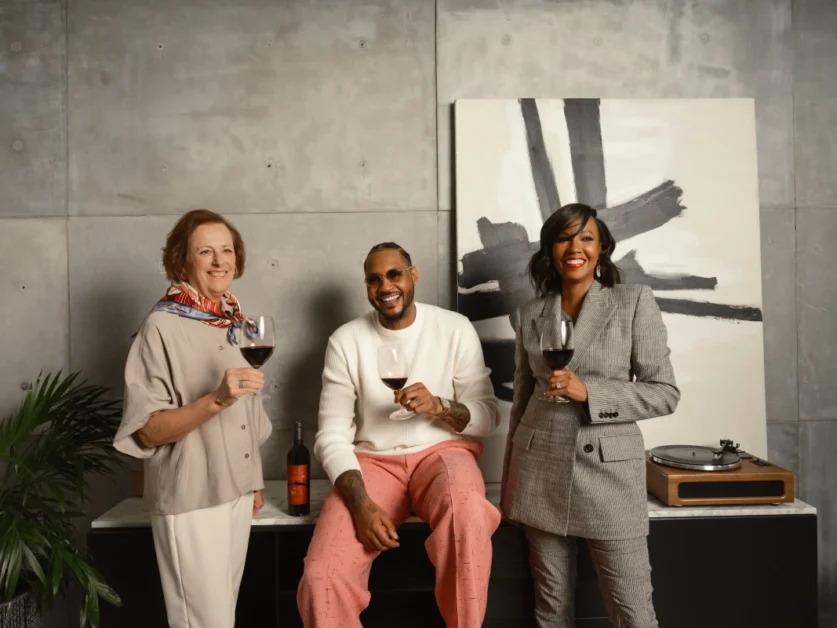
The connection between the National Basketball Association (NBA) and wine continues to solidify today with the official launch of a new wine from VII(N) The Seventh Estate, a wine brand founded in 2022 by Carmelo Anthony and Asani Swann. Today they announce their collaboration with Robert Mondavi Winery, a leader in the wine industry since they were founded in 1966. Along with RMW chief winemaker Geneviève Janssens, the first collaboration release with Robert Mondavi Winery hits the market today.
A multi-year collaboration between the two entities, kicking off with as its first offering, has at its core the shared commitment to winemaking excellence and category modernization, blending the legacy and winemaking prowess of Robert Mondavi Winery with the mission of VII(N) The Seventh Estate. Robert Mondavi Winery is revered for a decades-long, rich heritage and acclaim for crafting exceptional wines that represent both innovation and uncompromising quality. VII(N) The Seventh Estate is driven by a mission to bring new voices into the world of wine, offering premium wines while connecting perspectives and individuals from all walks of life.
Ode to Soul is a proprietary red wine that embodies the essence of true collaboration between three dynamic connoisseurs with diverse perspectives on wine. Crafted by Robert Mondavi Winery’s Chief Winemaker Geneviève Janssens in partnership with Carmelo Anthony and Asani Swann, Ode to Soul is the culmination of each contributor’s unique experiences, distinct palate and creative processes. Drawing from the world-renowned To Kalon Vineyard in Napa Valley’s Oakville AVA, Ode to Soul showcases a blend of Cabernet Franc, Cabernet Sauvignon, and a touch of Petit Verdot. A harmonious blend of rich heritage and future-focused innovation, the 2021 vintage offers a wine experience that is both exhilarating and powerful, yet elegant and classic.
“We are proud to introduce a partnership with Robert Mondavi Winery aimed to produce incredible wines, prioritize innovation in the industry and foster a community,” said Carmelo Anthony, co-founder of VII(N) The Seventh Estate. “The seamless partnership between VII(N) The Seventh Estate and Robert Mondavi Winery is reflected in our inaugural wine, ‘Ode to Soul,’ and is a testament to both the power of collaboration and our commitment to expanding horizons in the wine space.”
Asani Swann, co-founder of VII(N) The Seventh Estate, adds “This is a pivotal moment for the wine category, and we are proud to be at the forefront, creating top quality wines and helping to build a more inclusive industry.”
(SRP: $275)
Men’s Journal aims to feature only the best products and services. If you buy something via one of our links, we may earn a commission.
Wine Press: Introduction to 6 Randomly Selected Red Wines with Great Taste
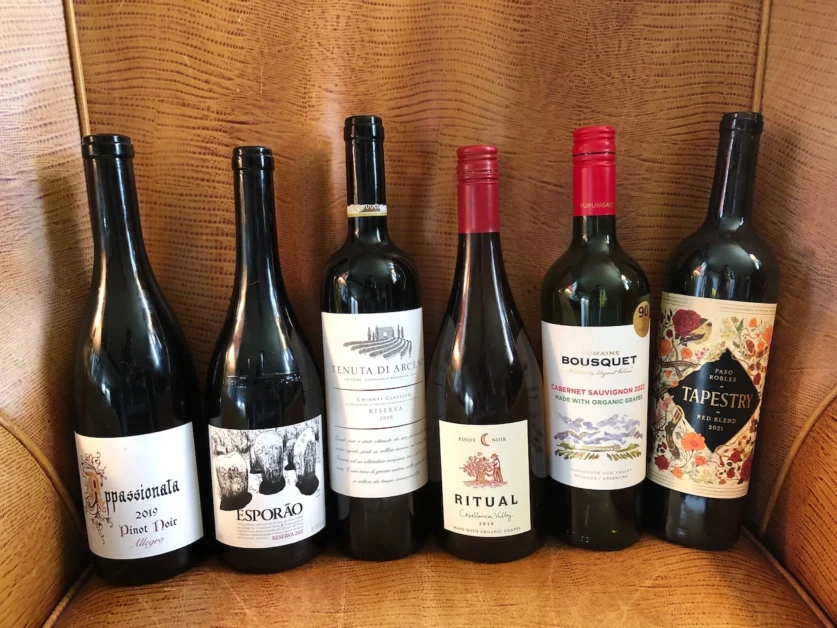
Most weeks, this wine column highlights specific wines that have something particular in common.
Affordable white wines from France’s Rhone region.
Nero D’Avola wines from Sicily for under $25 a bottle.
This week, the focus is a bit broader.
Yes, they all have one thing in common. They’re all red wines.
But beyond that, they cover a wide range from around the world – a cabernet sauvignon from Argentina, pinot noirs from Oregon and Chile.
But all these wines do have one more thing in common – they’re all fantastic. And they all taste great now.
Timing is everything when it comes to wine, music, sports or even comedy. If you’re a split second too late, the song doesn’t sound quite right, your team just missed the game-winning shot or perhaps no one’s laughing at your joke.
The timing isn’t anywhere near that fast when it comes to opening a wine. Instead of matter of a seconds, we’re usually talking about months or years.
Many times, certain red wines get better with age. But if you wait too long – or not long enough – some red wines just don’t taste right.
In most cases, wines that should have been opened months or years earlier taste flat, dull or sometimes (worst case scenario) even vinegar like.
These six red wines recommended this week taste perfect right now.
Hope you enjoy.
WINES TASTING NOTES
2022 Domaine Bousquet Cabernet Sauvignon (Organic Grapes) ($9.99 at Table & Vine in West Springfield)
Region – Mendoza, Argentina
Grape – 100% cabernet sauvignon
Tasting Notes – What makes this wine so great right now is how fresh and lively its light, bright fruit flavors taste right now. Sure, you could wait a few months to drink this wine. But the beauty of this wine made with organic grapes is its youthful energy and flavors, which include hints of fresh raspberry, cherry and blackcurrant.
2019 Ritual Casablanca Valley Pinot Noir ($20 Suggested Retail Price)
Region – Casablanca Valley, Chile
Grape – 100% pinot noir
Tasting Notes – Like the Argentinian cabernet sauvignon recommended above, what I love about this pinot noir from neighboring Chile is its light, bright character. Instead of trying to bowl us over with powerful, intense flavors, this delightful wine has a delicate, lighter-than-air finish with floral hints and raspberry-like flavors and aromas.
2021 Esporao Riserva Red Wine ($23 SRP)
Region – Alentejo, Portugal
Grape – 25% Alicante bouschet, 25% trincadeira, 20% touriga nacional, 15% aragonez, 15% cabernet sauvignon
Tasting Notes – This rich, elegant wine from Portugal’s Alentejo region in the southern central part of the country hits all the right notes – it’s delicate but not too light, fresh but not too fruity. Flavorwise, this understated red wine has hints of wild blackberries and pepper mixed with hints of toasted almonds and black licorice.
2021 Tapestry Red Blend ($25 SRP)
Region – Paso Robles, California
Grape – 72% cabernet, 16% syrah, and 12% petite sirah
Tasting Notes – Napa and Sonoma Valley often steal the spotlight when to comes to great wine regions in California. But if you look further afield, you can often find great, affordable wines like this one from Paso Robles, which is located further south roughly halfway between San Jose and Los Angeles. This charming wine has many delightful flavors, including subtle hints of cedar, dark chocolate, blackberry and black pepper.
2020 Tenuta Di Arceno Chianti Classico Riserva ($30 SRP)
Region – Chianti, Tuscany, Italy
Grape – 90% sangiovese, 10% cabernet sauvignon
Tasting Notes – This luxurious red wine from Italy’s Chianti region illustrates why so many of us love red wines from this part of Tuscany. Many great Italian red wines can cost a fair amount of money. That’s what makes many Chianti Classico wines such a great deal. In many cases, you can find rich, voluptuous wines like this one that don’t cost a fortune. In this particular case, the wine’s flavors are soft and vibrant with hints of cherry, raspberry and dark chocolate.
2019 Appassionata Allegro Pinot Noir ($95 SRP)
Region – Williamette Valley, Oregon
Grape – 100% pinot noir
Tasting Notes – In music, the word “allegro” refers to a piece that’s “bright and lively.” The same description could easily apply to this entertaining pinot noir from Oregon’s outstanding Willamette Valley, which is famous for producing outstanding pinot noirs like this particular gem. Here, the flavors are earthy yet elegant, with hints of cherry, blackberry and plum that last at least half a minute after each sip.
UPCOMING WINE EVENTS
Pairing Perfectly – Table & Vine will host a wine tasting focusing on pairing wines with different foods. The free event will be held Saturday, May 11 from noon to 2 pm at Table & Vine, 1119 Riverdale Street, West Springfield. To register for the event or for more information, please visit Table & Vine’s website.
Rose Wine Open House – Provisions Mill District location is hosting a complimentary wine tasting with emphasis on rose wines taking place on Saturday, May 11, from 1 to 4 pm at 65 Cowls Road, Amherst location. Entry tickets cost $25 per person. Further details about the event are available on the Provision’s website.
Enjoy your drink!
Wine Press by Ken Ross is featured on Masslive.com every Monday and in The Republican’s Weekend section each Thursday.
If you buy a product or sign up for an account through a link on our page, we might be compensated. By using this site, you give consent to our User Agreement and acknowledge that your clicks, interactions, and personal data might be gathered, logged, and/or stored by us and social media and other third-party partners as per our Privacy Policy.
Mother’s Day Special: Get 50% Off on this Functional Wine Tote Bag – A Thoughtful Gift You Can Actually Use

All products and services featured are independently chosen by editors. However, Billboard may receive a commission on orders placed through its retail links, and the retailer may receive certain auditable data for accounting purposes.
Mother’s Day is in two weeks, and you’re probably already panicking about what to get. No need to worry, though, gift giving is easier than you think.
More from Billboard
This ‘Mean Girls’-Inspired Mother’s Day Gift Is Perfect for ‘Cool’ Moms – Where to Buy Online
These Viral Abercrombie Jeans Are On Sale for $40 – Get Yours Now
LeBron James’ Funko Pop! Gets a Price Cut Ahead of NBA Playoffs Game – Save 31% Off at Walmart
If you’re looking for a thoughtful and funny Mother’s Day gift that wine-loving moms can get a lot of use out of, get a wine purse. And we’re not just talking about a purse that’s large enough to carry a bottle of wine; the Porto Vino Wine Tote Bag is akin to a wine flask and a purse rolled into one.
The tote bag holds up to two, 1.5-liter bottles of wine, which comes secured in a removable pouch, plus there’s a discrete drink dispenser on the purse complete with a hidden spout.
$22.50 $44.99 50% off
The insulated handbag features a main compartment, two side pockets and durable straps. The bag is available in eight colors, including Aubergine, blue, burgundy, gray, pink, blue, black and striped.
Shopping for Mother’s Day deals? Save up to 50% off when you purchase the wine purse in select colors.
For events such as Mother’s Day, birthdays, concerts, bachelorette parties and more, the Wine Purse is an affordable present idea. The purse can be used for occasions like picnics, parties, lunches or Mother’s Day brunch.
The wine purse from Porto Vino has 4.7 stars at Amazon with more than 1,800 customer reviews. The bag is also for sale at Walmart.
An Amazon customer who had gifted this item was very pleased with it, as they shared in their review from earlier this year, “I purchased this as a gift and had such remarkable feedback from it, I purchased it again! It really does work, and is a perfect tote for every day, even if you don’t use it for your wine!”
One other happy customer who bought the purse for their mother last year mentioned, “I got this for my mom for Mother’s Day. She loved it and thought it was so funny. We also do use it a bunch lol it looks just like the picture.”
For more gift ideas, check out the best flowers and plants for Mother’s Day and Stanley’s Mother’s Day collection.
Best of Billboard
Diamond of the Season” Wine Auction: A Grand Success Benefitting 17 Local Charities

Among all the wine auctions nationwide, the unique ‘party auction’ takes place right in the Panhandle. For additional News, Weather, and Sports updates from Panama City, Florida, visit: www.mypanhandle.com
Exploring Hotels That Offer Exceptional Wine Experiences: Destination Beyond Bottles

Courtesy of SB Winemaker’s House & Spa Suites
When you arrive at the SB Winemaker’s House & Spa Suites located in Mendoza, Argentina, instead of acres of vineyards, or a massive winemaking facility, you are greeted by a luxury hotel steeped in the wine-making tradition. Every element of this property has been meticulously designed with the wine enthusiast in mind. This intimate establishment is the creation of renowned Argentine winemaker Susana Balbo, and her daughter Ana Lovaglio Balbo. It serves as the initial venture in a collection of luxury hotels the family has planned.
Courtesy of SB Winemaker’s House & Spa Suites
This inaugural hotel concept was devised to offer a private and bespoke experience for visitors in a post-pandemic world. Acknowledging the increasing preference for slow travel, the hotel was designed to offer a peaceful and intimate environment, encouraging guests to remain comfortably within the property during their stay. Regardless of the allure of local exploration within Argentina’s diverse wine regions, the tranquility of this property makes it easy to stay put. Furthermore, Ana and her family have made it a point to bring the wine experience to the guests, with offerings like food and wine, an art collection from Susana Balbo’s personal assortment, and even wine-based spa products for relaxation. Each aspect not only offers a sense of calm but also immerses guests in the rich history of wine-making in her family lineage.
“We aimed to distinguish ourselves from other wine hotels. Hence, we developed the idea of a winemaker’s home,” states Lovaglio Balbo. “The key offering here when guests visit is ‘Be My Guest.’ I formerly resided in this place – though not as it currently is but the garden and the main structure were the same. Therefore, we want guests to feel as if this is an enlarged home and like they are somehow our exclusive guest.”
The SB Winemaker’s House & Spa Suites is so called because of the complete spa features included in each of the seven suites. Features such as deep immersion tubs, steam showers, saunas, private terraces, and abundant room for in-room spa services focused on wine-centric accents like grapeseed exfoliants and hydration wraps with red wine and raisin cream are some of the details that make guests completely unwilling to exit their rooms.
Eating at the hotel’s Michelin-advised restaurant, La VidA, is already a delicacy, though the Chef’s table encounter is something that should not be overlooked. Here, diners can relax and savor a breathtaking fourteen-course banquet conceived by the extremely gifted Chef Flavia Amad, which is presented artistically and expertly paired with Susana Balbo’s wines. Of course, in the style of a true wine hotel, guests can also partake in wine blending trials, interactive pairing exercises, and on-site guided tastings.
This type of accommodation has emerged in wine regions globally, where wine has moved from being merely a feature on an extensive wine menu to being the main attraction of an exciting hospitality trend. Like the SB Winemaker’s House & Spa Suites, these hotels aren’t simply offering wine, but are integrating an entire world of wine into every facet of the experience, promising an exploration that is as instructive as it is sensory. As we travel the world in this roundup, we find some of the global top hotels where wine is not merely a beverage, but a destination in itself, offering guests a journey into the heart of the region’s traditions, culture, and winegrowing lifestyle. Similar to a wine that leaves a lasting impression on our memories, these aren’t just places to stopover; they are experiences to be cherished.
Courtesy of Sofitel Rome Villa Borghese
Click here to make a reservation
Set in a meticulously restored 19th-century Roman palazzo, Sofitel Villa Borghese provides an escape that marries classical architecture with modern luxury and stands as the quintessential hub for wine aficionados looking to immerse themselves in Italy’s rich viniculture. At the top of the list is the hotel’s new partnership with Italy4Golf. This dream links-meets-clinks collaboration offers an exclusive five-night luxury golf and wine vacation that includes instruction and play with a member of the 2023 European Ryder Cup championship team, helicopter transport, wine-tastings, and rounds of golf at some of Italy’s most prestigious courses, like Marco Simone Golf Club and Royal Golf La Bagnaia, among other wine-soaked perks.
Beyond the greens, the hotel amps up the wine journey with a diverse lineup of activities, including Master Sommelier-led blind wine tasting sessions and deep-dive tours into the heritage of local vineyards, like the storied Tenuta Di Fiorano. Sofitel also offers extended stay packages with robust and exclusive pre-planned itineraries for those looking to experience the best from Rome to Abruzzo. With its plush comforts and strategic locale, Sofitel Rome Villa Borghese delivers a stylish, wine-focused retreat.
Courtesy of Montage Healdsburg
Click here to make a reservation
Few places boast a more idyllic setting in which to experience the ultimate wine country getaway than the 5-star Montage Healdsburg. Located in the heart of Sonoma, this sanctuary, surrounded by 15.5 acres of estate vineyards and heritage oaks, has wine at the heart of everything it offers. “The vision for Montage Healdsburg has always been to create an authentic wine country experience for our guests, which is why vineyards were woven into the fabric of the property’s design from the very beginning,” says general manager Allen Highfield. “These are working vineyards so guests will see the full lifecycle – from pruning, maintenance, and eventual harvesting of the grapes.”
The hotel has partnered with wine phenom Jesse Katz, founder of California cult-status Aperture Cellars, to create the resort’s own private, estate-bottled wine label produced from fruit grown on the hotel’s vineyards. Named “Surveyor,” the first vintage—a 2021 Cabernet Sauvignon and 2021 Sauvignon Blanc—is available only to Montage Healdsburg’s guests and residents. “The vineyards have long symbolized our dedication to providing visitors with experiences that embody the true spirit of Sonoma’s wine culture, and we’re excited to debut this exclusive wine as a significant milestone in that mission,” adds Highfield.
When not sampling these fine wines, the resort specializes in organizing custom vineyard tours and tastings with renowned winemakers, and farm-to-table dining at Hazel Hill, the on-site restaurant.
Credit to Quinta do Vallado
There are few wine experiences that can parallel a stay at Quinta do Vallado in the Douro Valley of Portugal. Constructed in the 18th century as one of the region’s earliest wineries, this boutique hotel, after several substantial expansions and refurbishments over the years, has been hosting guests in its 13 rooms and suites, from traditional to contemporary, since 2005. If the setting, reminiscent of your most vivid AI-created dreams of what accommodation in a wine-producing region could be like, doesn’t instantly captivate you, the in-depth wine experiences surely will.
“We aim to blend centuries-old traditions such as foot-pressing grapes in traditional granite tanks, with modern winemaking techniques,” says head of marketing João Alvares Ribeiro, noting that hotel guests can actually participate in these aspects of winemaking as well. “Our wine tourism experiences allow us to share our history and showcase our quality. We offer our guests harvest experiences where they can pick grapes, crush them by foot, blend their own wine, and enjoy the final product.”
Hotel guests preferring not to get so hands-on with their wine can still feel part of the process. The hotel has introduced virtual reality to wine offerings, inviting wine enthusiasts to experience the harvest without setting foot in a vineyard. Wine is also at the heart of dining and relaxation. “Our guest-exclusive restaurants feature seasonal ingredients paired with our wines,” says Ribeiro. “For the more active guests, we offer vineyard trails, jeep tours, bikes, and kayaks. Those looking to relax can enjoy our swimming pools and private spa.”
Courtesy of El Cielo Resort
Click here to make a reservation
Those who have savored the delightful wine journey in Mexico’s Valle de Guadalupe might be striving to guard its status as a hidden gem for gourmands and oenophiles. The mesmerizing architecture, dynamic food scene, flavorful wines, and hospitable culture renders it impossible not to become enamored with this region. Despite numerous accommodation options in Baja, El Cielo Valle de Guadalupe stands out not just for its extraordinary wines, but also for creating an immersive environment for its visitors to stay and enjoy amid the vineyards.
Every villa and suite is crafted to epitomize luxurious comfort, treating guests with peaceful views of the encompassing vineyards and landscapes. For wine enthusiasts, El Cielo provides an assortment of experiences that delve into the intricacies of winemaking. Visitors can engage in detailed tours of the sprawling vineyards, avant-garde wine manufacturing facilities, and underground wine cellars, or participate in winemaking by blending their own wine guided by El Cielo’s certified sommeliers and winemaking team.
“Our skilled team at El Cielo Valle de Guadalupe crafts some of the most acclaimed wines of the region and we enjoy involving our visitors in the enthralling process of winemaking through our on-site blending experience,” notes El Cielo Winery viticulturist Jesús Rivera. “We cultivate diverse species of grapevines on-site, such as Chardonnay, Sauvignon Blanc, Tempranillo, Sangiovese, Malbec, Merlot, Syrah, Zinfandel, Primitivo, Nebbiolo, Cabernet Sauvignon, Cabernet Franc, Grenache, and Pinot Noir. Assisting visitors to become winemakers for a day and choose their preferred blend based on their palate preferences always turns into a joyous journey that results in some delectable wines.”
Acknowledgment to Majestic Hotel & Spa
Click here to make a reservation
This five-star luxury hotel opened its doors in 1918 and has been an icon of elevated hospitality on Barcelona’s Paseo de Gracia ever since. The Majestic Hotel owns its own winery, Alta Alella, and offers unique opportunities to visit either directly or as part of a cruise originating at Port Bell to the Maresme region, where vines are planted on steep slopes that offer sweeping views of Barcelona and the sea. Guests can taste native grape varieties and learn about the winemaking process for the exclusive Cau d’en Genís Cuvée Majestic, a wine produced specifically for the hotel using environmentally friendly viticulture.
Additionally, the hotel recently introduced a new culinary series, the Majestic Wine Dinners. Every two months, the hotel collaborates with like-minded wineries to craft a menu that complements the aromas, flavors, and textures of hand-selected wines. Departing from conventional dinner settings, each event is a culinary experience rooted in the featured winery’s philosophy, vision, and values.