Wine 1106
Ultimate Guide: How to Experience NOWFE with Giant Wine Tastings, Restaurant Parties, and Unlimited Rosé

Champagne is often a highlight at tastings, such as those featured during the New Orleans Food & Wine Experience, also known as NOWFE.
Wine is not only served alongside food to enhance its flavour, but it can also reflect an individual’s mood or the setting of an event. For example, Champagne is often associated with joyous celebrations. As my wine knowledge has developed through a mix of both formal and informal tastings, I found that different types of wine can be paired accordingly with each season.
As we navigate the sultry summer season, the timing of the New Orleans Wine and Food Experience couldn’t be more suitable.
The Grand Tasting is the most significant event during the New Orleans Food & Wine Experience, which offers a variety of self-guided wine tastings as part of the festival’s programme.
The annual wine festival is now scheduled for early June, taking place from June 4-9 this year. The timing is designed to help local restaurant and hospitality businesses during the typically slower season.
Personally, it’s also an opportunity for me to discover the wines that will accompany me throughout the summer.
Vinola is an upscale wine tasting event, which is part of the Orleans Food & Wine Experience (NOWFE) festival program.
NOWFE offers a variety of experiences, and there are numerous ways to engage in it, including wine dinners and wine-focused workshops and activities. Also, new events have been added this year such as a Champagne launch party and an Italian dinner on Sunday to conclude the festival week.
Noteworthy facets of this experience include large, independent wine tastings in three unique formats – the Grand Tasting, the grandest one; Vinola, a sampling of premium wines; and the Tournament of Rosés, an entire evening dedicated to rosé wine only.
The Tournament of Rosés is now an event held on the central stage on Fridays at the New Orleans Wine & Food Experience.
No matter which format you choose, a vast selection of wines, way more than anyone could possibly taste, awaits you. Thus, it’s crucial to devise a strategy. Mine has always been to focus on a specific genre or style of wine best suited for the time of year. Sometimes, it could be Italian white wines exploring the infinite varieties from that country, or perhaps French reds, which are perfect when slightly cool.
Winemakers and distributors serve from hundreds of bottles of wine at the New Orleans Food & Wine Experience at the Ernest N. Morial Convention Center.
Credit: NOLA.com | The Times-Picayune
But there’s more than just wine tastings to experience. Below, I’ve highlighted several other ways to engage with NOWFE. Keep in mind that the event offers both individual tickets and various tiered packages. Take a look at the NOWFE website for further details on ticketing information.
One such location of interest is the courtyard at Brennan’s Restaurant located at 417 Royal St.
The NOWFE Kick-Off Celebration starts on Tuesday, June 4, from 5:30 p.m. to 7:30 p.m. at Brennan’s Restaurant.
Expect Brennan’s courtyard and Rooster Bar to be a hub of sparkling wine activity as the event kicks off. The party features a Champagne tasting and a ‘saberage’—a fancy term for opening Champagne bottles with a saber blade. Also, enjoy an oyster bar and appetizers, with the option to learn saberage. Tickets cost $119, with additional saberage lessons for $150.
Vinola, Thursday, June 6, 6 p.m. to 8:30 p.m., Orpheum Theater
The Orpheum Theater in all its Beaux Arts beauty is again the venue for Vinola, and this year, its stunning Double Dealer speakeasy-style subterranean bar is the VIP lounge.
Vinola is a higher-end wine tasting that’s part of the Orleans Food & Wine Experience (NOWFE) schedule of festival events.
If you want to taste wine like a pro, Vinola is for you. This higher-end tasting has wines carrying heftier retail prices, the type you’re far less likely to encounter at consumer-oriented tastings. Local restaurants offer dishes between the wine tables.
Tickets are $215 for general admission; $280 VIP (early admission and special lounge access).
Tournament of Rosés, June 7, 7 p.m. to 9 p.m., Generations Hall
The Tournament of Rosés is a evening devoted to the delightful pink wine as part of the Orleans Food & Wine Experience (NOWFE) schedule of festival events.
Rosé can come in countless styles from different grapes and regions. At NOWFE, you can taste through its varieties and versatility at this night dedicated to the pink wine.
The Tournament of Rosés is an evening event that features the lovely pink wine as a central part of the Orleans Food & Wine Experience (NOWFE) program of festival functions.
Expect a bar dedicated to sparkling wines (rosé included), a cocktail bar, food offered by local eateries, a VIP lounge, DJs and the usual abundance of pink attires reflecting the festive mood of New Orleans people. The entry tickets are priced at $129, whereas VIP access is for $195 (with the entry time for VIP being 6:30 p.m.).
Customers revel in the night at the New Orleans Food & Wine Experience, which returns its Grand Tasting to the Ernest N. Morial Convention Center this year. Picture by Michael DeMocker, NOLA.com | The Times-Picayune.
Grand Tasting, scheduled for Saturday, June 8, from 3 p.m. to 6 p.m., at the Ernest N. Morial Convention Center.
The largest event at NOWFE has been condensed into a single day, but it’s returning to the Great Hall of the convention center. This signifies that all the participating eateries will be in one place for food tasting and matching.
The Tournament of Rosés will feature a variety of wines from across the globe, and it has now been scheduled as a main Friday event at the New Orleans Wine & Food Experience.
One all-access ticket grants the holder the opportunity to sample hundreds of unique wines, accompanied by a wide range of small plate dishes from local restaurants. Regular tickets are available for $149, while VIP tickets (which include early entry at 2:30 p.m.) cost $215.
The Labs and Experiences event will be held at various locations on June 7-8.
Wine enthusiasts have the opportunity to engage with winemakers and representatives directly at the New Orleans Food & Wine Experience (NOWFE) events, sampling numerous wines in the process.
NOWFE’s labs are wine-based educational seminars, generally characterized by an enjoyable nature (most likely due to the wine involved). Simultaneously, its “experiences” are devised with the intention of providing amusement primarily, with a sprinkle of enlightenment along with added servings of wine.
A selection of dessert wines paired with sweets is a part of the instructional event at NOWFE.
These seminars take place at the Marriott Warehouse Arts District Hotel, with a variety of subjects such as wine blending, the impact of selection of glassware on the taste of the wine, and the intricacies of pétillant naturel wines – the “pét-nats” often spotted at speciality wine stores.
Various restaurants and venues host exciting experiences. This year, an outdoor wine party will be on offer at Bacchanal, featuring South American food from chefs Joaquin Rodas, Alfredo Nogueira and Wilfredo Avelar.
Bacchanal in New Orleans, a hotspot for food and wine enthusiasts in the Bywater, is a place where people love dining outside. The Times-Picayune credited the photo to Sophia Germer of NOLA.com.
A new restaurant in town will be hosting its own tapas and tempranillo party. Guests at Galatoire’s can also look forward to a sampling of its classic dishes paired with wine. Current Crop Roasting Shop will be organizing coffee roasting classes, and a pastry pairing. Reginelli’s is conducting a pizza making workshop. At Picnic Provisions & Whiskey, patrons can learn the art of mixing an old-fashioned cocktail at an expert class which culminates in a family-style fried chicken feast. Visit the event page to check for timing and ticket costs.
Restaurant Wine Dinners will take place on June 5, at various locations
Wine dinners at local restaurants paired with visiting vintners and wineries are always part of the New Orleans Wine & Food Experience.
The night is the same, but the way NOWFE’s wine dinners play out will be as varied as the host restaurants themselves. As usual, each is paired with a visiting winery for a close look at the label’s offerings.
They range from premium venues like Restaurant August and the Grill Room, to community restaurants that modify their strategies for this exclusive event, such as Junior’s on Harrison. Details, menus, and reservation links can be found at nowfe.com.
Burlesque, Bubbly & Brunch, happening on June 9, 11 a.m., at the Omni Royal Orleans.
Burlesque, Bubbly and Brunch draws the New Orleans Food & Wine Experience to a close every year, marking one of the primary events of NOWFE.
Once the Grand Tasting wraps up on Saturday, a lively Sunday brunch in true New Orleans style awaits, complete with unlimited sparkling wine, a glitter bar, and burlesque performances put on by Trixie Minx Productions. One can have this exciting experience for just $95.
Downtown New Orleans houses Gianna, an Italian dining spot, which is a venture of the Link Restaurant Group led by Rebecca Wilcomb.
Sunday Supper, arriving on June 9, 5 p.m., at Gianna
New on the schedule this year, Donald Link’s Italian restaurant Gianna will serve a family-style, four course dinner with wine pairings, led by Gianna chef Jared Heider and Ann Kim, executive chef of the Garden & Gun Club in Atlanta. Tickets at $120.
Follow Where NOLA Eats on Instagram at @wherenolaeats, join the Where NOLA Eats Facebook group and subscribe to the free Where NOLA Eats biweekly newsletter here.
Email Ian McNulty at imcnulty@theadvocate.com.
{{description}}
Email notifications are only sent once a day, and only if there are new matching items.
Demystifying Sommeliers: Essential Tips for Engaging with Wine Professionals for Enhanced Experiences

Confronting a sommelier at your dining table often causes a significant degree of vulnerability and self-doubt among many fully-fledged and usually assured adults.
No matter how frequently you consider wine, whether daily or just during special occasions, wine retail sellers and sommeliers should serve as the initial point of consultation for anyone faced with decisions regarding wine. In essence, these wine experts exist for the sole purpose of aiding consumers in comprehending wine bottle labels and menus. The more proficient ones dedicate several years to studying wine just to be able to suggest the impeccable pinot noir or recommend pairings for exotic foods.
What then, causes us to freeze when a sommelier comes over with the wine menu and a handful of pleasant inquiries? More so, how often do you find yourself avoiding your regular retailer despite clearly needing assistance?
According to Torrence O’Haire, the executive beverage director at the Gage Hospitality Group—which operates restaurants like The Gage and Acanto situated around Millenium Park—the social pitfalls enveloping wine can explain this. “There’s a common dread that if you select the incorrect bottle or consume the wrong drink, you’ll appear foolish in front of everyone,” he proclaimed. “Due to fear that the sommelier may belittle them or make them feel embarrassed for not having spent enough cash, many guests choose to avoid communicating with a sommelier.”
Wine professionals understand the unease many feel when talking about wine, but most would gladly alleviate your discomfort. The key is to strike a rapport with them.
The first rule, according to O’Haire, is to find someone knowledgeable about wine with whom you feel comfortable talking. Look for restaurants or shops where the wine experts are interested in building a relationship with you. If they’re not helping you feel at ease, it may be time to find a new place.
Don’t hesitate to discuss your preferences with your sommelier or wine retailer, especially in terms of how much you intend to spend. Your budget is undoubtedly the most efficient way for wine professionals to suggest the right choices.
The prospect of revealing your budget to a date, relative or business associate may seem daunting, but O’Haire notes customers should feel wholly relaxed telling their wine experts how much they wish to spend. Whether it’s $40 or $400, their goal is to ensure you’re happy and satisfied with your choice.
If you ever find yourself perplexed after a conversation with a sommelier or other wine expert, you are not alone. Understanding the language of wine can be challenging due to its complex jargon and the vast differences in how consumers and wine professionals discuss the subject.
Unfortunately, this problem is a two-way street. “As wine professionals, we are so engrossed in wine terminology, we often use unique terms or reference regions and grape varieties that are unfamiliar to most,” explains George Day-Toles, a sommelier, and the beverage and education manager at Verve Wine, a wine shop located in Lincoln Park. “When I’m at home, my husband will often ask me to explain a wine ‘like he’s four years old,'” says Day-Toles.
“However, as a community, and particularly in Chicago, we are striving to demystify the world of wine and make it more accessible. We want our customers to feel comfortable and know that we are truly listening, not merely trying to sell products,” expresses Day-Toles.
The consumers, on their part, also contribute to the confusion by often misusing fundamental wine terms. For instance, one common misunderstanding pertains to whether a wine is dry or sweet. By definition, a dry wine has no perceivable sweetness due it having little to no remaining residual sugar after fermentation. In contrast, a sweet wine tastes sweet because it still retains some residual sugar.
Wine enthusiasts often misuse the term “dry” when discussing wine, applying it to a variety of sensory experiences beyond just its sugar content. The term can be used to refer to the lack of intense fruity flavour, or the astringent quality of tannins—the bitter compounds found in grapes or wood that lend a textural quality and puckering sensation to wine.
Fruity flavours in wine such as cherry, mango, or grapefruit are often mistaken for sweetness, even in the absence of sugar. It is not unusual for wines associated with bold fruity flavours—such as Sauvignon Blanc or Pinot Noir—to be completely dry.
Day-Toles notes, “When a customer requests a sweet wine, I always need to clarify if they refer to a wine with residual sugar when they say ‘sweet’, or if they’re seeking something that is merely fruity and juicy.”
The term “smooth” is another term that tends to create confusion due to its subjectivity. It might be used to describe the overall texture of a wine, implying low acidity or soft tannins. However, consumers often use it to describe various aspects, from the presence of residual sugar to the absence of bubbles or fizz. In the worst case, the term “smooth” may denote a blandness that’s verging on lifeless.
“It’s fine if that’s what they really want,” O’Haire said, but there are a lot of unhelpful wine terms that remind him of a line from the movie, “The Princess Bride.” “You keep using that word, I do not think it means what you think it means,” he quotes.
This communications gap is why sommeliers like O’Haire often opt to wipe the slate clean of wine terminology altogether when interacting with guests, peppering them instead with questions about anything from their current mood to their favorite movie just to establish rapport and openness instead. “Sometimes, the most useful information a consumer is much more basic,” he said. “If a guest tells me, ‘at home we drink a lot of pinot grigio, I love Chablis but I don’t want to spend that much money tonight and I’m having fish for dinner,’ I can quickly triangulate from there,” O’Haire said.
After all, the best wine professionals are more than just wine experts. Sometimes a translator, detective and psychologist too, they’re your most underutilized advocate in getting the greatest rewards from your wine purchases.
Anna Lee Iijima is a freelance writer.
Experience San Francisco and Wine Country with Four Seasons Hotels
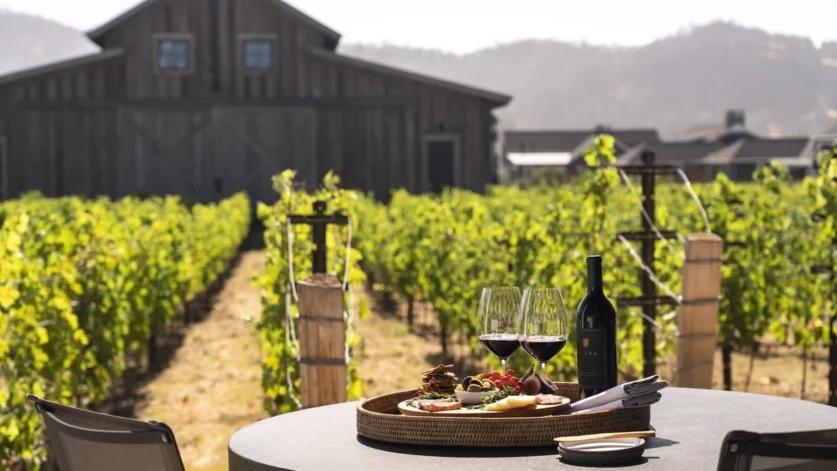
Outdoor dining at Four Seasons Napa Valley. It’s part of the immersive city-to-country experience … [+]
offered by two Bay Area Four Seasons properties.
It always surprises me when people who love California tell me they haven’t been to Napa Valley. Wine country isn’t just some dreamy Bay Area side trip; it’s a quintessential piece of the culture and economy, shaping the very lifestyle and spirit of the region. Skipping Napa is like visiting San Francisco without seeing the Golden Gate Bridge or biting into a slice of sourdough; you’re not getting the total package.
An immersive new travel experience at two Four Seasons properties brings together the very best of San Francisco and Napa on an itinerary that mixes dining, imbibing, and sightseeing for a one-of-a-kind city-to-country adventure. In just a few glorious days (the length is up to you), the trip lays to rest the idea that the Bay Area is stuck in a downward coil of urban despair and economic struggle, sometimes referred to as the “doom loop.”
Occupying the top 11 floors of a 48-floor tower in San Francisco, the Four Seasons Embarcadero has … [+]
some of the best hotel views in the Bay Area.
San Francisco, known for its history of gold rush settlement, cultural shifts, and tech advancements, has always thrived through challenges and is seeing another resurgence. Evidence of this is visible around the famous TransAmerica building, where a range of new public open spaces are set to open soon, promising new eateries, stores, lounges, activities, and a sky bar.
Not far away, the Four Seasons Hotel San Francisco at Embarcadero is playing a significant role in the city’s revitalization. Sitting on the top 11 levels of a 48-story iconic tower, the hotel reopened in June 2021, after a temporary shutdown due to the pandemic, and offers breathtaking city and bay views. The hotel, one of two Four Seasons establishments in San Francisco, the other located on Market Street, serves as both a retreat from and celebration of city life.
Guests can partake in a cocktail menu offered by Four Seasons Hotel Embarcadero in San Francisco. The hotel also arranges tours with art photographer Adam Jacobs who imparts valuable advice on art photography, best locations for capturing city landmarks and the bay, and how to leverage optimal lighting. For more adventurous guests, the hotel partners with Adventure Cat Sailing Adventures for a 1.5-hour sunset sail from Pier 39 to the Golden Gate Bridge, offering a unique perspective of the city.
It’s a ten-minute walk from the hotel to Quince, a three-star Michelin restaurant that last year opened a more “approachable” salon, featuring an abbreviated tasting menu in an area with comfortable banquette seating. Or you can stay put at the Four Seasons and enjoy a flight of cocktails at the ground-floor Italian restaurant Orafo, which makes its pasta in-house and procures its meats and produce from local farms.
With two pools, two restaurants, a spa and an on-site vineyard and winery, guests don’t need to leave Four Seasons Napa Valley for the total wine country experience.
The city-to-country program kicks off for real with a limousine transfer to Four Seasons Resort & Residences Napa Valley in Calistoga. Open since 2021, the lush and scenic retreat on 22 acres has 85 guest rooms, two pools, two restaurants (including one with a Michelin star), a bocce ball court, a fitness center, an eight-room spa and its own boutique vineyard.
The 4.7-acre vineyard is not merely decorative. It’s integral to the onsite winery, Elusa, which employs organic farming practices. Winnemakers Jonathan Walden and Thomas Rivers Brown work together here to produce a noteworthy range of fine red wines. Guests at the hotel have the luxury of enjoying a comprehensive barrel room and wine-tasting experience without ever having to leave the grounds. This pleasant diversion can nicely precede a dinner at either the hotel’s own farm-to-table restaurant, Truss, or at the only Michelin-starred restaurant in Calistoga, Auro. Chef Rogelio Garcia, formerly of The French Laundry, brings a disciplined, yet whimsical, touch to Auro’s laid-back kitchen. One creative amuse-bouche offering, for instance, is an inventive version of eggnog served in a laser-cut eggshell doubling as a tiny bowl, held aloft by a ceramic chicken leg.
Calistoga is famous for its geothermal hot springs and healing mud baths. When guests visit the Four Seasons spa, they can relax with treatments that incorporate this mineral-rich mud, used in scrubs and massages to detoxify and comfort the body. The spa also offers outdoor misting decks, steam rooms, and quiet lounges that aid in releasing tension and stress. It provides a perfect place to enjoy all the unique beauty and intrigue the Bay Area has to offer, be it bustling city scenes, peaceful countryside views, or a delightful mix of the two.
One community, multiple voices. Set up a free account to share your insights and thoughts.
Our community is focused on promoting open, thoughtful dialogue. We encourage our readers to interact, exchange thoughts and facts, in a safe space.
In order to do so, please follow the posting rules in our site’s Terms of Service. We’ve summarized some of those key rules below. Simply put, keep it civil.
Your post will be rejected if we notice that it seems to contain:
User accounts will be blocked if we notice or believe that users are engaged in:
So, how can you be a power user?
Thanks for reading our community guidelines. Please read the full list of posting rules found in our site’s Terms of Service.
Exploring the Top 32 Destinations for Wine Enthusiasts
Whatever your wine preference, there’s a vinous place for your next holiday…
If you’re someone whose interest in different wines and their background has surpassed the color of the drink, then the best places to visit for wine lovers might be on your radar.
While some may look for sun or sand when they’re booking a holiday, those who have an affinity for wine might be looking for something different.
From California’s rich vineyards to Argentina’s traditional wineries and the many regions of France and all the delicious wines they have to offer, here are the best places in the world to visit if you’re a wine lover.
Renowned for their superior wines, the western coast of the United States houses the esteemed Napa Valley and the ever-cool Sonoma. Landmark wineries like Robert Mondavi and the stunningly beautiful Domaine Carneros, a personal favourite due to their intricate wine tour and smooth, creamy sparkling wines, are nestled here among smaller, family-owned wineries offering unique tasting experiences. With an extensive collection of wineries, there is something to suit every wine enthusiast’s palate. Particularly prevalent are the full-bodied Chardonnay and Cabernet Sauvignon, coupled with Pinot Noir, Merlot, and Sauvignon Blanc production.
Bordeaux, often considered the world’s most iconic wine region, is composed of five distinct appellations. It is the perfect location for fans of red wine. The northern region, Margaux, is renowned for its dry reds like Cabernet Sauvignon and some Merlot, while Pauillac boasts similar types, offering a richer depth of flavour. Pomerol is the destination for splurge-worthy wine varieties, noted for its powerful, silky Merlot and Cabernet Franc. Saint-Emilion is the home of smooth Cab Francs and Merlot, complemented by bold Cab Sav offerings. Fans of sweet, white wines such as Semillon, Sauvignon Blanc, and Muscadelle should not miss a visit to Sauternes.
La Rioja, nestled in Northern Spain, caters to those interested in experiencing traditional winemaking along with delectable tapas. The region features a variety of wineries, ranging from old-world settings in quaint villages to newer productions in larger cities. Here, you’d admire bold wines, as the region is renowned for its oak-aged Tempranillo and robust Garnacha. The white wines have also made significant strides in recent years, with woody and fruity Viura, Malvasia and Garnacha Blanca wines gaining popularity.
Puglia is esteemed for its potent Primitivo wines, often characterised by their bold, fruity notes, but the region is much more than its dominant purple grape. The tart, berry-like Negroamaro grape is used to create medium-to-full-bodied blends, and their herbal Verdeca grape blends into aromatic whites. Visit Puglia for an authentic Italian experience, accompanied by tastings of their bold, full-bodied wines.
Sign up to our free daily email for the latest royal and entertainment news, interesting opinion, expert advice on styling and beauty trends, and no-nonsense guides to the health and wellness questions you want answered.
If you are a fan of bold whites, this is the journey for you. The two primary grapes that originate from this region are Chardonnay and full-bodied Pinot Noir. With five distinct areas to explore, there’s plenty to see. Chablis is renowned for its famously smooth Chardonnay, while in Côte de Nuits, Côte de Beaune, Côte Chalonnaise, and Mâconnais, you can find both red and white wines. Be sure not to miss out on Louis Jadot in Macon for the smoothest, highly palatable blends.
Being the home of the oldest defined wine region globally, Porto, the Douro Valley comprises two sub-regions – Douro and Porto. Its defined status means that Porto is the sole producer of Port wine worldwide, ensuring the wine’s quality is maintained. Conversely, Douro produces dry reds using Touriga Nacional, Touriga Franca, and Touriga Roriz grapes, yielding deep and full-bodied blends resembling Cabernet Sauvignon and Shiraz.
Champagne, likely the most recognized defined region globally, doesn’t need an introduction. If you enjoy sparkling wine, this is the only destination where you can witness its production. Divide your time between the larger, well-known estates that produce in large quantities, and the smaller wineries that follow more prolonged processes to yield higher-quality products in smaller batches.
Enjoy a sun-soaked journey to Croatia combined with a discovery of their lesser-known wines. They offer a diverse array of whites and reds which can appeal to any wine connoisseur, from the robust Teran reds characterized by high tannins to a kaleidoscope of whites such as the full-bodied Pošip or Malvazija Istarska, a lighter and invigorating variety.
Mendoza might be famous for its rich and peppery Malbec wines, yet it is also a significant producer of Cabernet Sauvignon, Chardonnay, Syrah, Torrontes, and Sauvignon Blanc. While it is ideal for those attracted to full-bodied wines, it also caters to people with more delicate palates. Consider touring renowned wineries like Catena Zapata or Trivento. For a more traditional experience, Zuccardi is the place to be, while Trapiche offers a more contemporary vibe. Don’t forget to take a moment to savor the exquisite Bodega Norton.
The Cotes du Rhône region is a paradise for anyone who enjoys Syrah, Cinsault, Picpoul, Grenache, and Viognier, as well as wines crafted in the renowned Châteauneuf-du-Pape region. It is a haven for admirers of both red and white wines, offering a diverse choice of wineries to visit, from prominent producers to smaller, antiquated establishments. Guigal is a must-visit if you’re seeking something truly extraordinary.
Chile houses three primary wine-producing regions, each boasting a myriad of wineries open for tours. The main highlight, due to its closeness to the capital, is the Maipo Valley, famed for its potent Cabernet Sauvignons. For Syrah enthusiasts, the main source is the Elqui Valley – the climate here is a tad cooler, but the wines are equally full-bodied. For those keen to explore high-end wines, be sure to schedule a visit to the Colchagua Valley, celebrated for its exceptional Carmenere.
If you plan on spending a warm summer night with a cooling glass of rosé, most likely you’ll choose one from Provence. However, have you ever considered that this famous pink wine region also creates delightful red and white wines? Take a journey across the region to experience all the flavors – ranging from medium-full-bodied reds, light whites, and even bold alternatives. Plus, there is, of course, the ever-popular and pleasing rosé practically available on demand.
Unsurprisingly, the most celebrated wine region in Provence is Stellenbosch, famously known as the hometown of the Pinotage grape. Here, there are hundreds of wineries to be explored, featuring blends from rich, full-bodied Pinotage and Shiraz to the classic Cabernet Sauvignon. You can also find robust yet silky Chardonnays and light, fruity Sauvignon Blanc combinations.
Travel a couple of hours northwest of the capital and you will find Ribera del Duero, a region known for its strong, tannic wines, offered by large, polished wineries. Although there are also smaller, traditional wineries available, a greater array of these may be found in Rioja. This is a must-visit destination for lovers of robust red wines.
Sicily, the birthplace of the popular, juicy Nero d’Avola, is your go-to location for intense, savory, and often jammy red wines. Many small, family-owned wineries dot the region, providing an opportunity to taste rich reds or perhaps the milder Nerello Mascalese, which is perfect for producing light-bodied reds or smooth rosé wines.
The Marlborough Sauvignon Blanc is likely one of the most sought-after whites globally, featuring a light to medium-bodied aromatic wine that pairs surprisingly well with a variety of dishes. These wines are liked by many but might not be the top pick for lovers of oak-flavoured, buttery or robust whites. Nevertheless, Marlborough offers an abundance of bottles of this easy-drinking favourite.
The Loire Valley, a prominent French region, masterfully produces reds, whites, rosés, and even sparkling wines. This valley is an excellent choice for fans of light and medium-bodied wines, with a focus on producing high-quality Sancerre and Sauvignon Blanc. You can also find blends of Chenin Blanc and Chardonnay here. For red wine lovers, the spotlight is on the Cabernet Franc, with an emerging interest in Cab Sav and Pinot Noir.
Mosel is renowned for crafting relatively light and zesty wines with a lot of minerality. This character results in light-bodied whites and medium-bodied reds from this region. However, the most revered wine here is from the Riesling grape, which often comes in light but fruit-filled blends.
The Southern Australia wine region, different from the state of South Australia, includes areas from Western Australia to Adelaide, Melbourne and nearby areas in Victoria, and reaching up to New South Wales. Getting through this region is a grand journey, but it’s a must-do for those who favour full-bodied wines. The region takes pride in its heavyweight Cabernet Sauvignon and Shiraz as the standout reds and robust Chardonnays for white wine enthusiasts.
Alsace, located on the boundary of Germany and France, is celebrated for its individualistic styles and flavours of wine. This distinctiveness is a product of the combined influence of both countries. Interestingly, Alsace is predominantly recognized for its dry Riesling, a divergence from the sweeter variants that are more common. Its additional offerings include light, fragrant mixes made from Pinot Blanc, Pinot Gris, and Gewurztraminer. The sparkling Crémant d’Alsace, known for its exquisite bubbles and velvety flavours, originates from this region and is often used as an alternative to the quintessential Champagne.
Jerez de la Frontera, an old city located in Spain, is famous for its fortified white wine, Sherry, locally known as Jerez. Exploring this ancient city allows visitors to enjoy the Spanish climate while learning about the age-old methods of producing this dry wine.
Greece possesses multiple wine regions, spread across its mainland and numerous islands. These regions are a confluence of unique Mediterranean climate and topography. Your summer vacation could be a mix of island hopping and exploring these diverse wine regions. Notable wines from these regions are the robust Malagousia whites that bear likeness to Chardonnay and the famed Xinomavro reds.
The coastal Mediterranean region assures a plenitude of reds, whites, and rosés making it a perennial destination for wine lovers. A few must-trys include the Cabrières reds, white Picpoul de Pinet, sweet Muscat, and the popular Crémant de Limoux. This smooth sparkling wine with its delicate bubbles is gaining a reputation as a worthy rival to the iconic Champagne.
The southern English counties, despite being relatively new to the wine industry, are producing a variety of impressive sparkling wines. The best blends are predominantly from Kent, Sussex, Hampshire, Surrey, and Cornwall. Notably, the Gusbourne winery in Kent has an exceptional Blanc de Blancs, distinguished for its golden hue and buttery taste. Additionally, if you are in the vicinity of the Bucks/Berks, Harrow & Hope’s Pinot Meunier and Stanlake Park’s Rosé Superior are worth sampling, true to its superior title.
The South West France wine region, one of the most significant in the world, is an ideal destination if you are looking for a quick visit to the world’s finest wineries. The region has a great collection of classic French reds and whites, with a little Spanish influence due to its proximity to the Spanish border. The Cahors Malbec, a bold red wine, is highly recommended for red wine enthusiasts.
Veneto, aside from being the inspiration and the backdrop for numerous literary pieces, offers a selection of light to medium-bodied wines. The lighter reds include Corvina, Rondinella, Valpolicella, and Bardolino, and Soave, Pinot Grigio, and the world-renowned sparkling Prosecco make up the white selection. There are also Trebbiano, Riesling, and Chardonnay, but the light wines are undeniably the stars of the show.
Navarre is acknowledged for its dry yet fruity Garnache rosé wines. However, the same grape is also utilized for red wine production, often blended with Tempranillo, Cabernet Sauvignon, Merlot, and Pinot Noir, resulting in a dynamic wine. If you prefer white wines, Viura, and Garnacha Blanca varieties are available, as well as Moscatel if you have a sweet tooth.
The wine-making process in Washington State, a newer player in the game, stands out from the global scene as its vineyards and wineries are miles apart. It’s worth spending some time touring the vineyards, observing the cultivation of grapes, and exploring small wineries in the surroundings. The area is known for Bordeaux-like red blends and white Rieslings.
Tuscany, known for creating some of the most celebrated Italian wines, offers Sangiovese-based dry red wines including varieties like Chianti, Brunello di Montalcino, and Vino Nobile di Montepulciano. Wines here are marked by high acidity, firm tannins, and deep notes of luscious fruit and berries.
Oregon boasts of sleek and modern wineries, with Pinot Noir being their star product. A variety of Syrahs and Cabernet Sauvignons are also available. In terms of white wines, they offer Pinot Gris, Chardonnay, and Riesling.
For an Italian wine alternative to the classic Chianti, Piedmont is renowned for its Barolo and Barbaresco wines, all of which are made from the Nebbiolo grape. The area’s wines are characterized by medium to high body blends, high acidity, tannins, with a hint of fruity flavours.
Though it may seem unlikely, this region is renowned for light, citrussy white wines. If you are an avid fan of such wines, chances are you’ve savored the unique taste of the slightly peppery Grüner Veltliner which originates from this region. Here, you can spend your time tasting the renowned white wines or delightful Riesling. Not to forget, quality Pinot Noir wines are also available for red wine enthusiasts.
In her capacity as Digital Beauty Editor at woman&home, Aleesha lends her extensive knowledge about the finest techniques, cutting-edge tools, and recent products. She possesses a special expertise in skincare and fragrance.
In her previous role as Deputy Editor and Beauty & Fashion Editor for My Imperfect Life, she was in charge of beauty, fashion and eCommerce pages. Earlier, she worked as Shopping Writer at woman&home, secured an AOP awards nomination while part of their news team and contributed to notable publications like Women’s Health, Stylist, and Goodto. Aleesha also has an MA in Magazine Journalism from City, University of London.
Considering the erratic supply of sunshine in the UK, it’s always a smart move to have foods rich in vitamin D readily available. The expert’s top choices for easy eating are shared below.
By Grace Walsh
Published 27 May 24
Whether you want a weekend with the girls or a mother-daughter getaway, these are best places to pop over to…
By Aleesha Badkar
Published 26 May 24
The Intriguing Process: How Airlines Select Wine for In-Flight Service

At a cruising altitude of 36,000 feet, airline passengers appreciate a glass of wine or champagne, often unaware of the extensive selection process undertaken by airlines to provide their chosen beverages. The selection not only focuses on familiar and enjoyable wines, but also takes into account factors such as quantity availability, the influence of altitude on aroma and flavor, and keeping up with current trends.
When selecting wines, a major consideration for airlines is the quantity available. Even slightly smaller airlines that operate purely long-haul flights, such as Virgin Atlantic, need large quantities. On average, they serve between nine and twelve bottles of each of their wines per Upper Class flight.
Fulfilling the wine demands of larger airlines, especially for the economy cabins, requires large quantities. Even on long-haul business class flights, there are typically at least four wines and two champagnes or sparkling wine options available. These substantial requirements often eliminate a lot of smaller wineries from contention, as they either can’t meet the required demand, or they may not want to.
Price certainly plays a role as the quality of the wine must harmonize with the price and other variables. Considering airlines procure in massive volumes, they generally anticipate a good bargain, however, certain vineyards may choose to sell at a higher price in smaller quantities in the open market.
It’s also crucial to consider how the wines will taste in flight, as the impact of altitude and cabin pressure can make white wines and champagnes seem more acidic and make red wines’ tannins appear harsher. The main challenge for your taste buds in-flight is the dry atmosphere, which can alter your flavor perception. If your nose and palate are dry, it can make the wines taste bland. Drinking plenty of water and using a saline spray for your nose can help mitigate these effects. The good news though, is that modern aircraft, like the Airbus 350, have more humid conditions on board than older ones and this will likely enhance as aircraft advance over time.
Virgin Atlantic selected its wines in agreement with its associates, Jeroboams Trade wine merchants. The wine trader compiles a shortlist of wines after an evaluation by Peter Mitchell MW and their own Jeroboams team, that is then analyzed by a panel of Virgin’s WSET-qualified in-house Food and Beverage management team. This process occurs biannually, allowing a variety of opinions to zero in the best wines for their customers. The changes of wines on board correspond with the modifications on the food menu, occurring in April and October.
The airline has recently switched its champagne to the widely acclaimed Laurent Perrier and will also serve an English sparkling wine, Hambledon, as a welcome drink in the Upper Class. The airline aims to choose a wine that strikes a balance between old and new world wines, wines that travelers recognize and appreciate versus emerging types that are currently trending. Other elements taken into account are the seasons and guaranteeing a mixture of lighter and heavier styles to accommodate all palettes.
Shiada Drysdale, who holds the position of Beverage Lead at Virgin Atlantic commented, “We take pride in offering guest wines on various occasions, these may attribute to wines made in England, wines with a sustainable backstory, seasonal varities, or others that honor specific routes or its origin within our network. In honor of English Wine Week, we are pleased to provide three still wines from England for the month of June. Since 2018, our offerings have included Hambledon English Sparkling, and we are proud to constantly serve such a renowned wine as a signature pour and recently as our Welcome Drink.”
British Airways boasts its own Master of Wine, Tim Jackson, making him the only full-time master of wine to work for an airline worldwide. The airline practices a rotation of its wines every three months, and chooses a different featured British Airways destination such as South Africa for each white and red wine.
In May, Air France declared that it had appointed award-winning sommelier Xavier Thuizat, the head Sommelier at Hôtel de Crillon, to be responsible for the future wine, champagne, and spirits list across all cabins and Paris lounges. This sommelier native to Burgundy will also curate a new variety of French beers to pair well with the French wines and gin already on offer.
A passenger flying on Air France’s La Première is being served champagne.
Air France offers luxury wines such as Laurent Perrier Grand Siècle champagne in La Première, their First class section. Other distinguished wines provided include Bourgogne Pouilly-Fuissé Albert Bichot 2022 in the business class and Meursault 1er cru Château de Blagny Louis Latour 2020 in First class. Air France is among the limited airlines that offer champagne in economy class (Pannier Brut) and business class travellers are greeted with the delightful ritual of a glass of champagne and a snack before meal service.
Even the economy class passengers of Air France are treated with champagne.
Xavier shared, “Joining Air France and collaborating with its teams on curating the company’s wine, champagne and spirits catalogue is a significant privilege for me. I am eager to share my latest selections, mingle French elegance with the secrets of our wine-growing regions, and let you tour the French vineyards throughout your flight. Achieving a balance between tradition and modernity while on a daily pursuit of this will be my responsibility.”
One Community. Many Voices. Sign up for a free account to share your views.
Our community is about connecting people through open and thoughtful conversations. We want our readers to share their views and exchange ideas and facts in a safe space.
In order to do so, please follow the posting rules in our site’s Terms of Service. We’ve summarized some of those key rules below. Simply put, keep it civil.
Your post will be rejected if we notice that it seems to contain:
User accounts will be blocked if we notice or believe that users are engaged in:
So, how can you be a power user?
Thanks for reading our community guidelines. Please read the full list of posting rules found in our site’s Terms of Service.
Discovering the Art of Fine Wine: A Comprehensive Guide

National Wine Day is May 25th. Michelle Paret at Farmstead Roots’ Wines in the Fork shares a few wine pairings to enjoy during Memorial Day weekend.
Top Wine Discounts to Celebrate National Wine Day

Raise a glass because we’re toasting yet another food and drink holiday on the calendar.
On Saturday, May 25, restaurants, grocery stores and wine clubs will be celebrating National Wine Day with some seriously sippable savings.
Whether you like white wine, red wine or rosé, this is where to find the best deals to stock your wine cabinet.
24/7 New York news stream: Watch NBC 4 free wherever you are
From now until May 26, take 15% off your order on JoshCellars.com to celebrate the day with code NWD15.
On May 25, celebrate National Wine Day at Dave & Buster’s and enjoy a $5 wine Happy Hour!
You can save a few bucks on a variety of wines at Whole Foods Market. Browse their sale section to find deals like Whispering Angel rosé for $18.89, Line 39 Sauvignon Blanc for $8.99, Napa Valley Cabernet Sauvignon for $62.99 and dozens of others.
When you sign up for a membership plan by May 28, you can get six bottles of a unique selection of wine for $36. Shipping on your first box is free.
After the initial offer, regular club shipments consist of six bottles costing between $90-$120, plus the charge for shipping and taxes. This depends on the membership plan selected and shipments are scheduled every 2-12 weeks based on the preferences set in your account.
If you wish to discontinue the membership post your first order, ensure to close your account before the processing of the next order.
Total Wine consistently offers competitive prices. At the moment, you can visit their deals page for limited-time offers on an array of wines.
Secure a 1858 Chardonnay Monterey for $24.99 and save $5, or purchase two Torial Red Blend bottles to save $20.
It’s a celebration of National Wine Day and the start of Memorial Day Weekend, and in light of these events, Vivino is launching a massive sale throughout the site.
The sale runs from this moment until Tuesday, May 30, ending precisely at 11:59 p.m. PT. You can avail a 15% discount on any item with the use of the AMERICA15 code. Note that the maximum discount available per order is $75.
Seducing People Above Legal Drinking Age with the Charm of Wine

Photo from Jarritos
A few years ago a friend of mine, who worked in a college career center at the time, invited me to offer a “Wine 101” workshop to a group of graduating seniors and their parents.
The following year, also during graduation season, that same friend asked if we could organize a workshop around “How to Talk to a Sommelier.”
Yes, and yes.
She expressed her intention behind those sessions were to offer the new-gen employees some sort of understanding of wine as a basic skill as they stepped into the workforce.
This is an innovative and well-thought idea. It is possible that as these young folks make their career progressions, they may have to welcome a client and may need to go through a wine list. The moot idea here is to make them manage the situation smartly and confidently.
Currently, I remember my friend and the sessions she held for two potential reasons. First, its the graduation time and a responsible, amicable introduction with wine can be a unique gifting idea for the newly certified LDA (Legal Drinking Age) individuals. Secondly, these are exactly those set of people that the wine industry needs to impress upon, which includes Matthew and myself.
The term “romance” is very intentionally chosen here. It may be shocking to see headlines stating that the wine consumption is reducing among the younger group or even that minimum quantity of liquor is beneficial. Such news is hurtful to digest, not just because the research is incorrect in certain parts; but majorly because the aspect of enjoyment is absolutely missed.
Reluctance or doubts about wine are not what we aim for; instead, we desire to instill the enchantment connected with it, especially among the younger generation. Instead of gravitating towards the ever-expanding variety of wine alternatives by new-coming of age consumers, we want them to establish their identity as wine enthusiasts.
We can achieve this subtly. Responsibly. In an appealing manner. And most importantly, with immense delight.
Image credit: Unsplash | Photo by warm oven
The memory of my 21st celebration feels fresh as ever.
It feels like just yesterday, but in actuality, it was 20 years ago. Incredible.
For years, I’d been frequenting the bars of Santa Barbara with a counterfeit ID. I recall clearly, that night I walked into The James Joyce in Downtown SB. An honest-to-goodness grin was across my face as I anticipated presenting my legally issued ID to Patrick, the head bartender, and a notable figure in Santa Barbara’s nightlife.
Unsurprisingly, he made me pay for my past deceit. My confession of previous underage drinking at his bar put him in an unusual spot. His punishment? THREE “3 Wise Men” shots. Those in the know will feel a pang of recognition at the mere mention of such a strong shot. Those not privy are left to their online search capabilities.
I must specify that there wasn’t a drop of wine consumed on my turning of age, at 21.
My upbringing in Santa Barbara, a city known for its vibrant drinking culture and globally recognized wine region, shaped my peculiar reality. Inspired by a college roommate’s father, a man with an impressive wine collection and an extensively admirable personality, I ventured into the world of wines. By 21, I had more knowledge about wine than most of my peers.
What about those who have just reached the legal drinking age? What determines their choice of drink?
Wine is not exactly an economical beverage. When compared to a case of beer, a bottle of vodka/gin/tequila/whiskey, or modern-day popular drinks like ready-to-drink mixes or seltzers, the average price of a wine bottle can be quite overwhelming.
However, we must note that as individuals advance in age and acquire more discretionary income, they tend to gravitate towards wine as their preferred choice of drink.
Another key aspect to highlight is the matter of health. It’s critical to maintain a unified message. We should clearly inform people of all ages whether drinking a glass of wine can contribute to their wellbeing. The contradictory statements from health bodies are confusing many. The younger generation, it seems, have no issues entirely dismissing alcohol.
I suggest adhering to the findings and principles of Dan Buettner, renowned for his Blue Zones research which inspired a popular Netflix Documentary, Live to 100: Secrets of the Blue Zones. In his discussions about centenarians, Buettner consistently brings up their diet which includes two glasses of wine a day. The only exception being the Seventh-day Adventists in Loma Linda, California, who abstain from alcohol and often live up to a decade longer than the average American.
Everyone desires a health-conscious lifestyle, and while total abstinence from alcohol might seem healthier, it invariably makes for a less sociable choice. This essential detail is another factor influencing those likely to become centenarians: being sociable.
The Potential Pest Threat to Maryland’s Wine Industry: An In-Depth Analysis

By Tara Lynch
Updated on: May 21, 2024 / 6:37 PM EDT / CBS Baltimore
BALTIMORE — Are the pesky spotted lanternflies here to stay?
These pests are causing headaches for Maryland winemakers, who say the sap-sucking insects could sour business.
The bugs have a habit of hitchhiking on cars or individuals, permitting them to move across different areas. As they will reappear this summer, they will rank among the seasonal tourists that throng wineries.
They infiltrate and aim to drain the sap from the vine, mentioned Sarah O’Herron, the initiator and co-proprietor of Black Ankle Vineyards located in Mount Airy. When the infestation is extensive, it can result in the plant’s death.
This invasive species is eliminating the joy for winemakers, possibly leading to expensive harm to vines that have been around for decades.
Most of the vines have been around for 20 years, and the ageing process only enhances the quality of their fruits. Therefore, if the plant weakens, the chances of a decline in wine quality are high, O’Herron added. Disregarding the expenses related to the plant itself, setting it up and maintaining it all these years, the losses incurred cannot be compensated.
The state issued a quarantine for 19 counties and Baltimore City– signaling Maryland residents that these intrusive insects have returned. Despite various efforts, fully eradicating them remains a challenge, with the most effective method being physical removal.
This quarantine restricts the transportation of potentially infested materials that could harbour the spotted lanternfly in any stage of its life cycle, including the stages of egg clusters, nymphs, and mature bugs.
“To control their infestation, just squash them, stomp on them, check your vehicles and yourself to ensure you’re not unintentionally helping in their dispersion,” advised Michael McCracken, an agricultural inspector for the Maryland Department of Agriculture.
Even though the summer season might intensify the problem, O’Herron believes that the farming community, accustomed to dealing with Mother Nature’s challenges, will persevere. While these pests will not lead to the demise of the industry, they will, however, be a significant irritant.
“We’ll have a few irritating years and then I hope it’ll all kind of settle back and we’ll be on to the next thing,” O’Herron said.
These bugs cannot hurt humans.
Before driving, make sure to check your car so that they don’t get a free ride to a place they haven’t been.
Businesses, municipalities and government agencies requiring any regulated item’s movement within or from the quarantine zone must have a specialized permit.
The permit can be acquired by completing a free online training course and test provided by PennState Extension, as stated by the MDA.
Regulated articles that could be included are waste from landscaping, remodeling, or construction, packing materials such as wooden boxes or crates, plant and plant parts, vehicles, and other outdoor objects.
All spotted lanternfly permits for Maryland, Virginia, Pennsylvania, New Jersey, and Delaware are interchangeable and applicable throughout the region.
Those residing within the quarantine zones are urged by the State’s Department of Agriculture to be cautious in preventing the dispersion of spotted lanternflies.
Sightings may be reported through MDA’s online survey. Other informational materials are available on the program’s website.
The best advice – if you see them, squish them.
First published on May 21, 2024 / 5:09 PM EDT
© 2024 CBS Broadcasting Inc. All Rights Reserved.
Discover Your New Favorite Summer Red Wine: An Unknown Delight

Not to boast, but the red Marzemino grape is named in an eighteenth-century opera by Wolfgang Amadeus Mozart. Let that sink in for a moment…
That’s right, in comparison to well-known bottles that remain nameless, Mozart’s mention is a far more esteemed recognition than being referenced in the angst-filled lyrics of Taylor Swift or having Drake rap a few notable lines about you.
Returning to the realm of timeless classical music, the opera Don Giovanni debuted in 1787 to wide acclaim. It’s based on a Spanish libertine named Don Juan, who travels across Europe seducing women and eliminating any man who impedes him.
He’s essentially a man devoid of ethics who meets his end at a dinner party where he descends into the inferno. However, before he’s reduced to ashes, he requests a glass of red wine by exclaiming, ‘Versa il vino! Eccellente Marzemino!’, which translates to, ‘pour the wine, the excellent Marzemino!’
Ok, so Mozart clearly had a death-row wine choice for poor old Don Giovanni, but why Marzemino and what exactly is it?
And how do you take it to another level in the warmer months when drinking red wine isn’t exactly the done thing? You chill it!
First things first – Marzemino is a red grape from the northern part of Italy, the Trentino-Alto Adige region to be precise. It used to be a key ingredient in the famous Colli Conegliano Refrontolo wines, made in the ‘Passito’ style in which the grapes are dried out in the winery to bring out their raisiny sweetness.
Nowadays, Marzemino is its own headline act and produces light, dry and juicy summery reds.
Marzemino wines carry the enticing aroma of herbal and dry notes, combined with the soft and juicy flavours of raspberry and sour cherry. These traits make them quite similar to well-known and beloved red wines like Beaujolais, Cabernet Franc, and Pinot Noir.
Pleasingly, these red wines, including Marzemino, taste just as delightful when served chilled.
It’s not an everyday occurrence that we encounter the Marzemino grape. That’s why it’s quite fortunate that Sainsbury’s offers an exquisite Taste the Difference bottle for a modest amount of under £10. This makes it possible for us to sample this varietal without straining our wallet.
What specifically qualifies this grape as an excellent choice for chilling? Essentially, it’s the grape’s characteristics: it’s soft and fruity, possesses minimal tannins, and features high acidity. This makes the grape incredibly refreshing, especially when it is served chilled on a hot day from an ice bucket.
This £5.99 Lidl wine is (nearly) better than a holiday to Portugal
Two major European airports will let you board a flight without showing your passport
One of Mona Lisa’s biggest mysteries may finally have an answer
Lamborghini engineer dies after his leg ‘turns black’ while on holiday
A bottle of Marzemino happens to be perfect for a prevalent speed-chilling trick. This method is fairly well-known among sommeliers and is often summed up as a salted ice bath.
If you enjoy indulging in the luxuries of life, Metro’s Drinks Club is a place reserved for you.
Plunge into the world of Metro Drinks Club, represented by industry professional Rob Buckhaven. It is a space for readers to stimulate their palate with the latest developments in the beverages sphere. Whether it’s about uncovering the trend of Indian Gin or familiarizing readers with pocket-friendly Cremant that is outdoing some haute French Champagnes, this platform is a refuge for celebration-loving individuals.
Remain ahead of the game, as Rob handpicks the most trendy wines and spirits; engaging with specialists and mixologists while delving into the most recent mixtures, identifying the finest alcohol-free alternatives for those who wish to restrain, discovering optimum food combinations for your beverages, and tackling the latest TikTok topics to simplify the beverage milieu.
Can you really make cheap vodka taste expensive by putting it through a Brita filter?
What happens when you put wine in a blender?
And, truly, how should we be storing our wine?
Just half-fill a metal container large enough to hold your bottle with ice, and the other half with water and two cups of salt. Submerge the bottle up to the neck, twist and swirl the bottle for five minutes. The salt brings down the freezing point of ice because saltwater can chill and still remain a liquid.
So, if you’re planning on going somewhere hot anytime soon, or just looking to slather on the suncream out in the garden, if the weather ever turns cranks itself up, Marzemino is the red grape to be chilling down in your saltwater bath.
If it’s good enough for Mozart…
MORE : Super volcano that could knock us back to the Ice Age hit by strongest earthquake in 40 years
MORE : British kayaker, 29, feared dead after vanishing in a river in Switzerland
MORE : Two major European airports will let you board a flight without showing your passport
Sign up to our guide to what’s on in London, trusted reviews, brilliant offers and competitions. London’s best bits in your inbox
By ticking this box, you confirm you are over the age of 18*. Privacy Policy »