Wine 1106
California to Pilot Crop Insurance with ‘Smoke Taint’ Coverage for Wine Grapes

In a major development for the wine industry, the U.S. Department of Agriculture’s Risk Management Agency this summer plans to try out new crop insurance coverage in California to protect growers against losses from wildfire smoke exposure.
The “fire insurance protection smoke index“ will be available as an optional add-on to individual grape crop insurance policies starting in the 2025 crop year, an agency official said at the West Coast Smoke Damage Task Force summit earlier this month.
The pilot program will launch initially in 32 counties where crop insurance is available in the Golden State, with plans to potentially expand to other smoke-prone regions in the future.
“We want to develop something really simple, something that can quickly respond to smoke events or smoke damage at the end of the insurance period, and provide indemnities quickly without minimal interaction,” said Jeff Yasui, agency regional director.
Wildfire smoke compounds can be absorbed into wine grapes and be released during the winemaking process, leaving smoky, ashen or muted flavors that result in wines that can be unfit for sale. In 2020 alone, an estimated 165,000 to 325,000 tons of California winegrapes were lost due to actual or perceived smoke damage, with financial losses of over $600 million.
The smoke-taint add-on or endorsement is designed as an area-based plan, meaning payouts will be triggered if the required number of “eligible smoke days” are recorded in the insured county during the coverage period, rather than requiring individual growers to document losses, Yasui explained during the task force online summit.
The extra insurance is meant to cover the liability for smoke damage between the grape policy’s coverage level and 95% of the crop price. Most of the premium costs will be subsidized by the government.
“The nice thing about it, too, growers don’t have to do lab tests. They don’t have to prove they had losses. It’s just whether or not the area had a loss,” Yasui said. “Indemnities can be issued under either or both policies.”
This new insurance option aims to provide a straightforward way for growers to be compensated for smoke-related damage without extensive documentation requirements. It comes after years of advocacy by the wine industry and research efforts to better understand and mitigate the impacts of wildfire smoke on winegrapes.
“We’re hoping the program is popular and resolve some issues,” Yasui said. “It was a big group collaborative effort, it was a big success.”
The smoke taint coverage rollout, announced amid other coverage changes for other crops from the USDA agency Thursday comes just over a year after the introduction of a House bill (H.R. 4801) that seeks to study and develop such coverage for California, Oregon, and Washington.
“Winegrapes are essential to California’s economy,” Rep. Mike Thompson, D-St. Helena, one of the bill sponsors, said in a statement Thursday. “Yet growers in our state have been struggling to recover after smoke exposure damages their winegrapes. I’ve long advocated for strengthening crop insurance for winegrowers to better capture the risks associated with growing in smoke- and wildfire-prone regions. RMA’s announcement is an essential step toward that goal.”
Natalie Collins, president of California Association of Winegrape Growers, called smoke-damage coverage a “critical need” to the “significant threat” of wildfires.
“This new policy is a significant step forward in protecting the livelihoods of growers and the industry as a whole,” Collins said in a statement Thursday.
Policy coverage for smoke “became a top federal priority” in public policy advocacy for trade group Napa Valley Vintners.
“Today’s announcement that the Department of Agriculture will begin offering smoke insurance policies is a huge win for the Napa Valley wine Industry,” said Rex Stults, vice president of industry relations for the Napa Valley Vintners on Thursday.
Jeff Quackenbush covers wine, construction and real estate. Reach him at jquackenbush@busjrnl.com or 707-521-4256.
Rediscovering Napa’s Heritage: The Revival of Old Vine Petite Sirah Wine

Bush-trained vines during the fog in the Palisades Vineyard
Ten years. Ten years to get a vine just right, according to the heritage way of growing premium wine grapes.
Old Petite Sirah vine
First, the rootstock goes into the soil. Two years later, the vine is grafted onto the rootstock. Six years of getting advice from four well-known viticulturists, one of them a PhD who is a leader in her field of research, with the most experienced vineyard workers meticulously pruning and shaping these bush vines (also called goblet vines because they should be shaped like a goblet cup). Then, after the shape of these bush vines resembles some of the grand old goblet vines of the world, it takes two more years to bring it to an ideal balance of fruit-producing potential through future management in the vineyards.
“In another 30 to 40 years, people will come to the valley and have no idea what old vineyards look like,” explained Palisades Canyon co-owner Steve Rasmussen.
Felicia Woytak
Steve is speaking about the old heritage bush vines that his area of Napa Valley is known for, currently the steward to some of the most precious Petite Sirah old bush vines that top Napa producers have cherished for years. As the old vines around his valley start to get past their prime where they can no longer produce, forcing owners to pull them out, they will be replaced by trellised vines that are more in line with modern practices that help mechanize a lot of the work in the vineyards. But he and his wife, Felicia Woytak, bought their Palisades Canyon property with the primary focus on preserving the heritage style of growing grapes and conserving their 796-acre property as a whole. So, when it came to the vineyards on the property, they would protect those precious, old heritage bush vines but also go through the decade-long process of replanting in the heritage style, which would need many years of detailed work to get the vines to the perfect place, creating an ideal growing zone for the fruit before they could even get the vines where they wanted them for making ultra-premium wine.
Steve fully admits that it has been Felicia leading the charge when it comes to taking on the massive challenge of making sure to not only restore the vineyards to what they looked like over 100 years ago, but also, to insist that the new bush vines are not only for show, as she would go to any length to make sure these new heritage vines lived up to their much older siblings. Today their estate, Palisades Vineyard, is only 17 acres, as they would like to keep it small to continue their meticulous work and to carry on the organic management of the whole vineyard.
Palisades Canyon estate
It has been a long journey for Felicia to find the ideal property, which would incorporate her love for nature, being an adventurous camper and whitewater rafter for decades, her dedication to protecting wildlife and its habitat, her and her husband’s devotion to education and her deep passion for wine. She already had a highly accomplished career in male-dominated industries when she started in the 1990s, navigating herself through Silicon Valley and then making a mark for herself by having her own successful brokerage for commercial real estate. Despite her husband Steve having a very successful career as a mathematics publisher, he makes no bones that Felicia’s incredible financial success makes purchasing Palisades Canyon possible and why they can go to great lengths to keep heritage viticulture alive.
Sheep in the vineyards
Steve and Felicia moved out to Berkeley in the ‘80s and have been part of the wine community ever since. Noting how well they know Napa, as well as Felicia being well-versed in how the real estate market works with every self-proclaimed “dream” property hardly ever living up to its proclamation, one can imagine that it is saying something that when Felicia first visited the Palisades Canyon property, in Calistoga, she was so overwhelmed with the powerful feelings of falling in love with the property that tears started to stream down her face. And they do not take for granted for one moment how lucky they are to have such a place, as they allow educational programs to give kids first-hand experiences with geology, watershed study, regenerative farming practices and allow them to hike their 15-mile hiking path and meet their goats and llama. They especially like to invite lower-income kids and their families to come and enjoy their beautiful property.
Among all these great achievements and incredible projects that give back to the community, they have some of the most sought-after Petite Sirah grapes—despite once being the most planted grape in Napa Valley, Cabernet Sauvignon eventually prevailed with its association with Bordeaux fine wines in France. Hence, Cabernet Sauvignon is king in Napa today, with very few growers making premium Petite Sirah.
Petite Sirah is not a variant of the Syrah grape; it has been identified through DNA testing as the Durif grape variety found in Southern France. It has small berries and makes wine with lots of structure and deep concentration. The best are multifaceted, extremely complex wines.
Steve Rasmussen, Felicia Woytak and Graeme MacDonald in the vineyards
One day, they were introduced to winemaker Graeme MacDonald, who was fascinated by the history of the property which was first planted with vines in the 1870s, thrilled to look at the head-trained, dry-farmed old Petite Sirah vines and to see their “ghost” winery, which is a rare sight, as these wineries were built from the mid-1800s to the early 1900s, during the winemaking boom, so very few still exist.
Graeme MacDonald knows about outstanding, historic vineyards as he is a fourth-generation Napa Valley grape grower and winemaker whose grandparents sold grapes from their property, which became part of the legendary Robert Mondavi To-Kalon Vineyard bottling. After spending some time with Felicia and Steve, all three decided that they would collaborate to make Palisades Canyon wines, creating a small amount of the estate Petite Sirah as well as estate Cabernet Sauvignon (blended with a bit of estate Cabernet Franc and Petit Verdot) and the lesser-known white, estate Chenin Blanc, which are all bush-trained under strict heritage guidelines.
Palisades Canyon’s property with vines near a creek
Felicia admires the top Chenin Blanc ultra-premium wines from South Africa. She feels that the grapes do well in their valley with a good amount of heat, and the bush-trained vines help to keep an ideal balance of retaining plenty of that crisp freshness that Chenin Blanc is known for.
Considering its lack of prestige combined with the difficulty of growing an ideally ripened Petite Sirah grape, one would have thought that the grape would have vanished entirely from Napa Valley, where Cabernet Sauvignon and other grapes are more of a guarantee and do not need to be babied in the vineyards like Petite Sirah. But it still stands in the magnificent Palisades Vineyard. The same can be said about a woman fighting to carve her path in commercial real estate in one of the most competitive markets in the U.S. when male-owned and run businesses had no interest in hiring a woman for anything other than an administrative assistant. By all accounts, she should have crawled in a hole and just disappeared, yet instead, she was able to get female bankers to give her loans so she could buy those properties herself, work for herself and succeed all by herself.
Some rare breeds are hard to wipe out as they find a way to survive, as important people realize their potential, that they are something special, and ultimately become victorious.
2021 Palisades Canyon, Petite Sirah
2021 Palisades Canyon, Chenin Blanc
2021 Palisades Canyon, Chenin Blanc, Calistoga, Napa Valley: 100% Chenin Blanc from organically-farmed Palisades Vineyard. A serious white wine that shows all the uniquely fine qualities of Chenin with an extremely complex bouquet of honeysuckle, dried hay and intense minerality with deliciously rich flavors of apple strudel and quince paste balanced by mouthwatering acidity. A real stunner!
2021 Palisades Canyon, Cabernet Sauvignon
2021 Palisades Canyon, Cabernet Sauvignon, Napa Valley: 95.2% Cabernet Sauvignon, 4.6% Cabernet Franc, and 0.2% Petit Verdot from organically-farmed Palisades Vineyard. A beautiful nose with lovely violet aromas, blueberry scones, and an intriguing underlying note of graphite. The wine has sculpted tannins that are finely pixilated with classic Cab flavors such as tobacco and blackcurrant. The distinctive sense of place is evident with a persistent finish that has lots of finesse.
2021 Palisades Canyon, Petite Sirah, Calistoga, Napa Valley: 100% Petite Sirah from organically-farmed Palisades Vineyard. A profoundly seductive nose that is dark and brooding with blackberry liqueur, licorice, and asphalt. The palate is delectably dense, filled with wild cherry cordial and subtle nuances of baking spices and black tea. The texture is round and plush yet delicately etched to give shape and drive to the finish.
One Community. Many Voices. Create a free account to share your thoughts.
Our community is about connecting people through open and thoughtful conversations. We want our readers to share their views and exchange ideas and facts in a safe space.
In order to do so, please follow the posting rules in our site’s Terms of Service. We’ve summarized some of those key rules below. Simply put, keep it civil.
Your post will be rejected if we notice that it seems to contain:
User accounts will be blocked if we notice or believe that users are engaged in:
So, how can you be a power user?
Thanks for reading our community guidelines. Please read the full list of posting rules found in our site’s Terms of Service.
Top 20 Wines Under $20: Decanter World Wine Awards 2024 Picks

The globe’s best wines for $20 or less were recently crowned at the Decanter World Wine Awards.
Drinkers who love a wine bargain will want to pay attention to the Decanter World Wine Awards “Value” category. Newly expanded this year to include 20 instead of 10 wines, the category honors incredible wines that are under $20 dollars. In other words, these wines offer elite, wine-snob-approved flavors at everyday prices.
Last week, when Decanter World Wine Awards debuted its results, I wrote about how Clos du Val, Yettalil wine was the only U.S. wine to earn a coveted Best in Show award. But with a list price of $200 it is outside many wine lovers’ price range. And even those who can afford more expensive wines — or those of us who can’t afford them but buy them anyhow — still appreciate a great value wine.
“The value component has always been important,” said DWWA co-chair Michael Hill Smith AM MW in a post announcing this year’s winners. “I think it’s been done better this year than perhaps any other because we make absolutely sure that we’re really selecting the top wines.”
To select the world’s Best Value wines, Decanter uses a method similar to that for Best In Show awards. Initially, all wines entered in the competition — this year more than 18,143 wines from 57 countries — are blind taste tested by a panel of expert judges. For Best In Show, all platinum medal award winners are tasted again, and for Best Value, all gold medal wines that cost less than 15 pounds or about $20 are retested. This year, 93 wines fit the bill, and from those, the following 20 wines were selected. They are listed below in no particular order. The winery name is listed first, followed by the wine’s name, then country of origin and region.
Blue Canyon, Estate Grown Chardonnay, United States, California
Spier, Signature Collection Albariño, South Africa, Stellenbosch
Vernice, Glam, Italy, Campania
Salzl Seewinkelhof, Grüner Veltliner, Austria, Burgenland
Gérard Bertrand, Héritage An940 Bio Viognier, France, Languedoc-Roussillon
Marks & Spencer, Classics no.2 Riesling, Germany, Pfalz
Cotnari, Busuioaca De Bohotin, Romania, Moldova
Angel’s Estate, Deneb Rose, Bulgaria, Southern Region – Thracian Lowland
Sarl Du Grand Bourry, Chevalier Delaude, France, Languedoc-Roussillon
Finca Sophenia, Altosur Malbec, Argentina, Mendoza
Bare Bones, Shiraz, Australia, Victoria
Bodega Doble, 5 Meses, Spain, Ribera del Duero
Barton & Guestier, Syrah-Grenache-Carignan, France, Languedoc-Roussillon
Cavit, Terrazze Della Luna Teroldego, Italy, Trentino-Alto Adige/Südtirol
Schieber, Trilógia Bikavér, Hungary, Dél-Pannónia
Vignobles Luc Schweitzer, Château Bourdieu, France, Bordeaux
Château Lamothe-Vincent, France, Bordeaux
Robert Oatley, Semaphore Series Shiraz, Australia, South Australia
Celler Masroig, Solà Fred, Spain, Montsant
Cascina Pian D’or, Bricco Riella, Italy, Piedmont
One Community. Many Voices. Create a free account to share your thoughts.
Our community is about connecting people through open and thoughtful conversations. We want our readers to share their views and exchange ideas and facts in a safe space.
In order to do so, please follow the posting rules in our site’s Terms of Service. We’ve summarized some of those key rules below. Simply put, keep it civil.
Your post will be rejected if we notice that it seems to contain:
User accounts will be blocked if we notice or believe that users are engaged in:
So, how can you be a power user?
Thanks for reading our community guidelines. Please read the full list of posting rules found in our site’s Terms of Service.
The Perfect Wine Pairing for Classic Chicken Soup: An Expert’s Choice

We may receive a commission on purchases made from links.
Most of us think of wine pairings and automatically start picturing juicy steaks next to glistening glasses of red wine. Or, perhaps we’re conjuring up images of wine and cheese spreads on an hors-d’oeuvres table. However, sometimes you want something simple, comforting, and light but don’t want to forgo your favorite glass of wine. If that’s the case, a simple chicken soup can actually work pretty well with your alcohol.
Catherine Fallis, master sommelier and author of “Ten Grapes to Know: The Ten and Done Wine Guide,” spoke with Daily Meal and provided a few exclusive insights into how to bring this pairing to life. She explains that when it comes to the ideal wine, “a chilled, medium-bodied lightly or unoaked dry white wine, such as a Pinot Blanc, Albarino, or Chablis” are all good picks. These wines create a perfect balance that works against the temperature and taste of the soup.
Read more: Canned Soups You Should And Shouldn’t Buy
Catherine Fallis explains that the reason medium-bodied, dry white wines are such a good pick for chicken noodle soup is that they “both soothe and cleanse the palate while lifting the delicate flavors and textures of the hot soup.”
Each of these wines also has its own tasting notes that work well with your soup. For its part, Pinot Blanc has herbal notes that can work against the parsley, oregano, and other seasonings you’ll often find in chicken soup. If it’s Albarino you’re dealing with, this wine has salty and bitter notes. These can work well against the richer flavors of a creamy chicken soup and, as Fallis notes, help cleanse the palate. Chablis has similar mineral and salty notes to Albarino that can help enhance the vegetables and herbs in the soup.
And if you’re a fan of chicken noodle soup with pasta or matzoh in it, don’t worry about needing to mix up your wine pairings. Fallis says you can still drink the same wines with the soup as the noodles and matzoh “are both very mild in flavor or texture.”
Read the original article on The Daily Meal.
Upcoming California Wine Festival: Discover the Summer Stops and Fall Finale

SUMMERTIME, with all of its dappled delights, is in full flower. We can see that in the powerful sunlight and the lovely later nights, for starters, as well as the variety of produce on the market shelves. Another sign of the dazzle-iest season may be found in the sorts of festivals that are on the sunny-spirited slate. One of those happenings, the California Wine Festival, isn’t a one-time-only kind of thing; the gathering, which spotlights a host of sublime vintages from around our state’s fantastic wine countries, has a tradition of passing through some of California’s most picturesque coastal communities over the course of several months. Spring has its festival, and fall, too, but summertime, it will not surprise you, gets two vino-taculars. And they’re nearly back-to-back, with Carlsbad up over the last weekend of June 2024 and Santa Barbara three weeks later on July 18 and 19.
📺 Los Angeles news 24/7: Watch NBC4 free wherever you are
THE BEACHSIDE WINE FESTIVAL… is a major draw — that’s the Saturday event — while a Sunset Reserve & Rare Tasting is the sippable centerpiece on Friday evening. You’ll want to peruse either Carlsbad or Santa Barbara to find out which wineries and eateries will be stopping by, but the lists, for both locations, are lengthy. The California Wine Festival in Carlsbad will include Polemonium Wines, Hawk and Horse Vineyards, Mendocino Farms, and Inferno Woodfired Kitchen, as well as several other great choices; complimentary nibbles, like cheeses and such, are part of your ticket as well. If you’d like to attend both the Carlsbad and Santa Barbara dates, note that they are separately ticketed. And if you can’t make either? Look to November, when the California Wine Festival visits Huntington Beach. More information about the long-running festival, including the festival beneficiaries, is located on the site.
New Wine Bar and Restaurant Set to Open at Birkdale Village
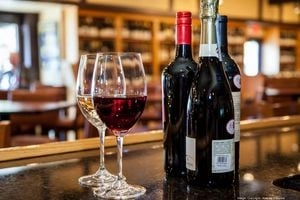
Nearly two years after detailing plans for a location in Huntersville’s Birkdale Village, Foxcroft Wine Co. is finally closing in on its debut there.
The restaurant and retail shop is set to open June 26 at 16915 Birkdale Commons Parkway, according to Foxcroft’s website.
ALSO READ: East Charlotte bar fined for ‘inappropriate sexual behavior’
It’s in a 4,000-square-foot space next to Bad Daddy’s Burger Bar. Its patio overlooks the main lawn and event stage in Birkdale Village.
In addition to an expansive wine list — it boasts 40 wines available by the glass and a representation of more 400 grape varieties by the bottle — Foxcroft dishes up a menu of small plates, salads, and entrees.
Read more here.
VIDEO: East Charlotte bar fined for ‘inappropriate sexual behavior’
Exploring the Rich History of Japanese Wine: Why It Deserves Your Attention
Ask most wine aficionados about wines from France or Italy, and they’ll wax poetic about the differences between the two. Ask about Japanese wine, and you’ll likely get a blank look, or even, “Do you mean sake?”
Japan has taken on many Western drinking traditions. Beer is Japan’s go-to drink; Japanese bartenders craft cocktails with the precision of tea ceremonies. The best Japanese whiskys are now nearly as renowned as its Scottish inspiration. Wine, however, has yet to catch on.
Wine makes up just 4% of Japan’s alcoholic beverage sector — a tiny margin compared to 16% in the United States. Most wine consumed in Japan is imported, and of the wine produced in Japan, 80% is made from imported grape concentrate. In Japan, these wines are labeled “domestic wines;” only wines made with Japanese grapes are classified as “Japanese wine.” Authentic Japanese wines only make up 4.8% of the Japanese market, and they’re virtually impossible to find outside of Japan. But, thanks to a new generation of Japanese experts and winemakers, that’s starting to change.
Read more: 13 Liquors Your Home Bar Should Have
The history of Japanese wine is murky. Some sources claim that Japanese wine only dates back 150 years — but the full history of Japanese wine goes back much further.
While the first private, western-style winery didn’t open until 1877, the Japanese have been fermenting grapes for centuries. According to legend, the history of Japanese grape cultivation begins with an eighth-century monk named Gyoki. One night, the Buddha of medicine came to Gyoki in a dream holding a bunch of grapes in one hand and a bottle of medicine in the other. The dream inspired Gyoki to found the Daizenji temple in Koshu Valley, where he grew grapes and other plants for medicinal purposes. Soon, farmers were growing grapes throughout the Valley. Damaged grapes were fermented into wine, often heavily sweetened to mask the taste of the low-quality fruit. In Japan, this wine is called budoshu, or grape alcohol. Some Japanese wine drinkers consider it distinct from Western wine, but the similarities are undeniable.
Traditionally, budoshu played a smaller role in Japanese culture than shochu or sake. The people who drank it were often grape farmers, who would make the drink to serve on special occasions like weddings or funerals. In the early 20th century, the government cracked down on home brewing. But farmers still fermented the drink in secret, hiding the crocks from authorities. Now, though, Koshu Valley grape farmers make budoshu under a special license — continuing an age-old tradition.
The Japanese first encountered European wines when Portuguese missionaries introduced the drink in the 16th century. Nobles began drinking imported Portuguese wines, and some even tried to make their own. However, when Japan shut itself off to foreign influence, European practices — like drinking wine — went underground or disappeared entirely.
Almost 300 years later, Japan reopened. The country quickly started to adopt Western culture and had its first European-style winery by 1877. The winery sent researchers to Europe to study winemaking, but the endeavor was literally — and figuratively — fruitless. Western grape varieties failed, and early Japanese winemakers had a flawed understanding of the process. They approached winemaking like making sake, focusing on technique and technology instead of the grape quality. But sake isn’t like wine, and the wine they produced wasn’t very good. The Japanese public showed little interest, but the wine industry continued to grow. Suntory, the famed Japanese beverage brand, launched a heavily-sweetened wine as its first product in 1907. In the 1920s, a man named Zenbei Kawakami set out to develop a wine grape that could survive Japan’s climate. His efforts produced Muscat Bailey A grapes, now one of Japan’s most popular grapes.
The industry continued to grow after World War II. The 1964 Tokyo Olympics brought a cosmopolitan crowd to the country — and a fresh interest in wine. Popularity boomed in the 80s, and wine developed a reputation as a status symbol. By the ’90s, Japanese winemakers were gaining recognition.
Perhaps the biggest barrier to Japan’s burgeoning wine industry is the country’s climate. Despite Japan’s long history of cultivating grapes, the weather is too cold and damp for most popular varieties of wine grapes. Koshu grapes, the variety traditionally grown in the Koshu Valley, are well adapted to Japan’s climate. However, the celebrated pink-skinned grapes aren’t considered true wine grapes. Wine made from Koshu grapes can be bitter and acidic; traditionally, Japanese winemakers added sugar to compensate.
Some modern Japanese wineries have been able to make the grapes work, though. The most successful Koshu wines eliminate the traditional added sugar. Without sugar, Koshu wine is very dry with a low alcohol content. It has a clean, crisp, and refreshing taste, often with a strong mineral note. Japanese winemakers also use Muscat Bailey A grapes, which are more in line with traditional wine grapes.
Researchers are still trying to develop wine grapes that thrive in Japan’s climate. Japanese farmers now grow varieties of Chardonnay, Riesling, and Merlot grapes; grapes from Alpine regions of Europe show promise in the country’s chilly, mountainous Hokkaido region. But some aficionados think that Japan’s best wines are the ones made from local grape varieties. Instead of poor imitations of European wines made from subpar grapes, these wines are special in their own right, something different and unique. Winemakers just have to learn to adapt, using techniques like removing bitter skins.
Climate aside, Japanese wines have another hurdle to overcome: the Japanese public. Not only is wine relatively unpopular in Japan, but Japanese wines specifically struggle to find a fanbase. When Japanese people drink wine, they typically favor bottles from Europe. Chilean wines are popular, too, thanks to trade agreements with Japan.
However, Japanese wine — and wine in general — is slowly catching on. Younger generations, who approach with curiosity, are more willing to try local wines. And there’s clear potential for wine to make its mark on Japanese culture: the Japanese public does have an apparent interest in the drink. In the early 2000s, “The Drops of God”, an ode to wine in manga form, became a bestseller; the series helped readers develop a more complex understanding of wine. Japan boasts more sommeliers than any other country, too. The majority of wine sold in Japan is served at restaurants, where sommeliers help diners pair wine with their food. It mirrors the Japanese practice of Omakase, where the chef picks your food for you.
Today, there are over 200 wineries in Japan. Koshu Valley, which has long been the center of Japan’s grape production, is making a name for itself as an underrated wine region, and many vineyards offer tours. If you’re planning a visit to Japan, consider adding one to your itinerary. It’s a fun way to support Japan’s burgeoning wine industry — and a rare chance to taste something unlike any other wine in the world.
Read the original article on Tasting Table.
Wine 101: Uncorking the Reasons Behind Top-Scoring Wines’ Popularity
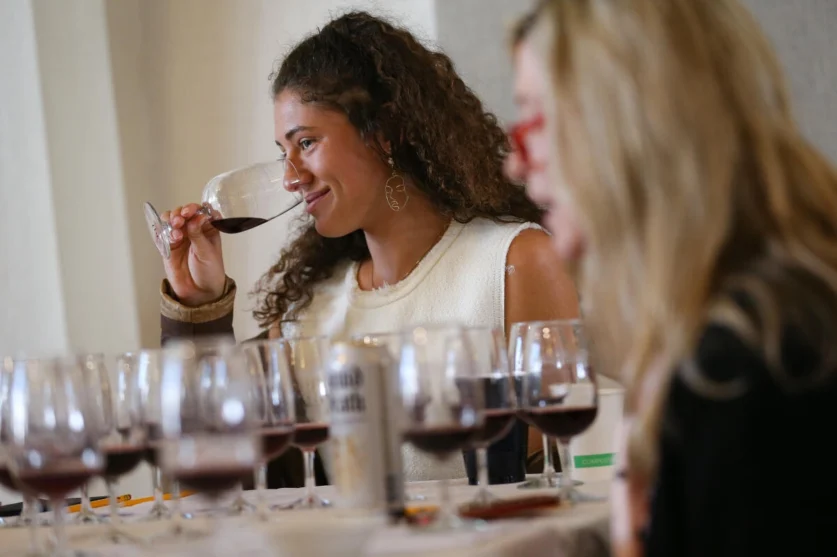
At last weekend’s North Coast Wine & Food Challenge in Santa Rosa, Allison Weakley of Burlingame plotted her path with a map of the 102 wineries pouring. She was determined to try a range of wines in the double digits.
The wines poured at the festival earned a gold medal or higher in The Press Democrat’s North Coast Wine Challenge in April.
For Weakley, and those like-minded, vetted wines with impressive scores are a big draw. They give curious palates a good place to start their tasting quest.
Weakley said she was taking notes on the most impressive wines at the festival so she could come back to the North Bay, visit their tasting rooms and potentially become a wine club member at some of those wineries. Her strategy is spot on.
In addition to the North Coast Wine Challenge, The Press Democrat also has weekly blind tastings and these wines can earn up to five stars.
While there are quite a few factors that come into play in these weekly tastings, balance and complexity are key. These two factors are typically the most influential in choosing which wines rise to the top.
Balance is the rounding out of these elements: sweetness, alcohol, acid, and tannin. Many are familiar with alcohol levels and sweetness in wine, but they may not know as much about acid and tannin.
Here’s a quick explanation: A wine with high acid tastes crisp and even a little tart. A wine that’s “tannic” can taste markedly astringent. Balance keeps all these elements in check, so no one element dominates, and the wine’s aromas and flavors are well integrated.
Complexity, on the other hand, is what gives a wine its intrigue because with each sip, you discover another flavor. When a wine has layered flavors, it’s considered complex.
What follows are 10 wines that have been vetted in recent Press Democrat blind tastings. These impressive wines, snagging 3.5 stars and up, won’t disappoint curious palates.
St. Supery, 2023 Napa Valley Sauvignon Blanc, 13.5%, $28, 4.5 stars. Refreshing with crisp acidity, this Sauvignon Blanc has notes of grapefruit, lime and a hint of jalapeño. It’s striking.
Cormorant Cellars, 2021 Zabala Vineyard, Arroyo Secco, Monterey County Chardonnay, 13.4%, $27, 4.5 stars. Aromas of melon and citrus follow through to the palate. Buoyed by crisp acidity, this Chardonnay has pitch perfect balance. It’s striking and delivers for the price.
Valette, 2022 Sonoma Coast Rosé of Pinot Noir, 13.5%, $37, 4.5 stars. Aromas of strawberry, cherry and crème brûlée follow through to the palate. Pitch perfect balance. Nice length. Well crafted.
Roederer Estate, NV Anderson Valley Brut Rosé Sparkling Wine, 12.5%, $39, 4.5 stars. Aromas and flavors of watermelon and strawberry follow through to the palate. Flavors of citrus and brioche are also in the mix. Nice mousse.
Coil, 2022 Petaluma Gap, Sonoma Coast Chardonnay, 14.3%, $45, 4 stars. A complex Chardonnay with layered notes of honey, pear and hazelnut. Well crafted.
Pedroncelli, 2021 Sonoma Classico, Dry Creek Valley Red Blend, 14.4%, $22, 4 stars. Aromas of black raspberry, black cherry and cracked black pepper follow through to the palate. Lovely.
Honig, 2023 Napa/Lake Sauvignon Blanc, 13.5%, $24, 4 stars. A tasty Sauvignon Blanc with notes of grapefruit, pear and jasmine. Citrusy finish. Top rate.
Graziano Family of Wines, 2020 Mendocino County Petite Sirah, 15%, $23, 3.5 stars. An edgy Petite Sirah with concentrated notes of blackberry, red plum and toast. Feisty.
Wither Hills, 2023 Marlborough Sauvignon Blanc, 13%, $15, 3.5 stars. An edgy Sauvignon Blanc with great minerality. Very aromatic with notes of grapefruit, lime and a hint of peach.
Splurge-worthy: Shafer, 2021 TD-9 Napa Valley Cabernet Sauvignon, 15.3%, $75, 4 stars. A supple Cabernet with aromas and flavors of black currant, thyme and cocoa. Great bones — structure. Pretty.
You can reach wine writer Peg Melnik at 707-521-5310 or peg.melnik@pressdemocrat.com. On Twitter @pegmelnik.
Surprise Find: Rare $40k Wine Spotted at Costco
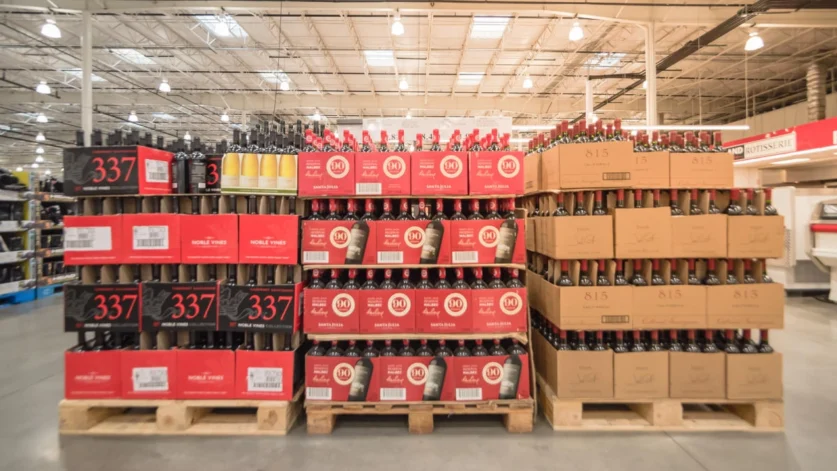
When shopping for alcohol at Costco, most people’s eyes are usually peeled for deals on things like single malt scotch or Japanese whisky. So, when you unexpectedly spot a coveted wine with a $40k price tag, you’re going to have some questions — the first being how it might pair with your food court hot dog or $5 rotisserie chicken. That’s exactly what happened when shoppers came across a six pack of the Domaine de la Romanée-Conti 2009 Collection at a Costco location in San Francisco listed for $39,999.99 in 2022, and again in 2024 for a pack of four bottles of the 2014 vintage.
Hailing from Burgundy, the Domaine de la Romanée-Conti 2014 Collection has the distinguished classification of Burgundy Grand Cru. These are known for being the most expensive wines sold at auctions, with an average price tag of $20k per bottle — which makes Costco’s listing quite the steal. Popular for its intricate flavors, the Romanée-Conti label dates back to 1232. Located in the center of Burgundy, the vineyard’s soil is packed with limestone and clay, which give all of its wines a distinctive terroir that only grows more and more elegant with time. While perhaps better served with a sirloin or an epoisses cheese than anything you’ll find at the Costco food court, the better question here is not what to eat this wine with but how do wines of this caliber end up at Costco in the first place?
Read more: 13 Liquors Your Home Bar Should Have
With roughly $2 billion in wine sales annually, Costco is one of the largest wine retailers on the globe, so it’s no surprise that its team of wine buyers is composed of those considered to be some of the most influential on the globe, too. In turn, the wholesaler’s chief wine buyer — be it the current Annette Alvarez-Peters or her predecessor, David Andrew — are, by industry accounts, the most powerful in the business. But Costco’s overall approach to selling wine differs to that of other wine retailers in the US.
Rather than stocking up on thousands of different varieties, Costco’s wine team only stocks about 100 to 120 wines at a time. That selection rolls in and out, with a wide variety of origins and prices — but only because it has the connections to be able to do so. In addition to wines sourced from prestigious regions, Costco’s private label Kirkland brand has an outstanding reputation for selling great wines from noteworthy wine makers at unbeatable prices.
While the selection at Costco might be smaller than at a supermarket, every wine is chosen to deliver the consistent quality and value that customers expect. Most of what you find is based on locality and regional preference, but you never know when you’ll find something unexpected like the Romanée-Conti. The catch is, though, that things are always coming and going. So if you see something you like, you better get it while you can.
Read the original article on Tasting Table.
How Climate Change is Impacting Your Favorite Rosé: Beat the Heat with These Insights

“`html
Future concept, two friends having picnic in safety suits on polluted field
Summers are heating up. Currently, New Yorkers like me are hiding inside the confines of dark, air-conditioned rooms waiting for the invisible dome of trapped hot ocean air to deflate or release. Bees are searching for water. Plants are wilting. Even the chipmunks have taken a break from digging holes along the house foundation to hide in shady thicket. It’s during moments like this that a slew of wine articles suggest “beating the heat with…” insert wine of choice from bubbles, crisp whites, to rosé and chillable reds. The irony of drinking cold wine to combat a sweltering summer night is not lost on me.
Cold champagne bottle in ice bucket and two glasses of champagne on the deck by the swimming pool
Ancient vineyards unearthed by archaeologists prove Romans grew grapes in Britain during a warmer climate cycle. During the Little Ice Age from roughly 1300 to 1850, temperatures plummeted, turning England’s climate hostile to viticulture. Today, English wines shine anew, producers benefitting from human-induced climate change. While viticulture surges at new latitudes, many of the world’s longstanding vineyards face existential threat. Tools to manage and adapt exist but may not be enough to save the icons of fine wine.
“`
Climate change, considered long-term shifts in temperatures and weather patterns, harms viticulture in several ways. In traditionally arid regions like California and Spain, and increasingly Washington State, Oregon, and even Bordeaux, fires burn through vineyards, threaten lives and structures, and leave nearby fruit, otherwise unaffected, tainted with smoke. Companies are working on technologies to remove smoky aromas and harsh mouthfeel from wine, like membrane filtration, but a one-stop affordable solution remains elusive.
cluster of green wine grapes hanging in vine tree branch of withered vineyard, in winter or autumn season, in Castile, Spain, Europe
Drought, a mix of reduced rainfall and annual snowpack, worsened by faster evaporation from higher temperatures, dries up rivers, lakes, and reservoirs used for irrigation and winery operations. When rain finally falls, it runs off cement-like soil instead of penetrating deep to root systems.
In prior summers, Europe’s rivers, from the Loire, Rhine, to Danube, have shrunk to alarming levels. The drought triggered a change in long-standing laws prohibiting irrigation. Recently, the appellations of Pessac-Léognan, Pomerol and Saint-Emilion in Bordeaux received permission to irrigate after heatwaves and low rainfall threatened vines with hydric stress.
Nantes city between the branches of the Loire river aerial view in Loire-Atlantique region in France
Heat waves, typically defined as dayslong temperatures above 95°F, halt grape development as vines shutter to preserve water resources. Even abnormal heat takes a toll on wine quality. Warm conditions early in the season accelerate grape development. Faster ripening pushes up harvest dates from late summer or fall when weather is cooler, to the hottest part of the season, which causes potential alcohol to rise, acidity to fall, and flavors to diminish in complexity.
Of course, wine regions aren’t ready to give up. Researchers have made strides in water conservation. Improvements in soil moisture monitoring managed with computers and phone apps, coupled with improved irrigation techniques like drip and deficit, help wineries save resources by precision targeting water usage. Converting older suitable vineyards to dry farming can save water while increasing wine quality as yields falls while fruit flavors concentrate. A rootstock called “M,” developed in Italy for resistance to water and heat stress, has shown good results during this summer’s heat waves.
Aerial view of a solar farm in the countryside. Environment and green energy concept.
To manage intense, direct sunlight which burns grapes, Australians developed a chemical sunscreen to spray on clusters. Other techniques for shielding grapes, especially thinner-skinned varieties like Pinot Noir, include hanging shade cloth in smaller vineyards, and focusing on canopy management to ensure leaf cover for dappled light, in larger ones.
Scorching heat isn’t the only consequence of climate change. Many winemakers cite intense, unpredictable weather as their main concern. Supercharged rainstorms, especially around harvest, frost, and hail, especially in regions previously unaffected by these occurrences, catch growers off guard with little chance to protect fruit against damage. Increased humidity invites new pests and diseases into the vineyard.
Managing climate change with technology, adapting by planting more heat resilient grape varieties on new rootstocks, or moving vineyards further north and up mountains, offer solutions to deeper pocketed producers, in that order.
Farmer using smart farming technologies for higher efficiency in a vineyard
Smaller wineries can budget for smart phone apps warning of weather systems, or possibly hail nets or frost sprinklers, if such events become common enough to justify the expense.
Converting vineyards to heat- and drought-resistant varieties like Mourvèdre, or experimenting with hybrids, costs wineries in materials, labor, and time lost in harvest cycles. New world wineries with fewer rules on what they can grow, can switch grapes more readily, but wineries in Europe, beholden to appellation laws and reputations built over centuries, have less flexibility.
Buying and converting land to vineyards in cooler-climate latitudes and elevations, whether Champagne producers in England or Germans in Norway, requires significant financial resources and is a solution accessible to very few.
Unfortunately, several wine regions sit on the precipice of an identity crisis. Climate is a large piece of the terroir puzzle, and wines reliant on delicacy, freshness, even lower alcohol levels for typicity, like Riesling in Germany’s Mosel Valley and Pinot Noir from Burgundy, are challenged to maintain the historical profile that made them famous and valuable.
Burgundy is a historical region in east-central France. It’s famous for its Burgundy wines as well … [+] as pinot noirs and Chardonnay, Chablis and Beaujolais.
Is Burgundy still Burgundy if grapes ripen into 15% alcohol fruit bombs that taste more like California than France? Will distributors and customers remain loyal, or will Pinot Noir lovers in search of the holy grail of freshness and finesse pivot to wines from Canada, Tasmania, even Hokkaido, instead?
While some regions contend with a recalibration of typicity, others face existential threat. If fine wine viticulture is no longer possible in the hottest, driest regions of the world, some wineries may convert crops to table wine, table grapes, or abandon viticulture altogether, especially if governments hit a crisis point and force the prioritization of resources like water and labor for food production over wine.
Of course, worst case scenarios are just that. The wine industry is working hard to innovate and adapt. What does seem inevitable is that in one lifetime, cartographers will stay busy redrawing a shifting and shrinking map of the world’s fine wine regions.
One Community. Many Voices. Create a free account to share your thoughts.
Our community is about connecting people through open and thoughtful conversations. We want our readers to share their views and exchange ideas and facts in a safe space.
In order to do so, please follow the posting rules in our site’s Terms of Service. We’ve summarized some of those key rules below. Simply put, keep it civil.
Your post will be rejected if we notice that it seems to contain:
User accounts will be blocked if we notice or believe that users are engaged in:
So, how can you be a power user?
Thanks for reading our community guidelines. Please read the full list of posting rules found in our site’s Terms of Service.