Liquor-articles 2100
White Rum vs Dark Rum: Understanding the Key Differences

Rum is a wonderfully versatile cocktail ingredient that’s brilliant in anything from a warm-you-from-the-inside winter’s day cocktail like a hot buttered rum to a refreshing, light, summertime mojito. It’s an invaluable ingredient to cook with, too, and the next time you’re looking for an amazing brunch, look no further than a rum-soaked challah French toast. You’ll have to pick up a bottle of rum before you try any of those, and picking out the right type can be more confusing than you might think. There are a surprising number of options, but let’s talk about the two most common.
When it comes to white and dark rum, their differences start right from the beginning. White rum gets its distinctive clarity by having all impurities removed during the distillation process, and that’s done (in most cases) by using a column still. Dark rum, on the other hand, contains all of those impurities — which isn’t a bad thing despite the negative connotations of the word.
Impurities aren’t just important for the color; they also have a major impact on the taste. Because dark rum still contains essentially more traces of the ingredients used in the distillation process, it often has a stronger, richer, deeper flavor. Dark rum is generally described as having tasting notes that tend toward a smoky caramel, while white rum is sweeter and smoother. Does that mean they’re not interchangeable in various cocktails and recipes? Not entirely.
Read more: 26 Popular Vodka Brands, Ranked By Their Versatility
Both white and dark rum are made from the same ingredient: sugar cane. The juice extracted from the cane is fermented and turned into rum, but white and dark rum are made from entirely different processes, including the various stills and filtration levels we mentioned. But that’s just the start. After the rums are distilled, they take a different route into the bottle and onto your liquor shelf. While some white rums are bottled immediately, others might be aged for a relatively short time in stainless steel tanks.
Dark rum, on the other hand, is typically aged for at least three years (although more expensive rums can spend decades aging before they’re bottled and sold), and the barrel it spends time in is important. Barrels can be made from American white oak, European oak, or acacia, and they all impart distinctive flavors to the rum, giving it distinctive hints of vanilla, spices, honey, or caramel. When American white oak barrels are used, there’s a good chance they’ve already been used to age whiskey, which adds to the character that dark rum develops as it ages. Sometimes, caramel coloring and other flavors are added to dark rum, while white rum is valued for purity, clarity, and a light sweetness.
If a cocktail or a recipe specifically calls for white or dark rum and you don’t have exactly what’s recommended, you can swap one for the other. It’ll end up tasting different, but it’s generally not going to taste bad. There are, however, some guidelines to remember if you want to use the correct rum for a particular application, especially when it comes to drinks.
If you’re looking for something to drink straight or on the rocks, go for a dark rum, as it will be much more complex. Dark rum is also best used in cocktails with strong mixers. Those are drinks that can be as simple as a rum and coke, but you’ll also want a dark rum so it stands out in something like a rum punch or rum-based versions of classic cocktails like a Manhattan, a Negroni, or a Mai Tai.
White rum, on the other hand, is perfect for cocktails where you want to focus on flavors other than the rum itself. Any kind of mojito best uses a white rum as it doesn’t overpower the mint and fruit, and the same goes for a daiquiri. If you’re adding rum to lemonade or another juice, or making a light and fizzy spritz, go for the fresh, clear, light flavor of a white rum. That said, experimentation is also perfectly fine!
Read the original article on The Daily Meal.
Explore the Allure: How to Smell Like Whiskey—In a Good Way

Smelling like bourbon is usually frowned upon.
Especially when engaged in certain activities, like driving, sitting for a job interview, or attending a kid’s 9am birthday party.
But sometimes that familiar aroma is exactly what you need to tie an outfit together, or to spice things up for a date.
So here’s Oduoak, a bourbon-based fragrance line from a Kentucky whiskey expert.
Pronounced “oh-du-oak” (like eu de parfum), the new company comes from Jackie Zykan. She has degrees in biology and chemistry, and her career has taken her to nearly every corner of the American whiskey world. She once served as Master Taster for Old Forester, and today she’s the Master Blender of Hidden Barn Whiskey. With a finely tuned sensory skill set, she’s now turned her attention to fragrances.
Colognes and perfumes are traditionally based on neutral alcohols and infused with scents. But Zykan has put her own twist on the category by building these fragrances on a foundation of bourbon whiskey. Bourbon receives the bulk of its aromatic qualities from maturing in oak barrels, hence the complex notes of vanilla, spice, fruits, herbs and florals.
The Oduoak collection includes several fragrances available in 15 mL rollers and 30 mL atomizers in names like Feral Gent and Walk of Shame. Each comes with descriptions similar to those you might find on your whiskey bottle.
There’s Love & Whiskey, a comforting fragrance with notes of cedar, vanilla and alpine. The Mint Julep scent is described as clean, masculine, fresh and minty and channels the famous Kentucky cocktail. Walk of Shame is warm, woody, spicy and leathery, and Basecamp is smoky and dark, with notes of the woods and the sea.
If you can’t choose just one, the fragrances are also available in sets of four, so you can mix things up. In that case, Love & Whiskey could lead to Feral Gent and then Walk of Shame.
Yeah, just like in real life.
8 Refreshing Rum Drinks to Try Instead of a Piña Colada

Brugal 1888 Jungle Negroni
A quality-made rum cocktail is transportive.
Whether or not it’s summer, you’re a snowbird escaping to a Caribbean island in the heart of winter, or you’re simply mixing up your own libation at home — rum cocktails exude the tropics in a glass. Contrary to popular belief, rum drinks are not all about sweet Piña coladas and potent mojitos; there’s a wide variety of rum drinks out there, from tiki classics to twists on celebrated cocktails, that showcase the spirits’ nuances.
From the painkiller, a Piña Colada’s mature cousin, to unique recipes like the Tipsy Toucan, have fun experimenting with these eight rum drinks that are sure to bring a smile to your face no matter the temperature outside.
The ingredients may read similar to a piña colada, but the Painkiller is a trademarked drink by Pusser’s Rum and has its own origin story that dates back to the British Virgin Islands in the 1970s. The standout differences: it’s not blended and is built from a base of Pusser’s dark rum rather than light rum.
Ingredients: 2 oz Pusser’s Rum, 4 oz pineapple juice, 1 oz orange juice, 1 oz cream of coconut, freshly grated nutmeg
Method: Add all liquid ingredients to a cocktail shaker with ice; shake vigorously. Pour into a tall glass or goblet filled with ice. Grate fresh nutmeg on top; garnish with an orange slice and Maraschino cherry.
Celebrated as the national cocktail of Martinique and Guadeloupe, Ti’ is an abbreviation for “petite” in the French Caribbean islands’ native tongue. Only three ingredients are required to make this refreshing yet potent petite, or small, punch.
Ingredients: 2 oz rhum agricole, 1 oz lime juice, 0.25 oz simple syrup
Method: Squeeze the lime juice into a low glass; add the simple syrup and stir together. Add the rhum agricole and ice (optional) and garnish with a lime wheel.
Morse code for “V,” which stood for “victory” by its creator Donn Beach, this popular tiki cocktail was invented during WWII. The cocktail is well-balanced, hitting almost every note on the palate with sweet, bitter, and spice.
Ingredients: 1.5 oz Martinique rhum agricole, 0.5 oz blended aged rum, 0.5 oz fresh lime juice, 0.5 oz fresh orange juice, 0.25 oz velvet falernum, 0.25 oz allspice dram, 0.25 oz honey syrup, 1 dash Angostura bitters
Method: Combine all ingredients into a blender with crushed ice to the rim; flash-blend then pour into a pilsner glass. If you don’t have a blender, add all ingredients to a cocktail shaker with crushed ice, shake gently then empty the tin into a pilsner glass, ice and all, for a similar effect. Garnish with three Maraschino cherries (3 dots) and a pineapple frond.
Though this tiki drink has become synonymous with Hawaii, it was reputedly created in Oakland, Calif. by Victor Bergeron at his Trader Vic’s bar. In the 1950s, the hotel group behind the Royal Hawaiian and Moana Hotel in Waikiki commissioned Bergeron to create their cocktail list and as tourism boomed from this period on, the Mai Tai he included on the list became the island state’s signature cocktail.
Ingredients: 1.5 oz white rum, 0.75 oz dark rum, 0.5 orange curaçao, 0.5 oz fresh lime juice, 0.5 oz orgeat,
Method: Combine all ingredients except the dark rum into a cocktail shaker with ice; shake gently and strain into a rocks glass over crushed ice. Slowly pour the dark rum in to float on top of the cocktail; garnish with a lime wheel, slice of pineapple and optional cherry.
Homemade Mai Tai
Star & Key’s terroir-driven rum infused with passionfruit adds complex layers to any classic rum drink, but this recipe is a standout – drawing parallel flavors to a piña colada but with unexpected complementary notes from the lemon juice and Champagne.
Ingredients: 2 oz Star & Key Passion Fruit Rum, 0.75 oz lemon juice, 0.75 oz pineapple juice, 1 oz egg white, 0.5 oz demerara sugar syrup, splash of Champagne
Method: Add all ingredients, except for the Champagne, to a shaker; dry shake (without ice) then add ice, shake again and strain into a Champagne flute. Top with Champagne and garnish with a skewered cherry.
Another way to impress guests with tropical flavors in a new format comes from Copalli Rum, an organic, single-estate rum out of Belize. The banana liqueur and coconut cream make this sip taste like a vacation in a glass — no matter where you are.
Ingredients: 2 oz Copalli White Rum, 0.75 oz banana liqueur, 0.75 oz coconut cream, 0.75 oz fresh lemon juice, 0.75 oz fresh orange juice, 1 dash Angostura bitters
Method: Add the soda water to a chilled Champagne flute and set aside. Combine the rest of the ingredients in a cocktail shaker with ice; shake then strain into the Champagne flute with the soda water at the bottom. Garnish with an orange twist spiral.
Sunshine Punch has become popular for its ready-to-serve citrus, creme and rum cocktail in a bottle that’s designed to be poured over ice or combined with ingredients to create a more elaborate drink. Their Sunburn cocktail emphasizes the key flavors of the base ingredient (which are often likened to an orange creamsicle).
Ingredients: 2 oz Sunshine Punch, 2 oz pineapple juice, 0.5 oz coconut rum, dark rum float.
Method: Combine all ingredients, except for the dark rum, in an ice-filled shaker; shake for 20 seconds. Pour into a rocks glass over fresh ice, float over the dark rum to the rim and garnish with an orange wedge.
A playful riff on the classic Jungle Bird cocktail, Brugal 1888 puts forward their fruity yet sophisticated summer sip that only requires three ingredients.
Ingredients: 1 oz Brugal 1888 rum, 0.3 oz Campari, 0.3 oz pineapple syrup
Method: Add all ingredients into a glass cocktail beaker with ice, stir together then strain into a low-ball glass with a large cube of ice.
One Community. Many Voices. Create a free account to share your thoughts.
Our community is about connecting people through open and thoughtful conversations. We want our readers to share their views and exchange ideas and facts in a safe space.
In order to do so, please follow the posting rules in our site’s Terms of Service. We’ve summarized some of those key rules below. Simply put, keep it civil.
Your post will be rejected if we notice that it seems to contain:
User accounts will be blocked if we notice or believe that users are engaged in:
So, how can you be a power user?
Thanks for reading our community guidelines. Please read the full list of posting rules found in our site’s Terms of Service.
Laws Whiskey House Prepares to Launch Its New Taproom and Cocktail Service
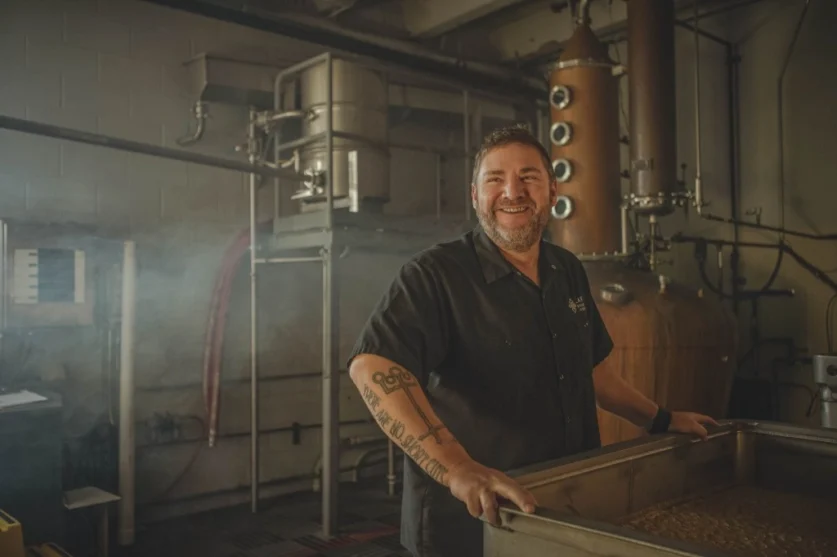
As a whiskey maker, Al Laws is no stranger to waiting.
Laws, president and founder of Laws Whiskey House in Denver, distilled his first batch of liquor on July 4, 2011. But because time is an essential ingredient in whiskey, it wasn’t until October 2014 that he released the first bottles.
That said, it’s been more than six years since he began the journey to renovate the distillery’s taproom. Both he and local drinkers may soon see the project get to the finish line.
Laws Whiskey House anticipates debuting its new taproom at 1420. S. Acoma St. to the thirsty public in late August or early September. When it does, the space will be significantly bigger – about 4,000 square feet compared to the previous 300 square feet, Laws said – and include a bar shaking up cocktails with house spirits and mezzanine seating.
The distillery has long had what it calls a “whiskey church” – an area outfitted with pews where folks go to learn about and pay homage to whiskey, Laws said. The new taproom design leans into that ethos with a new, two-story gothic window that lends an elegant feel to the space, he added.
“It’s a great place, but it’s not gonna be open ’til 2 a.m. It’s a place you come for pre-dinner drinks or you have a date or you have a friend in town or you have a quick business thing,” Laws said.
The bar will serve only house-made spirits, but that doesn’t mean the menu is limited to whiskey. Over the years, Laws Whiskey House has no doubt honed its namesake spirit, using only Colorado-grown grains. But the distillery has also made other liquors like vermouth, rum and agave that it plans to integrate into the bar program.
To that end, there will be certain spirits that drinkers can only find in the taproom alongside longtime staples like Four Grain Bourbon Cask Strength, which was recently named the best small-batch bourbon made outside of Kentucky at the World Whiskies Awards.
“`html
Part of the expansion includes revamping the Laws Whiskey House tour and eventually adding a rooftop deck where drinkers can take in vistas of the mountains and Mile High City.
But first, Laws simply wants to open. As the distillery’s 13th anniversary approaches, he feels cautiously optimistic about the project coming to fruition.
“The fact we’re so close, it’s a weird kind of hum in your head: ‘Like, are we really? What’s going to keep us from opening?’ That’s the way we think about it now,” he said. “You just can’t feel joy about it until it’s done.”
“`
Get Ready to Sip: Laws Whiskey House’s New Taproom Nears Grand Opening
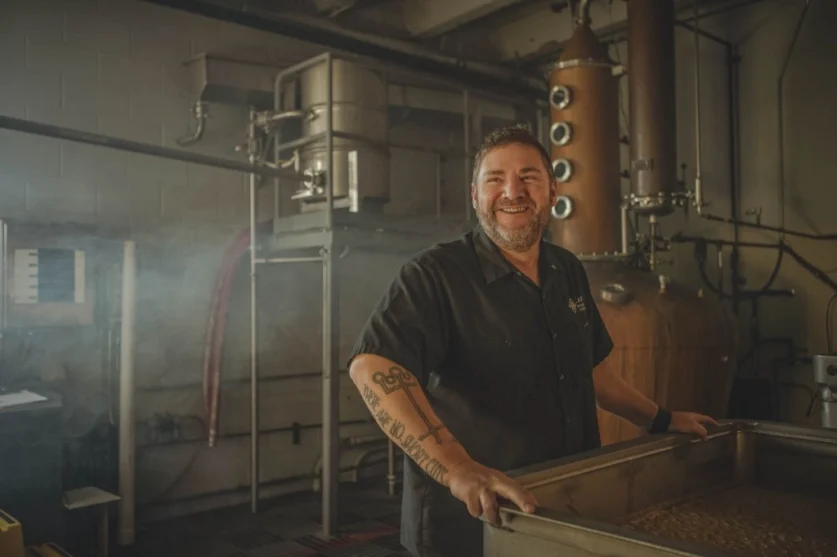
As a whiskey maker, Al Laws is no stranger to waiting.
Laws, president and founder of Laws Whiskey House in Denver, distilled his first batch of liquor on July 4, 2011. But because time is an essential ingredient in whiskey, it wasn’t until October 2014 that he released the first bottles.
That said, it’s been more than six years since he began the journey to renovate the distillery’s taproom. Both he and local drinkers may soon see the project get to the finish line.
Laws Whiskey House anticipates debuting its new taproom at 1420. S. Acoma St. to the thirsty public in late August or early September. When it does, the space will be significantly bigger – about 4,000 square feet compared to the previous 300 square feet – and include a bar shaking up cocktails with house spirits and mezzanine seating.
The distillery has long had what it calls a “whiskey church” – an area outfitted with pews where folks go to learn about and pay homage to whiskey, Laws said. The new taproom design leans into that ethos with a new, two-story gothic window that lends an elegant feel to the space, he added.
“It’s a great place, but it’s not gonna be open ’til 2 a.m. It’s a place you come for pre-dinner drinks or you have a date or you have a friend in town or you have a quick business thing,” Laws said.
The bar will serve only house-made spirits, but that doesn’t mean the menu is limited to whiskey. Over the years, Laws Whiskey House has no doubt honed its namesake spirit, using only Colorado-grown grains. But the distillery has also made other liquors like vermouth, rum and agave that it plans to integrate into the bar program.
To that end, there will be certain spirits that drinkers can only find in the taproom alongside longtime staples like Four Grain Bourbon Cask Strength, which was recently named the best small-batch bourbon made outside of Kentucky at the World Whiskies Awards.
Part of the expansion includes revamping the Laws Whiskey House tour and eventually adding a rooftop deck where drinkers can take in vistas of the mountains and Mile High City.
But first, Laws simply wants to open. As the distillery’s 13th anniversary approaches, he feels cautiously optimistic about the project coming to fruition.
“The fact we’re so close, it’s a weird kind of hum in your head: ‘Like, are we really? What’s going to keep us from opening?’ That’s the way we think about it now,” he said. “You just can’t feel joy about it until it’s done.”
GERS Fund Sees Losses in Rum Market, Gains in Interest Income
The Matching Fund Special Purpose Securitization Corporation Board of Directors heard the good news at its quarterly meeting on Wednesday but did not touch on the bad news.
The corporation’s capitalized interest account held by Causey Demgen and Moore PC is earning more than anticipated.
Andy Mathes, representing the firm, said the investment this fiscal year earned $5.7 million instead of the $5.1 million expected. Gov. Albert Bryan Jr., who chairs the board, asked where that money would go. Joel Ephross, also with Causey Demgen, said he was not sure which account it would go to, but no matter which, it would benefit the Virgin Islands.
Bryan said, “So, we have a little change in the bank.”
Another piece of good news for the board is that its operation expenses are predicted to go down. A budget of $700,000 was approved, compared to last year’s budget of $750,000. The Public Finance Authority has assumed the corporation’s administrative duties. Nathan Simmonds, the director of finance administration at the PFA, presented the budget.
Although the budget decreased overall, it will increase in two areas in the upcoming year. Board fees and expenses will go from $55,000 to $90,000, and the PFA administrative fee will go from $154,00 to $159,000.
Simmonds also asked the board to approve payment of $239,000 in PFA invoices. The board did.
The board was formed as part of the plan to prevent the Government Employees’ Retirement System from going bankrupt.
The plan is based on the territory receiving $13.25 for each proof gallon of rum sold stateside from the United States government. The bad news is that because of a lack of action from the U.S. Congress, the territory has only been receiving $10.50 for the last two years.
Simmonds recently told the Senate that there is no indication it will be raised in the upcoming year. He said the government covered the shortfall to GERS in the first year but not in the second year. He said he expected the shortfall to be larger in the upcoming year. This year, it was $34 million.
In other action, the board plans to hold an annual meeting on St. Croix this December. The meeting will include tours of Cruzan and Diageo rum distilleries.
Unlike many news organizations, we haven’t put up a paywall – we want to keep our journalism as accessible as we can. Our independent journalism costs time, money, and hard work to keep you informed, but we do it because we believe that it matters. We know that informed communities are empowered ones. If you appreciate our reporting and want to help make our future more secure, please consider donating.
Now Playing: “The Exorcism”
The search for a missing diver Monday on St. Croix turned into a recovery effort, the V.I. Police Department reported Tuesday.
On Monday at approximately 5:38 p.m., the 911 Emergency Call Center received a call regarding a missing diver. It was reported that the man went diving off the Fisherman’s Dock in Frederiksted around 9:00 a.m. and had not returned, according to the police report.
Read story: stcroixsource.com/2024/06/25/body-of-missing-diver-found-in-frederiksted/
#VISource #TheSource #USVI #LocalNews #News
Body of Missing Diver Found in Frederiksted
stcroixsource.com
0 CommentsComment on Facebook
Cherry Pie Vodka Makes a Splash Just in Time for National Cherry Festival
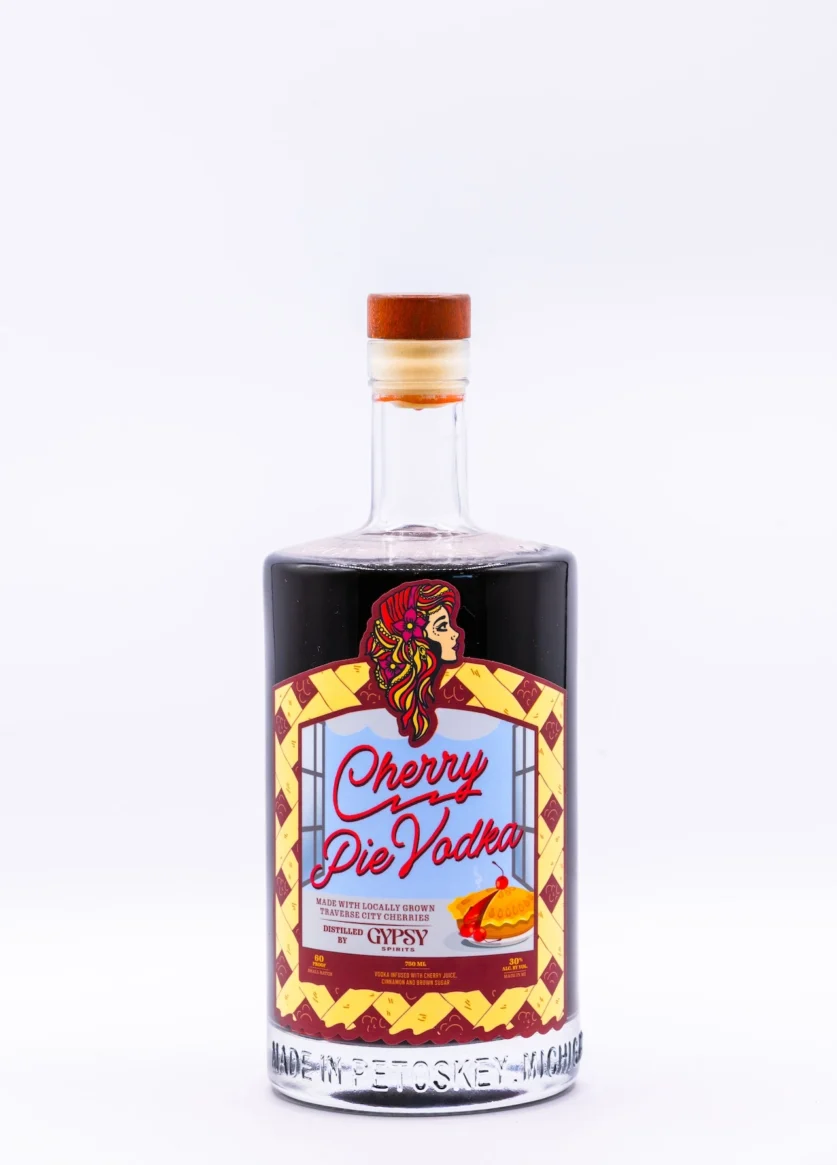
Gypsy Spirits is releasing a new Cherry Pie Vodka this summer. It’s a collaboration with King Orchards in Northern Michigan. Photo provided by Gypsy Spirits. High Five Spirits
PETOSKEY, MI – Gypsy Spirits’ new liquor is meant to taste like you’re sipping a slice of a favorite summertime dessert.
Cherry Pie Vodka is slated to be available at its Petoskey distillery and hit store shelves around July 1. The fruit-forward vodka was born of a collaboration between Gypsy Spirits and King Orchards in Northern Michigan, near Torch Lake.
“This delightful new spirit captures the essence of Michigan’s famous cherry pies, offering a unique and flavorful experience that is sure to become a new favorite among our fans,” Gypsy Spirits staff said. “Cherry Pie Vodka is crafted using the finest cherries from King Orchards, ensuring a rich, authentic taste that embodies the spirit of Michigan. This collaboration combines the expertise of Gypsy Spirits with the exceptional quality of King Orchards’ produce, resulting in a vodka that is as delicious as it is distinctive.”
“`html
The sleek bar area inside Gypsy Distillery near Bay Harbor, in a space that used to be a tack room for the Bay Harbor Equestrian Club. Now, you can get cocktails mixed with award-winning Gypsy vodka, whiskey, and more. Photo provided by Gypsy Distillery.
This new cherry vodka is also a hat-tip to Gypsy Spirits’ announcement that it plans to open a tasting room this fall in Traverse City – a spot that’s been dubbed the Cherry Capital of the World. The new spirit makes its debut around the same time as Traverse City hosts the National Cherry Festival, set to begin this weekend.
The new Gypsy Spirits tasting room is set to open on West Front Street, according to the Traverse City Ticker. MLive plans to bring you a sneak peek before the opening.
“We love the Grand Traverse area and are beyond excited to bring Gypsy Spirits to downtown Traverse City. Bringing our passion for spirits, hospitality, and community to an area that has meant so much to us since we were kids is a dream come true” said Michael and Adam Kazanowski, the twin brothers who own the brands Gypsy Spirits and High Five Spirits along with the Gypsy Distillery production site, tasting room and events center near Petoskey. Their partner, Michael Kolkmeyer, is the company’s director of operations.
“`
“`html
“This new tasting room will allow us to connect with more of our customers and share our passion for crafting exceptional spirits. We can’t wait for everyone to try our new Cherry Pie Vodka and experience the Gypsy Spirits magic firsthand.”
The brand is known not only for its Gypsy Vodka, but for a spirits line that includes gin, flavored and aged rums, whiskey and canned cocktails. You can see all their products on the website here.
A comfortable lounge area inside Gypsy Distillery near Bay Harbor. Grab a cocktail or drink at the bar and settle in to sip and savor. Photo provided by Gypsy Distillery.
If you purchase a product or register for an account through a link on our site, we may receive compensation. By using this site, you consent to our User Agreement and agree that your clicks, interactions, and personal information may be collected, recorded, and/or stored by us and social media and other third-party partners in accordance with our Privacy Policy.
“`
General Hospital Recap: Finn’s Tough Choice – Violet or Vodka? (June 25 Episode)
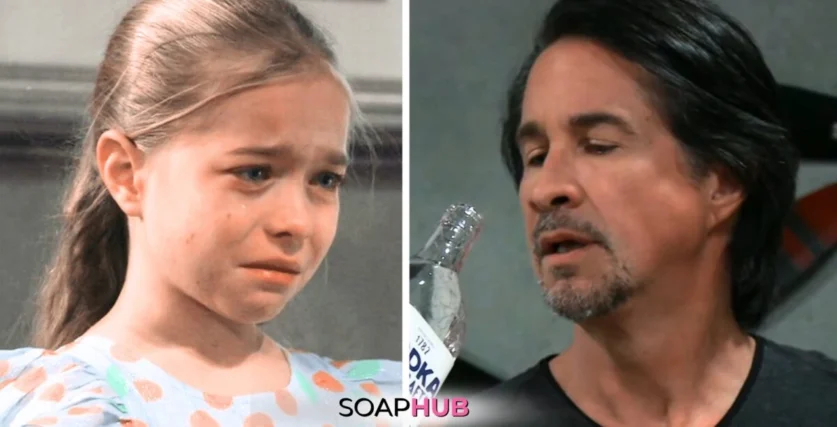
After Finn’s drunken night landed him with a restraining order against his daughter on General Hospital, the doctor made his choice between Violet and a bottle of vodka on the June 25, 2024 episode.
Diane (Carolyn Hennesy) arrived at Finn’s (Michael Easton) bearing paperwork that explained not only Chase (Josh Swickard) and Brook Lynn’s (Amanda Setton) temporary custody of Violet (Jophielle Love, who recently made a new career move), but the restraining order that was granted. Finn fought the lawyer on her actions before calling his own, and when Scott (Kin Shriner) arrived, things only got worse.
When Scott questioned what happened to make Chase do this, Finn claimed the documented events were exaggerated, but Scott saw right through him. “I can’t fix this legally… you have to fix yourself,” Scott told him, even turning down Finn’s offer to let him keep any money they’d receive from the case.
Feeling like everyone had turned against him, Finn sat hugging one of Violet’s stuffed animals before placing a delivery order for a handle of vodka. “Actually, make it two.”
When his order came, he immediately opened the bottle and was about to take a sip when he looked back down at the restraining order on the table. With a shaky hand inching the bottle to his lips, he suddenly threw the bottle against the wall. The glass bottle shattered while vodka splattered all over the colorful piece of artwork that hangs in his hallway.
Now that Finn clearly chose Violet, a teaser for June 26 showed him finally confronting Chase about the situation. Do you think Finn will get the help he needs to get his daughter back? Let us know in the comments.
The post Finn Chose Between Violet And Vodka On The June 25 General Hospital appeared first on Soap Hub
Rum Unveils Shareholder Voting Outcomes at Annual General Meeting
EDMONTON, AB / ACCESSWIRE / June 25, 2024 / Rocky Mountain Liquor Inc. (TSX-V:RUM) (the “Company” or “Rocky Mountain”), listed on the TSX Venture Exchange (the “Exchange”), today announced the shareholder voting results of its 2024 Annual General Meeting held June 25, 2024 in Edmonton, Alberta.
Shareholders voted and approved to set the number of directors at six (6).
The following individuals were nominated and received the requisite majority of votes, becoming directors of the Company for the forthcoming year:
01.
Peter J. Byrne
02.
David Delaney
03.
Chris Queitsch
04.
Allison Radford
05.
Courtney Burton
06.
Gene Coleman
Shareholders voted and approved to appoint PricewaterhouseCoopers LLP, Chartered Accountants as Auditors of the Company for the ensuing year and authorizes the directors to fix their remuneration.
The Company also announces the repayment of its bank loan with Toronto Dominion Bank (“TD”). Originally structured at $2,650,000, the loan was amortized over 36 months with monthly payments of interest and principal scheduled until August 30, 2025. As of June 21, 2024, the Company has settled the outstanding principal balance amounting to $731,809. The Company maintains an ongoing credit agreement with TD, encompassing a demand operating facility with a maximum availability of up to $5,400,000.
About Rocky Mountain
Rocky Mountain is a public company whose shares are traded on the TSX Venture Exchange (TSX-V:RUM). Rocky Mountain is the parent to a wholly owned subsidiary, Andersons Liquor Inc. headquartered in Edmonton, Alberta, which owns and operates 24 private liquor stores in that province.
Forward-Looking Statements
This news release contains forward-looking statements and forward-looking information within the meaning of applicable securities laws. These statements relate to future events or future performance. All statements other than statements of historical fact may be forward-looking statements or information. Forward-looking statements and information are often, but not always, identified by the use of words such as “appear”, “seek”, “anticipate”, “plan”, “continue”, “estimate”, “approximate”, “expect”, “may”, “will”, “project”, “predict”, “potential”, “targeting”, “intend”, “could”, “might”, “should”, “believe”, “would” and similar expressions.
Forward-looking statements and information are provided for the purpose of providing information about the current expectations and plans of management of the Company relating to the future. Readers are cautioned that reliance on such statements and information may not be appropriate for other purposes, such as investment decisions. In particular, results achieved in 2022 and previous periods might not be a certain indication of future performance, which is subject to other risks, including but not limited to changes in operational policies, changes in management, changes in strategic focus, market conditions and customer preferences, the impact from COVID-19 pandemic on our operations and third party suppliers. Since forward-looking statements and information address future events and conditions, by their very nature, they involve inherent risks and uncertainties. Actual results could differ materially from those currently anticipated due to a number of factors and risks, the risks that these events may not materialize as well as those additional factors discussed in the section entitled “Risk Factors” in RUM’s Management Discussion and Analysis, which can be obtained at www.sedarplus.com. If they do materialize, there remains a risk of non-execution for any reason. Accordingly, readers should not place undue reliance on the forward-looking statements, timelines and information contained in this news release.
The forward-looking statements and information contained in this news release are made as of the date hereof, and no undertaking is given to update publicly or revise any forward-looking statements or information, whether as a result of new information, future events or otherwise, unless so required by applicable securities laws or the TSX-V. This cautionary statement expressly qualifies the forward-looking statements or information contained in this news release. Neither TSX Venture Exchange nor its Regulation Services Provider (as that term is defined in policies of the TSX Venture Exchange) accept responsibility for the adequacy or accuracy of this release.
For further information:
Allison Radford
Peter Byrne
President & CFO
Executive Chairman & CEO
(780) 483-8183
(780) 686-7383
SOURCE: Rocky Mountain Liquor Inc.
View the original press release on accesswire.com
Grand Valley State Athletics Launches Exclusive Canned Vodka Lemonade
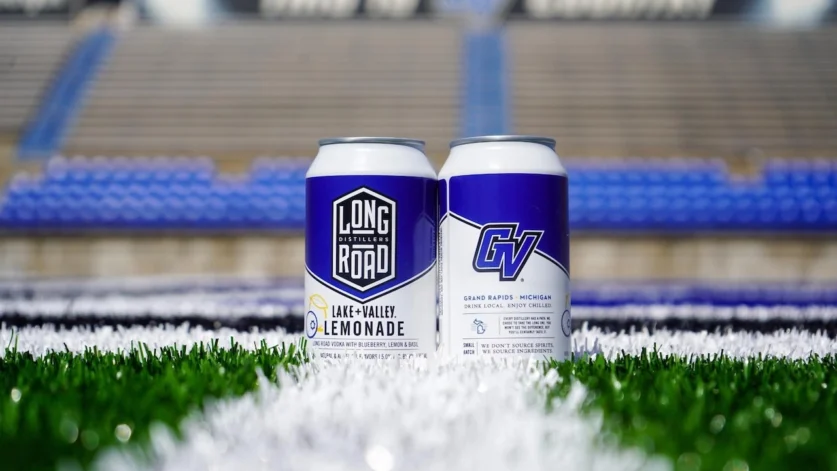
GVSU Athletics announced Monday that it has partnered with Grand Rapids-based Long Road Distillers to create Lake + Valley Lemonade. GVSU Athletics
ALLENDALE, MI – Grand Valley State now has its own cocktail.
GVSU Athletics announced Monday that it has partnered with Grand Rapids-based Long Road Distillers to create Lake + Valley Lemonade, a ready-to-drink cocktail. Long Road was founded by GVSU alumni Jon O’Connor and Kyle Van Strien in 2015.
If you purchase a product or register for an account through a link on our site, we may receive compensation. By using this site, you consent to our User Agreement and agree that your clicks, interactions, and personal information may be collected, recorded, and/or stored by us and social media and other third-party partners in accordance with our Privacy Policy.