Wine 1106
In case you run out of Worcestershire sauce, simply bring out the red wine.

Discovering the Perfect Substitute for Worcestershire Sauce
Every cook has their own secret weapon in the kitchen, that one ingredient that adds a touch of magic to any dish. For many, that ingredient is Worcestershire sauce. This tangy and flavorful sauce is a staple in restaurants and home kitchens all over the world, adding a perfect balance of sweet, sour, and umami to meals. Little do many people know, Worcestershire sauce has a fascinating origin story that dates back to 19th-century Worcester, England.
It all began when Lea and Perrins, the creators of Worcestershire sauce, mixed together the original ingredients for a customer who never came back to claim it. Years later, a curious store worker stumbled upon the forgotten bottle of sauce and bravely decided to give it a taste. To their surprise, the fermented ingredients had transformed into something incredibly delicious.
Just like the forgetful customer at Lea and Perrins, you may find yourself in a similar predicament. In the midst of preparing a recipe that calls for Worcestershire sauce, you suddenly realize that you are completely out. Panic sets in, and you frantically search through your kitchen cabinets, desperately hoping to find a replacement. But alas, there are only a few drops left, which simply won’t suffice.
But fear not, for there is a solution to this Worcestershire sauce crisis. One of the best substitutes for Worcestershire sauce is red wine. Yes, that delightful beverage often associated with sipping, socializing, and toasting on special occasions can also serve as a fantastic ingredient in cooking. And when it comes to slow-cooked meals, red wine can truly work wonders.
For instance, if you are preparing a mouthwatering beef stroganoff and find yourself devoid of Worcestershire sauce, red wine can seamlessly take its place. Simply use double the amount of red wine as you would Worcestershire sauce in the recipe. This will infuse the dish with a rich flavor, slightly more acidity, and a hint of sweetness reminiscent of Worcestershire sauce’s unique taste profile.
Using red wine as a substitute for Worcestershire sauce also comes with added health benefits. Grapes, a key ingredient in red wine, contain numerous vitamins and a compound called resveratrol, known for its anti-inflammatory properties and mood-boosting effects. So not only will your dish taste fantastic, but it will also provide a nutritional boost.
Now that you have discovered this clever Worcestershire substitute, it’s time to explore the world of slow-cooked meals. For your next celebration, impress your guests with delectable party meatballs cooked in a crockpot, replacing Worcestershire sauce with red wine. The tantalizing aroma will waft through your home, setting the stage for a truly delightful gathering.
Shepherd’s pie, a hearty and flavorsome favorite, also calls for Worcestershire sauce. Fear not, as red wine can step in and create the same delicious flavors when mixed with meat and vegetables, simmering to perfection. And let’s not forget about the ultimate slow-cooker classic: chili. Along with beef, beans, and spices, Worcestershire sauce is typically included in this crowd-pleasing dish. But when faced with an empty bottle, simply reach for that bottle of red wine and pour it into the pot, promising a chili that bursts with incredible flavors.
While there are other substitutes for Worcestershire sauce, red wine reigns as a reliable and flavorful alternative that will never disappoint. So the next time you find yourself running low on Worcestershire sauce, remember the wonders of red wine and embrace its ability to elevate your dishes to new heights of deliciousness. Cheers!
[Source](https://www.daily-meal.com/15-tips-for-making-the-best-meatloaf)
The Wine industry rivals have to make a decision at a critical juncture.

Michelle Wildgen, an author from Madison, is set to make an appearance at the Wisconsin Book Festival. While many people may associate wine and wine writing with “old men talking about Bordeaux,” Wildgen’s latest novel, “Wine People,” takes a different approach. The book explores the dynamics of two women navigating the wine business, offering a fresh and relatable perspective.
In a recent interview, Wildgen discussed her background as a writer. This is her fourth book, with her first novel, “You’re Not You,” even being adapted into a movie. She co-founded the Madison Writers’ Studio and has taught at the University of Wisconsin. Currently, she is part of the writer-in-residence program at the Wisconsin Institute for Discovery, where she works on her own writing and serves as an editor and advisor.
Wildgen’s connection to Madison runs deep. While she came to the city for college, it has become her adopted hometown. Her love for Madison is evident in her involvement in local literary and cultural events such as the Wisconsin Book Festival.
When asked about her latest book, “Wine People,” Wildgen described it as a story about two women working in a male-dominated industry. Set in New York City, the book explores their journey as they navigate a succession drama at work. The two women must decide whether to remain rivals or become allies and business partners. While wine is a central theme, the book’s true focus is on ambition and the challenges faced by these two women. It offers a unique perspective on the workplace through the lens of their experiences.
Wildgen’s interest in food and wine shines through in her writing. She believes that food can be used to describe almost anything and finds it to be revealing. However, the trick lies in not revealing too much.
In addition to her appearance at the Wisconsin Book Festival, Wildgen also participates in the Wisconsin Science Festival. She will moderate a panel discussing the similarities between the creative processes of writers and scientists. At the festival, she will also do a reading from “Wine People” and discuss her reasons for undertaking this project.
Finally, while discussing her favorite wine this time of year, Wildgen mentioned her preference for a light red. However, she always likes to start with a glass of bubbles, if possible, and transition into a red.
As for her writing projects, Wildgen is currently working on a new novel. She hopes to gain momentum with it, as it explores the theme of science versus snake oil.
If you’re interested in attending Michelle Wildgen’s discussion at the Wisconsin Book Festival, mark your calendars for October 21st at 3 p.m. The event will take place at Madison’s Central Library, in the lower-level Program Room, and admission is free.
Once upon a time, in the final days of the Trump White House, an aide named Cassidy Hutchinson provided a unique perspective on the happenings within those walls. Unlike other tell-all books that tend to focus on scandalous affairs or political maneuvering, Hutchinson’s story revolves around something quite unexpected – banned books.
Prior to this revelation, the list of banned books in the White House was fairly predictable. Classics like “The Catcher in the Rye” and “To Kill a Mockingbird” were always at the top, joined by more modern favorites. But now, it seems that another book has joined the ranks, and it’s none other than George Takei’s “They Called Us Enemy.”
Most people know George Takei as the beloved “Star Trek” actor, but few are aware of the adversity he faced during his childhood years spent in internment camps. In Takei’s book, he sheds light on this painful chapter of American history, providing a firsthand account of the Japanese-American internment experience.
What makes this story even more intriguing is the fact that Takei has turned his own experiences into a children’s book. This decision has sparked both admiration and controversy, as some argue that such a dark chapter shouldn’t be sugarcoated for young readers, while others believe it’s essential to educate children about this part of our past.
But how does all this tie back to the Trump White House? Well, according to Cassidy Hutchinson, former aide to Donald Trump, chief of staff Mark Meadows had a curious habit of burning papers after the 2020 election. While this might seem like a simple act of disposing of sensitive documents, Hutchinson claims that among those papers were copies of “They Called Us Enemy.”
The burning of these documents raises questions about the motives behind it. Was it an attempt to silence Takei’s narrative? Or perhaps an effort to erase any evidence of advocacy for a more inclusive understanding of American history? Whatever the reason, it certainly adds a layer of intrigue to the already tumultuous end of the Trump era.
As we reflect on this peculiar turn of events, it’s essential to consider the power of literature and the ideas it represents. Banned books have always been a symbol of resistance and free expression, challenging societal norms and inviting conversations that often lead to progress. The fact that “They Called Us Enemy” found its way onto the list of banned books in the Trump White House further emphasizes the importance and impact of Takei’s message.
In the end, whether you agree with the inclusion of this book on the banned list or not, one thing is clear – the closing days of the Trump White House were filled with unexpected twists and turns. From banned books to burning documents, this chapter of American history continues to captivate and surprise us. And as we navigate the future, it’s crucial to remember the power that books hold, even in the most unlikely of places.
Sal’s and Arnone are offering a menu featuring a bocce ball, truffle, and wine dinner to celebrate Italian-American month.

Embracing Italian-American Heritage Month, two beloved establishments in Ohio are coming together to celebrate the old country. Café Arnone in Fairlawn and Sal’s Gelato in Akron are teaming up to offer a month-long extravaganza of Italian delights. From bocce ball tournaments to delectable truffle dinners, there is something for everyone to enjoy.
Sal’s Gelato, located in the scenic Merriman Valley, will be hosting its first-ever Bocce Ball Friends & Family Tournament on Sunday, from 2 to 5 p.m. Teams of four can enter the tournament by sending an email to joshu@arnonehospitality.com or by signing up on the day itself. The event promises to be a fun-filled afternoon of friendly competition and laughter. For those unfamiliar with the classic Italian game, guests will also have the opportunity to watch and learn how to play.
But the festivities don’t end there. Sal’s Gelato will be offering an enticing 25 percent discount on all items in the store, including their famous pastries, gelato, drinks, and marketplace items. It’s the perfect chance to indulge in some authentic Italian flavors at an unbeatable price.
Meanwhile, cousins Rocco LaRose and Michael Maghes, owners of both Sal’s and Café Arnone, have prepared a range of irresistible food and drink specials for the month. Café Arnone will be hosting a Truffle & Wine Dinner on October 27th, held in their cozy pizzeria and wine room. For $75, guests can savor a variety of Italian wines expertly paired with dishes that showcase the exquisite truffle element. To reserve a spot for this exclusive event, email joshua@arnonehospitality.com. Additionally, truffle products will be available for purchase at Café Arnone’s marketplace as well as at the newly established Arnone marketplace at Sal’s Gelato.
Café Arnone has also unveiled a delightful lineup of seasonal fall drinks to embrace the cozy spirit of autumn. From the rich tones of the maple blondie latte to the comforting warmth of the spiced pumpkin latte, there is a beverage to suit every palate. Other enticing options include the s’mores mocha, almond chai, and caramel apple butter cold brew. And of course, no fall menu would be complete without a selection of seasonal pastries. Indulge in treats such as mocha chip biscotti, brown sugar pecan scones, pumpkin cheesecake, and many more.
Not to be outdone, Café Arnone has also added a new offering to their menu. Pizza lovers can now rejoice as the restaurant is now serving pizza by the slice. One standout option is the Fig & Prosciutto pizza, a delectable combination of crumbled goat cheese, fresh sliced figs, crispy prosciutto, cubed apple slices, and caramelized onions. Topped with arugula and a light honey drizzle, this pizza promises to be a flavorsome delight.
For more information about these exciting events and offerings, contact Café Arnone at 330-615-6206. Don’t miss out on the chance to indulge in a true taste of Italy while embracing Italian-American Heritage Month. Celebrate the old country and create lasting memories at Café Arnone and Sal’s Gelato.
The financial results for the fourth quarter and fiscal year 2023 have been reported by Vintage Wine Estates.

Vintage Wine Estates, Inc. recently released its financial results for the fourth quarter and fiscal year ended June 30, 2023. Despite facing some challenges, the company remains optimistic about its future prospects.
One of the main priorities for the company has been to stabilize its operations and strengthen its foundation. The interim CEO, Jon Moramarco, has been working towards this goal since his appointment eight months ago. His objective is to provide a focused enterprise that can drive cash generation, reduce debt, and deliver a great customer experience.
Vintage Wine Estates has made significant progress in improving its customer experience, particularly in its tasting rooms. The company has also focused on improving efficiencies in its warehousing and bottling operations, resulting in a cleaner inventory and stronger inventory management. Additionally, Vintage Wine Estates has implemented appropriate pricing strategies for many of its brands and channels.
The company has also seen success in expanding its distribution points for ACE Cider and increasing market penetration for Meier’s Wine Cellars, which it acquired earlier this year. These accomplishments reflect the appeal of Vintage Wine Estates’ products to consumers and bode well for its future growth.
Vintage Wine Estates’ Five-Point Plan has been instrumental in guiding the company’s progress. The plan prioritizes margin expansion, cost reduction, disciplined cash management, asset monetization, and revenue growth in key brands. Since implementing the plan, Vintage Wine Estates has restructured its leadership team, reduced personnel headcount, simplified its SKU portfolio, improved throughput in its bottling facility, and focused resources on key brands.
While the company has made significant strides, there is still work to be done. Vintage Wine Estates is continuing to evaluate the profitability of different categories within its business and assess relationships with certain customers. It also recognizes the need for investments in health, safety, and efficiency for its facilities.
Overall, Vintage Wine Estates remains optimistic about its future. The company is confident in its ability to deliver profitability, generate cash flow, and reduce debt in fiscal 2024. With a strong team and a focus on driving improvements, Vintage Wine Estates is well-positioned to capitalize on the opportunities ahead.
In fiscal year 2023, the wine and spirits industry faced numerous challenges that impacted the performance and financial results of Vineyard Wine Estates (VWE). Several factors contributed to a decline in volume, including destocking by retailers and lower consumer takeaway. The direct-to-consumer (DTC) revenue also experienced a decline, primarily due to weaker e-commerce sales. However, the sales of the Company’s digitally-native Cameron Hughes brand helped to offset some of the losses.
The Business-to-Business (B2B) revenue saw a significant decrease, primarily attributed to the elimination of a less profitable, private label sales program for a major retailer and a reduction in bulk distilled alcohol sales. Gross profit, on the other hand, showed improvements compared to the previous year, thanks to productivity and throughput enhancements in the Company’s largest bottling facility, as well as pricing and operational improvements.
The fourth quarter of fiscal year 2022 was particularly affected by non-cash inventory adjustments totaling $19.1 million. Selling, general, and administrative expenses (SG&A) saw a decline of $3.0 million, resulting from business realignment efforts and cost containment measures implemented in the third quarter of fiscal year 2023. However, the loss from operations increased significantly compared to the previous year, mainly due to goodwill impairment charges, losses on the sale of assets, and intangible asset impairments. Interest expenses also rose, reflecting higher rates resulting from debt refinancing and the sale of interest rate swap agreements.
The net loss available to VWE common shareholders for the quarter amounted to $47.8 million, compared to a net loss of $16.9 million in the prior-year period. Adjusted net loss, excluding amortization of intangible assets related to acquisitions and other unusual items, was $14.3 million. Adjusted EBITDA for the quarter showed improvements compared to the prior-year quarter but remained in the negative range.
Looking at the fiscal year 2023 as a whole, total revenue declined by $9.6 million, primarily due to the discontinuation of a less profitable custom program. Acquisitions contributed $21.0 million in revenue. Wholesale revenue increased, reflecting acquired revenue related to ACE Cider. However, consumer discretionary spending trends slowed down at retail, impacting wholesale revenue growth. B2B revenue declined due to the elimination of a less profitable bottled distilled spirits program and a reduction in bulk distilled spirits sales. DTC revenue also decreased, with improvements in Cameron Hughes brand being insufficient to offset declines in e-commerce sales, sales through a major television retailer, wine clubs, and tasting room traffic.
Gross profit declined, mainly due to higher cider costs. SG&A expenses increased significantly, primarily attributed to factors such as business realignment efforts, acquisitions, and cost containment measures. However, it’s worth noting that the Company made improvements in pricing and productivity to help mitigate some of the negative impacts.
Overall, fiscal year 2023 presented several challenges for VWE, including a decline in volume and revenue. However, efforts to improve pricing, productivity, and operational efficiencies, as well as the acquisitions made during the year, provided some offsetting factors. The Company will need to continue implementing strategic measures and adapting to market trends to drive future growth and enhance financial performance.
A Closer Look at VWE’s Financial Performance and Future Outlook
VWE, a leading company in the beverage industry, recently reported its financial results for fiscal year 2023. While the numbers may seem daunting at first glance, a deeper analysis reveals the company’s efforts to address historical challenges and set a strong foundation for future growth.
Loss from operations for fiscal year 2023 was $208.8 million, significantly higher than the loss from operations of $7.9 million in the previous year. This increase was primarily due to nonrecurring expenses related to historic and unconsummated acquisitions, payroll-related costs, legal and audit fees, and business realignment costs. Additionally, the company recorded a $162.2 million impairment of goodwill and intangible assets and a $8.3 million loss from the sale of assets.
Interest expense for fiscal year 2023 also increased to $18.4 million, reflecting higher rates resulting from debt refinancing and the sale of interest rate swaps. These financial challenges contributed to a net loss of $189.0 million for the year, compared to a net loss of $0.4 million in the previous year. Adjusted net loss, which excludes certain expenses, was $21.2 million, or $0.36 per diluted share, compared to an adjusted net loss of $18.7 million, or $0.31 per diluted share, in the prior year. Adjusted EBITDA for the year was a loss of $11.4 million, compared to positive adjusted EBITDA of $16.3 million in the previous year.
Despite these financial setbacks, VWE maintains a strong balance sheet with financial flexibility. The company ended the year with approximately $54 million in liquidity, including $18.2 million in cash and $35.9 million available under its revolving line of credit. VWE also reduced its total debt by $24.9 million to $303.3 million primarily through the sale of assets. Furthermore, the company recently amended its credit agreement, providing additional flexibility and allowing for certain types of asset sales.
Looking ahead to fiscal year 2024, VWE has refined its expectations and set clear goals. Revenue is projected to be approximately $260 million to $270 million, driven by the execution of the company’s restructuring and Five-Point Plan. The company also aims to achieve a gross margin of approximately 38%, representing an estimated 800 basis point improvement on lower volume. SG&A expenses, excluding restructuring costs, are expected to be around $98 million, while depreciation expense and non-cash amortization expense are estimated to be approximately $16 million and $6.1 million, respectively. The company’s capital expenditures for fiscal year 2024 are projected to be approximately $12 million.
VWE’s management remains confident in their ability to execute their operating plan and meet the required debt service over the next twelve months. They believe that the amended credit agreement, focused cash management, and operational improvements will provide the necessary liquidity to support their goals. The company also intends to market certain assets at fair value to further strengthen its financial position and reduce debt.
In conclusion, while VWE faced significant financial challenges in fiscal year 2023, the company’s strategic actions and plans for the future demonstrate their commitment to overcoming these obstacles. With a strong balance sheet, financial flexibility, and a refined outlook for fiscal year 2024, VWE is well-positioned for growth and success in the beverage industry.
Reimagining a Blog Post: Unveiling Vintage Wine Estates’ Remarkable Growth and Financial Update
Vintage Wine Estates, a renowned family of wineries and wines, has recently reported its financial results and plans for future growth. Despite certain declines in net revenue, the company remains optimistic due to improved pricing, higher volume in select brands, and diligent cost management.
The fiscal year 2023 witnessed a decline in net revenue of $34 million, primarily attributed to the discontinuation of the spirits program and SKU rationalization. Despite this setback, Vintage Wine Estates anticipates partially offsetting the decline through better pricing strategies and increased volume in specific brands.
The company’s management will conduct a conference call and webcast on Monday, October 16, 2023, at 9:00 AM ET/ 6:00 AM PT to review the financial results, discuss plans, and provide an outlook for the future. During the call, a slide presentation will complement the discussion and will be available on Vintage Wine Estates’ official website.
To access the conference call, participants can dial 1.404.975.4839 and provide the access code 358700. For those who prefer the webcast, it can be monitored at https://ir.vintagewineestates.com/events-and-presentations. The company also offers a telephonic replay service until Monday, October 23, 2023, accessible by dialing 1.929.458.6194 and entering the conference ID number 406504. Additionally, an archived webcast of the call will be accessible on the Vintage Wine Estates’ website.
Vintage Wine Estates, Inc., with its strong presence in Napa, Sonoma, California’s Central Coast, Oregon, and Washington State, aims to produce the highest quality wines and provide exceptional customer experiences. The company has grown significantly over the past two decades and currently holds the position of the 14th largest wine producer in the United States. With a diverse portfolio of approximately 40 brands, Vintage Wine Estates includes acclaimed names such as ACE Cider, Bar Dog, B.R. Cohn, Cameron Hughes, Cherry Pie, Firesteed, and Kunde.
To drive consistent growth, Vintage Wine Estates employs a balanced omni-channel strategy, emphasizing direct-to-consumer, wholesale, and private label and custom winemaking services. The company caters to varying price points and varietals, with its primary focus on the luxury segment of the U.S. wine industry. Most of its brands are priced between $10 and $20 per bottle.
In evaluating its business strategies, Vintage Wine Estates utilizes certain non-GAAP financial measures, including adjusted EBITDA, adjusted EBITDA margin, adjusted net income, and adjusted net income per share, to supplement GAAP measures of performance. These metrics help assess the effectiveness of the company’s strategies and provide further insight into its core operating performance.
Adjusted EBITDA is a comprehensive measure that encompasses earnings before interest, income taxes, depreciation and amortization, stock-based compensation expense, impairment losses, restructuring-related income or expenses, acquisition and integration costs, and certain non-cash, non-recurring, or other items that do not reflect ongoing operating performance.
The company’s adjusted net income metric considers factors such as the impacts of amortization of intangible assets, acquisition integration costs, gains or losses on disposition of assets, litigation proceeds, COVID impact, and inventory acquisition basis adjustment. These measures, along with adjusted EBITDA margin and adjusted net income per share, offer investors a more in-depth understanding of Vintage Wine Estates’ performance over multiple reporting periods.
While adjusted EBITDA, adjusted EBITDA margin, adjusted net income, and adjusted net income per share have their limitations as analytical tools, Vintage Wine Estates believes they provide valuable insights into the underlying trends of its business. By excluding items that are not indicative of core operating performance, these metrics enable a more accurate comparison against historical results and future performance expectations.
To stay updated with Vintage Wine Estates and its activities, visit their website at vintagewineestates.com. The website regularly features updates and additional information to keep wine enthusiasts and investors informed.
In conclusion, Vintage Wine Estates remains optimistic despite certain declines in net revenue. With a focus on producing exceptional wines and providing unforgettable customer experiences, the company embraces a balanced omni-channel strategy for sustainable growth. Its diverse portfolio, spanning multiple regions and price points, positions Vintage Wine Estates as a prominent player in the wine industry. Through the effective use of non-GAAP financial measures, the company gains valuable insights to evaluate and enhance its business strategies, ultimately driving long-term success.
Hey there, wine enthusiasts! Today, we’re going to delve into the world of financial statements and key performance indicators (KPIs). Now, I know what you’re thinking – finance can be a dry topic, but bear with me! We’ll keep things interesting.
Let’s start with GAAP, which stands for Generally Accepted Accounting Principles. These principles set the standard for how companies report their financial information. But here’s the thing – sometimes companies use non-GAAP measures, which may produce different results and may not be comparable to other companies. So when evaluating these non-GAAP measures, it’s important to consider that future expenses might align with some of the adjustments made.
Now, onto the exciting part – KPIs! Key Performance Indicators are measurements used to gauge a company’s performance, specifically in terms of strategic, financial, and operational achievements. They help give us an idea of how well a company is doing compared to similar businesses. In this case, we’re looking at case volumes, which is the number of wine cases sold during a specific period. This metric is important because it gives us insights into what is driving gross margin and helps us set supply and production targets for the future.
Moving on to forward-looking statements. These are statements about future events or trends, indicated by words like “expect,” “forecast,” and “potential.” But here’s the catch – these statements aren’t guarantees of actual performance. They are based on assumptions and current expectations, which may not always align with reality. There are a lot of factors that can affect actual results, such as economic conditions, consumer demand, competition, and even health pandemics.
So, while financial statements and KPIs are important tools for evaluating a company’s performance, it’s crucial to remember that they don’t tell the whole story. External factors and unforeseen circumstances can greatly impact a company’s outlook. As investors or even just wine lovers, it’s important to consider the bigger picture and not rely solely on numbers and projections.
Alright, folks, that’s it for today’s blog post. Remember, finance can be fascinating if you approach it from a different angle. Keep sipping and stay curious!
Vintage Wine Estates: Navigating Challenges and Ensuring Sustainable Growth
In today’s ever-changing business landscape, companies face a multitude of challenges that can significantly impact their operations and success. Vintage Wine Estates (VWE) is no exception. As a leading wine producer and distributor, VWE is subject to various risks, including those related to climate change, supply chain disruptions, and regulatory compliance. However, despite these challenges, VWE remains determined to overcome obstacles and continue its journey towards sustainable growth.
One of the most significant risks that VWE faces is the impact of climate change on its business. As extreme weather events become more frequent and unpredictable, VWE must adapt its farming practices to ensure a stable supply of grapes and other raw materials. Additionally, the company must invest in technologies and infrastructure that can mitigate the effects of climate change and protect its assets.
Another challenge that VWE encounters is the potential for supply chain disruptions and shortages of energy. With a network of wineries and facilities across different regions, VWE relies on a complex supply chain to produce and distribute its products. Any disruptions in this chain, whether due to natural disasters, disease outbreaks, or geopolitical issues, can have a significant impact on VWE’s operations and profitability. To mitigate this risk, VWE closely monitors its supply chain and implements contingency plans to ensure uninterrupted operations.
In addition to external risks, VWE must also address internal challenges, such as information technology and data security. As a company that collects and stores personal information, VWE must prioritize the protection of customer data and maintain robust IT systems. The risk of data breaches and cyber attacks is ever-present in today’s digital landscape, making it imperative for VWE to invest in cybersecurity measures and continually update its systems.
Furthermore, VWE’s transition from a private to a public company poses its own set of challenges. The company must comply with the financial reporting requirements imposed by regulatory bodies. VWE is working diligently to strengthen its internal controls to ensure accurate and reliable financial reporting.
Moreover, VWE’s recent acquisitions have introduced integration risks. Merging different business entities and cultures is a complex process that requires careful planning and effective execution. VWE is committed to successfully integrating its acquisitions to realize synergies and maximize value for its shareholders.
Despite these challenges, VWE remains optimistic about its future. The company’s condensed consolidated balance sheets show continued growth and a solid financial foundation. VWE’s current assets, including cash and cash equivalents, demonstrate its ability to weather storms and invest in its long-term success.
Moreover, the company’s condensed consolidated statements of operations reveal a commitment to efficiency and profitability. While facing increasing cost pressures, VWE consistently strives to maintain strong margins and deliver sustainable value to its stakeholders.
It is worth noting that forward-looking statements in this blog post represent VWE’s expectations, plans, and forecasts of future events as of the date and time of this news release. As the business landscape evolves, VWE may update or revise these statements to align with new information or evolving circumstances. This highlights the company’s commitment to transparency and minimizing undue reliance on forward-looking statements.
In conclusion, Vintage Wine Estates is confronting numerous challenges in its quest for sustainable growth. From climate change and supply chain disruptions to cybersecurity and regulatory compliance, VWE is actively addressing these risks to safeguard its operations and ensure a prosperous future. With a solid financial foundation and a dedicated team, VWE remains steadfast in its commitment to delivering exceptional wines and spirits while overcoming obstacles along the way.
Title: Analyzing Vintage Wine Estates’ Financial Performance: A Closer Look at Fiscal Years 2022 and 2023
Introduction:
Vintage Wine Estates, Inc. is a prominent player in the wine industry, renowned for its high-quality wines and diverse portfolio of brands. In this blog post, we will delve into the financial performance of Vintage Wine Estates for fiscal years 2022 and 2023. By examining the condensed consolidated statements of income, cash flows, and segment data, we aim to gain insights into the company’s revenues, expenses, and overall financial health during this period.
Condensed Consolidated Statements of Income:
The condensed consolidated statements of income provide an overview of Vintage Wine Estates’ financial performance, highlighting its revenues, expenses, and net income (or loss). In fiscal year 2022, the company reported a net loss of $17,115,000, which significantly increased to $190,229,000 in fiscal year 2023. This substantial loss can be primarily attributed to multiple factors, such as impairment of goodwill and intangible assets, loss on sale of assets, and increased depreciation and amortization expenses.
In fiscal year 2023, revenue from Wholesale, Direct to Consumer, and Business to Business segments amounted to $86,718,000, $83,369,000, and $113,183,000, respectively. These figures demonstrate a decline in revenue compared to the previous year, reflecting challenges faced by the company during this period. However, it’s crucial to explore additional financial data to gain a holistic understanding of Vintage Wine Estates’ financial position.
Condensed Consolidated Statements of Cash Flows:
Analyzing the condensed consolidated statements of cash flows helps provide insights into Vintage Wine Estates’ cash generation, capital investments, and financing activities. In fiscal year 2023, the company experienced a net cash outflow from operating activities amounting to $8,411,000. This negative cash flow can be attributed to the significant net loss reported during this period.
Additionally, investing activities in fiscal year 2023 resulted in a net cash inflow of $5,874,000, primarily driven by proceeds from the sale of assets. However, the company invested significant funds in purchasing property, plant, and equipment, as well as acquiring businesses.
Financing activities in fiscal year 2023 resulted in a net cash outflow of $28,788,000. Principal payments on lines of credit and long-term debt, along with repurchasing common stock, contributed to this negative cash flow. Vintage Wine Estates incurred financing costs and made payments towards acquisition payables during this period as well.
Conclusion:
Vintage Wine Estates faced financial challenges during fiscal years 2022 and 2023, as evidenced by the significant net loss reported in the latter year. The company’s revenue declined across various segments, impacting its overall financial performance. The condensed consolidated statements of cash flows highlighted negative cash flows from operating and financing activities.
While these figures reflect the financial difficulties encountered by Vintage Wine Estates, it is important to note that these statements only provide a snapshot of the company’s financial position during this limited period. Further analysis and understanding of the wider market context are essential to draw comprehensive conclusions about Vintage Wine Estates’ overall financial health and its potential for growth and success in the future.
Vintage Wine Estates, Inc. recently released its fiscal year 2022 and 2023 segment data, showcasing the company’s performance in both years. Let’s dive into the numbers and see how Vintage Wine Estates has fared.
Starting with net revenue, the company reported a total of $292,835 for fiscal year 2022, with revenue ranging from $56,035 to $83,611 each quarter. However, there was a year-over-year decrease in revenue of $9,607, reflecting a 3.3% decline. Looking at the different segments, Wholesale saw a decrease of 10.3% in the fourth quarter, while Direct to Consumer experienced a decline of 9.6% overall. Business to Business faced the biggest challenge, with a 23.4% decrease in revenue. Other/Non-Allocable revenue significantly dropped by 101.5%.
Moving on to operating income, Vintage Wine Estates reported a loss of $7,911 for fiscal year 2022. There was a significant decrease in operating income for all segments, with Wholesale experiencing a loss of $133,506. Direct to Consumer also faced a loss of $34,281, while Business to Business had a decrease of $5,467. Other/Non-Allocable had the most significant drop in operating income, with a loss of $27,652. Overall, the year-over-year change in operating income was a decrease of $200,906.
Looking ahead to fiscal year 2023, the company’s performance has not improved significantly. The projected operating income is a loss of $208,817, with the biggest losses expected in Wholesale and Direct to Consumer segments. Wholesale is projected to have a loss of $130,475, while Direct to Consumer is expected to experience a loss of $18,286.
Finally, let’s analyze the case volume for Vintage Wine Estates. In fiscal year 2022, the company sold a total of 1,969 cases, with Wholesale accounting for the majority at 1,561 cases. Direct to Consumer sold 408 cases in the same period. However, there was a decrease in case volume compared to the previous year, with a year-over-year unit change of -611 cases.
Looking ahead to fiscal year 2023, there is hope for improvement in case volume. The projected total case volume is 2,258, with Wholesale expected to sell 1,897 cases and Direct to Consumer predicted to sell 361 cases.
Overall, Vintage Wine Estates, Inc. has faced challenges in both fiscal years 2022 and 2023. Revenue, operating income, and case volume have all experienced a decline, indicating a difficult period for the company. However, with the projected case volume increase in fiscal year 2023, there is a glimmer of hope for future growth and improvement. Vintage Wine Estates will need to implement strategies to boost revenue and decrease losses to navigate these challenging times successfully.
Title: Vintage Wine Estates: A Tale of Resilience and Transformation
Introduction:
Vintage Wine Estates has recently released its financial results for the three months ended June 30, 2023. Despite facing challenging circumstances, the company displayed resilience and underwent a transformative journey during this period. Let’s delve into the numbers and discover the story behind Vintage Wine Estates’ performance.
A Transformative Journey:
Vintage Wine Estates underwent significant changes during the past year, which played a vital role in shaping its financial performance. The company’s commitment to adapting to new market trends and evolving consumer preferences has been instrumental in its journey to success.
Case Volume Analysis:
Vintage Wine Estates witnessed fluctuations in case volume during the three months ended June 30, 2023. Wholesale case volume experienced a substantial year-over-year growth of 157.9%, indicating the company’s success in expanding its reach through distributor networks. However, the direct-to-consumer segment faced challenges, with a decline of 65.0% compared to the previous year.
Adjusted EBITDA:
Despite facing hurdles, Vintage Wine Estates displayed praiseworthy financial management. The company’s adjusted EBITDA improved significantly, with a loss reduction of $2.4 million compared to the same period last year. This demonstrates effective cost management strategies and a focus on enhancing operational efficiency.
Net Revenue and Margin:
Vintage Wine Estates achieved a net revenue of $62.1 million for the three months ended June 30, 2023. Although there was a decline compared to the previous year, the company managed to maintain a net loss margin of -77.1%, showcasing its ability to navigate challenging market conditions. Additionally, the adjusted EBITDA margin stood at -16.9%, reflecting Vintage Wine Estates’ dedication to improve profitability and achieve sustainable growth.
Adjusted Net Loss and Net Loss per Share:
Taking into account various factors such as amortization expense and gains/losses on asset sales, Vintage Wine Estates reported a non-GAAP adjusted net loss of $14.3 million for the three months ended June 30, 2023. Moreover, the company improved its net loss per share, reaching -0.24 for the same period. These positive outcomes highlight Vintage Wine Estates’ commitment to enhancing its financial performance and creating value for its shareholders.
Conclusion:
Vintage Wine Estates’ performance during the three months ended June 30, 2023, reflects a company that is not only resilient but also committed to transformation. By adapting to changing market dynamics and implementing effective financial management strategies, Vintage Wine Estates has positioned itself for long-term success. While challenges persist in the industry, the company’s dedication to innovation and customer-centric approaches bodes well for its future growth and profitability.
Kavita Channe, the founder of Sip Channé, will be presenting elevated wine pairings.

Sip Channé: A Transformative Journey into the World of Rosé
In a sea of pink wines, one woman dared to be different. Kavita Channe, the founder of Sip Channé, wasn’t initially drawn to the trend of rosé that seemed to be taking over the United States. But everything changed when she embarked on a life-changing trip to Provence in 2016.
It was in the heart of Provence, amidst the enchanting lavender fields of Gordes and the breathtaking coastal landscapes of the French Riviera, that Kavita discovered the true beauty of rosé. She tasted what she describes as “some of the most exquisite wines of her life” and instantly fell in love with their charm and elegance.
However, upon returning to the states, Kavita was disappointed by the lackluster selection of rosés available. She longed for the essence of that transformative experience she had in Provence but couldn’t find it anywhere. And so, she made a decision – she would create her own exceptional wine under her own label, Sip Channé.
With a burning passion for rosé, Kavita embarked on a second journey to Provence, this time with a different purpose. She met with over 100 winemakers, seeking out the best of the best. The result? Sip Channé – a truly unique and captivating rosé.
The signature Channé Rosé is a blend of classic French grapes, including Grenache, Cinsault, and Mourvèdre. Kavita carefully selected these varietals to create a dry and elegant rosé, with subtle hints of fruit that can be enjoyed sip after sip. The vines are aged between 40 and 60 years old, grown across clay limestone soil, which adds depth and flavor to the wine. And the best part? There are no added sugar, no additives, and low sulfites, making it a pure and authentic experience.
But Sip Channé is not just about the wine itself. It’s about supporting talented family farmers who have dedicated their lives to making exceptional wines. By choosing Sip Channé, you are not only indulging in a delightful rosé but also supporting boutique vineyards in France. It’s a win-win situation.
We had the opportunity to chat with Kavita about what sets her rosé apart from the competition and what she enjoys pairing with her wines. Her enthusiasm and passion were contagious. She shared that she finds joy in curating a diverse culinary experience with rosé, pairing it with a variety of appetizers and entrees. From grilled octopus to fattoush salad to beautifully grilled lamb chops, the possibilities are endless.
And it doesn’t stop there. Kavita also spoke about the newly launched Channé Blanc, a wine that combines the best of White Bordeaux and Chablis. Grown on the hills just outside of St. Tropez on clay limestone soil, this blend boasts fresh aromas of floral, quince, lemon, apricot, and acacia flowers. It’s a smooth, dry, and luminous experience that pairs perfectly with seafood, fish, and sushi. But surprisingly, it doesn’t stop there. Channé Blanc has a versatility that goes beyond the sea, making it a wonderful addition to any meal.
Sip Channé is more than just a wine label. It’s a celebration of the beauty and artistry of rosé. It’s a tribute to the extraordinary wines of Provence and the passionate winemakers who bring them to life. And most importantly, it’s a chance for wine lovers around the world to experience the magic that inspired Kavita Channe and drove her to create something truly special.
So, the next time you’re in search of a remarkable rosé, turn to Sip Channé. Indulge in the charm and elegance of their signature Channé Rosé or explore the fresh and vibrant flavors of Channé Blanc. And remember, with every sip, you’re supporting a world of talent and passion, making your wine experience all the more meaningful.
Enhancing Your Dining Experience: Fun and Delicious Wine Pairings
When it comes to enjoying a great meal, the perfect wine pairing can take your dining experience to the next level. Whether you prefer meat options like veal, chicken, or pork, or if you’re more inclined towards seafood or vegetarian dishes, finding the right wine to complement your meal is all about balance and enhancing the flavors.
Now, let’s dive into the world of wine pairings. If you’re a fan of oysters and caviar, like I am, get ready for a treat. Pairing them with Channé Blanc is an absolute game-changer. The crisp and refreshing flavors of the wine perfectly complement the delicate taste of the seafood, creating a harmonious combination that will leave your taste buds dancing.
If you’re in the mood for an Asian-style menu, look no further. Imagine indulging in hamachi, tuna tartare, shishito peppers, and edamame, all alongside a beautiful pineapple chicken fried rice. The vibrant flavors of this menu find their perfect match in the versatile Channé Blanc, making it an excellent choice to elevate your dining experience.
For those who appreciate the simplicity and elegance of Mediterranean cuisine, Channé Blanc truly shines. Picture this: a succulent roasted branzino with caper butter. Its subtle flavors and delicate texture find their soulmate in the bright and citrusy notes of Channé Blanc. And if you’re in the mood for something heartier, a roasted chicken surrounded by a medley of perfectly roasted vegetables creates an enchanting synergy with the wine, resulting in an utterly delightful combination.
Now, let’s switch gears to rosé and whites. When it comes to Channé Rosé, I’ve found that Italian cuisine is a match made in heaven. From small appetizers to pastas and pizzas, the variety of flavors in Italian dishes beautifully complement the soft and fruity notes of our rosé. And don’t forget the delightful desserts that can be the perfect ending to your Italian feast.
As for Channé Blanc, its true essence shines when paired with Mediterranean dishes. The bright citrusy notes truly accentuate the flavors of these dishes, creating an extraordinary culinary experience. Just thinking about a roasted chicken with a rainbow of grilled vegetables on the side makes my mouth water. The combination of flavors and textures is simply irresistible.
At the end of the day, wine and food are meant to be enjoyed and explored. It’s all about having fun and finding different combinations that suit your palate. So grab a bottle of Channé wine, gather your loved ones, and embark on a delicious adventure of flavors and sensations. Eat, drink, and savor the joy of life!
Maximize Your Wine Shop Experience With Expert Tips
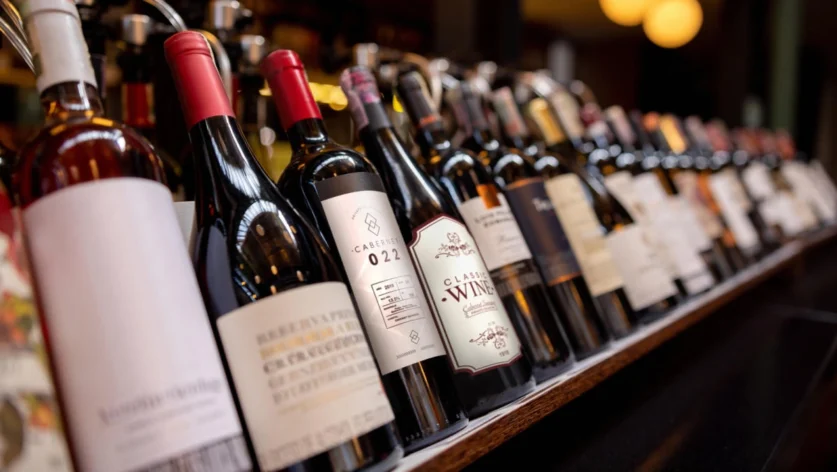
Do you find visiting a wine shop intimidating? Are you new to the wine world or feel like you lack expertise? Well, fear not! We have some expert advice to help you navigate your way through a wine shop with confidence.
We spoke to Andrea Card, a Senior Winemaker at Francis Ford Coppola Winery, who is passionate about wine pairings. In fact, their dedication to wine pairings is so strong that they recently opened a pizza and wine hotline to help you find the perfect combination.
According to Card, the key to a successful wine shop visit is to make use of the wine experts in the store. Don’t be afraid to communicate clearly and openly with them, as they are there to help you make the best decision. If you’re looking for a wine to pair with food, it’s important to come prepared. Card advises, “You should always know what cuisine you’re preparing or having and what the primary flavor profiles of the dish are.” Having a price point in mind will also help narrow down your options.
But what if you’re new to wine and don’t know much about it? Don’t worry, you probably have a general idea of what you like. Do you prefer sweet or dry? White or red? Let the wine pros know your preferences, as this information will come in handy. Card explains, “They’ll want to steer you in the direction of a bottle you’ll probably enjoy once they have a better idea of your personal tastes.” And if you’re feeling adventurous, don’t hesitate to ask them for unexpected recommendations. Card assures us that they will be happy to suggest something new and exciting.
So, next time you visit a wine shop, remember to approach it with confidence. Seek out the expertise of the wine experts, communicate your preferences, and be open to trying something different. The world of wine is vast and exciting, and with a little guidance, you’ll be able to find the perfect bottle for any occasion.
To read the original article by Tasting Table, click here: [link to original article]
The documentary film “Somm: Cup of Salvation” recounts the tale of the initial Iranian wine after 43 years.

Moläna Wine, the first Iranian wine produced in 43 years, has become the talk of the town since the release of the documentary movie Somm: Cup of Salvation, which revolves around its creation. The story told in the film is far from the typical winemaking tale. Rather, it is a harrowing and perilous journey of winemaker Vahe Keushguerian, who defies all odds in his quest to revive the Iranian wine industry after it was toppled during the Islamic Revolution in 1979.
In a world where winemaking is often associated with luxury and enjoyment, Keushguerian’s story stands out as one of immense bravery and determination. The movie follows his efforts, along with his daughter Aimee, to resurrect and modernize the wine industry in their war-torn country. Their mission to introduce Armenian wine and the unique varietal of Areni to the world is no small feat. It is a seemingly impossible task that only a few would take on.
Director Jason Wise, who was captivated by Keushguerian’s story, describes it as the most important narrative in the wine world today. While his previous films educated viewers about the significance of wine on a global scale, this film delves into the positive impact that a beautiful bottle of wine can have, even in a region marred by turmoil.
The central concept of the film revolves around the Persian region of the Middle East, which is often overlooked due to religious and political issues. Keushguerian’s passion lies in bringing attention to this forgotten region, which he believes is the birthplace of winemaking. He meticulously maps out the grape-growing regions, disregarding manmade borders, and envisions a future where the riches of the area can be shared with the world.
To achieve his dream, Keushguerian embarks on a dangerous undercover mission in Iran. Under the guise of buying Rasheh grapes for research purposes, his true aim is to create the first modern Iranian wine. He seeks out the remnants of old vineyards, hoping to find viable winemaking grapes hidden among the ruins. It is a treacherous journey, with Keushguerian constantly looking over his shoulder. However, his efforts pay off as he manages to ship a truckload of these grapes back to his winery.
The resulting Moläna Wine is nothing short of extraordinary. Master Sommelier Dustin Wilson hails it as “the most dangerous wine ever made.” With only 15,000 bottles produced, it is a limited edition that is unlikely to be replicated anytime soon. Named after the renowned Islamic scholar Rumi, the wine serves as a symbol of hope and change, reminding us that even in the face of adversity, new beginnings are possible.
In the world of wine, where surprises are rare, Moläna Wine has caused quite a stir. Director Wise and winemaker Keushguerian hope that this ambitious project will shed light on a region that is often associated with conflict and instability. It is their shared vision that through this wine, the Persian region can regain its rightful place as a major player in the winemaking industry.
In conclusion, the story of Moläna Wine and its creation is a testament to the indomitable spirit of winemaker Vahe Keushguerian. Against all odds, he has made history by producing the first Iranian wine in over four decades. The film Somm: Cup of Salvation brings his awe-inspiring journey to life, highlighting the importance of perseverance and the power of wine to bridge cultural divides. This is a story that deserves to be told and celebrated, as it reminds us of the endless possibilities that lie within a simple bottle of wine.
Title: Uncorking New Possibilities: The Wine That Will Revolutionize the Industry
Introduction:
Imagine a world where a single sip of wine has the power to transcend conventional boundaries and ignite discussions far beyond the realms of sommeliers and oenophiles. Today, we embark on a journey to witness the birth of a wine that promises to redefine not only the taste buds but also the conversations surrounding it. In the words of the visionary winemaker, Keushuerian, “I firmly believe this wine will create an unparalleled impact, an impact that extends beyond the realms of enology.”
Unveiling the Innovative Wine:
The anticipation has reached its climax as the wine industry braces itself for the unveiling of what promises to be a groundbreaking creation. In the hands of Keushuerian, this handcrafted elixir is poised to leave an indelible mark in the annals of viticulture. This visionary winemaker asserts that the impact of this wine, destined to dominate headlines, will extend far beyond its mere taste profile.
Pioneering Possibilities beyond the Norms:
Beyond the invisible borders of the wine industry, this extraordinary wine aims to provoke discussions about the endless possibilities it signifies. Keushuerian is synonymous with defying conventions, and this ambitious project encapsulates his determination to push the boundaries of the industry. The wine calls for a celebration of unyielding human spirit, innovation, and limitless exploration.
The Ripple Effect:
Great wines have always had the power to garnish attention and spark conversations. However, this transcendent creation is set to revolutionize wine culture as we know it. Keushuerian firmly believes that the debut of this elixir will act as a catalyst that disrupts the enology landscape. From wine enthusiasts to scholars, individuals from all walks of life will partake in the discourse it inspires.
Unlocking the Dialogue:
As the public immerses themselves in the experience this wine offers, discussions will go beyond the merely gustatory aspects of the drink. The exploration of possibilities arising from this wine will ripple into broader conversations about innovation, creativity, and the pursuit of excellence. The intriguing nature of this elixir will open doors to new perceptions, challenging traditional notions of wine’s purpose and potential.
Conclusion:
The stage is set, the glasses are raised, and the revolutionary wine created by Keushuerian stands poised to embrace its destiny. With every sip, this ambrosial creation promises to unlock conversations beyond oenology’s confined echo chambers. As wine enthusiasts and visionaries alike gather to witness its debut, we cannot help but join Keushuerian in his conviction that this enigmatic elixir will leave an indelible mark on the world of wine, transcending taste and paradigm, and reminding us all of the boundless potential that lies within each glass.
Swiss wine is rarely found in the US, and here’s why.

Unlocking the Hidden Gems: The Enigmatic World of Swiss Wine
Are you ready to embark on a journey to discover some of the best-kept secrets in the world of wine? If so, then Swiss wine is your ticket to a truly remarkable adventure. While Switzerland may not be your first thought when it comes to exceptional vintages, this hidden gem is quietly making waves in the wine industry.
Picture this: the enchanting terraced vineyards of Lavaux, overlooking the mesmerizing Lake Geneva, have been recognized as a UNESCO World Heritage Site. This picturesque setting houses some of the most exquisite wines the world has to offer. However, there’s a catch – Swiss wines are rarely shared beyond the borders of Switzerland.
But why the secrecy? You see, Switzerland only produces about 1 million hectoliters of wine each year, which is merely 5% of California’s annual production. To put it into perspective, that amounts to approximately 1.08 million glasses of wine in a country with a population of around 6 million. The scarcity of Swiss wine adds to its allure, but it also means that only a lucky few get to savor its exceptional flavors.
Despite the limited production, Swiss wines have been steadily gaining recognition on the world stage. In 2023, Robert Parker Wine Advocate, a globally renowned authority on wines, awarded Grain by Grain Petite Arvine 2020 a perfect score of 100 points. This sweet white wine, crafted by Domaine Marie-Thérèse Chappaz in Switzerland’s Valais region, was among the 27 Swiss wines that earned Parker’s prestigious “Extraordinary” status. This honor is reserved for vintages that surpass 95 points on Parker’s scale, marking them as truly exceptional.
So, where does that leave wine enthusiasts outside of Switzerland who long to savor these extraordinary wines? Historically, Swiss winemakers faced a frustrating predicament. Prior to the 1990s, they operated with limited oversight, resulting in a surplus of mediocre wines. In fact, some winemakers were forced to dump unsold bottles into empty swimming pools. The turning point came when Switzerland implemented AOC regulations, bringing structure to wine production. These regulations defined territories, instituted training requirements, and established production standards.
As a result, Swiss wines began to garner attention, sparking the rise of wine tourism. This budding industry offers guided tours, scenic hikes and cycling routes through vineyards, and even tasting rooms located in winemakers’ private homes. Lavaux, a UNESCO World Heritage Site, introduced a wine train that covers the picturesque route from Vevey to Chexbres, immersing visitors in the heart of the terraced vineyards.
Recently, there has been a new development in the Swiss wine scene. Importers are starting to introduce Swiss wines to their portfolios, recognizing the untapped potential of this overlooked wine region. Though limited in availability, the importers have faith in the U.S. market, assuring wine enthusiasts that these exclusive Swiss wines are worth the investment.
So, what are you waiting for? It’s time to unlock the secrets of Swiss wine and indulge in the flavors that have captivated the palates of the lucky few. As Victoria James, corporate beverage director for Gracious Hospitality, aptly puts it, “If you’re a sommelier and you’re not paying attention to Switzerland, then what the hell are you doing?” Don’t miss out on a true wine lover’s delight – venture into the enigmatic world of Swiss wine and elevate your wine experience to extraordinary heights.
Read the original article on Tasting Table.
Disney+ and Hulu bring the story of Bobi Wine, the Ugandan music superstar, and his struggle for democracy.

LOS ANGELES — “Bobi Wine: The People’s President” is a revolutionary documentary that captivates audiences with its powerful message of resilience and courage. This remarkable film, produced by National Geographic, delves into the harrowing journey of Bobi Wine, a renowned Ugandan musician who transformed into an influential activist and politician.
The documentary focuses on Wine’s audacious bid to dethrone President Yoweri Museveni, a tyrant who has firmly held the reins of power since 1986. Against all odds, Wine, his wife Barbie, and their unwavering supporters venture into the treacherous terrain of politics, braving persecution, intimidation, physical violence, torture, and even death. Their grit and determination to expose the dictatorial regime and fight for freedom are truly awe-inspiring.
“Bobi Wine: The People’s President” not only provides a glimpse into Wine’s personal sacrifices but also sheds light on a broader issue. As Wine eloquently states, “What you see happening in Uganda I believe is happening in very many other parts of Africa and the world. There are oppressed people everywhere.” This documentary unearths the universal struggle for justice and equality, transcending boundaries and resonating with audiences across the globe.
The film is now available for streaming on popular platforms such as Hulu and Disney+. It is a testament to the profound impact that individuals like Wine can make in the face of adversity. As the parent company of Disney+, Hulu, and this ABC station, The Walt Disney Company plays a pivotal role in amplifying voices like Wine’s and spreading awareness of these vital issues.
“Bobi Wine: The People’s President” is an essential watch for anyone seeking inspiration and insight into the power of activism and the fight against political corruption. Prepare to be captivated by the indomitable spirit of Bobi Wine and his unwavering quest for a better future.
The Nathan Adelson Hospice will gain benefits from the 22nd Annual Wine & Food Tasting Event.

Title: Enhancing Community Bonding through a Night of Exquisite Delights
Introduction:
As the sun begins to set on a warm summer evening, the spirit of generosity and camaraderie pervades the air. Each year, our vibrant valley community unites in a remarkable event, transcending mere fundraising, to support the incredible work of our local hospice. It is a night unlike any other, where members, acclaimed restaurants, and generous sponsors converge to indulge in an array of delectable wines and savory bites. Join us as we delve into this unique culinary event that celebrates both the pleasure of exquisite flavors and the monumental impact of collective goodwill.
Setting the Scene:
As the anticipation builds, the venue comes alive with the clinking of glasses and the murmur of enthusiastic conversations. A dazzling montage of people with a shared passion for philanthropy and mouthwatering cuisine fills every corner of the room. The atmosphere is infused with a festive charm, fostering an oasis of delight and compassion. The event’s organizers have meticulously curated a delectable culinary experience that showcases the valley’s finest establishments, all for the noble cause of supporting the invaluable services of our hospice.
Celebrating the Bounty:
At the heart of this annual gathering is a showcase of the valley’s diverse culinary scene, as renowned restaurants present their finest dishes. From the delicate fusion of flavors in Asian cuisine to the comforting richness of Italian recipes, the palate embarks on a tantalizing journey. Each bite carries the vibrant essence of local ingredients, skillfully transformed into gastronomic masterpieces. As attendees savor the gourmand offerings, they not only indulge their senses but also contribute to the noble mission of the hospice.
A Toast to Generous Support:
Beyond the tantalizing culinary offerings, the event owes its success to the unwavering support of its sponsors. These compassionate businesses recognize the profound impact of hospice care and extend their generosity to ensure the event’s triumphs. Their contributions enable the organizers to transform the evening into a remarkable testament to both the local culinary scene and the spirit of community togetherness. It is through their partnership that the valley’s hospice can continue to provide compassionate end-of-life care to those in need.
The Ripple Effect:
While the event serves as a night of gastronomic adventure and community bonding, its significance extends far beyond those enchanting hours. The funds raised during this extraordinary gathering fuel the hospice’s efforts throughout the year. They empower dedicated healthcare professionals to ease the suffering of patients and provide much-needed solace to grieving families. Every sip of wine and every delectable bite strengthen the hospice’s ability to continue its invaluable services, emanating ripples of compassion that touch the lives of countless individuals.
Conclusion:
In an era where virtual connections often overshadow tangible ones, events like this showcase the potential of community unity. By coming together for a night of extraordinary cuisine and unwavering support, our valley demonstrates the profound impact that collective goodwill can have on those in need. Through their participation, the attendees, restaurants, and sponsors enable the hospice to shine a light of comfort and compassion in the darkest of times. As we look forward to the next gathering, let us remember the transformative power of combining the pleasures of the palate with the generosity of the human spirit.