Full Glass Wine secures $14M Funding for the Acquisition of DTC Wine Marketplaces, Acquires Bright Cellars

Full Glass Wine a brand acquisition management startup that specializes in acquiring wine marketplaces, has raised a $14 million Series A round to continue acquiring DTC (direct-to-consumer) wine marketplaces, aiming to lead the DTC wine market.
DTC wine brands sell wine directly to wine lovers, bypassing traditional distribution channels
Full Glass Wine recently acquired Bright Cellars, a subscription-based wine service provider in Wisconsin, for an undisclosed price. The deal is its third acquisition in a year and enables the startup to expand its subscription-based model. Previous acquisitions include Winc, a DTC wine platform offering personalized recommendations and a subscription service, in June 2023; and Wine Insiders, a marketplace that curates a selection of high-quality wines from around the world at accessible prices, in October 2023.
“By uniting Winc, Wine Insiders, and Bright Cellars, we offer a one-stop shop for all things wine, catering to a wider range of wine drinkers than most traditional retailers, grocers, or single-brand DTC companies,” Neha Kumar, co-founder and COO of Full Glass Wine, told TechCrunch. “This comprehensive portfolio allows the company to optimize logistics for efficient delivery and leverage the power of established brands to create a powerful marketing platform.”
The firm plans to increase its technology investments using the raised funds. “Bright Cellars, our latest addition, has designed an algorithm that pairs wine by learning from user preferences and ratings,” mentioned Kumar. “This method, reminiscent of how platforms such as Spotify and Netflix customize content suggestions, helps us craft a more personalized experience for every customer. We aim to harness the power of data and AI to enhance the precision and insightfulness of personalized wine recommendations, ensuring that every customer finds and relishes wines they genuinely adore.”
A host of opportunities await in the DTC wine sector, though managing the intricate network of regulations across various states can be an obstacle, as per Kumar.
She further stated, “Ensuring a smooth customer journey, from discovering our products to receiving them, demands continuous innovation and concentration. However, there might be some misunderstandings among customers regarding DTC wine. We tackle concerns over quality by securing partnerships with reliable vineyards and implementing stringent selection processes. Although value is a pertinent factor, we provide a broad price range catering to an array of budget preferences. The primary challenge might be the preliminary discovery stage – consumers often find it daunting to pick the right wines. This is where personalization plays a key role – we employ data and technology to help consumers identify wines that they will truly enjoy.”
Full Glass Wine’s CEO Louis Amoroso and COO Neha Kumar. Image Credits: Full Glass Wine
Back in 2023, a man of multiple talents in the winery business and former associate at Goose Island Beer Company, Louis Amoroso (CEO), together with Kumar (COO), a past management director at New Money Ventures, initiated a startup. They are very open-minded about the potential of teaming up with diverse companies to increase the accessibility and services their platform offers.
“This could possibly include wineries, different food delivery solutions, or even organizing specialists to provide unmatched experiences for our customers directly through our platform,” elucidated Kumar.
Post the latest acquisition, the company is consistently working hard to ensure a seamless transition for every person involved.
“Our team at Full Glass Wine will strengthen as we are looking at including minimally dozens of employees now,” informed Kumar. “This addition will enhance our team significantly, allowing us to cater to a broader array of services to our esteemed customers.”
The startup did not provide the number of subscribers it has but said the acquisitions will help it generate more than $100 million in revenue in 2024. It plans to offer a diverse selection of over 400 SKUs and an accessible price range for customers; most bottles range from $12 to $25.
Shea Ventures led the Series A funding.
Bright Cellars lands more funding to personalize its subscription-based wines
Vivino raises $155 million for wine recommendation and marketplace app
Indulge in the Whiskey-Grapefruit Juice Cocktail: A Perfect Farewell to Winter

In this welcome variation for Paloma lovers, swapping the tequila for rye whiskey helps transition this bright grapefruit-forward cocktail into the oft-dreary winter months. If you’ve never met before, allow us to introduce the Blinker: a classic cocktail with a low profile and high vibrancy. The Blinker could be considered a variation of the Whiskey Sour, as it follows a standard sour format: base spirit, sugar, and citrus, plus a small yet crucial dilution from the wet shake.
Proto-Blinkers were made with rye whiskey, grapefruit juice, and grenadine. Call it evolution, or call it “keeping with the times,” but nowadays, modern mixologists are swapping the pomegranate-forward syrup for raspberry syrup, yielding a drink with less depth and intensity and a sweeter, brighter profile. Whichever ingredients lineup you prefer, the assembly is the same: The three ingredients get shaken over ice and, like Whiskey Sours, are double-strained before being poured into a chilled coupe glass to serve.
The first recorded recipe for the drink appeared in Patrick Gavin Duffy’s “The Official Mixer’s Manual” in 1934, and while it broke onto the scene and lasted, it wasn’t immediately popular. In his 1940s bartender’s handbook “The Fine Art of Mixing Drinks” (via Difford’s Guide), David Embury called the Blinker “One of a few cocktails using grapefruit juice. Not particularly good but not too bad.” Still, the bevy is not to be overlooked. It’s mature, timeless, and avoids being hyper-sweet like many citrusy cocktails. Plus, even with the 100-proof rye, the Blinker is smooth and accessible at 15.13% alcohol by volume (ABV) or 30.26-proof.
Read more: 13 Liquors Your Home Bar Should Have
The Blinker was brought back to mainstream awareness in 2009 by Ted Haigh’s nostalgic libations graveyard guidebook, “Vintage Spirits and Forgotten Cocktails.” Haigh’s recipe altered Patrick Gavin Duffy’s version, calling for more rye and introducing the raspberry-grenadine swap. Making flavorful, homemade raspberry-infused simple syrup yourself is a killer way to take your home mixology game to the next level, and you can also use it to make the Clover Club, another vintage cocktail that’s been enjoying a 21st-century comeback.
Or, keep the grenadine and add rose water for a sophisticated floral facelift. Lemon syrup would also steer this cocktail more punchy and mature than the red berry flavor. (Sidecar fans, rise up.) On the note of ingredients, opt for freshly squeezed yellow grapefruit juice, which is more tart than that of the sugary pink and red grapefruits (which are the sweetest of them all).
If you can’t track down yellow grapefruit in your local produce section, a few drops of grapefruit bitters can help counterbalance the sweetness of pink grapefruit juice. Scrappy’s and Fee Brothers both make great versions of the ingredient, available for purchase online, or intrepid home bartenders can make flavorful bitters themselves. Depending on whether you want to steer your Blinker more sweet or more tangy, you could garnish with a raspberry trio skewer, grapefruit twist, or lemon peel after expressing the fruit’s oils around the rim of the glass.
Read the original article on Tasting Table
The 12th Annual Great Vegas Festival of Beer Returns!
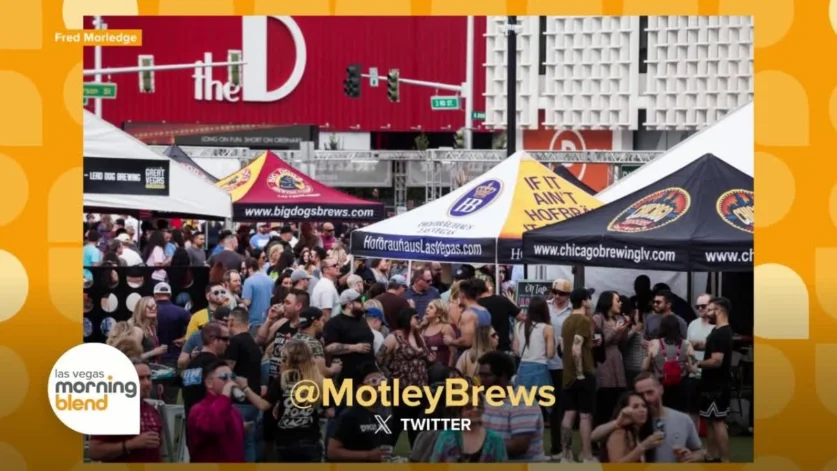
Hosts of “Las Vegas Morning Blend”, Elliott Bambrough and Jessica Rosado, engage in a discussion about the renowned Great Vegas Festival of Beer. Identified as Las Vegas’ top craft brew festival, it is slated to commence at the Downtown Las Vegas Events Center this coming Saturday, April 6.
Rehab Order for Vodka Thief Caught On CCTV in a Convenience Store

A woman who stole three bottles of vodka from a shop has been placed on a community order with a drug rehabilitation requirement.
Jade Cambridge admitted taking the alcohol from the Spar shop on High Street in Presteigne on October 15, 2023, when she appeared at Llandrindod Wells Magistrates Court on Wednesday last week.
The 38-year-old, formerly of Lower Cross, Kington, and now of Mill Bank, Presteigne was seen on CCTV.
The Demise of Red Wine: Four Reasons It’s No Longer Considered A Health Food

Red wine used to be touted as a health food. If you didn’t drink, experts thought adding a glass …[+] would improve your health. Yet the science has changed because the original research in the 1990s supporting red wine’s benefits was flawed. Despite that, many still thinking red wine is healthy.
For years scientists and doctors considered red wine a health food. Research of the day linked moderate alcohol consumption—defined as one drink or less a day in women and two or less in men—to 30-40% fewer heart disease deaths in drinkers v. non-drinkers.
Red wine became a health food because it not only contained alcohol but also the health-enhancing antioxidants of grape skins. One powerful antioxidant is resveratrol which repairs damaged blood vessels, prevents clots, and reduces inflammation. This led to experts to recommend red wine in modest amounts to boost health. Wine sales have grown tremendously since the 1990s.
Now we know differently. Moderate drinkers do die later but not because they drink alcohol. It’s because they are healthier to begin with. They are more active, richer, have better diets, and better education. The early research studies misled us to wrongly believe moderate consumption was healthy. Here are four reasons you shouldn’t think of red wine as a health food, even if you sip less than a glass a day.
1. Moderate Alcohol Consumption Is Linked To Poorer, Not Better, Cardiovascular Health
A 2022 study in JAMA Network Open examined 371,463 people in the UK and found moderate drinking was associated with a 1.3 times higher risk of high blood pressure and 1.4 times higher risk of coronary artery disease. The study was cleverly designed. It accounted for a person’s genetic predisposition to alcohol use which helps get around some limitations of earlier studies.
2. Alcohol Use Increases Cancer Risk Even With Moderate Drinking
Alcohol is a known human carcinogen, according to the National Toxicology Program in the Department of Health and Human Services. Alcohol accounts for 6% of all cancers and 4% of cancer deaths, amounting to 75,000 yearly cancer cases and 19,000 deaths in US. It causes cancer for many reasons. For example, it increases oxidative stress and the metabolic products from alcohol—namely, acetaldehyde—damage liver DNA. It also directly injures your mouth and throat cells’ DNA. It substantially increases breast cancer risk even in moderate drinkers. Women who drink three alcoholic drinks a week have a 15% higher breast cancer risk than those who don’t drink at all.
Sleep Quality Is Worsened By Alcohol
Alcohol can act as a sedative causing one to fall asleep more quickly. However, it has been found to detrimentally affect the quality of sleep. The impact of drinking alcohol on sleep quality becomes more obvious even after small quantities. A study carried out on 4,098 Finnish people, revealed a rise in stress responses and impairment in sleep recovery measures in the first three hours of sleep due to alcohol consumption. According to their measurements, the quality of sleep, referred to as the HRV-derived physiological recovery state, deteriorated by 9.3% upon drinking a small amount of alcohol. This increased to 24% for a moderate amount and soared as high as 39.2% for a large amount. In addition to worsening hangovers, insufficient sleep also leads to decreased alertness on the following day.
It Would Require A Deadly Amount Of Red Wine To Benefit From Its Antioxidants
Resveratrol is found in red wine but its quantity is not enough to engender any significant health benefits. A study, measuring absorption of resveratrol in the body through a cup of alcohol, along with two other polyphenols (catechin and quercetin) known for their health benefits, concludes that the blood concentrations for these elements is far too low to be effective. Consequently, to reach a beneficially high level, one would have to drink gallons of wine, a lethal amount.
Here’s the crucial understanding: the understanding of red wine’s benefits has progressed. Indeed, it brings about a pleasant feeling. But, it’s no longer considered a health boon. If you don’t drink, there’s no need to start. If you do indulge in red wine, perhaps think about consuming less than a glass per day. It’s evident that the more alcohol you consume – including red wine – the greater you elevate your risk for health complications.
Review: Cutwater Devil’s Share Bourbon – Our Whiskey of the Week
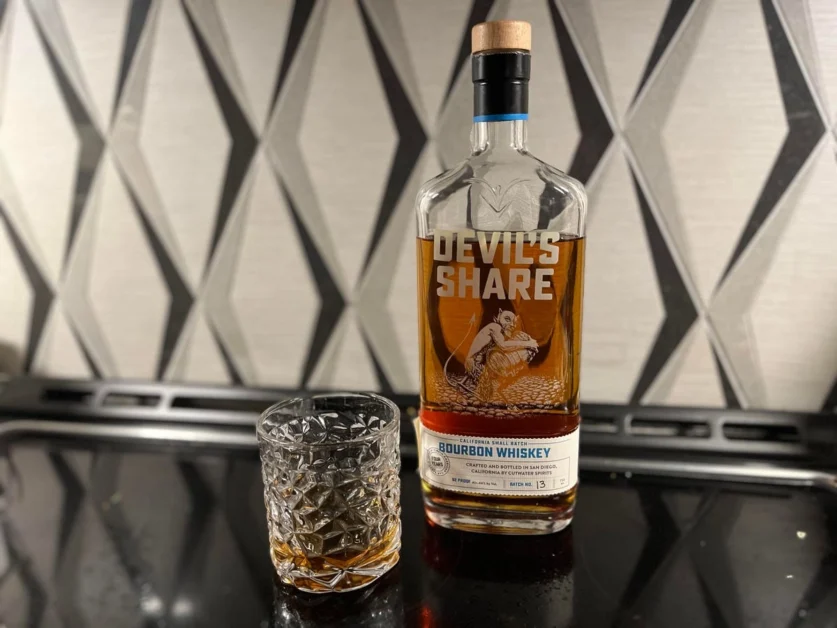
If you’re familiar with the brand Cutwater, it’s likely because of theircanned cocktails, a product category that saw an unexpected boon during the global pandemic in 2020. I’m not an expert on the topic, and during the Covid lockdown, I spent time making cocktails from scratch with freshly sanitized ingredients. However, among the ones I sampled, Cutwater’s stuck out as being top-tier. It’s a challenge to make a well-crafted mai tai from fresh ingredients, let alone one that retains its flavor after weeks or even months in a can, but their mai tai was impressively tasty. Later, I tried Cutwater’s canned White Russian which was equally enjoyable.
However, Cutwater’s history extends beyond canned cocktails. The San Diego-based company was established in 2017, but its roots go back another ten years as the spirits component of the Ballast Point Brewery. In 2015, when Ballast Point was acquired by Constellation Brands, the spirits division was split off and later revived as Cutwater Spirits. Today, the company operates a largedistillery/bar/restaurant in San Diego’s Miramar area.
Wait a minute, Cutwater has a distillery? So this company producing canned cocktails creates its own spirits? And co-founder Yuseff Cherney is the master distiller? For a New Yorker like myself, this was a surprising discovery. Not only do they use their spirits in the canned cocktails (and their frozen cocktail pops), they also bottle and sell it in varieties ranging from rum, gin to herbal liqueur. They take pride in the many awards won by their spirits, and to my surprise, I realized I’ve tasted and scored their products in various contests. I particularly liked their unaged rum, their tequilas were respectable, but their rye didn’t win me over.
Indeed, Cutwater Spirits is a major player in the world of spirits, coming right out of San Diego.
I had never tried Cutwater Devil’s Share Bourbon, their highest-end expression, with a suggested retail price of $115. If you can find it, that is, as availability is said to be limited even in California. The mashbill is an interesting one — 75% non-GMO corn, 15% malted barley, and 10% malted wheat. Usually a wheated bourbon uses wheat as the secondary grain. To use it as a tertiary grain after the barley… that’s different. Aged for at least four years in new American oak barrels, it’s bottled at 46% ABV.
On the nose it’s a little hot, with notes of brown sugar, cinnamon, and rubbing alcohol. On the palate the cinnamon comes through again, accompanied by butterscotch, vanilla and oak. It drinks a tad hotter than its proof; a little water tamps down the heat but also dulls the flavor profile a bit, so I preferred it neat. It makes a pleasant, lightly astringent Manhattan, and a perfectly fine whiskey sour.
“This bourbon is not defined by geography, but by taste,” says the Cutwater website, and I suppose that makes sense, since as far as I know there’s no distinctive San Diego style of whiskey. Although, with 18 distilleries and counting in the city, according to the San Diego Guild of Distillers, one may be emerging as I write this. News travels slowly to us East Coast craft spirits connoisseurs. Can you procure better bourbons for significantly less money? Absolutely. But for the time being, Cutwater reigns supreme in San Diego whiskey. On my next visit, I’ll certainly be visiting the distillery and savoring a Devil’s Share whiskey sour — if they aren’t only selling canned cocktails at the bar.
Emerging Trends in Beer Purchasing: The Decline of the Six-Pack

Six-pack beer sales are declining as 12-packs and singles gain in popularity.
Joe Six-Pack might have to change his name.
Six-pack beer sales declined last year for both craft beer and beer as a whole, according to a recent recap and analysis released by the Brewers Association.
Nielson data cited in the analysis reveals 12-pack can sales have surpassed six-pack can sales both in terms of dollars and total volume of beer sales as the top beer format. In the craft beer arena, the six-pack remained the top-selling beer format but its popularity is waning: six-pack craft beer sales were down more than 12% for the year.
So how are people buying their craft beer instead?
If you’re a craft beer fan you might assume it is the popular four-pack 16-ounce cans, which seems as synonymous with craft beer these days as beards and plaid shirts — but you’d be wrong. The four-pack also dropped in popularity with sales by volume decreasing 7.3% over 2023. Instead, 12-packs increased in popularity along with singles, which were the biggest winners of the year, increasing by 2.2%. Surprisingly, singles actually surpassed four-packs in popularity over the past year.
Bart Watson, chief economist for the Brewers Association and author of the recap, predicts that we will continue to see the popularity of four-packs and six-packs drop. “In the same way we’ve seen consumers focus in on alcohol by volume (ABV) and specific occasions, hollowing out the middle of the ABV range a bit, I wonder if they are starting to do something similar with pack sizes,” he wrote in the analysis. “Six-packs are still the plurality of craft packaging, but they are now down to 43 share of volume. It’s likely that singles and 12-packs will pass them in 2024.”
It is all part of beer world that is rapidly changing. Beer sales are trending down overall as consumers are drawn to other types of alcohol. But craft beer has long been built on change. I still remember when some beer connoisseurs would look down on anything in a can as inferior. Those days are long gone and can sales overall continue to increase growing by 4% over the past year.
Personally, I don’t see anything too concerning for the industry in shifting pack-size format choices. I also love singles, it allows you to taste a beer without spending on a four-pack and I’m pleased that more breweries are providing them. The bigger 12-packs are also a tremendous deal when you wish to stack up on a beer you favour. However, as six-pack sales dropped, I do speculate what an average American drinker will pick for the weekend to sip when working on the machines of their ‘88 Ford Mustangs.
After all, Joe 12-Pack doesn't quite possess a nice ring to it.
Prithviraj Sukumaran’s Extreme Preparation for Aadujeevitham Nude Scene: 3 Days of Fasting and 30 ML Vodka, Cinematographer Reveals

Prithviraj Sukumaran, a celebrated actor known for his recent film Aadujeevitham: The Goat Life, undertook a three-day fast prior to filming a nude scene for the movie. This dedication to his craft was later recounted by Sunil KS, the film’s cinematographer, during a recent interview.
There have been videos circulating on social media in which the cinematographer can be heard stating that Prithviraj had to be brought to the shooting location in a chair. He also disclosed the reason why the actor consumed 30 ml of vodka before the scene was filmed.
One user posted the aforementioned video on X, summarizing Sunil’s explanation, “Prithviraj fasted for three whole days before shooting the nude scene, abstaining even from water on the final day. Before the scene could begin, he drank 30 ml of vodka to rid his body of any remaining water.”
The user went on to reveal, “He had to be carried in a chair to the location of the shoot. It was necessary to help him up from the chair before the scene could be shot.” You can find the video using the following link:
Wow 👏
For the naked scene, Prithviraj fasted for 3 days, not even drinking water on the last day. Before the shoot, he consumed 30ML of vodka to drain the remaining water from his body. He needed to be carried in a chair to the location, and we had to lift him from the chair before the shot😯.
In the scene, Prithviraj’s character, Najeeb, an immigrant worker, removes his clothes one by one and walks towards a water tank to take a bath.
Prithviraj surprised the audience with his drastic physical transformation in the film. Talking about his weight loss, he said to Bollywood Hungama, “I had to gain a lot of weight to look like Najib when he first arrives in Saudi Arabia. Then I had to lose around 30 kgs twice to capture his look later on. My sugar levels got seriously disturbed. It was quite difficult. I don’t think I would be able to do this again.”
A post shared by Aadujeevitham – TheGoatLifeFilm (@thegoatlifefilm)
Directed by Blessy, Aadujeevitham: The Goat Life is a survival drama inspired by Benyamin’s 2008 novel of the same title. It made its debut on big screens on March 28 and amassed over Rs 50 crore at the box office within just a few days following its release.
The plot centers around the life of an immigrant worker who, in pursuit of better opportunities, ends up working as a goat herder on a remote farm in Saudi Arabia, where he is subjected to harsh conditions.
Visual Romance produced the film, shooting it largely during the pandemic with extensive schedules in Jordan.
Transcript of Rumble Inc.’s Q4 2023 Earnings Call (NASDAQ:RUM)

Rumble Inc. (NASDAQ:RUM) Q4 2023 Earnings Call Transcript March 27, 2024
Rumble Inc. beats earnings expectations. Reported EPS is $-0.14, expectations were $-0.22. RUM isn’t one of the 30 most popular stocks among hedge funds at the end of the third quarter (see the details here).
Operator: Greetings. Welcome to Rumble Inc. Fourth Quarter 2023 Earnings Call. At this time, all participants are in a listen-only mode. A question-and-answer session will follow the formal presentation. [Operator Instructions] Please note this conference is being recorded. I will now turn the conference over to, Shannon Devine, Investor Relations. Thank you. You may begin.
Shannon Devine: Thank you, operator. I’m here today with Chris Pavlovski, Founder, Chairman and CEO of Rumble; Brandon Alexandroff, the CFO; and Tyler Hughes, the COO. A press release detailing our fourth quarter and full-year 2023 results was released today and available on the Investor Relations section of our Company website. Before we begin the formal presentation, I would like to remind everyone that statements made on the call and webcast may include predictions, estimates or other information that might be considered forward-looking. All forward-looking statements are made only as of the date of this webcast and should be considered in conjunction with the cautionary statements in our earnings release and the risk factors included in our filings with the SEC.
There will be updates from Future Company available through press releases and company updates via its social media channels. Now, let’s hear from Rumble’s Founder, Chairman and CEO, Chris Pavlovski.
Chris Pavlovski: Thanks, Shannon. Firstly, I want to discuss 2023, which was a year of building for our Company. Apart from successfully broadening our content library with key signings from various fields such as sports, comedy, and entertainment, we were focused on fulfilling our product commitments. Allow me to review this exceptional year for our top-notch product and engineering teams. Initially, we completely altered the user experience on Rumble by launching a fully redesigned user interface across all primary viewing platforms and integrating our premium subscription service with locals.com to provide creators with better monetization opportunities. Following that, we purchased Callin last May, leading the way for the beta launch of our new patent-pending live streaming tool, Rumble Studio, which will prove crucial for future monetization.
Next, we constructed and launched the Rumble Advertising Center, commonly referred to as RAC. I am thrilled to announce that we have started displaying pre-roll video ads across our mobile apps through RAC in the past 90 days, and are also increasing our inventory by bringing more publishers on board. Besides, we built the needed infrastructure to support Rumble and laid the groundwork for Rumble Cloud, which we publicly launched just a fortnight ago. A completely renovated user interface, significant video platform integration, a new live streaming tool, an advertising network, and a cloud all rolled out within a single year. As a result, we now have an excellent business equipped with four top-tier products. Our team has been working tirelessly to create products and services our audience desire.
I’m not only amazed by these products but also by the team that was behind this huge effort. What we have built can be compared to a mini Google. Put into context the time and investment Google took to build their offerings, it makes our achievements stand out. Google acquired DoubleClick for $3 billion, corresponding to our Rumble Advertising Center. Google paid $1.65 billion for YouTube in 2006, which can be likened to our Rumble Video platform. Google’s billions’ investment in Google Cloud is akin to our Rumble Cloud. It’s worth noting that we managed this feat with fewer than 250 staff members. It’s vital to understand why our business was perfectly poised to launch our cloud offering while talking about our expansion into the cloud business.
From the outset, we have been independent of third-party cloud platforms. Our primary video platform rumble.com has been developed and scaled on Bare-Metal since 2013. It was a wake-up call when Parler was shut down, which was particularly shocking since major tech platforms had more violations, but only Parler faced severe repercussions. Amazon AWS was the gatekeeper — they switched off the lights, leaving Parler no avenue for recovery or redemption. We recognised that creating Rumble’s infrastructure was vital for our business survival, which led us to undertake it in 2021. This endeavour let us develop a full-stack, safeguarding our business and also granting us the advantage of the positive long-term economic outcomes of running our own framework and avoiding lock-in to the prejudiced pricing of existing hyperscalers.
This infrastructure is the spine that powers rumble.com and is the technological base for Rumble Cloud. Constructing our own infrastructure not only shielded Rumble but also provided a fantastic opportunity to utilise the magnitude of rumble.com to develop a cloud service at scale, tackling a market riddled with problems like vendor lock-in tactics, unfair pricing structures, data and privacy trust issues, complicated structures and censorship. By launching Rumble Cloud to the public early this month, there is now a fresh new cloud provider option available in the market, with the prime goals of safeguarding an open Internet, commitment to keeping the lights on come what may, operating on the latest-gen hardware delivering top-class network speeds and quality, and finally, shaking up the market with our unique pricing model.
Our framework intends to deliver the most transparent pricing structures, allowing businesses to regain control over their IT expenditures. As Rumble has pulled market shares from YouTube, we envisage Rumble Cloud following suit in the cloud market, targeting the excessive profits and revenues currently monopolised by Big Tech at the infrastructure layer. We’re operating on the sole highway of a free and open Internet – a highway that cannot be cancelled. We stand unshaken when Big Tech falls. This position secures Rumble and, by natural extension, our ecosystem of users, creators, advertisers, subscribers, publishers, cloud partners and shareholders extensively while safeguarding businesses’ data independence. We’re offering opportunities to all companies.
In support of our go-to-market strategy for mid-market and enterprise sectors, we recently announced collaborations with Qinshift, a market leader in managed IT services and solutions with a workforce of 7,000, facilitating Rumble’s significant scale-up and acceleration of our go-to-market approach, and ACP CreativIT, enhancing our North American operation while broadening our scope with a variety of complementary services and solutions via the cloud infrastructure. Further to launching the high-performance compute tiers with dedicated vCPUs, we plan to grow our offerings to include lower-cost tiers with shared vCPUs, catering better to developers and small businesses. As with all our products, we will evolve based on market demands. Presently, we believe that the mid to large enterprise customers present significant opportunities.
While decisions on purchases for these businesses may require some consideration, we’re invigorated by the recent partnerships formed with Qinshift and ACP CreativIT, as well as the initial interest shown among mid-market and enterprise prospects. Presently, the Company is shifting its focus from creating the product to generating revenue. As our products are now fully in production, we forecast revenue growth from the second quarter onward, with the majority of this growth occurring in the latter half of 2024 once our monetizing products start to gain momentum. Particularly, our confidence in this forecast is strengthened by the excellent results seen in RAC throughout March. The Rumble Way commences with the correct assets and products.
In the last couple of years, our core audience has remained consistent, boasting over 40 million MAUs. This audience allows us to meet our future revenue targets. Importantly, it should be noted that our impressive Q4 results, due to high-profile sports events such as Street League Skateboarding which increased our MAUs to 67 million for the quarter. However, due to the temporary nature of these events, this upward trend did not continue into Q1 of the current year. Currently, our product range and core offerings are poised and ready to scale, aiming to generate additional revenue. Coupled with the right products to monetize, our audience was acquired with less than 250 team members and closed the year with over $200 million cash in hand.
We are challenging Big Tech on all fronts, backed by the most dedicated team and an advantageous market position which will promote revenue growth. I am more motivated and excited than ever before. The team shares this motivation and I look forward to sharing our continued progress. Now, our CFO, Brandon Alexandroff, will continue the call.
Brandon Alexandroff: Thank you, Chris. Let me give you a conclusive overview of our Q4 and full-year financial outcomes before passing the call to the operator for Q&A. For the entirety of 2023, we declared revenues of $81 million, marking a 106% increase compared to $39.4 million in the previous year. In Q4, we recorded $20.4 million in revenue, in comparison to $20 million from Q4 of 2022. The revenue generated in Q4 of 2023 included an additional $3.5 million from other services which was offset by a decline in advertisement revenue of $3.1 million. The rise in revenue from other services mainly came from subscriptions, content licensing, tipping features and one-off content. The costs of services for the quarter were recorded at $39.5 million, a significant increase from the $23.5 million from Q4 of 2022. This increase was primarily driven by a 14-million-dollar increase in programming and content cost and a 2-million-dollar increase in hosting expenses and other service costs.
For the full-year, cost of services increased by $102.4 million to $146.2 million due to an increase in programming and content costs of $98.9 million, hosting expenses of $2.7 million and other service costs of $0.8 million. Moving to our cash position, we ended the year with $219.5 million in cash, cash equivalents and marketable securities, compared to $267 million as of September 30, 2023. We are sitting on sufficient cash to meet our ongoing capital needs. With our monetization assets coming online late in first quarter, we are transitioning from manual processes with a small number of creators to automated processes that scale more easily and therefore yield more predictable revenue generation. First quarter revenues still largely reflect this volatility and as a result will be down slightly from the fourth quarter.
However, with the benefits of improved automation, we expect to see a sequential quarterly increase in revenues beginning in the second quarter. Specifically, this anticipated increase in revenues is supported by our experience with RAC throughout the month of March. Before I conclude, I want to reiterate what I stated on our third quarter earnings call. With our revenue engines coming online and our guaranteed creator commitments set to significantly decrease during 2024 and 2025, we continue to move materially towards breakeven in 2025. That concludes my prepared remarks. Before I turn the call over to the operator, I invite you all to join Chris this evening at 7:00 PM Eastern Time for an exclusive post earnings interview with Matt Kohrs to be streamed live on the Matt Kohrs Rumble channel.
I will now turn the call over to the operator to open up the line for questions.
See also 16 Most Profitable Tech Stocks To Invest In and 15 Best Beauty Stocks To Invest In.
To continue reading the Q&A session, please click here.
Weekly Whiskey Highlight: A Look at Cutwater Devil’s Share Bourbon
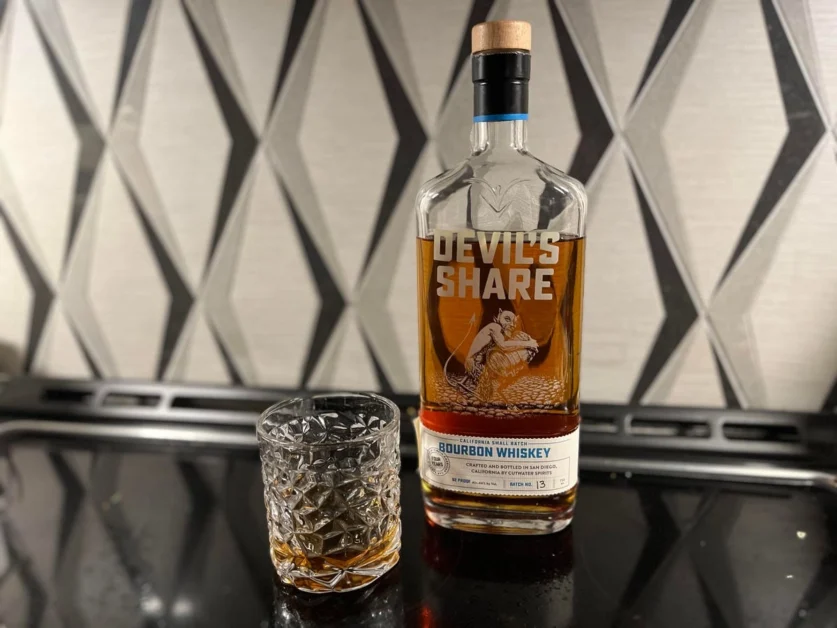
If you’re familiar with the name Cutwater, it’s probably due to their renowned canned cocktails. This easy-to-serve drink option surged in popularity during the global pandemic in 2020. Personally, during the lockdown, I opted for homemade cocktails, but of the ready-made options I tasted, Cutwater’s clearly stood out. Even considering the complexities of creating a canned mai tai, Cutwater’s version proved impressively noteworthy. Similarly, the brand’s canned White Russian certainly exceeded my expectations.
Even though Cutwater is widely recognized for their canned cocktails, the company’s history extends beyond that. Rooted in San Diego, Cutwater originated in 2017, but the brand’s inception traces back further to when it started as the spirits division of Ballast Point Brewery. After Ballast Point was sold to Constellation Brands in 2015, the spirits division was carved out and later re-emerged as Cutwater Spirits. The company even boasts a large distillery/bar/restaurant facility close to the Miramar area in San Diego.
Unbeknownst to many, Cutwater not only has a distillery but also manufactures its base spirits. Even the company’s co-founder, Yuseff Cherney, serves as the master distiller! Additionally, Cutwater’s product range isn’t limited to canned cocktails. They also offer bottled spirits including, but not limited to, rum, gin, and even herbal liqueur. As a judge for various spirit competitions over the years, I unexpectedly realized I already sampled Cutwater’s products and genuinely appreciated their unaged rum. Their tequilas were also commendable, but I wasn’t a fan of their rye, which appeared to be a blend from other distilleries.
The reigning monarch of the San Diego spirits scene currently produces high-quality bourbon.
I had never tried Cutwater Devil’s Share Bourbon, their highest-end expression, with a suggested retail price of $115. If you can find it, that is, as availability is said to be limited even in California. The mashbill is an interesting one — 75% non-GMO corn, 15% malted barley, and 10% malted wheat. Usually a wheated bourbon uses wheat as the secondary grain. To use it as a tertiary grain after the barley… that’s different. Aged for at least four years in new American oak barrels, it’s bottled at 46% ABV.
On the nose it’s a little hot, with notes of brown sugar, cinnamon, and rubbing alcohol. On the palate the cinnamon comes through again, accompanied by butterscotch, vanilla and oak. It drinks a tad hotter than its proof; a little water tamps down the heat but also dulls the flavor profile a bit, so I perferred it neat. It makes a pleasant, lightly astringent Manhattan (solved by the addition of more vermouth), and a a perfectly fine whiskey sour.
“This bourbon is not defined by geography, but by taste,” says the Cutwater website, and I suppose that makes sense, since as far as I know there’s no distinctive San Diego style of whiskey. Although, with 18 distilleries and counting in the city, according to the San Diego Guild of Distillers, one may be emerging as I write this. News travels slowly to us East Coast craft spirits snobs. Can you get better bourbons for far less money? Absolutely. But for now, at least, Cutwater is the reigning monarch of San Diego whiskey. And the next time I’m in town, I’ll be checking out the distillery, and likely having a Devil’s Share whiskey sour — assuming they don’t just sell canned cocktails at the bar.