Record-Breaking £2.2m Sale Makes Whiskey Bottle the World’s Most Expensive
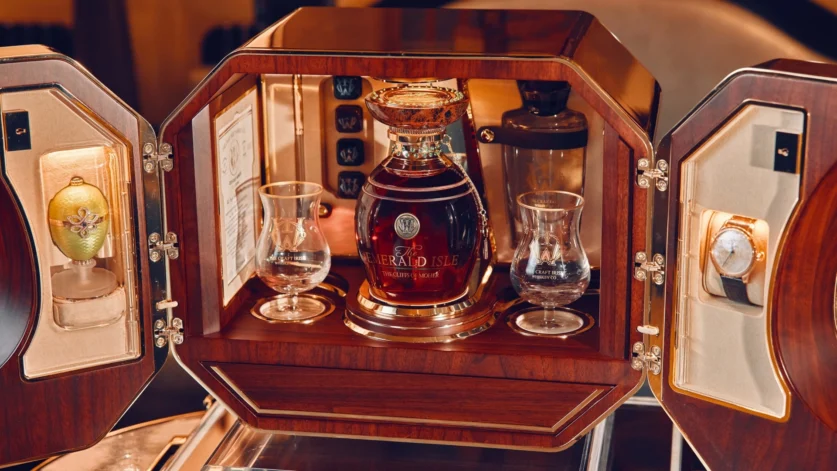
A 30-YEAR-old bottle of whiskey is now the world’s most expensive after it sold for £2.2million.
The Emerald Isle triple-distilled single malt is said to be the rarest in existence.
It beat the previous record holder, a Macallan 1926 sold in November, by £79,000.
US collector Mike Daley, who bought it from The Craft Irish Whiskey Co, said: “Luxury scotch, to me, is already a crowded type of market.”
“But we’re only just starting to see luxury Irish make a name for itself.
In the years to come, it will get to where scotch is today.”
Emerald Isle’s walnut case includes a single decanter, a Fabergé egg containing an emerald gem, a custom timepiece, and a pair of Cohiba cigars.
Critics say this explains its high value.
But the Craft Irish Whiskey Co said: “This falls flat given The Macallan 1926 was one of only 12 bottles covered with a label designed by Italian painter Valerio Adami, adding considerable value to its price.”
Distillery founder, Jay Bradley, added: “This is a monumental achievement for my business.”
“There’s a lot more to come.”
New Bill Proposed by SLO County Legislator to Manage Wine Disease and Invasive Species

Assembly member Dawn Addis, D-Morro Bay, has introduced a bill to help control an agricultural disease affecting the wine industry, she announced in a news release Monday.
According to the California Department of Food and Agriculture, Pierce Disease kills grapevines by clogging their water-conducting vessels. Assembly Bill 1861 aims to strengthen the agricultural department’s Pierce Disease control program.
“The wine industry is integral to the economic success of the Central Coast and all of California,” Addis said in the release. “I’m excited to author AB 1861 that extends a crucial line of defense for our wine industry against invasive disease.”
The bill would expand existing law that aims to research and prevent agricultural disease and invasive pests, such as the glassy-winged sharpshooter.
California Association of Winegrape Growers and the Wine Institute are the sponsors of the bill.
Robert P. Koch, the president and CEO of the Wine Institute, stated in a news release that “AB 1861 will ensure the continuation of crucial research, innovation, and mitigation strategies to protect our crops against this intrusive species.”
The policy committee is currently considering the bill for referral.
Enhance your Vodka Experience: 13 Home Upgrade Ideas
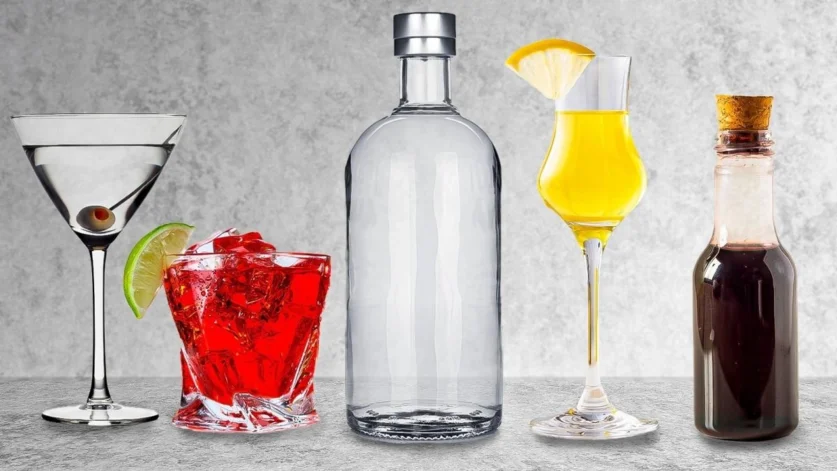
While vodka ranks as one of the most popular spirits, its neutral taste and aroma cause some to consider it a boring choice compared to more complex liquors like whiskey or tequila. Yet vodka’s clean, crisp flavor and natural simplicity make it the ideal blank canvas for creative mixology and endless possibilities.
Although it may seem a straightforward spirit, there’s still much you may not know about the flavor of vodka. All it takes is a taste test between some of the best vodka brands to notice subtle differences in their taste, quality, and source ingredients.
From basic techniques that can improve your vodka experience to DIY-flavored vodkas full of fruity and herby flavors, vodka can quickly become an elevated staple for the home bar. Even if you only have a cheap bottle of vodka, there are many ways to get the most out of it — and enjoy it too. This article guides you through how to upgrade your vodka and gain a newfound appreciation for the classic spirit.
Read more: 13 Liquors Your Home Bar Should Have
There’s a reason why vodka is often served cold, and it’s not just to make it refreshing to drink, whether you prefer it neat or as part of your favorite cocktail. In fact, chilled vodka can actually taste better than it does at room temperature.
Although vodka has a neutral taste, which is why it lends itself well as a base for a wide range of beverages, it can also be slightly sharp on the palate. Chilling vodka will help it feel smoother and more mellow, especially lower-quality varieties. Better-quality vodkas may require less chill time, as they’re more likely already smooth and don’t tend to cause such a burning sensation on the way down your throat.
While many find that chilling vodka improves the overall drinking experience, it’s a matter of personal preference. But if you want to try it cold, the best place to store your vodka and keep it chilled is in the fridge, not the freezer. You shouldn’t store vodka in the freezer, particularly quality vodka, because it will mask all its flavors — both the good and the bad.
Upgrade your vodka experience by alternating sips with a chaser. Typically, a chaser is something non-alcoholic. This is particularly useful if drinking your vodka neat or as a shot, when you may feel the vodka burn as it travels down your throat. A chaser masks the burn and also lets you enjoy a refreshing contrast.
The beauty of using a chaser with vodka lies in its simplicity. No need for cocktail concoctions, just select a liquid of your choice. Enjoying vodka while socializing with friends? Everyone can choose their preferred chaser. Additionally, chasers can ensure everyone remains hydrated amidst the vodka sips.
You probably already have a few perfect chaser options at home. Water is the most straightforward option, making it ideal for washing the palate. Tonic or sparkling water are also excellent options, often used alongside vodka in beverages. For a more creative route, use a chaser to excite your taste buds in new ways. Consider pickle brine for a salty kick or lemon juice for a sweet and sour alternative.
Given vodka’s neutral taste, it’s challenging to find a mixer that doesn’t blend well with it. The best vodkas mix well with a variety of drinks, which can be a personal preference and might vary based on the vodka’s quality. Similar to chasers, mixers can mute certain aspects of vodka, like its harshness, or accentuate a specific distillery’s tasting notes.
There’s no need to splurge on expensive, store-bought mixers to enjoy with your vodka since some of the most effective mixers are rather simple. Fruit juices, like orange and cranberry, are among the top options when mixed with vodka. These combinations yield refreshingly sweet and fruity beverages, thereby diminishing the alcohol taste. If this sounds appealing, consider trying pineapple or grapefruit juice as your mixer. Pineapple juice results in a sweeter, tropical beverage, while grapefruit juice brings a more sour note.
The martini is a timeless cocktail that could be your single choice if you could only have one vodka-based drink. As a minimalist drink primarily consisting of vodka and dry vermouth, the martini presents an opportunity for the quality of the vodka to truly stand out. Despite its simplicity, a martini exudes an air of elegance and never seems to lose its appeal.
A martini relies heavily on vodka, therefore it’s critical to select a good quality spirit. Choosing the right vodka for your martini doesn’t have to be an extravagant expenditure. Select a vodka that complements the occasion, whether it’s a notable celebration or just a casual homebound evening. Tito’s or Ketel One are reliable and cost-effective choices. Consider factors like the garnish and the vodka’s base ingredients that can add distinctive flavors to your martini.
Vodka can be elevated not just by mixers or cocktails, but also by food. The food served alongside vodka can steer it in various delightful ways. Although several factors influence the choice of menu to pair with vodka, its neutral characteristic leaves little room for food combinations to go wrong.
First, consider if you want to pair the vodka with fresh and crisp flavors or go for contrasting tastes using vodka as a refreshing palate cleanser. Light salads, oysters, shrimp cocktails, sushi, and caviar are great options for simple and fresh-tasting foods. Alternatively, vodka can balance the heat of Thai dishes, the tang of pickled vegetables, or the punch of robust cheeses. The occasion and whether you’re serving appetizers or a main course also influence your choice. Similarly, the cocktails or mixers you pair with the vodka can shape the taste and direction of the food you decide to serve.
The trick of running vodka through a domestic water filter is a topic of long-standing debate. It is argued that running low-cost vodka through a common water filtration system, like a Brita filter, can enhance the flavor, eliminate impurities, and uplift it a few notches. The argument is conceivable as filtration is a critical process in vodka production. However, not everyone is convinced about the efficiency of this home-based vodka improvement method.
As per America’s Test Kitchen, a budget vodka that was filtered four times through a domestic water filter stood its ground against a high-tier vodka during a blindfolded taste test. Despite this, it is recommended to use this purified vodka in cooking, baking, or cocktail blending rather than for solo consumption. But McGill University suggests that the contrast is minimal and relies on multiple variables from the specific vodka brand to the water filter’s age.
Regardless, if you have a water filter and affordable vodka at your disposal, attempting this upgrade seems worthy.
Although adding vodka to creamy cocktails might not seem like the most straightforward approach to amplifying this spirit, one cannot disregard the classic – the White Russian.
The White Russian is a classic cocktail made with vodka, coffee liqueur, and heavy cream. It’s perfect for those who enjoy creamy, boozy, indulgent libations. Vodka works particularly well in a White Russian because it creates a strong alcoholic base while its neutral profile allows for the flavor of the coffee and cream to stand out. It’s easy to make a classic White Russian cocktail at home, as it takes just three ingredients and a quick shake.
Additionally, creamy vodka cocktails can help to offset spicy meals. Both alcohol and dairy have properties proven to cut the power of capsaicin, the chili pepper extract that causes the intense feeling of heat you experience when you bite into something spicy. Together, the vodka and cream create an extra-powerful antidote to the heat.
Limoncello is an Italian lemon-flavored liqueur typically produced in southern Italy, which boasts an ample supply of fresh, beautiful citrus fruit. It’s made by steeping the zest of lemons in a neutral-tasting, high-proof alcohol. Vodka provides a perfect base for classic limoncello, and you don’t need to live in southern Italy to whip up your own version at home.
Leave lemon peels steeped in vodka for several weeks. After straining out the peels, combine the lemon-flavored vodka with a simple syrup of equal parts water and sugar. Serve your limoncello chilled and enjoy it as the Italians do by slowly sipping it from small glasses as an after-dinner drink. It can also be used in various sweet and savory dishes where you want to add a burst of lemon flavor. If you prefer oranges over lemons, you can just as easily make orangecello liqueur at home employing the same method but with oranges rather than lemons.
Herb-infused vodka combines the pure and sharp taste of vodka with the scented, earthy essence of a variety of fresh herbs. The outcome is both stimulating and adaptable, providing depth and unexpected tastes to your preferred cocktails.
In order to produce herb-infused vodkas, immerse fresh herbs in vodka for a number of weeks. As time goes by, the alcohol will extract the flavor and scent of the herbs. Naturally, the longer you allow the herbs to steep, the more flavor will be drawn out. After a couple of weeks, sample the vodka; if the flavor isn’t strong enough, continue the steeping and tasting process until you reach your desired level. Slightly crushing the herbs before inserting them into the vodka can help to release their natural oils and speed up the flavoring process.
Herbs such as basil, rosemary, sage, mint, and thyme are ideal for infusions. This herb-infused spirit could be used to create drinks like martinis and Bloody Marys. It could also be used in your marinades or dressings.
If you enjoy vodka cranberry or a Cape Cod cocktail, you should try making homemade cranberry-infused vodka. It only requires some chopped fresh cranberries, orange peel, a handful of spices, and a week’s worth of patience for all the ingredients to fully infuse, then you’ll be left with a delicious cranberry vodka.
Relishing this delicious vodka blend either straight from the freezer or incorporated into a cocktail – be it a cosmopolitan, a martini, or a glass of sangria, is a delightful experience. The striking red hue and comforting aroma of the spices introduce a festive mood, perfectly matching the holiday and winter seasons. Whether decorated with a rosemary sprig or pine needle, it makes a delightful presentation. As a gift during the festive season, a jar of cranberry vodka is a thoughtful gesture.
One thing to bear in mind is that fresh cranberries might be a scarce commodity outside the festive season. Hence, preparing a substantial amount in advance could ensure its availability year-round. The good news is that cranberry vodka, once strained, has an indefinite shelf life, making it a versatile inclusion in your liquor collection, suitable for any season.
If you have ever incorporated vanilla extract into your baking recipes, then you have already used an alcohol-infused vanilla. To make your version at home, vodka is an excellent choice due to its clean and neutral flavor profile, which allows the flavor of the steeped vanilla beans to shine through. All that you need to do is split a few vanilla beans, exposing the seeds inside, drop them into a bottle, and let them steep in vodka.
But is this concoction vanilla extract or vanilla vodka? It might come as a surprise, but there’s not much difference between the two. The difference essentially boils down to the concentration: vanilla extract typically uses a larger quantity of vanilla beans steeped for an extended period, creating a stronger flavor distinctive enough to hold its own when incorporated in a food recipe.
Vanilla vodka doesn’t require the same intensity. A few beans and weeks are sufficient to create a unique taste for your drinks. Vanilla vodka is excellent for warming up winter beverages and creating alcoholic coffee drinks.
A jalapeño-infused vodka can put a fiery and inventive spin on your home cocktails, leaving your guests impressed. Begin by slicing fresh jalapeños. You may retain the seeds for extra heat or extract them for a gentler flavor. Position the sliced jalapeños in a sterile container and douse it in vodka. By following this homemade jalapeño vodka recipe, you could add simple syrup to your jalapeno vodka. Alternatively, if you prefer to sweeten your drink and not the mixture, you can exclude it.
After infusing for several days, strain the peppers and begin to use your spicy vodka. The outcome is a fantastic addition to your favorite Bloody Mary recipe, but it would also fit well in a margarita or to balance the sweetness and add some flair to fruit-based cocktails.
If you can’t have enough coffee, consider a homemade coffee liqueur made with vodka? Of course, you can purchase coffee liqueurs like Kahlua, still, some people perceive store-bought options to be overly sweet and synthetic in flavor. You can choose your favorite coffee roast and beans while also managing any additives, just like making a cup of coffee how you prefer it.
A clever way to make coffee liqueur is to cold brew the coffee directly in your vodka. This will produce a stronger and smoother liqueur that isn’t watered down. Consider adding flavorings such as vanilla beans, cinnamon sticks, or crushed cardamom pods. If you crave a bit of sweetness, stir a simple syrup into the mix. Then, use your coffee liqueur to fashion delicious espresso martinis and after-dinner drinks, or maybe even as a component of desserts such as tiramisu.
Read the original article on Tasting Table.
Unveiling the World’s Best Vodka: Results from The International Wine and Spirits Competition

Prosperous Vodka from Cape Verde, Africa wins big at the 2023 International Wine and Spirits Competition
Each year in London, some of the most seasoned palates in the alcohol industry come together to sample thousands of liquid entries from across the globe. The event is known as the International Wine and Spirits Competition, and when the annual results are published, they have the potential to make or break a brand.
We’ve continually reported on IWSC winners across the various whisky subcategories: scotch, Irish, bourbon, rye. But now it’s time to shift our attention to the vodka category, especially since an unexpected entry has caught the judges’ attention.
The bottle that has received such noteworthy feedback is Prosperous Vodka that is crafted by the Kriol Distillery. So, what makes it so special? The answer is its outstanding score of 99 out of 100. This is enough to identify it as not only the highest rated vodka at the competition, but also as one of the highest-rated spirits in all categories. No entry received a perfect 100, and only 10 expressions in total matched Prosperous Vodka’s score of 99 points.
One striking feature about Prosperous is its place of origin. The company responsible for its creation, Kriol Distillery, is located just outside of Praia, the capital city of Cabo Verde. Those who are geographically savvy would be aware that Cabo Verde is a petite island nation approximately 350 miles away from the coast of West Africa. However, only a handful of individuals would associate this setting with exemplary vodka.
It’s high time this changes. As the IWSC judges have emphasized, there’s a remarkable spirit emerging from this corner of the globe. Here’s the enthusiastic acclaim they showered on Prosperous:
“A lush aroma reminiscent of bread greets the nose. The palette is met with a hint of warmth from the spice, perfectly accompanying a delightful grain foundation. The texture is rich, making it a delight to savor.”
These are certainly comprehensive tasting notes for a type of spirit which often gets discredited as “tasteless.” The winning factor for Prosperous lies in their choice of a special kind of wheat for distillation. This lends a gentle creaminess to the drink, in addition to the earlier mentioned bread-like aroma. Comparably, renowned American vodka brands like Smiroff and Tito’s are all made from corn distillates.
According to the law, vodka can be distilled from practically any raw material. It’s crucial to keep this in mind when browsing your local liquor store’s shelves. Don’t fall into the trap of thinking that only cold-climate areas such as Eastern Europe can produce superior varieties.
Indeed, there’s fantastic vodka being bottled all over the world, from Japan to Southern Argentina. And yes, even remote tropical islands like Cabo Verde.
Finding Prosperous in the US is not particularly difficult either. It has a relatively wide distribution here. On the shelves, you’ll recognize it by its blue illustration of its homeland’s mountainous landscape. It retails for around $35, making it the perfect base for a delicious vodka martini.
Keep an eye out for more standout vodkas from IWSC, as they prepare to release their 2024 rankings later this spring.
Ruins of the Cidade Velha, a fortified Portugese citadel on the island of Santiago, where Portugese colonists docked in 1460. The city was called Ribeira Grande (the Big Valley). Former capital and origin of Cape Verdian history, the town lies 12 km from Praia, in an oasis protected by the Saint Filipe fortress.
Exploring the Historical Connection Between Redbreast Whiskey and Jameson
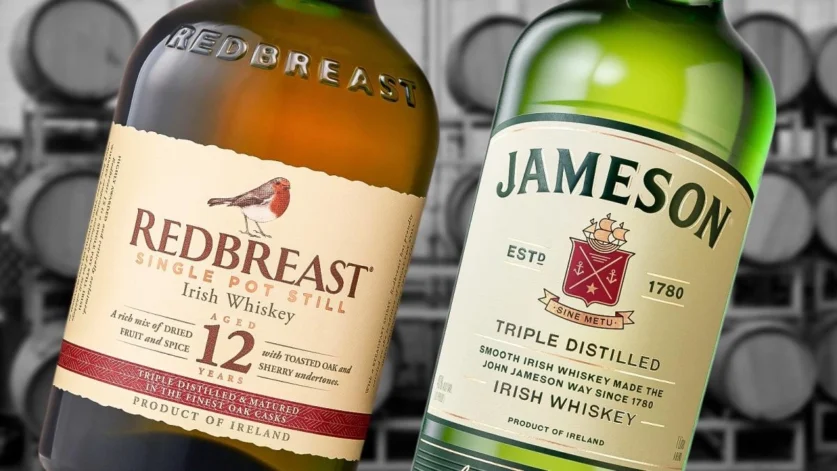
When it comes to Irish whiskey, two names stand out above the rest: Redbreast and Jameson. These brands have a rich history and are beloved not just for their heritage but also for their distinct whiskey offerings. Redbreast is renowned for its 12-year-old single pot still whiskey, known for its intricate and mature taste. This makes it a favorite among deep-pocketed whiskey enthusiasts. On the other hand, Jameson is probably the second most famous alcohol in Ireland, just after Guinness. It’s affordable and goes down smoothly, making it great for newcomers to Irish whiskey. You’ll also be hard-pressed to find a pub without it stocked in the back.
But, here’s something interesting: Redbreast and Jameson actually share a history. To set the scene, let’s start from the beginning, around the 1870s. Before the name “Redbreast” emerged in the early 1900s, this whiskey was simply an Irish liquor produced by a company called W&A Gilbey, which originally imported and distilled wine. Per Caskers, during that era, it was typical for wine sellers — often referred to as “bonders” — to acquire new whiskey from local distilleries. They would then take charge of aging, bottling, and selling it under their own brand. This arrangement was possible because bonders had something distilleries lacked in abundance: empty casks, which are extremely great vessels for aging whiskey. And, guess which distillery W&A Gilbey selected as their supplier? You guessed it: John Jameson & Son!
Read more: 13 Liquors Your Home Bar Should Have
W&A Gilbey began aging and repackaging John Jameson & Son’s whiskey in 1887 under the name Castle Grand Whiskey. This whiskey was aged in Gilbey’s used sherry casks and matured for over six years in their warehouses on Harcourt Street in Dublin before being bottled. By the end of the 1800s, the company had amassed a stock of over 700,000 gallons of Jameson’s whiskey in their warehouses in huge barrels, according to the official Redbreast website.
It wasn’t until around 1903 that what would later become known as Redbreast came into existence. Gilbey’s, which had been renamed from W&A Gilbey, introduced a new whiskey labeled John Jameson & Son’s Castle “JJ Liqueur” Whiskey 12 Year Old, according to VinePair. Historians have noted that the bottle’s shape and labeling bore a striking resemblance to Redbreast, so it’s often considered the precursor to the now-famous Redbreast brand. The liquor used in this bottling was sourced from the same place where Jameson whiskey was formerly produced: the famous Bow Street Distillery in Smithfield, Dublin, per Master of Malt.
The first mention of the name “Redbreast” occurred in 1912 when Gilbey’s released the “Redbreast J.J. Liqueur Whiskey 12 Year Old.” The name was inspired by the Robin Redbreast bird and was suggested by Gilbey’s chairman, who happened to be an amateur birdwatcher. This bird has since become the symbol of the brand!
The Redbreast whiskey available today isn’t the same as the one produced a century ago. In 1985, Gilbey’s stopped making Redbreast whiskey, and in 1986, they sold the brand to Irish Distillers, a subsidiary of the French company Pernod Ricard. It wasn’t until 1991 that the brand made a comeback with a single 12-year-old version, which has since become its most famous and popular whiskey. As the brand gained popularity, it expanded its portfolio to include older whiskeys, ranging from 15 to 21 years old. Interestingly, Irish Distillers, the company that owns Redbreast, also owns the Jameson brand. So, when you choose either bottle, you’re buying from the same company!
However, despite this shared ownership, each brand maintains its unique identity and recipe, which you can taste in the distinct flavors. Redbreast is no longer just a re-packaged Jameson’s whiskey — it has become its own drink. The hallmark of Redbreast whiskey is that it’s crafted exclusively from pot-still whiskey. There are only a few single pot-still whiskey brands remaining, which is why Redbreast holds such a high price and prestigious reputation. In contrast, Jameson is a more conventional blend of both pot and column-distilled whiskey.
Despite their distinctly different production methods and flavor profiles, both of these whiskies have risen to prominence, not only within Ireland but also internationally as representatives of Irish whiskeys. Who would have thought that these two whiskies would share such an intriguing past?
Read the original article on Tasting Table.
The Importance of Resting Your Beer After Pouring: Is it Necessary?

If you are a big lover of beer, then you may be interested in learning more about the specifics of the beverage, including the best ways to enjoy it. For instance, does beer need to rest after it’s poured? To find out, Tasting Table spoke with an expert: Jeff Tyler, the co-owner and head brewer at Spice Trade Brewery + Kitchen in Greenwood Village, Colorado.
According to Tyler, the short answer is no. However, there are some nitrogen beers (also known as “nitro” beer) that may require a rest mid-pour, such as Guinness. Tyler explained, “[They] typically have a longer resting period in the middle of the pour as the head subsides.” Additionally, if you pour your beer straight into a glass without tilting the glass while you pour (which is known as a “hard pour”), you may have to wait while the foam subsides, although that is a bit different than the actual rest that the nitro beers require.
Tyler continued, “Once your beer is properly poured, you are good to start drinking it! I prefer to let most of the beers I drink warm up slightly to maximize the flavors that you can perceive. You can do this by just waiting or cupping your hands around the glass to warm it up using your body heat.”
Read more: 15 Popular Hard Seltzer Brands, Ranked Worst To Best
When it comes to pouring your own beer, you’ll likely be pouring a forced-carbonation beer, which is the type that makes up about 95% of the beer found in liquor stores and supermarkets. Pouring this type of beer is pretty straightforward. Tyler explained, “You typically want to pour the beer a bit more aggressively than you would think, directly into the bottom of the glass or with the glass at a slight angle. The goal here is to allow a good amount of the CO2 to ‘break out’ of solution (i.e. get foamy) while you are pouring.”
He added that you don’t have to pour the entire beer all in one go; you can pause for a moment to let the foam settle before continuing with the pour. When you finish the pour, you can do so more gently. This method should lead to the ideal amount of foam at the top of the beer: about one to two fingers of foam.
The aggressive pour will lead to the best beer-drinking experience. Tyler said, “You really don’t want all of those bubbles staying in the beer because they’ll end up in your stomach and you’ll end up burping it all out. Less CO2 means you still get the aroma that you are looking for with some of the bubbles but it saves you from filling your whole stomach with beer foam.”
Read the original article on Tasting Table.
Unveiling the World’s Best Vodka as per the International Wine and Spirits Competition

Prosperous Vodka from Cape Verde, Africa wins big at the 2023 International Wine and Spirits Competition…
Each year in London, some of the most seasoned palates in the alcohol industry come together to sample through thousands of liquid entries from across the globe. The event is called the International Wine and Spirits Competition and the annual results, when published, can make or break a brand.
We’ve continually reported on IWSC winners across the various subcategories of whisky: scotch, Irish, bourbon, rye. But now it’s time to look at what those judges had to say of the vodka space. Because there’s one release in particular that was quite unexpected.
The bottle in question is Prosperous Vodka, crafted by the Kriol Distillery. What makes it so noteworthy? Well, for starters it earned an incredible score of 99 out of 100. That’s enough to set it apart as not only the highest rated vodka at the competition, but also one of the highest rated spirits across all categories. No entry received a perfect 100, and only 10 expressions in total matched it at 99 points.
Significantly, the point of origin of Prosperous makes it unique. It is a product by Kriol Distillery, located just on the outskirts of Praia – the capital of Cabo Verde. Those familiar with geography would recognize this as a small island country situated approximately 350 miles from the west coast of Africa. But it’s rare to find those who associate this region with premium vodka.
It’s about time we altered that perception. The judges at IWSC vouch for the extraordinary spirits produced in this part of the world. Consider the lavish acclaim showered upon Prosperous:
“The aroma of bread is quite attractive. The palate enjoys a hint of heat from the spice, balanced nicely with a satisfactory grain foundation. It has a pleasant texture and is quite a delight to drink.”
Undoubtedly, these detailed tasting notes challenge the general consensus that labels this style of spirit as “flavorless”. What sets Prosperous apart is that it is distilled from a unique type of wheat, imparting a certain soft creaminess and the captivating aroma of bread. In contrast, renowned American vodka brands like Smirnoff and Tito’s are all made from corn derivatives.
From a legal perspective, vodka can be produced from virtually any component. It’s crucial to bear this in mind when browsing your local liquor store’s shelves. It is not necessary that exceptional instances originate from traditionally recognized regions like Eastern Europe, where climates are colder.
Surprisingly, world-class vodka can be found in bottles from all corners of the world—ranging from Japan to Southern Argentina. And indeed, from unlikely tropical destinations such as Cabo Verde.
Finding Prosperous in the US isn’t particularly cumbersome. It has a fairly vast distribution here. It can be easily identified on shelves with its representation of the mountainous landscape of its home country, depicted in blue. It retails for approximately $35, making it an excellent base for a vodka martini.
Keep an eye out for more winners from the annual IWSC competition, which will be announcing its 2024 rankings later this spring.
Ruins of the Cidade Velha, a fortified Portugese citadel on the island of Santiago, where Portugese …[+] colonists docked in 1460. The city was called Ribeira Grande (the Big Valley). Former capital and origin of Cape Verdian history, the town lies 12 km from Praia, in an oasis protected by the Saint Filipe fortress. (Photo by michel Setboun/Corbis via Getty Images)
Exploring the Best Whiskeys to Blend with Ginger Ale for a Timeless Refreshing Beverage

Not to be confused with ginger beer, ginger ale is a classic element for a whiskey mixed drink. Ginger ale is commonly sweeter and more subtle than ginger beer, although it retains that noticeable ginger kick we appreciate. Creating mixed drinks is straightforward – you only combine the spirit and mixer. But with just these two elements, the quality of what you use is important. A lot of bars, particularly dive bars, will opt for ginger ale as the drink mixer when you request a whiskey ginger but note that cocktail bars often produce their own ginger mixer on-premises, which contains a stronger, spicier flavor profile. It’s always a good idea to ask your bartender what they utilize.
Ginger ale’s robust flavor can easily mask a low-grade whiskey, which is why well whiskey is a favored choice in bars. However, if you’re creating a drink at home or aiming to indulge in something slightly superior, you should consider which facet of the whiskey ginger you enjoy the most. If you prefer the strong spice and sharp ginger bite, opt for a rye whiskey. Conversely, if you’re not a fan of powerful flavors and appreciate when the ginger zest remains subtle, it would be wise to accentuate the softer notes of the drink with a bourbon. This advice comes from an experienced bartender who’s tasted numerous whiskey gingers and assisted countless bar-goers to discover their ideal blend.
Read more: The 40 Absolute Best Cocktails That Feature Only 2 Ingredients
Before we discuss specific whiskey brands, it’s necessary to clarify that a low to mid-range whiskey will suffice for a whiskey ginger. It’s your finances, and you can spend them as you wish, but if you’re investing in an expensive, high-quality whiskey only to mix it with ginger ale, you may not be making the best use of your resources. For those seeking to fully harness the intricate flavors of a whiskey ginger, a rye whiskey is an excellent choice — but don’t just settle for any rye whiskey.
Two rye whiskeys instantly spring to mind. High West Double Rye! is a beautiful creation hailing from Park City, Utah. It masterfully strikes a balance of strong spice without the sensation of pouring a pepper grinder onto your palate. Redemption Rye serves as a tribute to the pre-Prohibition era before bourbon became the reigning whiskey type in America. It shines distinctly yet is tempered enough that it blends extremely well in cocktails.
Bourbon enthusiasts, your choice should not make you feel as if you’re consuming syrup, but it should hold its own charm. Four Roses Straight Bourbon offers a complex finish that introduces notes of toffee and vanilla for a satisfying balance. A notch above is Michter’s Bourbon, revealing a slightly nutty flavor while maintaining the vanilla undertone. With either choice, you are veering away from the assertiveness of ginger and rye into a concoction that smoothly caresses the taste buds.
Check out the original article on Tasting Table.
The Declining Trend in Draft Beer Sales: More Closures for Oregon Craft Brewers

Oregon’s storied craft brewing industry suffered one of its worst years in 2023, with depressed draft beer sales and rising costs creating more pressure than some of the state’s businesses could bear.
According to the Oregon Brewers Guild, Oregon is home to about 400 breweries, brewpubs and taprooms, which collectively provide 50,000 jobs and generate nearly $9 billion in economic output. But the state lost around 30 of those businesses last year, and even more have contracted or are seriously struggling.
Migration Brewing’s Little Foot Red is pictured in this file photo.
Stephen Baboi
“We are seeing national trends towards canned cocktails, Seltzers and more nonalcoholic beer options,” said Sonia Marie Leikam, the co-owner of Leikam Brewing and the vice president of the Oregon Brewers Guild. “Those make up now about a third of our sales. They are lower profit margins for us, and that impacts our bottom line.”
Leikam says that, like other small craft brewers, she works another job in addition to her time at the family brewery.
“We also are spending just a ton more time and energy creating events,” she said. “So we now have crafting classes and a book club and comedy nights. Really anything that the community wants, we offer our space for those activities to drive folks into the tap room.”
At its peak before the pandemic, Laurelwood Brewing Company had three restaurant locations, in addition to three retail outlets at the Moda Center and two others at the Portland airport. Over time, said owner Mike De Kalb, the profit margins just disappeared. Laurelwood Brewing Company closed its last retail location late last year.
“The economy was different back then. People’s habits were different. People wanted to go out, they wanted to get out of the house and go frequent tap rooms,” De Kalb said. “All the streaming services, DoorDash, Uber Eats, people could order things in … People’s habits changed. People’s habits have been ingrained over two years of ordering, online services, grocery stores, those sort of things. And, when we opened up again, we had an initial rush, but then they went back to their old habits.”
Two different Leikam Brewing beers are pictured in this photo provided by the Southeast Portland business.
Courtesy Leikam Brewing
Leikam says breweries will continue to try to adapt and respond to things like “Dry January” and ad campaigns that discourage drinking alcohol.
“I think legal and moderate consumption of alcohol is absolutely reasonable and should be supported,” she said.
But she also pointed out that alcohol is a big industry in the state. “Beer, wine, cider, spirits — these are all huge parts of the Oregon economic machine. The third largest source of revenue for the state is this sector.”
Leikam has a message for people who want to see the industry survive.
“Make that extra stop. If you’re going to buy beer, buy it directly from a brewery tap room or a bottle shop,” she said. “Schedule a get together with friends, hold a PT [Parent Teacher] night at your local brewery. We offer nonalcoholic beverages too. We have community gathering spaces. We have philanthropy nights. Reach out to us. Talk to your local brewery. We’re here for you.”
The Pacific Northwest helped pioneer craft brewing, and it’s still a hub for small breweries and small batch distilleries. It should come as no surprise that the region is also a mecca of businesses that brew nonalcoholic beer and distill alcohol-free spirits, as well.
Oregon’s storied craft brewing industry suffered one of its worst years in 2023, with depressed draft beer sales and rising costs creating more pressure than some of the state’s businesses could bear.
Tags: Think Out Loud, Oregon, Alcohol, Business
The Secret of Keeping Wine Glasses Crystal Clear: Cleaning with Vinegar

While enjoying wine can be a delight, the chore of cleaning the wine glasses afterward is not. Wine glasses are fragile and often display soap streaks left after washing them. Even worse, if soap residues accumulate, they may leave a subtle soapy taste. If you find yourself having to wash your wine glasses repeatedly to achieve a perfect, streak-free shine, it may be time to consider cleaning with vinegar. White vinegar is a well-known, natural cleaning agent and it can resolve your streaking issue.
While soap may leave a filmy residue if not adequately and thoroughly rinsed, vinegar works to dissolve any filmy layer. Being acidic, vinegar excellently removes grime from your glasses gently, without scratching or causing any damage. The easiest way to clean your glasses with vinegar involves filling a small container with hot water and a liberal splashing of vinegar. You can then immerse your glasses into the solution and pat them dry, using minimum towel strokes as possible, and thereafter allow your glasses to air dry.
Read more: Vinegar Cooking Hacks You’ll Wish You Knew Sooner
If you have a wine glass with stubborn stains, particularly from red wine, you might need additional help to remove the spots. You can add a sprinkle of baking soda to your vinegar and water mixture for extra cleaning capacity. However, exercise caution not to make the solution overly abrasive, as this could scratch your glasses. After swirling your glass in the concoction, use a cloth to gently wipe the stains off. You’ll want to rinse your glass under hot water to eliminate any leftover solution, and towel dry once again.
Vinegar can also be an easy way to spot clean glass if you notice a smudge on your glasses right before serving. You can pour a small amount of vinegar onto a towel and wipe away the smudge. Then, run your glass under hot water to remove any vinegar smell and taste and you’re all set.
Read the original article on Tasting Table.