Exploring Wine Country as a Sober Traveler: Finding Joy Beyond the Glass
Amy Snook possesses an extensive knowledge about wine that surpasses that of an ordinary globetrotter. Hailing from California, she presently resides in Portugal’s Douro Valley and her significant other is engaged in the wine business. Snook has journeyed to 47 countries, many revered for their wine culture. However, it was seven years ago during her visit to Mendoza, a wine-producing area at the base of the Andes in Argentina, that she chose to forgo alcohol—a choice she would uphold in subsequent travels.
“Traveling such a long distance to Argentina and only staying for 10 days influenced my decision,” mentioned Snook, a 34-year-old publishing expert. “Understanding the impact of alcohol on my body, I decided to focus on feeling great each day rather than coping with hangovers.”
While in Mendoza, Snook cycled between vineyards, enjoyed the stunning views, indulged in spa treatments, and interacted with sommeliers and winemakers. These experiences left her with a newfound respect for sustainable and regenerative farming practices.
“There’s an inevitable question when you mention not drinking: ‘Why visit a wine region of all places?'” she explained. “For me, it’s perfectly logical since these areas offer everything luxury travel entails—wellness facilities, gorgeous landscapes, and exquisite cuisine.”
With 41 percent of Americans aiming to cut down on their alcohol consumption, a consumer sentiment analysis by NCSolutions in January highlights a growing trend: the adoption of sober-curious or mindful drinking habits. Sober travel, while not a novel idea, is gaining renewed interest, especially among the younger demographics, prompting significant changes in the wine industry. The 2024 State of the U.S. Wine Industry report, prepared by wine-business analyst Rob McMillan, indicates that 52 percent of consumers aged 21 to 34 think that drinking alcohol, even sparingly, can be harmful to health.
This shift is transforming how travelers engage with top-tier wine regions such as Sonoma County in California, Tuscany in Italy, and Mendoza. These areas, known for their mild weather, long growing seasons, fertile lands, rich histories and stunning landscapes, are diversifying their attractions to appeal to both drinkers and non-drinkers alike.
The following highlights some establishments like restaurants, tour operators, and wineries in these areas that are adapting their services to welcome those who are sober-cured and accommodate diverse traveler needs.
If wine is considered a unique reflection of its terrain, capturing the essence of its earth, climate, and the detailed labor of its producers, is it possible to appreciate this connection without partaking in wine drinking?
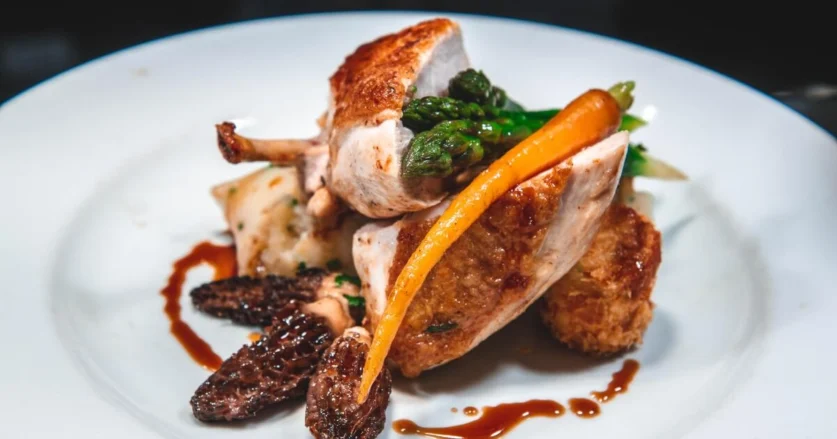
At Cyrus, a Michelin-starred culinary gem in Geyserville, California, culinary excellence is paramount. In expansive Sonoma County, which is twice the size of its neighbor Napa, there is a strategic commitment to maintaining a diversified usage of its lands, fostering both grapevining and agriculture. Douglas Keane, the chef and proprietor of Cyrus, prides himself on utilizing local harvests by sourcing ingredients from local farms and providers. Ingredients such as Crosnes from the gardens at Alexander Valley Vineyards, yuzu and finger limes from citrus cultivator David Levine, and dairy products from Andante Dairy have graced Cyrus’ menu.
The offerings at Cyrus also include Kally, a non-alcoholic beverage alternative crafted from organic housemade verjuice and ingredients from Northern California. Kally is popular in over 15 Michelin-starred dining establishments, featuring varieties like Early Chardonnay, which exhibits a crisp and lively profile with evolving flavors, the tart and zestful Golden Sparkler with overtones of jasmine and citrus, and a floral Rosé Sparkler with nuances of strawberry and hibiscus.
“The aim is to provide exact non-alcoholic pairings for dishes that have been designed to accompany sophisticated beverages, not merely carbonated water,” explained Scott Mitic, the co-creator of Kyal along with his wife, Katie.
According to Scott, patrons value the availability of such options, and he shared that many of Kally’s most devoted consumers are, in fact, wine aficionados. “We are not endorsing abstinence, but rather moderation,” he remarked.
Cyrus Schultz, the wine director and sommelier at Cyrus, is dedicated to crafting beverages that ensure sober guests feel as celebrated, if not more, than those who partake in alcoholic wine pairings. His unique nonalcoholic offerings include an effervescent Rosé Champagne made from coconut, white sesame, cherry blossom, and lime, alongside an Apple Martini that blends the sweetness of pink lady apples with the rich flavors of fennel and mint olive oil.
“Our goal isn’t merely to replicate alcoholic beverages but to approach these pairings with the same care a chef would apply to a menu—considering different textures, temperatures, and flavors,” Schultz explained.
This initiative extends beyond his own establishment. According to Chris Vomvolakis, senior manager of consumer public relations at Sonoma County Tourism, the movement is gaining momentum across bars, restaurants, and wineries throughout the area.
In Healdsburg, a new Mocktail Trail featuring eight restaurants has been established, and Meadowcroft Wines in Sonoma offers a collection of innovative zero-alcohol cocktails. David Messerli, the winery’s marketing and strategy director, encourages visitors to explore the aromas, flavors, and subtleties of these drinks as one would with traditional wines.
“We recognized a need to better cater to guests who don’t drink alcohol,” he explained. “Everyone has their reasons for not drinking, and it’s important that they don’t feel left out because of it.”
Known for its vibrant malbec wines and breathtaking views of the Andes, Mendoza has traditionally been associated with opulence. Recently, however, there’s been a noticeable rise in demand for alcohol-free experiences. “Over the past few years, there’s been a clear increase in the number of guests requesting options without alcohol,” stated Victoria Stiles, sales manager at Cavthem Wine Lodge. This exquisite hotel, nestled in a sprawling 55-acre vineyard, offers just 18 luxurious rooms.
While wine is a central feature at Cavas, the lodge provides a range of alternative activities. Guests have the opportunity to indulge in spa treatments that incorporate local vine and grape-seed, practice yoga on a private terrace with views of the Andes and vineyards, or embark on day-long hikes to Aconcagua Provincial Park—known for its challenging terrain and as the location of Mount Aconcagua, the tallest mountain in South America.
Emphasizing inclusivity, Wild Terrains, a certified B-Corp that creates travel experiences specifically for women, has dedicated three days out of a 10-day itinerary to be alcohol-free in Mendoza. The tour features visits to female-led enterprises and includes accommodation at Entre Cielos, horseback riding through the Andean foothills, a locally-sourced asado at Estancia Los Chulengos, and an exclusive dinner at the Michelin-starred Zonda Cocina de Paisaje. This dining experience is enhanced with unique mocktails that incorporate flavors such as lemon verbena, beets, and burro, a local herb renowned for its use in digestive teas.
“Our journey in Mendoza is centered around the pioneering work of female winemakers who are challenging norms in a sector traditionally dominated by men,” stated Lauren Bates, the founder of Wild Terrains. “Although our itinerary features wine tastings, it’s important to us that non-drinking travelers also feel genuinely welcomed and catered to.”
“While the dining experience at our vineyard primarily showcases our wines, we ensure that it remains enjoyable for those who prefer not to drink,” mentioned Sofia Pescarmona, who runs Bodega Lagarde vineyard and Zonda Cocina de Paisaje.
“We are committed to providing a top-tier experience for non-drinkers by focusing on the other quality seasonal produce from our farm,” she added.
Tasting wines is a hallmark of luxury, particularly in the lush regions of Tuscany, where one can enjoy endless sips of Chianti, Brunello di Montalcino, and Vino Nobile di Montepulciano. Salvatore Ferragamo Jr., the CEO of Il Borro wine estate and descendant of the renowned designer, also suggests finding alternative pleasures.
“The olive harvests in the autumn produce the region’s spicy, piquant ‘green gold,'” Ferragamo said.
Il Borro, located in Tuscany’s Valdarno, is a beautifully restored medieval village that features 58 suites, three holiday villas, two eateries, stables, along with active vineyards and olive groves. Olive oil production was initiated in 1996, revitalizing long-abandoned olive varieties such as Frantoio, Moraiolo, and Leccino. Now, visitors can explore approximately 80 acres of organic groves and participate in tastings of two unique olive oils – one being full-bodied with floral, fruity, and grassy notes, and the other strong, peppery, and intense.
Another venture, Tuscan Organic Tours, provides comprehensive daylong excursions focused on local wine and olive oil, but also covers other vital agricultural products. These enjoyable tours, which include private transport, allow participants to taste and explore items like Pecorino di Pienza, a top Italian cheese, as well as saffron and fresh pastas, featuring visits to organic farms, lunches, tastings, and hands-on opportunities such as cheese making and saffron collection.
Chitnis is a freelance writer. This article appeared in The New York Times.
Sagamoney Spirit Levels Up: A Taste Test Review of Their Exceptional New Rye Whiskey
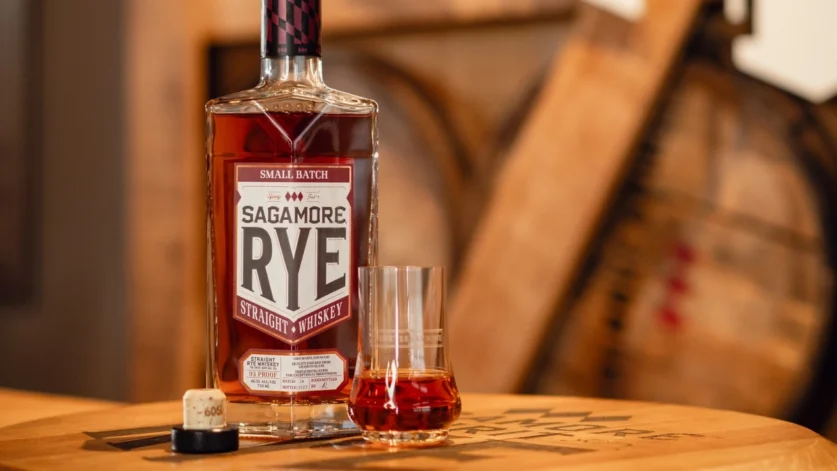
Many distilleries begin their operations by purchasing whiskey rather than producing it themselves, a longstanding tradition in the American whiskey industry. Consumer concerns have often centered around transparency, as people generally prefer to know the origins of their food and beverages. Baltimore’s Sagamore Spirit has always been transparent about sourcing their whiskey. Their latest release, however, is a noteworthy rye whiskey completely distilled in-house.
Sagamore Spirit was established in 2013 by Under Armour’s former CEO and founder, Kevin Plank, along with business partners. The distillery, distilling whiskey on site since 2017, focuses on rye whiskey and occasionally produces unique items like a rye-based amaro. Initially, they also engaged in contract distilling with MGP, a well-known Indiana distillery that produces whiskey for other brands such as Bulleit Rye and Brother’s Bond. Sagamore Spirit combines high and low-rye whiskeys in their main product—a barley-legal rye with 52 percent grain in the mashbill, and the famous 95 percent rye/5 percent malted barley from MGP, aged about four to six years. The new Small Batch Rye Whiskey, distilled entirely in Baltimore, is a blend of these mashbills, aged similarly, and it has turned out quite well.
More from Robb Report
Garrison Brothers Just Dropped 4 New Ultra-Limited Bourbons
The Smashing Pumpkins Just Released a Bourbon Cut With Black Tea
Rare Bottles of American Whiskey From Pappy to Weller Are Heading to Auction
This isn’t the first time that Sagamore Spirit has had an in-house produced rye, however. The distillery already released a few bottled-in-bond ryes in select markets that were made onsite, but the new Small Batch Rye is the first one that will be available globally. The main differences are that this whiskey is a blend of ages (four to six years) bottled at 93 proof, as opposed to whiskey from one distilling season bottled at 100 proof as is required by the Bottled in Bond Act. While the term “small batch” has no legal definition, according to the brand this release is blended in 20-barrel batches, and it is triple distilled and non-chill filtered. Most importantly, this rye is very tasty.
I really like that Sagamore uses a blend of two mashbills for this, because sometimes a high-rye whiskey can be a bit too fruity and spicy, and other times the Kentucky-style “barely legal” rye doesn’t pack enough punch. This is a happy medium, with a nose that leads off with rich caramel and black pepper notes. The palate delivers follows through on this potential, with flavors at the forefront like dried apricot, red apple, blackberry, vanilla, cinnamon, nutmeg, and a hint of menthol on the finish. Rye lovers will enjoy this new whiskey, but I think those who prefer bourbon will too.
Not all distilleries that initially source their whiskey opt to switch to in-house production, and for those that do, continuing to source certain products can help maintain consistency. A representative from Sagamore stated that while the brand plans to eventually produce all of its whiskey in-house, this transition will take several years to complete. However, the latest release follows years of Bottled-in-Bond expressions, establishing Sagamore Spirit as not only legitimate but also as a significant contender among America’s new rye whiskey distilleries.
100 So good, it’s nearly worth trading your first born for
95 – 99 In the Pantheon: A coveted trophy for the cabinet
90 – 94 Great: Guaranteed nods of approval from friends when you serve this dram
85 – 89 Very Good: Delicious enough to buy, but not quite special enough to chase on the secondary market
80 – 84 Good: More of your everyday drinker, solid and reliable
Below 80 It’s alright: Honestly, we probably won’t waste your time and ours with this
Every week Jonah Flicker tastes the most buzzworthy and interesting whiskeys in the world. Check back each Friday for his latest review.
Best of Robb Report
Why a Heritage Turkey Is the Best Thanksgiving Bird—and How to Get One
9 Stellar West Coast Pinot Noirs to Drink Right Now
The 10 Best Wines to Pair With Steak, From Cabernet to Malbec
Subscribe to Robb Report’s Newsletter. Stay updated by following us on Facebook, Twitter, and Instagram.
Brew Beer Like a Pro: Get Over $100 Off This Fully Automated Home Brewing System!

Thanks for contacting us. We’ve received your submission.
TL;DR: Ever dreamed of making delicious, refreshing beer at home? It’s easier than ever with the iGulu, an all-in-one, fully automated home brew system that’s on sale for $699 (reg. $806).
The modern beer drinker has far more options and flavors to explore than those who came up in generations past. For those of us who have taken to the revolution of craft beer with enthusiasm and excitement, you can finally create your own ale from your apartment with an affordable and capable product.
How? With the iGULU F1, an all-in-one, fully automated home brew system designed to make brewing high quality, fresh beer easier than ever and in just a few clicks. Now, this nifty device is on sale for $699 (reg. $806).
Designed to simplify the process of brewing beer in your own home, the iGulu F1 allows its users to brew with ease, much like preparing a cup of coffee in the morning. It involves a straightforward three-step brewing process.
These steps are:
The iGulu is equipped with a variety of functionalities that enable brewing beer at home feasible, including an integrated air pump that streamlines the brewing operation.
Additionally, an automated temperature control maintains the quality of the brewing, while the automatic pressure control and release ensure that the brewing process remains safe and easy for beginners.
This ingenious system features an intelligent fermentation system that actively monitors and adjusts your brew’s fermentation temperature to ensure optimal results. Additionally, its advanced cooling technology and DC compressor offer a wide temperature spectrum and can infuse CO2 into your beer, maintaining its freshness for up to two weeks!
Interested in crafting a specific beer brand at home? The iGULU is compatible with famed brands such as Benediktiner Weissbier and Heineken. Beyond beer, this versatile system also enables you to brew kombucha and other delicious fermented beverages.
iGulu has earned acclaim from both users and experts. It has been highlighted by media outlets including Stuff, Digital Trends, Digital Journal, and CNET.
There’s no need to visit the local beer hall or brewery to enjoy exquisite brews — you can craft them right in the comfort of your home.
Don’t miss your chance to pick up the iGulu F1 All-in-One Automated Home Craft Beer Brewer for $699 (reg. $806).
StackSocial prices subject to change.
Review: “Rum Ram” – Distilling the Buzz on the Latest Craft Spirit Sensation

If you’re a fan of party games but prefer not to switch between different game types, then Run Ram might initially seem like an appealing choice. It places a significant emphasis on multiplayer fun. Unfortunately, it falls flat and turns into a rather tedious affair due to its limited gameplay features.
Starting up the game, I was excited for some thrilling multiplayer action but instead found myself deeply disappointed. The game features a few modes, including couch co-op and online multiplayer. There’s a training mode available to practice, but it’s hardly effective as the A.I opponents scarcely move, reducing the practice to merely hitting immobile targets. Oddly, this mode is the sole option for confronting A.I, which isn’t ideal unless you have friends readily available to join the game, leaving little to explore on your own.</ An array of party game modes is available if you do manage to gather a group. Classic modes like deathmatch and team deathmatch are included, where the objective is to destroy more ships than your opponents. Additionally, there's a one-shot mode, where each player has only one life per match. However, my brief stint in training suggested that the choice of ships is purely cosmetic as they don’t seem to offer differentiated gameplay.
You will engage in firing cannons to devastate rival ships and accumulate points. Additionally, you can deploy explosive barrels to harm any pursuers. Though I wish to recount the effectiveness of these features during actual gameplay, the inability to join a game lobby limits my impressions to the scant experiences of the training mode.
The game offers various maps that provide a refreshing visual change, yet regardless of the choice, the gameplay remains consistent. Engaging in ship destruction and sowing mayhem may initially entertain, but it quickly becomes repetitive, especially as game matchups are rare.
I must emphasize the frustration stemming from the game’s matchmaking issues. The absence of simple elements like A.I. opponents severely diminishes its appeal. While the game’s basic structure is strong and potentially enjoyable, its virtues are obscured when faced with repeated notifications of no available matches.
This site uses Akismet to reduce spam. Learn how your comment data is processed.
Discover the Irresistible Bacon Jam Burger at Spring Arbor’s Newest Culinary Gem
SPRING ARBOR, MI – A new restaurant in Spring Arbor is ready to feed hungry patrons.
Burkhart’s Pizza & Pub opened Friday, May 31, in the former Laughlin’s Slice of Spice, which closed in April. The sit-down restaurant fulfills a dream for Andy and Robin Burkhart.
Related: Slice of Spice is closing, but a new restaurant will continue wood-fired pizza
“I feel positive, ready to do this and to step up my footprint in Spring Arbor,” Andy said.
Just like Slice of Spice, wood-fired pizzas are the stars of the menu. There’s a margherita pizza, along with Hawaiian, buffalo chicken and Philly cheesesteak pizza.
Andy also brought back the Gizmos Premier, which pays homage to when his father owned Gizmo’s Pizza in Jackson, he said. The pizza is stacked with pepperoni, mushrooms, onions, green peppers, ham, sausage and black olives.
“(It) brings my past here,” Andy said. “You can’t go wrong, you get everything on that pizza for $19.99.”
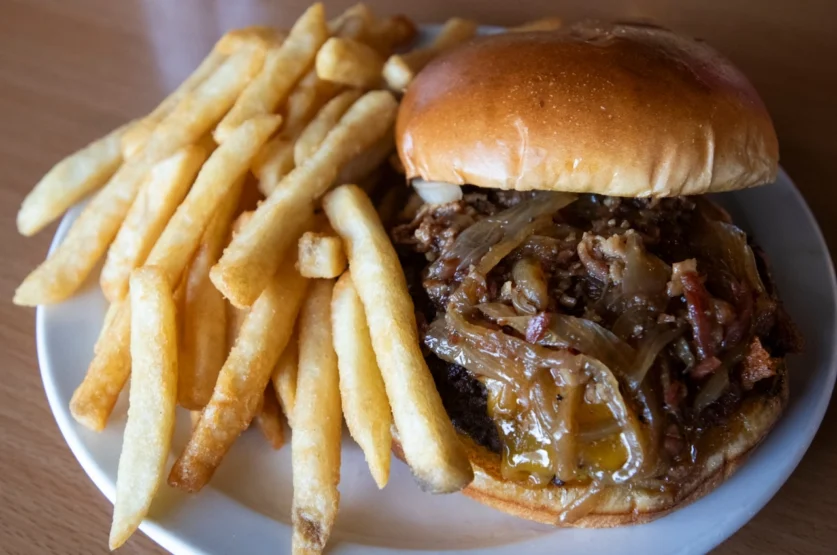
Burgers were added to the menu as well, and are made fresh, Robin said. They anticipate the Bacon Jam Burger, which comes with cheddar, grilled garlic and onion and a bourbon bacon jam, will be a popular seller.
“It’s to die for,” Robin said.
People will also be able to find a variety of sandwiches, salads and shareable items on the menu. The fried banana peppers are expected to be a hit among customers, along with the Giant Italian Curds, which are battered cheese curds served with a vodka sauce.
“They taste like a grilled cheese,” Robin said.
Aside from the food, Burkhart’s Pizza & Pub offers seven beers on tap and a cocktail menu. Robin is most excited for the Shark Bite, which comes with coconut rum, pineapple juice, blue curacao and a gummy shark, she said.
Televisions are also scattered around the restaurant, Andy said, adding it will be a family-friendly atmosphere. So far, there’s been a lot of excitement in the community about the new restaurant, and people can’t wait to try it out, he said.
Burkhart’s Pizza & Pub, located at 7851 Spring Arbor Road, is open from 11 a.m. to 11 p.m. Monday through Saturday.
More information can be found on its Facebook page.
Want more Jackson-area news? Bookmark the local Jackson news page or sign up for the free “3@3 Jackson” daily newsletter.
If you purchase a product or register for an account through a link on our site, we may receive compensation. By using this site, you consent to our User Agreement and agree that your clicks, interactions, and personal information may be collected, recorded, and/or stored by us and social media and other third-party partners in accordance with our Privacy Policy.
Discover the Irresistible Bacon Jam Burger at Spring Arbor’s Newest Culinary Gem
SPRING ARBOR, MI – A new restaurant in Spring Arbor is ready to feed hungry patrons.
Burkhart’s Pizza & Pub opened Friday, May 31, in the former Laughlin’s Slice of Spice, which closed in April. The sit-down restaurant fulfills a dream for Andy and Robin Burkhart.
Related: Slice of Spice is closing, but a new restaurant will continue wood-fired pizza
“I feel positive, ready to do this and to step up my footprint in Spring Arbor,” Andy said.
Just like Slice of Spice, wood-fired pizzas are the stars of the menu. There’s a margherita pizza, along with Hawaiian, buffalo chicken and Philly cheesesteak pizza.
Andy also brought back the Gizmos Premier, which pays homage to when his father owned Gizmo’s Pizza in Jackson, he said. The pizza is stacked with pepperoni, mushrooms, onions, green peppers, ham, sausage and black olives.
“(It) brings my past here,” Andy said. “You can’t go wrong, you get everything on that pizza for $19.99.”
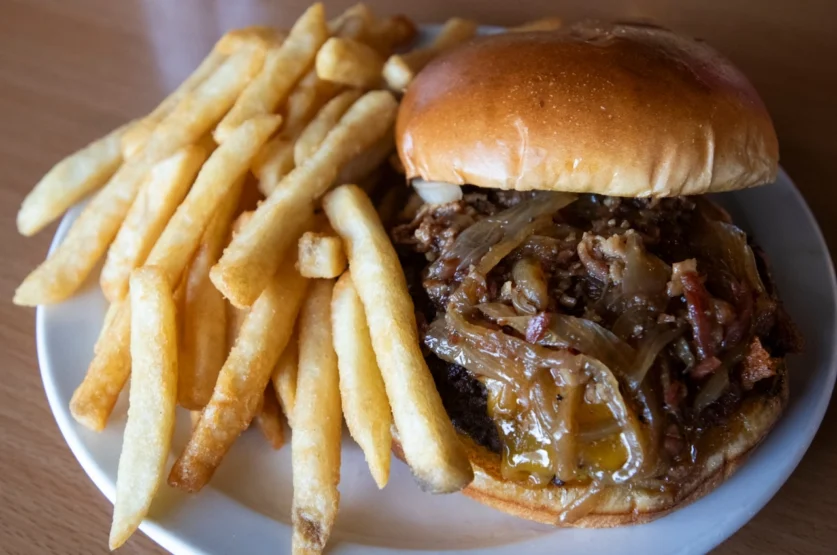
Burgers were added to the menu as well, and are made fresh, Robin said. They anticipate the Bacon Jam Burger, which comes with cheddar, grilled garlic and onion and a bourbon bacon jam, will be a popular seller.
“It’s to die for,” Robin said.
People will also be able to find a variety of sandwiches, salads and shareable items on the menu. The fried banana peppers are expected to be a hit among customers, along with the Giant Italian Curds, which are battered cheese curds served with a vodka sauce.
“They taste like a grilled cheese,” Robin said.
Aside from the food, Burkhart’s Pizza & Pub offers seven beers on tap and a cocktail menu. Robin is most excited for the Shark Bite, which comes with coconut rum, pineapple juice, blue curacao and a gummy shark, she said.
Televisions are also scattered around the restaurant, Andy said, adding it will be a family-friendly atmosphere. So far, there’s been a lot of excitement in the community about the new/img>
Burkhart’s Pizza & Pub, 7851 Spring Arbor Road, is open 11 a.m. to 11 p.m. Monday through Saturday.
More information can be found on its Facebook page.
Want more Jackson-area news? Bookmark the local Jackson news page or sign up for the free “3@3 Jackson” daily newsletter.
If you purchase a product or register for an account through a link on our site, we may receive compensation. By using this site, you consent to our User Agreement and agree that your clicks, interactions, and personal information may be collected, recorded, and/or stored by us and social media and other third-party partners in accordance with our Privacy Policy.
Exploring Mellow Corn Kentucky Straight Corn Whiskey: Your Complete Bottle Guide
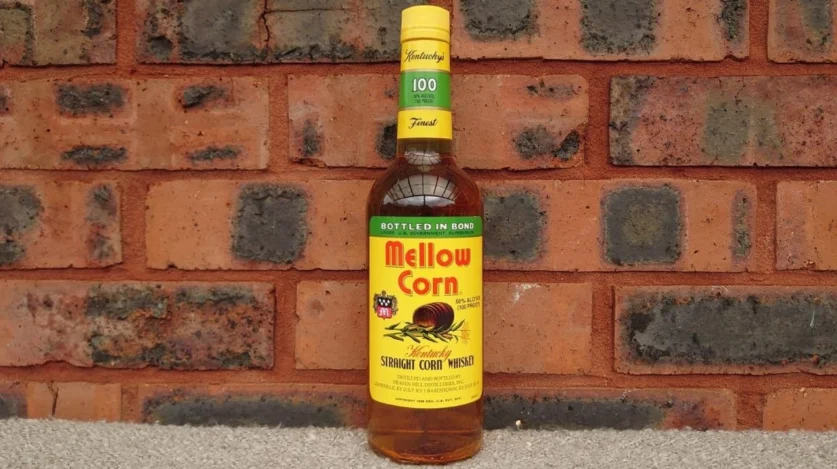
Heaven Hill Distillery’s Mellow Corn is a curious whiskey. Most budget bourbons are bought without much thought, as people are either short on cash or want something to throw in with a mixer. Mellow Corn is a little different as it has become a much-loved whiskey that enjoys somewhat of a cult status. It possesses a unique charm with its unpretentious bottle and smooth profile. In a world where premium bourbons get the lion’s share of attention, there is something comforting in there being so much love for a budget brand.
With this being a corn whiskey, it is undeniably sweet but with a lovely vanilla and oak influence. Due to this, it’s much more impressive than many other budget options. As you can guess, this isn’t a whiskey with immersive depth, but there is elegance in its simplicity. Thankfully, we were lucky enough for Heaven Hill to send us a bottle to try. Along with trying out this bottle, I’ll use my wealth of personal experience to take you on a journey of what makes this brand special and if it’s worth giving a try. Let’s see why so many people love this cheap whiskey.
Read more: The 27 Best Bourbon Brands, Ranked
The history of Mellow Corn whiskey is one of tradition and revival. It originated in the heart of Kentucky and was created by the Medley Distilling Company in 1945. As with many old distilleries, Medley went through several changes of ownership over the years. It started off being sold to Renfield Importers in 1959, then to investor Abraham Schecter in 1978, and then to Glenmore Distillery in 1988. United Distillers bought Glenmore in 1991 but closed it only a year later. Family descendant Charles Medley took the distillery back into family hands in 1995, but by that time, the Mellow Corn brand had already been sold to Heaven Hill in 1993.
We can’t find much information specifically about the brand during this time, which speaks to how Mellow Corn has always sat quietly in the background. Despite facing periods of obscurity when it could have easily been left behind, it has persevered to the point where it’s now become popular with people who like to find these hidden gems. It’s this history — or lack of it — that helps with the charm of Mellow Corn. It’s almost a glimpse into the past when mass production and marketing gimmicks weren’t as widespread as they are today. It remains an unassuming drink and a great survivor of the ever-changing world of whiskey.
While similar, there are a few differences between bourbon and corn whiskey. Whereas bourbon needs to be made from at least 51% corn, that’s dialed up to 80% with straight corn whiskey. As with bourbon, the rest of the mash bill will usually be made up of malt.
ed barley and either rye or wheat. The higher corn content will give the drink a much higher level of sweetness than most other bourbons. While the mash bills are usually different, the most defining characteristic that separates corn whiskey from bourbon is the aging process.
Bourbon must be aged in new charred oak barrels, whereas corn whiskey doesn’t have to be barreled at all. If it is aged, then it must be done in either uncharred or previously used barrels. You may have noticed that Mellow Corn is “straight corn whiskey.” To have the designation of “straight” on there, the whiskey needs to be aged for at least two years. This also applies to straight bourbon. Due to this, it’s important to know what you are buying when it comes to corn whiskey. Mellow Corn is aged for at least four years, but others may not have any aging, giving them hugely different tasting profiles. If you want an aged corn whiskey, then make sure it at least has that “straight” designation on the bottle.
Now we come to the all-important question of the taste. The pale color suggests it doesn’t go past its minimum aging of four years, and the nose is unsurprisingly light. It does offer a nice level of corn sweetness, and it certainly doesn’t burn your nostrils the way cheap whiskeys can. I did get a hint of oak and pear to give it some depth. As with the nose, the palate doesn’t show any of the harshness you can find with budget spirits. It’s a simple but pleasant taste, supported by a nice mouthfeel that allows it to sit in your mouth. Up front, you get the heavy corn influence with a slight nuttiness and oak.</su
With inexpensive whiskey, harshness can often linger in the aftertaste. However, the extended aging of Mellow Corn prevents that, delivering a smoother finish that impresses right away. Unlike many other whiskeys that leave a warm aftertaste, Mellow Corn concludes with a delightful blend of corn and caramel flavors. While not an exceptional whiskey, Mellow Corn doesn’t claim to be. It’s an affordable and pleasing whiskey that surprises with its quality and can be comfortably enjoyed neat. I once ranked this as the worst whiskey from Heaven Hill, but this ranking was more a testament to the distillery’s high standards rather than a criticism of Mellow Corn. If aged corn whiskey is new to you, this is a must-try.
As noted, Mellow Corn is a corn whiskey which requires a minimum of 80% corn in its mash bill. For clarity on what a mash bill means, it’s essentially the recipe of grains used in the production of bourbon or whiskey. This particular whiskey hits that 80% mark precisely, complemented by 12% malted barley and 8% rye, lending a profound sweetness from the corn balanced with additional complexity. Heaven Hill, maintaining traditions of many esteemed distillers, includes a portion of previous distillate in its new production for consistent flavor. It also utilizes a heritage yeast strain for fermentation and distills the spirit in 70-foot-tall column stills, prior to aging in vast Kentucky rickhouses.
The label “bottled-in-bond” seen on Mellow Corn signifies its adherence to specific historical regulations established in 1897, aimed at guaranteeing whiskey quality amidst prevalent counterfeiting. To fulfill these requirements, the whiskey must age for a minimum of four years, be produced by one distiller in one season, and be bottled at 100 proof. It is this prolonged aging that renders Mellow Corn an excellent value, as it is aged longer than most other economical whiskeys.
While many budget bourbons are better suited for cocktails, Mellow Corn breaks this mold by also being an excellent choice for neat consumption. If you prefer the distinct flavor of corn, you’ll find this whiskey’s raw taste appealing. Even a formal tasting with a snifter glass is suggested to fully appreciate its aroma before tasting. Anticipated burns or harsh aftertastes common with cheaper whiskeys are absent here. Mellow Corn is smooth and mellow from start to finish, making it not just a strong contender for sipping but also a great mixer.
Mellow Corn is loved by many bartenders as it offers a great base for cocktails. It can work particularly well in classic drinks such as an old fashioned or a whiskey sour. It will give your drinks a beautiful sweetness without it dominating the palate, allowing the other flavors to shine. Along with Coke, it also works well with other mixers such as ginger ale, ginger beer, club soda, or any lemon-based drink. As you can see, Mellow Corn is a wonderfully versatile whiskey. It makes it a great liquor for your home bar as it can be used for a wide variety of drinks.
It’s fair to say this is an emphatic no. Mellow Corn is famous for being a budget bourbon that will never be burning a hole in your pocket. It has got a little more expensive in recent years, but it still remains highly affordable. Average costs lay around the $19 mark, but you can often find it for cheaper than that. Just because a whiskey is cheap, that doesn’t always mean it offers value for the money. There are a few whiskeys out there that I wouldn’t buy even if they were one dollar. As you’ve most likely worked out by now, this particular drink offers you excellent value for the money when you compare it to its rivals.
It’s not the cheapest whiskey out there, but even if you’re low on cash, it’s worth spending a few more dollars to get something much nicer and see what the fuss is all about. That also applies to those who are overseas and may need to pay a little more due to import costs. There are, of course, much better whiskeys out there for those willing to pay a little extra, but Mellow Corn has a price-to-quality ratio that is hard to beat. p>Finding an adequate corn whiskey to compare with Mellow Corn was tough. Many corn whiscores” style=”display:ick rel=”noopener nofollow” target=”_blank” href=”https://www.yahoo.com/lifestyle/14-white-whiskey-brands-try-121534635.html”>white whiskeys that, while worth trying at least once, can’t compete with the taste and depth you get from Mellow Corn. Most other aged corn whiskeys are much more expensive than Mellow Corn, which showcases how unique this spirit is. One of the best corn whiskeys out there is Balcones Baby Blue. At an average cost of around $39, it is comfortably pricier, but is that extra cost worth it?
Balcones Baby Blue is a Texan whiskey that is made from roasted blue corn that helps to give it both a rich and complex flavor profile. You’ll get a buttery sweetness on the palate and that is joined by roasted nuts and dark fruit. It helps to give it a depth that is not usually found with corn whiskey. It’s more of a craft whiskey that is ideal for those looking for an artisanal experience. It does beat Mellow Corn on a straight taste comparison, but the difference isn’t vast. We’d say that if you’ve never tried corn whiskey before, Mellow Corn would be a great first step. If you enjoy it, then a bottle of Balcones Baby Blue could well be for you.
We’ve seen how Mellow Corn stacks up against another corn whiskey, but how does it compare against another budget bourbon from Heaven Hill? I feel both of these whiskeys share similarities in the fact that they are quite basic spirits but also have tremendous value for money. Evan Williams also has a high level of corn in the mash bill at 78%, with malted barley and rye at 12% and 10%, respectively. However, with it being bourbon, Evan Williams was aged in new charred oak barrels compared to Mellow Corn being aged in an old bourbon barrel.
Even with those subtle changes, Evan Williams gives you more of a classical bourbon tasting experience. You get a more pronounced caramel flavor with the charred barrels giving it a notable oak influence. In this sense, it offers a bit more depth than Mellow Corn, but deciding which one is better will come down to personal preference. They are very similar in price, so it comes down to whether you’d prefer the beautiful sweetness of Mellow Corn or the extra warmth of Evan Williams. Both deserve a place as great budget whiskeys, and with their low price tags, you may as well get them both and find out for yourself.
With the likes of McDonald’s, Starbucks, or Apple, there are countless examples of brands modernizing old logos and labels. It makes sense as you want to bring your brand into the 21st century and keep up with your competitors. One brand that has resisted the urge for this trend is Mellow Corn, but that’s not through laziness. It helps with the sense of charm the whiskey has, as its traditional label is a nod back to American whiskey heritage. It’s easy to see why some wouldn’t like the label with its bright yellow background and bold vintage lettering with green and red. As someone who is colorblind, it can be a little challenging on the eyes!
But the reputation of Mellow Corn has grown due to its authenticity and it receiving a new label just wouldn’t feel right. In an ever-changing world, there is some comfort in something staying true to its original self. No doubt, a modern designer would remove the image of the corn and barrel, change the color scheme, and simplify the bottle. If they did, it just wouldn’t feel like Mellow Corn. It’s also a good case study of how not every brand needs to modernize in order to keep up with demands. It seems like the old-style incorporated has helped the popularity of Mellow Corn instead of hindering it.
Major acquisitions can bring complex deals into play. With a range of legal intricacies and substantial financial stakes involved, these transactions require significant time and effort to finalize. As mentioned, the Mellow Corn brand was acquired by Heaven Hill in 1993, interestingly enough, as a last-minute addition to the deal. This transaction with United Distillers included multiple brands like Cabin Still, J. W. Dant, and Rittenhouse, among others. At the time, Mellow Corn possessed negligible brand value, to the extent that United Distillers was indifferent about its inclusion.
The narrative goes that Heaven Hill president Max Shapira inquired, “You want us to take this, too?” and United Distillers was more than willing to add it on. Whether there was any regret later isn’t clear, as Heaven Hill did not heavily invest in revitalizing the brand. Maintaining an economical whiskey without substantial promotion is not uncommon for distilleries. Nonetheless, over time, the popularity of Mellow Corn has surged, despite limited marketing. This tale of triumph against the odds contributes significantly to the charm surrounding Mellow Corn.
Budget bourbons usually lack strong brand appeal. They are not heavily marketed by distillers, and consumers often casually select them from the bottom shelf, usually for mixing or making cocktails. Mellow Corn stands out in this regard, achieving a cult status among whiskey aficionados and adoration from bartenders alike. The reasons for its admiration are not entirely clear, though several factors are notable. Among these, the ratio of cost to quality previously discussed plays a significant role, offering an accessible option for those seeking an affordable whiskey that is gentle on the palate.
But there are other factors at play too, as Mellow Corn is far from the with the only decent cheap whiskey in the world. Mifield also has a straightforward, consistently Nonepretentious character. Insstead of relying on sophisticated branding or excessive advertising, its prominence has mostly grown through organic recommendations. Its sweet and gentle profile not only resonates with experienced whiskey enthusiasts but also appeals to those who may find more robust whiskeys too intense. For bartenders, its simplicity offers a dependable and adaptable base for crafting both traditional and novel cocktails. Its taste integrates well with other components, maintaining balance rather than overpowering the mix. For anyone seeking value without sacrificing quality, Mellow Corn has emerged as a preferred choice for many.
Read the original article on Tasting Table
Non-Alcoholic Beer Gains Popularity: Could It Dominate at the Paris Olympics?
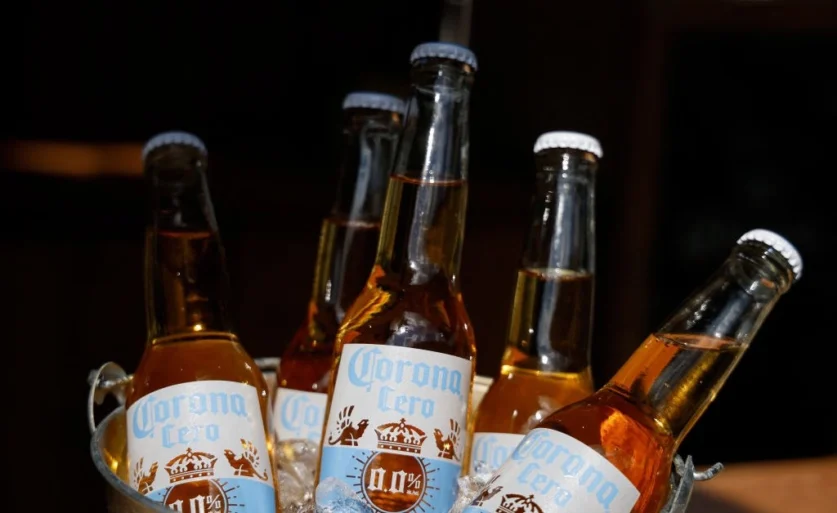
Bottles of beer adorned with the five Olympic rings are currently being produced at Anheuser-Busch InBev NV’s brewery in Belgium, gearing up for the upcoming Paris Olympic Games.
This event marks the first time in 100 years that Paris has hosted the summer Olympics, and the city is determined to make a significant impact, especially after the challenges presented by the Covid-19 pandemic at the virtually spectator-less Tokyo Games. Remarkably, this year’s event will also introduce beer as an official sponsor for the first time in Olympic history, highlighting athletic excellence.
Interestingly, the sponsored brew, Corona Cero, is a non-alcoholic beverage.
Anheuser-Busch InBev, the largest brewer globally, seeks to promote this non-alcoholic variant, launched in Europe only two years prior. With the Paris Olympics poised to be a massive promotional platform, AB InBev aims to capitalize on this opportunity to cement its standing in the fast-growing non-alcoholic segment of the beer market.
Read More: Why Beer Is the World’s Most Beloved Drink
Worth $13 billion and counting, brands from Heineken to Guinness, and now Corona Cero, see a cohort of health-conscious consumers—many young, others older and wanting out of a booze culture—whose wallets they can tap.
Master brewers have been working on formulas to try to replicate the taste and texture of the real thing. Heineken, Guinness and Budweiser are all now available alcohol-free, while hundreds of craft brewers and newer labels are emerging to target the market.
For Michel Doukeris, the chief executive officer of AB InBev, it’s quite simple: “The consumer has changed.”
No-alcohol beer, which consists of beers with an alcohol content below 0.5%, represents a small niche in the beverage market with its annual production of 31.4 million hectoliters. This is significantly less compared to the 1.93 billion hectoliters of alcoholic beer produced globally, data from GlobalData Plc suggests. However, this segment has seen a notable compound annual growth rate of 3.6% since 2018, in contrast to the 0.3% growth rate for alcoholic beer. In the United States, the percentage of adults aged 18 to 34 who report consuming alcoholic beverages has declined from 72% in the early 2000s to 62%, according to Gallup.
These trends are significant for businesses, particularly for major players like AB InBev, which has acknowledged it will likely miss its target of generating 20% of its sales from low or no-alcohol beer by the year 2025. See report.
“Many prominent sports events like the Olympics often feature 0% alcohol variants of flagship beer brands,” explained Susie Goldspink, head of no and low alcohol insights at market researcher IWSR. “This emerging focus is aligned with the growing trend as well as promoting a moderation agenda for responsible consumption.”
This market dynamic also offers broader advantages for beer companies. By marketing their non-alcoholic products under the same brands as their alcoholic versions, these companies enhance brand recognition and navigate the growing restrictions on alcohol advertising more effectively.
The promotion of non-alcoholic beers through sports events is on the rise, with notable examples like Heineken 0.0’s association with Formula 1 and Diageo Plc’s Guinness 0.0 at the Six Nations rugby. Last year, Carlsberg A/S distributed 400,000 cans of the non-alcoholic French beer, Tourtel Twist, at the Tour de France cycling event.
Read more: How to Talk About Beer Like a Pro
Amid increasing brand competition, Carlsberg is strategically placing Tourtel Twist as the preferred non-alcoholic beer for the upcoming Paris Games.
“We are the official beer of Paris and France,” said Jacob Aarup-Andersen, CEO of Carlsberg. “They are the official beer of the Olympic movement. At the events, Tourtel will be the beer you’re served.”
U.S.-based Athletic Brewing Co., which specializes in non-alcoholic beverages, believes that an Olympic sponsorship promotes the growth of the entire category.
“Sometimes to move the needle you need bigger players that can help drive awareness,” said John Walker, the company’s co-founder.
For beverage companies, adapting to shifting trends is critical. These changes have contributed to the downfall of numerous establishments with over 7,000 bars closing in the last decade in the U.K., reports the British Beer and Pub Association. Factors such as alcohol duties, high rents, and stringent regulations have influenced these shifts, alongside evolving consumer drinking habits.
With a focus on millennials and Gen Z, who often use social media and look to decrease their alcohol consumption, it’s crucial for companies to offer appealing alternatives to conventional alcoholic beverages, rather than lose these consumers to competing brands or simpler choices like soda or water.
Heineken 0.0 currently leads the global market in non-alcoholic beer sales, with other top contenders including Suntory All-Free from Japan and Brahma 0.0%, which is owned by AB InBev.
In Germany, home to the world’s oldest brewery still in operation, non-alcoholic beers have been produced since the early 1990s. In 2020, responding to increased demand, Weihenstephan, owned by Bavaria, significantly expanded its production of non-alcoholic beers. Now, its non-alcoholic wheat beer comprises nearly 10% of its total sales and ranks as the third most popular product.
However, extensive marketing alone cannot sustain the non-alcoholic beer segment if the products are not appealing.
Historically, non-alcoholic beer was often viewed as inferior in taste compared to its alcoholic counterpart, which disappointed many consumers. Breweries faced a significant challenge: how to replicate the rich flavor profile of their beers without the alcohol. The question was whether to prevent the formation of alcohol during fermentation or to extract it post-brewing a normal strength beer.
According to Jim Koch, chairman of Boston Beer Company, which brews Samuel Adams, recent taste advancements were achieved as brewers mastered a low temperature distillation technique. The company introduced its non-alcoholic beer, Just The Haze, in 2021.
Introduced in 2017, Heineken 0.0 is crafted using water, barley malt, hop extracts, and yeast—the same ingredients as Heineken. The alcohol is removed through vacuum distillation, and then natural flavorings and aromas are added back to closely mimic the original’s taste.
“For a couple of years, I refused to start developing Heineken 0.0,” commented Willem van Waesberghe, Heineken’s global master brewer. “Because I’d never tasted a good one.”
The Olympic Games are set to begin in two months, with the Opening Ceremony scheduled for July 26. AB InBev is preparing to launch details of its campaign aimed at “accelerating no-alcohol beer growth.”
Beyond that, getting no-alcohol beer on tap is expected to deliver the next leap in terms of volumes, increasing sales in bars by making the drinks more socially acceptable. It’s yet another technical challenge, but one that brewers are working on.
“It’s like rosé in the south of France is always better than at home,” said Waesberghe. “And in a bar you like the draft, it gives you the impression of authenticity.”
Preserve Your Wine: The Genius Bottle Swap Trick to Keep Leftover Wine Fresh for Days
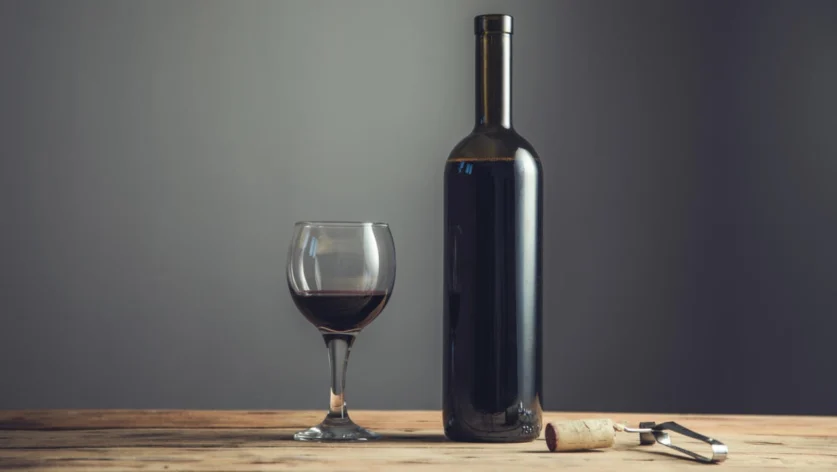
For some people, finishing an entire bottle of wine in one sitting has never been a problem. However, there are any number of reasons even a wine lover can end up with some leftover wine. Unfortunately, once a bottle of wine is open, the clock starts ticking on its limited shelf life. And while you can put the cork back in that bottle of wine (assuming you still have it and it’s intact) or screw the top back on (if it’s a screw-top bottle), there’s a better way to store an open bottle of wine. All it takes is a simple bottle swap for a smaller bottle.
When it comes to keeping your wine fresh, the key is to minimize its exposure to oxygen because too much contact can cause oxidation, which may cause a loss of flavors and eventual transformation into vinegar. The more surface area of the wine that interacts with oxygen, the quicker it degrades. If you’ve poured out half a bottle of wine to drink, then the remainder of the wine in that bottle is now exposed to half a bottle’s worth of air. If you were to transfer the remainder of that wine into a smaller container, however, then you would limit the amount of air that can come into contact with it, which will help keep your wine fresher for longer.
Read more: The 40 Absolute Best Cocktails That Feature Only 2 Ingredients
For half of a standard bottle of leftover wine, the perfect swap would be to use an empty 375-milliliter half bottle of wine (also known as a demi or split bottle). If you have less wine left over then one or more 187-milliliter mini bottles (also known as quarter or piccolo bottles) would be ideal. What if you don’t have any empty smaller wine bottles handy? While you can purchase empty mini bottles for this purpose, you won’t have to if you already have another smaller container that you can use, like a mason jar, an old jam bottle, a beer bottle with a crown cap, or even a small juice or water bottle.
Whatever smaller bottle you choose, ensure it is thoroughly cleaned. Utilize a funnel to transfer the remaining wine into the smaller bottle, filling it nearly to the brim to minimize the exposure to air and reduce oxidation. Securely tighten the cap to make it airtight, then store the bottle upright in the refrigerator. This method will keep your wine fresh for an additional one to two weeks.
Read the original article on Tasting Table
Tragic Discovery: Body Found in Search for Missing Hillwalker Mary Molloy on Isle of Rum

A body was discovered on the Isle of Rum today.
In the ongoing search for the hillwalker Mary Molloy, a body was located on the Isle of Rum.
The body was found during an extensive search effort on the isolated west coast island for the 68-year-old missing hillwalker.
The police have confirmed that the body of a woman was discovered today.
Formal identification is yet to take place, but the family of Mary Molloy have been informed.
Police have stated that enquiries are ongoing, but there are “no apparent suspicious circumstances.”
In a statement posted on social media, a police spokesperson announced: “A body of a woman was recovered from the Isle of Rum on the afternoon of Saturday, June 1.
“The woman has not yet been formally identified, however, the family of Mary Molloy, who was reported missing in the region, has been notified.
“Investigations continue, yet nothing suggests foul play at this point.”
“Necessary documentation will be forwarded to the Procurator Fiscal shortly.”