Wine 1106
The Reasons Why Cooking Dried Beans in Wine is a Bad Idea

Dried beans can seem daunting to prepare if you are unsure of the correct method. You might believe that hard pintos or chickpeas can be thrown into a pot and left to boil, but the truth is that creating a perfectly cooked bean is much more intricate. Buying the freshest legumes you can, soaking them for the right amount of time, and correctly seasoning them are all crucial steps. But it’s also important to understand which ingredients can be added during cooking and which should be left out. Despite the myriad ways to flavour these starchy and subtly tasting seeds, it’s best to avoid wine or any other acidic ingredients. Whether it’s red, white, or rosé, wine is a liquid you should never use to simmer beans.
Surprisingly, despite their tough exterior, beans are quite delicate. Legumes react to changes in pH levels – in an alkaline environment, their cell walls start to break down quickly. But in acidic conditions the opposite occurs as acid prevents pectin in the skins from dissolving and causes them to tighten, inhibiting water absorption. Consequently, you should avoid boiling or braising beans in a highly acidic solution such as wine.
Read more: 20 Popular Canned Soups, Ranked Worst To Best
Now, it might sound like a contradiction, but beans and acidic ingredients can be used together—they just need to meet at the right time. Rather than worrying about dried legumes that aren’t cooking—and thus softening—quickly enough, try adding wine towards the end of the cooking process. Once the bean skins have softened and the insides have turned creamy, you can add a splash of wine to your recipe without negatively affecting taste or cooking time. Alternatively, you can cook an acidic, wine-heavy sauce separately from the legumes and combine them just before serving.
Another thing to bear in mind is that when it comes to canned beans, none of these rules apply. Since cans of cannellinis, lentils, and the like will already be cooked, wine can be incorporated at any time during the dish making process. Naturally, it’s worth remembering that it will take some time for the alcohol to reduce.
If you aren’t totally convinced about cooking beans with wine, but want to impart depth, look to other flavorful cooking liquids. Water that’s been liberally seasoned with salt is a good place to start, however, you can easily do better. Add vegetable scraps, herbs, chili flakes, lardons, or a cheese rind to create a rich broth. Likewise, a ready-made stock (vegetable, seafood, beef, or poultry) will infuse all sorts of earthy, savory, and vegetal flavors into beans. That said, a touch of wine can still help round out flavors — just saying!
Read the original article on Tasting Table.
Enhance Your Wine Experience with This Free Trick

Discover the when, why, and how to use this straightforward and costless method.
Every couple of years, I find a desire within me to broaden my wine knowledge, both for my professional life as a food writer and editor, and simply for my own enjoyment. This leads me to participating in classes, tastings, self-study on wine, visiting vineyards when possible, and purchasing new bottles to sample. During this journey, I stumbled upon a straightforward technique that can enhance the quality of many types of wine: decanting.
The act of decanting may seem ostentatious, but it is merely transferring wine from its original bottle into a different container. A special decanter isn’t even necessary (more details on this further on). This practice provides several benefits to the aroma, flavor, and even the texture of the wine. However, one must tread carefully, as decanting doesn’t always prove advantageous.
To learn more about why, when, and how to decant wine, I talked to Julia Burke, a wine buyer and events and education manager at Flatiron Wines in New York City, whom I first met when I took a class she taught about (extremely delicious) Pacific Northwest wines. Read on for the details.
According to Burke, there are three reasons to decant your wine: to aerate the wine and unlock its aromas and flavors, to separate any sediment that might be in the bottle, and because it’s fun.
Classic decanters are typically made of glass and are hourglass-shaped with a wider base than the top. These days, decanters come in all sorts of interesting shapes and styles.
“A decanter’s unique shape exposes wine to oxygen efficiently by creating a larger surface area than a wine glass or an opened bottle,” says Burke.
“If you are using a decanter to separate wine from sediment, ideally you can plan ahead and store the unopened wine bottle upright (rather than on its side) for 24 hours so that the sediment will settle at the bottom of the bottle and it’s relatively easy to pour the wine into the decanter while leaving the sediment behind,” Burke advises.
“Regardless of the reason you’re decanting, once you open the bottle of wine you wish to decant, it’s crucial to work slowly and carefully—you don’t wish to kick up the sediment or spill any of that precious wine! Pour the wine into the decanter, tilting the decanter and keeping the bottom of the wine bottle as low as possible so the sediment stays at the bottom.”
Burke adds that while most individuals will serve wine from the decanter, others like to pour the wine back into the bottle so they can serve it from the original bottle. “If you’re confident you can do that without losing any, go for it,” she says.
After you’re done with your decanted wine, Burke suggests cleaning your decanter thoroughly and storing it covered so it doesn’t collect dust. There are bendable cleaners that assist in cleaning decanters with hard-to-reach spots.
“Definitely not,” says Burke. “I rarely decant wines under $20, because there aren’t usually enough layers of aroma and flavor complexity to justify the extra step. I don’t decant inexpensive sparkling wines. And this is the most important rule: I don’t decant very old wines unless the producer knows what vintage I’m drinking and recommends it. Over-exposure to oxygen for a fragile, delicate old wine can shut it down—for good.”
When in doubt, Burke recommends talking to the experts at your local wine shop, the producer who made the wine, or another trusted wine professional for guidance about the specific wine.
If you want to experiment with decanting but don’t want to invest in a decanter, you have options. “I have always had decent results pouring wine from one large glass into another, or pouring it into a pitcher,” says Burke.
“For a more subtle effect where I’m just ‘waking up’ the wine a bit, I just pour a glass out of the bottle and then let the bottle sit out with a few ounces removed so the fill line is lower.”
As for the trend of using a blender to aerate wine by hyper-decanting it, Burke isn’t sold. “I wouldn’t use a blender, but I’m not Connor Roy,” she jokes.
Once you’ve decanted a wine, the amount of time you’ll want to wait before drinking it depends on the wine and the reasons for decanting, says Burke.
“If you just want to remove sediment, the wine will be ready to serve once in the decanter,” she says. “If you are trying to aerate the wine, 20 to 30 minutes does wonders for the vast majority of decantable wines. In most cases the benefits start to dwindle after about an hour, or two hours for the most dense red wines, and the risk of over-decanting begins to rise after that.”
Burke cautions that you can’t leave wine in a decanter indefinitely, or it will turn into vinegar. “If someone tells you they decanted a wine for three days, be wary,” she says. Ask your local wine shop for guidance if you’re unsure about how long to decant a specific wine.
With an initial investment in a decanter or simply by using a pitcher you already have, you can vastly improve the flavor of some wines without spending an extra cent. Decanting also helps remove sediment that can gather at the bottom of a wine bottle. When in doubt, check with your local wine purveyor about whether a specific bottle of wine should be decanted. Now go forth and unleash your inner wine snob on your family and friends—they’ll no doubt be thrilled to hear everything you’ve learned about decanting, or at least they’ll be happy to drink nice decanted wine with you.
Read the original article on Simply Recipes.
Master the Art of Serving and Drinking Mulled Wine this Winter: Top 10 Tips

Mulled wine has a long and storied history, with most European nations having their own version of this hot, spiced, fruity drink. The British have mulled wine, the French have vin chaud, the Germans have glühwein, and the Greeks have krasomelo.
You put a spice blend in a wine of your choice, heat it up, and serve it to chilly guests during the winter months. However, if you want your warm treat to go down well, there are a few things you should consider in addition to the ingredients. Your preparation and serving methods need to be on point, the vessels you’re filling should be considered, and you’ll definitely need a snack on the side. What good is mulled wine if it isn’t washing down something tasty?
To save you some stress at this busy time of year, we’ve compiled a list of 10 tips that should ensure your mulled wine is a hit this year, and for many years to come. This list is based on our own extensive experience of making, serving, and enjoying mulled wine. We’ve spent many years making our own mulled wine, sampling friends’ efforts, and paying too much for a hot glass at cold Christmas markets. This has given us a good idea of what works (and what doesn’t) when making and serving this winter staple. So sit back, pour yourself a glass of something warm, and enjoy our tips to serve and drink mulled wine this winter.
Read more: 13 Liquors Your Home Bar Should Have
It’s not overly challenging to find a classic mulled wine recipe on the internet, however, such recipes ought to be regarded more as a basic foundation rather than a rigid blueprint for making this seasonal delight. Many may view this beverage as just an affordable, robust red wine that’s been warmed with a few spices, but mulled wine can actually be quite a versatile drink.
When discussing the base, there are numerous different types of wines suitable for mulled wine. Persisting with reds, one can select a light-to-medium-bodied red over a fuller variant, modifying the spices in accordance. With a lighter red, going heavy on the cardamom may be a good choice, while spices such as nutmeg might work better with a more full-bodied base. White wine can also be mulled for a slightly unconventional choice.
Irrespective of your election, modifying the recipe to accord with your individual preference and the tastes of your company is advisable. The only effective method of achieving this is through a process of trial and error – scribble down observational notes and enhance the recipe over several winters or launch into a period of intensive testing. Being familiar with your spices will allow you to identify what should be increased or decreased to formulate a drink that suits your palate. It’s also worth to test several base wines, as they vary quite a bit, and your selection will considerably influence the final product. The end result will be your own distinct recipe. Whether you keep it a secret, pass it down through generations, or broadcast it to everyone, it will undoubtedly be worth your while.
Should your desire to make mulled wine arise spontaneously, you may be inclined to just use what is readily available at home. Many a household has a bottle of red that has long stayed put on a counter along with all the spices you could require stowed away on a shelf. However, even in such cases, it is advisable to take a quick trip to the store if you are short on whole spices.
Whole cloves, cinnamon, and star anise are crucial to a good mulled wine. The powdered versions of these spices will dissolve differently into the wine, leading to potential recipe inconsistencies. Furthermore, powdered spices can lose their strength faster, resulting in a bland wine taste. Ground spices also pose a potential change in clarity and consistency. Whole spices, on the other hand, can be filtered out quickly, and they look better while the wine is being mulled. Therefore, even for a quick mulled wine, it’s pivotal to have these spices at hand, in their whole form.
Heating the wine, which appears simpler than it is, can affect the spices and other ingredients in the drink. An unexpected clove or a stray piece of orange might not be harmful but can lessen the aesthetic appeal of your mulled wine. These fragments might also alter the texture of the drink, as nobody would like to extract cloves from their mouth after every sip.
Fortunately, straining or sieving your mulled wine after heating can help keep it free from unwelcome fragments. You can either reuse the spices as a garnish or use fresh ones to beautify your drink. This step is especially beneficial when using an orange garnish, as the orange used during the mulling process might have started decomposing.
Traditionally, mulled wine is a hot beverage. The heat is necessary for extracting flavors from the spices, and the wine should also be served hot. The warmth adds to the appeal, making the drink enjoyable during cold winter days. However, boiling the mulled wine is to be avoided at all costs.
If your mulled wine reaches its boiling point, two things will happen. You’ll evaporate off more alcohol than necessary, resulting in a weak final product. Boiling also affects the flavor of the wine, leaving you with a bitter and unpleasant beverage. You may be able to fix a boiled batch by adding in extra syrup or sugar and replacing the missing alcohol. But equally, it may be something that ruins your mulled wine and causes you to tip out your tipple and start all over again. So it’s best to keep the temperature of your mulled wine under 174 degrees Fahrenheit, with the ideal temperature at around 160 degrees Fahrenheit. At 172 degrees Fahrenheit, the alcohol will begin to evaporate, and it’s all downhill from there.
A slow cooker is a great way to make sure you don’t overheat your mulled wine. Low, medium, and high settings will vary by model — but none of those settings should put your wine into the thermal danger zone. It takes a lot of the challenge out of cooking the wine, as you won’t have to keep a constant eye on a thermometer and adjust your stove accordingly. It also has another notable bonus.
You can use a slow cooker to effortlessly keep your mulled wine at an ideal serving temperature. This is perfect if you’re making the hot drink for a party or another gathering which will go on for several hours. A punch bowl will cause your mulled wine to lose heat very quickly, and a pan on the stove will need to be constantly monitored and reheated. Even if you want to initially mull the wine on a stove, straining it into a slow cooker afterward is a sensible choice.
While some beautifully crafted glassware both looks the part and shows off the wine’s vibrant color, it’s not really necessary. Mulled wine is, at its heart, a comfort drink. So a thick stoneware mug is both cozy and comfortable — even if it doesn’t look high-end. Whatever you pick, it should be somewhat insulated and feature a handle, for comfort reasons more than anything. While your mouth can take sips of hot wine without too many problems, that heat will be very uncomfortable in your palms. Using a few napkins or a cloth to insulate the glass is a little unsightly, and also makes your grip more unstable. So don’t fear that faded Daffy Duck mug rattling around the back of your cupboard, embrace it.
There’s also a safety aspect. Some glass vessels aren’t built to handle heat and may crack or shatter when a hot beverage is poured into it. Not all glassware is like this, and some is built to handle a vast thermal range, but this is something you should double-check before deciding on a drinking vessel.
While drinking mulled wine is an event in itself, you should really serve an array of snacks with it — if only to soak up some of the booze. As mulled wine is a traditional drink, there are plenty of traditional dishes that pair well with it. The main one in Britain is mince pie. Despite its name, this doesn’t contain any ground beef. Instead, it’s packed with fruit and spices — much like the mulled wine.
The German version of mulled wine, glühwein, is often served with schnitzel and blue cheese pastries. A stack of pork or chicken mini-schnitzels are both easy to make and could be a great addition to your holiday spread.
Germany may also be onto something with the pastries, as a strong, creamy, blue cheese like stilton or Roquefort is also a fantastic accompaniment to the fruity, spicy, wine. A cheese board isn’t the most difficult thing to assemble, so it could be an ideal choice if you’re looking for something to adorn your holiday table.
When it’s time to serve your mulled wine, the beverage should have obtained the perfect blend of flavor from the spices added during mulling. However, appearance matters as much as taste. Therefore, if you’re hosting a sophisticated soirée, a garnish is essential. Conventionally, garnishing mulled wine involves adding more of the ingredients used in the mulling process—preferably fresher and more presentable ones. Mulling can alter the color of cinnamon sticks and affect the visual appeal of delicate additions like orange slices, so use fresh garnishes wherever possible.
Be careful not to overload the glass, as excessive spice might alter the taste. If you want to stick to tradition, place a fresh cinnamon stick on the rim and adjoin an orange slice to the drink.
Further, you can highlight the festive ambiance associated with the drink. A twig of holly on the side or a tinsel twirl around the glass can add a dash of holiday spirit.
Mulled wine is not just about the alcohol content, though it does contribute significantly at times. It’s also relatively stress-free to enhance the alcohol level in your mulled wine if the regular red wine alcohol content doesn’t satisfy your palette, or an accidental overboil during mulling decreased the level.
Increasing the alcohol volume of mulled wine can be achieved by incorporating some liquor into it. Favourably, wine-based or neutral liquors such as sherry or brandy would seamlessly integrate with the wine. This is because they do not alter the flavor significantly. Port, a fortified dessert wine, can not only amplify the wine’s strength but also enhance its sweetness. Hence, if Port is used, you may consider reducing the amount of sugar you add. Divergent spirits like dark rum or Vodka can also be explored to lend a unique flavor twist.
The amount of alcohol to be added is contingent upon the quantity of mulled wine you are making and the desired strength of the final product. About an ounce of alcohol per bottle of wine used might be a good start. It’s best to add the spirit towards the end so as to conserve its alcohol content. Remember, excessive heating can lead to alcohol evaporation, thus affecting the wine’s quality.
Regardless of the size of your mulled wine recipe, you may end up preparing a large share for a party. If there’s any leftover, don’t just dispose of it. When properly sealed, mulled wine can last for about 3 to 5 days in the refrigerator. However, make sure it cools down to room temperature before refrigerating. Considering the festive season is usually filled with unending parties, there’ll be ample opportunities to utilize the leftover.
When reheating your mulled wine, ensure to slowly warm it up to about 140 degrees Fahrenheit before serving. You don’t necessarily need to add extra spices as the wine is already flavored. However, garnishing the wine after it’s been poured into a mug is not a bad idea.
Read the original article on Tasting Table.
Revolutionizing the Wine Industry: How Your Business Can Benefit from the AI Sommelier

A service robot serves wine (3d rendering)
The wine industry is experiencing a significant shift with the integration of Artificial Intelligence (AI). This change reflects a movement away from traditional viticulture and enology practices towards a more technologically advanced approach. AI is not just being used in one area, but across multiple stages of wine production: from vineyard management to making the wine itself. These applications of AI have far-reaching consequences for the quality, efficiency, and sustainability of wine production.
One of the companies at the forefront of AI technology in the wine industry is Tule Technologies. Tule has developed a technology called ‘Tule Vision’, which uses AI to monitor the water stress levels in plants. This AI technology allows growers to take a short video of their plants; the AI then analyses these videos and provides them with information about the midday leaf water potential, which is an indicator of how thirsty the plants are. This information is crucial to growers, as it helps them to make informed decisions about the health of their vineyard and the quality of their grapes.
Bouchaine Vineyard in Napa Valley is another example of how AI is being used within the wine industry. They utilize sensors from Cisco Systems to collect data on environmental factors such as temperature, light intensity, and humidity – all of which are critical factors in grape cultivation. This wealth of information is then processed by AI algorithms, which provide insights that are invaluable when it comes to maintaining the soil, detecting diseases, controlling pests, and irrigating the vineyard appropriately. Beyond this, the ability of AI to process large data sets means it is now being used to provide weather forecasts. AI’s predictive analysis allows vineyard managers to prepare for various weather conditions, protecting their harvest from threats such as drought or excessive rainfall.
Have you heard about the new favourite of the vineyards, Wall-Ye? Increasingly, vineyards are adopting AI robots to support the grape harvesting process. These machines are capable of monitoring plant health, recognizing the right time to pick grapes, pruning, and de-sucker (removal of shoots from grapevines). As we witness advancements in AI horticultural technology, the industry harbours high hopes for precision harvesting. This includes observing each individual grape and determining the ideal time to harvest each one.
The scanning of a grape bunch helps to assess crop quality and suitable cultivation parameters using artificial intelligence to further produce top-quality wine.
AI is gradually integrating into the winemaking process, primarily during the significant stage of fermentation. AI-operated systems can monitor and alter fermentation conditions in real-time, assuring uniformity and superior quality across wine batches. In particular, the application of AI in the fermentation process has led to a more regulated and consistent production process. By minimizing the chance of fermentation errors, wine producers have enhanced their ability to consistently produce high-quality wine. This technology also contributes to time savings and reduced waste in the winemaking process and enables winemakers to experiment with new flavors and wine styles with increased precision and confidence. This is beneficial for improving environmental, social, and corporate governance (ESG) practices and testing a broader array of wine palettes.
AI is also reforming the consumer aspect of the wine industry. Wine apps such as Vivino and Hello Vino are utilizing AI algorithms to help wine connoisseurs select an ideal bottle. The apps provide recommendations based on images, text, and flavor profiles. A recent project named “WineSensed” demonstrated the potential of using human inputs in AI, especially in understanding tastes. This project involves a substantial multimodal wine dataset that includes images of wine labels and reviews from the Vivino platform. It resulted in the development of a low-dimensional concept embedding algorithm that blends human experience with automatic machine similarity kernels, thus improving the comprehension of flavor perception and wine selection. Additionally, AI-powered chatbots are being employed for customer support, offering instantaneous responses and wine-related information, including tasting notes and pairing suggestions. This technology allows wineries to create personalized experiences for customers, thereby boosting engagement and satisfaction.
Stacked barrels of wine at a wine distillery
Effective management of inventory is key within the wine industry. AI is a vital component in both the management of inventory as well as in optimising the supply chain within the wine sector. Analyzing data in real-time, such as trends within consumers and the dynamics of the market, AI algorithms predict demand, manage stock levels and enhance the supply chain. Not only does this decrease costs and mitigate risk of spoilage, it also makes certain that products reach consumers in a timely manner. Furthermore, the quality control process in the production of wine is also being revolutionized by AI. Cameras and sensors powered by AI can observe each and every production stage, starting from sorting of grapes to the process of fermentation, catching details that may be overlooked by human inspection. Such AI equipment can predict outcomes of fermentation and fine-tune elements such as temperature and acidity, in order to enrich flavors and fragrances.
The human-like cyborg is seen enjoying a glass of wine. An inebriated cyborg quoting, “Cheers!..”
The wine industry is set for further integration of AI technologies which will supply critical agricultural knowledge derived from imagery and data analysis. One clear sign of this is the application of AI in online wine tasting sessions, showing a shift towards a more analytical, data-focused method to understand and classify wines. This not only stands to improve the quality and regularity of wine production, but could also stimulate the development of fresh wine varieties and tastes, informed by data and consumer analysis. Therefore, the incorporation of AI in wine tasting and selection is changing the way both consumers and wine manufacturers approach wine. AI algorithms, using data evaluation and machine learning, are enabling a more thorough understanding of consumer preferences, hence aiding in the development of wines that match these preferences. Moreover, these advancements pave the way for creating more delicate and varied wine profiles, catering to a wider range of tastes.
Nonetheless, the introduction of AI in the wine industry doesn’t come without its obstacles. Winemakers are cautiously negotiating the balance between preserving the traditional craftsmanship of wine production and incorporating sophisticated technology to remain competitive and satisfy changing consumer demands. In particular, many wineries, specifically smaller ones, may not have the necessary resources or knowledge to employ AI solutions. However, as the industry continues to progress, the role of AI in improving processes, boosting product quality, and enhancing customer experiences is anticipated to increase, indicating a new stage of innovation in the wine industry.
In conclusion, AI’s role in the wine industry represents a fusion of traditional winemaking artistry with contemporary technology, opening the way for more exploratory and personalized wine experiences. As AI continues to advance, its uses in wine palette experimentation and optimization are set to become more common, presenting exciting opportunities for both wine manufacturers and wine lovers. Regardless, AI is quickly transforming the wine industry, providing new potential for boosting the quality and productivity of wine production. From vineyard management to customer engagement, AI technologies are equipping wineries with the necessary tools to invent and acclimatize in an increasingly competitive market. The future of wine production, under the deepening influence of AI, promises to be both thrilling and revolutionary.
Unveiling the Top Ten Wines of 2023: A Wine Writer’s Perspective

Wines being poured for a tasting in Napa Valley
When musing over the attributes that categorize a wine as “the best”, it’s the bottles that delivered joy, astonishment, or pleasure that come to my mind—points and ratings rarely make an impact. However, I admit, the vindication felt when a wine I enjoy also boasts a high score or rating is undeniable. To keep things uncomplicated, I like to channel Ernest Hemingway’s perspective, who encapsulated the essence of wine perfectly in A Moveable Feast: we considered wine as wholesome and common as food, also a magnificent provider of joy, health, and satisfaction. Drinking wine neither symbolized snobbery, sophistication, nor a cult; it was as commonplace as eating and just as crucial to me.
Featured in this year’s list is a new Champagne from Moet & Chandon, a wine that could potentially be its last kind ever bottled, an unexpectedly gentle Syrah from Napa, and a long shot from Armenia. Why not buy a bottle or three, revisit your Hemingway novel, and toast to yet another remarkable year of wine drinking?
Nicolas – Jay Own Rooted Pinot Noir, OR, 2021: Oregon still harbors a few pre-phylloxera ungrafted vineyards, and one of them is owned by the Nicolas-Jay Winery. It’s inevitable that the destructive phylloxera pest will ravage the vines—until then, each bottling is a cherished relic. Post-phylloxera’s intrusion into Europe’s vineyards, leading all to be replanted with grafted vines, the world has very few remaining wines made from original rootstock. This particular bottling was so outstanding that winemaker Jean-Nicolas Méo slipped a bottle into a blind tasting arranged by prominent Burgundy collectors—a tasting that included Grand and Premier Cru Burgundies, and Nicolas-Jay’s Oregon contender. It earned the #2 spot – and none of the collectors could believe that it was an Oregon product (they all, of course, desired a bottle). Given its rapid sale rate (and the looming threat of phylloxera) anyone desiring to sample the luscious cherry fruit, silky tannins, and mesmerizingly complex character of this wine should act promptly.
Moet & Chandon Collection Impériale Création No. 1, FR: This is an exciting new bubbly from a legendary Champagne producer that honors the purest expression of Champagne with a zero dosage finish—I found it to be intellectual and serious but also decadent and joyful. This first-ever release took almost 23 years from conception to bottling—it’s a harmonious blend of seven different vintages, each one aged through a different maturation process and then blended to achieve harmony. Cellar Master Benoit Gouez describes it as “the ultimate expression of Moet & Chandon. To enjoy this you need time, the luxury of time, if you have only five seconds for this wine then it is not for you. We crafted it for the luxury of time.” Take a breath, buy a bottle and savor it with special friends.
Il Conte Villa Prandone IX Prandone, IT, 2022: Made of 100% merlot aged for 15 months in barrel and 15 months in concrete, this richly textured expression comes from Italy’s less well-known Marche region—one that is full of gems to discover such as this one. The nose is ripe with morello cherry and red fruit notes, and on the palate you’ll get warm spices, cassis and a savory note that keeps the wine interesting. Best to open and let breathe in a decanter, or a wine glass, for an hour or so to get the best expression. It is polished and powerful—indeed, the winery notes that it can age up to 50 years. Buy one to sip and one to store. $80
Penfolds Bin 389 Cabernet Shiraz, AU, 2021: The winemaking at Penfolds specializes in composition—putting together the best parcels of grapes to make a near-perfect, artfully balanced wine. This cabernet-shiraz blend brings in fruit from several wine districts which then see aging American oak. The nose alone has a perfume so wickedly seductive you’ll swoon. The first sip reveals layers upon layers of plush fruit tempered by a finish is almost architectural—brilliant structure with polished tannins and remarkable balance. The wine’s nickname “Baby Grange” is for good reason—for $80 this wine delivers a world-class blend of taste and refinement.
Spottswoode Lyndenhurst Cabernet Sauvignon, CA 2020: Spottswoode remains one of the few family-owned wineries still left in Napa, where the Novak family has been working the estate for over 50 years. Today, Spottswood is a solar-powered B-Corp dedicated to organic and biodynamic viticulture. This attentiveness to the land shines through in the wines. The Lyndenhurst is a world-class deal, delivering concentrated flavor in an elegant and polished structure. Slightly dusty tannins, ripe notes of black cherry and cocoa and a finish of currant and spice make this a wine to enjoy today or cellar for 5 -7 years. $89
Sea Smoke Grand Pinot Noir, 2016: Another new wine makes the list this year—this one a rich expression of estate pinot noir hand-harvested and blended from the most exquisite lots of the 2016 growing season. A wine that bottles the ultimate expression of the Sea Smoke Estate Vineyard—blending the best of the best for the purest expression of character, complexity, and age-worthiness. Aged 16 months in barrel and cellared for an additional five years in bottle, the final wine opens with silky, elegant fruit tempered with old world notes of dried herb, black tea –all of which is integrated into a ripe, lush palate of black cherry and strawberry notes. $400
Haynes Vineyard Syrah, Forgeron, Coombsville, Napa Valley, 2021: There are few surprises left in Napa as the region has so firmly rooted itself as the land of Bordeaux varietals, with Cabernet Sauvignon at the top. But this silky, seductive Syrah from the cooler Coombsville appellation totally surprised me with its delicacy, freshness and concentration. The blue-black fruit is succulent, and the tannins have a nice polish but the core of the wine is earthy and nicely structured. Even bigger surprise, the fact that Coombsville sits on the vestiges of a collapsed caldera of an ancient volcano. $149.95
Monteabellon Finca-Matambres Ribera del Duero, 2017: The numerous gold medals awarded to this wine are testament to its overall quality, but it still must taste good and this spicy, soulful expression of Tempranillo from Spain’s Ribera del Duero region delivers on flavor, richness and complexity. I love it’s dark morello cherry richness and the earthy core accented with notes of cedar and cassis. This is a wine you can be serious with, or sip with family by the fire, but what you’ll love most about this wine is the price—avg. $29.99 online—now that is a wine that truly surprises and delights in the best way.
Keush Extremis Sparkling Wine, Armenia, 2018: Established in 2013, this winery produces is the first method champenoise sparkling wine made with indigenous Armenian varietals. Crafted from high-elevation 120 year-old bush vines that have never been grafted, this delicate bubbly brings notes of peach raspberry with biscuity notes and a whiff of lemon cream. Made 100% Areni grapes are sourced from various growers in Khachik. $39.99
Understanding the Concept of Equity in the World of Fine Wine

The prestigious world of fine wine is characterized by aspects such as exclusivity, differentiation based on class, quality, origin points, and so on. Although wine has been with us for millennia in some regions and centuries in others, the dominant classification and ratings systems are relatively newer. It is a matter of debate whether these systems reinforce these variations or merely provide an objective analysis. Nonetheless, it seems apparent that achieving “equity”, established on the principle of uniformly accessible opportunities and fairness, may be challenging in an environment constructed to highlight distinction and variation.
So, what does diversity and equity look like in the realm of fine wine?
A stride towards equity is connected to fairness and accuracy in nomenclature and evaluation. The recent verdict from the Court of Master Sommeliers-Americas to discard the terms “Old World” and “New World” from their examinations and materials aligns with actions from similar organizations. This decision points to an industry-wide shift in customs to incorporate new insights and perceptions about wine production and consumption.
Another possible transformation in the industry could be through its members and methodologies. In the article “Wine gone Woke,” I discussed the transformation of TEXSOM and the measures they are adopting to balance the field and incorporate more equity into their ways. There are indicators of change throughout the industry, noticeable through an increase in diversity, inclusion, and belonging initiatives and organizations. This development is encapsulated in Maryam Ahmed’s (2020) “Call to Action for the Wine Industry.”
For the Diversity in Wine Leadership Forum (founded in August 2020), a commitment to diversity means “seeking to open doors to more people, creating easier access to resources for success, and not only including but welcoming people of diverse backgrounds and experience,” and the pursuit of equity entails “increas[ing] access to resources needed for inclusion and success…; uncover[ing] and undo[ing the] root causes of disparity…; promot[ing] justice, impartiality, and fairness…; and ultimately seek[ing] to include more diversity at the decision-making levels of the wine industry.”
Wine, in all its diversity.
With an acknowledgement of both progress made and the gravity of the work still to be done, the Forum has stepped up to assist wine professionals with its “Do The Work” education series, aimed at the industry leaders hoping to guide progress in DEI within the wine industry. The first set of three classes occurred in Fall 2021; since then, over 200 global wine professionals have participated. The next iteration of the series is planned for late Spring 2024. But even if you have not yet joined the Do The Work cohort, you can still be a part of the wider change in the industry.
Some ways to “be the change” include being mindful of how you talk about wine, being intentional about who you include in decision making and action, and being purposeful about resource sharing. To this end, the Somm Foundation is working closely with the Diversity in Wine Leadership Forum to solicit donations, which are divided evenly among member organizations to support their ongoing separate and collective diversity, equity, and inclusion missions.
In sum, while there is still a lot to do to encourage diversity and fairness in fine wine—not least because the industry rests on ensuring its distinction—more inclusive worlds of wine are possible. What will you do to make (fine) wine more equitable?
Celebrate the New Year with a Journey on the Napa Valley Wine Train

Celebrating NYE
Do you already have 2024 New Year’s Eve plans? What if you could celebrate the ball dropping twice in one day? The Napa Valley Wine Train is partnering with the legendary Grgich Hills winery for “Midnight In Paris: A Legacy NYE Celebration” to commemorate not only the new year but also to honor Winemaker Miljenko “Mike” Grgich who recently passed away at the age of 100.
If you are not familiar with the legacy of Grgich it all started in 1976 when Californian wines beat French wines in a blind tasting competition now famously known as the Judgment of Paris. Amid this historic event was a virtually unknown winemaker. The French judges were shocked when they realized they selected Mike Grgich’s 1973 Chateau Montelena Chardonnay (over France’s white burgundies) as the finest white wine in the world. This gave credibility to American wines and set up Napa Valley as a real player in the industry. Hence, this year’s NYE celebration is a way of showing appreciation for that storied event that contributed greatly to putting Napa on the worldwide winemaking map and solidifying Grgich as a legend decades ago.
Napa Valley Welcome Sign
“We wanted to do something extra special for New Year’s and given our devoted relationship with Grgich Hills Estate and Mike’s 100th birthday this year, ringing in the New Year in celebration of Napa wines, great food, views, quality time with old and new friends aboard our vintage train seemed like the best way to throw a great party,” -Nathan Davis, General Manager of the Napa Valley Wine Train
It must be midnight somewhere! Guests can start the NYE festivities early in California. This exciting New Year’s journey begins with the Wine Train departing at 10:15 a.m., followed by a three-course gourmet breakfast as the festively decorated train rolls through the Rail Arts District. The train will stop at the often photographed Napa Valley Welcome Sign where an hour-long wine tasting will be set up al fresco for guests to enjoy, including selections from Chateau Montelena, Grgich Hills, and Stag’s Leap Vineyard, notable for their pivotal role in the 1976 Judgement of Paris tasting for best Chardonnay and Cabernet respectively. After re-embarking on the train, guests will enjoy lunch and arrive at Grgich Hills Estate for the 1pm New Year’s Eve Party. For two hours the winery will feature small bites and wines leading up to the ball dropping in Paris and a sparkling toast at 3pm to coincide with the midnight celebration in France.
Grgich Hills Estate
To learn more visit winetrain.com
Holiday Season Guide: The Dos and Don’ts of Gifting Wine
This story is from an installment of The Oeno Files, our weekly insider newsletter to the world of fine wine. Sign up here.
We all know the adage “It’s better to give than to receive,” and this is especially true if we’re giving a gift that we have put thought and energy into. However, as the holidays arrive, and we’re all pulled in a myriad of directions, it can be that much tougher to devote the effort we want to purchase the right presents. Under pressure, we just look for something, anything, to wrap and give so that we’ve done our duty. If we’re being honest, this approach doesn’t really convey a sense of holiday spirit or make anyone happy. You could say, “It’s the thought that counts,” but we all know some gifts are just the products of cheap and crappy thoughts.
More from Robb Report
Lukas Matsson’s Manhattan Apartment in ‘Succession’ Just Listed for $15 Million
How to Know When to Drink, Hold, or Sell Your Most Prized Wines
Who Needs the Roys? Bernard Arnault and His Children Are Talking Succession at LVMH
One way to take that pressure off is to give everyone, when appropriate, gifts from a single category, such as food, housewares, books, or—our favorite—wine. When you narrow your scope to one type of present, you’ll find it focuses your efforts in a way that allows you to be more thoughtful and clever in your choices. And if you know your giftee drinks wine, whether they’re a friend, family member, colleague, or customer, a great bottle tailored to that person’s tastes is always welcome. However, there are some helpful guidelines to follow and faux pas to avoid, so we’ve curated our list of dos and don’ts for giving wine this holiday season and beyond.
Well maybe not spy spy. You don’t have to be obvious in your pursuit of figuring out what your friend, colleague, or family member wants—because gifts are supposed to be surprises—but there’s always an opportunity in conversation to discover the types of wine they are enjoying lately. Don’t be afraid to just outright ask them about favorite regions, varietals, and producers, then follow those leads when it is time to go procure their gift.
Once upon a moment, a grime and dust-coated bottle was given to us, which evidently originated from the cabinet above a stove. This is a location where wine should never be stored, but we’re sure you’re already aware of that. Immediately, two things became clear to us: the improper storage of the wine and the bare minimal effort exerted by our “friends” in choosing what to offer us. At the time, seeing the state of the bottle as it emerged from its decorative bag was more of a shock in concern for our friends than an offense, even though we find amusement in it now.
It’s essential to prioritise the preferences of the person to whom the gift is being given, as this opportunity should not be used to revolutionise anyone’s tastes. If your brother-in-law is a staunch supporter of Napa Cab, while your current favourite is an orange wine from Slovenia, it would be best to put your personal preference aside and opt for the Napa Cab. There is no harm in offering that exciting, skin-contact wine during dinner and praising it, but attempting to gift it and anticipate him to enjoy it is not advisable.
A bit of creativity can assist you in creating a customized gift set. You can combine bottles with wine glasses specifically designed for that varietal, a framed wine map, or a wine-related book that correlates with the wine style you’ve chosen.
It’s wise to spend an acceptable sum, without going overboard. Whether it’s for your boss or your father-in-law, there are more suitable occasions to earn points than giving a gift-wrapped bottle that commands an incredibly high price. If you wish to introduce Petrus or Yquem at dinner, the decision is yours, but it’s best not to give the recipient the impression of being in debt to you.
If you find yourself doing plenty of visits and hosting gatherings, it’s quite likely that someone unexpected will present you with a surprise gift. For example, this could be your sister-in-law’s aunt. Be always prepared by keeping some affordable wine bottles, already wrapped and ready to deliver, either in your car trunk or under your tree. Pre-write “Cheers” or “Happy Holidays” on the tag to easily turn a potentially disappointing moment into a pleasant surprise.
There is no need to endlessly talk about how much you spent on the wine bottle or how tough it was to get. As your mother likely advised, no one appreciates a boastful person. Furthermore, remember that anyone can easily check details online.
Suppose you purchased a large quantity of a specific wine and it turned out to be dreadful, much like Tom’s Spätburgunder from Succession’s which was negatively described as “funky,” “agricultural,” and “Germanic”. Even though Shiv’s ambitious husband attempted to pass that poor wine onto anyone he could, it’s best not to follow his example. Gift-giving should never be used as an opportunity to dispose of unwanted wine bottles from your cellar.
Remember, the wine is a gift. Like any other gift, the recipients are free to do whatever they want with it. If they are wine lovers and have pre-planned their dinner, they will have probably chosen which wine they want to serve with each course. Hence, the best course of action is to graciously hand over your nicely wrapped wine bottle and appreciate what’s being served.
If you are bringing a gift to a party rather than a sit-down dinner, it’s perfectly alright to bring a separate bottle, perhaps a sparkling or white that goes with appetizers. We like to bring the bottle to open now in a chiller bag with ice or chilled bottle sleeve, and we make sure that the host knows that this one is for the bar. On the other hand, the gift bottle should be presented with the explanation that it is a holiday gift, to be enjoyed at a later time.
Just because some influencer was touting a bottle or it was right there in front of your face on a giant display when you walked into the liquor store doesn’t mean it’s the right wine for the occasion. Gift giving should feel good and come from the heart rather than being a chore. If your co-worker is still raving about that trip to Tuscany last summer, go for a Brunello or Riserva Chianti. Your cousin loved White Lotus? There’s a Sicilian bottle with her name on it. Your best friend just posted his 1,000-day Spanish streak on Duolingo? He will definitely say “gracias” when he unwraps some Rioja. With a little attention to your wine gifts, everyone on your list will surely think, at least just this once, that it is far better to receive.
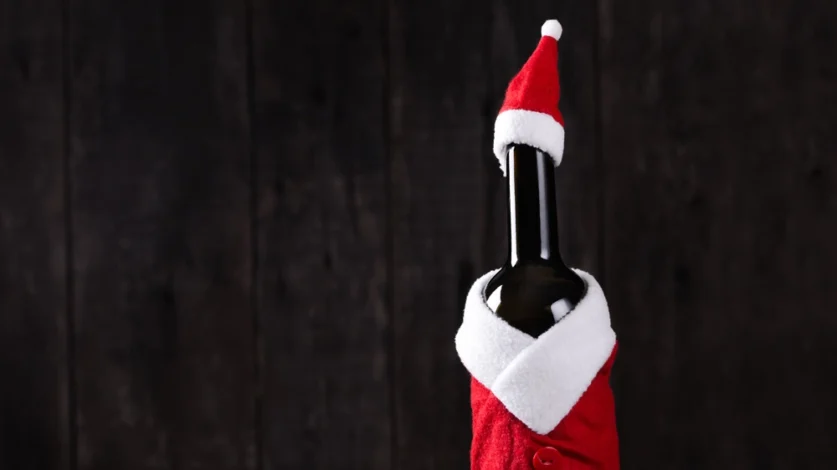
In all honesty, few of us possess the charm and charisma to swagger through city streets in an overcoat and gloves clutching a bottle of bubbly. If you are giving wine this season, load up on tissue paper, wine bags, boxes, and wrapping paper. After all, you are giving a gift. Make your bottle of wine look like one.
Want more exclusive wine stories delivered to your inbox every Wednesday? Subscribe to our wine newsletter The Oeno Files today!
Best of Robb Report
Why a Heritage Turkey Is the Best Thanksgiving Bird—and How to Get One
9 Stellar West Coast Pinot Noirs to Drink Right Now
The 10 Best Wines to Pair With Steak, From Cabernet to Malbec
Sign up for Robb Report’s Newsletter. For the latest news, follow us on Facebook, Twitter, and Instagram.
China’s Wine Tariffs Expected to End Early Next Year: Australia’s Forecast

The world is at a critical juncture where instability is the new normal. A new paradigm has emerged — wars in Europe and the Middle East, rising geopolitical competition, the threat of climate change and disruptive emerging technologies. As we face this new reality the Bloomberg New Economy Forum brought together over 450 global leaders to help us recognize, understand and embrace the moment we are in.
Bloomberg View columnist Barry Ritholtz looks at the people and ideas that shape markets, investing and business.
Power Players, a Bloomberg Originals documentary talk show hosted by Jason Kelly, dives into the stories of influential sports figures who have translated their success from the high-octane world of athletics into the realms of investing, management and business.
Australia Says China’s Wine Tariffs Could End Early Next Year
BOJ Isn’t Ready for a Requiem to the Negative-Rate Era
Charting the Global Economy: Fed, ECB, BOE Diverge on Policy Path
Montenegro Approves Radovic to Lead Central Bank in Overhaul
Turkey Central Bank Governor Invites Foreigners Into Lira Bonds
Illumina Deal Sent Back to FTC for Review by Appeals Court
Gildan’s Deposed CEO Chamandy Wins Over Big Investors in Fight With Board
Activision, California in Pact to End Workplace Harassment Suit
Microsoft Explores Using Liquids to Cool AI Chips
AI is a Double-Edged Sword for Climate Change
Adobe Signals AI Will Take Longer Than Expected to Boost Results
Portugal’s Socialists Pick Santos as Leader Before Snap Election
Trump Says He’d Go After University Tax Breaks If Elected Again
‘Underwater’ Car Loans Signal US Consumers Slammed by High Rates
Haggling Over Front Steps in an £8 Million Christmas Fairytale in Chelsea
In pivotal moment, Notre Dame Cathedral spire gets golden rooster weathervane, a symbol of a phoenix
Uganda’s Vibrant Art Scene Mirrors African Boom as More Collectors Show Interest
Peace for the Holidays? Not When War Is on the Rise Everywhere
Shohei Ohtani Can Be More Valuable to MLB Than an American
Brands Are Also Mired in the Gaza Conflict
Jon Corzine, Steve Aoki and the Art of the Second Act on The Businessweek Show
A Better Way to Get Oysters? Try Growing Them on Land
Rotary Clubs Recapture Their Glory Days, Just Not in the US
Musk Says Diversity, Equity and Inclusion Are ‘Propaganda Words’
Washington Spirit Owner Acquires London Women’s Football Club
Philippines Relaxes Rules to Spur Lending for Green Projects
Brazil’s $4.4 Billion Energy Auction Sees Chinese State Grid Take Top Project
All the Ways You Can Bring Holiday Cheer to Your Neighborhood
The Dream of the Suburban Sports District Can Be a Nightmare for Taxpayers
India Built the World’s Biggest Office In Hopes of Dominating Diamond Trade
The Countdown for a Bitcoin ETF Decision Is Approaching a Critical Deadline
Dog-Themed Memecoin Bonk Rides High on Solana Blockchain’s Comeback Post-FTX
Crypto’s Wild Island Party Scene Matures After Market Crash
Wine barrels at a winery in the Yarra Valley, Victoria, Australia.
The crippling tariffs that China’s government imposed on Australian wine exports almost three years ago could be lifted shortly, Australia’s trade minister Don Farrell said on Sunday.
China started reviewing the sanctions in late November and that process was “well and truly underway,” Farrell said in an interview with Sky News.
Expert Tips on How to Seal a Wine Bottle without a Cork

Even if you’ve lost the cork, these tips from wine experts and sommeliers will let you save your opened bottles of wine.
Written by Caitlin Bensel
Isn’t it frustrating when you’re trying to cork a bottle of wine but the cork is gone, unfitting, or has broken or crumbled? Finding a solution can be as vexatious as figuring out
how to open a bottle of wine without a corkscrew. Fortunately, we’re here to provide expert-recommended methods to seal a wine bottle without a cork.
“In situations like this, the most straightforward solution is to drink the remainder of the bottle,” quips certified sommelier Daniel Beedle, the assistant F&B director at
in Charlottesville, Virginia.
In all seriousness, all you need is something to keep the bottle airtight and prevent oxidation – it should not alter the wine’s taste.
“Believe me, I’ve seen some interesting things get shoved into wine bottles when corks accidentally get thrown away or don’t fit,” says Kaye Askins, owner of Best Little Wine and Books, a wine bar and retail bottle shop in Historic Downtown Lockhart, Texas. “Thick linen hand towels from the restroom being one of them, which was both hilarious and horrifying.”
Leave it to a handful of crafty wine experts and sommeliers who have been there, done that—to help solve the problem. Below, each one shares an inventive (and sanitary!) way to hack this problem with things you probably already have lying around the house.
Related: Does Wine Freeze?
Both Beedle and Askins suggest grabbing plastic wrap from your pantry and a hair tie or rubber band. “Cover the opening, hold it tight over the lip of the bottle, and wrap a rubber band, hair tie, or scrunchie high up on the neck to keep it in place and oxygen from getting in,” says Askins, who adds that putting open wines in the fridge is really the key to slow down oxidation, which is what makes wine taste bland if it’s open too long.
This method also works with a zip-top plastic bag, sharedby sommelier Anne Hampton, CS, CSW, CSS, manager at Chophouse Nexton in Summerville, South Carolina. “And if you’re traveling, try rolling a plastic bag into the shape of a cork to seal the bottle’s opening,” she says. Still, make sure to keep the bottle upright in the vehicle, to avoid any chance of a spill.
Steven Rogers, wine director and head of food and beverage at Virgin Hotels New Orleans always suggests creating your own homemade wine bladder: “Pour the wine into a zip-top plastic bag bag, extract the air from the bag, and then place your makeshift wine bladder in the refrigerator. Keep your bottle or, if you have a decanter, discard the bottle. When you’re ready to enjoy the wine, snip the corner of the zip-top plastic bag to decant into the bottle or decanter and enjoy.”
Atlanta-based culinary and lifestyle tastemaker Erica Thomas uses a balloon to preserve wine after hosting her exclusive supper club dinners, when a large number of bottles are opened and not fully consumed. “Simply stretch a small balloon over the neck of the bottle, and secure it with a rubber band,” she suggests. “This creates an airtight seal and will help extend the life of opened wine bottles. You can even use colored balloons to add a touch of flair or to distinguish between red and white wines.”
Michelle LaBorde, sommelier at Dancing Bear Appalachian Bistro in Townsend, Tennessee, utilizes whiskey corks to replace wine bottle corks that have gone missing or broken. “The bourbon tops are almost always universally suitable for both bourbon and wine bottles,” she explains.
Bill Brillinger, chief sommelier and lead bar manager at the Kimpton Sylvan Hotel in Atlanta, Georgia, agrees. “One of my favourite methods to seal a bottle of wine without a cork is usually the stopper from a bourbon bottle. Most all of them come with a nice cork stopper and I always have a bottle or two around. Unquestionably, the most inventive I needed to be was when camping. I had to use a baby carrot as that’s all I had. Unexpectedly, it worked quite well, and the carrot was even better with a bit of wine on it.”
Get creative with other stretchy substances you have, like latex or silicone. “You could use a latex glove—bonus points if you blow it up to look like a turkey,” says Ian Rynecki, general manager of Pippin Hill Farm & Vineyards in Charlottesville, Virginia.
Or look in your drawers for those reusable silicone caps. “They are made of food-grade silicone and will fit snugly over the wine bottle’s opening, creating an airtight seal,” says certified sommelier Bardia Ketabi, general manager of The Pembroke in Washington, DC. “You just need to place it on top of the bottle, and its flexibility allows it to fit securely. They’re also easy to clean and reusable, which is a plus. I also love that they come in a range of colors and designs, so they allow for personalization and easy identification.”
If none of those options work, we’ve got one more trick up our sleeves. “I’ve found that transferring leftover wine to an old jelly or pickle jar works great,” said Tom Croghan, co-owner and lead winemaker of The Vineyards at Dodon in Davidsonville, Maryland. “While it’s not elegant or glamorous, the best way to preserve wine after removing the cork is limiting the amount of ‘headspace’ in the container, so using any glass jars you may already have around your house is a great option.”
For more Southern Living news, make sure to sign up for our newsletter!
Read the original article on Southern Living.