You won’t have to spend a fortune on the world’s best rum.

Pampero Aniversario Rum has been crowned the Best Overall Rum at the prestigious 2023 New York World Wine & Spirits Competition. This is fantastic news for rum enthusiasts, especially considering the current market trends that have sent prices soaring. With consumers increasingly seeking unique, artisanal products, many fine rums have become inaccessible due to their high price tags. However, the fact that Pampero Aniversario Rum can be found on most liquor store shelves for less than $40 is a game-changer.
Over the last decade, the rum market has experienced a transformational shift, similar to what bourbon, gin, and tequila have gone through. Craft distillers have played a significant role in revolutionizing the way people perceive rum. Gone are the days of rum being solely associated with blended drinks and nasty hangovers. Now, sipping rums are taking center stage, offering a whole new experience for drinkers.
This reimagining of rum has propelled the global rum market to new heights, with projections estimating its worth to reach $16 billion by 2023 and grow to $21.5 billion by 2028, according to Market Data Forecast. While this growth is undoubtedly a positive development for consumers, it has also resulted in astronomical prices for certain bottles. A quick search on the internet will reveal rum bottles selling for thousands or even tens of thousands of dollars.
The annual awards circuit has further fueled this upward trend in prices. Both major brands and smaller craft distillers submit their finest bottles to competitions worldwide, hoping to establish their brand in the eyes of consumers. Winning prestigious awards, such as the Best in Show in New York or at the San Francisco World Spirits Competition, the London Spirits Competition, or the International Wine & Spirits Competition, can skyrocket a brand’s reputation.
Considering this, it should come as no surprise that Pampero Aniversario Rum, hailing from an 85-year-old distillery in Caracas, Venezuela, emerged victorious. Pampero has delighted rum drinkers in the Caribbean region for decades, and it has long been regarded as a top-tier rum. Founded in 1938, the distillery has set the standard for rum maturation in Venezuela and played a crucial role in creating the Denomination of Origin “Ron de Venezuela,” the first DOC for molasses rum in the world. Diageo, a global spirits powerhouse, acquired the brand in the early 1990s.
The Pampero Aniversario Rum, released annually to commemorate the brand’s rum house’s 25th anniversary, is a complex and exquisite rum. It is made from a blend of four and five-year-old rums aged in sherry casks and bourbon barrels. When you take a sip, its dark mahogany color releases an array of flavors, including vanilla, wood, leather, sherry, and dried fruits. The finish is smooth and satisfying.
The packaging of Pampero Aniversario Rum may seem simple and unassuming at first glance. The bottle is stubby and tucked into a leather bag, which makes it appear out of place among the glossy and expensive bottles on the shelf. But one taste is enough to prove that looks can be deceiving. With its exceptional taste and numerous accolades, it’s no wonder that Pampero Aniversario Rum is the most-awarded rum in Venezuelan history.
The availability of world-class rum at an affordable price is a win for both rum enthusiasts and the general public. It allows more people to explore and appreciate the best rums in the world without emptying their wallets. This accessibility will undoubtedly contribute to expanding the rum market’s reach and allow more people to proudly display a bottle of Pampero Aniversario Rum on their home shelves, knowing they have the best rum in the world.
Von Payne Whiskey secures its first Costco purchase order with the support of LQR House, and a corporate update is also provided.

Strategic Marketing Brings Von Payne Whiskey to Prominent Retail Shelves
LQR House, a leading marketing agency in the spirits and beverage industry, has achieved a significant milestone in collaboration with Von Payne Whiskey. Through their custom marketing campaign and strategic efforts, Von Payne Whiskey has secured its first purchase order from Costco, a retail giant.
LQR House is renowned for its innovative approach to marketing, creating viral brands that deeply resonate with consumers. But their influence goes beyond social media, as they work to position these brands in front of the right buyers, including large retailers like Costco, to accelerate their growth.
When Von Payne Whiskey joined forces with LQR House, they were still in the early stages. Yet, through the dedication of both teams, Von Payne Whiskey has achieved remarkable success. LQR House played a pivotal role in assisting Von Payne Whiskey in securing this partnership with Costco, positioning the brand for exponential growth and household recognition.
The CEO of LQR House, Sean Dollinger, expressed his pride in their ability to not only create buzzworthy brands but also open doors to incredible opportunities for their partners. The collaboration with Von Payne Whiskey and their entry into Costco is a testament to LQR House’s commitment to driving growth and success.
Steve Allen, the founder of Von Payne, expressed his gratitude for collaborating with LQR House. He admired the unique approach to marketing that LQR House employed to secure such a significant account with Costco. He also commended Lonnie Sepe, LQR House’s Lead Ambassador, for assembling and managing the ambassador team, allowing Von Payne Whiskey to focus on other areas of their business.
In other news, LQR House is pleased to announce the appointment of Alexander Kachmar as a Special Advisor. With his extensive experience serving on the boards of multiple companies and his deep understanding of the public landscape, Alexander will lead the company’s investor relations strategy, instilling confidence in shareholders and propelling LQR House towards an exciting future.
This strategic appointment follows the resignations of Guy Dollinger and Darren Collins from the board of directors. LQR House will transition to a smaller board of six directors, optimizing company resources. The company extends its gratitude to Guy and Darren for their valuable contributions and wishes them success in their future endeavors.
James P. O’Brien will assume Guy Dollinger’s roles on various committees, including Audit, Composition, Nominating and Corporate Governance, as well as become the Audit Committee Chairman and Audit Committee Financial Expert. Similarly, Alexandra Hoffman will succeed Darren Collins on the Pricing Committee.
LQR House is a premier marketing agency specializing in the spirits and beverage industry. They empower brands to excel in a highly competitive landscape through innovative strategies and dynamic influencer partnerships. Additionally, LQR House has an exclusive partnership with CWSpirits.com, an alcohol beverage e-commerce platform, allowing them to measure the effectiveness of their campaigns by correlating them with sales.
Von Payne Whiskey is on a path to success, thanks to the strategic marketing efforts of LQR House. With their brand securing a purchase order from Costco, Von Payne Whiskey is poised to become a household name in the spirits industry. The collaboration between LQR House and Von Payne Whiskey demonstrates the power of strategic marketing and innovative branding in driving growth and success.
Title: Von Payne Black Whiskey Makes Waves with Landmark Costco Deal
In the world of spirits, few brands can match the allure and sophistication of Von Payne Black. With its intentional focus on bringing subcultures together for unique experiences and conversations, this award-winning ultra-premium brand has carved a niche for itself in the market.
At the heart of Von Payne Black is their signature product, a premium blended whiskey infused with natural black currant. Crafted with precision, this exquisite blend strikes a delightful balance of sweetness and tartness, delivering a bold and distinctive flavor profile that can be savored in countless ways – whether it be straight, on the rocks, in shots, or mixed into cocktails.
One cannot help but be captivated by the brand’s iconic metal gargoyle pour spout, which adds a touch of drama and elegance to each pour. As the rich ruby-red infused whiskey cascades from the bottle, it captures the attention of onlookers and sets the stage for an unparalleled drinking experience.
Years of dedication and innovation have gone into perfecting the blend and creating a bespoke bottle design complete with the iconic gargoyle pour spout. Von Payne Black is truly a labor of love, inviting those who share its values to join its unique Tribe.
Leading this remarkable brand is founder Steve Allen, a visionary who proudly hails from Clearwater, FL. Steve embodies a relentless pursuit of excellence in the world of spirits, constantly pushing the boundaries of what is possible.
In their latest triumph, Von Payne Black has secured a significant purchase order from Costco, marking a milestone achievement for the brand. The collaboration with Costco reflects the recognition and popularity that Von Payne Black has garnered within the industry, as well as its commitment to reaching a wider audience.
To achieve such remarkable feats, Von Payne Black has assembled a team of top-notch professionals, including the accomplished Alexander Kachmar. As the Managing Principal and Chief Investment Officer at Bradley & Daytona Railway and Land Co., Inc., Alex brings a wealth of expertise to the table. His proficiency in managing complex financial operations is evident from his pivotal roles at FTI Consulting, Inc. and Palomar Holdings, Inc.
Furthermore, Alex’s consultancy work for Array Technologies, Inc. during their IPO process showcases his ability to oversee the transition of executive and employee compensation programs on a global scale. With his remarkable track record, Mr. Kachmar is well-equipped to steer LQR House’s Investor Relations strategy, keeping a relentless focus on delivering outstanding performance for the benefit of all stakeholders.
While Von Payne Black has achieved remarkable milestones, it is important to acknowledge that success does not come without its fair share of challenges. The company acknowledges the uncertainties and risks associated with market conditions and the completion of their initial public offering, as stated in their forward-looking statements.
However, Von Payne Black remains confident in their ability to navigate these challenges and continue their upward trajectory. The company is committed to keeping its shareholders informed about any developments and welcomes them to review other factors that may affect future results in their filings with the SEC.
With their landmark Costco purchase order and a team of experienced professionals at the helm, Von Payne Black is primed to make even greater waves in the world of spirits. The allure of their premium blended whiskey and the passion behind the brand will undoubtedly continue to captivate and unite discerning spirits enthusiasts worldwide.
For more information, please contact:
Investor and Media Contact: info@lqrhouse.com
Source: LQR House Inc. (Accesswire)
At The Big E 2023, you can enjoy drinks, music, and games at the non-alcoholic beer garden.

Athletic Brewing Co.’s Refreshing Oasis at The Big E###
The Young Building at The Big E is bustling with excitement and energy, filled with various venues offering a wide range of alcoholic beverages. However, tucked away amidst all the boozy delights is a hidden gem that specializes in something different – non-alcoholic options. Athletic Brewing Co., a renowned brewery, has set up a delightful beer garden on the outskirts of the Young Building. This serene oasis offers patrons a chance to relax and unwind with their selection of non-alcoholic drinks, while being entertained by music and games.
As you walk through the vibrant crowds, you can hear a cheerful vendor’s voice calling out, “Cold beer!” It may sound like an ordinary beer stand, but what sets it apart is that all the beverages it offers are non-alcoholic. You’ll find a refreshing range of options, including sparkling water infused with hops. Athletic Brewing Co. started its journey in Stratford, Connecticut, but has since moved to Milford, where they have built what is believed to be the world’s largest dedicated NA brewery. They also have a branch in San Diego.
The story behind Athletic Brewing Co. is as fascinating as the beverages they craft. Bill Shufelt, the mastermind behind the non-alcoholic beer, was working on Wall Street when the idea struck him. He loved going out and socializing, but the morning hangovers that followed were far from enjoyable. Determined to find a different drinking experience, he teamed up with John Walker, and together they embarked on a journey to create a non-alcoholic beer that actually tasted good. It wasn’t easy, considering neither of them had any brewing experience. However, after much experimentation, they developed a range of options, including IPA’s and sours, that were not just delicious but also maintained the full flavor that is often lost in other non-alcoholic beers.
“Our non-alcoholic beers are crafted with a proprietary process that allows us to maintain full flavor – which is why they continue to win numerous awards when up against full-strength beers,” proudly states the Athletic Brewing Co. website. While these brews do contain small amounts of alcohol, it is always below 0.5%, which is the universally accepted limit for non-alcoholic beverages. In fact, the level is comparable to that found in kombuchas or fruit juices, making it a guilt-free indulgence.
For expectant mothers visiting The Big E this year, a slight adjustment might be needed when it comes to enjoying their visit. Athletic Brewing Co. recommends consulting a physician before consuming their beer, ensuring a safe experience for both mom and baby. In such cases, the sparkling water infused with hops might be the perfect alternative. Described by The New York Times as “LaCroix for beer fans,” this fizzy beverage provides the unique flavor of hops without the buzz and calories that come with beer.
At The Big E, both options are readily available at Athletic Brewing Co.’s beer garden. Beyond the delectable drinks, the garden also offers a relaxed atmosphere, equipped with tables and a variety of yard games like Jenga and cornhole. So, you can sip on your favorite non-alcoholic brew, soak in the lively ambiance, and engage in a friendly game or two. The Big E runs until October 1st, giving you ample time to savor the experience.
Please note that if you choose to make a purchase or create an account through the links on our site, we may receive compensation. By using this site, you consent to our User Agreement and agree that your clicks, interactions, and personal information may be collected, recorded, and/or stored by us, as well as social media and other third-party partners, in accordance with our Privacy Policy.
To discover more about The Big E and find comprehensive coverage of this exciting event, click here.
So, make your way to Athletic Brewing Co.’s refreshing oasis at The Big E, and embark on a delightful journey filled with non-alcoholic wonders. Cheers to a unique and enjoyable experience!
I have a To Do List which includes attending Oktoberfest, exploring the Food Truck and Craft Beer Festival, and celebrating Hispanic Heritage Month.

Celebrate October with These Fun Events!
It’s time to welcome October and all the excitement it brings. This week, we have a list of fun activities that you can enjoy to kick off the new month. Whether you are a fan of German traditions or want to indulge in delicious food and craft beer, there is something for everyone. Let’s dive into the details!
**1. Oktoberfest at Patriot Place**
This Saturday, head over to Foxboro and immerse yourself in the second ever Oktoberfest celebration at Patriot Place. Get ready to embrace all things German with giveaways, shopping, live German music, and traditional games. Don’t miss the stein-holding competition and costume contest, which are sure to be a blast. The festivities will take place in the north marketplace outside Wormtown Brewery from 1-5 p.m. Best of all, it’s completely free! Make sure to mark this on your calendar and join in the global celebration.
**2. Food Truck and Craft Beer Festival**
Attention foodies and craft beer enthusiasts! This Saturday, make your way to the Brews and Bites food truck and craft beer festival in Brockton. Indulge in delicious local food from popular trucks like Ellie’s Sweet Treats and The Sausage Guy, and sip on refreshing brews from Brockton Beer Company and Barrel House Z. The festival will be held at Westgate Mall from 12-5 p.m. Experience the best of the local food and beer scene, all in one place. Best of all, it’s completely free!
**3. Hispanic Heritage Month at the Boston Seaport**
Join in the celebration of Hispanic Heritage Month at the Boston Seaport. Starting now until October 15, show your support for Latino-owned businesses by visiting establishments such as Borrachito, Vela, Para Maria, and more. These businesses have come together to offer unique items, and for every item sold, the Seaport will donate one dollar to Sociedad Latina. This is a fantastic opportunity to explore the vibrant Hispanic culture while giving back to the community. The locations vary, so be sure to check out the official website for more details.
That wraps up our To Do List for this week. We hope you find these events exciting and get a chance to participate in the festivities. October is off to a great start, and there is no better way to embrace the fall season than by enjoying these wonderful activities. Stay tuned for more updates and have a fantastic weekend!
*First published on September 29, 2023 / 4:30 AM © 2023 CBS Broadcasting Inc. All Rights Reserved.*
Kim Kardashian recently had her first taste of beer.

A Surprising Revelation: The Kardashian-Jenners’ Unusual Culinary Adventures
In the ever-enthralling world of the Kardashians, even the most ordinary things can provoke shock and awe. On a recent episode of Season Four, Khloé Kardashian dropped a bombshell: she had never tasted a “real beer” before. This revelation came as Khloé, surrounded by her sisters (minus Kourtney Kardashian), decided to experiment with a Corona. The reaction was priceless.
As Khloé took her first sip, confusion ensued. “Don’t you put a lemon in it?” she questioned Kendall Jenner. “A lime, but they didn’t have any,” Kendall replied. What followed was a moment of pure comedy, as the sisters discussed their thoughts on the beverage. Khloé offered Kim Kardashian a taste, and after some hesitation, Kim reluctantly took a sip. Surprisingly, she found it “kind of sweet.” The shock on Kylie Jenner’s face was palpable when she learned that her sisters had never tried a beer before. “That’s crazy!” she exclaimed.
However, in a confessional moment, Khloé confessed that she had actually consumed beer before, but only during a trip to Jamaica. “I’ve had a Red Stripe, and I loved it. But I’ve never had a Corona or any American beer,” she chuckled. This sparked a discussion about where Corona is produced, with the revelation that it is actually made in Mexico.
This is not the first time the Kardashian-Jenners have surprised viewers with their unconventional culinary experiences. In a memorable incident in May 2022, Kendall struggled to cut a cucumber on the show. Holding the vegetable awkwardly and using an unconventional cutting motion, the clip went viral and became a topic of amusement for many.
It seems the Kardashian-Jenner clan has a knack for surprising us with their limited exposure to simple food and drink traditions. In 2018, Kylie Jenner made headlines when she announced on X (formerly known as Twitter) that she had just tried cereal with milk for the first time and described it as “life-changing.” This innocent revelation created a wave of excitement as her followers expressed their amusement and shock. Kylie later clarified that she had always preferred dry cereal, but decided to give milk a chance, finding it “cool.”
The Kardashian-Jenners’ unique encounters with everyday food and beverages never fail to entertain and amuse their loyal fans. Whether it’s their first beer, unconventional cucumber-cutting techniques, or newfound appreciation for cereal with milk, their experiences continue to captivate viewers. So, the next time you try something for the first time, remember, even the Kardashians have their own surprising “firsts.”
(this blog post is based on a true story originally published on TODAY.com)
Kim Kardashian denied ever consuming beer but was fact-checked with a video showing her doing a keg stand.

Title: Kim Kardashian’s Beer Revelation Raises Eyebrows: The Truth Behind Her Stance
Introduction:
Kim Kardashian, the media mogul with a net worth of $1.8 billion, made quite a declaration during the season four premiere of Hulu’s The Kardashians. She claimed to have tried beer for the first time, only to be met with skepticism from fans. While the televised moment seemed genuine, photographs and videos from the past portrayed a different story altogether. So, what’s the truth? Let’s delve deeper into this intriguing revelation.
Body:
During a family trip to Cabo, Kendall Jenner offered everyone a beer, prompting Khloé Kardashian to admit that she had only tried a Red Stripe while in Jamaica. Kim, on the other hand, confessed that she was not familiar with beer but decided to give it a try. As she took her first sip, she exclaimed, “Oh! It’s kinda sweet.” Her seemingly innocent reaction left fans puzzled and eager to uncover the truth.
Shortly after the episode aired, fans were quick to bring out the receipts that proved Kim had indeed encountered beer before. Social media users shared a slideshow that showcased various instances where Kim had been photographed enjoying a pint or even partaking in a keg stand. The evidence was undeniable, leaving many questioning the authenticity of her recent claim.
Is it possible that this was all a publicity stunt or an attempt to create suspense for the show? It’s not uncommon for reality television to be embellished or scripted for entertainment purposes. However, the keg stand video, in particular, appeared to be genuine, leaving us with conflicting accounts of Kim’s beer experience.
Conclusion:
In the world of reality television, the line between truth and fabrication can often blur. Kim Kardashian’s recent claim of trying beer for the first time on The Kardashians has sparked a wave of skepticism among fans. While the televised moment seemed genuine, evidence from the past suggests otherwise. Whether it was a case of selective memory or an intentional exaggeration, only Kim knows the truth.
Regardless of the authenticity of her claim, the revelation adds an interesting twist to the narrative surrounding Kim Kardashian. It reminds us that reality TV is a controlled environment where the truth may occasionally be manipulated for the sake of entertainment. So, the next time you see a celebrity claim to be experiencing something for the first time, take it with a grain of salt. After all, appearances can be deceiving, even in the glamorous world of Kim Kardashian.
The reason why we are once again finding love for vodka.
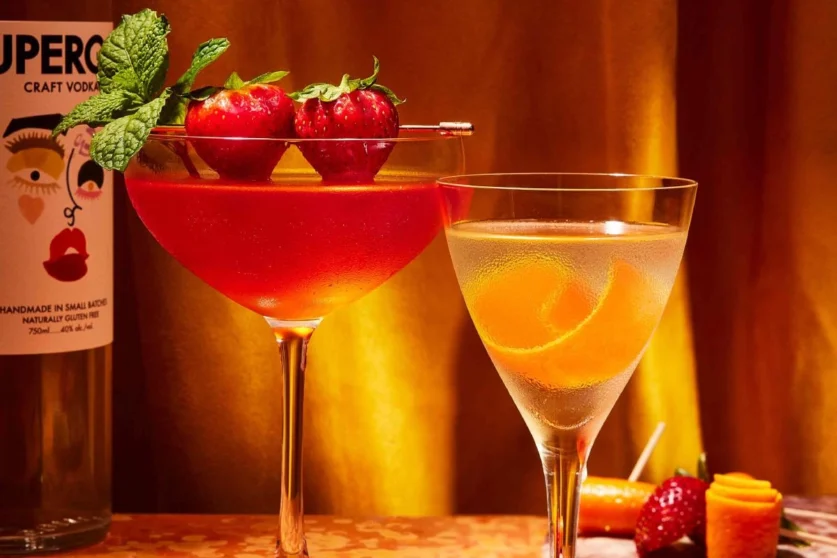
Redefining Vodka: From Wallflower to Star of the Show
Once upon a time, vodka had a reputation as the go-to spirit for college students and the main ingredient in lackluster cocktails. Enter the craft movement. Ambitious bartenders and innovative distilleries are changing the game, transforming vodka into a versatile and exciting spirit that deserves a place on the top shelf.
One such transformation can be found at The Betty supper club in Atlanta, where beverage director Darius Naderi infuses Aperol with seasonal strawberries and swaps cranberry juice for a crafty comeback of the Cosmopolitan. The result is the Retropolitan, an adult-style Kool-Aid that manages to be dangerously gulpable while still maintaining a level of sophistication fit for thoughtful sipping.
So, what’s responsible for the layers of flavor in this cocktail? Surprisingly, it’s the vodka. Naderi uses Pennsylvania-based Boyd & Blair vodka, made with locally sourced potatoes fermented with Champagne yeast. This process draws out a rich, silky sweetness, adding salty earth and vanilla undertones to the bitters and berries. It’s a prime example of the rising wave of vodkas that are shedding the spirit’s wallflower image.
Gone are the days when vodka was defined by the Alcohol and Tobacco Tax and Trade Bureau as “without distinctive character, aroma, taste, or color.” The spirit has now diversified so much that in 2020, the TTB scrubbed that characteristic-less definition. As Tony Abou-Ganim, author of Vodka Distilled: The Modern Mixologist on Vodka and Vodka Cocktails, puts it, “It’s no longer just Popov and Smirnoff.”
Vodkas now come from all over the world and are distilled from novel ingredients. Take Japan’s Haku, a clean, rice-based vodka, or South Africa’s approachable Vusa, distilled from sugar cane. California’s St. George offers a fruity vodka made with pears, while Greek vodka Kástra Elión, derived from olives, adds a briny punch to martinis. Low-ABV vodkas like the smooth, 55-proof Sommarøy provide a more tempered intoxication, while Purity’s organic vodka offers an earth-friendly option.
But it’s not just the newcomers who are shaking things up. Established producers like Chopin have also diversified their offerings. In addition to their popular potato-based flagship, they now offer a wheat vodka and a rye vodka. The latter has become a standard on the martini carts of upscale restaurants, thanks to its spiciness. Aviram Turgeman, beverage director at Manhattan’s Monterey, loves adding a dash of orange bitters and an orange twist to bring out its “citric lift.” Chopin’s Bartender’s Choice, a higher-proof version of their rye vodka, is tailor-made for multi-ingredient mixed drinks.
With the resurgence of the vodka martini, people are discovering and celebrating local distilleries that produce exceptional spirits. Take Oregon’s Thinking Tree Spirits, known for their “farm-to-flask” approach. Their Main Stage vodka is made from Cascades water and non-GMO white wheat sourced from neighboring growers. Distilled 21 times, it may be smooth and creamy, but it certainly isn’t bland. Its lemon-blossom tones shine in a spicy, pickly martini called The Lovesick Crocodile.
Flavored vodkas are also getting a gourmet makeover. Thinking Tree stands out with their spritz-worthy vodka infused with organic lavender and given a vibrant purple hue with butterfly pea flower. “After decades of intentionally flavorless plain vodka or overly artificially flavored vodka, people now want vodka that offers notes that nod to the origin of the spirit and that can be complemented with cocktail ingredients rather than overpowered by them,” explains Darcey Howard of Thinking Tree.
Another shift happening in the world of vodka is a growing appreciation for the styles preferred in its countries of origin. While the West has long favored a neutral product, countries like Poland and Russia have embraced a big, robust style of vodka. Colorado’s Woody Creek Distillers captures this essence in their vodka by distilling it only once from estate-grown potatoes. The result is an alluring “funk” that boasts flavors of musty, vegetal, mushroomy, and potato skin. The vodka steals the spotlight in a cocktail called the Rocky Mountain Wizard, featuring white vermouth and yellow Chartreuse for an herbaceous, earthy punch. For Abou-Ganim, the best way to savor this rootsy vodka is by pouring it straight from the freezer beside a dollop of osetra caviar.
From crafty concoctions to diverse flavor profiles, vodka is reclaiming its status as a spirit worth savoring. So, the next time you find yourself at a bar or perusing the liquor store, don’t overlook the vodka section. You might just discover a whole new world of spirits waiting to be explored. Cheers!
Unconventional Twists on Classic Cocktails
When it comes to cocktails, sometimes a little experimentation can lead to some truly delightful surprises. In this blog post, we’re going to explore three unique variations on classic cocktails that will have your taste buds singing.
First up, we have a twist on the quintessential Cosmopolitan cocktail. Instead of the usual cranberry juice, this recipe calls for strawberry-infused Aperol. The result is a sweet, tangy, and fruity punch-like drink that will leave you craving more. And the best part? The leftover liqueur-soaked strawberries can be spooned over sorbet or ice cream for a deliciously indulgent treat.
Next on our list is a surprisingly invigorating libation that relies on Ancho Reyes, a Mexican chile liqueur made from smoky, sun-dried ancho chiles. The earthy and sweet aromas of dark chocolate and coffee, along with an assertive heat, make this cocktail a standout. But what really takes it to the next level is a touch of pickle juice, which adds a hint of salt and elevates the robust flavors of the drink.
Finally, we’re delving into the world of vodka cocktails with a twist. Did you know that only 3% of vodkas worldwide are made from potatoes? That’s because the fermentation process for potato vodka is finicky. However, mixologist Tony Abou-Ganim has found a gem in Woody Creek’s vodka, which boasts earthy and nutty notes that pair perfectly with the mellow, honey-like sweetness of yellow Chartreuse. While potato vodkas may not be as common as rye vodkas, they can still be easily found at most liquor stores.
So there you have it, three unconventional twists on classic cocktails that are sure to add some excitement to your next gathering. Whether it’s the strawberry-infused Aperol Cosmopolitan, the invigorating Ancho Reyes creation, or the earthy and nutty Woody Creek vodka concoction, each of these drinks offers a unique and delicious experience. Cheers to trying something new and discovering the unexpected delights of mixology!
*Make sure to sign up for our newsletter to stay up-to-date with the latest Food & Wine news.*
*Read the original article on Food & Wine.*
Palisade’s wine scene in Colorado is starting to bubble.

Colorado Mountain Winefest is an annual event that takes place in September in Palisade, Colorado. This year marked the 32nd edition of the festival, and it showcased the immense strides that Colorado wine has made in recent years. While the event’s long history suggests a tradition of winemaking in the state, attendees were treated to a celebration of the new wave of Colorado wine that has emerged.
According to Cassidee Shull, Executive Director of the Colorado Association for Viticulture and Enology (CAVE), the Colorado Mountain Winefest has been a platform for wine enthusiasts to sample and enjoy the state’s vintages for almost three decades. This year, the festival introduced new events, such as the Sparkling Wine Seminar, which highlighted the innovation and dedication of Colorado’s growers and winemakers.
With five thousand attendees from various countries and states, the growing popularity of Colorado wine and Palisade, in particular, was evident. Palisade is home to the majority of the state’s wineries and has become a destination for wine lovers.
One notable trend in the Colorado wine scene is the emergence of sparkling wine. Sparkling wine was not a prominent feature in the region until Savage Spectrum opened its doors in 2019 and introduced its fruit-forward, easy-drinking sparkling wine called Sparklet. This winery has not only expanded its own sparkling wine collection but also paved the way for other wineries to introduce their own versions. Affordable, crisp, and refreshing sparkling wines have resonated with the demographic seeking a wine that pairs well with the Colorado lifestyle.
Carboy Winery, which arrived in Palisade in 2021, was featured during the festival’s Sparkling Wine Seminar. Carboy offers three tiers of sparkling wine, with the latter two tiers featuring grapes grown exclusively in Colorado. Their hope is that their sparkling wines will be the perfect accompaniment to the hot summer days in the region, especially when enjoyed on Carboy’s rooftop patio.
Another exciting development at the festival was the arrival of new winemaker Merril Wallace at Centennial Cellars. Wallace’s first red wine, a Cab Franc, received praise as one of the best young red wines at the event. This wine pays tribute to some of the oldest grapes grown in the valley. Centennial Cellars benefits from its partnership with Talbott Farms, the largest grape grower in Colorado. Talbott Farms supplies about a third of the grapes in the state, contributing to the quality and diversity of wines produced in the region.
In addition to new talents, established winemakers like Ben Parsons continue to make their mark. Parsons, known for popularizing canned wine through his Denver urban winery, Infinite Monkey Theorem, showcased his new Palisade project, The Ordinary Fellow, at the festival. His 2022 Pinot Noir and 2021 Riesling received high scores from Decanter Magazine, a prestigious wine review publication. Notably, the Pinot Noir became the first Colorado wine to be selected as an “Editor’s Pick” in Decanter’s history. Parsons’ wines consistently receive recognition, with his 2022 Ordinary Fellow Sparkling Wine receiving a 92-point rating from Decanter.
The Colorado Mountain Winefest continues to be a platform for showcasing the growth and diversity of Colorado wine. Sparkling wines, the arrival of new winemakers, and recognition from influential publications are all indications of the upward trajectory of the state’s wine industry. The future looks promising for Colorado wine, and events like the Winefest provide a window into the exciting developments happening in Palisade and beyond.
Title: Exploring the Unique World of Colorado Wines: A Taste of Adventure
Intro:
Colorado may not be the first place that comes to mind when thinking of wine production, but the state is quickly becoming a rising star in the industry. With its vast landscapes, diverse climate, and passionate winemakers, Colorado offers a unique and adventurous experience for wine enthusiasts. In this blog post, we will delve into the story of Colorado wines, their journey to recognition, and the challenges they face in an ever-evolving industry.
Unleashing Colorado Wines onto the Global Stage:
The Colorado wine industry has been working tirelessly to gain recognition and compete with the best wines in the world. Wineries, such as Restoration Vineyards, are celebrating their successes, proving that Colorado wines have come a long way. They are submitting their wines to various competitions and magazines, but they select only those with credible scores. One such magazine, Decanter, is hailed as the premier wine magazine in the world, making it the ultimate goal for winemakers.
Educating Consumers on Cold-Hardy Varietals:
Colorado’s climate can be challenging for traditional grape varietals, known as Vinifera. However, the industry has found a solution by introducing “cold-hardy varietals” that can withstand the state’s unpredictable weather. These varietals, such as Itasca, Villard Blanc, Aromella, Chambourcin, Petite Pearl, and Marechal Foch, have opened up new possibilities for winemakers. In downtown Palisade, Ordinary Fellow Winery showcases award-winning wines made from these cold-hardy varietals, including a delightful sparkling wine.
The Future of Colorado Wines:
As winemakers in Colorado become more adventurous, they are willing to experiment with new varietals that may not be well-known to consumers. This presents a unique challenge of educating wine enthusiasts about these lesser-known grapes. However, passionate winemakers like Tyzok Warton from Carboy believe that this journey is part of the excitement. By highlighting the 42 different varietals of wine grapes grown in Palisade, wineries like Centennial Cellars aim to offer a more educational and memorable experience to visitors, introducing them to wines that cannot be easily found elsewhere.
Embracing the Adventure:
The 33rd Colorado Mountain Winefest is set to take place next year, providing an excellent opportunity for wine lovers to explore the world of Colorado wines. Set against the picturesque backdrop of Riverbend Park in Palisade, attendees can immerse themselves in the unique flavors and stories behind each bottle. The event promises to be a celebration of adventure, showcasing the best of what Colorado’s wineries have to offer.
Conclusion:
Colorado wines are breaking the mold and bravely venturing into uncharted territories, both in terms of varietals and global recognition. Their determination to compete on a global stage is evident through their selective submission to credible competitions and magazines. With a focus on cold-hardy varietals and educational experiences for consumers, Colorado wineries are shaping the future of the industry. So, if you’re seeking an adventure in wine, look no further than Colorado’s flourishing wine scene, and make sure to mark the 33rd Colorado Mountain Winefest on your calendar for an unforgettable experience in 2024. Cheers!
A video of Kim Kardashian doing a keg stand contradicted her claim of never having a beer before.

Kim Kardashian, the queen of reality TV and business mogul, has made headlines yet again. This time, it’s not for her impressive net worth of $1.8 billion, but rather for her surprising revelation on the season four premiere of Hulu’s The Kardashians. In a shocking turn of events, Kim Kardashian admitted to drinking a beer for the first time.
During a family trip to Cabo, Kendall Jenner, the adventurous one of the clan, offered everyone a cold one. It was then that Khloé Kardashian confessed to never having a regular beer before, only indulging in a Red Stripe while vacationing in Jamaica. Khloé’s beer preferences sparked a discussion about the origins of Corona, leading Kim to admit her unfamiliarity with the concept of beer altogether.
“I don’t think I would like it,” Kim stated uncertainly before taking a sip. To her surprise, she found it rather enjoyable, describing it as “kinda sweet.” This candid moment left viewers amazed at Kim’s first foray into the world of beer.
However, it seems that not everyone was convinced by Kim’s claim of never having a beer before. Fans were quick to dig up evidence suggesting that Kim had indeed tasted beer in the past. Photos circulating on social media showed Kim in lederhosen, sharing Guinness pints with her momager Kris Jenner. There was even a video of Kim attempting a daring keg stand. It’s undeniable, beer had crossed her lips before.
This revelation left many questioning the authenticity of Kim’s statement. Could she be fabricating the truth for the cameras? Has the Kardashian empire finally succumbed to scandal?
As fans, we’ve come to expect a certain level of transparency from the Kardashians. We’ve witnessed their triumphs and failures, their trials and tribulations. But in this case, it seems that the truth may be muddled by the glitz and glamour of reality TV.
So, what are we to believe? Is Kim truly a beer novice, or has she sipped from the frothy chalice before? Only time will tell. In the meantime, let’s raise a glass to Kim Kardashian, a woman of mystery and contradictions, and toast to the enigma that is her relationship with beer. Cheers!
Shoppers are rushing to stock up as Costco unexpectedly released its highly sought-after Wine Advent Calendar ahead of schedule.

Flight delays and travel snafus have been a common occurrence this year, causing frustration and inconvenience for many travelers. However, amidst all the chaos, there is a glimmer of good news. Costco has introduced a new travel-themed Wine Advent Calendar that is set to defy the trend of travel mishaps. And the best part? You can get your hands on it early this year!
The excitement surrounding this coveted item is evident as Instagram creator @costcontessa shared her enthusiasm about the re-arrival of the Wine Advent Calendar. She revealed that this year, the calendar is named “Wine Passport” and will take you on a journey around the world through 24 different wines. And the price remains the same at $99.99!
The package design has also undergone a transformation. Previous years’ calendars featured images of cars and wrapped gifts, but this year, the calendar has a passport-like appearance. While change can sometimes disappoint those who crave familiarity and tradition during the holidays, fear not! For those who still prefer the old look, the “Take a Wine Adventure” 24-box, featuring the same bottles, is available on the manufacturer’s website.
Costco’s new passport-style Wine Advent Calendar manages to strike a balance between the old and the new. It offers the same 24 half bottles from a variety of wine regions worldwide but with an updated look. Whether you enjoy reds, whites, or rosés, you will have the opportunity to sip on wines from renowned regions like Italy, France, Chile, Romania, and Spain. And for those seeking a shorter adventure, there is also a 12-bottle option available this year.
Although you can’t sample these wines before purchasing them like you can with Costco’s food samples, prospective buyers can scan a QR code to access the entire collection and read tasting notes. This allows you to make an informed decision before embarking on your wine-tasting journey.
One impressive aspect of the Costco Wine Advent Calendar is that the price has not been increased, going against the trend of rising prices in 2023. You can still purchase the box of 24 wines for $99.99, which breaks down to less than $4.50 per half bottle. Incredible, isn’t it? Pricing for the 12-pack may vary, so it’s advisable to check with your local warehouse.
Although it feels like we were just celebrating the return of pumpkin-flavored goodies at Costco, it’s actually time to start thinking ahead. The early availability of the Wine Advent Calendar means that you need to act fast to secure yours, as they become harder to find as the holiday season approaches.
However, the biggest challenge for those who purchase the Costco Wine Advent Calendar early may be resisting the temptation to indulge before December 1st. It’s a test of willpower that wine enthusiasts will have to face.
In conclusion, Costco’s new passport-style Wine Advent Calendar offers wine lovers the opportunity to explore different regions and flavors without breaking the bank. So, don’t miss out on this exciting adventure and make sure to get your hands on one before they’re gone. Cheers to a delightful wine-filled holiday season!