No Floor Prices on Alcohol in Alberta Post 4-Litre Vodka Jug Controversy

The cabinet minister who oversees Alberta’s liquor industry has asserted that he will not introduce minimum prices for alcohol on store shelves, though he has refrained from indicating what other alterations might be in the pipeline.
“We have no intention of intervening in any way between the retailer and the consumer. We’re not going to be putting in place any minimum pricing,” stated the Minister of Service Alberta, Dale Nally, to the media on Tuesday at the legislature.
“This is all about social responsibility, and the people of Alberta have made their position very clear.
“I am not in a position to make predictions as to what might happen in the future.”
Nally’s comments were made the day after he criticized four-litre plastic vodka jugs priced at $49.95, which were on sale in Edmonton.
Nally stated his belief that selling vodka at such a price was inappropriate. He further noted that if a currently proposed bill is passed, it would give him the explicit power to regulate liquor prices and scrutinize the system to ensure pricing which promotes responsible consumption.
His comments were a response to social media images that were widely shared over the weekend, depicting large vodka jugs produced by a local Edmonton business, T-Rex Distillery. These jugs were produced exclusively for sale at Super Value Liquor stores.
In defense, Super Value claimed that they had reduced the price of the jugs from $60 to better cater to customers who wanted to purchase in bulk and save money.
Following Nally’s voicing of his apprehensions on Monday and his discussion on possible interference, T-Rex made the announcement that despite the varied response to the jugs, production would be ceased.
Sunny Bhullar, co-owner of Super Value Liquor, relayed to The Canadian Press on Tuesday that the jugs’ special sale price would be discontinued by the end of the day.
“Even though we continue to have stock, we’re going to halt the discounted price given the viewpoint of the minister,” Bhullar shared.
As per present regulations, the supervising territorial agency, in this case known as Alberta Gaming, Liquor and Cannabis or AGLC, dictates the wholesale price retailers must shell out for merchandise.
T-Rex, however, said the agency doesn’t provide rules or guidelines on how a product should be priced on the shelves.
“Albertan craft distilleries have suffered from a lack of responsible pricing for a while now and, in fact, there are multiple distilleries out there that are selling their spirits even cheaper than T-Rex,” the company said in a statement.
The distillery also criticized AGLC for removing a rule a few years ago that required distilleries produce at least 80 per cent of their products in-house.
T-Rex said the removal of the rule forced them, and others, to lower prices to stay in business.
On Tuesday, Nally committed to keeping the status quo.
“That 80/20 rule was reduced as a red-tape initiative to help small business and to spur investment, and I would suggest that it worked. So we’re not looking at changing that,” he said.
Exploring the Wine Selections of 7 Champion Golfers at The Masters Dinner

Golf fans may recognize the Azalea cocktail as the official beverage of the four day Masters Tournament held at Augusta National Golf Club—the fruity mix of vodka, lemonade and grenadine are undeniably tempting in Georgia’s heat—but wine connoisseurs might be more interested in what the reigning champion selects to pair with their menu for the Masters Tournament Champions Dinner.
2023 Masters Champion, Jon Rahm, celebrates with his trophy.
Every year, the Augusta National Golf Club hosts a dinner in honor of the previous year’s champion on the Tuesday of tournament week. The menu is completely customized by the honoree and traditionally pays homage to the former champion’s native from plate to palate.
This year, 2023 Masters Champion Jon Rahm showcased the bounty of his home country of Spain by pairing Imperial Gran Reserva 2012 and Contino Blanco 2020 from Compañía Vinícola del Norte de España winery (C.V.N.E) with six tapas and pintxos (small plates) inclusive of Iberico ham, tortilla de patatas and chicken croquettes, before a Basque crab salad, then a choice of Basque ribeye or turbot and finally crema de nata for dessert.
Before the dinner, with the help of celebrity chef José Andrés, Rahm expressed that Imperial Gran Reserva is “a tale that deeply connects me to my grandfather.” The 2023 Masters Champion is the grandchild of an Athletic Club de Bilbao delegate who had a preference for Imperial Gran Reserva, an exquisite red wine only made during exceptional vintages in Rioja, Spain. The wine became a symbol of family achievements when Rahm received two bottles of the 1994 vintage, the year of his birth, from his father on his wedding day, and another bottle when his first child was born.
Contino Blanco is a white wine from Rioja that comprises Viura and Garnacha Blanca grapes. This wine embraces the style of more traditional Rioja white wines with its capacity to age and its freshness.
The subterranean wine cellar underneath Augusta National’s clubhouse holds some of the world’s most exclusive wines. In 2020, the Irish professional golfer Rory McIlroy, was quoted by Irish Golfer as saying that gaining access to Augusta’s wine collection was one of the week’s best experiences, apart from golf itself.
“We’ve tasted a variety of wines there. I do recall one time when we went with Jimmy Dunne and he selected a bottle from Dunn Vineyards,” he recounted, also mentioning a more than 30-page inventory book.
Over the years, it’s not surprising that previous champions have enjoyed their victories with premium wines, picking from esteemed labels from regions like Australia and South Africa.
The Masters Tournament Champions Dinner in November 2020, which happened later due to the pandemic, was an occasion for 2019 Champion Tiger Woods, who celebrated his fifth green jacket triumph, to relish two wines from Napa Valley. These were a 2015 Shafer Chardonnay, Red Shoulder Ranch and a 2015 Shafer Cabernet Sauvignon, Hillside Select.
Former Champion of 2018, Patrick Reed, mirrored a similar preference for Napa Valley wines during his 2019 dinner. He selected a 2016 Chardonnay from Chateau Montelena and a 2013 Cabernet Sauvignon 41st anniversary version from Caymus Vineyards, matching these drinks with delicious mac and cheese, corn creme brulee, and a hearty bone-in cowboy ribeye.
Showing off a bit of his Spanish background, Sergio Garcia served a 2016 Sketch Albariño from Rias Baixas and a 2014 Pinea Tempranillo from Ribera Del Duero in 2018.
Jordan Spieth went all American with Texan BBQ at his 2016 Masters Tournament Champions Dinner, pairing Napa Valley favorites; 2011 Cakebread Reserve Chardonnay and 2010 Caymus Vineyards, Special Selection Cabernet Sauvignon.
When Adam Scott was honored in 2014, the Australian leaned into his heritage with a main course of Australian Wagyu complemented by South Australia’s premier producer, Penfolds—a 2009 Yattarna Chardonnay and 2005 Grange Shiraz.
Charl Schwartzel won his green jacket in 2011, so in 2012 he nodded to his South African roots with 2010 Cape of Good Hope, Van Lill & Visser Chenin Blanc as well as 2007 Anthonij Rupert Cabernet Sauvignon to wash down a packed seafood tower inclusive of jumbo lump crab meat, shrimp and King Crab claws and sliced Biltong, a specialty of his native.
Only time will tell what wine region will be showcased in 2025, pending the 2024 Masters Champion, but Scott’s advice for Garcia back in 2016 is perhaps an evergreen mantra: “Serve good wine,” Scott told Garcia. “I learned that’s most important.”
Experiencing Unforgettable Carnival Moments with Rum Stripe and Gen XS

Rum Stripe’s partnership with GenXS for this year’s carnival created remarkable memories.
The Road March on Knutsford Boulevard leading to the post-carnival bash at Big Wall on Hope Road made this year’s carnival an unforgettable one.
GenXS celebrants, wearing striking costumes, were the center of attraction while savoring their go-to Rum Stripe beverages against the lively soca and dancehall tunes resonating in the New Kingston streets.
As the temperatures climbed, the carnival-goers’ energy surged, leaping alongside the Rum Stripe labelled truck and buses packed with eager patrons, flags, and shirts.
Discovering the Maestros Behind Pennsylvania’s Top-rated Rye Whiskey

History and education infuses everything Dad’s Hat does since opening almost 15 years ago.
Herman Mihalich and John Cooper at their Dad’s Hat distillery / Photography by Todd Trice
Sometimes when Herman Mihalich is giving tours of Bristol distillery Dad’s Hat, he’ll sprinkle some historic knowledge onto the group. He might say, “Hey, did you know there were something like 200 whiskey distilleries in Pennsylvania before Prohibition?” Or maybe, “Pennsylvania really is the birthplace of American whiskey.”
“They’re like, ‘Oh, we had no idea,’” says Mihalich. “‘We thought whiskey started in Kentucky.’”
Mihalich’s commitment to education at Dad’s Hat has been present for the past 15 years, crafting the finest rye whiskey in the state. This rye is characterized by its grassy, peppery notes, making it ideal for enjoying straight or in classic cocktails like the old-fashioned or Sazerac.
Living above his family’s bar in Monessen, south of Pittsburgh, as a child, Mihalich seemed destined for Dad’s Hat. His grandfather often tasked young Herman with pouring him some rye whiskey. “I still remember the smell,” he nostalgically shares. Not far from home was the former location of Gibson Distillery, once the largest rye whiskey distiller globally. In 2006, after reading a New York Times article on rye’s resurgence, Mihalich – a chemical engineer at the time, was given 10 different rye whiskeys by his wife as a Christmas gift. This sparked his interest in contributing to rye whiskey’s revival.
Dad’s Hat Pennsylvania rye whiskey
The mid-20th century experienced the decline of rye due to the popularity of bourbon and single-malt scotches, along with the dwindling of Northeast distilleries, rye’s original habitat. Regardless, Mihalich and former Penn fraternity brother, John Cooper, were resolved to resurrect its prominence.
The two soon quit their jobs, drove 700 miles to take classes at Michigan State’s artisan distilling program, and built a business model. They tested old Pennsylvania rye recipes and learned to get choosy about yeast strains. When Kentucky and Indiana distillers told them it would be impossible to find good American rye grain to use, the unfazed duo headed back to Pennsylvania and teamed up with Bucks County farmers to grow it.
“I enjoy the fact that we had a part to play in bringing rye whiskey back to its historical home,” Mihalich says. Make that all of us.
Published as “Hat’s Off” in the April 2024 issue of Philadelphia magazine.
Philly’s Latest Restaurant and Bar Openings
In a City Devoted to Meatballs, These Are the Best
Here’s Where to Find the Best Sicilian Food, According to This Philly Author
The Triumph of Stout: Guinness’s Domination of the UK Beer Market

The Guinness resurgence is alive and well across the UK – why is the traditional stout enjoying a resurgence? (Photo by Rob Cousins/Evening Standard/Getty Images)
In the ever-evolving landscape of the global beer industry, few brands have achieved the iconic status and enduring popularity of Guinness. This dark, creamy stout, with its distinctive flavour and rich history, has not only become a staple in pubs and bars worldwide but has also seen a remarkable surge in popularity recently, particularly in the UK.
A Surge in Sales and Market Dominance
Recent financial reports reveal a striking upward trajectory for Guinness. The beer division of its parent company, Diageo, reported a 14% increase in net sales, with volumes up by 3%. This growth is attributed to strong performance across all regions, with the notable exception of Asia Pacific. In the UK, Guinness has achieved a significant milestone, becoming the best-selling beer in both the on-trade (pubs and bars) and off-trade (retail) markets which underscores the brand’s deep-rooted appeal and its ability to resonate with a diverse range of consumers.
Historical Perspective: From Local Brew to Global Phenomenon
The prominence of Guinness is a narrative that traverses beyond two centuries. Its establishment was in 1759 by Arthur Guinness. During its life span, it has seen economic collapses, conflicts, and evolving customer choice. In 1868, its sales stood at 350,000 barrels. Fast forward to 1876, the number had escalated to 779,000 barrels. Choosing to publicize in 1886 marked a turning point. It created the required revenue to broaden procedures and delivery networks. Currently, Guinness stands as not just a prominent British and Irish brewer but also a global giant. Its stouts and ales are being relished in more than 150 nations.
Innovation and Adaptation: The Key to Sustained Growth
Guinness’s recent growth owes much to its capacity to innovate and adapt to shifting market trends. They introduced Guinness 0.0, a non-alcoholic variant of their classic stout, in 2021. This decision was strategic and aimed at the market where customers are progressively seeking low-alcohol or alcohol-free substitutes. Guinness 0.0 quickly became the best selling non-alcoholic beer in Great Britain in the four-pack format. This initiative is not just about expanding the brand’s appeal, but it also emphasizes its commitment towards inclusivity and responsible alcohol consumption.
The Power of Branding and Experience
Guinness owes a large part of its enduring popularity to its effective branding strategies and the creation of immersive consumer experiences. The Guinness Storehouse, situated in Dublin, plays host to a premier brewery experience that has turned it into a must-visit location for beer fans and tourists alike. It’s undeniable that since its inception, it’s played a key role in re-energizing the brand and cementing its relationship with consumers. The 2012 launch of the ‘Made of More’ advertising campaign further bolstered the brand’s identity. The campaign, noted for its emotional storytelling and top-quality production value, has struck a chord with worldwide audiences, further bolstering the brand’s market position.
Challenges and Opportunities Ahead
Despite its achievements, Guinness still has to grapple with various challenges in an intensively competitive and dynamic industry. The advent of craft beers and shifting consumer preferences could potentially chip away at its market share. However, the brand’s robust heritage, ongoing innovation, and successful marketing strategies all bolster its ability to tackle these challenges head-on. As Guinness steers towards the future, it will need to persistently innovate and adapt, while at the same time upholding its core values. Broadening its range of products, penetrating new markets, and harnessing digital technology to enhance marketing efforts and engage consumers will be instrumental in sustaining its growth momentum.
The rise in popularity of Guinness is indeed testament to its quality, innovation and branding kudos. As it continues to adapt to the changing landscape of the beer industry, Guinness is poised to remain a beloved brand for generations to come. Whether it’s the classic stout or the newer non-alcoholic variant, Guinness has secured its place in the hearts of beer lovers worldwide, proving that it is indeed “Made of More.”
Canadian Distillery Stops Production of 4L Vodka Jugs Following Viral Photo Incident

An Alberta distillery is suspending production of its 4L plastic vodka jugs in response to its image of discounted sales becoming an online frenzy and consequently, a political discourse.
According to a press release to Daily Hive, T-Rex Distillery located in St. Albert has decided to discontinue the production of thevodka jugs. This decision comes in the aftermath of comments and feedback from the Minister of Service Alberta and Red Tape Reduction, Dale Nally.
The jugs clad in yellow labels and marketed as “value” vodka, were available for a discounted price of $49.95 at the Super Value Liquor in Mill Woods. Lauren Boothby, city hall reporter with the Edmonton Journal, posted a picture of the jugs on X on Friday night which has so far garnered well over eight million views.
April 6, 2024, was when Lauren Boothby discussed the following on Twitter (@laurby): Source
In Edmonton, Minister Nally expressed his concern to reporters about the sale of 4L jugs. He stated that he would willingly use his authority to address this issue in a forthcoming bill.
Despite the jugs’ compliance with AGLC regulations, Minister Nally mentioned that the prices set were inconsiderate.
He added that the disregard for the spirit of Albertan, who believe in sensible pricing, was the real issue. “This is where the dispute arises,” Nally said.
According to T-Rex Distillery, they have been filling and selling 4L jugs without any issues for approximately a year now. Furthermore, the Alberta Liquor, Gaming, and Cannabis (AGLC) have reviewed and approved the jugs, including their pricing.
The distillery also mentioned that there have been no communications from the AGLC, the Government of Alberta, or Minister Nally on this matter.
The product that has been photographed at Super Value Liquor is a private-label product. This product was designed and bottled specifically for this particular customer, adhering to the price that they requested,” the Distillery stated.
Generally, the AGLC does not provide any rules or guidelines about product pricing.
Public response to the jugs is rather divided, some raise alarms, while others laud the jugs for being innovative and practical, the Distillery added.
Follow Channels and Categories
Decoding the 100-Point Wine Scoring System: What Does it Really Mean?

Often, when one is contemplating which drink to partner with their meticulously prepared food, wine is the initial beverage that surfaces. Nevertheless, while the taste of the meal presents a good initial guide for this choice, selecting wine can be challenging particularly if you do not favor a particular type.
Indeed, you should certainly taste wines for yourself before making a judgement, but there is a helpful shortcut available, thanks to Robert Parker, a wine critic from the 1970s. He introduced a 100-point grading system for wines that has now become the norm in the industry. However, before you head off to the wine shop you should be aware that Parker’s system won’t help you find the world’s most ideal wine. It mainly identifies the unique qualities of a wine’s taste and compares a bottle to the ideal version of that year’s wine.
Read more: The Ultimate Vodka Brands, Ranked
If you are a budding winemaker worried about the idea of your wine being subjected to a 100-point test, you can find solace in the fact that wines never score less than 50. Additionally, a large majority of wines achieve high 80s (‘barely above average to very good’), which means the mean score for a wine ranges from around 87 to 89 (90-95 is deemed ‘outstanding’ and any score above this is ‘extraordinary’).
Understanding how reviewers critique wine using this system can be challenging, but it can be comprehended better if you visualize your wine as a show dog. In dog shows, the dogs that win the most prizes are those that meet a strict set of breed standards. Similarly, for wines, the highest scores are given to wines that resemble the best possible expression of a certain type of grape. Factors such as climate can influence a wine’s score. For instance, the weather conditions in 2018 were favorable for grape cultivation, resulting in multiple Californian wines of that year receiving high scores.
The existing status of the 100-point wine scoring system vastly differs from Robert Parker’s original concept. When he began assigning numbers to wines, he revitalized the art of wine critique. Most reviews were vague, focusing on the wine’s intangible qualities, while Parker pinpointed the specific fruits characterizing a wine’s flavor.
The 100-point scoring system, devised by Parker, has deviated from its original form over time. Currently, less than ever score below 80. However, Parker’s original concept designated wines of average quality in the 70s, with any wine scoring above 90 considered exceptional. Though this rating system offers a convenient way to identify excellent wines, it’s essential to be cognizant of the score inflation over time, and to familiarize oneself with a wine’s flavor rather than relying solely on the number. It’s important to recognize that not all wine connoisseurs endorse Parker’s system. In the 2013 film “Escaping Robert Parker,” wine producers both for and against the scoring system analyze its worth in the modern era of wine critique.
Read the original article on Daily Meal
Dan Aykroyd Explores New Horizons with Vodka Venture

by: Dean Richards, Andrew Smith
Posted: Apr 8, 2024 / 07:07 PM CDT
Updated: Apr 8, 2024 / 07:07 PM CDT
OAK BROOK, Ill. — The legendary Dan Aykroyd is bringing Ghostbusters to a cocktail glass with a new vodka venture.
He spoke with WGN’s Dean Richards.
Get Dean’s reviews and A-List interviews delivered right to your inbox. Sign up for Dean’s Downloads weekly newsletter. You’ll also get his Dean Cooks recipes too!
You can watch the interview in the player above.
Δ
Copyright 2024 Nexstar Media Inc. All rights reserved. This material may not be published, broadcast, rewritten, or redistributed.
National Pet Day is the perfect time to spoil your cat with gifts. Find the best gift for your cat in our curated list.
Just because you have a small outdoor area or patio doesn’t mean you can’t transform it into a relaxing space. And it doesn’t cost a fortune.
Your input doesn’t contain any HTML elements that don’t match the mentioned conditions: `id`, `class`, `style`, `width`, `height` attributes and `iframe`, `embed`, `form`, `img`,`style`, `noscript` elements. Hence, it doesn’t require any modifications.
Here is the original
“`html
Echo and Stihl are two of the most well-known chainsaw brands. In this article, we dive deep into which brand makes the best chainsaw.
“`
Exploring 3 Great Italian Red Wines Made with Sangiovese Grapes: A Wine Press Review

Last week, I wrote about three Sicilian red wines made with the same wine grape – nero d’avola.
This week, I thought we would stay in Italy and learn more about an even more popular red wine grape – sangiovese.
All three wines featured this week are made with this versatile grape.
What makes these wines even more interesting, I think, is that they’re made by the same winery (Carpineto) but come from three different, distinct wine-growing subregions in Italy’s Tuscany region – Chianti Classico, Montepulciano and Montalcino.
Hope you enjoy.
History of Carpineto Winery
Founded in 1967, Carpineto produces wine from five different estates that include more than 1,200 acres of vineyards in Italy’s Tuscany region – Chianti, Chianti Classico, Montepulciano, Montalcino, and Maremma.
Sangiovese grape
Sangiovese is the premier and most abundantly grown wine grape in Italy’s Tuscany region. “Wine Grapes”, a book by authors Jancis Robinson, Julia Hardin, and Jose Vouillamoz, brings to light that the cultivation of this grape dates back as far as the 1600s. In the present day, Sangiovese is unparalleled in popularity among Italian wine grapes. Apart from Italy, Sangiovese vineyards can be discovered on a much smaller scale in regions like California, Argentina, and various locations globally.
The Chianti Classico Wine Region
Situated within the broader Chianti region of Tuscany is the Chianti Classico. This area is composed of seven minor subregions set between Siena and Florence. A wine earns the classification of a Chianti Classico when it preserves a minimum of 80% sangiovese grapes, with these grapes grown in the seven subregions of Chianti — nestled between Siena and Florence. Additionally, higher grade Chianti Classico wines, also referred to as Riserva wines, must undergo a maturation process for at least 24 months prior to being bottled.
The Montelpulciano Wine Region
Montelpulicano is another remarkable wine-growing area in Tuscany, Italy, situated south of Chianti. Interestingly, montepulciano is also a type of grape typically found in the Montelpulciano region. Wines labeled as Vino Nobile di Montepulciano, such as the one suggested this week, originate from Tuscany’s Montepulciano area and must contain at least 70% sangiovese grapes. Moreover, a mix of other grapes, including 10% to 20% canaiolo nero and local varieties like mammolo, is used. The wine must be matured for at least 24 months, with 12 months spent in oak barrels, to bear the title Vino Nobile di Montepulciano wine.
Montalcino wine region
Montalcino wines hail from the Montalcino region in Tuscany, located east of Montepulciano. If you’re savoring a Montalcino wine, chances are it’s a Brunello di Montalcino. Much like Montepulciano d’Abruzzo, Brunello di Montalcino has a “designation of origin”. However, Brunello di Montalcino is a “Denominazione di origine controllata e garantita” or DOCG, signifying that the wine adheres to higher standards. This is likely why Brunello di Montalcino is often pricier than other Italian wines. To be branded a Brunello di Montalcino with the DOCG badge, the wine must meet strict criteria: it must be produced in Montalcino, near Siena, Italy; it must be crafted solely with sangiovese grapes; and, it must be aged in oak barrels for at least three years.
Wine Tasting Notes
2019 Carpineto Chianti Classico Riserva ($28 Suggested Retail Price)
Region: Chianti Classico, Tuscany, Italy
Grapes: 100% sangiovese
Tasting notes: Earthy yet light red wine with intense, powerful fruit flavors that manage to somehow be elegant and intense. Velvet-like flavors range from hints of cherry and plum to flinty notes of dark chocolate and almonds.
2019 Carpineto Vino Nobile Di Montepulciano Toscana Reserva ($36 SRP)
Region: Montepulciano, Tuscany, Italy
Grapes: 90% sangiovese, 10% canaiolo
Tasting notes: Voluptuous, plump, lively wine with wonderful, earthy, fresh fruit flavors, including hints of cherry and violets. A big, fleshy wine that’s not overpowering with a long, elegant finish that remains vibrant from one taste to the next.
2019 Carpineto Brunello Di Montalcino ($72 SRP)
Region: Montalcino, Tuscany, Italy
Grapes: 100% sangiovese
Tasting notes: Dense, dark, intense red wine bursting with big, beautiful flavors, including generous helpings of blackberry, cherry, raspberry and black licorice. Flinty at times with a dry, elegant finish, this wine tastes great now and will age gracefully for decades as well.
Cheers!
Wine Press by Ken Ross appears on Masslive.com every Monday and in The Republican’s Weekend section every Thursday.
If you purchase a product or register for an account through a link on our site, we may receive compensation. By using this site, you consent to our User Agreement and agree that your clicks, interactions, and personal information may be collected, recorded, and/or stored by us and social media and other third-party partners in accordance with our Privacy Policy.
Beer Nut: Positive Brewing News for the ‘End Times’
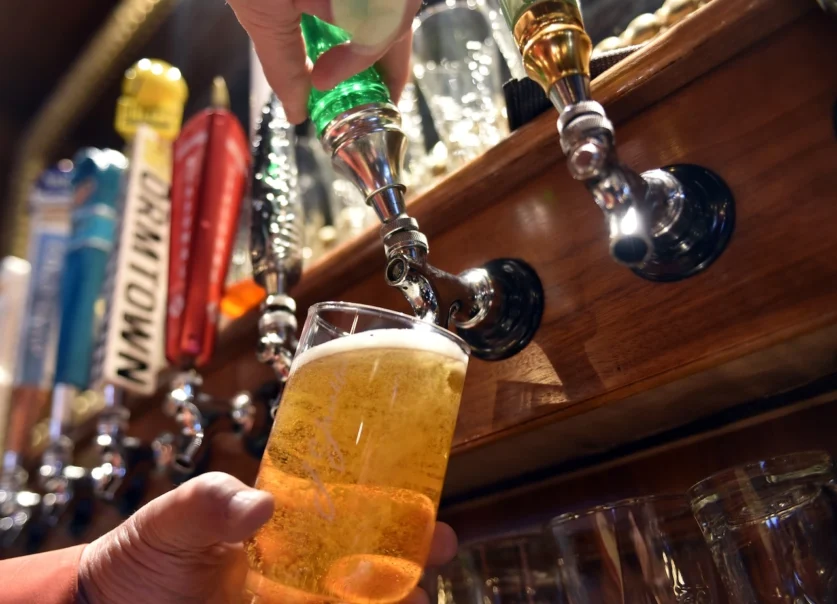
Here in New England we just survived an early April ice/snowstorm and an earthquake. By the time you read this, a solar eclipse will also have happened.
Add in a record amount of cicadas predicted to hit the East Coast in a month or two, and you might well think it’s the End Times.
But we beer aficionados like to look on the bright side of things, so today let’s look at some good news from the Brewers Association.
First up is the 27th annual Big Brew Day on May 4. This yearly event is an opportunity to celebrate homebrewing.
The Brewers Association provides plenty of resources to get you involved in the art of homebrewing, including recipes, supplies, tutorials and marketing materials.
The Brewers Association also just announced that its latest group of aspiring brewers and start-ups in its Mentorship Program matches the largest number ever to date: 35. The program has served 200 members thus far in its history. The program provides a 12-week virtual mentorship where each mentee works with three mentors in their areas of interest.
Last but not least, the BA is supporting H.R. 7577, the Creating Hospitality Economic Enhancement for Restaurants and Servers [CHEERS] Act) a bipartisan piece of legislation to support local businesses, restaurants, and bars that utilize draft beer systems and help revitalize the hospitality industry.
The CHEERS Act looks to expand tax incentives for energy-efficient systems that would include keg and tap systems. Draft beer is the most sustainable type of packaging for retailers and suppliers, and the legislation would provide tax relief to small businesses that use them.
Beer notes:
In local news, the Manhan Charitable Foundation’s Brewfest will take place at 6 p.m. in the Boylston Room at Easthampton’s Keystone Mill on April 25. The event will feature beers from local breweries such as Abandoned Building, Bright Ideas, Fort Hill, New City Brewery, Leadfoot Brewing, and Progression.
Tickets are $25 in advance or $30 at the door through Venmo @MCF1876. The Manhan Charitable Foundation is run by current and former Easthampton Firefighters. Keystone Mill is at 122 Pleasant St.
Speaking of Easthampton, my ongoing search for good old-school West Coast IPAs was rewarded by a recent visit to New City Brewery, where I enjoyed the venue’s Signature IPA, a 6.5% gem that hit all the marks. I also sampled the delicious Microburst Imperial IPA, an 8.2% double IPA that was perfectly balanced between malt structure and hoppy complexity, with no hint of the elevated booziness in the flavor. Both are recommended.
If you purchase a product or register for an account through a link on our site, we may receive compensation. By using this site, you consent to our User Agreement and agree that your clicks, interactions, and personal information may be collected, recorded, and/or stored by us and social media and other third-party partners in accordance with our Privacy Policy.