Wine 1106
Wine Cellars Running Wild.
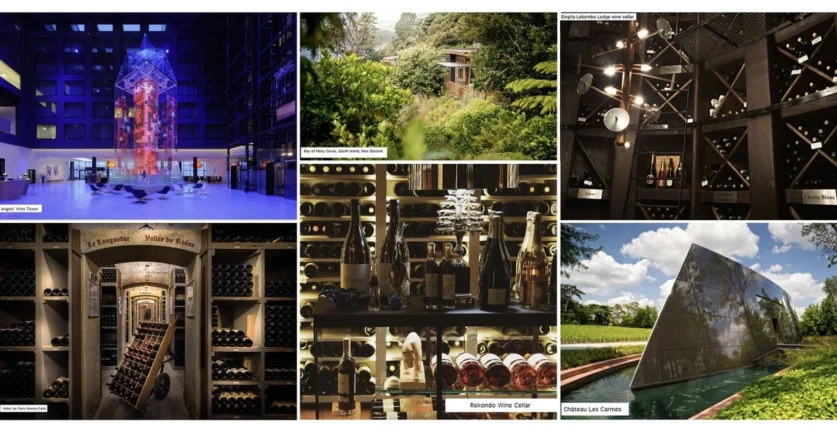
Discover the Most Incredible Wine Cellars Across the Globe
When it comes to wine cellars, there is truly something for everyone. Whether you prefer the underground mystique or the awe-inspiring grandeur of an above-ground display, the world is full of stunning wine collections that will leave you speechless. From secret caves to modern architectural wonders, these cellars not only house some of the world’s best wines but also provide an experience like no other.
If you’re a fan of fine dining and impeccable cellars, Architectural Digest has compiled a list of five restaurants with the best wine collections. From hidden caves to trendy urban spaces, these places offer a unique ambiance for enjoying a glass of your favorite vino.
The Travel Channel takes you on a wild journey with their slideshow on the “10 Craziest Cellars and Wineries” around the world. Explore ancient Etruscan caves, Tuscan-inspired castles, and even futuristic wineries that seem ready to take off into space.
For those interested in the largest wine collections, Wine Enthusiast has gathered a list of the world’s biggest hotel and restaurant cellars. These establishments pride themselves on their expansive selections, ensuring that there is something to please every palate.
If you’re looking for wine cellars owned by the rich and famous, the Armchair Sommelier has you covered. Discover the cool and unique designs of celebrities and entertainment moguls who have created their own personalized wine havens.
For a truly impressive experience, The World of Fine Wine offers a selection of awe-inspiring cellars. From a blue-lit cathedral-inspired cellar in Tennessee to mesmerizing light shows in Turkey, these collections will leave you breathless.
VinoVest explores the world of renowned wine collectors. With their expertly curated cellars, these collectors have amassed an enviable selection of wines that any wine enthusiast would envy.
CNN Style showcases the best-designed cellars, spanning from underground bunkers to volcanic environments. These cellars combine functionality with artistic appeal, creating a feast for the eyes as well as the palate.
If you’re planning a trip to Porto, Portugal, Portugal.net has compiled a list of the best cellars to visit in the city’s historic Vila Nova de Gaia neighborhood. Explore the birthplace of port wine and learn about the fascinating history behind its production.
For champagne lovers, Winalist.com highlights five historic cellars and caves that are a must-visit in the Champagne region. Delve into the world of champagne production and immerse yourself in its rich traditions.
Punch.com takes you inside a singular cellar situated in Spain’s gastronomic capital. Discover the hidden gems of this cellar and learn why it holds a special place in the hearts of locals.
For those seeking luxury, upscalelivingmag.com rounds up eight wine cellars not to miss. From exclusive designs to breathtaking light shows, these cellars are the epitome of opulence.
Take a unique approach to wine cellar exploration with boatinternational.com. Discover wine cellars accessible by super yacht and create a truly unforgettable experience.
The Times of India offers a global itinerary of must-visit cellars, including a U-shaped cellar overlooking the iconic Bosphorus Strait in Istanbul.
No matter your preference, these incredible wine cellars offer a glimpse into a world of luxury, history, and unparalleled beauty. So, whether you’re a seasoned wine connoisseur or simply enjoy the occasional glass, take the time to explore these remarkable collections and let yourself be captivated by their charm.
“Discover excellent Italian sparkling wines beyond Prosecco with Wine Press.”
Champagne, the godly beverage that brings joy and celebration to every occasion. We all love a good glass of bubbly, don’t we? But wait, can any sparkling wine be called Champagne? Absolutely not. Champagne can only come from the Champagne region in France. Period. I understand that this may irritate some people who use the term Champagne for any sparkling wine. It’s not about being snobbish, it’s about honoring the geographical origin of this exquisite drink. It’s like calling someone from Spain a Swede or someone from Massachusetts a New Yorker. It just doesn’t make sense.
Speaking of geographical origin, let’s talk about Prosecco. Many of us mistakenly label all Italian sparkling wine as Prosecco. However, just like Champagne, Prosecco can only be called Prosecco if it is produced in specific locations in Italy. More precisely, Prosecco can only come from nine provinces in the Veneto and Friuli Venezia Giulia regions near Venice. In fact, there’s even a village called Prosecco in this region. And here’s where it gets even more confusing – before 2009, the grape used to make Prosecco was called “prosecco.” But now, it goes by the name glera since Prosecco winemakers wanted to trademark the name of the Prosecco wine region in Italy and avoid confusion between the grape and the region. Complicated, isn’t it?
Now, let’s explore the world of Italian sparkling wines beyond Prosecco. Italy boasts a variety of distinct and delightful sparkling wines, each with its own story and flavor profile. However, when it comes to wine, simplicity is not always the norm. Sometimes, the name of the sparkling wine has more to do with the production method rather than its origin. But hey, wine is meant to be enjoyed, so if you happen to pick up the “wrong” one, don’t fret. Just try a different one next time and expand your sparkling wine horizons.
When exploring Italian sparkling wines, you may come across terms on the labels that describe the sweetness level or the production method. These additional words provide useful information and can guide you towards the right wine for your taste preferences. Embrace these terms as they enhance your wine journey and deepen your understanding of the diverse world of Italian sparkling wines.
Now, let’s move on to some recommendations and tasting notes. Here are a few Italian sparkling wines that have caught my attention:
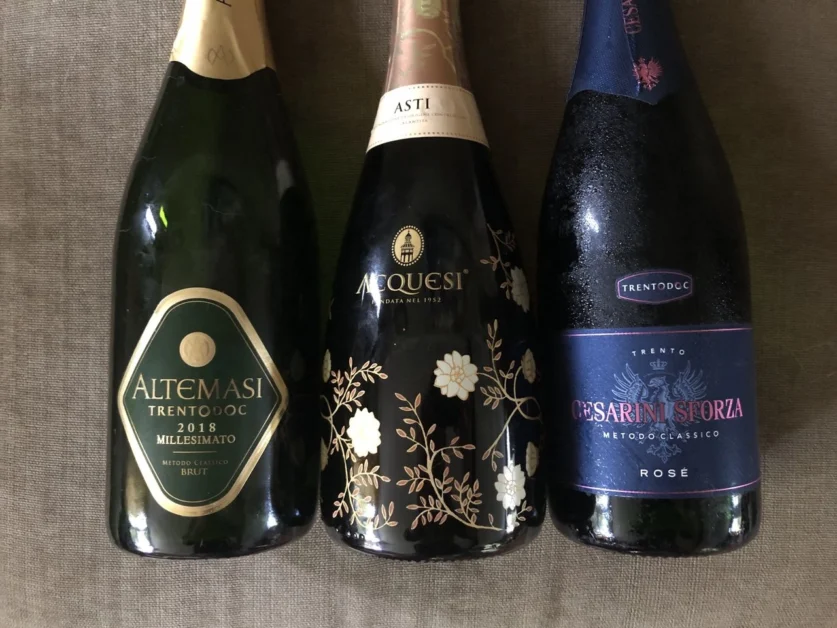
1. Asti Acquesi ($16.99 Suggested Retail Price): This sparkling wine hails from Italy’s Asti region. It falls under the specific type of sparkling wine known as Asti. Made with moscato bianco grapes, it leans towards the sweeter side, making it a perfect choice for dessert. Prepare your taste buds for a delightful blend of flavors ranging from black licorice and caramel to vanilla and orange zest.
2. Cesarini Sforza Metodo Classico Rose ($31 SRP): Crafted by Cesarini Sforza winery in the Trento/Trentino region of Italy, this sparkling rose is crisp, dry, and effortlessly captures the essence of Italian sparkling wines. A blend of 85% chardonnay grapes and 15% pinot noir, it offers subtle hints of fresh strawberries and raspberries, accompanied by soft rose notes and a touch of sea salt and black pepper. This sparkling wine will surely leave a lasting impression.
3. 2018 Altemasi Trentodoc Millesimato Brut ($31 SRP): A vintage sparkling wine that showcases the craftsmanship of the Trento region, this gem can rival many great brut Champagnes from France. Made exclusively with chardonnay grapes grown near Italy’s majestic Dolomite mountains, this sparkling wine is the driest of the three recommendations. As you savor each sip, you’ll detect a chalky, mineral-like finish with hints of toasted almonds, dried lemons, and roasted apricots. It truly shines a light on Italy’s remarkable sparkling wine production.
Cheers to the world of Italian sparkling wines! May they continue to enchant us and add a touch of effervescence to our lives. Remember, wine should always be enjoyed with curiosity and a sense of adventure. So, go ahead, explore and embrace the diversity of Italian sparklers. Let your taste buds be your guide on this delightful journey. Salute!
(This blog post is a reimagining of the original article written by Ken Ross, featured on Masslive.com)
Earn Rewards and Protect Your Privacy###
Imagine this scenario: you come across a fantastic product or service on our website. It’s something you’ve been searching for, and you’re ready to make a purchase or register for an account. Well, guess what? By doing so through a link on our site, you not only get what you want, but you also earn valuable rewards. That’s right – we appreciate your support and want to show our gratitude.
Now, you may be wondering how this works. It’s simple. When you make a purchase or sign up through one of our links, we receive compensation. This allows us to continue providing the content you love, without any cost to you. So, not only are you benefiting from a fantastic product or service, but you’re also helping us grow and thrive.
Speaking of benefits, let’s talk about privacy. We understand that your personal information is important to you. That’s why we want to assure you that we take privacy seriously. When you use our site, you consent to our User Agreement, which means you’re agreeing to allow us to collect, record, and store your clicks, interactions, and personal information. But don’t worry, we handle your data with care and never sell it to third parties.
In addition to us, social media and other third-party partners also collect data based on your clicks and interactions. But don’t fret – this isn’t just some shady operation. We work with reputable partners who also prioritize your privacy and ensure that your information is kept secure and confidential.
Now, you may be wondering why we’re so transparent about this. Well, we believe in being open and honest with our users. We want you to feel confident in your decision to support us and use our site. Transparency is the foundation of trust, and trust is what keeps us going.
So, the next time you find a product or service you love on our site, remember that you’re not only getting what you want but also earning rewards and supporting a platform that values your privacy. By making your purchase or registration through our links, you’re not only investing in yourself but also investing in the growth and development of our site.
In conclusion, we appreciate your continued support and can’t wait to bring you even more amazing content, products, and services. Together, we create a win-win situation where you earn rewards and protect your privacy. Cheers to that!
Is it possible for the Willamette Valley to combine the finest attributes of Napa and Burgundy in order to transform into the ultimate destination for wine lovers?
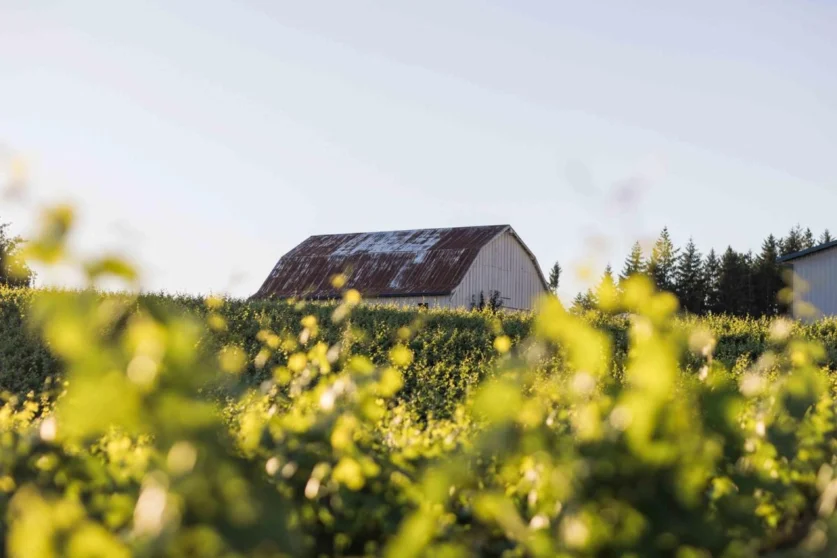
The arrival of new businesses and investments in Oregon wine country has brought about a time of critical decisions for the future of the region. Katie Jackson and Shaun Kajiwara opened Tributary, a luxurious boutique hotel in the quiet town of McMinnville, with the belief that it has the potential to become the central hub for visitors to Oregon wine country. With high-end rooms priced at $1,000 a night and an ambitious farm-to-table flagship restaurant called Okta, the couple hopes to attract luxury investments and elevate the region’s status, similar to what happened in Napa Valley.
This trend of upscale development in smaller towns is not new. Elin McCoy, a Bloomberg columnist, noted that SingleThread, a small inn and restaurant in Healdsburg, sparked a similar phenomenon in Sonoma County. SingleThread’s success led to an influx of luxury investments in the area and elevated its reputation in the culinary world. Tributary and Okta seem to be on the same path, with Okta recently being named one of the New York Times’ best restaurants of 2023.
The similarities between Tributary and SingleThread make it an important time to consider the direction that Willamette Valley is heading in. The concept of “Napafication” has been a topic of discussion among winemakers, bloggers, and even TIME magazine. It raises the question of whether the region is slowly becoming a replica of Napa Valley and, if so, whether this is a positive or negative development. Can Willamette Valley embrace the influence and success of Napa while still maintaining its own identity and benefiting winemakers, tourists, and hospitality professionals?
The rise in prominence of Oregon Pinot Noir has attracted major players from Napa and Sonoma. Companies like Constellation Brands and Silver Oak have acquired vineyards in the region, while Burgundian wineries like Domaine Drouhin and Maison Louis Jadot have seen the potential in Oregon’s climate for producing world-class Pinot Noir. This interest from well-established wine companies indicates the growing reputation and profitability of the region.
A key factor in this growth is the favorable climate for winemaking in Oregon. The region has experienced hot and dry weather, which is ideal for grape cultivation. This, combined with the absence of a recent bad vintage, has increased investment interest in Oregon wine country. The clear return on investment and the potential for success have made the region more attractive to investors.
In conclusion, the arrival of luxury establishments like Tributary and Okta in Oregon’s wine country marks a crucial moment for the region. The parallels between this development and the “Napafication” of Napa Valley raise important questions about the future of Willamette Valley. However, with the rise in prominence of Oregon Pinot Noir and the favorable climate for winemaking, this could be a transformative opportunity for the region. It remains to be seen how Willamette Valley will navigate this influx of investment while preserving its own unique identity and supporting the wine industry as a whole.
Bergstrom Wines Estate: Paving a Different Path for Oregon Wines
When we think of major wine regions, Napa and Sonoma in California are often the first to come to mind. However, in recent years, Oregon’s wines have been gaining recognition and attracting investment from major players outside the region. While this could easily lead to unchecked development and the loss of its unique charm, Oregon’s wine industry has found ways to chart a different course and preserve its heritage.
One of the key factors in Oregon’s success is the recognition by the pioneering families of the tremendous value of the land for agricultural purposes. Back in the 1970s, these families passed laws to preserve land use exclusively for agriculture. This foresight and commitment to preserving the land’s integrity have prevented the unchecked development that has occurred in other wine regions like Napa and Sonoma.
Another factor that sets Oregon apart is the socioeconomic makeup and urban density of its closest cities, San Francisco and Portland. Unlike the congested traffic and long travel times from San Francisco to Napa, the drive from Portland to Willamette, the heart of Oregon wine country, takes only about 45 minutes. This proximity and ease of access make it more appealing for tourists to visit and support the local economy.
Jason Lett, a second-generation winemaker and the mastermind behind Oregon’s pioneering Eyrie Vineyards, highlights the importance of thoughtful hospitality investment in the region’s downtown areas. Lett, along with many other local winemakers and preservationist organizations like Friends of Yamhill, is concerned about the rising tide of commercial development on farmland. Unlike other wine regions like Burgundy or Piedmont, where vineyards are considered too precious to be transformed into tourist destinations, Oregon’s vineyards face the risk of losing their value if not protected.
This risk is particularly evident with larger resorts, which have the potential to encroach on farmland. However, some developers, like Ken and Joan Austin, who opened the Allison Inn & Spa in the early 2000s, have proven that size isn’t an excuse. The Allison Inn & Spa, with its 85 rooms and luxurious amenities, has successfully integrated into the region’s tourism infrastructure without compromising the integrity of the farmland.
Restoration efforts are also a cause for optimism among winemakers in the valley. For example, Jackson and Kajiwara saw the potential in a century-old former hardware store in downtown McMinnville and transformed it into Oregon’s first Relais & Chateau hotel. Recognizing their commitment to historic preservation, the town awarded them the best historic preservation award in 2020.
The combination of land preservation laws, proximity to major cities, and thoughtful investment in downtown areas has allowed Oregon’s wine industry to flourish without losing its unique character. Winemakers, like Lett, emphasize the importance of taking farmland seriously and advocating for investments in local towns. With so much to offer, Oregon’s cool and diverse wine country has the potential to become a world-class destination, attracting tourists from near and far.
So, the next time you’re planning a wine trip, consider exploring Oregon’s wine country. You’ll not only experience exceptional wines but also contribute to the preservation of a region that values the land and the communities that call it home.
Acceptance Doesn’t Come Easy in the Willamette Valley
In the picturesque town of Willamette, a battle is brewing. It’s a battle between those who see the potential for growth and prosperity in the region’s tourism industry, and those who fear that it will come at the cost of the area’s agricultural heritage.
The town has seen numerous proposals for hotel projects in the past, but none have been approved. As Kent Kajiwara, a local resident, explains, “There have been a lot of other hotel project proposals that just haven’t been approved by the town.” It’s clear that gaining acceptance for such projects is no easy feat.
For wineries like Bergström, the majority of their business is conducted through their tasting room in the Dundee Hills. This beautiful space, once the family’s private residence, now serves as a hub for direct-to-consumer and on-premise sales. As the demand for winery visits and experiences grows, having adequate tourist infrastructure becomes increasingly vital.
The Willamette Valley is at a crossroads, trying to strike a delicate balance. On one hand, the region wants to preserve its agricultural roots and the value of its farmland. On the other hand, it recognizes the importance of tourism in supporting local winemakers and businesses. Walking this tightrope is not without its challenges.
One of the main concerns voiced by winemaker Bergström is the potential intrusion of larger, profit-driven players who may not share the same commitment to the region’s history and community. He warns of the erosion of community that can occur when outsiders only look to make a quick buck. His solution? “I say let’s develop the Willamette Valley on our own terms…with people who are responsible and respectful of our region investing here.”
It remains to be seen whether the Willamette Valley can find the right balance between preserving its agricultural heritage and embracing tourism. The struggle between these competing interests is not unique to this region alone. Many wine regions around the world face similar battles.
In the end, it will require collaboration, understanding, and a shared vision for the future. Only then can Willamette truly rise to its fullest potential, attracting visitors while maintaining the very essence of what makes it special.
Should I have requested my wine back, according to Amy?

Dear Amy: A Troubled Mother-Daughter Relationship
In today’s post, we’ll be discussing a complex and challenging mother-daughter relationship. This story touches upon themes of mental illness, estrangement, guilt, and compassion. Let’s dive in.
Unmothered, a woman in her 50s, opens up about her 82-year-old mother’s undiagnosed mental illness, which manifests as narcissism, paranoia, delusions, and abusive behavior. Since Unmothered’s teenage years, her mother has caused long periods of estrangement, missing significant milestones such as her wedding and the births of her children. Unmothered’s father divorced her mother when she was just eight years old.
Despite her mother’s difficult behavior, Unmothered acknowledges that there are also better periods when her mother shows kindness and charm. This has led Unmothered to reconcile with her mother whenever she reaches out, even throughout the pandemic. She has taken care of her, accompanied her to doctor’s appointments, and helped her through various problems.
However, last year, Unmothered’s decision to not return her mother’s call during a Mother’s Day service led to a series of hostile and abusive voicemails. Fed up with her mother’s behavior, Unmothered ended their relationship, explaining in a heartfelt letter that the only way she would consider reconciliation is if her mother sought psychiatric help. Unmothered subsequently blocked her mother’s calls, but she can still leave voicemails.
Now, Unmothered finds herself listening to these long, self-aggrandizing, and verbally abusive messages. While she has not returned any of the calls, they leave her feeling awful. She contemplates changing her phone number but struggles with the guilt of leaving her mother, a frail, bitter, and lonely old woman, without any outlet. Unmothered’s therapist believes she has fulfilled her obligations as a daughter and can let go without guilt, but the guilt and sadness persist.
Unmothered seeks advice on how to navigate this challenging situation. Amy acknowledges the therapist’s perspective but highlights the importance of acknowledging and processing difficult emotions within family relationships. She emphasizes the need for compassion towards oneself and encourages Unmothered to view her choices as a natural response to an unstable mother with untreated mental illness.
In a different discussion, Amy addresses an entirely different topic – a lighter one involving social etiquette. A reader named Vino Lover asks if she should have requested the return of a bottle of wine she brought to a gathering where alcohol wasn’t being served. Amy swiftly dismisses this concern, labeling it as petty. She assures Vino Lover that what happens to the wine next is up to the hosts, and if she were to invite them to her own dinner, the bottle might be returned as a host-gift.
To wrap up, Amy expresses gratitude for the positive feedback she received regarding her response to a teenager who worried about their lack of sexual experience. She reminds readers that sexual experiences vary among teenagers, with roughly half reporting having sex and the other half not.
That concludes today’s blog post. Join us again for more interesting discussions and advice from Amy.
Hey guys!
I just wanted to take a moment to address something that I think a lot of us can relate to – the worries and concerns that come with being a teenager. It’s a tough time in life, no doubt about it. But I recently came across a letter that really struck a chord with me, because it reminded me so much of my own teenage years.
The letter was written by a young girl who was feeling overwhelmed by all the pressure and uncertainties that come with growing up. And while reading her words, I couldn’t help but think back to all the times when I felt the exact same way.
I want to thank all of you who took the time to reach out and reassure this girl that she is not alone in her struggles. It’s so important to remember that we are all in this together, and that we can support each other through the tough times.
I also want to emphasize that, although things may seem difficult and confusing in the moment, they have a way of working themselves out with time. It’s easy to get caught up in the present and lose sight of the bigger picture. But trust me, as someone who has been there, I can tell you that things do get better.
To the girl who wrote that letter – hang in there. I know it’s tough, but keep pushing forward and don’t be afraid to ask for help when you need it. You are not alone, and there are people out there who care about you and want to support you.
If any of you ever need someone to talk to, please don’t hesitate to reach out. You can email me at askamy@amydickinson.com or send a letter to Ask Amy, P.O. Box 194, Freeville, NY 13068. You can also find me on Twitter @askingamy and Facebook.
Remember, we’re all in this together, and together we can make it through anything.
Take care,
Amy
I would like my bottle of wine returned to me since I brought it to a party and it was not opened.

Title: The Intricacies of Social Etiquette: Should You Ask for Your Wine Back?
Introduction:
Amy Dickinson, an advice columnist, recently received a query from a reader who attended a high school reunion. The reader brought a bottle of wine to the event but later discovered that no alcohol was being served. This dilemma raises the question: should the reader have asked for their wine back?
Body:
Social gatherings often come with unspoken expectations, and etiquette plays a crucial role in maintaining harmony among attendees. In this case, the reader, fondly referred to as “Vino Lover,” was faced with an unexpected situation when they realized the hosts chose not to include alcoholic beverages at their party.
The first point to consider is that the reader should not take this situation personally. It is essential to remember that hosts have the liberty to decide what they serve at their event, whether it aligns with others’ preferences or not. In this case, the hosts may have opted for a non-alcoholic gathering due to personal preferences, health concerns, or religious beliefs.
Given these factors, it would be perceived as petty to ask for the wine back. The reader brought the bottle as a gesture of goodwill, and it is now up to the hosts to determine its fate. Perhaps they will enjoy it at a later date or regift it to someone else. The reader should take comfort in the fact that their gift was a thoughtful gesture regardless of how it is used.
Nonetheless, if the reader still feels unsure about the situation, they could use an alternative approach. If they invite the hosts for a dinner or similar social event in the future, it is possible that the wine might be returned as a host-gift. However, it is crucial to note that this is not guaranteed, and the reader should not expect it as a form of compensation.
Conclusion:
Navigating social events can sometimes lead to unexpected situations, as experienced by Vino Lover. It is important to remember that hosts have the right to decide what is served at their gatherings. In this particular case, the reader brought a bottle of wine, but the hosts had chosen not to serve alcohol. While it may feel disappointing, it is best to let go of any expectation regarding the fate of the wine. Instead, focus on the spirit of generosity and move forward with grace.
Should I have requested the return of my wine?

Title: The Complexity of Family Dynamics and Personal Boundaries
Introduction:
In this blog post, we will be exploring two different situations that involve personal relationships and the emotions that come with them. One involves a complicated and strained relationship between a daughter and her mentally ill mother, while the other deals with a seemingly insignificant incident at a social gathering. Although these stories might seem unrelated at first, there is a common thread that binds them together – the complexities of family dynamics and the challenges of setting personal boundaries.
Unmothered: Navigating Guilt and Compassion in Toxic Family Relationships
The first story is that of a woman in her 50s who has had a tumultuous relationship with her mentally ill mother for most of her life. The mother’s undiagnosed mental illness, marked by narcissism, paranoia, and abusive behavior, has caused numerous estrangements between them. Despite the excessive emotional toll, the daughter has always found it difficult to completely sever ties, primarily due to moments of charm and love her mother displays. However, after a particularly abusive incident, she decides to cut off contact and seek professional help. While her therapist supports her decision, she grapples with feelings of guilt and sadness. It is important for her to acknowledge these emotions, as they are a natural response to the complex and challenging situation she has endured. Learning to extend compassion towards herself and her mother becomes a crucial aspect of her healing process.
Vino Lover: A Matter of Perspective and Preference
In the second story, we encounter a seemingly trivial conundrum faced by an individual attending a high school reunion. The protagonist brings a bottle of wine as a gift to the host, only to discover that alcohol is not being served at the event. She wonders if she should have asked for her gift back. However, it is essential to understand that the host’s decision not to serve alcohol does not necessarily reflect their personal preference towards it. The bottle of wine is theirs to keep, and it is entirely up to them how they choose to handle it. The protagonist’s reaction highlights the tendency we sometimes have to attach meaning to insignificant incidents and overthink them.
Conclusion:
Both stories explore the intricacies of personal relationships and the difficulties of setting boundaries. In the case of the strained mother-daughter relationship, it is crucial for the daughter to acknowledge her emotions while prioritizing her own mental health and well-being. In the incident involving the wine bottle, it is necessary to remember that everyone has different preferences and perspectives. Both stories teach us the importance of self-compassion and understanding when faced with challenging situations in our relationships.
A lot of times, when we’re young, we tend to blow things out of proportion. We worry and stress about things that, in the grand scheme of things, aren’t really that big of a deal. We lose sight of the fact that things have a way of working out in the end.
I was reminded of this when I read a letter from a young girl who was feeling overwhelmed and alone. She was struggling with certain concerns and fears, and she didn’t know how to navigate through them. But she found solace in knowing that she wasn’t alone in her worries.
This struck a chord with me because I remember feeling the same way when I was younger. I remember thinking that my problems were insurmountable and that there was no light at the end of the tunnel. But as I grew older and gained more life experience, I realized that things have a way of falling into place, even when it feels like everything is falling apart.
So, to the young girl who wrote this letter, I want to say thank you. Thank you for reminding us all that we’re not alone in our fears and uncertainties. Thank you for reminding us that, even though it may not seem like it now, things will work out in the end.
And to all the young people out there who may be feeling lost or overwhelmed, please know that there are people who care. There are people who have been where you are, who understand what you’re going through. Don’t hesitate to reach out and ask for help.
If you’re feeling alone, know that you’re not. There are resources out there, like Amy Dickinson, who can offer guidance and support. You can email her at askamy@amydickinson.com or send a letter to Ask Amy, P.O. Box 194, Freeville, NY 13068. You can also find her on Twitter @askingamy or Facebook.
Life can be tough, especially during our younger years. But remember, things have a way of working out, even when it feels like they won’t. Hold on to hope and know that brighter days are ahead.
After bringing my bottle of wine to a party where it was left unopened, I now want it returned.

The Etiquette of Host-Gifting
Amy Dickinson, the renowned advice columnist, recently received a question from a reader regarding an interesting social conundrum. The reader, who we will refer to as Vino Lover, attended a high school class reunion where she brought a bottle of wine as a gift for the hostess. However, she soon discovered that no alcohol was being served at the event. In her letter, Vino Lover ponders whether she should have asked for her wine back since it wouldn’t be used.
While many might argue that Vino Lover’s dilemma is trivial, it does bring up an interesting etiquette question. Should one request the return of a gift if it turns out to be unused or unsuitable for the occasion? In this case, Vino Lover wondered what would happen to her bottle of wine, given that the hosts did not drink alcohol.
It is important to approach this situation with understanding and perspective. Vino Lover does not have any knowledge of the hosts’ alcohol preferences; all she knows is that they chose not to serve alcohol at that particular event. To ask for the wine back would be rather impolite and overlook the fact that the hosts have complete discretion over how to handle the gift.
If anything, Vino Lover should consider the possibility that her gift might still find a purpose in the future. Should she invite the hosts over for dinner or another gathering, it wouldn’t be surprising to see the wine make its way back to her as a host-gift. In such situations, it is not uncommon for people to regift or share items that may have been meant for them initially.
At the end of the day, it is crucial to adopt a gracious approach to gift-giving. Vino Lover should not dwell on the fate of her bottle of wine but appreciate the thought behind her gesture. While it is understandable that she might feel a bit perturbed, it is essential to remember that gifts are given voluntarily, and recipients have the freedom to use them as they see fit.
In the future, it might be helpful to have a conversation with the hosts before selecting a gift. This can ensure that the gift aligns with the occasion and the hosts’ preferences, avoiding any potential misunderstandings or awkward moments. However, it is worth noting that sometimes surprises can be delightful, and a bottle of wine might still find appreciation even at an alcohol-free gathering.
In conclusion, Vino Lover’s concern about her wine might be understandable, but it is ultimately insignificant in the grand scheme of things. Let us embrace the spirit of generosity and consideration, remembering that gifts should be given without any expectations or strings attached. Instead, let us focus on cherishing the connections and memories that reunions and gatherings bring, rather than fixating on minor details.
If you have any further questions or need advice on similar matters, you can reach out to Amy Dickinson at askamy@amydickinson.com or send a letter to Ask Amy, P.O. Box 194, Freeville, NY 13068. You can also stay updated with her insights by following her on Twitter @askingamy or Facebook.
The top 20 countries that import the most wine.

Today, we are going to take a look at the top countries that have a strong appetite for wine imports. I’ll spare you the nitty-gritty details about the global wine market and recent acquisitions in the industry. Instead, let’s dive right into the meat of the matter – the five countries that import the most wine.
It wasn’t too long ago that the world of wine was a collection of isolated producers, with little cross-border interaction. Each country had its own traditions and preferences when it came to wine. However, things have changed dramatically in recent years.
With decreases in tariffs and other barriers to international trade, winemakers now have the opportunity to sell their products to consumers far beyond their local region. This newfound international access is reshaping how wines are produced and consumed, and those who can adapt to this wider playing field will gain a significant competitive advantage.
Wine consumption has been on the rise, particularly among millennials and younger generations who appreciate its refreshing appeal and lower alcohol content. The demand for premium and luxury wines is also growing, as consumers become more aware of the health benefits of wine. Additionally, wine tourism has gained popularity in recent years, further fueling the growth of the wine market.
European countries lead the pack when it comes to importing wine, accounting for nearly half of the global total in 2022. North American importers come in second place, followed by customers in Asia. These regions show a strong appetite for wine imports.
However, it’s worth noting that global wine consumption has seen a slight decline in recent years. One of the main drivers of this downward trend is China, which has experienced a significant drop in wine consumption since 2018. The Covid-19 pandemic only worsened this decline, affecting many major wine markets.
In addition to the pandemic, other factors have contributed to changes in the wine industry. The war in Ukraine and global supply chain disruptions in 2022 resulted in increased production and distribution costs, which translated into higher prices for consumers.
Now let’s shift gears and talk about two notable players in the wine industry – Constellation Brands, Inc. and The Duckhorn Portfolio, Inc.
Constellation Brands, Inc. is a leading premium wine company known for its portfolio of well-regarded brands. They recently acquired Domaine Curry, a luxury Napa Valley wine brand, adding it to their already impressive lineup. Constellation Brands has also made headlines with its Mexican beer brand, Modelo Especial, becoming the top-selling beer in America, surpassing Bud Light.
On the other hand, The Duckhorn Portfolio, Inc. prides itself on being a multifaceted company, spanning manufacturing, agriculture, and marketing. They recently announced the acquisition of a production winery and vineyards in Alexander Valley, Sonoma County, California.
Both Constellation Brands, Inc. and The Duckhorn Portfolio, Inc. have proved their ability to adapt to the changing landscape of the wine industry, cementing their positions as major players in the market.
In conclusion, the wine industry has seen significant transformations in recent years, with increased international trade and changing consumer preferences. European countries continue to be the biggest importers of wine, but regions like North America and Asia are also significant players. Despite a slight decline in global wine consumption, the market is still growing, fueled by the rising popularity of premium and luxury wines, increased consumer awareness, and wine tourism. Companies like Constellation Brands, Inc. and The Duckhorn Portfolio, Inc. are adapting successfully to these changes, securing their positions in the industry.
industry, relies heavily on imported wines. France is the leading supplier of wine to Denmark, followed by Italy and Spain. Danish consumers are known for their preference for quality and premium wines, making it an attractive market for wine producers worldwide.
Total Wine Imports in 2022: $924.69 million
Finland, despite being a country with a relatively small population, has a significant demand for imported wines. France, Italy, and Spain are the main sources of wine imports to Finland. The Finnish alcohol retail monopoly, Alko, plays a crucial role in regulating the wine market and ensuring the quality and safety of imported wines.
Total Wine Imports in 2022: $1.01 billion
Germany, known for its beer culture, also has a considerable wine market. Germany imports wines mainly from Italy, France, and Spain. The country’s diverse culinary scene and changing consumer preferences have contributed to the growing demand for imported wines, both in the lower and higher price segments.
Total Wine Imports in 2022: $1.12 billion
China, with its booming economy and growing middle class, has seen a significant increase in wine consumption in recent years. The country imports wines from various regions, including France, Australia, Spain, and Italy. Chinese consumers are increasingly interested in exploring different wine varieties and expanding their knowledge about wine culture.
Total Wine Imports in 2022: $1.23 billion
The United States, being the largest wine-consuming nation in the world, also imports a substantial amount of wine. While the US is known for its domestic wine production, imports play an essential role in meeting consumer demand for a wide range of wine styles and varieties. Italy, France, and Spain are the major sources of imported wines to the US.
Total Wine Imports in 2022: $2.05 billion
The United Kingdom, with its rich wine history, is a significant importer of wines. Despite being a producer of sparkling wine, the UK relies heavily on imports to meet its wine consumption needs. Italy, France, and Spain are the main countries that supply wine to the UK market. The popularity of wine in the UK is evident from the presence of numerous wine bars, shops, and events across the country.
Total Wine Imports in 2022: $2.38 billion
Canada, known for its cold climate, has a growing wine market that heavily relies on imports. The country imports wines primarily from the United States, Italy, and France. Canadian consumers are increasingly interested in exploring different wine regions and grape varieties, driving the demand for imported wines.
Total Wine Imports in 2022: $2.58 billion
Japan, although famous for its sake, has a significant demand for imported wines. France, Italy, and Spain are the major suppliers of wine to Japan. Japanese consumers have developed a taste for wine, which is now commonly consumed with meals and enjoyed in social gatherings across the country.
Total Wine Imports in 2022: $2.81 billion
The global wine market continues to evolve, with imports playing a crucial role in meeting consumer demand for diversity and quality. The countries listed above showcase the growing popularity of wine consumption worldwide and the importance of imports in satisfying the evolving tastes and preferences of consumers. Whether it’s a bottle from France, Italy, or any other wine-producing region, wine lovers around the world can continue to enjoy the fruits of international trade and appreciate the diverse flavors and stories that each bottle holds.
The wine industry has experienced a decline in its imports in 2022, as revealed by recent data from the Danish Customs. Compared to the previous year, the volume of imports has decreased by 8.4% to 181.6 million liters, while the value has fallen by 10.9% in dollar terms.
Denmark has historically maintained stable wine imports over the past two decades, with 180.4 million liters being imported in the year 2000, compared to 181.6 million liters in 2022. Despite this slight increase, Denmark ranks 12th in the list of top wine importers.
Interestingly, Hong Kong has emerged as a prominent player in the global wine market. Since the Hong Kong government abolished import duties on wine in 2008, it has become the only free port among major economies, establishing itself as a crucial international market in the wine sector. Hong Kong’s strategic positioning as a leading wine re-export center, with a majority of re-exports directed towards mainland China, has contributed to its growing significance in the industry. In 2022, Hong Kong’s total wine imports reached $1.06 billion.
France, renowned for its wine production, has experienced a substantial increase in wine imports over the past twenty years. From a total import value of around $437 million at the beginning of the century, France’s wine imports reached $1.06 billion in 2022, with a steeper upward trend since 2010.
The wine market in Belgium has been influenced by the country’s economic stability and high disposable income. Belgian consumers are willing to invest in quality products, including wine, and are increasingly open to exploring new and premium wines. With access to a wide selection of local and imported wines, Belgian consumers are embracing different flavors and styles. In 2022, wine imports in Belgium amounted to $1.36 billion.
Switzerland, known for its preference for imported wines, saw its wine market return to pre-Covid levels in 2022. Imported wines, particularly those from Italy, continue to dominate the Swiss market. The Swiss franc’s historically high value has also made imports more affordable, contributing to low inflation rates. Switzerland ranks among the top wine importing countries in 2022, with total wine imports reaching $1.43 billion.
In contrast, the wine consumption and import volume in China have been declining in recent years. Wine is no longer reserved for special occasions or gift-giving but has become a norm among the younger, urban population. The preference for imported wines, especially red French wines, has led to France becoming the major wine supplier to China, followed by Chile and Italy. In 2022, China’s total wine imports amounted to $1.57 billion.
The port of Rotterdam in the Netherlands plays a significant role in the redistribution of goods throughout Europe, including wine. Foreign wines are first imported into the Netherlands and then re-exported to other European countries. As a result, the Netherlands ranks among the countries that import the most wine in Europe.
Overall, the wine industry’s landscape is evolving, with shifts in import volumes and consumer preferences. From the decline in wine imports in Denmark to the emergence of Hong Kong as a key player in the global market, the dynamics of the industry are constantly changing. Regardless, the demand for wine remains high, with countries like France, Belgium, Switzerland, China, and the Netherlands making significant contributions to the market.
The World’s Top 20 Countries in Wine Exports.

Exploring the Top 20 Wine Exporting Countries in the World
Wine – a beverage that has been enjoyed for centuries, transcending cultures and borders. In this article, we dive into the world of wine exporting and explore the top 20 countries that dominate the global market. But before we do that, let’s take a step back and examine the remarkable evolution of winemaking over the years.
Over the last 150 years, winemaking has undergone a dramatic transformation, blending both art and science. Thanks to advancements in technology, such as refrigeration, wineries now have better control over the fermentation process, allowing them to produce high-quality wines even in hot climates. Harvesting machines have also revolutionized vineyard management, enabling winemakers to expand their vineyards and increase efficiency.
Despite the challenges of satisfying an ever-growing market while maintaining the unique character of their wines, technology has played a crucial role in ensuring a consistent supply of quality wines. In fact, the global wine market witnessed substantial growth, with a value of $441.6 billion in 2022 and a projected value of $698.54 billion by 2030. This upward trend can be attributed to the rising popularity of wine among millennials and youngsters, driven by its refreshing appeal and low ABV offerings. Additionally, consumers’ increasing awareness of the health benefits of wine and the growing popularity of wine tourism have fueled the market’s expansion.
Alongside the market growth, sustainability has become a pivotal focus in the wine industry. Sustainable winemaking encompasses the entire production process, promoting biodiversity and organic farming. From eschewing pesticides, herbicides, and synthetic fertilizers to incorporating a variety of plant life in the vineyard, winemakers are striving to harmonize grape cultivation with nature. This concerted effort towards sustainability has been embraced by numerous wine producers worldwide.
One such company dedicated to sustainable practices is The Duckhorn Portfolio, Inc. (NYSE:NAPA), based in California. They consider themselves a manufacturing, agricultural, and marketing company, producing wines while prioritizing responsible and sustainable practices in their vineyards. The company has obtained several certifications, including LEED Gold certification at Goldeneye Winery, California Certified Organic Farmers (CCOF) certification for their estate vineyards on Mt. Harlan, and Fish Friendly Farming (FFF) certification for all their North Coast Estate vineyards.
Another notable player in the sustainable winemaking arena is Vintage Wine Estates, Inc. (NASDAQ:VWE), headquartered in Nevada. This family of wineries and wines focuses on producing the finest quality wines and delivering exceptional customer experiences. All of Vintage Wine Estates, Inc.’s California Estate wineries and vineyards are certified through the California Certified Winegrowers Alliance, with their Laetitia Estate Vineyards also obtaining Sustainability in Practice (SIP) certification. With these certifications, Vintage Wine Estates, Inc. ensures its vineyards and wineries adhere to environmentally sound, socially equitable, and economically viable practices.
The wine industry’s sustained efforts towards sustainability have required significant investments, both in terms of capital and intellectual energy. However, the consumer response to these endeavors has been mixed. While consumers appreciate the concept of sustainability in the products they purchase, its impact on purchasing decisions remains ambiguous.
Now that we have delved into the world of sustainability in winemaking, let’s explore the top five wine exporting countries in the world:
1. Italy: Italy reigns as the largest wine exporter globally, known for its diverse range of wine varieties and regions. From the robust reds of Tuscany to the sparkling wines of Veneto, Italy offers an unparalleled selection.
2. Spain: Spain’s winemaking heritage dates back centuries, and its wines have gained global acclaim. The country is renowned for its Riojas, Tempranillos, and Cava, offering a rich tapestry of flavors.
3. France: France is synonymous with wine, with its regions like Bordeaux and Burgundy producing some of the most prestigious wines in the world. From elegant Chardonnays to complex Cabernet Sauvignons, French wines epitomize sophistication and craftsmanship.
4. Australia: With its vast landscapes and favorable climate, Australia has emerged as a prominent player in the wine industry. Australian wines, particularly those from regions like Barossa Valley and Margaret River, showcase bold flavors and excellent quality.
5. United States: The United States boasts diverse wine regions, such as California’s Napa Valley and Oregon’s Willamette Valley. American wines, including Napa Valley’s Cabernet Sauvignons and Oregon’s Pinot Noirs, have gained international recognition for their exceptional craftsmanship.
While these are the top five wine exporting countries, it’s worth noting that many other nations contribute significantly to the global wine market. Countries like Argentina, Chile, Germany, South Africa, and New Zealand have also made their mark with unique and high-quality wines.
In conclusion, the wine industry’s journey has seen remarkable advancements in winemaking techniques and sustainability practices. With a growing market and increasing consumer demand, the global wine industry continues to thrive. Whether you prefer an Italian Sangiovese or a Californian Chardonnay- there is a wine out there for everyone to savor and appreciate. Cheers to the diverse and captivating world of wine!
Countries with the Highest Wine Exports
In today’s blog post, we will be discussing the countries with the highest wine exports in 2022. But before we dive into the data, let’s address an important question about the future of sustainability in the wine industry.
Sustainability has been a growing trend in recent years, with consumers becoming more conscious of the environmental impact of their purchases. However, there are concerns about whether sustainability will continue to be a priority for consumers during financially difficult times, such as an upcoming recession or a significant slowdown in major economies.
Currently, there is a significant generational divide when it comes to sustainability. Younger consumers in their 20s and 30s are strongly motivated to buy sustainable products, including wine. On the other hand, older consumers in their 50s and 60s are largely unmoved by sustainability claims and tend to be more price-conscious.
However, as younger consumers enter their main wine-drinking years in the next five to ten years, their desires and tastes will start to dominate the market. If they maintain a positive view of sustainable wine, it could fundamentally shift sustainable wines into a more mainstream position within the industry.
Now, let’s move on to the countries with the highest wine exports in 2022, according to data from the UN Comtrade Database.
1. Lithuania: Total Wine Exports in 2022: $215.64 million
Lithuania has the largest wine market in the Baltics and has been growing steadily at an annual rate of 10-15%. The majority of wine that enters Lithuania is re-exported to other Baltic countries. Furthermore, Lithuania serves as the E.U.’s gateway to Russia’s wine market, with 92% of their wine exports going to Russia.
2. Georgia: Total Wine Exports in 2022: $252.55 million
Georgia has a rich history of producing quality wines and exports them worldwide. With around 48,000 hectares of vineyards under cultivation, sales of Georgian wine have been growing rapidly, especially in the U.S. Georgia is also among the top 20 alcohol drinking countries in the world.
3. Austria: Total Wine Exports in 2022: $266.06 million
Austria accounts for almost 1% of the global wine production, with 30% of that being exported. The country has a wine-growing area of 113,000 acres, managed by 23,000 wine growers. Austrian wine is known for its quality focus, making it highly sought after in Europe.
4. Denmark: Total Wine Exports in 2022: $290.39 million
Denmark, a surprising addition to the list, has been gaining popularity as a wineland since it officially became a wine-producing country in 2000. The main wine-producing regions are North Jutland, South Denmark, Zealand, and Funen. Denmark is also among the top wine-drinking countries in the world.
5. Hong Kong: Total Wine Exports in 2022: $295.67 million
Strategically positioned as one of Asia’s leading wine re-export centers, Hong Kong has a strong presence in the wine industry. The government’s removal of duty-related customs and administrative controls for wine in 2008 has allowed Hong Kong to develop as a wine trading and distribution center, particularly for mainland China.
6. Belgium: Total Wine Exports in 2022: $309.54 million
Belgium is well-known for its great beers, but it also produces fantastic wines, especially white and sparkling varieties. The two main wine regions in Belgium are Flanders and Wallonia, with the UK, the Netherlands, and France being the main destinations for Belgian wine exports. Belgium is a prominent wine exporting country in Europe.
7. Netherlands: Total Wine Exports in 2022: $523.89 million
Lastly, the Netherlands ranks among the top wine exporting countries in Europe. Its port of Rotterdam plays a major role in the redistribution of goods throughout Europe, making it an ideal location for foreign wine imports.
In conclusion, these countries are making significant contributions to the global wine trade. While sustainability may face challenges during challenging economic times, long-term demographic and lifestyle trends suggest that sustainable winemaking will continue to gain importance, especially as younger consumers become the dominant market force.
Title: The Global Wine Market: A World of Flavor and Trade
Introduction:
Welcome to a fascinating journey through the global wine market, where countries around the world import and export wines to tantalize the taste buds of wine enthusiasts. From the rolling vineyards of Europe to the burgeoning markets of Asia and beyond, wine exports play a significant role in the economies of many nations. In this blog post, we will explore some of the top wine exporting countries and the unique flavors they contribute to the global wine industry.
1. The Netherlands: The Gateway to Europe’s Wine Scene
In 2022, the Netherlands emerged as a prominent re-exporter of wines, with Norway leading the pack with imports valued at over $138.7 million. Acting as a conduit, the Netherlands facilitates the distribution of wines throughout the rest of Europe, contributing to total wine exports amounting to $573.15 million for the year.
2. Singapore: Asia’s Rising Wine Hub
Known for its bustling port and entrepôt trade, Singapore is vying with Hong Kong to become Asia’s premier wine hub. With a growing number of wine collectors and connoisseurs, Singapore imported 32.3 million liters of wine in 2021, re-exporting an estimated 16.9 million liters to countries like Japan, Hong Kong, Australia, China, Thailand, and Malaysia. The total wine exports for Singapore in 2022 reached an impressive $681.88 million.
3. United Kingdom: Beer and Wine Coexisting
While the United Kingdom is often associated with its pub culture and beer, wine has also found a strong following within the country. Boasting a mature wine market, around 49% of the population are regular wine drinkers, making the UK one of the top wine exporting countries. Approximately 72% of the UK’s wine exports find their destination within the EU, contributing to a total wine export revenue of $694.62 million in 2022.
4. South Africa: Exporting the Essence of its Terroir
South Africa’s wine industry flourishes, with nearly half of its wine production being exported, primarily to Europe. In 2022, the country’s 542 wineries harvested 10.2 million hectoliters of wine, employing over 300,000 people. Europe remains the most crucial market for South African wine, and the total wine exports for 2022 amounted to $813.77 million.
5. Argentina: Malbec’s Reign and Global Appeal
With a rich wine culture and over 218,232 hectares dedicated to grape cultivation, Argentina stands as a force in the wine industry. Its flagship varietal, Malbec, captures 63% of the country’s annual wine exports. The United States, United Kingdom, Canada, and Brazil stand as key markets for Argentinian wine. Exporting around 20% of its wine overall, Argentina reported a total wine export revenue of $988.78 million in 2022.
6. Portugal: The Land of Grape Diversity
Portugal’s wine industry is characterized by its vast array of native grape varieties, allowing for the production of unique and distinct wines. In the first quarter of 2023, Portuguese wine exports reached $477.7 million, reflecting a 3.9% rise compared to the previous year. Portugal proudly claims its place among the top 10 wine exporting countries, with total wine exports amounting to $1.12 billion in 2022.
7. Germany: Riesling’s Cool Climate Haven
Germany’s wine industry is renowned for its world-class Riesling, produced in the cool climate along the Rhein and Mosel rivers. With diverse soil types and ideal conditions for white wine production, Germany thrives as an exporter. The United States remains Germany’s top market for wine exports, contributing to a total wine export revenue of $1.42 billion in 2022. Germany also boasts a prominent position on the list of top beer exporting countries.
8. New Zealand: Bursting with Flavor Down Under
New Zealand’s wine production is centered around the regions of Marlborough, Hawke’s Bay, and Gisborne, with Marlborough leading the pack in volume. In the past year, New Zealand’s wine producers recorded a remarkable 23% increase in export sales. With its vibrant and distinct flavors, New Zealand’s wines encourage wine enthusiasts to explore new horizons. The country’s total wine exports in 2022 amounted to $1.45 billion.
9. Australia: Overcoming Challenges with Determination
Australia, known for its vast wine production, faced transportation issues and reduced sales in recent years. Despite the challenges, Australian wineries managed to produce 12.7 million hectoliters of wine in 2022. The value of Australian wine exports reached $1.42 billion. Although impacted by a decline in exports to its largest market, the UK, Australia maintains its significant presence as the sixth-largest wine exporting country.
Conclusion:
The global wine market is alive with vibrant flavors and international trade. From classic European vineyards to emerging wine regions in Asia, countries around the world contribute to this flourishing industry. The top wine exporting countries showcased here offer a glimpse into the diverse terroirs, grape varieties, and unique tastes that delight wine enthusiasts worldwide. As wine lovers, let us appreciate the craftsmanship and dedication behind each bottle, raising a glass to the vibrant and interconnected world of wine.
The winner of the 2023 New York World Wine and Spirits Competition for the finest whiskey in the world.

The Whiskey Brand That Shocked New York
Last month, the New York World Wine and Spirits Competition took place in Brooklyn, and the results have been slowly trickling in ever since. Whiskey enthusiasts were left astonished when they learned that 15 Stars, a relatively unknown craft producer from Kentucky, had beaten out bigger and more well-known brands to take home the award for Best Bourbon. But the surprises didn’t stop there. In a Forbes exclusive, it has now been revealed that 15 Stars has also won the award for Best Whiskey overall.
The specific whiskey that won the Best in Show title is 15 Stars First West Rye Whiskey (Batch #1). This six year old rye defeated scotches, bourbons, and Irish whiskies with more recognized names and age statements. It even triumphed over a quarter-century-old single malt from Ardbeg, a renowned whisky maker. What’s more impressive is that the competition was conducted blind, with the judges having no knowledge of the brands they were sampling. This makes 15 Stars’ victory even more remarkable.
The judging panel meticulously tasted thousands of liquids across all major categories over a three-day period. The top-rated expressions from each subcategory were then pitted against each other until only one winner remained. The final Battle Royale resulted in 15 Stars First West Rye Whiskey being crowned the champion. This rye is a blend of whiskies originally distilled in Kentucky, Tennessee, and Indiana, with an ABV of 52.5%.
The fact that a rye whiskey won the top prize is astonishing in itself. But what makes it even more noteworthy is that it was bottled by the same family-owned label responsible for the award-winning bourbon. This serves as a reminder that what truly matters is the quality and taste inside the bottle.
And the taste inside a bottle of 15 Stars First West Rye Whiskey is truly something to savor. It offers a complex interplay between sweetness and spice. The nose is rich in clove and citrus fruit, while the first sips reveal flavors of freshly-baked apple crumble, cinnamon, and nutmeg. The finish is a testament to the rye grain, accompanied by a subtle hint of butterscotch. All of this can be yours for $89 per bottle, though 15 Stars’ distribution is currently limited in the United States.
The success of 15 Stars has created a buzz in the whiskey world, but it has also made it difficult for fans to get their hands on a bottle. Shortly after the award announcement, the top-ranked bourbon from the same brand quickly disappeared from shelves. However, as they say, if it can make it in New York, it can make it anywhere. So let’s hope that you can find a bottle of 15 Stars somewhere, because this is a whiskey experience you won’t want to miss.