Liquor-articles 2100
WhistlePig Unveils Its Oldest Whiskey Yet: A 25-Year-Old Single Malt

If you purchase an independently reviewed product or service through a link on our website, Robb Report may receive an affiliate commission.
The name WhistlePig has become practically synonymous with rye whiskey, as the Vermont-based distillery has taken control of the premium space in that category over the past decade. But WhistlePig has branched out a bit, venturing into single malt whiskey last year with the launch of the Beholden. Now the brand has upped the ante on age (and cost) with the release of a new 25-year-old single malt called, in a cringingly dad joke style with lots of stylized punctuation, the Badönkådonk.
More from Robb Report
We Tasted Booker’s First Bourbon Batch of the Year and It’s Stellar
How to Make an Improved Whiskey Cocktail, a Sublime Twist on an Old Fashioned
Rabbit Hole Dropped a New 15-Year-Old Bourbon Finished in Japanese Mizunara Barrels
The Beholden was a 21-year-old whiskey distilled at “the first single malt distillery in Canada,” which very likely means Glenora in Cape Breton although that is unconfirmed. I enjoyed that whiskey very much, even if the $800 price tag felt a bit excessive. According to a rep for the brand, The Badonkadonk was distilled at the same distillery and aged for a quarter century in new American oak barrels. The whiskey was then brought to Vermont in 2020 for further maturation in Silver Oak Alexander Valley Cabernet Sauvignon barrels, and ultimately released as a single barrel expression. That means the whiskey may differ depending upon which barrel your bottle comes from, but official tasting notes describe “stone fruits, cedar wood, and a hint of discord” on the palate. Discord aside, that description rings true, with a decent amount of spice, tannic oak, dried fruit, and just a whiff of wood smoke along for the ride.
“Our single malts stand apart not only for age, but also maturation in the world’s best barrels,” said WhistlePig head blender Meghan Ireland in a statement. “After finishing The Beholden in our own well-aged rye barrels (with a wink), we set our sights on the best of California wine country. Known for their superstar Cabernets aged exclusively in American oak barrels, Silver Oak is the perfect partner to push boundaries with.” And for some reason WhistlePig recruited Monty Python cofounder and comedy legend John Cleese to promote the new whiskey by creating a video and penning a statement that plays on his love for scotch whisky. “I thought it was rather cheeky when I learned that some colonials were trying to ape the scotches that have from the beginning of time been crafted in Scotchland,” he said. “BUT… when I tasted it… MY WHOLE WORLD CHANGED!! My very DNA was instantly revised, my taste buds DANCED THE BAGPIPE, and I instantly became SPIRITUALLY ADVANCED.”
If you’d like to seek out some whiskey enlightenment for yourself, this bottle is going to cost you—it’s listed at $2,000, but will likely go for much more than that based on the prices currently listed for the Beholden at websites like . Fortunately, you can find it for its listed price at the WhistlePig now, but only while these limited supplies last.
Best of Robb Report
Why a Heritage Turkey Is the Best Thanksgiving Bird—and How to Get One
9 Stellar West Coast Pinot Noirs to Drink Right Now
The 10 Best Wines to Pair With Steak, From Cabernet to Malbec
Sign up for Robb Report’s Newsletter. For the latest news, follow us on Facebook, Twitter, and Instagram.
Discover America’s Rapidly Rising Canned Cocktail: Not a Seltzer but a Famed Brand of Iced Tea Vodka and Lemonades
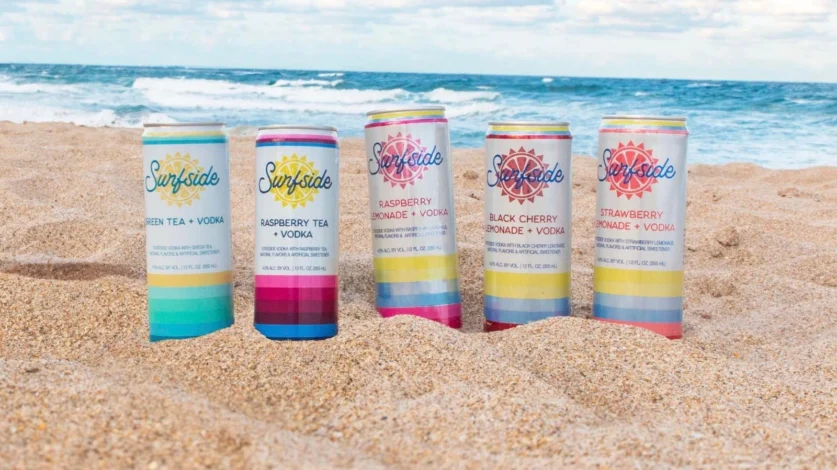
The popular brand of iced tea+vodka introduces five new flavors for summer.
It’s hardly news that ready-to-drink cocktails are all the rage. Indeed, we’ve been reporting on the trend for 5 years now. But the novel story these days is the dynamic shift within the overarching RTD category, which comprises both malt-based and spirit-based offerings. In short, the latter is growing at a far faster rate than the former. And Surfside is a brand riding these economic waters to great success.
A category leader in iced tea and lemonade-vodka RTDs, the two-year-old label is celebrating its national expansion with five new summer-friendly flavors: Raspberry Lemonade, Strawberry Lemonade, Black Cherry Lemonade, Raspberry Iced Tea and Green Tea. The fruit-forward additions join a wide stable of offerings that are all canned at 4.5% ABV, and typically retail for around $11 per 4-pack.
The independent producer behind the launch began life as part of Stateside Vodka, a Philadelphia-based distillery and cocktail lounge that still thrives in the city today. Initially the founders were canning an unflavored vodka-soda, but were compelled by acute demand for something non-sparkling.
“We realized there was a hole to fill in the RTD category,” recalls Clement Pappas, CEO of Surfside Iced Tea + Vodka. “When we were originally creating Surfside, we knew it had to taste great, be 100 calories or less and have no bubbles. Carbonated drinks can be filling and cause bloat. We also see today’s drinkers gravitate toward tasty alternatives to beer.”
Clement Pappas, CEO of Surfside Iced Tea + Vodka
Pappas’ team spent more than a year developing the taste formula. Indeed, it holds 100 calories, 2 grams of sugar and zero bubbles per 12-ounce can. It quickly emerged as a category leader, in part, because when it arrived on shelves in early 2022, there simply weren’t a lot of spirit-based hard teas and lemonades in the category. Yet the thirst was clearly there.
“We thought Surfside was a good idea or we wouldn’t have done it, but we didn’t predict just how much the brand would take off,” adds Pappas. “We grew 563% in just our second year on the market, from about 200,000 cases in 2022 to 1.3 million cases in 2023. It’s been a rocket ship of growth for us.”
Indeed, the canned cocktail segment has seen significant growth recently. While malt-based ready-to-drink (RTD) cocktails still dominate the US market in terms of volume, spirit-based RTDs are gaining ground, despite the challenges of nationwide distribution.
Based on the latest economic analysis from the Distilled Spirits Council of the United States, spirit-based RTDs held a 16% share of the total category at the end of 2023 compared to 8% in 2021. This trend suggests that today’s consumers are increasingly valuing the sophisticated elegance of alcohol-based cocktails. The expansion of Surfside further offers enthusiasts a choice of at least five more refreshing alternatives for this summer.
New additions to the Surfside range include canned iced tea and lemonade-vodka RTD cocktails.
Reviving Native Hawaiian Sugarcane: How a Scientist and Distilleries are Collaborating for Conservation

Sugarcane biodiversity disappeared as big plantations dominated the sugar trade in Hawaii, but now native varieties are making a comeback
Noa Kekuewa Lincoln remembers when he first encountered native Hawaiian sugarcane in 2004. The fresh stalks, bursting with color, might have sprouted from Willy Wonka’s imagination, not the soil.
Lincoln, a kanaka maoli (Native Hawaiian) expert in Indigenous cropping systems and an assistant professor at the University of Hawaii, said: “I grew up seeing grayish-green cane fields. But these canes are fluorescent pink, bright apple-green striped. They looked like huge cartoon candy canes. They almost don’t look real!”
Then working at the Amy BH Greenwell Ethnobotanical Garden on the Big Island of Hawaii, he saw the multicolored stalks growing, mysteriously and simply labeled “Hawaiian sugarcane”. That chance moment took Lincoln on a 20-year detour into researching Hawaii’s heirloom sugarcane varieties, neglected after centuries of plantation monoculture. Lincoln set out to identify them and “treat them like the individuals they are”.
He likens his research method to traditional navigation, “where you’re triangulating your position” in relation to known points. He interviews kupuna, or elders, in the Hawaiian community; dives into digitized archives of newspapers dating back to the 1830s; and culls information from stories, traditional medicines and chants.
A chant can offer information about how a sugarcane variety looks, where and how it grows, and its role in the ecosystem. A 19th-century chant celebrating a dignitary’s visit to Ni’ihau island is one example: “My love returns to Ni’ihau / To the hidden waters of the pao’o fish / To the breadfruit that blossoms on the flats / The sugar cane of Halali’i dug out by hand.” It gives a location (Hawaii’s westernmost island), a name for the cane variety (Halali’i) dominant there, a tip on tending the plant and its proximity to breadfruit.
Lincoln marries these sources with modern tools like DNA analysis to see relationships between varieties of sugarcane. “For cane, some of the interpretations of the chants [and oral histories] only become clear when we are out in the field doing work and observe something that helps with the interpretation. It is very rarely just one line of knowledge that helps us understand, but multiple lines of knowledge intersect,” he said.
In one case, an elder said that a particular variety of sugarcane “called” dew from the north. Lincoln only grasped the full meaning of that statement when working with sugarcane in Kona. There, he realized that the crop cast tall shadows that preserved dew on the north side of its rows. And that substantially elevated soil moisture.
Through this research, he’s uncovered 25 Hawaiian sugarcane, or kō, varieties. Halali‘i is one such variety. The name means “little hala”, or pandanus, a tree ubiquitous in the islands. Growing on windy Ni’ihau island, this sugarcane variety is frequently buried in sand so that only its top shows, resembling a small hala tree. Its other names mark how its leaves resemble sea lettuce, an edible green alga.
Many Hawaiian sugarcane varieties also share names with native fish. If the cane and the fish share similar striations or some other commonality, Hawaiians gave them the shared moniker. The black sturgeonfish, common in Hawaiian reefs, and dark purple-black canes found on Kauai are both māikoiko. maka’ā means “glowing eye” and refers to the flagtail tilefish. It possesses bright blue eyes and gray-green stripes, like an extinct sugarcane with similar gray-green stripes.
Sugarcane was originally domesticated in New Guinea around 8000 BC and brought to Hawaii as one of Polynesian voyagers’ original “canoe plants”, critical species that form the core of Hawaiian agriculture and foodways. The ancient islanders put sugarcane to various uses. Sugarcane windbreaks decrease wind damage to root crops and maintain soil moisture. Native canes provide mulch and attract nitrogen and nutrients into the soil. With those natural enhancements, Hawaiians were able to grow bigger and better sweet potatoes and taro alongside sugarcane, which itself adapted into new varieties suited to its new environs.
Though Native Hawaiians introduced sugarcane to the islands nearly a millennium before Europeans arrived, that fact often gets overshadowed in histories that focus on the impact and influence of sugarcane plantations that dominated the islands from the early 1800s onward.
Lincoln suspects that there are even more varieties, as his lab has uncovered about 80 names of traditional Hawaiian types. However, his team struggles to connect all of them to existing plants due to the colonial obliteration of both traditional knowledge and crops. By the 1840s, sugar had become a major industry in Hawaii, and an 1875 treaty allowed Hawaii to sell sugar to the United States tax-free and duty-free, ensuring substantial profits and power for its planter class.
Today, Lincoln collaborates with a businessman who used to work in Hawaii’s once-thriving sugarcane industry. Bob Gunter, president and CEO of Kōloa Rum Company, previously worked with Amfac, which was one of Hawaii’s “big five” sugar businesses, and its Lihue plantation, an early and long-standing sugarcane operation. The plantation shut down in 2000.
According to Gunter, “Hawaii was globally famous for its exceptional sugar and the concentration of its sugar. Its production levels were unheard of in other countries. The problem was that it could not compete with countries that extensively subsidize sugar or neglect to pay their workers adequately. The playing field was not level.” Kōloa, which produces its rum from granulated cane sugar, had bought tons of the ingredient from Hawaii’s plantations as they announced their closures. However, the rum maker eventually had no other choice but to source sugar from east Texas, Louisiana, and Florida.
A budding industry is now aiding in the revival of native sugarcane. Agricole rum is distilled from freshly pressed sugarcane juice, rather than molasses or granulated sugar. Kōloa and two other producers, Kuleana Rum Works and Kō Hana, conferred with Lincoln and now cultivate about 40 types of sugarcane that existed prior to western contact. Kuleana has been bottling and selling agricole rum since 2009, and Kō Hana, which began as a farm in 2009, launched its first agricole-style rum in 2014.
Gunter’s company plans to make rum from these heirloom canes, but production was delayed by the pandemic. “We’re preserving it, keeping a bank of sugarcane varieties, to perpetuate them, making sure we don’t lose them,” he said. “We’re currently at four acres and expanding to 10 to 12 acres of native cane.”
Lincoln attributes this renewed interest in kō to two movements: a larger one to reclaim Native Hawaiian identity, culture and cultivation practices, and the craft beverage movement, propelled by local distillers who see the use of heirloom Hawaiian canes as good marketing. “We can confidently say that more heirloom cane is being grown in Hawaii now than at any time in the past century,” he wrote in a 2022 article.
Still, Lincoln acknowledges the tension between economic and biocultural values of heirloom Hawaiian cane. On the one hand, businesses can appropriate Hawaiian knowledge and stories. Yet the fledgling rum agricole business “has provided new opportunities for preservation, dissemination and observations of the Hawaiian canes, as well as new platforms for sharing of indigenous perspectives”, he wrote in that same article. For example, when commercial producers grow large quantities of single varieties, scientists can better detect mutations within those varieties.
There is also a clear benefit to rum aficionados. Juice from heirloom sugarcanes can produce very different, fragrant rums. Lincoln said: “You wouldn’t dream of drinking a wine and not knowing what grape it came from.” Perhaps one day, more of us will sip native Hawaiian rums and taste their distinct nuances.
The Whiskey Off-Road Event Launches This Friday

On April 26, the three-day Whiskey Off-Road Mountain biking extravaganza begins. The races starts on Friday at 2 PM with the shortest race a 19.6-mile loop through the forested trails of Prescott, and is called the “15 proof”. This race is popular with some of the local middle school students and coaches. Coach Andy Binder and his daughter Jillian, an 8 grader are participating. Jillian garnered a first-place finish in the recent MBAA Prescott Punisher on April 13. Colton Devenie, a 7 grader, is also racing. Skyview School also has half a dozen students participating along with a handful of coaches. Prescott High’s Elliot McGrath is also in the race.
The Findlay Subaru Pro Crit takes place later on Friday. The women’s race is at 5:15 p.m. and the men follow at 6:10 p.m.
You need to enable Javascript to fully enjoy the premium content on our site. Please enable it in your browser settings.
Celtic Fan Arrested for Assaulting Police Officers on Flight Post Vodka Consumption

To view this video please enable JavaScript, and consider upgrading to a web browser that supports HTML5 video
A drunk Celtic fan punched police officers and passengers on an easyJet flight after ‘downing a bottle of vodka’.
Video footage taken onboard the plane shows a man wearing a Celtic football top angrily lunging at others on the flight from Edinburgh to Antalya, Turkey on Saturday.
It’s thought a fight broke out towards the end of the flight after another Celtic supporter called the man a ‘disgrace’ because of his drunken behaviour, reports the MailOnline.
As per a passenger, the individual had been consuming a Gold Ivy vodka bottle, later confiscated by the crew.
The video clearly shows the man, standing and leaning over the seat ahead, attempting to punch a fellow passenger and then proceeding towards the aisle to attack another individual, seemingly a Turkish police officer.
Multiple individuals, including the crew, try to hold him back, and one can even hear someone screaming in the commotion.
Other travelers, including kids, are witnessing the chaos, with some even capturing the incident.
Some parents attempt to comfort their kids, telling them ‘everything is fine, it’s alright’.
A fellow traveller described how, before the man assaulted the officer, he had been consuming a bottle of vodka he had smuggled on board. He had been trying to flirt with the women at the back of the flight near the bathrooms, while noticeably inebriated.
The witness continued, explaining how a flight attendant attempted to confiscate the vodka. The man protested, claiming he required it for ‘self-defense’.
‘As we approached the flight’s conclusion, he was incessantly loud and kept retrieving his bag from the storage compartment. The flight crew repeatedly asked him to remain seated. Finally, another Celtic fan called him out for his embarrassing behaviour.’
He attempted to combat the other fan, stated the passenger, while his companion tried to restrain him.
He aimed to hit the police when they arrived onboard after landing, he further mentioned.
The individual was removed from the flight by police and security officials which led to several passengers expressing their joy, the traveler noted.
He mentioned how his 12-year-old child was apprehensive throughout the fight and the sounds of several other children crying could be heard.
With a number of vacant seats towards the rear of the aircraft, some families relocated to distance themselves from the Celtic fan.
An easyJet spokesperson told Metro.co.uk: ‘easyJet can confirm that police attended a flight to Antalya on April 20 on arrival due to a passenger behaving disruptively on board.
‘easyJet’s crew are trained to assess and evaluate all situations and to act quickly and appropriately to ensure that the safety of the passengers is not compromised at any time.
Drivers are getting their knickers in a twist over the width of this new cycle path
Man glassed in the face after telling woman she looked like she was 43
Kate releases unedited picture of Prince Louis to celebrate his sixth birthday
Two arrested over ‘dine-and-dash spree across seven restaurants’
‘Whilst such incidents are rare we take them very seriously and do not tolerate abusive or threatening behaviour.
‘The safety and wellbeing of all our customers and crew is always our highest priority.’
In September last year Spanish police stormed an easyJet flight travelling from Manchester to the Canary Islands due to ‘eight violent passengers’ on board.
Get in touch with our news team by emailing us at webnews@metro.co.uk.
For more stories like this, check our news page.
MORE : These gnomes live on a rock in Scotland and no one knows why
MORE : British tourist, 21, named after falling to death from hotel balcony in Turkey
MORE : Drivers are getting their knickers in a twist over the width of this new cycle path
British ‘Travel Addict’ Arrested in Qatar Over Souvenir Rum Bottle
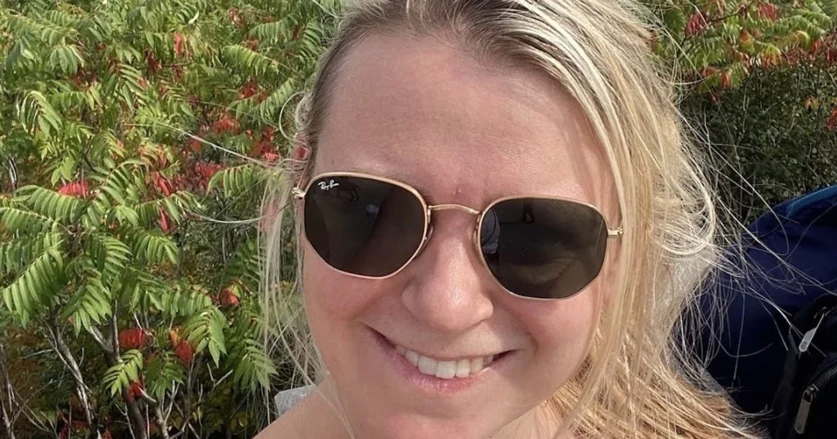
Travel blogger Laura Kemp has safely travelled to 58 countries including warzones, but she had a harrowing experience in Qatar that nearly landed her in prison when customs officials discovered alcohol in her luggage.
This British travel enthusiast, who has visited 35 countries in the last two years, spending a whopping amount on her adventures, cautions others about a grave mistake she made in Qatar. It was an error that almost cost her her freedom.
Laura Kemp spends around £30k yearly on her travel passions, with recent trips to exotic destinations like Bora Bora and Fiji. However, during one not-so-pleasant incident, she was detained in Qatar when a bottle of rum was seized from her.
Born in Cheltenham, Gloucestershire, Laura made the inadvertent error of not recalling the stringent alcohol restrictions of Qatar during her recent visit. Violation of these rules can result in a punishment of up to six months in jail and a £600 fine for residents of this Middle Eastern nation. Expats also face the threat of removal.
She spoke out to warn other travellers after the bottle of coconut Takamaka rum she’d bought in the Seychelles as a souvenir was spotted as she went through customs. “Immediately, multiple staff took me away for questioning, a process that felt both surreal and intimidating,” she said.
“Although the staff were respectful, I was completely in the dark as to what was happening, and my boyfriend had to wait for me for hours while I was going through the ordeal. I remember feeling so nervous about what was going to happen – would I be deported? Would I get a criminal record?
“The officers explained the seriousness of alcohol-related offences in Qatar, emphasising that I could have faced much harsher consequences, including a longer period of imprisonment or even deportation, had they not considered the circumstances of my case and my lack of intent to break the law. In the end, they kept the rum, and I was permitted to leave, but this experience was a stark reminder of the importance of understanding and respecting local customs and regulations, especially concerning alcohol. I’ll never make the same mistake again”.
In 2011, Irish citizen Conor Hayes was sentenced to one month in prison in the country after being convicted of drinking without a licence and public obscenity. He spoke out ahead of the 2022 Qatar World Cup warning Brits of its strict drinking and marital sex culture.
In addition to visiting exotic, far-off locations, Laura has journeyed to numerous destinations that are generally discouraged by the Foreign Office. These include locations such as Palestine, Kosovo, and North Korea. “I’ve been obsessed with seeing as much of the world as possible and I am constantly planning my next trip if I’m not already overseas,” explained Laura, who first caught the travel bug in 2012 while residing in Vancouver.
“I never had the chance to travel when I was younger, so I was always fascinated by stories of childhood friends who had traveled abroad.” Laura has since visited 58 countries, including South Korea, Japan, Fiji, North Macedonia, Serbia, Azerbaijan, Armenia, Georgia, Canada and the USA.
She shares about her adventures on TikTok, where she has confessed to receiving criticism from some who label her as “spoilt” for spending such vast amounts on travel – she estimates it costs her around £30,000 per year. “I’ve always self-funded my travel and worked incredibly hard along the journey, so these comments make me laugh,” she remarked.
Fancy an escape? You are invited to subscribe to the Chill newsletter for weekly inspiration and advice on UK holidays.
Flight Chaos: Celtic Fan Attacks Police Officers After Consuming a Bottle of Vodka

To view this video please enable JavaScript, and consider upgrading to a web browser that
video
A drunk Celtic fan punched police officers and passengers on an easyJet flight after ‘downing a bottle of vodka’.
Video footage taken onboard the plane shows a man wearing a Celtic football top angrily lunging at others on the flight from Edinburgh to Antalya, Turkey on Saturday.
It’s thought a fight broke out towards the end of the flight after another Celtic supporter called the man a ‘disgrace’ because of his drunken behaviour, reports the MailOnline.
One of the passengers narrated that the man was consuming a bottle of Gold Ivy vodka which the crew ultimately seized.
The provided footage depicted him on a standing position, leaning forwards the seat ahead of him attempting to assault a passenger. Later, he advanced to the aisle aimed at assaulting another individual who seemed to be a Turkish cop.
Despite the numerous people, inclusive of the staff, attempting to harness him, the screams of at least one individual can be discernible.
The spectacle was observed by other passengers, amongst whom children were present, several were seen capturing the commotion.
Some parents attempt to comfort their children by telling them ‘it’s alright, it’s OK’.
A passenger recounted: ‘Before the man assaulted the officer, he had been consuming alcohol and had finished a bottle of vodka he had smuggled onto the plane. He also tried engaging with girls towards the rear of the plane near the restrooms, while in a heavily intoxicated state.’
The passenger further disclosed that an air hostess attempted to confiscate the vodka bottle from the man. However, he insisted that he needed it for ‘self-defense’.
‘Towards the conclusion of the flight, he was being very unruly, incessantly shouting and repeatedly fetching his bag from the luggage compartment. The airline staff repeatedly told him to sit down. Another Celtic supporter called out his disgraceful behavior.’
He then tried to fight the other fan, the passenger explained, while his partner attempted to hold him down.
‘Then police came onboard [after landing] and he tried to throw punches at them,’ he added.
The man was taken off the plane by police and security staff, at which point several passengers cheered, added the holidaymaker.
The passenger said his 12-year-old son was ‘stressed’ during the fight and several other children could be heard crying.
As there were a number of empty seats towards the back of the plane, some families moved to get away from the Celtic fan.
An easyJet spokesperson told Metro.co.uk: ‘easyJet can confirm that police attended a flight to Antalya on April 20 on arrival due to a passenger behaving disruptively on board.
‘easyJet’s crew are trained to assess and evaluate all situations and to act quickly and appropriately to ensure that the safety of passengers is not compromised at any time.
‘Dine-and-dash’ family who didn’t pay £329 bill targeted seven restaurants in past year
Man glassed in the face after telling woman she looked like she was 43.
The exact date the UK will face 10 days of rain
Teacher’s cunning plan to tackle phone addiction (but the kids won’t like it)
‘Whilst such incidents are rare we take them very seriously and do not tolerate abusive or threatening behaviour.
‘The safety and wellbeing of all our customers and crew is always our highest priority.’
In September last year Spanish police stormed an easyJet flight travelling from Manchester to the Canary Islands due to ‘eight violent passengers’ on board.
Get in touch with our news team by emailing us at webnews@metro.co.uk.
For more stories like this, check our news page.
MORE : These gnomes live on a rock in Scotland and no one knows why
MORE : British tourist, 21, named after plunging to death from hotel balcony in Turkey
MORE : Drivers are getting their knickers in a twist over the width of this new cycle path
Exploring the Rich History of Whiskey in America

by: Larry Potash
Posted: Apr 22, 2024 / 04:37 AM CDT
Updated: Apr 22, 2024 / 07:13 AM CDT
Whiskey has long been at the center of controversy, corruption, and conversation in America. Dark Spirits have made a comeback of late, with distilleries growing at a pace of 15% a year in the United States, in no small part because of its backstory.
In this piece for Backstory, Larry Potash digs deep into the history of whiskey, including Chicago’s starring role.
Backstory with Larry Potash airs Sunday nights at 6:30 p.m. and 11 p.m. on WGN, or stream it anytime on the WGN+ app on your smart TV with Amazon Fire, Roku, and Apple TV.
Check out the Backstory podcast at WGNtv.com/Backstory via Apple Podcasts, Google Play, or wherever you get your podcasts.
Δ
Copyright 2024 Nexstar Media Inc. All rights reserved. This material may not be published, broadcast, rewritten, or redistributed.
An air purifier can make or break home or office life for someone who suffers from allergies.
Want to know how you can best celebrate Earth Day? Incorporate some of these eco-friendly yard care products into your life.
Amazon now presents a Mother’s Day shop featuring a handpicked gift list filled with fantastic suggestions if you’re still undecided.
Unearthing the Roots of a Whiskey Empire

by: Larry Potash
Posted: Apr 22, 2024 / 04:02 AM CDT
Updated: Apr 19, 2024 / 11:58 AM CDT
Farmer Dan McCall had a whiskey still on his property in 1850s Tennessee. The problem? He was also a Lutheran preacher. One of his farm hands, a freed slave named Nearest Green, made the whiskey and people thought it was the best.
When the farmer hired an 8-year-old boy named Jasper to help out, Green, was instructed to teach the boy. In fact, his efforts led to Jasper building an empire.
Backstory with Larry Potash airs Sunday nights at 6:30 p.m. and 11 p.m. on WGN, or stream it anytime on the WGN+ app on your smart TV with Amazon Fire, Roku, and Apple TV.
Check out the Backstory podcast at WGNtv.com/Backstory via Apple Podcasts, Google Play, or wherever you get your podcasts.
Copyright 2024 Nexstar Media Inc. All rights reserved. This material may not be published, broadcast, rewritten, or redistributed.
If you’re looking for a new dehumidifier, there are a few things you should consider before making a purchase.
Walmart is offering big savings on flash deals for outdoor toys.
Still searching for the ideal Mother’s Day present? Discover the perfect one for your mom this Mother’s Day with these outstanding choices from Amazon.
Koskenkorva Honors Earth Day with Climate Action Vodka and Moodie Davitt Homepage Revamp

Spirits and Wines
Share:
To mark Earth Day (22 April), Finnish spirits brand Koskenkorva is shining the spotlight on its Climate Action vodka, an expression made entirely from regeneratively farmed barley.
It is also celebrating with a makeover of The Moodie Davitt Report desktop homepage along with an elegantly curated treatment on the mobile website.
Koskenkorva Vodka, prominent in the Nordics and Germany, is broadening its reach in the global travel retail sector.
This vodka symbolizes a daring move in Koskenkorva’s sustainability journey, establishing a benchmark and asserting Koskenkorva Vodka’s role as a circular economy leader in the spirits sector.
Koskenkorva is emphasizing on promoting regenerative farming in its quest to become the most sustainable vodka brand globally.
This comprehensive cultivation technique is designed to transition fields from being emission sources to significant carbon sinks, combating climate change, and safeguarding biodiversity.
Koskenkorva Vodka Climate Action is born from an enduring partnership between Anora and the Baltic Sea Action Group (BSAG), a foundation devoted to restoring the Baltic Sea’s ecological equilibrium. The regenerative-farming venture of Anora is part of the BSAG’s Carbon Action Farming Platform, highlighting 100 farms and more than 1,000 farmers in Finland who are on a quest to adopt greener farming methods.
In alignment with its holistic sustainability plan, Anora intends to provide education to its associated farmers about regenerative farming practices. The company also aims to ensure that a minimum of 30% of barley utilized in its grain spirits is sourced from regenerative farming by 2030. At present, twenty contract farmers of Anora practice regenerative farming, a number that the company expects to increase by the next summer.
Regenerative farming holds the key to the future of successful farming. If applied across all global croplands and pasture lands, it could help sequester as much as 322 billion tonnes of carbon dioxide from the atmosphere – a figure that is ten times the current global yearly emissions.
Anora’s sustainability pledge is also noticeable at its distillery located in the village of Koskenkorva in Finland. The distillery consumes about 200 million kilograms of Finnish barley annually and functions on circular economy principles, putting 100% of every grain to use. Notably, the barley husks are used to fuel the distillery’s bio-energy plant.
Aspirationally, production at the Koskenkorva Distillery aims for complete carbon neutrality by 2026. Further to this, Anora has committed to achieving carbon-neutral production in its own operational setting by 2030, sidestepping the need for carbon compensations. This is part of its larger sustainability roadmap.
Petra Gräsbeck, Anora’s Communications and Sustainability Director, remarked: “Our Koskenkorva Vodka Climate Action serves as a tangible evidence of providing sustainable choices for consumers without having a negative effect on quality — it’s one of the well-received vodkas in our portfolio.
Following a collective effort with barley growers, who have taken the bold move towards adopting sustainable farming techniques together with the longstanding investment of the Koskenkorva Distillery to lessen the environmental footprint of its production activities, Anora is building a greener future for our industry.”
On a similar note, Anora’s Global Travel Retail Director Bo Madsen observed: “The growing consciousness among consumers towards Climate Change is common knowledge, with product sustainability playing a vital role in their buying decisions, particularly among the younger age group. While conventional brands merely claiming sustainable actions, Koskenkorva is leading by example with its proactive approach.”
“This dedication is evident in the brand’s consistent recognition and popularity among environmentally aware consumers across all demographics who prioritise enjoyment without compromising the health of our planet. The performance of the brand in global travel retail speaks for itself.” ✈
Pretty in pink – that’s the apt description for the newest Royal Salute expression. It had an amazing announcement on our website today. The Royal Salute 21 Year Old Miami Polo Edition is a tribute to the radiant spirit of Miami. It will be featured in a comprehensive marketing campaign at pivotal airports, including but not limited to Miami, London, Dubai, Singapore, Taipei, and São Paulo.
With the advent of Earth Month, Nestlé ITR has launched a travel retail-exclusive product, supported by prominent engagements with leading retailers like ARI.