Liquor-articles 2100
Ranking Every Edition of Rip Van Winkle Whiskey

For bourbon enthusiasts, Pappy Van Winkle is a name that represents both excellence and rarity. This renowned brand crafts exquisite whiskey, and any obtained bottle is instantly cherished. If your goal is to acquire such a bottle, this is your ideal guide. In this article, I’ll evaluate and rank the six bottles presently produced by Old Rip Van Winkle to determine the best one. We will also examine the elements that evolved it into a highly esteemed whiskey brand.
These bourbons carry a luxury price tag, particularly in secondary markets. Hence, they will be judged solely based on taste. Individual preferences will be considered, including why a particular whiskey might rank higher on somebody else’s list. Having had the opportunity to savour most of these bottles, along with numerous other whiskeys, equips me to provide a balanced, experience-based ranking. All you have to do now is to join me on this excursion through some of the world’s finest whiskeys.
Learn more: The 27 Best Bourbon Brands, Ranked
The exploration of this superb brand begins with the Van Winkle Special Reserve, affectionately known as the 12-year or “Lot B.” The label Lot B originated when Julian Van Winkle III differentiated the 12-year-old barrels back in 1991. The limited supply of Lot A was rapidly depleted, whereas the higher quantity of Lot B bottles took longer to sell. Owing to the nostalgia now associated, all subsequent bottles were marketed under the Lot B name. It’s essential to note that no whiskey here is substandard. The ratings range from good to fantastic, hence, even though the Van Winkle Special Reserve ranks last, it remains an admirable whiskey.
This 12-year-old bourbon is plenty complex. Despite its extended aging, there’s just a whiff of oak, accompanied by a plethora of orchard fruits and cherries. These fruits are also present on the palate, enhancing the high level of sweetness. The bourbon is not very warm, due to its low proof of 90.4. However, it’s a deliciously smooth concoction finished off with rich caramel, making the tasting an unforgettable experience. The fruity notes carry to the finish and meld with a slight nutty flavor. The tasting notes are slightly lighter than other varieties and lack the same strength, hence the lower ranking. Yet it remains a fantastic bourbon. Get lucky picking it up from your local Costco.
In the whiskey world, age is usually equated to quality. Whilst this holds some truth, the actual scenario is more complex. Unlike Scotch, Bourbon ages in new oak casks, impacting flavor faster. Thus, a 23-year old bourbon will have a more significant oak influence than a similar-aged Scotch. Consequently, the Family Reserve 23 Year expression often divides opinion. If strong wood flavors are not in your tastes, it’s wise to explore other Pappy bottles. This is the reason I didn’t rank it higher.
I have a preference for earthy tastes, but this particular bottle takes it overboard. The expression is instantly recognizable due to its deep amber color that suggests internal complexity. The aroma is not overwhelmingly woodsy, and you can savor cherries amongst other sweet notes. Initially, oak dominates the palate, but as you continue to taste, many other flavors like a strong hint of vanilla crop up. As the tasting progresses, cherry and chocolate flavors come to the forefront. The finish is pleasantly sweet and expectedly long-lasting. While not everyone may enjoy its extreme oakiness, I believe it’s a well-balanced bourbon.
Age is not the ultimate measure of a good bourbon, and this delicious 10-year-old variety is a must-have. The cost does not influence these rankings, but it’s a bonus that this expression has the lowest suggested retail price among all Old Rip Van Winkle bottles. Despite being the youngest on the list, it retains the sophistication and quality synonymous with the Van Winkle brand. This stunning copper-colored bourbon exudes a straightforward yet delightful aroma. Tasting this bourbon is a butterscotch journey, with traces of caramel and a ginger-like spiciness adding intrigue to its aroma.
The palate offers more warmth than the nose suggests. The spice notes evolve, revealing hints of cinnamon and nutmeg. Other earthy flavors like tobacco and nuts are also present. A rich sweetness overlays this foundation, with the caramel tasting especially delightful. Although it doesn’t boast a depth of flavor to rank higher on our list, it emphasizes the familiar bourbon flavors very effectively. This 107 proof bourbon offers a bold character while maintaining the well-loved smoothness of Pappy. It’s an excellent choice if you’re seeking your first bottle of Old Rip Van Winkle. It is generally the most affordable and obtainable bottle, yet remains a delightful pour.
Moving on, we turn our attention from bourbon to rye whiskey. While most bourbons incorporate rye in the mash bill, Old Rip Van Winkle employs wheat instead. This results in the brand’s sole rye whiskey and the only bottle to contain any rye. However, it doesn’t taste like the majority of rye whiskeys in the market. Rye is reputed for lending a spicy kick to the whiskey, but here, it offers a comforting warmth instead. The deep amber coloration, coupled with the immediate hit of clove, cinnamon, and pepper fragrances warming your soul, are balanced by delightful notes of honey, caramel, and vanilla.
These flavors can all be identified on the palate. This whiskey type prompts a wave of robust flavor that enlivens the senses and washes away anything presently occupying your mind. The rye grain is pronounced, providing immense depth without being overbearing. Additional flavors like stone fruits, a subtle hint of smoke, and a nutty touch can be detected on the palate. Despite the high proof and flavor intensity, it remains smooth with a velvety mouthfeel. It falls short of the top two mainly due to its particular taste, which may not appeal universally. However, if you’re a fan of the rye influence in whiskey, you’re bound to adore it.
Deciding on the top two was exceptionally challenging. I eventually concluded that the top-placed expression offered marginally more depth. Yet, this bottle is undoubtedly a strong contender for the world’s best bourbon aged 15 years or less. This bottle enjoys wide reverence among whiskey connoisseurs worldwide. The aroma unveils a variety of enticing notes, predominantly berries and cherries, lending it a fruity essence. Alongside a tastefully sweet profile, you’re also treated to a pleasant cedar fragrance. Sipping this famed bourbon unearths diverse tasting notes within a luxuriant, buttery mouthfeel.
You first get a wave of caramel and vanilla sweetness, which gently ebbs away to unveil its layers of complexity. Flavors of dark chocolate, leather, and roasted nuts dance along your tongue before you get a spicy warmth of cinnamon. Despite its age, the oak influence is relatively subtle and allows this expression to be remarkably smooth. The finish is long, with the earthy wood and spice notes continuing to the end. It’s an excellent bourbon with impressive consistency from one batch to the next. If you can get your hands on a bottle, this whiskey will be cherished on those special occasions.
The immense depth and complexity of this 20-year-old means that it just about secures the top spot. I said above about how the 23-year had a heavy oak influence. This bottle does too, but in a much more subtle way, making it a sure-fire winner for any bourbon lover. Old Rip Van Winkle bottles can sometimes be overhyped but this is a masterpiece of whiskey craftsmanship. It has that stunningly rich color many of these bottles share and that color starts a sensory journey. The next step is the nose, which is intoxicatingly inviting. The vanilla and caramel give it a graceful aroma before you can pick out a rich tapestry of dried fruits, cherries, cinnamon, and oak.
The smell promises an indulgent tasting experience, and that’s exactly what you get. The mouthfeel is rich and refined, allowing you to unveil the layers of flavor gently. Along with the notes on the nose, we get some brown sugar, dark chocolate, and toasted wood. The 20 years of aging give it a depth that doesn’t end there, and you can also enjoy leather, tobacco, and baking spices. The oak provides a rock-solid foundation to the flavor instead of dominating it. This expression is a testament to the artistry of the Old Rip Van Winkle distillery. Whenever you get the chance to taste it, this is a bourbon to be savored and cherished.
With most whiskey ranking lists, I usually consider price and availability. I didn’t do that here, as all Old Rip Van Winkle bottles can be hard to find and difficult to buy at their suggested retail price. Due to this, I only considered the tasting notes of nose, palate, and finish to rank these bottles.
I’ve had the pleasure of tasting most of these expressions over my many years of enjoying bourbon, including tasting different yearly batches. I have also enhanced my knowledge and experience with a wide range of views from bourbon experts and enthusiasts, along with the opinions of friends who have tasted Old Rip Van Winkle. This was to produce a list that, while filled with my opinion and tasting notes, also offers a more rounded view of how good these bottles are.
Read the original article on Tasting Table
Discover the Rye Whiskey Specifically Designed for Wine Enthusiasts
Courtesy of WhistlePig
Not long ago, I had the privileged opportunity to attend a special event hosted by WhistlePig in Houston, Texas. The event was an illuminating tasting that featured WhistlePig’s 12 Year Old World Rye, and was conducted by Master Blender Meghan Ireland and Brand Manager, Derek Hamilton. Even though I’m based in Los Angeles, they were kind enough to arrange for my air travel, allowing me to witness one of the most enlightening tastings sessions I’ve had in recent years—a breakdown of their 12 Year Old World Rye. In essence, it was a chance to gain insights into the blending process—although it revealed so much more than that. The evening saw industry individuals gathering and bonding over a New York Sour. The ‘New York Sour’, gets its name from the red wine topping it off. The chance to intimately engage with the three elements that culminate into the magical end product was truly enriching and emphasized the timeless harmonious relationship between wine and whiskey.
Courtesy of WhistlePig
The trio that forms WhistlePig’s 12 Year Old World Rye, ages in American Oak for almost 12 years. However, the final 2-4 months of this aging process occurs in wine barrels seasoned by Sauternes, Madeira, and Port. If you’re unfamiliar with these terms, let me enlighten you. Sauternes is a divinely sweet wine hailing from the Bordeaux region of France. During its production, the Semillon grape develops botrytis—a fungus that helps the sugars to concentrate uniquely by insulating the grape from outer influences. Madeira, belonging to Portugal, is an island located far from the West African coast known for its sweet wines. These unique wines are made through fortification and exposure to heat and sun, creating an irresistible elixir. Lastly, Port is made in Portugal’s Douro Valley, then matures in the humid cellars of Vila Nova di Gaia located across the Douro River from Porto. This is a fortified wine that has resisted trials and time and has been exported globally for centuries. All these wines spend ample time aging in oak barrels, and this was my chance to experience the effects of each on the oak first-hand through the tasting session.
Courtesy of WhistlePig
The final blend of WhistlePig’s 12 Year Old World Rye comes from 63% Madeira aged, 30% Sauternes aged, and 7% Port aged. The Madeira component brought the structure and body, lending some rancio and umami notes. The Sauternes component was definitely softened with a floral and fruit-forward edge. The Port aged component showed the most broad-shouldered, with a pronounced spice and meatiness to it. The old adage rings true, This 12 Year Old World Rye is truly bigger than the sum of its parts. A wine lovers dream, looking for a foray into the whiskey world.
Courtesy of WhistlePig
MK: How did the idea of wine barrel finishing first come up for the 12 Year Old World Rye?
MI: The concept of wine finishing, long utilised in the scotch industry, intrigued our founding Master Distiller, Dave. He recognised the potential in expressing the adaptability of Rye Whiskey through different wine finishes.
MK: Can you elaborate on the contributions of each component to the ultimate blend? Referring to finishes of Sauternes, Madeira, and Port.
MI: The combination of these varietals is captivating. The Sauternes contribute a distinct honey and floral aroma. The Madeira introduces a robust body and pleasurable mouthfeel to the whiskey, further adorning it with hints of roasted almonds and fruity undertones. The Port, on the other hand, deftly asserts itself on the finish, whilst still allowing for the traditional rye spice notes. It introduces delightful dark fruits flavours – think plums and raisins..
MK: Was the blend of the 12 Year Old World Rye crafted keeping a wine enthusiast’s palate in consideration?
MI: While I don’t think we were specifically thinking of wine drinkers we were definitely thinking of those with a bit of a sweet tooth. Rye whiskey is known for being bold and spicy, and one of the goals of 12yr was to create a rye whiskey for people who may be looking for something slightly softer and sweeter. So while not explicitly crafted with the wine drinker’s pallet in mind, we have found that it is the whisky in our portfolio that self claimed wine drinkers really gravitate towards. I think this is in part because 12 Year Old World Rye has that higher perceived sweetness and is more fruit forward than many other ryes.
MK: When you’re drinking wine, what are some regions and grapes you like to get into?
MI: I have just started to really get into the world of wine a little more. I recently took a trip out to Napa and really got an appreciation for both the Napa Cab and Zinfandels.
Click here to visit WhistlePig’s website and learn more
Provided by WhistlePig
Mother Reveals Riley Strain’s Complaint About Bad-Tasting Rum & Coke on the Night of His Disappearance

More than a month after her son’s disappearance during night out drinking in Nashville sparked a desperate two week search for him, a Missouri mother says he texted her that night and said his drink “didn’t taste good.”
Michelle Whiteid didn’t say what time that text exchange happened, nor did she say whether she’d shared the information with police. But she told NewsNation’s Brian Entin it made her suspicious.
Riley Strain’s mom says he texted her before disappearing that his rum and coke did “not taste good.” It’s one of the new parts of our interview airing tonight on NewsNation at 10pmET. Also — why Riley’s family is very disappointed in his fraternity. All of it at 10. pic.twitter.com/jSwK98ba6l
— Brian Entin (@BrianEntin) April 16, 2024
“Maybe there was something in it that shouldn’t have been,” she said.
Whiteid said her son told her the rum and coke “tastes like barbecue.”
“And I said, ‘Well, you probably shouldn’t drink it then,’” she said “And he goes, ‘It tastes like barbecue’ and I go, ‘Well, that sounds awful’ and he said, ‘It sounds good, but it’s not.’”
Authorities in Nashville are still awaiting toxicology reports from the autopsy on Riley Strain’s body, which resurfaced in the Cumberland River eight miles from where he was last known to be two weeks after his March 8 disappearance, as CrimeOnline reported. Strain and a group of his University of Missouri fraternity brothers were in Nashville for a conference, and they headed out drinking that night.
Upon arriving by bus, they checked into The Tempo Hotel, not far from the nightlife, according to E! Online. They visited Casa Rosa, a bar owned by country music star Miranda Lambert, before heading to Garth Brooks’ Friends in Low Places Bar & Honky Tonk. Around 7:30 p.m, Strain spoke to his mother via Facetime, continuing the conversation through text for roughly an hour afterwards.
Next, the party proceeded to Luke’s 32 Bridge, owned by another country star, Luke Bryan. The bar reported that he consumed one alcoholic drink and two waters before being escorted off the property due to an unspecified breach of their behaviour policy around 9:30 p.m. Security footage showed him being led out, accompanied down the stairs by one of his fraternity brothers, who then returned to the rest of the group upstairs.
Strain’s stepfather, Chris Whiteid, stated that Strain had informed some fraternity brothers that he was “walking back to my hotel.”
“They didn’t think anything about it,” he commented.
Caught on security cameras and a police body cam was Strain, seen initially traversing a parking zone and moving away from his accommodation. Footage from another camera showcased him unsteadily moving across First Avenue North, approximately ten minutes prior to 10 in the night. Engaged in a burglary investigation near the river, a policeman had a short interaction with Strain as he passed. There were no signs of any issues.
The final signal from Strain’s mobile was recorded close to the James Robertson Parkway Bridge above the river, roughly an hour afterwards.
Strain’s acquaintances reported to his parents that they started searching him after returning to the hotel and finding him absent but only informed the police about his disappearance on the following day. Following this, the search operations kicked off. The law enforcement found the recorded videos, recovered Strain’s credit card near the river, and there was no further development until March 22, when an employee working downriver came across a body floating in the water.
The body was identified as Riley Strain. His trousers were missing, something not uncommon for individuals who have been submerged in water for weeks, thus his wallet was not found either. At the time of body recovery, the police stated that the location and time of the discovery were as anticipated.
An autopsy was conducted the next day, and police stated that till now, all the evidence suggested an accident without any instances of foul play. The parents arranged for a second autopsy, which confirmed the same findings. The toxicology results for both autopsies are currently awaited.
In the previous week, a witness surfaced claiming to have seen and spoken to Strain on the night of the incident. However, post a conversation with the police, the witness retracted their statement, asserting that they had mistaken Strain for someone else.
To stay updated with the latest news in true crime and justice, subscribe to the ‘Crime Stories with Nancy Grace’ podcast.
[Image representation: Riley Strain/family handout]
Master the Art of Making Carbone’s Iconic Spicy Rigatoni Vodka Pasta
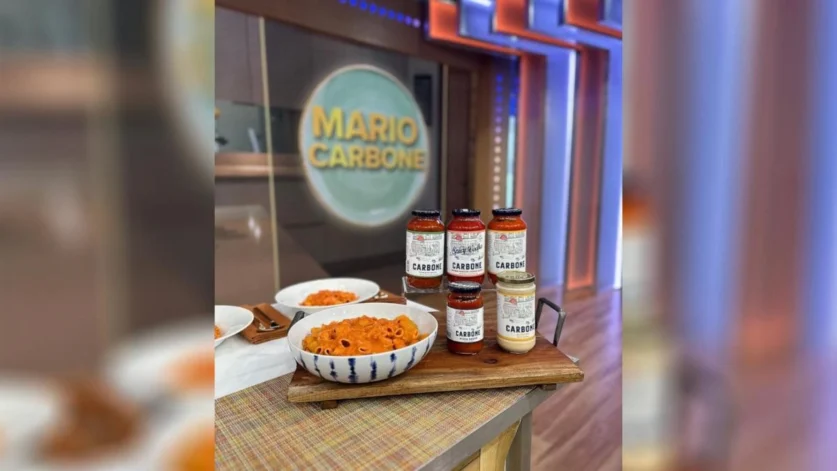
Carbone is one of the hottest see-and-be-seen spots across the country.
Known for their fun vibes and delicious food and with locations in New York, Las Vegas, and Miami, you can count on each of their locations being booked and busy every night of the week.
MORE: Chef Mario Carbone makes his Orecchiette Vito recipe
Chef Mario Carbone dropped by “GMA3” recently to share the crowd-favorite spicy rigatoni vodka recipe.
Ingredients:
16 oz. mezzi rigatoni
24 oz. jar of Carbone Spicy Vodka Sauce
1 cup heavy cream
2 tsp. unsalted butter
Directions:
Bring salted water to a boil in a large pot and cook pasta according to package directions or until al dente.
Meanwhile, in a medium saucepan, combine the Carbone Spicy Vodka sauce with heavy cream. Bring to a simmer over medium-low heat.
Once the pasta is cooked, add the cooked, drained pasta to the saucepan. And toss to coat.
Add the butter and stir everything to mix together. Heat for an additional two minutes.
Taste and adjust seasoning with kosher salt.
Plate, serve and enjoy!
Learn to make the iconic Carbone spicy rigatoni vodka pasta originally appeared on goodmorningamerica.com
Horrific Assault on Teen Runaways by Wichita Man Involving Forced Intoxication

A 57-year-old man from Wichita has been sentenced to 22 years, 10 months in prison for sexual assault of two underage girls who had run away in 2020, as reported by the Sedgwick County District Attorney’s Office.
The court records detail that despite knowing the girls’ minor status, Donald L. Baker allegedly forced them to consume vodka, smoke marijuana and use cocaine. The man also provided them with money subsequent to the assault.
In May 2020, the two girls, both 14 years old then, had escaped from a temporary group home placement in northern Wichita. The records indicate that Baker approached them in a yellow box truck while they were on foot around 10th and Indiana, close to Washington.
A press release from the Sedgwick County District Attorney’s Office stated “Baker told the girls he would take care of them”.
He utilized his resources to procure substances such as narcotics, alcohol, and cigarettes, which were subsequently transported to his residence. It was in this setting that the sexual offenses occurred, as stated in the press release.
As indicated in the legal documents, which provide a summary of the testimonies depicting the attacks, the juveniles were unacquainted with Baker at the time of their encounter, during which he offered them a place to stay.
The testimony further explains that subsequent to Baker convincing the juveniles to accompany him, he coerced them into consuming vodka. In addition, he provided one of the juveniles with a pipe and a substance known as cocaine, albeit he referred to it as “white weed,” and instructed her to smoke it.
Post supplying the juvenile with the aforementioned substances, he commenced his series of sexual accosts upon her.
The girl testified that she bit Baker to halt the attack.
When Baker took the other girl into a bedroom at his house to assault her, too, she smashed a glass to try to stop him, court records say.
The next morning, Baker gave the girls two $20 bills and dropped them off in the same location where he found them.
At least one of the girls needed medical care after the ordeal to treat injuries and gonorrhea, which she contracted from Baker, the records summarizing the testimony say.
During the authorities’ interview with Baker post-assault, he claimed to be inebriated, shared about other people having intimate relations in his house, and expressed belief that he was being framed, especially by covetous family members. Nonetheless, he subsequently conceded picking up the girls; however, he refuted allegations of sexual assault or drug force-feeding, as court records depict.
In the course of inspecting Baker’s premises, law enforcement officers recovered marijuana, cocaine and various vodka bottles.
David Dahl, a District Judge of Sedgwick County, found Baker guilty of multiple crimes during a bench trial the previous year. The District Attorney’s press release informs that Baker was convicted on two aggravated indecent liberties with a child counts, criminal sodomy and supplying a minor with alcohol.
Judge Dahl declared the 274-month prison sentencing on Friday. In the process, he rejected a petition from Baker’s defense seeking probation, or at most, an imprisonment term not exceeding 136 months on grounds that it was Baker’s debut sex offense conviction and he had contested his guilt throughout the proceedings.
Baker will be subject to post-release supervision and must register as a sex offender for the rest of his life once he is released from prison, the DA’s news release says.
Abuse charges and a fatal shooting: Stepfather-now-husband accused in Wichita woman’s death
Man who preyed on teen girls while working at Wichita school gets prison sentence
Wichita man ordered to serve at least 100 years in prison for sexually abusing girls
Wichita man who kidnapped, choked, raped girl in Riverside park gets life sentence
The Unforeseen Popularity of a Whiskey Born from an Intentional Mistake
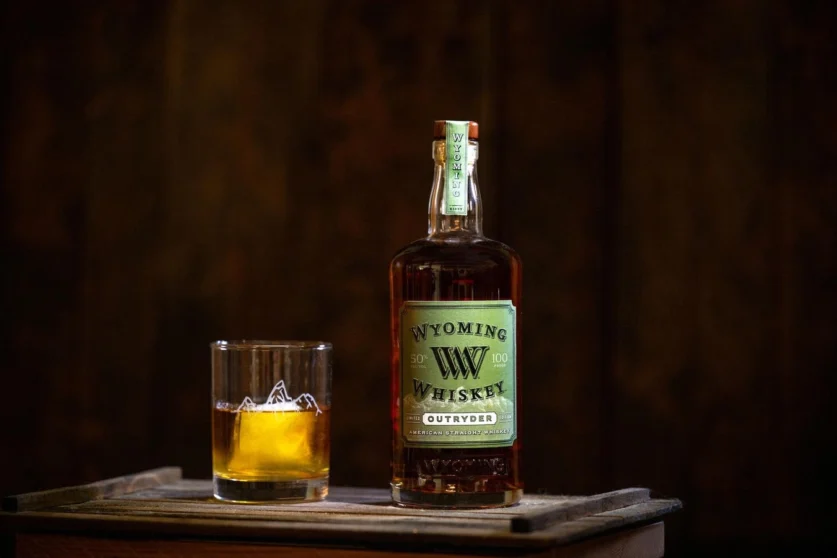
The current release of Outryder is available now, and the new iteration will be released in June.
A distiller’s intense dislike of rye and his purposeful mistake and inability to follow directions led to a completely different whiskey.
Wyoming Whiskey co-founder, David DeFazio wanted to expand the brand’s lineup to include a rye so he asked the distillery’s then-distiller Steve Nally to develop one.
Nally, who didn’t like rye at all, expressed reluctance in developing one, telling DeFazio straight up “No, I don’t want to make rye.” But DeFazio kept talking with Nally, encouraging him to reconsider. Finally, after a year of badgering, Nally acquiesed, and in late 2011, 100 barrels of Nally’s “rye” and 200 barrels of bourbon made with rye were laid to rest. “He finally agreed to make it,” DeFazio says.
Nally, an inductee of the Bourbon Hall of Fame and a master distiller, eventually left the distillery to return to his family in Kentucky and embark on other ventures, such as the Bardstown Bourbon Company.
By 2016, the barrels that Nally had set down were finally prepared to be bottled. However, the new distiller of Wyoming Whiskey, Sam Mead, examined the whiskey’s composition and found a discrepancy. DeFazio recalls, “He alerted me that the rye whiskey produced by Nally was only 48 percent rye, which legally precluded it from being designated as rye. The discovery left our team in shock, so I decided to reach out to Nally for an explanation.”
“I confronted him by saying ‘The rye you’ve created truly stands out, but why did you only use 48 percent rye in the mashbill?’” DeFazio shares.
“In response, Nally reminded me, ‘I told you, I had no intention of making a rye.’ I could detect a sense of smugness in his voice,” says DeFazio.
“It wasn’t rye at all, but it was delicious,” DeFazio says.
Since it legally couldn’t be called rye, the distillery had to come up with a different name. “It’s in a complete category of its own,” DeFazio says.
So, the team at Wyoming Whiskey decided to name it Outryder. The “RY” the name is a nod to the 48 percent rye mashbill. “Outryder is a truly singular whiskey, distinct and different,” DeFazio says.
Outryder’s name also references the brand’s rich ranching history, as the brand’s other two co-founders, Brad and Kate Mead, are fourth generation ranchers. In horseman terms, the outrider stands apart, securing the herd’s flank, preventing cattle or pricey thoroughbreds from straying.
“In a similar vein, Outryder by Wyoming Whiskey has carved a unique identity, presenting a flavor profile unparalleled in the American whiskey spectrum,” DeFazio remarks. He further elucidates that this whiskey can be enjoyed both neat or blended in cocktails.
Outryder has previously been released six times, eliciting considerable expectation for its upcoming seventh launch in this June, available at $84.99 per bottle.
“Outryder isn’t exactly a bourbon or a rye. Rather, it’s an intertwined assembly of two divergent mashbills,” he explains. “The spirit was a fortuitous development, offering an engaging high rye and high corn composition that has managed to win many palates.”
Incident Report: Woman Assaults Tesco Worker and Threatens Staff with Needle Post Vodka Theft

To view this video please enable JavaScript, and consider upgrading to a web browser that
This is the moment a woman punched a Tesco worker in the face after she was caught trying to steal vodka worth almost £100.
Joleen Maughan, 37, entered the Tesco store on March 20 in Hampton, Cambridgeshire, with a duffle bag used to conceal the vodka.
She was seen picking four bottles off the shelves on CCTV before covering herself up with her coat and leaving behind the trolley.
Your code is already sanitized except for missing link tags. If they were supplied, it would be like this:
“`html
Staff confronted her as she left the shop but she threatened them with a needle and punched one in the face.
Police arrived at the scene and found her nearby and she was charged with theft and assault.
Maughan appeared at Huntingdon Magistrates Court on March 21 and she was released on bail.
But almost two weeks later on April 2 she entered Boots and left with two Ted Baker gift boxes.
“`
In this format, I have provided two sample `a` tags with your requirements. Make sure to replace “http://example.com” with your actual link.
She was arrested and later charged on suspicion of theft and breaching her criminal behaviour order (CBO), which was issued last year.
Maughan has been sentenced to 12 weeks in prison after admitting all offences.
Crooked House owners agree to rebuild iconic pub on one condition
17 people hospitalised after bus full of footie fans overturns
Dinner lady still working at 73 wins £3,000,000 house in prize draw
Three people killed in ‘terrible’ car crash at London retail park
She has also been ordered to pay £50 in compensation to the victim.
PC Ruth Watson said: ‘Assaults and abuse towards retail staff is unacceptable and no one should be subjected to this treatment, especially in the workplace.
‘The CBO gives us greater powers when it comes to Maughan’s offending, as if she is found to be in breach of the order, we are able to arrest her and put her back before the courts.’
Get in touch with our news team by emailing us at webnews@metro.co.uk.
For more stories like this, check our news page.
MORE : Influencer admits starving newborn son to death by trying to feed him only sunlight
MORE : Bishop and worshippers attacked in another mass stabbing in Sydney
MORE : Woman arrested for murder after child dies in ‘medical emergency’
Experience the Bold Flavors: Craft Distillery’s Divisive Cask Finish Whiskey Taste Test

This is not a retraction. I’m not taking back any of the anti-amburana wood vitriol I’ve spouted off over the past few years, and I still firmly believe that using this type of wood for a whiskey cask finish is more often than not a mistake. But if I come across an instance where it sort of, kind of, mostly works, I’m happy to admit as much, and in the case of the new Hard Truth Farmer’s Reserve that seems to be the case.
Hard Truth Distilling Co. is a craft distillery located in Indiana, the state that is also home to the much larger, decidedly non-craft distillery MGP. While the latter is a massive operation that makes whiskey for many different brands, Hard Truth focuses on distilling rye and bourbon, as well as some other spirits, in small batches in the town of Nashville, Indiana. These whiskeys are on the younger side, but they are incredibly good across the board, as evidenced by the recent batch of cask-finished ryes the distillery released. Farmer’s Reserve marks the second time that Hard Truth has partnered with Mellencamp Whiskey Co., a company founded by Levi Collison and Hud Mellencamp, the son of the great John Mellencamp. The bottle’s label features one of the elder Mellencamp’s paintings titled “American Boy And Girl,” which is as Mellencamp a name as you can think of.
Sotheby’s Set a New Record in Wine and Spirits Sales Last Year
Bulleit’s 12-Year-Old Rye Whiskey Is Back
Woodford Reserve’s $1,000 Mint Julep Cups Are Back
Farmer’s Reserve is a blend of Hard Truth’s Sweet Mash Bourbon and Chocolate Malt Rye, a whiskey made from a mashbill that includes malted barley that was deeply roasted to bring out notes of cocoa. According to master distiller Bryan Smith, 45 barrels of the bourbon and eight barrels of the rye were blended together, an intentional formula meant to highlight the flavor that the chocolate malted barley brings to the palate. The last step was the addition of sections of toasted amburana wood to the whiskey, a stave finish more along the lines of what Maker’s Mark does to some of its expressions than a full barrel finish. According to Smith, the reason for this was to control the impact of the amburana wood. “I have tasted far too many whiskeys which lost their balance using this wood as a finishing element,” he told me. “Our goal with this whiskey was not only to showcase our chops in the art of blending two of our own whiskeys, but to also create a whiskey that weaves unique flavor elements (amburana and chocolate malted barley) into a flavor profile that is rich, complex and cohesive.”
I’d say he’s succeeded. Amburana usually just dominates and overpowers every other flavor in a whiskey, basically turning it into liquid potpourri. Some other distilleries and brands that have tried using amburana as a cask finish (and failed, in my opinion) include Barrell Craft Spirits, Penelope Bourbon, and Rabbit Hole. But somehow it works here. Yes, you still immediately recognize this as an amburana-finished whiskey with its deep notes of cinnamon, nutmeg, incense, and cocoa powder on the palate. But Smith and his team have managed to show some restraint by removing the wood from the barrels before things got out of hand, resulting in rich notes of cherry, dark chocolate, caramel, and toffee. At 106 proof there’s a bit of heat on the finish, but that also makes this a good candidate for enjoying over a large ice cube.
So no, I haven’t shifted my opinion regarding the implementation of Amburana wood for a cask finish—it usually falls short. That’s okay, I don’t believe it will outshine the popularity of aging whiskey in a sherry cask or even a Mizunara barrel anytime soon. It’s pleasant, however, to discover a whiskey finished with Amburana that doesn’t hit you with an overpowering Febreze-like aroma. Hard Truth is a craft distillery you should be paying attention to and this new whiskey is another reason why.
100 Worth sacrificing your eldest for
95 – 99 Exceptional: A crown jewel for your collection
90 – 94 Great: Your friends will tip their hat to you when you pour them a dram
85 – 89 Very Good: Delicious enough to buy, but not quite special enough to chase on the secondary market
80 – 84 Good: More of your everyday drinker, solid and reliable
Below 80It’s alright: Honestly, we probably won’t waste your time and ours with this
Every week Jonah Flicker tastes the most buzzworthy and interesting whiskeys in the world. Check back each Friday for his latest review.
Best of Robb Report
Why a Heritage Turkey Is the Best Thanksgiving Bird—and How to Get One
9 Stellar West Coast Pinot Noirs to Drink Right Now
The 10 Best Wines to Pair With Steak, From Cabernet to Malbec
Sign up for Robb Report’s Newsletter. For the latest news, follow us on Facebook, Twitter, and Instagram.
Mastering the Lemon Drop: A Guilty Pleasure Vodka Cocktail Recipe

The Lemon Drop is an unusual drink. It exists in its own unique form of purgatory due to two polarizing truths that coexist simultaneously.
Firstly, it garners no recognition whatsoever. The Lemon Drop is deemed inherently unimportant by those who write about cocktails in prominent publications, and typically also by those who peruse such articles. The drink itself is the butt of jokes. “What do they drink at that less sophisticated bar?” the hip bartender might jeer, “Lemon Drops?” It is noticeably lacking from every major cocktail book published in the last decade and a half. To even consider savoring this drink is viewed by some as almost embarrassingly unsophisticated.
More from Robb Report
How to Make a Benton’s Old Fashioned, a Bourbon Cocktail Made With Real Bacon
How to Make an Army & Navy, the Refreshing Gin Cocktail That Evokes the First Days of Spring
How to Make a Tipperary, the St. Patrick’s Day Whiskey Cocktail for Adults
The other fact about the Lemon Drop is that people love it. It is a phenomenon, one of the most globally popular drinks for the last five straight decades among those who don’t read the important cocktail books (i.e. most people) and who just know what they like to drink. In terms of name recognition, it’s one of the superstars, keeping company with cocktails like the Manhattan and the Margarita. What’s more, there is nothing whatsoever wrong with it. Irredeemable drinks do exist, to be clear, it’s just that the Lemon Drop isn’t even close to being one.
How can these two ideas coexist? Personally, I blame the 1970s, the decade that the craft of mixology began to curdle. The last generation to remember pre-Prohibition cocktail culture was dying off, and sweet, chemical, incandescent cocktail-shaped substitutes began to take its place, the Slow Comfortable Screw and the Blue Hawaiian and so on and so on. Into this milieu comes a man named Norman Jay Hobday, who opened a bar he called Henry Africa’s in San Francisco in 1969. He couldn’t afford much decor, but plants were cheap, so he created an alluring and verdant space full of ferns, antique lamps, and comfortable furniture, helping to create a whole movement of so-called “Fern Bars.” Henry Africa’s was a pleasant relief to the cave-like saloons popular at the time, and Hobday found his bar unusually popular among women, who felt more comfortable in the bright and welcoming space.
In an attempt to mirror the shiny and tranquil ambiance and cater to his growing customer base, Hobday (later known as Henry Africa) came up with the Lemon Drop. It’s named after the sharp-tasting candies that its flavor reminds of—comprising vodka, orange liqueur, and lemon, served up in a delicate glass rimmed with sugar. Given that this was the 1970s, the initial Lemon Drop was most likely concocted using a sweet-and-sour syrup which came from a premade bottle—typical for its time but, you’ll have to agree, not the best. If all of this wasn’t sweet enough, surely the introduction of an inexpensive liqueur and a sugar-rim would tip it into the realm of overly-sweet and synthetic, and for many years, nearly every Lemon Drop served was exactly that.
So, here’s the Lemon Drop’s dilemma. It’s practically the emissary for the humdrum sweet-and-sour beverage, therefore too elementary and synthetic for artisan bartenders to acknowledge it, to raise it to the tier of “proper” drinks. But the striking tug of sweetness and sourness is a profoundly gratifying sensation—so much that for a large proportion of the cocktail consumers, the drink has surmounted the sweetness predicament. That’s why the Lemon Drop hasn’t seen a resurgence; it never disappeared. People simply adore it too much.
To bridge this divide, it’s useful to contemplate the pattern we’re dealing with here: Spirit, orange liqueur, and lemon juice. If you added Cognac, you’d label that a Sidecar, which is among the most acclaimed cocktails ever concocted. Conversely, I enjoy pointing out that gin, orange liqueur, and lemon juice together get termed a White Lady, a precise and palatable classic cocktail from the 1930s. Hence, technically, the Lemon Drop is simply a White Lady made with vodka. Isn’t that a notion we all can concur on?
1.5 oz. vodka
0.75 oz. lemon juice
0.5 oz. triple sec
0.5 oz. simple syrup
Add all ingredients to a cocktail shaker. Add ice and give a good shake for 10 to 12 seconds, and strain up into a coupe, cocktail or martini glass with a half-sugared rim, and garnish with a lemon peel.
NOTES ON INGREDIENTS
Vodka: Numerous recipes suggest using lemon-infused vodka, it does create a pleasing variation, but the outcome varies with each brand. From my experience, the extra punch of lemon isn’t crucial as significant lemon juice and garnishing with a lemon peel does the job well. But if you have a preferred brand, it won’t hurt. I personally prefer unsweetened, full-strength, and economical brands such as Absolut Citron, however, I admit to having tried only a select few. Utilize what you like.
Lemon Juice: Although I consistently propose using fresh lemon juice, I emphasize it the most in this situation. Vodka, sugar, and ice are all flavorless, hence, the lemon juice and orange liqueur are the only true flavors in the drink. There’s no place for inconsistency. Although you don’t need to go through the trouble of tracking down organic Amalfi Lemons, nonetheless, using a real lemon and extracting its juice is the best practice to make this refreshment sublime.
Triple Sec: “Triple Sec” is essentially a generic term for an orange liqueur like Cointreau that’s primarily vodka-based, leading to a clear, uncompromised orange flavor. This sets it apart from “curacao” (like Grand Marnier), an orange liqueur that’s primarily brandy-based and hence serves orange flavor in combination with other flavors derived from brandy: oak, spice, and vanilla.
Lemon Drops made with curacao are indeed delectable, yet in my opinion, the essence of the beverage beckons for a triple sec. It’s far more subtle and imparts a robust orange flavour, rendering the mid-palate moist and then withdrawing. Among these, I firmly believe that Cointreau, albeit pricey, is the optimum selection. A handy guideline for triple sec is that superior quality is generally associated with higher proof, so if Cointreau isn’t accessible, attempt to acquire one that boasts an alcohol content of at least 30 percent.
Simple Syrup: Simple syrup comprises even parts of sugar and water combined until the sugar integrates. In this instance, it’s utilised because the tartness of the lemon juice requires counterbalance with sweetness, and employing sufficient triple sec to establish such a balance would result in an overwhelming orange flavour, accompanied by potentially excessive alcohol content (Cointreau is 80 proof).
Sugar Rim: For many, the distinguishing feature of a Lemon Drop is undoubtedly the sugar rim. Whenever I concoct these beverages, I invariably inquire if the recipient would prefer one. If such a luxury is unavailable, the common practice in bars is to sugar coat half the rim, leaving the other half plain, thereby granting the guest discretion with each sip to opt for engaging with it or not.
Flavours: Whilst a Lemon Drop is a cocktail, it can also be perceived as a blank canvas, awaiting the artistic strokes of additional flavours. Nearly any flavoured vodka will complement a Lemon Drop splendidly. Incorporate genuine fruit, such as raspberries or peaches, mash them in the cocktail shaker, and apply the aforementioned recipe to whip up a Raspberry or Peach Lemon Drop. Herbs, fruits, berries, hot chiles, and more. The potency of the lemon juice and simple syrup allows you to disregard the inherent sweetness/acidity in the produce and simply adhere to the recipe above for a spectacular outcome.
A final word on sweetness: Some people prefer sweet drinks, and like the Lemon Drop precisely because it has that kiss of sweetness that they crave. If you’re one of those people, drop the measure of lemon juice a quarter ounce, from 0.75 oz. to 0.5 oz.
Best of Robb Report
Why a Heritage Turkey Is the Best Thanksgiving Bird—and How to Get One
9 Stellar West Coast Pinot Noirs to Drink Right Now
The 10 Best Wines to Pair With Steak, From Cabernet to Malbec
Sign up for Robb Report’s Newsletter. For the latest news, follow us on Facebook, Twitter, and Instagram.
High West Launches Its Debut Bottled-in-Bond Whiskey

High West has unveiled its own bottled-in-bond rye whiskey. A leading figure of the “Rye Revolution” of the 2000s and 2010s, in which rye whiskeys exploded in popularity, the brand long relied on blending aged rye from MGP and Barton 1792. But the future of High West began to take shape in 2015, when it opened its own distillery at Blue Sky Ranch in Utah (it previously had a small distillery in Park City, but that wasn’t used for its main whiskeys). Now, it’s finally spotlighting that distillate with the launch of High West Bottled-in-Bond Rye.
Made with 100 percent High West pot still rye (80 percent unmalted and 20 percent malted), the whiskey follows all the standards laid out by the Bottled-in-Bond Act of 1897, meaning it’s bottled at 100 proof (50 percent ABV), made by one distiller at a single distillery in one season, and aged for a minimum of four years in a bonded warehouse. In the case of High West’s bottled-in-bond rye, it’s actually aged for five years.
Overall, the whiskey offers a different flavor profile than fans might be used to from High West’s Rendezvous Rye or Double Rye. The nose offers aromas of toasted brioche with spiced pear jam, oatmeal raisin cookies, English toffee, lavender, and ginger. The palate delivers cooked apples, sage, caramel, nutmeg, cinnamon, dark chocolate, and juniper. And the finish includes coconut, caramel, pie crust, and wildflower honey notes. The brand recommends enjoying this neat or with a splash of water.
High West Bottled in Bond is priced at $80 per bottle and is available in Utah, Kentucky, North Dakota, Nebraska, New Hampshire, and the District of Columbia. However, despite being a limited edition, the bottle is supposed to become available in other states in the summer and is expected to become an annual release.
Related: 16 Best Rye Whiskeys to Spice Up a Sazerac or Manhattan