Beer-articles 1026
Discover Oklahoma’s Unique Lunchbox Drink: An Unusual Blend of Beer and Orange Juice

While numerous U.S. cities boast signature dishes – such as the well-known Chicago-style hot dogs, Philadelphia cheese steaks, and Baltimore crab cakes – city-specific cocktails don’t share the same popularity. Indeed, New York has its Manhattan and New Orleans its Sazerac, apart from that, what else? Maybe the beer that put Milwaukee on the map? (To clarify, this characteristic beer is Schlitz, a previously idle beer brand that made an unexpected comeback in the 21st century.)
Nonetheless, Oklahoma City does claim a lesser-known cocktail as its speciality: The Lunchbox. This unique concoction is a spin on the beer-mosa as it’s prepared by blending beer with orange juice. And not any random beer, but specifically Coors Light, which is brewed in multiple locations (including Milwaukee, former home of Schlitz), but not in Oklahoma. The Lunchbox also includes a hint of amaretto which adds a note of sweetness to the libation and marginally ups its alcohol content.
You might like: Popular Vodka Brands Ranked From Worst To Best
Oklahoma City firmly states that the Lunchbox is its signature cocktail. However, the claim is slightly more localized than it first appears. This distinctive drink is the official beverage of a local bar named Edna’s. The signature cocktail was allegedly created by the namesake owner, Edna Scott, back in the early ’90s. While attempting to create a different drink, Edna supposedly stumbled upon The Lunchbox – although the details of her original intent are unclear. Speculation from her daughter, Tammy Lucas, suggests it may have been a boilermaker. Still, the true story remains uncertain as Edna passed away in 2014.
Edna’s Mistake is a popular drink that gained prominence in the ’00s when it went viral. By now, Edna’s bar is best known for this drink, with more than 2,789,251 sold by the end of 2022. The bar is hopeful that they have surpassed their 3 million milestone.
Known as the Lunchbox, this simple drink consists of Coors Light and orange juice mixed in equal proportions with a splash of amaretto. The defining aspect of the Lunchbox is its presentation in a frosted mug, a factor credited by Edna’s grandson, Michael Whitney, for the drink’s success. There is such a demand for these chilled mugs that two entire freezers are dedicated to them.
There have been several interpretations of Lunchbox with 14 different variations available at Edna’s. Some of the popular versions include the Zombie Box, the ’80s style Sex on the Box with an addition of cranberry juice, the Docbox which swaps the orange juice with cranberry, the Mauibox that opts for pineapple juice, and the Tootsie Roll Box which has a hint of crème de cacao. A non-alcoholic version, called the Boombox, is also available.
Find out more about non-alcoholic beer here.
While Edna’s claims originality, the Lunchbox is available in other bars, particularly in Oklahoma City. For those interested in a more sophisticated spin, Jimmy B’s offers an Anime Lunchbox that retains the amaretto but replaces the regular orange juice with yuzu and beer with shōchū. A topper of Sapporo foam adds a beer-like frothiness to the concoction.
Read more on the intricacies of regional cocktails here.
Other locations, such as Bellingham, Washington, also serve their unique variations of the drop shot. Their specialty is the Peruvian Bearf***er, a twist on the Lunchbox, but with Captain Morgan’s in place of Amaretto. However, the ratio of beer to orange juice can vary according to the individual preparing the drink. Generally, beer is preferred over orange juice. An alternate form of the Lunchbox, introduced in Baton Rouge in 1993 by a bartender named Pam Sandoz at the Gold Club, an adult entertainment establishment, incorporates peach schnapps into the beer-orange juice blend, and Bacardi 151 rum into the amaretto drop shot.
To know more, read the original article on Mashed.
Black Pond Brews Creates a New Beer to Support Anchor Brewing – A Story of Brewery Solidarity

Draft beer
Black Pond Brews in Dayville has re-released its Connecticut Uncommon beer to help brewery workers across the country, according to its Facebook and Instagram pages. A portion of proceeds from the special release, posts say, will go toward employees of Anchor Brewing in San Francisco, who are hoping to buy back their brewery.
Anchor Brewing, founded in 1896 and known for its Anchor Steam beer, was bought by Sapporo Breweries in 2019. Earlier this year, Sapporo moved to liquidate Anchor. Employees formed a co-op with the hope of buying back the brand and carrying on as a worker-owned brewery. The co-op has created a GoFundMe page for public help and a WeFunder page for would-be investors.
Additionally, some breweries are donating a portion of proceeds from special releases to this cause, according to beer industry news site Brewbound.
Black Pond announced the re-release of Connecticut Uncommon on Dec. 6, as stated on the brewery’s Facebook page. There was no immediate representative available to comment on the amount of proceeds to be donated. According to the Facebook page, it’s the first time in five years that the beer is available. The beer is offered on draft and in cans featuring the Golden Gate Bridge of San Francisco on the label.
Black Pond’s social media pages mention that Anchor Steam is recognized as a “California Common” style of beer. As reported by Brewbound, Connecticut Uncommon is a twist on this style.
A post on Black Pond’s Facebook page declares, “What sets ours apart is that it’s brewed with rye, providing a unique, zesty, dry taste that ends crisply”.
Black Pond is among the four California breweries that have released beers for this cause. As per Brewbound, other participating breweries are Enterprise Brewing Co., Fox Tale Fermentation Project, Mad Pursuit Brewing Company, and Ruhstaller Farm.
New Modern Beer Pub with German Influence Opens in Lancaster County
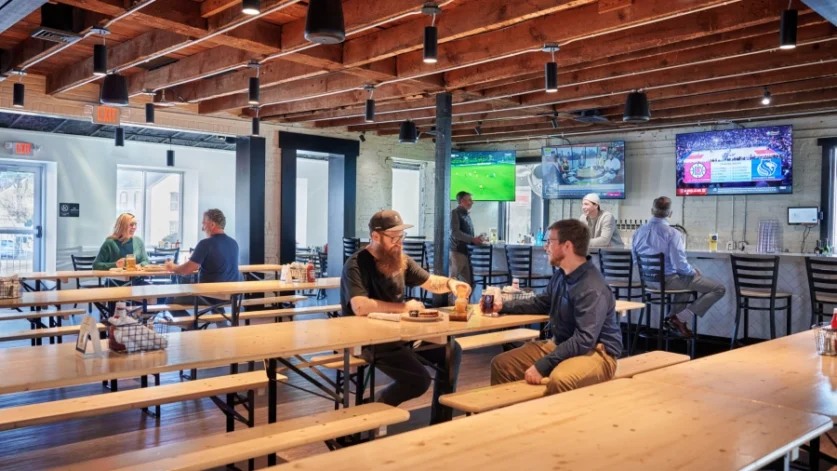
LANCASTER COUNTY, Pa. (WHTM) — A locally owned brewery recently unveiled its new German-style beer pub in Lancaster County.
The new BierHall Brewing (pronounced ‘Beer Hall’) is owned and operated by two brothers named Jim and Chris Rommel, who were both born and raised in Lancaster County, PA.
Jim says that about a decade ago, his brother Chris received brewing training in Germany and has since continued to hone his craft back here in the States. Together, the brothers’ new BierHall Brewing location in Lancaster offers a wide variety of German-style brews, such as Ale’s, Stouts, Lagers, and more!
Thanks for signing up!
Watch for us in your inbox.
Subscribe Now
In addition to their personally brewed beers, the new BierHall Brewing also features a full food menu for guests to enjoy as well.
“We serve a mix of German-American bar food, like our schnitzel and potato pancakes, which we make in-house,” Jim added.
BierHall Brewing officially opened on Saturday, November 18, at their inaugural location at 1703 New Holland Pike. Jim says that the new site showcases a 10-barrel brewing system, as well as a 2,700-square-foot dining area that can hold approximately 150 guests at once.
The interior of the establishment also features big, German-made beer hall tables that Jim believes help create a “German feel” inside the newly remodeled space, in addition to fostering a communal atmosphere for its visitors.
The current operating hours of BierHall Brewing are:
Mondays // 3 p.m. to 10 p.m.
Wednesdays – Fridays // 3 p.m. to 10 p.m.
Saturdays // 11 a.m. to 10 p.m.
Sundays // 11 a.m. to 9 p.m.
Jim indicates that in the future, he along with his brother, might contemplate extending their operating hours to include lunchtime service during weekdays.
“Opening BierHall Brewing feels unbelievable,” expressed Jim. “The journey here has been quite tumultuous. We spent almost two years just looking for suitable property.”
Long time Stromboli restaurant announces Harrisburg closure; second in the Midstate
“Finding a location at home [in Lancaster] was a pleasant surprise. This market is absolutely perfect for this type of business! The bar is set high here, and we’re striving to surpass it,” he concluded.
Since their November 2023 grand opening, the Rommel brothers have created about 28 new jobs at their pub.
abc27 news will keep you updated as more information becomes available.
For the latest news, weather, sports, and streaming video, head to ABC27.
How Dunedin’s House of Beer Prioritizes Serving Their Community
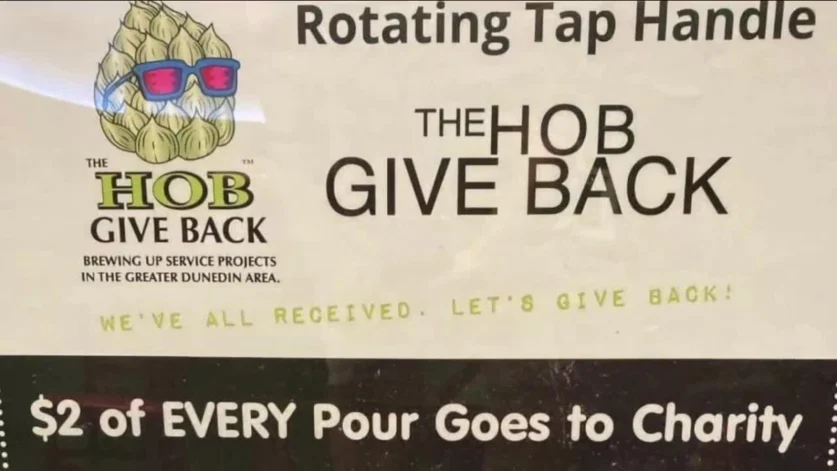
One year ago, the House of Beer in Dunedin initiated “The HOB Give Back,” an extensive service initiative designed to assist community members in need. Kim Polce, who co-owns the brewery and taphouse with her husband Andy Polce, said, “We observe an ongoing need in our community which motivates us to do more. It has been a staggering experience.” Surprisingly, in a short period, the House of Beer, synonymous with fun times and cordial people, has been able to support over 7,000 households facing food insecurity, as many Pinellas County elementary school students who lack weekend meals, and countless local charities.
Beer Nut: Unique Gift Ideas for Beer Enthusiasts, Part 1

We’re well into the holiday season, so as is my usual practice, I will spend today’s and next week’s columns providing gift ideas for the beer lover among your friends and family.
Some of these ideas (or some iteration thereof) might have been mentioned in past columns, but most are new. Let’s get started.
First up are a few different gifts from , which had a decent number of decent gift suggestions. One I found very interesting was the Ultimate At-Home Beer Pint Maker. This kit ($58-$239) gives beer aficionados a way to simply brew 10 pints of beer fairly quickly and easily. The kit includes both the brewing gear and ingredients in fresh-press packs.
According to the ad, users simply need to combine the prepackaged ingredients in the brewer, let it ferment, refrigerate, and tap in a few days. Also included are two more packages of ingredients. Further packs for more brewing are available for purchase.
I can’t vouch for how good the beer will be, but I think it’s worth taking a shot.
also offers a stocking-stuffer type of gift that I, being a huge fan of dogs, just love: the Go Fetch Magnetic Bottle Opener. Made from beechwood and stainless steel, this unique bottle opener has a dog’s head for the prying apparatus, allowing this pooch to use his mighty jaws to open your next brew. The device goes for $15.
Next up is a tried-and-true gift that can’t fail to please your beloved beer fan: a subscription to . This provides your beer buddy with a 12-pack of four different types of microbrews once a month. You can choose to make your gift for two, three, four, six or 12 months. The cost runs between $52.95 and $55.95 per month.
Membership also includes a Beer Expeditions monthly newsletter subscription that provides all the information on that month’s selection of beers and breweries, from fun facts to tips and tricks.
Last but not least for this week’s suggestions is a very classy idea: Spiegelau Craft Beer Tasting Kit Glasses. Beer aficionados are renowned for their appreciation of using the right kind of glass for various beers. This gorgeous set of four glasses includes – depending on which set you order – some combination of a tall pilsner glass, a lager glass, an IPA glass, a Hefeweizen glass, a stemmed Belgian beer glass and a tulip-shaped glass.
A set of four costs between $38-$43.
If none of these grab you enough, stay tuned. Next week I’ll be providing more ideas across an even wider price range. Cheers!
If you purchase a product or register for an account through a link on our site, we may receive compensation. By using this site, you consent to our User Agreement and agree that your clicks, interactions, and personal information may be collected, recorded, and/or stored by us and social media and other third-party partners in accordance with our Privacy Policy.
Beer of the Week: Shiner – The Perfect Blend of Palatable, Affordable and Accessible

Welcome back to FTW’s Beverage of the Week series. In this space, we mainly discuss and review a variety of beers, but we don’t limit ourselves, any drink that pairs well with sports is welcome. Indeed, even cookie dough whiskey.
Shiner Bock occupies a unique position in the realm of smaller beers that have achieved widespread popularity. It’s a beer that is mass produced but it still maintains a strong connection to its local origin.
Just as Sam Adams is intrinsically linked with the city of Boston, Shiner is unquestionably Texan. Although the iconic Massachusetts brewer is known for being a trailblazer in the craft beer sector, Shiner has a more universally appealing vibe. It seems more accessible. It lacks pretentious airs.
A lot of this down-to-earth appeal stems from Shiner Bock, the company’s centerpiece beer, which is just refreshingly simple to drink. It’s basic, unpretentious, malty goodness that’s a notch above the generic golden lagers found in most supermarkets or bottle shops. And you can often get it for just a tiny bit more than what you’d pay for a Miller High Life or a Coors Banquet beer.
Shiner is known for more than its Bock. Do the other beers produced by the company meet the expectations set by its well-regarded headliner? The arrival of cooler weather, although still mild by Texas standards, has introduced a collection of new seasonal beers from the brewery. It’s time to try these new options.
The first taste confirms this. Its roasted malt leans toward caramel instead of chocolate, but overall its taste mirrors its aroma: rich and full-bodied. A subtle note of hoppiness emerges towards the end, adding a touch of bitterness.
The roasted malt hints at a bit of coffee. Despite its lack of complexity, it’s a high-quality beer that’s readily available at most liquor stores at reasonable prices for a six-pack. It’s easy to enjoy, and not one that would become tiresome after two or three drinks. Whilst the chilly weather sets in, this beer may not exactly be a warmer, but it’s a good choice to sip by a fire, or more likely, while enjoying a lineup of bowl games from the comfort of your couch.
The beer is a rosy golden yellow shade when poured, topped with about half an inch of frothy white foam. The aroma reveals a touch of juicy citrus – perhaps tangerine or pineapple – along with some light hops.
Enriched with fruity flavors yet having a dry finish that imparts a subtle bitter hop taste. Far from overwhelming, it gives you gentle reminder of its pale ale roots, veiled under a vibrant pour and tangy aroma. The dry inclusion keeps the juice from dominating the brew and encourages repeat tasting.
However, the flavorful quotient could have been enhanced a notch. It stands in the good range, missing out on greatness. That said, having in mind the $7 cost per six-pack, it presents good value and is conveniently available everywhere.
This beer has less than 100 calories, comes with a large frothy head that fades away quickly indicating that the carbonation’s main role here is to make a less memorable taste linger on your taste buds only briefly. The aroma is refreshing and slightly like soap, this quality diminishing when you pour it out of the can.
Overall, the beer experience can be summed up as a smooth, carbonated journey devoid of any robust flavor. You’ll get some corn and light beer traits but mostly, it’s an unremarkable 99 calorie beverage. Still it’s alright. Perhaps it trumps a Miller or Coors light, but remember, taste preferrences can differ.
Releasing the seal on the can brings out a potent blend of citrusy sweetness with a hint of floral nuances. It offers a two-inch froth that promptly fizzles out. Everything indicates this would be an ideal beer to gulp down during hot weather conditions.
However, the balance seems a bit off. It’s sort of halfway between fructose sweetness and being a lager, without fully gratifying either aspect. The aroma is delightful but tastes slightly lacking, like an Abita Purple Haze that gave up midway between brewing and bottling. It’s a perfect choice on a scorching day, but there’s not much to it. It’s a disappointing start in a can, but not entirely off-putting.
The pour is consistent with Shiner’s other beers; showcasing a sizeable head that scurries away before you can whinge about the froth. It gives off a malty fragrance with a hint of fruitiness. It reminds one of grainy malts and carbonation, in the most wonderful manner. It’s an easy-to-drink beer that tastes distinctly like beer, a touch that works exceptionally well at a tailgate, a gathering, or a formal dinner.
Shiner Bock is like a chameleon, a budget-friendly beer that surpasses its expected taste and exudes an elegant look uncharacteristic of a Southeastern Texas origin. It’s an ideal choice for those shopping at Target, being more reasonably priced than the overhyped craft beers that a bulk retailer with minor interest in beer tends to promote, and outshines the other typical beers lined up beside it. Although options better than Shiner Bock are available, but in terms of accessibility and cost, the Spoetzl Brewery’s has got your covered.
Shiner exists on the same plane as Hamm’s for me. Inexpensive and utterly drinkable. I don’t quite hold it in the same reverence as Hamm’s — seriously, Hamm’s is great, dirt cheap beer — but I’ll never turn one down. Except maybe the Prickly Pear. That was a little disappointing.
Sign up for our newsletter to get updates to your inbox, and also receive offers from us, our affiliates and partners. By signing up you agree to our Privacy Policy
Suspect Arrested for OVI Requests Beer and Shot While in Jail: Details from Westlake Police Blotter

Westlake police cruiser (file photo)
WESTLAKE, Ohio –
OVI: Center Ridge Road
An officer at 2:45 a.m. on Nov. 27 stopped a weaving vehicle on Center Ridge Road near Glenmore.
The 39-year-old driver of the Mercedes appeared intoxicated, slurred his words, and said he was headed home from work, which happened to be a bar. The officer arrested the suspect for OVI and charged him with lane change violations after administering a field sobriety test.
When the suspect arrived at the Westlake jail, he asked the jail staff for a “shot and a beer,” according to a police press release. He refused a breath test. He was later released to a sober friend.
Vehicle crash into building: Crocker Road
The Westlake police and fire departments responded at 11:30 p.m. on Nov. 26 to a report of a vehicle crashing into a building in the 2000 block of Crocker Road.
The building was evacuated as a precaution. Officers determined that an elderly female driver pushed the accelerator instead of the brake, causing the car to jump the curb, hit a signpost, and finally the building, according to a police department statement.
No one was injured and the business, Mission BBQ, reopened that day, according to the police.
OVI: Crocker Road
A witness at 8:30 p.m. Nov. 22 called the Westlake Police Department to report that a possibly intoxicated driver was weaving while driving a Hyundai on Crocker Road.
Officers spotted the sedan and noted that it did not maintain its lane and almost struck stopped traffic at Union Street. When officers stopped the vehicle, the female driver said she was headed to Twinsburg and was coming from Twinsburg. Officers also spotted vomit on the floorboard.
Officers arrested the 34-year-old Twinsburg resident for operating a vehicle while impaired after administering field sobriety tests. The woman refused a breath test.
Officers discovered that she had six prior OVI convictions since 2008. Her license was still suspended due to a 2021 OVI arrest. Westlake police charged the woman with felony OVI and refusing a chemical test with prior OVI convictions, driving under suspension, and failure to drive in marked lanes.
OVI: Hilliard Boulevard
On Nov. 23, just before midnight, a caller to the Westlake Police Department reported there were two dogs at large near Hilliard and Bordeaux.
Officers checked the area and found one of the dogs, which was captured and brought to the city kennel to keep it safe.
A bit later, a resident called the police department to report that his dogs got out of the house. He was advised that one of them was relaxing with kibble in the kennel.
When the Westlake man appeared at the front window of the police department to retrieve his lost pet, officers noted that he was slurring his speech, his clothes were disheveled, and he smelled strongly of an alcoholic beverage. The 61-year-old had left his vehicle unattended and running outside the police station.
Officers initiated field sobriety testing in the lobby and noted that the dog owner stumbled into a wall during testing. The man provided a breath sample, which showed his blood alcohol level was 3½ times the legal limit. This was his third OVI arrest in a little over three months, according to a police statement. Later, a sober person arrived at WPD to bail out the driver and his canine friend.
Get police blotters by email every weekday for free with our new Police Blotter newsletter. Sign up at cleveland.com/newsletters.
Read more from the West Shore Sun
If you purchase a product or register for an account through a link on our site, we may receive compensation. By using this site, you consent to our User Agreement and agree that your clicks, interactions, and personal information may be collected, recorded, and/or stored by us and social media and other third-party partners in accordance with our Privacy Policy.
Black Pond Brews Supports San Francisco Brewery on the Verge of Closure with the Launch of a New Beer

Mike Teed and Cory Smith, the brains behind Black Pond Brews located in Dayville, entered the brewing scene about twelve years ago. Their inspiration stemmed from the Anchor Steam beer produced by San Francisco’s Anchor Brewing.
Their homage to Anchor Brewing materialized in the creation of the Connecticut Uncommon beer, a play on the California Common beer style, a category under which Anchor Steam falls. However, Connecticut Uncommon took a backseat for a period of five years as lighter beers gained traction at Black Pond.
With the threat of closure looming over Anchor Brewing, Black Pond decided it was time to reintroduce Connecticut Uncommon. Part of the proceeds from the sale of this beer will be used to support Anchor.
Discussing the monumental influence of Anchor Brewing, Smith stated, “Anchor Brewing, being the oldest craft brewery in the nation, had a profound impact on us when we first got our start in homebrewing. Their influence was so substantial that we initially launched with a California Common style beer. The American craft beer industry would undoubtedly suffer a great loss if this particular brewery were to disappear.”
Connecticut Uncommon is described as an ale/lager hybrid by Smith, a concept that was initially brought to light by Anchor.
He expresses that this hybrid gives you the refreshing, pure characteristics present in a lager, whilst also exuding some fruity notes generally found in ales.
The link between Black Pond and Anchor was established through the medium of their graphic designer, Alan Duda. Not only the creator of Black Pond’s logo, he also designs their beer labels. Hailing from San Francisco, Duda was instrumental in linking Teed and Smith with the team at Anchor.
In partnership with Joel Salisbury, Duda forms duda+salisbury – the advertising partner for Black Pond. They are the creative minds behind the new Connecticut Uncommon cans, which brandish the image of Black Pond’s mascot, Mr. Kitty, set against the backdrop of the iconic Golden Gate Bridge. In fact, Mr. Kitty was a permanent resident at Black Pond Brews during their days at the old Danielson location.
Though this is the first time Black Pond has raised funds for another brewery, they are no strangers to charity. Black Pond regularly raises funds for the Paws Cat Shelter in Woodstock and collects holiday gifts for local children in need.
Smith said Friday morning that the rerelease of Connecticut Uncommon is off to a solid start. It was Black Pond’s top-selling beer Wednesday and Thursday.
“People are excited to see it back,” Smith said Friday morning. “I’m sure we’re going to see a bunch more sales over the weekend.”
This article originally appeared on The Bulletin: Dayville brewery re-releases beer to aid California brewery
The Shift from Beer to Cannabis: A Decline in Beer Consumption Trends

TD Cowen names alcohol producer Constellation Brands (STZ) as the company with the best growth story in US beer as sales of Modelo surged in 2023. TD Cowen Managing Director and Senior Research Analyst Vivien Azer joins Yahoo Finance Live to break down the current state of beer and wine consumption in the US.
Azer notes the decline in beer consumption and credits “intentional abstinence” by younger age groups that appear to be shifting to cannabis consumption, an industry that has seen revenue of $26 Billion. Azer sees this trend as a “dislocation” from alcohol to cannabis, which is making a dent in the alcohol market.
Speaking to M&A activity, Azer notes a “reversal” for craft beer acquisitions.
For more expert insight and the latest market action, click here to watch this full episode of Yahoo Finance Live.
DIANE KING HALL: And I want to ask– I don’t know if this comes up in your research. The impact of, say, the GLP-1 discussion, and there’s been talk about it impacting people’s appetite for beverage. Is that a headwind that is facing any of these beer makers?
VIVIEN AZER: Potentially, if we assume that the early adopters of GLP-1s are higher income consumers. Higher income consumers tend to over-index to wine. Where we have been very vocal around restraint with alcohol consumption as a combination of intentional abstinence, which we find to be outsized with younger consumers taking a week or month-long breaks, something like a Sober October or Dry January, as well as the interaction with cannabis.
The cannabis market is now $26 billion in revenues as of 2022. So that’s over 10% of the alcohol market, and it’s big enough now where we believe we’re seeing dislocation away from alcohol sales into the legal cannabis market. And it’s a way for consumers to take a break from alcohol by substituting it with cannabis.
We see a particular trend with 18 to 25-year-olds. There’s been over a decade long divergence where past month alcohol consumption with 18 to 25-year-olds has been on the decline. But reported past month cannabis incidents has been on the rise.
BRAD SMITH: For many companies, their growth story often revolves around strategic acquisitions. As such, are there any significant M&A activities we should be anticipating for next year? I’m particularly interested in brands that have done well independently and might be targeted by larger entities like Constellation, which has a history of making strategic acquisitions, to expand their portfolio.
VIVIEN AZER: 2022 is definitely going to be intriguing. Throughout the pandemic, there has been a trend reversal in M&A activity for beer specifically. Previously, we saw many acquisitions of craft beer brands, including Constellation Brands’ acquisition of Ballast Point, along with several others made by ABI and Molson Coors.
Recently, however, we’ve witnessed a de-acquisition of these assets. ABI, for example, offloaded nine brands to Tilray, a Canadian cannabis company that also owns Sweetwater in Atlanta and Montauk, a craft beer offered in New York. Major operators seem to be cleaning up their portfolios, while there has been an increase in bolt-on M&A activities within distilled spirits.
Opening of Maryland’s First Ever “Beer Spa” This Weekend

It’s time for adults to take a bath! What could be more relaxing than enjoying a beer and soaking in it? Welcome to BierBath in Sykesville, the inaugural “beer spa” in Maryland. READ MORE