Viral TikTok Shows Little Girl Drinking from Beer Can at Texas Game

Arch Manning’s debut as the Longhorns’ starting quarterback was massively overshadowed by an off-field incident during Texas’ 51-3 victory over Louisiana Monroe. During the game, attention shifted to a young girl in the stands who appeared to be drinking from a Michelob Ultra can ensconced in an orange koozie, captured in a widely viewed TikTok video.
The video uploader commented on the scene, noting their disapproval with the caption: “Toddler drinking is really bad.”
Trending under the hashtag #babygotabeer, the incident sparked widespread online conversation about the appropriateness of such behavior in public settings.
The young fan from Texas, with her face painted white and sparkling space buns in her hair, sipped from a can while the brunette woman beside her was leaning down.
Initially, the adult did not realize what was occurring, but the girl continued to drink even after the woman straightened up.
As of Wednesday, the video has accumulated over 5.4 million views.
In the comments section, several viewers queried whether any spectators had alerted the adult to the child’s actions.
“We [told the mom] but by that point, she needed a new beer,” the person who shared the video reportedly said.
There was also a young boy who was seen drinking out of a water bottle while sitting next to the girl.
“No I’m genuinely confused… did the mom just not notice?” one person wrote in the comments.
“Is that canned water because they’re selling that now at games,” another added.
Others mentioned that people at the game were emptying cans and filling them with water.
The Longhorns dominated the Warhawks to win their fourth straight game to start the season.
Manning completed 15-of-29 passes, throwing for 258 yards with two touchdowns and two interceptions.
He was relieved by freshman Trey Owens in the fourth quarter with the game well out of hand.
The Longhorns will play against the Mississippi State Bulldogs in Texas on September 28.
Exploring Elegance: The Top 10 Wine Bars in New York City
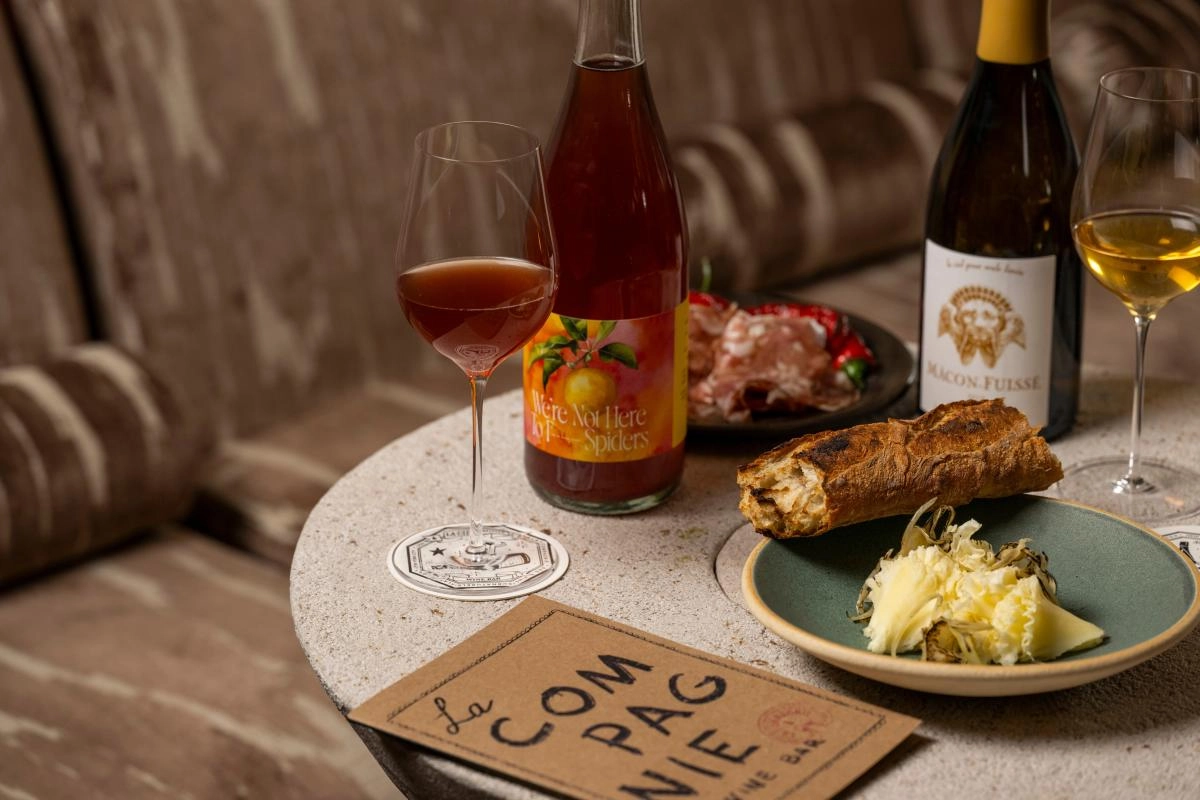
Evan Sung/La Compagnie
The best wine bars in New York City exude a refreshing fluidity and freedom, showcasing their unique style whether it’s a chic spot for a power lunch, a snug bar on the Lower East Side, or a peaceful backyard in Brooklyn. Chase Sinzer, owner of the Penny wine bar and Claud restaurant in the East Village, describes, “A wine bar might focus more on the wines, inviting patrons to explore the bottles displayed or help themselves to wine from an ice bucket, providing a more casual atmosphere.”
This broader definition of wine bars means that New Yorkers now have easier access to exceptional wines from across the globe. “You can now enjoy Meursault Roulot in Brooklyn, a luxury previously reserved for the top Manhattan restaurants,” states Aldo Sohm, wine director at Le Bernardin. “This diversity excites people about wine, even in more-casual settings.”
If you’re eager to explore Croatian orange wines with friends, or indulge in a Premier Cru Burgundy without breaking the bank, New York City’s wine bars cater to all tastes and occasions. Here’s a guide to where to go and what to try.
At its original Chinatown location, online-bottle-shop-turned-bar Parcelle nails the living room feel that so many wine bars attempt: Guests lounge on emerald-green corduroy armchairs while leafing through a 500-bottle-strong menu that, refreshingly, offers a generous range of picks for under $100, as well as a tidy sake selection. This is one of the few wine bars (especially in this neighborhood) that caters to natural wine devotees as well as fans of, say, rare Bordeaux.
And the newly opened Greenwich Village location of Parcelle sits more firmly in the restaurant category, which makes it better for a full meal; heavy-hitters include the rigatoni with pork and fennel, duck confit, and yellowtail tartare. This location boasts an entirely different wine list from the original, and all of the wines served on-premises are available for delivery through Parcelle’s retail business—meaning you won’t have to go to great lengths to track down that stand-out pick you ordered over dinner.
This is the perfect wine bar to take a party full of dietary restrictions; much of the food is vegetarian, vegan, or gluten-free—even the four-course, prix-fixe menu, which is the antithesis of any fussy, over-tweezered tasting experience. Since 2016, this natural-wine powerhouse on the city’s Lower East Side has been pouring over 250 wines by the bottle, organized into cheeky yet helpful categories like: “stoop sipping,” “toothsome reds,” and “roasted whites.”
It’s easy to step outside your tried-and-true grapes with this bottle list, which features wines you’re unlikely to come across at every other menu in the city. There’s an emphasis on Eastern Europe—think Kekfrankos (commonly known as Blaufrankisch) from Hungary, and Greek Malagousia, which is described as a stand-in for Chablis.
If you’ve ever struggled to find a wine bar that your pregnant best friend, your annoying colleague who can’t stop talking about low-sulfur wines, and your Barolo-loving in-laws would all enjoy, Compagnie has been the answer all along. The SoHo location opened in 2014 and remains a pillar in the city’s wine scene thanks to beloved events with fun focuses, like Orange Crush and Bojo (as in Beaujolais) Burger Mondays.
While the wine list emphasizes a breadth of French wine, it also boasts a satisfying selection of options from Germany, Spain, and the United States. You’ll also find plenty of nonalcoholic options (over 20 bottles, to be exact) that include fermented teas and dealcoholized wines, some sparkling. The sleek new Flatiron location opened just last month with even more seating than the original and an entirely new menu. Expect stand-out snacks like wagyu skewers, za’atar and feta chickpeas, and some delectable gougeres.
One of the few wine bars in New York City that can accommodate larger groups, even as walk-ins, it’s surprisingly easy to find a pocket of seating here that makes this bustling space feel surprisingly private. There’s also almost always a class, tasting, or industry event going on, which makes it as much a community hub as it is a wine bar.
Corkbuzz’s original Union Square location is a must-visit for its thoughtful wine flights, which range from sommelier’s choice to Iberian hits. The bottle list has some serious range, with cheap and cheerful Beaujolais for $50, as well as Premier Cru Burgundy—and then there’s the outstanding Champagne selection, offered at retail price. Feeling peckish after a few glasses? The charcuterie spreads are generous and always play nicely with the seasonal, rotating flavors of popcorn.
Discussing New York City’s wine scene inevitably brings up Sohm, who runs the wine program at the acclaimed Le Bernardin and authored Wine Simple, a comprehensive guide brimming with advice on selecting delightful wines. His namesake wine bar, Sohm, marks its 10-year anniversary offering affordable options like Lambrusco and Cinsault alongside an array of high-end reserve wines available via Coravin, generally priced over $50 per glass.
Strategically placed in Midtown, the venue includes a prix fixe lunch that guarantees a quick yet satisfying meal, a unique feature in the city where most wine bars do not operate during daytime hours. This makes Aldo Sohm a perfect spot for business meetings over a meal far superior to the typical quick park bench lunch. Additionally, it boasts a comprehensive back bar enhancing customer experience with alternatives like Negroni or spritz.
Running a restaurant in New York City is tough, much like the accelerated aging comparison to dog years, which makes the 16-year-old Ten Bells’ stint in providing natural wine on the Lower East Side a significant achievement. Known for its vibrant atmosphere filled with professionals and enthusiasts, Ten Bells usually is brimming with guests. While the array of unique wines like Georgian skin-contact might be overwhelming, the staff’s expertise will guide you to enjoyable selections. Early birds benefit from discounts during oyster happy hour and should not miss out on the rotating selection of tapas that ranges from classics like boquerones to fried ravioli.
In contrast to many self-described “neighborhood restaurants,” Frog in Bed-Stuy genuinely embodies this term with a regular influx of locals working on their laptops, dogs that are local celebrities on Instagram, and patrons enjoying pool games. Its distinctively natural wine list encourages guest inquiries, ensuring the best choice is made. Besides the curated indoors, Frog’s spacious backyard, adorned with string lights, offers a perfect spot to enjoy a grilled cheese sandwich paired with a vibrant orange wine.
Making your way through the binder-sized menu at Terroir feels like reading a hand-scrawled letter from a good friend who cannot stay focused on a single topic if their life depended on it, but in the best way possible. Owner Paul Greico is known for his obsession with Riesling—”Rudolf Steiner urged us to become aware of one’s humanity. By drinking Riesling, you become a better person,” reads one page.
You can dive into the terroir-verse by snagging a ticket for The Summer of Riesling, an iconic, three-hour booze cruise Greico organizes every year, or just sidle up to the bar and ask the staff about their favorite pours. While Riesling certainly is the main attraction, there’s also plenty of variety from France, Germany, Spain, and beyond, as well as an impressive vermouth list. Not one for the usual wine bar charcuterie and tinned fish spread? The food menu offers more substantial fare like smashburgers, Tteokbukki, and a stellar shaved Brussels sprouts salad.
Shellfish and Champagne go together like peanut butter and jelly, an adage that couldn’t be clearer at Penny. This sleek, L-shaped marble counter is widely exempt from the New York City reservation hunger games, as most seats are saved for walk-ins—that doesn’t mean you’ll sit down quickly, but there’s standing room at the front to pass the time with a few rounds of razor clams and one of the 800-plus bottles curated by owner Chase Sinzer and wine director Ellis Srubas-Giammanco.
Order an icebox packed with oysters, shrimp, mussels, and scallops, and pick a bottle from the stellar selection of Loire Valley white wines, or a Chardonnay from the trendy Jura region in Eastern France. The only real mistake you risk is skipping the brioche ice cream sandwich for dessert.
Between the charming backyard patio and the snug, candlelit interior, there’s a reason to go to June on a year-round basis. Part of the Oberon Group, which also operates Brooklyn institutions like Rucola and nattier-leaning sister wine bar Rhodora, June has been a date night mainstay since 2015. The by-the-glass list is priced entirely under $20, and all bottles are 20% off between the hours of 4:00 and 7:00 PM.
While the list definitely shows favoritism to natural French wines, you’ll also find some hidden gems from San Luis Obispo, Umbria, Galicia, and beyond. Come in with a group (but definitely make a reservation) and ask for the magnum list—you won’t regret it.
Originally Appeared on Condé Nast Traveler
Trending Travel Destinations
Want to be the first to know? Sign up to our newsletters for travel inspiration and tips
The 23 Best Things to Do in New Orleans
21 Best Airbnbs in Puerto Rico, From San Juan to Rincón
11 Best Airbnbs in Oaxaca, Mexico
Where to Stay in London: Our Editors’ Favorite Neighborhoods
Exploring the Unique Identity of Texas Whiskey
Extreme climate conditions in Texas significantly influence the aging process of whiskey, presenting both unique challenges and a crisis of identity for local whiskey production. A visit to several distilleries provides insight into these effects.
The “Dance Hall” warehouse at Garrison Brothers Distillery
At 10:00 am on a sunny August morning in Texas Hill Country, it is crucial to minimize exposure to direct sunlight to endure the day. The landscape is arid, with limestone and granite underfoot. Along U.S. Route 290 from Austin to Hye, home to just over 200 people, prickly pear cacti are abundant. At Garrison Brothers, the staff started early, taking advantage of the cooler 80-degree morning. A spirit retailer is there for a barrel-selecting session. Despite the early hour on a Sunday, the distillery buzzes with activity.
The vast geography of the United States creates an ideal environment for whiskey diversity, thanks to a wide range of geologies, climates, and cultures. Regions like the Pacific Northwest and the American Southwest are already carving out distinct whiskey identities, distinguishing themselves from traditional hubs like Kentucky and the Mid-Atlantic.
Texas has always embraced a distinctive pride that goes beyond any particular sector, so it’s no surprise that its whiskey distilleries don’t follow the typical pattern. The Lone Star State is known for producing robust whiskey flavors. However, many consumers hastily categorize all Texas whiskey as overly assertive or excessively oak-flavored. Independent bottlings have shown that this isn’t necessarily true, although particular care is needed to manage the impact of the extreme temperatures on aging.
Garrison Brothers holds the title of the first legal whiskey distillery in Texas. They have developed distinctive production methods over time. Their bourbon, characterized by a wheated mash bill, is aged in barrels ranging from 53 to 15 gallons. While most of their whiskey matures in traditional warehouses, a portion is aged in large metal containers which intensify the already harsh aging conditions.
It might seem straightforward to label this distillery as producing only potent Texas whiskey, but a visit to a barrel selection event quickly challenges this notion. During such an event, seven barrel samples varied significantly in taste, despite originating from the same warehouse. One sample had a grainy profile, another was notably influenced by oak, and another featured a delightful candy sweetness. Ultimately, they chose a sample that stood out with rich coffee and chocolate nuances.
Treaty Oak’s flagship product is Ghost Hill Bourbon.
The surprising variance in flavor turned out to be a recurring theme during this Texas visit. Less than an hour away, Treaty Oak Distilling is also located off US-290 in Dripping Springs. The distillery is in the midst of a change in ownership but has been distilling spirits—including whiskey, gin, and rum—since 2006. The distillery has been located on the site of the former Ghost Hill Ranch since 2016 and sources their local grains from Barton Springs Mill—located on the property.
Like Garrison Brothers, Treaty Oak uses wheat in their mash bill instead of rye. The barrels in their warehouse are palletized in an attempt to reduce the angel’s share, which can approach 30% in the first two years alone. In addition to their flagship bourbon (appropriately named Ghost Hill), there are also a wide variety of single barrels available for on-site purchase. Treaty Oak doesn’t shy away from sourcing whiskey, but appears to be focused mostly on their own distillate.
Working through a flight of expressions and single barrels at the tasting room proved another reminder of the wide range of flavors that can be found from a single distillery. The whiskey ranged from oily and rich to fruity and sweet to spicy and sharp. While they no longer produce rum, they still have some barrels aging in their warehouses with even more varied flavor profiles.
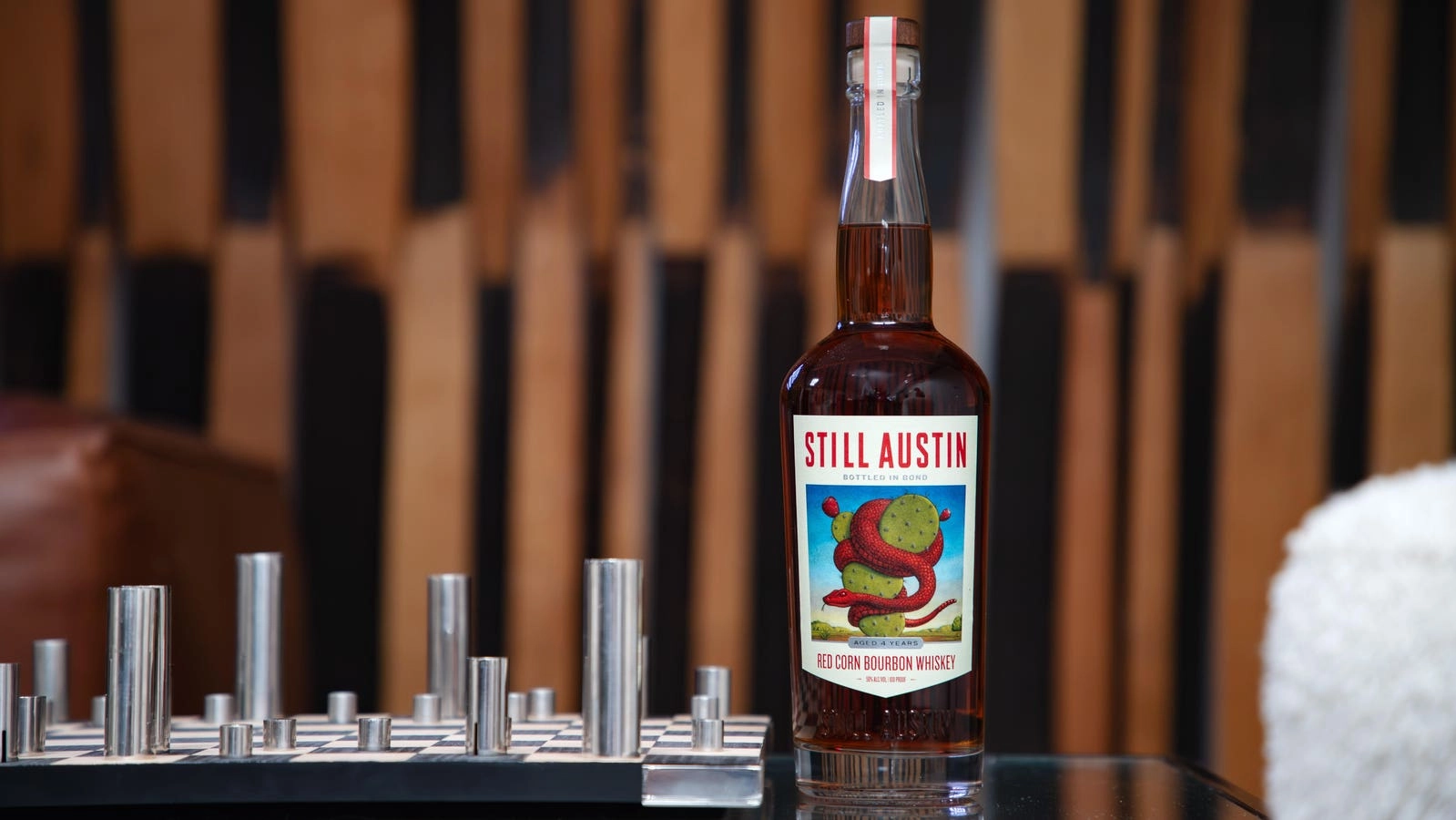
Treaty Oak and Garrison Brothers embody the “big”-ness often associated with Texas culture—operating on sprawling, multi-acre plots of land. This isn’t always the case, though, as urban distilleries find ways to innovate with less physical space at their disposal. Still Austin is located in the heart of South Austin, less than four miles from the Colorado river. Unlike many of the other distilleries in the area, space is a luxury at Still Austin. The distillery sits in the same complex as a brewery, a fitness center, and a building materials supplier among other small businesses. Inside the main building lies a tasting room as well as their distilling operations, including a 42-foot column still made by Forsyths.
Still Austin’s Red Corn Bourbon
Still Austin adopts a unique approach for their distillery tours, beginning with the finished whiskey and tracing the steps backward through its production process. The distillery focuses on maturing whiskey in Texas’ harsh climate, employing innovative techniques to manage the influence of intense heat on their products. One such method includes slow proofing the whiskey to preserve the intricate relationships among the oak, alcohol, and congeners. Additionally, Still Austin uses a technique known as petite eau—originally from brandy production—where fortified water is added to bring the whiskey to bottling strength.
An hour’s drive from Downtown Austin is Milam & Greene, located near Blanco. Established by Marsha Milam in 2017, the distillery crafts whiskey under the guidance of master blender Heather Greene and master distiller Marlene Holmes, who joined in 2018. Unlike other local distilleries, Milam & Greene produce whiskey that is only a segment of their extensive whiskey portfolio sourced from multiple states.
To broaden their product range, Milam & Greene produces whiskey at their Blanco facility and maintains a production partnership with Bardstown Bourbon Company in Kentucky. Despite the remote collaboration, Holmes actively manages distillation processes at both sites. Known for a diverse range of products and flavors, Milam & Greene prides itself on both its blended whiskeys and single barrel offerings.
Amid fluctuating temperatures, Texas distilleries adopt diverse production practices to stand out. Garrison Brothers distiller Russell Hartmann minimizes the significance of weather, stressing that their daily goal is to produce the finest whiskey possible under any conditions.
Warehouse at Milam & Greene, Blanco
Blair Ault, Milam & Greene’s National Brand Ambassador, adopts a detailed perspective regarding the distillery’s interaction with the varying aging environment. “We must keep a close eye on our barrels,” she asserts following a visit to their Texas warehouse. A brief exposure to the harsh midday sun underscored her concern. Particularly during summer, even a few weeks can dramatically impact the optimal aging process of the barrels.
Harry succinctly captures it: “the ethos of Texas whiskey is pioneering.”
Treaty Oak’s Jorge Camacho emphasized an ethos of “tradition and innovation” as guiding principals in the production of their spirits. Treaty Oak’s spirit safe has a plaque with the Japanese word はんそく (反則, Hansoku) on it. The word most commonly translates to “foul play” or illegal actions in a sport, but can also refer to a departure from the norm.
The spirit safe at Treaty Oak emboldened with a Japanese term for uniqueness.
Jason Harry, Still Austin’s Brand Experience Manager, is enthused at the prospect of higher aged Texas Whiskey and agrees that innovation is key. “Texas whiskey is young and there are different ways of embracing the Texas climate,” Harry says. He believes that Still Austin’s careful blending techniques, slow proofing, and upcoming use of petite eau all play into their attempt to tame the wild Texas temperature. “With time and experimentation,” he believes that Texas whiskey can reach double-digit age statements.
Simply put, Harry says, “the ethos of Texas whiskey is pioneering.”
One Community. Many Voices. Create a free account to share your thoughts.
Our community is about connecting people through open and thoughtful conversations. We want our readers to share their views and exchange ideas and facts in a safe space.
In order to do so, please follow the posting rules in our site’s Terms of Service. We’ve summarized some of those key rules below. Simply put, keep it civil.
Your post will be rejected if we notice that it seems to contain:
User accounts will be blocked if we notice or believe that users are engaged in:
So, how can you be a power user?
Thanks for reading our community guidelines. Please read the full list of posting rules found in our site’s Terms of Service.
Exclusive Look: Sipping Cocktails at the Real Downton Abbey — A Lavish Party Inside Highclere Castle

Highclere Castle’s own gin brand was celebrated at a special evening party at the home of Downton Abbey
Highclere Castle Gin
In the home of fictional Downton Abbey during the height of the COVID pandemic, the real lady of the house enjoyed sharing a new concept: Virtual cocktail hour with tens of thousands of online guests.
On Sept. 19, as the sun set on a late summer day, Lady Carnarvon — or ‘Lady C’ as her staff affectionately calls her — and her husband Lord Carnarvon hosted guests at the magnificent home, which doubles as the TV location.
Highclere House, located about 65 miles west of London, serves as the backdrop for the beloved TV and movie series, with a new film scheduled for release next September. On this particular evening, the event showcased the art of hosting in the 17th century castle as it might have occurred in historical times.
Highclere Castle Gin
Similar to the fictional butler Mr. Carson from Downton Abbey, Highclere’s Luis Coelho adeptly mixed and served cocktails in the grand hall. Highclere Castle’s own gin brand was the highlight of this special evening.
The event featured the “Lavender Lady,” a cocktail composed of Highclere gin, lavender syrup created by Coelho, aquafaba, and lemon juice. Another standout was the “Brit 75,” a concoction of gin infused with butterfly pea blossoms giving it a lilac hue, mixed with lemon juice and sparkling wine, naturally sourced from Highclere.
Also on the drink menu was a classic gin and tonic with a signature sprig of rosemary, and a Negroni.
A post shared by Highclere Castle (@highclere_castle)
“A few years ago, 80,000 people watched us drink cocktails, getting dressed up to join us online,” Lady Carnarvon said proudly. “There are around 80 here today.”
Since those virtual parties, the gin brand has thrived in the niche gin market, using botanicals from the orangery at the stately home’s garden, or tapping into history to create new versions.
Highclere Castle Gin
In the library of the expansive estate with over 250 rooms, family photos and portraits are comfortably displayed, including those of the late Queen Elizabeth and Prince Philip, showcasing their connections with the British royal lineage (Lord Carnarvon was one of Queen Elizabeth’s godsons).
Accompanied by nostalgic tunes from the post-Second World War era, Brandyn Shaw and his orchestra delivered a performance at the end of the library.
Related: Queen Elizabeth’s Godson (and Real-Life ‘Downton Abbey’ Owner) Creates New Gin in Time for Holidays
As he surveyed the vast hall, Lord Carnarvon remarked to his visitors, “My ancestors were renowned hosts. Imagine the lavish gatherings the 5th Earl would have thrown! No doubt, gin cocktails were in abundance.”
Highclere Castle Gin
The castle has been a focal point for royalty, politicians, literary and musical icons. Yet, it gained worldwide recognition through a television series, as seen in various rooms. Portraits and scenes from Downton Abbey featuring Maggie Smith, Hugh Bonneville, Elizabeth McGovern, and Michelle Dockery are displayed on easels in the library, drawing room, and hallway, showing visitors the settings of the popular drama.
Never miss a story — sign up for PEOPLE’s free daily newsletter to stay informed on top celebrity and human-interest stories.
Highclere Castle Gin
They have recently bid farewell to the Downton Abbey crew after 12 weeks of on-site filming completed, with the film now progressing to its next production stages, slated for release in September 2025.
Like countless fans, Lady C is eagerly awaiting to see how the narrative unfolds.
For more People news, be sure to sign up for our newsletter!
Read the original article on People.
Dan Aykroyd Makes a Splash in Syracuse: A Quest for Vodka at Dinosaur Bar-B-Que

Dan Aykroyd (center in hat) visits with staff at the Dinosaur-Bar-Que restaurant in Syracuse. From left they are Scott Brown, Lorrie Allnut, Eileen Merritt and Kristy Bigness. Photo courtesy Dinosaur Bar-B-Que.
Syracuse, N.Y. – If a Blues Brother is going to stop in at a Syracuse bar and restaurant, it makes sense that it would be one known as a “smokin’ blues joint.”
Actor-comedian Dan Aykroyd (he was Elwood Blues) spent some time on both Sunday and Tuesday night at the Dinosaur Bar-B-Que in downtown Syracuse.
If you purchase a product or register for an account through a link on our site, we may receive compensation. By using this site, you consent to our User Agreement and agree that your clicks, interactions, and personal information may be collected, recorded, and/or stored by us and social media and other third-party partners in accordance with our Privacy Policy.
Shocking CCTV Released: British Dad Fatally Attacked with Vodka Bottle on Stag Do by Tourists

Startling new CCTV captures the dreadful instant when a young British father tragically lost his life after being attacked with a vodka bottle during a bachelor party in Prague.
David Richards, aged 31, succumbed to his injuries in a hospital on Saturday following a brutal incident on the previous night in the streets of the Czech capital.
The police have disclosed the footage of the tragic encounter and the events leading to the alleged altercation on a principal street in the city.
An intense verbal argument is visible before the situation escalates into physical violence with another group of tourists.
Video captures a scuffle wherein punches were exchanged prior to one individual purportedly striking David with a vodka bottle.
The Sun has opted not to display the instant where David was struck by the bottle.
David’s devastated relatives have since recalled him as an “absolutely amazing father, partner, son, brother, and friend.”
According to them, he was the “glue of the family”.
“We would describe David as having the heart of a lion.
“He was an extremely family-oriented person. He was the fun one – he always brought the energy.
“He was an absolutely amazing father, partner, son, brother, and friend. There isn’t a bad word to be said about him.”
David’s sister-in-law Tammy Sheehan, cousin Gemma Thomas, and partner Jola Simms revealed he had returned from a family holiday on Thursday, then jetting to Prague on Friday for a friend’s stag do.
By 10pm that night, Jola and Gemma both received a horror call from David’s friend Nathan, who informed them he was in a critical condition.
David’s family members flew into Prague, hoping he would regain consciousness.
But by Saturday afternoon the heartbreaking decision was made to switch off life support machines.
His family insisted he wasn’t in a brawl but rather fell victim to a blind attack.
AFC Abercynon, where David played football, released a deeply emotional statement.
It read: “The world has lost a good man – a father, a son, and a brother.”
“This loss affects us all, but the pain and sorrow that his family is experiencing are particularly profound and personal.
“Dai made a lasting impact on many people at our club and we are profoundly saddened by this tragic loss.
“As a club we are here for any support you need and we are all thinking of you at this sad time. Rest in peace Dai.”
Czech media have reported a 26-year-old man – also a tourist – was arrested outside a hotel after the incident and has since been charged.
The nationality of the alleged attacker is not yet known.
According to Prague Morning, a local English-language outlet, police said the men were part of separate groups who began to argue.
Police spokesperson Jan Daněk stated, “One individual assaulted another by hitting them on the head with a vodka bottle.”
“The force of the blow caused the victim to fall instantly, and he sadly passed away after being taken to the hospital.”
“A 26-year-old man has been charged with grievous bodily harm and disorderly conduct.”
“He faces a possible maximum sentence of 16 years in prison if found guilty.”
More to follow… For the latest updates on this matter, continue to visit The Sun Online.
Thesun.co.uk is your ultimate source for the best in celebrity news, real-life stories, incredible images, and videos you must watch.
Like us on Facebook at www.facebook.com/thesun and follow our main Twitter account at @TheSun.
Mastering Bourbon Tasting: Expert Tips for a Savory Experience

One of the best parts about being a bourbon drinker is sharing your whiskey collection and experience with others.
And while sampling bourbon at Kentucky’s distilleries is fun, it’s also easy to host a bourbon tasting in your home.
In honor of Bourbon Heritage Month in September, The Courier Journal checked in with Peggy Noe Stevens, who co-authored the book “Which Fork Do I Use With My Bourbon,” to learn her tips and tricks for guiding guests through a private bourbon tasting. Stevens, a master taster and the founder of Bourbon Women, coached us through what bottles to select, how to set up the tasting experience, what foods to avoid, and even how to welcome someone a little unsure about trying Kentucky’s premier spirit.
Here’s what she had to say about tasting bourbon:
Note: This interview has been lightly edited for context and clarity.
Peggy Noe Stevens: I think it’s so important to understand your audience and guests, and where they are on their bourbon journey. There are so many people that don’t know that bourbon is a whiskey, but not all whiskey is bourbon. You have rye whiskey, Irish whiskey, and Scotch, but bourbon has a unique definition. It was, by an act of the U.S. Congress in 1964, that truly made it a product of the United States, and Kentucky has just always owned that pedigree. Knowing and understanding some of that history can make it interesting for your guests.
Really, 75% of flavor perception comes from your nose and not your palate. The actual aroma of bourbon is so wonderful. It’s very fragrant, and a lot of people don’t know this. You almost want to take in the smell from the outside (of the glass) and pull it to the side of your nostril. When they nose it, it’s just taking short puffs of air and then pulling it away. Then I always like to switch sides and try the other nostril for the nose, because sometimes you’re clearer on one side than the other.
In a tasting of bourbon, advise guests to think of food flavors. So you mentally walk them to their kitchen. Have them think about what fruit tastes like, bananas, apples, oranges, etc. Ask what their spice rack has on it. Cinnamon, nutmeg, allspice, black pepper. When they start to put it in food terms, then they start to connect with the bourbon.
More: What’s the oldest bourbon in Kentucky? 10 of the oldest bottles of bourbon we found
Peggy Noe Stevens: Once your guests understand what a bourbon is, then you can start talking about the different styles of bourbon. It might be a different mash bill, it might be a different distillation process, or it might be different barrel aging. I might choose something that is wheat forward, like Maker’s Mark, or something that’s rye forward with a spicier note like Woodford Reserve, or a malted barley or earthy note like a Buffalo Trace.
When hosting beginners, I would definitely choose different bourbon styles and lower proofs. I would not put a barrel proof in front of them, because I feel like you have to graduate in flavor in bourbon, much how people graduate with how they like the flavor of cheese. They might start with cheddar and then graduate to a goat cheese, and then a heavier cheese like a blue cheese. You have to graduate through flavors so you can really appreciate those very robust flavors in bourbon.
Peggy Noe Stevens: Knowing your guests and where they are on their bourbon journey is number one. Then, select the products, give a good variation, and understand the scene you’d like to create. Do you want to do only Kentucky bourbons? Do you want to choose bourbons by region, or by flavor profile, or are all single barrels? There are themes in bourbon tastings.
I also love to create a tasting map, because that’s their education component. That’s where they’re going to write their notes and understand the bourbon.
I like to use a white tablecloth or white napkins, and there’s a reason for that. When you’re looking at the appearance of the bourbon, that white cloth helps you gain an understanding of its true color, as opposed to using a blue napkin or a white napkin. It helps bring out that color.
I like to have plenty of ventilation because a room can get very heavy after you pour the whiskey. I also like to pour the products 10-15 minutes before the tasting, because this isn’t like wine where you have to decant it, but we sure do need it to open up. The bigger the bourbon and the bigger the proof it has, the more time it needs to open up.
More: Want to try a 120-year-old bourbon? Maybe not! What we learned on our hunt for dusties
Peggy Noe Stevens: Upon graduation, you’re opened to not just various flavors but also different bourbon categories. Choices might include selecting from options like a small batch, a single barrel product, or a barrel proof type. Each categorization falls under the broad spectrum of bourbon. Currently, there’s a trend where immense creativity is seen in barrel finishes and blends. Blends particularly showcase how different mash bills blend to create a singular taste profile, which is quite an appealing aspect.
Peggy Noe Stevens: I believe there’s a significance in variety, usually opting for three types. It’s customary for me to use a tasting mat underneath the glasses, helping in identifying the liquor by sight, while also providing a place for attendees to jot down their notes on appearance, aroma, flavor, and finish.
Peggy Noe Stevens: Water is crucial, whether it’s through the use of droppers or just plain bottles. I prefer water droppers as they are particularly effective in enhancing fruit notes in bourbon by adding a few drops, while also potentially reducing the drink’s proof slightly, clarifying foundational and dominant notes. Bottled water serves well for rinsing glasses between tastings.
It’s a common practice to cover glassware with napkins until all guests are seated; this helps in containing the aroma of bourbon within the glassware, which is beneficial especially in smaller, less ventilated spaces.
I’d also like to share with you what I would not put on the table, as well — nothing fragrant. If you have a beautiful bouquet of flowers that you want to put in the center of your table, I suggest you don’t, because the fragrance of flowers can get in the way of nosing the bourbon.
If I was to serve appetizers prior to everybody being seated for the tasting, you don’t want heavy food such as overly spicy salsa and wasabi peas. Things like that might deaden your palate before your tasting. Milk products and cheese, especially blue cheese, are very pungent and very robust, and can coat your tongue. I just try to stay away from very pungent foods and keep it a little bland for appetizer purposes, so that the flavors will come out more in your tasting.
Peggy Noe Stevens: Sometimes you have to prepare for the spouse or friend that comes along that might not like bourbon, not drink at all, or not appreciate the flavor of the whiskey. But they can always appreciate the history and heritage side, and why the flavors make sense and the production of it all. It is a very natural product to make.
They may like to have bourbon in a different format. They might want to have a cocktail or a mocktail. If you let them have it in cocktail instead of straight bourbon, you may find that’s more approachable. If I’m suggesting a cocktail to someone who is a little more leery of drinking bourbon, I introduce them to the high ball because that’s just ginger ale and bourbon. It’s very refreshing and you can just add a small amount of bourbon. When they enjoy that, they can sip along while everyone else is doing the tasting.
Also adding simple food like cranberries, chocolates, and nuts (that bring out the flavors in bourbon and can complement your tasting), so they can nibble along with everyone else and get a sense of some of the flavors that can be found in the whiskey without drinking the whiskey.
And if they don’t want to taste the product, they can still nose the product and go through that food memory exercise. They may surprise themselves and do a really good job of describing the whiskey without ever tasting it.
Features columnist Maggie Menderski writes about what makes Louisville, Southern Indiana, and Kentucky unique, wonderful, and occasionally, a little weird. Sometimes she writes about bourbon, too. If you’ve got something in your family, your town or even your closet that fits that description — she wants to hear from you. Say hello at mmenderski@courier-journal.com. Follow along on Instagram @MaggieMenderski.
This article originally appeared on Louisville Courier Journal: How do you taste bourbon? Learn how to taste whiskey like a pro
Startup Revolutionizes Direct Wine Sales, Aiming to Tackle Industry Challenges

A rapidly growing startup from Southern California, with connections to the North Coast, is actively seizing the opportunity to acquire and rejuvenate direct-to-consumer wine brands and platforms, adapting them into profitable businesses.
The company’s founders are aiming to transform the direct-to-consumer approach within the wine industry.
Established just 14 months ago, Full Glass Wine Co. has quickly enlarged its brand collection, acquiring several well-known DTC wine platforms: Winc in June 2023, Wine Insiders in October, Bright Cellars in March of this year, Splash Wines in June, and Scout & Cellar in August.
On September 17, an affiliate of Full Glass Wine successfully secured a $3.2 million bid at a U.S. Bankruptcy Court auction for Cameron Hughes and Windsor Vineyards wines, along with the Vinesse club – all formerly belonging to the now-defunct Vintage Wine Estates. This acquisition also includes a certain quantity of bottled wine. The court approved the sale among others on Tuesday.
“We’re really focused on improving wine DTC, beyond what’s been done before,” said Neha Kumar, cofounder and chief operating officer of Full Glass Wine. “A big part of that is getting all these companies on the same tech stack to streamline operations and better serve customers.”
By consolidating brands onto shared infrastructure, Full Glass Wine aims to optimize inventory management, shipping logistics, and customer data — key “pain points” that have plagued many DTC wine startups.
The company has already moved Winc, Splash, and Bright Cellars to a network of three strategically located fulfillment centers, reducing costly “zone skipping” and enabling faster deliveries. One of those hubs is operated by third-party logistics provider Wineshipping in Vacaville, strategically positioned to serve West Coast customers.
“We were able to get Winc profitable within 60 days of acquiring it,” Kumar said.
Before Winc fell into bankruptcy in late 2022, it had collaborated with North Coast wine grape growers and wineries to develop its unique brands. Full Glass acquired Winc from Los Angeles-based Amass Brands, which had purchased the club following its bankruptcy.
However, Full Glass Wine is not solely focused on operational enhancements. The firm is keen on broadening its brand assortment to mitigate the risks associated with fluctuating customer acquisition costs and the changing tastes of consumers.
Its purchase of Scout & Cellar, a direct-selling wine brand known for its devoted customer base and upscale products, signifies a tactical pivot.
“Scout & Cellar targets a slightly more upscale market, with an average bottle price of about $30-$35,” Kumar stated. “This variety in marketing channels and customer demographics is crucial for our future plans.”
Moreover, the acquisition of the Splash wine brand, noted for its budget-friendly wine packages in quantities of 15 and 18 bottles, is geared towards a particular market segment that prioritizes affordable and approachable wine options.
“Our goal is to deeply understand the varying preferences of different customer groups and to engage with them effectively,” Kumar explained. “It extends beyond mere marketing and branding; it involves constructing a solid framework to ensure an exceptional customer experience.”
Moving forward, Full Glass Wine is focusing its efforts on appealing to the emerging demographic of wine enthusiasts.
“There is a prevailing skepticism about wine consumption among the youth, yet we perceive significant potential,” Kumar remarked. “Our strategy is centered on revitalizing the wine industry and making it appealing to this upcoming demographic.”
With its expanding portfolio of brands, dedication to operational superiority, and a forward-thinking strategy, Full Glass Wine is establishing itself as a key contender in the dynamic direct-to-consumer (DTC) wine sector. As it continues to expand through acquisitions and brand development, observers within the industry are keenly tracking how this emerging company will impact the DTC wine scene.
Founded in early 2023 by Kumar and Louis Amoroso, Full Glass Wine made its mark quickly. Kumar previously served as the chief operating officer of Create & Cultivate, which was sold to Corridor Capital for $22 million in 2021.
Having a background of more than 27 years in founding DTC ventures in the beverage alcohol sector, Amoroso’s ventures include Beverage Solutions, which was acquired by Direct Wine, and a tech provider named Drinks, from which Full Glass acquired Wine Insiders.
This year, Full Glass is on track to achieve revenues of $125 million and anticipates a growth to $180 million the following year, marking a 44% increase annually. Additionally, the company successfully secured a $14 million series A funding round earlier this year.
“We’re really excited about the growth we’ve achieved in such a short period of time,” Kumar said. “By leveraging our operational expertise and diversifying our brand offerings, we believe we can continue to drive significant value for our customers and shareholders.”
Jeff Quackenbush covers wine, construction and real estate. Reach him at jquackenbush@busjrnl.com or 707-521-4256.
The Rise of Alcohol-Free Beer: Gaining Popularity at Oktoberfest and Beyond

Head Brewmaster Tobias Zollo poses behind non alcoholic beer at the Weihenstephan brewery in Freising, Germany, Friday, Sept. 20, 2024.
Head Brewmaster Tobias Zollo fills beer at the Weihenstephan brewery in Freising, Germany, Friday, Sept. 20, 2024.
Head Brewmaster Tobias Zollo gestures during an interview with the Associated Press at the Weihenstephan brewery in Freising, Germany, Friday, Sept. 20, 2024.
Head Brewmaster Tobias Zollo checks the output at the Weihenstephan brewery in Freising, Germany, Friday, Sept. 20, 2024.
Head Brewmaster Tobias Zollo checks the output at the Weihenstephan brewery in Freising, Germany, Friday, Sept. 20, 2024. (AP Photo/Matthias Schrader)
Head Brewmaster Tobias Zollo checks the output at the Weihenstephan brewery in Freising, Germany, Friday, Sept. 20, 2024. (AP Photo/Matthias Schrader)
Head Brewmaster Tobias Zollo poses behind non alcoholic beer at the Weihenstephan brewery in Freising, Germany, Friday, Sept. 20, 2024. (AP Photo/Matthias Schrader)
By STEFANIE DAZIO, Associated Press
MUNICH (AP) — Tobias Zollo, the head brewmaster at Weihenstephan, which holds the title of the world’s oldest brewery, harbors a surprising preference: he is fond of alcohol-free beer.
While he emphasizes his greater affection for traditional beer, Zollo appreciates the non-alcoholic variant during work or while having lunch. He notes that it offers the familiar taste of beer but with fewer calories than a typical soft drink, a benefit arising from the brewery’s method of removing the alcohol through evaporation.
“It’s not feasible to consume beer every day — sadly,” he humorously remarked last week at the Bavarian state brewery located in Freising, roughly 30 kilometers north of Munich.
Zollo’s liking for non-alcoholic beer is part of a broader trend, as this variety has been increasingly embraced in recent times amidst a general decline in beer consumption.
At Weihenstephan, founded in 1040 by Benedictine monks, non-alcoholic versions of their staple wheat beer and lager now comprise 10% of their total production. This shift in production that began in the 1990s echoes wider trends in Germany’s beer industry.
“Unfortunately, as a brewer, I must say that people are drinking less beer,” Zollo commented on Friday, just a day before Oktoberfest kicked off. “If they can enjoy the distinct crisp and fresh flavor of Weihenstephan beers in a non-alcoholic form, we are eager to provide that choice.”
Even at Oktoberfest, the immensely popular global celebration of beer, patrons can find non-alcoholic beer as an option on the menu.
Non-alcoholic beer is available in all but two of the 18 large tents over the festival’s 16-day span. This alcohol-free option costs the same as its alcoholic counterpart, pricing between 13.60 and 15.30 euros ($15.12 and $17.01) for a 1-liter mug (33 fluid ounces), enabling attendees to enjoy without the worry of a hangover.
“For people who don’t like to drink alcohol and want to enjoy the Oktoberfest as well, I think it’s a good option,” Mikael Caselitz, 24, of Munich said Saturday inside one of the tents. “Sometimes people feel like they have more fun with alcohol, which is not a good thing because you can also have fun without alcohol.”
He added: “If you want to come and drink alcohol-free beer, nobody will judge you.”
This year marked the first time an alcohol-free beer garden opened in Munich. “Die Null,” which means “the zero” in German, served non-alcoholic beer, mocktails and other alcohol-free drinks near the city’s main train station this summer but was scheduled to close a few day before Oktoberfest opened.
Walter König, managing director of the Society of Hop Research north of Munich, said researchers have had to breed special hops varieties for alcohol-free beer. If brewers use the typical hops for alcohol-free beer, the distinct aroma gets lost when the alcohol is reduced during the brewing process.
But customers don’t care about that, König mentioned on Friday while getting ready for Oktoberfest.
“They only want to know that what they are tasting is as good as traditional beers with alcohol,” he stated.
Revealed: America’s Top 3 Favorite Cocktails—With Two States Bucking the Trend

“Hearst Magazines and Yahoo may earn commission or revenue on some items through these links.”
It’s no secret that we love our cocktails here at Delish. We have recipes upon recipes for boozy (or zero-proof) libations tailored to the season or spirit. Tequila cocktails? Check. Fall cocktails? We’ve got 45 of ’em. So we were curious: what’s the most popular cocktail in each state?
With some help from the team, we were able to pinpoint the most sought-after cocktails in the country. Google Trends researchers pulled data that found the top 25 most-searched cocktails and then identified which of those was most searched in the past year, state by state. And we are pretty surprised by the results.
A majority of states’ most-searched cocktail is one of three drinks: margarita, martini, and old fashioned. I suppose the consensus is that you can’t go wrong with classics.
Only two states deviated from this pattern: Hawaii and Louisiana. The mai tai is the most-searched cocktail in Hawaii, and the daiquiri in Louisiana.
Want to know your state’s most popular cocktail? Let’s break it down:
32 states like the margarita: Alabama, Alaska, Arizona, California, Colorado, Florida, Georgia, Iowa, Illinois, Indiana, Kansas, Kentucky, Maryland, Maine, Michigan, Missouri, Mississippi, North Carolina, North Dakota, Nebraska, New Hampshire, New Mexico, Ohio, Oklahoma, Oregon, South Carolina, Tennessee, Texas, Utah, Virginia, Washington, Wyoming
9 states like martinis: Connecticut, Delaware, Massachusetts, New Jersey, Nevada, New York, Pennsylvania, Rhode Island, Vermont
7 states favor the old fashioned: Alaska, Idaho, Minnesota, Montana, South Dakota, Wisconsin, West Virginia
Interested in mastering one of these beloved beverages? In addition to recipes, we offer a plethora of suggestions for equipping your bar cart. Discover our favorite selections for anything from tequila and gin to non-alcoholic spirits. Also, remember the glassware.
Do you concur with your state’s favorite cocktail?
You Might Also Like