Uncorking the Fun: A Detailed Schedule for the Three-Day North East Wine Fest
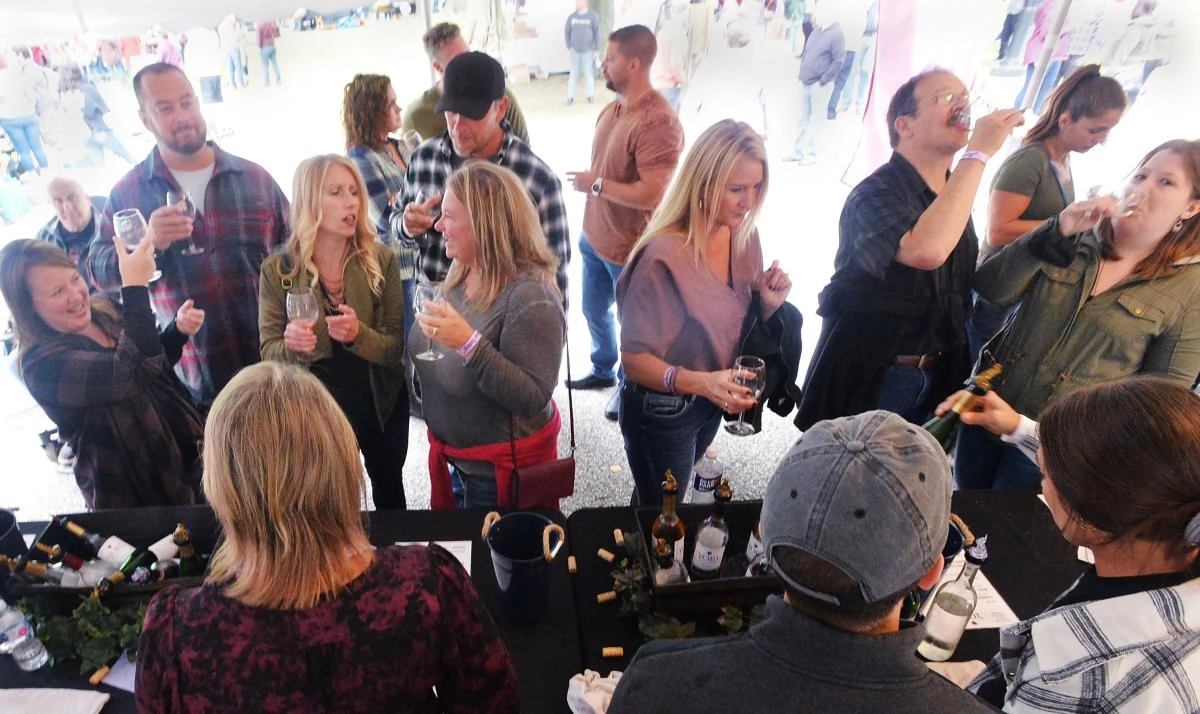
The Wine Country Harvest Festival in North East has expanded once again.
This year, thanks to some changes in zoning, festival organizers can now allow attendees to enjoy wine in Heard Park, which offers seating under tents for guests to relax and savor food from adjacent food trucks. This update also creates a larger space for children’s activities, including pumpkin painting, grape stomping, a mini-corn maze, and other delightful surprises for the little ones. Across both parks, there will be 75 art, craft, and specialty vendors alongside food trucks. Live music will fill the air in Gibson Park, complemented by wine pouring from more than 10 local wineries.
Entry to the festival is free; however, those aged 21 and older with valid ID wishing to sample the wine can purchase passes at eventbrite.com, with prices starting at $25 for a single day and $55 for the entire weekend. These passes include a souvenir glass, unlimited tastings, and a token to buy a bottle of wine for on-site enjoyment.
Gibson Park is situated in downtown North East at the intersection of Lake and Main streets, while Heard Memorial Park is just under a quarter mile away at 40 N. Lake St.
The schedule for this year’s festival is as follows:
4-8 p.m.: The wine tents at Gibson Park will open, accompanied by live music.
4 to 6 p.m.: Join us for the first of two bike rides through the wine country. You can register at lakecountrybike.com/tours.
4-7 p.m.: Kids can enjoy pumpkin painting at Heard Park with Little Miss NE, along with grape stomping, a photo booth, and various other activities.
4 p.m.: Gibson Park: The Ralph Chamberlain Duo takes the stage
5:30 p.m.: Gibson Park: Denny & Heather present their performance
7:30 p.m.: Gibson Park: Shoreline graces the audience with their music
8 p.m.: The final pour from the wineries at Gibson Park
“`html
9 a.m.: Wine Fest 5K walk/run. Register at runsignup.com/Race/PA/NorthEast/StrideStomp5k.
9 to 10:30 a.m.: Check in for the second of two wine country bike rides. Register at lakecountrybike.com/tours.
10 a.m.: Bubbly Brunch: The Skunk & Goat Tavern, 17 W. Main St., North East
11 a.m.: Heard Park: Horse and carriage rides, 11 a.m. to 3 p.m.
“`
12:00 PM: Gibson Park: Kicking off the day’s first pour
12:00 PM to 6:00 PM: Heard Park: Grape stomping, pumpkin painting, and various children’s activities
1:00 PM: Gibson Park: Live performance by Petty Larseny
3:00 PM: Gibson Park: Whiskey Jack takes the stage
3 to 6 p.m.: Join us at Gibson Park for complimentary caricatures.
4:30 p.m.: Experience the Italian dancers of Erie at Gibson Park.
5 p.m.: Enjoy a performance by Never Too Late at Gibson Park.
7 p.m.: Don’t miss Jack Stevenson and the Buried Treasure Band at Gibson Park.
8 p.m.: Gibson Park: Final drink service
11 a.m. to 4 p.m.: Gibson Park: Wine tents available
11 a.m. to 1 p.m.: Heard Park: Flower bar (create your own bouquet)
Noon to 4 p.m.: Heard Park: Horse and carriage rides
Noon to 3 p.m.: Heard Park: Grape stomping and pumpkin painting
12:30 p.m.: Gibson Park: Rock Avenue performs
2:30 p.m.: Gibson Park: Carnival Brothers perform
For more information, reach out to Jennie Geisler at jgeisler@timesnews.com. You can also check out her weekly newsletter at https://profile.goerie.com/newsletters/erielicious/.
This piece was originally published in Erie Times-News: Wine Country Harvest Festival in North East opens Friday at 4 p.m.
Spooktacular Sips: 11 Halloween-Themed Cocktails for Your Next Party

“`html
With Halloween fast approaching, I’m embracing every chance to infuse a spooky vibe into everything around me, including my beverages. While I’ve already decked my apartment with traditional pumpkin decorations, my main excitement lies in crafting some delightful, otherworldly concoctions. For me, holidays (especially Halloween) offer the perfect opportunity to add a festive flair to all aspects of life, and drinks are no exception.
Additional highlights
Heidi Klum’s Halloween Costume for 2023 Involved 10 Cirque du Soleil Performers
I Cast a Love Spell With Salem’s Love Witch & Here’s What Happened
“`
“`html
Relive Your Favorite ’90s Memories With These Halloween Costumes
After all, Halloween is the best holiday of the year (controversial statement to some, I know). For starters, there are the costumes and makeup, which present infinite opportunities to dress like your favorite pop culture icon. Then, there are the parties, which are usually complete with all kinds of fun, spooky themes. And don’t even get me started about the candy. (The amount of Reese’s peanut butter pumpkins and bags of Swedish Fish I’ve purchased throughout the years could be considered sinful.)
That said, I know that candy isn’t everyone’s thing. If that’s you, consider taking this as a sign to try your hand at mixology and get into the true fall spirit with some scary yet delicious cocktails. It’s also the perfect activity if you plan on having people over. After all, the secret to hosting is putting effort into the small details, and making themed drinks is not only fun but a great way to celebrate the holiday.
In this list, we’ve rounded up recipes for the most festive Halloween cocktails we could find. From super eerie blood-like beverages to cute candy corn-inspired libations, they’ll get you in the right mood for a spooktacular time. And of course, for those who are alcohol-free, all of these cocktails can be made into mocktails with zero-proof spirits (or, just skipping out on the alcohol altogether). Whether you’re hosting a full-blown party or a chill, three-person girls’ night, these Halloween-themed drinks will add the perfect touch to any gathering.
“`
“`html
This recipe from Noshing With The Nolands highlights a blend of vodka, pink cranberry juice cocktail, and black cherry juice. To achieve a richer red hue—crucial for a drink named Dracula’s Kiss—you can mix in a splash of grenadine. The final concoction is sweet, tart, and an ideal choice for a Halloween dinner gathering. To enhance the spooky vibe, consider creating a candied blood droplet rim using corn syrup, red food coloring, and black cherry juice, and throw in some candy vampire teeth for added fun.
If you’re envisioning a witch-themed party, this drink is a must-try. This recipe from Wow It’s Veggie is delightfully simple to prepare and only calls for three ingredients: vodka, purple Gatorade, and orange liqueur. To crown the drink, you can finish it off with a candied rim of purple sanding sugar. The cherry on top? The presence of electrolytes means you can enjoy it without fretting too much about a hangover.
<pThis recipe from Brunch and Batter gives a thrilling twist to the classic Bloody Mary. While the foundation remains consistent (tomato juice, hot sauce, vodka, and the usual garnishes), it takes a chilling turn with its eyeball decoration. For a savory element, consider crafting eyes from mozzarella balls and olives, or opt for marshmallows for a sweet surprise.
This recipe from Emily Fabulous is both eerie and tasty. It’s composed of gin, elderflower liqueur, lime juice, and lychee syrup, catering to those who appreciate a sweet cocktail. To get that vibrant green shade, add some green food coloring, and for a spooky eyeball garnish, fresh lychee works perfectly. This drink would also suit BRAT-themed gatherings, just leave out the eyeballs.
“`
Not every Halloween cocktail needs to be frightful! This recipe from The Cookie Rookie delivers the sweetness of a dessert in a glass. It combines vodka, pumpkin spice creamer, and Kahlua for a creamy delight. Don’t forget the sugary rim made with graham crackers, sugar, and pumpkin spice—it’s a must for a true Halloween treat.
No Halloween celebration is complete without something dark and delicious, and this Witches Brew is unbeatable. This recipe from Aberdeen’s Kitchen features dark wine, brandy, cranberry juice, and sprite, as well as plums, grapes, and blackberries. It’s great for serving in bulk from a cauldron—definitely a fun touch if you decide to whip this one up!
Candy corn tends to spark intense opinions—you either love it or you don’t. This recipe from Mantitlement is a treat for those who adore the sweet, buttery flavor of candy corn. Made with cake-flavored vodka, candy corn, pineapple juice, and heavy cream, it requires the candy corn to soak in the vodka for at least 6 hours. So, plan to prepare it the night before for the best results.
Want a conversation starter for your gathering? This recipe from Delish is sure to grab attention. All you need is strawberry Jell-o mix, whipped cream-flavored vodka, and Cool Whip to create a jiggly, boozy brain that’ll have everyone talking.
Take your party experience up a notch with these Blood Bag Cocktails. While you have the option to fill your blood bags with any type of red alcohol, this recipe from Cuisine and Cocktails combines vodka, passionfruit tea, and cranberry juice for a flavorful and zesty drink.
Check out this recipe from Querica Vida, which includes a mix of gin, lemonade, and ginger ale. The addition of green food coloring gives it a swampy hue, while gummy worms can add a fun, squishy element. It’s definitely reminiscent of Shrek, and we’re here for it.
This fiery recipe from Difford’s Guide will give you a cocktail experience that’s not for the faint of heart. To craft this drink, gather a red chili pepper, raspberries, aged rum, and cranberry juice. While it’s acceptable to keep it simple, adding a hint of honey-sugar syrup and some freshly squeezed lime juice makes for a better balance. And remember the finishing touch: the chili “horns” on the rim of the glass!
Best of StyleCaster
“`html
You Can Get a Yearly MasterClass Subscription for 50% Off Now Through Labor Day Weekend
Here’s Why Seeing 333 Is Such a Powerful Sign
The 25 Best Places to Buy Bedding Online, According to Editors Who Love to Sleep
Sign up for Stylecaster’s Newsletter. For the latest news, follow us on Facebook, Twitter, and Instagram.
“`
Sip in Style: Ina Garten’s Refreshing Whiskey Sour Recipe

By
Ina Garten
September 27, 2024 / 1:39 PM EDT / CBS News
In her #1 New York Times bestseller “Barefoot Contessa at Home,” author Ina Garten writes, “I believe in keeping cocktails simple.” She demonstrates that with her recipe for Fresh Whiskey Sours.
Ina Garten’s Fresh Whiskey Sours
Make 4 Cocktails
Ingredients:
3/4 cup Jack Daniel’s Tennessee Whiskey
1/2 cup freshly squeezed lemon juice (from about 3 lemons)
1/2 cup freshly squeezed lime juice (from about 4 limes)
2/3 cup sugar syrup
Maraschino cherries
Instructions:
In a mixing glass, combine the whiskey, lemon juice, lime juice, and sugar syrup. Fill a cocktail shaker halfway with ice, then pour in the mixture until it reaches two-thirds full. Shake vigorously for 30 seconds, then strain into chilled martini glasses. Top each glass with a maraschino cherry and enjoy while ice cold.
From “Barefoot Contessa at Home” by Ina Garten. Copyright 2006. Published by Clarkson Potter. All Rights Reserved.
For more info:
© 2024 CBS Interactive Inc. All Rights Reserved.
Red Shedman Brewery’s Future in Question After Devastating Fire: ‘We Won’t Be Brewing Beer Anytime Soon’

“This has delayed us. We won’t be producing beer in the near future. … For now, our focus is on tidying up.”
Unveiling the Mysteries: Inside the Making of ‘Between the Sheets’

This high-potency cocktail may be what led to its provocative name.
The Between the Sheets is a classic cocktail made up of equal parts cognac, light rum, and triple sec with freshly squeezed lemon juice and an orange peel garnish.
Essentially a variation on the Sidecar, the provocatively-named drink is thought to have been created by bartender and author Harry MacElhone of Harry’s New York Bar in Paris. There is also a theory that the drink had even earlier origins at the Berkeley Hotel in London and was created around 1921 by a worker there known as “Mr. Polly.” However, because MacElhone is also credited with featuring one of the earliest Sidecar recipes in his 1922 edition of Harry’s ABC of Mixing Cocktails — calling for equal parts cognac, Cointreau, and lemon juice — this is the more accepted origin.
Though the recipe has evolved, the traditional mix includes equal parts of cognac, light rum, and orange liqueur, complemented by a splash of lemon juice, yielding a strong concoction. The intense alcoholic content of this beverage is what likely inspired its provocative name.
This version increases the lemon juice to balance the three ounces of spirits, adding acidity to enhance the drink’s complexity. Cognac and light rum provide a robust foundation, while triple sec, or another chosen orange liqueur, brings sweetness and a bit of extra alcohol bite.
An orange peel garnish plays a crucial role by releasing citrus oils and a hint of bitterness from the skin.
Like any cocktail recipe, customization for personal taste is key. As presented, the cocktail is on the drier side, but simple syrup can be added according to individual preference.
1 ounce cognac
1 ounce rum
1 ounce triple sec
1/2 ounce lemon juice, freshly squeezed
Orange peel, for garnish
Add the cognac, rum, triple sec, and lemon juice into a shaker with ice and shake until well-chilled.
Strain into a chilled cocktail glass.
Express the oils from the orange peel over the top of the drink, then add to the glass as garnish.
Sweet Grass Vodka Owner Files Lawsuit, Claims to Be Swindled by Business Partners

Our newsletter provides updates on major business events influencing Charleston and South Carolina, delivered every Monday and Thursday at noon. Stay informed for free.
Sweet Grass Vodka
The former Sweetgrass Lounge’s patio utilizes rebar for decoration, as seen on Wednesday, Sept. 25, 2024, in Charleston.
A combination lock box is present at the former site of Sweetgrass Lounge, recorded on Wednesday, Sept. 25, 2024, in Charleston.
During a brand party at a resort in October 2023, actor Jeremy Renner and Sweet Grass Vodka proprietor Jarrod Swanger were seen conversing with Brian Richardson, the resort’s food and beverage director.
A view of the previous Sweetgrass Lounge entrance as of Wednesday, September 25, 2024, located in Charleston.
There is a new business announcing its arrival at the old Sweetgrass Lounge spot, dated Wednesday, September 25, 2024, in Charleston.
Jarrod Swanger has been promising that “the money’s on the way” for almost ten years, a line used to pacify investors who are currently seeking to recover millions of dollars they invested.
In a surprising turn of events, Swanger admits he was seduced by the same deceptive promises, resulting in the collapse of his Charleston-based business, Sweet Grass Vodka.
On September 13, his enterprise, Might Be Hungover, initiated legal action against a group of nine individuals and phantom entities, alleging they defrauded Swanger of over $80,000 with the false guarantee of a $10 million investment.
Operations at Sweet Grass Vodka were discontinued in April due to escalating financial woes after three years of activity.
The 46-page legal filing primarily attributes the fault to Rodney Koch, a Las Vegas-based investor who purportedly never provided the essential financial boost Swanger anticipated.
Koch is implicated in two additional federal lawsuits for allegedly conducting schemes that bear a striking resemblance to past ones. Furthermore, Canadian authorities have barred him from trading in Canada for 25 years due to his involvement in a fraudulent investment scheme, according to official records.
In a financial transaction with Koch, Swanger claims to have lost $83,400. However, his financial troubles had already been escalating prior to this event, as outlined in his lawsuit:
The negotiations for financial support started in December 2023, with Koch’s investor group initially proposing $5 million, followed by a revised offer of $10 million, to be repaid over five years. As part of the terms, Swanger was to allocate 20 percent of his company’s equity to Koch.
In addition, Swanger was obligated to pay a $83,400 insurance fee before the receipt of the funds. He made this payment on December 20.
That’s when the stalling started.
Swanger repeatedly asked Koch for the cash, saying he needed short-term capital. But Koch failed to deliver, all the time promising the money would arrive soon, the lawsuit states.
As the wait continued into the new year, Swanger’s company took out two short-term loans to cover his bills. One secured $100,000 at 12 percent interest, which was due March 24. A second for $90,000 had interest accruing at $1,500 a day, the lawsuit stated.
By April, still with no cash from Koch, Swanger’s company couldn’t repay the loans it had taken out or follow through on deposits made to expand the business.
Months later, Koch was reportedly still delaying Swanger, and in July, suggested that Swanger guide the Charleston company through bankruptcy to escape debt. If Swanger proceeded, Koch promised to establish a new company, granting Swanger and his wife a 20 percent share, as evidenced by text messages and a partial call transcript between Swanger and Koch mentioned in the legal claim.
Swanger’s legal action accuses his former CEO, David Matuschewski, of collaborating with Koch to usurp his business and abscond with $10 million. The lawsuit’s only proof of Matuschewski’s involvement is Koch’s statement.
Matuschewski did not provide any comment.
Both Swanger and his attorneys did not respond to comment requests.
The business support and financial injection that were expected never materialized, leading Swanger to file a lawsuit.
This is not the first time Koch has been implicated in fraudulent activities, nor is it the largest accusation against him. He is mentioned in several federal lawsuits in Nevada and was included in a 2009 decision by Canadian authorities.
According to allegations in the lawsuits, Koch has duped numerous businesses in recent times into sending him sums totaling over a million dollars using the same deceptive strategies that led Sweet Grass to lose $83,000.
A group in the Canadian agricultural sector is said to have transferred more than $650,000 to Koch in a transaction purported to secure a $130 million investment. Similarly, a Canadian cannabis company reportedly paid over $100,000 in anticipation of acquiring an investment exceeding $10 million. Both entities are now pursuing legal action against Koch, along with his network of fictive corporations and associates.
Like Swanger, both companies began expending resources and engaging in deals while relying on unfulfilled investments, exacerbating their financial difficulties, according to the lawsuits.
Koch and his associates allegedly assured the businesses that the payments were for an insurance policy on the investments, which would be reimbursed after the completion of the deals. However, it is claimed that Koch diverted these funds to purchase two expensive homes in Nevada, as confirmed by property records in Nevada, The Post and Courier reported.
The lawsuits in Nevada allege that Koch impersonated his son-in-law during these interactions, which delayed the detection of his prior misconduct by the affected companies until it was too late.
According to an investigation by Canadian authorities, Koch is described as “an exceptionally persuasive communicator,” who reportedly deceived individuals out of their life savings. Whenever investors inquired about the timing of their returns, Koch consistently provided excuses, suggesting the payout was imminent, the Canadian investigation revealed.
In 2009, Canadian authorities levied a $225,000 fine against Koch and prohibited him from managing companies or marketing investments in the country for 25 years, after determining that he had defrauded individuals through his enterprise for millions of dollars.
However, litigation indicates that Koch has not altered his deceptive practices. Instead of defrauding investors directly, he now poses as one, targeting companies in urgent need of financial support.
John Kenney, a former Secret Service agent, stated that the accusations against Koch are just a slight twist on a classic con, where victims are tricked into sending money in hopes of receiving substantial future returns. This scam is fundamentally a corporate twist on the infamous Nigerian prince scam. He noted that the most effective con artists manage to persuade large numbers of people to send them modest sums, which generally keep them under the radar of federal law enforcement.
“This is what this guy does for a living,” Kenney said. “He doesn’t have an alternative plan. He just has an alternative scheme. But the plan is to get you to believe in me and send me money.”
Reached by phone on Sept. 25, Koch told a reporter he planned to send the newspaper a statement through his lawyer, probably by the end of the week.
Told that this sounded like the same kind of promise he’s accused of making in a trio of federal lawsuits, Koch sighed audibly, said “Thank you so much, sir,” and hung up the phone.
A lawyer for Koch did not return phone calls.
Swanger’s urgent requests for financial support represent a significant shift from the optimistic outlook he presented to investors in 2022. During a pitch, he claimed his spirits enterprise generated $22 million in revenue the previous year, with expectations to reach $40 million by 2023’s end. A $10 million investment from Koch for 20% equity placed the company’s valuation at $50 million.
Until then, Swanger had portrayed himself as thriving. In 2020, he acquired a luxurious residence in Mount Pleasant and two $150,000 BMW Alpina luxury vehicles, one each for himself and his spouse. Moreover, in the summer of 2023, he engaged actor Jeremy Renner as a promotional face for the Sweet Grass Vodka label.
Swanger also ventured into acquiring additional liquor labels, such as Terry Bradshaw’s Bradshaw Bourbon late in 2022. However, he couldn’t uphold the $1.5 million agreement, as noted by those involved in the deal.
By the final phase of 2023, employees at Sweet Grass were experiencing irregular payment schedules, with some reporting up to a five-week lapse in salaries. Others disclosed to The Post and Courier that they received fragmented payments through the Apple Cash app on their iPhones.
Swanger faced lawsuits from four different parties, accusing him of not repaying over $750,000 in borrowed funds. Additionally, he is indebted to multiple creditors for several million dollars according to Uniform Commercial Code filings.
Koch entered the chaotic scene, offering a substantial sum of money in hopes of resolving Swanger’s financial troubles.
However, the arrangement seemed too favorable to be realistic.
In April, the situation deteriorated when one of Swanger’s creditors confiscated assets from his vodka lounge in downtown Charleston, a worker lodged a labor complaint with the S.C. Department of Wages, and his liquor license was revoked on the last day of April.
While Koch could potentially have rescued Swanger with a $10 million agreement, he was not the root cause of Swanger’s difficulties. Similarly, the media, as accused in a lawsuit by Might Be Hungover, were not responsible for exposing these issues, according to statements from former associates.
Michael Cook, a past collaborator, commented that financial instability was typical with Swanger, who historically used investor funds with the expectation of future financial inputs.
In 2015, Cook partnered with Swanger in North Carolina, investing in his initial business endeavor, a retractable dog leash branded as Lucky’s Leash.
Cook connected Swanger with financiers like Piyush Bhula, an Atlanta-based entrepreneur, who gradually contributed and extended personal loans amounting over $250,000 to support the business foundation.
After persistently requesting a refund for three years, Bhula finally received $10,000 from Swanger, who subsequently severed all connections.
“We continued to demand our money… but then Jarrod disappeared,” Cook explained. “He blocked us on Facebook and other social media platforms and moved away from North Carolina.”
In an approach similar to the one used for Sweet Grass Vodka, Swanger spent substantial amounts hiring celebrities like Paula Abdul and former Nickelodeon star Daniela Monet to promote Lucky’s Leash. His promotional efforts also included trips to high-profile locations such as New York City and Las Vegas for trade shows.
Upon discovering Swanger’s recent ventures, Cook, alongside Bhula, suspected it was a repeat of the Lucky’s Leash scenario.
“He’s obtaining the funds and expending them, and once the product fails or doesn’t succeed, he simply shifts his focus to a new brand or product,” Cook articulated.
Up until now, approximately 23 creditors and investors—which include an individual battling cancer, a local physician, a law enforcement officer, and a small business proprietor in Charleston—claim they have incurred losses exceeding $7 million due to Swanger’s Sweet Grass Vodka business operations.
Several investors have expressed difficulties in locating Swanger following his property disposal in Mount Pleasant on June 21.
As of September 25, judicial documents indicate that Swanger’s business has yet to serve Koch, Matuschewski, or the other suspected conspirators with the legal suit.
Teri Errico is the senior business reporter at The Post and Courier, focusing on retail and real estate. An award-winning journalist, Griffis previously worked as a Southeast commerce reporter for the Journal of Commerce and a reporter for the Charleston Regional Business Journal where she covered all business in the Charleston region. Raised in Connecticut and New York, she has called South Carolina home since 2012.
John Ramsey is a reporter on The Post and Courier’s Watchdog and Public Service team.
He has worked as an editor and reporter in Richmond, Va., Fayetteville, N.C. and Rocky Mount, N.C.
DETROIT — With a strike deadline looming, the group representing East and Gulf Coast ports is asking a federal agency to make a union representing dockworkers come to the bargaining table to negotiate a new contract. Read more
The defunct vodka company claims owner Jarrod Swanger fell for a scam he believed would net a $10 million windfall. Read more
Hurricane Helene started impacting flight schedules across the region ahead of landfall in Florida. Read more
The pilot was attempting to put the aircraft on the ground west of the city as a precaution, the Federal Aviation Administration reported. Read moreChopper ends up on its side on a Charleston-area farm after landing goes awry
Unpacking the Myth of Cortisol Cocktails: Can They Truly Balance Your Hormones?

Social media often buzzes with new wellness trends, and the current hot topic is the health benefits of cortisol cocktails.
This interesting blend doesn’t actually include alcohol but is made up of a variety of minerals and vitamins. Many influencers recommend this drink as an effective solution for issues ranging from fatigue to stress relief.
Recently, searches for “cortisol detox drink” have jumped by 277% in just one month, and TikTok videos that demonstrate how to make these cortisol cocktails have accumulated over 870,000 views, indicating a growing curiosity in using this mix to manage cortisol levels.
While it’s tempting to join the trend, it’s worth questioning whether these cocktails can truly regulate hormones and mitigate stress, or if we should approach them with a degree of skepticism.
Cortisol, most commonly known as the stress hormone, is produced and regulated in adrenal glands located near the top of the kidneys. These glands affect both the central nervous system and the endocrine system.
“Cortisol is your body’s primary stress hormone, and it’s essential for many functions—regulating blood sugar, inflammation, and even your sleep cycle,” explains Nutrition expert Kyle Crowley at Protein Works.
Crowley says cortisol is not the villain it’s made out to be.
“The problem is that in our high-stress world, cortisol levels can stay elevated for too long, leading to issues like fatigue, weight gain, and sleep disruption,” he explains.
“However, the increase in wellness trends focused on cortisol has convinced many individuals that they continually deal with cortisol imbalances. In most cases, cortisol is merely performing its natural functions. It’s actually our lifestyle choices—like inadequate sleep, excessive work, and ongoing stress—that cause cortisol levels to remain high unnecessarily.”
Cortisol cocktails, typically composed of ingredients such as orange juice, coconut water, sea salt, and occasionally cream of tartar or magnesium, are marketed as a natural method for restoring the body’s electrolytes and enhancing adrenal health.
Proponents of the cocktail suggest that the vitamin C in orange juice, along with the sodium in sea salt, and the potassium found in coconut water and cream of tartar, help rejuvenate the adrenal glands.
While Crowley remains cautious about labeling it as a panacea, he recognizes some legitimate benefits from its core components:
Vitamin C from orange juice: Orange juice is packed with vitamin C, crucial for boosting the immune system and enhancing the body’s stress management capabilities. “Vitamin C is vital for the functioning of adrenal glands, which have high concentrations of this vitamin,” Crowley notes. “It helps in the regulation of cortisol production.”
Sodium from sea salt: Sodium is essential in maintaining the balance of electrolytes, necessary for proper adrenal function. “Chronic stress or fatigue can lead to the loss of vital electrolytes,” Crowley states. “Sea salt supplies the sodium needed to maintain fluid balance and replenish electrolyte levels in the body.”
Potassium from coconut water and cream of tartar: Coconut water is a natural source of potassium, crucial for balancing sodium levels in the body and supporting muscle function and energy. “Cream of tartar, often used in cortisol cocktails, provides an additional source of potassium, essential for electrolyte balance,” Crowley mentions.
While Crowley mentions that the drink is harmless, he also points out a significant problem with trends like cortisol cocktails—the perception of them as immediate solutions.
“The ingredients are generally healthy and can certainly offer a refreshing pick-me-up,” he explains. “But to believe that this drink will single-handedly restore adrenal health or drastically reduce stress is missing the bigger picture.
“We seem to live in a world where people want fast solutions to complex issues,” Crowley continues. “But stress, and how it impacts our cortisol levels, can’t be fixed with a single drink or supplement.”
Crowley says prioritising quality sleep, practising mindfulness, and eating a nutrient-dense diet are what will truly balance your hormones and lower cortisol levels over time.
“You don’t need a special mocktail for this,” he explains. “Simply eating a variety of fruits, vegetables, and staying hydrated throughout the day will provide the same nutrients, often in better balance.”
Cortisol cocktails may be a fun, nutrient-packed drink, but they should be viewed as part of a bigger picture, not a cure-all.
Instead Crowley advises a multi-faceted approach to managing stress and hormone health:
Sleep. Sleep is one of the most powerful tools for regulating cortisol. “When you’re sleep-deprived, your cortisol levels remain elevated, which can lead to a host of issues, including increased stress and difficulty maintaining a healthy weight,” Crowley explains.
Exercise. Regular exercise is a great way to manage stress, but Crowley says balance is key. “Over-exercising can actually spike cortisol levels, so it’s important to mix in lower-intensity activities like walking or yoga to keep cortisol in check,” he explains.
Balanced diet. Crowley emphasizes the importance of consuming fruits, vegetables, lean proteins, and healthy fats, outlining that these food groups provide essential nutrients necessary for stress management and maintaining the health of your adrenal glands.
Stress management. According to Crowley, engaging in mindfulness practices such as meditation or deep breathing exercises can effectively reduce cortisol levels. He notes, “It’s not always about doing more; sometimes, it’s about slowing down and allowing your body to reset.”
Consistency. Crowley asserts that effective cortisol management relies on regularity rather than temporary solutions. “It’s easy to get caught up in wellness trends, but real change comes from daily habits that support your body holistically,” he states.
“A cortisol cocktail won’t fix everything. It’s your long-term commitment to reducing stress, getting good sleep, and nourishing your body that will make the difference,” Crowley concludes.
As always, if you’re experiencing symptoms such as chronic stress, fatigue, or significant changes in your body, seeking professional help is crucial.
“A healthcare provider can offer personalised recommendations based on your unique health needs and help address any underlying issues,” Crowley adds. “Always prioritise medical advice over social media trends to ensure a safe and effective approach to health.”
What are micro stresses? The hidden triggers that impact your mental health every day (Yahoo Life UK, 6-min read)
Anxiety expert explains truth about viral cortisol balancing trend (Yahoo Life UK, 6-min read)
Why getting enough sleep is important for mental health, as study shows link between sleep and depression (Yahoo Life UK, 4-min read)
Horse Soldier Bourbon Unveils New Whiskey Dedicated to U.S. Army Green Berets

The limited-edition whiskey is described to honor the soldiers’ legacy by celebrating life’s remarkable moments.
Horse Soldier Commander’s Select VI bourbon whiskey.
Horse Soldier Bourbon has launched its latest limited-edition offering, Commander’s Select VI, commemorating the legacy of the U.S. Army Green Berets who played a pivotal role in the aftermath of the September 11 attacks.
This release is the sixth installment of the brand’s Commander’s Select series, a collection of small-batch, premium bourbons inspired by the military background of its founders.
“It’s an elite bottle created to honor an elite group of Americans,” Scott Neil, co-founder and president of Horse Soldier Bourbon, said in a Zoom interview. “It honors the legacy of the Horse Soldiers – the U.S. Army Green Berets who answered America’s call days after 9/11 with a daring insertion on horseback into Northern Afghanistan.”
Neil said the bourbon represents “a tribute to those that stepped up, the reluctant heroes who deserve a unique bold commemoration.” He stresses that the bourbon is not just a high-end product but also a symbol of support, offering consumers a chance to connect with a significant moment in history.
“At Horse Soldier, we often talk about 9/12—a day when the country was truly united,” Neil said about the September release, also Bourbon Heritage Month.
Beyond its symbolic significance, Commander’s Select VI is positioned to sell in the premium market, competing with other high-end bourbons. Its price point of $595 reflects not only the 12-year age statement and the barrel-proof strength but also the mash bill. Thus, the bourbon’s combination of these attributes could attract collectors and discerning bourbon enthusiasts.
“The process of hand-selecting barrels for Commander’s Select VI involves a meticulous evaluation of each barrel’s flavor profile, including its balance of spice, sweetness and oak character,” Neil said. “The most important criteria are the age and quality of the bourbon, ensuring that only the finest, well-matured barrels meet our high standards for this unique, high-rye offering.”
And that kind of edge could be critical for all bourbon whiskey makers right now. American whiskey sales, like the spirits market at-large, have been a mixed bag over the last year. This slump has been especially problematic for the big guns in the U.S. whiskey industry, but it has potentially opened a door for smaller, craft distillers as analysts say consumers are more interested in craft and premium bourbon. The bourbon market, valued at $8.4 billion in 2023, is projected to grow to $16.8 billion by 2033, according to market research firm Brainy Insights.
Commander’s Select VI was aged in a single Bardstown rickhouse, a factor that contributes to its distinctive profile with an ideal climate that ensures consistent maturation. This environment enhances the interaction between the high-rye mash bill and the oak barrels.
“This release offers consumers a rich and robust flavor profile,” Neil stated. “Expect bold rye spice notes balanced with deep caramel, vanilla and oak complemented by the intensity and complexity of a barrel-proof bourbon.”
Looking ahead, although specific details were not disclosed, Neil said the distillery has a few initiatives on the horizon that will further honor the brand’s military roots.
“We are currently in the midst of building our forever home in Somerset,” Neil said. “The location will go beyond just a distillery; it will be a destination with food, outdoor space and more.”
One Community. Many Voices. Create a free account to share your thoughts.
Our community is about connecting people through open and thoughtful conversations. We want our readers to share their views and exchange ideas and facts in a safe space.
In order to do so, please follow the posting rules in our site’s Terms of Service. We’ve summarized some of those key rules below. Simply put, keep it civil.
Your post will be rejected if we notice that it seems to contain:
User accounts will be blocked if we notice or believe that users are engaged in:
So, how can you be a power user?
Thanks for reading our community guidelines. Please read the full list of posting rules found in our site’s Terms of Service.
Unveiling the Mystery: How Many Glasses of Wine Can You Pour From a Single Bottle?

A pour is a pour is a pour, except when it’s not. When it comes to wine, each type of bottle and the different kinds of wine you’re pouring determine how many glasses of wine you’ll get from a single bottle. Most standard wine bottles contain 750 milliliters of wine, which breaks down to about five individual glasses (in case you need a head count for your next shindig). That’s about 150 milliliters of wine per glass.
However, depending on where you are in the world, the number of glasses changes depending on the alcohol content in the wine. In other words, even if the wine bottle contains 750 milliliters of the good stuff, you may not get five glasses of wine from the bottle. For example, a bottle of German riesling, with its 8% alcohol by volume (ABV), would come out to 4.7 glasses of wine instead of five glasses. This is because the wine’s alcohol content sometimes determines how much liquid is in the glass and, therefore, how many units of alcohol you’d be consuming per glass.
This way of ABV-content wine-pouring is usually geographically specific to certain parts of the world, like Australia. That said, you’d follow a similar rule when serving wines like a port. Bottles of port wine net 10 glasses because the alcohol content is higher than that of your standard wines, which means less port in the glass.
Read more: 13 Types Of Beer Glasses And When To Use Them
You may believe that the size of a glass affects how much wine is poured, but typically this isn’t true. There isn’t a bulk-sized option for serving wine, and a larger glass doesn’t equate to a larger serving. The customary serving size is five ounces, regardless of the glass’s volume, although Champagne is an exception.
Standard Champagne bottles are the same 750 milliliters as other wines, but Champagne flutes are slimmer and hold about four ounces due to the effervescence of the drink. This smaller serving size is particularly suited to toasts, during which people generally consume less Champagne compared to other occasions, like sipping wine at brunch. Consequently, you can expect to get approximately six-and-a-quarter flutes of Champagne from each bottle.
While using larger glasses doesn’t change the serving size of wine, the size of the bottle can influence how many servings it contains. For instance, a Piccolo or split bottle holds one glass, a demi contains two, a standard bottle serves up to six, and a magnum offers 12. However, the variety of bottle sizes extends beyond magnum.
Exceptionally large wine bottles such as the Methuselah, Solomon, and the largest, the Melchizedek, provide about 30, 130, and 180 glasses, respectively. Other large sizes like the Nebuchadnezzar can serve 100 glasses. These giant bottles are typically more suited for large gatherings like weddings. Keeping wine in such large bottles for too long without consuming it can lead to the wine aging poorly and becoming stale.
Read the original article on Chowhound.
Viral Video Captures Young Girl Drinking from Beer-Like Can at Texas Football Game

It is not certain if the can actually contained beer.
A video that showcases a young child seemingly drinking from a beer can during a Texas football game has attracted significant online attention, though it remains unclear if the can really did contain alcohol or was even filled at all.
The video, which has been viewed tens of millions of times on social media, appears to have been recorded by another spectator located a few rows behind the young girl at a Texas Longhorns game in Austin.
The girl is seen holding and appearing to sip from a Michelob Ultra can, and taking multiple sips. An adult sitting next to the girl appears to be distracted.
Want to keep up with the latest crime coverage? Sign up for PEOPLE’s free True Crime newsletter for breaking crime news, ongoing trial coverage and details of intriguing unsolved cases.
The girl’s face is not seen on camera during the video.
While it is illegal for a person under the age of 21 to drink alcohol, according to Texas state law, there is “an affirmative defense to prosecution … that the alcoholic beverage was consumed in the visible presence of the minor’s adult parent, guardian, or spouse.”
It is not clear if any relevant authorities have been made aware of the video.
For more People news, make sure to sign up for our newsletter!
Read the original article on People.