Local Wineries in San Diego Flourish Despite Decline in U.S and California Wine Sales: A How-To Guide

“I feel sometimes like we’re the David who’s starting to really have a go at Goliath.”
In this version, Goliath is Temecula and David is the San Diego winery scene.
That’s the take of Mike Weber, the general manager of Orfila Vineyards & Winery and president of the San Diego County Vintners Association. A few times in a recent interview, he expressed bemused frustration that San Diego’s wineries are sometimes overlooked by local wine drinkers and revelers.
This story is for subscribers
We offer subscribers exclusive access to our best journalism.
Thank you for your support.
“I mean, they’re literally driving by 100 to 160 different wineries to go to Temecula,” he said.
But a report published Wednesday by San Diego’s winery trade group suggests San Diego wineries have some encouraging findings: In 2023, sales and hiring were both up year over year at San Diego County‘s 166 wineries, which are scattered throughout urban San Diego neighborhoods like Point Loma and Mira Mesa, cities including Lakeside and Escondido, as well as in the backcountry of Julian, Ramona and Santa Ysabel.
These businesses have largely bounced back from the turbulence of the COVID-19 pandemic. Some are expanding.
That’s a striking contrast to how the rest of the U.S. wine industry is doing. According to Silicon Valley Bank’s State of the US Wine Industry Report, “Direct-to-consumer volume and value sales were lower in 2023 and tasting room visitation dropped for the second straight year.” That report says interest in wine is dwindling as other lures — beer, canned alcoholic beverages, liquor and cannabis — beckon, especially among key younger drinkers.
California’s wine industry also is hurting. Consumption fell almost 9 percent in 2023, according to a report cited Wednesday in the San Francisco Chronicle. Trouble has been brewing for a while. “Who Will Save the US Wine Industry? Not California Boomers” reads one recent headline by Bloomberg. And Last September, Meininger’s International, a wine trade publication, wrote about California’s grape surplus amid falling demand.
San Diego’s wine industry is a drop in the bucket — producing around $55 million, compared with California’s $55 billion. But its winemakers are doing a lot right, according to the San Diego wineries report, by the San Diego County Vintners Association trade group, which examined economic data and surveyed winemakers to piece together a state of the industry.
The data tells a story of resilience and resourcefulness, said Vince Vasquez, the report’s author.
“That is, I think, something that is a clear indication that wineries, at least in San Diego County, have found the solutions they need to be successful for serving existing and new customers,” he said.
Some of the report’s findings:
Vasquez, the policy and data analyst hired to conduct the research and author the report, said San Diego’s wineries have mostly rebounded from pandemic era disruptions and are finding ways to draw in more customers.
While consumption fell 2 to 4 percent in the U.S. and more sharply in California, here it grew 11 percent. (The increase was due to more wine sold and less to higher prices, he noted.)
Last year, San Diego experienced a surge in tourism, which had a positive effect on all the wineries in the area, according to Vasquez. In addition to this, the wineries are putting efforts into organizing events, enhancing their marketing strategies and investing in customer service. This comes at a time when QR codes and applications have made the process of ordering without personal contact possible. However, the trend in wineries is storytelling. Customers enjoy conversing with staff members, getting to know the owners, and learning about the winery’s history. Vasquez emphasized that the involvement from staff members plays a crucial role in the winery experience.
In the face of the pandemic, having outdoor spaces proved to be crucial. These spaces are now being repurposed for hosting events and even weddings.
For example, Orfila, a large winery located in the San Pasqual Valley, brought onboard a dedicated events manager last summer.
“With over 70 acres of sprawling vines and mountain views, there is no shortage of breathtaking scenery,” says Orfila’s website under the photo of the rolling vineyards bathed in a dusky glow.
The goal isn’t primarily weekend weddings but rather corporate events that can be scheduled from Monday to Friday. Employing an events specialist was a logical consequent step for the 30-year-old winery, considering the surge in events demand as the COVID-19 pandemic subdued, Weber mentioned.
“We had been receiving considerable interest through telephone calls and emails, but we were not really prepared to manage it,” Weber stated. These days, he added, “we are observing an ever-increasing number of reservations.”
The report highlighted one macroeconomic condition that contributed to the successful year: Businesses can acquire what they require to produce and sell wine.
Your input is plain text and there is no HTML code to rewrite. Please provide the HTML code that needs to be rewritten.
Despite the positive connections and client base being established by wineries, the survey also highlighted a few problem areas.
The circumstances are becoming increasingly difficult for smaller wineries.
“Large and rapidly growing wineries in the area drove the bulk of revenue growth in 2023, adding crucial jobs and stimulating sales. The majority of the smaller wineries, on the other hand, are either seeing another year of stagnant or decreasing sales or only modestly increasing,” the survey reports.
Reduced access to cheap insurance is yet another issue. In 2023, the majority of the examined wineries lessened brush and cultivated defensible areas, and some even invested in firefighting equipment at their sites. However, nearly a quarter of those examined were denied coverage, and premiums increased for 60 percent.
Rejections of coverage and increased costs due to the risk of wildfires have led to a higher percentage of surveyed wineries resorting to Fair Access to Insurance Requirements (FAIR) Plans. These plans are expensive and often viewed as a last-minute option for insurance coverage.
Another hurdle is the lower wages earned by the San Diego wineries in comparison with other wine-producing regions in the state.
This discrepancy is connected to difficulties in the recruitment and retention of skillful workers, the expanded hiring of lower wage entry-level workers, part-time employees supplanting full-time workers, greater number of boutique winery owners shoulder multiple roles, and workforce reductions. The report also mentions the influence of California’s housing affordability crisis, which is more serious in San Diego County.
Despite these issues, Weber of Orfila asserts that San Diego is not experiencing an exodus of winery workers to Northern California, where the industry wages are higher. He claims that, if anything, workers are migrating to San Diego from other areas.
“From what I’ve seen and heard, it seems more like it’s the opposite. People come to San Diego from other places,” he stated.
Let’s revisit the tale of David and Goliath.
“We often hear people at different events who are tasting our wine say, ‘I had no idea they made wine in San Diego.’ Needless to say, we’re not fond of hearing that. It paints a pretty accurate picture of what we’re up against,” Weber expressed.
The vineyards of San Diego not only exist in Temecula’s overshadow but also in the shadow of craft beers. Who in San Diego, or even in Arizona and Chicago, hasn’t heard of Stone Brewing?
Local wineries must put themselves in the spotlight to compete effectively, as pointed out by both Weber and Vasquez. This could be accomplished through increased wine events, collaboration, and marketing.
Vasquez highlighted an interesting fact: wineries are scattered everywhere, from the coast of San Diego to the desert and the border. In places like Napa and Temecula, wineries are clustered together. In San Diego, however, one can sample a local wine without having to travel great distances.
Local wines continue to garner praise. In the 2023 San Francisco Chronicle Wine Competition — a platform that judges thousands of North American wines — and the Toast of the Coast International Wine Competition, San Pasqual Winery received numerous awards.
Producing award-winning wines with grapes sourced from across California, Carruth Cellars operates as an urban winery and tasting room. Its 2019 Kelly Napa Cabernet Sauvignon was a gold winner at the 2023 Toast of the Coast competition.
“We’re making some inroads,” Weber said. “It always starts with the wine quality. Several locals who’ve been in the business for a very long time have made rather strong comments saying just what a wonderful incline, increase, in the quality of wine that’s happened in the county in the last 10 to 15 years. It’s remarkable.
“I think if you lead with good wine, all the rest comes together,” he said.
The Secret to Deliciously Glazed Carrots: Whiskey!
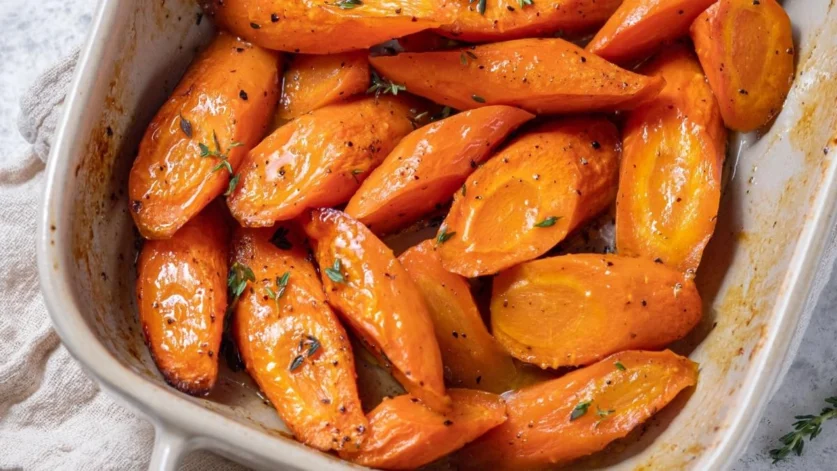
One of the easiest wholesome side dishes you can make to fill up your dinner table is glazed carrots: Tender roasted carrots with a sweet, flavorful glaze. With a handful of ingredients and about 15 or so minutes, you get a vibrantly-colored dish that tastes as amazing as it looks. Nonetheless, the flavor and fragrance of your roasted carrots may be enhanced significantly by adding whiskey.
Whiskey is renowned for its smoky and complex flavors beneath the potent hit of alcohol. Some of the primary tasting notes, such as honey and vanilla, complement the natural sweetness of carrots wonderfully. As a result, the whiskey-infused glazed carrots may taste earthy and slightly alcoholic, although most of the actual alcohol will evaporate during cooking.
To incorporate whiskey into your glazed carrot recipe, simply add a bit or two to the pan alongside the other glaze ingredients like honey, butter, and garlic. Following that, as the carrots roast in the oven, the alcohol will evaporate, leaving a pleasing depth of flavor that will have your dinner guests intrigued about your cooking secret.
Read more: The 27 Best Bourbon Brands, Ranked
With that in mind, you’re probably mentally sorting through the list of all the whiskies you know for a good fit. Here’s a simple recommendation: For a lighter, smooth twist on the dish, go for Irish whiskeys. If you like something a bit more bold, you won’t go wrong with smoky, classic all-American bourbons.
If it’s the former that piques your interest, consider popular bottlings of Irish whiskey such as Jameson or Bushmills. Irish whiskeys tend to have a lighter, fruitier flavor profile due to their triple distillation process, which can add that fresh twist to your glazed carrots. The subtle notes of vanilla and citrus in these whiskeys can brighten up the dish and give it a more complex taste. Meanwhile, the smoky and oaky taste of American bourbons will pair well with the sweeteners in the dish, be it caramelized brown sugar or honey.
For those who prefer a bolder, spicier flavor, a rye whiskey like Bulleit Rye or Templeton Rye is worth a shot. Rye whiskeys have a distinct peppery and strong taste that can add a nice kick to your glazed carrots. Just be sure to use a light hand when adding rye whiskey to your glaze, as its strong flavor can easily overpower the delicate taste of the veggie.
And if this has got you in the mood for adding whiskey to more dishes, have a look at our 12 ways to cook with whiskey for inspiration.
Read the original article on Tasting Table
Navigating the 2024 World Expo of Beer in Frankenmuth: A Comprehensive Guide
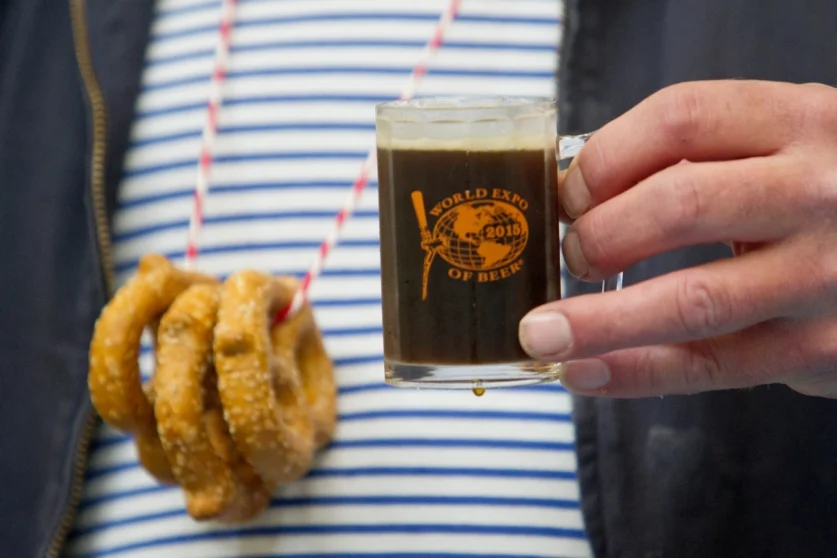
A group of 10 women compete in a beer stein-holding competition during the 20th Annual World Expo of Beer on Friday, May 20, 2016 at Heritage Park in Frankenmuth. Katy Kildee | MLive.com
FRANKENMUTH, MI — Beer aficionados soon will tap into the dozens of beer taps set to flow in Frankenmuth.
The 2024 World Expo of Beer is scheduled for Friday and Saturday, May 17-18, at Frankenmuth’s Heritage Park. Hours are 5 p.m. to 10 p.m. Friday and 2 p.m. to 10 p.m. Saturday.
If you purchase a product or register for an account through a link on our site, we may receive compensation. By using this site, you consent to our User Agreement and agree that your clicks, interactions, and personal information may be collected, recorded, and/or stored by us and social media and other third-party partners in accordance with our Privacy Policy.
Addressing Hangxiety: Rum Jungle’s New Single ‘Did The Morning Let You Down’

Australian four-piece indie rock band, Rum Jungle admits to being victims of hangxiety in their latest single: “Did The Morning Let You Down.” We’ve all been there before, waking up in the morning with an awful lurking feeling of dread for the actions of our past self, but Rum Jungle is here to help us feel a little less guilty and a little more understood with their new chilled-out anthem.
Lead singer Benny McIntyre shares, “You’d be lying to yourself if there hasn’t been a morning in your life that you’ve not been stoked with the events of the night before or something’s weighing you down and that morning it hits you hard. Mistakes get made, shit goes wrong, everything’s tough for everyone in their own relative state. What this one is about though is pickin’ up and rollin’ on and understanding the world is the way it is, and finding that thing or person or reason to charge on with some sonic stability.”
“Did The Morning Let You Down” is the ultimate laid-back summer anthem, shimmering with jangly indie guitars, upbeat drums, a super catchy chorus, and an overall feel-good vibe.
The song comes right as Rum Jungle kick off their UK/EU tour, so be sure to check out their dates if they’re in a city near you, as their live shows are tipped to be something out of the ordinary.
HOLD ME IN THE WATER UK/EU TOUR
9th May – FOCUS – Wrexham, Wales
10th May – The Louisiana – Bristol, UK | SOLD OUT
11th May – The Cavern – Exeter, UK
13th May – Oporto – Leeds, UK
14th May – Sidney and Matilda – Sheffield, UK
15th May – Omeara – London, UK | SOLD OUT
16th May – The Great Escape – Brighton, UK
20h May – Badehaus – Berlin, DE
21st May – Molotow – Hamburg, DE
22nd May – Wohnemeinschaft – Cologne, DE
23rd May – Supersonic – Paris, FR
25th May – A Stones Throw – Newcastle, UK
26th May – Broadcast – Glasgow, UK
Connect with Rum Jungle :
Facebook |
Twitter |
Skrew the Usual” – Unveiling Skrewball Whiskey’s Revolutionary New Campaign
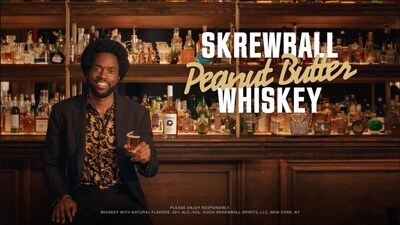
The Original Peanut Butter Whiskey’s Unique Personality is Brought to Life by the Brand’s Biggest Campaign Drop Since Pernod Ricard Acquisition
NEW YORK, May 9, 2024 /PRNewswire/ — Today, Skrewball Whiskey, the leading peanut butter whiskey, is proud to unveil its new campaign and rallying cry, “Skrew the Usual,” the brand’s most ambitious launch to date. As the world’s first super-premium peanut butter flavored American whiskey, Skrewball wants people to break away from the ‘same old, same old’ and revel in the surprisingly delicious flavors of life – enter “Skrew the Usual.”
“Skrew the Usual” is more than just a call to action, it embodies the essence of adventure and innovation in each bottle of Skrewball Whiskey. The campaign encourages consumers to break away from monotony and forgo the usuals in life that keep delicious discoveries at bay – in other words, to live by the ‘you only live once’ motto.
“Skrewball wants to inspire consumers to take detours and seek out the weird and wonderful,” said Kuppy Sampale, Brand Director of Skrewball Whiskey at Pernod Ricard. “With the introduction of ‘Skrew the Usual,’ we’re inviting our audience to choose exploration over routine and celebrate trying something new, like the unexpectedly delicious flavor of peanut butter whiskey.”
Visit Skrewball Whiskey’s Offical Website
The campaign signifies a major achievement for Skrewball and is the biggest launch since Pernod Ricard acquired it in 2023. Accompanying the launch is a 30-second creative spot titled “House of High Spirits” along with 15-second and 6-second short films. Central to the campaign is a new fictional spokesperson, Skrew, who brilliantly encapsulates the fun and mischief of Skrewball’s spirit. In the spot, Skrew invites viewers to give into their curiosity and savor the unique peanut butter flavor of Skrewball Whiskey.
“Skrewball continually pushes limits and defies expectations,” stated Steve and Brittany Yeng, the co-founders of Skrewball Whiskey. “We’re excited to extend the ‘Skrew the Usual’ approach to more people through our new campaign and hope that it inspires people to try Skrewball.”
Despite being a relatively new player, having been established in 2018, Skrewball has risen to become the preeminent peanut butter whiskey in the United States, boasting 83% market share. It is also the number two premium brand in the flavored whiskey category ($25+) in terms of value and volume, and the fifth top brand overall—truly remarkable growth.
The campaign, which was conceived by The Martin Agency, will be launched via online video, social and search on Thursday, May 9. Subsequently, notable out-of-home advertisements in key markets such as Chicago, Los Angeles, and New York City are set to roll out in June.
Skrewball Whiskey is available nationwide and at select retailers in Canada, Puerto Rico, and Central America. It is best enjoyed neat, on the rocks, or as the star ingredient in a variety of inventive cocktails and shots, like Island of Misfits and Salty Nuts.
For more information about Skrewball Whiskey and to stay updated on the latest news, visit www.skrewballwhiskey.com and follow along on Facebook and Instagram (@skrewballwhiskey).
PLEASE ENJOY RESPONSIBLY. 35% ALC./VOL. ©2024 Skrewball Spirits, LLC, New York, NY
Sources:
¹ Nielsen, latest 52 weeks, week ending 4/19/24
ABOUT SKREWBALL PEANUT BUTTER WHISKEY
Skrewball Whiskey was founded by Steven Yeng, a Cambodian refugee, and his wife Brittany, a former chemist who became a lawyer. Steven discovered his love of peanut butter shortly after arriving in the United States. Later, he began to integrate the quintessential, American nut butter into a top-selling cocktail at a bustling downtown Ocean Beach (San Diego) bar he ran. Seeing the popularity, Brittany would take Steven’s bestselling shot and help turn it into a shelf-stable whiskey with her chemistry background. Skrewball Peanut Butter Whiskey has won several awards, including the Best Flavored Whiskey award at the New York World Wine and Spirits Competition. The brand rapidly expanded in the US, Canada, and the Caribbean. For more information, visit www.skrewballwhiskey.com.
ABOUT PERNOD RICARD USA
Pernod Ricard USA is the premium spirits and wine company in the U.S., and the largest subsidiary of Paris, France-based Pernod Ricard SA., the world’s second largest spirits and wine company. Pernod Ricard employs approximately 19,000 people worldwide, is listed on Euronext (Ticker: RI) and is part of the CAC 40 index. The company’s leading spirits include such prestigious brands as Absolut Vodka, Avión Tequila, Chivas Regal Scotch Whisky, The Glenlivet Single Malt Scotch Whisky, Jameson Irish Whiskey, Kahlúa Liqueur, Malibu, Martell Cognac, Olmeca Altos Tequila, Beefeater Gin, Del Maguey Single Village Mezcal, Código 1530, Monkey 47 Gin, Seagram’s Extra Dry Gin, Malfy Gin, Hiram Walker Liqueurs, Midleton Irish Whiskey, Redbreast Irish Whiskey, Aberlour Single Malt Scotch Whisky, Lillet, Jefferson’s Bourbon, TX Whiskey, Skrewball Whiskey, Smooth Ambler Whiskey, Rabbit Hole Whiskey, Pernod and Ricard; such superior wines as Jacob’s Creek, Kenwood Vineyards, Campo Viejo, Brancott Estate and Sainte Marguerite en Provence rosé.; and such exquisite champagnes and sparkling wines Perrier-Jouët Champagne, G.H. Mumm Champagne, Mumm Napa.
Pernod Ricard USA is headquartered in New York, New York, and has more than 1,000 employees across the country. As “creators of conviviality,” we are committed to sustainable and responsible business practices in service of our customers, consumers, employees and the planet. Pernod Ricard USA urges all adults to consume its products responsibly and has an active program to promote responsible drinking.
For more information, visit: www.pernod-ricard-usa.com.
Media contact:
Weber Shandwick, wswskrewkrew@webershandwick.com
View original content to download multimedia:https://www.prnewswire.com/news-releases/skrewball-whiskey-encourages-consumers-to-skrew-the-usual-with-new-campaign-302140558.html
SOURCE Skrewball Whiskey
Troublesome Couple Evicted From EasyJet Flight After Empty Vodka Bottle Incident

The duo, who have not been named, had reportedly boozed on duty-free vodka on the plane from Tenerife South to London Gatwick at 2am yesterday morning – but were met by police on arrival
Shocking footage has captured the moment two rowdy Brits who had been allegedly boozing on a flight from
Tenerife were thrown off a flight by
The duo, who have not been named, had reportedly boozed on duty-free vodka on the
plane from Tenerife South to
London Gatwick at 2am on Wednesday. The airline has since confirmed officers boarded the plane upon landing back in the UK due to disruption onboard. Shocking video filmed on board shows the couple being escorted off the aircraft by three
Sussex Police officers – sparking cheers from their fellow passengers.
Were you on this flight? Contact us at webnews@mirror.co.uk
Witnesses claim the pair were “rowdy” throughout the flight before the police were called. A passenger who filmed them being ejected from the aircraft said: “A police officer emptied the passenger’s handbag onto the tarmac and a 1 litre vodka bottle that appeared to be almost empty fell out. They were both in a bad way.”
A spokesperson for easyJet said: “easyJet’s cabin crew are trained to assess and evaluate all situations and to act quickly and appropriately to ensure that the safety of the flight and other passengers is not compromised at any time. Whilst such incidents are rare we take them very seriously and do not tolerate disruptive behaviour onboard. The safety and wellbeing of passengers and crew is always easyJet’s highest priority.” The Mirror has contacted Sussex Police for comment.
It comes after a travel blogger warned against passengers bringing their own alcohol aboard a flight. The reason isn’t that the airline can sell more of their own booze, but for safety reasons. “Please, please, please do not bring personal alcohol and consume it during the flight. We need to know (for your safety and those around you) if you are intoxicated,” Lisa Kulper told the Points Guy.
“By serving you alcohol in flight, we can monitor how much you are drinking. Alcohol affects you differently at higher altitudes, and if you are suddenly passed out or something goes wrong, we won’t know the reason.” As well as potentially causing flight attendants some issues – particularly if you go really overboard with the drink – it could land you in hot water if you’re flying in the wrong country. In the US consuming personal alcohol on a flight can lead to a hefty fine.
Lisa identified that this is a federal violation in the United States, which could result in a fine of thousands of pounds. In the United Kingdom, you’re permitted to carry alcohol on the plane as long as it’s purchased in the airside departure lounge, it’s closed, and its alcohol content is lower than 70% ABV. It should also be stored either in an airport shopping bag or in your cabin bag. Passengers are prohibited from consuming any alcohol while flying unless it was purchased onboard.
Receive email updates featuring the most important stories of the day.
Turning Wastewater into Beer: the Innovative German Approach

Reuse Brew is a classic German lager with a twist — it’s made from recycled wastewater.
The beer is the result of a collaboration between the South German city of Weissenburg, American water tech company Xylem, and the Technical University of Munich (TUM). In particular, TUM’s Brewery and Beverage Technology department put their expertise to good use.
Even though the concept of a sewage brew might seem repulsive, Xylem assures that all harmful elements are filtered out before the malt, hops, and yeast are integrated.
Firstly, a machine infuses ozone into the wastewater. Then, the sludge is exposed to UV radiation and bombarded with hydrogen peroxide. Lastly, it is put through various carbon and nano filters.
This process removes 99.999% of all chemicals and contaminants. The end result is clean, fresh water that you can use to drink, water your plants, or…make beer.
TNW Conference – Are you an investor? This message is for you!
Meet with the hottest startups and uncover your next venture on June 20-21. Hurry! Price increase May 17.
Reuse Brew is a Bavarian Helles — a traditional German pale lager beer. “It has a pleasant freshness that is complemented by a slight malty sweetness and a subtle bitter note,” Xylem’s Marlies Poppe tells TNW.
“Reuse Brew isn’t just a beverage; it’s a conversation starter, sparking discussions about water conservation, resource efficiency, and the endless possibilities of sustainable brewing practices.”
While this might sound radical, turning wastewater into tap water is nothing out of the ordinary. NASA astronauts turn their pee into water to prevent the need for further resupply missions. Stricken by drought, California even approved its first standards for turning sewage into drinking water last year.
If you think about it, we’ve probably all drunk wastewater at some point in our lives.
When you flush, your waste goes down a pipe to a treatment works. Here it is purified and then discharged into a river or lake. Eventually this very same water gets pumped back into a well for drinking once more.
Nevertheless, most people don’t think of it that way. The “yuck” factor of “toilet-to-tap” has prevented widespread adoption of wastewater recycling. Until now.
“The source of water should not determine its value, but rather its safety and quality,” said Professor Jörg E. Drewes of TUM.
Demand for water is higher than ever. But climate change is bringing worse droughts and extreme weather events that are disrupting supply. In the future, recycling wastewater may become the norm.
If you’d like to crack open a Reuse Brew yourself, Xylem will be serving the beer at the upcoming IFAT event in Munich, which runs from May 13 to 17. Cheers!
Update (09:45AM CET, May 8, 2024): This article previously, incorrectly, stated that Xylem would sell bottles of Reuse Brew. It will in fact only serve the beer, not sell it.
Siôn is a reporter at TNW. From startups to tech giants, he covers the length and breadth of the European tech ecosystem. With a background in environmental science, Siôn has a bias for solutions delivering environmental and social impact at scale.
Get the most important tech news in your inbox each week.
Stunning Wine Bottles that are Worth Buying for Their Look (and Their Great Taste, Too!)

Laura Riches embarked on a unique endeavor when she launched Laylo, a company that delivers wine in a box. The packaging was a significant aspect of the overall concept, with every variety showcasing customized artwork. The design process involved extensive conversations with the wine producers and an exploration of local artistry ranging from textiles to visual arts. The French sauvignon blanc caught my attention, its packaging reflecting the winemaker’s life story in a charming toile-de-Jouy-style.
The wine industry is not limiting its creativity to Laylo. A growing number of wines are appearing in beautifully adorned cans and boxes, adding visual appeal to the drinking experience. This approach is a significant change from the past when the wine’s label design could inadvertently affect the consumers’ perception of its quality. Patterned and colorful labels were often associated with inferior quality, although Château Mouton Rothschild was a notable exception. This famous winery created a trend by using artwork designed by renowned artists on its wine labels.
Sourcing Table is another fine example, where every wine sold seems to have been selected for aesthetic appeal. Look also at the innovative ‘Don’t Feed the Ponies’ series created by Sharpham at Sandridge Barton in Devon. This collection includes unique wines such as a light red crafted from four varieties of ‘pinot’ grapes, an orange wine, and a cloudy sparkling ‘col fondo’ style. Like the proseccos under the same name, it undergoes fermentation first in a tank, then in a bottle. Each wine from the Don’t Feed the Ponies collection is named after a natural feature in Dartmoor and displays a distinctive label created by a local artist.
A post shared by Sharpham Wine at our new home (@sandridgebarton)
A clever label can also tell a story. Brit Katie Jones, who makes gorgeous wines in the rugged Languedoc, has a wine called Along Came Jones Hairy Grenache. The label features a comic-strip with Jones as the hero, who discovers she’s growing a type of grenache that’s different to everyone else’s.
Others simply stand out. There’s a school of labels whose backgrounds are a high-saturation, single-block colour, like the lapis blue of Domaine Equis’ Equinoxe Crozes-Hermitage, or the strong red of the Grand Aven of Vignerons Ardéchois (both of these wines are sold by Yapp).
None of this is to say that supermarkets and discount chains are slacking. Two of the most beautiful labels among this year’s crop are on bottles of Greek wine in Aldi. I love the octopus whose golden tentacles wind around the assyrtiko-syrah rosé.
Speaking of rosé, in this aisle it’s not just the label that is highly stylised. There are square bottles, round bottles, bottles that are squat and bottles that are tall with voluptuous curves; bottles whose glass forms pleat-like ridges to refract sunlight in glittering patterns, and bottles made from chunky glass with the palest hint of green. Some, like Whispering Angel spin-offs The Beach and The Pale (which features a sketch of café society), have labels that allude to the holiday feeling you might hope to have when you’re drinking them.
Drunk Teaching Assistant Exposed After Student Accidentally Consumes Vodka from Her Soft Drink Bottle

Alexandra ‘Nicole’ Ligon Lambert was arrested after a student at Morgan County Middle School in Georgia, US, allegedly drank vodka from a Mountain Dew bottle she had in her possession.
A teaching assistant stumbled into a problematic situation when a student by chance drank from her vodka-laden bottle, mixing it up for a soft drink.
The incident occurred when a male pupil from Morgan County Middle School in Georgia, US, snagged a Mountain Dew from the staff member’s stash. The bottle was later found to be owned by 39-year-old Alexandra “Nicole” Ligon Lambert.
After taking a swig, he immediately discerned that the green label bottle housed something apart from his anticipated soft drink. The student then discarded the drink and proceeded to inform another teacher.
READ MORE: Baltimore high school athletic director ‘used AI to create fake racist audio’
The teacher reported the incident to the principal’s office on Thursday afternoon. Lambert was confronted about the concealed alcohol and eventually admitted to accidentally bringing it to school.
Police arrived at the school around 1:15pm. Lambert was found to be three times over the state’s legal drink-drive limit of 0.08, with a breathalyzer test revealing a value of 0.259. Due to her intoxicated state, she was not permitted to drive home and police carried on with their investigation.
An empty bottle, once filled with vodka and camouflage as water, was found in the bin where a student had discarded it. Lambert had to face the harsh reality of being charged with public drunkenness and disorderly conduct before being transported to Morgan County Sheriff’s Office Adult Detention Facility.
A message to parents and guardians of County Charter Schools students last week read: “The Middle School administration was informed today of a potential issue involving an employee’s water bottle containing alcohol. Law enforcement was promptly notified and an investigation ensued.
For all the latest news, politics, sports, and showbiz from the USA, go to The Mirror US
“It was subsequently confirmed that alcohol was indeed present, leading to the immediate arrest of the employee by the Morgan County Sheriff’s Office. As this is a personnel matter, we cannot provide further comments at this time, but we can confirm that the individual is no longer employed with our district.
“The safety of our staff and students is paramount, and we take all incidents seriously. We have zero tolerance for any behaviour that could jeopardize their well-being. We will continue to cooperate fully with law enforcement and appreciate the support of the Morgan County Sheriff’s Office.”
Lamber was taken into custody at the Adult Detention Facility of the Morgan County Sheriff’s Office.
This incident follows a case where a teacher, accused of engaging in inappropriate behavior with her 11-year-old student, was dubbed as an “attention seeker” and a “selfie queen” by enraged parents from the school where she worked. Madison Bergmann, a 24-year-old educator from River Crest Elementary School in Hudson, Wisconsin, was suspended after the mother of a student allegedly heard her son having a not suitable conversation with his teacher over the phone, and discovered supposed texts between Bergmann and the young student.
Bergmann faces a charge of first-degree child sexual assault. She was allowed to leave custody after posting a $25,000 signature bond, placed on administrative leave, and forbidden from having any contact with other students, parents, or staff from the school district.
Sign up to receive the most important stories of the day via email.
Unveiling the World’s Finest Beers: Winners of The Oldest Beer Competition
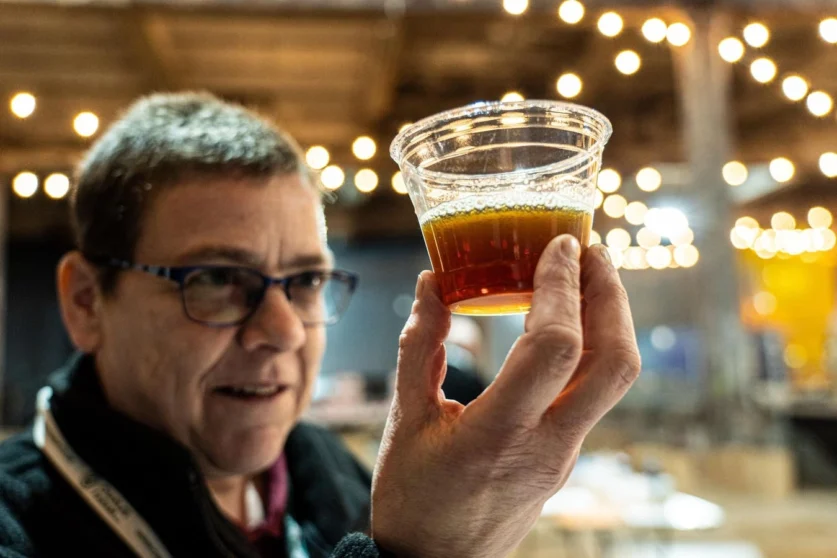
A judge examines a beer during The International Brewing Awards.
The International Brewing Awards have been recognizing the world’s best beers since 1886—the oldest beer competition in the world. The International Cider Awards were added in 2013.
Judging for the awards is conducted only by working professionals in brewing and cider making and awards are given after discussion and consensus, rather than scoring and averaging. Most beer awards are judged by a mix of industry professionals and trained judges, making the International Brewing Awards unique in having the beverages judged by other brewers and cider makers.
For the 2024 awards, 31 beer judges and nine cider judges from 15 countries evaluated almost 600 beers and over 100 ciders. Judges were selected from small craft breweries and cideries to the largest brewing companies in the world.
Ruth Evans, director of the awards and CEO of the Brewing, Food & Beverage Industry Suppliers Association which runs the awards, mentioned in a video interview that the longevity of these awards makes them a good indicator of the global trend in the beer and cider industries. She pointed out that the number of entries was lower this year due to the difficulties faced by the beer and cider industries. Conversely, during favorable years, the number of entries could be twice as many.
“We saw an increased number of entries from Japan and a decreased number of entries from Australia,” remarked Evans, revealing the contrasting directions the beer industry is taking in these countries. “There was a noticeable increase in entries for Non & Low Alcohol, while Strong Beer decreased. The Specialty Beer category remained strong, thanks to the consistent outstanding performance by Japan.”
The International Brewing Awards and The International Cider Awards publicized their 2024 trophy winners on May 1. The winners were selected from the 30 gold-medal winning beers and 13 gold-medal winning ciders that were announced previously on March 22. Trophy winners are determined by the collective panel of judges, unlike the medals which are awarded by panels of six judges. The 2024 trophy winners include:
International Smallpack (cans or bottles) Lager Competition — Kirin Ichiban, Kirin Holdings Company of Japan
International Keg Lager Competition — Capital Dry Hopped Lager, Windsor & Eton Brewery of the United Kingdom
International Smallpack Ale Competition (two trophies awarded) — Barley Griffin, BentSpoke Brewing Co of Australia and Samuel Adams Wicked Hazy, Boston Beer Company of the United States of America
International Keg Ale Competition — Drovers Hazy Session IPA, Round Corner Brewing Ltd. of the United Kingdom
International Cask Ale Competition — WORK, Forest Road Brewing Company of the United Kingdom
International Non & Low Alcohol Beer Competition — Free Damm, Damm S.A of Spain
International Specialty Beer Competition — Jazzberry, Spring Valley Brewery of Japan
International Dark Beer Competition — NAMA-KADO Smoked Oyster Stout, Isekado Brewery of Japan
International Strong Beer Competition — Tsingtao Legend, Tsingtao Brewery Co. Ltd. of China
International Classic Cider Competition — Original Gold, Portland Cider Company of the United States of America
International Flavored Cider Competition — Ros, Stonewell Cider of Ireland
International Innovative Cider Competition — Phantom Of The Orchard LO-ALC 1% Cider, Cotswold Cider Company of the United Kingdom