Wine 1106
Why This $6.49 Trader Joe’s Wine Is a Must-Have for Your Next Gathering

I always have a bottle of this wine on hand.
In the heat of summer, there is simply nothing better than a chilled glass of crisp white wine. While I truly love perusing the aisles of a local wine shop to find a fun new bottle to try, sometimes it’s nice to have a go-to that doesn’t require splurging. Though I’m more cautious of super inexpensive wines, especially whites, you don’t necessarily have to break the bank for a good bottle and Trader Joe’s Espiral Vinho Verde proves it.
There are a few things you should always buy at Trader Joe’s, and this is one of them. The under $7 bottle has been a staple on my wine rack since I first found it on the store’s shelves in 2019. Just about every time I make a trip out to Trader Joe’s, I pick up a bottle (or two…) because I never know when they might be sold out.
Trader Joe’s
It’s zippy, refreshing, and sparkling—but not overly effervescent. This Vinho Verde hits the spot every time and is practically made for warm-weather front porch sipping from a rocking chair, poolside lounging, and summer sunset viewing. (Though it’s just as delicious enjoyed anytime of year, no special occasion necessary!) I like having it on hand for impromptu happy hours or an easy last-minute host gift when zhuzhed up with a nice ribbon and note or wrapped in a decorative tea towel.
Plus, the twist top makes the bottle great for on-the-go adventures and picnics so you’ll never have to worry about a forgotten bottle opener. And of course, you can’t beat the low price. At about $1 per glass, I think it’s especially great for using in lieu of sparkling water or champagne for bubbly cocktails.
Without getting into the nitty-gritty, Vinho Verde is not a grape, but rather a region in northeastern Portugal known for its lush, green landscape and production of equally refreshing white wine named for the area’s vegetation.
Made from a blend of lesser-known white grape varieties, including Alvarinho, Arinto, Loureiro, Avesso, and Trajadura, the Vinho Verde is light and bright with notes of fresh, unripe fruit, lemon-lime, and hints of melon. Across the board, it’s also known for its lower price point and ABV (alcohol by volume) which averages 10-12% by nature. Trader Joe’s Espiral is only 9% ABV.
Jen Causey, Food Stylist: Chelsea Zimmer, Prop Stylist: Josh Hoggle
Most importantly—chilled! I’ll enjoy a glass of Trader Joe’s Espiral Vinho Verde as is or use to make a fun spritz-style cocktail.
If it’s happy hour, I love pouring a glass to accompany a good nutty and fruity charcuterie board. The subtle effervescence also makes it a nice complement to just about any summer produce-based meal, simple white fish, and crunchy-citrusy salads.
Related: 33 Stellar Summer Farmers’ Market Recipes To Make The Most Of Fresh Produce
While satisfying for a refreshing glass of wine as is, you can also dress up Trader Joe’s Espiral Vinho Verde into your favorite sparkling cocktail. Simply replace the sparkling water or sparkling wine in any of these recipes or craft your own cocktail with it.
Aperol And Blood Orange-Mint Spritz
For more Southern Living news, make sure to sign up for our newsletter!
Read the original article on Southern Living.
To Chill or Not to Chill: The Debate on Wine and Optimal Serving Temperatures | COMMENTARY

We receive numerous inquiries about wine, so we decided to share some of the most frequently asked ones to satisfy your curiosity. Keep those questions coming!
Q: Is it proper to chill a red wine?
A: Absolutely. Lighter wines, in particular, taste much better with a chill. Even producers of beaujolais—a low alcohol, lighter wine—recommend it be chilled. The same is true for grenache and most syrah. However, we extend chilling to all red wine, especially in summer months when al fresco dining can warm wine quickly.
If you have a cellar or wine cooler, your wine is probably 55-60 degrees. But it can warm fast over an hour-long meal. We use a chiller jacket that is kept in the freezer. They are very inexpensive. Or, you can dunk the bottle in an ice bath. However, chilling it below 55 degrees closes down the flavors and accentuates the tannins.
Q: Why can’t I find a good wine under $15? It seems like the average price of wine is rising. Is it me?
A: Indeed, the cost of wine is rising along with milk and a lot of groceries. While we remember spending $8 for a bottle of good wine in the 1990s, you can’t do that any longer if you still demand quality. The sweet spot for inexpensive but good wine is closer to $20 today.
According to a Wine Analytics Report, wines below $11 saw a decline in value and volume. But wines in the $15 to $19.99 tiers saw 1% growth while the $25-plus tier saw 1.5% growth. Consumers might be more comfortable with the economy and thus more willing to pay more for good wine.
If you’re on a budget, you should try bulk wine in cans and boxes. We were surprised to find palatable wines in this volume, even if we don’t see ourselves drinking it. Look for producers Juliet and Tablas Creek.
Otherwise, look for wines from Portugal and Spain — two areas making fabulous wine under $25.
And, wines from Argentina’s Domaine Bousquet are really good for the money and easy to find.
Q: How long will wine last after it is opened?
A: We never keep wine for more than a few days, even if we use a preservation system that removes the oxygen. There are expensive systems costing more than $200 that arguably will protect open bottles for a week or more, but we suspect most of our readers aren’t willing to spend that much on a preservation system.
An open bottle of red wine is best preserved by pumping out oxygen with a $30 reusable Vacu-Vin and putting it in the refrigerator. Chilling helps preserve a red wine, but be sure to let the temperature come up to 60 degrees or so when you re-open it.
Wine, especially white, that has been open for more than a few days will taste oxidized.
Q: I need to find wines for my son’s wedding. Do you have any suggestions?
A: We have been to a couple of weddings this year and have been largely disappointed in the selections. Frankly, couples don’t have much choice because the caterer or restaurant offer few options. If you can bring your own wine, you will find better value.
First, don’t bother offering expensive champagne. Guests will probably have the one glass offered as a toast and they won’t be focused on quality. Prosecco is fine.
Second, include a rosé, a versatile wine and generally inexpensive. We find it reliable at low costs and universally enjoyed.
Our general rule when we go to weddings is to drink white wine. Sauvignon blanc, for instance, is another grape variety generally good at all price points. Cheap chardonnay is going to taste cheap. Even worse, are the cheap pinot noirs, merlot and cabernet sauvignons.
For reds, you’re better off to look for blends, syrah and zinfandel.
Q: I have a bottle of 2015 chardonnay that I found while cleaning out my father’s house after he died. Will it be any good?
A: We are constantly asked about the durability of an old wine someone inherited. It is a difficult question to answer without just saying “it depends.”
It depends on the storage conditions. A wine stored on its side in a 55-degree cellar has a better chance to age gracefully than one kept in a cupboard or closet.
It also depends on the wine. Red wine, in general, will last longer because it has tannins — a natural preservative. Even so, a cabernet sauvignon from Bordeaux has an even better chance than, say, a syrah from California.
We have enjoyed many chardonnays from Burgundy and even California that are a decade old. Again, it depends on the producer. Don’t expect an old Fetzer chardonnay to taste as good as a Corton-Charlemagne.
Here are a few pinot grigios we recently enjoyed:
Marco Felluga Mongris Collo Pinot Grigio DOC 022 ($21). With grapes grown in mineral-rich but poor soils in the Collio region of Italy, this pinot gris has bright and fresh floral aromas with apple and pear flavors.
Alois Lageder Porer Vigneti delle Dolomiti Pinot Grigio IGT 2022 ($30). With a little more complexity and richness than most pinot grigios, this version from the Alto Adige region is very fresh with a note of minerality and apple flavors.
Riff Delle Venezie Pinot Grigio DOC 2022 ($12). A great value, this pinot grigio has simple apple and pear notes. A great sipper on a warm afternoon.
CK Mondavi and Family Classic California Pinot Grigio 2022 ($8). Classic peach and pear notes with a dash of spice dominate this reasonably priced wine.
Etude Carneros Pinot Gris 2020 ($32). We will always remember this house for Tony Soter’s pinot noir. Beringer Blass now owns the winery and continues to make good wine, including this fruity pinot gris that is guaranteed to please consumers. Abundant tropical fruit notes with citrus and mineral nuances. Soft texture makes it a nice match to cheese.
Dutcher Crossing Proprietor’s Reserve Petite Sirah 2019 ($36). This is a delicious petite sirah for summer barbecues. From the Dry Creek Valley, the wine has juicy plum and blackberry flavors with hints of chocolate and espresso.
Tom Marquardt and Patrick Darr have been writing a weekly, syndicated wine column since 1985. See their blog at moreaboutwine.com. They can be reached at marq1948@gmail.com.
Del Dotto Winery: A Fusion of Fine Wine, Venetian Art, and Magnificent Opera Music

Venetian Style Architecture Featured at Del Dotto Estate Winery & Caves in Napa Valley, CA
If you drive down Highway 29 in Napa Valley it is hard to miss the imposing stone and iron gates of Del Dotto Estate Winery, with the massive pottery amphorae flanking each side. But if you decide to turn in, there is an even more breathtaking structure at the end of the driveway – a Venetian-style palace that has been built into the hillside, complete with wine caves.
“When we researched our family history and discovered that it is Venetian and dates back to 1150, we decided to design a winery that honors our heritage,” stated Dave Del Dotto, co-owner and founder, during my recent visit to the estate.
Dave, a retired real estate and infomercial tycoon, and his wife, Yolanda, invited stone masons from Italy to construct the 16,000 square foot palace, complete with a marble exterior, fountains, statues, olive trees, and vineyards. Inside visitors are awestruck by the domed ceiling with massive chandeliers made with Murano glass, soaring arches, marble pillars, stone mosaics, and exquisite Venetian art. And echoing through the sound system is thrilling opera music.
“My Dad loves opera music, as you may guess,” said Desirée Del Dotto, Chief Operations Officer and Marketing Director for the winery, as well as the three other wineries the family owns (Piazza Del Dotto Winery & Caves, Villa del Lago, and the original Del Dotto Historic Winery on Silverado Trail).
After several years of construction, Del Dotto Estate Winery & Caves opened its doors in 2007, and quickly became a showcase winery in Napa Valley, as well as a favorite place for the Kardashians to visit.
“We have welcomed and filmed with the Kardashians here on three different occasions, and it was an honor that Kylie Jenner selected us as her first winery to visit when she turned 21,” reported Desirée.
Italian Art, Mosaics, & Murano Chandeliers Featured at Del Dotto Estate Winery
Perhaps part of the reason that celebrities and thousands of other visitors are attracted to Del Dotto Estate Winery is the unique wine tasting experience they offer.
“We believe in allowing guests to taste not only the different grape varietals and appellations of Napa Valley, but also to experience the impact of different types of oak aging on wine,” explained Desirée as she and Dave escorted me into the ‘sacred caves.’
Oak wine barrels lined both sides of the very long cave, with intricately tiled floors and walls, and more massive chandeliers. Desirée used a wine thief to deftly extract red wine from a barrel, and poured it gracefully into our waiting wine glasses.
“This is cabernet sauvignon from Napa Valley’s St. Helena AVA and is aged in French oak,” she explained. “Next we will try the same wine in American oak.” The difference is quite astounding, with the French oak providing delicate notes of honey and allspice, while the American oak enhanced the wine with broader swaths of crème brule, mocha and vanilla.
“We ask visitors which they prefer, and encourage them to ask questions, rather than lecturing to them about the wine,” explained Dave.
Desirée said that many visitors ask her what her favorite wine is and she responds that her opinion doesn’t matter. “Wine is like art, and you like what you like. It doesn’t matter what I or someone else like.”
Not to be outdone, Dave chimed in. “Wine is like liquid art. It is like going to the Louvre, and if you were able to take down a painting or a statue and drink it – that would be the art.”
Altogether the Del Dotto’s make approximately 30 different variations and vintages of Napa Valley cabernet sauvignon in very small lots, with visitors allowed to taste directly from 5 to 8 barrels, as well as assorted bottled wine. Guests then select the barrels they prefer and the Del Dotto’s will bottle and ship the wine to them.
“Our biggest challenge is that we sell out of our wines very quickly with this tasting method,” admitted Desirée.
Desiree Del Dotto, COO of Del Dotto Winery, Pouring Wine from Barrel for Visitors
Over the years the Del Dotto’s have managed to receive many high-scores from wine critics, especially Robert Parker, who awarded them three 100-point scores. One of these was for their 2012 vintage of ‘The Beast,’ which is a special red blend made from select vineyard rows.
“We named it ‘The Beast’ because the first time a good friend tasted it, he called it a ‘beast of a wine,’’ explained Dave.
The wine, sold in a special ‘caged box,’ is produced in very limited quantities and typically sells out to wine club members almost immediately at the current price of $295 per bottle. It is a robust red blend with rich, concentrated flavors of cassis, black plum, graphite, cocoa, and espresso beans, with a long complex finish.
Dave mentioned that ‘The Beast‘ is frequently resold on the secondary market in Asia to collectors, who have paid up to $1000 per bottle for it, “and have sent me videos of how they have taste-offs comparing it to Chateau LaTour.”
‘Sacred Caves’ at Del Dotto Estate Winery in Napa Valley
But Del Dotto Estate Winery doesn’t only focus on cabernet sauvignon, as they own a hilltop vineyard in the Sonoma Coast where they produce high-end pinot noir and chardonnay. They also make sauvignon blanc, syrah, cabernet franc, merlot, sangiovese, and several delicious sparkling wines. Altogether they own 108 vineyard acres, and produce around 20,000 cases of wine per year, which they primarily sell directly to consumers.
Visitors to the estate can make an advance reservation for a Bar Tasting for $75 per person or Cave Experience and Barrel Tasting for $120 per person. A good plan is to schedule a morning tasting at Del Dotto Estate Winery and then drive a few minutes down Highway 29 to visit their second winery, Piazza Del Dotto Winery & Caves. Here you can enjoy an oven-baked pizza on the terrace overlooking the organic garden. This winery features an even larger cave network dug back into the hillside, and an Italian-inspired barn with turkeys, chickens, and peacocks.
The Del Dotto Wine Family – Giovanni, Desiree, Yolanda, and Dave Del Dotto (left to right)
One Community. Many Voices. Create a free account to share your thoughts.
Our community is about connecting people through open and thoughtful conversations. We want our readers to share their views and exchange ideas and facts in a safe space.
In order to do so, please follow the posting rules in our site’s Terms of Service. We’ve summarized some of those key rules below. Simply put, keep it civil.
Your post will be rejected if we notice that it seems to contain:
User accounts will be blocked if we notice or believe that users are engaged in:
So, how can you be a power user?
Thanks for reading our community guidelines. Please read the full list of posting rules found in our site’s Terms of Service.
Las Vegas Food & Wine Festival Canceled: Official Announcement

Event organizers mentioned that they promptly refunded all ticket purchasers upon being informed that the event could not be held at Resorts World.
Inside Gratsi: How a Boxed Wine Startup is Redefining the Wine Industry
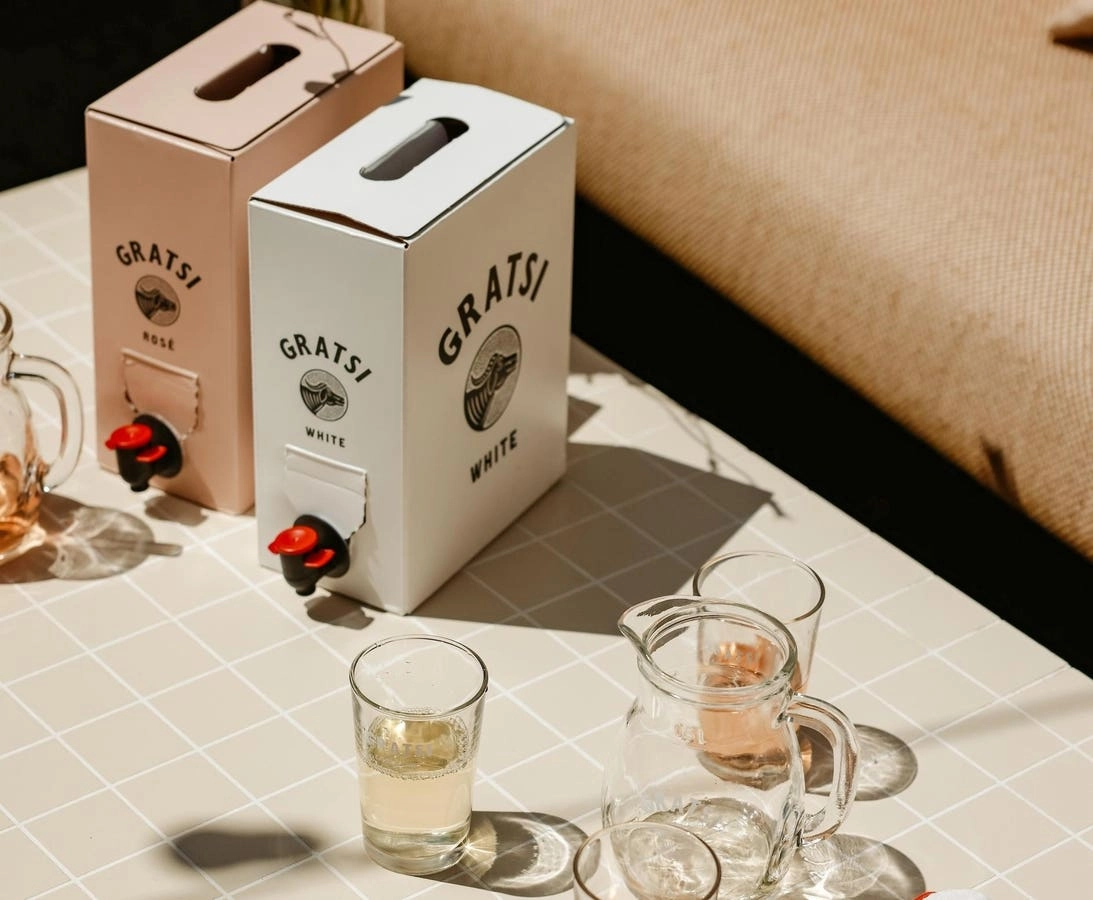
Three years ago, a group of wine industry outsiders took a bold step into the sector by offering premium, non-vintage and non-varietal wines priced at $40. The bold part? It’s boxed wine.
Boxed wine has never had a stellar reputation among even casual wine drinkers, but meeting sustainability goals has winemakers rethinking the entire process, including how wine is packaged.
Gratsi Wine’s unconventional approach has proven successful; the Washington-state brand says it is on track to sell more than 200,000 cases this year.
Gratsi’s marketing strategy—centered around connection and community—has played a significant role in its success. Inspired by the simple Mediterranean lifestyle, Gratsi aims to bring the essence of slow mornings, quiet towns, fresh food and great wine into the homes of its customers. The company utilizes captivating storytelling and vivid imagery of Mediterranean destinations across its digital platforms, offering recipes, music, movies and books to inspire and connect with consumers. Additionally, products like Gratsi glassware and a recipe book enhance the immersive experience, encouraging customers to savor life mindfully.
In 2023, Gratsi Wine expanded from its direct-to-consumer model into retail markets, beginning in Connecticut, where over 1,000 cases were sold in April. As of June 3rd, the company has expanded its retail presence to Delaware, Maryland and Washington, D.C., continuing its growth and reaching new markets.
Gratsi founder Stephen Vlahos recently shared more with Forbes about market expansion, innovative strategies, challenges and future plans for the winery.
We launched as a direct-to-consumer company during Covid, and the box was a perfect way to ship wine to customers as a 9-liter case of boxed wine is one-third of the weight and one-fourth of the size of a 9-liter case of bottles. To us, DTC is a totally different competency than launching retail. We wanted the retail launch to be focused and limited, really figure out how to convert customers in person versus online, and then scale.
We have always seen Gratsi as a large-scale commercial grocery product, so we wanted to pick a broadly representative American market and not a unique large metro like New York or Los Angeles. Connecticut was perfect for us because of its great food scene and diverse immigrant culture, and it was an avatar for the rest of the country.
Initially, we got pushback from distributors and retailers because we were first to market and no one had sold a $40 box of wine at scale. So we said, just put it in the store and we will convert customers with tastings and events. Customers in Connecticut started buying the wine in large volumes and our distributor was onboard to expand the footprint. Again, it’s important to us that we are in markets that represent the American consumer as a whole, not just a few major metro areas.
To us, the most important factor in our wines is quality, taste and price to value ratio. We wanted to be open minded as to where the wine came from. Our number one goal was to find the best wine at the best price. After tasting wine from all over, we fell in love with Washington state. We thought the wine was absolutely delicious and very reasonably priced. We had a desired profile in mind, not a bias towards a certain varietal.
The goal for our wine was to be reminiscent of young European table wines—which meant no oak treatment—young, fruity and dry wines that are easy to drink with or without food. We also thought that the bag in box, if done correctly, had a really high upside for market opportunities. It’s perfect for at-home consumption; it just needed a great wine and brand to legitimize the category.
Our wines are grown and crafted using certified Sustainable Washington and Washington salmon-safe standards, which signifies a commitment to high quality fruit, environmental stewardship and healthy communities. These standards include requirements to use natural interventions to the highest level possible, including minimal spray treatments, naturally limiting weed growth through the use of competing row crops such as wheat, eliminating harmful vineyard runoff, water quality protection, enhancement of native biodiversity on vineyard sites and fair wages and safe working conditions for workers.
And Gratsi wines are clean and keto-friendly thanks to being zero sugar and only using all-natural ingredients. Many wines are fermented dry and have very little to no residual sugar at the start of the winemaking process. However, due to the use of low quality and inexpensive fruit as well as poor winemaking practices, these wines then require sugar and a host of other additives to be added back into the wine to make a finished product that is palatable. This leads to a wine that is not clean drinking and contains considerable amounts of residual sugar. Gratsi uses only the highest quality fruit from vineyards that use sustainable growing practices and never adds sugar or unwanted additives to enhance color or flavor.
Our entire team has a deep love for and fantasy of living the slow, simple Mediterranean life. We find creators who we personally find interesting and look for recipes, playlists, travel guides and general content that we personally love. Then we just try to share it with our customers.
The biggest challenge from the beginning was converting the $12 to $30 per bottle customer to start buying boxed wine. It has been a slow grind, but once customers trade in the bottle for the box, they stay. It seems that the tide is turning and customers are starting to adopt the premium boxed wine as a full-time replacement for their $20 bottle.
As customers are focusing on how much they spend at the store, the box is a clear cost-saving mechanism. Plus, the boxed wine packaging is so efficient, it allows us to have a bigger budget for the wine itself. Once customers pay half the price as they would for four bottles and the wine is superior, it’s game over.
Our team is full of wine lovers, but no one is from the wine industry so we have taken a very elementary, common sense approach to our strategy. Do we love this brand? Is this our favorite wine to drink? Do we like the way that it tastes and how it makes us feel the next day? We were really blown away at the contrast between American and European wines, in regards to the residual sugars and additives. We just said, let’s make a wine that reminds us of a pitcher of European table wine that you would have at a cafe in Sicily. If people like it, great. If not, that’s okay, too.
We feel very confident that we know how to successfully activate a market. Our plans are to expand into more than 15 states by 2025 and all 50 by 2026. It’s time for Gratsi to hit the mainstream at scale. We do not have plans to expand our offerings as we feel we cover the spectrum for our customers. It’s possible that we offer smaller volume packaging, but it isn’t in the short term plan for the business.
Internally, our team has a fantasy of living the slow life in the Mediterranean and the name is paying homage to this lifestyle of the slow, simple life. “Grazie” means thank you in Italian, but that spelling was too expensive for us to trademark. The domain name of “Gratsi” was very reasonably priced, so Gratsi it is.
One Community. Many Voices. Create a free account to share your thoughts.
Our community is about connecting people through open and thoughtful conversations. We want our readers to share their views and exchange ideas and facts in a safe space.
In order to do so, please follow the posting rules in our site’s Terms of Service. We’ve summarized some of those key rules below. Simply put, keep it civil.
Your post will be rejected if we notice that it seems to contain:
User accounts will be blocked if we notice or believe that users are engaged in:
So, how can you be a power user?
Thanks for reading our community guidelines. Please read the full list of posting rules found in our site’s Terms of Service.
OPINION | Carin Schoppmeyer: Center for Hunger Relief Brings Hope, While Art of Wine Enriches Minds

Though Art of Wine guests didn’t have to pack up to go to summer camp, their support will help the arts organization Pack the WAC by raising more than $65,000.
Already a subscriber? Log in!
Uncorking Memories: A Toast to My Favorite Wine Experience
What’s a wine memory?
It’s an incredible experience that involves a remarkable wine.
And this recollection is one wine lovers are eager to share — they love revisiting that place in time and they want to take you with them.
Wine memories take us to all corners of the world and hearing these stories invites us to learn about extraordinary, as well as unusual, wines.
Here are a few colorful wine memories from Sonoma County wine aficionados.
“Kristine Anderson, please report to the office.”
When Anderson, a seventh grader in 1968, was summoned to the principal’s office during a school assembly, many of her schoolmates in the small town of Gwinn, Michigan, thought she was in trouble.
As she reached the office, the secretary said, “Your father is on the phone.”
Thankfully, there was no bad news from home. Instead, her father asked if she wanted to accompany him to Washington, D.C., that afternoon. He needed to pick up eight to ten cases of 1963 Château Margaux from a distributor.
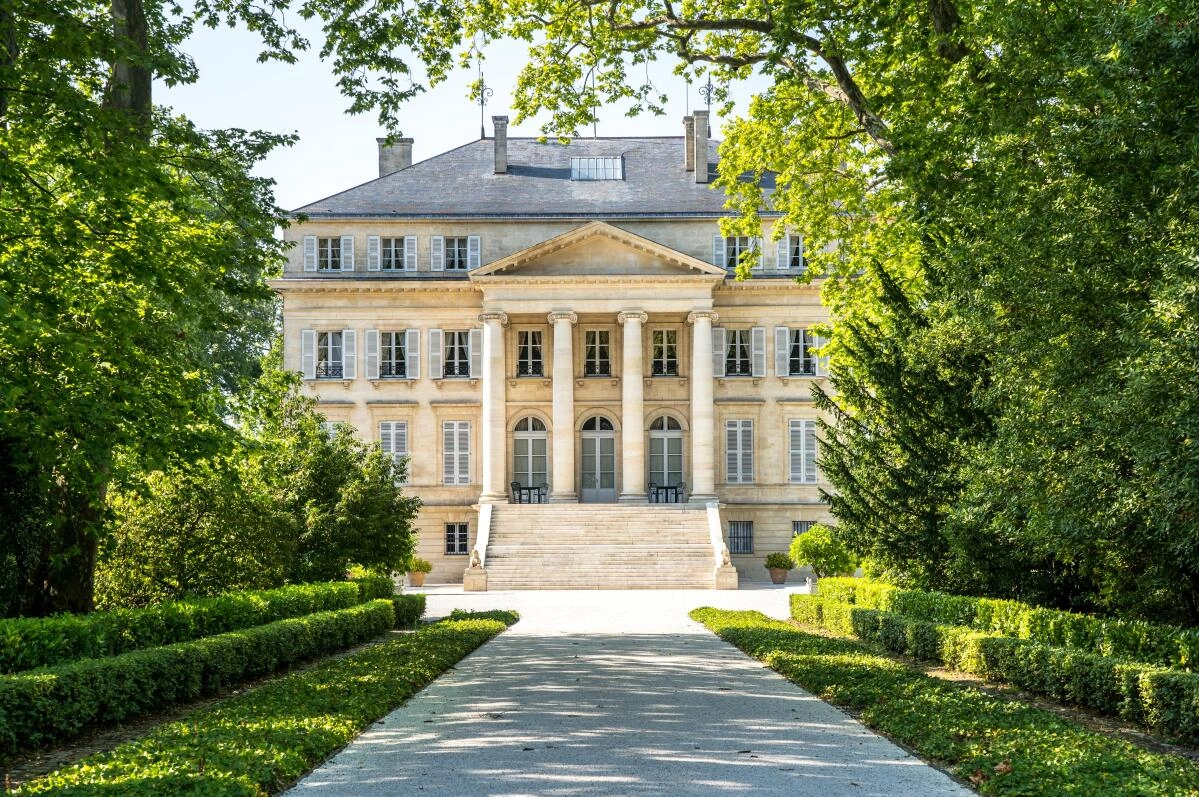
The world-renowned Château Margaux wine estate is located in the appellation of the same name in the Médoc region of Bordeaux, France. It has been making full-bodied Bordeaux red blends for centuries, with notes of leather, smoke, and earth.
At 12 years old, Anderson knew very little about wine and hadn’t heard of the legendary Château Margaux. But she was up for a trip to D.C., replied “sure” to her father on the phone, and then rode her bike home.
Once her mother had packed a small suitcase for her, Anderson and her father drove to Marquette, Michigan, where he kept a Piper PA-30 Twin Comanche airplane.
After an eight-hour flight, they landed in D.C. in the late afternoon, checked into the Shoreham Hotel, where they had dinner while Peggy Lee performed that night.
The next morning, before they went to pick up the French wine, they went on a whirlwind tour of the capital — they drove past all of the monuments, visited the National Air and Space Museum and Arlington Cemetery, and saw George Washington’s home at Mount Vernon.
The father and daughter arrived at the wine distributor around 3 p.m., loaded up the wine and flew home. By the time they arrived back in Michigan, they had only been gone for 30 hours.
Fifteen years later, Anderson’s parents bought 40 acres of land in Napa Valley where they founded Anderson’s Conn Valley Vineyards. And, sometime in the 1990s, Kristine Anderson got to finish off the last bottle of the 1963 Château Margaux together with her parents.
By that time, the wine had become much softer but it had held up well and was a pleasure to drink, Anderson said. The Anderson’s Conn Valley Vineyards Cabernet that they were drinking alongside the Château Margaux tasted very fine, too, she added.
When Fred Levin of Santa Rosa visited Hungary with his family several years ago, a server suggested a somewhat unusually named wine to pair with their meal. It was a bottle of Egri Bikavér, also known as Bulls Blood (“bika” means bull, and “vér” means blood in Hungarian).
Egri Bikavér is a red blend that is made in Szekszárd, in the south of Hungary, as well as in Eger, in the northeast part of the country.
The town of Eger was the site of a 16th century battle between the Hungarians and the Ottomans — or “the siege of Eger.” Despite being vastly outnumbered by the Ottoman forces, the Hungarians defeated the attackers, forcing them to retreat from the Castle of Eger. The Hungarians’ unexpected victory, according to the Ottomans (and legend), was due to their habit of drinking bulls blood.
Whether the legend is true or not, Levin enjoyed the Egri Bikavér, its aroma, rich full body and pleasing aftertaste. In fact, he liked it so much, he ordered another bottle. But no battles were fought at the end of the meal.
In 2006, when Susan and Dean Nowacki of Santa Rosa were traveling to China for the first time, they had been advised to stick to beer because Chinese wine, according to friends who had visited previously, tasted terrible.
The Nowackis heeded the advice. But, halfway through the trip, just as they had arrived in Xi’an to see the famous army of terra-cotta warriors, Susan had an unexpected wine moment.
While waiting for their luggage to arrive at the hotel, the couple joined a group of other travelers at the bar. Curious, Susan picked up the wine list and — to her amazement — it featured a Kendall-Jackson Chardonnay. She had two glasses.
Maybe it was the Kendall-Jackson magic, maybe it was the excitement of traveling and exploring new and historic places, but, to this day, Susan Nowacki considers those glasses of Chardonnay sipped some 6,000 miles from home the best she ever tasted.
The next time you uncork a bottle with friends, ask them about their favorite wine memory. Then sit back and expect to be entertained. You’ll find the stories compelling and, best of all, you’ll walk away with a curious palate.
You can reach wine writer Peg Melnik at 707-521-5310 or peg.melnik@pressdemocrat.com. On Twitter @pegmelnik.
Arlow: The Perfect Low-Alcohol Wine for Health-Conscious Enthusiasts
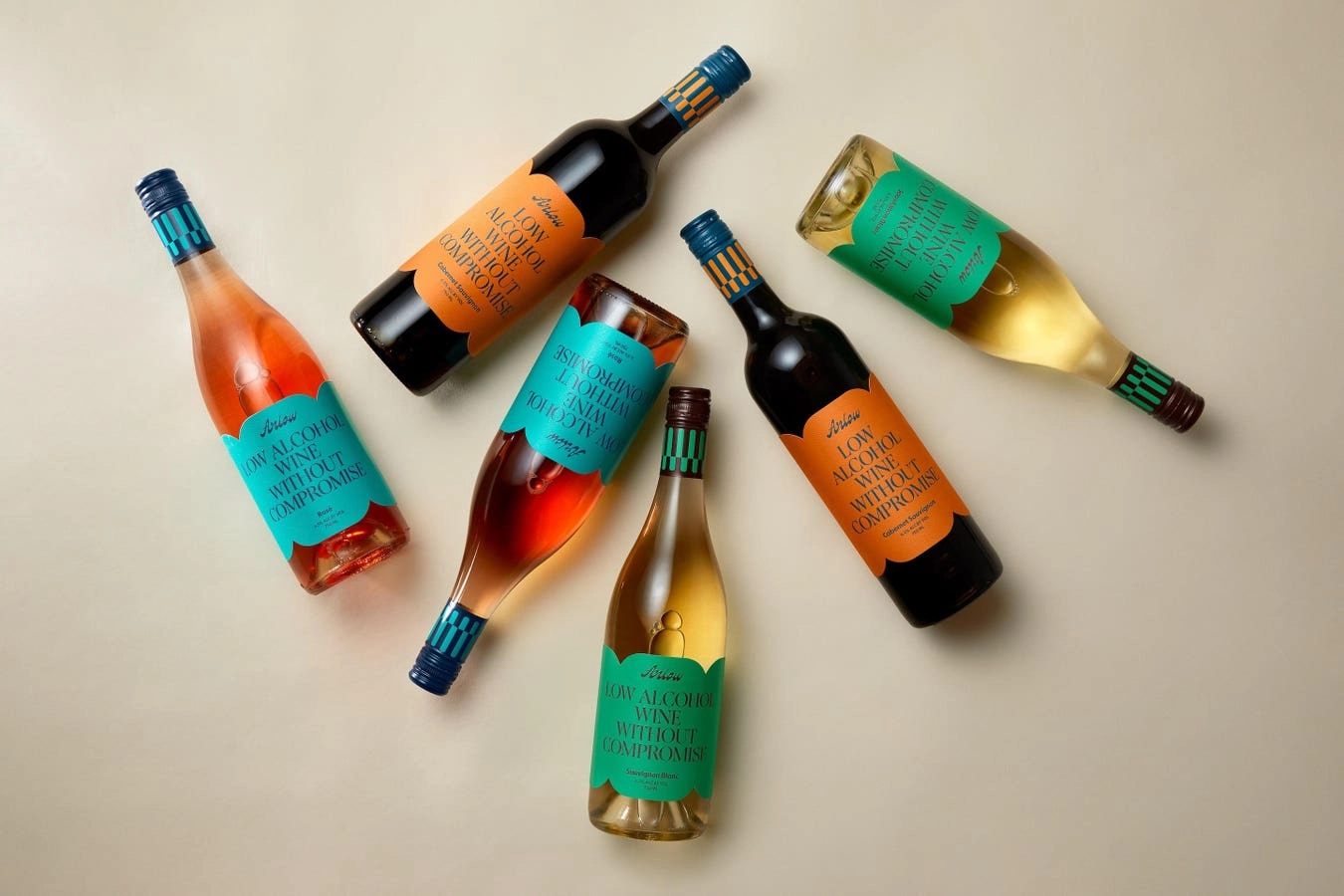
Arlow wants to cater to the growing movement of mindful drinking and those seeking healthier alternatives.
Arlow is debuting this month as a new low-alcohol wine brand, crafted with the intention of providing a flavorful and balanced option for consumers looking to moderate their alcohol intake.
“Over the last five years, we’ve seen increasing demand for solutions to moderate alcohol intake,” Arlow CEO Brandon Joldersma tells Forbes. “While non-alcohol wine has prospered (and sister brand Surely has played an important role in that), we discovered that there has been little innovation in low-alcohol wine.”
Joldersma highlighted the complex process of creating Arlow’s wines, involving blending full-alcohol wines with dealcoholized ones to achieve the desired 6.5% ABV. After a lot of experimentation, Joldersma says the team—including a winemaker and a flavor scientist—realized that they could create wines with around half the alcohol (and calories) of regular wines, which on average can have ABV levels between 12% and 15%, depending on the varietal and winegrowing region.
“Full-alc wines that taste great often taste terrible when dealcoholized, and a great-tasting, dealcoholized wine most likely tasted a bit strange when it was full-alc,” Joldersma says.
A bottle of Arlow’s low-alc rosé wine.
But creating low-alc wines is a complex and time-consuming process, Joldersma notes, which involves blending full alcohol wines with dealcoholized wines to achieve the 6.5% ABV target.
“Thankfully, we have an in-house team that can dedicate the time required to get these blends right,” Joldersma says. “We taste hundreds of wines from our vineyard partners in California, working through a litany of blends to make sure we’re hitting the mark. It’s an art as much as it is a science.”
Joldersma also underscores the shift towards moderation among wine drinkers. The startup aims to tap into the growing trend of mindful drinking, offering an alternative for those looking to enjoy wine without overindulging.
“Many wine fans now intentionally drink less on weekdays. Arlow provides an option for them to enjoy wine without overindulging,” Joldersma explains. “Our wines allow for two glasses on a Tuesday night without worrying about the next morning, or a Sunday afternoon at the pool without needing a nap.”
Low-alc wines usually have a reputation of tasting watered-down, but maintaining taste and quality is paramount for Arlow, Joldersma says.
“We wouldn’t pursue this if we didn’t believe we could offer a quality product at this ABV,” Joldersma says. “Many ‘lower’ alcohol products prioritize branding over taste. We aim to reverse this trend, proving that you can enjoy a flavorful wine with lower alcohol content.”
Arlow’s low-alc wines by the pool.
And Arlow’s wines are naturally low in calories due to the lower alcohol content.
“While non-alcoholic wine has seen innovation, low-alcohol wine has not kept pace. Most existing low-alcohol options are marketed as low-calorie, ‘diet’ wines,” Joldersma says. “At Arlow, we’ve focused on creating wines with around half the alcohol and calories of traditional wines, without compromising on taste.”
The brand’s inaugural release includes bottles of sauvignon blanc, cabernet sauvignon and rosé varietals, each crafted from California-grown grapes with meticulous attention to detail. Joldersma adds a red blend as well as a pinot noir are currently in development.
The company is also exploring different bottling and packaging options, including canned wines and premium bag-in-box formats.
One Community. Many Voices. Create a free account to share your thoughts.
Our community is about connecting people through open and thoughtful conversations. We want our readers to share their views and exchange ideas and facts in a safe space.
In order to do so, please follow the posting rules in our site’s Terms of Service. We’ve summarized some of those key rules below. Simply put, keep it civil.
Your post will be rejected if we notice that it seems to contain:
User accounts will be blocked if we notice or believe that users are engaged in:
So, how can you be a power user?
Thanks for reading our community guidelines. Please read the full list of posting rules found in our site’s Terms of Service.
A Beginner’s Guide to Rosé Wine: Everything You Need to Know
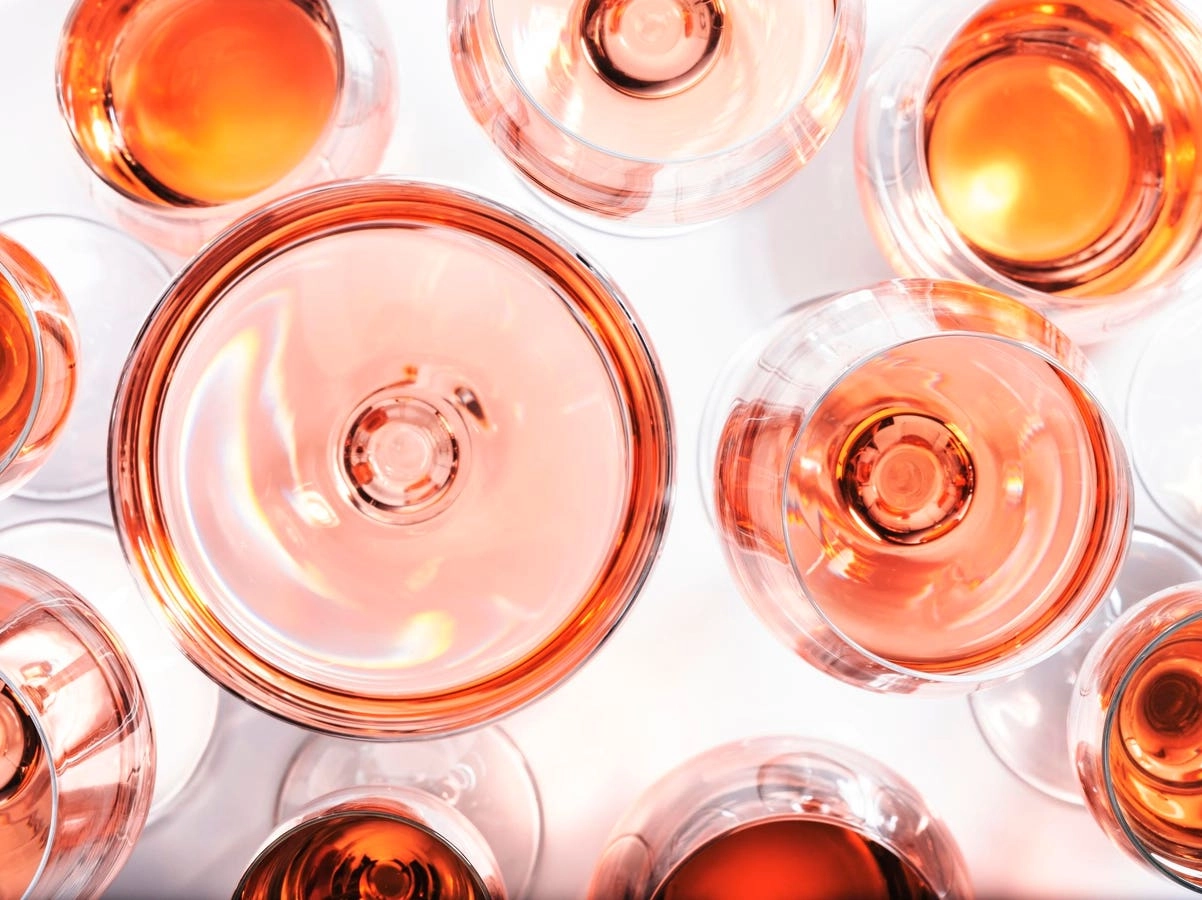
Rose wine glasses set on wine tasting. Different varieties, colors and shades of pink wines on white… background. Top view
Rosé: it’s pink alcohol, served cold by the pool, right? On one hand, absolutely. On the other, this over-simplifies a surprisingly nuanced wine encompassing impressive historical and cultural traditions in some of Europe’s great appellations. Of course, nuanced doesn’t mean so complex it’s too intimidating to learn the basics. If you’re looking for a break-down of the differences in rosé, from the effect picking and production techniques have on style, color and taste, to a review of classic European regions, bookmark this page. Next time you reach for a bottle, you’ll know the difference between Tavel, Rosado, or Rosato.
Production Methods
Though it’s commonly believed that rosé is made by blending white with red, most bottles are made through skin contact (like a red wine) known as “saignee.” Blending red wine into white is only common in Champagne — not in quality still wine. Further, another misconception leftover from America’s white Zinfandel days is that rosé is off-dry or even sweet. In fact, most quality-driven rosés are a variation on bone dry.
Skin Contact
Have you ever heard a producer use the phrase “intentional rosé?” The concept entails growing and harvesting grapes for the express purpose of making rosé wine. This means picking early to preserve freshness and bright fruit flavors, followed by a limited maceration. In other words, winemaking follows the same technique as for red wine: crushing grapes and allowing the juice time on the skins. But for rosé, that time is far less, from a few hours to two days. The shorter the period, the lighter the color – think pale salmon versus dragon fruit pink. After maceration, the wine is drawn off and fermented to full dryness.
Direct press is a variation on this, though is more akin to white winemaking. Rather than allow any contact between skins and juice, the grapes are pressed and the juice is drawn off the skins. But because the grapes are black, the juice will take on a hint of color and flavor. This method yields a delicate rosé, one that’s faint in color, while favoring citrus flavors over red fruits.
Wine glasses and appetizers on the table in the vineyard orchard.
Saignée
French for “bleeding,” saignée is often a byproduct, though not always – see Navarra – of red winemaking rather than utilized as an intentional rosé winemaking method. Grapes are not picked expressly for rosé but rather for the primary red wine. This technique is common in Paso Robles, for example, where winemakers seek to produce concentrated, bold, and flavorful reds. Bleeding some wine off early in the maceration process concentrates the remaining juice; and the lighter juice that’s bled off gets vinified separately for rosé. Though it’s an acceptable method, wines can be an afterthought. Rosé generally demands freshness, and grapes picked for concentrated reds are usually the opposite: ripe with higher alcohol. Of course, it’s a matter of taste – saignée is great for those who prefer a richer, fruitier style of rosé.
Blending
Except maybe late night at a party, fine wine producers don’t blend red and white wine together. At least, French appellations do not allow it, except for one: Champagne. For rosé Champagne, producers may add still Pinot Noir or Pinot Meunier for hue and flavor. Outside of Europe, a few New World producers might blend white and red but it’s not the norm for quality wine production.
View on ancient village of Aiguines, Provence, France
FRANCE
Provence, France
If you’ve sipped a glass of rosé, you’ve probably tasted one from Provence. The OG of pink wine, denizens of the south of France view rosé as a way a of life, not just a beverage. Stylistically, Provençal rosé is distinct, too.
Typically, wines are made intentionally, picked for citrus and tart red fruit flavors, with limited skin contact for lighter hues and delicacy of flavor. It’s not a big, brash, fruity wine; rather, they are meant as crisp, versatile food wines to be enjoyed with vegetables, seafood and even meat. The classic grapes are Grenache, Cinsualt, and Mourvèdre. Bandol has a large presence in the U.S. for its high quality, pricier versions made from Mourvèdre. Wines are savory, mineral-driven and structured, rather than simple and fruit-forward. Bandol is a rosé that can age.
Though Provence is better-known in the U.S. market, Tavel is the only French appellation specializing in dry rosé. Talk about intentional winemaking. The primary grape used in Tavel is Grenache. Other grapes allowed include: Cinsault, Bourboulenc, Clairette (pink and white), Mourvèdre, Picpoul (black, white, grey), and Syrah. While white wine cannot be blended with red, white grapes and their press juice can be added pre-fermentation.
Due to longer skin contact, the wines achieve greater color and depth of red fruit flavor. This lends more tannin, structure, and age-worthiness from top producers.
Chinon, Touraine, Anjou, Loire Valley: Based on Cabernet Franc, the best rosés weave delicate vegetal notes from the Cab Franc with juicy red fruit flavors.
The Camino de Santiago is a pilgrimage which can be walked by connecting various different trails and routes through Europe ending at the tomb of St. James in north west Spain.
SPAIN
Spaniards have been drinking rosé for ages; only in recent years have those bottles made their way stateside. Often, producers made simple, quaffable wines. But as exports have increased, so has quality. Instead of rosé, bottles will say rosado. Grenache and Tempranillo are the main varieties used for making various styles, though often in a deeper hue than their French counterparts.
Navarra
Navarra rosé helped make the region famous. Producers turn out both poolside sippers and more complex, food appropriate expressions. Grapes used include Tempranillo, Cabernet Sauvignon, and Merlot, though rosado from old-vine Grenache is considered the highest expression for the region. Saignée method is typical, but in the case of Navarra, wines are of good quality, not after thoughts.
Rioja
Unusual in the world of rosé, or rosado, is the application of aging classifications to this style of wine. Most producers of rosé tout new vintages for their youthfulness and freshness, using stainless steel vessels in that stylistic pursuit. That, or they need to move product for cash flow. But in the case of Rioja, rosado follows the classic aging rules in oak barrels: joven (no aging requirement), crianza (aged for 12 months including 6 months in barrel); and reserva (2 years including 6 months in barrel). Grenache and Tempranillo are the primary grapes.
Txakoli
Spain’s northern Basque country is home to unusual, indigenous varieties used to produce dry, effervescent Txakoli. Though rosé is a recent phenomenon, it’s becoming easier to find in the U.S. Made in a pale shade of pink, wines are mineral and tart, and largely based on red grape Hondarrabi Beltza.
Beautiful Medieval Villlages Of Italy. Pacentro, Abruzzo.
ITALY
Known as rosato in Italy, rosé is made up and down the boot, with styles and flavors dependent on the local climate and traditional varieties. You’ll find more delicate versions produced in the northeast around Veneto, Friuli-Venezia Giulia and Trentino-Alto Adige. Logical, given the cooler climate. That includes Chiaretto from Lombardy and Veneto. “Chiaro” means light or pale, evoking the dry style of the wine based on the Corvina grape. Ramato, from Friuli, is based on extended maceration with pink grape Pinot Grigio.
Central Italians, of course, produce rosato. One better known example: cherry-pink Cerasuolo of Abruzzo made from the Montepulciano grape.
In the south, rosatos are fuller-bodied and fuller-flavored like the sun and the food. Puglia, Sicily and Calabria turn out lots of examples with native grapes like Negroamaro (Puglia) and Nero d’Avola (Sicily).
One Community. Many Voices. Create a free account to share your thoughts.
Our community is about connecting people through open and thoughtful conversations. We want our readers to share their views and exchange ideas and facts in a safe space.
In order to do so, please follow the posting rules in our site’s Terms of Service. We’ve summarized some of those key rules below. Simply put, keep it civil.
Your post will be rejected if we notice that it seems to contain:
User accounts will be blocked if we notice or believe that users are engaged in:
So, how can you be a power user?
Thanks for reading our community guidelines. Please read the full list of posting rules found in our site’s Terms of Service.
Orange Wine: A Controversial Trend That’s Here to Stay

Nope, orange wine is not made with oranges. No, it isn’t always orange in color. Sorry, it doesn’t really taste like oranges, either.
So what exactly is orange wine? And why do some people loathe it?
Also known as skin-contact white wine or “amber wine,” orange wine is a style developed thousands of years ago in Georgia, a small country at the crossroads of Europe and Asia.
Believed to be the birthplace of wine, Georgia has been fermenting grapes for at least 6,000 years and continues to produce orange wine today.
While most white wine is made by separating the juice from the skins before fermentation, Georgians ferment the juice and skins in an underground clay vessel called a Qvevri.
After extended aging and oxygen exposure, the wine emerges a deep amber color, with intense aromas, healthy tannins, and flavors that range from nuts to herbs, honey, bruised apple, sour bread dough, candied orange rind, and more.
A wine style produced around the globe, orange wine began cropping up in the U.S. around 2010 and has since become a regular part of the American wine repertoire.
Often produced with native yeast (no inoculation) and little additives like sulfur, many orange wines fit neatly into the “natural wine” category — another popular wine segment. Especially appealing among younger, open-minded wine drinkers in search of something unique, both orange and natural wines appear to be here to stay.
But not everyone is a fan of these unconventional, sometimes funky, hard-to-wrap-your-head-around wines — especially in Wine Country.
DC Looney, co-owner of The Punchdown wine shop in Sebastopol and Oakland, was one of the first people to start selling orange wines in the Bay Area.
“People who are trained in wine or work in the industry can be a little set in their way. “They know what Chardonnay and Pinot Noir are supposed to taste like,” he said. “But I grew up in the Midwest not drinking any wine. I think that’s why I’ve been open-minded about orange wines since the beginning.”
In Oakland, Looney said his customers tend to be more willing to give orange wines a go. In Sebastopol, it can be more challenging to get people on board.
“We named our orange wine flight the ‘Orange Adventure,’ because it aligns with our goal to introduce and inspire people to wine styles that may be new or different,” said Looney. “For me, part of the fun of wine is watching people try new things and seeing when they click.”
While traditional orange wines tend to be rich and opulent in style, a growing number of California winemakers are producing versions in a fresher, more restrained style.
Instead of undergoing extended maceration, these wines have spent just hours or a few days mingling with the skins. They’re also being made with varietals that lean toward acid and aromatics, for a combo that’s quickly attracting a whole new audience to orange wines.
“When a winemaker adds a little bit of an aromatic grape to an orange wine, it can bring out these tropical, floral, fruity aromas and it ends up smelling like a fresh bouquet of flowers,” said Looney. “Our most popular skin-fermented white by far (from Catch and Release) has Riesling and Gewurztraminer in it. It’s so popular, I can’t take it off the list.”
Ryan Miller, co-owner of The Redwood wine bar and bottle shop in Sebastopol, said lighter-style orange wines have a loyal following among his customers, especially the younger set who tend to order them by the glass.
“We get a lot of curious wine drinkers through our doors who want to see what the buzz is around macerated white wines,” he said. “For our clientele, sales of skin-contact wine are steady and fairly strong.”
For Miller, lighter-style orange wines are perfect for the warmer months when people are seeking something “fresh” and “food-friendly.” Come fall, however, he admits he has a penchant for the richer style.
“Some of the longer-macerated orange wines are more structured and take on these autumnal, nutty, oxidative qualities,” he said. “That’s what I enjoy when the temperatures start to drop.”
Orange wine curious? Here are some of our favorite skin-contact wines with plenty of vim and vigor.
Catch & Release 2023 Block Party, California ($28)
50% Pinot Gris, 30% Riesling, 20% Gewurztraminer
Deeply tropical and inherently aromatic, this wine holds all the niceties of skin maceration without losing freshness. Tension is brought about by ripeness and lift on the palate without losing the operative of being delicious.
catchandreleasewines.com (also available at The Punchdown in Sebastopol)
Two Shepherds 2022 Trousseau Gris, Russian River Valley ($30)
“Light orange wine or complex rosé? You decide,” says the back label of this delightful Trousseau Gris from 45-year-old vines in the Russian River Valley. Light, fresh and zippy with notes of white peach, white tea and pink grapefruit.
P.S. Also worthy is Two Shepherds 2023 Natty Pets, a delicious, sparkling orange wine in a can. #truestory
twoshepherds.com
Les Lunes 2023 Populis Macerate White, California ($24)
This fresh, gulpable orange wine combines Picpoul, Albarino, Grenache Blanc, Ribolla Gialla, and Chardonnay for summer in a glass. Orange muscat adds a fresh blossom bouquet. lesluneswine.com
Crutchfield 2022 Skin-Contact Chenin Blanc, Clarksburg ($30)
From winemaker Matt Crutchfield comes delicious skin-contact Chenin Blanc from Clarksburg. Showing the savory side of Chenin with orange pith, lemongrass, chamomile, button mushrooms and autumnal flavors. The 2023 vintage will be available this fall. mattcrutchfieldwines.com
Fres. Co 2023 Fire Fuego Sauvignon Blanc, Sonoma Valley ($36)
A thrilling carbonic Sauvignon Blanc from winemaker Jack Sporer, this vibrant orange wine shows aromas of grapefruit and apricot, with light grip on the finish. No sulfur added. fresh.wine
You can reach Staff Writer Sarah Doyle at 707-521-5478 or sarah.doyle@pressdemocrat.com. Follow Sarah on Instagram at @whiskymuse.