Liquor-articles 2100
Transforming Your Whiskey Sour into the Coziest Fall Cocktail: Tips and Tricks
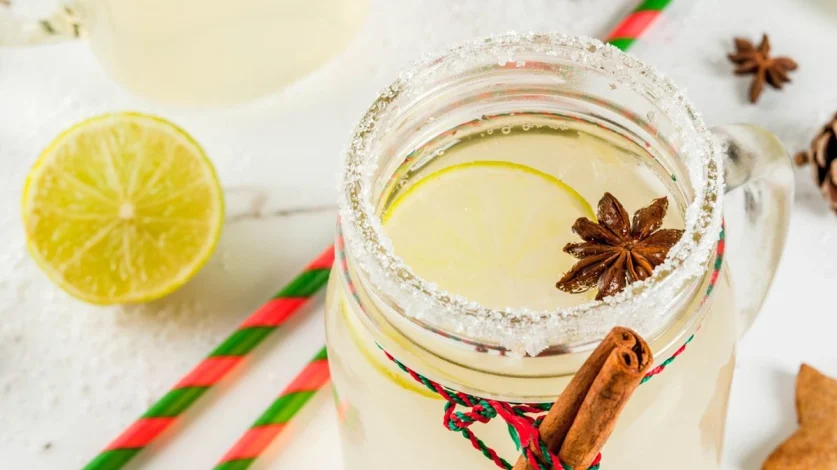
When you think of a warm fall cocktail, classic options often come to mind like a hot toddy or a maple-infused old fashioned. However, there’s another cocktail that can easily embrace the flavors of the season, the whiskey sour. This beloved drink, typically made with bourbon, lemon juice, simple syrup, and sometimes egg white, embodies a delightful balance of sweet and sour.
To elevate the whiskey sour for fall, leading bartender Derek Crow from Bar Zazu in Resorts World Las Vegas suggests substituting the simple syrup with a cinnamon syrup. This twist adds a warm, spiced flavor that perfectly complements the existing base of the cocktail. You can either buy cinnamon syrup or make your own by steeping cinnamon sticks in a sugar-water mixture for several hours.
Furthermore, Crow recommends incorporating allspice dram to elevate the cocktail’s flavor even further. This unique liqueur, which brings an aromatic blend of spices like cinnamon, clove, and nutmeg, enhances the fall vibes and pairs well with whiskey and lemon juice.
For those who enjoy visual flair, adding a flavored egg white foam with a hint of ground cinnamon can create an aesthetically pleasing and delicious topping. If egg whites aren’t to your liking, a simple sugar rim—by wetting the glass with lemon juice and dipping it into sugar—adds an appealing crunch and extra sweetness.
With these tips, your whiskey sour can transform into a cozy, comforting cocktail perfect for enjoying during the chilly autumn months.
Pouring a Glass: 4 Essential Country Songs About Whiskey from Chris Stapleton to George Jones
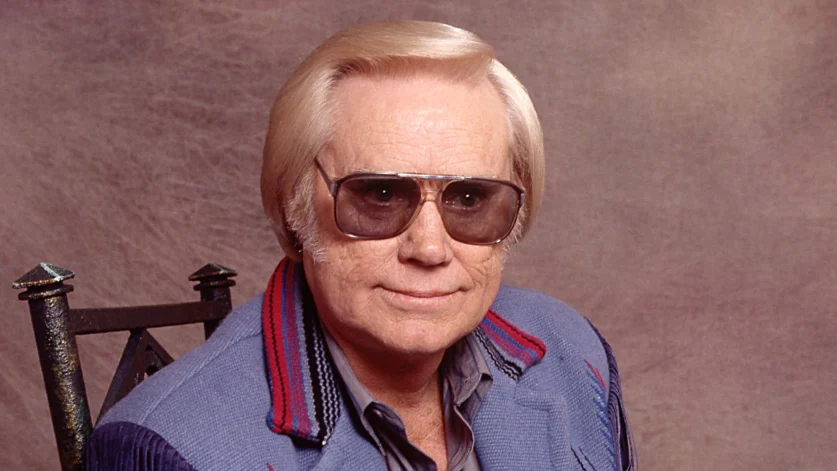
Country music has a rich tradition of songs centered around whiskey, with some tracks making the drink a focal point in their narratives. The following four songs capture both joyful and sorrowful moments associated with whiskey, showcasing its dual nature in the context of life experiences.
“Tennessee Whiskey” by Chris Stapleton
Chris Stapleton’s rendition of “Tennessee Whiskey” stands out as a remarkable interpretation of this classic. While originally recorded by David Alan Coe and George Jones, Stapleton’s smoky blues-infused arrangement has become the most recognized version. The song elegantly compares a lover to whiskey, cementing its status as a cherished drinking song across the genre.
“Whiskey River” by Willie Nelson
Another iconic track, “Whiskey River,” has been a staple in Willie Nelson’s performances since the 1970s. Written by Johnny Bush, this song poignantly illustrates the age-old attempt to drown heartache in drink, making it a profound expression of the comfort sought in whiskey.
“C.C. Waterback” by Merle Haggard & George Jones
This collaboration between Merle Haggard and George Jones fuses two legends with humor and a hangover. The title refers to Canadian Club whiskey paired with a water chaser, encapsulating a lively party atmosphere that leaves its marks. The lyrics humorously reflect the aftermath of a wild night, making it a memorable ode to the social aspects of drinking.
“White Lightning” by George Jones
Finally, George Jones delivers a lively narrative with “White Lightning,” his first No. 1 hit that celebrates the potent moonshine from the Appalachian hills. More than just a novelty song, it embodies the rebellious spirit of moonshiners, depicting their evasion of the law while crafting irresistibly strong brew, capturing the essence of that era.
These songs collectively reflect the enduring connection between whiskey and country music, portraying both the highs and lows of life through its lens.
The Last-Minute Pasta: How Carbone’s Spicy Rigatoni Vodka Became a Global Sensation
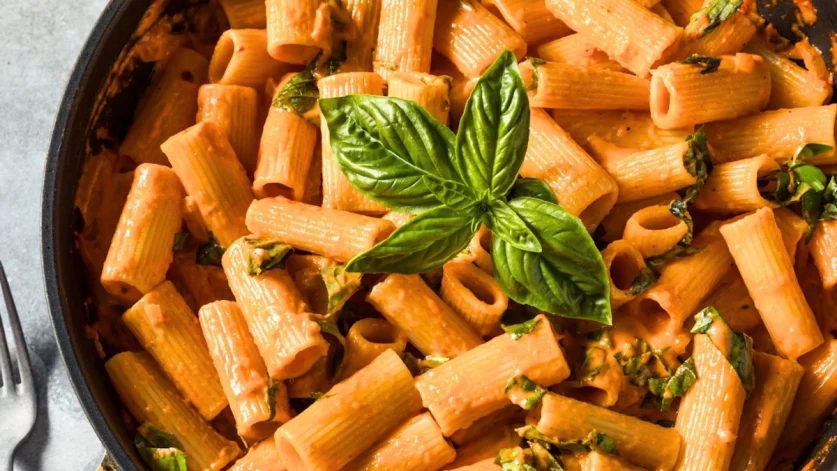
Mario Carbone’s journey into the culinary spotlight began with an unexpected menu development in 2013 at his restaurant, Carbone, in New York City’s Greenwich Village. Faced with the challenge of incorporating a vegetarian option, he quickly crafted a cheeky spicy rigatoni vodka dish, little aware that this last-minute addition would become a cultural phenomenon.
The original Carbone, known for its exclusive dining experience and a reservation system akin to a lottery, saw the spicy rigatoni vodka rise above other menu items like veal parmesan and lobster fra diavolo. This pasta dish went from a mere afterthought to the centerpiece of conversations amongst diners, achieving fame that transcended the restaurant.
Carbone expanded to Las Vegas the same year, maintaining the dish’s reputation on the Strip and eventually spreading to locations in Miami, Hong Kong, Dallas, and London. The newest venue, CARBONE Riviera, opened at the Bellagio hotel in late 2025, offering an elevated experience against a stunning backdrop of fountains, yet still keeping the spicy rigatoni vodka menu staple.
As demand soared, getting a taste at the restaurant became a logistical challenge. It wasn’t until the summer of 2023 that Carbone Fine Food released a jarred version of the spicy vodka sauce, allowing home cooks to recreate the dish. The jarred product encouraged culinary experimentation, but dedicated fans had already started reverse-engineering the recipe via social platforms well before its official release.
What makes this dish remarkable is not only its journey from a last-minute option to a front-runner in the culinary world but also how it continues to evolve. It is served in select restaurants, made available in stores, and crafted at home by aspiring chefs. The spicy rigatoni vodka has outgrown its original setting, reflecting a broader home-cooking trend while setting a standard for vodka sauce itself.
Carbone’s serendipitous creation changed the landscape of pasta dishes, solidifying its place in culinary history, demonstrating how a simple need can lead to unexpected greatness.
Why Soju Makes the Perfect Alternative to Vodka
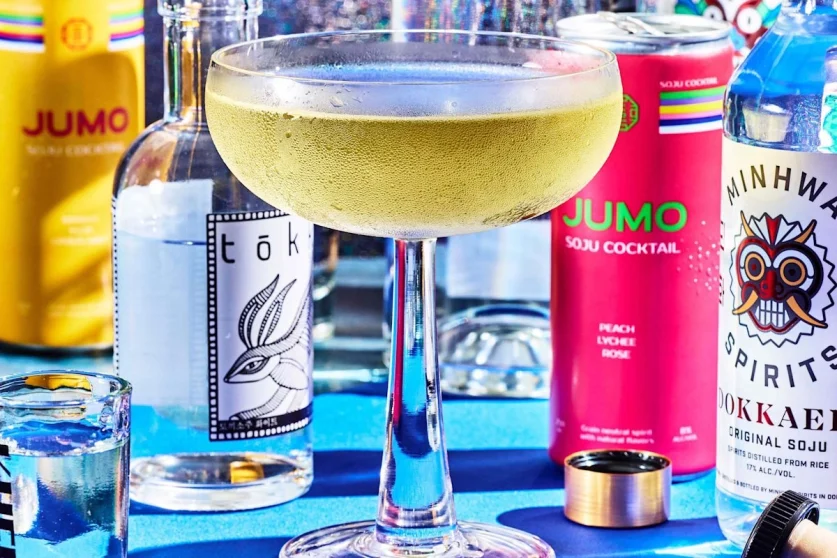
Soju, a traditional Korean spirit, is emerging as a versatile alternative to vodka in cocktails. Known for its clean and neutral flavor, soju can enhance the profiles of various drinks without overpowering them. Generally containing between 12% and 25% alcohol, it provides a lower-alcohol option compared to vodka, which typically measures around 40% alcohol.
According to experts like Andy Han, lead bartender at Lazy Betty in Atlanta, soju retains the starchy characteristics of grain alcohol while offering a broad spectrum of flavors ideal for mixing. As the trend of lower-alcohol beverages grows, soju cocktails are gaining popularity amongst both younger and older drinkers.
In the U.S., a surge of soju brands such as Minhwa Spirits, Khee, and Yobo is providing cocktail enthusiasts with a variety of craft offerings. This increased availability allows bartenders to educate patrons on the historical and cultural significance of soju, enhancing their drinking experience.
Soju’s mildness makes it an exceptional base for cocktails. It can be paired with a range of ingredients to accentuate its discreet notes. Han suggests that home bartenders experiment with soju by crafting infusions, mixing it with herbs or citrus, or even blending it with vodka to create balanced cocktails.
For instance, the Seoulside cocktail is a soju variation of the classic Westside, where lemon peel is shaken with soju to create a refreshing drink that highlights the spirit’s texture and flavor nuances.
Home bartenders can also create infusions using soju, a practice common in Korea where it’s often infused with therapeutic herbs. New York’s Orion Bar makes infusions such as jujube and various teas to add depth to their cocktails. A prime example is the Dasima Martini that incorporates dried kelp, lemon peel, and shiitake mushrooms, enhancing umami flavors.
For those looking to cut down on alcohol without compromising taste, a simple technique is to substitute half of the vodka in a cocktail with soju. This method retains the drink’s flavor profile while reducing its overall potency.
Soju is not just a drink; it’s a cultural experience, opening new avenues for cocktails that blend flavors, history, and enjoyment. For those interested in exploring this unique spirit, now is an excellent time to discover how it can elevate your cocktail repertoire.
Is RUM Group (RUM) a Hidden Gem Following Anthropic’s $13.7 Billion GPU Deal?

The recent confirmation that Anthropic is the partner for RUM Group on a substantial six-year contract valued at $13.7 billion for GPU services has intensified interest in RUM Group’s stock, which is making a notable pivot toward AI infrastructure.
RUM Group has had a volatile trading history, currently exhibiting a 2.50% increase in share price for the day and a 9.92% increase over the past month. Despite some fluctuations since preliminary reports about the contract, the stock has seen a 28.73% increase year-to-date and a total shareholder return of 45.13% over three years. However, the longer-term perspective reveals a more complicated picture, with only a 10.07% return over the past year and a notable 16.07% decline over the last five years.
Investor sentiment is divided. Many are optimistic about the potential of the Anthropic deal as a cornerstone for RUM Group’s shift into AI, quoting a perceived fair value of $22.00 for the stock, compared to its closing price of $8.20. This suggests that investors see the stock as undervalued by approximately 63%. The bullish argument emphasizes the ongoing growth in AI and cloud infrastructure, spurred by potentially transformative investments, such as a possible acquisition of Northern Data that aims to expand their reach in enterprise and government sectors.
Conversely, sceptics point to ongoing losses, funding challenges, and risks of dilution as potential pitfalls for RUM Group’s future. They argue that at a P/S ratio of 27.9x, the stock is priced higher than its industry peers, which have a much lower average ratio. They raise concerns that if growth or profit margins falter, the stock could face a significant downward adjustment.
While the debate on RUM Group’s valuation and future prospects continues, it is clear that both sides present compelling arguments. Investors are encouraged to assess the underlying data carefully, keeping in mind the potential risks and rewards associated with this stock’s current trajectory.
For further analysis of RUM’s valuation and the underlying factors driving its potential, view the full report here.
Curious Nation Teams Up with The Busker Irish Whiskey to Launch Exciting New Music Platform
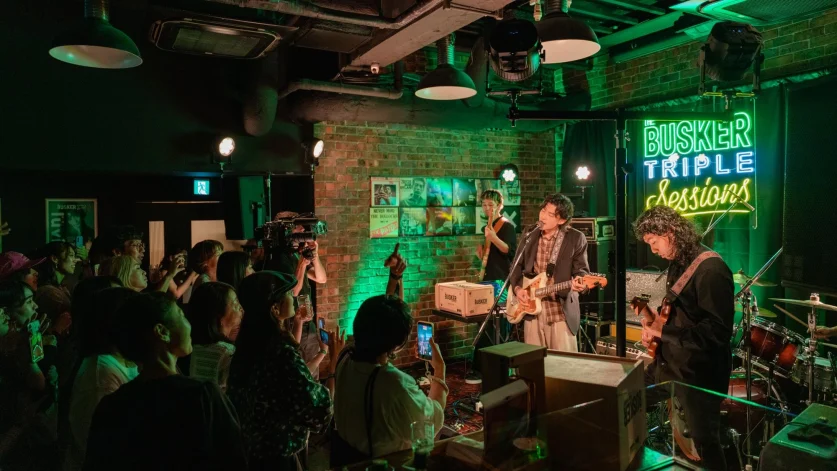
Curious Nation has teamed up with The Busker Irish Whiskey to introduce ‘The Busker Triple Sessions’ in Japan. This initiative seeks to merge the local music scene with the brand’s essence, thereby boosting its visibility in a significant growth area.
The agency, Curious Nation, which specializes in brand activation in Australia and New Zealand, is working to actualize The Busker Irish Whiskey’s tagline, "Whiskey Made for Music," in the Japanese market. Produced at the Royal Oak Distillery in County Carlow, Ireland, The Busker has ramped up its investment in Japan as part of its strategic growth efforts through this culturally enriched music platform that utilizes live performances and immersive experiences to bring the brand to life.
Curious Nation collaborated with Disaronno International and Japanese distributor Whisk-e to create The Busker Triple Sessions. Tailored specifically for Japan, the initiative integrates local music culture with The Busker’s unique triple-cask story, aiming to enhance brand awareness, encourage product trials, and foster long-lasting consumer connections.
Instead of relying on a global music artist, The Busker Triple Sessions leverage Japan’s vibrant live music landscape and popular whiskey culture by partnering with local artists and venues, ensuring a genuine connection with consumers.
Curious Nation handled the strategy, creative development, event design, and comprehensive campaign execution for the initiative. Massive Music supported Curious Nation with talent acquisition and licensing.
Gareth Brock, head of strategy for ANZ at Curious Nation, emphasized the importance of contributing to culture rather than interrupting it. He noted that the initiative allows artists to share their stories while highlighting what makes The Busker unique. This approach transforms the brand’s triple cask credentials into an authentic creative expression that resonates well with Japan’s dynamic music culture.
The campaign kicked off at Tokyo’s renowned Music Bar Cave featuring Japanese singer-songwriter luvis. A follow-up event at the same venue showcased TENDRE, a project by multi-talented artist Taro Kawahara, with the concluding show scheduled in Osaka for October.
In line with The Busker’s Triple Cask narrative—Triple Cask reflecting craft, Triple Smooth epitomizing taste, and Triple Sessions focusing on the experience—the initiative features a series of performances organized into three segments: ‘Origins,’ celebrating impactful songs from the artists’ past; ‘Now,’ showcasing current defining songs; and ‘Blend,’ which presents new interpretations that encapsulate their musical influences.
Each event also serves as a content development opportunity, including artist interviews and behind-the-scenes storytelling shared across YouTube, Instagram, TikTok, and The Busker’s official channels. The venues were transformed to reflect The Busker experience with themed branding, bespoke lighting, and branded glassware, all aimed at facilitating an intimate and genuine music discovery experience. Other promotional activities included game cards linked to highball purchases and instant win prizes.
The initiative further extends to off-premise retail promotions, including limited edition packaging and opportunities to win Busker-branded speakers with each purchase.
NH Distillery Unveils Unique Venison-Flavored Whiskey in Adorable ‘Buck’-Sized Bottle
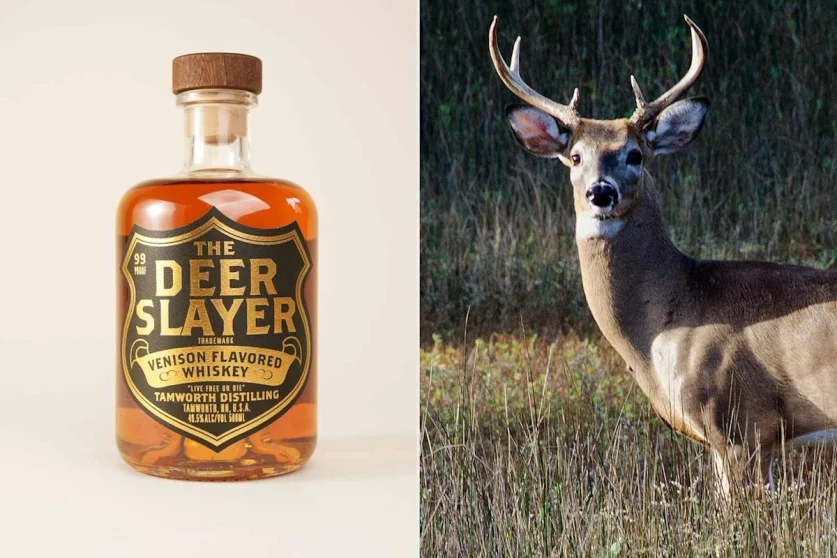
A New Hampshire distillery, Tamworth Distilling, has launched a unique product: venison-flavored whiskey called Deerslayer. This distinctive whiskey is made using hand-chopped red deer meat sourced from a local farm, blended with various flavors such as cranberries and porcini mushrooms.
The production process involves fermenting the concoction overnight to enhance the meat’s gaminess and then slow-smoking it using boreal forest branches, which adds a woodsy flavor characteristic of the autumn season in New England. According to Matt Power, a distiller and biochemist at Tamworth Distilling, the aim is to create a whiskey that evokes the flavors of the New England woods, rather than merely replicating the taste of venison.
To coincide with the kickoff of New Hampshire’s hunting season, Deerslayer is now available in 500ml "buck"-sized bottles for $45 and a smaller 200ml "Bambi" bottle for $35. Initially an experimental offering, it has now been added to Tamworth Distilling’s core spirit lineup. Founder Steven Grasse mentioned that Deerslayer has become a benchmark for their experimental range of "weird whiskies."
For those interested in trying this unconventional spirit, it can be purchased from Tamworth Distilling’s website, select stores, or directly at their distillery in Tamworth, NH.
For more information, visit Tamworth Distilling.
Anthropic Emerges as Rum Group’s $13.7 Billion Compute Customer, According to The Information
Anthropic has been identified as the customer for Rum Group’s substantial $13.7 billion computing contract, which spans six years. This news was reported by The Information, highlighting Anthropic’s ongoing pursuit of compute capacity. Although neither Anthropic nor Rum Group confirmed the report at the time, it reflects a continued trend in significant computing agreements for Anthropic, which has previously partnered with companies like Google, SpaceX, and smaller providers such as Nscale. Collectively, these contracts represent over 14.8GW of capacity, potentially costing up to $517 billion over the next ten years.
In a filing with the US Securities and Exchange Commission on August 24, Rum Group described the contract as involving GPU access and services from their yet-to-be-completed Georgia facility. The contract stipulates the purchases will occur in three equal installments, with one contingent on Anthropic’s approval of a proposed delivery date. Additionally, Rum Group granted Anthropic warrants to purchase up to 50.8 million shares at a nominal price, with vesting conditions based on the completion of GPU services.
Despite the monumental contract, Rum Group has indicated it currently lacks the financing necessary to fulfill its obligations under the agreement. The company plans to secure funds through debt or equity, cautioning that such financing may dilute existing shareholders. There is also uncertainty regarding the operational timeline for the Maysville site, which was initially expected to be open this year.
The transition of Rum Group from a video platform, notably Rumble, to a cloud service provider was marked by their recent acquisition of Northern Data, a firm specializing in AI cloud services. This acquisition expanded Rum Group’s capabilities significantly, including access to thousands of Nvidia GPUs, and rebranded its cloud operation as Quake AI.
Anthropic, meanwhile, continues to prepare for an IPO, having selected Nasdaq for its listing, potentially as soon as this October.
Teetotal Trump: Unraveling the Former President’s Unlikely Affinity for Whiskey
Shane Lowry capped off an incredible week by sinking a 30-foot birdie putt on the 18th hole at Doonbeg, securing victory at the Amgen Irish Open by a record margin of 11 shots. The American president, Donald Trump, who owns the golf resort, was in attendance and presented the trophy to Lowry. However, the ceremony took an unexpected turn when Trump shifted the conversation from golfing achievements to tariffs on Irish whiskey.
He remarked that many had been inquiring about the 10 percent duty on Irish whiskey, which had also been addressed by Ireland’s Taoiseach, Micheál Martin. In a surprising announcement, Trump declared he would eliminate the tariff on behalf of the U.S., prompting cheers from the audience. The Irish Whiskey Association valued the annual U.S. export at approximately €450 million ($519 million). While Trump did not specify when the change would take effect—circumstances echoing a similarly delayed tariff decrease on Scotch whiskey—it raised hopes for an imminent positive shift for the Irish whiskey industry.
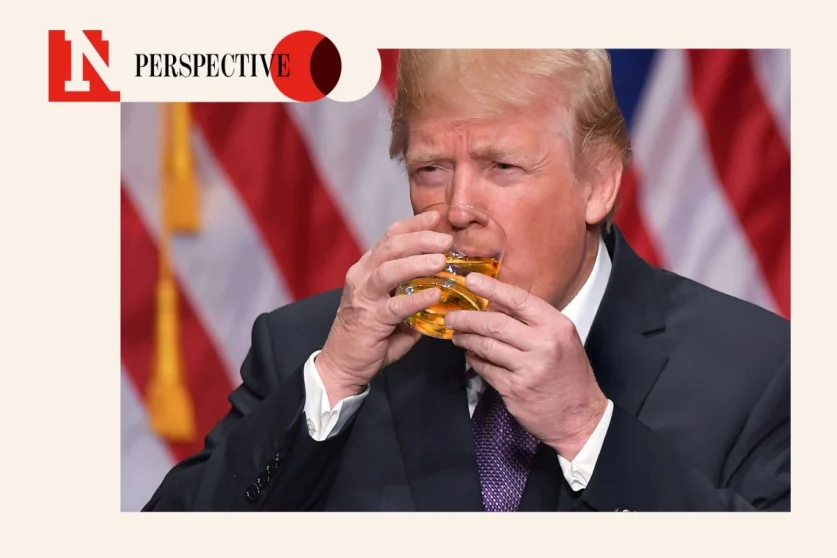
Interestingly, Trump maintains that he does not drink alcohol, having absorbed warnings about the dangers of alcoholism from his late brother. Yet, alcohol has frequently surfaced in his trade policies, often utilized to negotiate or exert pressure in trade disputes. Earlier this year, in a similar situation, Trump lifted tariffs on British whiskey as a favor during King Charles III’s state visit.
Whiskey has transitioned into a nuanced tool for trade diplomacy under Trump’s administration. Notably, both the U.S. and U.K. governments credit successful tariff exemptions to concerted efforts and ongoing engagement, hinting at a strategic move rather than mere coincidence. The Irish Whiskey Association had lobbied for similar treatment since the Scotch exemption was announced, highlighting the discrepancies in tariff applications based on geographic distinctions within Ireland.
While the announcement at Doonbeg was welcomed, it reflects a broader trend in Trump’s dealings, where alcohol serves as a vehicle for personalized political maneuvering without the need to reignite wider tariff wars. This trend has implications that extend beyond Irish whiskey, as seen when Trump previously responded to potential tariffs on American whiskey with threats against European spirits.
As discussions continue about the actual implementation of these tariff exemptions, questions linger regarding reciprocal arrangements and the potential influence of public appeals. At present, with whiskey as a focal point, Trump’s stated commitment remains just a promise. For now, he may choose to sip on a Diet Coke while negotiations remain in flux.
Sazerac’s Strategic Acquisition of Au Vodka: Fueling Global Growth and Expanding Brand Diversity
Sazerac, a prominent player in the global spirits industry, has successfully completed the acquisition of Au Vodka, a rapidly growing vodka and ready-to-drink (RTD) brand based in the UK. The transition from a binding agreement to closure follows customary completion conditions, though specific details regarding the financial terms of the deal have not been disclosed.
Jake Wenz, the President and CEO of Sazerac, expressed admiration for Au Vodka’s impressive growth since its inception in 2015. He highlighted the brand’s unique trajectory and noted that Sazerac intends to leverage its family-owned structure to enhance Au’s market presence while preserving its distinctive identity.
Au Vodka was founded in Swansea by friends Charlie Morgan and Jackson Quinn. Their vision was to disrupt the vodka market with innovative marketing and a focus on social media. The brand gained traction quickly, characterized by its iconic gold bottle and a diverse range of flavors. Since then, Au Vodka has expanded its reach beyond the UK and is recognized for its strong appeal among consumers.
Morgan remarked on the collaboration with Sazerac, emphasizing the compatibility of their values and the potential for expanding Au Vodka’s availability in new markets. The acquisition joins Au Vodka into a diverse portfolio including iconic brands like Buffalo Trace, Fireball, and SVEDKA.
Sazerac’s strategic acquisitions and long-term brand investments have increased its standing in the spirits sector, underlined by its broad international footprint with distilleries in various countries including the United States and France. With the integration of Au Vodka, Sazerac aims to foster further growth while enhancing its portfolio of innovative and disruptive brands.
For more information on the acquisition, visit the original news release here.