Liquor-articles 2100
Indulge Your Love for Whiskey with these 8 Premium American Varieties
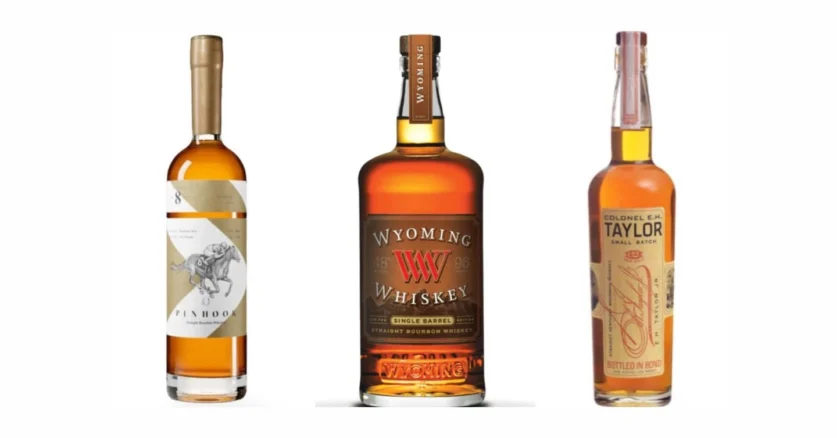
It’s easy to find great whiskey without breaking the bank, but sometimes life calls for a special occasion. When times of true celebration are upon us, it can feel good to reward ourselves with the good stuff.
And there’s nothing like a toast to do just that. The next time you’ve got something to celebrate, treat yourself to a bottle of one of these terrific American whiskeys, each priced over $100 per bottle
$180 from Garrison Brothers
Named after the iconic Texas swimming hole, Balmorhea is one of the shiniest gems in the Garrison Bros’ already shiny pile of gems. Its smooth, bold flavor profile is the result of meticulous aging in American oak barrels. I can personally attest that this is one of the best whiskeys I’ve ever tasted.
$103 from Caskers
Wyoming’s first legal distillery isn’t one to forget about. Wyoming Whiskey is committed to making great whiskey that protects and gives back to its home state, with whiskey made from start to finish in Wyoming’s extreme climates. The flavor profiles are deep and complex; while you can score most of their superb whiskeys from the National Parks Collection for under $100, consider celebrating with a bottle of Single Barrel and savor the experience.
$160 from Wooden Cork
Patient aging is at the center of Cascade’s whiskeys, and the 15-year has won a ton of people’s hearts. Layered with oak, caramel, and baking spices, you’re going to want to enjoy this guy by a campfire.
For more great whiskey recommendations, please sign up for our free newsletters.
$125 from Caskers
The classic Kentucky bourbon is named after one of the pioneers of the American whiskey industry, Colonel Edmund Haynes Taylor Jr. You’ll usually see this for around $120, and for a bourbon of this complexity, it almost seems like it should cost more. Charred oak barrels and caramel-laced flavors make this a perfect showcase for what small-batch Kentucky bourbons are all about.
Related: 10 of the Best American-Made Whiskeys Under $100
$165 from Frootbat
Virginia-based Reservoir Distillery’s Maison De Cuivre Bourbon Whiskey is a small-batch beauty. Crafted in copper pot stills, this bourbon offers a high corn mash bill and rich flavors like spice, butterscotch, and toasted oak.
Related: The 8 Best Costco Whiskeys Under $100, According to Shoppers
$100 from LoveScotch
Bourbon War 8 Year is a standout release from the acclaimed Vertical Series, showcasing the evolution of Pinhook’s distinctive flavor profile. Aged for eight years in charred oak barrels, this is smooth, approachable, and full of warming flavors.
$300 from Wooden Cork
High West’s blend of straight bourbon and rye whiskies is unconventional, but that makes sense considering the distillery is in Park City, Utah. This is sweet and spicy, full of cinnamon, and has the perfect lingering finish. Sometimes it’s nice to have a solid bourbon at the top of a snowy mountain, too.
$411 from Caskers
There’s a difference between simply treating yourself and going all out. And at times, even a $100 bottle of whiskey may not satiate your palette. In such moments, you must pull out the proverbial big guns. Enter Wild Turkey’s Unforgotten. Intriguingly, did you know Matthew McConaughey holds the position of creative director here?
Whether that fact entices you or deters you is subjective. But one thing is undeniable—it’s a beverage you bring out when there’s something worth commemorating, and it has won over many who have savored its taste. If you are in the mood for a lavish treat, something layered with multifaceted flavors, this is it.
Dispelling Whiskey Myths: Unveiling the False Facts You Believed to be True

Cherished for its complexity and depth, whiskey holds a special place in the hearts of both casual sippers and seasoned experts. Whether it’s an Irish whiskey, an American bourbon or rye, or even a distinguished Scotch or Japanese whisky — the spelling largely depends on the spirit’s place of origin — each variety boasts its own unique story and flavor profile. The spirit’s versatility also shines in the many ways that it can be savored. Enjoyed neat, on the rocks, or as the base of classic and modern cocktails, appeals to a broad spectrum of tastes and preferences.
The distillation process, which is central to the production of whiskey, was first developed in the region of modern-day Iraq and Syria some 4,000 years ago. However, it took approximately 3,000 years for distillation to make its way to Scotland and Ireland, where whiskey production as we know it began to take shape. The history of American whiskey began in the late 18th century when Scottish and Irish immigrants brought their distilling methods to the growing nation. They began brewing the spirit with rye and later corn, leading to the creation of distinctive American whiskey styles, such as bourbon and Tennessee whiskey.
Today, whiskey is celebrated as one of the most popular spirits in the world. However, despite this, the amber liquor remains veiled in misconceptions. Ready to separate the real from the imaginary? Keep reading!
Read more: Popular Vodka Brands Ranked From Worst To Best
The belief that older whiskies surpass their younger versions primarily springs from the perceived scarcity and consequent value of older bottles. It can’t be denied that aging whiskey in oak barrels injects it with a variety of flavors from the wood, including pepper, vanilla, and caramel. However, age in isolation does not dictate whiskey quality. Rather, this largely hinges on personal taste.
Furthermore, there exists a stage in the aging process where whiskey is most likely to strike its perfect complexity. Thus, any additional aging could result in an excessively wooden taste. While there isn’t a one-size-fits-all aging period for whiskey, it depends on several factors. These include the whiskey variety, the barrels used for aging, and the location of their storage.
In general terms, the ideal aging period for bourbon ranges from five to 12 years. For Scotch, it more typically spans between 12 and 25 years. After this point, the whiskies run the risk of turning bitter and overly oaky. Despite this, some whiskey connoisseurs remain unfazed by older bottles. This is evidenced by one 60-year-old single bottle of Macallan Adami 1926 commanding a whopping $2.7 million at a 2023 auction.
During its maturation in wooden barrels, whiskey undergoes a transformation that can intensify its color, flavor, and aroma. This progression leads some to infer that the older the whiskey, the darker its shade, as it has had an extended period to absorb the traits of the wood. While it’s accurate that whiskey generally darkens with time due to its extended interaction with wooden casks during aging, this isn’t a failsafe way to determine its age.
Whiskies aged equivalently can exhibit extensive color variations. Factors such as the type of cask, conditions of warehouse storage, and the composition of the original mash bill all contribute to the color of the whiskey. American white oak likely imparts a red hue to the spirit, while European oak tends to give a yellowish tint. Whiskies aged in new oak casks often display a darker shade than those matured in used barrels. Some distilleries even add caramel coloring to maintain visual consistency between batches.
Many believe that the cost of whiskey mirrors its quality. While there might be some truth to this, it is not always so. Factors like the aging process, scarcity, and branding all add to the price of whiskey, not just its quality. Pricier whiskies often undergo longer aging which augments their flavor profile. This extended storage and increased loss due to evaporation, the famous ‘angel’s share’, boosts the price tag. Also, a whiskey may just be more expensive if it originates from a prestigious distillery with a rich history.
Beyond personal preference, the advent of craft distilleries has notably broadened the spectrum of affordable whiskies. The American Distilling Institute announced that there were 2,283 craft distillers in the U.S. in 2022, a tremendous increase from just 75 in 2006. Exploration of new grains, novel distilling methods, and unique aging processes by these smaller distillers have opened avenues for quality whiskies challenging the norms of premium brands without the high prices.
Oftentimes, casual drinkers, who may not delve into the intricate flavors and fragrances of whiskey, claim all whiskies taste alike. This is expected as the variety of whiskies and the nuances within each type are relatively complex, requiring some level of expertise to fully comprehend. However, these subtle differences translate into large taste dissimilarities among different whiskies.
There’s a wide array of factors that can influence the flavor profile of whiskey. Firstly, the type of grain used to produce whiskey can impart it with a distinct flavor. For instance, Scotch gets its characteristic taste from malted barley, while the U.S. government says that a bourbon’s mashbill must contain 51% corn to maintain its distinctive character. Various quantities of other grains like rye, wheat, and oats are also utilized in the production of whiskey.
Secondly, the source of water, a key element of whiskey production, can affect the final flavor of the sip due to its mineral content. Additionally, the distillation process, including the length of time the spirit spends aging and the environment it’s in during that process, is also crucial to determining the flavor nuances of the final product.
Crafted exclusively from malted barley and aged in barrels for a minimum of three years, single malt whiskey originates from one distillery. As such, it offers a distinct flavor that reflects its specific point of origin and production techniques. That said, even single malt whiskey usually contains a blend of various malted barley whiskey batches from the same distillery. In contrast, blended whiskey combines different types of whiskey from multiple distilleries, often using a mixture of grains such as corn, rye, and wheat.
While purists swear that single malt whiskey is superior to its blended counterpart, the reality isn’t quite so simple. The truth is that blended whiskey is often more balanced than single malt whiskey because distillers who undertake the blending process aim to create a whiskey that appeals to a wider range of palates. As a result, blended whiskey is usually smooth enough to drink on the rocks or even neat. Being more affordable than single malts, it’s also ideal for mixing into cocktails.
Some aficionados assert that relishing whiskey in its neat form is the sole method to truly value its distinctive traits. For those not in the know, consuming a spirit neat signifies it is savored in its pure form, with no additions like water, ice or mixers. Neat servings are typically presented at room temperature, enabling the imbiber to fully appreciate the drink’s complete flavor, texture, and scent.
Even though appreciating whiskey neat provides a chance to experience the spirit’s unaltered taste and delicate nuances, this is by no means the exclusive way to partake in this barrel-matured spirit. For instance, various experts assert that incorporating a bit of water into whiskey can amplify its flavors and make it more palatable for rookies or those who aren’t fans of strong alcohol tastes. Whiskey on the rocks proposes another, potentially more refreshing, approach, as the drink is served with ice which is an ideal method for those who appreciate the evolving flavors that result from the gradual watering down of the spirit as the ice melts.
Whiskey can also enrich classic cocktail recipes, for instance, the mint julep and the Manhattan, since incorporating the spirit with other ingredients can boost the overall taste and aroma of the drink.
Certain individuals hold the belief that whiskey is non-perishable due to its comparably high alcohol content. To be precise, whiskey contains a minimum alcohol volume of 40% ABV, which has the ability to preserve, obstructing the proliferation of spoilage-inducing bacteria. Whilst it’s accurate to say unopened whiskey bottles of high quality can technically endure for multiple decades, many factors can influence the spirit’s shelf life.
Unopened whiskey’s lifespan depends on several determinants, including the type of whiskey in store. A sealed bourbon bottle will likely outlast an unopened Scotch bottle due to its higher alcohol content. The storage conditions play a crucial role in whiskey preservation. The optimal condition is a cool, dark place away from sun rays. Despite the whiskey quality and the storage conditions, it’s critical to note that unopened whiskey will eventually degrade over time.
Opening a whiskey bottle exposes the whiskey to oxygen, triggering an immediate taste profile alteration. However, this alteration rate may differ depending on elements like the whiskey type and the storage conditions. In order to extend your opened whiskey bottle’s lifespan, you should limit its oxygen exposure by sealing the bottle tightly after each pour and storing it in a cool, dark place. Since whiskey oxidizes faster with less volume in the bottle, it’s advisable to transfer it into a smaller flask once more than half of the bottle is consumed.
Kentucky is almost identical to bourbon. There is even a popular Kentucky Bourbon Trail that gives whiskey aficionados an opportunity to taste pours from some of the state’s most famous distilleries. Kentucky has been a bourbon producer since the late 18th century when settlers in the region began distilling corn-based whiskey. Over the years, the state has maintained its top ranking as a bourbon producer for several reasons, including its limestone-rich water and the plentiful availability of corn, a vital ingredient in bourbon mash bills. However, bourbon production is not exclusive to Kentucky.
Although bourbon production is legally allowed all across the United States, the liquor must meet several specific standards to deserve its label. The federal Alcohol and Tobacco Tax and Trade Bureau defines bourbon as “Whisky produced in the U.S. at not exceeding 80% alcohol by volume (160 proof) from a fermented mash of not less than 51 percent corn and stored at not more than 62.5% alcohol by volume (125 proof) in charred new oak containers.” Even though bourbon production can take place outside Kentucky, the state’s deep-rooted bourbon history and culture have led to a common misconception that bourbon can’t be produced elsewhere.
Don’t be surprised if you leave your whiskey in the freezer and notice, after some time, that not a single ice crystal has formed. This is perfectly normal. However, this does not mean whiskey won’t freeze. It simply means that the conditions in your freezer are not right for it.
The freezing point of whiskey is lower than water. Water may freeze at 32 degrees Fahrenheit, but whiskey needs much colder temperatures, about -17 degrees Fahrenheit. Keep in mind though, the temperature required to freeze depends on the whiskey’s alcohol concentration. Your average home freezer is just not cold enough, maintaining a temperature of about 0 degrees Fahrenheit. However, you will notice a slushy appearance when water is added to the whiskey due to a drop in freezing point.
While a subzero dram can be enjoyable, it’s commonly recommended to consume whiskey ‘on the rocks’ rather than having it on standby in your freezer. When whiskey is cooled in a freezer, it could lose some of its flavors and aromas. Further, whiskey might become too thick when it’s frozen, affecting its viscosity. For one to fully savor the subtleties of a good whiskey, it’s generally best to store it at room temperature or slightly colder, and not expose the bottle to freezing temperatures.
Cooking with wine or beer is not a strange concept, but cooking with whiskey often gets overlooked. The reason is not very clear, but it could be due to the spirit’s robust and distinctive flavor. Too much whiskey in a dish could be overwhelming. However, used sparingly, it could add a unique touch to your culinary masterpieces. Plus, you won’t need an expensive bottle of whiskey to create this unique taste in your food.
From savory sauces to sweet desserts, a drizzle of whiskey can introduce a rich depth of flavor to dishes. The versatile spirit shines in a huge range of gastronomic applications. For instance, a delicate drizzle of whiskey over a steak just prior to grilling not only helps to potentially tenderize the meat but also infuses it with a unique smoky character. Moreover, whiskey can help build a more complex flavor profile in desserts like puddings and pie fillings, elevating them to new levels of indulgence. Finally, classic desserts like ice cream and chocolate can also benefit from a splash of the amber spirit.
It’s normal for whiskey to be diluted with water during the production process. While whiskey in the U.S. is never watered down below 80 proof, it’s often much stronger than this. Cask-strength whiskey, also sometimes referred to as barrel-strength whiskey and high-proof whiskey, is a type of whiskey that’s bottled directly from the barrel without dilution. This means that the whiskey retains the exact alcoholic strength it had when it was in the barrel, which frequently ranges from 100 to 140 proof, or even higher in some cases. Whiskey that exceeds this is colloquially referred to as “hazmat” and can’t be taken on planes.
Many whiskey enthusiasts swear that high-proof whiskey boasts a richer and more complex flavor profile than its lower-proof counterparts. However, others are adamant that after a certain point, barrel-strength whiskey isn’t all it’s cracked up to be. As Jonah Flicker so eloquently puts it in Men’s Journal, “I believe sipping a dram should be a mellow and pleasurable experience, not an exercise in masochism.” While Flicker isn’t against stronger whiskeys, he does say that anything over 130 proof is pushing the limits of good taste. Bourbon critic Chuck Cowdery agrees, telling Robb Report, “Nothing kills the taste buds like high-proof spirits. I won’t criticize anyone for doing what they like, but don’t kid yourself.”
Made from materials such as marble, granite, soapstone, and even stainless steel, whiskey stones come in a variety of shapes and sizes. While most whiskey stones resemble standard ice cubes, others come in circular shapes. The reusable stones are designed to chill spirits without watering them down as traditional ice cubes do. All you have to do is remember to pop them in the freezer a few hours before you indulge in your tipple.
What’s the problem with whiskey stones? The most common issue is that they don’t provide the same cooling capacity as traditional ice cubes. Their ability to reduce the temperature of the drink is minimal and short-lived, resulting in dissatisfaction among many users. Furthermore, the fact that whiskey stones cannot melt and slowly dilute the whiskey is a disappointment for some drinkers. Plenty of whiskey connoisseurs argue that a bit of dilution unlocks the whiskey’s flavors, making the drink more complex and pleasurable. And last, but not least, whiskey stones have the potential to scrape your fine whiskey glassware. What a terror!
Read the initial article on Mashed.
Rumble Proposes to Purchase and Manage TikTok’s U.S. Operations

Sean Gallup/Getty Images News
Shares of Rumble (NASDAQ:RUM) rose over 10% on Tuesday after the company said it was ready to join a group of other parties to buy and operate TikTok in the U.S., if ByteDance (BDNCE) were to divest its ownership in the company.
In a post on X (formerly known as Twitter) addressed to TikTok boss Shou Zi Chew, CEO Chris Pavlovski said the company was ready to serve as a cloud technology partner.
Last week, a top Republican lawmaker said he would look for a House vote on a bill which would force ByteDance (BDNCE) to sell the app or face a ban in the U.S. The initiative came after the Energy and Commerce Committee had voted to approve the bill by a vote of 50-0.
The bill is the latest attempt by lawmakers to force TikTok to sever ties with ByteDance (BDNCE), amid mounting tensions over China and data privacy.
A 2020 attempt by former President Donald Trump to ban TikTok had been blocked by courts. The Biden administration later ordered a national security review, while Congress passed a bill to outlaw TikTok on federal devices.
As of the quarter ended September 30, 2023, Rumble (RUM) had 58 million average global monthly active users, and roughly $267 million in cash and equivalents. The conservative video platform backed by Peter Thiel is not profitable.
According to Statista, the brand value of TikTok/Douyin amounted to $84 billion in 2023, making it the most valuable unicorn worldwide.
Rumble has a market cap of $1.87 billion.
Blake’s Hard Cider and Gypsy Spirits Unite: The Launch of New Triple Jam Vodka
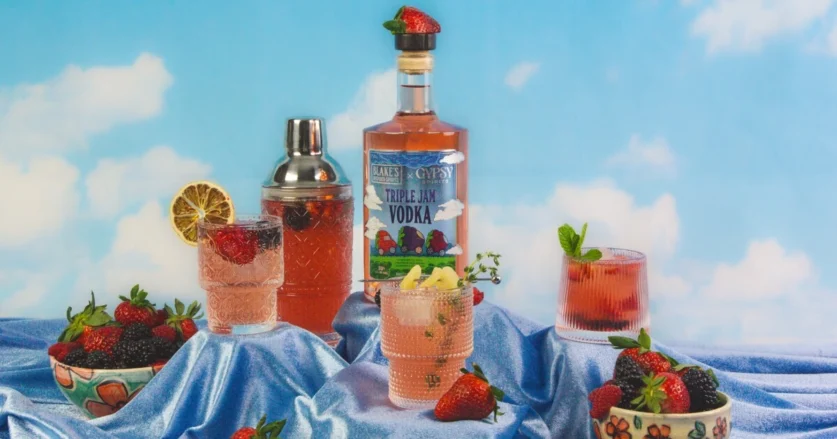
Blake’s Hard Cider and Petoskey-based Gypsy Spirits are teaming up once again for a new vodka: Triple Jam Vodka.
It comes after the much-anticipated and successful release of the Apple Pie Vodka that was released last summer.
Triple Jam Vodka brings together vodka with flavors of fresh strawberry, blackberry and raspberry, with a touch of apples.
It’s inspired by Blake’s cider, Triple Jam, a 6.5% semi-sweet cider made with real berries.
“We’re excited to partner with our friends at Gypsy Spirits, to bring the flavors of Triple Jam to Michigan’s cocktail and spirits lovers,” said Andrew Blake, the founder of Blake’s Hard Cider. “This vodka combines our delicious real fruit flavors with their expert distilling for a uniquely Michigan experience. Gypsy Spirits’ philosophy is one of embracing life to its fullest, and that’s always something we fully support at Blake’s.”
“The chance to work with a group of people who excel at what they do and are passionate about their craft and supporting Michigan makes the beverage industry worthwhile. Collaborating with Andrew and the Blake’s team is thrilling as they contributed significantly to putting Michigan craft beverages on the map,” attested Michael Kazanowski, founder of Gypsy Spirits in a press statement. “Following the success of our initial product with Blake’s, the Apple Pie Vodka, we are eager to collaborate once more, this time with their renowned Triple Jam.”
The spirit is now available at Blake’s Orchard & Cider Mill and retailers throughout the state.
Blake’s is also celebrating the fifth anniversary of Triple Jam at the Berry Bash House Party, which is held at Blake’s Event Tent and Tasting Room in Armada on Saturday, April 13. Tickets can be purchased at blakeshardcider.com.
Enjoy Great Vibes and Food at Rum For Breakfast

It might have taken a while for the party to hit its peak, but once the ‘big, bad soca’ picked up, Rum For Breakfast dominated the Hope Gardens area on Saturday morning.
Rum For Breakfast, one of the most significant pre-road march events of Bacchanal Jamaica, attracted a large audience.
The event was scheduled to start at 7:00 am, but by midday, the venue was almost full with visitors still pouring in.
Back to its roots, located within the rich garden area, the beloved breakfast party provided soca enthusiasts precisely what they craved.
People were clearly enjoying themselves as they danced with abandon, the perspiration on their bodies attesting to the intensity of their movements as they surrendered to the captivating rhythms of the music.
The responsibility of establishing the ambiance early on fell to disc jockeys such as Matthew Camps, Kyle Nocturnal, and Tyler Fyah, who aptly carried out their duty of getting the attendees in the mood for revelry as the day wore on. Tunes like Machel Mantano’s Happiest Man Alive, Kerwin Du Bois’ Too Real, Destra Garcia’s Just a Little Bit, and Patrice Roberts’ Anxiety held the crowd mesmerized as they flexed their hips in preparation for the main event.
The exhilaration within the confines of Hope Gardens merely intensified as the patrons lost themselves in the selections of the disc jockeys.
The celebration escalated to new levels of enjoyment after DJs Franco and Brush1, collectively known as the Road Marshall, delivered on their promise. The duo kept the crowd entertained with a succession of popular anthems, bringing the party to a culmination.
However, as the energy within Rum For Breakfast intensified, the breakfast buffet consistently performed at its peak. It offered delightful breakfast delights, including traditional Jamaican breakfast dishes like rundown mackerel, ackee and saltfish, callaloo, and others. The organisers ensured the attendees were fully satisfied as they revelled. As noon approached, the menu swiftly transitioned to include lunch specials such as mutton curry and a creamy pasta with jerk chicken.
Responding to Criticism for Disinviting a Friend from my Oscars Party over a Broken Whiskey Bottle

Thanks for contacting us. We’ve received your submission.
A man on Reddit who uninvited a friend from an annual Academy Awards party after the friend broke an expensive bottle of whiskey and refused to pay for a replacement was not wrong to do so — though he may want to adjust his priorities, other Reddit users decided.
An individual with the user name “InternationalList333” asked others about the situation in a March 8 post on the subreddit AITA (“Am I the A–hole”) — drawing some 4,500 reactions with approximately 2,000 comments in a short time.
In the post, the writer asked if he was wrong “for uninviting my friend from my Oscar party over a bottle of [whiskey].” The man, 29, said that every year, he and his wife, “Kate,” age 27, host a party to watch the Academy Awards, something they’ve done for five years.
“We dress up well, place bets on the winners and eat popcorn,” he said. “It’s a fun tradition that many of our friends look forward to every year. One of those people is ‘Rick’ (28M), a friend of mine from college.”
The Reddit poster said his wife “loves” whiskey — and ahead of last year’s party, she received a gift of an expensive bottle from her father. The bottle cost $175, the Redditor said.
However, as “Kate” had recently given birth and was still breastfeeding, she did not yet open the bottle.
“During last year’s watch party, [the friend] Rick got wasted,” wrote the man in his post.
“While searching for a different item in our alcoholic storage, he unintentionally shattered the bottle. He extended numerous apologies once his intoxication subsided. I was ticked off, nonetheless, the liquor belonged to Kate, she pardoned him, so I chose to disregard the incident.”
According to InternationalList333, at that gathering, only his friend Rick was inebriated.
“To add, we chose the beverages and placed them on the kitchen slab. Rick invaded the cabinet hunting for a bottle of alcohol (without prior permission from me), and was the standalone individual who performed this act,” the gentleman claimed.
Post a few weeks of the event, InternationalList333 along with his spouse questioned Rick about his plans to compensate for the shattered whiskey bottle.
“He was shocked at our question, and told us he didn’t intend to. Rick’s been having problems with finances for quite some time and often struggles with his rent,” the man shared on Reddit.
“He made a point that since we were aware about his situation, we should not expect him to pay for a bottle of whiskey that cost $175.”
Rick was provided an ultimatum by InternationalList333: He would have to replace the whiskey by the time the next year’s party rolled around, or else he wouldn’t be invited anymore.
“He agreed at that time,” he noted. “Randomly throughout the year, I would ask him about the progress, he always reassured me saying that he was nearing his target.”
Morning Report delivers the latest news, videos, photos and more.
Please provide a valid email address.
By clicking above you agree to the Terms of Use
and Privacy Policy.
Never miss a story.
This turned out to be untrue, apparently.
Last week, I asked Rick about it again. He confessed he hadn’t actually saved any money for the bottle, wrote the Reddit poster. So I kept my promise and uninvited him from the party.
This apparently made Rick and his girlfriend very upset — who said
breaking the bottle was a “drunken mistake.”
They also insist that I’m being unsympathetic and entitled by expecting Rick to pay for a new bottle, he said.
Kate’s on my side, but is worried we’re being too harsh. I really don’t think we are, but as Sunday approaches, I’m starting to feel guilty,” wrote InternationalList333.
Fox News Digital reached out to InternationalList333 for additional comments or updates.
On the AITA subreddit, people can respond to posts and indicate the poster is “NTA” (“Not the A-hole”), “YTA” (“You’re the A-hole”), “NAH” (“No A-holes Here”) or “ESH” (“Everyone Sucks Here”).
Users can “upvote” responses they think are helpful and “downvote” ones that are not.
Despite the vigorous debate in the approximately 2,000 responses to the post, the consensus was that InternationalList333 wasn’t in the wrong for expecting his friend to purchase a replacement bottle for the one he’d broken. However, many felt that it might not be worth jeopardizing the friendship over this matter.
“NTA. Regardless of whether he was drunk or not, he destroyed a
gift from a father to his daughter and then lied about it. That being said, if you’ve known him for a long time, and he’s always been a good friend, I would overlook it,” commented Reddit user “rafaelvandercan”, which was the most upvoted comment.
“The value of friendship exceeds the unintentional loss of a few hundred dollars,” added the same user.
Another highly-rated commentator agreed, stating that since Rick already had a history of breaking things, he “shouldn’t be allowed back in your house until he rights his wrong, either by replacing the broken item or compensating you for its value,” said a user named “7hr0wn.”
“It doesn’t matter that the item was a bottle of liquor. It doesn’t matter that Rick was drunk when he broke it. This is very basic guest etiquette,” said the user.
The same commenter added, “If you break something in someone’s house — accidentally, on purpose, or drunkenly — you make it right.”
Another user had a different take on the situation.
“Obviously unpopular opinion, but ESH [everyone sucks here]. Seems like Rick did a really poor job apologizing and shows little remorse,” said user “here4judgment.”
Hosting a party, said this same user, comes with the risk that something could be broken, especially if alcohol is being served.
“As I understand you, it was an honest drunken mistake, not the result of completely reckless behavior,” said here4judgment.
“Rick is struggling financially and It’s just a bottle of booze, man,” he added.
The friend should “apologize for not apologizing properly in the first place and for promising to replace the bottle when he didn’t intend to, and you should apologize for hounding him over a bottle of booze when you knew he was having a hard time making ends meet,” the commenter concluded.
Triple Jam Vodka: Blake’s Hard Cider Latest Collaboration with Gypsy Spirits Announced

Share
Triple Jam Vodka (Photo: Blake’s)
(FOX 2) – Enjoy a new twist on Blake’s popular Triple Jam hard cider.
The Macomb County-based cider maker has teamed up with the up north distillery Gypsy Spirits for a Triple Jam Vodka, a berry vodka described as having flavors of strawberry, blackberry, raspberry, and a touch of apple – just like the cider.
“It was crucial that the berry aroma and color remained the same, those elements are such a big part of the brand, and the three-berry blend needed to be captured in the vodka too,” Blake’s founder Andrew Blake said. “Triple Jam has been such a smashing success because of its real fruit profile — you don’t get this off-flavor of cough syrup or candy like with many fruited hard beverages.”
Triple Jam Vodka (Photo: Blake’s)
He said the biggest difference between the beloved cider and vodka is the lack of carbonation and a higher alcohol content; the cider is around 6% ABV, while the vodka is 30% ABV.
“It’s all about us staying true to our roots, while offering a more diverse line of beverages, a little something for everyone. We listen, our customers tell us what they want and what we are missing, and then we roll up our sleeves and get to work,” Blake said.
Triple Jam Vodka retails for $24.95 a bottle, and is available at the Blake’s Tasting Room, as well as stores in its distribution area all year long.
Blake’s previously collaborated with Gypsy for a cider-vodka collaboration. Apple Pie Vodka was widely released last year. That vodka sold out in days, something Blake said he didn’t anticipate.
After that success, Blake’s and Gypsy decided Triple Jam would be the next release.
“Blake’s is known for its beverage innovation, and with the massive success of Triple Jam nationally, we knew it had the runway to be the next craft spirit release,” Blake said. “The blend of berries and Gypsy’s Vodka create something so pleasant, that we believe this product will become a staple offering.”
And you can expect more of that beverage innovation later this year, Blake said.
“We want to explore styles outside of vodka, like whiskey and gin,” he said. “We have plans to craft a third collaboration this fall, but you’ll have to stay tuned!”
On April 13, check out the Berry Bash House Party, for a commemorative glass, tunes from a live DJ, house party games and retro video games beginning at 6:30 pm at Blake’s Event Tent and Tasting Room in Armada. Tickets are available now for $10 at blakeshardcider.com.
Breaking news delivered fast
By clicking Sign Up, I confirm
that I have read and agree
to the Privacy Policy
and Terms of Service.
Exploring the Shelf Life of Whiskey in a Decanter

A whiskey decanter is a great way to bring class to your home bar or bourbon collection. Rather than simply grabbing bottles straight from the liquor store, a decanter allows you to house your whiskey in a quality crystal vessel designed to highlight the deep amber and golden hues of your preferred drink. However, there are a few additional storage considerations that come with owning a decanter – chiefly maintaining an awareness of how long your whiskey has been stored.
Fortunately, storing whiskey in a decanter isn’t drastically different from storing it in a bottle. It’s important in either situation to consider how much the liquid is exposed to the air. The quantity of whiskey remaining in the bottle is crucial as the less whiskey you have, the more air infiltrates the bottle. Excess air accelerates the rate of oxidation, which is why your whiskey may spoil.
However, there is a significant distinction between a bottle and a decanter, specifically regarding the initial filling process. As you transfer whiskey from the bottle into an empty decanter, it swirls around, increasing the interaction between the whiskey and the air and thus kickstarting the oxidation process. Consequently, whiskey only lasts for approximately three months in a decanter.
To learn more, check out: The 27 Best Bourbon Brands, Ranked
If you’re mindful of filling your decanter, seldom open it, and leave it nearly full, the typical usage duration of three months can extend up to three years. However, do not count on it lasting for an exact three years. If your whiskey is to be stored for an extended period, it would be best to leave it in its original bottle. Decanters are generally more appropriate for a whiskey you drink regularly and are certain to finish within three months. After three months, understand that its flavor will begin to decline, but there’s no necessity to dispose of the whiskey.
An important point to remember is that whiskey decanters are distinct from wine decanters. Though named the same, their similarities end there. Wine decanters are created to aerate the wine swiftly, accelerating the oxidation process to allow the wine to breathe before you drink it. The way we consume whiskey is different from how we drink wine. A wine decanter can conveniently contain about five glasses of wine, which can easily be consumed in one sitting with a group. In contrast, a whiskey decanter accommodates approximately 25 fluid ounces, yielding around 16 servings, considering a traditional serving size of 1.5 ounces. You’ll need to choose the whiskey you want to store in your decanter accordingly.
Take a look at the original article on Tasting Table.
Behind the Scenes at the Dancing on Ice Wrap Party: Holly Willoughby’s Indulgences in Greggs and Rum Cocktails

DANCING On Ice queen Holly Willoughby let her hair down for some rinky business at the series wrap party.
She was the life and soul of the official bash, held in a marquee at Bovingdon Studios in Hertfordshire after Ryan Thomas was crowned winner.
But she was without her TV partner Stephen Mulhern, who had to get home early as his mum forgot to leave him a key under the mat.
Holly said in a funny speech: “I can do a two-hour live show and I’m absolutely fine.
“But then I stand in front of you all now and it’s utterly petrifying.
“Stephen had to go, basically.
“He’s actually staying at his mum’s house tonight and she hadn’t left the key out, which is kind of hilarious.”
The gang drank cocktails with fun names including Dancing on Rum and Skating on Ice.
They then munched on grub from Greggs. Spicy veg, Mexican chicken and classic steak slices, plus pizza was laid on.
I always knew Holly was a girl after my own heart.
KATHERINE KELLY and Eve Myles will go head to head in new psychological thriller The Crow Girl for Paramount+.
Ex-Corrie actress Katherine plays psychotherapist Sophia Craven, while Hijack star Eve portrays DCI Jeanette Kirkland in the dramatisation of the novel trilogy that also features Dougray Scott as DI Lou Stanley.
The duo commits to pursuing a serial murderer, despite the antagonism they face from their commanding officers within the police department.
Immersed deep into the series of ill-events revealing police misdoings and negligence, they find themselves in the midst of a growing number of fatalities, and unexpectedly, in a passionate liaison. The shooting for the show began in Bristol just some weeks ago.
In the words of Katherine: “The original book is nerve-racking and the adaptation scripts have superceded it. I am keen on deconstructing Sophia as the storyline progressively unveils.”
The crime drama Shetland by BBC One has been confirmed for an additional two seasons.
The ninth and tenth episodes of the crime thriller series, as inspired by the books written by Ann Cleeves and featuring Ashley Jensen and Alison O’Donnell as police detectives Ruth and Tosh, are scheduled to start production soon.
Certain participants in the new series of Loaded In Paradise who enjoy a good party, found themselves worse off financially after competing in the reality challenge.
Teams vie for the Gold Card which provides them with unlimited spending power.
Participants who do not secure the Gold Card are obliged to adhere to a budgeted lifestyle.
The series returns to ITV2 this month.
Chelise, who stars with best friend Faith, said: “I left thinking I still had the Gold Card in my purse, so I am spending more money now than I did before the show.”
Lewis, who competes with brother Gio, added: “I flew out to Dubai after the show and it’s been quite detrimental to my bank account. I’m in debt.”
EMILY In Paris fans can breath a sigh of relief – Lucien Laviscount will be in the new series.
The actor, who portrays the character Alfie in the Netflix series, was last noticed bidding farewell to Emily (Lily Collins) at the conclusion of the third season in 2022.
At the previous year’s Oscars, Lucien expressed uncertainty about his future in the series.
However, at the 2024 awards ceremony on Sunday, he announced his return with joy. He mentioned, “I’m back, and I’m thrilled. We are about halfway done filming the fourth season, and it’s going to be fantastic.
“Now that audiences have become more familiar with the characters, we have the opportunity to delve deeper into their personas.
“There’s a lot more truthfulness to it, it’s definitely a little more romantic, daring and out there than the other seasons, so it’s going to be a fun season.”
Emily In Paris returns to Netflix later this year.
TREVOR EVE, Daniel Rigby and Zoe Tapper are part of the cast for Alibi’s new dark comedy drama I, Jack Wright.
Also joining John Simm, Nikki Amuka-Bird and Gemma Jones are Sex Education star Rakhee Thakrar and The Vicar Of Dibley’s James Fleet.
Exploring the Latest Beverage Additions: From Vodka Soda to Sports Drinks

11-Mar-2024 – Last updated on
11-Mar-2024 at 10:22 GMT
Related tags
Kylie Jenner has launched Sprinter, a vodka soda made with premium vodka, sparkling water and real fruit juice. This light and refreshing beverage was created in collaboration with Chandra Richter, a female beverage development expert with over 20 years of experience and a PhD in molecular biology. Richter served as the Head of Product Development and Supply Chain. After over a year of taste testing, they ultimately achieved the perfect balance of flavours, resulting in Sprinter. This canned vodka soda contains just 100 calories per serving, has a 4.5% alcohol by volume (ABV) content, and is made with real fruit juice without added sugar.
Sprinter is available in four variations: black cherry, peach, grapefruit and lime.
It will be launched across the US on the 21st of March, and will be obtainable in 8-can variety packs for a suggested retail price of $19.99.
The first ever unflavored water from Gatorade, referred to as Gatorade Water, has been introduced in the US.
Gatorade Water is an alkaline drink with a pH level of 7.5 or above, is infused with electrolytes which gives a refreshing and sharp taste, and the bottles are constructed from 100% recycleable plastic.
Gatorade has introduced premium water aimed at active individuals seeking continuous hydration, according to Anuj Bhasin, the chief brand officer at Gatorade.
He explained that current athletes are more focused on wellness than ever and look forward to Gatorade meeting their hydration requirements round the clock, regardless of who they are or their physical activities. As per his discussion, Gatorade Water provides this all-day hydration.
Gatorade Water is now accessible across the nation in different retail stores. It can be purchased in 1L bottles for continuous hydration with a suggested retail price ranging from $2.39 to $2.99. It also comes in a 700ml size featuring a sport cap with a suggested retail price between $1.99 and $2.69.
In other news, Catalyst Spirits from Florida is venturing into the increasing RTD market, presenting Howler Head, a premium banana-flavored bourbon whiskey mixed with cola.
Howler Head & Cola has recently been launched in Australia, with plans to expand to other markets.
The drink is portrayed as a delightful, bubbly beverage with notes of roasted caramel and coffee, enriched by a creamy, full-bodied, natural banana flavour. It concludes with an oak and banana aroma that leaves a smooth, satisfying aftertaste.
For the suggested price of AU$29, you can find Howler Head & Cola at varieties of retailers all over Australia, available in 4-pack sets of 330ml cans. A 10-pack option is set to be introduced later in the year. The alcohol content of each can is 6%.
The brand has also secured a partnership with UFC Australia, becoming the official flavoured whiskey ready-to-drink (RTD) of the organisation. To coincide with this launch, former Australian UFC middleweight champion Robert Whittaker has been announced as the newest ambassador for the brand.
With the successful inception of RumChata Coconut Cream in the Spring of 2023, the esteemed brand is excitedly paving the way for a new entrant, RumChata Pineapple Cream.
This dual hit of tropical freshness carries an ABV of 13.75% and is a delight to savor both stand-alone or in a Piña Colada inspired cocktail christened the RumChata Colada, which is a perfect blend of RumChata Pineapple Cream and Coconut Rum.
Moving to another refreshment avenue, California-based Guayakí Yerba Mate brings forth its newest flavor blend – Berry Lemonade. This tasty fusion is ready to join the ranks of the brand’s popular High Energy Cans, which are set to hit shelves across the United States within the month.
The intriguing Guayakí Yerba Mate is brewed from naturally caffeinated leaves of the holly tree species, uniquely known as Ilex paraguariensis. This tree species can be found flourishing in the heart of the Atlantic Forest of South America.
Given HTML:
“`html
Each can of Berry Lemonade contains 150mg of caffeine. The
summer beverage is a balanced blend of tart lemon and sweet strawberry flavors, derived from
real fruit juice, creating a low calorie drink with 20 calories and 2g of sugar.

Janal Cruz, Guayakí’s VP of Operations at Guayakí, said,
“Berry Lemonade reflects Guayakí’s commitment to positive energy and exceptional flavors,
using certified organic and fair-trade ingredients. This new offering
represents our dedication to taste, health, and responsible sourcing.”
<iframe src="advertisement.com"
width=”300″ height=”150″>
Topo Chico has launched a new collection of elevated non-alcoholic mixers
in the US: Ginger Beer,
Tonic Water and
The drinks are described as ‘an elevated non-alcoholic mixer with
premium ingredients, a light essence of flavors, crisp bubbles, filtered water and added minerals for taste’.
“`
Rewritten HTML:
“`html
Each can of Berry Lemonade contains 150mg of caffeine. The
summer beverage is a balanced blend of tart lemon and sweet strawberry flavors, derived from
real fruit juice, creating a low calorie drink with 20 calories and 2g of sugar.
Janal Cruz, Guayakí’s VP of Operations at Guayakí, said,
“Berry Lemonade reflects Guayakí’s commitment to positive energy and exceptional flavors,
using certified organic and fair-trade ingredients. This new offering
represents our dedication to taste, health, and responsible sourcing.”
Topo Chico has launched a new collection of elevated non-alcoholic mixers
in the US: Ginger Beer,
Tonic Water and
The drinks are described as ‘an elevated non-alcoholic mixer with
premium ingredients, a light essence of flavors, crisp bubbles, filtered water and added minerals for taste’.
“`
Topo Chico Mixers are now available nationwide in numerous retailers, liquor shops, and pharmacies. The product, available in 7.1oz glass bottles, is sold in single flavor packs of four with a suggested retail price of $6.79. You can find them in the mixer section.
KAHOL, a London-based non-alcoholic spirits brand, is introducing its complete range of 0% spirits. This move comes after a year of test marketing some of the range’s select expressions with key target groups.
The collection consists of both clear and dark spirits, along with a limited edition aperitivo. All of these are designed to directly substitute their alcoholic equivalents in everything but ABV.
The production process of KAHOL integrates traditional alcohol production techniques with unique technology. It starts with full-strength spirits, the alcohol content is enzymatically modified, followed by extensive barrel aging and botanical infusion to structure the flavors and mouthfeel.
The distilled spirits can be used in mixers, cocktails, or simply drunk neat.
The initial range features Malt Abbey, an alternative to whisky that mirrors Speyside scotch, accompanied by Maggie Bailey, a non-alcoholic bourbon variant of the Kentucky straight genre. The line also extends to a non-alcoholic version of Plata tequila, dark spiced rum, and London dry gin.
The latest addition to London’s Rude Health array of dairy-free beverages is the Organic Oat Barista.
The Organic Oat Barista was perfected over four years and is marketed as the ideal complement for coffee lovers, whether their choice is pods, espresso, or filter coffee. The drink blends four ingredients, namely Spring Water and Organic Oats.
Organic Cold-Pressed Sunflower Oil and Sea Salt, along with a high oat content of 14%, contribute to an ideal creamy foam and a natural sweetness that complements the coffee’s taste.
According to Camilla Barnard, the co-founder of Rude Health, there is still a lot of room for expansion in the Barista category even with its foundations already laid. She believes that Barista, Oat and Organic are all key growth factors. The shelves are currently filled with products containing long ingredients lists that include emulsifiers, stabilisers, and acidity regulators. Consumers, however, are increasingly seeking out products that not only deliver exceptional functionality and superb taste, but also contain organic, clean-deck ingredients. Using their years of dairy-free drink expertise, Rude Health crafted what they believe is the ultimate trade-up.
The Organic Oat Barista can be obtained through wholesalers such as Suma, Essential, Infinity, CLF, Greencity, Queenswood, and Auguste Noel. It’s also available on Ocado and Amazon with a suggested retail price of £2.40 for a 1-liter package.
Copyright – Unless otherwise stated all contents of this web site are © 2024 – William Reed Ltd – All Rights Reserved – Full details for the use of materials on this site can be found in the Terms & Conditions
Related topics