New York Native Unveils Wine Label Before Debut Season with the New York Yankees

Today—March 18th—marks the debut of Le Carénage, a California-based wine project spearheaded by award-winning MLB pitcher, Marcus Stroman. After making his Major League debut and taking MLB by storm back in 2014, Marcus quickly fell down the wine rabbit hole thanks to his generous veteran teammates who would regularly bring captivating bottles of wine into the clubhouse to share. This season Stroman joins the New York Yankees for the first of a two year contract, signed in January 2024.
Le Carénage’s inaugural wines include a Provence-inspired rosé, a refreshing Sauvignon Blanc, and a classic Knight’s Valley Cabernet Sauvignon.
Click here to acquire Le Carénage inaugural release wines by joining the mailing list
Courtesy of La Carénage
View the 3 images of this gallery on the original article
Le Carénage Rosé is inspired by the great pink-hued wines of Provence. Crafted from a blend of 51% Cinsault and 49% Mourvèdre, fruit for this refreshing, acid-forward wine hails from responsibly-farmed vineyards planted in Lodi. At just 12.9% ABV, the wine’s light-on-its-feet nature makes it ideal for sipping all day long. 490 cases were produced.
Le Carénage Sauvignon Blanc hails primarily from Napa County, with a hint of Sémillon thrown in for good measure. At 12.1% ABV, the wine is easily enjoyable with or without food, though its pronounced acidity is undoubtedly a perfect match for freshly shucked oysters and pungent goat cheeses. 120 cases were produced.
The Le Carénage Knight’s Valley Cabernet Sauvignon is the first of three single-vineyard Cabernet bottlings to be released, and shows the best of what Sonoma County has to offer. Packing all the dark-fruited and cassis notes, while staying light, nimble and ready to enjoy with minimal aging. At 12.9% ABV, this wine represents a balanced, fresh and classic Cabernet that harkens back to how wine was made in Napa and Sonoma back in the heyday heralded vintages of the ‘70s and ‘80s. 580 cases were produced.
Future plans will bring two additional Cabernet Sauvignons to the line-up: the two single-vineyard Napa Cabernets will serve as the project’s higher-end Reserve bottlings, produced from Glass Rock Vineyard in the Coombsville AVA and a prestigious site in the heart of Oakville.
Matt Naumann, owner of Newfound Wines and previously the winemaker for Wade Cellars, is the proud hands behind the bottles at Le Carénage. Naumann’s winemaking philosophy is rooted in working with the best vineyards possible and allowing the fruit to speak for itself.
Click here to acquire Le Carénage wines by joining the mailing list
Marcus is a native of New York who didn’t discover his love for wine until later in life. He went to Duke University and was selected by the Toronto Blue Jays in the 2012 draft. Marcus began his professional career in 2014 and since then has played in both New York for the Mets and Chicago for the Cubs. This season he will be returning to his hometown, having signed a multi-year contract with the New York Yankees. He discovered his passion for wine after sharing many bottles with his fellow teammates, falling in love not just with the drink itself, but also the camaraderie and joy it brought to their gatherings.
Marcus started making regular visits to wine regions from his Florida offseason base in 2015, frequently jetting off to the West Coast. His appreciation for Napa Cabernet evolved into a love for the great wines from Old World locations like Bordeaux, Barolo, and Tuscany. As his passion for wine grew, Marcus set out on a mission to make wine more down-to-earth and easy to access, all without reducing the quality in any way.
A special thank you to Marcus for taking the time from his jam-packed Spring Training schedule to record video responses to my interview questions.
Experience the Unique Blend of Tangy Tomato Sauce & Pepperoni in This Frozen-Pizza-Flavored Beer!
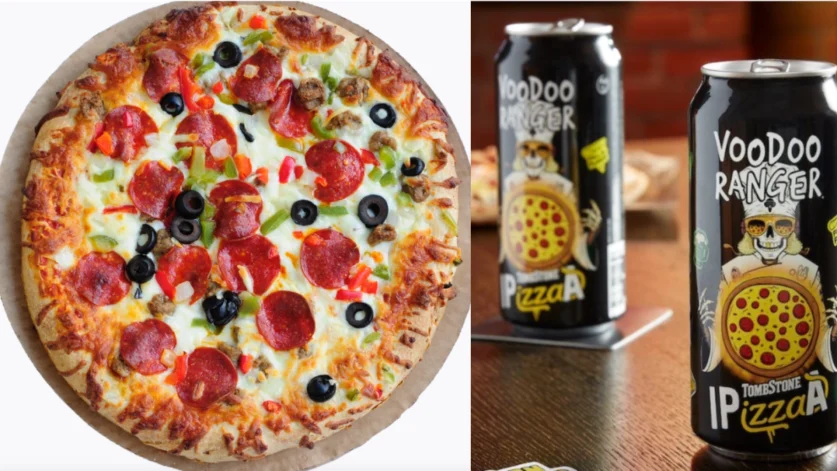
It’s hard not to love the combination of pizza and beer, but what about pizza in beer?
That’s exactly the inspiration behind I(Pizza)A, a new collaboration between the frozen-pizza brand Tombstone and New Belgium Brewing Co.’s Voodoo Ranger IPA.
Voodoo Ranger’s I(Pizza)A certainly isn’t the first food-flavored beer, but it might just be the most savory. Available just in time for National Beer Day on April 7, the beer incorporates all the flavors of a freshly-baked Tombstone pizza. There’s the crispy crust, tangy tomato sauce, and savory herbs and spices. And what would a pizza-inspired beer be without a pepperoni kick?
Although Voodoo Ranger’s I(Pizza)A won’t be available until National Beer Day, from now through April 7 you can sign up to win a free four-pack and a Tombstone pizza. You can enter the contest by visiting VoodooRanger.com.
For those who’d rather try their luck at purchasing a pack, keep in mind that the beer will only be available in select markets for a limited time. Oh, and that four-pack will cost you about $50.
A post shared by Voodoo Ranger (@voodooranger)
To no surprise, people have a lot to say about the pizza-flavored beer. An Instagram post from Voodoo Ranger announcing the boozy collaboration is up to nearly 2,000 comments from fans who are confused, excited, and intrigued.
“I don’t know how to feel about this one,” one person admitted.
Some people aren’t convinced that the beer isn’t an elaborate April Fools’ Day trick.
“Y’all early for the April fools,” read one comment.
Are you brave enough to try a pizza-flavored beer?
You Might Also Like
Review on NY Distilling Co.’s Jaywalk Straight Rye Whiskey
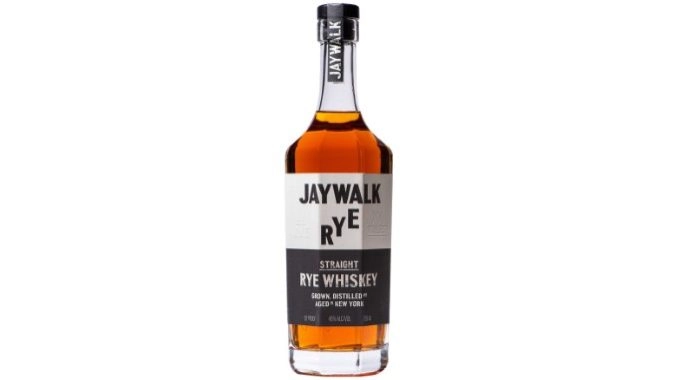
Whiskey from New York state and New York City often invokes an image of rye before anything else. Rye cultivation and the subsequent distillation of rye whiskey have been significant in the Empire State’s history, owing to its climate that is favorable for growing hardy rye grain. Recently, the state’s distilling industry has been striving to fine-tune this legacy into a unique style, termed the “Empire Rye.” This term indicates that the whiskey must be distilled from at least 75% New York state-grown rye. Despite the lack of federal support, this definition is propelling numerous small distilleries to innovate, sometimes with neglected or revived rye varietals. An example includes the NY Distilling Co., located in Bushwick since 2011, focusing on producing spirits in NYC. Their latest Jaywalk Rye Whiskey series unveils a rye varietal rarely seen in the industry, Horton Rye.
This distillery was previously known for producing their Ragtime Rye whiskey, a younger product also made with NY-grown grain. Reflecting on the fact that the Ragtime Rye is no longer among the products listed on their website, it could be inferred that the new, more mature Jaywalk series is the successor, repackaged to better portray the company’s mission.
The Jaywalk series includes three distinct expressions: a “standard” straight rye at 92 proof with an impressive 6-8 year age statement, a bonded variant at 7 years and 100 proof, and a rare “Heirloom Rye” variant that is cask strength. Each of these is distilled from a mash bill of 75% New York rye, 13% New York corn, and 12% malted barley. The highlight of the series, however, is the unique rye grain itself. The mash bill merges Field Race rye, previously used in the Ragtime Rye, and the newly accessible Horton rye. The Horton rye is an heirloom varietal dating back to 17th century New York. It was almost wiped out before the NY Distilling Co. partnered with Cornell University’s College of Agriculture resurrect from seeds. The five-year revival began in greenhouses, transitioning to fields, and resulted in a rye that added special flavors to their whiskeys.
What we are looking at with the Jaywalk Straight Rye Whiskey is a well-aged, 92 proof rye expression with an extraordinary grain history. The $50 MSRP stands out too, considering it’s a huge bargain for a 6-8 year old rye from a craft producer. That price point for such well-aged rye from mainstream producers is already a kick. If it’s from a craft distillery, it’s an even bigger steal. As an aside, although I generally don’t dwell on package design or aesthetics, the octagonal bottles strike me as particularly elegant.
So let’s dive into the tasting.
The aroma of this rye represents a mix of familiar and more unique elements. The peppery notes common in rye whiskey are visible, yet they are coupled with a more earthy-sweet feature that isn’t found as often. The fragrance can be a bit musty intermittently, yet it is nicely balanced between sweet deep caramelized toffee and complex herbal/floral tones. Along with that, I’m also sensing pine, rye bread, and a distinct touch of mint. There are indeed many flavors, however, identifying all at first can be difficult.
Upon tasting, the mint resurfaces substantially, coupled with milk chocolate creating a hint of mint chip ice cream. The pure rye grain flavor merges with cracked pepper and also a peach/apricot fruitiness, mixed with a sweet, minty herbal character. However, the savory overtones of tobacco and cigar wrapper, in addition to damp grass, generate a more intricate profile. The flavor spectrum of this grain ranges from fruity, herbal to sweet which is absolutely captivating. Even at this proof point, the flavor is quite strong, punching a bit beyond its expected proof. If had to take a blind test, I would probably presume this to be 100 proof or even higher, considering the boldness of its flavors.
In conclusion, this is a very robust rye from NY Distilling Co., specifically remarkable for delivering exceptional value at a $50 price point, especially when considering the extensive effort invested in the revival of the Horton rye. Those interested in exploring the Empire Rye concept might want to give it a try.
Distillery: NY Distilling Co.
City: Brooklyn, NYC
Style: Straight rye whiskey
ABV: 46% (92 proof)
Availability: 750 ml bottles, $50 MSRP
Jim Vorel is a Paste staff writer and resident liquor geek. You can follow him on Twitter for more drink writing.
GET PASTE RIGHT IN YOUR INBOX
The best music, movies, TV, books, comedy and more.
Businesses Gear Up for April’s Total Solar Eclipse with Special Celestial-Themed Donuts and Beer

Eclipse-themed beer. Jewelry and ornaments. And doughnuts that capture the sun’s disappearing act with the help of buttercream frosting.
With April 8’s total solar eclipse right around the corner, businesses are ready for the celestial event that will dim skies along a generous path across North America.
There are oodles of special eclipse safety glasses for sale, along with T-shirts emblazoned with clever slogans and other souvenirs — just like the last time the U.S. got a big piece of the total solar eclipse action in 2017.
Hotels and resorts along the prime path are luring in visitors with special packages and Southwest and Delta are selling seats on eclipse-viewing flights. Cities, museums and parks are staging watch parties to draw in tourists as well as residents.
“This is a special event and … the travel industry certainly is in a very good spot,” stated Jie Zhang, a marketing professor at the University of Maryland’s business school. She mentioned that this eclipse mania comes at a moment where consumers are steadily increasing their expenditure on fresh experiences.
As the eclipse day approaches, it is expected that more unique products and deals will emerge from nationwide brands. An example is Moon Pie’s “eclipse survival kit,” a package consisting of four mini versions of the chocolate treat and a pair of eclipse sunglasses.
So far, small-scale enterprises located along the 185-kilometer-wide path of the total solar eclipse have taken the initiative. E-commerce platforms and local traders have presented a range of inventive, limited-edition merchandise like earrings, infant outfits, decorations, pastimes, banners, and more.
Certain towns and entrepreneurs have been expecting this astronomical phenomenon and the massive audience for years.
Following the 2017 eclipse, Sam McNulty, co-founder of Market Garden Brewery in Cleveland, marked his calendar. The city, being in the path of this year’s eclipse, is poised to experience almost four minutes of darkened sky.
In the previous year, McNulty and his team came up with a unique idea – brewing a hazy IPA they named “The Totality” to pique interest in the eclipse. Their effort paid off when the brew debuted on tap, garnering immense interest. Soon after, a local grocery store, Heinen’s, proposed a collaboration to can the brew.
A post shared by Market Garden Brewery (@marketgardenbrewery)
Within the following weeks, McNulty said that “thousands and thousands” of cans are slated to flood the market. The ambitious endeavor was prompted by the rarity of the eclipse event. In fact, Cleveland won’t find itself in the path of a total eclipse again before 2444.
“I don’t want to have to wait 420 years to brew the next batch of cans,” he joked. “So we made a very large one this time.”
The eclipse-themed beverages don’t stop at beer. Big Cuppa, a coffee shop in Morrilton, Arkansas, also has a full eclipse menu with a handful of specialty drinks. Its “Moon Pie Frappa” is a blended Moon Pie drink flavored with dark chocolate and toasted marshmallow.
Big Cuppa co-owner Joseph Adam Krutz said that he’s excited to greet customers and the many new faces set to travel through town next month. Krutz said his shop has been gearing up for a while along with other businesses in downtown Morrilton. He drives by a countdown clock each day.
“We’re prepared. Bring it on,” Krutz said.
And don’t forget the snacks. In Ohio’s Butler County, a shop named The Donut Dude will feature an “Eclipse Donut Special” that displays the eclipse’s phases as the sun hides behind the moon.
The special will be available later this month and includes seven filled-doughnuts with rolled buttercream, two galaxy-themed cake doughnuts and safety glasses for customers to enjoy the event while munching.
“We’re expecting a lot of excitement,” says co-owner Glen Huey.
Given that the doughnut shop is not open on Mondays, Huey is excited about watching the spectacle as it moves over his town between Cincinnati and Dayton.
In the U.S., Texas anticipates a surge of tourists due to its optimal viewing opportunities for clear skies. Eateries in the quaint town of Grapevine are preparing exciting offerings for this occasion, including a “Blackout Dinner” at Hotel Vin and an enticing “Solar Eclipse Shake” at Son of a Butcher.
Businesses situated along the path of totality are eagerly planning special events leading up to this celestial phenomenon.
The esteemed Cayuga Lake Wine Trail of New York has a plan to celebrate the eclipse weekend commencing April 8. They are organizing “Sips to the Eclipse” wherein guests would have the privilege to visit 10 distinctive wineries for a delightful tasting experience. An allure of varied additional attractions such as special eclipse eve tarot card reading, delightful slushies, and appetizing half-moon cookies are on the anvil.
Katherine Chase, the executive director of the wine trail, reported advance planning of the promotion to optimally leverage the influx of people expected to visit the Finger Lakes region for the eclipse.
“The wineries can go as big or as little as they’d like to entice folks to come,” she said.
Impact of Post-Brexit Complex Tax Rules on UK Wine Price Increase

Wine Society describes planned alcohol duty changes as ‘ludicrous, expensive and probably unworkable’
British consumers have been told that the price of some of their favourite red wines could increase by more than 40p next year after the government ignored pleas from the wine industry to abandon complex post-Brexit tax changes.
The chief executive of Majestic Wine, John Colley, said the new alcohol duty system, which comes into effect in February 2025, would increase the number of tax bands for wine from one to 30, and cost businesses huge sums of money to administer.
The chief executive of the Wine Society, Steve Finlan, said the plan was “ludicrous, expensive and probably unworkable”.
The post-Brexit overhaul of alcohol taxation, which would tax drinks on alcohol by volume (ABV) rather than the type of alcohol, was officially initiated last August proposed by the Treasury during Rishi Sunak’s time as chancellor. According to this scheme, the amount of duty increases by 2p for every 0.1% increase in alcohol content.
The government recognized the new administrative load for businesses and implemented an 18-month “easement” period. Throughout this time, all wines between 11.5% and 14.5% would be taxed £2.67, which is the duty rate for 12.5% ABV.
The wine industry has been urging the government to make these easement rules permanent. However, earlier this month, Gareth Davies, the exchequer secretary to the Treasury, confirmed that the policy would proceed as planned.
Businesses like Majestic Wine, which operates more than 200 stores nationwide, have voiced their concerns, stating that this change would result in higher prices and an immense administrative burden for sellers.
“The minister demonstrated in this debate a worrying lack of understanding of our sector, suggesting that the alcohol duty system has become simpler and easier since Brexit,” said Colley. “That is simply not the case. In fact, the system in place pre-Brexit was much simpler to administer.”
Analysis by the Wine and Spirits Trade Association (WSTA) has found that when easement ends prices on about 43% of wines will increase. The tax on a bottle of wine with an ABV of 14.5%, the highest percentage to come under the rules, will increase by the maximum 42p to £3.09.
Red wines will be most affected given their higher alcohol content, with prices on 75% expected to rise from next February.
The changes will lead to huge administrative costs for businesses, which will have to work out the tax due on each wine. Even small shops can sell hundreds of different wines.
The co-founder of Cambridge Wine Merchants, Hal Wilson, explained that new regulations are set to enforce the inspection and documentation of the alcohol content in roughly 90% of their purchased bottles. Wilson expressed concerns over the seven-fold increase in workforce tasks, hinting at the unfeasibility of such a proposition for their trade.
Representing the Wine Society, Finlan elucidated concerns for the establishment that houses myriad wine varieties. He assessed the new alterations as nearly impossible to implement, resulting in inevitable price surges that will affect the consumer.
Ensure you stay updated by subscribing to Business Today.
Be prepared for the professional day ahead – we provide an essential guide to the morning’s business news and analytical insights.
after newsletter promotion
At a Westminster Hall debate brought by the former health minister Will Quince last week, some Brexit-backing MPs, including Priti Patel and Julian Sturdy, supported the industry’s calls for a continuation of the status quo.
The latest changes come after wine sellers were hit with a 20% rise in excise duty on 85% of wines last year, the highest rise in 50 years.
The chief executive of the WSTA, Miles Beale, said: “Cutting red tape should surely be a priority for the Tories, who often cite it as a ‘Brexit benefit’.
“We are not asking for further reform, we are merely calling on the government to retain the existing, simplified procedure for taxing wine to avoid what is going to be a very costly mistake.”
A Treasury spokesperson said: “We engaged closely with the wine industry throughout the consultation for historical reforms to alcohol duty. The industry has benefitted from freezes at six out of the last 12 fiscal events.”
The changes will also result in the sparkling wine premium being removed, so that sellers pay the same amount of duty on them as still wines of the same ABV. The duty on many lower-strength drinks, such as beer, has been cut.
Reflecting on Elizabethtown’s History: Art Linkletter’s Visit in 1974 and Rum-Runners’ Arrest in 1924
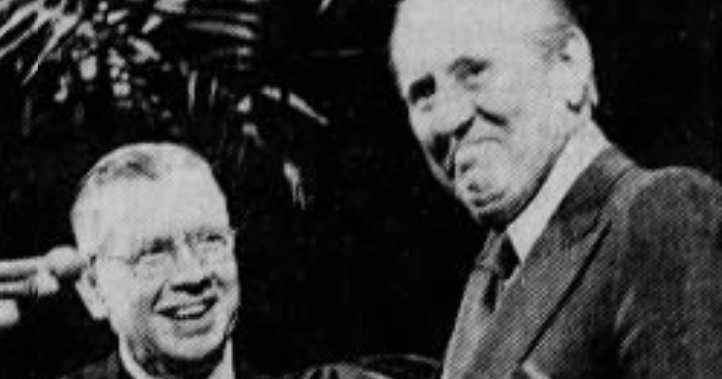
TV and radio personality Art Linkletter is presented with an honorary degree from Elizabethtown College President Morley Mays, as seen in this image from March 16, 1974.
This section features selected extracts and summaries of news articles from the former Intelligencer Journal, Lancaster New Era, and Sunday News. It highlights significant, newsworthy, or simply bizarre events from the county’s past.
In March 1999, it was announced that schools within Lancaster city were gearing up to transition to full-day kindergarten. School District of Lancaster Superintendent Vickie Phillips did not just make a private note of this but vocalized it publicly using a megaphone to ensure everyone was informed.
The School District of Lancaster was the first in the county to implement this change. Phillips had initiated a “Kindergarten Round-up Campaign”. The aim was to get all eligible city children registered for the upcoming school year’s kindergarten curriculum ahead of time.
Phillips anticipated to journey across the neighborhoods, street by street, through a van equipped with a bullhorn, publicly broadcasting the registration drive. She planned to be joined with different city officials, including Mayor Charlie Smithgall.
The big deal about this? Consider that kindergarten registration isn’t required by the law until the start year of school, leading to schools being unprepared for the influx of registrations. Thus, the push to achieve registration or be as near to completion as feasible during April.
Furthermore, if the mayor’s bullhorn didn’t provide enough motivation, a lucky draw for a 25-inch TV was also a part of it – everyone who registered a kindergartener in April was eligible.
In the headlines:
General admits sex with wives of subordinates
Serbs stand firm against Kosovo peace deal
Stuffy AOL taking charge of freewheeling Netscape
Check out the March 17, 1999, Lancaster New Era here.
Art Linkletter, a pillar of radio and early television, graced Elizabethtown College in March 1974, addressing almost 1,000 persons and receiving an Honorary Diploma.
Linkletter, who climbed to nationwide recognition with a 40-year stretch in broadcasting, is most remembered for the game show “People are Funny” and the talk show “House Party.” Both shows premiered on radio in the 1940s before transitioning to TV, where they ran well into the 1960s.
He talked about a documentary he had recently shot on the subject of refugees across the globe and his career as an entertainer. Additionally, he conveyed the anti-drug message he has been associated with during his later years by sharing the story of his daughter Diane’s demise, which he attributed to the use of drugs.
(On the 4th of October, 1969, Diane flung herself from a sixth-floor window, an act her father accused drugs, LSD specifically, of causing. Despite Diane’s public admission to drug usage, toxicology findings did not trace any LSD in her at the time of her death.)
In the headlines:
U.S. firms offer kidnap insurance
Ireland’s troubles go on and on
Israel, Syria duel flares in fifth day
Check out the March 17, 1974, Sunday News here.
In March 1949, Lancaster was preparing for the installation of its first parking meters.
State legislation had recently passed allowing third-class cities, like Lancaster, to establish parking authorities. Following this decision, Lancaster was taking the first preliminary steps towards an organized approach to parking regulation and revenue.
The initial steps included a comprehensive study of loading and unloading zones across the city, coupled with curb painting.
Later studies would determine how many parking meters the city would install and at what locations.
In the headlines:
Spy suspect indicted for looting U.S. files
House committee approves cut in liquor licenses
Magazines assail postal rate hike
Check out the March 10, 1949, Intelligencer Journal here.
In Prohibition-era booze news, a group of Harrisburg-based rum-runners were arrested in Lancaster County on March 16, 1924.
The three men were arrested near Florin while in the process of delivering 10 five-gallon drums of illicit liquor to a Lancaster man.
Following their apprehension, the suspects admitted to law enforcement a significant adjustment to their plan of action – due to the strict liquor laws in Lancaster city, they (including assumed other illegal alcohol providers) had moved to the county’s rural areas to deliver their “wet goods,” setting up rendezvous points with their Lancaster intermediaries, rather than directly transporting their products.
News highlights:
Charges are brought against the Attorney General
Flight around the globe commenced by U.S. airplanes
Check out the March 17, 1924, Lancaster Intelligencer here.
Success! An email has been sent to with a link to confirm list signup.
Error! There was an error processing your request.
Here’s a favorite childhood memory, and other memorable downtown Lancaster thoughts from…
Excerpts and summaries of news stories from the former Intelligencer Journal, Lancaster New …
ARCHITECTS’ ALPHABET, PART 14: N IS FOR NARROW-GAUGE BRICK
Columbia Borough lays claim to a strange subterranean space, people say.
Lancaster County’s history is richer because of the contributions of outstanding women.
Support local journalism. Click here to learn more about the role the Lancaster County Local Journalism Fund plays in Lancaster County and to make a tax-deductible donation.
Unveiling the World’s Best Vodka as Per the 2023 Tasting Alliance World Championship

Ramsbury Estate Vodka takes home the top prize at the Tasting Alliance World Championship.
Last month we went into extended detail about the new “World Championships” launched by the Tasting Alliance. You can catch up on the full story here. In short, it’s pretty much the Olympics of liquor tasting. The top-rated boozes from three of the industry’s most coveted competitions all square off against one another, to arrive at the best-of-the-best from any specific category, in any given year. We’ve already revealed the 2023 winners for bourbon, tequila, and scotch.
Today it’s time for vodka (drumroll please…):
Ramsbury Vodka is your World Champion of 2023. The award-winning product is blended and bottled on a bucolic British farm in the quiet countryside of Marlborough, about an hour’s drive south of Oxford. Distilled exclusively from wheat grown on the sprawling property, it exists as one of the UK’s only single estate vodkas. In fact, you can trace each bottle’s lineage back to a precise field of origin.
But that’s not the only distinguishing factor of this vodka. Its alcohol content is 43% ABV, a tad more than the usual 40% (or 80-proof mark) of many modern competitors. This provides the vodka with a stronger edge. Plus, it enables a more noticeable delivery of the citrus zest and aniseed undertones, enriching its overall flavor. In essence, you are experiencing the origin stories of the vodka in every sip.
This vodka’s competitive edge is the wheat used in its production and the clean water source, an ancient aquifer from the accompanying Ramsbury valley. Despite all the focus on its flavor, it might actually be the texture that genuinely captivated the esteemed Tasting Alliance judges.
This is an incredibly creamy vodka. Its high viscosity becomes even more pronounced when served super cold, simply garnished with a lemon twist. As a Martini, you would want it as dry as possible, eliminating the need for any vermouth-based alterations.
Overall, this is a refined spirit worthy of royalty. And we’re quite serious about that. King Charles—then the Prince of Wales—paid a visit to Ramsbury in 2017. So, they had that feather in their cap, even before they scored their own victory in the recently sanctioned Booze Olympics.
You can also visit the operation yourself. The estate houses a working brewery and produces several fine gins as well. A full immersive experience is offered on the last Friday of every month between April and September. Of course, if you want to capture the experience in liquid form, you hardly need a passport. Ramsbury Single Estate Vodka currently sits on American shelves for around $60 a bottle.
MARLBOROUGH, ENGLAND – DECEMBER 15: The Prince of Wales, Charles, tours Ramsbury Estate on December 15, 2017 in Marlborough, England. During his visit he met local school children and attended a reception for the estate’s tenants.
Celebrating St. Patrick’s Day: Embracing the Irish Spirit with Beer Blessings
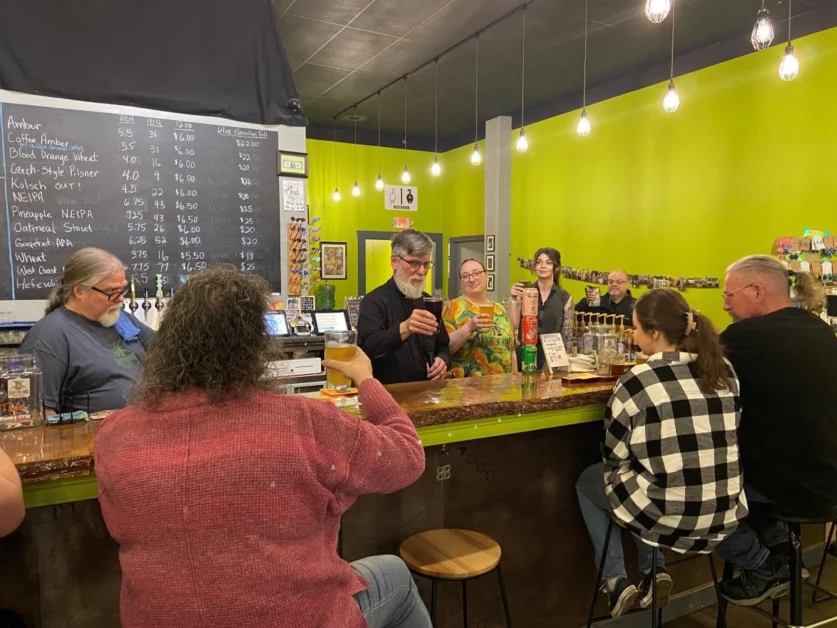
A cheer erupted from the onlookers gathered around the Tasting Room of Louisiana’s bar on Saturday when Father Steve Brandow sipped the beer he had just blessed. This action officially inaugurated pouring for the patrons who were eagerly awaiting with tickets.
This was one of two beer blessings performed by Brandow in the vicinity on Saturday, one day prior to St. Patrick’s Day.
This tradition of blessing has been a long-standing one at the Tasting Room situated downtown Alexandria pub, even before it came under the ownership of whiskey sommelier and current proprietor, Melissa Scarborough. Back in the day, it was known as Finnegan’s Wake and the blessings started around the mid-2000s.
According to Brandow, beer is blessed as it is considered a food item that forms an essential food group for beer enthusiasts. In the same way that some individuals express their gratitude to God for everything in their lives, they also thank Him for the beer.
“It’s a social event,” he said. “Catholics have always been social people.”
‘A sign of our community’: Blessing of the Beer kicks off St. Patrick’s Day celebration at The Tasting Room of Louisiana
‘Big ol nerds’: Fighting Hand Brewing Company pays homage to Dr. Who
Over at a table, Jerry Liberty and Betty Chavez, both sporting green shirts and green and white beads that had been left on tables, snapped cellphone photos of Jody Skeltoe, who was wearing a green hat and multi-color glasses. The women hail from New Mexico, visiting friends who live here.
They mentioned their enjoyment and anticipation for a “crawdad” boil scheduled for later on Saturday.
The one responsible for the crawfish boil is Bob Pulaski, who made his presence known with a leprechaun hat, green shirt and red kilt, stationed by the bar.
Pulaski acknowledged his wife as the originator of the boil – a tradition dating back many years, he claimed.
His role? “To sip on beer, leading up to my cooking responsibilities.”
Hours later, Brandow made his way to Pineville’s Fighting Hand Brewing Company for the second blessing of the day. Although the brewery has been operating for three years, this is their second time hosting a blessing of the beers.
Standing behind the bar and flanked by owners Chris and Tiffany Lindsey, Brandow invited the gathering to join him as he shared about the first people to craft beer.
However, it was not what people today recognize as beer. It was purely wild grain mixed with water.
“They hadn’t tamed grain yet. That development would happen soon thereafter, but after they relished the first beer, they decided they needed to recreate it, whatever it was,” he narrated, prompting laughter from the crowd.
And he provided them a succinct recounting of St. Patrick’s story and accordingly named them honorary Irish.
“Welcome to the family. If you’re not already Irish, it’s high time.”
Tiffany Lindsey expressed the sentiment that the blessing was an enjoyable event for the community, and since Brandow was a regular participant, he was the probable choice to perform the blessing.
“Upon hearing about other locations engaging in similar celebrations, it occurred to me that we already produce beer,” she pointed out. “Let’s participate.”
This article originally appeared on Alexandria Town Talk: St. Patrick’s comes to Rapides with blessings of beers at pub, brewery
The Wine Industry Crisis: Excess Supply Leading to Destroyed Products and Uprooted Vineyards

Shrinking demand for alcoholic beverages has led to an oversupply of wine.
In response, some vineyard operators in Australia, California, and France are eliminating large sections of their vineyards.
A South Australian grower, Tony Townsend, recently informed Bloomberg that he’s dismantling his 34-acre vineyard despite years of vine maintenance.
“While I loved being a part of the wine industry, continuing in this state just wasn’t financially feasible,” he explained to the news source. Despite his crops being healthy, the harvest expense would have been $23,000.
Townsend’s not alone. Reuters reported tens of millions of vines will be ripped out in Australia to address the excess supply. As of last year, the amount of extra wine in storage in Australia was equal to two years of production, the outlet said, with some going bad before it could be sold.
Related stories
“It feels like an era is ending,” vineyard owner Andrew Calabria of Calabria Wines in Australia told Reuters, adding: “It’s hard for growers to look out the back window and see a pile of dirt instead of vines that have been there as long as they’ve known.”
Excess supply is also impacting winemakers in Europe and the US.
Last year, the French government, known for its efforts to protect its traditional culinary products, declared that it would invest $216 million in discarding excess wine to help the struggling industry. Rather than being ingested, this wine would be transformed into industrial alcohol for items like perfume, hand sanitizer, and cleaning solutions.
France is also financing initiatives by growers in Bordeaux to remove about 10% of their vines.
The San Francisco Chronicle reported that some growers in California are demolishing their vineyards, with some choosing to cultivate other crops as an alternative.
One of the factors contributing to the overproduction is merely a shift in demand: People don’t drink the way they used to.
Wine consumption rose in the ’90s when many believed it to be associated with good health, but as Americans have drunk less and less alcohol over the past decade, production has exceeded demand, the Chronicle reported.
“People in this business took it for granted that there was always going to be growth,” Jeff Bitter, president of Allied Grape Growers in California, told the outlet.
Read next
Simon Thomas Shares His Journey: From Grieving Husband to Father of Three Thanks to His New Partner

WHEN Simon Thomas lost his wife Gemma six years ago, he was struggling to cope and trying to raise their son Ethan alone.
But thanks to his second wife Derrina Jebb, the family has been pieced back together and Simon credits her with saving his son.
Now the pair have one-year-old daughter Talitha and another baby on the way.
In an exclusive interview, Soccer Saturday host Simon, 51, who admits to drinking heavily after his wife’s death, says: “Without a doubt, she’s the reason Ethan is on a level footing.
“Derrina has been a massive blessing to us after everything that happened.
“She is a mother figure who came into his life, and it’s an amazing sacrifice to love someone else’s child.
“So, despite everything that’s happened, Ethan is incredibly lucky and blessed, which is a weird thing to say.
“But Derrina loves him like he’s her own.”
Gemma, 40, died just three days after being diagnosed with acute myeloid leukaemia in 2017 when Ethan was eight.
It left her husband and son understandably devastated, and Simon struggled to go on after the loss but kept trying for his son’s sake.
But as he continued to struggle with grief, his boozing got out of control.
He admitted previously: “For months every single night was a battle not to drink. Occasionally I would win, mostly I lost.
“I would sink a litre of vodka in an evening, disguised in a coke can.”
“In social situations, where I felt more paranoid than I had ever done before, it became an even bigger mask.”
Simon found himself “on the verge of losing everything” as he tried to “numb the pain”.
He has now been sober for more than two years and is able to fully embrace family and work. Talking about his lifestyle change, he said:
“The biggest benefit is the joy of being present.
“I know for parents it’s hard on a whole number of fronts — there is a battle for our attention.
“I’ve really enjoyed just being there. It’s without a doubt one of the best decisions I’ve ever made.”
He met Derrina, 31, a pastor’s daughter, a year after Gemma’s death and she has been by his side ever since.
It was a challenging journey, but I consider myself fortunate to have both of them in my life.
Derrina became a part of Ethan’s life when he was just ten years old, and since then, they have formed an inseparable bond. She is his primary source of support whenever he struggles with his homework.
Simon expressed: “Stepmothers often have a negative image due to their portrayal in some children’s movies, however, in my view, the most wonderful gift you can present a child is they should be loved as if they were your own.”
“She opted to love him even though he does not share her biological bond. That’s an extraordinary commitment to a child.”
Simon is collaborating with Konnie Huq, his former Blue Peter co-worker, on Talking Futures, a platform that promotes discussions between parents and children about the future. He frequently shares pictures of his new wife and their son online.
Derrina, Simon’s wife, ensures that the family does not forget Gemma. They commemorate Gemma’s memory through actions like releasing balloons on her birthday and speaking about her at home.
About eighteen months ago, Simon and Derrina welcomed their first child, Talitha. Now, they are awaiting the birth of another child, which Ethan, their son, hopes will be a boy.
They have chosen to keep the gender a surprise until the birth, as Simon pointed out, “there are so few surprises left these days.”
Simon was attentive to ensuring his son’s comfort with the new addition to the family, acknowledging the vast age difference after years of being an only child.
He, along with Gemma, longed for another child, but the struggle with fertility problems stymied their efforts to conceive.
In a 2023 conversation on Streams Studio via social media, Simon reflected: “Post Ethan, Gemma and I wished to provide him with a sibling but we discovered that Gemma was facing significant fertility troubles. Following two attempts at IVF and experiencing a miscarriage, we realized it was not destined, but one child was indeed a blessing.”
Simon recounts how a young Ethan would inquire about getting a sibling, and how he transitioned naturally and readily into his renewed responsibilities as an elder brother.
Simon states: “He’s greatly enjoyed it. It represented a significant shift for him, given that he had been an only child for 13 years and was accustomed to that lifestyle.
“Talitha was born eight weeks prematurely, which was unexpected. Despite the age difference, they have a wonderful bond.
“It’s a joy to see Ethan’s expression light up when he returns from school, and she always enjoys waving him goodbye in the morning. Ethan has been taking guitar lessons for some time and is making progress.
“He typically practices for twenty minutes before school, and Talitha invariably runs over to watch him perform.”
The final weeks of the birth were tough as Derrina suffered pre-eclampsia, a dangerous condition for both mum and tot.
Posting about the birth of their daughter, Simon said: “One moment we think we’ve got eight weeks until our little one arrives, the next, after Derrina fell rapidly ill, we’re suddenly welcoming into the world a very tiny, but hugely precious, baby girl weighing just over three pounds.”
Thankfully, both mum and baby recovered well after the “fear-filled” labour, but it did mean a stressful adjustment period at home.
“We had a teenager in the house and a premature baby in the hospital,” Simon said. “It was a steep learning curve but I count myself lucky to have them both.”
Simon discovered that having a newborn is like exploring a new area.
He stated: “The cries of a newborn cannot be predicted or prepared for. The gap between when Ethan was that age and when Talitha was born was substantial. I had essentially forgotten most of it.”
Since stepping into his teenage years, Ethan has exhibited the typical characteristics of becoming less talkative. However, Simon and Derrina have noticed a significant transformation in him after he enlisted in the Army cadets three months ago.
“Being part of this organization has enhanced his sense of responsibility and initiative at home,” remarked Simon.
“We believe in teaching kids to take a role — I don’t want him to go to university and not know what a washing machine is. I’d be so embarrassed.”
Ethan is incredibly lucky because she loves him like her own. Stepmums get a bad rep but that’s an amazing gift to give a kid
“The cadets is helping him grow up a bit. It’s certainly triggered his organisational gene.” It has led to one bittersweet moment for Simon — no longer having to pack his son’s lunch.
Since the passing of Gemma, the former Blue Peter presenter has slipped a note into Ethan’s lunch box each day to remind his son how much he loves him.
Simon recently told The Sun, “I can’t recall the last time I prepared a sandwich for him. He now makes his own lunch every day.”
Ethan, the son, is considering becoming a journalist, not following in his father’s footsteps into television as either a children’s host or sports correspondent. This provides numerous topics for father-son discussions.
Simon shared, “We’ve had numerous discussions about his future career aspirations. At present, he’s inclined towards print journalism over TV. However, I’ve encouraged him to understand that it’s a competitively intense field.”
“I’ve suggested that he could begin his journey by proposing an idea of a school magazine to his school authorities.”
“He’ll soon be 16 and picking GCSEs and what direction to go in after. I think having these conversations with him is empowering, and it’s so important we don’t just avoid it.
“Some of my best conversations with Ethan have been in the car or on a walk. It makes it less intimidating than doing a version with lots of eye contact.”