Comparing Alcohol Content: The Quantity of Beer Equivalent to a Single Shot of Liquor

Consuming alcohol responsibly involves understanding the differences in alcohol types and their respective quantities. Each type of alcohol – be it beer, wine, or hard liquor – varies in alcohol by volume (ABV) percentage. According to the National Consumer League, one 12-ounce beer can be equated to one shot, although this can fluctuate based on the specific ABVs of both the liquor and beer. Notably, a beer with a 4% ABV will have less of an impact than a beer with an 8% ABV. The CDC suggests that men should ideally engage in no more than two drinks per day, and women only one, to mitigate any potential health risks associated with alcohol.
Read More: 10 Of The Healthiest Beers You Can Drink
The term ‘alcohol by volume’ refers to the amount of ethanol in every 100 milliliters of liquid. Liquor generally has a higher ABV (around 40%) than beer (about 5%), which accounts for the easier tolerance of beer than straight vodka. However, things get complicated when considering that the assumption of equating one beer to one shot is based on a very general percentage of 5% ABV. Some common beers like Michelob, Budweiser, and Heineken have a 5% ABV, but lighter beers such as Coors Light, Miller Lite, and Bud Light maintain an ABV of 4.2% and contain fewer calories and carbohydrates. It’s crucial, however, to remember that some beers can have a significantly higher ABV. Many craft beers, for instance, can have higher alcohol percentages, with Allagash Brewing Company’s Tripel containing 9% ABV, and some reaching 11% ABV. To calculate how many “standard drinks” a beer is equivalent to based on its alcohol percentage, check out a calculator provided by the National Institute of Alcohol Abuse and Alcoholism. How this equates to liquor, however, will depend on the other variables mentioned.
Different liquors have varying ABVs, with some exceeding 40%, termed as overproof, and others under 40%. Understanding the exact ABV content of your drink is crucial to comprehend the effect it might have on your body.
The beer-making procedure influences its ABV. Beer is produced from barley, a grain rich in sugar, which over a period, ferments with the aid of yeast. As fermentation unfolds, yeast consumes sugar and converts it to alcohol. The duration of fermentation and the variety of yeast used can alter not only the flavor of beer but also its alcohol content.
A beer’s ABV straight impacts your body’s blood-alcohol level or BAC. If you’ve ever heard of “driving under the influence”, it likely implies that their BAC was more than 0.08%. Your gender and weight significantly affect your BAC. According to a blood alcohol chart, a female weighing 140 pounds can likely consume two drinks while staying under the legal limit, whereas a male weighing 180 pounds might be able to consume approximately four drinks. But, it’s generally presumed that a “drink” refers to a 12-ounce, 5% ABV beer or a 1.5-ounce, 40% ABV shot of liquor.
To read more, check the original article on Daily Meal.
Kentucky Distillery Launches Non-Bourbon Whiskey to Their Product Lineup

One of Kentucky’s largest distillers is adding a new whiskey to its lineup.
Bulleit, which has Kentucky distilleries in Shelbyville and Lebanon, is releasing Bulleit American Single Malt. The new whiskey is distilled with a mash bill of 100% malted barley and aged in charred new American white oak barrels, according to a news release from Bulleit.
The latest on food, dining and bourbon delivered right to your inbox for free. See what’s happening in the world of bourbon, including buying, tasting tips and more on Tuesday. Stick around for the biggest restaurant news in Central Kentucky on Thursday. Sign up here.
It is 90 proof and, according to the tasting notes, has a nose of sweet vanilla and toasted oak. On the palate, it’s light and fruity with hints of red fruit and pear, and a finish of oaky caramel and subtle cocoa notes.
Bulleit American Single Malt is now available in stores throughout the country as well as at the Bulleit visitor center in Shelbyville. The suggested retail price is $59.99. For more details on where to purchase, visit bulleit.com/where-to-buy
The new malt whiskey comes in a flattened oval bottle similar to the iconic Bulleit bourbon bottle, made this time, however, out of green recycled glass.
Jesse Damashek, the Senior Vice President of Whiskies & Liqueurs at Diageo, shares in a statement, “Bulleit American Single Malt introduces Bulleit’s continuous innovation and sustainability commitment into this new exciting category that is bound to cause ripples in the whiskey industry for the foreseeable future. With a 100% malted barley mash bill, and a noticeable green bottle resulting from recycled post-consumer glass use, this exemplary whiskey represents numerous new approaches for the brand. I am convinced we have managed to create a unique American Single Malt that will be treasured and adored by whiskey fanatics everywhere.”
It’s worth noting that the malt whiskey, despite not qualifying as a Scotch because it is not Scottish-made, forms the most recent part of Bulleit Frontier Whiskey’s inventive experimentation with flavor, maturity, and overall finish, as per the press release.
Bulleit, which is owned by global spirits giant Diageo, opted for a recycled glass bottle as part of the company’s commitment to sustainability. This initiative includes their first carbon-neutral distillery in Lebanon which uses 100% renewable energy.
What’s the economic impact of bourbon in Kentucky? Report says major growth still to come
More Double Double Oaked: Kentucky distillery offers the chance to buy a rare bourbon bundle
Exploring Chef Tim Love’s Unique Rigatoni alla Vodka with Rabbit and Rattlesnake Sausage

DALLAS – The NFL will be dedicating the Super Bowl weekend to increase awareness about hunger in the entire nation.
Celebrity Chef Tim Love will once again take part in the Taste of the NFL.
He gave a preview of what he would be preparing for the grand event on Good Day.
Enough to serve 4 people
INGREDIENTS FOR THE SAUCE:
2oz (half stick) Unsalted Butter
1 lb Yellow Onion, ¼” dice
½ oz(weight) Minced Garlic
1 ½ tsp Red Pepper Flakes
½ lb Tomato Paste
1(one) 28oz can San Marzano Tomatoes, Peeled
1 QT Heavy Whipping Cream
¼ lb Parmesan Cheese, grated on a microplane
To Taste, Lemon Juice
To Taste, Salt and Pepper
TO COMPLETE:
½ lb Dried Bucatini
1 T canola oil
1 T Garlic, Minced
1 T Shallot, Minced
1 T Red Chile Flake
½ C Vodka
3 C Vodka Sauce
¼ C Parsley, Finely Chopped
¼ C Parmesan Cheese, Grated on a Micro Plane
½ lb Rabbit and Rattlesnake Sausage, Roasted and Cut Into ½” Thick Coins
PREPARATION INSTRUCTIONS FOR THE SAUCE:
Heat your oven to 350 degrees.
In a large pan over medium heat, add butter and allow it to melt.
Next, add onions and sweat thoroughly, remember to stir frequently to prevent any browning.
Then, add garlic and chile flakes. Let them sweat for another 2-3 minutes.
Finish by adding the tomato paste. Stir constantly and let it caramelize for another 2-3 minutes.
Add peeled tomatoes and stir to incorporate fully.
Cover and place in 350 degree oven for 2 hours.
Remove from oven, uncover, and slowly add parmesan cheese, stirring constantly to incorporate.
Add heavy whipping cream
Puree with an immersion blender until completely smooth. Season as necessary with salt, pepper, and lemon juice.
CONSTRUCTING THE PASTA:
In a large pot, combine 2 gallons of water with ½ C of kosher salt.
Set on high heat until boiling.
Once boiling, add pasta and cook, stirring occasionally, until al dente
While pasta is cooking:
In a large pan over medium heat add oil, garlic, shallot, and chile flake. Allow it to sweat for 1 minute, until chile flakes give off a robust aroma, making sure to stir frequently.
Increase heat to a high setting, remove the pan from the flame, add in chunks of sausage, and then include vodka.
Return pan to flame and allow vodka to flambe. Continue on high heat for 30 seconds until alcohol has evaporated.
Add Sauce base and bucatini and toss until hot and thoroughly incorporated.
Add parsley and half the parmesan, tossing to incorporate.
Check seasoning and sauce texture. Adjust with salt, pepper, and pasta water to taste.
LINK: www.TasteoftheNFL.com
Discover Ten to One’s New Aged Blend: A Rum Perfect for Whiskey Enthusiasts

If you purchase an independently reviewed product or service through a link on our website, Robb Report may receive an affiliate commission.
Ten to One is one of the best new rum brands to emerge over the past few years, founded by Caribbean native Marc Farrell with the intention of moving away from the stories of “pirates and plantations” that have guided so many brand narratives. And now the Ten to One core lineup has a new member with the addition of Five Origin Select, an excellent new expression that is a blend of rum sourced from five different countries.
More from Robb Report
Jack Daniel’s Is About to Drop New Batches of Its Coveted 10- and 12-Year-Old Whiskeys
The Most Coveted American Whiskeys Are Ultra-Strong, but Are They Drinkable?
Elijah Craig’s New Barrel Proof Bourbon Is Lower Proof-and That’s a Good Thing
Five Origin Select will be a permanent addition to the portfolio and not a limited release, but according to the brand it will be available in smaller quantities throughout the year. There are some key differences between this new expression and the core Dark Rum. The latter is a blend of rum from four countries, aged up to eight years, and bottled at 80 proof. Five Origin Select is, as you can guess from the name, a blend of rum from five countries—Guyana, Jamaica, Trinidad, Barbados, and the Dominican Republic—aged up to 15 years and bottled at 92 proof. The oldest rum in the blend is a rum aged between 11 and 15 years from Guyana that was distilled on the Port Mourant double wooden pot still. This is a true rarity in the rum world that has been in use for nearly 300 years, and is used to produce El Dorado Rum. Like all Ten to One rum, no color, flavoring, or sugar was added.
We got an early taste of the rum, and it’s delicious. The color is a light copper-brown, with notes of brown sugar, banana, and molasses leading on the nose. There’s a natural sweetness to the palate, with notes of pineapple, ginger, pear, baked apple, vanilla, and milk chocolate. The bottle’s label is green, which according to the brand is supposed to represent both the Guyanese flag and the greenheart wood used to make the Port Mourant still. You can find Five Origin Select available to purchase now from the Ten to One website, and the rest of the collection (including last year’s Black History Month Artist special edition) is available from websites like ReserveBar.
Best of Robb Report
Why a Heritage Turkey Is the Best Thanksgiving Bird—and How to Get One
9 Stellar West Coast Pinot Noirs to Drink Right Now
The 10 Best Wines to Pair With Steak, From Cabernet to Malbec
Sign up for Robb Report’s Newsletter. For the latest news, follow us on Facebook, Twitter, and Instagram.
Unveiling the Secrets behind the Production of the World’s Rarest Wine

One of the most devastating occurrences in winemaking is a lost vintage, often caused by unfavorable weather conditions before the grapes can reach full maturity. This issue arose several times since 2009, the last instance prior to now when Royal Tokaji could manufacture its exceptionally rare Essencia. In the six vintages from 2009 and 2016 (including the latest release), ideal conditions for azsú berries were not met five times, with the year 2013 presenting the most significant disappointment.
According to Royal Tokaji’s managing director Charlie Mount, most producers in the region concur that 2013 ranks among the finest vintages in Tokaji history. “We had perfect conditions for azsú, and we had amazing quantity as well,” shares Mount with Robb Report. “Essencia was being produced in abundance, but, we couldn’t find anything that we thought was worth bottling after five or six years in our cellar. This resulted in one of the most painful decisions we’ve ever made, failing to meet our standards despite having a huge quantity of Essencia and deciding not to release the 2013 vintage.”
Robb Report covers more in-depth:
How the Smell of a Barnyard Is Roiling the Wine World
Wine Fermentation, Explained: How the Process Affects the Flavor and Texture of Your Vino
This New 77-Foot Hybrid Catamaran Has a Jet Ski Garage That Doubles as a Sun Pad
Although neither 2014 nor 2015 provided ideal conditions for enough quality azsú berries to produce Essencia, the summer and fall of 2016 offered perfect circumstances to capture the precious free-run juice (more on that later) that goes into making this prized elixir. And prized it should be. Only the eighth vintage of Essencia released in the winery’s 34-year history, sipping Royal Tokaji 2016 Essencia from specially designed crystal spoons that reveals its deep amber hue and aromas of dried apricot, ripe summer peach, and honeycomb. It rolls over the tongue like syrup with nimble viscosity and a sumptuous vein of acidity that keeps its inherent sweetness from overpowering its flavors of apricot nectar, peach pie, candied orange peel, and fresh honey that leaves a trail of tangerine zest in their wake.
Meaning “dry” in Hungarian, azsú berries are grapes that have been afflicted with Botrytis cinerea, the grey mold called Noble Rot that is responsible for the creation of Tokaji Azsú as well as Sauternes and Spätlese and Beerenauslese Riesling. Unlike common household molds, Botrytis requires an optimal setting to do its work; if it is present in a season that is relentlessly wet, it will ruin the grapes it’s growing on, making them useless for winemaking. But a period of humidity, especially one with cool, foggy mornings, that precedes a dry period just before harvest creates an ideal situation. The fungus dehydrates the grapes, which increases the proportion of fruit sugars and acids, offering a sweeter, more intensely flavored berry from which to make wine. Affected grapes shrivel to the point that they look like raisins.
In the traditional production of azsú wines, botrytized grapes are gathered in large carriers known as puttony and mixed into 136-liter barrels of base wine. The quantity of sweet grapes integrated with the base wine gives the Tokaji Aszu the unique Puttonyos marking of either five or six Puttonyos. To be labeled as five Puttonyos, a Tokaji Aszu wine must contain at least 120 grams per liter of residual sugar, while a six Puttonyos wine should have at least 150 grams per liter. Essencia wines, on the other hand, can have sugar content between 450 and 600 grams, requiring high acidity to balance the sugar levels; for instance, Royal Tokaji’s 2016 vintage has 534.6 g/l of sugar.
While Tokaji Azsú has long been adored by nobility, artists, and poets, Tokaji Essencia is in a class of its own. It’s not just Louis XIV who hailed Tokaji as “The King of wines, the wine of Kings.” Esteemed British wine author and founder of Royal Tokaji in 1990, Hugh Johnson OBE, amusingly refers to its Essencia as “medieval Viagra.” Each 375-milliliter bottle of Essencia contains the juice extracted from 88 pounds of dried berries, which is approximately 50,000 grapes. This is a stark contrast to the average 750 ml bottle of dry wine, which uses about 2.5 pounds or approximately 200 grapes. The meticulous production process involves selecting the finest botrytized grapes from top-rated plots. As Chris Mount, a wine expert, states, “It’s a question of waiting.”
Post harvest, the shriveled Furmint, Harslevelu, and Muscat Blanc grapes, that have lost about 80 percent of their moisture, are laid on racks to let the juice drip. As Mount explains, “We don’t press them or apply any pressure so a tiny amount of liquid drips through a grating at the bottom of the collecting vat. We draw it off from time to time, we keep every grape variety and every site separate, and we do an initial selection.” The juice absorbs moisture from the high humidity wine cellar; naturally occurring yeast from the cellar settles on the surface and a spontaneous fermentation takes place from the top down. About 70 percent of that free-run juice is transferred into glass demi-johns of varying sizes, from 10 to 50 liters, depending on the plots. The entire process takes at least five to seven years. “All along we’re waiting and tasting and towards the end we’ll make a final selection of the batches to be blended and bottled as Essencia,” Mount continues.
Though a wine bottle accompanied by a crystal spoon might appear gimmicky, the high viscosity of the wine actually makes it more practical to sip it with a spoon than from a glass. This is largely because about 15 percent of the initial juice sticks to the grates, and nearly 30 percent more is discarded before blending. Only 2,300 bottles of this prized liquid, priced at $1,416 each, were produced. Each bottle contains roughly 25 tablespoons, and every drop is treasured. If you desire to sample it but can’t get a full bottle, select restaurants like Oiji Mi and Gabriel Kreuther in New York City offer bottles and crystal spoons for your sweet sipping delight.
Best of Robb Report
Why a Heritage Turkey Is the Best Thanksgiving Bird—and How to Get One
9 Stellar West Coast Pinot Noirs to Drink Right Now
The 10 Best Wines to Pair With Steak, From Cabernet to Malbec
Sign up for Robb Report’s Newsletter. For the latest news, follow us on Facebook, Twitter, and Instagram.
Samuel Adams and AB InBev Redirecting Ad Investments Towards Non-Alcoholic Beer as American Alcohol Consumption Decreases

With Dry January over for another year, many drinkers will have returned to their old tipples. But US brewing giants are spending more money than ever to market their low and no-alcohol beers all year round, reflecting the category’s rapid rise as traditional lagers and ales begin to lose their fizz.
Some 38.8% of the $1.3 billion the US beer category spent on advertising last year was devoted to light and low-alcohol beer and ale, up from 31.5% in 2022, and 28.3% in 2021, according to Vivvix, a MediaRadar company. (The 2023 figure includes some preliminary data for December.)
Boston brewery Samuel Adams is one of the many companies contributing to this trend.
It just wrapped up its Dry January activity, when it invited fathers-to-be to enter an Instagram contest to give up alcohol in solidarity with their pregnant partner, for a chance to win a 40-week supply of its non-alcoholic IPA, Just the Haze.
Samuel Adams is planning major expansions for its non-alcoholic beverages in the coming year. The brewing company is preparing to film a national television advertisement specifically for Just the Haze, and intends to increase the drink’s online visibility using a team of influencers.
The focus on alcohol-free beverages is a significant shift from just a couple of years prior, during which non-alcoholic drinks were merely a part of Samuel Adam’s comprehensive product campaigns.
For the upcoming year, the brewer plans to allocate roughly 20% of their marketing budget towards low and zero alcohol drinks, an increase from the previous 13% in 2023. This decision was made known by the company’s brand head, Lauren Price, who added that funds are being redirected from the primary Boston Lager brand to the non-alcoholic ones.
Price suggested that this budget adjustment is in line with current growth trends, “Last year, I would have mentioned that everything was centered around Dry January or Sober October—periods when alcohol consumers choose to abstain—but that’s no longer the situation.”
Other alcohol brands are also making marketing moves in response to new consumption trends. While total North American beer sales were down 12% over the past three years as people seek healthier options, according to the market research firm Circana, non-alcoholic beer has flown off the shelves during that same time period, growing 49%.
It’s not just that more consumers are opting for sobriety — although many, especially Gen Z, are doing just that. Alcohol drinkers are opting for non-alcoholic beers on more occasions, such as at lunchtime or as a “chaser” between alcoholic drinks on a night out, experts said. It helps that brewers have improved the dealcoholization process over the years so that alohol-free beers retain their flavors.
“A number of years ago as a company, we strategically decided to move from just beer to ‘total beverage’ and with that, we did make a decision to ensure we are putting the right resources and investments in those types of segments,” said Sofia Colucci, Molson Coors CMO for North America. Molson Coors’ low and no-alcohol beer portfolio includes Peroni 0.0, Blue Moon Non-Alc, Miller 64, and the ZOA energy drink.
While non-alcoholic beers still only represent a small proportion of the total amount of beer sold, brewers can sell non-alcoholic beers at a higher margin, because they are often priced at a premium and avoid excise duty.
Non-alcoholic beer opens up new opportunities for sports marketing, with more logical links to be made with drinking in moderation or not at all. Take Formula 1, where Peroni Nastro Azzurro 0.0% just inked a sponsorship deal with Team Ferrari and Red Bull Racing driver Max Verstappen is the face of Heineken 0.0 beer, the US market leader.
Corona Cero 0% beer is set to be the lead brand for Anheuser-Busch InBev’s sponsorship of the 2024 Paris Olympics this summer. The deal, announced earlier this year and which makes AB InBev a Worldwide Olympic Partner through to Los Angeles in 2028, marks the first time a beer brand has sponsored the Games.
“This is an opportunity to strengthen beer as a category and as the category of moderation,” said AB InBev CMO Marcel Marcondes.
Forty-one percent of Americans say they plan to drink less alcohol in 2024, up from 34% the prior year, according to a survey commissioned in December by the marketing company NCSolutions. The company even found that the most popular drink people planned to consume on New Year’s Eve in the US in 2022 was soda rather than an alcoholic fizz.
“There seems to be a cultural zeitgeist element gathering steam and reinforcing itself,” said Alan Miles, NCSolutions CEO. “Not drinking and the non-alcoholic option is cool.”
Read next
Taylor Swift Accused of ‘Chugging Vodka’ at Grammys After-Party, Fans Claim She Was ‘Drunk’

Fans are “loving drunk Taylor [Swift]” as a video of the pop icon chugging what appears to be vodka at the Grammys after-party is gaining attention.
Taylor Swift had a lot to commemorate on Sunday night after she won the most coveted award of the night — Album Of The Year. This victory marked her as the only artist to have received this award four times.
Following the grand event, the ‘Red’ singer partook in an after-party alongside her closest friends and she was spotted having the time of her life.
All knew that Taylor ‘was trouble when she entered’ given her knack for partying! The pop icon was seen celebrating her significant Grammy achievement at an after-party, giggling and delighting with friends, Ed Sheeran and Sabrina Carpenter, as she unabashedly swigged a large bottle of clear liquid.
She seemed to have changed out of the custom Schiaparelli white gown she wore to the big event and, instead, opted for a fun party dress, complete with a gold sequin pattern, spaghetti straps, and a deep-V neckline. Swifties noticed it was similar to the Clio Peppiatt silver dress that she wore on New Year’s Eve.
Of course, Taylor kept her signature red lipstick throughout the entire evening.
Taylor Swift at a #GRAMMYs after-party.
— Pop Base (@PopBase) February 5, 2024
Many are convinced the pop icon was chugging a bottle of vodka in the video, as others were expressing how much they “love drunk Taylor.”
One Swiftie took to social media to express, “She is getting white girl drunk!” as another asked, “is that Tito’s?”
Others, however, claim the pop icon was just “drinking her water and minding her business.”
“That might just be water,” another wrote in response to the viral video.
Taylor Swift made history as the only artist to win Album Of The Year four times during the Grammys last night.
“I would love to tell you that this is the best moment in my life,” she said in her acceptance speech, adding, “But I feel this happy when I’ve finished a song or when I’ve cracked the code to a bridge that I love or when I’m shot listing a music video, or when I’m rehearsing with my dancers or my band or getting ready to go to Tokyo to play a show.”
She was speaking about her upcoming The Eras Tour, which kicks off in Japan this week.
The 14-time Grammy winner added:
“For me, the award is the work. All I want to do is keep being able to do this. I love it so much. It makes me so happy. It makes me unbelievably blown away that it makes some people happy who voted for this award too. All I want to do is keep doing this. So thank you so much for giving me the opportunity to do what I love so much.”
Earlier in the night, when accepting her best pop vocal album, Taylor announced her plans to release a new album, ‘The Tortured Poets Department’ in April.
Ranking the Best Whiskey Barrel-Aged Stouts to Keep You Warm This Winter
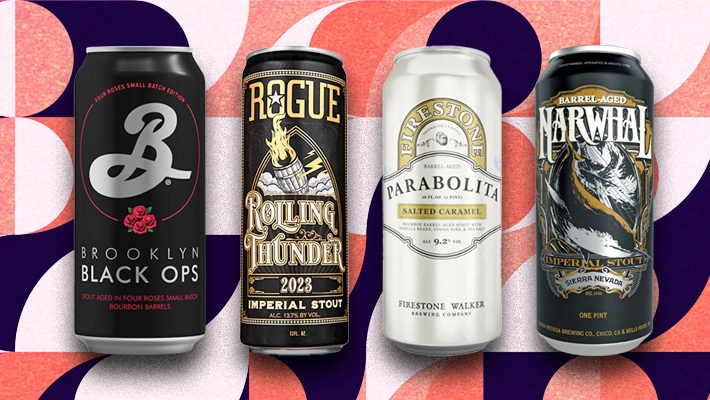
When it comes to warming, winter beers, there’s no contest against a masterfully crafted whiskey (typically bourbon) barrel-aged stout. These have been a staple for the cold weather since Goose Island’s brewmaster Greg Hall made the decision to age a stout in a former Jim Beam barrel all the way back in 1992. Typically, these are fairly high in alcohol (11-14% ABV) packing a punch with flavors of coffee, caramel, chocolate, and a warming, oaky, boozy whiskey. What could be more perfect for a freezing winter evening?
Over the decades since its inception, many breweries have made an effort to replicate the smells and tastes of Goose Island Bourbon County Stout. While that particular beer continues to enjoy extreme popularity, several other well-made, flavorful whiskey barrel-aged stouts are now available.
We discovered eight of the most excellent options that can be found in beer stores and markets today. Most of these are widespread and many originate from some of the most renowned breweries in the nation. We have graded them on their overall taste and their ability to warm. Scroll down to see if your preferred bourbon barrel-aged stouts were selected.
ABV: 13.6%
Average Price: $15 for a 500ml bottle
The Beer:
Rogue Ales Rolling Thunder is a distinctive stout, aged not in the typical ex-bourbon barrels, but in Rolling Thunder Barrel Works barrels that once contained Rogue Dead Guy Whiskey. For a fleeting period of nine months, it enjoys the unique qualities of these barrels. The beer is composed of a myriad of ingredients: 2-row malts, Munich malts, black malt, rolled and naked oats, chocolate malts, roasted barley, C-75 malts, cacao nibs, rice hulls, brown sugar, dark Belgian candi syrup, Pacman yeast, and Cascade hops.
Tasting Notes:
There’s a ton of whiskey on the nose as well as chocolate fudge, roasted malts, dried fruits, oak, and caramel. The palate is loaded with toasted vanilla beans, cocoa powder, coffee beans, caramel, and warming, boozy whiskey at the finish.
Bottom Line:
If you want to try barrel-aged stout that was matured in a whiskey besides bourbon, this is the beer for you.
ABV: 11%
Average Price: $17 for a four-pack
The Beer:
The flavor composition of dragon’s milk, assuming it were real, is believed to align closely to this beer’s taste. This stout boasts an impressive 11% ABV and undergoes a three-month maturation period in repurposed bourbon casks. Its distinguished taste profile incorporates the intricate blend of roasted malt, chocolate and coffee.
Tasting Notes:
You’ll smell notes of dark chocolate, roasted malts, fresh bread, vanilla, coffee, and bourbon. When you take a sip, you’ll experience flavors of chocolate, toasted vanilla, roasted malts, espresso beans, raisins, woody oak, and whiskey. It concludes with a sweet, warming, and boozy finish.
Main Takeaway:
When compared to other high ABV barrel-aged stouts, Dragon’s Milk provides a rich flavor profile while maintaining a more accessible 11% ABV.
Alcohol content: 12%
Average Price: $20 for a four-pack
The Beer:
Not far behind the fame of Goose Island Bourbon County Stout, Founders KBS holds its own reputation amongst barrel-aged stouts. This potent brew at 12% ABV is a bourbon barrel-aged chocolate coffee stout, earning it the ‘Breakfast’ part of its name. It garners attention for its profiles of liquor, coffee, vanilla, and chocolate.
Tasting Notes:
The nose is a blend of roasted malts, caramel, fresh coffee, oaky wood, vanilla beans, and sweet bourbon. The palate echoes these characteristics with hints of dark chocolate, toffee, vanilla beans, espresso, charred wood, and a sweet, boozy, bourbon finish.
Final Thoughts:
If you’re a coffee aficionado, this beer is for you. The brewing and aging process are special on their own, but the addition of coffee elevates it even further.
Alcohol By Volume: 11.5%
Average Price: $18 for a four-pack of 16-ounce cans
The Beer:
Many breweries typically keep the sourcing of their former whiskey barrels a secret, but that’s not the case with Brooklyn. They proudly label their beer as a product of a partnership with the notable distillery Four Roses. This stout, boasting an 11.5% ABV, was aged for an extended period in casks that were once used for Four Roses Small Batch barrels.
Tasting Notes:
Complex aromas of dark chocolate, roasted malts, coffee beans, vanilla, dried cherries, and aromatic whisky start this beer off on the right note. The palate is filled with roasted malts, caramel candy, freshly brewed coffee, charred oak, vanilla beans, chocolate, raisins, and lightly, warming, boozy whiskey.
Bottom Line:
This is a surprisingly complex barrel-aged stout. It has a ton of rich, chocolate and coffee flavors as well as dried fruits. The finish is less boozy than many of the others on this list.
ABV: 11.9%
Average Price: $16 for a four-pack of 16-ounce cans
The Beer:
The majestic and unique narwhal, a creature often compared to a unicorn of the sea, lends its name to Sierra Nevada’s imperial stout, and its barrel-aged variant. The imperial stout boasts an impressive 11.9% alcohol content and is allowed to mature for nearly a full year in ex-bourbon barrels.
Tasting Notes:
Upon encountering this stout, one is met with a myriad of intriguing scents. Emanating from the brew are hints of dark chocolate, roasted malts, toasted coconut, raisins, butterscotch, toasted vanilla beans and a sweet touch of oaky bourbon. As one partakes in the drinking experience, flavours such as cocoa powder, maple syrup, caramel candy, dried fruits, vanilla beans, oak, and whiskey spring forth. It leaves the taste buds with a warm, lingering sensation ripe with the richness of boozy whiskey.
Final Verdict:
The complexity of the Sierra Nevada Narwhal imperial stout is impressive in its own right. However, allowing it to mature in ex-bourbon casks could significantly enhance its richness.
Alcohol By Volume (ABV): 14.1%
Average Price: $14 for a 16.9-ounce bottle
The Beer:
Goose Island Bourbon County Original Stout is the OG whiskey barrel-aged stout. It’s also still the most sought-after. While there are different variants, Bourbon County Original Stout is matured for around twelve full months in recently emptied bourbon casks from Heaven Hill, Four Roses, Buffalo Trace, and even Wild Turkey.
Tasting Notes:
A scent profile of rich chocolate syrup, fragrant vanilla beans, hearty oak, savory toffee, dehydrated fruits, and smooth bourbon tempts you before the initial tasting. The flavor profile indulges in your palate with sweet candied nuts, fruity raisins, caramel-infused sugar, charred wooden notes, sweet bourbon, bitter coffee, and dark cocoa elements, together making this an unforgettable beer.
Summary:
Don’t miss the opportunity to try Goose Island Bourbon County Stout if you haven’t tasted it yet. This was one of the earliest and still remains one of the best (if not the best) interpretations of the stout style available in today’s markets.
Alcohol Volume: 9.2%
Average Price: $7 for a 16-ounce can
The Beer:
This is not your everyday whiskey barrel-aged stout. Parabolita is defined as a bourbon barrel-aged stout with varieties of vanilla, cocoa nibs, and sea salt. The process involves aging the popular Parabola from the brewery for a comprehensive year in previous bourbon barrels, then merging it with Velvet Merlin milk stout. Following that, it’s enhanced with cocoa nibs, vanilla beans derived from Madagascar, and sea salt.
Tasting Notes:
On the nose, you’ll detect scents of fresh coffee, toasted vanilla, butterscotch, chocolate fudge, molasses candy, dried fruits, and sea salt. The taste profile combines elements of milk chocolate, oaky wood, toffee, dried fruits, vanilla, whiskey, and salted caramel.
Conclusion:
The addition of sea salt imparts a subtly salty flavor that complements the overall complexity of this extraordinary beer perfectly.
Alcohol by Volume: 11.3%
Average Price: $20 for a 500ml bottle
The Beer:
The North Coast Old Rasputin maintains its status as one of our top picks amongst imperial stouts, more so the barrel-aged version. Ageing in the whiskey barrel enhances the dark chocolate, vanilla beans, dried fruits, and caramelized sugar aromas and flavors.
Tasting Notes:
Prevalent on the nose are scents of butterscotch, caramelized sugar, dark chocolate, toasted coconut, pipe tobacco, vanilla, and sweet, bourbon that is reminiscent of corn. The palate is treated to a symphony of flavors from roasted malts, coffee, dark chocolate, brown sugar, charred oak, vanilla, dried fruits, to the boozy, lightly spicy whiskey at the finish.
In Conclusion:
The Old Rasputin from North Coast is a standout beer. Its barrel-aged version feels as though it has been ramped up to a level eleven or perhaps even twelve. It is indulgent, intense yet incredibly layered.
Exploring the Illogical Aspects of Alcohol Consumption in “Days of Wine and Roses
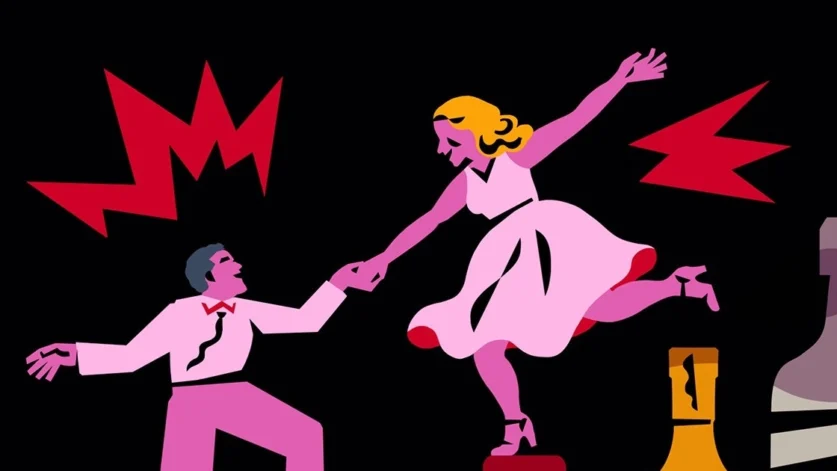
It’s hard to know—or perhaps it’s even tougher to acknowledge—that you’re drinking too much. After all, you could just be the life of the party. The kind who orders half the menu during a dinner for two, using every cocktail or wine glass as a kind of rhythm, a pause between courses, prolonging the night and adding to its enjoyment. After three, or maybe four drinks, neon signs begin to soften with a warm familiarity, and the lights scattered across bridges (visible from the backseat of your car as you proceed to the next gathering) calmly blanket the water, extending an invitation of tranquility.
Alcohol might give you the courage to express yourself, might enhance your charm. It might lift a veil, letting you connect more deeply with others and your own senses. As Seamus Heaney once penned:
When I unscrewed it
I smelled the disturbed
tart stillness of a bush
rising through the pantry.
When I poured it
it had a cutting edge
and flamed
like Betelgeuse.
If that bright flame makes you too wild now and then, makes you wake up with a tart taste in your mouth, having forgotten how you ended up in bed, and you start to measure hangovers in weeks instead of mornings . . . who can say? You might’ve just had a bad month. You’ve been looking for light.
One such fun-loving innocent is Joe Clay (Brian d’Arcy James), the rascal whose penchant for drink is the igniting spark of “Days of Wine and Roses,” a new musical at Studio 54, directed by Michael Greif—based on the play by J. P. Miller from 1958 and the Blake Edwards film from 1962—with a book by Craig Lucas and music and lyrics by Adam Guettel. We first meet Joe at a work event in nineteen-fifties New York, a glass of amber liquid in hand, chatting up his boss’s pretty, new secretary, Kirsten Arnesen (Kelli O’Hara). Joe’s a Korean War veteran, recently back Stateside. Kirsten’s the daughter of a taciturn Norwegian. She grew up on a farm; her wit is city-ready.
It’s easy to see what part alcohol plays in Joe’s life. It spurs on his charmer’s flirty patter and makes him bold when the moment’s ripe for risk. From the start, Joe—pure personality—is fixated on wooing Kirsten. Early on, she lets slip that she doesn’t drink. He seems to take it as a challenge. Soon we see them at dinner. He feeds her a sweet drink, and she doesn’t hate it as much as she thought she would. The buzz is nice. A horror story begins.
Guettel’s music sets a tipsy, disorienting mood. The show—a tale of two drunks and their dangerous passage through the years—stays emotionally plausible because it never allows itself to burst into anthemic songs that could be plucked out of context and placed on the pop charts. Instead, O’Hara and James sing tilting lines of chromatic melody. Here, music is a way of communicating the topsy-turvy logic of a long night and its sloppy seductions. Drunkenness has a whole sensorium of its own: just from the sound—and the smooth, swaying conducting of the show’s music director, Kimberly Grigsby, visible on a perch stage right—you can almost smell the air of certain rooms, sour with booze and smoke.
When Joe and Kirsten are at their most happily plastered, flying high over their worries and the widening chasm of their shared problem, they indulge in a cheerful ditty. They’re shuffling among drinks, pulling spirit after spirit out of bags, singing a pure-hearted ode to champagne, with its “little evanescent bubbles erasing everything!” It’s all about the narrowing enclosure of a relationship circumscribed by addiction—the type of giddy love that starts to slide downward as soon as it hits its crest:
Two dolphins breakin’ a wave
Two dolphins right to the grave . . .
Sometimes I feel like I am riding on an arrow
On the needle of a compass
Spinning counterclockwise
Just a gust of air
With all this water everywhere
I’m leaning out the window
I’m running with a knife
I’m riding on an arrow
I’m running for my life
What’s the worry
I have you now
You are all I need
It’s a happy, seasick song that accentuates the strong voices of both singers. While they woozily harmonize and belt, they dance. Sergio Trujillo and Karla Puno Garcia have choreographed evocative, efficient, droll numbers that call to mind old show-biz glamour, and also the dark-edged phrase “high functioning”—how a pair of really fizzy drunks can look and feel great while spinning ever closer to the brink.
But this kind of fun never lasts. The night slumps, a short life becomes a half-conscious montage, ice waters down your drink and you order another too quickly on its heels. Joe and Kirsten have a baby, and their unfitness for their new roles as parents becomes immediately apparent.
The show is best—and the whole thing is quite good—when it demonstrates how alcohol, trickily liquid, can fill the spaces in a relationship, helping to bring it together but also inevitably driving it apart. That great time starts to stink if you can’t stop going back to the well. Soon it’s time to look around and start over.
One of the subtler touches of the lighting in “Days of Wine and Roses” is how it eventually gives the audience a sense of the daytime, once Joe gets sober and acquires an A.A. sponsor (played by a warm-spirited David Jennings). Most of Joe and Kirsten’s story unfolds at night, that dark cloak for excess, but drying up lets a bit of sunshine in. So does having someone to talk to outside the household. Broaden your circle and brighten up a tad. “The Animal Kingdom,” a new play by Ruby Thomas, at the Connelly Theatre, directed by Jack Serio, takes place entirely within a group-therapy setting, showing how talk can be a balm, even if only for a while.
Sam (Uly Schlesinger), a troubled college student, fresh off an attempt at taking his own life, is now living at a rehab institution. He’s smart, intense, and full of nervous energy. His counsellor, Daniel (Calvin Leon Smith), provides a counterpoint to Sam’s obvious physical discomfort: Daniel is snappily dressed, in a brown-orange sweater and matching socks, his loafers giving off a slight shine; he’s warm where Sam is defensively cool, ever more patient when Sam seems about to snap. They’re in a room with a two-way mirror—the only room in this willfully claustrophobic play.
The narrative progresses throughout six obligatory sessions with Sam’s family. This includes Sam’s garrulous mother (Tasha Lawrence), his reticent father (David Cromer), and his apprehensively cordial younger sister (Lily McInerny) who offers a captivating performance. They all share their views and emotions, providing a biography of sorts for Sam and giving insight into the family dynamics, both current and inherited, that likely led them to this melancholy juncture. Avoiding too much sentimentality or gratuitous display of suffering is challenging in such a play, yet Thomas’s flexible and compassionate writing manages to strike a balance.
Sam is a queer individual dealing with an inherent sense of sorrow, but it’s important to note that he’s also a privileged character and he’s aware of this reality. A part of what troubles him is his family’s wealth. His father, who hails from an unpretentious upbringing, conducts corporate takeovers scavenging companies for any residual assets that can be sold. His son, more delicate and against capitalist tendencies, wishes to distance himself from these actions despite them funding his education and his time in the facility. Probably, in this situation, Daniel’s presence is the highest privilege for Sam. Smith, who plays Daniel, excels with a tactile toughness that permeates beyond the stage reaching out to the audience. He delivers a performance that’s admirable for its lucidity and a sense of affection. His impeccable friendliness serves as a reminder that beyond all kinds of sufferings, what truly heals are the human voices, though they can be difficult to attain but once accessed, they offer comfort, always ready to alleviate pain.
Discovering an Open Beer Can in Patrick Mahomes’s Dad’s Car Console Before His Arrest

Patrick Mahomes‘s dad, Patrick Mahomes Sr., was reportedly driving with an open can of beer before his DWI arrest over the weekend.
As previously reported, the NFL quarterback’s dad was charged with a DWI by the Tyler Police Department in Texas on Saturday, February 3. Sadly, this specific charge states that a third DWI offense or habitual DWI is a Third Degree Felony in Texas. The maximum fine that can be levied is $10,000.00, and the maximum prison sentence can be up to 10 years in a Texas Department of Criminal Justice penitentiary.
This is not the first time Mr. Mahomes has been in trouble with the law. According to Texas criminal records, there are multiple instances of his arrest over the past 15 years, with several mugshots available in the system.
The arrest report reveals that Patrick Mahomes Sr. was driving with an open 16-ounce Coors beer in the center console just before 8 p.m. Saturday when he was stopped by the police.
He also told police that he “had a few beers while watching a game at a local bar,” per the affidavit, obtained by The Post.
Per The Blast’s previous report, “A conviction for a third DWI will result in a minimum prison sentence of two years and a maximum of ten years in prison (not a county jail). Even if you are granted probation, you will have to serve at least ten days in jail as part of a plea agreement. This usually cannot be waived.”
The arrest occurred just 8 days before the Super Bowl – a game in which his son, Patrick, will be playing in.
Mahomes Sr. agreed to perform Standardized Field Sobriety Tests, where he showed signs of intoxication during the Horizontal Gaze Nystagmus eye test, the Walk and Turn test, and the One Leg Stand, according to police.
“Based on the totality of the circumstances,” the arresting officer wrote in the report, citing probable cause, “I believed Patrick was impaired to a perceptible degree while operating a motor vehicle in a public place.”
This is not the first time the Mahomes family has been involved in legal drama, as Patrick’s younger brother, Jackson Mahomes, was accused of non-consensual misconduct by a woman named Aspen Vaughn.
The 23-year-old, who is considered a social media influencer, was visiting the accuser’s Aspens Restaurant and Lounge business in Kansas City when Jackson allegedly pushed a waiter who attempted to access the room he was in.
Jackson Mahomes also sparked controversy in September 2021 after he was caught pouring water on a Baltimore Ravens fan following the Chiefs loss.
Mahomes Sr. was detained for his second charge of driving while intoxicated in 2018, as indicated by jail records. He completed his 40-day sentence during weekends from February 2019 to February 2020.
Just days before his son, Patrick Mahomes, and the Kansas City Chiefs face the San Francisco 49ers in Super Bowl LVII, Patrick Mahomes Sr. was arrested for a DUI. The pivotal match is scheduled to occur in Las Vegas on February 11.