Uncorking the Secrets: Wine Writing Lessons from Legendary Travel Writers

The sun sets over the Parthenon
Never before have so many aspired to explore vineyards and devote their writings to the enchanting topic of wine. And yet, this profession—or should one call it a calling?—finds itself in a troubling predicament. It seems it always has. As wine publications wrestle with declining revenues and large digital platforms squeeze their visibility and traffic, the splintering of authoritative voices persists. What follows is a diminishing pool of invested readers. With the shadow of Artificial Intelligence growing more formidable, elevating quality has become essential for enduring.
The circumstances prompt us to contemplate perhaps an overly lavish engagement with early 20th century British travel literature. To dwell on the eloquent expressions of well-educated men, who wrote comfortably about the masterpieces of antiquity, seems almost too luxurious amidst the constant hum of notifications, emails, and the imperative to sustain content and manage finances.
However, this situation offers a marvelous chance for wandering into the more scholarly and polished works within this literary field. Often these writings recount benign, bumbling journeys, brimming with a charisma that renders the prose timeless. Therefore, categorizing my venture as both research and brief diversion, I turned to Robert Bryon’s esteemed Road to Oxiana.
Published in 1937, it charts his journey through the Levant and across the Middle East. Byron’s self deprecating tone will inevitably strike a more pertinent chord with the British reader, but it is universally acknowledged a masterpiece for its balance of witty memoir and poignant observation. Sensual prose bring exotic scenes to life, capturing the essence of people and place.
The author’s primary interest lies in the great monuments of Islam, but his deep knowledge is administered carefully, diluted with engaging journal entries that document the trials and tribulations of a colorful and unpredictable journey. Clearly, he is well versed in his field and able to braid scholarly comment, but it remains a backdrop, and a device for maintaining order lest his more comedic characters infringe on the intended atmosphere. For Byron, architecture (we may read wine) is a reason for travel, but it is certainly not the story.
Henry Vollam Morton is another outstanding travel writer of a bygone era, despite suggestions of appalling character. Over the last few days I’ve found it difficult to put down A Traveller in Southern Italy (1969). Although less poetic, the format is similar. Enthralment with the lives of the Saints provides motivation for his expedition, but his writing draws from the well of knowledge modestly – skillfully aware of the importance of peeling back the curtain and standing clear.
Inevitably, the subject of wine provides rich material for the writer and there are many enclaves in which to develop a specialism. For me, the most alluring wine writing, and the most age-worthy, provokes and evokes in a way that the best travel writing does. It connects on an emotional level and makes one long for experience. Put simply, the best books about wine are often not really about wine – at least, not entirely.
Paul Theroux, the great American writer noted that, “travel writing begins in journalism, slides into fiction, and ends in autobiography”. When I think back to those bright and elegant columns by Hugh Hohnson or Michael Broadbent, I am reminded of a note by Hemingway. “If a writer knows enough about what he is writing about, he may omit things that he knows. The dignity of movement of an iceberg is due to only one ninth of it being above water.”
One Community. Many Voices. Create a free account to share your thoughts.
Our community is about connecting people through open and thoughtful conversations. We want our readers to share their views and exchange ideas and facts in a safe space.
In order to do so, please follow the posting rules in our site’s Terms of Service. We’ve summarized some of those key rules below. Simply put, keep it civil.
Your post will be rejected if we notice that it seems to contain:
User accounts will be blocked if we notice or believe that users are engaged in:
So, how can you be a power user?
Thanks for reading our community guidelines. Please read the full list of posting rules found in our site’s Terms of Service.
Unveiling the World’s Largest Vodka Bottle: A 7-Foot Golden Marvel Hits the Market
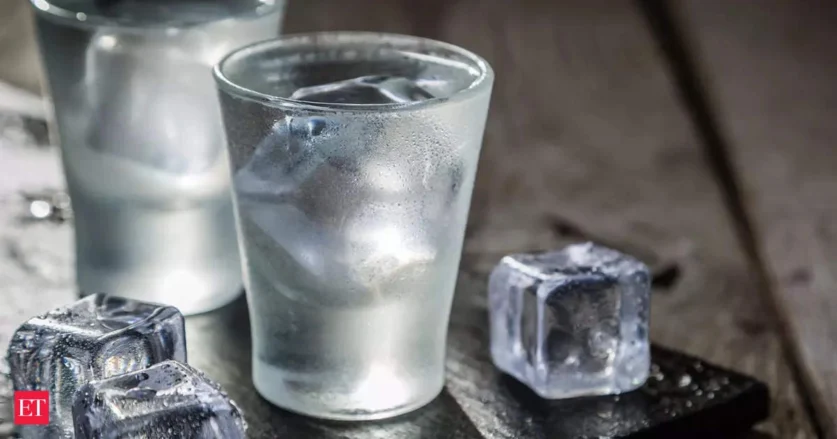
(Catch all the Business News, Breaking News, Exit Polls News, Election Results News Events and Latest News Updates on The Economic Times.)
Subscribe to The Economic Times Prime and read the ET ePaper online.
(Catch all the Business News, Breaking News, Exit Polls News, Election Results News Events and Latest News Updates on The Economic Times.)
Subscribe to The Economic Times Prime and read the ET ePaper online.
“`html
Will the RBI bring India’s gold back from London and Switzerland?
Is India the next global beauty retail destination?
Inside the unsettling chaos at the India-Myanmar border
One hit and some misses in Delhivery’s financials investors must know about
“`
The 1000% club: Stocks with eye-popping returns you may have missed
The Altornate: It took 25 years for this tall boy to topple its sibling
Top Pick: The Best Rum for Beginners to Try in 2024

In this article, we are going to discuss the no. 1 rum for beginners in 2024. If you want more options to take your first steps into the alluring world of rum, check out our full list of the 15 Best Rums for Beginners in 2024.
As we mentioned in our article – The Best Rum in 2024 – the global rum market was estimated at $17.4 billion in 2023 and is expected to reach $24.5 billion by 2033, with a CAGR of 3.5% during the forecast period.
Rum is building momentum and getting more popular in the U.S.A. Today, the category is one of the most steadily growing and continues to benefit from several intersecting popularity shifts. In recent years, distillers have experimented with flavored rums, making the category much more versatile in offerings, and so today, flavored and spiced offerings account for over 57% of all rums sold.
The growth of premium rum has also been reflected in the merger and acquisition space recently. It was announced last year that Brown-Forman Corporation had completed the acquisition of the Diplomático Rum brand and related assets from Destillers United Group S.L. (Spain), for an estimated $725 million. The spirits giant announced its agreement to purchase the brand in October 2022, giving it an entry into the growing super-premium rum category.
As part of the acquisition, Brown-Forman Corporation (NYSE:BF-B) expanded its operations by acquiring a Panama-based aging, bottling, and shipping production facility. Destillers United Group S.L. will maintain the production and aging of the uniquely crafted and complex Diplomático Rum at their original distillery located at the base of the Andes mountains.
At the close of Q1 2024, Brown-Forman Corporation (NYSE:BF-B) witnessed shares being held by 30 hedge funds. Fundsmith LLP emerged as the largest shareholder, possessing approximately 11.46 shares with a market value of $591.5 million.
Another prominent player in the rum market, Diageo plc (NYSE:DEo), also made headlines by completing the acquisition of the Don Papa Rum brand in 2023. The agreement included an initial payment of $276 million with an additional performance-based consideration up to $188.6 million projected through to 2028. Don Papa Small Batch Rum, a high-end dark rum from the Philippines, is currently available in over 30 nations worldwide.
Moreover, Diageo plc (NYSE:DEO) has been in the news for its innovative approach towards sustainable packaging, collaborating with PA Consulting and PulPac. They plan to trial a paper bottle for the Irish Cream Liqueur Baileys, primarily composed of mold dry fiber making up 90% of the material, supplemented with a thin plastic liner and a foil seal. Simultaneously, the company is also experimenting with a unique spiral-wound paper-based bottle for its Don o’Papa rum, currently undergoing feasibility tests and expected to comprise 90% paper-based material.
The stock of DEO was also held by 30 hedge funds at the end of Q1 2024 according to the Insider Monkey database, with a total stake value of approximately $634.21 million. Orbis Investment Management held the largest stake, with about 1.54 million shares worth $229.2 million.
Both Brown-Forman Corporation (NYSE:BF-B) and Diageo plc (NYSE:DEO) are listed among the Most Valuable Alcohol Companies in the World.
With that in mind, here are the Best Rums to Try for Your First Time.
For this article, we consulted several sources, including RumX, Master of Malt, Tasting Table, Reddit, and others to discover the Best Rums for Beginners. We identified the most frequently recommended rums across these platforms, assigning each a score for every recommendation, then added up the scores to rank the rums. In cases where multiple rums earned the same score, they were further ranked by the price of their 750 ml bottles before tax.</onds, and others to discover theBest Rums for Beginners. We identified the most frequently recommended rums across these platforms, assigning each a score for every recommendation, then added up the scores to rank the rums. In cases where multiple rums earned the same score, they were further ranked by the price of their 750 ml bottles before tax.
Insider Monkey Score: 16
A true expression of Master Blender Joy Spence’s passion, this single estate spirit is made from hand-selected, rare golden rums aged for a minimum of 12 years in the tropical climate of Jamaica. Smooth, robust, and woody – this superb blend reveals aromas of toasted oak, dried fruit, hazelnut, dark cocoa, molasses, orange peel, vanilla, and hints of coffee. Perfect for sipping or mixing into extraordinary cocktails, AE 12 Rare Casks is bottled at 43% ABV.
Appleton Estate, the oldest sugar estate and distillery in Jamaica, produces over 10 million liters of rum annually, 80% of which is destined to be exported.
To learn about other entry-level rums, you can refer to our list of the 15 Best Rums for Beginners in 2024.
At Insider Monkey, we explore various subjects from top rums to business insights; but our forte is pinpointing high-performing stocks. Presently, one of the most exciting areas is Artificial Intelligence (AI). For an AI stock that has more potential than NVDA and trades for less than five times its earnings, view our analysis on the cheapest AI stock.
READ NEXT: Michael Burry Is Selling These Stocks and A New Dawn Is Coming to US Stocks.
Disclosure: This content was originally released at Insider Monkey.
Fawn Weaver’s Bold $1.1 Billion Strategy to Shake Up the Whiskey Industry

Uncle Nearest is the fastest-growing whiskey in U.S. history, and founder and CEO Fawn Weaver has plans for the future that don’t include selling the valuable brand.
Fawn Weaver, at Uncle Nearest headquarters in Shelbyville, Tennessee.
Have you tried Uncle Nearest whiskey? I’m thrilled to share my latest magazine feature, all about this incredibly fast-growing business and its founder and CEO Fawn Weaver. After visiting Uncle Nearest’s distillery in Shelbyville, Tennessee, I began to fully grasp what Weaver has been building over the past seven years, and wow was I blown away.
Weaver’s entrepreneurial celebration of Nearest Green—the formerly enslaved first master distiller of Jack Daniel’s who Weaver calls “the best whiskey maker the world never knew”— has been a runaway success since it launched in 2017. Uncle Nearest is the fastest-growing whiskey in U.S. history—its sales have tripled since 2022—and the best-selling Black-founded and -led spirit of all time.
I go deep, explaining how Weaver has refined the playbook for how to build an independent spirits startup. She has shunned venture capital and private equity funding in favor of lots of smaller investments, structuring deals to maintain control of the company and ownership of the land.
“I don’t believe you own the brand unless you own the land. It’s special to us. But it’s also incredibly special to Black people,” Weaver told me. “Historically, we’ve done a lot of renting but not a lot of owning. A lot of being an ambassador and building other people’s stuff, but not a whole lot of building our own.”
Despite Weaver’s ban on institutional capital, investment bankers constantly reach out. Forbes conservatively estimates her business is worth $1.1 billion, and Weaver’s stake is valued at $470 million, which lands her on Forbes’ annual list of America’s Richest Self-Made Women for the first time.
Many spirits brands reach a level of scale and “just kind of peter out,” Goldman Sachs’ Jason Coppersmith, a top food and beverage banker, explained to me: “What Fawn and team have been able to do is bucking the trend,” says Coppersmith. “Uncle Nearest is a brand that’s getting a lot of attention for the exact right reasons.”
But Weaver says she will never sell. Her vision is bigger than that.
“I’ve stood my ground even when people were saying, ‘She has to have a number,’” Weaver explained. “They’ve thrown every number at me and gotten the same response—no. That’s what I’m most proud of.”
I can’t wait for you to dig into this inspiring story.
— Chloe Sorvino, Staff Writer
This is Forbes’ Fresh Take newsletter, delivered every Friday, updating you on revolutionary ideas transforming the future of food. To receive it in your inbox weekly, Sign up here.
Fawn Weaver has perfected the strategy for launching a successful spirits business.
Fawn Weaver established Uncle Nearest to commemorate the previously enslaved master distiller who taught Jack Daniel the craft of superb whiskey production. Seven years on, she leads the leading Black-owned liquor company, now valued at $1.1 billion, with bold visions for its expansion.
Uncle Nearest founder Fawn Weaver, artist Katy Perry, and ABC Supply Chairman Diane Hendricks.
Weaver and another alcohol industry pioneer, Merrilee Kick, join this year’s list. Four women from the food sector including The Wonderful Company’s Lynda Resnick, Panda Express’ Peggy Cherng, and Clif Bar’s Kit Crawford have also returned to the rankings.
Bird flu typically spreads among birds, but there have been recent instances among cattle, including a case where a Texas man contracted the virus from infected cows. Many experts are concerned about the potential for a new pandemic.
The frozen food line, dubbed Vital Pursuit, will feature a variety of nutrient-dense meal options priced at $4.99 and under.
Chinese ecommerce sites Shein and Temu ship the equivalent of 88 Boeing 777 freighters of cargo worldwide every day. Cyrus Farivar reports on their “continuous ‘thirst’ for air freight,” environmental cost, and lack of a maritime logistics solution as they supercharge their expansion into the U.S.
Thanks for reading the 112th edition of Forbes Fresh Take! Let me know what you think. Subscribe to Forbes Fresh Take here.
One Community. Many Voices. Create a free account to share your thoughts.
Our community is about connecting people through open and thoughtful conversations. We want our readers to share their views and exchange ideas and facts in a safe space.
In order to do so, please follow the posting rules in our site’s Terms of Service. We’ve summarized some of those key rules below. Simply put, keep it civil.
Your post will be rejected if we notice that it seems to contain:
User accounts will be blocked if we notice or believe that users are engaged in:
So, how can you be a power user?
Thanks for reading our community guidelines. Please read the full list of posting rules found in our site’s Terms of Service.
Celebrities Compete to Acquire the World’s Largest Vodka Bottle Unveiled at London Airport

The bottle stands at a towering height at London Stansted
Get the latest North East What’s On news delivered straight to your inbox – sign up for free email updates
Get the latest North East What’s On news delivered straight to your inbox – sign up for free email updates
We have more newsletters
This summer, the largest vodka bottle in the world, which holds an astonishing 259 litres of alcohol, is on display at a London airport, drawing the attention of vacationers. If you’re willing to spend £150,000, this colossal bottle could be yours.
Standing 6ft 8in tall and weighing 300kg, this massive bottle crafted by Au Vodka is situated in the international departure lounge at Stansted Airport, a perfect spot for Brits heading off in search of sunshine.
On Friday [May 24], the Guinness World Records officially recognized this as the largest vodka bottle anywhere, surpassing the previous record-holder which had a capacity of 200 litres.
An image depicts DJ and Au Vodka investor Charlie Sloth alongside a record adjudicator from Guinness World Records, both in front of an immense bottle.
Guinness World Records confirmed that the immense bottle maintained proportionality and used the same materials as a standard 70cl size bottle, declaring it a ‘fantastic achievement.’
The golden bottle resembles the standard products of Au Vodka, yet this massive version contains 350 times the alcohol of their normal 700ml bottle.
Arriving at Stansted Airport on May 24, the enormous bottle will stay there until June 24, when Charlie Sloth announces it will hit the market for an astounding £150,000.
Au Vodka has stated that several well-known personalities have shown interest in acquiring a bottle large enough that one could consume a 25ml shot daily for 28 years and still not empty it.
On May 17th, Au Vodka completed their measurement endeavor and subsequently submitted their results to the Guinness World Records.
Guinness World Records official Richard Stenning commented, “The Engineering and effort dedicated to securing this Guinness World Record title is remarkable.”
“Housing 259 liters of vodka is no small feat, and the craftsmanship of the bottle is meticulous.”
“To comply with our guidelines it is all to scale and using the same materials as the standard 70cl size bottle. I’d like to congratulate everyone involved in this fantastic achievement, please drink responsibly!”
The previous world record was reportedly held by Polish vodka brand Chopin to mark the 200th birthday of the composer the brand was named after.
Tom Smith, Sales Director UK and Ireland of Au Vodka, said: “This installation represents a milestone not just for AU Vodka but for the spirits industry as a whole.
“Given the success of Au Vodka in the UK and notably the vast growth in the travel retail market, we wanted to push boundaries and create an experience that resonates with consumers on a global scale, not only in the UK.”
Charlie Morgan, Managing Director at Au Vodka, remarked, “Our objective was to introduce a distinctive element to the beverage sector, transcending conventional marketing techniques.
“Presenting the World’s Largest Vodka Bottle at Stansted is not merely for show; it symbolizes the expansive vision of our brand and our desire to be distinctive in the international vodka arena.”
Stephen Martin, Retail Director at London Stansted, commented, “This is both an enjoyable and significant gesture from Au Vodka, and we are pleased with their ongoing success here at London Stansted.”
Aisha Dad, category manager at World Duty Free for Liquor, expressed, “We are thrilled to collaborate with AU on this groundbreaking achievement, and are committed to ongoing teamwork with the brand to bring unique and engaging events to our stores, enhancing our customers’ experiences and making their travel remarkable and unforgettable!”
Au Vodka has committed to providing travelers a 10% discount on their bottles purchased at duty free in Stansted.
A Thorough Analysis: The Implications of Water Costs on Beer Prices

Miss Mary MacNeil, residing above the White store near the waterfront, suffered a fall from the second-floor balcony into a cistern on Wednesday morning, resulting in a fractured right hip among other injuries.
The collapse of the balcony caused her to fall a considerable distance into the water below. A water barrel, which was also on the balcony, narrowly missed hitting her as it toppled down alongside the collapsing structure.
Witnessing the accident, nearby residents quickly came to her aid. She was subsequently transported to Petoskey hospital. Having spent the winter in Grand Rapids, Miss MacNeil had returned to her home just three weeks prior to the accident. She is 74 years old.
Beer enthusiasts in Northern Michigan are slated to enjoy a brief two to three week respite before facing increased prices on their preferred brews.
Starting Monday, the cost of boxed Budweiser, Strohs, and Pabst beers in Detroit will rise by 50 cents, impacting local consumers right away.
An inquiry at regional beverage outlets on Friday revealed that in the Petoskey area, residents might not see price increases on their beer until mid-June.
“Prices are not ascending here on Monday,” mentioned Jim Harris of Quality Beverage Co., “however, they are expected to rise later in the month.”
Harris attributed the price increase to the rising costs of cans (the cost for a case of empty beer cans increased by 8 cents last week), escalated grain expenses, and the repercussions of the 40-day Strohs strike that concluded last month.
A case of beer experienced a 30 cent price hike last November, and beer distributors anticipated an even larger increase.Hello, I need some assistance with my English assignment. Could you help me please?
“We were expecting a $1 increase per case last November,” commented Harris. Harris noted the recent price rise as “no surprise.”
When inquired whether the higher prices could impact beer consumption, Cleon Bailey from Petoskey Beverage acknowledged that it might.
“I’m sure it will affect the volume of sales,” stated Bailey.
Jim Harris at Quality Beverage thought there might be a temporary beer buying slowdown — but no lasting effects.
“It always hurts for two to three weeks,” Harris said. “But it doesn’t stay that way.”
This article originally appeared on The Petoskey News-Review: Reviewing the news: Water falls and beer prices
Discovering a Non-Chardonnay White Wine That’s Making Waves in Burgundy

Drone footage of a village in southern Burgundy.
On a warm June afternoon, Sylvain Pataille inspects a cluster of white grapes under the sun. He carefully examines the green-skinned fruit for development and signs of disease, declaring them good. This is a relief for him as he practices chemical-free farming. Feeling satisfied, he proceeds to the horse-plowed vineyard of La Charme Aux Prêtres to continue his assessment.
Pataille is a farmer who operates small organic and biodynamic vineyards in the commune of Marsannay-la-Côte, located within the larger Marsannay appellation in the northern part of the Côte de Nuits in Burgundy, France. Marsannay is known worldwide to wine enthusiasts for its affordable Chardonnay or Pinot Noir. However, for Pataille, it’s the captivating wines of old vine Aligoté Doré that keep him tied to this region.
“When I established the Domaine, I could only afford Gamay and Aligoté vines; they were difficult to sell and nobody wanted them,” Pataille tells Hemispheres. In a region known for its high prices, Pataille’s family didn’t own vineyards, so he bought what he could. In 2001, Pataille bottled his first Aligoté, pronounced “al-uh-GO-tay.”
Fast-forward two decades and his bet on “golden” Aligoté has paid off. This all-but-forgotten white grape, long shunned in favor of nobler Chardonnay, has found favor anew, both from sommeliers to open-minded drinkers seeking affordable alternatives in Burgundy.
The church of Saint-Germain de Fuissé.
Not all Aligoté is created equal, however. Blame for the wine’s poor reputation of the past falls on the ubiquitous “green Aligoté” or Aligoté Vert, a high-yielding modern clonal selection responsible for simple wines. Aligoté Doré, on the other hand, hardly bears a familial resemblance with its nervy, electric energy comparable to Riesling or Chenin Blanc.
“Sylvain was a catalyst in the popularity of Aligoté” says Paul Wasserman of Becky Wasserman & Co., the importer of Pataille’s wines. In 2013, Pataille called the Wasserman team to announce a “silly idea” recalls Paul. “I have these single-vineyard Aligotés that I make and age separately, but I blend them before bottling, and I think it is a shame’” Pataille told them. A shame because Aligoté evangelists believe in the grape’s capacity for transparency and expressiveness.
Pataille isn’t the only winemaker who cultivates Aligoté grapes separately by vineyard. A short 30-minute drive south from his location, beyond well-renowned Pinot Noir regions of Gevrey-Chambertin and Nuits-Saint-Georges, one would find Domaine Chanterêves. This winery is fondly nestled in Savigny-lès-Beaune, a little outside Beaune city in the lush landscapes of the Côte-d’Or. It’s run by a Franco-American couple, Tomoko Kuriyama and Guillaume Bott, who proudly produce five different Aligotés.
Kuriyama expresses her fondness for working with Aligoté, stating that it lends a distinct terroir definition to the wines. Other appealing characteristics include resilience to climate fluctuations and resistance to diseases.
Paul, an importer of the Chanterêves wines, gives his two cents regarding the charm of these wines. According to him, Kuriyama and Bott are crafting wines that align with their personal preferences, coincidentally hitting the right chords with both traditional Burgundy connoisseurs and the new-age natural wine enthusiasts.
90 minutes northwest from Chanterêves near Chablis, in a town called Courgis, Alice and Olivier De Moor passionately safeguard the environmental preservation of their vineyards. The fervor they display is often compared to a mother bear protecting her cubs. They are known for producing Aligotés with remarkable longevity, and they celebrate their bottled masterpieces with Olivier’s handcrafted labels. Recently, Olivier authored an open letter to the winemaking fraternity in Burgundy, highlighting a dire need for creating ecological passages to help shield the viticulture sector from the ravages of climate change.
Les Aligoteurs, a group of French producers devoted to Aligoté’s renaissance, shares the De Moor’s progressive ethos of organic farming and minimalist winemaking. The fact that Aligoté tolerates climate change due to its slower ripening and acid retention furthers their cause.
“There were always great Aligotés, but it took a sizeable group of them for the world to notice” says Wasserman of Les Aligoteurs. “Now Aligoté’s having a party, and everyone is invited” he says.
Vineyards in Chablis.
For an Aligoté Road Trip, Here’s Where to Stay
Dijon is a historical city that is a true architectural palimpsest, covering the spectrum from medieval to modern designs. One of the city’s central features is the five-star, 88-room Grand Hotel La Cloche, which is situated in the heart of the city.
Just nearby is Beaune, where the authentic Burgundian house, Hostellerie de Levernois, is situated. This Relais & Châteaux property is nestled within 14 acres of gardens and forest, offering 26 rooms and suites for guests. A visit allows for a leisurely stroll or bike ride post-lunch to enjoy signature dishes like garlic snails and parsley ham paired with Aligoté, courtesy of the Bistrot du Bord de l’Eau on-premises.
For a more contemporary experience, Chablis houses the design-forward Château de la Resle. This compact hotel houses just nine rooms and is known for encouraging guests to engage in discussions about climate change. The venue further demonstrates their commitment to environmental sustainability through the use of organic cleaning products and reducing the quantity of meat served in meals.
Join our community and encourage diverse voices by creating a free account to share your thoughts!
Our community is about connecting people through open and thoughtful conversations. We want our readers to share their views and exchange ideas and facts in a safe space.
In order to do so, please follow the posting rules in our site’s Terms of Service. We’ve summarized some of those key rules below. Simply put, keep it civil.
Your post will be rejected if we notice that it seems to contain:
User accounts will be blocked if we notice or believe that users are engaged in:
So, how can you be a power user?
Thanks for reading our community guidelines. Please read the full list of posting rules found in our site’s Terms of Service.
Ongoing Search for Missing Hillwalker on the Isle of Rum

Search efforts are continuing for missing hillwalker Mary Molloy on the Isle of Rum.
Members of Lochaber MRT, Glencoe Mountain Rescue Team, Cockermouth Mountain Rescue Team, Police Scotland Highland & Islands and Search & Rescue Dog Association (Scotland) have been deployed on the island by boat.
Meanwhile, Lochaber MRT, team members were dropped by helicopter into difficult terrain with the assistance of Coastguard Rescue 151 from Inverness.
Ms Molloy was last seen walking in the area between Trollabhal’ and ‘Bealach an Fhuarain’ around 2.30pm on Saturday, May 25. She was then in contact with family around 6.30pm but it is unknown where she was at that time.
READ MORE: Major search ongoing for woman, 68, reported missing on Isle of Rum
It’s thought Mary was trying to make her way back to the Dibidil area and may have become disorientated.
Mary is described as around 5ft 8in tall, of average build with long grey hair. When she was last seen she was wearing a turquoise waterproof jacket, red trousers, brown walking boots, blue hat and red gloves. She was also carrying a grey rucksack.
Inspector Graham Brown said: “Mary is a keen hillwalker but from what we’ve been told she may have become disorientated and failed to follow her planned route.
“We have specialist resources, including mountain rescue teams, helicopter and search dogs, in the area but we also need the public’s help with information.
“I’d appeal to anyone who was on Rum yesterday and thinks they may have seen someone matching her description to come forward. Also, anyone who may have known Mary’s intended route or areas she was keen to visit it urged to get in contact with us.”
Anyone with information should contact Police Scotland on 101 quoting reference 3149 of 25 May.
The aim was to create a safe platform for informed discussion, a place where readers could engage in heated debates revolving around the most significant stories of the day. Unfortunately, quite a few websites have seen their comment sections become the battleground for off-topic discussions and abuse.
heraldscotland.com is addressing this issue by allowing only its subscribed readers to comment.
In an effort to enhance the experience for our devoted readers, this initiative intends to decrease the influence of trolls and troublemakers – those who exploit our platform to abuse our journalists and readers. We hope that this move will facilitate the comment section to live up to its potential as a vital part of Scotland’s internal dialogue.
We consider ourselves fortunate at The Herald. We are favoured by a sophisticated and knowledgeable readership who contribute their wisdom and insights to our stories.
That is invaluable.
We are making the subscriber-only change to support our valued readers, who tell us they don’t want the site cluttered up with irrelevant comments, untruths and abuse.
In the past, the journalist’s job was to collect and distribute information to the audience. Technology means that readers can shape a discussion. We look forward to hearing from you on heraldscotland.com
Readers’ comments: You are personally liable for the content of any comments you upload to this website, so please act responsibly. We do not pre-moderate or monitor readers’ comments appearing on our websites, but we do post-moderate in response to complaints we receive or otherwise when a potential problem comes to our attention. You can make a complaint by using the ‘report this post’ link. We may then apply our discretion under the user terms to amend or delete comments.
Post moderation is undertaken full-time 9am-6pm on weekdays, and on a part-time basis outwith those hours.
Sawyer’s Whiskey Bandits Bar Set to Reopen with a New Liquor License

by: Kyara Brown
Posted: May 29, 2024 / 09:43 PM CDT
Updated: May 29, 2024 / 09:43 PM CDT
SAWYER, ND (KXNET) — A local bar is getting its liquor license back after it was suspended for having 17 minors inside.
The Whiskey Bandits Bar’s new license received approval from the Sawyer City Council members during a special meeting on Wednesday, however, it came with certain conditions.
The bar’s previous owner, Cynthia Ellis, admitted her guilt recently in allowing underage individuals into her liquor establishment. The Sheriff’s Department stated that the violation took place in March and involved a total of 17 minors present at the bar, with 15 of them consuming alcohol.
Subsequent to the incident, the bar’s liquor license was suspended and the establishment has remained closed until now.
The liquor license and LLC have now been transferred into the names of Ellis’ daughter and her husband, who were given the go-ahead for a new license on Wednesday. In accordance with city ordinance, Ellis is no longer permitted to have a liquor license in her name, however, she maintains ownership of the bar building itself.
Ellis confesses that she depended on a newly recruited bar worker to inspect ID’s that evening, which the employee neglected to do, leading to minors obtaining access with fake ID’s.
Looking ahead, their strategy will be to implement the use of an ID card scanner and to carry out a rigorous check on every individual at the entrance. Ellis holds the view that under-age drinking is a rampant problem that urgently warrants attention.
In spite of this occurrence, she expresses relief that no one was injured then and is eager to proceed onwards.
“I am aware of several measures we are going to enforce to ensure such an event never replays,” stated Ellis. “I am relieved that my bar is commencing operations again. My husband and daughter have stepped in, they are being considered on the liquor license. I am still present at the building and ready to generate fun times again. I am buoyant about the future, eager to resume operations.”
According to Ellis, the Whiskey Bandits bar is expected to reopen sometime in June.
Thanks for signing up!
Watch for us in your inbox.
Subscribe Now
Copyright 2024 Nexstar Media Inc. All rights reserved. This material may not be published, broadcast, rewritten, or redistributed.
The purpose of Father’s Day is to cherish the father figures in your life. This compilation proposes simple but practical gift alternatives that they will cherish.
Regardless if you’re aspiring to add a bit of scent to your daily endeavors or wish to use for special moments, a delightful bottle of cologne can meet the requirement.
If you possess excess items but wouldn’t want your children to be burdened with it post your demise, Swedish death cleaning could be the solution! Here’s all you need.
Ultimate Guide: How to Experience NOWFE with Giant Wine Tastings, Restaurant Parties, and Unlimited Rosé

Champagne is often a highlight at tastings, such as those featured during the New Orleans Food & Wine Experience, also known as NOWFE.
Wine is not only served alongside food to enhance its flavour, but it can also reflect an individual’s mood or the setting of an event. For example, Champagne is often associated with joyous celebrations. As my wine knowledge has developed through a mix of both formal and informal tastings, I found that different types of wine can be paired accordingly with each season.
As we navigate the sultry summer season, the timing of the New Orleans Wine and Food Experience couldn’t be more suitable.
The Grand Tasting is the most significant event during the New Orleans Food & Wine Experience, which offers a variety of self-guided wine tastings as part of the festival’s programme.
The annual wine festival is now scheduled for early June, taking place from June 4-9 this year. The timing is designed to help local restaurant and hospitality businesses during the typically slower season.
Personally, it’s also an opportunity for me to discover the wines that will accompany me throughout the summer.
Vinola is an upscale wine tasting event, which is part of the Orleans Food & Wine Experience (NOWFE) festival program.
NOWFE offers a variety of experiences, and there are numerous ways to engage in it, including wine dinners and wine-focused workshops and activities. Also, new events have been added this year such as a Champagne launch party and an Italian dinner on Sunday to conclude the festival week.
Noteworthy facets of this experience include large, independent wine tastings in three unique formats – the Grand Tasting, the grandest one; Vinola, a sampling of premium wines; and the Tournament of Rosés, an entire evening dedicated to rosé wine only.
The Tournament of Rosés is now an event held on the central stage on Fridays at the New Orleans Wine & Food Experience.
No matter which format you choose, a vast selection of wines, way more than anyone could possibly taste, awaits you. Thus, it’s crucial to devise a strategy. Mine has always been to focus on a specific genre or style of wine best suited for the time of year. Sometimes, it could be Italian white wines exploring the infinite varieties from that country, or perhaps French reds, which are perfect when slightly cool.
Winemakers and distributors serve from hundreds of bottles of wine at the New Orleans Food & Wine Experience at the Ernest N. Morial Convention Center.
Credit: NOLA.com | The Times-Picayune
But there’s more than just wine tastings to experience. Below, I’ve highlighted several other ways to engage with NOWFE. Keep in mind that the event offers both individual tickets and various tiered packages. Take a look at the NOWFE website for further details on ticketing information.
One such location of interest is the courtyard at Brennan’s Restaurant located at 417 Royal St.
The NOWFE Kick-Off Celebration starts on Tuesday, June 4, from 5:30 p.m. to 7:30 p.m. at Brennan’s Restaurant.
Expect Brennan’s courtyard and Rooster Bar to be a hub of sparkling wine activity as the event kicks off. The party features a Champagne tasting and a ‘saberage’—a fancy term for opening Champagne bottles with a saber blade. Also, enjoy an oyster bar and appetizers, with the option to learn saberage. Tickets cost $119, with additional saberage lessons for $150.
Vinola, Thursday, June 6, 6 p.m. to 8:30 p.m., Orpheum Theater
The Orpheum Theater in all its Beaux Arts beauty is again the venue for Vinola, and this year, its stunning Double Dealer speakeasy-style subterranean bar is the VIP lounge.
Vinola is a higher-end wine tasting that’s part of the Orleans Food & Wine Experience (NOWFE) schedule of festival events.
If you want to taste wine like a pro, Vinola is for you. This higher-end tasting has wines carrying heftier retail prices, the type you’re far less likely to encounter at consumer-oriented tastings. Local restaurants offer dishes between the wine tables.
Tickets are $215 for general admission; $280 VIP (early admission and special lounge access).
Tournament of Rosés, June 7, 7 p.m. to 9 p.m., Generations Hall
The Tournament of Rosés is a evening devoted to the delightful pink wine as part of the Orleans Food & Wine Experience (NOWFE) schedule of festival events.
Rosé can come in countless styles from different grapes and regions. At NOWFE, you can taste through its varieties and versatility at this night dedicated to the pink wine.
The Tournament of Rosés is an evening event that features the lovely pink wine as a central part of the Orleans Food & Wine Experience (NOWFE) program of festival functions.
Expect a bar dedicated to sparkling wines (rosé included), a cocktail bar, food offered by local eateries, a VIP lounge, DJs and the usual abundance of pink attires reflecting the festive mood of New Orleans people. The entry tickets are priced at $129, whereas VIP access is for $195 (with the entry time for VIP being 6:30 p.m.).
Customers revel in the night at the New Orleans Food & Wine Experience, which returns its Grand Tasting to the Ernest N. Morial Convention Center this year. Picture by Michael DeMocker, NOLA.com | The Times-Picayune.
Grand Tasting, scheduled for Saturday, June 8, from 3 p.m. to 6 p.m., at the Ernest N. Morial Convention Center.
The largest event at NOWFE has been condensed into a single day, but it’s returning to the Great Hall of the convention center. This signifies that all the participating eateries will be in one place for food tasting and matching.
The Tournament of Rosés will feature a variety of wines from across the globe, and it has now been scheduled as a main Friday event at the New Orleans Wine & Food Experience.
One all-access ticket grants the holder the opportunity to sample hundreds of unique wines, accompanied by a wide range of small plate dishes from local restaurants. Regular tickets are available for $149, while VIP tickets (which include early entry at 2:30 p.m.) cost $215.
The Labs and Experiences event will be held at various locations on June 7-8.
Wine enthusiasts have the opportunity to engage with winemakers and representatives directly at the New Orleans Food & Wine Experience (NOWFE) events, sampling numerous wines in the process.
NOWFE’s labs are wine-based educational seminars, generally characterized by an enjoyable nature (most likely due to the wine involved). Simultaneously, its “experiences” are devised with the intention of providing amusement primarily, with a sprinkle of enlightenment along with added servings of wine.
A selection of dessert wines paired with sweets is a part of the instructional event at NOWFE.
These seminars take place at the Marriott Warehouse Arts District Hotel, with a variety of subjects such as wine blending, the impact of selection of glassware on the taste of the wine, and the intricacies of pétillant naturel wines – the “pét-nats” often spotted at speciality wine stores.
Various restaurants and venues host exciting experiences. This year, an outdoor wine party will be on offer at Bacchanal, featuring South American food from chefs Joaquin Rodas, Alfredo Nogueira and Wilfredo Avelar.
Bacchanal in New Orleans, a hotspot for food and wine enthusiasts in the Bywater, is a place where people love dining outside. The Times-Picayune credited the photo to Sophia Germer of NOLA.com.
A new restaurant in town will be hosting its own tapas and tempranillo party. Guests at Galatoire’s can also look forward to a sampling of its classic dishes paired with wine. Current Crop Roasting Shop will be organizing coffee roasting classes, and a pastry pairing. Reginelli’s is conducting a pizza making workshop. At Picnic Provisions & Whiskey, patrons can learn the art of mixing an old-fashioned cocktail at an expert class which culminates in a family-style fried chicken feast. Visit the event page to check for timing and ticket costs.
Restaurant Wine Dinners will take place on June 5, at various locations
Wine dinners at local restaurants paired with visiting vintners and wineries are always part of the New Orleans Wine & Food Experience.
The night is the same, but the way NOWFE’s wine dinners play out will be as varied as the host restaurants themselves. As usual, each is paired with a visiting winery for a close look at the label’s offerings.
They range from premium venues like Restaurant August and the Grill Room, to community restaurants that modify their strategies for this exclusive event, such as Junior’s on Harrison. Details, menus, and reservation links can be found at nowfe.com.
Burlesque, Bubbly & Brunch, happening on June 9, 11 a.m., at the Omni Royal Orleans.
Burlesque, Bubbly and Brunch draws the New Orleans Food & Wine Experience to a close every year, marking one of the primary events of NOWFE.
Once the Grand Tasting wraps up on Saturday, a lively Sunday brunch in true New Orleans style awaits, complete with unlimited sparkling wine, a glitter bar, and burlesque performances put on by Trixie Minx Productions. One can have this exciting experience for just $95.
Downtown New Orleans houses Gianna, an Italian dining spot, which is a venture of the Link Restaurant Group led by Rebecca Wilcomb.
Sunday Supper, arriving on June 9, 5 p.m., at Gianna
New on the schedule this year, Donald Link’s Italian restaurant Gianna will serve a family-style, four course dinner with wine pairings, led by Gianna chef Jared Heider and Ann Kim, executive chef of the Garden & Gun Club in Atlanta. Tickets at $120.
Follow Where NOLA Eats on Instagram at @wherenolaeats, join the Where NOLA Eats Facebook group and subscribe to the free Where NOLA Eats biweekly newsletter here.
Email Ian McNulty at imcnulty@theadvocate.com.
{{description}}
Email notifications are only sent once a day, and only if there are new matching items.