Mother Reveals Riley Strain’s Complaint About Bad-Tasting Rum & Coke on the Night of His Disappearance

More than a month after her son’s disappearance during night out drinking in Nashville sparked a desperate two week search for him, a Missouri mother says he texted her that night and said his drink “didn’t taste good.”
Michelle Whiteid didn’t say what time that text exchange happened, nor did she say whether she’d shared the information with police. But she told NewsNation’s Brian Entin it made her suspicious.
Riley Strain’s mom says he texted her before disappearing that his rum and coke did “not taste good.” It’s one of the new parts of our interview airing tonight on NewsNation at 10pmET. Also — why Riley’s family is very disappointed in his fraternity. All of it at 10. pic.twitter.com/jSwK98ba6l
— Brian Entin (@BrianEntin) April 16, 2024
“Maybe there was something in it that shouldn’t have been,” she said.
Whiteid said her son told her the rum and coke “tastes like barbecue.”
“And I said, ‘Well, you probably shouldn’t drink it then,’” she said “And he goes, ‘It tastes like barbecue’ and I go, ‘Well, that sounds awful’ and he said, ‘It sounds good, but it’s not.’”
Authorities in Nashville are still awaiting toxicology reports from the autopsy on Riley Strain’s body, which resurfaced in the Cumberland River eight miles from where he was last known to be two weeks after his March 8 disappearance, as CrimeOnline reported. Strain and a group of his University of Missouri fraternity brothers were in Nashville for a conference, and they headed out drinking that night.
Upon arriving by bus, they checked into The Tempo Hotel, not far from the nightlife, according to E! Online. They visited Casa Rosa, a bar owned by country music star Miranda Lambert, before heading to Garth Brooks’ Friends in Low Places Bar & Honky Tonk. Around 7:30 p.m, Strain spoke to his mother via Facetime, continuing the conversation through text for roughly an hour afterwards.
Next, the party proceeded to Luke’s 32 Bridge, owned by another country star, Luke Bryan. The bar reported that he consumed one alcoholic drink and two waters before being escorted off the property due to an unspecified breach of their behaviour policy around 9:30 p.m. Security footage showed him being led out, accompanied down the stairs by one of his fraternity brothers, who then returned to the rest of the group upstairs.
Strain’s stepfather, Chris Whiteid, stated that Strain had informed some fraternity brothers that he was “walking back to my hotel.”
“They didn’t think anything about it,” he commented.
Caught on security cameras and a police body cam was Strain, seen initially traversing a parking zone and moving away from his accommodation. Footage from another camera showcased him unsteadily moving across First Avenue North, approximately ten minutes prior to 10 in the night. Engaged in a burglary investigation near the river, a policeman had a short interaction with Strain as he passed. There were no signs of any issues.
The final signal from Strain’s mobile was recorded close to the James Robertson Parkway Bridge above the river, roughly an hour afterwards.
Strain’s acquaintances reported to his parents that they started searching him after returning to the hotel and finding him absent but only informed the police about his disappearance on the following day. Following this, the search operations kicked off. The law enforcement found the recorded videos, recovered Strain’s credit card near the river, and there was no further development until March 22, when an employee working downriver came across a body floating in the water.
The body was identified as Riley Strain. His trousers were missing, something not uncommon for individuals who have been submerged in water for weeks, thus his wallet was not found either. At the time of body recovery, the police stated that the location and time of the discovery were as anticipated.
An autopsy was conducted the next day, and police stated that till now, all the evidence suggested an accident without any instances of foul play. The parents arranged for a second autopsy, which confirmed the same findings. The toxicology results for both autopsies are currently awaited.
In the previous week, a witness surfaced claiming to have seen and spoken to Strain on the night of the incident. However, post a conversation with the police, the witness retracted their statement, asserting that they had mistaken Strain for someone else.
To stay updated with the latest news in true crime and justice, subscribe to the ‘Crime Stories with Nancy Grace’ podcast.
[Image representation: Riley Strain/family handout]
Master the Art of Making Carbone’s Iconic Spicy Rigatoni Vodka Pasta
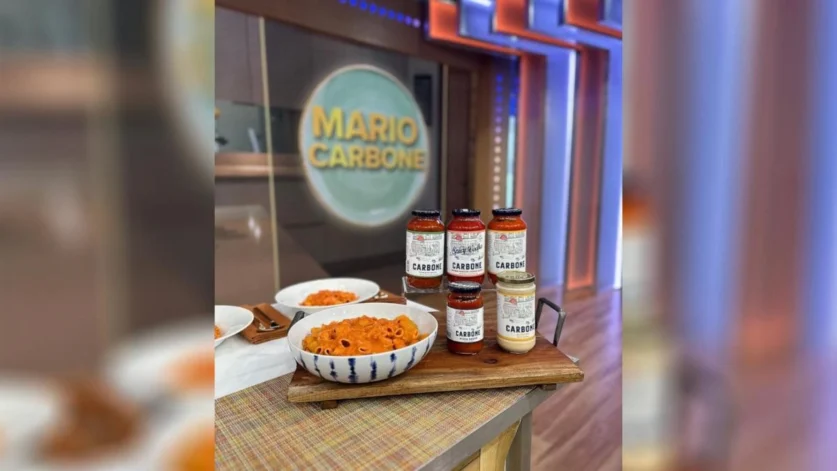
Carbone is one of the hottest see-and-be-seen spots across the country.
Known for their fun vibes and delicious food and with locations in New York, Las Vegas, and Miami, you can count on each of their locations being booked and busy every night of the week.
MORE: Chef Mario Carbone makes his Orecchiette Vito recipe
Chef Mario Carbone dropped by “GMA3” recently to share the crowd-favorite spicy rigatoni vodka recipe.
Ingredients:
16 oz. mezzi rigatoni
24 oz. jar of Carbone Spicy Vodka Sauce
1 cup heavy cream
2 tsp. unsalted butter
Directions:
Bring salted water to a boil in a large pot and cook pasta according to package directions or until al dente.
Meanwhile, in a medium saucepan, combine the Carbone Spicy Vodka sauce with heavy cream. Bring to a simmer over medium-low heat.
Once the pasta is cooked, add the cooked, drained pasta to the saucepan. And toss to coat.
Add the butter and stir everything to mix together. Heat for an additional two minutes.
Taste and adjust seasoning with kosher salt.
Plate, serve and enjoy!
Learn to make the iconic Carbone spicy rigatoni vodka pasta originally appeared on goodmorningamerica.com
Horrific Assault on Teen Runaways by Wichita Man Involving Forced Intoxication

A 57-year-old man from Wichita has been sentenced to 22 years, 10 months in prison for sexual assault of two underage girls who had run away in 2020, as reported by the Sedgwick County District Attorney’s Office.
The court records detail that despite knowing the girls’ minor status, Donald L. Baker allegedly forced them to consume vodka, smoke marijuana and use cocaine. The man also provided them with money subsequent to the assault.
In May 2020, the two girls, both 14 years old then, had escaped from a temporary group home placement in northern Wichita. The records indicate that Baker approached them in a yellow box truck while they were on foot around 10th and Indiana, close to Washington.
A press release from the Sedgwick County District Attorney’s Office stated “Baker told the girls he would take care of them”.
He utilized his resources to procure substances such as narcotics, alcohol, and cigarettes, which were subsequently transported to his residence. It was in this setting that the sexual offenses occurred, as stated in the press release.
As indicated in the legal documents, which provide a summary of the testimonies depicting the attacks, the juveniles were unacquainted with Baker at the time of their encounter, during which he offered them a place to stay.
The testimony further explains that subsequent to Baker convincing the juveniles to accompany him, he coerced them into consuming vodka. In addition, he provided one of the juveniles with a pipe and a substance known as cocaine, albeit he referred to it as “white weed,” and instructed her to smoke it.
Post supplying the juvenile with the aforementioned substances, he commenced his series of sexual accosts upon her.
The girl testified that she bit Baker to halt the attack.
When Baker took the other girl into a bedroom at his house to assault her, too, she smashed a glass to try to stop him, court records say.
The next morning, Baker gave the girls two $20 bills and dropped them off in the same location where he found them.
At least one of the girls needed medical care after the ordeal to treat injuries and gonorrhea, which she contracted from Baker, the records summarizing the testimony say.
During the authorities’ interview with Baker post-assault, he claimed to be inebriated, shared about other people having intimate relations in his house, and expressed belief that he was being framed, especially by covetous family members. Nonetheless, he subsequently conceded picking up the girls; however, he refuted allegations of sexual assault or drug force-feeding, as court records depict.
In the course of inspecting Baker’s premises, law enforcement officers recovered marijuana, cocaine and various vodka bottles.
David Dahl, a District Judge of Sedgwick County, found Baker guilty of multiple crimes during a bench trial the previous year. The District Attorney’s press release informs that Baker was convicted on two aggravated indecent liberties with a child counts, criminal sodomy and supplying a minor with alcohol.
Judge Dahl declared the 274-month prison sentencing on Friday. In the process, he rejected a petition from Baker’s defense seeking probation, or at most, an imprisonment term not exceeding 136 months on grounds that it was Baker’s debut sex offense conviction and he had contested his guilt throughout the proceedings.
Baker will be subject to post-release supervision and must register as a sex offender for the rest of his life once he is released from prison, the DA’s news release says.
Abuse charges and a fatal shooting: Stepfather-now-husband accused in Wichita woman’s death
Man who preyed on teen girls while working at Wichita school gets prison sentence
Wichita man ordered to serve at least 100 years in prison for sexually abusing girls
Wichita man who kidnapped, choked, raped girl in Riverside park gets life sentence
Unleashing Divine Flavors with Wine Decanters: Enhance Your Wine’s Taste Today!
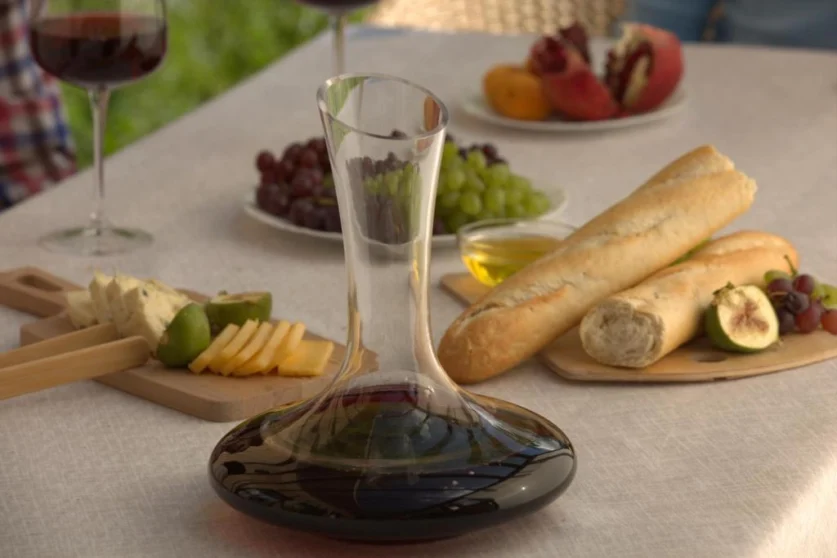
If you are a wine enthusiast, it’s likely that a wine decanter is present in your home. However, you may have been using it merely as a display piece without fully utilizing its potential. The following information may inspire you to make the decanter an integral part of your regular wine enjoyment.
Decanter usage guidelines
Describing the significance of decanting requires mentioning two primary reasons, though their order of importance is subject to debate:
Decanting works to separate the wine from the sediment. The natural sedimentation process that occurs during wine fermentation and aging may result in residue in the wine. Although harmless, this sediment can produce an unpleasant bitter taste in the wine. Hence, it’s vital to pour the wine cautiously into the decanter to prevent the sediment from being transferred as well.
Decanting amplifies the attributes of wine. Aeration not only gets rid of undesirable smells but also mellows the tannins and merges the varied tastes and faint fragrances that contribute to equilibrium and intricacy. These traits may not have been activated unless the wine was decanted. The period of decanting a wine does not have a set rule. However, older red wines, around 15 to 20 years aged, should typically be decanted for a duration between 30 minutes to an hour. On the other hand, young, tannic full-bodied reds need about two to three hours. Light reds like Gamay and Pinot Noir, along with light-bodied white wines, may enhance within 20 to 30 minutes. For wines that demand more than 30 minutes, sampling every half an hour is advised to prevent over oxidization.
The dimension of the decanter has significance. They are available in assorted forms and sizes. Separate decanters should be employed for different types of grapes. For instance, full-bodied reds like Cabernet Sauvignon, Nebbiolo and Petite Sirah are best suited with larger decanters since it provides greater exposure to oxygen.
Weighing convenience against durability, decanters are generally manufactured from two kinds of glass – crystal and standard. Conventional glass decanters usually have plain designs and thicker glass, while crystal ones are normally larger with modern styles. Although simple glass decanters are easier to clean, the ones made from crystal are more durable. However, both cannot survive a fall.
Advice on Decanting
If you have a special bottle of wine to decant, planning ahead is especially crucial if the wine has been laid flat. Leaving the bottle to stand upright for a period of one to two days will let all the sediment settle at the bottom before decanting.
When pouring the wine into the decanter, sustain a steady flow and angle the bottle at 45 degrees. Pay attention to any sediment that may approach the neck of the bottle. If this occurs, straighten the bottle and resume decanting slower than before. A helpful technique to detect sediment movement is using a backlit candle or any light source behind the bottle.
It’s advisable to stop pouring once a half to three-quarters of an inch of sediment remains in the bottle to ensure the best taste.
For anyone in need of a decanter, there’s a wide range of designs available.
Mallard Duck
This duck-shaped decanter features a top handle that keeps the surfaces fingerprint free. The wine also won’t warm from your hands, separated by the handle from the vessel while pouring. Truebrands, $44, amazon.com.
Veloce
A new design with casual dining in mind from Riedel, the Veloce can be used for a variety of red and white wines. $55, riedel.com.
Le Chateau
Conceived for the aeration of red wine, this crystal decanter’s uncomplicated design ensures it fits in seamlessly at both casual and sophisticated gatherings. Find it at Le Chateau for $45.
Mosel
Viewed as one of Riedel’s more customary shapes, this easy-to-operate decanter is suitable for both youthful and mature wines, can accommodate up to a magnum of wine, and is designed to withstand dishwasher cleaning. Check it out on Riedel for $99.
Eve
Named after Eva Riedel, every decanter is handblown, designed to aerate young, robust wines. $725, riedel.com.
Decanting the decanter
Recently, I had the chance to converse with Georg Josef Riedel, the tenth-generation proprietor of Riedel Glass Company, about how decanters enhance the flavor of wine.
First, when and why did Riedel decide to make wine decanters?
Riedel pioneered and has been making decanters in Austria since 1957. The main reason was simple; decanters are an essential part of the wine service, and we saw them as an extension of our concept of wine-friendly glassware. We have continued to innovate our decanter offerings every year.
Does Riedel follow a protocol in making new decanters?
Riedel’s glassmakers are the ones who develop our decanters through a rigorous process of trial and error. The most skilled artisans in our company are tasked with bringing to life the inspirations of my son Maximilian or myself – representatives of the 11th generation of our family-run business. These recent years have brought more unique and complex designs forward, emphasizing fun, practicality, and creativity. We create decanters that break from the traditional, expected designs on the market. Our commitment to high standards, originality, innovative thinking, and a freehand approach is what truly sets us apart in the industry.
What are things people may not know about using a decanter?
Some people might be intimidated to use a decanter because they fear it is difficult to wash or because they simply do not know how to clean it. It is actually very simple. The process includes an initial rinse and overnight soak in warm, distilled water, followed by a gentle hand wash with soap on the outside of the decanter only. It is important to always use distilled water, which helps to avoid water stains. Following the handwash, the outside of the decanter can be gently dried and polished using microfiber cloths. For an additional tip to avoid water stains, you can simply run your hair dryer over the vessel to complete the drying process. We provide clear instructions on how to clean decanters on our website.
There is not a single wine which would not improve with decanting. Decanting makes wine softer and rounder. If a softer perception is something the consumer would like to achieve with their wine, decanting should always be a key step in their wine service.
Overall, what is your favorite Riedel decanter and why?
My favorite Riedel decanter is our Eve decanter because it is truly unique. It is a more advanced decanter and requires the user to thoroughly understand the art of decanting. The Eve’s functionality allows it to ‘double decant’ the wine, making it perfect for young and fuller-bodied wines. This decanter is a true show piece, and it turns serving wine into a theatrical performance.
Peg San Felippo is a certified sommelier who served as a judge at the recent Los Angeles Invitational Wine & Spirit Challenge, the annual American Fine Wine Competition, South Florida’s home-grown national wine event; and THE Rosé Competition.
Your input doesn’t include any narrative to rewrite or HTML elements to strip. Could you please provide an appropriate HTML content?
The Unforeseen Popularity of a Whiskey Born from an Intentional Mistake
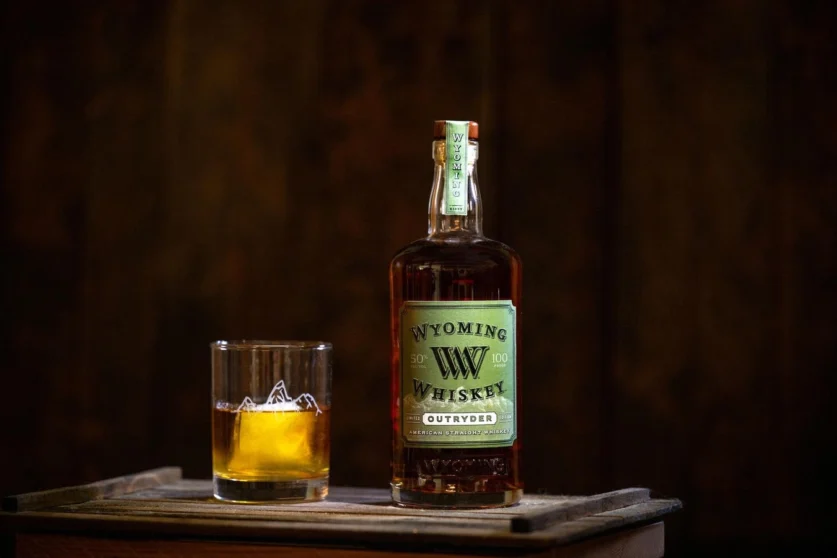
The current release of Outryder is available now, and the new iteration will be released in June.
A distiller’s intense dislike of rye and his purposeful mistake and inability to follow directions led to a completely different whiskey.
Wyoming Whiskey co-founder, David DeFazio wanted to expand the brand’s lineup to include a rye so he asked the distillery’s then-distiller Steve Nally to develop one.
Nally, who didn’t like rye at all, expressed reluctance in developing one, telling DeFazio straight up “No, I don’t want to make rye.” But DeFazio kept talking with Nally, encouraging him to reconsider. Finally, after a year of badgering, Nally acquiesed, and in late 2011, 100 barrels of Nally’s “rye” and 200 barrels of bourbon made with rye were laid to rest. “He finally agreed to make it,” DeFazio says.
Nally, an inductee of the Bourbon Hall of Fame and a master distiller, eventually left the distillery to return to his family in Kentucky and embark on other ventures, such as the Bardstown Bourbon Company.
By 2016, the barrels that Nally had set down were finally prepared to be bottled. However, the new distiller of Wyoming Whiskey, Sam Mead, examined the whiskey’s composition and found a discrepancy. DeFazio recalls, “He alerted me that the rye whiskey produced by Nally was only 48 percent rye, which legally precluded it from being designated as rye. The discovery left our team in shock, so I decided to reach out to Nally for an explanation.”
“I confronted him by saying ‘The rye you’ve created truly stands out, but why did you only use 48 percent rye in the mashbill?’” DeFazio shares.
“In response, Nally reminded me, ‘I told you, I had no intention of making a rye.’ I could detect a sense of smugness in his voice,” says DeFazio.
“It wasn’t rye at all, but it was delicious,” DeFazio says.
Since it legally couldn’t be called rye, the distillery had to come up with a different name. “It’s in a complete category of its own,” DeFazio says.
So, the team at Wyoming Whiskey decided to name it Outryder. The “RY” the name is a nod to the 48 percent rye mashbill. “Outryder is a truly singular whiskey, distinct and different,” DeFazio says.
Outryder’s name also references the brand’s rich ranching history, as the brand’s other two co-founders, Brad and Kate Mead, are fourth generation ranchers. In horseman terms, the outrider stands apart, securing the herd’s flank, preventing cattle or pricey thoroughbreds from straying.
“In a similar vein, Outryder by Wyoming Whiskey has carved a unique identity, presenting a flavor profile unparalleled in the American whiskey spectrum,” DeFazio remarks. He further elucidates that this whiskey can be enjoyed both neat or blended in cocktails.
Outryder has previously been released six times, eliciting considerable expectation for its upcoming seventh launch in this June, available at $84.99 per bottle.
“Outryder isn’t exactly a bourbon or a rye. Rather, it’s an intertwined assembly of two divergent mashbills,” he explains. “The spirit was a fortuitous development, offering an engaging high rye and high corn composition that has managed to win many palates.”
Beer Nut: The Story of Two Exceptional Czech Pilsners from Easthampton
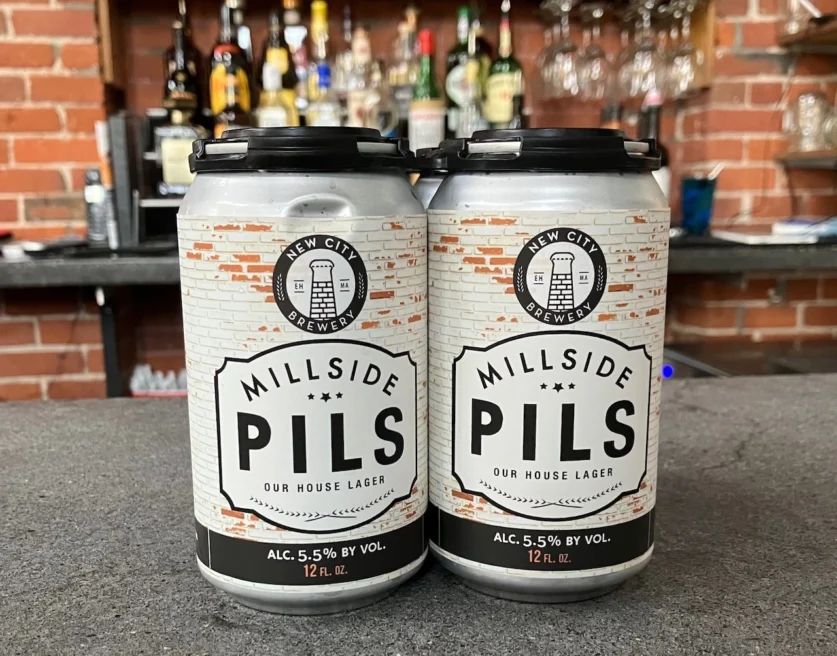
Millside Pils by New City Brewing in Easthampton. Submitted
With any luck, the wintery spring weather is behind us. We’ve had a handful of lovely days after the snow earlier this month, and while the rain has been insistent, consistent warm weather is certainly nigh.
For beer fans, of course, this means shifting the balance between beer styles from heavier and darker brews to lighter and crisper beers. Of course we can still enjoy stouts and double IPAs, but spring always makes me gravitate to refreshing lagers.
I recently had two such animals in neighboring Easthampton breweries: New City Brewing’s Millside Pils and Abandoned Building Brewing’s Curbside Pilsner. Both are excellent and offer slightly different takes on the style.
Millside Pils is a Czech pilsner that sits at 5% ABV. The brew was initially a small batch version of the brewery’s house lager, but it looks like it has maintained its place, which is commendable.
The beer exhibits a lovely golden hue with an orange tinge around the edges when poured. It leaves a delicate and short-lived lacing on the glass as you drink it.
The flavor profile begins with a rounded dollop of malt deliciousness, which strikes a balance somewhere between a doughy biscuit cracker and a soda cracker. There’s a hint of fresh bread that appears as the flavor unfolds. As the beer warms in your mouth, a subdued whiff of honey delicately arises, but it’s subdued enough to keep it from being overly sweet.
The finish is quite classic: sharp and mostly dry, with a lingering tartness on the tongue. This characteristic is likely due to the combination of Amarillo and Citra hops used.
While New City’s flagship is its Ginger Beer, Millside Pils could easily be considered a worthy rival. It’s a perfect afternoon brew for sunny summer days.
About 200 yards down the parking lot, Abandoned Building serves up an equally delicious take on the Czech pilsner style with Curbside. The beer pours a clean golden color that also leaves a light lacing on the glass that doesn’t linger.
The malt structure here is more bready and understated than Millside, but also offers a nice complexity with tasty cereal notes coming to the fore as the beer warms. The hops offer a balanced bitterness and a bit of spice, and they bring the beer to a satisfying dry finish with a hint of citrus.
Both these brews are worth trying, with Millside offering a slightly sweeter flavor profile and Curbside having a more standard Czech pilsner construction. And another great thing is that you can try them back-to-back with just a three-minute stroll between the venues.
If you purchase a product or register for an account through a link on our site, we may receive compensation. By using this site, you consent to our User Agreement and agree that your clicks, interactions, and personal information may be collected, recorded, and/or stored by us and social media and other third-party partners in accordance with our Privacy Policy.
Incident Report: Woman Assaults Tesco Worker and Threatens Staff with Needle Post Vodka Theft

To view this video please enable JavaScript, and consider upgrading to a web browser that
This is the moment a woman punched a Tesco worker in the face after she was caught trying to steal vodka worth almost £100.
Joleen Maughan, 37, entered the Tesco store on March 20 in Hampton, Cambridgeshire, with a duffle bag used to conceal the vodka.
She was seen picking four bottles off the shelves on CCTV before covering herself up with her coat and leaving behind the trolley.
Your code is already sanitized except for missing link tags. If they were supplied, it would be like this:
“`html
Staff confronted her as she left the shop but she threatened them with a needle and punched one in the face.
Police arrived at the scene and found her nearby and she was charged with theft and assault.
Maughan appeared at Huntingdon Magistrates Court on March 21 and she was released on bail.
But almost two weeks later on April 2 she entered Boots and left with two Ted Baker gift boxes.
“`
In this format, I have provided two sample `a` tags with your requirements. Make sure to replace “http://example.com” with your actual link.
She was arrested and later charged on suspicion of theft and breaching her criminal behaviour order (CBO), which was issued last year.
Maughan has been sentenced to 12 weeks in prison after admitting all offences.
Crooked House owners agree to rebuild iconic pub on one condition
17 people hospitalised after bus full of footie fans overturns
Dinner lady still working at 73 wins £3,000,000 house in prize draw
Three people killed in ‘terrible’ car crash at London retail park
She has also been ordered to pay £50 in compensation to the victim.
PC Ruth Watson said: ‘Assaults and abuse towards retail staff is unacceptable and no one should be subjected to this treatment, especially in the workplace.
‘The CBO gives us greater powers when it comes to Maughan’s offending, as if she is found to be in breach of the order, we are able to arrest her and put her back before the courts.’
Get in touch with our news team by emailing us at webnews@metro.co.uk.
For more stories like this, check our news page.
MORE : Influencer admits starving newborn son to death by trying to feed him only sunlight
MORE : Bishop and worshippers attacked in another mass stabbing in Sydney
MORE : Woman arrested for murder after child dies in ‘medical emergency’
Bid on a Piece of History: Grand Rapids Brewing Co.’s Liquidation Auction
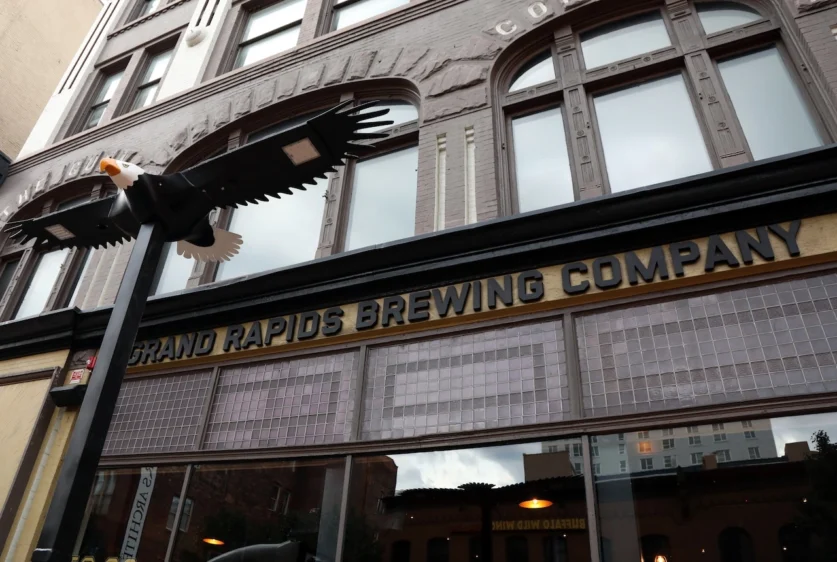
Artist Rashed Taher’s ArtPrize entry “The American Eagle is on display outside Grand Rapids Brewing Company on Tuesday, Sept. 20, 2022. The piece is made of a bench with an eagle solar light above. Rylan Capper | rcapper@mlive.com
GRAND RAPIDS, MI — Are you in need of beer brewing equipment, restaurant tables, light fixtures or whiskey barrels? A Grand Rapids brewery is auctioning off all that and more after recently announcing its permanent closure.
The liquidation auction is for pretty much everything but the walls and floor inside Grand Rapids Brewing Co., 1 Ionia Ave. SW, which announced it would be closing for good last month after a fire damaged its kitchen and HVAC system.
The auction, held online by Biddergy.com, is set for 8 a.m. Thursday, April 18. Winning bidders need to collect their purchased equipment from Grand Rapids Brewing Co. on either Monday, April 22 or Tuesday, April 23.
All equipment is being sold as-is, and the auction company recommends buyers inspect the equipment between 10 a.m. and 4 p.m. the day of the auction at Grand Rapids Brewing Co.
RELATED: Grand Rapids Brewing Company closing for good following fire
Bidding for brewing equipment, which includes uni-tank fermentors, two-vessel brewing systems and stainless steel tanks, starts at either $15 or $25, depending on the type of machine.
Bidding on other items like whiskey barrels, groups of kegs, sinks, televisions, ice bins and dining tables with chairs start at $5.
Other items in the liquidation auction include light fixtures, artwork, beer tap handles, bar glasses, champagne flutes, wine glasses, martini glasses, signage, an upright piano and metal shelving.
The Grand Rapids Brewing Co. Sign that hung outside the brewery is also up for auction, complete with the metal eagle holding hops in its talons.
A full list of all the items up for auction is available at this link.
Grand Rapids Brewing Co. opened in 2012 in the heart of downtown Grand Rapids.
RELATED: Firefighters responding to blaze at Grand Rapids Brewing Company
“After 11 years brewing Beer City’s namesake beer and serving our downtown Grand Rapids community, we’ve faced the difficult decision to close our doors to Grand Rapids Brewing Company,” the brewery said on social media at the end of March. “A fire on February 23rd damaged our kitchen and HVAC system, forcing a temporary closure that we’ve now decided will be permanent.”
The brewery’s name was a nod to the original Grand Rapids Brewing Co., which was founded at the corner of Michigan Street and Ionia Avenue in 1893.
Want more Grand Rapids-area news? Bookmark the local Grand Rapids news page or sign up for the free “3@3 Grand Rapids” daily newsletter.
If you purchase a product or register for an account through a link on our site, we may receive compensation. By using this site, you consent to our User Agreement and agree that your clicks, interactions, and personal information may be collected, recorded, and/or stored by us and social media and other third-party partners in accordance with our Privacy Policy.
Exploring the Limited Number of Wine Estates Within Napa City Limits: An Overview

El Veredicto Estate Vineyards spans 47 acres in the Stanly Ranch area of Napa in the south of the city. It is among the rare wine estates located within the city limits.
Chardonnay. Merlot. Pinot Noir. These are some of the wine grapes that the Napa Valley is known for producing, reaching over 100,000 tons annually.
Within the city of Napa, numerous tasting rooms can be found, the majority of which showcase creations made using the county’s signature product. However, almost none of these examples come from within the city boundaries.
On the streets, pedestrians can be seen strolling past Migration Winery in Napa. This winery, located near Stanly Road, is included in the shortlist of wineries that is situated within the city limits, as opposed to the traditional, agriculture-driven lands of unincorporated Napa County.
Migration Winery is distinguished as being among the few wineries to house its vineyard, tasting room, and production facility within city boundaries. This unique establishment belongs to the Carneros AVA, a region celebrated for its Pinot Noir and Chardonnay grapes.
In 2020, this winery officially introduced its Napa vineyard and tasting room, located on Stanly Lane. Fast forward to two years later, Migration acquired the neighboring 47-acre El Veredicto Estate Vineyard. This piece of land formerly comprised part of Stanly Ranch, a renowned expanse of farmland near Napa’s southern extreme, incorporated into the city around the 1960s.
Zach Rasmuson, who acts as Migration’s chief operating officer, stated that this position aligns perfectly with their “small-lot wine making approach”.
Only a few other wine estates can claim a location on the city’s periphery, such as Reid Family Wineries and Crane Family Vineyards. Reid takes up residence in Napa’s northwest corner. On the other hand, Crane Family Vineyard’s appeal lies partly within the city premises, more specifically, a portion of its vineyard, as opposed to the winery itself.
Rex Stults, vice president of industry relationships for the Napa Valley Vintners, shared that vineyards located within city boundaries are not subjected to the same regulations as those found in the unincorporated areas of Napa County.
Specifically, wineries operating within cities are exempt from the Winery Definition Ordinance which oversees wineries in the agricultural preserve of Napa County. This ordinance, established in 1990, details what activities are permissible and those not allowed by wineries. In general, wineries situated within the agricultural preserve or unincorporated areas are prohibited from hosting events and weddings which do not contribute to the consumer’s education or development.
Stults added that, “These city-based wineries are not under the jurisdiction of these laws, hence offering them greater flexibility in terms of marketing ventures, the possibility to host weddings and the liberty to combat any regulations posed within their city of operation.”
However, space constraints exist. Primarily, municipal authorities display a stronger inclination towards domestic construction within their jurisdictions. This is due to the considerable restrictions on residential developments within the Ag Preserve.
Stults likes to describe the Napa Valley as a sea, with the five cities in the county acting as islands. “The commercial residential development takes place on those islands,” he said, “and the rest of the sea is for ag.”
Each city in Napa County has a different philosophy on allowing vineyards and have zoned their lands to accommodate those differences.
Odlon Rojas works at Migration Winery in south Napa on Friday, March 22.
For instance, the general plan of St. Helena includes a generous amount of land zoned for farming. According to St. Helena’s Senior Planner Aaron Hecock, this is because the city’s concerns lie more in preservation.
“St. Helena has a long and rich agricultural history, and long-range planning documents over the years have sought to protect the rural, small-town quality and agricultural character,” Hecock wrote in an email.
In the case of Napa, Senior Planner Michael Walker explained in an email that vineyards are only allowed in Agricultural Reserve zoning areas, which are on the edges of town.
Napa’s general plan, intended to govern local land uses for the next two decades, also provides a vision of the city’s priorities and future growth outlook. The plan sets aside dedicated areas for farming and conservation, but one of Napa’s guiding principles as a city is a focus on ensuring workers and residents have adequate housing.
The plan declares that “the lack of adequate workforce housing is also an economic development issue, as businesses struggle to retain and attract workers.”
Guests arrive for a tasting at Migration Winery in Napa on Friday, March 22.
A community can’t have farmworkers without agriculture or agriculture without farmworkers, and farmworkers need housing. This is one of the priorities the city of Napa is addressing.
From the perspective of the Napa Valley Vintners, Stults says that a prime reason for the scarcity of farming within Napa’s city limits is housing.
“We know that the top concern among our community members is lack of affordability and workforce housing,” he said. “That’s something that needs to be constructed within city limits. It’s difficult to argue against using limited land available for this purpose.”
Napa’s commitment to commercial and residential activity, compared to preservation and agriculture in St. Helena and Calistoga, boils down to what past generations of Napans envisioned for the future of the valley.
In the 1960s, Napa Valley’s capacity to grow into a bustling suburban area seemed exponential.
According to Napa City Manager Steve Potter, residents were concerned that what happened to Santa Clara County in its pre-Silicon Valley days could also unfold in wine country.
“All the farmland was down there, and the urban sprawl just took it all away,” said Potter, a Napa native. “It was all developed. We didn’t want that to happen in Napa.”
Stults confirmed that long-ago vision of the future.
“There was talk of major development, exploding the population of Napa County, major highways beyond Highway 29, maybe even a big airport,” he said.
Wine barrels are seen being moved at Migration Winery in Napa on Friday, March 22. Migration is just inside the city limits and close to unincorporated Napa County land, where non-farm land uses are strictly limited.
Two major developments came from that urge to preserve Napa County’s rural character: the agricultural preserve and the rural-urban limit line.
The community of Napa Valley resisted significant urbanization, which led to the establishment of the Napa Agricultural Preserve in 1968. This preserve declared that farming was the optimal use of Napa County’s unincorporated land, significantly limiting non-agricultural land use. According to Stults, the preserve plays a key role in preserving the unique character of Napa and other towns within the county.
Further to this, once the preserve was established, the local residents passed a measure transferring power from the county’s Board of Supervisors to the residents themselves. This gave them the authority to propose exceptions to the preserve’s restrictions on land use, including large housing projects and commercial buildings.
Stults elucidated the process that would need to be undertaken for substantial development within the preserve, including obtaining approval through a countywide vote.
Each proposal requires thorough planning, signature collection to get it on a ballot, and potentially fundraising to run a successful campaign. “Basically, you have to draft a measure and collect signatures and get it on the ballot,” he said. “If you want to have a chance of it passing, you’d have to raise money and run a campaign.”
The agricultural preserve kept Napa Valley a major grapegrowing region, and gave commercial vineyards designated areas to grow grapes, preventing urban sprawl from overtaking the landscape.
Similarly, the rural-urban line also is intended to keep development control in the hands of the people. First established in 1975, the RUL requires urban growth outside of a city’s line to be approved by a popular vote, the city council and the city planning commission.
Migration Winery, seen on Friday, March 22, is one of a few winemaking operations based inside the city of Napa rather than in the unincorporated county.
Such laws are some of the reasons the Napa Valley looks the way it does and why estate vineyards generally stay outside of cities, and have informed many decisions on how to develop Napa in the years since.
The Stanly Ranch region is a unique part of Napa. Vin Smith, the city’s community development director, mentioned that the way the property was annexed into the city in 1964 would not be possible today based on current regulations.
Smith referred to multiple past propositions of potential developments for this land, such as being a golf course community. However, after extensive deliberation over many years, the Napa City Council endorsed a master plan in 2010. This encompassed strategies for the modern Stanly Ranch resort and future possibilities of vineyards like Migration leveraging the farmland in this area.
Migration therefore, secures a one-of-a-kind spot in this city that doesn’t offer much space for similar initiatives. The residents of Napa County prefer agricultural continuity and the preservation of natural land. This is evident by past local regulations which contain the development within cities and allocate most of the viniculture activities to regions outside the city’s jurisdiction.
Noting the dynamic sentiments of the locals, the city manager of Napa, Potter confirmed that the past generations had different perspectives on the evolution of their valley.
“Different times have different tolerances,” he said.
Have you seen the new Napa Wine Train “green” locomotive travelling along the Valley railroad tracks? This remarkable acquisition which cost a whopping $2.4 million is notable for using far less fuel and reducing emissions by 90%.
Spotted on March 22, Migration Winery joins a select few winemaking operations located within the city limits of Napa, as opposed to being situated in the unincorporated county.
Among the hardworking individuals contributing to this thriving industry, we have Odlon Rojas who is employed at Migration Winery in south Napa.
Guests arrive for a tasting at Migration Winery in Napa on Friday, March 22.
Wine barrels are seen being moved at Migration Winery in Napa on Friday, March 22. Migration is just inside the city limits and close to unincorporated Napa County land, where non-farm land uses are strictly limited.
Pedestrians walk past Migration Winery in Napa on Friday, March 22. The winery near Stanly Road is one of the few to be based within city limits, rather than in the traditionally agriculture-focused lands of unincorporated Napa County.
Facilities technician Andy Beltran is seen working at Migration Winery in Napa on Friday, March 22.
Part of the tasting room at Migration Winery in Napa is seen on Friday, March 22.
An employee is seen working at Migration Winery in Napa on Friday, March 22.
The barrel room at Migration Winery in Napa is seen on Friday, March 22.
Guests arrive for a tasting at Migration Winery in Napa on Friday, March 22.
The barrel room at Migration Winery in Napa is seen on Friday, March 22.
An employee is seen working at Migration Winery in Napa on Friday, March 22.
Migration Winery in Napa on Friday, March 22.
Migration Winery in Napa on Friday, March 22.
Migration Winery in Napa on Friday, March 22.
Reach Riley Palmer at 707-256-2212 or rpalmer@napanews.com.
Subscribe to our Daily Headlines newsletter.
Reporter
{{description}}
Email notifications are only sent once a day, and only if there are new matching items.
Two females died after a shooting in Napa Saturday night, and Napa Police are seeking witnesses to the incident, the department announced.
Brad Rowell was arrested Friday on a warrant alleging 21 counts of sexually abusing a minor, three days after his initial arrest and release.
A longtime teacher and running coach at American Canyon High School was arrested Tuesday for the suspected sexual abuse of a student, according to authorities…
A fight outside a restaurant ended with two injuries and a Napa man’s arrest early Sunday morning, according to police.
Napa County considered constructing a huge, new downtown Napa headquarters. It chose a more modest approach.
Experience the Bold Flavors: Craft Distillery’s Divisive Cask Finish Whiskey Taste Test

This is not a retraction. I’m not taking back any of the anti-amburana wood vitriol I’ve spouted off over the past few years, and I still firmly believe that using this type of wood for a whiskey cask finish is more often than not a mistake. But if I come across an instance where it sort of, kind of, mostly works, I’m happy to admit as much, and in the case of the new Hard Truth Farmer’s Reserve that seems to be the case.
Hard Truth Distilling Co. is a craft distillery located in Indiana, the state that is also home to the much larger, decidedly non-craft distillery MGP. While the latter is a massive operation that makes whiskey for many different brands, Hard Truth focuses on distilling rye and bourbon, as well as some other spirits, in small batches in the town of Nashville, Indiana. These whiskeys are on the younger side, but they are incredibly good across the board, as evidenced by the recent batch of cask-finished ryes the distillery released. Farmer’s Reserve marks the second time that Hard Truth has partnered with Mellencamp Whiskey Co., a company founded by Levi Collison and Hud Mellencamp, the son of the great John Mellencamp. The bottle’s label features one of the elder Mellencamp’s paintings titled “American Boy And Girl,” which is as Mellencamp a name as you can think of.
Sotheby’s Set a New Record in Wine and Spirits Sales Last Year
Bulleit’s 12-Year-Old Rye Whiskey Is Back
Woodford Reserve’s $1,000 Mint Julep Cups Are Back
Farmer’s Reserve is a blend of Hard Truth’s Sweet Mash Bourbon and Chocolate Malt Rye, a whiskey made from a mashbill that includes malted barley that was deeply roasted to bring out notes of cocoa. According to master distiller Bryan Smith, 45 barrels of the bourbon and eight barrels of the rye were blended together, an intentional formula meant to highlight the flavor that the chocolate malted barley brings to the palate. The last step was the addition of sections of toasted amburana wood to the whiskey, a stave finish more along the lines of what Maker’s Mark does to some of its expressions than a full barrel finish. According to Smith, the reason for this was to control the impact of the amburana wood. “I have tasted far too many whiskeys which lost their balance using this wood as a finishing element,” he told me. “Our goal with this whiskey was not only to showcase our chops in the art of blending two of our own whiskeys, but to also create a whiskey that weaves unique flavor elements (amburana and chocolate malted barley) into a flavor profile that is rich, complex and cohesive.”
I’d say he’s succeeded. Amburana usually just dominates and overpowers every other flavor in a whiskey, basically turning it into liquid potpourri. Some other distilleries and brands that have tried using amburana as a cask finish (and failed, in my opinion) include Barrell Craft Spirits, Penelope Bourbon, and Rabbit Hole. But somehow it works here. Yes, you still immediately recognize this as an amburana-finished whiskey with its deep notes of cinnamon, nutmeg, incense, and cocoa powder on the palate. But Smith and his team have managed to show some restraint by removing the wood from the barrels before things got out of hand, resulting in rich notes of cherry, dark chocolate, caramel, and toffee. At 106 proof there’s a bit of heat on the finish, but that also makes this a good candidate for enjoying over a large ice cube.
So no, I haven’t shifted my opinion regarding the implementation of Amburana wood for a cask finish—it usually falls short. That’s okay, I don’t believe it will outshine the popularity of aging whiskey in a sherry cask or even a Mizunara barrel anytime soon. It’s pleasant, however, to discover a whiskey finished with Amburana that doesn’t hit you with an overpowering Febreze-like aroma. Hard Truth is a craft distillery you should be paying attention to and this new whiskey is another reason why.
100 Worth sacrificing your eldest for
95 – 99 Exceptional: A crown jewel for your collection
90 – 94 Great: Your friends will tip their hat to you when you pour them a dram
85 – 89 Very Good: Delicious enough to buy, but not quite special enough to chase on the secondary market
80 – 84 Good: More of your everyday drinker, solid and reliable
Below 80It’s alright: Honestly, we probably won’t waste your time and ours with this
Every week Jonah Flicker tastes the most buzzworthy and interesting whiskeys in the world. Check back each Friday for his latest review.
Best of Robb Report
Why a Heritage Turkey Is the Best Thanksgiving Bird—and How to Get One
9 Stellar West Coast Pinot Noirs to Drink Right Now
The 10 Best Wines to Pair With Steak, From Cabernet to Malbec
Sign up for Robb Report’s Newsletter. For the latest news, follow us on Facebook, Twitter, and Instagram.