Hulk Hogan Launches Real American Beer: A Bold Alternative to Bud Light

Retired professional wrestler Hulk Hogan promotes his new beer, Real American Beer. He will be visiting St. Louis in July to further advertise the beverage. Video courtesy of Hulk Hogan.
Hulk Hogan co-founded Real American Beer, which is now available in Missouri.
Hulk Hogan already sells an array of products bearing his name or likeness: Hulkmania onesies, replica championship wrestling belts, and bright yellow bandanas emblazoned with “Hulk Still Rules.”
Now, he’s selling a beer, and Missouri stores are among the first to carry it.
Real American Beer is a way, Hogan said, to bring “America back together one beer at a time.”
Hogan said he saw an opportunity to enter the beer industry when Bud Light lost consumers over a 2023 marketing partnership with transgender influencer Dylan Mulvaney that sparked a boycott by conservatives upset by the LGBTQ connection, and tanked sales.
“I see this open lane right now,” Hogan said. “This open lane is saying, ‘We’re American and America’s been waiting for this beer.’”
Industry experts, however, warn that breaking into the beer market isn’t easy, and celebrity-based products often don’t have a long shelf-life. The Real American Beer marketing leans heavily on Hogan’s personality and popularity.
Hogan, whose real name is Terry Bollea, rose to fame as a powerful larger-than-life professional wrestler in the 1980s, and frequently competed in St. Louis. He’s a 12-time world champion and has appeared in movies, TV shows, commercials, and a video game. He was inducted into the World Wrestling Entertainment Hall of Fame but was suspended for three years after recordings of him making racist comments surfaced. He apologized and was reinstated in 2018.
Real American Beer is currently rolling out to retailers, restaurants, and bars across the state before making a wider national rollout. And though consumers are turning away from beer overall, Terri Francis, Real American Beer CEO, said they believe the product can bring drinkers back to light beer.
Live in FL, MN or MO? Find Real American Beer near you with our new Beer Finder! 🍺📍https://t.co/0TvAnuAR5X
Get some, brother. pic.twitter.com/sFRngkrsIN
“There is plenty of space in the market to grow the beer industry,” said Francis, a former vice president of the investment and innovation group within Anheuser-Busch InBev. “What we would love to be able to say is that we were able to bring people back to the category.”
Dave Williams, president of Bump Williams Consulting, which analyzes the alcoholic beverage industry, said he’s heard of a few beer brands that have popped up in the wake of the initial Bud Light stumble, but none have made a notable splash in terms of size, presence or increased competition.
“It is certainly an uphill battle for anyone looking to take a brand like Bud (Light) head on,” Dave Williams said.
Bump Williams Consulting CEO David “Bump” Williams called Hogan’s “open lane” sentiment wishful thinking, given the scale needed to challenge a global brand like Bud Light. And, generally speaking, he said, celebrity products risk running aground if the brand relies too much on the personal association instead of building a solid business plan.
Real American Beer will be available in 21 states by the end of summer, Francis, the CEO, said.
Hogan said his goal is for Real American Beer to become an industry leader that will eventually grow into a beverage company with things like non-alcoholic options.
“It’s middle America, it’s NASCAR, it’s wrestling, it’s country western, it’s purple mountains majesty, it’s the American flag. It’s God, it’s country — all of the above is what America is all about,” Hogan said.
Hogan will be in St. Louis on July 19 to promote Real American Beer. St. Louis was a significant player in the rise of WWE, often hosting championship events and airing television programs like Wrestling at the Chase via the St. Louis Wrestling Club.
Hogan said he remembers wrestling at the Chase Park Plaza Hotel as “insanity.”
“All the great wrestlers would come to St. Louis once a month and if you were on the card in St. Louis it was like being in Madison Square Garden,” he said. “If you got the opportunity to wrestle in St. Louis, that meant you were really something and you made it.”
Hogan said he is excited to return to St. Louis and meet his Hulkamaniacs. And he’s glad he doesn’t have to fight anyone.
“Usually, when I’m coming there I land at the airport and I’ll go check in at the Marriott hotel or something by the airport. Then I have to work out. I have to go wrestle,” Hogan said.
“But this time, it’s almost like I’m on vacation because I don’t have to get kicked in the head, I don’t have to work out and all I have to do is meet my friends, so I’m just really excited.”
Hannah Wyman – 314-340-8330
Retired professional wrestler Hulk Hogan promotes his new beer, Real American Beer. He will be visiting St. Louis in July to further advertise…
Whether you’re looking for an under-21-friendly option for your Fourth of July barbecue, or you decided to ditch alcohol but still want a soph…
Experience the ‘World’s Most Dangerous Wine’ at Exclusive Dinner Event Near Los Angeles
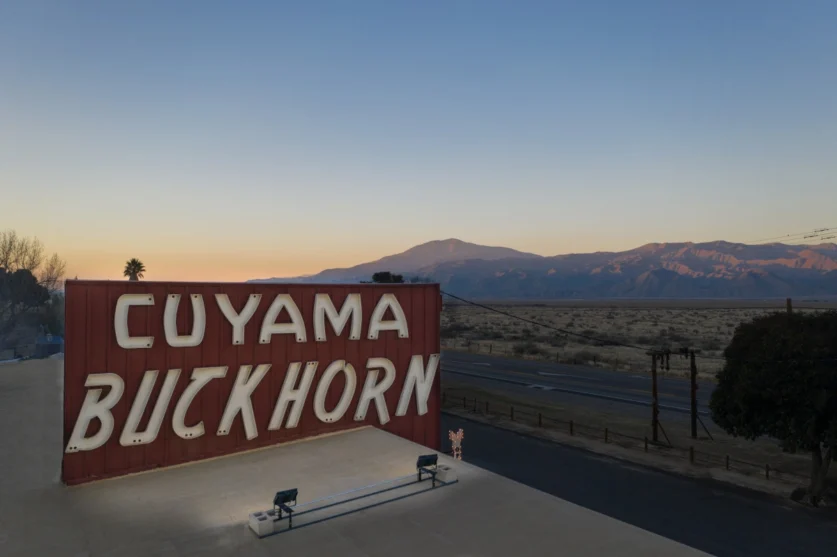
Courtesy of Cuyama Buckhorn
The post-covid world has us exploring our ‘backyards’ in ways we never have before. Finding excitement in unexpected places just a hop, skip, and a jump from our homes is one of the greatest discoveries. If you’re based in Southern California and looking for a new haunt to joyride to, do not miss Cuyama Buckhorn. The 1950s revamped roadside resort stands just an hour north of Ojai and 2 hours from Los Angeles. This year they won a Wine Spectator Award and they have a new chef who hails from Mexico City with quite a pedigree. There has never been a more exciting time to venture out to Cuyama.
Courtesy of Cuyama Buckhorn
Cuyama Buckhorn—recent winner of a Wine Spectator Award of Excellence—is honored to present a truly special opportunity to connect with one of the most interesting winemakers in the world, Vahe Keushguerian, who was recently the subject of the documentary, SOMM: Cup of Salvation. Cuyama Buckhorn’s Chef Hugo Vera has designed a six-course dinner influenced by the wines to help tell the story of these special grapes. Keushguerian and his daughter, Aimee are revitalizing vines from the oldest winemaking culture in the world (more than 10,000 years of wine making) and bringing the traditions of their heritage into the modern day at their wineries, Keush and Zulal, respectively.
Courtesy of Molana Wines
In addition to growing Armenian grapes on Armenian soil, Keushguerian smuggled indigenous wine grapes out of Iran, where winemaking has been outlawed since 1979, and re-established the vines in Armenia to make Molana Winery—essentially Iranian winemaking in exile. Molana is the first Iranian wine that has been produced in fifty years, and is unlikely to ever be produced again. This is a rare chance to taste this wine, with the winemaker himself, and partake in history. To honor the collaboration between Cuyama Buckhorn and Keushguerian, Chef Vera’s menu will help tell the winemaker’s incredible story with unique Cuyama flavor and locally-sourced ingredients.
Courtesy of Cuyama Buckhorn
On Saturday morning guests are encouraged to attend a screening of SOMM: Cup of Salvation followed by a Q&A with Keushguerian.
This dinner comes amid a summer of Wine Weekends at Cuyama Buckhorn. Other recent wine dinners have featured Condor’s Hope, Marbeso, and Presqu’ile. On August 3rd, Sonja Magdevski of Clementine Carter will be the featured winemaker and September 7th, Austin Hope of Hope Family Wines will be pouring.
WHEN: July 19, 2024
PRICING: Dinner tickets are $250 per person including wine pairings. Book a room for the weekend starting at $285/night.
WHERE: 4923 Primero Street, New Cuyama, CA 93254
Cuyama Buckhorn is located 1 hour east of Santa Maria, and 2 hours north of Los Angeles.
INFO: Call (661) 766-2825 or visit cuyamabuckhorn.com to reserve
Courtesy of Cuyama Buckhorn
Lawsuit Erupts Over Controversial Ownership Claims at Nantucket Food and Wine Festival
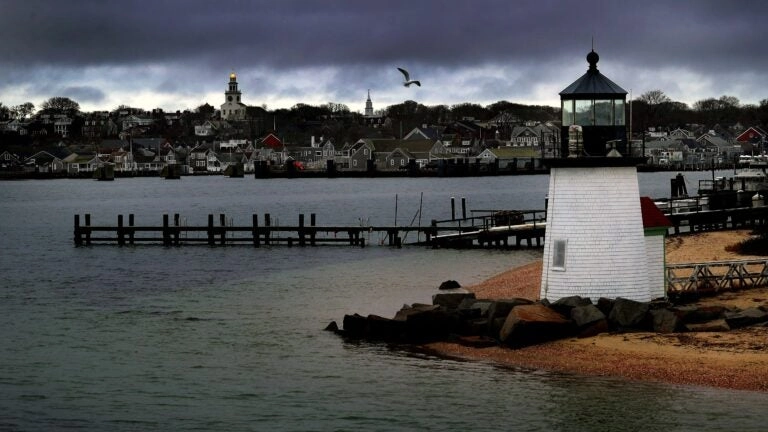
By Thomas Lee, The Boston Globe
Chances are, there will be some kind of food and wine festival in Nantucket May 14-18 next year. We just don’t know which version yet.
That’s because two parties are laying claim to the annual event at the same date and venue. On one side, there’s Nancy Bean, who has owned the Nantucket Wine & Food Festival since 2013. The festival, which draws about 3,000 people each year, has been a popular event on the island for over a quarter of a century. The White Elephant hotel has hosted the festival for about a decade.
But in a lawsuit filed in US District Court in Boston, Bean is accusing David Gordon and the Gordon Companies in Waltham, a family-owned chain of liquor stores, of stealing her business. Indeed, the Gordon Companies have set up a website promoting the Nantucket Food & Wine Experience at the White Elephant Hotel on the same dates in 2025 as Bean’s annual event.
Compounding the confusion is a recent press release issued by the Gordon Companies in which it claimed to have purchased the event. But then the company issued another statement saying that it did not buy Bean’s festival and was starting something new.
“Most people learn by kindergarten that you don’t say something belongs to you when it belongs to someone else,” Barry Pollack, an attorney representing Bean, told the Globe.
Neither David Gordon, CEO of Gordon Companies, nor White Elephant returned calls seeking comment.
According to court documents, Bean declined a proposal by Gordon to take over management of the festival. But on June 17, the Gordon Companies issued a press release in which it claimed that it purchased the festival.
“The Gordon Companies, owners of Massachusetts’ Gordon’s Fine Wine and Baker’s Best Catering, has acquired ownership of the Nantucket Food and Wine Experience, one of the longest running food and wine events in the U.S.,” the statement said.
“The rebranded event, in partnership with Nantucket’s iconic White Elephant harborside hotel, will take place on the island from Wednesday, May 14 through Sunday, May 18, 2025, and will feature the world’s top vineyards and culinary minds during wine dinners, seminars, galas, thematic receptions, wellness events, and celebratory brunches.”
But the company soon backtracked from the claim.
On the website Gordon Companies created for its festival contains “an announcement correction.”
“The Gordon Companies have partnered with White Elephant Resorts in a deal to produce a new event titled the Nantucket Food And Wine Experience. Gordons has not purchased, acquired, or rebranded the previously existing Nantucket Food & Wine Festival which has been operated by a still operating entity which is not affiliated with The Gordon Companies in any way. The Nantucket Food And Wine Experience is also not affiliated with the Nantucket Food & Wine Festival.”
Weiss, the attorney, said Bean still plans to host the festival next May as planned. But where in Nantucket remains up in the air.
Be civil. Be kind.
Rediscovered Andy Warhol Painting Inspires Exclusive Limited-Edition Absolut Vodka
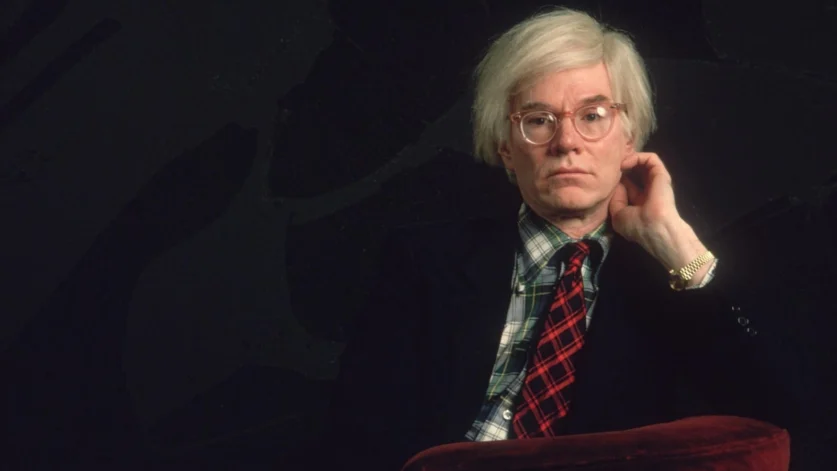
American artist and icon Andy Warhol (1928-1987) whose ‘rediscovered’ 1985 artwork could give Absolut Vodka a new lease of life.
Absolut Vodka—once fêted for its creative limited-edition bottles, often tying up art with social messaging—is at it again. This time it has rekindled an old partnership through the Andy Warhol Foundation for the Visual Arts.
The Swedish vodka brand, owned by French drinks giant Pernod Ricard, says the new, watery blue bottle will “reignite conversations around culture and inclusivity” and bring Absolut’s legacy in the art world to new audiences.
Back in 1985, Andy Warhol became the first artist to produce artwork based on the silhouette of Absolut’s (then) distinctive apothecary-inspired bottle. Absolut Warhol became the brand’s first art advert and marked the beginning of its involvement in the arts.
Warhol subsequently recommended Keith Haring to interpret the Absolut bottle, and between 1985 and 2004 more than 550 artists subsequently created more than 850 works. The early pieces were part of a brand communication strategy associated with the glamour of New York’s Studio 54, as well as the victims of the AIDS epidemic, the fall of the Berlin Wall, and the birth of IT.
Pernod Ricard bought into Absolut’s cultural legacy in 2008, when it fought off rivals to acquire the brand.
The original Absolut Warhol was painted with vibrant colors on a black background and is considered iconic by some. On the MyArtBroker website, a signed print is listed for £27,000 to £40,000 ($34,250 to $50,700).
A second Absolut Warhol painting, also from 1985, had been rumored to exist for decades before his ‘blue’ artwork was uncovered at an auction in 2020. In proving its provenance the original contract was unearthed, confirming both paintings had been commissioned. Pernod Ricard saw an opportunity to revitalize the original partnership—and the Absolut brand.
From a retail perspective, the limited-edition Absolut Warhol line launched on Monday exclusively in global travel retail (GTR) stores. Amsterdam’s Schiphol Airport is opening an interactive, gallery-style pop-up store for the product, with other major travel hubs lined up.
The bottle brings Warhol’s rediscovered Absolut ‘blue’ painting from 1985 to life by extracting shades of blue from the work and includes an image of Warhol himself alongside his original signature.
The latest Absolut Warhol is exclusive to travel retail for two months.
Pernod Ricard—whose portfolio includes Chivas Regal, Jameson, and Royal Salute whiskies, Martell cognac, Havana Club rum, and Mumm and Perrier-Jouët champagnes—has put a big budget behind a 3D out-of-home (OOH) ad campaign in the channel and multiple retail activations at airport like London Heathrow in the U.K., Dubai, Singapore Changi, São Paulo, and others.
Only after two months of exclusivity in duty-free will the new Absolut Warhol limited-edition bottle roll out across more than 50 additional global markets (from September) in both one-liter and 700ml bottles.
In travel retail, the one-liter bottle is available, priced at a recommended selling price of $24 or €22. This is cheaper than the current online price of a standard Absolut bottle: €23.90 at Amsterdam Schiphol (checked today). In a channel where premiumization is commonplace, even the norm, Pernod Ricard may score with this accessible-pricing strategy, especially with younger legal drinking age (LDA) travelers.
According to drinks market analyst IWSR, there was flattened consumer demand for alcoholic beverages in the first half of 2023 due to belt-tightening, though spirits (excluding national spirits) were up by 1%, based on the firm’s latest Bevtrac data.
Referencing 2024, IWSR’s senior consumer insights manager, Anastasia Timofeeva, said in December: “The key will be whether real wages can grow sustainably in the next two quarters in Europe and North America, particularly for younger LDA+ and middle-income consumers—and whether the ‘natural’ positivity in China and India translates into actual consumption behavior.”
The creative positioning and competitive pricing of Absolut Warhol should give it an advantage in this economic environment. Liya Zhang, vice president of global marketing at Pernod Ricard GTR commented: “This launch will be of huge significance to the evolution of Absolut in travel retail. Through this partnership with The Andy Warhol Foundation, we can democratize art and bring it to all nationalities (and) also recruit new generations of consumers.”
Andy Warhol, John Sex (right), and masked friend at Absolut Vodka’s Party for Keith Haring at the Whitney Museum on October 2, 1986. (Photo by Patrick McMullan/Getty Images)
The foundation will also be receiving some proceeds which its director of licensing, marketing and sales, Michael Dayton Hermann, said would support its philanthropic work. He added that he was “thrilled” to see the Absolut campaign come to life and engage younger people with Warhol’s legacy “in a fresh and dynamic way.”
A short promo from Mexican director and photographer Santiago Sierra Soler is inspired by Warhol’s brush strokes and accompanied by a remixed version of 20th Century Boy by T. Rex. Meanwhile, the rediscovered painting will be showcased at Stockholm’s Sprit Museum, the home of the Absolut Art Collection, on October 17, 2024. It will be the centerpiece of a new exhibition called Andy Warhol, Money On The Wall, curated by art historian and Warhol biographer, Dr. Blake Gopnik.
Historic Beer Sign Stolen from Milwaukee Porch in Bold Theft
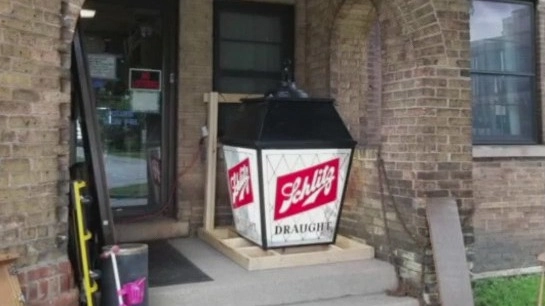
He left to purchase a new lock for his 250-pound historic sign, but when he returned, it was missing.
The Innovative Scotch Distillery Adopting Craft Beer Techniques to Transform Whiskey Making
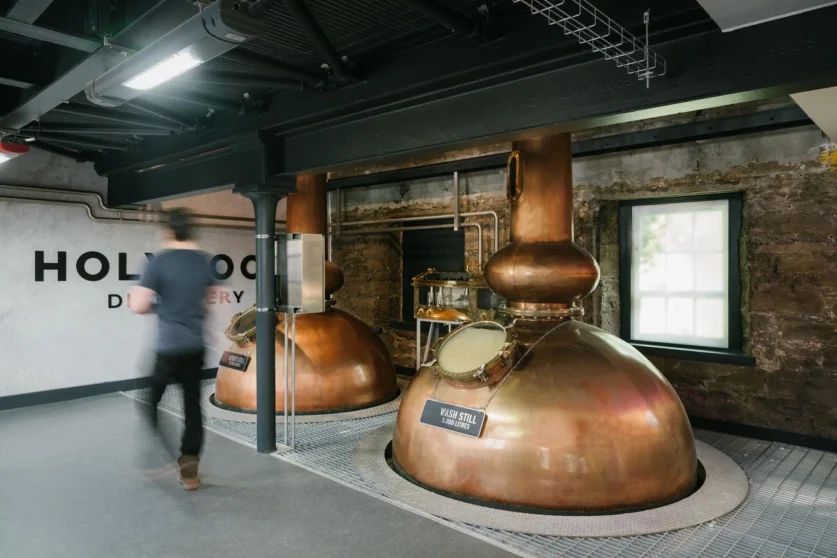
The stills at Holyrood Distillery, the first Scotch distillery in Edinburgh in over 100 years.
At its core, whiskey is distilled beer. Whiskey is spirit made by distilling an alcohol, called wash, that is itself made from grains — beer.
And yet, other than selecting grains and their proportions — barley, corn and wheat are the most common — few distilleries think of themselves as brewers or approach washmaking in the same way brewers think about beermaking.
Holyrood Distillery is changing that.
Holyrood is the first new whiskey distillery in Edinburgh in over 100 years. Located in the literal capital of Scotland and the figurative heartland of malt whiskey, Holyrood is honoring the long history of the national drink while taking an innovative approach to whiskeymaking.
“Test, learn, improve, repeat.” said Calum Rae, distillery manager, in a video interview.
What that means is experimenting with beermaking techniques in making wash, including using heritage barley varieties and specialty malts, and using different yeast strains. These are things that brewers use to make beer styles, from amber lager to saison, different from each other and Holyrood is unique in seeking to understand how this will translate into aged whiskey.
“Holyrood is the home of a fresh, creative approach to Scotch,” says Rae. And the distillery is uniquely situated for this.
While Scotland is famous for making whiskey prized around the world, Edinburgh has a rich brewing history due to underground wells supplying water perfect for beer making. Holyrood is located within Edinburgh’s “Charmed Circle” which was once home to over forty breweries. So, Holyrood is perfectly placed to marry the beermaking and the whiskeymaking arts. Rae himself has a background in brewing and works with a team of distillers, many of whom were trained at the nearby famed Heriot-Watt University.
At craft breweries, a spirit of experimentation is welcomed and Rae has brought that ethos to Holyrood. “We just have a bigger feedback loop,” says Rae, talking about how the results of experiments in distilling take years to materialize, rather than the weeks it takes to see the outcome of new beer recipes.
By regulation, distilled spirit must be aged a minimum of three years before it can be called “Scotch.” To date, Holyrood has only released two expressions — Arrival and Embra — so consumers have only been teased with the fruits of Holyrood’s vast database of flavor experiments. “We are only on the very, very baby steps of the journey,” says Rae.
But eventually, Holyrood’s tasting room will also take a page from the craft beer world. Similar to brewery tasting rooms, Rae envisions a tasting room with 20 or so limited-release drams so that people can taste the cornucopia of flavors they have created. And once the whiskey is gone, it gets replaced with another flavor offering.
Rae insists that, like other whiskey distilleries, Holyrood will have a house character running through all of their drams. “We just have a lot more colors to paint with,” he says of their ability to blend from the seemingly limitless supply of spirits made from different beer recipes, fermented by different yeast strains and aged in different casks. Says Rae, “There’s room for both new and old in the world of whiskey. That’s what’s exciting.”
One Community. Many Voices. Create a free account to share your thoughts.
Our community is about connecting people through open and thoughtful conversations. We want our readers to share their views and exchange ideas and facts in a safe space.
In order to do so, please follow the posting rules in our site’s Terms of Service. We’ve summarized some of those key rules below. Simply put, keep it civil.
Your post will be rejected if we notice that it seems to contain:
User accounts will be blocked if we notice or believe that users are engaged in:
So, how can you be a power user?
Thanks for reading our community guidelines. Please read the full list of posting rules found in our site’s Terms of Service.
Absolut Vodka Unveils Limited-Edition Bottles Inspired by Rediscovered Andy Warhol Painting
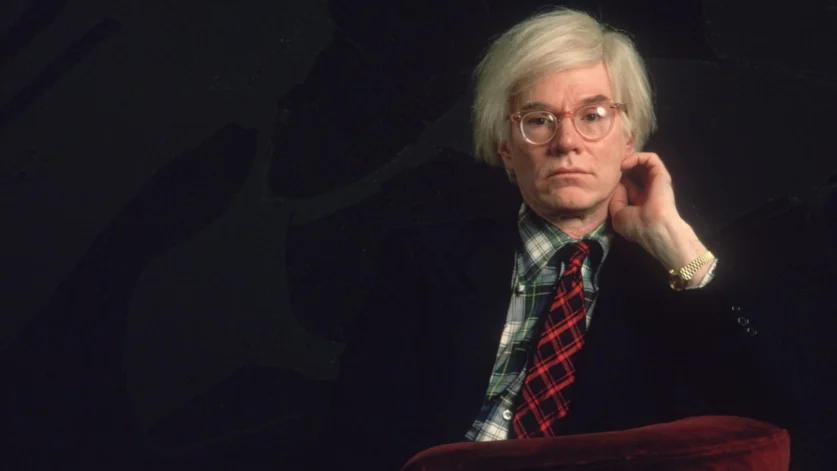
American artist and icon Andy Warhol (1928-1987) whose ‘rediscovered’ 1985 artwork could give Absolut Vodka a new lease of life.
Absolut Vodka—once fêted for its creative limited-edition bottles, often tying up art with social messaging—is at it again. This time it has rekindled an old partnership through the Andy Warhol Foundation for the Visual Arts.
The Swedish vodka brand, owned by French drinks giant Pernod Ricard, says the new, watery blue bottle will “reignite conversations around culture and inclusivity” and bring Absolut’s legacy in the art world to new audiences.
Back in 1985, Andy Warhol became the first artist to produce artwork based on the silhouette of Absolut’s (then) distinctive apothecary-inspired bottle. Absolut Warhol became the brand’s first art advert and marked the beginning of its involvement in the arts.
Warhol subsequently recommended Keith Haring to interpret the Absolut bottle, and between 1985 and 2004 more than 550 artists subsequently created more than 850 works. The early pieces were part of a brand communication strategy associated with the glamour of New York’s Studio 54, as well as the victims of the AIDS epidemic, the fall of the Berlin Wall, and the birth of IT.
Pernod Ricard bought into Absolut’s cultural legacy in 2008, when it fought off rivals to acquire the brand.
The original Absolut Warhol was painted with vibrant colors on a black background and is considered iconic by some. On the MyArtBroker website, a signed print is listed for £27,000 to £40,000 ($34,250 to $50,700).
A second Absolut Warhol painting, also from 1985, had been rumored to exist for decades before his ‘blue’ artwork was uncovered at an auction in 2020. In proving its provenance the original contract was unearthed, confirming both paintings had been commissioned. Pernod Ricard saw an opportunity to revitalize the original partnership—and the Absolut brand.
“`html
From a retail perspective, the limited-edition Absolut Warhol line launched on Monday exclusively in global travel retail (GTR) stores. Amsterdam’s Schiphol Airport is opening an interactive, gallery-style pop-up store for the product, with other major travel hubs lined up.
The bottle brings Warhol’s rediscovered Absolut ‘blue’ painting from 1985 to life by extracting shades of blue from the work and includes an image of Warhol himself alongside his original signature.
The latest Absolut Warhol is exclusive to travel retail for two months.
Pernod Ricard—whose portfolio includes Chivas Regal, Jameson, and Royal Salute whiskies, Martell cognac, Havana Club rum, and Mumm and Perrier-Jouët champagnes—has put a big budget behind a 3D out-of-home (OOH) ad campaign in the channel and multiple retail activations at airport like London Heathrow in the U.K., Dubai, Singapore Changi, São Paulo, and others.
“`
Only after two months of exclusivity in duty-free will the new Absolut Warhol limited-edition bottle roll out across more than 50 additional global markets (from September) in both one-liter and 700ml bottles.
In travel retail, the one-liter bottle is available, priced at a recommended selling price of $24 or €22. This is cheaper than the current online price of a standard Absolut bottle: €23.90 at Amsterdam Schiphol (checked today). In a channel where premiumization is commonplace, even the norm, Pernod Ricard may score with this accessible-pricing strategy, especially with younger legal drinking age (LDA) travelers.
According to drinks market analyst IWSR, there was flattened consumer demand for alcoholic beverages in the first half of 2023 due to belt-tightening, though spirits (excluding national spirits) were up by 1%, based on the firm’s latest Bevtrac data.
Referencing 2024, IWSR’s senior consumer insights manager, Anastasia Timofeeva, said in December: “The key will be whether real wages can grow sustainably in the next two quarters in Europe and North America, particularly for younger LDA+ and middle-income consumers—and whether the ‘natural’ positivity in China and India translates into actual consumption behavior.”
The creative positioning and competitive pricing of Absolut Warhol should give it an advantage in this economic environment. Liya Zhang, vice president of global marketing at Pernod Ricard GTR commented: “This launch will be of huge significance to the evolution of Absolut in travel retail. Through this partnership with The Andy Warhol Foundation, we can democratize art and bring it to all nationalities (and) also recruit new generations of consumers.”
Andy Warhol, John Sex, and masked friend at Absolut Vodka’s Party for Keith Haring at the Whitney Museum on October 2, 1986. (Photo by Patrick McMullan/Getty Images)
The foundation will also be receiving some proceeds which its director of licensing, marketing and sales, Michael Dayton Hermann, said would support its philanthropic work. He added that he was “thrilled” to see the Absolut campaign come to life and engage younger people with Warhol’s legacy “in a fresh and dynamic way.”
A short promo from Mexican director and photographer Santiago Sierra Soler is inspired by Warhol’s brush strokes and accompanied by a remixed version of 20th Century Boy by T. Rex. Meanwhile, the rediscovered painting will be showcased at Stockholm’s Sprit Museum, the home of the Absolut Art Collection, on October 17, 2024. It will be the centerpiece of a new exhibition called Andy Warhol, Money On The Wall, curated by art historian and Warhol biographer, Dr. Blake Gopnik.
Chelsea Wine Store Owner Makes Stylish Court Appearance Amid Allegations of Stealing Own Vintage Stock

Thanks for contacting us. We’ve received your submission.
Thanks for contacting us. We’ve received your submission.
The dapper-dressed owner of the Chelsea Wine store made his second appearance in Manhattan Criminal Court on Wednesday after being arrested for allegedly stealing vintages from his own posh shop.
Michael Gancarz, who was cuffed last Father’s Day at the popular wine store at 60 Ninth Ave., wore a bespoke striped blue suit as he dodged questions from The Post’s photographer about the bizarre case.
He faces charges for burglary, petit larceny and trespassing, according to court records.
Gancarz was released without bail and is next scheduled to appear in court on Aug. 14.
Chelsea Wine, located across from the Chelsea Market, no longer belongs to Gancarz and his wife Amelia, according to the criminal complaint.
The new owner of the store, Bobby Khorram, told the arresting police officer that Gancarz did not have permission or authority to take items from the store and entered it despite it being locked up, the complaint said.
It remains unclear what items were taken from the store.
Gancarz and his lawyer did not respond to a request for comment.
Khorram did not comment.
The 25-year-old business was once located in the Chelsea Market. The couple assumed ownership of it from Amelia’s father, Daniel Barteluce, an architect who designed luxury retail stores around the world.
Gancarz made headlines last year when customers from his wine storage business in Midtown – Chelsea Wine Storage – began complaining that they couldn’t get access to their pricey vintages, as The Post exclusively reported.
Longtime customers couldn’t get anyone on the phone and when they visited the storage facility – which moved out of its former location in the Chelsea Market without informing customers – they were rebuffed.
Photos obtained by The Post last year showed hundreds of cardboard boxes sitting on wooden pallets in the unfinished basement in Midtown.
The storage business was quietly moved to the basement of a former TGI Friday’s off of Times Square at 777 Seventh Ave.
“With no response, I am afraid my wines in storage are gone for good,” a CWS customer posted on Yelp on Oct. 23.
Another posted, “I cannot get them to answer emails or phone calls, and I am extremely worried about my collection…some of my most prized bottles somehow no longer appear in my inventory.”
Gancarz’s has the same landlord at both the store and the storage facility – Michael Shah – who sued him for not paying his rent and initiated eviction proceedings.
The New York State Liquor Authority initiated an investigation last year.
VIDEO: Massive 250-Pound Beer Sign Reportedly Stolen from Wisconsin Front Porch
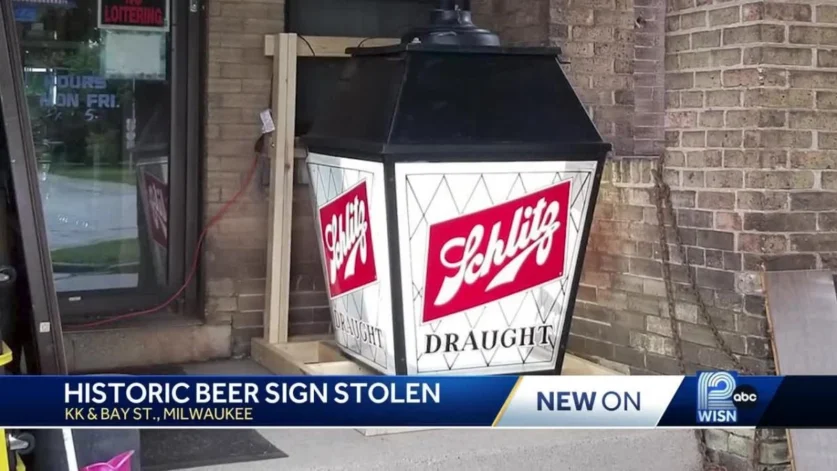
Two Milwaukee beer sign collectors reported that thieves took their large and historic Schlitz beer sign that was displayed on the front porch of their building.
Embracing Nocturnal Wonders: A Night Walk in the Woods Reveals Diverse Sights, Sounds, and the Enchanting ‘Jug-a-rum’ Calls
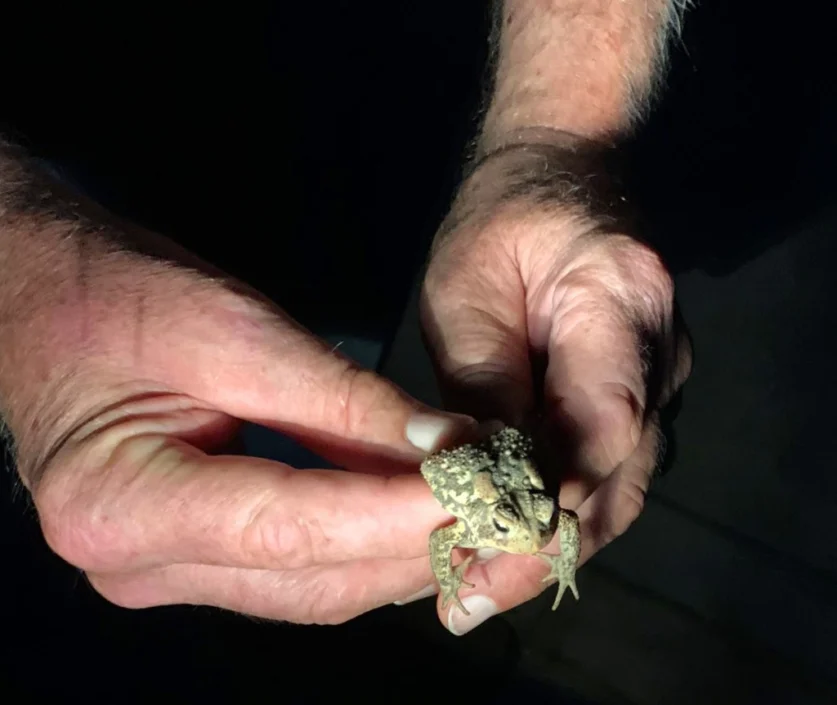
Beneath the strawberry moon in late June, we listened to green frogs belting out their banjo-like twang from a pond at Wright Woods near Vernon Hills. It was 10 p.m., and though the forest preserves district closes the gates at night, we had permission to document frog-calling after hours.
Visiting the same woods in early spring, mid-spring and summer offers a glimpse into nature’s ever-changing cycles. In mid-April, as the sun set, we heard an American woodcock, an unusual shorebird that nests in the woods, giving its courtship call. Then we saw it fly into the air in a spiral, then descend twittering its wings, all for the love of a female who was hopefully nearby.
After dark descended, we walked the trail with small, ephemeral ponds that would dry up later in summer. There we heard chorus frogs, which sounded like someone rubbing her fingers across a comb. These were most prominent, but we also heard spring peepers give their little sleigh-bell calls. Both of these frogs are no larger than a thumb, and they are much more often heard than seen. Chorus frogs can be heard in spring even during the daytime, but the spring peepers are nocturnal.
Frogs pass air from their lungs over their vocal cords, which vibrate to produce a sound. Vocal sacs located near the frog’s throat amplify the sound. When a frog inflates its vocal sac, it looks as if it had just produced a giant bubble from chewing gum.
Chorus frogs and spring peepers choose fishless ponds in which to call, mate and breed. Otherwise, fish would devour these tiny frogs and their eggs like mini-sacks.
By mid-May, the peepers have stopped calling, and their songs are replaced by those from American toads, as well as bullfrogs and green frogs just getting started for the summer.
On our next foray, as we waited for dark to come, we heard and observed a state-threatened cerulean warbler give its last song of the day. That bird would not have been singing in the woods in mid-April. At night, we no longer heard peepers and chorus frogs, but rather the whirring din of American toads, which belong to the frog family.
The green frogs and bullfrogs were calling from the large pond where folks fish in the daytime. These frogs are much larger than the peepers. The bullfrog can grow to at least eight inches long, and the green frog up to about 3 inches or so in length.
On that night, as we ventured toward the Des Plaines River in the dark, we heard a young great-horned owl giving its begging calls in the distance. By mid-May, great horned owls have already fledged young and are now teaching them how to find food on their own.
In late June, we entered the preserve just after the periodical cicadas had ended their daytime mating songs. We saw some here and there on leaves or on the ground, but the grand spectacle folks have been seeing this year of these insects that come out every 17 years from the ground was nearly over.
We walked our survey trail and heard a barred owl give its “who cooks for you, who cooks for you all” call.
That evening, we hoped to hear gray tree frogs calling. This was their time to call. We didn’t hear those, but we did hear more green frogs and bullfrogs. There seemed to be more of them and they were calling more frequently than at our last survey.
Since at least 2013, amphibian populations, including those of frogs, have been declining worldwide by nearly 4%. In northern Illinois, we’ve lost the once common cricket frog, which gives an interesting sound as if someone were tapping two stones together. They still call in central Illinois, but no longer up here, and scientists aren’t quite sure why, although in general climate change, loss of habitat and disease are contributing to amphibian populations worldwide.
At the end of our final survey, we walked to the pond and stood quietly beneath the full moon listening to the “jug-a-rum” calls of the bullfrogs and the banjo twang of the green frogs. Being outdoors at night listening to frogs and owls makes you feel as if you were out in the wilderness even when busy streets are nearby.
It is an otherworldly experience every child and adult should have.
Sheryl DeVore has worked as a full-time and freelance reporter, editor and photographer for the Chicago Tribune and its subsidiaries. She’s the author of several books on nature and the environment. Send story ideas and thoughts to sheryldevorewriter@gmail.com.