New Research Finds that Drinking One Beer a Day Could Reduce Life Expectancy by Over 2 Months

Consuming a single alcoholic drink per day can reduce a person’s life expectancy by two-and-a-half months, according to an expert on substance use.
Tim Stockwell, a scientist at the Canadian Institute for Substance Use Research, told The Daily Mail that alcohol cuts down one’s life expectancy.
Having a drink a day can lower life expectancy by two-and-a-half months, while having five drinks a day can decrease life expectancy by around two years, and two drinks per week can reduce it by as much as six days.
“Alcohol is our favorite recreational drug,” Stockwell told the Daily Mail. “We use it for pleasure and relaxation, and the last thing we want to hear is that it causes any harm … it’s comforting to think that drinking is good for our health, but unfortunately, it’s based on poor science.”
Stated harms of alcoholic consumption include damage to organs like the brain, liver, and heart, damage to the nervous system, as well as contributing to heart disease and higher blood pressure.
Regarding studies that indicate non-drinkers suffer from various illnesses that drinkers can avoid, Stockwell told the Daily Mail that this was likely because the non-drinkers surveyed were former alcohol-consumers.
“These abstainers are often older people who gave up alcohol because their health was bad,” he explained. “Being able to drink is a sign you are still healthy, not the cause of being in good health. … There are lots of ways these studies give false results that are misinterpreted to mean alcohol is good for you.”
In recent years, medical experts have argued against the idea that regular consumption of alcohol can be beneficial and have encouraged people to reduce their intake of fermented drinks.
In July 2020, for example, the U.S. Department of Agriculture posted the 2020 Dietary Guidelines Advisory Committee’s final report on nutrition topics, which advised that men should consume no more than one alcoholic drink per day, down from the previous standard of two drinks a day.
“Therefore, the focus should remain on reducing consumption among those who drink, particularly among those who drink in ways that increase the risk of harms,” the report’s executive summary states.
“The Committee concluded that no evidence exists to relax current Dietary Guidelines for Americans recommendations, and there is evidence to tighten them for men such that recommended limits for both men and women who drink would be [one] drink per day on days when alcohol is consumed.”
JoJo Siwa Opens Up About Swigging Vodka Onstage at L.A. Pride: Here’s Why
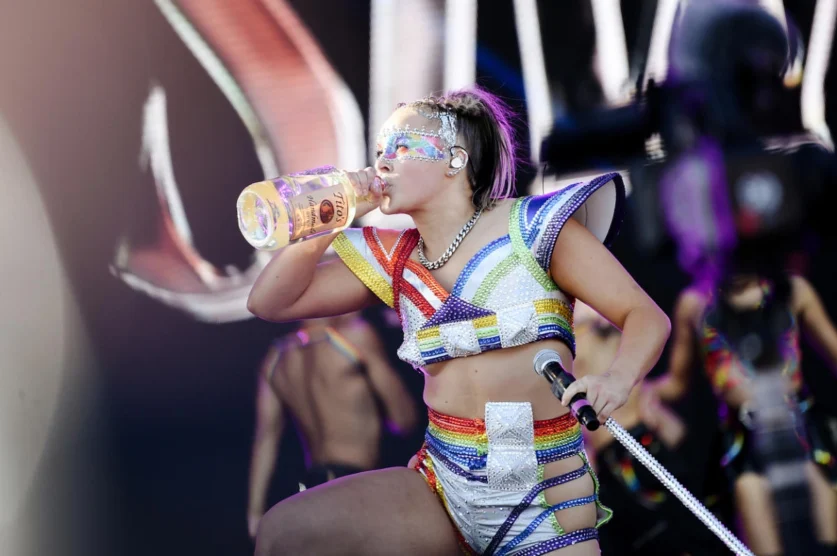
Let’s be real: When it comes to the many Pride events that took place across the U.S. last month, JoJo Siwa was the talk of the town.
JoJo ended up performing at several events in locations like Chicago, Los Angeles, and New York City — and she didn’t always receive a warm reception.
During her NYC appearance as part of Trixie Mattel’s event, she ended up cursing out the crowd after getting booed. Rough stuff!
If you were paying attention to the general shenanigans across the month, you also probably saw pics of JoJo swigging from a bottle of Tito’s vodka during her Los Angeles Pride performance as well.
“`html
During a recent episode of her podcast, JoJo revealed why she incorporated that into her set — and, more fascinatingly, who encouraged her to do so.
“This idea of doing this stemmed from, I was in rehearsals and we were starting a new routine [for] ‘Yesterday’s Tomorrow’s Today,’ and my 21st birthday had just passed,” she explained.
“I was like, ‘I wanna fucking take a shot before this.’ And my grandma was like, ‘Alright, JoJo. You should do it.’ And I was like, alright. Let’s do it!”
JoJo also explained that, as her swigging ritual became a “big thing” after the show, some questioned whether it was really booze she was drinking out of the bottle — and, according to her, it really was.
“`
“I bought out a jug of Tito’s, and people were like, ‘Woah. What are you doing? Is it real? Is it fake?’” she recalled.
“And I was like, ‘Bitch, it is what it fucking is. It’s a bottle of Tito’s.’”
OK then! You can listen to the entire episode .
Santa Rosa Museum Expands with New Beer Garden for Brewing Exhibit

Normally when you visit a museum, food and drink are not allowed, but the Museum of Sonoma County is making an exception for its Summer Beer Garden event to coincide with its current exhibit, “On Tap: Sonoma County Hops and the Beer Revolution.”
The museum will transform its sculpture garden into a beer garden from 4-8 p.m. July 20 featuring tastings from Wolf House Brewing, Moonlight Brewing, Lagunitas, Russian River and the Cotati Home Brewers Collective.
There also will be food trucks with food available to purchase.
VIP tickets are $25 and include a special brew tasting and exhibit tour with the museum’s curator, with entry at 4 p.m. General admission tickets are $10 and include 5 p.m. admission.
Purchase and learn more at bit.ly/4cMJJr0. 425 Seventh St., Santa Rosa
Whiskey Experts Share Insights: 11 Underrated Bourbons You Need to Try Today
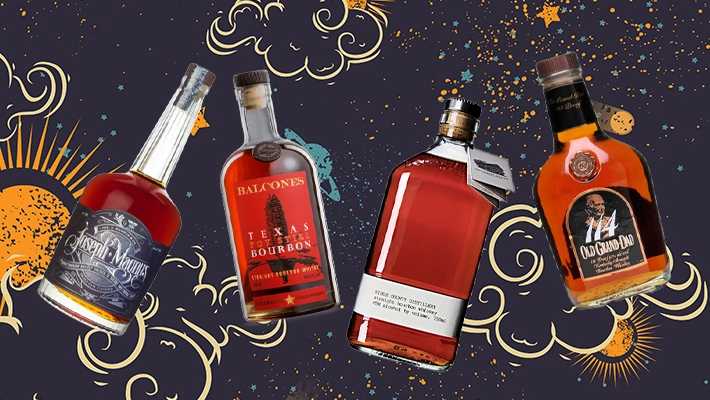
We write about whiskey (especially bourbon) fairly often. Like anyone, sometimes we get caught up in the hype and flash of popular or hard-to-find expressions. We feel like we just have to try them. It seems like everyone else is, why shouldn’t we? When this happens, sometimes we have to take a step back and think about some of the brands that don’t get enough praise but definitely deserve it. Sometimes these expressions are much easier to find. We’re talking about the underrated gems either waiting to be discovered or simply given the respect they deserve.
What does underrated mean, exactly?
Well, it’s not that easy to define as it often depends on who you’re asking and whether or not they mean “underappreciated” instead. There are plenty of great, underappreciated whiskeys from massive brands like Beam or Jack Daniel’s — Beam’s Little Book, Jack’s Coy Hill Series, Jack Daniel’s Rye, Jim Beam Rye(!). But when it comes to “rating” those expressions, there are plenty of accolades heading their way. So they’re inherently not “underrated”… just maybe not on enough radars.
We asked eleven whiskey experts, distillers, and alcohol professionals to tell us the most underrated bourbons to drink right now. We’re talking about bourbons that are undervalued and underappreciated. You’ll be surprised by their picks. You’ll recognize some names, but others are lesser-known and deserve much more acclaim than they currently receive.
Dr. Kenneth Maverick, founder of Maverick Whiskey in San Antonio, Texas
ABV: 50%
Average Price: $99.99
Joseph Magnus Straight Bourbon. Aged in oak barrels before being transferred to oloroso sherry, Pedro Ximénez sherry, and cognac casks, it’s unique, flavorful, and deserves more recognition.
It’s sweet, rich, and bold chocolate and approachable mellow oak. It might not be on your radar yet, but it absolutely should be.
Jared Himstedt, head distiller at Balcones Distilling in Waco, Texas
ABV: 58.5%
Average Price: $65.99
Why This Bourbon?
Old Ezra 101 7 Year is a truly underrated bourbon. Another favorite that I rarely see talked about but always delivers. Rich copper and wood sugar, biscuity with a soft peppery finish.
Heather Greene, CEO of Milam & Greene Whiskey in Blanco, Texas
ABV: 47%
Average Price: $109.99
Why This Bourbon?
I think people need to revisit Garrison and Balcones craft distilleries. There is a myth that these Texas whiskeys don’t taste as good, but I don’t believe that one bit. They’ve been perfecting their craft for 10 years now. I tasted a Garrison Single Barrel that was rich and chewy recently, and with lovely deep caramels.
Jeremy Kasler, CEO of CaskX, a bourbon cask investment firm, in Los Angeles
ABV: 45%
Average Price: $36.99
Why This Bourbon?
Hands down, the most underrated bourbon is Russell’s Reserve 10 Year. I hate to even put this in print for fear it’ll become harder to find, but I’ve been stocking up for some time, so we’re good. With a price point of around $35, this 10-year-old Wild Turkey-made bourbon is damn near perfect, with hints of baked cherry pie drizzled in caramel and dark chocolate.
Brad Jennings, whiskey expert at North of Bourbon in Louisville, Kentucky
ABV: 50%
Average Price: $23.99
Why This Bourbon?
I’d say one of the most underrated bourbons is Old Grand-Dad Bottled and Bond. It has a nice cinnamon and baking spice flavor, it’s great. It’s surprisingly cheap, well-balanced, and a favorite of bartenders, drinkers, and pretty much every whiskey fan out there. Yet, it’s still underrated.
Colin Keegan, founder of Santa Fe Spirits in Santa Fe, New Mexico
ABV: 46%
Average Price: $29.99
Why This Bourbon?
Balcones Texas Pot Still Bourbon at 92 proof. This unassuming label, bottle, and price point are deceiving, as this is a nicely balanced bourbon. Kettle corn and graham crackers on the nose, leather, sweetcorn, candied nuts, and caramel on the taste, with a soft finish and light lingering spice.
Bobby Finan, co-founder of Tommyrotter Distillery in Buffalo, New York
ABV: 45%
Average Price: $69.99
Why This Bourbon?
Kings County Straight Bourbon. These guys make a grain-to-glass bourbon in Brooklyn and have been at it for 12 years or so. As a distiller, I really like that they use Forsyth stills from Scotland; you don’t see too many of them in the American craft distilling world. I visited King’s County right after they opened over a decade ago and it’s what made me want to start a distillery. Flavors that make it great: It has a lot of brown sugar and chocolate notes beyond the traditional bourbon flavor suspects.
Mark McLaughlin, co-founder of Old Line Spirits in Baltimore
ABV: 50%
Average Price: $59.99
Why This Bourbon?
I’d strongly suggest that everyone try at least one bourbon from Wilderness Trail. They make great whiskey. In particular, every wheated bourbon I’ve had from Wilderness Trail has been very interesting and a great pour. I suggest Wilderness Trail Small Batch Bottled in Bond Bourbon for its bold, caramel, vanilla, and rich oak flavors.
Phil Morgan, distiller at Arcane American Whiskey in Brooklyn, New York
ABV: 42%
Average Price: $59.99
Why This Bourbon?
Almost any craft bourbon. Shopping and Supporting Local is important to me. Van Brunt Stillhouse Bourbon is definitely underrated. It’s my Local Favorite that I don’t make. What flavors make it great? The wheat in the four-grain mash bill makes for a really soft, long finish bourbon with a lovely oak and vanilla nose.
Alex Munch, founder of Stauning Danish Whisky in Denmark
ABV: 46%
Average Price: $44.99
Why This Bourbon?
Formerly Hudson Baby Bourbon, now called Bright Lights, Big Bourbon is an underrated expression. Spicy, sweet, simple, and easy to drink. It is young and vibrant and offers something different than other bourbons. Wood, vanilla, and yet still fairly ‘green’.
Rebecca Running, CEO of Darco Spirits in Philadelphia
ABV: 57%
Average Price: $35
Why This Bourbon?
Old Grandad 114. This is a little hidden gem. At $32 per bottle, it is a steal. I love the dark fruit and spice, along with oaky notes that give it a depth and character that truly overdeliver for the price. It should be much more popular than it is.
Global Rum Market Forecast to Reach USD 24.5 Billion by 2033 Amid Growing Demand for Premium and Flavored Varieties

The Sales of rum market is poised for significant growth over the next decade, with an estimated market value of USD 24.5 billion by 2033, up from USD 17.4 billion in 2023. According to the latest analysis by FMI, the market is expected to expand at a CAGR of 3.5% during the forecast period from 2023 to 2033. This robust growth is driven by increasing consumer demand for diverse alcoholic beverages, particularly premium and flavored rums, and the burgeoning cocktail culture among millennials.
Market Dynamics
Rum, with its natural flavors and high alcohol content, continues to enjoy popularity across the globe. The growing number of restaurants and bars serving unique cocktails has further fueled the demand for rum. Nations in South Asia and Latin America, where rum production and consumption are high, play a crucial role in the market’s expansion.
Despite facing challenges during the COVID-19 pandemic, the rum market has shown resilience. The closure of liquor outlets and restrictions on nightlife severely impacted sales in 2020 and 2021. However, the market has rebounded strongly, supported by the rising per capita income and a cultural shift towards increased alcohol consumption in regions like Asia Pacific.
Click Here to Get Sample Copy of this Report: https://www.futuremarketinsights.com/reports/sample/rep-gb-16663
Key Market Trends
The trend of flavored and spiced rums is gaining momentum. More than 45% of the market revenue in 2022 was generated from dark and light rums. However, the flavored rum segment is projected to grow at an even higher rate, driven by consumers’ preference for innovative tastes and the rising cocktail culture.
The premium and super-premium rum categories are also witnessing substantial growth. Companies like Bacardi are leading the market with continuous investments in their product portfolios, including Ocho, Cuatro, and Diez. Bacardi’s focus on innovation in premium rum and black spirits has been pivotal in gaining new customers and increasing consumption.
Distribution Channels
Offline channels continue to dominate rum sales, accounting for nearly 80% of the revenue in 2022. Liquor shops and specialty stores remain the preferred purchase points for consumers. However, online sales of rum are an emerging trend, offering convenience and expanding the consumer base. Leading brands are leveraging e-commerce platforms to reach more customers and enhance their market presence.
Regional Insights
The United States leads the global rum market, with an estimated demand of USD 4.7 billion in 2023. The presence of international manufacturers and a robust consumer base contribute to this dominance. Canada is also emerging as a significant market, with a projected growth rate of 2.8% through 2033.
Europe, with its rich drinking culture, is another major market for rum. The region accounted for over 30% of global sales in 2022. Germany, in particular, is expected to see a higher growth rate of 2.4% within the European Union. Companies are boosting their visibility through mergers, acquisitions, and extending their sales networks.
In the Asia Pacific region, China is set to witness remarkable growth, with an annual rate of 6.1% from 2023 to 2033. The market in China is anticipated to reach USD 5.4 billion by the end of the forecast period. The region’s rising disposable income and growing interest in premium rums are key factors driving this growth.
Competitive Landscape
The global rum market is highly competitive, with numerous regional and international players. Leading companies such as Bacardi, Asahi Group Holdings Ltd., Davide Campari-Milano Spa, and Diageo Plc are focusing on innovation and strategic partnerships to strengthen their market positions. For instance, Bacardi’s introduction of new flavored rum cocktails and its expansion into the Indian market have significantly boosted its sales.
Pernod Ricard’s acquisition of Colombian ultra-premium rum producer La Hechicera exemplifies the industry’s trend towards consolidation and market expansion. The collaboration between French artisanal rum firm Plantation and Third Eye Distillery in India is another notable development, highlighting the increasing importance of the Asia Pacific market.
Get Full Access of this Report: https://www.futuremarketinsights.com/checkout/16663
About Future Market Insights (FMI)
Future Market Insights, Inc. (ESOMAR certified, recipient of the Stevie Award, and a member of the Greater New York Chamber of Commerce) offers profound insights into the driving factors that are boosting demand in the market. FMI stands as the leading global provider of market intelligence, advisory services, consulting, and events for the Packaging, Food and Beverage, Consumer Technology, Healthcare, Industrial, and Chemicals markets. With a vast team of over 400 analysts worldwide, FMI provides global, regional, and local expertise on diverse domains and industry trends across more than 110 countries.
Contact Us:
Future Market Insights Inc.
Christiana Corporate, 200 Continental Drive,
Suite 401, Newark, Delaware – 19713, USA
T: +1-845-579-5705
For Sales Enquiries: sales@futuremarketinsights.com
Website: https://www.futuremarketinsights.com
LinkedIn | Twitter | Blogs | YouTube
Should Kids Be Allowed to Buy Nonalcoholic Beer, Wine, and Mocktails? Exploring the Debate
Pien Huang
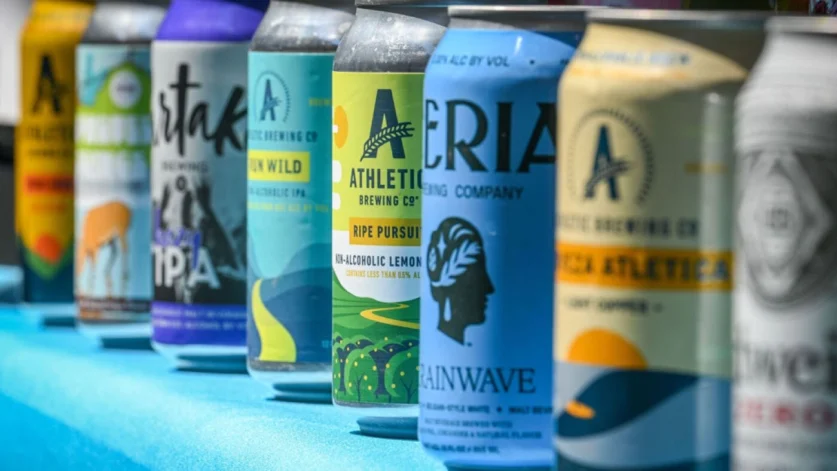
There’s a fast-growing market for nonalcoholic beers, wines, and canned mixed drinks. Some researchers think there should be age limits for buying them.
Darryl Collins owns a zero-proof bottle shop called Hopscotch in Baltimore, Md., selling over 200 options of nonalcoholic spirits, beer, wine, and canned cocktails.
He opened the shop in August 2023 to get in on the booming market for adult nonalcoholic beverages. These are drinks with less than 0.5% alcohol by volume (ABV), marketed towards adults who want to cut back on drinking, avoid hangovers, or prevent other ill health effects from alcohol.
“Every day people are buying bottles of [non-alcoholic] wine – that is our top seller,” says Collins, “Outside of that, it’s going to be what we call a ready-to-drink canned beverage, like canned cocktails.”
This emerging beverage category grew steadily in the past few years and received a major boost during the pandemic; it’s now worth upwards of $500 million a year in the U.S., according to the industry trade group Adult Non-Alcoholic Beverage Association.
Since these beverages contain virtually no alcohol, they can largely be sold to anyone, anywhere; they’re stocked on grocery and convenience store shelves around the country, and purchasable online. But Collins doesn’t sell to anybody under 18 years old at this store, and he checks ID’s to enforce that rule.
“When there’s no minimum age, can a nine-year-old come into your store and buy a non-alcoholic Corona? For me, I don’t want that perception,” Collins says.
Collins set his own age limit, and he’s free to set it however he wants because in Maryland — as in the majority of states — there are no state age restrictions on who can buy adult non-alcoholic beverages.
Now, some health researchers are calling for clear, consistent age limits for non-alcoholic beers, wines and liquors, likening them to candy cigarettes.
“I think there is a risk that these could be an entry product for alcohol use,” says Molly Bowdring, a clinical psychologist and researcher at the Stanford Prevention Research Center, who co-authored a July 8 opinion piece in JAMA Pediatrics on the topic.
“There are so many cues in non-alcoholic beverages that mirror that alcoholic counterpart,” Bowdring says, like how they taste and smell, and provide the cultural experience of sipping from a koozied beer can or a fancy glass. “Additionally, a lot of full-strength alcohol producers are now making non-alcoholic products, so their brands are on these [non-alcoholic] beverages. That might lead to familiarity that then increases the likelihood of purchasing alcoholic products from that producer in the future,” she says.
To figure out which, if any, states limited the sale of adult non-alcoholic beverages, Bowdring called every state alcohol regulator and health department in the country, along with some food regulators. She found that 39 states had no statewide policies, and the states that did were inconsistent – Michigan, for instance, restricted the sale of non-alcoholic beer to those 18 and up, but had no such policies for non-alcoholic wines or liquors.
“A couple of entities emphasized that individual retailers are able to choose to ID if they want to, but that’s really up to their discretion,” Bowdring says, “By and large, there are not restrictions on this. So this seems like a gap we want to fill sooner rather than later to get ahead of a potential public health issue.”
There’s no evidence so far that the boom in zero-proof beverages has led kids in the U.S. to drink alcohol, but Bowdring looks to the recent example of e-cigarettes as a cautionary tale. “Tobacco use was really declining among more recent generations,” she says, “And then there’s this huge marketing push for vaping, and then it led to an uptick.”
With non-alcoholic wine and liquor, Bowdring argues that there should be laws in place to get ahead of that. “If we leave the door open to there being a marketing push for non-alcoholic beverages among kids, could that then lead to increased alcohol use among this generation? We don’t want to wait to find out if that’s going to happen,” she says.
While Marcos Salazar, head of the Adult Non-Alcoholic Beverage Association, agrees that kids should not be drinking these products, he doesn’t think governments need to get involved. “We don’t want any regulation that’s going to have an impact on accessibility and cause additional resources to be spent for brands producing these products,” he says.
He notes that the widening availability of zero-proof adult drinks helps people who are trying to cut back on alcohol for their health.
Salazar says this emerging beverage industry can focus its marketing toward adults through advertising and store placement. “When you go into a retail shop or Whole Foods or Kroger and you see a set of these products, they’re usually near the alcoholic beverages and [offered] as alternatives,” he says. “It’s very clear who they’re marketed to and who they’re for.”
And he points out that some sellers, like the chain store Target, already card for the purchase of these drinks. Collins, with the 18+ bottle shop in Maryland, concurs. As an industry, “we have to self-police, because if we don’t self-police and self-regulate, that’s when government regulates,” Collins says.
Unveiling the Mystery: Why Smirnoff Vodka Was Initially Marketed As a ‘White Whiskey’
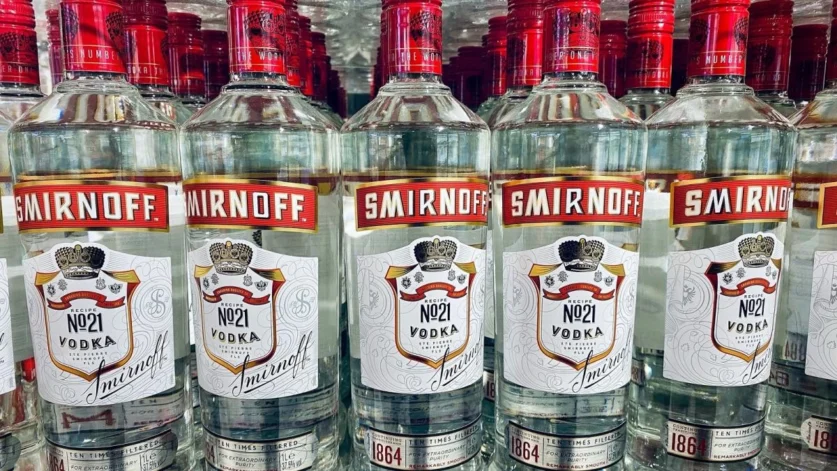
There are few better-known vodka producers than Smirnoff, the world’s best-selling vodka brand. As the top performer in its parent company Diageo’s portfolio, it’s known to sell upwards of 26 million cases a year, and as of 2022, was still showing notable sales growth. Spirit and cocktail fans, it seems, just can’t get enough. Because of its clean flavor profile, it’s easily the most versatile bar cart staple — suitable for making dozens of vodka cocktails — from martinis and fizzes to Moscow mules and spiked lemonades.
Americans didn’t always appreciate a high-quality, blank-canvas spirit, though. It took some convincing to get United States imbibers to warm up to vodka. That convincing was achieved by Smirnoff’s clever marketing. So not only is it the world’s best-selling brand, but it’s also the brand we can thank for vodka being popular in the US to begin with.
The longtime spirit of choice for Americans was whiskey. As America developed after the Revolutionary War and looked to build its economy with domestic goods, whiskey stood out because it didn’t need to be imported like another popular spirit, rum. American affinity for whiskey grew to the point that when Smirnoff vodka hit US shores in 1939, Americans had no interest in a clear spirit boasting clean flavor. So, a South Carolina salesman for the brand decided to pitch vodka as a “white whiskey.” Once Americans saw Smirnoff as a lighter version of something they already loved, vodka took off.
Read more: 13 Liquors Your Home Bar Should Have
Pyotr Smirnoff established his distillery in Moscow in 1864, intending to bring high-quality vodka (usually only available to royals) to the common people. He was one of the first to employ charcoal filtration for vodka unparalleled in purity. It was a hit with his fellow Russians, but Americans needed that “white whiskey” branding to get them to try vodka and appreciate its purity. Smirnoff’s American marketing strategy also led to the development of a legendary cocktail.
The man who brought Smirnoff to the US, an English expat named John Martin, began going door-to-door to get the vodka into bars. To showcase vodka’s versatility and its potential to take on interesting flavors, he partnered with Jack Morgan, the owner of Hollywood bar Cock ‘n Bull, to invent the Moscow mule. It just so happened that Morgan was trying to push ginger beer, which paired beautifully with vodka. So, while there are plenty of good vodkas to use in a Moscow mule, Smirnoff is the one to thank for the tipple. The drink took off, as did vodka martinis in the 1960s, and Americans never looked back to the days of snubbing this clear spirit. The next time you make a refreshing martini with vodka instead of whiskey, you can thank Smirnoff.
Read the original article on Tasting Table.
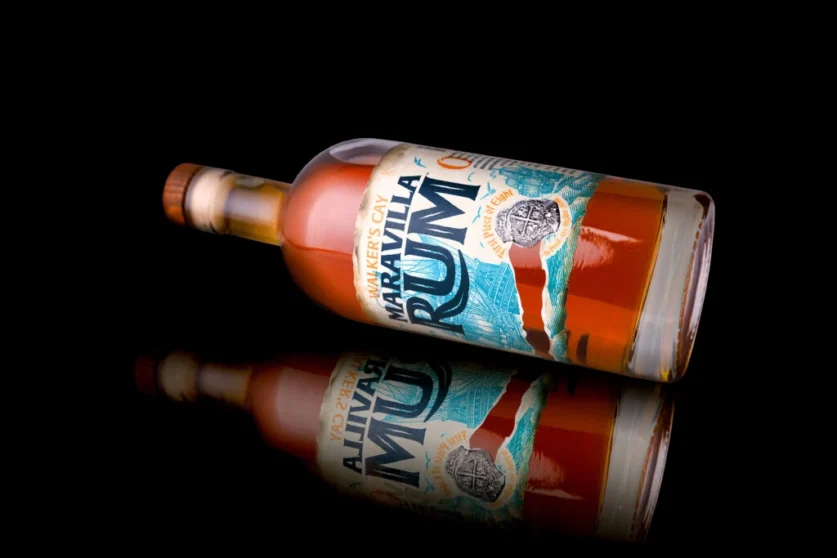
Exploring the Artistry: Behind the Maravilla Rum Label by Fat Basset Design
Sabadì’s new project, Grand Tour Sicilia, reinterprets Sicily’s symbolic places through unusual postcards, as a tribute to the extraordinary Sicilian territory. Founder Simone Sabaini continues to express love for the culture and raw materials of the land.
Discover how the Thoroughbred team channeled Sausalito’s unique history and artistic spirit into the packaging design for Marin Coastal Gin, blending elements of the landscape and vibrant local creativity.
“Skittles® has partnered with us to refresh their global brand, amplifying its storytelling and product innovation. The vibrant new ‘Nonsensical’ design aesthetic creates an experience-driven brand with playful, dynamic packaging designs.”
The branding and label for the Maravilla Rum represents the fateful trip of the Spanish Galleon, Nuestra Senora de las Maravillas on…
Studio La Regina has transformed the packaging of 7 Colli, an artisan amaro with a loyal following, to support its distribution expansion. The new design features a sleek cylindrical bottle and a striking label with a deep black background, gold foil text, and a distinctive, multi-colored number 7.
The Blind Pig Brewery Resumes Craft Beer Production

After closing production last fall, The Blind Pig Brewery is once again brewing beer in its Champaign brewery. New owner Matt Monahan took over the brewery this May and began brewing right away, starting with batches of the flagship ale U of IPA and a lager. The new owner wants everyone to enjoy The Blind Pig brews again, and he even has plans to open a brand-new taproom adjoining the Market Street brewery and packaging facility. Previously, The Blind Pig’s two Downtown Champaign bars and brewery were one business, but the original owner split them in the sale. The two bars, now called Hounds Court and Hounds Rest, have different owners than the brewery, but they can’t wait to put The Blind Pig beers back on the bar’s tap.
The new owner Monahan hired a team to bring The Blind Pig beers back: Lawrence Bolton and B.J. McCabe. McCabe used to work at The Blind Pig, and Monahan met Bolton as members in C-U’s organization for homebrewing aficionados BUZZ Club; the new owner calls Bolton the best homebrewer he knows. I sat down with three to learn about the new iteration of The Blind Pig Brewery.
Smile Politely: How’s production going? What were the first beers you made as a new owner?
Matt Monahan: Right now, we’re in distribution only. We’re in all the spots we were selling cans before. We’ll have U of IPA at football games this fall at the stadium. All the production is for cans distribution. People can already find U of IPA at Binny’s, Schnucks, and some other places. Soon, we’ll package a batch of pilsner and another batch, a bigger batch, of U of IPA. The next batch will be the batch that will be half cans and half kegs.
Currently, we’re only making the best hits. Please be patient with us until we get a taproom going, and we can make the lesser known one-hit wonders. We’re anxious to put our own twists on the beers, but our twist right now is quality, repeatability for the beers, getting the freshest grains and hops into the beer, and bringing practices up to date with the modern brewing practices of today.
SP: Let’s circle back to a taproom?! That’s cool. When do you anticipate The Blind Pig taproom to open?
Monahan: I hope to have the taproom before the end of the year. And hopefully with a kitchen and a menu that appeals to everyone including young families and kids. We’re here in the center of it all here in Downtown Champaign, and we want to be an attractive place for people to start their night or end their night or hang out.
We want a cool experience, a taproom where people can see into the brewery. There’s two excellent breweries in the area, and we want to complete the triangle. There needs to be a brewery in Champaign; there needs to be The Blind Pig. We couldn’t fathom The Blind Pig going away. We need it back and better than ever.
SP: When do you think The Blind Pig’s beers will be on tap in Downtown Champaign?
B.J. McCabe: It depends, but it could be out in restaurants or bars by next weekend. The beers currently in process are the U of IPA, the coffee stout, raspberry wheat, Blind Pig reserve, Blue pilsner, and tomorrow, we’re brewing Oktoberfest. They’ll hit shelves next month.
Lawrence Bolton: We’re picking up the coffee from Columbia Street Roastery next week for the coffee stout. We want to deliver the same quality beer that everyone expects from The Blind Pig.
SP: I need to know: what’s your Blind Pig brew?
Monahan: All of them! [laughs] But if I had to pick one, the U of IPA.
Bolton: Blue pils, but the U of IPA is really good, too. I like West Coast IPAs over hazy.
McCabe: My favorite is the seasonal Christmas beer Buddy Christmas. It has coffee in it, and it’s a bigger stout with lactose.
For more updates on the brewery, follow The Blind Pig on Facebook.
The Blind Pig Brewery
505 N Market St
Champaign
Food + Drink Editor / /
Regulators Take Action as Wastewater Treatment Issues Plague Major Hopland Wine Production Facility
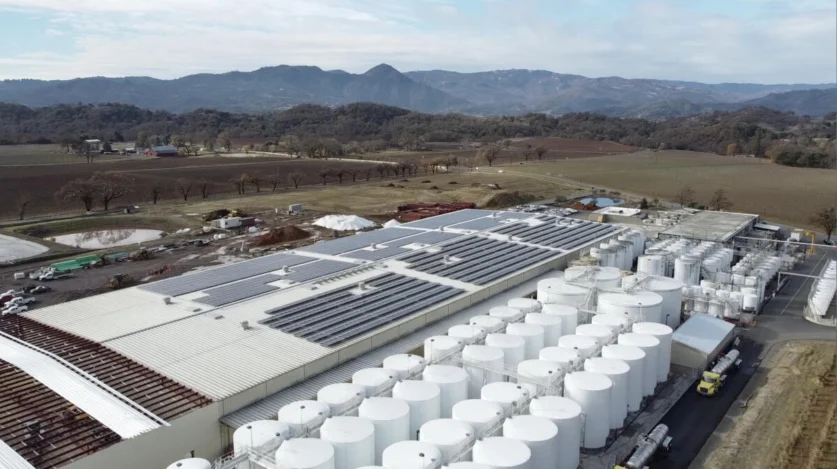
HOPLAND ― Besides the millions of cases of wine bottled each year at Ray’s Station Winery off Highway 175, the massive facility has been producing something else in recent years, to the chagrin of its neighbors.
An aroma of raw sewage and rotten eggs, with notes of hot garbage and sweaty feet, permeates the air much of the time going back five years and, this year, pretty much constantly since early spring, residents say.
It’s a stench described as that of “rotting teeth” or a “pig farm” or “fecal matter”― an odor so foul it’s ruined parties, driven neighbors to shut their windows and stay indoors and has, they are sure, degraded their property values along with their quality of life―especially when the weather is warm.
“There have been moments where, like, you walk outside and you gag physically,” said one resident, Taylor Macri. “It’s so strong that you have to hold your breath and run to the car.”
And this year, “it’s gotten so much worse ― exponentially worse,” she said.
The source is wastewater from wine production and bottling activities that have expanded tremendously on the site since 2012. That’s the year that what had been Weibel Winery ― the last of several smaller operations there― was snapped up by Vintage Wine Estates amid a period of rapid acquisition that saddled it with debt and since has pushed it to the brink of bankruptcy.
At the time Vintage Wine Estates bought the property about four miles east of Highway 101, then-president Pat Roney said he planned to crush 400,000 cases of wine at the facility in the coming year.
Roney also told The Press Democrat that having a bulk processing facility in Mendocino County was advantageous because “there are no use permits required, so we can continue expanding to unlimited production up there.”
As much as 11 million cases of wine may now be bottled each year at Ray’s Station, much of it made by fast-growing Josh Cellars, though Vintage Wine Estates, whose operational offices are in Santa Rosa, owns close to three dozen brands, including at least one cider.
A call to Ray’s Station Winery bottling manager Scott Wallace was not returned. Operations head Rodrigo de Oliveira said he would find a company representative to answer questions but did not call back. A second call to his office was unanswered.
According to the North Coast Regional Water Quality Control Board, it appears the winery’s swift expansion may have overwhelmed its wastewater treatment facilities, which regulators say are poorly designed, in disrepair and lack adequate capacity, though the system is intended to handle an average daily flow of 91,100 gallons at peak production.
The problems go beyond wretched odors and have repeatedly put groundwater and surface water connected to the Russian River at risk of contamination, in addition to violating the winery’s permit and general requirements, regulators said.
After a series of actions over several years, including four formal notices of violation, the water quality agency has issued several new orders over the past month intended to force the company to bring its wastewater treatment system under control at last.
A Draft Cease and Desist order issued Tuesday is the latest attempt by water quality regulators to bring order to a situation that, since June 17, has included a torn or punctured liner in one wastewater treatment pond and the risk of rupture and leakage in the second.
The Cease and Desist Order must be approved by the board’s six members in order to be enforceable. A hearing will be held on the matter in the first few days of October.
A Cleanup and Abatement Order and Investigative Order issued June 20 is enforceable now, however. It requires Vintage Wine Estates to develop an urgent corrective plan by Friday and provide information to regulators necessary to oversee improvements.
The most urgent problem apparently arose when wastewater somehow accumulating underneath the pond liners, backed up underground drains, though they were capped five years earlier, said Jeremiah Puget, senior environmental scientist with the water quality agency’s enforcement unit. The backed-up fluid put upward pressure on the liners so they ballooned outward and, in one case, ruptured, though regulators are still awaiting a full explanation, Puget said.
The agency’s actions go back years and are based, in part, on inspections and findings related to odor complaints raised since January 2019, as well as evidence of problems associated with the wastewater treatment system, which includes two lined aeration ponds for wastewater treatment, one treated wastewater storage pond and five rapid infiltration basins used to dispose of treated wastewater.
At least twice in recent years, an aerator has broken, including this spring, when repairs were delayed because a particular component was unavailable, winery representatives told regulators.
The aerator failure, which persisted for more than a month, happened to coincide with Mother’s Day and Memorial Day, creating havoc for neighbors who had planned to host events. It was reportedly repaired May 29, but the odor has not abated.
An earlier series of violations, from October 2022 to April 2023, involved workers found to be disposing of excess treated wastewater on green and landscaped areas around the property, a practice prohibited since the organization removed a 12-acre vineyard that once grew there, according to water quality board documents.
Staffers informed regulators that the facility’s five quarter-acre rapid infiltration basins, designed for the disposal of treated effluent, were not percolating at the expected rate. This required an alternative disposal route that regulators say threatened contamination of groundwater and surface water resources through commingling with stormwater drainage, according to board documents.
Some treated wastewater has also ended up in stormwater structures that drain to a vineyard pond across the highway, from which it can reach the Russian River, regulators say.
Other issues arose from grape pomace left over from wine production, which was stored in a corner of the property about 150 feet from the nearest home after the facility managers could find no other disposal option.
“That ended up stinking really badly,” said Ken Richter, a neighbor who plans to sell the ranch house he shares with his wife off the north edge of Highway 175.
Richter, a vineyard manager, says there’s no way the wastewater aeration ponds and other facilities are sufficient to “handle the amount of wastewater they push through,” and with only about 35 acres, 10 of them built, it seems unlikely they’ll be able to, he said.
“It’s criminal as far as I’m concerned,” Richter said. “I don’t know how they can get away with it …. Every county agency we’ve talked to has just done nothing for us.”
“It really has affected us,” said Marie Kong, one of a handful of others with rural homes just east of the winery.
Vintage Wine Estates, in a public video touting the site’s tremendous capacity and function as “the primary workhorse” for its bottling operation, said in addition, “We’re proud to be good neighbors and supporters of our community.”
But neighbors say their dreams of living in a beautiful, rural valley and enjoying time outdoors with family have been destroyed.
“They did construction for years and years and years and years and moved a whole lot of dirt for years, and for years and years and years we had construction noise,” said Kong, who, with her husband Todd, built their home in 1991. “They kept adding tanks, and it’s huge, and even that, I was like, ‘OK.’”
“… And then the smell started,” she said.
Russian Riverkeeper Executive Director Don McEnhill said the recent regulatory notices had gotten his organization’s attention, which is now looking into the matter.
“It’s pretty easy to control that environment unless you’re not trying,” he said. “This is not rocket science. It’s about making sure you have the capacity to treat the volume you have, and you have the appropriate protocols and treatment systems.
“It’s pretty simple stuff, and they shouldn’t be getting it wrong, but if you under-invest in your treatment systems or you’re undersized, that’s a real problem.”
You can reach Staff Writer Mary Callahan (she/her) at 707-521-5249 or mary.callahan@pressdemocrat.com. On X (Twitter).