Capturing the Spirit of Celebration: A Photo Essay from the Maryland Wine Festival

Pictures from the Maryland Wine Festival on the grounds of the Carroll County Farm Museum on Saturday, Sept. 14.
Celebrating 40 Years of ‘Miami Vice’: Top Spots to Enjoy Themed Cocktails

A Miami Vice in honor of Miami Vice’s 40th anniversary
Miami is a city that embraces its unique characteristics: from its perpetual summer ambiance and dynamic culinary scene to its history during the “cocaine cowboy” era, and being famously depicted in the beloved TV series Miami Vice.
The groundbreaking crime drama starred Don Johnson and Philip Michael Thomas as undercover detectives. It was pivotal in integrating pop culture, fashion, and music, significantly shaping how Miami is perceived. The series premiered on NBC on September 16, 1984, lasting five seasons and ending with a notable celebration at Mac’s Club Deuce, the oldest bar in Miami.
With the 40th anniversary of this iconic show upon us, commemorating the occasion with a classic Miami Vice cocktail is the perfect way to enjoy the continuing hot summer weather.
Though unrelated to the famed television series, the Miami Vice cocktail has become a nostalgic way to mark 40 years since the show’s debut. This delightful drink combines elements of a piña colada with a strawberry daiquiri, a concoction believed to have originated in Miami, hence its name. This cocktail is a staple at many beachside and poolside bars, and more recently, many cocktail bars and restaurants offer a non-frozen, sophisticated version that still captivates the essence of the original.
Mrs Pink at Eating House
An example of an innovative take on the traditional Miami Vice can be found at Eating House, where it’s considered a sort of secret item. According to Giorgio Rapicavoli, co-owner and chef at Eating House, the bar manager, Jordan Nance, was inspired by their Mr. Pink cocktail and created the Mrs. Pink. This variant features Havana Club Rum, lime juice, coconut cordial, and a unique wild strawberry liqueur called Fragola.
For those preferring the classic variety, The Clevelander hotel offers the original Miami Vice drink as one of its most popular poolside beverages. In celebration of the show’s anniversary, you can enjoy the Miami Vice Frozen at a special price of $10.
Miami Vice Negroni at Santa Diabla
Visit Santa Diabla, the hidden bar within Chela’s Cocteleria in Miami Lakes, to experience a unique take on the classic cocktail with their Miami Vice Negroni. It includes a mix of pineapple infused Canaima Gin, Campari-soaked strawberry preserve, and coconut fat-washed sweet vermouth di Torino. This intriguing drink is featured at the tiki style pop-up, Diabla’s Cove.
Miami Vice at Night Swim
For a traditional Miami Vice, head to Night Swim. This rooftop venue serves a perfectly blended icy treat combining layers of piña colada and strawberry daiquiri. Indulge in this cocktail while enjoying panoramic views of Biscayne Bay and the Miami skyline.
Miami Vice cocktail at Dom’s
Enjoy a unique take on the classic Miami Vice at Dom’s, crafted with Havana Club Añejo Classico Blanco, strawberry, pineapple juice, and coconut water. This refreshing and light concoction is perfect for starting your evening.
Miami Vice cocktails at Monty’s
Explore a South Florida variant of the frozen Miami Vice at Monty’s Raw Bar. Deviating from the traditional piña colada and strawberry daiquiri, this version features a Rum Runner replacing the daiquiri, adding a local touch. Originating from Islamorada’s Tiki Bar in the Florida Keys, the Rum Runner includes both light and dark rum, blackberry and banana liqueur, and fresh pineapple and orange juice, finished with 151 proof rum, all blended with the frozen piña colada.
What’s better than a poolside frozen cocktail?
This might seem obvious, but just in case: if you’re hanging out at one of Miami’s many hotel pools and you see there’s a piña colada and a strawberry daiquiri on the menu then you can absolutely treat yourself to a Miami Vice. Some of these hotels include Fontainebleau Miami Beach, Loews Miami Beach, Kimpton Epic, Faena Miami Beach, and The Gates Hotel — just to name a few.
One Community. Many Voices. Create a free account to share your thoughts.
Our community is about connecting people through open and thoughtful conversations. We want our readers to share their views and exchange ideas and facts in a safe space.
In order to do so, please follow the posting rules in our site’s Terms of Service. We’ve summarized some of those key rules below. Simply put, keep it civil.
Your post will be rejected if we notice that it seems to contain:
User accounts will be blocked if we notice or believe that users are engaged in:
So, how can you be a power user?
Thanks for reading our community guidelines. Please read the full list of posting rules found in our site’s Terms of Service.
Omaha Sports Commission Hosts Exciting Tournament Featuring Cornhole, Beer, and Football in Blackstone

A tournament Saturday in Omaha’s Blackstone District transformed Farnam Street into a competitive cornhole arena.
Duo teams competed in the Omaha Sports Commission’s second annual Cornhole Classic, which was enhanced by the presence of beer, a DJ, and screens broadcasting college football games.
Following a brief explanation of the rules, the games commenced at around 11 a.m. with teams aligning themselves along the cornhole boards arrayed across Farnam Street, which was cordoned off between 39th and 40th Streets for the occasion.
Teams took part Saturday in the Omaha Sports Commission’s second annual Cornhole Classic on Farnam Street in the Blackstone District.
Throughout the day, Blackstone was buzzing with live music and various celebrations as a part of its Second Saturday events.
The champions of the event’s double-elimination cornhole tournament were poised to receive $200 worth of gift cards for local shops in Blackstone, along with a new set of cornhole boards. The entry cost for each team was $45, which included two drink tickets.
Larissa Buster and Marisa Mathews, colleagues from the College of St. Mary, formed a team named “Is(s)a Squad.” Their involvement in cornhole stretches beyond this event; they have also participated in a recent league as hobbyists.
Buster mentioned her fondness for the simplicity of cornhole and looked forward to competing with Mathews to see how well they would perform in this particular Saturday’s tournament.
“It’s a nice summer and early fall game,” she said. “It’s a beautiful day out for it.”
Mathews said she’s gotten more into playing cornhole in the last few years.
“I’m originally from California and never had played it before I came to the Midwest,” she said. “It’s pretty fun.”
Amir Parikh of Chicago tosses a beanbag during the Cornhole Classic tournament on Saturday.
The atmosphere of the event created a jovial environment, according to Buster.
“It feels like a neighborhood celebration for Blackstone,” she commented. “It’s an extremely enjoyable event.”
Varnica Bajaj chose to bring Amir Parikh, who was visiting from Chicago, to the tournament for an engaging Saturday activity. They warmed up while waiting for their initial match.
“It appeared to be a fantastic chance to connect with the Blackstone community,” Bajaj remarked.
Creighton’s Norah Sis spikes the ball past USC’s Mia Tuaniga in a college volleyball match at Sokol Arena in Omaha on Thursday, Sept. 5, 2024.
Creighton’s Kiara Reinhardt, left, embraces Kendra Wait as they celebrate a point against USC in a college volleyball match at Sokol Arena in Omaha on Thursday, Sept. 5, 2024.
Creighton’s Kendra Wait, left, and Elise Goetzinger try to block the ball against USC in a college volleyball match at Sokol Arena in Omaha on Thursday, Sept. 5, 2024.
Craig Dykers, a Snøhetta architect, discusses the exterior of The Phillip G. Schrager Collection at The Joslyn in Omaha on Friday, Sept. 6, 2024.
Sunlight pierces through the windows inside The Joslyn on a bright Friday morning, September 6, 2024.
During an intense first set at the Devaney Center in Lincoln on Thursday, September 5, 2024, Nebraska volleyball players Bergen Reilly (2) and Andi Jackson (15) attempt to block a shot from Citadel’s Ali Ruffin (18).
Leah Robinson of Elkhorn North competes energetically in the Platte River Rumble held at Eugene T. Mahoney State Park in Ashland on Thursday, September 12, 2024.
A tightly packed group of runners kick off the Large School Varsity boys 5k at the commencement of the Platte River Rumble, located at Eugene T. Mahoney State Park in Ashland, on Thursday, September 12, 2024.
A large cluster of runners starts close together at the start of the Large School Varsity Boys 5k in the Platte River Rumble at Eugene T. Mahoney State Park in Ashland on Thursday, Sept. 12, 2024.
Liana Pendley, of Plattsmouth, Neb., carries red balloons prior to a college football game between the Nebraska Huskers and the Colorado Buffaloes in Lincoln, on Saturday, Sept. 7, 2024.
The Nebraska Cornhusker Marching Band line up before a college football game between the Nebraska Huskers and the Colorado Buffaloes in Lincoln, on Saturday, Sept. 7, 2024.
Nebraska’s Dante Dowdell (23) jumps over Colorado’s Shilo Sanders (21) with the ball during the first half of a college football game at Memorial Stadium in Lincoln, on Saturday, Sept. 7, 2024.
Subscribe to our Daily Headlines newsletter.
News Reporter
{{description}}
Email notifications are only sent once a day, and only if there are new matching items.
Ranking All Ketel One Vodka Flavors: From Best to Worst
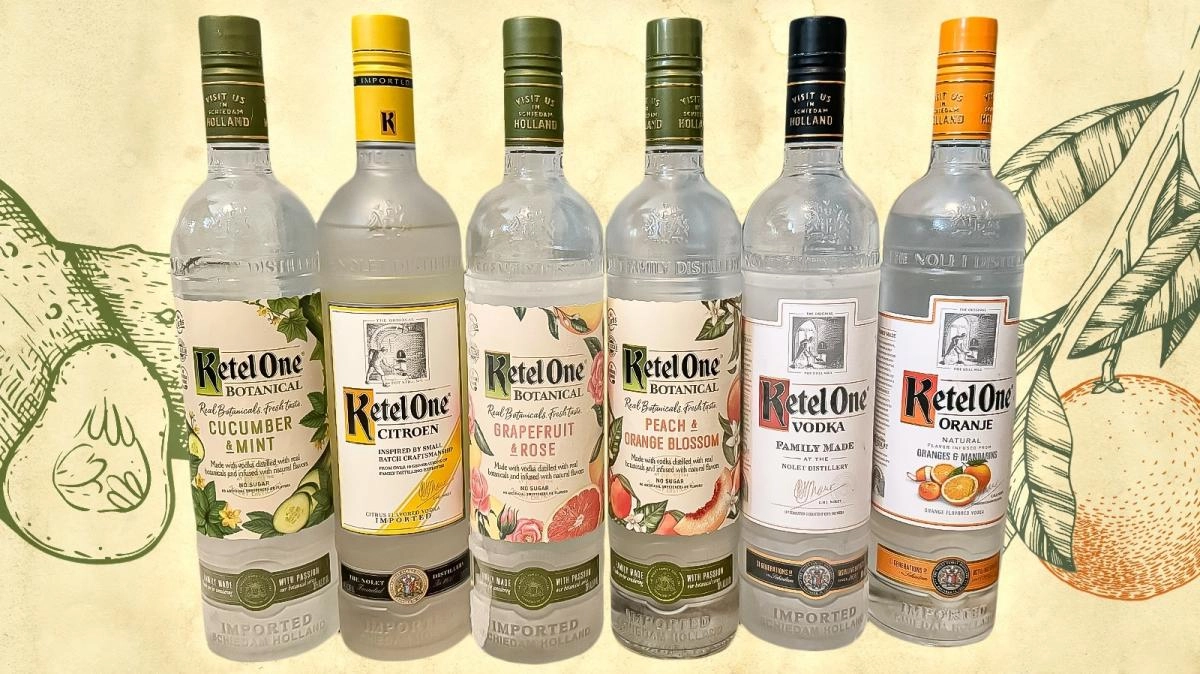
Hailing from Schiedam, Holland, Ketel One vodka stands as a prominent figure in the spirits industry. Particularly favored by bartenders for its mixability, Ketel One was established in 1983 by the Nolet family’s 10th generation, well-known for their historical Nolet Distillery. The creation of Ketel One was driven by the ambition to craft the ideal vodka for cocktails. Even after several decades, the brand stays at the forefront of innovation within the alcohol and bar industry through its introduction of different flavored vodkas such as Citroen, Oranje, and the Botanical series.
These Ketel One flavors complement a diverse array of other popular vodka brands, stretching from names like Smirnoff and Svedka to Absolut. Flavored vodkas are primarily utilized to enhance the tastes in mixed drinks, extending from fruity to citrus profiles, and experimenting with unique combinations such as orange blossom or cucumber with mint.
For enthusiasts keen on discovering the ideal Ketel One vodka tailored for their tastes, I will evaluate the brand’s current offerings. I’ll analyze these options based on their intricate flavor combinations, ultimately selecting the top recommendation. Even if vodka is not usually your favorite spirit, the top contender on this list might just sway your preference.
Some recommendations are based on firsthand impressions of promotional materials and products provided by the manufacturer.
Read more: 13 Liquors Your Home Bar Should Have
Ketel One Citroen vodka is crafted with four types of lemon and two types of lime, aiming to achieve a spirit that’s fresh and rich in citrus flavors. However, it disappointingly doesn’t hit the mark of being fresh or tasteful. The citrus nuances are subdued by the 40% alcohol content, resulting in an 80-proof vodka that is dominantly alcoholic in taste.
The appearance of the Citroen bottle is visually pleasing, featuring a frosted glass look with splashes of yellow adding vibrancy. Yet, upon opening, it releases a strong smell resembling citrus-scented nail polish remover. This aroma confirms the dominance of alcohol in this vodka, echoed by its flavor. The taste of citrus is faint, lacking distinct notes of lime or lemon.
This vodka could potentially be suitable for a martini with a twist if that’s your preferred cocktail, as it won’t overpower the drink with lemony flavors. The addition of vermouth and a lemon garnish might help soften the vodka’s harshness. Nonetheless, drinking this vodka straight is less than ideal; it’s far from the smooth experience advertised by the brand, feeling more burning on the tongue and unpleasant on the nose when consumed on its own.
Ketel One’s orange vodka skillfully blends Valencia and mandarin oranges, enhancing the brand’s range with a more vibrant and distinct orange freshness. Oranje possesses a potent orange scent that introduces a tropical nuance to its flavor profile, while maintaining a 40% alcohol by volume. This flavor profile makes it an ideal choice for summer drinks, presenting a welcoming mild sweetness upon opening.
Compared to the Citroen variety, Oranje is noticeably smoother, making it potentially more suitable for drinking neat or over ice. The subtle sweetness is likely attributed to the Valencia oranges, known for their balanced sweet and tart characteristics. These oranges retain their sweetness after being exposed to air, unlike others that might turn bitter. This characteristic makes them a popular choice for orange juice, and in Oranje, they ensure a lasting sweetness throughout the consumption of the bottle.
While the mandarin element is subtler, it enhances the tropical scents of this vodka, as mandarins are often noted for their citrusy, floral aroma. Although the two orange varietals are blended smoothly, they distinctly contribute to creating a singular, enjoyable flavor in Ketel One Oranje.
In line with Ketel One’s Botanical series, the peach and orange blossom variant also boasts natural flavoring without the use of artificial additives. Like other spirits in this series, which all possess a 30% alcohol by volume, these flavored vodkas contain no additional sugar. Despite the absence of extra sugar, the pronounced peach flavor remains pleasant and satisfying to drink.
Scents play a crucial role in setting the first impression of various foods and beverages, and Ketel One has successfully captured this essence with their bottle. The aroma of this flavored vodka is akin to a warm, tropical, fruity candle, enticing like a carefully mixed beverage tempting you to indulge. Although the scent is more pronounced than the flavor, this peach and orange blossom variant stands out as the smoothest and most palatable in their flavored range to date.
The distillation process includes botanicals to embed the peach and orange blossom flavors directly into the vodka. While the orange blossom is subtle, its absence isn’t felt due to the dominant and delightful peach flavor. This makes it enjoyable straight, without the need for mixing. Nevertheless, it would also complement a sweet cocktail, such as a cosmopolitan, enhancing the versatility of the Ketel One Botanical for various drinking preferences.
Ketel One Botanical Grapefruit & Rose vodka is also a top contender, equally celebrated for its aroma and flavor. The fragrance features a floral note from the rose paired with a prominent grapefruit presence. Yet, in taste, it is the rose that dominantly flavors the vodka, bordering on overwhelming but maintaining a delightful balance. This rose flavor addition enriches the beverage.
You will notice a subtle sweetness in this vodka that contributes to its overall smoothness, making it suitable for neat consumption or served on the rocks. For those who prefer mixed beverages, it blends superbly into a cosmopolitan due to its floral and sweet notes that align well with the cocktail’s character. Like the other Ketel One variants, the pleasant and strong aroma enhances the drinking experience, with the grapefruit and rose vodka tasting as enchanting as a high-quality candle smells.
If you’re a fan of unflavored spirits, you’re in luck. At 40% ABV, the original Ketel One Family Made Vodka bottle stands strong among its flavored counterparts — proving that simplicity often prevails. This traditional vodka is characterized by a smooth texture and a crisp taste. It’s comparable to the brand’s Botanical Cucumber & Mint, albeit less intensely vegetal.
Vodka is generally known for its neutral flavor profile, and this Ketel One bottle is no exception. It offers a smooth, almost creamy texture, with the taste of alcohol being distinct yet not overpowering. Hence, it serves as an excellent base for any cocktail, ranging from espresso martinis to bloody marys. Ultimately, the quality of vodka is enhanced by the flavors with which it mixes, and Ketel One has nearly perfected its original formula, making it an ideal choice for vodka-based drinks.
The Ketel One Botanical Cucumber & Mint vodka stands out due to its versatility and broad appeal. Its aroma is predominantly vegetal, so much so, it’s reminiscent of tequila. This makes it an attractive option for tequila lovers who are exploring vodkas, whether it be for an evening or a more permanent switch.
Initially, I anticipated a robust mint flavor, but it turned out to be quite the opposite. The cucumber leads the flavor profile, rendering this vodka exceptionally refreshing and suitable for neat consumption. The mint adds a subtle zest, enhancing the balance and roundedness of the flavors. This flavored vodka is perfect for a vodka-based mojito recipe or to innovate a spritz cocktail. Its refreshing nature was a pleasant surprise, striking a perfect balance between maintaining vodka’s simplicity and infusing excitement into each sip. Among all the Ketel One varieties, this one is my top preference.
Each variety of Ketel One vodka was sampled neat after being chilled. The most appreciated flavors were those with a balanced taste profile, smooth on the palate, emphasizing the neutral character typical of vodka over the alcoholic bite. Flavors that seemed most adaptable—suitable for mixing in various cocktails or enjoyable on their own—received the highest ratings. Preference was also given to those flavors I would revisit and recommend as staples for vodka enthusiasts or those new to vodka.
Read the original article on Tasting Table.
Celebrating 150 Years: Top Pinot Noir and Chardonnay Vineyards Craft Exclusive Champagne Wine

A widow was instrumental in pioneering the popular Brut Champagne style 150 years ago, and today, a notable woman commemorates her legacy with the launch of an exclusive champagne.
Two glasses of Champagne
The cellar of Champagne Pommery
An unexpected explosion, followed by a cascading fountain of champagne and flying glass shards, alarmed the visitors greatly, some of whom trembled with fear. Yet, this did not deter them from returning, often with more friends and family in tow. They were drawn to a captivating adventure, plunging more than 100 feet below ground by descending 116 steps into a vast subterranean realm adorned with dramatic sculptures etched into the chalk walls. This extraordinary experience, a pinnacle of amusement during those times, was surprisingly the achievement of one individual—a widow from the late 19th century in the renowned Champagne wine region.
A tableau carved into the Pommery cellar walls
In 1868, Madame Pommery initiated a significant construction project in Reims, located in the illustrious Champagne region of France. This venture extended over 11 miles and delved deep into the earth’s chalk-rich strata. Being an art enthusiast, Madame Pommery had an artist sculpt legendary scenes into the chalk walls, which came to life as visitors illuminated them with candles while touring the tunnels beneath the Champagne Pommery estate. At the time, creating thicker glass Champagne bottles to withstand internal pressure was unknown, leading to occasional bottle explosions. Ingeniously, Madame Pommery supplied visitors with fencing masks for protection against such accidents.
In a groundbreaking move in 1874, Madame Pommery introduced the iconic Pommery Brut Champagne. Before this, most Champagnes were sweetened heavily with sugar and considered dessert wines. Madame Pommery’s creation of the dry Brut style redefined Champagne as a beverage suitable for consumption before, during meals, or on its own.
To commemorate this significant innovation, the Vranken family, current owners of Champagne Pommery, led by the formidable Nathalie and her daughter Pauline, is releasing a special cuvée named Apanage 1874.
Champagne Pommery ‘Apanage 1874’ Brut NV
Six years prior, Champagne Pommery’s cellar master Clément Pierlot was entrusted by Nathalie Vranken with the significant duty to craft a special champagne to celebrate Madame Pommery’s illustrious accomplishments. He concocted a blend predominantly sourcing great vintages from 2018, 2015, and 2012, supplemented with 18% reserve wines from the ancient Pommery vaults for added intricacy. The blend primarily involves Chardonnay and Pinot Noir from stellar vineyards including those of Premier or Grand Cru status, and rare plots such as the Les Clos Pompadour on Pommery’s estate. This vineyard is among the esteemed enclosed vineyards in the Champagne region, renowned globally. Clément believes that Apanage 1874 aligns with the maison’s historic practices, merging the “delicacy and precision of a modern creation with the depth and complexity of the Pommery legacy.”
Madame Pommery
Madame Pommery was a celebrated supporter of the arts, transforming the Pommery cellars into a stunning art gallery through her patronage. Continuing this legacy, current proprietor Nathalie Vranken mirrors this profound art enthusiasm, annually hosting the EXPERIENCE POMMERY exhibit for two decades, featuring over 300 international artists within the Gallo-Roman cellars of the estate. Acknowledging its cultural and historical significance, the Pommery estate has been recognized as a UNESCO World Heritage Site since 2015.
Pommery Victorian-style estate
Art has always been a driving force in Nathalie’s life and everything about Pommery, the innovation to excel with making sparkling Champagne wine, the gorgeous Pommery Victorian-style estate with Gallo-Roman cellars and the dedication to art for over a century, represents everything she loves about her favorite artists: innovation, excellence, commitment, beauty and soul. Yet recently, other famous Champagne houses have also taken on art projects and Nathalie thought that perhaps it was time to stop her art exhibition at Pommery as it seemed the combination of art and Champagne was everywhere now. For a brief moment, she questioned herself, saying, “Is this it? Am I done?” then, the minute she said it, that passion reignited within her and she fiercely stated, “No, I want to do it forever.”
And so, she called her latest exhibition “Forever,” bringing in many of the past creative works of art that have thrilled guests over the years. At the center of the exhibition is a gigantic sculpture in the shape of a pink heart that represents a heart that beats forever. The heart started with Madame Pommery and today it continues with Nathalie, 150 years of devotion that would transport Champagne lovers to a world of radiance and magic.
Champagne Pommery ‘Apanage 1874’ Brut NV
Champagne Pommery ‘Apanage 1874’ Brut NV features primarily Pinot Noir and Chardonnay, sourced from premium Grand Cru and Premier Cru locations, including Pommery’s exclusive Les Clos Pompadour, with a minor addition of Pinot Meunier. This exceptional Champagne is crafted using top vintages from the last 15 years, predominantly from 2018, 2015, and 2012, complemented by 18% older reserve wines. This combination provides an intricate complexity, celebrating a significant milestone. It exhibits a captivating aroma of freshly baked brioche, complemented by hazelnut and white flowers, with a palate of creamy fine bubbles, vivid lemon curd, and peach crumble, all balanced by sharp acidity and a lingering mineral-laden finish.
One Community. Many Voices. Create a free account to engage with your thoughts.
Our community fosters connections through open and thoughtful discussions. We encourage our readers to share their perspectives and engage in exchanges of ideas and information in a respectful environment.
For a positive experience, please adhere to the guidelines stated in our site’s Terms of Service. Below are some key points to remember to maintain civility in your postings.
Your post will be rejected if we notice that it seems to contain:
User accounts will be blocked if we notice or believe that users are engaged in:
So, how can you be a power user?
Thanks for reading our community guidelines. Please read the full list of posting rules found in our site’s Terms of Service.
Two Crucial Details Every Bourbon Expert Looks for on a Whiskey Label Before Purchase
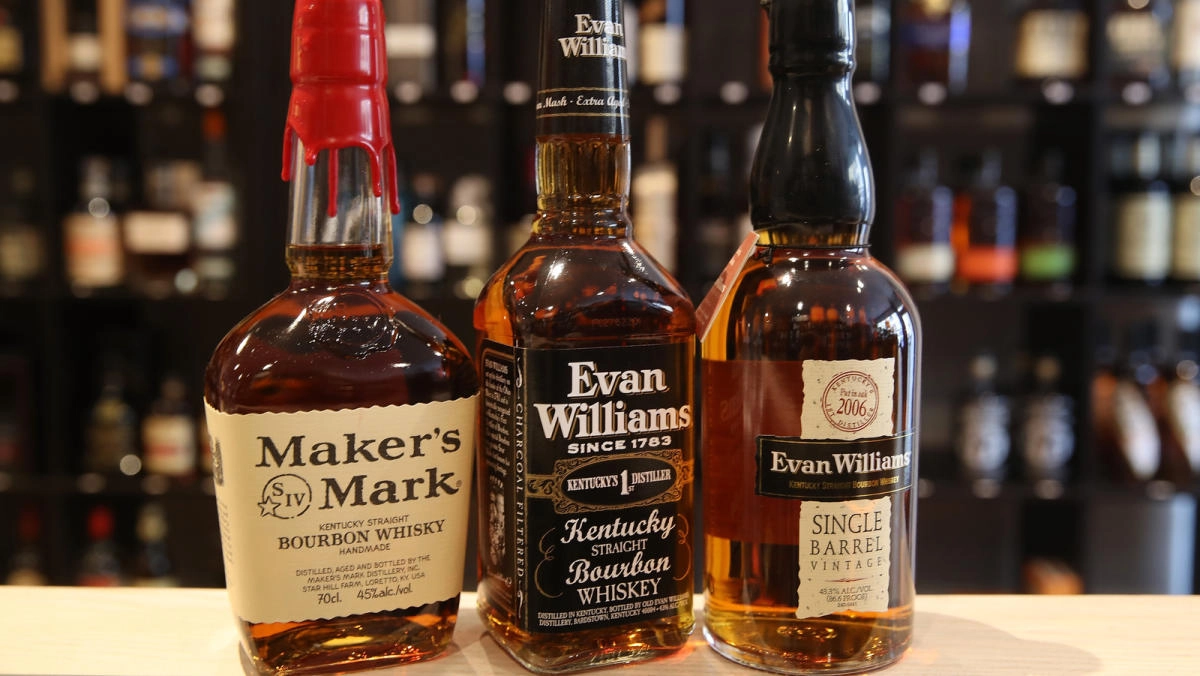
For whiskey lovers, perusing the kaleidoscope of light amber to darker mahogany spirits in the liquor store is an experience to relish. Seemingly endless choices fill the shelves, but only one will end up filling your glass. Understanding this, a touch of FOMO commonly creeps in. With so many options, how can you determine which one you’ll enjoy the most? Which browns are best, and can you know if a whiskey is good just by looking at it?
To get answers, Foodie contacted Chris Blatner, an executive bourbon steward, founder of Urban Bourbonist, LLC, and the executive director of Bourbon Charity. One of the first two things Blatner searches for when picking out a whiskey is where it came from. He says, “I am always looking to see where the bourbon was made, the state of origin, as well as the distillery that made it. This will give you some clues as to the quality of the product.”
Contrary to what some believe, bourbon does not have to be made in Kentucky. It can only be made in the United States, but different states distill it under varying conditions. Cold winters and hot summers in the Bluegrass State create an optimal environment for aging the liquor that accents its sweeter notes. States with more arid conditions experience different environments during distillation, which affects the interaction between spirit and barrel and therefore the final flavor profile. After you’ve learned where a whiskey comes from, Blatner also recommends taking a look at the age listed on the label.
Read more: The Sweet Reason Mexican Coca-Cola Tastes Different
Most folks understand that the longer a spirit ages, the more flavor aging barrels impart to the liquid. “I’m also looking for an age statement,” says Blatner. “Typically I want my bourbon to be at least 4 years old which is a minimum amount of time in a barrel to start taking on some nice flavors and transform into a quality product to drink.”
While some whiskeys come with a no-age-statement printed on the label, many others proudly display how long the liquor has matured before it was released for distribution. Older varieties are not necessarily better whiskeys, but the aging process does help to soothe some of the harsher flavors detected in younger spirits. The precise amount of time it takes for bourbon and other similar liquors to reach peak drinkability varies, but many believe that bourbons are just right after maturing for between four and eight years.
The type of barrel the spirit ages in also affects the flavor profile, but no matter the kind of barrel used to mature the liquor, it takes time to develop the delicate sweet notes expert connoisseurs long for when they take that first sip. While we’re often urged to not judge a book by its cover, when it comes to whiskey, it would serve you well to take a gander at the label before making your final decision on what to take home.
Read the original article on Foodie.
Unveiling Ancient Secrets: How the Mesopotamians Brewed Their Beer

Tate Paulette adds bappir to a fermentation vessel while trying to replicate an ancient beer. Photo by Brian Zimerle.
While working on his dissertation about grain storage in Mesopotamia, Tate Paulette joined forces with the Great Lakes Brewing Co. in Cleveland and the University of Chicago’s Institute for the Study of Ancient Cultures to recreate a Mesopotamian beer.
Positioned between the Euphrates and Tigris Rivers, the now called Iraq, northern Syria, and southeastern Turkey was the birthplace of the world’s first cities. Around 3400 to 3200 B.C., Mesopotamia introduced the earliest writing systems, and notably, a frequent subject was beer.
Historical beer from this region was crafted using malted barley, yet was devoid of hops. Paulette suggests the use of aromatics was likely. The exact nature of the beer from this time is uncertain, with possibilities ranging from a thick, porridge-like concoction to a more liquid, drinkable version. It’s theorized that more viscous beers might have been consumed with straws to strain out solid particles.
“In the Land of Ninkasi” tells the story of the world’s first beer culture.
As for the experimental brewing project, the team worked on a beer using no hops, replicating the brewing process as closely as possible and dubbing the beer, Enkibrew, named for Enkidu, a mythological character from The Epic of Gilgamesh. The team also made a version using modern equipment and a modern yeast source. It tasted somewhat like a Belgian saison.
For Paulette, the journey resulted in a book — In the Land of Ninkasi: A History of Beer in Ancient Mesopotamia.
2025 Rum Rebate Faces $31 Million Reduction Compared to 2024

The Virgin Islands received nearly $31 million less in rum cover-over payments for 2025 than it received in 2024, as announced by the U.S. Department of the Interior on Thursday.
The anticipated rum tax rebate for 2025 amounted to $181,068,638, which was $30,970,946 less than the $212,039,584 sent for 2024. The amount received in 2024 was $14 million less than what was allotted in 2023. Links to more information about these figures can be viewed here for 2024 and here for 2023.
According to the territory’s Revised Organic Act, essentially acting as the constitution, any excise tax collected on rum produced in the Virgin Islands and exported to the mainland U.S. is transferred back to the Virgin Islands. Every year, the V.I. government provides an advance estimate of these rum excise taxes to the Interior Department’s Office of Insular Affairs, to facilitate a payment by September of each fiscal year.
Adjustments to these payments are calculated and issued based on the advance amounts from rum excise taxes derived from the Virgin Islands against the actual receipts collected by the federal government. For the fiscal year 2025, the advance payment to the V.I. government was calculated using the rate of $10.50 per proof gallon.
The rate had been capped at $10.50 since 1984, with brief fluctuations.
The rate changed to $13.25 in 1999 but required annual approval by Congress, making the territory’s financial planning uncertain. The federal Bipartisan Budget Act of 2018 set the per-gallon rate to $13.25 for five years following the back-to-back Category 5 hurricanes of September 2017, but that expired at the end of December 2021.
Governors and congressional delegates have long pushed for a higher rate, with Gov. Kenneth Mapp advocating shortly before the storms.
The per-gallon rate is crucial as legislation was signed into law in February 2022 to use the cover-over funds to stabilize the Government Employees’ Retirement System, projected to run out of funds by October 2024, according to GERS actuary Segal and Company.
Angel Dawson, the administrator of GERS, communicated that his estimates showed a significant reduction in the rum cover-over revenue, amounting to $47.4 million less than the previous year.
“We do not possess specific details about this issue yet. Nonetheless, it warrants attention for GERS, which anticipates receiving about $158 million on October 1 through a ‘funding note’ from the yearly cover-over revenue,” Dawson explained via text on Friday evening. “It seems GERS will face a shortfall again. Our actuaries predict we can sustain liquidity until at least 2036 with our current financial setup. However, they also suggest that our capacity to maintain retiree payments could become critical between 2037 and 2039 should the funding note fall short for another two years.”
Dawson highlighted that GERS achieved an investment return of $124 million in less than two years, which is a 31 percent increase from $400 million in September 2022 to $524 million by July.
“However, as I presented to the Virgin Islands Legislature just last week, our marketable assets could have been at least $34 million higher if we had received the complete allocation from the ‘funding note’ last year. When considering the time value of money and lost opportunity for investment income, the actual loss would have been even more significant,” Dawson added.
Neither the offices of Governor Albert Bryan Jr. nor Delegate to Congress Stacey Plaskett responded to requests for comment about the Interior Department’s announcement.
Unlike many news organizations, we haven’t set up a paywall because we strive to keep our journalism as open as we can. Our independent journalism requires time, money, and hard work to keep you informed, but we persist because we believe it’s important. We understand that well-informed communities are strong communities. If you value our reporting and want to help secure our future, please consider making a donation.
Now Playing: “Speak No Evil” and “The Killer’s Game”
Latest Update: Office of Disaster Recovery Director Adrienne Williams-Octalien defended a $137 million contract with CH2M on Thursday, after a competing company filed a lawsuit claiming that the Public Finance Authority and ODR violated federal procurement and conflict of interest rules by awarding the contract to a firm with a bid $107 million higher than theirs. Read now: stthomassource.com/content/2024/09/12/company-sues-pfa-odr-over-137m-disaster-recovery-contract/
0 Comments Comment on Facebook
The Virgin Islands received nearly $31 million less in rum cover-over payments for 2025 than it did in 2024, the U.S. Department of the Interior announced Thursday.
The estimated rum tax rebate for 2025 was $181,068,638 — $30,970,946 less than the $212,039,584 the territory was sent for 2024, which was $14 million less than allotted in 2023.
Under the territory’s Revised Organic Act, which serves as the territory’s constitution, any excise tax collected on rum manufactured in the Virgin Islands and exported to the mainland United States is transferred to the Virgin Islands. The government of the Virgin Islands provides an advance estimate of rum excise taxes to the Office of Insular Affairs at the Interior Department each year to facilitate a payment by September of every fiscal year.
Adjustments are made based on the initial estimates from rum excise taxes originating from the Virgin Islands versus the actual receipts collected by the federal government, as stated in a release. The fiscal year 2025 advance payment to the Virgin Islands government was calculated at a rate of $10.50 per proof gallon.
This rate has been fixed at $10.50 since 1984, although there were temporary changes.
The rate was increased to $13.25 in 1999 but required annual congressional approval, which made financial planning for the territory challenging. The Bipartisan Budget Act of 2018 established the per-gallon rate at $13.25 for five years after the consecutive Category 5 hurricanes in September 2017, but this provision expired at the end of December 2021.
Governors and congressional delegates have long pushed for a higher rate, with Gov. Kenneth Mapp making such a plea just weeks before the storms.
The per-gallon rate is of particular importance since legislation was signed into law in February 2022 to use the cover-over funds to stabilize the Government Employees’ Retirement System, which was forecast to become insolvent by October 2024, according to GERS actuary Segal and Company.
Angel Dawson, administrator of GERS, said his calculations had an even deeper cut to the rum cover-over. He puts the figure at $47.4 million less than last year.
“We do not yet have any details regarding this matter. However, it is of concern to the GERS, which is scheduled to receive approximately $158 million on Oct. 1 under a ‘funding note’ paid by the annual cover over revenue,” Dawson said by text Friday evening. “From all appearances, the GERS will, once again, be short-changed. While our actuaries project that we will remain liquid through at least 2036, given our present financial structure, they also forecast that the system’s ability to continue paying retires will be threatened between the years 2037 and 2039 if we were to experience just two more years of funding note shortfalls.”
GERS put together a $124 million investment return in less than two years, increasing 31 percent from $400 million in September 2022 to $524 million in July, he said.
“However, as I testified to the Virgin Islands Legislature just last week, our marketable assets would have been at least $34 million higher had we received the full amount pledged under the ‘funding note,’ last year. Given the time value of money and the accompanying lost investment revenue opportunity, in actuality the amount would have been even greater,” Dawson said.
Neither the offices of Gov. Albert Bryan Jr. nor Delegate to Congress Stacey Plaskett responded to requests for comment about the Interior Department’s announcement.
10 Cozy Cocktails Perfect for Sipping This Fall
Let’s get autumnal.
Fall, more than any other season, seems to invoke visceral, specific sense memories around the food flavors that emerge during this period — baked apples with warming spices, sweet potatoes and candied pecans, tender figs and tart cranberries. It’s harvest season for everything from walnuts and almonds to figs, pears, and pumpkins, and the autumnal yield is rich and abundant.
Related: 11 Warming Drinks to Make This Fall
Naturally, the drinks we favor take these flavor cues as well. The shorter days and longer nights usher in more brown spirits, with spicy whiskeys, brandies, and aged rums taking center stage. Ingredients like coffee, maple syrup, apple cider and bitter walnut liqueur start to sneak into our Whiskey Sours and Margaritas and Old Fashioneds. These are layered, complex cocktails meant to be savored when the world gets a little more cozy.
Here are our favorite fall cocktails to help guide you into cooler, crisper days and cozy, spice-filled nights.
This spicy, agave forward cocktail with fig-ginger syrup, smoky mezcal and bright lemon juice from bartender and activist Ashtin Berry has a kick in more ways than one. Make the fig-ginger syrup ahead of time and save the spicy sweet solids to puree as a spread. A garnish of fresh, ground nutmeg make this batched sour cocktail especially autumnal.
Julia Hartbeck
Bourbon and maple syrup blend harmoniously and are often found in autumn-themed cocktails. A prime example is a twist on the Old Fashioned, shared by Robb Turner, proprietor of the New York-based Crown Maple. His recipe involves bourbon, a muddled orange wheel, fresh lemon juice, Angostura bitters, and a dark amber Grade A maple syrup, which boasts a richer color and taste than its lighter counterparts.
Food & Wine / Tim Nusog
This variant of the Manhattan cocktail from the days before Prohibition introduces a robust mix comprised of spicy rye whiskey, dry vermouth, maraschino liqueur, and Amer Picon. This bittersweet French liqueur is quite rare in the U.S., but can be adequately replaced by either Bigallet China-China Amaro, Amaro Ciociaro, or Ramazzotti maintaining the cocktail’s robust essence.
This vibrant and energizing cocktail perfect for the colder seasons fuses bourbon, coffee liqueur, maple syrup, cold brew concentrate, and walnut bitters. It is ideally served over a solitary clear ice cube supplemented with a scattering of coffee beans for garnish.
Chelsea Kyle / Food Styling by Drew Aichele
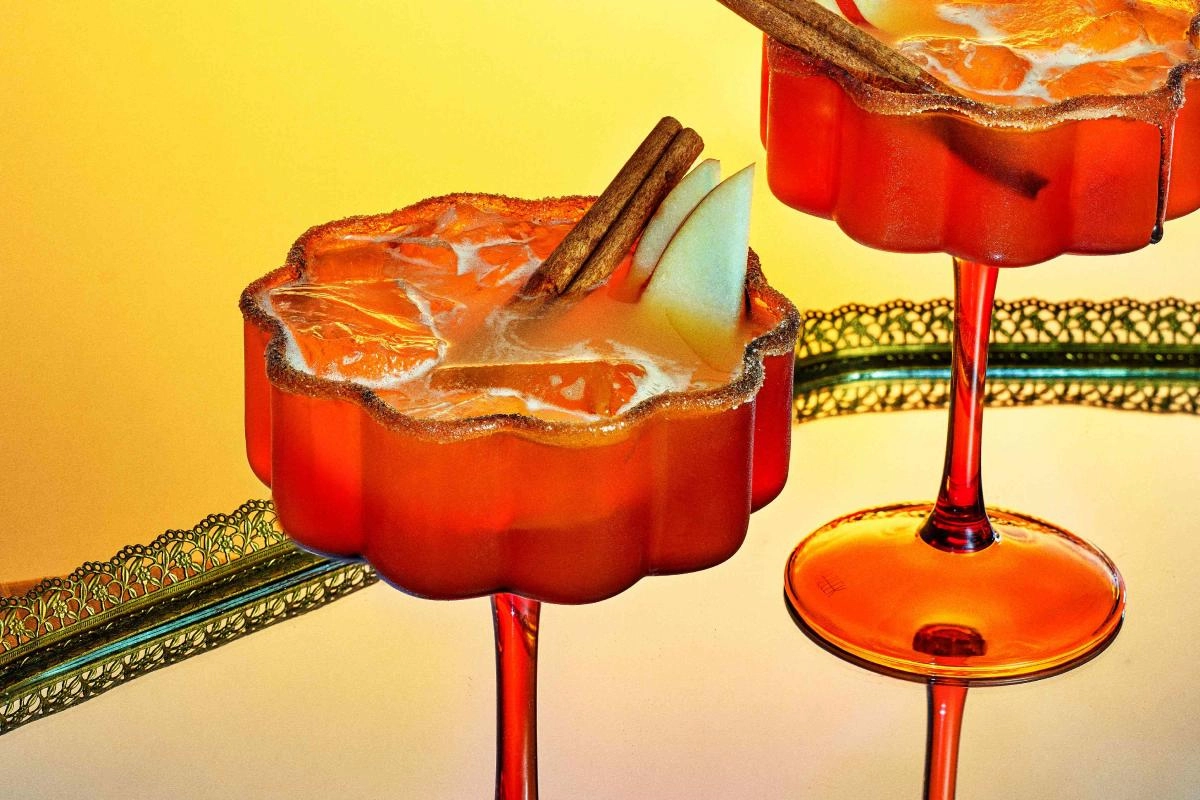
Enhance your Margarita this autumn with ample apple cider and a hint of cinnamon. This drink includes tequila, orange liqueur, Cointreau, fresh lime juice, and apple cider, making it ideal for enjoying after apple picking or as a festive Thanksgiving appetizer. For an added touch, coat the rim of your Margarita glass with a sugar-cinnamon mix and adorn with a fresh apple slice and cinnamon sticks.
Nocino, a walnut liqueur derived from green walnuts and infused with spices such as star anise, cloves, cinnamon, and vanilla beans, transforms a Cognac-based sour cocktail into a delightful treat perfect for chilly weather. The addition of lemon juice, simple syrup, and Angostura bitters harmonizes the earthy and floral essences, crafting a richly flavored beverage ideal for cold seasons.
Pomegranates, quintessential autumn fruits, excel in agave-based cocktails. A particular punch recipe created by Kaitlyn Stewart, a bartender from Vancouver, merges blanco tequila with pomegranate and lime juices, alongside ginger tea and maple syrup. The vibrant pomegranate juice pairs beautifully with the sharp, unaged tequila, while the maple syrup adds a touch of warmth. Stewart suggests serving this concoction in tea cups to enhance its festive appeal.
Food & Wine / Photo by Brie Goldman / Food Styling by Kelsey Moylan / Prop Styling by Gabriel Greco
Looking for a pre-dinner cocktail that will whet your guest’s appetites without knocking them out? Opt for this traditional Basque Country aperitivo that looks similar to a Negroni but with half the alcohol. Spanish vermouth provides the base, with smaller portions of gin and Campari supplying a sturdy backbone and a bittersweet kick.
Inspired by the Brooklyn cocktail, Jim Meehan and John Deragon introduced the Newark cocktail in 2007 for the autumn menu at the renowned New York City bar, PDT. This cocktail variation tweaks the original by using overproof apple brandy instead of rye whiskey, sweet vermouth in place of dry, and employing Fernet-Branca for its darker and deeper bitterness instead of the elusive Amer Picon.
Food & Wine
This lesser-known cocktail is a distinct take on a Sidecar by substituting orange liqueur with Green Chartreuse. The drink is complemented with freshly squeezed lemon juice, simple syrup, and aromatic bitters, crafting a sour cocktail that draws inspiration from one of Paris’ most prestigious streets in the 8th arrondissement.
For more Food & Wine news, make sure to sign up for our newsletter!
Read the original article on Food & Wine.
Mom Discovers Teen Daughter Stealing Vodka — But Not for Drinking
A story of assumed teenage misbehavior has a tasty twist.
On Aug. 25, Stacey (@StaceyCKs1) shared an anecdote about the alleged incident that went viral on X, garnering nearly 17 million views as of this writing. In a succession of posts, the mother wrote about the mystery surrounding a depleting bottle of alcohol in her liquor cabinet.
Noticed that my vodka supply was dwindling. Confronted 23 and 17, who pointed the finger at 14, who guiltily confessed to making penne allá vodka “several times” over the last month. Didn’t believe her, watched her execute it flawlessly. I guess it’s a TikTok thing?
— StaceyCKS (@StaceyCKs1) August 25, 2024
“Noticed that my vodka supply was dwindling,” the mom of three wrote. “Confronted 23 and 17, who pointed the finger at 14, who guiltily confessed to making penne allá vodka ‘several times’ over the last month. Didn’t believe her, watched her execute it flawlessly. I guess it’s a TikTok thing?”
“It’s really good, too. She crushed it,” she added in a follow-up post.
Her kid, likely noticing the attention her mom’s post was getting, also chimed in a few hours later.
She wants it known that she didn’t “guiltily confess” to anything. “I just answered the question.”
Sorrrrrry. My bad.
— StaceyCKS (@StaceyCKs1) August 26, 2024
“She wants it known that she didn’t ‘guiltily confess’ to anything. ‘I just answered the question,’” Stacey wrote. “Sorrrrrry. My bad.”
Stacey did not respond to TODAY.com’s requests for comment.
Naturally, people had questions — one X user asked how Stacey took so long to notice culinary greatness happening right under her roof.
The mom explains in subsequent posts that while she was home working the other times her kiddo made the penne, she doesn’t like pasta.
“She was making enough for her and her brother,” Stacey wrote, adding that her daughter would make the saucy dish for lunch or as an after-school snack. “They’re pretty good about cleaning up after themselves.”
After someone remarked that it’s good Stacey’s daughter didn’t replace the taken vodka with water (a classic teenage maneuver), the mom replied, “She wasn’t trying to hide what she was doing. These kids are different than we were. 😂”
I risked it all, taking a screenshot of a Snapchat message she sent me. She made it again after school yesterday. It’s her current “hyper fixation” meal.
— StaceyCKS (@StaceyCKs1) August 27, 2024
Stacey also said her daughter was using the “GOOD stuff” — aka Grey Goose — for the pasta because “that one was open.”
In addition to sharing the recipe (“A shallot and some garlic sweated in olive oil and a tablespoon of butter, a can of tomato paste, some Calibri chilies, maybe 10 ounces of San Marzano tomatoes, 2 cups of heavy cream, a cup of fresh parm, 2 tablespoons of vodka”), Stacey also posted a photo of her daughter’s latest “hyper fixation” meal.
Penne alla Vodka by Anthony Contrino
Those in Stacey’s replies were generally tickled by the whole situation.
“Very 14 year old coded 😂,” wrote one X user.
“This is the best possible outcome for this scenario. 😂,” posted another.
“Buy the child another bottle!” yet another jokingly wrote.
Social media’s obsession with pasta alla vodka remains strong. Supermodel Gigi Hadid’s fiery iteration of this recipe went viral in 2020 after she shared detailed instructions on her Instagram story amid the lockdown.
Stacey responded to a user on X stating that she believes her daughter discovered the recipe through Hadid.
The popularity of Hadid’s version has exploded, with numerous influencers on TikTok, Instagram and YouTube replicating the dish continuously over the years.
You can still find Hadid’s original recipe in her Instagram highlight “From My Kitchen II,” which also includes recipes for focaccia and monkey bread.
In 2023, Heinz and Absolut were inspired by Hadid’s viral recipe to team up for a vodka sauce.
That same year, Sofia Copolla’s daughter Romy Mars went viral for making the dish because she was grounded for trying to charter a helicopter from New York to Maryland using her father’s credit card to have dinner with a friend.
Teenage rebellion seems different these days — and it appears to involve a lot more pasta.
This article was originally published on TODAY.com