Absolut Vodka Unveils Limited-Edition Bottles Inspired by Rediscovered Andy Warhol Painting
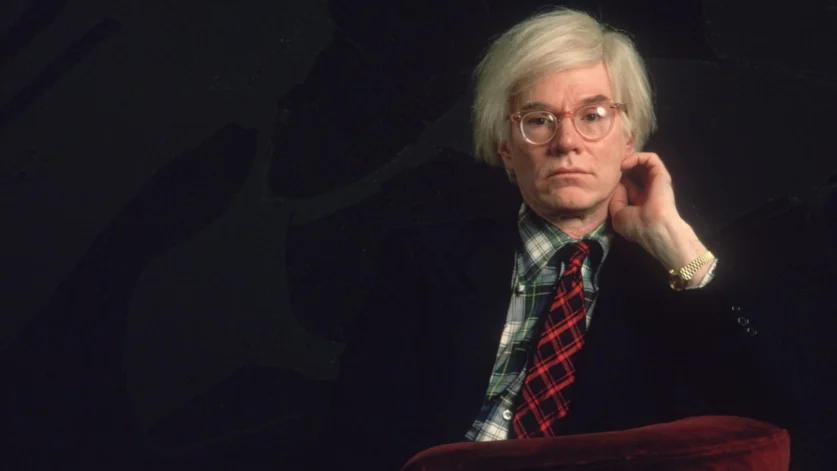
American artist and icon Andy Warhol (1928-1987) whose ‘rediscovered’ 1985 artwork could give Absolut Vodka a new lease of life.
Absolut Vodka—once fêted for its creative limited-edition bottles, often tying up art with social messaging—is at it again. This time it has rekindled an old partnership through the Andy Warhol Foundation for the Visual Arts.
The Swedish vodka brand, owned by French drinks giant Pernod Ricard, says the new, watery blue bottle will “reignite conversations around culture and inclusivity” and bring Absolut’s legacy in the art world to new audiences.
Back in 1985, Andy Warhol became the first artist to produce artwork based on the silhouette of Absolut’s (then) distinctive apothecary-inspired bottle. Absolut Warhol became the brand’s first art advert and marked the beginning of its involvement in the arts.
Warhol subsequently recommended Keith Haring to interpret the Absolut bottle, and between 1985 and 2004 more than 550 artists subsequently created more than 850 works. The early pieces were part of a brand communication strategy associated with the glamour of New York’s Studio 54, as well as the victims of the AIDS epidemic, the fall of the Berlin Wall, and the birth of IT.
Pernod Ricard bought into Absolut’s cultural legacy in 2008, when it fought off rivals to acquire the brand.
The original Absolut Warhol was painted with vibrant colors on a black background and is considered iconic by some. On the MyArtBroker website, a signed print is listed for £27,000 to £40,000 ($34,250 to $50,700).
A second Absolut Warhol painting, also from 1985, had been rumored to exist for decades before his ‘blue’ artwork was uncovered at an auction in 2020. In proving its provenance the original contract was unearthed, confirming both paintings had been commissioned. Pernod Ricard saw an opportunity to revitalize the original partnership—and the Absolut brand.
“`html
From a retail perspective, the limited-edition Absolut Warhol line launched on Monday exclusively in global travel retail (GTR) stores. Amsterdam’s Schiphol Airport is opening an interactive, gallery-style pop-up store for the product, with other major travel hubs lined up.
The bottle brings Warhol’s rediscovered Absolut ‘blue’ painting from 1985 to life by extracting shades of blue from the work and includes an image of Warhol himself alongside his original signature.
The latest Absolut Warhol is exclusive to travel retail for two months.
Pernod Ricard—whose portfolio includes Chivas Regal, Jameson, and Royal Salute whiskies, Martell cognac, Havana Club rum, and Mumm and Perrier-Jouët champagnes—has put a big budget behind a 3D out-of-home (OOH) ad campaign in the channel and multiple retail activations at airport like London Heathrow in the U.K., Dubai, Singapore Changi, São Paulo, and others.
“`
Only after two months of exclusivity in duty-free will the new Absolut Warhol limited-edition bottle roll out across more than 50 additional global markets (from September) in both one-liter and 700ml bottles.
In travel retail, the one-liter bottle is available, priced at a recommended selling price of $24 or €22. This is cheaper than the current online price of a standard Absolut bottle: €23.90 at Amsterdam Schiphol (checked today). In a channel where premiumization is commonplace, even the norm, Pernod Ricard may score with this accessible-pricing strategy, especially with younger legal drinking age (LDA) travelers.
According to drinks market analyst IWSR, there was flattened consumer demand for alcoholic beverages in the first half of 2023 due to belt-tightening, though spirits (excluding national spirits) were up by 1%, based on the firm’s latest Bevtrac data.
Referencing 2024, IWSR’s senior consumer insights manager, Anastasia Timofeeva, said in December: “The key will be whether real wages can grow sustainably in the next two quarters in Europe and North America, particularly for younger LDA+ and middle-income consumers—and whether the ‘natural’ positivity in China and India translates into actual consumption behavior.”
The creative positioning and competitive pricing of Absolut Warhol should give it an advantage in this economic environment. Liya Zhang, vice president of global marketing at Pernod Ricard GTR commented: “This launch will be of huge significance to the evolution of Absolut in travel retail. Through this partnership with The Andy Warhol Foundation, we can democratize art and bring it to all nationalities (and) also recruit new generations of consumers.”
Andy Warhol, John Sex, and masked friend at Absolut Vodka’s Party for Keith Haring at the Whitney Museum on October 2, 1986. (Photo by Patrick McMullan/Getty Images)
The foundation will also be receiving some proceeds which its director of licensing, marketing and sales, Michael Dayton Hermann, said would support its philanthropic work. He added that he was “thrilled” to see the Absolut campaign come to life and engage younger people with Warhol’s legacy “in a fresh and dynamic way.”
A short promo from Mexican director and photographer Santiago Sierra Soler is inspired by Warhol’s brush strokes and accompanied by a remixed version of 20th Century Boy by T. Rex. Meanwhile, the rediscovered painting will be showcased at Stockholm’s Sprit Museum, the home of the Absolut Art Collection, on October 17, 2024. It will be the centerpiece of a new exhibition called Andy Warhol, Money On The Wall, curated by art historian and Warhol biographer, Dr. Blake Gopnik.
Chelsea Wine Store Owner Makes Stylish Court Appearance Amid Allegations of Stealing Own Vintage Stock

Thanks for contacting us. We’ve received your submission.
Thanks for contacting us. We’ve received your submission.
The dapper-dressed owner of the Chelsea Wine store made his second appearance in Manhattan Criminal Court on Wednesday after being arrested for allegedly stealing vintages from his own posh shop.
Michael Gancarz, who was cuffed last Father’s Day at the popular wine store at 60 Ninth Ave., wore a bespoke striped blue suit as he dodged questions from The Post’s photographer about the bizarre case.
He faces charges for burglary, petit larceny and trespassing, according to court records.
Gancarz was released without bail and is next scheduled to appear in court on Aug. 14.
Chelsea Wine, located across from the Chelsea Market, no longer belongs to Gancarz and his wife Amelia, according to the criminal complaint.
The new owner of the store, Bobby Khorram, told the arresting police officer that Gancarz did not have permission or authority to take items from the store and entered it despite it being locked up, the complaint said.
It remains unclear what items were taken from the store.
Gancarz and his lawyer did not respond to a request for comment.
Khorram did not comment.
The 25-year-old business was once located in the Chelsea Market. The couple assumed ownership of it from Amelia’s father, Daniel Barteluce, an architect who designed luxury retail stores around the world.
Gancarz made headlines last year when customers from his wine storage business in Midtown – Chelsea Wine Storage – began complaining that they couldn’t get access to their pricey vintages, as The Post exclusively reported.
Longtime customers couldn’t get anyone on the phone and when they visited the storage facility – which moved out of its former location in the Chelsea Market without informing customers – they were rebuffed.
Photos obtained by The Post last year showed hundreds of cardboard boxes sitting on wooden pallets in the unfinished basement in Midtown.
The storage business was quietly moved to the basement of a former TGI Friday’s off of Times Square at 777 Seventh Ave.
“With no response, I am afraid my wines in storage are gone for good,” a CWS customer posted on Yelp on Oct. 23.
Another posted, “I cannot get them to answer emails or phone calls, and I am extremely worried about my collection…some of my most prized bottles somehow no longer appear in my inventory.”
Gancarz’s has the same landlord at both the store and the storage facility – Michael Shah – who sued him for not paying his rent and initiated eviction proceedings.
The New York State Liquor Authority initiated an investigation last year.
VIDEO: Massive 250-Pound Beer Sign Reportedly Stolen from Wisconsin Front Porch
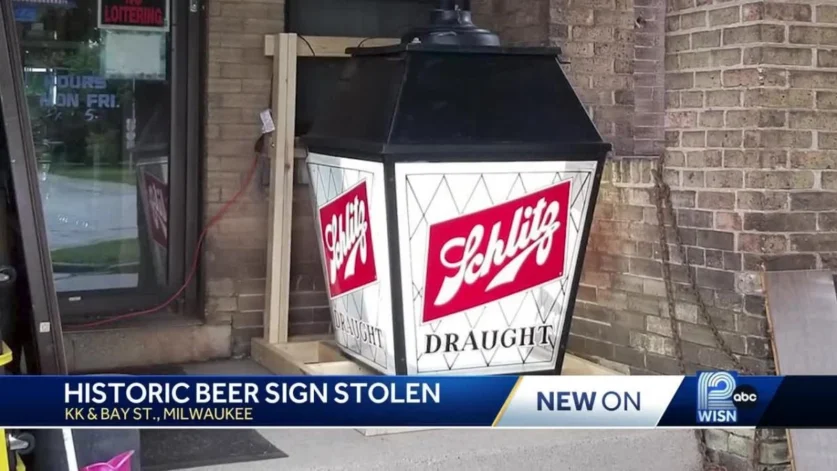
Two Milwaukee beer sign collectors reported that thieves took their large and historic Schlitz beer sign that was displayed on the front porch of their building.
Embracing Nocturnal Wonders: A Night Walk in the Woods Reveals Diverse Sights, Sounds, and the Enchanting ‘Jug-a-rum’ Calls
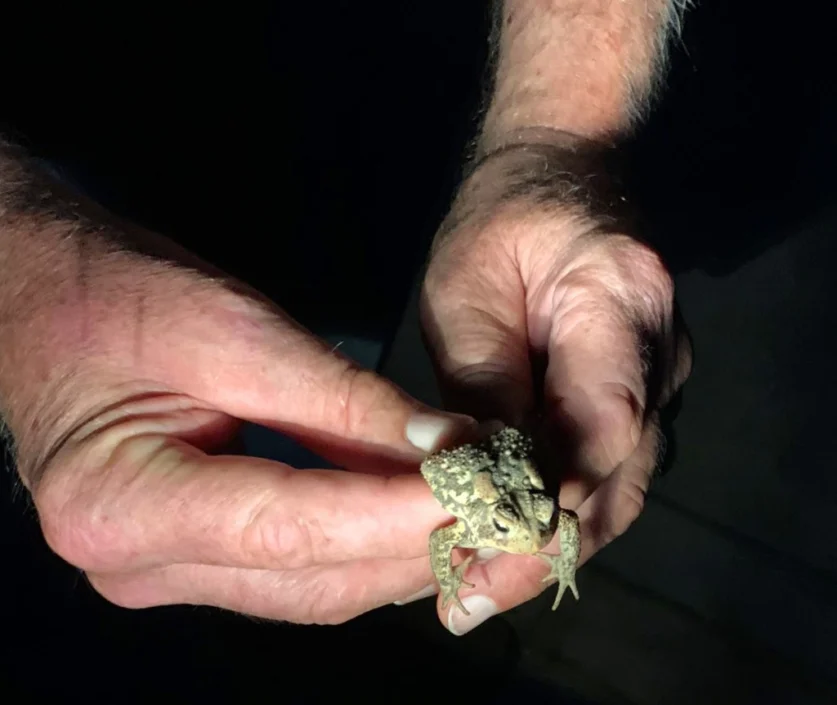
Beneath the strawberry moon in late June, we listened to green frogs belting out their banjo-like twang from a pond at Wright Woods near Vernon Hills. It was 10 p.m., and though the forest preserves district closes the gates at night, we had permission to document frog-calling after hours.
Visiting the same woods in early spring, mid-spring and summer offers a glimpse into nature’s ever-changing cycles. In mid-April, as the sun set, we heard an American woodcock, an unusual shorebird that nests in the woods, giving its courtship call. Then we saw it fly into the air in a spiral, then descend twittering its wings, all for the love of a female who was hopefully nearby.
After dark descended, we walked the trail with small, ephemeral ponds that would dry up later in summer. There we heard chorus frogs, which sounded like someone rubbing her fingers across a comb. These were most prominent, but we also heard spring peepers give their little sleigh-bell calls. Both of these frogs are no larger than a thumb, and they are much more often heard than seen. Chorus frogs can be heard in spring even during the daytime, but the spring peepers are nocturnal.
Frogs pass air from their lungs over their vocal cords, which vibrate to produce a sound. Vocal sacs located near the frog’s throat amplify the sound. When a frog inflates its vocal sac, it looks as if it had just produced a giant bubble from chewing gum.
Chorus frogs and spring peepers choose fishless ponds in which to call, mate and breed. Otherwise, fish would devour these tiny frogs and their eggs like mini-sacks.
By mid-May, the peepers have stopped calling, and their songs are replaced by those from American toads, as well as bullfrogs and green frogs just getting started for the summer.
On our next foray, as we waited for dark to come, we heard and observed a state-threatened cerulean warbler give its last song of the day. That bird would not have been singing in the woods in mid-April. At night, we no longer heard peepers and chorus frogs, but rather the whirring din of American toads, which belong to the frog family.
The green frogs and bullfrogs were calling from the large pond where folks fish in the daytime. These frogs are much larger than the peepers. The bullfrog can grow to at least eight inches long, and the green frog up to about 3 inches or so in length.
On that night, as we ventured toward the Des Plaines River in the dark, we heard a young great-horned owl giving its begging calls in the distance. By mid-May, great horned owls have already fledged young and are now teaching them how to find food on their own.
In late June, we entered the preserve just after the periodical cicadas had ended their daytime mating songs. We saw some here and there on leaves or on the ground, but the grand spectacle folks have been seeing this year of these insects that come out every 17 years from the ground was nearly over.
We walked our survey trail and heard a barred owl give its “who cooks for you, who cooks for you all” call.
That evening, we hoped to hear gray tree frogs calling. This was their time to call. We didn’t hear those, but we did hear more green frogs and bullfrogs. There seemed to be more of them and they were calling more frequently than at our last survey.
Since at least 2013, amphibian populations, including those of frogs, have been declining worldwide by nearly 4%. In northern Illinois, we’ve lost the once common cricket frog, which gives an interesting sound as if someone were tapping two stones together. They still call in central Illinois, but no longer up here, and scientists aren’t quite sure why, although in general climate change, loss of habitat and disease are contributing to amphibian populations worldwide.
At the end of our final survey, we walked to the pond and stood quietly beneath the full moon listening to the “jug-a-rum” calls of the bullfrogs and the banjo twang of the green frogs. Being outdoors at night listening to frogs and owls makes you feel as if you were out in the wilderness even when busy streets are nearby.
It is an otherworldly experience every child and adult should have.
Sheryl DeVore has worked as a full-time and freelance reporter, editor and photographer for the Chicago Tribune and its subsidiaries. She’s the author of several books on nature and the environment. Send story ideas and thoughts to sheryldevorewriter@gmail.com.
Whiskey House Embarks on a New Era with Cutting-Edge Kentucky Distillery

The exterior of the new Whiskey House in Elizabethtown, Kentucky
For many, the allure of visiting a legacy whiskey distillery is its history. Distillers can be borderline superstitious, arguing that if they change anything about production — from changing the size of the still to altering the fermenters — it will impact flavor.
The founders of Whiskey House, a new, state-of-the-art facility from the founders of Bardstown Bourbon Company, would not argue that those old distilleries have a certain kind of magic. But their goal is to keep experimenting and advancing to stay at the forefront of spirits innovation.
“It will be the most advanced distillery in the country, hands down,” said Whiskey House’s cofounder and CEO David Mandell during a recent hardhat tour of the 176-acre campus in Elizabethtown, Kentucky, that is projected to cost $350 million over the next decade to fully build out and complete.
Whiskey House began producing whiskey on July 1, crafting their liquid for friends, family, and employees.
The initial team at Whiskey House
By the most advanced distillery, Mandell refers to advancements on multiple fronts. The team has attracted talent from various renowned producers, amassing a total of 347 years of combined experience.
There is no master distiller at the facility. This distillery is the first of its kind, designed specifically to produce highly-customizable contract whiskey orders without establishing its own brand or handling investment barrels. Production on contract orders is scheduled to start next week.
“We are taking processes, technology and procedures from an advanced manufacturing standpoint,” Mandell said, citing Industry 4.0 — the kind of integrated tech and AI you see from companies like Amazon and Tesla. “The idea that there is one person saying this is how everything is made doesn’t work for us, because we have 30 to 40 different customers doing custom mash bills and highly customized production. So we have to have a huge system with tremendous flexibility.”
John Hargrove, Whiskey House co-founder, president and COO, was in food manufacturing before working at Sazerac and Bardstown. He has taken lessons from that field. Whiskey House’s production building is 110,000 square feet, and is laid out where raw goods come in one side, and the semi-finished product comes out the other, ready to head to on-site warehouses.
The Whiskey House lab
Every piece of equipment has monitors on it, explained Roger Henley, the vice president of engineering and technology, who had a background in the oil and gas sector as well as automative industry before moving to work in distilling at Barton’s and Bardstown Bourbon Company.
Customers will be able to log into a custom dashboard and see in real time all the details about how their whiskey was made, from the source of grains in their custom mash bill to where in the warehouse their whiskey is aging and what current conditions are.
Other distilleries do use a lot of this technology, but data collected ends up staying in that department, siloed. Think of QR codes on the bottles of some whiskeys now — it’s likely that data, such as where the grain was sourced or where the barrel was stored in the warehouse, was collected and then entered by hand before the information reaches the consumer. This system is seamless. Henley said what sets it apart is the ability to centralize that data and have AI models use it all to create efficiencies and save on usage of natural resources.
One easy-to-understand example is how to optimize alcohol production in fermentation.
“When you think about fermentation you have multiple different variables: corn grown in different seasons with different nutrient contents, yeast that performs in a certain parameter of [temperature] degrees, and the same thing for enzymes. You can collect all that data using AI,” Mandell explained. “We could actually figure out the exact conditions to increase your alcohol yield and proof gallons, and that will be a game changer.”
The facility is also designed to capture and reuse latent energy throughout the production process, resulting in a 50% decrease of energy consumption as compared to the EPA’s Energy Star Certified Distilleries. It’s got a slew of certifications to assure domestic and global clients everything is up to international code — and is even Kosher certified.
A rickhouse on the Whiskey House campus
The experimentation will continue throughout the aging process. During my recent visit, JT Thomas, the senior warehouse manager, and Phil Mays, the assistant warehouse manager, showed how they were testing a new type of food-grade sealant to help fix barrel leaks, as well as how the windows in the warehouse were designed to open at specific angles to experiment with airflow and its impact on aging.
And speaking of those warehouses, they also have airflow ducts at the base and are built longer and thinner than typical warehouses, so no client ends up in a less-desirable position in the rickhouse.
If a client has a specific request on where they’d like to be placed in the rickhouse, Whiskey House will do their best to accommodate it. It speaks to a larger business model of a contract facility that is built to service clients that have a clear pathway to using the whiskey in a brand. Whiskey House won’t be creating their own brands (or nabbing those most desirable warehouse spots themselves) and it won’t be making or holding investor barrels, something Mandell has seen drive up price and tie up capacity for brands that need production.
“It creates a bubble in the market and it’s really not healthy for the industry,” he said last fall.
In the intervening months, there is now more capacity in the industry as some legacy whiskey brands have slowed down their own production and other contract whiskey makers have expanded, lowering prices that had made it difficult for craft whiskey brands to survive. Mandell said the change in the market has not changed their business outlook.
“They [other producers] watched what we did at Bardstown and they thought it was going to be easy. But they don’t have the knowledge in many cases or the experience to do this type of production. It’s easier said than done,” Mandell said. “So what we’re seeing is that while there’s excess capacity, the best business is coming to us. And it’s what we predicted.”
Monica Wolf, a founder of The Spirits Group, a consulting firm that advises clients on business, production, and distillery design, has a holistic view of the industry because she also brokers barrels.
“The frothy nature of the barrel market the last few years, born from financial interest by groups outside of the whiskey industry, was never going to be sustainable,” Wolf said. “The inflated pricing has now corrected and we’re seeing aged barrel pricing at or below where it’s been historically.”
Wolf said the market is nuanced and complicated and “with all times of feast and famine there are winners and losers.”
“From a brand perspective and something that will never change: having the patient capital to invest in new fill barrels at their lowest cost basis, in order to control costs, will always be a winning proposition,” she said.
Wolf said they are scheduled to begin distilling at Whiskey House for both Lucky Seven and EJ Curley this fall. Ashley Barnes, the group’s Master Blender, selected and submitted the custom mash bills, yeast strains and level of char, toast and seasoning for the barrels.
“Having Whiskey House of Kentucky for quality distillate, made to spec, is an incredibly important part of our process. Choosing a quality barrel cooperage along with the toast, char and seasoning level of the staves that properly compliments the kind of products we’re intending to make is another important part,” Wolf said.
In the case of Lucky Seven and EJ Curley, they will then take the barrels to their own facility, The Blending House in Shelbyville, Kentucky, where Barnes will monitor aging and blending.
Whiskey House has sold 90 percent of their production capacity for the next five years and is also working with clients including Milam & Greene, Chicken Cock, Western Spirits and Whiskey JYPSI, as well as overseas production for large legacy spirits companies and ready-to-drink beverages.
If all goes to plan, production will soon double. The company started operations with greater than seven million proof gallons of annual capacity and will expand to more than 14 million proof gallons in 2027.
The space will soon include areas for clients to design their products with the Whiskey House team as well as space for them to host events. Eventually the campus will house 33 rickhouses, a palletized warehouse, a spent grain processing facility, a bottling facility, a rail system, as well as access to one of the highest yielding hydro stratigraphic limestone aquifers in the region, which sits 120 feet below the property.
One Community. Many Voices. Create a free account to share your thoughts.
Our community is about connecting people through open and thoughtful conversations. We want our readers to share their views and exchange ideas and facts in a safe space.
In order to do so, please follow the posting rules in our site’s Terms of Service. We’ve summarized some of those key rules below. Simply put, keep it civil.
Your post will be rejected if we notice that it seems to contain:
User accounts will be blocked if we notice or believe that users are engaged in:
So, how can you be a power user?
Thanks for reading our community guidelines. Please read the full list of posting rules found in our site’s Terms of Service.
How Full Glass Wine Co. Is Revitalizing Struggling Wine Brands

Bright Cellars
Similar to the proliferation of meal kit startups a few years back, the wine industry saw a surge in the creation of novel wine clubs aimed at attracting the adventurous palates of millennial and Gen Z consumers.
And just like the meal kits came the reckoning for direct-to-consumer (DTC) wine startups.
DTC wine refers to the sale of wine directly from wineries to consumers, bypassing traditional distribution channels like wholesalers and retailers. This model often involves online platforms, wine clubs or direct shipments from wineries, offering consumers a more personalized and convenient experience. DTC wine experienced a period of rapid growth several years ago, fueled in part by the COVID-19 pandemic, but has since faced challenges in not just maintaining momentum but staying afloat. Several major startups in this field have filed for bankruptcy and shuttered. But some have been picked up, mostly by Full Glass Wine Co.
Founded in Los Angeles in 2023, Full Glass Wine Co. is a brand acquisition and management firm focused on revitalizing the DTC wine market. Co-founded by entrepreneur Neha Kumar, the company has acquired wine brands such as Winc, Wine Insiders and Bright Cellars. The company is focused on taking these brands and optimizing operations and enhancing market presence while maintaining each brand’s unique identity.
In April, the startup confirmed it had raised a $14 million Series A round to continue acquiring more of these online wine marketplaces.
Kumar recently shared more with Forbes the shift in changing consumer expectations and the need for more personalized and engaging experiences.
Neha Kumar
Before co-founding Full Glass Wine Co., I served as the COO & CFO of Create & Cultivate, a platform that empowers women in business. In addition to my role at Full Glass Wine Co, I continue to teach finance at UCLA and am deeply involved in the Women’s Abundance Collective, where I focus on teaching high-net-worth women to invest – with the ultimate goal of closing the gender gap in financial decision-making. My journey has always been driven by a passion for strategic growth and empowering others, which naturally led to the creation of Full Glass Wine Co.
The initial surge in the DTC wine market was driven by the novelty and convenience of having quality wines delivered directly to consumers’ doorsteps, especially during the COVID-19 pandemic, which saw a significant spike in demand.
However, this rapid growth changed projections and didn’t fully account for the post-pandemic market dynamics. As the market evolved, customer acquisition strategies had to adapt.
Today, consumers are looking for more than just convenience; they seek high-quality, unique offerings that cater to their specific tastes and preferences. They want personalized recommendations, engaging storytelling and seamless online shopping experiences. It’s not just about buying wine—it’s about connecting with the brand and enjoying a curated experience.
Winc
The inspiration behind Full Glass Wine Co. stemmed from a desire to create a platform that redefines the DTC wine category. We envisioned a one-stop-shop where consumers could find a diverse portfolio of wine brands, each offering curated, convenient and high-value wine offerings.
Our mission is to acquire and elevate beloved brands, providing them with the resources and expertise needed for long-term success while maintaining their unique identities and loyal customer bases. This approach allows us to deliver exceptional quality, variety and value to wine enthusiasts nationwide.
When evaluating potential acquisitions, we look for brands with strong, distinctive identities and loyal customer bases. We prioritize brands that align with our values of authenticity, quality and consumer engagement, and have the potential for growth with the right support. The turnaround process involves integrating these brands into our portfolio, optimizing their operations and enhancing their market presence while maintaining the unique qualities that make each brand special.
Our goal is to ensure these brands flourish and continue to delight their customers, ultimately driving growth and success for each acquired brand.
The future of the DTC wine market will be shaped by increasing consumer demand for curated, high-quality and convenient wine offerings. We anticipate continued growth in online wine sales, driven by a preference for personalized shopping experiences and the ease of home delivery. Full Glass Wine Co. aims to lead this trend by providing a diverse portfolio of exceptional wine brands tailored to various tastes and preferences, making it easy for consumers to discover and enjoy their perfect bottle.
One Community. Many Voices. Create a free account to share your thoughts.
Our community is about connecting people through open and thoughtful conversations. We want our readers to share their views and exchange ideas and facts in a safe space.
In order to do so, please follow the posting rules in our site’s Terms of Service. We’ve summarized some of those key rules below. Simply put, keep it civil.
Your post will be rejected if we notice that it seems to contain:
User accounts will be blocked if we notice or believe that users are engaged in:
So, how can you be a power user?
Thanks for reading our community guidelines. Please read the full list of posting rules found in our site’s Terms of Service.
The Top Non-Alcoholic Beer Crowned at the World Beer Cup
“`html
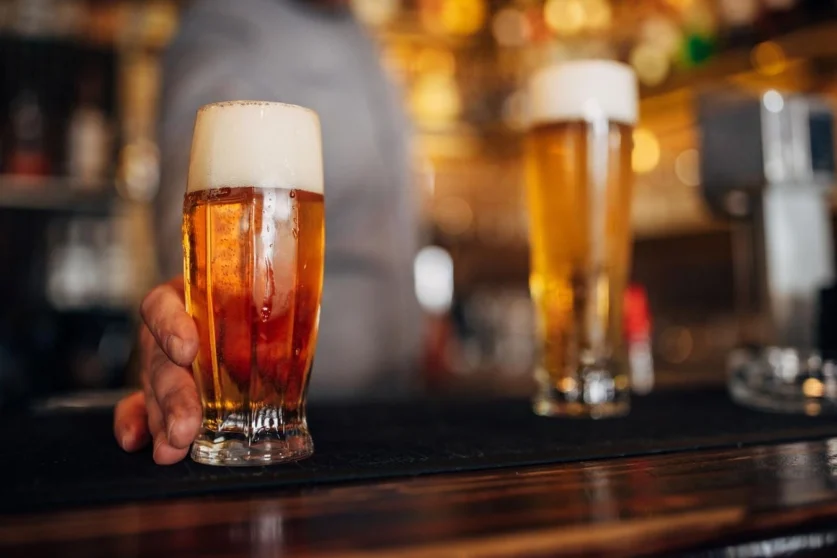
The world’s best NA beer was awarded to an Oregon brewery at this year’s World Beer Cup.
The top non-alcoholic/NA beer at this year’s World Beer Cup was awarded to Black Butte Non-Alcoholic from Deschutes Brewery, in Bend Oregon.
World Beer Cup — known as the Olympics of the beer world — is presented by the Brewers Association. Judges blind taste-tested beers in more than 100 categories this spring in Las Vegas. Forbes contributors have previously written about many of the winning beers in the most popular categories including IPAs and pilsners. However, due to the massive surge in NA beers in recent years, NA is an increasingly competitive category and this year’s competition saw more than 140 entries.
Interestingly the winning beer is a non-alcoholic take on the brewery’s original Black Butte, a porter that helped make the famous Oregon brewery a success and is named for an extinct Oregon volcano. The brewery’s description notes flavors of coffee and chocolate and “a luscious creaminess and roasted finish.” The brewery also notes that the beer doesn’t just have fans, “it also has followers.” The NA version of this beer was designed to replicate those sought-after flavors and by all accounts, it’s done just that. Black Butte Non-Alcoholic has won more than 8 international NA awards including this recent win.
“`
Because the beer is NA, it ships directly from the brewery to most states, so most U.S. beer drinkers can give this a try if they want. In addition to Black Butte, which took the gold medal award in the NA category, two other beers medaled. Silver went to Soul Sour, by Athletic Brewing Co. in Milford Connecticut, and Bronze went to Night Strike, Leader Brewing, Palm Bay, Florida.
A small Florida NA brewery, Night Strike has been making big waves in NA beer circles since being founded in 2022. In addition to this recent award, it’s won previous medals at other prestigious beer competitions and earned mentions in national media. You can have the brewery’s beer shipped directly from the brewery.
Meanwhile, Athletic Brewing Co. is arguably the biggest name in NA beer and the brewery that more than any other put U.S. NA drinking on the map. The brewery’s Soul Sour, a fruit-forward sour brewed each year in honor of Black History Month. You can also order it online and be happy knowing that 100% of the profits from the beer are donated to causes that support BIPOC scholarships in brewing.
One Community. Many Voices. Create a free account to share your thoughts.
Our community is about connecting people through open and thoughtful conversations. We want our readers to share their views and exchange ideas and facts in a safe space.
In order to do so, please follow the posting rules in our site’s Terms of Service. We’ve summarized some of those key rules below. Simply put, keep it civil.
Your post will be rejected if we notice that it seems to contain:
User accounts will be blocked if we notice or believe that users are engaged in:
So, how can you be a power user?
Thanks for reading our community guidelines. Please read the full list of posting rules found in our site’s Terms of Service.
Florida Man Swims to Island After Allegedly Assaulting Girlfriend with Vodka Bottle, Police Report

PORT ORANGE, Fla. (WJW) – A Florida man faces charges after investigators say he assaulted his girlfriend before swimming to a nearby island to get away.
The Port Orange Police Department released police body camera video from the incident, which happened on Sunday, June 23.
In the video, the victim told officers that her boyfriend, identified as Jeriel Joiner, hit her with a bottle of vodka and choked her with his hands.
Standoff in local neighborhood ends in two arrests
Joiner is also accused of wrapping a rope around his girlfriend’s neck. Investigators believe she suffered a broken arm during the ordeal.
According to Port Orange police, bystanders noticed Joiner chasing his girlfriend and stepped in to intervene, pinning him to the ground.
However, Joiner was able to get away and swim to an island in the intracoastal waterway, Port Orange police say.
More than 4K egg products recalled due to health hazard
“`html
The video shows police officer, with help from MyFWC Florida Fish and Wildlife, take a boat to the island and find Joiner camping inside a tent.
Joiner was arrested on multiple charges, including aggravated battery with a deadly weapon, domestic battery by strangulation and felony battery.
Copyright 2024 Nexstar Media, Inc. All rights reserved. This material may not be published, broadcast, rewritten, or redistributed.
For the latest news, weather, sports, and streaming video, head to Fox 8 Cleveland WJW.
“`
How The Rolling Stones and Crossfire Hurricane Rum Are Shaking Up the Spirits Industry
“`html
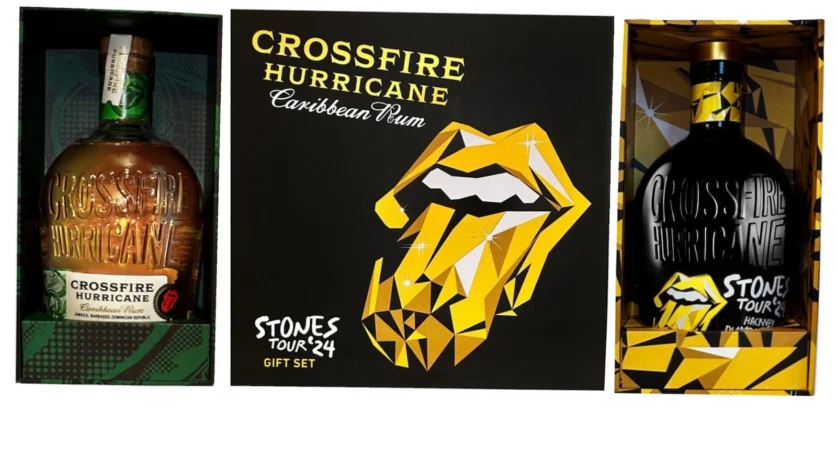
Crossfire Hurricane Rum is a bold, premium blend of exceptional Caribbean rums from Jamaica, Barbados and the Dominican Republic – fusing three distinct rum-making traditions into one potent spirit. The name is inspired by the opening lyric “I was born in a crossfire hurricane” from the Stones’ 1968 hit single “Jumpin’ Jack Flash.”
For six decades, The Rolling Stones have epitomized rock and roll, enchanting audiences worldwide with their timeless music and electrifying performances. Now, they’re extending their legendary influence into the spirits industry. In collaboration with Crossfire Hurricane Rum, the iconic band is launching a limited-edition gift set. This exclusive collection not only showcases their signature style but also celebrates their highly anticipated Hackney Diamonds 2024 Tour, offering fans a unique fusion of music and premium rum.
Crossfire Hurricane Rum is not just any rum; it’s a harmonious blend of flavors from Jamaica, Barbados, and the Dominican Republic. This fusion of three distinct rum-making traditions creates a spirit as intricate and captivating as the Rolling Stones’ music. Each region contributes its unique qualities: Jamaica offers robustness and depth, Barbados provides smoothness and balance, while the Dominican Republic adds a vibrant aroma and sweetness. Aged up to 5 years in charred oak barrels, this 40% ABV rum reveals flavors of caramelized bananas complemented by a gentle hint of tropical fruit. The premium barrels enrich the complexity, fostering the development of subtle spice notes and a velvety texture. On the nose are baking spices like nutmeg, cinnamon, oak, and toasty tobacco.
The partnership with the Rolling Stones and Crossfire has deeper roots than you may think. The Stones’ affinity for rum traces back to the 1970s, when they recorded their album “Goats Head Soup” in Kingston, Jamaica. Immersed in the island’s vibrant culture, they were enchanted by the Caribbean’s tropical rhythms and the rich flavor of Jamaican rum. This local spirit became a studio session staple and infused their music with an unmistakable island vibe. The name Crossfire Hurricane pays tribute to the Stones as it appears in the opening lyrics to the “Jumpin’ Jack Flash.”
“`
Now, in 2024, the timeless allure of the Rolling Stones is celebrated with the release of the Limited Edition Hackney Diamonds Gift Set (starting at $125). Available at concert venues and online at Reserve Bar, this exclusive set is purposefully designed for the Hackney Diamonds Tour, making it a must-have for ardent fans. Enclosed within a deluxe box, you’ll discover the exquisite Hackney Diamonds bottle—crafted from sophisticated black gloss glass, adorned with a striking gold cap, and emblazoned with the iconic Rolling Stones tongue logo, encapsulating rock ‘n’ roll rebellion and style. Additionally, the set features a flagship bottle of Crossfire Hurricane Rum, an homage to the band’s fiery spirit and enduring legacy.
“The Stones’ love affair with rum began in the ’70s while we were recording our album Goats Head Soup in Kingston, Jamaica,” said Mick Jagger. “With Crossfire Hurricane Rum, we’ve crafted a complex yet smooth spirit that captures the essence of laid-back Caribbean nights spent with mates, music, and mischief.”
If you can’t make it to the Hackney Diamonds Tour there’s still a way to “Drink Like a Rockstar” this summer. Take a look at this cocktail recipe:
Crossfire Hurricane Rum represents a groundbreaking first for The Rolling Stones – their very first product ownership venture. Launched in November 2023, it is the culmination of a pioneering partnership between the iconic rock band, Universal Music Group, and Socio Ventures. This spirit marks a bold new frontier for the legendary Stones.
2 ounces The Rolling Stones’ Crossfire Hurricane Rum
1/2 ounce lime juice, freshly squeezed
Ginger beer, to top (about 5 ounces)
Garnish: lime wheel
Add rum and lime juice to a tall glass filled with ice.
Top with ginger beer.
Garnish with lime wheel.
Crossfire Hurricane Rum represents a groundbreaking first for The Rolling Stones – their very first product ownership venture. Launched in November 2023, it is the culmination of a pioneering partnership between the iconic rock band, Universal Music Group, and Socio Ventures. This spirit marks a bold new frontier for the legendary Stones.
One Community. Many Voices. Create a free account to share your thoughts.
Our community is about connecting people through open and thoughtful conversations. We want our readers to share their views and exchange ideas and facts in a safe space.
In order to do so, please follow the posting rules in our site’s Terms of Service. We’ve summarized some of those key rules below. Simply put, keep it civil.
Your post will be rejected if we notice that it seems to contain:
User accounts will be blocked if we notice or believe that users are engaged in:
So, how can you be a power user?
Thanks for reading our community guidelines. Please read the full list of posting rules found in our site’s Terms of Service.
Woman Transforms Life and Loses 5 Stone by Quitting 1.5 Litres of Daily Vodka Through Imagination Techniques
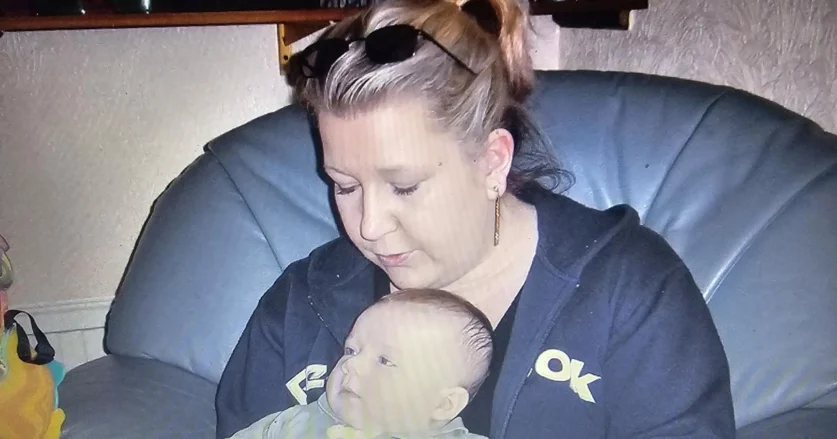
Dawn Gadsby, 52, was drinking a litre-and-a-half of vodka a day by the time she was in her mid-thirties after turning to alcohol to ‘numb the chaos inside’.
A therapist has revealed how her personal battle with alcohol addiction helped her lose five stone. Dawn Gadsby, 52, was consuming a staggering litre and a half of vodka daily at her lowest point.
She began drinking heavily in her teens following an assault at the age of 12, finding that alcohol could ‘numb the chaos inside’. “By my mid 20’s I’d started to experience withdrawal symptoms from alcohol if I suddenly stopped, but brushed it under the carpet. I was in denial so deep looking back it is almost scarily unbelievable.”
Despite working as a pharmacologist, Dawn was a functioning alcoholic, suffering regular fits and seizures whenever her alcohol levels dropped. “I was drinking a 70cl bottle of spirits and cider or wine on top. I couldn’t work anymore when I was about 37 and sank to the depths of the bottle.”
“My usage crept up to a litre and a half of vodka daily, though I always had two litres available at any time, plus assorted ciders or wine as a longer drink. I was drinking vodka neat straight from the bottle in one hand then having a sip of coke on top from the bottle in my right because it was a pain to pour into a glass and mix,” reports the Liverpool Echo
.
“Alcohol consumed me and I didn’t drink anything that didn’t have at least some alcohol in it,” she admits. As her health deteriorated, Dawn was sectioned for her own safety and found herself trapped in unhealthy, abusive relationships.
Dawn has recalled periods when she was plagued with sickness and mobility issues, and said: “I hated myself and my life. I felt loathing, shame, embarrassment. I felt like I was a disgrace and a disappointment to my family. I couldn’t look in the mirror.”
Describing her verge of death, she shared: “I was dying, I could feel it. I was physically and mentally at the end. I’d had jaundice multiple times, had been admitted to hospital multiple times and I was a juddering mess”.
About a decade ago, Dawn, during one withdrawal episode, made an oath to quit drinking forever, despite many failed attempts before. And so, she enrolled herself into rehab – which turned out to be a success.
Within half a year after getting sober, she geared her career towards assisting fellow alcoholism sufferers, retraining as a counsellor and addiction expert.
However, Dawn confessed that as she recovered from alcohol abuse, she ended up replacing it with food. She explained: “I was eating everything. I didn’t have set meal times; I would graze and eat quick and easy things. With my only goal being to stay off the drink, I had massive sugar cravings, which is quite common because alcohol is made from sugar.”
Feeding into her newfound cravings, she said: “I inhaled bags of Haribo, popcorn, chocolate, toffee, sweets, glasses of milkshake and bowls of ice cream. I didn’t know this at the time, but it was because I had given up. I just thought I was getting my appetite back after not eating for so many years. The alcohol addiction had left me malnourished, and I did a lot of comfort eating.”
Three years ago, Dawn was tipping the scales at 15 stone and feeling utterly miserable. She decided that if she could conquer her alcohol addiction, she could do the same with food.
“I went back to basics. First of all, I stopped hiding behind my own lies; I was fat, no two ways about it. No amount of flowing clothes could hide the fact that I was overweight and unhealthy,” she admits. Dawn began researching the healing power of food and cut out the junk.
She started paying attention to portion sizes, focusing on foods that provided real energy, and took up daily walking. “When I was about to eat something, I tried to imagine how it would feel and what good it would do; for example, fruit and veg are easy because they feel clean and filling.”
“A pasty or a KFC or burger on the other hand, I would visualize as a greasy slurry entering my body and sticking to my thighs, arms and stomach. Then I asked myself if I really wanted it. And 90 percent of the time if I was honest ‘no’,” she explains.
In just five months, she shed five stone – but she didn’t weigh herself. “This is because I genuinely didn’t feel like I was ‘on a diet.’ I was on a mission to make the most of myself and give myself a chance after treating myself so poorly for 30 years. That’s the same principle I apply today.”
“My lowest weight was at Christmas 2023 when my mum passed away and I dropped to 9 stone 4 – and I looked gaunt. So I’ve settled at 10 stone now, and I’m content.”
“I don’t feel pressured to eat at any time or join in with social cakes. If I want it, I can have it, but I always ask myself – what are the benefits and is it worth it? Both giving up alcohol and changing my diet were based on the four points of acceptance, understanding, learning and change.”
“I now feel utterly fantastic. At 52 I feel better than I did in my 30’s, I also look better. I’m also proud to be the purple-haired quirky me who is a bit different. I’ve battled and beaten my two biggest enemies alcohol and food,” she said.