The Evolution of Lynchburg: How it Became the Birthplace of Jack Daniels Whiskey Despite Weather Changes

LYNCHBURG, Tenn. — In 1866, the first registered distillery in the United States began in the quaint town of Lynchburg, Tennessee! Today, Jack Daniel’s is the top selling whiskey in the world. Known for its consistency, every drop made is made in Lynchburg.
So how is it that even though the whiskey is made in a volatile climate, the product isn’t impacted by the weather?
It all starts with the water.
To make whiskey, it must be free of iron. Otherwise it would turn black and bitter. One point that led Jack Daniels himself to choose the location of Lynchburg was the natural spring water — and more importantly — the presence of limestone in the area. Limestone acts as a filter, removing iron from the water. When it rains, water is absorbed into the ground through the limestone, eventually making its way down to a spring.
Jack Daniel’s Master Distiller, Chris Fletcher, has a deep-rooted connection with the cave spring, owing to his grandfather, Frank Bobo, who served as master distiller from 1966 to 1988.
As per Fletcher’s knowledge, the cave system extends two miles deep into the ground.
Within this cave spring, the temperature holds steady.
“As far as I know, the ground temperature here as you get so far down is 56 degrees,” Chris Fletcher stated.
Regardless of the outside temperature, be it zero degrees or 100 degrees, this natural spring manages to maintain a steady 56 degrees! One might wonder how this is possible?
The secret resides in the design of the cavern – it prevents the displacement of cold air by warm air.
Periodic checks are performed to guarantee the health of the water.
“We have mapped it out and conducted studies, and approximately every couple of years we arrange for individuals to go back inside to assess its health and confirm that it’s structurally sound,” explains Fletcher.
Water’s quality, followed by the type of grain used, plays a crucial role in distinguishing this whiskey. If a region’s grain crop succumbs to drought, Jack Daniel’s would extend its search for grain as far as Canada or Northern Europe.
Our corn, too, adheres to very precise specifications. We only use cleaned, grade one corn. We avoid grade two corn to prevent the need to separate any debris like twigs, husks, or stones. We follow stringent moisture standards and require a specific starch content for it to be converted into whiskey,” shared Fletcher.
For a whiskey to be a true Tennessee variant, it requires an extra step of charcoal mellowing. It does not involve just any charcoal, but one produced on-site at Jack Daniel’s from Hard Sugar Maple Wood.
“To qualify as a Tennessee Whiskey, it must pass through Hard Sugar Maple Charcoal,” explained Byron Copeland, Jack Daniel’s Manager for Maturation and Innovations.
Also known as the “Lincoln County Process,” the distilled whiskey undergoes filtration through self-made charcoal tanks that stand ten feet tall. This method eliminates impurities and endows the whiskey with a smoother consistency.
The must then age the distilled whiskey. However, the barrel applied to this process isn’t arbitrary.
“The barrels used are constructed from oak. For a beverage to earn the title of bourbon or Tennessee whiskey, it must be stored in new, charred oak barrels. However, we opt to use white oak,” commented Copeland.
According to Copeland, the source of the white oak utilized is primarily Appalachia. They mainly procure their oak from states such as Alabama, Tennessee, Virginia, West Virginia, and Kentucky. When required, they also source the white oak from Missouri, where the species aligns with their select specifications.
There’s somewhat of a safety net due to the vast region that cultivates white oak essential for this whiskey, as one area may be buffered against extreme weather incidences.
Once the wood is harvested, it’s crucial for Jack to preserve its moisture to prevent the drying and splintering process as it is transported to the distillery.
“To ensure they don’t decompose, you need to retain some water so the wood remains damp,” Copeland stated.
The lengthy aging process then commences, and alterations in temperature become a significant factor—ranging from scorching Tennessee summers to freezing winter months.
Your HTML code does not include any links or elements requiring removal or modification as described in the instructions. The story narrative has also been maintained. Therefore, no rewriting is necessary. Here is your original HTML code:
“`html
Copeland points out that in the wintertime, the whiskey contracts inside the barrels coming out of the wood into the barrel. In the summertime, the whiskey expands absorbing into the barrel stave. Over time, this is the process that gives the whiskey 100% of its color and between 60% to 70% of its flavor.
From the water, to the grain, to the oak used to make whiskey barrels — they all serve a special purpose to make Tennessee’s second largest export.
And despite extreme cold in the winter — or extreme heat in the summer — remember that a small town in Middle Tennessee harnessed both for decades to make the most recognized whiskey brands in the world!
Growing your family, no matter the journey to get there, is an emotional one. My heart aches for these families who trusted a Nashville fertility clinic with their dreams and finances. Hannah McDonald’s relentlessness to find answers is journalism at its best and hopefully a new avenue of hope for the patients caught up in this mess.
“`
-Carrie Sharp
Unraveling the Science: Why Beer is the Ultimate Companion for Pizza

Beer is a widely cherished alcoholic drink, dating back to 4000 B.C. It became an everyday essential in ancient Egypt. Evidently, the passion for beer, given the numerous beer varieties today, has only amplified. Its global admiration equals its best food match: pizza. The perfect flavor blending of pizza and beer is not only promoted by Italians, known for their stringent food rules, but pizza and beer pairing also boasts a scientific backing.
undoubtedly, pizza is arguably the world’s go-to comfort food, Yet, it might pose challenges during digestion. Here, beer steps in. Being a fermented yeast drink, beer fosters beneficial bacteria in your gut, enhancing your gut microbiome, as well as the carbonation in beer aids in digestion during and after pizza consumption.
Besides, the carbonation effect presents notable benefits to digestive wellness. Starting with the bubbles’ stimulating impact on the esophagus, enabling easier swallowing. One apparent advantage of carbonation is the belching it induces —an immediate remedy for a stomach full of pizza, or a stomach upset resulting from overeating pizza. Lastly, fizzy water studies demonstrate that carbonation stimulates digestive circulation. As such, beer, as much as it helps you eat pizza, it aids pizza’s exit from your digestive tract. This all merely validates a well-accepted taste match. That said, perhaps you’ll choose an exceptionally carbonated beer for your pizza night now.
Learn more: 30 Popular Frozen Pizzas, Ranked Worst To Best
Beer is carbonated, but its countless varieties offer a diversity of carbonation levels, to say nothing of wildly different tasting notes. So, which beer makes the best pairing for pizza? That depends on the pizza in question. Tasting Table provides an in-depth guide to the best beers to pair with pizza with help from a certified cicerone and numerous national and local beer breweries. Suggestions include a bitter, crisp pilsner to cut through the fattiness and spice of a pepperoni pizza, a yeasty, fruity, and sweet yeast beer to pair with pineapple on a Hawaiian pizza, and a hops-filled American pale ale to balance the creamy richness of a white pizza.
Whichever beer you choose, make sure it’s ice cold as lower temperatures enhance carbonation. If you aren’t a beer fan, try a fizzy dry cider, hard seltzer, or any of a selection of dry sparkling wines, such as prosecco or brut rosé. Of course, carbonated beverages don’t have to be alcoholic; sparkling water or your favorite soft drink can satisfy the digestive requirements for a pizza pairing that’s also kid-approved.
Read the original article on Tasting Table.
Exploring the Unique World of Texas Wine

Here’s the engaging narrative I crafted about Texas’s wine culture:
Individuals outside Texas can harbor any perception about the state’s wine. It could sway towards love, indifference, or even disdain. Yet, for a true Texan, these views are inconsequential. They stand firm in their enjoyment and adoration for Texas wines.
While it’s uncertain how much of this narrative is factual, I cannot turn a blind eye to the ongoing rivalry between Texas and New York for the fourth rank in terms of wine production volume. What’s remarkable is the exponential growth of Texas’s wineries, from merely 20 in the 1980s to a whopping 450 today. These wines may not regularly grace the shelves of retailers or restaurant wine lists, yet they are consumed in significant volumes. Undoubtedly, it’s not the non-Texans who are relishing these Texan wines.
White, Red, Rosé wine glasses
Several weeks ago, I hosted a gathering of friends and wine enthusiasts to sample a selection of wines from Texas. For many, it was their first encounter with Texan wines. Given the unfamiliarity, it was expected to face some level of doubt about the quality of these wines, heightened by personal preferences for renowned international wines from regions like Spain, Italy, and Oregon.
As we each approached the tasting experience, we held onto a mix of preconceived notions and expectations, all impacting our perceptions of the Texan wines being tried. Throughout the course of the tasting, we discovered, articulated, and challenged these biases, concluding with some shared insights about the sampled Texan wines.
Just a note: this informal tasting wasn’t designed to cover a comprehensive range of Texan wines. I’m certain a different set of wines would elicit different reactions and evaluations. However, from our selection that evening, the red wines definitely impressed us. Although we tried white and rosé wines, we found our attention swiftly shifting back to the reds. Memorable in particular was the 2021 Montepulciano Reserve from Hillmy Cellars. It’s distinct notes of dusty leather, plum, tamarind, and horseradish reminded some of us of beloved Spanish reds, with added unique flavors. Multiple tasters expressed that any winery, regardless of geographical identity, would be proud to offer this particular wine.
The intrigue and novelty of these wines sometimes sparked exceptional and imaginative interpretations about the tasting experience. For instance, Hillmy’s Montepulciano Reserve was noted for tamarind and horseradish flavors, while the 2021 Invention LB from Heath Family Brands was described as more French than Italian, with flavors of red pepper seed and even reminiscent of grape jelly in a peanut butter and jelly sandwich.
One of the most flattering comments I received during the evening pertained to participants suggesting they would intentionally consume a certain wine, implying that they would deliberately search for it even if it wasn’t adventitiously provided at this group sampling. This was accurate for the Montepulciano and Invention LB wines as well as the 2021 Nichol from Airis’Ele Vineyards, a fusion of Petite Sirah and Petit Verdot. One tester declared it to be the star of the evening, while another testified to its authenticity, indicating an agreeable interaction between aroma and flavor: the scent showed potential and the taste fulfilled that potential.
The Rolling Stones Unveil Limited-Edition Rum in Honor of ‘Hackney Diamonds’ Tour

All products and services featured are independently chosen by editors. However, Billboard may receive a commission on orders placed through its retail links, and the retailer may receive certain auditable data for accounting purposes.
The Rolling Stones are celebrating their latest album by hitting the road for their Hackney Diamonds tour. But along with rocking out with the band in-person, fans now have the opportunity to pick up a limited-edition bottle of the group’s Crossfire Hurricane Rum, released in conjunction with the jaunt.
More from Billboard
Doja Cat Keeps Wearing This Y2K-Approved Ring (And It’s Almost Out Of Stock)
May the 4th Be With You: Uniqlo Drops New Collection of Retro ‘Star Wars’ Tees
Kylie Jenner’s Vodka Soda Brand Has Arrived: Here’s Where to Buy Sprinter Online
The new “Hackney Diamonds” edition of Crossfire Rum is a bottle worthy of being displayed, as it features an all-black base with gold-yellow accents and an updated version of of the band’s logo. In addition to receiving the new rum, fans will take home a keepsake box that also comes with the rock group’s flagship Crossfire Hurricane Rum. The complete boxed set will be released gradually across the country to align with The Rolling Stones’ tour schedule — including on the official Crossfire Hurricane website — at a retail price of $125. Concertgoers will also have the opportunity to buy the rum at the venue.
Keep reading to see where to buy the bottle online when it comes to a city near you.
Buy Now on crossfire hurricane $125
The new edition of Crossfire Hurricane Rum aims to provide the same blended rum taste in an updated bottle while paying “homage to the band’s iconic journey,” according to a press release. For the band, releasing the beverage is yet another way to connect with fans outside of their music.
“This commemorative box set of Crossfire Hurricane Rum is not just a celebration of our US tour, but a toast to the incredible journey we’ve shared with our fans,” The Rolling Stones said in a press statement.
And to complete your collection, the original Crossfire Hurricane Rum is available for purchase on Reserve Bar and Total Wine for under $40. Shop the bottle below.
The flagship Crossfire Hurricane Rum aims to infuse the flavors of rum from Jamaica, the Dominican Republic and Barbados that’s been aged within oak barrels. You can expect notes of caramelized bananas mixed with tropical fruit with each sip.
More celebrities have been coming out with their own form of wine and spirits, with the “Satisfaction” band growing the list of musician-owned alcohol brands in addition to artist-owned wines. And it’s not just the music industry that has picked up on the alcohol trend, Kylie Jenner just released Sprinter, a vodka soda brand, joining her sister Kendall who owns 818 Tequila.
For more product recommendations, check out our roundups of the best cocktail books, music coolers and musician cookbooks.
Exclusive: The Unforeseen Romance Between Ryan Montgomery and Camille Griffith on the Set of ‘Whiskey & Smoke’ Video

“I just picked her up from the airport and we had dinner — nothing really crazy,” he remembers. “And then as soon as we started shooting the video, that was it”
Ryan Montgomery fell in love with Camille Griffith last December on the set of his music video for his single “Whiskey & Smoke” — and things have only gotten hotter between the two smoke shows.
“I’m in Nashville right now and she’s here with me,” says Montgomery, 25, during an interview with PEOPLE about his girlfriend, a content creator. “It’s just been crazy. We never saw it coming.”
Understandably so, as Montgomery remembers first connecting with Griffith via mutual friends during CMA Fest last year, but it wasn’t until the filming of the fiery “Whiskey & Smoke” video that things heated up between the two.
“She came in the day before we shot the video, and I just picked her up from the airport and we had dinner and stuff — nothing really crazy,” he remembers. “And then as soon as we started shooting the video, that was it. She was supposed to fly out the next day back to Arizona, and she ended up moving her flight and staying a couple more days. It was just crazy the way everything worked out.”
It’s one of the many things that has just “worked out” for the former ice hockey player who homed in on his musical craft as a teen from the back tailgate of his pickup truck in his home state of Florida.
“I was 18 years old, and I would just drop my tailgate down and set my speakers up and just play country music in parking lots for hours,” he recalls. “My goal at that point was to have a tour where I could maybe go and do some small shows at different places. Right now, of course, my goals are way bigger, but I really can’t believe that we are where we are at. It’s really crazy.”
Bailey Accorto
Where Montgomery is at right now is on his Whiskey & Smoke Tour, crisscrossing the country as a headliner through the end of the year. Montgomery also recently released his next single “Missin’ a Girl,” featuring a stellar lineup of writers including Ashley Gorley, Jaren Johnston and Chris DeStefano.
“I’m such a huge fan of these guys,” Montgomery explains. “To get to collaborate with some of my songwriting idols is just insane. They’ve all written songs for Florida Georgia Line and Jason Aldean and Luke Bryan, and now me!” He laughs. “This is just really something I don’t know that I ever dreamed could even be possible.”
Nevertheless, it’s a dream that Montgomery wakes up to every day, especially as “Missin’ a Girl” continues to snag some well-deserved attention over social media and such.
“‘Missin’ a Girl is such a special song,” he says. “I think we’ve all had that where we have a song with somebody or we have a drink with somebody somewhere when you’re dating them, and then you break up or drift apart, and you go that same place or listen to that same song, and you start missing them.”
Certainly, Montgomery has known that feeling, but it’s one that he says he hopes he doesn’t want to feel anytime soon as his relationship with Griffith seems to show no signs of slowing down. And it’s this love story that the couple say they want to continue to share with fans.
“I try to be as authentic as possible in my life,” Montgomery says. “There’s definitely some downsides of doing that, but we both feel like it’s real and it is what it is, so why not share it with everybody?”
Because in a cruel world, Montgomery says love feels good.
“My family was able to come to my first ever headlining amphitheater show in my hometown,” remembers Montgomery. “They came on the bus and stayed on the side stage and watched the show at this big amphitheater. It was really cool.”
And it’s all these people that will keep the rising country star grounded in the days ahead. “My grandpa served in Vietnam,” Montgomery explains, “And he’s just somebody that no matter what’s going on, he is always in my ear about staying grounded, appreciating everything and valuing what’s really important in life.”
The Portal’s Raddest Beer Garden in PNW Reopens May 3: Discover What’s New This Year

One of Bellingham’s most popular waterfront summer spots, The Portal Container Village, is opening for its summer season Friday, May 3, and has new features this year.
The Portal is known for a beloved beer garden, Kulshan Brewing Co.’s Trackside, that was named “The Raddest Beer Garden in the Pacific Northwest,” by Forbes magazine, according to a news release from the brewery.
Along with Trackside, The Portal also is full of food trucks, a bike pump track, Portal Putt mini golf, Sun-E-Land Bikes rentals, restaurants and an ice cream shop. The Portal also has added a second shipping container storefront that welcomes rotating artists, entrepreneurs and businesses this year.
Back in June 2023, The Portal announced it would be adding two new shipping containers to its village: Bin 13 Wine Bar and Zeek’s Pizza.
Bin 13 Wine Bar will not open May 3, but plans to open as soon as possible with exciting offerings, according to owner Ryan Aarstol.
We will have great wines, wine cocktails, ciders/squeeze and some beers. We will have service at the container, with seating around the container, within our fenced area. We are in the permitting process for the deck above the container which we think will be very popular for folks,” Aarstol wrote in an email to The Bellingham Herald.
Bin 13 Wine Bar updates will be posted on the business’ Facebook page.
If you’re looking for a bite to eat, Zeek’s Pizza, Our Kitchen, The Selkie Scoop Ice Cream and Rain or Shine Riviera Club will have their own shipping container restaurants, along with five food trucks at The Portal. Whether you’re craving fish and chips, tacos, sandwiches or pizza, The Portal will have something for everyone.
The Portal announced its food truck lineup back in March:
▪ New Public Creative Vegan Food Truck
Kulshan Brewing is also bringing new events to its Trackside beer garden this season, starting with a season-opening celebration Friday. The event includes live music from “Mackinaw Cruiser” at 6 p.m., followed by a live DJ from 8 to 10 p.m. The event is open for all ages and is dog friendly.
Kulshan Brewing is also hosting its “Beer Prom” at Trackside this year, a ticketed event and fundraiser for Lydia Place, a nonprofit striving to end family homelessness. The 21-and-over event will take place June 1 and includes beer collaborations, a live big band, live DJ, costume context, food trucks and photo booth. Tickets cost $30 and can be purchased online in advance.
The Portal also announced a new Pike Place-inspired market is in the works, hoping to be open year-round starting spring 2025.
The many businesses at The Portal have differing operating hours. Kulshan Brewing Trackside will be open from 11 a.m. to 11 p.m. Thursday through Saturday, and 11 a.m. to 9 p.m. Sunday until Memorial Day, May 27. After May 27, Kulshan will be open daily.
The Portal Container Village is at 296 W Laurel St. in Bellingham.
Unusual Chase: Man Savors Wine in Forklift as Driver Evades Police in Downtown Auburn

Two men suspected of stealing a forklift and driving Sunday in downtown Auburn were arrested after the vehicle smashed into the fence of a business, according to the police.
The event unfolded around 2 a.m. when police received a report of a stolen forklift at Lincoln Way and High Street, in connection with the Western State Endurance Run.
Police officers spotted the forklift travelling down Lincoln Way towards Harrison Avenue. One man was operating the machinery while his companion was seen drinking wine from a bottle in the passenger’s seat, as reported by the Auburn Police Department online.
According to the police, they attempted to stop the forklift, but the suspects fled on foot. The deserted forklift started to roll back and smashed a fence.
One individual was apprehended under the speculation of owning a stolen vehicle, evading detention, and driving whilst under the influence. Another individual was apprehended under the speculation of possessing a stolen vehicle and resisting detention. Both individuals are currently not in jail, as per the information available on online detainee records.
Organizers name the Western States Endurance Run as the oldest 100-mile race in the world. The race starts in Olympic Valley and concludes in Auburn.
Upcoming Events Spotlighting Tennessee Whiskey and Fernet
You’d imagine that popular spirits such as Tennessee whiskey and Fernet wouldn’t need much advertising. Tennessee whiskey is one of the state’s most iconic exports, and Fernet is so esteemed by bartenders and drink enthusiasts that it’s often given as a salute or parting present across the bar, referred to as a “secret handshake.”
However, these two beverages didn’t achieve their immense popularity without keeping their recall value high, so brace yourself, Nashville, because things are about to get spirited!
First on the agenda is the 2024 installment of Tennessee Whiskey Week, brought to you by the Tennessee Whiskey Trail. This consortium of whiskey makers in the state is actually extending the festival this year beyond a single week, with celebrations planned in East Tennessee from May 3 to May 11, Middle Tennessee from May 12 to 23, and West Tennessee from May 20 through May 25.
They’ve scheduled exclusive distillery viewings, live entertainment, and deals on local cocktails and food at partaking eateries, as well as ticketed Master Distiller-Chef dinners where chefs from select restaurants will design specialized menus to honor the yearly celebration, inspired by a native Tennessee spirit brand. However, unless you’re planning to travel to the far-flung corners, it’s perhaps best to focus on our local scene.
Nashville is set to host this year’s key event, Top of the Rocks, a cocktail competition akin to Chopped. The competition encourages mixologists to use bold flavors and native spirits to concoct unique cocktails. The venue for the event is Acme Feed & Seed, and it is scheduled to commence at 2 p.m. on Sunday, May 19. The event will also feature cocktail tastings, a people’s choice competition, light bites, and live music from Timbo and Boo Ray. Tickets can be obtained from the event’s website, with a few competitor slots still available for professional bartenders who wish to participate.
Here’s a catalog of Middle Tennessee restaurants and bars that will be offering Whiskey Week specials on cocktail creations featuring Tennessee spirits, whiskey pours, and specialty drinks between May 12 and May 23:
Dinner collaborations between Master Distillers and Chefs will take place at numerous restaurants across the city, so choose from these amazing options:
For details on specific events and ticketing information, visit the Whiskey Week website.
Fernet Branca has embarked on their Secret Handshake Tour at noted cocktail markets like Miami, Chicago, Brooklyn, San Francisco and Los Angeles, and they actually started the tour here in Nashville beginning on April 25. What, you didn’t know about it? It’s a secret!
They have been setting up special events at local bars, distributing cards that patrons can get stamped and send in for prizes when the tour leaves town on May 23. But where will they be popping up exactly? That’s a secret. However, if you register at the Fernet Secret Handshake Tour website, they’ll send you all the necessary details.
They have announced one event, a special concert at Third and Lindsley, starting at 6 p.m. on Thursday, May 23. The exact performers remain a mystery. But, Third and Lindsley’s performance calendar reveals that Kody West with Jason Scott and the High Heat will be taking the stage that evening, so you won’t be completely in the dark.
Cheers!
{{description}}
Email notifications are only sent once a day, and only if there are new matching items.
In the final installment in our series, we look at small-scale wins that could point a way forward…
Talking to librarians, advocates, activists and students about state and local book bans and…
Discovering Louisville, Kentucky: A Guide to the Best Beer Spots

There’s more to drink at the Derby—and around Louisville—than mint juleps.
We all know that Louisville, Kentucky is the land of bourbon, and the mint julep is the drink of choice for the Kentucky Derby, which is having its 150th anniversary on May 4 at Churchill Downs. But the city is also known for some great breweries. In fact, it was once a great beer city known for a special type of beer called Kentucky Common, a dark ale style that’s rarely brewed today. If you are looking for Kentucky Common in Louisville, Apocalypse Brew Works in Louisville occasionally makes one of the original recipes and will have it on draught, and Dreaming Creek Brewery from Richmond, Kentucky makes a Kentucky Common that can be found at local Total Wine retailers.
If you’re visiting Louisville for the Run for the Roses or any time throughout the year, check out these breweries and beer bars that celebrate great craft beer.
Against the Grain’s Public Houses have two locations- one downtown and one near the Original Highlands section.
One of the most well-known breweries in Louisville is Against the Grain (AtG for short). With wacky labels and some in your face names like “Citra Ass Down,” AtG has two tasting rooms in Louisville: one near the Original Highlands area and one downtown. Their beer is widely available throughout Louisville and out of state as well.
Mile Wide sells a huge variety of beers to suit all tastes from dark lagers to sours to a plethora of hoppy options so there’s something for everyone. Started by three friends and housed in an old biscuit factory, Mile Wide’s tasting room also has board games and classic arcade games plus pinball machines to keep the good times rolling. The brewery is conveniently located between downtown and the Original Highlands neighborhood.
While Monnik Beer Co’s focus is on European styles, they also brew a bunch of hoppy options. There is an on-site restaurant as well.
Monnik Beer Co., located in the Schnitzelburg neighborhood, makes some excellent European-inspired beers. A brewing friend of mine raved about their saison and Italian pilsner. Monnik is the Dutch word for “monk,” and they also have an on-site restaurant.
Shippingport is a brewery solely owned by women, which was inaugurated in the year 2021, in the Portland region of Louisville. The brewery is highly community-driven, boasting over 100 five-star Google reviews. The Beer list in the taproom includes a vast selection of beer types ranging from German style kolsch to West Coast pilsner and even hard kombucha. Furthermore, Sandwiches are also prepared on-site at Shippingport.
The second tasting room of Atrium, located in Prospect, KY, is an ideal ensconce for anyone looking to avoid the tumult of Louisville.
Atrium Brewing operates a spirited tasting room in the Germantown area of Louisville, notable for fine hazy IPAs, hype fruited sours, and crispy lagers. Established in September 2020, Atrium has grown to construct a second tasting room outside the city borders in Prospect, Kentucky.
Although not a brewery, Holy Grale maintains an impressive beer list along with delicious food, emphasizing on using local products. Located just one mile from AtG’s Original Highlands public house, the Holy Grale has had its roots since 2011 in an erstwhile Unitarian church. The amenities at Holy Grale include pleasant outdoor seating and a dining room previously the choir loft. Moreover, Holy Grale has a Bed and Breakfast with a café on the ground floor, opened in 2014, just down the street.
If you are looking for one of the best eclectic beer lists in town, head over to Sergio’s World Beers in the Butchertown section of town. Currently on draught they have a list chock full of European classics from breweries like Cantillon, Chimay and Fantome. The food menu puts world food on display with dishes from Chile, Brazil, Greece, Germany and more.
There’s good beer everywhere nowadays and Louisville has a lot to offer. Check out the Louisville Ale Trail website for a complete list. Remember to drink responsibly and to always imbibe with people who you care about. Cheers!
Basketball Royalty Ventures into Wine Industry with Support from Renowned Winery
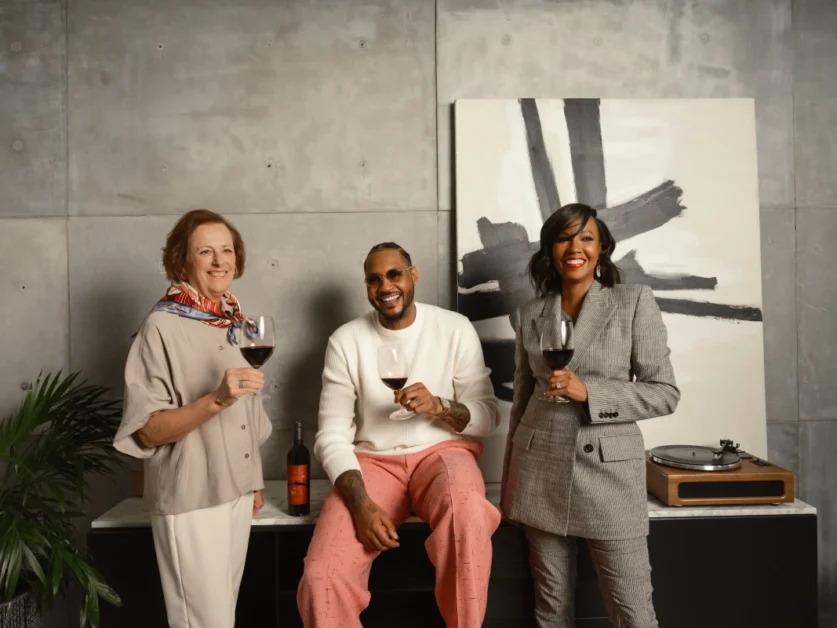
The connection between the National Basketball Association (NBA) and wine continues to solidify today with the official launch of a new wine from VII(N) The Seventh Estate, a wine brand founded in 2022 by Carmelo Anthony and Asani Swann. Today they announce their collaboration with Robert Mondavi Winery, a leader in the wine industry since they were founded in 1966. Along with RMW chief winemaker Geneviève Janssens, the first collaboration release with Robert Mondavi Winery hits the market today.
A multi-year collaboration between the two entities, kicking off with as its first offering, has at its core the shared commitment to winemaking excellence and category modernization, blending the legacy and winemaking prowess of Robert Mondavi Winery with the mission of VII(N) The Seventh Estate. Robert Mondavi Winery is revered for a decades-long, rich heritage and acclaim for crafting exceptional wines that represent both innovation and uncompromising quality. VII(N) The Seventh Estate is driven by a mission to bring new voices into the world of wine, offering premium wines while connecting perspectives and individuals from all walks of life.
Ode to Soul is a proprietary red wine that embodies the essence of true collaboration between three dynamic connoisseurs with diverse perspectives on wine. Crafted by Robert Mondavi Winery’s Chief Winemaker Geneviève Janssens in partnership with Carmelo Anthony and Asani Swann, Ode to Soul is the culmination of each contributor’s unique experiences, distinct palate and creative processes. Drawing from the world-renowned To Kalon Vineyard in Napa Valley’s Oakville AVA, Ode to Soul showcases a blend of Cabernet Franc, Cabernet Sauvignon, and a touch of Petit Verdot. A harmonious blend of rich heritage and future-focused innovation, the 2021 vintage offers a wine experience that is both exhilarating and powerful, yet elegant and classic.
“We are proud to introduce a partnership with Robert Mondavi Winery aimed to produce incredible wines, prioritize innovation in the industry and foster a community,” said Carmelo Anthony, co-founder of VII(N) The Seventh Estate. “The seamless partnership between VII(N) The Seventh Estate and Robert Mondavi Winery is reflected in our inaugural wine, ‘Ode to Soul,’ and is a testament to both the power of collaboration and our commitment to expanding horizons in the wine space.”
Asani Swann, co-founder of VII(N) The Seventh Estate, adds “This is a pivotal moment for the wine category, and we are proud to be at the forefront, creating top quality wines and helping to build a more inclusive industry.”
(SRP: $275)
Men’s Journal aims to feature only the best products and services. If you buy something via one of our links, we may earn a commission.