Get Ready for Traverse City Beer Week: A Celebration of Favorite Brews and Experimental Pours!

Traverse City Beer Week is making its return, featuring special offers from November 8 to November 16 this year.TC Tourism
TRAVERSE CITY, MI – This November, Traverse City’s beloved Beer Week is back, showcasing a great selection of popular and experimental beers. An innovative digital “passport” is available for visitors to explore the local breweries at their own pace. Attendees can expect an impressive array of deals on pints, tastings, and brewery merchandise, including options for beer-to-go.
Beer Week will take place from November 8 to November 16.
“Experience the creativity and originality of the Traverse City brew culture by embarking on a self-guided tour of local breweries and dining establishments,” said staff from Traverse City Tourism. “Keep track of your journey in the passport; checking in at various locations will make you eligible for exciting prizes!”
How It Works:
Claim a Traverse City Beer Week hat by checking in at five or more participating breweries and restaurants using your event passport.TC Tourism
What’s the prize this year? A cozy Traverse City Beer Week pom-style winter hat that will keep you warm while you enjoy your pints this winter. To earn this prize, simply check into five or more participating locations on your Beer Week passport. “Once you’ve met the requirements to claim this prize, the passport will alert you, and you can visit the Traverse City Tourism Visitor Center to collect it.”
More prizes if you stay-and-play. If you book a stay at one of the hotels or other lodging options that are part of the Traverse City Tourism group during Beer Week, you’ll be entered to win one of two vacation packages. One offer includes a 2025 Michigan Beer & Brat Festival package at Crystal Mountain resort. The other is a 2025 Suds & Snow Festival package in Traverse City.
Tourism officials encourage all attendees of Beer Week to enjoy their brews responsibly. It’s important to use a designated driver, take a cab, or arrange for a group tour vehicle.
“The beer culture in Traverse City offers more than just an opportunity to find your new favorite drink,” stated Trevor Tkach, president and CEO of Traverse City Tourism. “It combines the artistry of brewing with an extraordinary destination.”
“Traverse City Beer Week provides guests the chance to savor wonderful brews while also discovering the lakes, trails, shopping, Sleeping Bear Dunes, and all the attractions that establish this area as a leading travel destination in the Midwest.”
Here’s a preview of some of the deals available during Beer Week:
If you decide to buy a product or create an account through a link on our website, it’s possible that we may earn a commission. By continuing to use this site, you agree to our User Agreement and acknowledge that your interactions, clicks, and personal data may be gathered and stored by us, as well as by social media and other third-party partners, in line with our Privacy Policy.
Savor the Flavors: Waterways and Wine Event Returns to Seneca Falls This Friday!

The eagerly awaited Waterways and Wine event is set to return on Friday, November 1, offering an evening filled with exquisite wine, delicious food, and lively entertainment, all to support the Seneca Museum of Waterways and Industry. The festivities will begin at 6:00 p.m. in downtown Seneca Falls, showcasing a selection of wines from some of the most respected wineries in the Finger Lakes region, including Hosmer, Anthony Road, and Trestle 31.
Local favorite Simply Homemade will be on hand to serve a variety of hors d’oeuvres and pairings, enhancing the overall experience for guests. The Ende Brothers are also scheduled to perform, providing live music that will contribute to a vibrant atmosphere throughout the night.
Attendees can look forward to not only wine tastings but also a live auction and a wine pull, offering the chance to win exciting baskets and bottles while supporting the museum’s efforts. This year, the proceeds will support the museum’s new permanent exhibit, The Tug Urger, which is a partial replica of an early 1900s Erie Canal tugboat. Guests will have the unique opportunity to engage with the museum’s director to learn more about the project and its progress.
Tickets are available for $45 for museum members and $55 for non-members, with an extra $5 charge for purchases made on the day of the event. Tickets can be secured in advance either online or directly at the museum. This event promises to be an enjoyable evening for wine lovers and history enthusiasts alike.
Stay updated with the latest news delivered to your inbox every morning. Join our Morning Edition to kickstart your day. Don’t forget to check out FL1 on the Go! Get the free FingerLakes1.com App for Android (Compatible with all devices) or iOS (iPhone, iPad).
FingerLakes1.com stands as the premier digital news source in the region. Established in 1998, it has been dedicated to keeping the community informed for over 20 years. If you have any news tips, please reach out at [email protected].
Whiskey for a Cause: Massive Auction Launched to Aid Hurricane Relief Efforts
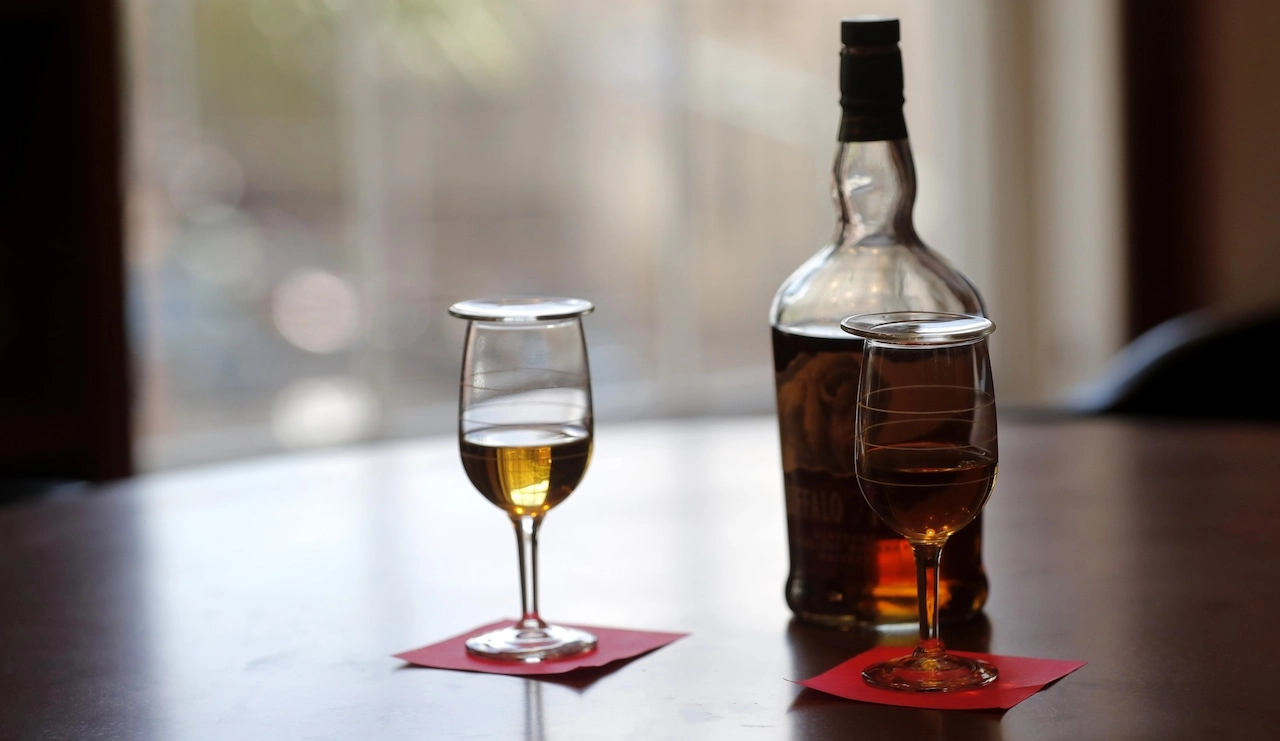
A large-scale online auction is currently taking place as Sazerac Co. is offering sought-after bottles of whiskey.Associated Press
CLEVELAND, Ohio – Sazerac Co. is conducting an online auction featuring some of its most prized spirits to aid the American Red Cross’s relief efforts for the victims of Hurricanes Milton and Helene.
A selection of individual bottles and collections from Sazerac’s premier distilleries and brands are available in the auction.
In the last month, Hurricane Helene caused severe flooding in Western North Carolina and neighboring regions, resulting in over 200 fatalities. Following this, Hurricane Milton struck Florida’s Tampa Bay area, bringing about flooding and widespread power outages.
Items will be featured in the no-reserve auction, starting at $100 for each bottle or collection.
• Double Eagle Very Rare Kentucky Straight Bourbon
• The Last Drop Release 28: Drew Mayville Signature Blend of Kentucky Straight Whiskeys
• The Last Drop Release 32: Louise McGuane 32-Year-Old Single Malt Irish Whiskey
• The Last Drop Release 33: 15th Anniversary 40-Year-Old Blended Scotch Whisky
• Buffalo Trace Antique Collection
• George T. Stagg Kentucky Straight Bourbon Whiskey
• Sazerac Rye 18 Year Old Rye Whiskey
• W.L. Weller Kentucky Straight Bourbon Whiskey
• Thomas H. Handy Straight Rye Whiskey
• Eagle Rare 17 Year Old Kentucky Straight Bourbon Whiskey
• Blanton’s Gold Single Barrel Bourbon
• Blanton’s Straight from The Barrel
• George T. Stagg Kentucky Straight Bourbon Whiskey
• Stagg Kentucky Straight Bourbon Whiskey
• W.L. Weller Antique 107 Kentucky Straight Bourbon Whiskey
• W.L. Weller Full Proof Kentucky Straight Bourbon Whiskey
• W.L. Weller Special Reserve Kentucky Straight Bourbon Whiskey
• W.L. Weller 12 Year Old Kentucky Straight Bourbon Whiskey
• W.L. Weller C.Y.P.B. Kentucky Straight Bourbon Whiskey
• W.L. Weller Single Barrel Kentucky Straight Bourbon Whiskey
• E.H. Taylor Jr. Small Batch Kentucky Straight Bourbon Whiskey
• E.H. Taylor Jr. Single Barrel Kentucky Straight Bourbon Whiskey
• E.H. Taylor Jr. Straight Rye Whiskey
• E.H. Taylor Jr. Barrel Proof Kentucky Straight Bourbon Whiskey
• E.H. Taylor Jr. Barrel Proof Rye Whiskey
• E.H. Taylor Jr. Four Grain Kentucky Straight Bourbon Whiskey
• 1792 Small Batch Kentucky Straight Bourbon Whiskey
• 1792 Single Barrel Kentucky Straight Bourbon Whiskey
• 1792 Full Proof Kentucky Straight Bourbon Whiskey
• 1792 Aged 12 Years Kentucky Straight Bourbon Whiskey
• 1792 Sweet Wheat Kentucky Straight Bourbon Whiskey
• 1792 Bottled-in-Bond Kentucky Straight Bourbon Whiskey
• Cask Strength Virginia Straight Bourbon Whiskey #1
• Cask Strength Virginia Straight Bourbon Whiskey #2
• Cask Strength Virginia Straight Bourbon Whiskey #3
The auction is live through 10 a.m. Friday, Nov. 1. To place your bid, visit blockbar.com.
Sazerac boasts a diverse portfolio of over 500 brands, including well-known favorites like Buffalo Trace Bourbon, Eagle Rare, Weller, The Last Drop Distillers, Fireball Cinnamon Whisky, Southern Comfort, Wheatley Vodka, Myers’s Rum, White X Cognac, Sazerac de Forge Cognac, Paddy’s Irish Whiskey, and many more.
I cover restaurants, beer, wine, and sports-related topics as part of our life and culture team. For my latest stories, check out this cleveland.com directory. I also join WTAM-1100’s Bill Wills to discuss food and drink on Thursdays around 8:20 a.m. You can follow me on Twitter and Instagram: @mbona30. My recent book, co-written with Dan Murphy, is titled: “Joe Thomas: Not Your Average Joe” by Gray & Co.
Curious about weekend events? Sign up for cleveland.com’s weekly “In the CLE” email newsletter.
Our weekly DineDrink C-L-E podcast delves into the vibrant food and drink culture of North Ohio. Check out cleveland.com/topic/dinedrinkcle for more insights. Don’t forget to follow @DineDrinkCLE on Instagram.
If you decide to purchase a product or create an account via a link on our site, we might receive compensation. By engaging with our site, you agree to our User Agreement and acknowledge that your clicks, interactions, and personal information could be collected and stored by us along with our social media and other third-party partners as detailed in our Privacy Policy.
Raise a Glass: Tiny Cocktails Set to Make a Big Splash at Your Next Happy Hour!

For your next happy hour, consider trying out these charming miniature cocktails instead of your regular drink order.
Dudits / Getty Images
It’s widely acknowledged that miniature versions of things are simply cuter, whether we’re talking about desserts, houseplants, or even sunny-side up eggs. This trend has now made its way into cocktail bars and happy hours all around the nation, highlighting miniature versions of beloved drinks served in tiny glasses. These little cocktails, typically just a few ounces each, are becoming a fashionable choice for celebrating the conclusion of a meal while keeping an eye on portion sizes.
Before raising your glass to these delightful drinks, let’s dive into the origins of this trend.
Related: Stock the Perfect High-End Home Bar with These Under-$10 Glassware and Beverage Finds
Though gaining fresh attention, mini drinks have a history spanning several decades. Per reporting from The New York Times, most cocktails before World War II were just 1 or 2 ounces in size. It wasn’t until the 1940s and 1950s that larger versions, such as martinis, which usually measure 3 ounces, started to gain traction.
These smaller servings are also linked to a traditional practice known as the bartender’s handshake. This custom entails offering a modest 1- or 2-ounce drink or shot as a gesture of welcome to another bartender. Furthermore, it provides bartenders with a chance to sample and share their new cocktail creations, showcasing their friendliness through this ritual.
nhattienphoto / Getty Images
While smaller cocktails have been part of the drinking scene for many years, their presence has surged on menus and social media in recent times. This trend aligns with the increasing popularity of low-ABV and non-alcoholic beverages, offering a way to enjoy an adult drink without the common aftereffects. Much like low-ABV options, these smaller cocktails contain minimal alcohol, making them perfectly suitable for enjoying during lunch or happy hour.
Additionally, tiny cocktails provide patrons with the opportunity to explore a variety of flavors without the need to order standard-sized drinks. Instead of struggling to choose just one, you can have a few sips of mini cocktails, either in a flight or as part of a tasting experience. They’re ideal for a quick toast during a festive dinner and are often a more economical choice.
Moreover, these miniatures enhance the enjoyment of certain larger cocktails, ensuring that the final sip is just as delightful as the first.
Enjoy delightful mini versions of beloved cocktails such as martinis and Manhattans at your next happy hour gathering. The snaquiri, a compact version of the daiquiri, has gained such popularity that it has its own distinctive name. If this trend hasn’t reached your preferred bar yet, you can easily make one at home.
The secret to creating mini cocktails lies in having the perfect glassware. Typically, these drinks are served in small glasses, such as coupe or Nick and Nora glasses, that hold just a few ounces. Pick a recipe you love—perhaps one designed for smaller servings, like a Bee’s Knees cocktail—and get ready to mix.
To make your mini cocktail visually appealing for social media, consider garnishing it with an olive or a lemon twist.
Local Brewery Celebrates Triumph with ‘Beer of Britain’ Award Win

A brewery is celebrating after one of its beers was crowned the winner of a prestigious award.
The Campaign for Real Ale (Camra) named Essex-based Crouch Vale Brewery’s Amarillo the Champion Beer of Britain.
Colin Bocking, 69, started the brewery in South Woodham Ferrers in 1981 and said winning was “good news – it’s always a lovely surprise when this sort of thing happens, it felt great”.
The long-standing Camra awards are given to recognise the best pubs, clubs, beer and cider in the UK.
Mr Bocking mentioned that he was around 26 years old when he embarked on his business journey, which he has been running alongside his wife, Fiona, for 43 years.
He reflected, “It was a complete career change for me.”
Prior to this, he worked in the civil service, managing pensions and benefits. “I felt there had to be more to life, and that’s when I transitioned into this venture.”
Recently, the couple was honored as winners at an awards ceremony held in Nottinghamshire on Wednesday.
The event featured a variety of beers from numerous breweries nationwide, culminating in the selection of the winners.
One brewery’s beer triumphed in the Premium Ale category before claiming the prestigious title of Supreme Champion Beer of Britain 2024.
This marked the third time the brewery has secured a Camra award, having previously won in both 2005 and 2006.
“With thousands of beers available, many of which are excellent, the chances of winning an accolade like this are rather slim due to the intense competition,” Mr. Bocking remarked.
“So to win it is a lovely surprise, because the odds are always against it.”
Follow Essex news on BBC Sounds, Facebook, Instagram and X.
Essential Tips to Know Before Marinating Chicken in Vodka

A marinated chicken recipe serves as a reliable staple for any home cook. It’s ideal for a quick weeknight family meal, can be prepared ahead of time for workday lunch salads, and also works wonderfully as a highlight for special celebrations.
Marinades for meat are versatile, acting as both tenderizers and flavor enhancers—there are countless options available when it comes to recipes and formulas. While you may have tried to brine fried chicken in pickle juice, using vodka as part of your marinade may be a new concept. Alcohol does more than just serve as a cocktail base; it can be a fantastic ingredient in savory dishes, even enhancing comforting chicken soup and proving to be an excellent option for marinating meats.
Alcohol contributes to a tender and soft texture by targeting the collagen that often makes meat tough. It also enhances the overall flavors of your dish, much like salt, while introducing its own unique taste. However, some proteins can handle the robust flavors of alcohol better than others. When marinating chicken with vodka, there are a few important considerations to keep in mind.
Read more: Delicious Ways To Season Your Fried Eggs
Meats such as beef, lamb, and pork possess more robust characteristics compared to chicken and can endure soaking in a vodka marinade for several days. Chicken, being more neutral and fragile, can be easily overwhelmed by strong flavors. Interestingly, while one might assume that white meat is the most prone to this effect, it’s worth noting that meats higher in fat content are more likely to absorb the flavors of an alcohol-based marinade. When it comes to chicken, the skin, wings, and thighs contain a greater amount of fat.
This doesn’t mean that you cannot try a vodka marinade with your chicken — just approach the process with care. Rather than soaking it for days, begin with a few hours (regardless of the cut). If you’re concerned that a strong vodka flavor may be unappealing for your chicken dish, consider other alcoholic marinades that may enhance your recipe while still achieving the desired marinating effect. Whiskey, with its notes of vanilla and caramel, makes a delightful combination with brown sugar, ginger, and soy, while the sweetness of rum complements spices like cinnamon and ginger beautifully.
There are numerous marinating mistakes that could jeopardize your chicken. By being aware of these potential pitfalls, you can have greater confidence in creating a tender, flavorful dish that will impress any guest.
Discover the original article on Chowhound.
Whiskey Lovers Unite: Highlights from the Des Moines Whiskey Festival

DES MOINES, Iowa — This past weekend, the Des Moines Whiskey Festival provided locals with the chance to sample a variety of whiskeys from across the nation.
The event began on the 25th with a dinner aimed at supporting the Young Women’s Resource Center, a nonprofit organization dedicated to the education and advocacy of young women in the Des Moines region. Their programs play a significant role in empowering women to become confident leaders in their communities.
The celebrations continued on the 26th, featuring over 55 different whiskey tastings. This impressive selection included famous distilleries from all over the country, as well as local producers from Iowa.
Community celebrates new mural and court at local park
“We are excited to return the Des Moines Whiskey Festival to the Horizon Event Center,” stated Edgar Ortiz, the festival organizer. “This occasion not only honors whiskey but also serves as an opportunity for us to unite as a community and support a meaningful cause.”
As attendees navigated the festivities, they were invited to delve into whiskey culture through expert-led masterclasses. A selection of gourmet food options was available to pair with various whiskey offerings.
In its sixth year, the festival aimed to enhance the enjoyment with activities such as roulette and craps tables for everyone to engage in. Live performances from a diverse range of artists, including Lauren Vilmain, filled the event with entertainment.
This all-day event caters to both whiskey enthusiasts and novices, ensuring there is something for all to enjoy.
Copyright 2024 Nexstar Media, Inc. All rights reserved. This material may not be published, broadcast, rewritten, or redistributed.
For the latest news, weather, sports, and streaming video, head to who13.com.
Emmerdale Star’s Hilarious On-Set Blunder: How a Pub Scene Led to an Accidental Tipsy Moment!
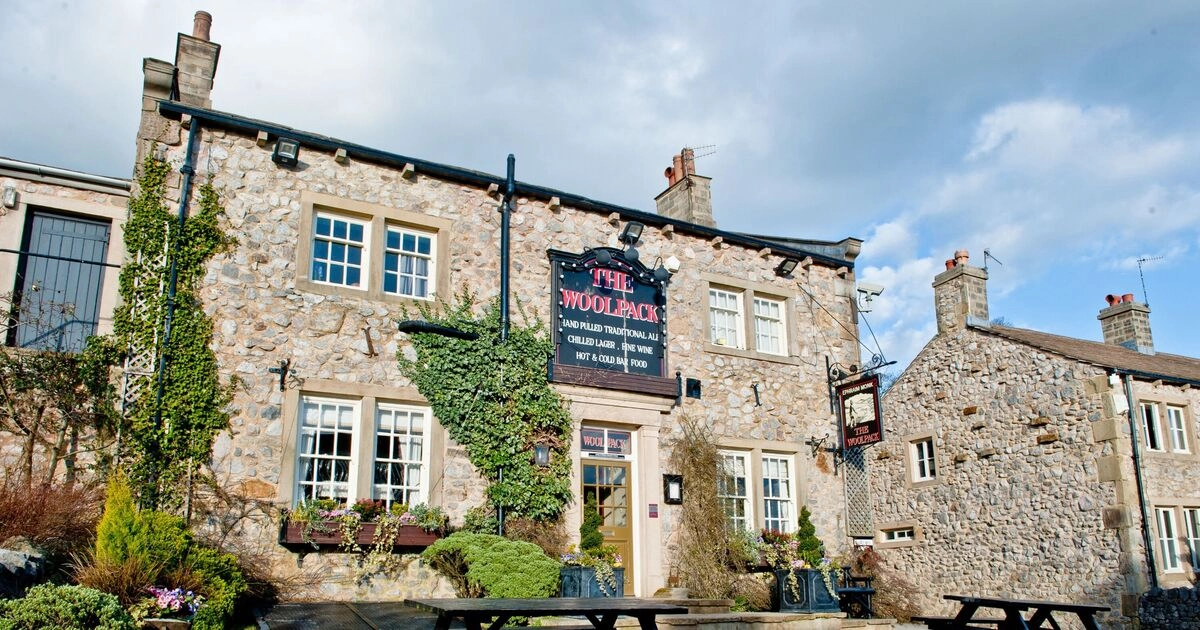
Emmerdale is known for the iconic pub, The Woolpack.
This cherished establishment serves as the backdrop for many dramatic events in the ITV village, witnessing an array of calamities including a plane crash, raging fires, and numerous new landlords taking over.
Throughout the series, cast members are often depicted enjoying drinks at the pub, but what viewers might not realize is that the actors indulge in real alcohol while shooting their scenes.
Interestingly, they weren’t the only ones unaware of this behind-the-scenes detail. Emmerdale favorite Matthew Wolfenden revealed that he unintentionally got a bit tipsy while filming his initial scenes for the ITV show.
David Metcalfe, who made his debut in the village in 2006, has been a central figure in numerous significant storylines since then.
FIND OUT MORE: Emmerdale fans ‘discover’ the true identity of Vinny Dingle’s father following a shocking revelation [LATEST]
During his initial appearances on the show, Matthew was unaware that actual alcohol was consumed on set at The Woolpack. In one scene, his character was directed to down pints of beer amid the pub’s unfolding drama.
Since filming often requires multiple takes, particularly when errors happen, it’s common for scenes to be shot repeatedly.
During a special segment dedicated to memorable bloopers from the soap opera world, a popular television star revealed that the cast actually consumes real alcoholic drinks while filming.
As a newcomer to the cast at that time, Matthew found himself downing several beers during a scene. By the end of the shoot, he admitted that he had lost his sobriety, according to reports from the Mirror.
Don’t miss…
Emmerdale legend Claire King’s real name is nothing like ITV fans would expect [INSIGHT]
Emmerdale’s Vinny Dingle star’s life – romance rumours to hidden talent [LATEST]
Emmerdale Vinny Dingle’s biological mum confirmed in family twist [REACTION]
We utilize your sign-up information to deliver content in ways you have agreed to and to enhance our understanding of your preferences. This may involve advertisements from us and third parties based on our knowledge. You can unsubscribe whenever you like. For further details, please refer to our Privacy Policy.
He laughed as he recounted, “It was just my second day on the job while we were filming in The Woolpack. I was completely unaware of this detail. My stage direction indicated that David drinks his pint and storms out.”
“He had just had a heated argument with Eric, and I kept repeating this action. I started off completely sober, but by the end of it…”
He then humorously mimicked how his speech became slurred due to the unforeseen intoxication. Other cast members chimed in, sharing their own amusing tales of indulgence during filming.
In 2022, ITV partnered with Heineken to promote their alcohol-free beer on the beloved show. Observant fans can spot Heineken 0.0 draught available at the Woolpack and also at Coronation Street‘s Rovers Return.
Emmerdale is broadcast from Monday to Thursday at 7.30pm on ITV1, or you can catch up on ITVX.
Sip and Celebrate: Boston’s Inaugural Latino Beer Festival Awaits!

By Gary Dzen
The inaugural Latino beer festival in Boston is set to take place at Roundhead Brewing Company later this month.
Located in Hyde Park, Roundhead will mark its second anniversary with a weekend full of celebrations on October 25.
The festivities commence on Friday from 5 p.m. to 9 p.m. with a special bottle release and a community vinyl night. Attendees will have the chance to get their hands on Valhalla, a limited edition, barrel-aged Scottish ale. The evening will feature DJ NXN, who encourages guests to share and spin their favorite classic vinyl records. Admission is free, and people of all ages are invited to join in the fun.
“This beer takes me back to our earliest moments when we began envisioning the growth of Roundhead and strengthening the bond between Craig Panzer and myself,” shares Roundhead co-founder Luis Espinoza. “It’s an opportune time to unveil our anniversary beer, Valhalla, which has been aged for seven months in bourbon barrels.”
Roundhead was established by the two friends, Espinoza and Panzer, who first crossed paths on the sidelines of their children’s soccer matches in Jamaica Plain. Espinoza hails from Peru, where his family operated a series of bakeries. While the brewery proudly showcases its Latin American roots with beers infused with ingredients such as guava, passion fruit, and purple corn, Roundhead also embraces the broader craft beer tradition. This includes their special edition Scottish ale.
“During my childhood, my grandfather used to brew Chicha, a drink made from malted corn, fruit, and spices,” reflects Espinoza. “I find it captivating to integrate something novel and distinct into a beer.”
On Saturday, October 26, Roundhead will host Boston’s inaugural Latino beer festival. The event will feature beers from ten breweries, including Cervecería del Callejón, Reina Mora, and Dragon Stone Abbey from Puerto Rico, Cerveza 7 Vidas from Peru, as well as local favorites like Hot Plate Brewing in Pittsfield.
“It is essential for the community of Latin and alliance brewers to unite,” Espinoza states. “Through collaboration, we share culture, experiences, and knowledge. I take great pride in being able to foster an environment that highlights Latin contributions to brewing right here in Boston.”
On Saturday, the Latino beer festival will host two sessions—one from 1 p.m. to 3 p.m. and another from 4 p.m. to 6 p.m.—with each session accommodating a maximum of 120 guests. This event is for those aged 21 and over. Tickets are priced at $55 when purchased in advance and $75 at the door. Following the beer festival, there will be a ticketed salsa dance party featuring the jazz band Timba Messengers, commencing at 6:30 p.m.
The top events in the city, sent straight to your inbox.
Gary Dzen serves as the deputy editor of sports and culture at Boston.com. A graduate of Bates College, he has been part of the Boston Globe Media team since 2005.
Maintain civility. Show kindness.
Vodka-Fueled Van Driver Sentenced for Fatal Crash that Claimed 71-Year-Old Woman’s Life

A van driver confessed to the police that he consumed a ‘glug’ of vodka prior to driving his vehicle and subsequently colliding with an oncoming car, resulting in his imprisonment.
Shaun Mulligan crashed his scaffolding van into a Suzuki Jimny, which was being operated by 71-year-old Jennifer Allen on the A281 in November 2022.
Tragically, Ms. Allen was declared dead at the scene, located between the West Sussex villages of Henfield and Woodmancote.
Witnesses reported that they could detect the scent of alcohol on Mulligan’s breath, and several empty vodka bottles were discovered littered around the wreckage of the van.
Three hours after the accident, tests revealed that he remained nearly double the legal alcohol limit.
On the evening prior to the collision on November 6, he consumed multiple cans of lager and shots of sambuca, and he skipped breakfast the next day.
On the day of the incident, Mulligan later confessed to having a ‘glug’ of vodka before stopping by to see a family member, and he had another drink from the bottle after leaving the visit.
Shortly after 4pm, he crashed his vehicle into Ms. Allen’s car.
Subsequent tests revealed that he exceeded the legal limit for benzoylecgonine, which is the chemical byproduct of cocaine.
Today, a 48-year-old resident of Eastbourne received a five-year prison sentence at Lewes Crown Court.
Heartbreaking tributes poured in for a 14-year-old boy who was found dead after going missing on his way to school.
A major motorway has been closed due to a lorry that caught fire while transporting hazardous chemicals.
Teenager who found himself bound to a quad bike by a farmer has shared the reasons that led him to be on the farmer’s property.
In another incident, a two-year-old boy and an eight-year-old girl have been hospitalized following a stabbing incident in east London.
Additionally, the individual involved in the latter has received a driving disqualification lasting seven and a half years.
Detective Sergeant Ian Foxton from Sussex Police commented, ‘It’s astonishing that Mulligan believed he could drive safely, despite having consumed vodka.’
After the verdict, Ms. Allen’s family expressed that Mulligan displayed a “selfish and reckless” attitude and “clearly lacked any sense of duty or responsibility.”
They further stated, “Many people were enriched by having Jenny in their lives, and we feel incredibly lucky to have experienced her kind and gentle spirit. We miss her every single day.”
To reach our news team, please send an email to webnews@metro.co.uk.
For additional stories like this one, visit our news page.
MORE : Maps show where Tommy Robinson march and counter-protest will happen in London
MORE : Sex offender tried ramming a man’s dog with a unicycle
MORE : UK’s ‘most prolific catfisher’ who drove girl, 12, to take her own life jailed