Discovering New Mexico: The Hidden Gem of Wine Country You Didn’t Know You Needed to Visit

Framed by the Sangre de Cristo Mountains in the north and the Chihuahuan Desert in the south, New Mexico is the United States’ fifth-largest state, showcasing a rich landscape of rolling sand dunes, prehistoric petroglyphs, fairytale caves, and dormant volcanoes. Along with its diverse topography, New Mexico boasts a vibrant cultural tapestry woven from the histories of Indigenous peoples, Hispanics, and Anglo Americans who’ve coexisted here for centuries.
While the state’s cuisine, a colorful blend of Native American, Mexican, and Spanish influences, often captures the spotlight, the story of its wine heritage is one worth exploring. Long before vineyards were established in California, New Mexico was home to grape cultivation, with its first vineyard recorded in 1629 by two Franciscan monks. By 1880, over 3,000 acres of vineyards were producing nearly one million gallons of wine, but the industry faced decline due to floods and competition. It wasn’t until the 1970s that wineries began reemerging, leading to a resurgence in wine production.
Despite this growth, the state remains relatively unknown to international wine enthusiasts, as about 85% of its wineries are small businesses producing fewer than 7,000 cases per year. The personal charm of tasting wine in New Mexico’s wineries adds to its allure, with informal interactions that make visitors feel at home.
The primary wine regions lie between Albuquerque and the Texas border, where the warm days and cool nights of the Middle Rio Grande Valley and Mimbres Valley are ideal for growing Italian varietals such as Sangiovese and Montepulciano. Albuquerque, with its abundance of tasting rooms, serves as the best starting point for wine lovers looking to explore local flavors.
Taos, which is home to one of New Mexico’s most interesting winemaking regions, presents unique challenges for its producers, who grow Merlot and Riesling at high altitudes. The region gives visitors the chance to experience wines from its northernmost wineries, surrounded by historical pueblos and breathtaking landscapes.
In a state with a high percentage of Hispanic residents, the diversity of its winemakers enriches the cellar-door experiences, allowing travelers to engage with wines crafted by a mix of Native American, female, and Hispanic artisans. For example, guests can enjoy a traditional Spanish dish while sipping wine at Las Nueve Niñas Winery or experience flamenco performances at Vara Winery. At Vivác Winery, visitors may sample unique wines like chokecherry wine, created in collaboration with Grammy Award-winning musician Robert Mirabal.
Traveling to New Mexico is simple, with several airlines offering flights to Albuquerque. For a local stay, options include Los Poblanos Historic Inn & Organic Farm in Albuquerque or El Monte Sagrado in Taos. Each offers a unique opportunity to immerse oneself in the state’s rich culture and burgeoning wine scene.
Discover more about New Mexico: New Mexico Tourism
The Art of Mixology: Love and Cocktails Unite in The Eras Pour

The Eras Pour: For This Mixologist, All’s Fair In Love And Cocktails
Vivian Hsiung, known as the creator behind the Instagram account @cocktailheartremedy, is channeling her romantic escapades into a series of cocktails that narrate her love life in a uniquely creative manner. Dubbed the "Taylor Swift of cocktails," Hsiung’s emotional storytelling through mixology is resonating with her audience of over 9,000 followers and reflects her personal journey of healing and self-discovery.
The onset of Hsiung’s cocktail journey coincided with the COVID-19 pandemic, during which she experienced a breakup that compelled her to craft drinks at home. She discovered that the different flavor profiles in mixology—bitter, sweet, sour—mirrored her emotions, leading to a significant realization: transforming her feelings into visual and flavorful experiences. This passion project not only became therapeutic but also evolved into an artistic endeavor.
Though Hsiung has no formal background in mixology, she has quickly become adept in the field, previously working in tech before fully committing to her cocktail creating. Her concoctions are not just simple drinks; they often reflect specific personal experiences, as seen in cocktails like “But You Said You Loved Me” and “Whoremones Gone Wrong”. Each drink is meticulously crafted with layers of meaning, humor, and personal anecdotes, inviting her followers into her journey through the ups and downs of love.
Hsiung’s relationship with her muses extends to the men she dates, some of whom find it flattering when their romantic mishaps inspire new cocktails. Her drink “Flabbergasted” is an example of this approach, conceived after a humorous incident during a date that left an indelible mark on her couch.
As she takes a break from dating in 2025, Hsiung continues to innovate with her cocktail creations, now focusing on simpler recipes to help her followers easily replicate her drinks at home. Ultimately, she dreams of launching a new cocktail menu coinciding with the release of Taylor Swift’s next album, inspired by shared artistic sensibilities.
For her fans and budding mixologists, Vivian Hsiung represents a blend of authenticity and artistry, in which the heartache of love transforms into the joy of creating something beautiful—one cocktail at a time. You can explore her creations on her website.
Sip into Celebration: 15 Festive Cocktails to Toast This St. Patrick’s Day
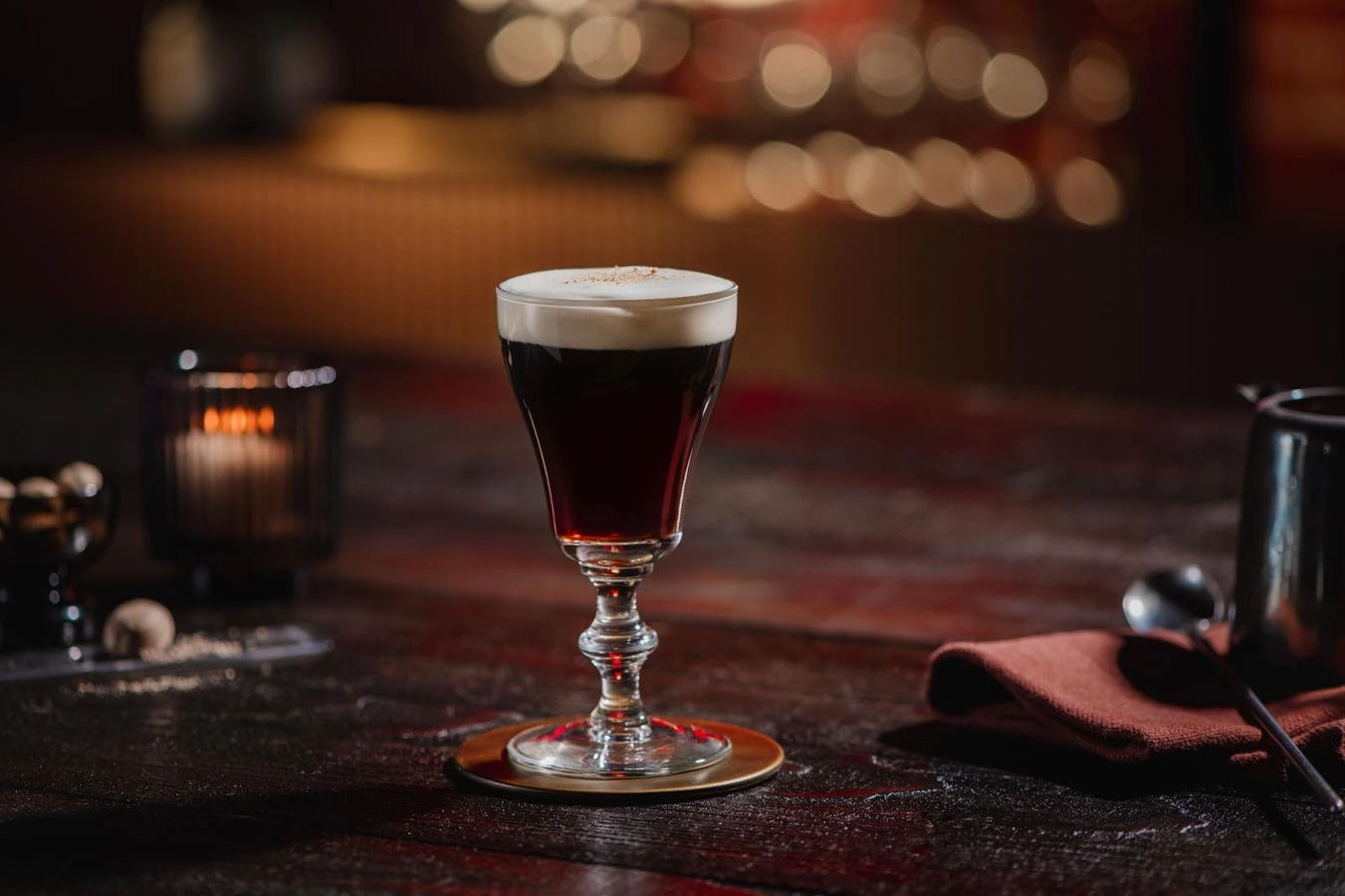
St. Patrick’s Day is a vibrant celebration of Irish culture that traditionally features Irish whiskey, alongside iconic elements like the color green and Guinness beer. In the U.S., whiskey sales see a notable spike around this holiday, with about 61% of Americans planning to spend an average of $43.64 to commemorate the occasion, according to the National Retail Federation.
The number of Irish distilleries has expanded significantly, having grown from just four in 2010 to over 40 today. Bartenders and distillers credit the smooth and approachable flavor of Irish whiskey for its rising popularity. Classic cocktails like Irish Coffee, highballs, and whiskey sours are often enhanced with it.
To celebrate St. Patrick’s Day this year, here’s a curated list of 15 cocktails that incorporate Irish whiskey and other festive spirits:
Teeling’s Iced Irish Coffee
- Ingredients:
- 2 oz Teeling Small Batch Irish Whiskey
- 2 oz Cold Brew
- ½ oz Demerara Syrup
- Bar spoon of heavy cream
- Instructions: Shake the whiskey, syrup, and cold brew over ice. Strain into a chilled mug filled with ice. Top with cream and garnish with grated nutmeg.
Shamrock & Roll
- Ingredients:
- 1 ½ oz Skrewball Peanut Butter Whiskey
- ¾ oz White Chocolate Liqueur
- ¾ oz Creme De Menthe
- ½ oz Half and Half
- Chocolate Syrup and Cocoa Powder for garnish
- Instructions: Rim the glass with chocolate syrup and cocoa powder. Shake all ingredients with ice, strain into the prepared glass.
Slane Irish Coffee
- Ingredients:
- 1 part Slane Irish Whiskey
- ⅔ parts vanilla-infused demerara syrup
- Freshly brewed double espresso
- Boiling water
- Lightly whisked double cream
- Dark chocolate orange shavings
- Instructions: Preheat your glass, brew a double espresso, and add boiling water. Stir in the syrup, espresso, and whiskey, then top with cream and shavings.
White Chocolate Shamrock Shake
- Ingredients:
- 2 oz Mozart White Chocolate Liqueur
- 2 oz vodka
- 2 pints vanilla ice cream
- 2 oz milk
- ¼ tsp peppermint extract
- Instructions: Blend all ingredients until smooth, then serve with whipped cream and mint garnishes.
Jameson Ginger & Lime
- Ingredients:
- 1 part Jameson Original
- 3 parts Ginger Ale
- 1 Lime Wedge
- Instructions: Fill a highball glass with ice, add Jameson, and top with ginger ale. Squeeze lime into the drink.
Redbreast Irish Whiskey’s Robin Manhattan
- Ingredients:
- 50ml Redbreast 18-Year-Old
- 25ml Antica Formula
- Instructions: Combine ingredients in a mixing glass with ice, stir, then strain into a chilled coupette and garnish with a Maraschino cherry.
Tullamore D.E.W. Honey Lemonade
- Ingredients:
- 1 ½ parts Tullamore D.E.W. Honey
- 3 parts lemonade
- Squeeze of fresh lemon
- Top with club soda
- Instructions: Stir all ingredients and pour.
Bushmills Irish Coffee
- Ingredients:
- 1 part Bushmills Black Bush
- 0.5 part Demerara syrup
- 4 parts Sumatra coffee
- Lightly whipped fresh cream
- Instructions: Stir all ingredients in a glass and top with cream.
Glendalough Shamrock
- Ingredients:
- 4 parts Glendalough Double Barrel Irish Whiskey
- 1 part Chartreuse
- 1.5 parts Simple Syrup
- 2 parts Lemon Juice
- 1 part Verbena Tea
- Mint & Basil leaves
- Instructions: Muddle herbs, mix all ingredients, and strain over ice.
Gold Fashioned
- Ingredients:
- 2 oz Taffer’s Browned Butter Bourbon
- 3 dashes Angostura Bitters
- Instructions: Add ingredients over ice in a glass and garnish with orange peel.
Scotch Spring Matcha
- Ingredients:
- 2 parts The Glenlivet Founder’s Reserve
- ¼ parts matcha
- 2 parts Crème of Coconut
- ½ parts lime juice
- Instructions: Shake and strain into a coupe glass, garnish with edible flowers.
The Botanist Green Gimlet
- Ingredients:
- 2 oz The Botanist Islay Dry Gin
- ¾ oz lemon juice
- ½ oz cucumber honey*
- Instructions: Shake and strain into a chilled glass, garnish with cucumber ribbon.
Bear Fight Bourbon Margarita
- Ingredients:
- 1 oz Bear Fight Kentucky Reserve Bourbon
- 0.75 oz Cointreau
- 1.5 oz lime juice
- 1 oz agave syrup
- Instructions: Rim glass with salt, mix ingredients with ice, and pour into prepared glass.
Matchatini Crème Latte
- Ingredients:
- Kin Euphorics Matchatini
- Minor Figures Oat Milk
- Coconut Whipped Cream
- Instructions: Shake together and pour into a glass, topping it with whipped cream and matcha.
Mine Hill’s Lucky Mule
- Ingredients:
- 2 oz Mine Hill Distillery’s Rye Whiskey
- ½ oz Lime Juice
- 4 oz Ginger Beer
- Instructions: Pour whiskey and lime into a glass with ice, then top with ginger beer and garnish.
This spirited assortment offers plenty of options to enjoy and toast to the luck of the Irish!
Tragic Accident: Video Reveals Monroe Woman with Wine Before Fatal Crash at Birthday Party

MONROE COUNTY, Mich. – In a court session on March 6, 2025, evidence was presented showing Marshella Chidester, the woman accused of drunk driving and crashing into a birthday party, holding wine shortly before the incident. The trial, which involves the crash that occurred on April 20, 2024, is now in the jury’s hands.
During the proceedings, Deputy Hooper from the Monroe County Sheriff’s Office testified about the findings from a search warrant executed at Chidester’s residence. Hooper revealed that a camera in Chidester’s kitchen had recorded her actions leading up to the crash. The footage showed her with a mini bottle of wine around 9:30 a.m. and throughout the day leading up to the accident, including her appearing to toss an empty bottle into the trash just prior to the crash.
Chidester claimed she consumed only one glass of wine at a local restaurant before driving. However, bodycam footage contradicted this, as it showed her stating she had a glass of wine "about a half hour ago." A restaurant employee confirmed her presence from 11 a.m. to noon, with the accident happening shortly after 3 p.m. Evidence presented in court indicated that her blood alcohol concentration post-accident was .18, which is over twice the legal limit in Michigan.
Employee Injured After Wine Bottle is Tossed at Them in South Euclid Beverage Store

An employee at Warehouse Beverage in South Euclid reported being attacked by a disgruntled customer on February 25. The incident occurred when a 42-year-old man, who is a regular customer, requested to take a package of cigars and pay for them the next day. When the employee informed him that this was not allowed, the customer proceeded to grab a bottle of wine and head towards the exit.
The employee followed him, leading the customer to retaliate by throwing the bottle underhand at his face, resulting in a minor injury. Although the employee declined medical assistance, he reported the incident to the police.
Officers apprehended the suspect at the nearby Tiki Time Bar after he initially resisted arrest. During custody, he exhibited signs of mental distress, including talking about suing the government. The man now faces charges for assault.
For more local news, visit the Sun Messenger.
Mississippi Cheers as Direct Wine Shipping is Now Legal: A Victory for Wine Lovers!

On February 26, 2025, Mississippi Governor Tate Reeves signed a significant bill that allows wineries to ship wine directly to consumers in the state, marking a major change in Mississippi’s wine landscape. This law will take effect on July 1, 2025, allowing residents to order wine from both in-state and out-of-state wineries. With this new legislation, Mississippi joins a growing list of states that permit direct-to-consumer (DTC) wine shipping, leaving Arkansas, Delaware, Rhode Island, and Utah as the only states that still restrict it.
State Senator Walter Michel’s Senate Bill 2145 was passed by the Mississippi Legislature on February 18 and is seen as a positive step for wine lovers and businesses in the state. Senator Jeremy England, one of the bill’s supporters, emphasized its importance in promoting consumer freedom and attracting businesses to Mississippi. The legislation aims to enhance the state’s image and provide new choices for residents eager to explore wines not available through local distributors.
Accompanying legislation in the state House, HB 1175, faced challenges but ultimately contributed to passing the bill. Some lawmakers, such as State Representative Hank Zuber, argued that the law would not threaten local alcohol retailers, as it restricts direct shipments to wines not already distributed in the state.
The new law stipulates that licensed wineries must obtain a direct wine shipper’s permit and comply with regulations, including maintaining records and labeling shipments with alcohol content warnings. Consumers will be able to have wines shipped directly to their home, provided they are over 21 and sign for their deliveries. However, restrictions remain, such as not being allowed to send more than twelve cases to a single address per year, and shipments cannot be made to dry counties.
While this development is predominantly seen as a win for consumers, some voices within the wine industry express concerns about the limitations imposed by the legislation. Critics argue that consumers may still face restricted options, as they may only order wines that are not already available through local wholesalers.
The law comes amid broader challenges for DTC wine shipping in the U.S., with recent data indicating a decrease in both the volume and value of wine DTC shipments. Despite these concerns, the addition of Mississippi to the list of states permitting DTC shipping is seen as a positive development that could inspire similar legislative action in other states.
Moving forward, the effect of this law on both wineries and consumers in Mississippi remains to be seen, but advocates believe it could serve as a model for change elsewhere. Lawmakers in states like New York and Delaware are reportedly considering their own DTC legislation in response to Mississippi’s new law.
For more detailed information about state shipping laws, check out Wine Spectator’s comprehensive guide.
Wine Retailers Express Disappointment Over Court’s Approval of Discriminatory Shipping Legislation

Wine Retailers Disappointed by Court’s Upholding of Discriminatory Shipping Law
The National Association of Wine Retailers (NAWR) has expressed disappointment following the 9th Circuit Court of Appeals’ decision in the Day v. Henry case, which validates Arizona’s law that prohibits the shipping of wine from out-of-state retailers to consumers within the state. This ruling highlights a split among circuit courts regarding the constitutionality of state alcohol laws that may discriminate against interstate commerce.
Currently, Arizona allows local wine retailers to ship to state residents but denies this same privilege to out-of-state sellers. As a result, Arizona consumers are restricted from accessing a vast selection of wines that are not available through local wholesalers, ultimately decreasing the state’s tax revenue and interfering with commerce between states.
Tom Wark, NAWR’s executive director, emphasized the need for the U.S. Supreme Court to hear this case to address what he perceives as discriminatory practices in wine shipping laws. He pointed out that the recent ruling creates a circuit split, which underscores the inconsistency in how courts are interpreting state laws related to alcohol distribution.
The 9th Circuit’s ruling aligns with decisions from the 4th and 8th Circuits, which have upheld state regulations requiring out-of-state retailers to establish physical locations within the state to be permitted to ship. Conversely, courts in the 6th and 1st Circuits argue that states must provide substantial justification for such requirements, asserting they must serve public health and safety interests.
Wark criticized the 9th Circuit’s prioritization of an outdated "Three-Tier System" over the rights of consumers. He noted that dissenting opinions within the court acknowledge that the purpose of the three-tier system is to promote public welfare rather than serve as a barrier to broader market access.
In light of this ruling, NAWR continues to fight for equitable access for wine retailers and looks towards future legal avenues to combat such discriminatory laws.
For more context about the National Association of Wine Retailers, visit their official site: NAWR.
Honoring Peter M. F. Sichel: A Life of Wine, Words, and Espionage

Peter M. F. Sichel, a renowned wine merchant and expert on German wines, passed away at the age of 102 on February 24, 2025. While he was celebrated in wine circles as an eminent connoisseur, his life story is much richer due to his clandestine past as a CIA spy in Berlin, which he chronicled in his autobiography, The Secrets of My Life (2016).
Sichel’s remarkable journey began in Mainz, Germany, where he was born into a Jewish family in 1922. He spent his youth immersed in his grandfather’s wine business, and his education extended to England. During World War II, he was captured by the Germans while working in Bordeaux. He evaded capture, fleeing to Portugal and Spain before enlisting in the U.S. Army. There, he was trained by the Office of Strategic Services to use German POWs as spies. By 1946, Sichel found himself in Berlin, where he reported on Soviet actions in East Germany and later joined the CIA, serving in Berlin, Washington, and Hong Kong until 1960.
After leaving the CIA, Sichel took over the family wine business and partnered with the Schieffelin Company to introduce Blue Nun, a German white wine that became immensely popular, selling 1.25 million cases in the U.S. and 3 million globally by the 1980s. This semi-sweet wine was a blend of Müller-Thurgau, Sylvaner, and Gewürztraminer.
His written works, including Which Wine: The Wine Drinker’s Buying Guide (1975) and The Wines of Germany (1980), alongside his memoir published at 90, established him as an influential figure in the world of wine. Sichel was a passionate ambassador for German wines and was known for his engaging storytelling and approachable demeanor.
Many wine enthusiasts first encountered Sichel’s wines before ever knowing of the man himself. In college, popular choices ran from jug wines to well-known brands like Blue Nun, recognizable by its image of nuns in blue habits, a stark contrast to the more complex labels of traditional German wines.
Throughout his life, Sichel was appreciated not only for his wine expertise but also for his charm and wit. Those who met him often described him as the epitome of a cultured European connoisseur, devoid of pretension and with a voice reminiscent of a classic character from a literary espionage tale. Given his intriguing background, it’s easy to imagine why some considered him capable of penning a compelling spy novel.
In reflecting on Sichel’s life, the saying “may you live in interesting times” rings true. He not only lived through incredible historical events but also enriched the lives of many with his stories and knowledge.
Decoding Wine Labels: A Beginner’s Guide to Understanding Wine Packaging

Buying wine can feel overwhelming, like a pop quiz without any preparation. When faced with shelves filled with bottles labeled in unfamiliar terms, it’s easy to feel lost and unsure if you’re making a smart choice or wasting money. However, understanding wine labels doesn’t require expert-level knowledge. Knowing the essential elements to look for can simplify the process immensely.
The Winery Name: Who Made This Wine?
Most wine labels prominently display the winery or producer’s name. Some names, such as Château Margaux or Robert Mondavi, may be more familiar than others. For lesser-known producers, a quick online search or a conversation with a knowledgeable wine shop employee can provide valuable insights. Popular names often indicate consistent quality, while smaller wineries could yield delightful surprises.
The Grape Variety: What’s in the Bottle?
Not all bottles specify the grape variety, but when they do, it offers a helpful hint about the wine. Familiar varieties like Chardonnay or Cabernet Sauvignon can signal what to expect. Conversely, some European regions name wines based on location rather than grape variety; for instance, a wine called Chablis is Chardonnay, while Chianti mainly consists of Sangiovese. If you’re unsure, a quick lookup will clarify the contents.
The Region: Where Is This From?
The location where a wine is produced significantly influences its flavor. Generally, a California Cabernet may taste bolder and fruitier than one from Bordeaux, which might feature earthier notes. Certain regions also have regulations that hint at quality; wines labeled DOCG in Italy or AOC in France must meet stricter standards than those with more lenient classifications.
The Vintage: What Year Was This Made?
The vintage indicates the year the grapes were harvested, which impacts the wine’s flavor and quality due to varying weather conditions. Wines from exceptional years (like 2010 in Bordeaux) may age better. However, for most wines, staying under five years for whites and ten for reds is a safe bet.
The Alcohol Percentage: How Strong Is This Wine?
Typically found at the bottom of wine labels, the Alcohol By Volume (ABV) percentage helps determine the wine’s strength. Common ranges include:
- Lighter whites and rosés: 11-13%
- Fuller-bodied whites and reds: 13-15%
- Fortified wines (like Port or Sherry): 17% and up
Higher alcohol levels often correlate with richer flavors, while lighter wines tend to be more refreshing.
Other Terms That Might Actually Be Useful
Labels often include terms that can provide useful context:
- Reserve/Riserva/Reserva: Indicates longer aging and potentially better quality, although in the U.S., "Reserve" is loosely regulated.
- Old Vines: Suggests more concentrated and complex flavors but lacks a strict definition.
- Estate Bottled: Affirms that the winery controls the entire process, ensuring better quality.
- Unfiltered: Indicates a wine may have a cloudy appearance but is rich in flavor.
What’s Probably Just Marketing Hype?
Some phrases appear on labels that sound impressive but lack meaning:
- “Handcrafted” or “Artisanal”: Without legal definitions, these terms are vague.
- “Winemaker’s Selection” or “Private Reserve”: Unless regulated, these are marketing terms.
- Gold Medals or “Best in Show”: While some competitions are legitimate, many can be pay-to-play, and a medal does not guarantee quality.
In summary, wine labels can present a mix of useful information and clever marketing tactics. Focusing on the producer, grape variety, region, and vintage will help demystify the process of selecting a wine. Ultimately, the best way to discover your favorites is through exploration—try different wines, take notes, and enjoy the journey.
Battle of the Titans: .300 Remington Ultra Magnum vs. .30-378 Weatherby Magnum

Phil Massaro delves into a comparative analysis of two powerful cartridges: the .300 Remington Ultra Magnum and the .30-378 Weatherby Magnum. Both these rounds cater to enthusiasts who prefer high-velocity, long-range shooting.
The trajectory of .30-caliber magnums in the shooting community began in 1925 with the introduction of the .300 Holland & Holland Magnum. This was followed by the .300 Weatherby Magnum that outpaced the previous standard—the 30-06 Springfield. The evolution continued, with the early ’60s seeing introductions from both Norma and Winchester. It wasn’t until 1996 that Weatherby launched the .30-378 Magnum, initially developed to fulfill military specifications for high-speed rounds. This cartridge has a distinctive belted case, modified to accommodate .30-caliber bullets and utilize slow-burning propellants. Standard factory-loaded ammunition can achieve impressive velocities, generating significant energy at the muzzle.
In contrast, the .300 Remington Ultra Magnum debuted in 1999, drawing inspiration from the Canadian Magnum series and designed for efficient shooting. This cartridge sports a slightly smaller case and is beltless, relying on its shoulder for headspacing. In factory-loaded ammunition, it generally showcases velocities slightly lower than the .30-378 with 180-grain bullets, and is capable of significant power, accommodating nearly 100 grains of slow-burning powder.
Both cartridges excel when it comes to case capacity and velocity, though the .300 RUM is reported to have an edge in terms of efficiency. This is primarily due to its rimless design, allowing it to maintain a longer case life without the stretching seen in belted models like the Weatherby. Moreover, ammunition for the .300 RUM tends to be less expensive, making it more accessible to shooters.
In conclusion, while both cartridges display exceptional performance and capabilities, the .300 Remington Ultra Magnum stands out for its efficiency, cost-effectiveness, and broader availability in the market. For many shooters, this makes it a more sensible choice, despite the allure of the .30-378 Weatherby Magnum’s higher advertised velocity.
For those considering a new addition to their arsenal or looking to delve deeper into long-range shooting precision, understanding these two cartridges can significantly influence their choice.