Liquor-articles 2100
Unveiling the Differences Between White and Dark Rum

Before you make your next Daiquiri, make sure you’re using the right rum.
One morning last month, in the rainforest of southern Belize, I started my day by harvesting two different types of organic sugar cane with a machete — not my typical start to a Tuesday, but a truly revealing one.
Initially, they were difficult to tell apart. Both were taller than me and had woody exteriors that reminded me of bamboo. But once we hacked into them, cut off a six-inch piece, and started chewing, their differences became stunningly evident: The black cane had a sweeter, more caramel-like personality with traces of blackberries and plums. The red cane, conversely, was less potent but had a marginally longer finish, with hints of honeydew. It was a stark lesson in the complexity of the world of rum at every phase of its production.
Related: Love a Daiquiri? Here are 15 Rum Drinks To Try Next
I was in Belize to learn more about Copalli Rum, a relatively young brand that is growing its footprint in the United States, and has had a tremendously positive impact on Southern Belize already. They’ve preserved more than 13,000 acres of rainforest there, grow their cane organically, operate a zero-impact distillery for their agricole-style rums, and invest heavily in programs for the local community. What surprised me was just how bright a light my time there threw not just on the raw materials that go into top-quality rum, but also on how barrel aging affects the finished product.
Later that day, I sat down with the Copalli team to taste not just their excellent white rum, but also a selection of barrel-aged samples of various ages, to explore how wood impacts the final liquid. It was a fascinating experience, and embodied much of what sets white rum and dark rum apart…as well as why that sort of either-or language is often inadequate to fully describe the impact that aging has on the spirit.
“Aging adds amazing complexity to rum, but timing is everything,” explained master distiller Eligio Rivas Fromherz. “As with other spirits, there is seasonality and artistry to aging. Aging adds and enhances rum’s natural flavor notes, taking on characteristics of the wood: The oakiness, caramels, vanillas, and of course color. Over time, the wood has less impact, and the rum starts developing an enhanced sweetness of its own.”
Related: Black Manhattan
But rum, similar to whiskey, doesn’t age in a predictable progression. As Rivas Fromherz explained, often you’ll encounter high points and low points in the aging process where the balance exerted by the aging either fits your taste perfectly or, in contrary, presents an unpleasant sharpness. What’s more crucial than the age of the rum is the timing the master distiller uses in the process. Considering the timing and technique of moving rum from the barrels at the exact instance where the balance between the base rum, barrel flavors, and a gentle sweetness hits peak is integral.
Through a tasting that I personally experienced, I found out the substantial differences that lie between the white rum and the two-, three-, four-, and five-year samples. I observed, the interaction between the spirit and the wood didn’t seem to be taking place at a uniform pace. Deciding when to put an end to the barrel aging involves a skilled hand and continuous tasting from the master distiller, this also accentuates the external conditions that impact aging rum.
For more Food & Wine updates, don’t forget to sign up for our newsletter!
Read the original article on Food & Wine.
Whiskey Sour Vs. Whiskey Smash: A Detailed Comparison of Two Classic Cocktails

Whiskey cocktails are timeless classics that blend the warm, earthy taste of whiskey with versatile ingredients such as citrus and herbs. The choice between two popular whiskey cocktails, namely the whiskey sour and the whiskey smash, might pose a dilemma. While the ingredients and proportions quite similar, the minor changes made between the two result in distinct beverages.
The shared elements between these drinks include the balance struck between the acidity introduced by the lemon, the sweetness courtesy of the simple syrup, and the burning sensation and texture from the whiskey. It’s fantastic how the essence of these simple ingredients transforms with slight modifications. The central differentiating factor is the lemon’s integration: only its juice is used in the whiskey sour, while the lemon is muddled for the whiskey smash, along with a sprig of fresh mint.
Find more information here: The 25 Best Bourbon Brands, Ranked.
Generally known as sours, this group of cocktails could be some of the earliest mixes, originating from seafaring days when a mixture of citrus juice, rum, and sugar was utilized as a shield against diseases. The first official recipes surfaced around the mid-1850s and the brew has stayed relatively unchanged since then. Despite the simple nature of the ingredients, crafting the perfect balance of acid and sugar with the type of whiskey chosen requires a certain level of skill.
An essential element of the whiskey sour recipe is derived from the process of shaking the ingredients. The melted ice adds water that slightly waters down the drink, thereby amplifying the flavors. The characteristic shaking also aerates and cools the drink. Some mixologists take an extra step and incorporate an egg white for a foamy finish after shaking that helps to tone down any sharpness from either the whiskey or lemon juice. Modifying the simple syrup to maple syrup, honey, or brown sugar and swapping the lemon juice for other citruses results in a multitude of delightful variations.
The smash is another long-standing drink category, reportedly quite popular in the mid-1800s as well. Mashing the citrus fruit used in the cocktail is a principal feature of the whiskey smash, resulting in the incorporation of all essential citrus oil flavors along with the juices, leading to a richer-tasting beverage. Mint is also a primary flavor element in a whiskey smash, slightly mashed with the other ingredients, and used also as a garnish.
The smash ingredients are shaken over ice and strained, offering a beverage that is more rustic with a bolder flavor than its polished sour counterpart. Mixologists have branched out to other fruits and herbs to produce new taste combinations in this drink category, although some form of citrus is still used to counterbalance sweetness along with fruits that are compatible with whiskey like peach, cherry, seasonal berries, and apple. Thyme and basil might replace the mint in this instance, and sometimes a dash of bitters is added for equilibrium.
It’s appropriate that the pounded version of this whiskey cocktail pair is called a ‘smash’, since the mashing of the fruits and herbs has such a significant impact on the drink’s flavor and texture. The mechanical process of destroying the lemon rind using a
cocktail muddler releases flavorful citrus oil, a little bitterness from the pith, and, of course, the tangy juices.
The muddling process in smash variations integrates the pulp of any popular fruit varieties into the drink, contributing to the mouthfeel as it’s sipped. Both sour and smash drink categories feature these variations, but the introduction of muddled fruit shifts a cocktail from being purely sour to a smash.
One might be curious about drinks that include a combination of muddled ingredients like mint julep, caipirinha, and mojito. The julep differs as it does not contain any fruit, technically excluding it from being a smash – the rest, however, are examples of smashes utilizing different spirits!
All five smashes listed in the 1888 “New and Improved Bartender’s Manual” by Harry Johnson feature mint and seasonal fruit. Therefore, we can conclude that herbs are a hallmark of the smash. The cocktail’s shaking lightly bruises the herb, releasing essential oils into the drink. An additional sprig garnishes the finished beverage, infusing even more aroma.
Understanding that a smash has a strong mint flavor may influence your whiskey choice to a sweeter bourbon, reserving the spicier high-rye whiskies for the sours. Naturally, many tremendous smashes utilize other herbs such as basil and thyme, designed to be in sync with a range of fruits and whiskies. Cocktail bitters are another flavor-rich ingredient included in some smash recipes to enhance the drink’s complexity.
The bitterness acts as a counterbalance, enhancing the overall balance of sweet, sour, and herbal elements in the cocktail. Whether opting for classic aromatic bitters or experimenting with exotic flavors like orange or cherry, each drop introduces a subtle, lingering depth to the whiskey smash. Although neither whiskey sours nor smashes originally included bitters, it’s not uncommon to see a few dashes in either drink these days because they so neatly tie flavors together.
Read the original article on Tasting Table.
Unveiling the World’s Best Vodka at the 2023 New York World Wine And Spirits Competition

Stumbras Premium Organic Vodka takes home the top prize at this year’s New York World Spirits Competition.
Earlier this year a panel of expert judges convened in a nondescript hotel convention hall in Brooklyn to assess merit across all major categories of spirit. It was part of the annual New York World Wine & Spirits Competition, which in just several iterations has already grown into one of the city’s premiere tasting events.
We’ve spent significant time covering the top-rated whiskies from that competition. It included several jaw-dropping surprises, all of which are worthy of exploration—if you fancy aged spirit. Now we’re going to venture into the realm of vodka. But first we must address the elephant in the room: how does one define greatness in a category that is flavorless by design?
Well, for starters, vodka isn’t flavorless, exactly. It is often confused with neutral grain spirit, but that’s a vast oversimplification. And an outdated one. Vodka doesn’t even have to be made from grain at all. It can be distilled from vegetables, fruit, honey, starches—we’ve seen compelling examples come from all sorts of base ingredients. And it certainly doesn’t need to be neutral in flavor or aroma. If you have doubts, you ought to consider cracking open a bottle of the very expression that the New York Wine & Spirits Competition dubbed the best of 2023: Stumbras Premium Organic Vodka.
The inaugural organic vodka from Lithuania is produced adhering to stringent protocols. It commences as wheat cultivated on an organic farm located in the core of the Baltic nation. After the distillation process, the substance traverses through a specialized linen filtration system, attributing a distinguished smoothness and refined viscosity to the vodka.
While there could be a debate about the presence of any gimmick, it is unambiguous that the fundamental wheat element bestows an enjoyable sweetness on the palate. This sweetness persists and is prominent even in the aftertaste, leading to flavor contemplation in vodka.
To ascertain, Stumbras, the producer, isn’t hinting at flavored vodka. In reality, the company is renowned for another variant, notably a cranberry flavor, which was also acknowledged by New York judges for its exceptional bitterness. With over 115 years of expertise, the company exhibits mastery over its craft.
The award-winning organic expression can be easily spotted on American racks, priced approximately at $20 per bottle. The subtle characteristics of its tasting notes stipulate it as a fitting pair with tonic or soda, preferably served over ice. Particularly, the integration of lemon or lime, the bitter and sour elements of citrus, aptly counterbalance the sweetness of wheat in the vodka.
Or do the unthinkable: try the 80-proof spirit neat. Maybe you’ll be able to call out some of the same grassy aromatics in the liquid that won over those contest judges back in Brooklyn. Perhaps you, too, will call it one of the more interesting vodka on shelves today. But what you won’t be able to do is call it flavorless.
LITHUANIA – NOVEMBER 25: Mill, Open air ethnographic museum, Rumsiskes, Dzukija, Lithuania. (Photo … [+] by DeAgostini/Getty Images)
Debunking the Alcohol Myth Surrounding Rum Cake

A rum cake is an easy, festive addition to any holiday table. The rum-spiked sponge is baked in a Bundt pan, and drizzled and brushed with a rum syrup. The result is a cake that’s so moist and rich that it doesn’t need a glaze or frosting. It goes perfectly with a cup of coffee, or to top off a day of celebrations. However, if you’re abstaining from alcohol, don’t believe people when they tell you all the alcohol bakes off during the cooking process. Spoiler alert — it doesn’t.
Typically, alcohol is merely a carrier for the flavor a particular recipe calls for, whether it’s a scrumptious rum cake or a red wine sauce for your steak. Alcohol also enhances the flavors of other ingredients, like in a penne alla vodka where the vodka makes the tomato stand out and tenderizes meat. It’s a versatile ingredient, and there are plenty of reasons to use it, but you should remember that while a significant amount of the alcohol does cook off, it’s never 100% gone.
Read more: 10 Of The Healthiest Beers You Can Drink
When cooking with booze, it’s impossible to cook or bake all the alcohol out of a dish or dessert, but how much remains in the final presentation depends on a few things, namely temperature and length of time spent cooking, as well as the surface area of your cooking dish. Alcohol evaporates faster at higher temperatures, and more alcohol cooks off the longer something bakes. No matter what, though, alcohol molecules will stick to molecules of other things in the dish and stay put. It has been shown that even cooking dishes for hours still leaves a small percentage of alcohol remaining in the dish.
When making a rum cake, the size of your cooking vessel plays a crucial role. More surface area means the dish has more contact with oxygen, causing the alcohol to evaporate quicker in a larger pan or skillet. The ingredients you employ along with the dish you’re prepping should be thoughtfully considered. A rum syrup used as a topping, for instance, probably won’t have cooked long enough or at the right temperature to evaporate much alcohol. The cake, conversely, usually contains half to a full cup of rum, giving it about 5% alcohol content—a beer’s equivalent.
There could be numerous reasons to substitute alcohol in your recipes, including health-related, recovery, or religious motivations. You can still participate in the world of boozy baking, even without alcohol. The main focus is the flavor, and the alcohol merely acts a carrier. An array of cooking and baking ingredient swaps provide similar flavors without alcohol including various vinegars, herbs, spices, and syrups.
You can create a rum cake using rum extracts and rum-infused syrups or a fusion of elements such as white grape juice, molasses, and almond extract. Alternatively, you can seek non-alcoholic rum. There’s an abundance of non-alcoholic spirits to replace their alcoholic equivalents. Hence, your next rum cake can be alcohol-free, and you won’t have to be concerned about the alcohol content in your future baking endeavors.
Refer to the original article on Daily Meal for more information.
Revealing 2023’s Best Vodka According to the New York World Wine and Spirits Competition

Stumbras Premium Organic Vodka takes home the top prize at this year’s New York World Spirits Competition
Earlier this year a panel of expert judges convened in a nondescript hotel convention hall in Brooklyn to assess merit across all major categories of spirit. It was part of the annual New York World Wine & Spirits Competition, which in just several iterations has already grown into one of the city’s premiere tasting events.
We’ve spent significant time covering the top-rated whiskies from that competition. It included several jaw-dropping surprises, all of which are worthy of exploration—if you fancy aged spirit. Now we’re going to venture into the realm of vodka. But first we must address the elephant in the room: how does one define greatness in a category that is flavorless by design?
Well, for starters, vodka isn’t flavorless, exactly. It is often conflated with neutral grain spirit, but that’s a vast oversimplification. And an outdated one. Vodka doesn’t even have to be made from grain at all. It can be distilled from vegetables, fruit, honey, starches—we’ve seen compelling examples come from all sorts of base ingredients. And it certainly doesn’t need to be neutral in flavor or aroma. If you have doubts, you ought to consider cracking open a bottle of the very expression that the New York Wine & Spirits Competition dubbed the best of 2023: Stumbras Premium Organic Vodka.
The first organic vodka to ever be distilled in Lithuania adheres to strict production guidelines. The process begins with wheat cultivated in an organic farm nestled deep within this Baltic nation. Post distillation, the spirit undergoes a proprietary filtration method using linen, reputed to enhance the vodka’s smoothness and slightly viscous nature.
There might be some controversy as to whether these unique characteristics amount to simply a marketing trick, but the undeniable fact remains that the base ingredient, the wheat, imparts a delightful sweetness to the consuming experience. This sweetness persistently lingers even after consumption, enticing further contemplation of its characteristic flavor. A flavor that is surprisingly palpable in vodka.
We should note that Stumbras also produces a flavored vodka, but we’re discussing pure vodka in this context. Of interest, the brand’s cranberry variant garnered recognition for its excellent bitter tones at a spirits contest in New York. No surprise there, considering the company’s over 115-year-long heritage in perfecting its craft.
The award-winning organic vodka is readily accessible on American store shelves, priced reasonably at around $20 a bottle. Its entire sensory profile marks it as an ideal accompaniment to tonic or soda, served over ice. Adding lemon or lime further perfects the balance, with the tartness of citrus offsetting the wheat’s inherent sweetness in the vodka.
Or do the unthinkable: try the 80-proof spirit neat. Maybe you’ll be able to call out some of the same grassy aromatics in the liquid that won over those contest judges back in Brooklyn. Perhaps you, too, will call it one of the more interesting vodka on shelves today. But what you won’t be able to do is call it flavorless.
LITHUANIA – NOVEMBER 25: Mill, Open air ethnographic museum, Rumsiskes, Dzukija, Lithuania. (Photo by DeAgostini/Getty Images)
Debunking the Myth: Does Rum Cake Really Contain Alcohol?

A rum cake is an easy, festive addition to any holiday table. The rum-infused sponge is baked in a Bundt pan, drizzled and brushed with a rum syrup. The result is a cake that’s so moist and rich it doesn’t require any frosting or glaze. It pairs well with a cup of coffee, or as a sweet conclusion to a day of celebrations. Contrarily, if you’re abstaining from alcohol, ignore people when they tell you all the alcohol evacuates during baking — it doesn’t.
Generally, alcohol primarily acts as a flavor transport for the specific taste a recipe demands, whether it’s a luscious rum cake or a red wine sauce for your steak. Moreover, alcohol boosts the flavors of other ingredients, like in a penne alla vodka which allows the flavor of the tomato to shine through and softens the meat. It’s a versatile additive, and there are a myriad of reasons to use it, but bear in mind that although a fair amount of alcohol does evaporate, it’s never fully gone.
More insights: 10 Of The Healthiest Beers You Can Drink
When cooking with alcohol, it’s not feasible to get rid of all the alcohol in a dish or dessert. The amount that remains revolves around several factors like cooking temperature, length of cooking time, and the cooking dish’s surface area. Alcohol evaporates faster at elevated temperatures, and a greater amount is cooked off as the cooking time is prolonged. Regardless, some alcohol molecules will bind to other molecules in the dish and remain. It’s been proven that even after cooking dishes for extended periods, a fraction of the alcohol linger in the recipe.
Moreover, when baking a rum cake, the size of your cookware is of essential consideration. A larger cooking vessel provides more surface area for contact with oxygen, leading to quicker evaporation of the alcohol within a larger pot or pan. It’s also vital to consider your recipe and ingredients. For instance, a rum syrup topping for your cake will likely not cook long enough, or at the necessary temperature, to allow much alcohol to evaporate. The actual cake, meanwhile, typically requires half to one cup of rum, resulting in a baked good with roughly 5% alcohol content- the same as a beer!
Although not all dishes will end up as alcohol-heavy as a rum cake, there are many valid reasons you may opt to replace the alcohol in your recipe. Be it for health, recovery, or religious reasons, don’t feel like you’re missing out. There are numerous alternatives to using alcohol in rum cake and other alcohol-dependent recipes. The focus should be on flavor, the alcohol’s simply acting as its vehicle. You can replicate similar tastes without using alcohol by following various cookery and bakery ingredient substitutions, such as a variety of vinegars, herbs, spices, and syrups.
With ingredients such as rum extracts and rum-flavored syrups, or a combination of elements like white grape juice, molasses, and almond extract, you can bake a rum cake. Alternatively, consider using non-alcoholic rum. There’s a wide range of non-alcoholic spirits that can act as substitutes for their alcoholic counterparts. So, you can always bake your next rum cake alcohol-free and not worry about the alcohol content in your future baking endeavors.
Here is the original article from Daily Meal for more information.
A Refreshing Twist to an Old Fashioned: Swap Bourbon with White Whiskey

The iconic old fashioned was the first cocktail that appeared in print in 1806 — and became a template for mixology to come. Its combination of rye or bourbon, along with sugar and bitters yields the perfectly balanced sipper. Plus, it’s an excellent starting point for variations: Swapping out the base spirit yields some delicious results. So why not turn to a more refreshing spin-off — yet one that still adheres to a whiskey palate — by incorporating a white version of the booze.
White whiskey is made of the same ingredients as regular whisky, yet it barely spends any time in the barrel (as little as a few seconds, just long enough so that it can be called whiskey). It’s actually the barrel that gives whiskey its golden color; the alcohol is clear when it first goes in. The resultant white whiskey flavors vary, depending on the distillation grain, but can range from a robust, alcoholic spirit to something a little more fruity. With a thoughtful liquor selection, it can yield a delicious old-fashioned cocktail that doesn’t lose its hint of whiskey. Simply pair with complementing bitters to enjoy such a riff. Let’s dive into how it comes together.
Read more: The 25 Best Bourbon Brands, Ranked
The most prominent component in the swap is the whiskey, so it’s best to utilize a reputable rendition of the style. A popular option is Death Door’s take on the liqour, the distillery crafts a white whiskey with a mild spice, bread-like character, and just a tinge of sweetness. However, many small-batch distilleries are producing white whiskey, and it could be fun to sample a few. Whichever white whiskey you choose, simply shake it with a bit of simple syrup to showcase the opaque liquor’s quality.
From there, it’s all about infusing with bitters and fruits. To complement the drink’s lighter character, citrus is a tasty addition — especially the slightly bitter character of grapefruit. Incorporate it through the use of grapefruit bitters, or simply garnish with a grapefruit wedge or rind. You could add a maraschino cherry, too, infusing extra flavor by either reaching for the always-flavorful Luxardo brand, or a cherry soaked in brandy for a more spirited twist. Serve your drink in a clear glass for the eye-catching visual effect, and enjoy. It may go down a bit easier than regular whisky and will still pack in complex flavor, plus white whiskey is always a good talking point.
Read the original article on Tasting Table.
Decoding the Difference: Whiskey Vs. Wine Decanters
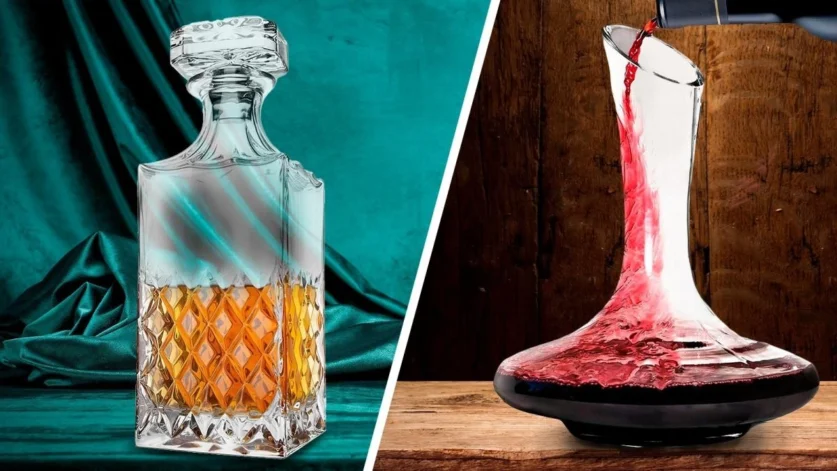
Developing a passion for wine and whiskey can be an enticing and fulfilling pastime that engages both cognitive faculties and delicate sensory perceptions. To indulge in this hobby properly, various vital elements are required. These include informative resources, plentiful tasting experiences, and well-equipped utensils. A pivotal accessory for every home bar is a decanter, or perhaps two. Both wines and spirits like whiskey can be decanted, but the reasons for decanting them vary, as do the backgrounds and design of the vessels used for each drink.
Pondering over investing in an elaborate wine or whiskey decanter? Let us delve into the origins and distinct functions of these two decanter types. We will also discuss why they are ideally suited for the particular beverages they were designed to accommodate.
Continue reading: The 25 Best Bourbon Brands, Ranked
In its simplest form, a whiskey decanter serves as a refillable vessel made to hold whiskey. Early versions of decanters, which have their origins in the Renaissance period, served a practical purpose. Whiskey merchants used to travel with entire barrels of whiskey and distribute the beverage directly from the barrels into basic decanters, instead of bottling and transporting individual whiskey portions. Subsequently, wealthy households began collecting stately decanters as display pieces for their whiskey. The charm of owning a unique cut-glass decanter spread rapidly, especially after the creation of a version with a stopper by a British glassmaker in the 1730s.
Whiskey decanters, typically hefty and crafted from materials like glass or crystal, can create a more sophisticated drinking ambiance if coupled with corresponding glassware. However, assure that your crystal decanter is completely lead-free to avoid health hazards. Most people prefer glass, a safer alternative.
Intriguingly, wine decanters, aimed at enhancing the wine’s quality, have existed since ancient Greek and Roman times. Initially, these vessels were merely for storing wine. They began to evolve around the 1700s when wine drinking and glassmaking significantly rose in Europe. Similar to whiskey decanters, wine decanters also signal elegance and are often made of glass or crystal. There is a similar concern about potential lead presence in crystal decanters, and using aluminum or other metals can alter the wine’s flavor undesirably. It’s important to note that a wine decanter is not the same as a wine carafe – they differ in shape and purpose.
It’s tempting to attribute some significant function to the heavy, often ornately designed, whiskey decanters, but the truth is they don’t affect the whiskey’s flavor or texture. As whiskey does not require decanting, their main role is aesthetic representation of your favorite spirit. Whether you opt for a clear decanter highlighting the quality and color of your whiskey or a fancy one to accentuate your investment in the whiskey-drinking experience, remember to ensure the vessel’s stopper is air-tight to prevent any damage to the spirit over time.
A wine decanter plays a significant role in enhancing the qualities of a wine. These large, vase-like containers with a wide base aid in aerating the wine. This process introduces oxygen into the wine, bringing out the smell and taste more effectively. Though decanting would happen naturally over time, the utilisation of a decanter accelerates this process. This means you can enjoy your wine much sooner. As an extra benefit, decanters also aid in separating any residual sediment in your wine, providing a smoother drinking experience.
You may have noticed that most wine decanters don’t have a stopper. This is deliberate as the purpose of using a wine decanter is to introduce air into the wine as quickly as possible. Also, wine cannot be stored indefinitely in a decanter; the oxidation process will start to affect it rather swiftly, leading to spoilage. Most wine lovers would decant a bottle just before they plan to drink it, making sure it’s all consumed that day. Consequently, there’s no need for a stopper to preserve the wine within the decanter.
Contrastingly, whiskey decanters are ideal for whiskey storage, equivalent to keeping it in its original bottle. Since whiskey is often sipped leisurely over an extended time, a stopper is useful. It prevents dust from entering the bottle and averts excessive oxidation, which isn’t as much of a concern as it is with wine, and it helps avoid accidental spills. Moreover, a stopper allows for additional decoration, further enhancing the aesthetics of this already ornamental piece.
You can read the original article on Tasting Table.
Unveiling the World’s Best Vodka of 2023: Insight from the New York World Wine and Spirits Competition

Stumbras Premium Organic Vodka won the highest honor at the New York World Spirits Competition this year.
During the early part of the year, a group of expert judges gathered in a common Brooklyn hotel conference center to evaluate the quality of various types of spirits. These evaluations were part of the yearly New York World Wine & Spirits Competition which has quickly become one of the city’s top tasting events despite its relative newness.
Our blog has spent substantial time covering the highest-rated whiskeys from the competition, which included several unexpected results all well worth exploring for any fan of aged spirits. Now, we turn our attentions to vodka. A major question that comes up: how does one establish the quality of a spirit that is supposed to be flavorless?
Interestingly enough, while vodka isn’t exactly flavorless, it is frequently mistaken for neutral grain spirit, a wide multiformity. And an outdated one as well. Vodka isn’t necessarily made from grain at all. It can be distilled from a variety of resources like vegetables, fruit, honey, starches etc. with numerous examples proving it needn’t be devoid of taste or scent. If you’re skeptical about this, it may be worthwhile to try the very drink that the New York Wine & Spirits Competition declared the best of 2023: Stumbras Premium Organic Vodka.
The first organic vodka to ever come out of Lithuania is crafted according to strict parameters of production. It begins its life as wheat grown on an organic farm, deep in the heart of the Baltic nation. After distillation, the liquid passes through a proprietary linen-based filtration. This process is said to imbue the vodka with its notable smoothness and subtle viscosity.
You can debate whether or not there’s some element of gimmick to be found there. But what’s certain is that the wheat at its core imparts a pleasing sweetness upon the palate. It carries through, into the aftertaste, where you’re left to ponder the lingering nuance of this flavor. Yes, flavor—in vodka.
And, to be clear, we’re not talking about flavored vodka. In fact, Stumbras specializes in one of those as well. Namely, a cranberry variant, which was also recognized by the judges in New York for its exceptional bitter notes. The company has the craft pretty well dialed-in after over 115 years of getting the job done.
You can find its award-winning organic expression on American shelves rather easily, priced at around $20 per bottle. The aforementioned subtleties of its tasting profile marks it as a natural fit against tonic or soda, served over rocks. Especially if you’re going to add lemon or lime into the mix, with the tart and bitter elements of citrus balancing out all things sweet from the wheat in the vodka.
Or do the unthinkable: try the 80-proof spirit neat. Maybe you’ll be able to call out some of the same grassy aromatics in the liquid that won over those contest judges back in Brooklyn. Perhaps you, too, will call it one of the more interesting vodka on shelves today. But what you won’t be able to do is call it flavorless.
LITHUANIA – NOVEMBER 25: Mill, Open air ethnographic museum, Rumsiskes, Dzukija, Lithuania. (Photo … [+]. by DeAgostini/Getty Images)
Debunking the Myth: Does Rum Cake Really Contain Alcohol?
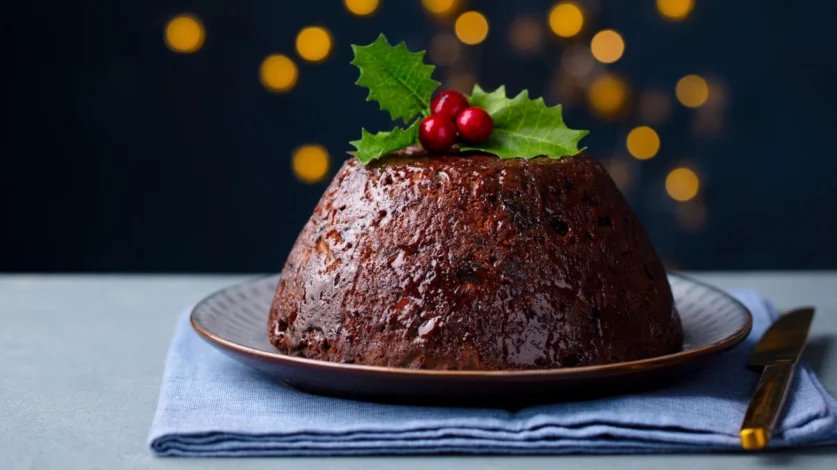
A rum cake is an excellent addition to any holiday celebration. This cake is unique because it is baked in a Bundt pan and later generously drizzled with rum syrup. The resulting cake is extremely moist and rich, removing the need for icing. It is perfect alongside a cup of coffee or as the perfect end to a festive day. However, if you are staying away from alcohol, don’t be fooled with the myth that all the alcohol bakes off during the cooking process. In reality, it does not.
Usually, alcohol serves as a flavor enhancer in a recipe, whether it’s a delectable rum cake or a red wine sauce for your juicy steak. It has the ability to enhance the taste of other ingredients as well – just think of a penne alla vodka in which vodka highlights the flavor of the tomato and tenderizes the meat. As versatile as it is, remember that while a good amount of the alcohol does cook off, it is never fully gone.
More information: 10 Of The Healthiest Beers You Can Drink
When cooking with booze, getting rid of all the alcohol in a dish or a dessert by cooking or baking is impossible. The amount of alcohol that remains in the final product depends on factors like the temperature, the amount of time spent cooking, and the surface area of your cooking dish. Alcohol evaporates more quickly at elevated temperatures and a larger amount gets cooked off the longer the baking duration. However, certain alcohol molecules cling on to molecules of the other ingredients in the dish, ensuring that at least a small amount of alcohol remains present, even if a dish has been cooking for hours.
Moreover, the size of your cooking vessel is a crucial factor when cooking rum cake. A larger surface area allows more contact with oxygen, hence alcohol evaporates quicker in a larger pan. It’s also essential to know your ingredients and the dish you are preparing. For instance, a rum syrup topping on your rum cake may not have been cooked long enough to let much alcohol evaporate. On the contrary, the cake itself may contain half to a full cup of rum, resulting in a baked cake with approximately 5% alcohol, similar to a beer.
While other dishes may not be as alcohol heavy as rum cake, there could be numerous reasons to substitute alcohol in your cooking, such as health considerations, recovery purposes, religious beliefs, and more. You need not feel excluded from the realm of boozy bakes. It’s feasible to replace alcohol in rum cake and other recipes that call for alcohol, with the primary objective being to retain the flavor where alcohol is merely the carrier. Several alcohol alternatives can give similar flavors, such as using different vinegars, herbs, spices, and syrups. Check out these cooking and baking ingredient swaps for more ideas.
Additionally, you can make rum cake using rum extracts and rum-flavored syrups, or you can mix ingredients like white grape juice, molasses, and almond extract. You might also want to try non-alcoholic rum. Various non-alcoholic spirits can substitute their alcoholic counterparts, so consider cooking your rum cake without any alcohol next time and remove any worries about the alcohol content in your future bakes.
Check out the original article on Daily Meal for more details.