Liquor-articles 2100
The Storytelling Aspect of American Independent Whiskey Bottlers: Beyond Sourcing Whiskey
The Scotch Malt Whisky Society has been in operation since 1983
If you’re a bourbon drinker, you’re likely acquainted with the idea of sourced whiskey. This is where a distillery or non-distilling producer purchases and resells whiskey that they didn’t distill. This practice is utilized in whiskey-making countries worldwide, but it’s often associated with American whiskey. Although sourcing has become more accepted, there are arguments against it due to its lack of authenticity, implying that selling someone else’s product isn’t as genuine as making it oneself.
This viewpoint is predominantly a result of today’s whiskey market. Sourcing has always existed in the whiskey industry, and many of today’s most sought-after heritage brands are sourced products. Despite this, the modern whiskey enthusiast demands more clarity from producers. Over the past decade, distilleries and non-distilling producers have replied appropriately, frequently providing information on mash bills, barrel entry proofs, and where the whiskey was aged.
While this additional production data suffices for most whiskey enthusiasts, many sourced products are still mysterious, particularly those that are blends of straight bourbon or rye whiskies from multiple locations. If you’ve seen a whiskey bottle label indicating that it was distilled in Indiana, Tennessee, or Kentucky, you have just enough information to realize you don’t know the whole story. A new trend of transparent whiskey production has emerged in the U.S., inspired by a successful business model long-used in Scotland.
No two barrels of whiskey are ever the same.
The practice of independent bottling of whiskey is akin to sourcing, the difference being the selling company usually does not distill the whiskey themselves. Nonetheless, unlike most sourced whiskies, there is complete transparency about the source distillery prominently displayed on the label. However, why would a distillery permit someone else to sell their brand of whiskey? This can be explained by the unpredictable nature of the whiskey-making process. It often happens that two barrels filled with the same spirit and stored in the same conditions produce end products with distinct tastes. Due to this variability, sometimes, the taste does not meet the specific distillery style.
Such barrels which do not conform to the profile may be procured by independent bottlers in a mutually beneficial transaction: the distillery is able to get rid of unsuitable barrels while the bottler benefits from having the distillery’s name on their label. Distilleries often let their official brand name be replaced with an independent bottler’s trade name. For instance, one might not see a lot of independently bottled whiskey from Balvenie or Laphroaig, but there are plenty of “Burnside” and “Williamson” available. Surplus or experimental casks are sometimes sold to independent bottlers as well, but these are not necessarily substandard barrels. Instead, their flavor might not match the branding of the distillery. This practice of selling surplus barrels is becoming increasingly scarce with rising global demand for whiskey.
Once procured by an independent bottler, they can manipulate the barrel’s contents as per their wish. Some barrels are quickly bought and sold, yet most continue to mature in the warehouses. It’s common to transfer many barrels to secondary casks ahead of bottling, thus adding new dimensions of flavor to the original spirit. The secondary maturation of some barrels could be pivotal in transforming a mediocre release into a market-worthy product. Some bottlers also mix together a small number of barrels from the same distillery for an independent bottler release.
The concept of independent bottling in the United States presents a unique opportunity for the numerous distilleries producing whiskey across the country. A small-scale distillery crafting exceptional whiskey in locations such as Ohio or Montana may not possess the necessary marketing budget or distribution network to drive their brand beyond their local vicinity. An independent bottler can significantly shift this dynamic. By launching products that highlight the source distillery’s name on the label, these smaller distilleries are given a chance to reach a national audience, with the independent bottler taking on the complicated task of marketing, selling, and distributing the whiskey.
There are two primary enduring entities in the American independent bottler sector. The United States division of Scotch Malt Whisky Society (SMWS) has been functioning since 1993, providing American single malt enthusiasts with distinctive barrels of scotch whisky for over three decades. Although the SMWS has since expanded to include bourbon, rye, rum, gin and armagnac among other spirits, it continues to focus predominantly on sourcing and selling scotch.
Single Cask Nation was established in 2011 by self-described whisky aficionados Jason Johnston-Yellin and Joshua Hatton. Much like the SMWS, they majorly concentrate on scotch whisky but have adapted to include other styles such as bourbon, rye, rum and American single malt. Both organizations source whisk(e)y globally, with a special emphasis on Scotland, hence leaving a large segment of the craft American whiskey market largely unexplored.
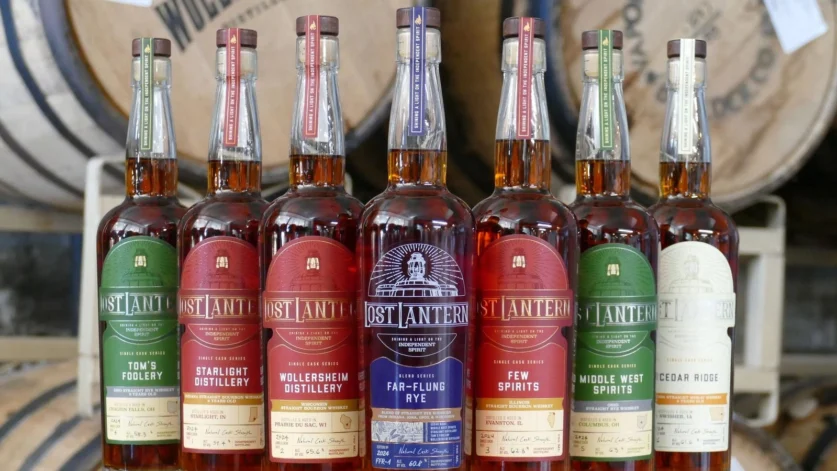
Lost Lantern’s Midwest Collection
Thanks to a rapidly-growing whiskey consumer market, there is a new generation of independent bottlers focusing exclusively on smaller American distilleries. Vermont’s Lost Lantern is the torchbearer of this new-wave, American IB movement. Founders Nora Ganley-Roper and Adam Polonski are passionate about finding great American whiskey and began operations with a two-year, coast-to-coast road trip in search of the right barrels. Similarly, Two Souls Spirits, based in Florida, partners with producers across the country to select and release single barrels from distilleries that don’t have a national footprint.
Both companies emphasize transparency, with detailed articles about their processes, technical specs on every product page and an extremely active social media presence. Between these two producers, distilleries from non-traditional whiskey making states Wisconsin, Iowa, Ohio and New Mexico have gotten national exposure. Lost Lantern and Two Souls go so far as to give some of their releases descriptive titles, setting the stage for each expression’s flavor profile. Two Souls’ latest bottling from Wollersheim Distillery is called “Wisconsin Waffles,” featuring waffle and maple syrup tasting notes, and Lost Lantern’s “Gentle Giant,” from Balcones Distillery in Texas, showcases a softer whiskey from a distillery known for big, bold flavors.
Unlike traditionally sourced American whiskies, there’s a lot of variability in the independent bottling world. With an ever-evolving lineup of single barrels from distilleries across the country, don’t expect to find two IB expressions that taste exactly the same. What IB bottles lack in consistency, though, is made up for with unique flavor sets that you may not otherwise find from your favorite distillery’s standard range. More importantly, for the craft producers around the US, independent bottlers connect small distilleries to the consumers most likely to appreciate their products, no matter where they live.
Re-release of Soft Parade Vodka by Michigan’s Short’s Brewing and Iron Fish Distillery
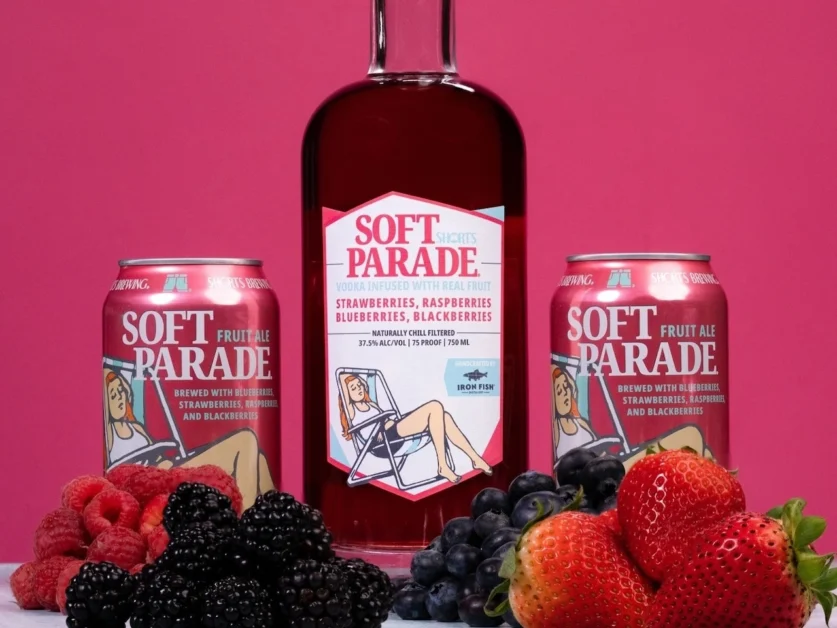
Short’s Brewing Company and Iron Fish Distillery have collaborated for the second limited release of Soft Parade Vodka, inspired by Short’s signature Soft Parade Fruit Ale. The vodka will be available at select retailers while supplies last beginning the weekend April 28, 2024. It was first released during April 2023. Iron Fish Distillery
THOMPSONVILLE, MI – Soft Parade Vodka is back – almost.
The fruit-infused vodka by Iron Fish Distillery is inspired by Short’s Brewing’s Soft Parade Fruit Ale. It features strawberries, blueberries, blackberries and raspberries — the same as its namesake.
A limited quantity will be released to retailers and bars the weekend of April 28, the distillery announced. It will be available at the distillery in Thompsonville starting Friday, April 19, while supplies last.
“Once it’s gone, it won’t return again until next year, so grab a bottle while you can!” Iron Fish said.
Short’s Brewing Company and Iron Fish Distillery have collaborated for the second limited release of Soft Parade Vodka, inspired by Short’s signature Soft Parade Fruit Ale. The vodka will be available at select retailers while supplies last beginning the weekend April 28, 2024. It was first released during April 2023.
The collaboration was first released during April 2023.
“The 2024 batch is even more fruit forward … Just like real fruit, it’s best enjoyed fresh!” the company said.
The vodka is 75-proof. It has no artificial flavors.
Soft Parade Vodka will not be available for sale at either of the Short’s Northern Michigan locations in Bellaire and Elk Rapids.
Find a bottle of Soft Parade Vodka near you here. Find Soft Parade Vodka cocktail ideas here.
If you purchase a product or register for an account through a link on our site, we may receive compensation. By using this site, you consent to our User Agreement and agree that your clicks, interactions, and personal information may be collected, recorded, and/or stored by us and social media and other third-party partners in accordance with our Privacy Policy.
Unveiling the Top 10 Most Loved Cocktails in the U.S. Based on NielsenIQ Data
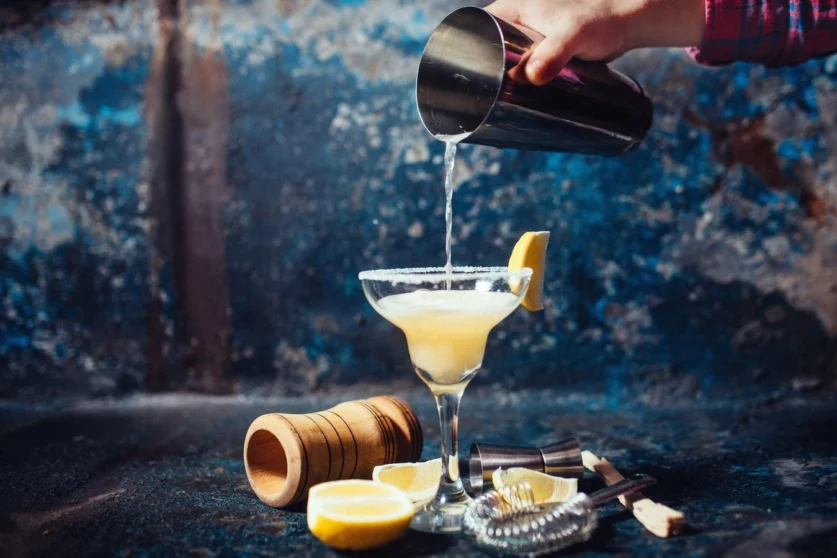
The margarita is the most popular cocktail of the year again.
When it comes to their favorite cocktails, drinkers in the U.S. are wasting away in Margaritaville.
The margarita was the best-selling cocktail of 2023, according to exclusive data from NielsenQ (NIQ). This isn’t a surprise, as the tequila-powered frozen (or shaken) concoction that helps us hang on has been the most popular cocktail in the U.S. since 2015, the first year NIQ began tracking this category.
The best-selling cocktails were determined based on data compiled from a representative sample of more than 10,000 restaurants and bars. “It is balanced with approximately 50% independent outlets and 50% chain outlets; 75% of which are dining-centric and 25% drinking-centric,” Andrew Hummel, the director of BevAl Vertical NIQ, told me via email.
Other cocktails in the top 10 for 2023 include classics such as the martini, mojito, old fashioned and Long Island iced tea, as well as the espresso martini, the current “it” cocktail. Another best-selling mixed drink, the spritz, saw the biggest increase in popularity year-over-year.
“The average (median) cocktail price rose to $13 in 2023 up from $12 in 2022,” Hummel noted, but despite that, the quantity of cocktail purchases was up 6% in the final three months of 2023 compared to 2022.
Here is a rundown of the best-selling cocktails in the fourth quarter of 2023. This gives the closest approximation of what drinkers are currently looking for, but there are some seasonal variations inspired by warm-weather drinking habits to consider. For instance, last summer, the mojito occupied the third instead of sixth slot in the ranking, and the Piña Colada was the 10th best-seller before being unseated by the Bellini once the weather cooled.
Alcoholic Lime Margarita with Tequila and Sea Salt
Jimmy Buffett can breathe a sigh of relief knowing that this iconic cocktail still holds a special place in the hearts of Americans. Nonetheless, the surge in popularity of both tequila and mezcal indicates that this drink’s fame is far from waning.
Simple yet classic, the Martini has not lost any of its allure.
While the identity of the next James Bond remains a mystery, the absence of the iconic actor from the big screen has not affected the sales of Bond’s preferred drink. It is worth noting that making a martini with vodka instead of gin and shaking it is not the approved method of making a martini—at least according to most connoisseurs.
The Moscow Mule maintains its status as a crowd-pleaser amongst drinkers.
The Moscow Mule’s appealing mix of vodka, ginger beer and lime juice helped make vodka the most popular spirit in the U.S., so I’m always happy to see it continue to get some love.
The Espresso Martini is having a moment.
Espresso martini mania has not yet peaked. In 2023, it remained one of the most popular cocktails and also had some of the most significant increases in popularity, rising to occupy this impressive fourth spot in the cocktail rankings.
The Old Fashioned’s popularity isn’t growing old soon.
Call me old fashioned but it’s hard to beat this blend of whiskey, sugar and bitters. Whether you opt for bourbon or rye is up to your taste, and the old fashioned offers countless alterations.
The mojito never fails to impress and was one of the most beloved cocktails of the previous year.
Cuba’s traditional cocktail is favoured throughout the year but certainly sees a surge in demand during the warmer months in the U.S., as consumers are attracted to its refreshing quality.
If you desire a substantial amount of liquor in a short timespan, The Long Island Iced Tea is the pick for you.
The Long Island Iced Tea, though having ingredients like vodka, gin, rum and gin that may seem like a hangover in the making, continues to be an ever-present favorite.
Beyond the popular Aperol Spritz, the Spritz category expands further.
The Aperol spritz has its detractors, but they played a crucial role in introducing U.S. drinkers to the broader Spritz category. This category usually comprises an Amaro-like liqueur blended with sparking wine and soda water. This fresh entrant in the top 10 cocktail list is fast climbing the ladder. By 2024, expect these drinks to be even more ubiquitous.
In daytime drinking, the mimosa cocktail is the unofficial frontrunner.
You can’t spell “brunch” without mimosa—well, technically you can, but you get what I mean. This mix of orange juice and sparkling wine is the ruler of all drinking that takes place before noon.
Bellini is the peach-powered brunch alternative to a mimosa.
To make the second-most popular brunch or breakfast cocktail in the U.S., simply replace the orange juice with peach puree. You can also replace the words “orange juice” with “peach puree” in the previous entry and the statement still works, more or less.
Indulge in the Whiskey-Grapefruit Juice Cocktail: A Perfect Farewell to Winter

In this welcome variation for Paloma lovers, swapping the tequila for rye whiskey helps transition this bright grapefruit-forward cocktail into the oft-dreary winter months. If you’ve never met before, allow us to introduce the Blinker: a classic cocktail with a low profile and high vibrancy. The Blinker could be considered a variation of the Whiskey Sour, as it follows a standard sour format: base spirit, sugar, and citrus, plus a small yet crucial dilution from the wet shake.
Proto-Blinkers were made with rye whiskey, grapefruit juice, and grenadine. Call it evolution, or call it “keeping with the times,” but nowadays, modern mixologists are swapping the pomegranate-forward syrup for raspberry syrup, yielding a drink with less depth and intensity and a sweeter, brighter profile. Whichever ingredients lineup you prefer, the assembly is the same: The three ingredients get shaken over ice and, like Whiskey Sours, are double-strained before being poured into a chilled coupe glass to serve.
The first recorded recipe for the drink appeared in Patrick Gavin Duffy’s “The Official Mixer’s Manual” in 1934, and while it broke onto the scene and lasted, it wasn’t immediately popular. In his 1940s bartender’s handbook “The Fine Art of Mixing Drinks” (via Difford’s Guide), David Embury called the Blinker “One of a few cocktails using grapefruit juice. Not particularly good but not too bad.” Still, the bevy is not to be overlooked. It’s mature, timeless, and avoids being hyper-sweet like many citrusy cocktails. Plus, even with the 100-proof rye, the Blinker is smooth and accessible at 15.13% alcohol by volume (ABV) or 30.26-proof.
Read more: 13 Liquors Your Home Bar Should Have
The Blinker was brought back to mainstream awareness in 2009 by Ted Haigh’s nostalgic libations graveyard guidebook, “Vintage Spirits and Forgotten Cocktails.” Haigh’s recipe altered Patrick Gavin Duffy’s version, calling for more rye and introducing the raspberry-grenadine swap. Making flavorful, homemade raspberry-infused simple syrup yourself is a killer way to take your home mixology game to the next level, and you can also use it to make the Clover Club, another vintage cocktail that’s been enjoying a 21st-century comeback.
Or, keep the grenadine and add rose water for a sophisticated floral facelift. Lemon syrup would also steer this cocktail more punchy and mature than the red berry flavor. (Sidecar fans, rise up.) On the note of ingredients, opt for freshly squeezed yellow grapefruit juice, which is more tart than that of the sugary pink and red grapefruits (which are the sweetest of them all).
If you can’t track down yellow grapefruit in your local produce section, a few drops of grapefruit bitters can help counterbalance the sweetness of pink grapefruit juice. Scrappy’s and Fee Brothers both make great versions of the ingredient, available for purchase online, or intrepid home bartenders can make flavorful bitters themselves. Depending on whether you want to steer your Blinker more sweet or more tangy, you could garnish with a raspberry trio skewer, grapefruit twist, or lemon peel after expressing the fruit’s oils around the rim of the glass.
Read the original article on Tasting Table
Rehab Order for Vodka Thief Caught On CCTV in a Convenience Store

A woman who stole three bottles of vodka from a shop has been placed on a community order with a drug rehabilitation requirement.
Jade Cambridge admitted taking the alcohol from the Spar shop on High Street in Presteigne on October 15, 2023, when she appeared at Llandrindod Wells Magistrates Court on Wednesday last week.
The 38-year-old, formerly of Lower Cross, Kington, and now of Mill Bank, Presteigne was seen on CCTV.
Review: Cutwater Devil’s Share Bourbon – Our Whiskey of the Week
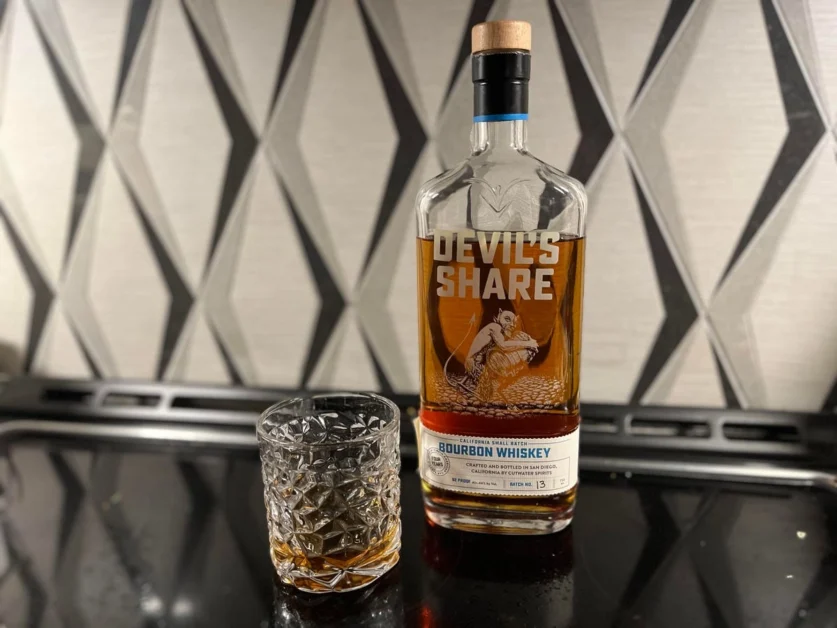
If you’re familiar with the brand Cutwater, it’s likely because of theircanned cocktails, a product category that saw an unexpected boon during the global pandemic in 2020. I’m not an expert on the topic, and during the Covid lockdown, I spent time making cocktails from scratch with freshly sanitized ingredients. However, among the ones I sampled, Cutwater’s stuck out as being top-tier. It’s a challenge to make a well-crafted mai tai from fresh ingredients, let alone one that retains its flavor after weeks or even months in a can, but their mai tai was impressively tasty. Later, I tried Cutwater’s canned White Russian which was equally enjoyable.
However, Cutwater’s history extends beyond canned cocktails. The San Diego-based company was established in 2017, but its roots go back another ten years as the spirits component of the Ballast Point Brewery. In 2015, when Ballast Point was acquired by Constellation Brands, the spirits division was split off and later revived as Cutwater Spirits. Today, the company operates a largedistillery/bar/restaurant in San Diego’s Miramar area.
Wait a minute, Cutwater has a distillery? So this company producing canned cocktails creates its own spirits? And co-founder Yuseff Cherney is the master distiller? For a New Yorker like myself, this was a surprising discovery. Not only do they use their spirits in the canned cocktails (and their frozen cocktail pops), they also bottle and sell it in varieties ranging from rum, gin to herbal liqueur. They take pride in the many awards won by their spirits, and to my surprise, I realized I’ve tasted and scored their products in various contests. I particularly liked their unaged rum, their tequilas were respectable, but their rye didn’t win me over.
Indeed, Cutwater Spirits is a major player in the world of spirits, coming right out of San Diego.
I had never tried Cutwater Devil’s Share Bourbon, their highest-end expression, with a suggested retail price of $115. If you can find it, that is, as availability is said to be limited even in California. The mashbill is an interesting one — 75% non-GMO corn, 15% malted barley, and 10% malted wheat. Usually a wheated bourbon uses wheat as the secondary grain. To use it as a tertiary grain after the barley… that’s different. Aged for at least four years in new American oak barrels, it’s bottled at 46% ABV.
On the nose it’s a little hot, with notes of brown sugar, cinnamon, and rubbing alcohol. On the palate the cinnamon comes through again, accompanied by butterscotch, vanilla and oak. It drinks a tad hotter than its proof; a little water tamps down the heat but also dulls the flavor profile a bit, so I preferred it neat. It makes a pleasant, lightly astringent Manhattan, and a perfectly fine whiskey sour.
“This bourbon is not defined by geography, but by taste,” says the Cutwater website, and I suppose that makes sense, since as far as I know there’s no distinctive San Diego style of whiskey. Although, with 18 distilleries and counting in the city, according to the San Diego Guild of Distillers, one may be emerging as I write this. News travels slowly to us East Coast craft spirits connoisseurs. Can you procure better bourbons for significantly less money? Absolutely. But for the time being, Cutwater reigns supreme in San Diego whiskey. On my next visit, I’ll certainly be visiting the distillery and savoring a Devil’s Share whiskey sour — if they aren’t only selling canned cocktails at the bar.
Prithviraj Sukumaran’s Extreme Preparation for Aadujeevitham Nude Scene: 3 Days of Fasting and 30 ML Vodka, Cinematographer Reveals

Prithviraj Sukumaran, a celebrated actor known for his recent film Aadujeevitham: The Goat Life, undertook a three-day fast prior to filming a nude scene for the movie. This dedication to his craft was later recounted by Sunil KS, the film’s cinematographer, during a recent interview.
There have been videos circulating on social media in which the cinematographer can be heard stating that Prithviraj had to be brought to the shooting location in a chair. He also disclosed the reason why the actor consumed 30 ml of vodka before the scene was filmed.
One user posted the aforementioned video on X, summarizing Sunil’s explanation, “Prithviraj fasted for three whole days before shooting the nude scene, abstaining even from water on the final day. Before the scene could begin, he drank 30 ml of vodka to rid his body of any remaining water.”
The user went on to reveal, “He had to be carried in a chair to the location of the shoot. It was necessary to help him up from the chair before the scene could be shot.” You can find the video using the following link:
Wow 👏
For the naked scene, Prithviraj fasted for 3 days, not even drinking water on the last day. Before the shoot, he consumed 30ML of vodka to drain the remaining water from his body. He needed to be carried in a chair to the location, and we had to lift him from the chair before the shot😯.
In the scene, Prithviraj’s character, Najeeb, an immigrant worker, removes his clothes one by one and walks towards a water tank to take a bath.
Prithviraj surprised the audience with his drastic physical transformation in the film. Talking about his weight loss, he said to Bollywood Hungama, “I had to gain a lot of weight to look like Najib when he first arrives in Saudi Arabia. Then I had to lose around 30 kgs twice to capture his look later on. My sugar levels got seriously disturbed. It was quite difficult. I don’t think I would be able to do this again.”
A post shared by Aadujeevitham – TheGoatLifeFilm (@thegoatlifefilm)
Directed by Blessy, Aadujeevitham: The Goat Life is a survival drama inspired by Benyamin’s 2008 novel of the same title. It made its debut on big screens on March 28 and amassed over Rs 50 crore at the box office within just a few days following its release.
The plot centers around the life of an immigrant worker who, in pursuit of better opportunities, ends up working as a goat herder on a remote farm in Saudi Arabia, where he is subjected to harsh conditions.
Visual Romance produced the film, shooting it largely during the pandemic with extensive schedules in Jordan.
Transcript of Rumble Inc.’s Q4 2023 Earnings Call (NASDAQ:RUM)

Rumble Inc. (NASDAQ:RUM) Q4 2023 Earnings Call Transcript March 27, 2024
Rumble Inc. beats earnings expectations. Reported EPS is $-0.14, expectations were $-0.22. RUM isn’t one of the 30 most popular stocks among hedge funds at the end of the third quarter (see the details here).
Operator: Greetings. Welcome to Rumble Inc. Fourth Quarter 2023 Earnings Call. At this time, all participants are in a listen-only mode. A question-and-answer session will follow the formal presentation. [Operator Instructions] Please note this conference is being recorded. I will now turn the conference over to, Shannon Devine, Investor Relations. Thank you. You may begin.
Shannon Devine: Thank you, operator. I’m here today with Chris Pavlovski, Founder, Chairman and CEO of Rumble; Brandon Alexandroff, the CFO; and Tyler Hughes, the COO. A press release detailing our fourth quarter and full-year 2023 results was released today and available on the Investor Relations section of our Company website. Before we begin the formal presentation, I would like to remind everyone that statements made on the call and webcast may include predictions, estimates or other information that might be considered forward-looking. All forward-looking statements are made only as of the date of this webcast and should be considered in conjunction with the cautionary statements in our earnings release and the risk factors included in our filings with the SEC.
There will be updates from Future Company available through press releases and company updates via its social media channels. Now, let’s hear from Rumble’s Founder, Chairman and CEO, Chris Pavlovski.
Chris Pavlovski: Thanks, Shannon. Firstly, I want to discuss 2023, which was a year of building for our Company. Apart from successfully broadening our content library with key signings from various fields such as sports, comedy, and entertainment, we were focused on fulfilling our product commitments. Allow me to review this exceptional year for our top-notch product and engineering teams. Initially, we completely altered the user experience on Rumble by launching a fully redesigned user interface across all primary viewing platforms and integrating our premium subscription service with locals.com to provide creators with better monetization opportunities. Following that, we purchased Callin last May, leading the way for the beta launch of our new patent-pending live streaming tool, Rumble Studio, which will prove crucial for future monetization.
Next, we constructed and launched the Rumble Advertising Center, commonly referred to as RAC. I am thrilled to announce that we have started displaying pre-roll video ads across our mobile apps through RAC in the past 90 days, and are also increasing our inventory by bringing more publishers on board. Besides, we built the needed infrastructure to support Rumble and laid the groundwork for Rumble Cloud, which we publicly launched just a fortnight ago. A completely renovated user interface, significant video platform integration, a new live streaming tool, an advertising network, and a cloud all rolled out within a single year. As a result, we now have an excellent business equipped with four top-tier products. Our team has been working tirelessly to create products and services our audience desire.
I’m not only amazed by these products but also by the team that was behind this huge effort. What we have built can be compared to a mini Google. Put into context the time and investment Google took to build their offerings, it makes our achievements stand out. Google acquired DoubleClick for $3 billion, corresponding to our Rumble Advertising Center. Google paid $1.65 billion for YouTube in 2006, which can be likened to our Rumble Video platform. Google’s billions’ investment in Google Cloud is akin to our Rumble Cloud. It’s worth noting that we managed this feat with fewer than 250 staff members. It’s vital to understand why our business was perfectly poised to launch our cloud offering while talking about our expansion into the cloud business.
From the outset, we have been independent of third-party cloud platforms. Our primary video platform rumble.com has been developed and scaled on Bare-Metal since 2013. It was a wake-up call when Parler was shut down, which was particularly shocking since major tech platforms had more violations, but only Parler faced severe repercussions. Amazon AWS was the gatekeeper — they switched off the lights, leaving Parler no avenue for recovery or redemption. We recognised that creating Rumble’s infrastructure was vital for our business survival, which led us to undertake it in 2021. This endeavour let us develop a full-stack, safeguarding our business and also granting us the advantage of the positive long-term economic outcomes of running our own framework and avoiding lock-in to the prejudiced pricing of existing hyperscalers.
This infrastructure is the spine that powers rumble.com and is the technological base for Rumble Cloud. Constructing our own infrastructure not only shielded Rumble but also provided a fantastic opportunity to utilise the magnitude of rumble.com to develop a cloud service at scale, tackling a market riddled with problems like vendor lock-in tactics, unfair pricing structures, data and privacy trust issues, complicated structures and censorship. By launching Rumble Cloud to the public early this month, there is now a fresh new cloud provider option available in the market, with the prime goals of safeguarding an open Internet, commitment to keeping the lights on come what may, operating on the latest-gen hardware delivering top-class network speeds and quality, and finally, shaking up the market with our unique pricing model.
Our framework intends to deliver the most transparent pricing structures, allowing businesses to regain control over their IT expenditures. As Rumble has pulled market shares from YouTube, we envisage Rumble Cloud following suit in the cloud market, targeting the excessive profits and revenues currently monopolised by Big Tech at the infrastructure layer. We’re operating on the sole highway of a free and open Internet – a highway that cannot be cancelled. We stand unshaken when Big Tech falls. This position secures Rumble and, by natural extension, our ecosystem of users, creators, advertisers, subscribers, publishers, cloud partners and shareholders extensively while safeguarding businesses’ data independence. We’re offering opportunities to all companies.
In support of our go-to-market strategy for mid-market and enterprise sectors, we recently announced collaborations with Qinshift, a market leader in managed IT services and solutions with a workforce of 7,000, facilitating Rumble’s significant scale-up and acceleration of our go-to-market approach, and ACP CreativIT, enhancing our North American operation while broadening our scope with a variety of complementary services and solutions via the cloud infrastructure. Further to launching the high-performance compute tiers with dedicated vCPUs, we plan to grow our offerings to include lower-cost tiers with shared vCPUs, catering better to developers and small businesses. As with all our products, we will evolve based on market demands. Presently, we believe that the mid to large enterprise customers present significant opportunities.
While decisions on purchases for these businesses may require some consideration, we’re invigorated by the recent partnerships formed with Qinshift and ACP CreativIT, as well as the initial interest shown among mid-market and enterprise prospects. Presently, the Company is shifting its focus from creating the product to generating revenue. As our products are now fully in production, we forecast revenue growth from the second quarter onward, with the majority of this growth occurring in the latter half of 2024 once our monetizing products start to gain momentum. Particularly, our confidence in this forecast is strengthened by the excellent results seen in RAC throughout March. The Rumble Way commences with the correct assets and products.
In the last couple of years, our core audience has remained consistent, boasting over 40 million MAUs. This audience allows us to meet our future revenue targets. Importantly, it should be noted that our impressive Q4 results, due to high-profile sports events such as Street League Skateboarding which increased our MAUs to 67 million for the quarter. However, due to the temporary nature of these events, this upward trend did not continue into Q1 of the current year. Currently, our product range and core offerings are poised and ready to scale, aiming to generate additional revenue. Coupled with the right products to monetize, our audience was acquired with less than 250 team members and closed the year with over $200 million cash in hand.
We are challenging Big Tech on all fronts, backed by the most dedicated team and an advantageous market position which will promote revenue growth. I am more motivated and excited than ever before. The team shares this motivation and I look forward to sharing our continued progress. Now, our CFO, Brandon Alexandroff, will continue the call.
Brandon Alexandroff: Thank you, Chris. Let me give you a conclusive overview of our Q4 and full-year financial outcomes before passing the call to the operator for Q&A. For the entirety of 2023, we declared revenues of $81 million, marking a 106% increase compared to $39.4 million in the previous year. In Q4, we recorded $20.4 million in revenue, in comparison to $20 million from Q4 of 2022. The revenue generated in Q4 of 2023 included an additional $3.5 million from other services which was offset by a decline in advertisement revenue of $3.1 million. The rise in revenue from other services mainly came from subscriptions, content licensing, tipping features and one-off content. The costs of services for the quarter were recorded at $39.5 million, a significant increase from the $23.5 million from Q4 of 2022. This increase was primarily driven by a 14-million-dollar increase in programming and content cost and a 2-million-dollar increase in hosting expenses and other service costs.
For the full-year, cost of services increased by $102.4 million to $146.2 million due to an increase in programming and content costs of $98.9 million, hosting expenses of $2.7 million and other service costs of $0.8 million. Moving to our cash position, we ended the year with $219.5 million in cash, cash equivalents and marketable securities, compared to $267 million as of September 30, 2023. We are sitting on sufficient cash to meet our ongoing capital needs. With our monetization assets coming online late in first quarter, we are transitioning from manual processes with a small number of creators to automated processes that scale more easily and therefore yield more predictable revenue generation. First quarter revenues still largely reflect this volatility and as a result will be down slightly from the fourth quarter.
However, with the benefits of improved automation, we expect to see a sequential quarterly increase in revenues beginning in the second quarter. Specifically, this anticipated increase in revenues is supported by our experience with RAC throughout the month of March. Before I conclude, I want to reiterate what I stated on our third quarter earnings call. With our revenue engines coming online and our guaranteed creator commitments set to significantly decrease during 2024 and 2025, we continue to move materially towards breakeven in 2025. That concludes my prepared remarks. Before I turn the call over to the operator, I invite you all to join Chris this evening at 7:00 PM Eastern Time for an exclusive post earnings interview with Matt Kohrs to be streamed live on the Matt Kohrs Rumble channel.
I will now turn the call over to the operator to open up the line for questions.
See also 16 Most Profitable Tech Stocks To Invest In and 15 Best Beauty Stocks To Invest In.
To continue reading the Q&A session, please click here.
Weekly Whiskey Highlight: A Look at Cutwater Devil’s Share Bourbon
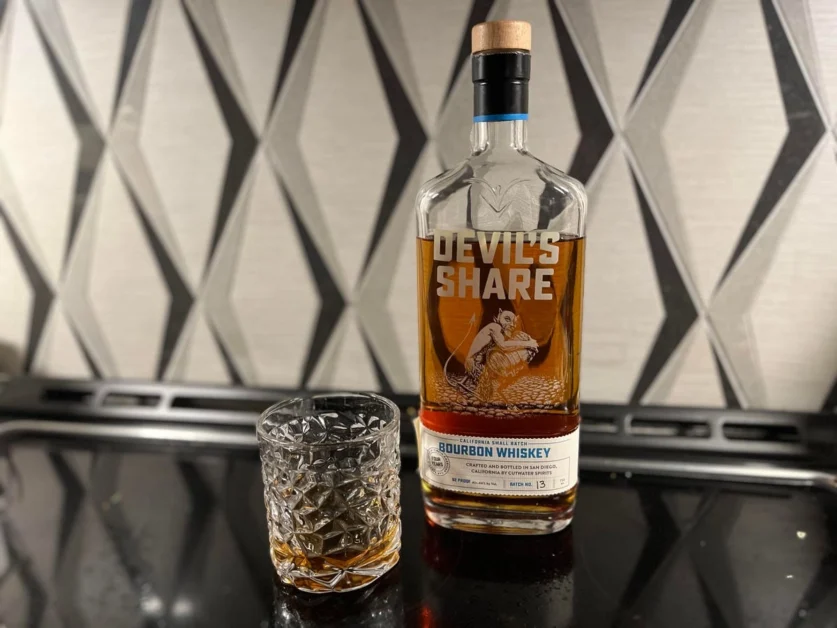
If you’re familiar with the name Cutwater, it’s probably due to their renowned canned cocktails. This easy-to-serve drink option surged in popularity during the global pandemic in 2020. Personally, during the lockdown, I opted for homemade cocktails, but of the ready-made options I tasted, Cutwater’s clearly stood out. Even considering the complexities of creating a canned mai tai, Cutwater’s version proved impressively noteworthy. Similarly, the brand’s canned White Russian certainly exceeded my expectations.
Even though Cutwater is widely recognized for their canned cocktails, the company’s history extends beyond that. Rooted in San Diego, Cutwater originated in 2017, but the brand’s inception traces back further to when it started as the spirits division of Ballast Point Brewery. After Ballast Point was sold to Constellation Brands in 2015, the spirits division was carved out and later re-emerged as Cutwater Spirits. The company even boasts a large distillery/bar/restaurant facility close to the Miramar area in San Diego.
Unbeknownst to many, Cutwater not only has a distillery but also manufactures its base spirits. Even the company’s co-founder, Yuseff Cherney, serves as the master distiller! Additionally, Cutwater’s product range isn’t limited to canned cocktails. They also offer bottled spirits including, but not limited to, rum, gin, and even herbal liqueur. As a judge for various spirit competitions over the years, I unexpectedly realized I already sampled Cutwater’s products and genuinely appreciated their unaged rum. Their tequilas were also commendable, but I wasn’t a fan of their rye, which appeared to be a blend from other distilleries.
The reigning monarch of the San Diego spirits scene currently produces high-quality bourbon.
I had never tried Cutwater Devil’s Share Bourbon, their highest-end expression, with a suggested retail price of $115. If you can find it, that is, as availability is said to be limited even in California. The mashbill is an interesting one — 75% non-GMO corn, 15% malted barley, and 10% malted wheat. Usually a wheated bourbon uses wheat as the secondary grain. To use it as a tertiary grain after the barley… that’s different. Aged for at least four years in new American oak barrels, it’s bottled at 46% ABV.
On the nose it’s a little hot, with notes of brown sugar, cinnamon, and rubbing alcohol. On the palate the cinnamon comes through again, accompanied by butterscotch, vanilla and oak. It drinks a tad hotter than its proof; a little water tamps down the heat but also dulls the flavor profile a bit, so I perferred it neat. It makes a pleasant, lightly astringent Manhattan (solved by the addition of more vermouth), and a a perfectly fine whiskey sour.
“This bourbon is not defined by geography, but by taste,” says the Cutwater website, and I suppose that makes sense, since as far as I know there’s no distinctive San Diego style of whiskey. Although, with 18 distilleries and counting in the city, according to the San Diego Guild of Distillers, one may be emerging as I write this. News travels slowly to us East Coast craft spirits snobs. Can you get better bourbons for far less money? Absolutely. But for now, at least, Cutwater is the reigning monarch of San Diego whiskey. And the next time I’m in town, I’ll be checking out the distillery, and likely having a Devil’s Share whiskey sour — assuming they don’t just sell canned cocktails at the bar.
Discovering Wigle Whiskey: Crafting the Finest Spirits in the Region
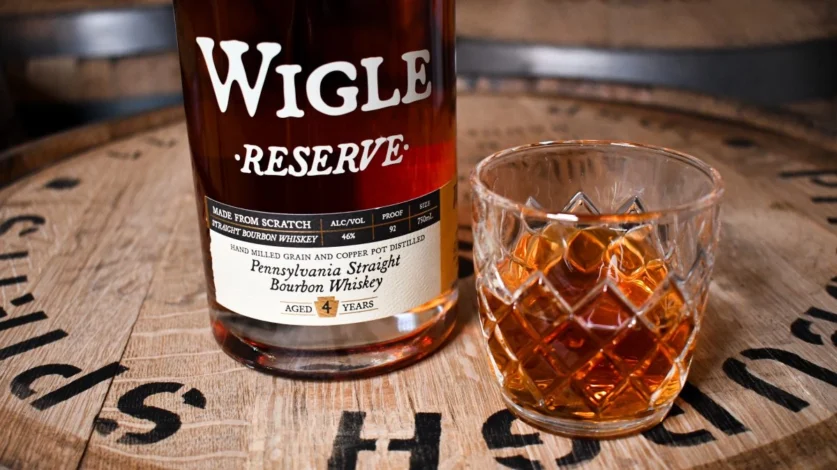
PITTSBURGH — Each week, Michael Foglia and his team of distillers at Wigle Whiskey in the city’s Strip District spend their days creating some of the finest craft whiskeys in the nation. Following the distillation process, those spirits find themselves barreled in 53-gallon casks and stored at a location in Pittsburgh, spending the next 1,460-plus days — at least four years — gaining color and flavor.
Whiskey distilled and barreled four years ago is just now reaching maturity when it comes to taste and color. The finest of the lot at Wigle are now being bottled into a new line — Wigle Reserve. Foglia said this top-shelf sampling of spirits showcases his team’s love, attention, and passion for craft whiskey.
“In creating Wigle Reserve, our focus was to really lean into the exceptional craftsmanship of our distillers and present that work in a way that’s recognizable and easy to see,” said Foglia, Wigle’s senior director of production. “It’s easy to be distracted right now by all the different products that are available. But we’re whiskey people — we’re really serious whiskey people — and we wanted to reflect on that expertise in this offering to our customers. Wigle Reserve is an elevated product line that reflects all of the decisions that we make — the grains we use, the soil those grains come from, the region’s farmers that we work with — to showcase an exceptional level of craftsmanship and taste.”
Wigle has long been heralded in the craft distilling industry for getting it right. The new Wigle Reserve line will only further those accolades.
“We opted for our most solemn core whiskeys to initiate Wigle Reserve. This includes four-year bourbon, four-year rye, single-barrel renditions and cask-strength versions,” uttered Foglia. “Serious whiskey connoisseurs will really connect with these offerings.”
The distillation procedure
So, how does one concoct a whiskey that aligns with the criteria of the Wigle Reserve collection? According to Foglia, it’s all about meticulousness and comprehension that every bottle on display has endured at least a four-year journey from initial distillation to market placement.
This expedition plays a substantial part in Foglia’s mission and his crew’s — a role that overshadows merely the time taken for the whiskey to develop its rich brown hue and flavour. Upon popping open a fresh barrel and prepping the ingredients for bottling, Foglia often keeps tabs on some occurrences of the day when the whiskey was barrelled — perhaps glancing at a photo on his phone taken that day or browsing that day’s newspaper headlines. It’s a method to maintain modesty in the pursuit of producing something truly unique, while also not losing sight that the accomplishments of each day are components of a grander scheme.
During a tour of Wigle’s production facility on Smallman Street in Pittsburgh, Foglia explained the production process of Wigle’s whiskey and the meticulous attention his team gives to maintain the company’s standards. The process begins with the procurement of grains from local farmers.
Whiskey, according to Foglia, is mainly an agricultural product. “The grains we use here, like malted barley, is in virtually every Whiskey we make. We emphasize the grains that go into our whiskey. Our grains are sourced from areas within a 200-mile radius of our distillery. This not only makes it an agricultural product but also reflects our region, something that we are immensely proud of.
Every time we create a batch, we have the chance to convert a local product into something that is delightful, enjoyable, and exceptional. We cherish the opportunity to collaborate with our region’s farmers, transforming their grains into something we can take pride in, something our patrons cherish. That forms a critical part of our identity.”
The warehouse is stocked with bags of rye, malted barley, dried corn, and wheat. A mix of these ingredients is utilized to create each batch of new product, whether it’s bourbon or rye. The distillery’s journey to turn these ingredients, with the help of water and heat, into something unique begins with a visit to the hopper.
At this point, the grains are carefully weighed – for a typical bourbon, this might be 400 pounds of malt, 300 pounds of wheat, and over 1,000 pounds of corn. These are poured into a hopper where they are sent onwards to meet their destiny at the hammer mill. This machine grinds the mixture into a very fine flour, known as grist. The grist is sent into a mash tun and, after the mash is made, it proceeds to a fermenting vessel. Here, water and steam work in unison to transform the starches into simple sugars. Once the mixture has cooled, yeast is added and it is left to ferment for a period of three to five days. The mixture is then transferred to another tank where the distillation process commences.
According to Foglia, it is at this particular stage that he and his team enter what he refers to as the ‘artful’ aspect of the distillation process.
“This is the point at which we begin making decisions and determining what is going to proceed forward in our process” he explained.
The Quest for the Perfect Flavor
Embarking on a journey that spans a minimum of 208 weeks, ending with a bottle of whiskey, involves much deliberation and intensive labor. The fermented concoction is now accommodated in a fresh tank where water and steam are mixed in. The process gets going as it reaches 200 degrees when the whiskey starts vaporizing. This vapor is drawn into a pipeline springing from the tank leading into a condenser. The vapors are compressed back into a liquid, and then it undergoes several processes before emerging as the beginning of a more finished product.
The distinction lies in what is allowed into the tank. Intensive scrutiny from the entire production team who spend hours in evaluation and assessment to ensure the process is proceeding as expected is of utmost importance.
However, it’s crucial to bear in mind this is only the commencement of the process. This process spans across four years, and there’s plenty of transformation yet to happen.
Foglia states that each batch, starting from whole grain and ending as a finished spirit ready for barreling, takes around a week. The barreling process over this quadrennial period is what imparts each batch its unique flavor.
Wigle’s barrels are sourced from Louisville, Kentucky, and come in Char 3 or Char 4 varieties. The whiskey gains color once barreled and the flavors mature, with the alcohol metabolizing certain aspects of the wood into the final product. This process lends to the whiskey’s unique journey, making working at a craft distillery like Wigle a fascinating experience, according to Foglia.
“We can’t claim to have complete control over the flavors. We attempt to guide it somewhat, but it takes its own path for at least four years,” Foglia explains.
The evaluation phase for the whiskey starts roughly three and a half years after being barreled. The whiskey is assessed based on various aspects. It may be used as a blending whiskey, or it might impress with its smoothness and uniqueness in such a way that it, as Foglia described, “stops you in your tracks”. This remarkable quality could be found in an entire batch or just one singular barrel that shines amongst the rest.
“If it’s a single barrel, it needs to have experienced its journey in a way that all the flavors are harmoniously intertwined and the whiskey on its own offers a comprehensive and extraordinary experience. You begin tracking that barrel and decide, ‘Alright, this barrel was a knockout at three and a half years. Let’s see how it fares at four and a quarter years.’ Remarkable changes can occur over those nine months. Each barrel takes its own journey,” says Foglia.
“When we discover an outstanding barrel, we might decide to harvest it right away after four years and present it to our customers. Alternatively, we might opt to age it for an additional four or even eight years. This is a process that began at least four years ago. It offers a unique perspective on life.
“Whenever we uncask a barrel, I tend to reflect on the date it was barreled and think about what was going on during that time. I’ll browse through my photos, consult newspaper archives. What could be the reason behind its unique taste? Was there a drought that year? In case of a drought, the sugar levels might be different, different flavors might be dominant. It’s fascinating to be part of a team that not only produces quality whiskey, but also comprehends and acknowledges the various factors that enabled that to happen.”
Composing Wigle Reserve
Foglia remarks that at Wigle, they are completely devoted to whiskey — and not just any whiskey, but superior, extraordinary whiskey. That’s why the creation of Wigle Reserve, the epitome of top-tier whiskies, has been such an enjoyable process.
This is an opportunity for his team to shine by demonstrating their expertise through a product that is bottled in bond and ready to please the most discerning drinkers.
“For us, Wigle Reserve is fundamentally about showcasing our top-tier efforts in the realm of whiskey and crafting products that genuinely resonate with consumers,” Foglia expressed. “More than just a moniker, Wigle Reserve signifies our ongoing commitment to maintaining the highest standards in American craft distilling. This line has been painstakingly developed to highlight the passion and knowledge that shapes each bottle, from the selection of locally-sourced ingredients to the meticulous aging process.”
The feedback from the team has been straightforward: Wigle Reserve is “impressive.”
“Wigle Reserve illuminates our true operations, our genuine legacy. Over a decade, we have learned many lessons — and we believe we are improving. We strive towards this goal daily, and we hope Wigle Reserve reflects our dedication to producing truly distinctive whiskey,” said Foglia.
Wigle Reserve lines include:
Wigle Reserve Pennsylvania Straight Rye
Wigle Reserve Pennsylvania Straight Bourbon
Wigle Reserve Cask Strength Rye
Wigle Reserve Cask Strength Bourbon
Wigle Reserve Single Barrel Rye
Wigle Reserve Single Barrel Bourbon
“The Wigle legacy is deeply rooted in rich American history and tradition,” said Alex Moser, Wigle’s COO. “Wigle Reserve is not just a whiskey; it’s a celebration of the craft, the history, and the unwavering commitment to excellence that defines us.”
Western Pennsylvania is the birthplace of commercial whiskey production and Wigle Whiskey’s identity is deeply-rooted in American Whiskey history, celebrating the historic actions of Philip Wigle and his fight for freedom and opportunity. As the first whiskey distillery in Pittsburgh since prohibition, Wigle Whiskey has rekindled the craft distilling tradition within the region.