Beer-articles 1026
What country consumes the highest amount of beer globally?

Beer Consumption Around the World: The Surprising Facts
When it comes to beer, there are a lot of myths and misconceptions out there. But one thing is for sure: it is enjoyed all around the world. The question is, where is it drunk the most? Depending on how you answer that question, you might be in for a surprising answer.
If we look at total volume, the country that consumes the most beer in the world shouldn’t come as a shock. It’s China, by a significant margin. With a population of 1.4 billion people, it’s not hard to see why they consume more than 20% of the world’s share of beer per year. And in recent years, Chinese brands like Tsingtao have even made their way to America.
But if we shift our focus to per capita consumption, the story takes a different turn. The Czech Republic takes the crown in this category, and not by a small margin either. On average, Czechs consume a staggering 184 liters of beer per person. In second place, Austria lags far behind at less than 100 liters. Eastern and Central European countries dominate the top 10, with Estonia, Romania, Poland, Germany, Croatia, and Lithuania all making appearances. Spain is the only country to appear on both the total volume and per capita lists, alongside Germany. The only outlier on the per capita list is Namibia, ranking 9th with 85.7 liters per capita.
So, why is beer so popular in these countries? Well, the history of beer goes back thousands of years. The progenitor to beer was created in China around 7,000 B.C., although the modern form didn’t appear until around 3,500 B.C. in Mesopotamia. Since then, beer has evolved, and today, there are hundreds of kinds of beer around the globe. It can be made with various grains like barley, rice, wheat, oats, or corn, and flavored with an array of ingredients. The endless possibilities make it a beloved beverage worldwide.
No matter who consumes the most beer, one thing is clear: beer is a global phenomenon. Whether you’re enjoying a cold one or experimenting with cooking, beer is here to stay. It’s a drink that brings people together, transcending borders and cultures.
So, the next time you crack open a beer, remember the surprising facts about its consumption around the world. And if someone asks you where beer is drunk the most, you can confidently share the truth – the Czech Republic takes the lead in per capita consumption, while China reigns supreme in total volume. Cheers to beer and its universal appeal!
Ancient structures could potentially be better understood in terms of their longevity by examining the ways in which rice, beer, and urine were combined and utilized in their construction.

Exploring Ancient Building Techniques: Unearthing Clues for Modern Construction
Building structures that stand the test of time has become a challenge for modern society. While ancient builders managed to construct impressive monuments, many contemporary structures are already showing signs of deterioration, with concrete being one of the main culprits. The concrete used in our modern world has a limited lifespan of around 50 to 100 years, which has prompted scientists to look back into the past for answers.
Builders in ancient civilizations across the world utilized ingenious techniques and materials that have allowed their structures to endure for thousands of years. By studying these ancient buildings, researchers hope to unearth the secrets of their longevity and discover innovative ways to create more sustainable construction materials for the future.
For years, scientists have been delving into historical texts, analyzing materials, and even replicating ancient recipes to understand the properties that have made these structures so resilient. Surprisingly, they have found a range of unexpected ingredients that were incorporated into the construction of these ancient buildings. Materials such as tree bark, volcanic ash, rice, beer, and even urine have been discovered in these structures. These seemingly unusual additives could hold the key to impressive properties, such as the ability to strengthen over time and self-heal when cracks appear.
The implications of deciphering and replicating these ancient building techniques are substantial. Our modern concrete may have the strength required for massive skyscrapers and heavy infrastructure, but it pales in comparison to the endurance of these ancient construction materials. As the threat of climate change looms large, there is a growing urgency to make construction more sustainable. In fact, a recent report by the United Nations estimates that the built environment is responsible for more than a third of global CO2 emissions, with cement production alone contributing over 7% of those emissions.
Carlos Rodriguez-Navarro, a cultural heritage researcher at Spain’s University of Granada, believes that incorporating traditional recipes from ancient civilizations into modern construction practices can yield more sustainable materials. By improving the properties of the material, construction can become more environmentally friendly without compromising strength or longevity.
One ancient civilization that has captured the attention of researchers is the Romans. Between 200 BCE and 500 CE, they created impressive concrete structures that continue to stand tall today. Ancient Roman concrete can still be found in structures like the Pantheon and the durable aqueducts that continue to carry water. Even in harsh marine environments where seawater continually batters structures, Roman concrete remains remarkably intact over the course of centuries.
The composition of modern concrete usually begins with Portland cement, a powder created by heating limestone and clay to extremely high temperatures and then grinding it. When mixed with water, this cement creates a reactive paste that binds the rocks and gravel together to form concrete. Ancient Roman builders followed a similar process, mixing burnt limestone, volcanic sand, water, and gravel to achieve the desired chemical reactions for bonding.
Recent studies have suggested that the key to Roman concrete’s long-lasting properties lies in its ability to repair itself. Researchers have found scattered chunks of lime throughout the material, which were previously thought to be a sign of poor mixing. However, analysis of concrete samples from Privernum, an ancient city outside Rome, revealed that these chunks actually contribute to the material’s self-healing capabilities. When cracks form, water seeps into the concrete, activating the lime particles and triggering new chemical reactions that can fill in damaged sections.
On the other hand, geologist Marie Jackson from the University of Utah has proposed that the specific volcanic materials used by the Romans could hold the secret to their concrete’s durability. Analyzing their construction techniques, Jackson believes that the volcanic rocks left behind after eruptions played a significant role in the longevity of Roman structures.
By unraveling these mysteries, scientists hope to develop more sustainable and resilient construction materials for the future. Incorporating the lessons learned from ancient building techniques could significantly reduce the environmental impact of contemporary construction, contributing to a more sustainable and enduring built environment.
As we look towards the future, it seems that the answers may lie in the past. Ancient builders understood the importance of sustainable practices without the technological advancements available to us today. By examining their techniques and ingredients, we may be able to build a better future while still honoring the wisdom of our ancestors.
Building Materials of the Past: Ancient Wisdom for Modern Construction
When we think of ancient civilizations and their architectural achievements, we often marvel at the incredible structures that have stood the test of time. From the Great Wall of China to the temples of the Maya, these buildings have defied the elements, reminding us of the ingenuity and craftsmanship of our ancestors.
But what if we told you that there’s more to these ancient constructions than meets the eye? Recent research has shed light on the secret ingredients and techniques that made these buildings so resilient, and it turns out, we may be able to learn a thing or two from our predecessors.
One fascinating example comes from Copan, a Maya site in Honduras. Despite being exposed to a hot and humid environment for over 1,000 years, intricate lime sculptures and temples remain remarkably intact. Researchers attribute this longevity to the use of local tree extracts in the lime mix. The idea was suggested by local masons who trace their lineage back to the Maya builders themselves. When scientists tested this recipe by incorporating the extracts into the material, they found that the resulting plaster was incredibly durable against physical and chemical damage. The organic material from the tree juice had become part of the plaster’s molecular structure, giving it the strength and toughness of natural structures like seashells and sea urchin spines.
But the Maya weren’t the only ones experimenting with unusual building materials. Throughout history, builders have mixed all kinds of substances into their structures. Fruit extracts, milk, cheese curd, beer, and even dung and urine have been found in ancient mortars. In China, sticky rice starch was mixed into the mortar used in iconic structures like the Great Wall, giving it improved strength and durability.
What’s intriguing is that these ancient builders didn’t always follow a scientific approach. They simply used whatever materials were cheap and readily available. As Cecilia Pesce, a materials scientist, explains, “They would put all sorts of things in construction, and now, we only have the buildings that survived. So it’s like a natural selection process.”
However, some builders from the past showed more deliberate intent. In India, for example, builders would combine local materials to create different properties in their structures. In humid areas, they used herbs that helped deal with moisture. Along the coast, they added jaggery, an unrefined sugar, to protect against salt damage. And in earthquake-prone regions, super-light “floating bricks” made with rice husks were used.
Today, we can’t simply replicate these ancient recipes. Roman concrete, for instance, was incredibly durable but couldn’t support heavy loads. As researcher Oleson explains, “You couldn’t build a modern skyscraper with Roman concrete.” Instead, scientists are focusing on extracting the beneficial properties from ancient materials and incorporating them into modern mixes.
Researchers are exploring “self-healing” concrete inspired by Roman techniques. By incorporating special additives, they hope to create concrete that can repair itself, reducing the need for maintenance and extending its lifespan. Other initiatives aim to design concrete structures that can withstand seawater, similar to the Roman ports, to protect coastlines from rising sea levels.
The potential benefits of learning from our ancestors’ building techniques are significant. By adding a few extra decades to concrete’s lifespan, we can reduce the need for demolition, maintenance, and material in the long run. As Masic, a researcher working on Roman-inspired concrete, notes, “We don’t need to make things last quite as long as the Romans did to have an impact.”
The wisdom of ancient builders continues to inspire and influence modern construction practices. By combining the knowledge of the past with the innovations of today, we can build a more sustainable and resilient future.
Analyzing the political aspects of beer, the Beer Nut delves into the subject.

This week I’m writing a “random notes and thoughts” sort of column, and as I was assembling it, I noticed a political theme emerging. This is a beer column, of course, and I largely avoid anything overtly political, but this week, there are several marginally political elements – although nothing that’s rabidly partisan or that should rile anyone up too much.
Let’s kick off this column with a nod to former President Jimmy Carter, who just celebrated his 99th birthday. Now, you may wonder what does Jimmy Carter have to do with beer? Well, as it turns out, he played a significant role in starting the craft brewing movement in the U.S. Back in 1978, Carter legalized homebrewing, which had been heavily restricted since the time of Prohibition. Thanks to his signature, amateur brewers were now allowed to make up to 100 gallons per person per year, or 200 gallons per household. This seemingly small change had a profound impact on the craft brewing industry, paving the way for its growth and success. So, happy birthday, Jimmy! Your contribution to beer brewing will never be forgotten.
Moving on to another noteworthy event – Congress managed to get its act together and avoid a government shutdown. While this is significant for many reasons that extend beyond beer, we’re particularly glad that the Treasury Department will be able to continue its role in approving all new beer labels and beer exports. It may seem like a minor detail, but without these approvals, the beer industry would have faced a significant setback. So, cheers to Congress for keeping the beer flowing!
Now, let’s delve into a topic that has oddly become intertwined with politics – climate change. A recent story highlighted how the ongoing climate crisis could have a detrimental effect on the world’s beer supply, potentially reducing it by 16%. As the earth warms up, the availability of barley, water, and hops, the key ingredients in beer, could be greatly impacted. Furthermore, even if these ingredients do manage to survive, they may be altered in ways that negatively affect the taste and quality of beer. One example is the impact of excess heat on barley grains, which could lead to a longer conversion process of starch into sugar, ultimately affecting alcohol production. It’s alarming to think that climate change is not only disrupting our environment but also threatening one of life’s simple pleasures – enjoying a cold brew.
You would expect that the numerous problems triggered by climate change would compel us to take immediate action. However, sometimes it takes an impact on our personal pleasures, like the potential 16% drop in beer production, to truly drive the urgency. This situation should make beer lovers everywhere sit up and take notice. It’s time we recognize the gravity of the climate crisis and work towards finding sustainable solutions before even our favorite indulgences are compromised.
As a reminder, if you make a purchase through any links on our site, we may receive compensation. Your use of this site implies consent to our User Agreement and acknowledges that your interactions, clicks, and personal information may be collected, recorded, and stored by us, as well as our social media and other third-party partners, in accordance with our Privacy Policy.
So, let’s raise a glass to the intersection of beer and politics in this week’s column. While we may not usually associate these two realms, they do manage to intersect every now and then, reminding us of the diverse and unexpected ways in which they can intertwine. Until next time, cheers!
Tilray Brands has finalized the acquisition of eight beer and beverage brands from Anheuser-Busch, reinforcing its dominant position in the craft beer market in the United States.

Tilray Brands, a leading global cannabis-lifestyle and consumer packaged goods company, recently made a significant move in the craft beer market. The company announced the successful acquisition of eight beer and beverage brands from Anheuser-Busch, solidifying its position as a major player in the industry. The acquired brands include Shock Top, Breckenridge Brewery, Blue Point Brewing Company, 10 Barrel Brewing Company, Redhook Brewery, Widmer Brothers Brewing, Square Mile Cider Company, and HiBall Energy.
With this acquisition, Tilray Brands is projected to become the 5th largest craft beer business in the U.S. market, up from the 9th, generating significant revenue and growth opportunities. The combination of these new brands with Tilray’s current beer portfolio is expected to fuel innovation and accelerate the company’s consumer base.
Tilray Brands’ Chairman and CEO, Irwin D. Simon, expressed his confidence in the company’s growth strategy and its ability to dominate the cannabis CPG industry once federal legalization occurs. He highlighted the resources, infrastructure, and operational capabilities that Tilray has built to position itself as a leader in the mainstream market.
Ty Gilmore, President of Tilray Beer, shared his excitement about the acquisition, emphasizing the strong consumer loyalty and growth potential of the acquired brands. The company is committed to investing in and championing the future of the craft beer industry, driving innovation, and revitalizing marketing efforts to expand its consumer base and create new opportunities for growth and profitability.
The acquisition also brings strategic financial benefits to Tilray Brands. It strengthens the company’s leadership position in craft brewing, with a projected craft beer revenue of $250 million. The acquisition also provides modern facilities and operations in multiple locations across the U.S., enhancing innovation and commercial growth opportunities. Additionally, the iconic brands acquired have a loyal consumer base, adding further value to Tilray Brands’ portfolio.
Overall, Tilray Brands’ acquisition of these beer and beverage brands marks a significant milestone in the company’s growth strategy. With its expanded presence in the craft beer market, Tilray Brands is well-positioned to drive innovation, expand its consumer base, and capitalize on the immense opportunities in the cannabis-lifestyle and consumer packaged goods industry.
Craft breweries have become increasingly popular in recent years, offering a wide range of innovative and delicious beers. In this blog post, we will explore some of the top craft breweries in the United States and the unique beers they have to offer.
Let’s start with Shock Top, known for its flagship beer, Top Belgian White. This refreshing spiced wheat ale is brewed with coriander spice and the peels of three different citrus fruits – orange, lemon, and lime. This combination creates a uniquely crafted ale with a light golden color and a smooth, refreshing finish. Shock Top also offers a seasonal lineup, including the Twisted Pretzel Wheat, which delivers the delicious taste and aroma of bakery-fresh pretzels.
Next, we have Blue Point Brewing Company, founded in 1998 with the goal of bringing local craft beer to Long Island. Today, Blue Point has grown into one of the largest breweries in New York State, offering a lineup of easy-drinking and innovative craft beers. Their product portfolio includes the Toasted Lager, Hoptical Illusion, Imperial Sunshine, and Pinstripe Pils, as well as a rotating line of Innovation Beers. Blue Point has also received numerous awards over the years, highlighting the quality of their innovative brews.
Moving on to Breckenridge Brewery, which opened its doors in 1990 in Breckenridge, Colorado. This brewery has become one of the most recognized craft breweries in the U.S. with a focus on balanced, approachable, and interesting beers. Their portfolio includes Avalanche Amber Ale, Palisade Peach Wheat, Juice Drop Hazy IPA, Funslinger Lager, Vanilla Porter, Hop Peak IPA, Strawberry Sky, and many more. In 2022, Breckenridge Agave Wheat won a Bronze medal in the American Wheat Beer category at the Great American Beer Festival.
Now let’s talk about 10 Barrel Brewing Company, founded in 2006 in Bend, Oregon. This brewery’s simple mindset of brewing beer, drinking beer, and having fun doing it has led to their success. 10 Barrel has four brewpub locations and is one of the most acclaimed breweries in the U.S. Their beers include Apocalypse IPA, Nature Calls, Profuse Juice, Rock Hop IPA, All Ways Down, Club Tread Mandarin IPA, Pilsner, Pub Beer, and Cucumber Crush. 10 Barrel has won several medals at various beer festivals, including a gold medal at the Great American Beer Festival in the Specialty Berliner-Style Weisse category.
Redhook Brewery, founded in Seattle, Washington in 1981, is one of the nation’s original craft breweries. With four decades of experience, Redhook continues to brew great beers. Some of their popular beers include Big Ballard Imperial IPA, Hazy Big Ballard Imperial IPA, Storm Surge Hazy IPA, Lagersquatch Lager, and Long Hammer IPA. Redhook Brewlab, which opened in 2017, offers consumers the chance to taste the brewery’s latest experiments.
Widmer Brothers Brewing, founded in Portland, Oregon in 1984, is one of the largest craft breweries in the Pacific Northwest. Widmer Brothers introduced its Hefe beer in 1986, an American variant on the traditional Hefeweizen. This beer quickly gained popularity across the country. Their award-winning beers include Hefe, Drop Top Amber, Deadlift Imperial IPA, Hopcadia NW IPA, Cold Waters Cold IPA, Juicy Sunrise IPA, and Green Skies Hazy IPA. In the 2023 Best of Craft Beer Awards, Hefe won Gold in the American Wheat category and Widmer Brothers was awarded “Large Brewery of the Year”.
Lastly, let’s talk about Square Mile Cider Company, launched in 2013. This company offers ciders made with pure Pacific Northwest apples and lager yeast, resulting in a perfectly crisp, clean, and semi-dry hard cider. Their offerings include Original Hard Cider, Rosé Apple Cider, Peach Lemonade Cider, and Raspberry Lemonade.
These are just a few of the top craft breweries in the United States, each offering their own unique and innovative beers. Whether you’re a fan of wheat ales, IPAs, lagers, or ciders, there is something for everyone to enjoy. So, next time you’re in the mood for a cold and refreshing beer, consider trying one of these craft breweries and supporting the local beer community. Cheers!
Introducing HiBall Energy – A Refreshing Blend of Healthy and Organic Energy Drinks
Are you tired of sugary energy drinks that leave you feeling drained and jittery? Look no further because HiBall Energy is here to revolutionize the way you energize yourself. Founded in 2005, HiBall Energy has been dedicated to providing consumers with a clean, healthy, and refreshing alternative to traditional energy drinks.
What sets HiBall Energy apart is its commitment to using zero sugar and zero calories in its products. This means you can enjoy the energizing benefits without any guilt or negative side effects. But that’s not all – HiBall Energy goes a step further by incorporating organic caffeine, guarana, and ginseng into its proprietary energy blend. This ensures a natural and sustained energy boost that won’t leave you crashing after a few hours.
HiBall Energy takes pride in its range of flavors that cater to various taste preferences. From the tangy Grapefruit and refreshing Watermelon Mint to the bold Black Berry and zesty Lemon Lime, there’s a flavor for everyone. The Peach and Vanilla options offer a subtle sweetness, creating a truly delightful drinking experience.
In addition to its commitment to clean energy drinks, HiBall Energy is part of the Tilray Brands family. Tilray Brands is a leading global cannabis-lifestyle and consumer packaged goods company with a mission to change lives for the better. By empowering the worldwide community to live their best lives, Tilray Brands aims to inspire moments of connection and wellbeing.
Tilray Brands’ diverse portfolio includes not only HiBall Energy but also Breckenridge Distillery, an award-winning spirits brand and the owner of Truss Beverage Co. which produces non-alcoholic cannabis beverages. If you’re looking for a non-alcoholic alternative, Happy Flower CBD sparkling non-alcoholic cocktails are also available.
As a pioneer in cannabis research, cultivation, and distribution, Tilray Brands operates in over 20 countries, serving both medical and adult-use cannabis markets. Their commitment to quality and innovation extends to their craft beverages and wellness foods made from hemp-based ingredients.
It’s clear that HiBall Energy and Tilray Brands are on a mission to provide consumers with the highest quality products that enhance their lives. Whether it’s a refreshing energy drink to keep you going or a cannabis-infused beverage to help you relax, their diverse range of offerings has got you covered.
So why wait? Join the HiBall Energy movement and experience the power of clean and organic energy drinks. Visit www.Tilray.com to learn more about HiBall Energy and Tilray Brands’ commitment to changing lives for the better.
Disclaimer: This blog post contains forward-looking statements. Please refer to the official press release and other official communication for the most accurate and up-to-date information.
An airy bread loaf can be made by the bubbles in beer.

The Art of Homemade Bread: Why Beer Is the Secret Ingredient You Need
When it comes to homemade bread, there’s no denying that the taste and texture just can’t be beaten. And if you’re looking to take your bread-baking game to the next level, there’s one secret ingredient you need: beer. Yes, you read that right – beer.
Now, you may be wondering how beer could possibly enhance your homemade bread. Well, let’s dive into the science behind it. When yeast feeds on sugar during the brewing process, it produces a byproduct: gas. And those bubbles of gas are exactly what you want when it comes to bread-making.
The bubbles created by the yeast in beer give your bread that airy, light texture that we all love. They help increase the size and rise of the loaf, resulting in a fluffy dream of a bread. But here’s the best part – if you don’t have beer on hand or if you prefer not to use it, there are other carbonated beverages that can achieve similar results.
Seltzer water and sodas, for example, can also infuse your bread with the desired gas bubbles, especially when making quick bread recipes. However, if you’re open to using beer, it’s the superior choice. Let me explain why.
While carbonated beverages provide the bubbles that give bread its desirable texture, beer has an extra advantage. The yeast in beer not only creates carbon dioxide, but it also speeds up and simplifies the bread-making process. With traditional bread, you often have to knead and let the dough rise for extended periods. But when you introduce beer into the mix, the yeast in the beer takes care of much of that work.
As soon as you add beer to your bread mix, you’ll notice that the bubbling begins almost immediately. The yeast in the beer interacts with the sugars, carbohydrates, and leavening agents in the dough, causing it to rise effortlessly. This means less labor-intensive kneading and waiting time for you. You don’t even need to add yeast separately – the yeast in the beer has got you covered.
Now, for all the beer enthusiasts out there, there’s another reason to use it in your bread: flavor. The beer infuses your bread with the distinct taste that you love in your favorite brew. The stronger the flavor of the beer, the more pronounced it will be in your bread. And because you’re making it at home, you have full control over the ingredients and can customize it exactly to your liking.
In conclusion, homemade bread is always a winner, and adding beer to the mix takes it to new heights. The gas bubbles produced by the yeast in beer give your bread that light and airy texture that we all crave. Plus, the yeast in beer simplifies the bread-making process, making it a breeze to create delicious loaves. And let’s not forget the added bonus of flavor – with beer, you can infuse your bread with the unique tastes you enjoy.
So, the next time you’re baking bread at home, don’t forget to reach for that bottle of beer. Cheers to homemade goodness!
Stefon Diggs of the Bills jokingly stated, “I have an $18 debt to settle” regarding his beer celebration.

Title: Stefon Diggs Makes Memorable Gesture to Celebrate Impressive Performance
Introduction:
In a thrilling AFC East showdown between the Buffalo Bills and the Miami Dolphins, star receiver Stefon Diggs delivered a performance for the ages. He single-handedly led the Bills to a resounding 48-20 victory with three incredible touchdowns. While the logic and narrative behind Diggs’ achievement remain unchanged, we will now present this remarkable story in a unique and engaging format.
Chapter 1: Unleashing the Energy
As the game reached its climax, it became evident that Stefon Diggs was in the zone. His connection with quarterback Josh Allen was unstoppable, leaving the Dolphins’ defense perplexed. Each time the Bills’ offense took the field, anticipation filled the air. The crowd intently watched Diggs, hoping to witness his magic firsthand.
Chapter 2: A Touchdown to Remember
With the Bills marching towards the end zone, Diggs found himself in the perfect position to receive a pass. As Allen launched the ball, it soared through the air, accompanied by a collective gasp from the crowd. Diggs leaped, his outstretched arms grasping the football as it found its way into his sure hands. Touchdown, Buffalo! The stadium erupted in a wave of jubilation.
Chapter 3: A Surprising Twist
The frenzy following Diggs’ touchdown was nothing compared to the astonishment that followed. In a moment that will be etched into Bills’ folklore, Diggs turned towards the front row, where exuberant fans were waiting with two beers. For a split second, the world seemed to freeze as Diggs snatched the beverages from their hands. With determination in his eyes, he channelled his inner Stone Cold Steve Austin and gleefully slammed the beers together, showering himself with liquid gold.
Chapter 4: A Priceless Reaction
Amidst the raucous applause and cheers, an interview captured Diggs’ candid response to his impromptu celebration. “Yeah, I owe somebody like $18,” he jokingly proclaimed. His infectious laughter echoed throughout the stadium, creating a moment of pure joy that transcended the norms of traditional sports celebrations.
Conclusion:
Stefon Diggs electrified fans with his exceptional performance against the Miami Dolphins. However, it was his unscripted beer-smashing celebration that added an additional layer of excitement to an already remarkable game. In this alternative retelling, we have strived to convey the same story and logic but in a refreshing and unconventional manner. Stefon Diggs will forever be remembered not just for his outstanding on-field achievements but also for his playful and unbridled spirit.
The SC boat driver confesses to consuming beer on the day of the tragic lake crash, although he maintains that he was not intoxicated.
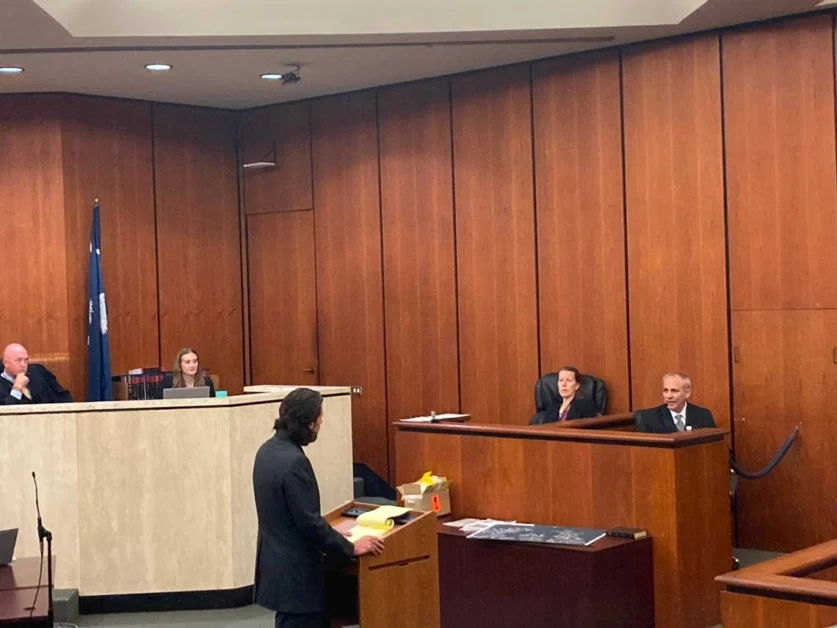
Title: “An Unforgettable Tragedy: Seeking Justice on Lake Murray”
Introduction:
In a devastating incident on Lake Murray, a fatal crash took the life of Stan Kiser and caused severe injuries to his wife, Shawn, and daughter, Morgan. Tracy Gordon, the driver of the speedboat involved in the accident, is now on trial facing charges of reckless homicide by operation of a boat and three counts of boating under the influence. As the case unfolds in the Richland County Courthouse, the question of whether Gordon was intoxicated at the time of the crash hangs in the air.
The Accident:
Gordon, a self-proclaimed “light drinker,” admitted to consuming eight beers throughout the day of September 21, 2019, with his wife, Angie. His testimony reflects his disbelief that he did not see the pontoon boat until it was too late to avoid a collision. While Deputy 5th Circuit Solicitor Dan Goldberg, prosecuting the case, questioned Gordon about the dangers of drinking and driving, Gordon maintained that it depends on the type of drink consumed. The pathologist who conducted Stan Kiser’s autopsy described it as the worst she had seen in her career, highlighting the magnitude of the tragedy.
Trial Proceedings:
The defense team, composed of veteran attorneys Joe McCulloch and Jack Swerling, called Gordon as their fourth witness. In his testimony, Gordon and his wife admitted to consuming light beers throughout the day, with a cooler of unopened cans found on their boat. However, Gordon emphasized his “light drinker” status, reserving alcohol for special occasions like their weekly date night. He expressed his shock and confusion following the crash and denied being a frequent drinker or reckless boater.
The Setting:
As the details of that fateful night emerged, it became evident that the accident occurred just outside the “no-wake zone” near the Rusty Anchor restaurant and Catfish Johnny’s. Gordon and his wife had deviated from their routine to catch a Clemson football game and enjoy a live band. Gordon’s boat collided with the Kisers’ pontoon boat around 9 p.m. on a moonless, pitch-dark night. He claimed that he did not have enough time to react after spotting the pontoon boat, which he alleged was not visible due to the absence of stars, moonlight, or any other source of light.
The Aftermath and Expert Testimony:
Immediately after the crash, silence engulfed the scene until piercing screams broke through. While prosecutors questioned the Gordons’ decision not to assist the injured victims and highlighted Tracy’s failing field sobriety tests, the defense team presented a series of experts to challenge the notion that alcohol impaired Gordon’s ability to operate the boat. Their testimony and that of eyewitnesses will play a vital role in shaping the outcome of the trial.
Conclusion:
As the trial extends into its second week, the jury must navigate through different accounts of that tragic night on Lake Murray. While the loss of life and the permanent injuries suffered by the Kiser family are undeniable, the burden of proving that Gordon was intoxicated at the time of the crash lies with the prosecution. The case serves as a haunting reminder of the devastating consequences that can arise from a single moment of negligence. The courtroom drama unfolds, seeking justice for the victims and shedding light on the complexities of boating under the influence.
Title: A Legal Quandary: The Intricacies of Blood Alcohol Testing in Criminal Cases
Introduction:
In a recent high-profile criminal case, Heath Taylor ruled that evidence of Gordon’s blood alcohol content could not be presented in court due to procedural errors committed by state Department of Natural Resources officers. This ruling has sparked a controversy regarding the validity of the evidence and the impact it may have on the final verdict. In this blog post, we will explore the different perspectives surrounding this case and delve into the intricacies of blood alcohol testing in criminal proceedings.
Eyewitness Testimonies:
Two restaurant managers from the Rusty Anchor and Catfish Johnny’s restaurants recounted their interactions with Gordon and his wife on the night of the fatal crash. Both testified that the couple did not exhibit any signs of intoxication and did not seem impaired. Catherine Reedy, one of the managers, stated that she had no concerns about her staff serving the couple that night. These eyewitness accounts play a substantial role in supporting Gordon’s claims of sobriety.
Expert Analysis:
James Bradley, a former South Carolina Highway Patrol officer, provided extensive testimony regarding field sobriety examinations. Although he acknowledged that the ultimate determination of impairment should be made by the officer present at the scene, Bradley, after reviewing body camera footage, surveillance footage, and reports completed by law enforcement officers, found no indications of impairment. However, Bradley highlighted a significant obstacle in his analysis – the lack of comprehensive notes taken by law enforcement officers at the scene. This raises questions about the reliability of the officer’s observations and the potential impact of distractions during field sobriety exercises.
The Influence of Chaos:
Defense attorneys have raised concerns about the chaotic nature of the scene on the lake shore during the night of the crash. They argue that the commotion and disorder could have hindered Gordon’s ability to perform the sobriety tests accurately. Bradley supported this argument by stating that distractions can indeed hamper an individual’s performance during field exercises. This brings into question the validity of the results and the effect chaos might have had on Gordon’s responses.
Conclusion:
The case involving Gordon’s blood alcohol content illustrates the complexities and potential pitfalls associated with blood alcohol testing in criminal proceedings. The competing testimonies of eyewitnesses and experts, combined with procedural errors, have further complicated the matter. While the ruling by Heath Taylor presents a substantial obstacle for the prosecution, questions still remain regarding the accuracy of the blood alcohol content testing, the reliability of officer observations, and the impact of distractions on the field sobriety exercises. As the trial continues, the legal community eagerly awaits an outcome that will provide clarity on these pressing issues.
Celebrate former President Jimmy Carter’s 99th birthday with a craft beer, and have a (hop)py day!

Celebrating Jimmy Carter: From President to Craft Beer Pioneer
If you were to visit Twain’s Brewpub & Billiards in Decatur, Ga., you might notice a proud display on the walls. Amongst the photos and memorabilia, there is a picture of former President Jimmy Carter, taken during his visit to this family-owned bar. Ethan Wurtzel, the owner, knows the significance of that moment and the role Carter played in fostering the craft brewing phenomenon that we enjoy today.
Back in 1978, Carter signed legislation that federally legalized home brewing. At the time, the American beer market was dominated by one style – a light lager sold by big breweries such as Coors and Anheuser-Busch. However, home brewers were able to showcase the appeal of different styles like hoppy IPAs, malty stouts, and citrusy wheat ales. This eventually led to a boom in small breweries across the country. Today, we have over 9,000 small and independent craft breweries. Bob Pease, the head of the Brewers Association, acknowledges Carter’s role, stating, “You could trace that revolution back to Carter.”
Interestingly, Carter never received political credit for this achievement since the craft brewing movement gained momentum long after his presidency. Jonathan Alter, Carter’s biographer, believes that his presidency has been underestimated. While people tend to remember the Iran hostage crisis, inflation, and high-interest rates, they often overlook the plethora of major and minor accomplishments that made our country better.
Now, as Carter’s 99th birthday approaches on October 1st, it’s the perfect time for us, the beer lovers, to raise a glass in his honor. Carter’s grandson, Jason Carter, believes it would be “100% appropriate to toast (his birthday) with a craft beer.” Jason also expresses his belief that his grandfather would be surprised at how far the craft brewing industry has come.
Some might find it surprising that Carter holds a significant place in the hearts of craft brewing and home brewing communities. Many mistakenly view him as a teetotaler due to his devout Christian beliefs and humanitarian work. However, Carter did enjoy drinking, although he disapproved of excessive consumption due to the toll it took on his family. He even refrained from serving hard liquor at some social events at the White House as a cost-saving measure. It is his brother, Billy Carter, who is more well-known in the beer world due to the short-lived Billy Beer he promoted.
Additionally, Carter’s administration was characterized by broad deregulatory efforts, which often go unnoticed due to the current political lenses we use to view him. Jason Carter suggests that people tend to forget about his grandfather’s deregulation efforts because Carter is now seen as a liberal, while deregulation is perceived as a conservative goal. However, Carter understood that not all regulations made sense, as he brought his small-business background into his presidency. For example, he realized that the restrictions on home brewing were remnants of Prohibition and collaborated with homebrewers in California to push for a change. This resulted in legislation that allowed beer to be made for personal and family use without being subject to federal excise tax – a significant milestone in alcohol production.
Homebrewing serves as the foundation and learning ground for most craft brewers today. In fact, for every $1 spent on beer in the U.S., 25% goes to a small and independent craft brewer. The bill signed by Carter truly “opened it up for the little guy,” as Wurtzel proudly acknowledges.
It’s no surprise that homebrewers occasionally pay tribute to Carter in the American Homebrewers Association’s annual competition. Beers like “Jimmy Carter’s Nut Brown Ale” and “Thank You Jimmy Carter” have been among the thousands of entries. Even an Arizona brewery, which began as a hobby amongst friends experimenting with homebrews, now offers a beer called “Jimmy Carter’s Second Term,” a peanut brittle flavored blonde ale.
At the age of 99, Carter is fully aware of the impact of the legislation he signed. While his brother might be more famous in the beer world, Carter remains a hero to many craft beer enthusiasts and home brewers alike. So, as we raise our glasses on October 1st, let’s toast to Jimmy Carter and his immeasurable contribution to the craft brewing industry. Cheers!
Title: Celebrating Jimmy Carter’s Birthday with Craft Beer: A Toast to American Ingenuity
Introduction:
Craft beer enthusiasts and history buffs alike have found a common ground—a reason to raise a glass and toast the ingenuity of American brewers. And interestingly enough, it’s none other than the 39th President of the United States, Jimmy Carter, who’s becoming an unexpected icon in the craft beer revolution. This article delves into the tale of how a former President inadvertently sparked a renewed appreciation for the art of beer-making and why his birthday is the perfect occasion to celebrate this unique connection between history, innovation, and good ol’ American craft beer.
Shifting Perspectives:
Jason Carter, the grandson of President Jimmy Carter, once shared, “But my grandfather certainly is proud of the ingenuity of the American brewers.” These words strike a chord among beer connoisseurs and those curious about the intersection of politics and fermentation. Jimmy and Rosalynn Carter, despite advancing in years, continue to inspire generations with their unwavering love and shared commitment to making a difference in the world. It’s this enduring spirit that resonates deeply, making their journey all the more remarkable.
The Story Unveiled:
As the story goes, it was in the late 1970s, during the Carter administration, that homebrewing was legalized in the United States after a long-standing ban brought on by Prohibition. Amidst concerns of economic recession and a yearning for self-sufficiency, President Carter played a significant role in signing the bill that allowed citizens to brew their own beer legally. Little did he know at the time that this simple act would set in motion a craft beer renaissance that would continue to flourish decades later. This decision brought forth a new wave of innovation, creativity, and passion for beer-making across America.
The American Craft Beer Revolution:
Craft breweries began to spring up nationwide, offering beer lovers a diverse range of flavors, styles, and experiences. These artisans focused on quality over quantity, embracing traditional brewing techniques while experimenting with novel ingredients and brewing processes. And as generations evolved, their shared love for craft beer became deeply intertwined with the cultural fabric of modern America. Independent breweries not only revived forgotten and obscure beer styles but also began to redefine the beer-drinking experience, elevating it to a level of sophistication and appreciation.
Honoring Jimmy Carter’s Birthday:
Given the profound impact of President Carter’s legislation on the brewing landscape, it is only fitting to celebrate his birthday in a manner that encompasses his own spirit of innovation and love for the United States. Brewing a themed craft beer—such as a Carter Cream Ale or Peanut Butter Porter—serves as a tribute to the man who unknowingly kick-started a revolution. Raising a glass of these specially crafted beers on his birthday becomes an act of acknowledging the connection between history, presidential legacy, and a thriving beer industry.
Conclusion:
As we observe Jimmy Carter’s birthday, let us reflect on the unlikely role he played in 1978, paving the way for a craft beer movement that has grown into a multi-billion-dollar industry. It is a testament to the ingenuity and entrepreneurial spirit that has always defined America. So, when you reach for that ice-cold craft beer on a warm summer evening, let it be a reminder of the remarkable journey that began with one man’s signature and a nation’s quest for self-reliance. Cheers to President Jimmy Carter, the accidental trailblazer in the vast world of craft beer.
Raise a glass of craft beer to celebrate former President Jimmy Carter’s 99th birthday!

Craft Beer Revolution: How Jimmy Carter’s Signature Changed the Brewing Game
At Twain’s Brewpub & Billiards in Decatur, Ga., there is a special photo proudly displayed on the wall – former President Jimmy Carter visiting the family-owned bar. Behind that photo lies a story that many beer enthusiasts, though not many in the general public, know very well – the instrumental role Carter played in fostering the craft brewing phenomenon.
Back in 1978, Carter signed legislation that federally legalized home brewing. At the time, the American beer scene was dominated by a single style – light lagers produced by big breweries like Coors and Anheuser-Busch. However, thanks to home brewers showcasing the appeal of hoppy IPAs, malty stouts, and citrusy wheat ales, the craft beer movement eventually took off, leading to a boom in small breweries. Today, there are over 9,000 small and independent craft breweries across the country.
Bob Pease, the head of the Brewers Association, a national trade organization, credits Carter with starting the craft beer revolution. “You could trace that revolution back to Carter,” he says. However, since the movement gained momentum long after Carter left office, he didn’t receive political credit for it, according to biographer Jonathan Alter. “This is just one example of many where Carter’s presidency has been badly underestimated,” Alter adds. While people tend to remember the Iran hostage crisis, inflation, and high interest rates, they often overlook a string of major and minor accomplishments that made the country better.
Now, as Carter approaches his 99th birthday on October 1st, it’s not too late for beer lovers to raise a glass in his honor. Jason Carter, Jimmy Carter’s grandson, believes it would be 100% appropriate to toast his birthday with a craft beer. “I think he would be surprised at how far it has gone,” says Jason.
The fact that Carter is considered a hero in the craft brewing and home brewing community might surprise some. Incorrectly viewed as a teetotaler, Carter was actually a drinker himself, though he strongly disapproved of excessive drinking due to the toll it took on his family. As a cost-saving measure, he didn’t serve hard liquor at certain social events at the White House. It was his brother Billy, who battled alcoholism, that became known for promoting the short-lived Billy Beer.
Often overshadowed by his reputation as a liberal, Carter’s broad deregulatory efforts get forgotten. Deregulation is commonly associated with conservative goals, but Carter, seen as a liberal by today’s political standards, actively pursued deregulation in areas such as airlines, trucking, and rail. “I think that deregulation piece…the shrinking of the government in that way, is something that people kind of forget about him because of the current way that our partisan sort of politics plays out,” explains Jason Carter.
Carter’s understanding that not all regulations made sense stemmed from his days as a small businessman. This mindset played a pivotal role in his decision to sign legislation that allowed for the production of beer for personal and family use without being subject to federal excise tax. This change, advocated for by a group of homebrewers in California, was significant in the post-Prohibition era, according to the Library of Congress. Homebrewing serves as the foundation for most craft brewers’ journey into the industry.
Today, 25% of every dollar spent on beer in the United States goes to a small and independent craft brewer, thanks to the bill Carter signed that “opened it up for the little guy,” as Ethan Wurtzel from Twain’s Brewpub explains. The impact of the legislation hasn’t gone unnoticed by the homebrewing community. Entries like “Jimmy Carter’s Nut Brown Ale” and “Thank You Jimmy Carter” have become popular in the annual competition run by the American Homebrewers Association. Even an Arizona brewery, which started as a hobby among friends sharing their experimental homebrews, pays homage to Carter with a peanut brittle flavored blonde ale called “Jimmy Carter’s Second Term.”
As we raise a glass to Jimmy Carter’s 99th birthday, it’s only fitting to acknowledge his contribution to the craft beer revolution – a revolution that changed the beer landscape forever and continues to thrive today. And as we celebrate his birthday, let’s also remember the often-unrecognized accomplishments of his presidency that made our country better. Cheers to Jimmy Carter and the craft beer movement he helped ignite!
Title: Celebrating the Craftsmanship of American Brewers, As Told by Jason Carter
Introduction:
When it comes to American beer, my grandfather has always been in awe of the creative genius exhibited by our nation’s brewers. From the earliest days, they have displayed an unparalleled level of ingenuity, crafting beers that have become synonymous with quality and flavor. So, in this blog post, I want to take you on a journey through time, highlighting the fascinating story behind the rise of American brewing and the pride it brings my grandfather.
The Historical Roots of American Brewing:
In the early days of our nation, beer was not widely consumed, as settlers primarily relied on hard cider and spirits. However, the arrival of German immigrants in the 19th century changed the brewing landscape forever. These newcomers brought with them their brewing traditions and techniques, laying the groundwork for what would become an American beer revolution.
The Prohibition Era:
One of the most significant challenges faced by American brewers occurred during the Prohibition era. From 1920 to 1933, the production, sale, and distribution of alcoholic beverages were strictly prohibited. However, instead of succumbing to defeat, the brewing industry adapted. Many breweries shifted their focus to producing non-alcoholic beverages or even malt extract, ensuring their survival during this difficult time.
The Craft Beer Resurgence:
Fast forward to the late 20th century: a period that witnessed a renewed interest in traditional brewing methods and flavor experimentation. This resurgence marked the birth of the craft beer movement, where small, independent breweries began to flourish across the country. By prioritizing quality over quantity and emphasizing unique flavor profiles, these artisans sought to redefine what beer could be.
The Pride of American Brewers:
Throughout these historical shifts, my grandfather has continued to marvel at the passion and skill displayed by American brewers. Their steadfast commitment to innovation and craftsmanship has elevated the beer scene to new heights, garnering international recognition and praise. From refreshing, easy-drinking lagers to bold, hop-forward IPAs, the diversity and quality found within the American beer landscape is truly impressive.
Conclusion:
American brewers have undoubtedly earned the respect and admiration of my grandfather throughout his lifetime. Their unwavering commitment to pushing the boundaries of beer-making has resulted in a wide array of exceptional brews that have captured the hearts and taste buds of beer enthusiasts around the world. Each sip is a testament to the ingenuity and dedication of these artisans, and it’s a legacy my grandfather fiercely takes pride in. So, as you raise a glass of your favorite American beer, take a moment to salute the brewers who have made it all possible – their story, as evident in my grandfather’s unwavering pride, is one worth celebrating!
The Oktoberfest event in Yorkville provides an atmosphere filled with music, beer, food, and more, creating a consistently enjoyable ambiance.

Yorkville, a small city in Illinois, was recently treated to its very own version of Germany’s famous Oktoberfest. The annual event, known as Kiwanis Yorktoberfest, returned for its sixth year at Riverfront Park East. The festivities took place over the course of a weekend and featured a wide range of family-friendly activities, delicious food from various food trucks, and, of course, plenty of beer.
Jason Pesola, one of the co-organizers of Yorktoberfest, explained that the event is not only a fun celebration but also serves a greater purpose. “All of this goes toward our Kiwanis scholarship programs,” Pesola said. In the previous year, the group managed to raise over $65,000 to support these scholarship initiatives. Pesola was optimistic about surpassing that amount this year, stating, “We’re looking to push that envelope, of course.”
Yorktoberfest has become somewhat of a tradition in the city, with local residents eagerly anticipating its arrival. “People kind of look forward to Yorktoberfest,” Pesola said. “It’s kind of the last hurrah of the season, and we’ve been blessed with beautiful weather the past two years.”
In addition to the usual festivities, this year’s event also featured a scarecrow walk and a touch-a-truck area for children. A craft fair with 60 vendors was also set up, giving attendees the opportunity to peruse and purchase unique handmade items. To ensure that there was no shortage of beer, the fest organizers partnered with Euclid Beverage.
Aurora’s Wurst Kitchen, known for its delectable bratwurst, was present at the festival. Wolfgang Schleining, the sausage maker and grill master, expressed his satisfaction with the new location of the event, stating, “The event was moved to this site last year, whereas it used to be at another park, and the new location is really nice. It’s always been good here. It’s been a nice thing.”
The trifecta of music, beer, and food seemed to be the main attractions for attendees. Carrie Kuebelbeck, who had recently moved to the area, attended the festival to familiarize herself with her new surroundings. “This is right in my own backyard,” she said. Chad Kubis, Kuebelbeck’s boyfriend, also expressed his excitement for the event, saying, “I’m here for the Freaky Fries and beer.”
Casey and Brian Stafford, who attended the festival the previous year, returned due to their positive experience. “The good food and the good bands brought us back,” Casey Stafford said. Brian Stafford added, “It’s a nice ambiance. It’s right next to the river. We like that this is local. There is always a nice vibe, and there are good people.”
David Sharos, a freelance reporter for The Beacon-News, captured the essence of the event as he wrapped up his coverage. Yorktoberfest offers locals a chance to enjoy the outdoors with fantastic weather, great music, and a variety of food trucks. It’s evident that the combination of these elements creates a captivating atmosphere that draws people in.
In conclusion, Yorktoberfest has become a beloved tradition in Yorkville, offering a fun-filled weekend of entertainment and delicious food. Beyond the festivities, the event supports Kiwanis scholarship programs, making it a meaningful endeavor. It’s no wonder that people eagerly anticipate the arrival of this annual celebration, as it provides the perfect opportunity to savor the last moments of the season while enjoying the company of friends and family.