Beer-articles 1026
Santa Rosa Museum Expands with New Beer Garden for Brewing Exhibit

Normally when you visit a museum, food and drink are not allowed, but the Museum of Sonoma County is making an exception for its Summer Beer Garden event to coincide with its current exhibit, “On Tap: Sonoma County Hops and the Beer Revolution.”
The museum will transform its sculpture garden into a beer garden from 4-8 p.m. July 20 featuring tastings from Wolf House Brewing, Moonlight Brewing, Lagunitas, Russian River and the Cotati Home Brewers Collective.
There also will be food trucks with food available to purchase.
VIP tickets are $25 and include a special brew tasting and exhibit tour with the museum’s curator, with entry at 4 p.m. General admission tickets are $10 and include 5 p.m. admission.
Purchase and learn more at bit.ly/4cMJJr0. 425 Seventh St., Santa Rosa
The Blind Pig Brewery Resumes Craft Beer Production

After closing production last fall, The Blind Pig Brewery is once again brewing beer in its Champaign brewery. New owner Matt Monahan took over the brewery this May and began brewing right away, starting with batches of the flagship ale U of IPA and a lager. The new owner wants everyone to enjoy The Blind Pig brews again, and he even has plans to open a brand-new taproom adjoining the Market Street brewery and packaging facility. Previously, The Blind Pig’s two Downtown Champaign bars and brewery were one business, but the original owner split them in the sale. The two bars, now called Hounds Court and Hounds Rest, have different owners than the brewery, but they can’t wait to put The Blind Pig beers back on the bar’s tap.
The new owner Monahan hired a team to bring The Blind Pig beers back: Lawrence Bolton and B.J. McCabe. McCabe used to work at The Blind Pig, and Monahan met Bolton as members in C-U’s organization for homebrewing aficionados BUZZ Club; the new owner calls Bolton the best homebrewer he knows. I sat down with three to learn about the new iteration of The Blind Pig Brewery.
Smile Politely: How’s production going? What were the first beers you made as a new owner?
Matt Monahan: Right now, we’re in distribution only. We’re in all the spots we were selling cans before. We’ll have U of IPA at football games this fall at the stadium. All the production is for cans distribution. People can already find U of IPA at Binny’s, Schnucks, and some other places. Soon, we’ll package a batch of pilsner and another batch, a bigger batch, of U of IPA. The next batch will be the batch that will be half cans and half kegs.
Currently, we’re only making the best hits. Please be patient with us until we get a taproom going, and we can make the lesser known one-hit wonders. We’re anxious to put our own twists on the beers, but our twist right now is quality, repeatability for the beers, getting the freshest grains and hops into the beer, and bringing practices up to date with the modern brewing practices of today.
SP: Let’s circle back to a taproom?! That’s cool. When do you anticipate The Blind Pig taproom to open?
Monahan: I hope to have the taproom before the end of the year. And hopefully with a kitchen and a menu that appeals to everyone including young families and kids. We’re here in the center of it all here in Downtown Champaign, and we want to be an attractive place for people to start their night or end their night or hang out.
We want a cool experience, a taproom where people can see into the brewery. There’s two excellent breweries in the area, and we want to complete the triangle. There needs to be a brewery in Champaign; there needs to be The Blind Pig. We couldn’t fathom The Blind Pig going away. We need it back and better than ever.
SP: When do you think The Blind Pig’s beers will be on tap in Downtown Champaign?
B.J. McCabe: It depends, but it could be out in restaurants or bars by next weekend. The beers currently in process are the U of IPA, the coffee stout, raspberry wheat, Blind Pig reserve, Blue pilsner, and tomorrow, we’re brewing Oktoberfest. They’ll hit shelves next month.
Lawrence Bolton: We’re picking up the coffee from Columbia Street Roastery next week for the coffee stout. We want to deliver the same quality beer that everyone expects from The Blind Pig.
SP: I need to know: what’s your Blind Pig brew?
Monahan: All of them! [laughs] But if I had to pick one, the U of IPA.
Bolton: Blue pils, but the U of IPA is really good, too. I like West Coast IPAs over hazy.
McCabe: My favorite is the seasonal Christmas beer Buddy Christmas. It has coffee in it, and it’s a bigger stout with lactose.
For more updates on the brewery, follow The Blind Pig on Facebook.
The Blind Pig Brewery
505 N Market St
Champaign
Food + Drink Editor / /
Rancho West Launches USDA-Certified Organic Nonalcoholic Beer in Southern California

Jason Thompson and Donnie Eichar are the co-founders of Rancho West, a Malibu-born premium organic beer brand. They talked to us about all the buzz surrounding their new organic nonalcoholic beer, which is the first USDA-certified organic nonalcoholic beer in the U.S. market. You can find Rancho West across Southern California at Erewhon, Bristol Farms, BevMo, and more. It will also be expanding statewide. For more information, visit RanchoWestBeer.com and follow them on Instagram @RanchoWestBeer. This segment aired on the KTLA 5 Weekend Morning News on July 7, 2024.
How Big Beer Brands are Crafting Flavorful Drinks to Win Over Gen Z

According to Forbes, the fast-growing ‘NoLo’ movement (no and low alcohol) is driving the demand for alternatives to alcoholic beverages. It’s fortunate that we’re here with a much-loved spring mocktail for the millennials and Gen-Z’s who are generally drinking less. Data-approved! Buzz60’s Chloe Hurst highlights…
Beer and hot dogs are as patriotic as it gets. But when you open the cooler at your summer barbecue, you could be seeing fewer brews, with alternatives like spiked seltzers, canned cocktails, and hard teas stealing their space.
You can attribute this trend to the younger generation: The youngest cohort of legal-aged drinkers from Gen Z, which covers the ages from 21 to 26, are “drinking completely differently than any other generation we’ve seen before,” according to NIQ’s Kaleigh Theriault.
“They’re relatively new to their drinking, and when they are choosing alcohol, they are leaning toward those flavor-forward categories,” Theriault, an associate director of beverage alcohol thought leadership at the consumer intelligence company, told CNN.
Corona is hoping to attract Gen Z drinkers with its new “Sunbrew Citrus Cerveza” beer.
Beverages created by smaller companies are controlling the landscape. E. & J. Gallo Winery’s High Noon dominates the spirit-based cocktail category; White Claw from Mark Anthony Brands remains the top-selling spiked seltzer; and newer entrants, including punchier drinks that mix liquor with an iced tea or lemonade such as Surfside, a two-year-old brand, are rapidly gaining ground.
That’s a problem for Big Beer, which is dealing with flat sales, declining volume and a fickle generation of younger drinkers who are completely ditching the bottle or preferring anything but a regular beer.
In response, Miller Lite-maker Molson Coors Beverage Company, Modelo-brewer Constellation Brands and heavyweight Anheuser-Busch InBev are among the larger brewers expanding beyond beer and diversifying their portfolio with flavorful concoctions.
Fruit, in particular, has been a focus area because “it’s something that the consumer seems to be drawn to right now and they want to drink something really good,” Theriault said. “Those flavors offer that.”
Constellation turned to TikTok for inspiration for its newest beer, which is lightly based on the “Corona Sunrise” cocktail — a mixture of tequila, a Corona, orange juice, grenadine, plus a splash of lime juice. It has taken off on the video-sharing app, with the most-watched tutorial racking up nearly 14 million views.
Since it’s unlawful to sell a beer mixed with a spirit, Corona spun up its own version to hopefully appeal to younger drinkers: the “Sunbrew Citrus Cerveza,” which is brewed with orange and lime peels and blended with the same juices and mixed with a Corona Extra to mirror the sweet flavor of the cocktail counterpart.
“This new brew was created with the flavor-seeking Gen Z audience in mind, a group of drinkers known for their experimentation and mixing,” noted Saúl Trejo, director of brand marketing at Corona, in a press release. For now, the drink is only available in the northeastern US before possibly expanding nationwide depending on sales.
Sunbrew fits into Constellation’s portfolio with a few other Gen Z-angled beverages like Fresca Mixed and its malt-based beverages, Corona Refresca and Modelo Spiked Aguas Frescas, both of which also have fruity flavors and are selling well for the company.
TikTok has also influenced Molson Coors for one of its newest boozy beverages called “Happy Thursday.” The shtick? It’s a non-carbonated drink because “bloating that may come from carbonation is considered a top barrier” for younger drinkers and the trend of “decarbonizing” drinks is blowing up on the app.
The “smooth, bubble-free” drink comes in four fruit flavors, including strawberry and black cherry, and also meets another need for Gen Z since it’s low in alcohol content at 4.4% by volume. It also has bright packaging designed to “pop on social media,” the brewer notes.
Launched less than three months ago, sales and distribution are both growing and feedback has been “extremely positive” for Happy Thursday, the company said on its blog. The company could shed more light on its sales during its next earnings report in August.
Happy Thursday fits into the company’s strategy that began in 2019 when Molson Coors tweaked its name to encompass its growing portfolio of beverages besides beer. That now includes hard iced tea, energy drinks and its Simply Spiked lineup. Last year, it acquired Blue Run Spirits, a cult favorite high-end bourbon and rye whiskey brand, in light of US spirit sales surpassing beer sales.
“Suppliers, in order to stay relevant, have to evolve and follow where the consumer is trending — and right now the consumer wants flavor,” NIQ’s Theriault said about their pivots. “Innovation is really important in the alcohol industry and ensuring that innovation is tied to the consumer trends is what’s right for business.”
Canned cocktails and spirits-based beverages have also helped Anheuser-Busch’s bottom line in the US, especially in light of the collapsing sales of Bud Light. Its aptly titled “Beyond Beer” category is currently a $1.5 billion part of its global business and is helping attract younger, legally aged drinkers.
NÜTRL, a flavorful lineup of vodka seltzers, and Cutwater Spirits canned cocktails are two standouts. An Anheuser-Busch spokesperson told CNN that Cutwater, which has a collection of canned rum mai tais, vodka mules and tequila palomas, has “steadily grown dollar sales double digits for five consecutive years” and jumped an additional 23% in sales this year.
Still, it’s not all rosy for Anheuser-Busch, especially if a drink has the Bud Light name attached. Bud Light Seltzer sales are down 50%, according to trade publication Brewbound, outpacing a larger decline in malt-based seltzers as drinkers shift toward spirit-based drinks. The company launched a new advertising campaign in 2023 just a few weeks before the Dylan Mulvaney controversy derailed its parent brand’s sales.
Despite younger drinkers’ hesitance with buying beer and flat sales, Big Beer companies aren’t facing an existential threat. In fact, it’s the exact opposite, according to one expert.
“Young drinkers can now find just about any kind of drink in just about any kind of flavor practically whenever they want, and they get to choose from the most diverse collection of beverages that has ever existed — with and without alcohol,” Bryan Roth, an analyst for Feel Goods Company and editor of the alcohol beverage newsletter, Sightlines+, told CNN.
“These long-tenured and often historic companies are adapting to the market. What makes it particularly exciting is that consumers are more often leading the way,” he added.
The media is having a hard time nailing down the financial vibes of the youngest generation of consumers—Gen Z. You might see Gen Z described as financially unsure and insecure, knee deep in debt or even more spendy and carefree than the avocado toast generation that preceded them.
Despite the commentary, however, Experian data shows that by and large, Generation Z’s debt is increasing at the same rate as other generations’. As part of our ongoing review of consumer debt and credit in the United States, Experian took a look at the leading edge of Generation Z, who were between 18 and 26 years old in the third quarter (Q3) 2023. This analysis lays out some of the facts from aggregated Experian data, along with some context, to explain what’s happening in the wallets of younger consumers.
Gen Z isn’t falling into more debt than others, according to Experian data. Nor are comparisons to millennials at their age particularly apt, as 15 years ago the economic and credit landscape (both still reeling from the Great Recession) meant a different experience for both borrowers and lenders than what consumers face in the 2020s. Now, inflation and cost of living are contributing to increased debt balances—for Gen Z as well as for all consumers.
For some types of consumer debt, Gen Z balances are about half that of the overall consumer population. Even average student loan balances, a category you might think the youngest generation must have more of than other cohorts, is only half the U.S. average. (Think about how long and expensive grad school can be to explain the difference.)
It’s the big-ticket items, including a car and a house, that Gen Z can’t dodge. Among young consumers with an auto loan, the average balance of $20,305 is similar to the $23,792 national average. And among the few members of Generation Z who’ve recently bought their (presumably) first home, they’re carrying nearly as much mortgage debt as other homeowners.
The average FICO Score among Generation Z was 680 in Q3 2023. While this score puts them 35 points short of the national average credit score of 715, it lands them in the “good” FICO Score range, which starts at 670.
There’s no evidence, and little reason, to expect that one generation is more or less responsible with their credit than others, and that includes Generation Z. Factors that could cause average credit scores to drop are largely economically driven, and right now unemployment rates have been at or near the record low rates: less than 5% in nearly every state, and 3.9% nationwide. Unless unemployment rates somehow impact one generation more than another—extremely unlikely—there’s no reason to expect that one generation will zig while all the other zag.
However, that’s not to say the economic challenges each generation faces are the same—far from it. FICO Scores are a measure to assess risk, but not wealth.
As of Q3 2023, 86% of Gen Z consumers who have a credit score have at least one credit card, according to Experian data. And they’re beginning to use some of the credit extended to them.
Although inflation contributed to higher balances for U.S. consumers of all ages, the year-over-year increase is typically going to be greater for those starting from zero, as many Gen Zers obtaining their first credit card are doing. Even so, Generation Z’s balances grew just as much as other working-age consumers—millennials and Generation X. Consumers of any age who manage their credit responsibly can expect their credit limits to increase over time.
Gen Zers in the more populous states of California, New York and Texas carry higher credit card balances than others. And as rent continues to rise, it’s taking a larger bite of take-home income.
At least drivers have more selection in choosing their ride, as used car prices are falling, inventory levels are mostly back to normal, and dealers are offering incentives like low-cost financing for some new models.
A glance in the rear-view mirror, however, shows that car loans recently made are costing consumers more across the board. Car prices, and the cost of the attendant car loans often used to purchase vehicles, have still increased for all consumers in the past year, more or less equally across all generations.
Generation Z will need all the savings they can get, however, as auto insurance premiums continue to skyrocket. Insurance rates climbed more than 22% in the past year, according to U.S. Bureau of Labor Statistics data, and inexperienced younger drivers are generally the costliest to insure.
Although more members of Generation Z are pursuing the trades, more than half of Gen Z have entered the realm of higher education, according to Pew Research data. And compared with other generations, Generation Z student debt is much smaller thus far. That will change in the upcoming years, as some continue advanced degree studies, a more costly education than pursuing an undergraduate degree.
Most Gen Z borrowers planning to pursue advanced degrees have yet to enter a program or complete their graduate studies. Graduate-level education is often more expensive and can result in more student loan debt than undergraduate education, with borrowers typically not on track to begin to repay until their late 20s or early 30s.
While the average student loan balances of Generation Z are expected to increase in the future, these consumers will have more tools to manage monthly payments from the very start of their repayments, unlike other generations before them. Once fully implemented, it’s expected that a combination of income-based repayment plans and loan forgiveness programs for public service will help ease the burdens of education debt.
The way consumers spend their hard-earned money is changing for everyone, not just for Generation Z. (When’s the last time you wrote a check?) However, Gen Z is more keen than others to embrace electronic payments as well as new types of alternative credit that’s been cracked open by technological advances like buy now, pay later (BNPL) plans.
Generation Z is associated the most with BNPL, but their older brothers and sisters may be catching up. According to alternative credit provider Afterpay, three-quarters of both Gen Zers and millennials reported using buy now, pay later in the past month, versus only about half of Generation X.
Although some among the youngest consumer generation have bought a home of their own in the past couple years, mortgage payments are as high for them as they are for older recent homebuyers who likely have more discretionary income.
More likely, they rent. Some 70% of all rental households are millennials or Gen Z, according to Experian’s State of the U.S. Rental market report. Rental prices—where most young people first begin their financial journeys—are still increasing faster than the rate of overall inflation in most markets. One consequence: More young adults live with their parents or others (roommates) than they did 30 years ago, according to data collected by the Urban Institute.
As for Gen Z homeowners, many are facing additional challenges relative to other homeowners: higher borrowing costs. Nearly half are paying more than 5% annually in interest. Besides the larger monthly mortgage payments this implies, it also means that equity accumulates more slowly for these homeowners than others.
There is an upside, though. If mortgage rates fall far enough, there will be a ready-made market of Gen Zers willing to refinance their mortgages, activity that’s barely occurring today.
While mortgage rates and few homes to choose from are placing homeownership out of reach for many, regardless of age, reporting rental payments to credit bureaus could help a renter’s credit score in the meantime. As Generation Z are the generation most likely to rent, as well as most likely in need to thicken their credit file and potentially improve their credit score, having rents reported to credit bureaus is perhaps more important for those just starting on their financial journeys. Alas, adoption among property owners has been slow, and smaller landlords may not be as likely to report on time payments to credit bureaus.
If there’s one myth to bust about young people, it’s that they’re forever optimistic. According to a survey recently published by consultancy Deloitte, more than half of Gen Z report living paycheck to paycheck, and only 1 in 3 say the overall economic and social situation will improve in the coming year—a polite way of saying most don’t think things are getting better anytime soon.
Methodology: The analysis results provided are based on an Experian-created statistically relevant aggregate sampling of our consumer credit database that may include use of the FICO Score 8 version. Different sampling parameters may generate different findings compared with other similar analysis. Analyzed credit data did not contain personal identification information. Metro areas group counties and cities into specific geographic areas for population censuses and compilations of related statistical data.
This story was produced by Experian and reviewed and distributed by Stacker Media.
According to Forbes, the fast-growing ‘NoLo’ movement (no and low alcohol) is driving the demand for alternatives to alcoholic beverages. Luck…
Hulk Hogan Launches Real American Beer: A Bold Alternative to Bud Light

Retired professional wrestler Hulk Hogan promotes his new beer, Real American Beer. He will be visiting St. Louis in July to further advertise the beverage. Video courtesy of Hulk Hogan.
Hulk Hogan co-founded Real American Beer, which is now available in Missouri.
Hulk Hogan already sells an array of products bearing his name or likeness: Hulkmania onesies, replica championship wrestling belts, and bright yellow bandanas emblazoned with “Hulk Still Rules.”
Now, he’s selling a beer, and Missouri stores are among the first to carry it.
Real American Beer is a way, Hogan said, to bring “America back together one beer at a time.”
Hogan said he saw an opportunity to enter the beer industry when Bud Light lost consumers over a 2023 marketing partnership with transgender influencer Dylan Mulvaney that sparked a boycott by conservatives upset by the LGBTQ connection, and tanked sales.
“I see this open lane right now,” Hogan said. “This open lane is saying, ‘We’re American and America’s been waiting for this beer.’”
Industry experts, however, warn that breaking into the beer market isn’t easy, and celebrity-based products often don’t have a long shelf-life. The Real American Beer marketing leans heavily on Hogan’s personality and popularity.
Hogan, whose real name is Terry Bollea, rose to fame as a powerful larger-than-life professional wrestler in the 1980s, and frequently competed in St. Louis. He’s a 12-time world champion and has appeared in movies, TV shows, commercials, and a video game. He was inducted into the World Wrestling Entertainment Hall of Fame but was suspended for three years after recordings of him making racist comments surfaced. He apologized and was reinstated in 2018.
Real American Beer is currently rolling out to retailers, restaurants, and bars across the state before making a wider national rollout. And though consumers are turning away from beer overall, Terri Francis, Real American Beer CEO, said they believe the product can bring drinkers back to light beer.
Live in FL, MN or MO? Find Real American Beer near you with our new Beer Finder! 🍺📍https://t.co/0TvAnuAR5X
Get some, brother. pic.twitter.com/sFRngkrsIN
“There is plenty of space in the market to grow the beer industry,” said Francis, a former vice president of the investment and innovation group within Anheuser-Busch InBev. “What we would love to be able to say is that we were able to bring people back to the category.”
Dave Williams, president of Bump Williams Consulting, which analyzes the alcoholic beverage industry, said he’s heard of a few beer brands that have popped up in the wake of the initial Bud Light stumble, but none have made a notable splash in terms of size, presence or increased competition.
“It is certainly an uphill battle for anyone looking to take a brand like Bud (Light) head on,” Dave Williams said.
Bump Williams Consulting CEO David “Bump” Williams called Hogan’s “open lane” sentiment wishful thinking, given the scale needed to challenge a global brand like Bud Light. And, generally speaking, he said, celebrity products risk running aground if the brand relies too much on the personal association instead of building a solid business plan.
Real American Beer will be available in 21 states by the end of summer, Francis, the CEO, said.
Hogan said his goal is for Real American Beer to become an industry leader that will eventually grow into a beverage company with things like non-alcoholic options.
“It’s middle America, it’s NASCAR, it’s wrestling, it’s country western, it’s purple mountains majesty, it’s the American flag. It’s God, it’s country — all of the above is what America is all about,” Hogan said.
Hogan will be in St. Louis on July 19 to promote Real American Beer. St. Louis was a significant player in the rise of WWE, often hosting championship events and airing television programs like Wrestling at the Chase via the St. Louis Wrestling Club.
Hogan said he remembers wrestling at the Chase Park Plaza Hotel as “insanity.”
“All the great wrestlers would come to St. Louis once a month and if you were on the card in St. Louis it was like being in Madison Square Garden,” he said. “If you got the opportunity to wrestle in St. Louis, that meant you were really something and you made it.”
Hogan said he is excited to return to St. Louis and meet his Hulkamaniacs. And he’s glad he doesn’t have to fight anyone.
“Usually, when I’m coming there I land at the airport and I’ll go check in at the Marriott hotel or something by the airport. Then I have to work out. I have to go wrestle,” Hogan said.
“But this time, it’s almost like I’m on vacation because I don’t have to get kicked in the head, I don’t have to work out and all I have to do is meet my friends, so I’m just really excited.”
Hannah Wyman – 314-340-8330
Retired professional wrestler Hulk Hogan promotes his new beer, Real American Beer. He will be visiting St. Louis in July to further advertise…
Whether you’re looking for an under-21-friendly option for your Fourth of July barbecue, or you decided to ditch alcohol but still want a soph…
Historic Beer Sign Stolen from Milwaukee Porch in Bold Theft
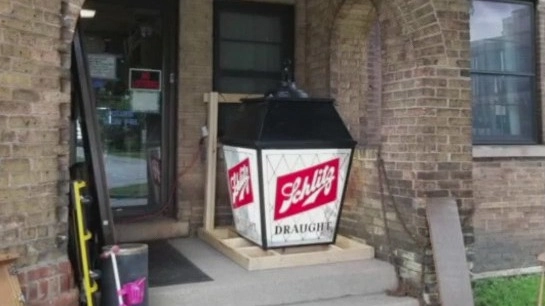
He left to purchase a new lock for his 250-pound historic sign, but when he returned, it was missing.
VIDEO: Massive 250-Pound Beer Sign Reportedly Stolen from Wisconsin Front Porch
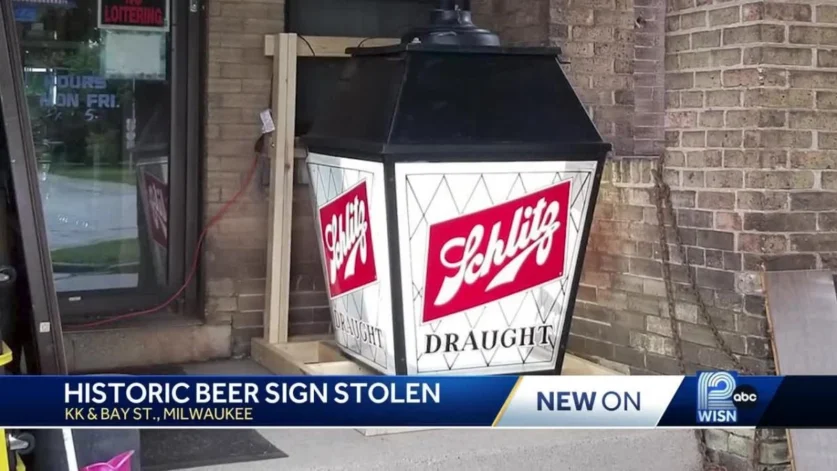
Two Milwaukee beer sign collectors reported that thieves took their large and historic Schlitz beer sign that was displayed on the front porch of their building.
The Top Non-Alcoholic Beer Crowned at the World Beer Cup
“`html
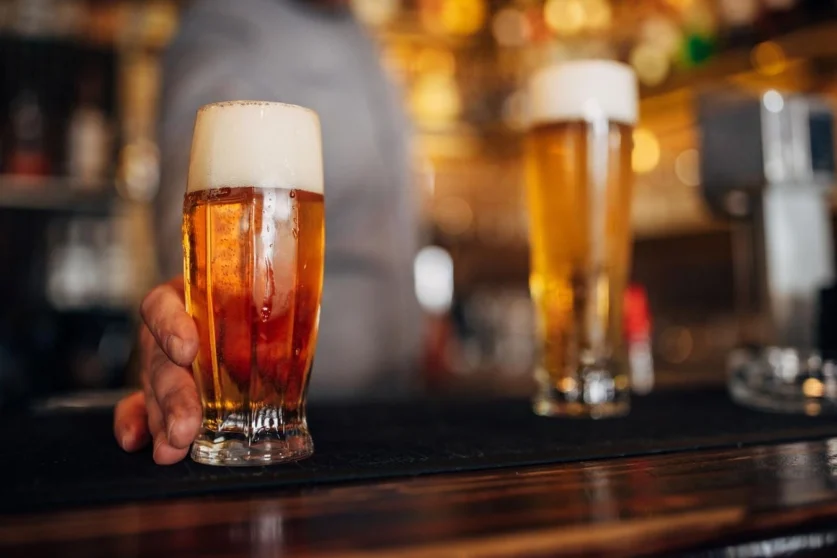
The world’s best NA beer was awarded to an Oregon brewery at this year’s World Beer Cup.
The top non-alcoholic/NA beer at this year’s World Beer Cup was awarded to Black Butte Non-Alcoholic from Deschutes Brewery, in Bend Oregon.
World Beer Cup — known as the Olympics of the beer world — is presented by the Brewers Association. Judges blind taste-tested beers in more than 100 categories this spring in Las Vegas. Forbes contributors have previously written about many of the winning beers in the most popular categories including IPAs and pilsners. However, due to the massive surge in NA beers in recent years, NA is an increasingly competitive category and this year’s competition saw more than 140 entries.
Interestingly the winning beer is a non-alcoholic take on the brewery’s original Black Butte, a porter that helped make the famous Oregon brewery a success and is named for an extinct Oregon volcano. The brewery’s description notes flavors of coffee and chocolate and “a luscious creaminess and roasted finish.” The brewery also notes that the beer doesn’t just have fans, “it also has followers.” The NA version of this beer was designed to replicate those sought-after flavors and by all accounts, it’s done just that. Black Butte Non-Alcoholic has won more than 8 international NA awards including this recent win.
“`
Because the beer is NA, it ships directly from the brewery to most states, so most U.S. beer drinkers can give this a try if they want. In addition to Black Butte, which took the gold medal award in the NA category, two other beers medaled. Silver went to Soul Sour, by Athletic Brewing Co. in Milford Connecticut, and Bronze went to Night Strike, Leader Brewing, Palm Bay, Florida.
A small Florida NA brewery, Night Strike has been making big waves in NA beer circles since being founded in 2022. In addition to this recent award, it’s won previous medals at other prestigious beer competitions and earned mentions in national media. You can have the brewery’s beer shipped directly from the brewery.
Meanwhile, Athletic Brewing Co. is arguably the biggest name in NA beer and the brewery that more than any other put U.S. NA drinking on the map. The brewery’s Soul Sour, a fruit-forward sour brewed each year in honor of Black History Month. You can also order it online and be happy knowing that 100% of the profits from the beer are donated to causes that support BIPOC scholarships in brewing.
One Community. Many Voices. Create a free account to share your thoughts.
Our community is about connecting people through open and thoughtful conversations. We want our readers to share their views and exchange ideas and facts in a safe space.
In order to do so, please follow the posting rules in our site’s Terms of Service. We’ve summarized some of those key rules below. Simply put, keep it civil.
Your post will be rejected if we notice that it seems to contain:
User accounts will be blocked if we notice or believe that users are engaged in:
So, how can you be a power user?
Thanks for reading our community guidelines. Please read the full list of posting rules found in our site’s Terms of Service.
The World Beer Cup Declares the Best Pilsner in the World
The best pilsner in the world this year comes from Colorado.
Pilsner was one of the most popular beer categories at this year’s prestigious World Beer Cup, which is often referred to as the Olympics of the beer world. More than 600 pilsners were submitted across four subcategories, but only four pilsners took home gold medals.
These elite and crisp beers were selected by an expert panel of judges this spring in Las Vegas at the annual beer competition presented by the Brewers Association — an organization representing small and independent brewers. I previously wrote about German-style pilsners awarded at the festival, as well as several IPA categories and other Forbes contributors have taken a closer look at IPAs overall.
Even though the IPA still reigns supreme as the most popular beer style, pilsners are getting more and more attention, and are probably the most popular current beer style with brewers themselves. It’s not hard to see why. They are complex yet easy to drink, and pilsners really highlight a brewer’s skill because you can’t hide any imperfections behind loads of hop flavors or aroma. Plus with sub-styles ranging from German to Boehmian to American and more, different types of pilsners can appeal to different drinkers.
Here are the four pilsners deemed the world’s best for 2024.
The brewery describes Venga as a traditional Mexican lager “fermented cold with Mexican lager yeast,” and as a “light and easy drinking beer.” The brewery recommends serving the refreshing beer “Chelada-style with rimmed salt and a lime wedge.”
Named simply “pilsner” this beer “shines brilliantly gold with fluffy white foam,” and features “Aromas of fresh grass, spring flowers, with a touch of lemon zest quaffs from the glass,” according to the brewery. As I previously wrote: “Good news for Oregon beer lovers: This beer ships statewide. Bad news for the rest of us: It isn’t available for shipping outside of Oregon.”
Made with Moravian malt and Saaz hops this beer is all about creating authentic Bohemian pilsner flavors. Per the brewery: “The ‘bublina’ or bubbles in this beer are best experienced in Tubinger tankards from Czech side-pull faucets.”
Perfect for pilsner fans who want a little bit of hop bite, this hopped pilsner is clean and crisp with loads of Amarillo and Strata hops. You can find out more about 401K at the brewery’s website, though there’s no word if it also comes with a dental plan.
One Community. Many Voices. Create a free account to share your thoughts.
Our community is about connecting people through open and thoughtful conversations. We want our readers to share their views and exchange ideas and facts in a safe space.
In order to do so, please follow the posting rules in our site’s Terms of Service. We’ve summarized some of those key rules below. Simply put, keep it civil.
Your post will be rejected if we notice that it seems to contain:
User accounts will be blocked if we notice or believe that users are engaged in:
So, how can you be a power user?
Thanks for reading our community guidelines. Please read the full list of posting rules found in our site’s Terms of Service.
Cheers to Flavors of Florida: Exclusive Disney Springs Beer Marks Its Return
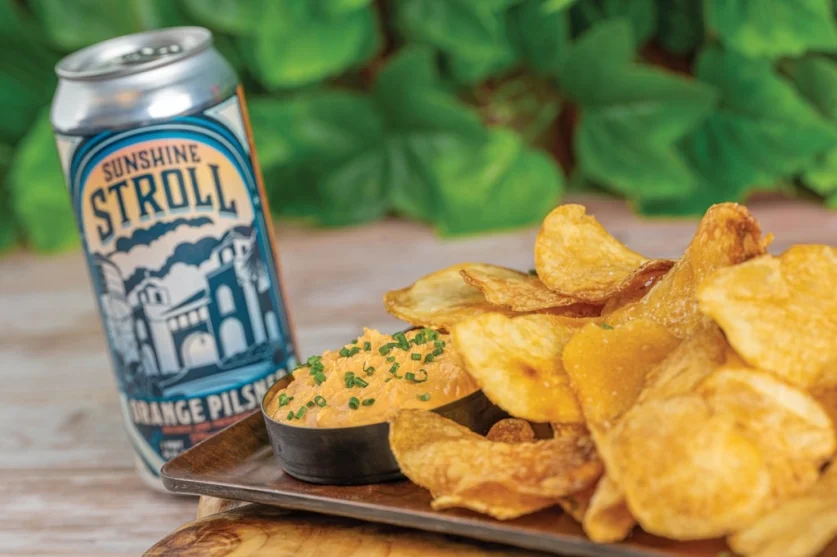
As a local, Jim Greene is very excited about Disney Springs’ newest sip, SunShine Stroll Orange Pilsner — because it’s local, too. The beer’s July 1 release pairs neatly with the return of Flavors of Florida, which offers visitors to the Springs a taste of the Sunshine State.
Greene, general manager operations for Disney Springs, hails from Satellite Beach. SunShine Stroll Orange Pilsner, a light and citrusy offering, is custom crafted by Playalinda Brewing Co. from Titusville, an old rival city of Greene’s.
“We used to play them in football!” he notes with enthusiasm, but he reserves the bulk of his excitement for the beer itself — the refreshing result of years’ worth of visitor queries.
“Both domestic and international travelers ask about local beer all the time and ask, ‘What do you have that I can’t get anywhere else?’ We never had an answer.”
Now, they do — the Pilsner is a Disney Springs exclusive — and it joins the fourth annual Flavors of Florida lineup of more than 80 items, found at more than 40 locations from kiosks and fast-casual offerings, to storefront stop-ins, to fast-casual and full-service restaurants.
This hazy 4.5% ABV offering, with its touch of Florida orange, fits right in.
“It’s what you call a walking beer,” Greene says, and beginning July 1, visitors can grab a 16 oz. can or a draught at any number of outposts on property and walk it end to end. It will be sticking around after the summery event ends on Aug. 11.
In fact, the beer has even been incorporated into some of the festival’s offerings, such as the orange pilsner goat cheese dip (available at Jock Lindsay’s Hangar Bar) and crispy pork-topped St. Augustine datil pepper frites (at The Daily Poutine).
Over at Morimoto Asia, where past Flavors of Florida events have seen proteins like gator and frog legs giving folks a taste of former Executive Chef Yuhi Fujinaga’s penchant for thinking outside the box, this year’s take by Executive Chef Takeshi Ikeuchi speaks to something more familiar to most: Key West shrimp.
“He enjoys using this in his Cantonese-style cuisine,” says Fujinaga, now director of culinary for Patina Restaurant Group, “but also wanted to bring in his Japanese heritage by bringing in chilled soba noodles. They are infused with green tea, too, which is very unique.”
The dish also employs vegetables from local growers, such as carrots, cucumbers and purple daikon from small-scale, organic Sugar Top Farms in Clermont. This is an element the festival has been tapping into, Springs-wide, as the event has grown, says Disney Springs Vice President Matt Simon.
“It’s no longer just ingredients that are Florida-familiar,” he says. “We’re bringing in the farmers of our community and showing our guests, in a very special way, how to enjoy these flavors in a truly authentic way.”
Part of this is encapsulated in an all-new pairing series that will connect guests with their food and drink, says Michael Reiss, general manager of Disney Springs business relations and food and beverage.
The series will be hosted at The Edison, Chef Art Smith’s Homecomin’, Paddlefish, Wine Bar George, City Works Eatery & Pour House and Jaleo.
“It’s one of those things we’ve layered in to give more options and value to the guests,” Reiss explains. “These will have a limited number of seats, with two events per location.” Tickets for these events, which span multiple courses and run from 1.5 to 3 hours, drop July 1 at disneysprings.com/pairingevents.
“It’s exciting for guests to be able to have this personal connection with the chefs in Disney Springs,” says Simon. “They’re such an important part of our story and what we do. And for them to be able to get together and have an amazing food experience that nobody else in the world can have.”
History, too, plays a role. As Florida is the birthplace of the Cuban sandwich, several venues will be doing takes, from the Tampa-style Cuban at Chef Art Smith’s Homecomin’ to an Ybor City-style dog at B.B. Wolf’s Sausage Co.
The beverage teams have been getting in on the fun, too. At Morimoto Asia, the orange shiso mocktail allows guests of all ages to get in on Florida flavors with a house-made orange shrub. Frontera Cocina has a Sunshine State margarita. Gideon’s Bakehouse‘s orange mocha nitro cold brew will be jet fuel to its queued-up fans while eet by Maneet Chauhan’s Sunny Days brings them back down, its ice pop-laden, whipped vodka delight is a cocktail in dessert disguise.
And of course, there’s that beer, the one Flavor of Florida that’s sticking around past Aug. 11.
“It’s here for good,” says Greene.
Want to reach out? Find me on Facebook, Twitter or Instagram @amydroo or on the OSFoodie Instagram account @orlando.foodie. Email: amthompson@orlandosentinel.com. For more foodie fun, join the Let’s Eat, Orlando Facebook group.