Beer-articles 1026
Is the Massachusetts Beer Industry Losing Its Spark? Signs of a Declining Market

Millennials are getting too old to hit the pub every night. Many Gen Zers prefer cannabis to beer. And a number of breweries are increasingly pushing ciders, seltzers and other spiked drinks.
In other words, the once-heady craft beer business has lost its fizz.
It’s a story that’s playing out across New England as the industry consolidates following years of rapid expansion.
In recent weeks, the owners of Jack’s Abby in Framingham acquired Wormtown, Worcester’s oldest and busiest brewery. The parent company of New Hampshire’s Smuttynose recently reached a deal to acquire Wachusett. Dorchester Brewing joined forces with Aeronaut. Ipswich Ale hooked up with Riverwalk.
Meanwhile, some brands are going away. The latest: Cambridge Brewing Co. in Kendall Square, which recently announced it will go dark at the end of the year.
“The shakeout is absolutely here, there’s no question,” said Dan Kenary, chief executive of Harpoon parent company Mass. Bay Brewing. “A week does not go by when I am not approached about wanting to take a look at a brewery looking to sell, go out of business, or merge.”
Have we reached an era of Peak Craft? All signs point to yes.
Last year, 15 breweries opened in the state, while 11 closed, according to the Massachusetts Brewers Guild and local blog Mass. Brew Bros. That net gain of four was the smallest increase since 2010, when there were just 48 breweries in Massachusetts. At the start of this year, there were 235.
Nationwide, overall beer sales have been flat or declining for years — largely due to soft sales of mass-market mainstays like Bud Light and Miller Light. Craft beer had posed a bright spot, eventually growing enough market share to account for roughly one-fourth of all spending on beer in the United States.
But now, even craft has plateaued. Craft beer sales volume fell 1 percent last year, per Brewers Association data, compared to a 5 percent drop for all beer. The total number of breweries, meanwhile, ticked up less than 1 percent to 9,900.
The only growth could be found in taprooms — breweries that primarily offer on-premise drinking with limited or no food menus. The number of craft brewers who sell through wholesalers had already started to decline and liquor store shelves were getting crowded with alternatives. The beer wholesale industry, too, is going through its own consolidation, and distributors are trying to streamline their crowded craft offerings.
Advertisement
Even Boston Beer Co., whose flagship lager made Sam Adams a household name, has long pivoted to other drinks such as hard cider and tea to propel growth. In each of the past two years, Boston Beer reported around 85 percent of its volume came from alcoholic beverages other than beer.
“What you’re seeing in Massachusetts very much mirrors the national trend,” said Bart Watson, the Brewers Association’s chief economist. “We had this era of explosive growth where breweries were opening right and left. That’s decelerated. [Today] it feels like we’re kind of moving toward equilibrium.”
Big Beer has taken notice. The country’s two biggest brewers, Anheuser-Busch InBev and Molson Coors, are now unwinding their craft portfolios. Last year, AB InBev sold eight craft brands — such as Shock Top and Redhook — to Canadian cannabis giant Tilray Brands, while Molson Coors made a similar move this month, also by reaching a deal with Tilray.
“The big brewers have decided they’re getting out of this craft business because, ‘Why do it anymore?’ ” said Jenn Litz-Kirk, director of content for trade publication Beer Business Daily. “’Craft is slowing. That’s not our core competence. We need to focus.’”
Kenary said he noticed that regional craft brewers, relatively larger players that mostly sell through distributors, peaked roughly a decade ago. Microbrewers and taprooms continued to grow, but even those corners of the industry have lost their buzz. Kenary co-founded Harpoon, one of Massachusetts’ first craft brewers, and said he hoped to help stoke a vibrant beer culture in the United States. He and his peers succeeded “beyond our wildest freaking dreams,” Kenary said, and then rode the rising tide.
But lately, he said, it feels like that tide has been going out.
To a large extent, the plateau reflects generational drinking habits. Craft beer rose to prominence as millennials reached legal drinking age. But they’re getting older, raising kids and cutting back on the late nights on the town. Gen Z seems to be much less interested in the latest super-hoppy IPA or double barrel aged stout. Brewers also say it’s no coincidence that their industry has stalled out as cannabis products have become more widely available.
Then there’s the aftershocks of COVID. Businesses that were starting to struggle going into the pandemic soldiered on with the help of Paycheck Protection Program grants or other government assistance. Now those subsidies have ended.
Esther Tetreault, who owns Trillium with her husband, JC, said the changing nature of work following the pandemic has also had an impact. Trillium’s Canton brewery is next to the headquarters of insurer Point32Health, where many of the roughly 4,400 employees based there are working remotely on any given day. Trillium’s Fort Point brewery, a popular post-work refuge for the Seaport office crowd, still hasn’t bounced back to pre-pandemic levels.
Tetreault knew the craft boom couldn’t go on forever. But she still sounds sad that the party is over.
“Whenever I hear that somebody’s opening a craft brewery, I’m a little surprised,” Tetreault said. “It feels like the timing, and the industry, and the economic landscape are not right for that.”
Dorchester Brewing chief executive Matt Malloy said brewers need to adapt to consumers’ changing preferences. For him, that meant adding wine, hard cider, and even frozen slushies to the drink menu — he jokes that his establishment is starting to turn into a “slusheteria.”
Consolidation, Malloy added, is to be expected in a mature market such as craft beer. His business recently merged with Aeronaut under the newly created Tasty Liquid Alliance umbrella, moving Aeronaut production from Everett to Dorchester’s brewery on Mass. Ave. while keeping the Aeronaut taproom in Somerville going.
The mergers, acquisitions, and closings in the brewing industry show no signs of slowing down, especially for those primarily selling through liquor stores where competition for shelf space is fierce. Industry insiders believe it’s inevitable that the total number of breweries will begin to decline.
“When everyone’s growing, when everything is hunky-dory, people don’t tend to look for those opportunities,” explained Adam Romanow, founder and CEO of Castle Island Brewing. “In a soft market like this, more people see it as an exit strategy or a succession plan.”
At Jack’s Abby in Framingham, optimism persists despite the challenges. The acquisition of Wormtown has lifted Hendler Family Brewing Co., previously known as Jack’s Abby, into the top 30 largest craft brewers in the country by volume. Jack’s Abby’s focus on lagers complements Wormtown’s expertise in IPAs. Although Wormtown’s main brewery in Worcester has shut down, with production shifting to Framingham, most of its staff were retained. Moreover, the Wormtown taproom in Foxborough remains open, and there are plans to expand the one in Worcester. Read more about this development.
Hendler said many brewers built larger operations than they needed with the anticipation that double-digit sales growth would continue well into the future. Now the industry has far more production capacity than it needs.
“We are investing very heavily in craft beer and believe in its long-term future. This isn’t a ‘sky falling’ scenario,” Hendler said. “There might be a challenging period that we’re going to have to navigate through but we see a really bright future for those who figure out how to navigate that successfully.”
Jon Chesto can be reached at jon.chesto@globe.com. Follow him @jonchesto.
Portland’s Viking Beer Fest: A Toast to Summer’s End with a Spirited Skol!

Ridgewalker Brewing’s Jeff Farrar referees armored combat at Viking Beer Fest 2024.
Jeff Farrar lifts a battle axe high as medieval banners flutter in Oregon’s late summer breeze over a grassy arena, drawing cheers from onlookers. “Have any of you ever seen real armored combat?” Farrar calls out.
The crowd swiftly turns from cheering to gasping as two fully armored warriors clash, their swords clanking in a metallic dance. For nearly two minutes, they trade blows, maneuvers, and force in a three-round demonstration that captivates the audience with each thunderous collision. The intense encounters offer spectators a rare proximity to authentic medieval combat—even though the weapons are blunted, the authenticity of the armor and the sound of metal striking metal are vividly real.
At the end of the third round, the fighters share a hug, signaling that the fierce combat was purely theatrical. The audience, following Farrar’s cue, raises their beers high in celebration amidst renewed cheers.
Welcome to the Viking Beer Fest, now celebrating its third year! This charity festival is held in a lush park on the southwest side of Portland and is organized in support of the non-profit organization Nordic Northwest. The event attracts roughly 2,000 participants including beer enthusiasts, history buffs, and fantasy lovers. Boasting 41 taps and 17 brewers, the festival offers an abundance of beer and mead, set against a vibrant medieval backdrop. Viking Beer Fest is a unique gathering where fictional characters like elves, knights, hobbits, vikings, wizards, fey folk, and even a giant gnome step out from fantasy into reality. A highlight of the festival is the costume contest, where attendees such as one dressed as Samwise Gamgee surprises the crowd by pulling out a bag of potatoes from a backpack.
An attendee dressed as Samwise Gamgee lifts a bag of potatoes, delighting the audience.
Nordic Northwest uses this blend of fictional and historical ambiance to introduce and promote its mission. Originating from a language club at Portland State in the 1990s, it has evolved into a comprehensive cultural institution that organizes various events throughout the year at this location.
Outside of festival times, the public can explore the site’s pathways and interior spaces that are filled with displays of art and jewelry.
“We are connecting people to Nordic culture through Nordic exhibits, events and festivals that bring people together,” says the group’s communications manager Anette Gullholm. “We have people in their 20s and their 80s here,” adds Nordic Northwest director of development Shawn MacArthur. “I haven’t seen many events that where people from almost every decade of life are coming together, drinking together and having a great time like this.”
Indeed, a great time appears to be the theme of the day. While armored warriors mingle with spectators between rounds, other festival goers line up to exchange beer tickets for beer samples with names like Loki’s Libation and Thor’s Cousin.
Festivalgoers exchange beer tickets for samples at Viking Beer Fest.
I catch up with Farrar near Olebolle, a 19-foot wooden sculpture of a troll from Danish artist Thomas Dambo. “I actually am Thor’s Cousin,” Farrar laughs. “It was a joke that started as a Yelp! review.”
Farrar, who not only officiates the event but is also the proud owner of Ridgewalker Brewing, packs away a peculiar battle axe that once featured as a prop on AMC’s hit show “The Walking Dead”. He takes a moment to explain the evolving nature of the Viking Beer Fest. Originally a platform for brewers to present their mainstay beers, it has since transitioned into a celebration of Scandinavian and Nordic-style beers, initiated after brewers agreed to explore these traditional recipes.
According to Farrar, the key to authentic Scandinavian beer lies within the yeast used during the brewing process. However, numerous breweries scattered across the Nordic Northwest campus incorporate unique Nordic ingredients like juniper berries or raspberries to differentiate their offerings. For the region’s enthusiastic beer aficionados, the festival serves as a rare chance to indulge in unique brews not typically available in stores. Amidst the bustling beer stands, food vendors and local artisans also thrive, selling Scandinavian-themed delights like Swedish meatballs and intricately crafted wire bracelets.
Icelandair, as an event sponsor, takes the opportunity to entice the vibrant, often whimsical crowd—with their varying degrees of inebriation—to consider traveling across Scandinavia.
Farrar acknowledges the appeal of armored combat among the attendees, yet he asserts that the essence of the Viking Beer Fest remains, quite fittingly, the beer itself.
As the event progresses, the festival’s beloved beer begins to set a quicker tempo for the remaining activities on the grounds. The queue for axe throwing extends beyond a half-hour wait. The picnic tables become increasingly crowded with an assortment of beer glasses, baskets filled with food, and pieces of armor.
A constant gathering encircles the Red Troll Forge blacksmith shop, where onlookers are entertained by smiths crafting various household items like nails and fire pokers right before their eyes. Foam swords and shields are energetically wielded in the LARPing section. Numerous guests continue to explore the forest trails behind Olebolle, stumbling upon a secretive beer tap where Ridgewalker rewards the explorers with a special high gravity beer.
As dusk starts to blanket the sky, the sounds of combat transition to the beats of a DJ set against the backdrop of a model Viking long ship. The forest paths behind Olebolle see an increase in traffic as more adventurers seek out the hidden beer tap, before the scene shifts to a night of music and dance.
Visitors to Viking Beer Fest can be found wearing street clothes, fantasy costumes and replica viking garb.
In the throng, festival organizers become more difficult to separate; but most are readily identifiable by a pair of leather, medieval bracers covering their forearms. The garments are historical and real, but wouldn’t feel out of place on a character in “Skyrim.”
All of this started as a spreadsheet created by MacArthur’s bracer-wearing team. Vikings sharing a round with hobbits. Valkyries serving beer to werewolves. The first hints of cooler, autumn air creeping into the atmosphere. The festival feels almost like a farewell to summer and a welcome home party for the coming of Halloween.
The campus feels bustling, too; but due to the threat of rain, MacArthur says this year’s attendance is actually down from 3,000 visitors in 2023. Asked if he’s planning a repeat of the festival for 2025, MacArthur lights up. Without a doubt. “People love to drink and people love to celebrate. This is a chance to do both of those things. It’s a chance to celebrate Nordic culture that doubles as a chance to dress up.”
“The smiles are the thing that gets me the most,” he adds. “Walking through the festival and seeing people smiling and having a good time, it’s a magical feeling and it drives me to keep doing this. Making people happy, at the end of the day, is just the best feeling from a non-profit standpoint.”
One Community. Many Voices. Create a free account to share your thoughts.
Our community is about connecting people through open and thoughtful conversations. We want our readers to share their views and exchange ideas and facts in a safe space.
In order to do so, please follow the posting rules in our site’s Terms of Service. We’ve summarized some of those key rules below. Simply put, keep it civil.
Your post will be rejected if it includes certain content.
User accounts will be blocked if activities are detected that violate our rules.
So, how can you become a power user?
Thanks for reading our community guidelines. Please read the full list of posting rules on our Terms of Service.
Beer Truck Accident on Interstate 25 in Northern Colorado Leaves Driver Injured

By Brian Sherrod
August 29, 2024 / 7:42 AM MDT / CBS Colorado
A semi truck carrying beer crashed on Interstate 25 near Berthoud on Thursday morning just before daybreak. The driver was taken to the hospital with injuries.
The crash occurred in the northbound lanes of the Colorado roadway near the intersection with Highway 56.
A lane of the interstate was closed during rush hour while crews cleaned up the crash.
So far it’s not clear what led up to the crash.
Brian Sherrod is a multimedia journalist and the First Alert Traffic Tracker Reporter at CBS News Colorado. Read his latest reports or check out his bio and send him an email.
© 2024 CBS Broadcasting Inc. All Rights Reserved.
Local Flavors Shine: Blind Tiger Brewery’s Latest Beer Exclusively Uses Shawnee Co. Ingredients

TOPEKA (KSNT) – A local brewery is announcing the release date for a new beer produced solely in Shawnee County.
Blind Tiger Brewery announced Tuesday, Aug. 27 that local farmers collaborated with its brewers to produce a “never before brewed”, brand-new beer. Fourth and fifth generation Shawnee County farmers Roger and Jason Hamm worked with Blind Tiger Brewery’s Brewmaster John Dean and Head Brewer Alvaro Canizales to produce the specialty beer, according to a news release from Blind Tiger Brewery.
The original beer is called “Shawnee County Golden Ale.”
Topeka Boulevard to close for month-long waterline replacement project
“Talk about hyper-local,” Dean remarked. “Talk about a low carbon footprint. This malt originated within five miles of our brewery. I can assure you, our beer is only as good as our ingredients, and this top-notch barley-malt from the Hamms certainly makes the grade.”
The Hamm brothers, Roger and Jason, own Two Mule Malting, which is credited with both growing the barley and processing it into malt that the brewery uses, as per the press release.
Blind Tiger Brewery announced that, to their knowledge, this is the inaugural occasion of “brewing-quality barley” being cultivated in Shawnee County, along with the malting of the barley itself.
Gage Park named ‘top green space’ in HGTV article
“Our mission is to provide brewers with malt varieties not currently available on the market as a form of seed conservation,” Roger Hamm said. “We started this journey seven years ago and it is now reaching fruition. So many barley varieties may vanish, so I want to do my part and hopefully those rare varieties can find a place in award-winning beer.”
Shawnee County Golden Ale is described by the brewery as having a rich, malty flavor and 5.2% ABV and 16 IBUs. The beer will be available on tap starting at 5:30 p.m. Wednesday, Aug. 28 at Blind Tiger Brewery, located at 417 SW 37th St.
For more local news, click here. Keep up with the latest breaking news in northeast Kansas by downloading our mobile app and by signing up for our news email alerts. Sign up for our Storm Track Weather app by clicking here.
Copyright 2024 Nexstar Media, Inc. All rights reserved. This material may not be published, broadcast, rewritten, or redistributed.
For the latest news, weather, sports, and streaming video, head to KSNT 27 News.
Michigan Breweries Embrace Sober Curiosity: Expanding Offerings Beyond Beer

Michigan breweries such as Short’s Brewing Company and Founders Brewing Co. have broadened their offerings by introducing hop water – a non-alcoholic beverage. Charlie Nick | MLive.com
A fresh type of six pack has been appearing in Michigan coolers this summer. It offers the familiar features of being bubbly and hoppy as expected of craft beverages, but comes with a unique twist – it’s non-alcoholic.
Enter: Hop water.
Michigan breweries are joining the trend of non-alcoholic drinks, spurred by the increasing interest in the “sober curious” movement. This shift is influenced by individuals wanting to reduce their alcohol intake or those seeking non-alcoholic alternatives.
Founders Brewing Co., Short’s Brewing Company, and New Holland Brewing each introduced a hop water version on shelves this summer.
Non-alcoholic labels currently represent only a small fraction of total alcohol sales in the United States — not even a full 1% — but the market has been expanding steadily over the years.
In 2023, non-alcoholic drinks reached $565 million in sales, achieving a 35% increase in dollar sales year-over-year, according to market research firm NielsenIQ.
For breweries, hop water is a new creation that utilizes a well-known ingredient.
Hops themselves don’t contain alcohol – that buzzy feeling is born during the fermentation process. Hop water, in contrast, is infused with hops to add the aromatics – that bitterness made famous by IPA-style beers.
Hop waters are not non-alcoholic beers mimicking a lager, stout or hazy IPA. Hop water is its own beverage.
For breweries, adding non-alcoholic to the product lineup isn’t just about being trendy. They have found real value in re-introducing themselves to new and younger audiences, they told MLive.
RELATED: Alcohol-free drinks flow in Michigan as more businesses enter market
Founders Brewing Co., rooted in the heart of Grand Rapids’ Beer City, garnered its reputation and growth from the fervent support of dedicated fans. This fan base originally grew through personal recommendations from that one friend who was enthusiastic about craft beer.
In recent times, the landscape has shifted, with social media now playing the role of influencer, continually pushing recommendations. The online world buzzes with attempts to sway consumer choices, presenting challenges for businesses to genuinely understand consumer behavior.
With the introduction of their new product, Hoppy Mood, Founders aims to attract a broader audience.
“We see an opportunity with consumers choosing to opt out of alcohol, modify their alcohol preferences, or explore beyond traditional beer. These individuals could potentially become enthusiastic supporters too,” explained Sandy Anaokar, Chief Marketing Officer. “It’s about broadening our community.”
RELATED: NFL’s Kelce brothers eyeing Founders Brewing Co. to make their personal beer brand
Gen Z, or those born between 1997 and 2012, is leading the non-alcoholic trend.
The latter half of Gen Z has already reached drinking age, but they only make up 6% of beverage alcohol buyers, according to NielsenIQ’s report. Even more telling, 45% say they’ve never consumed alcohol.
Digging deeper into consumer statistics, NielsenIQ found the 45-54 age group and those with income over $100,000 over index for non-alcohol consumption, meaning it’s not just the younger generations looking for moderation.
RELATED: Buying a motel to attract summer staff wasn’t plan A for Short’s Brewing. But it’s working
Numbers help, but the secret ingredient to the craft beer industry is its heartbeat, said Kerry Lynch, sales director at Shorts Brewing Company.
“I think the second the craft beer industry starts looking at business trends as its primary source of information is the second that is no longer craft,” she said.
The Bellaire-based brewery had the idea for their hop water, Thirst Mutilator, since 2019.
The concept emerged organically as team members began starting families and sought a non-alcoholic drink that maintained a craft quality, according to Lynch.
However, the timing was not right initially due to market conditions and technological limitations, Lynch explained. Nevertheless, the idea persisted.
During the pandemic, the opportunity for a musical collaboration surfaced.
Shorts collaborated with Michigan bluegrass artist Billy Strings, who began his career performing in Northern Michigan at venues such as Short’s Bellaire Pub and Brewery.
Strings has been sober since 2016 and has publicly shared his experiences in his music and through the media, marking a perfect moment to reintroduce hop water, according to Lynch.
In partnership with Strings, Shorts is launching new hop water variants reminiscent of the Faygo beverages typically found in a garage refrigerator, starting with lemon lime in 2022 followed by grape this summer.
RELATED: Short’s Brewing partners with Grammy-winner Billy Strings to release first non-alcoholic beverage
Last year, the product was introduced at Meijer, leading the expansion of what has become a competitive non-alcoholic beverage shelf.
When Short’s introduced grape hop water this summer, their sales for Thirst Mutilator had already doubled from the previous summer, according to Lynch.
“There is a chance that if we had not launched Thirst Mutilator in 2022, and we waited and launched it in 2025, that it wouldn’t work. We might have already missed the opportunity,” Lynch stated. “I often ask our team, is the effort worth the outcome?”
The beverage industry is known for its volatility, with new trends sparking rapidly.
White Claw was released in 2016, marking the beginning of the canned cocktail trend. Presently, even brands like Mountain Dew and Sunny D are offering seltzers.
Short’s and Founders have both forayed in and out of other beverages: seltzers, hard teas and ginger beers, to name a few.
RELATED:Founders reopens Grand Rapids taproom after pouring nearly $1M into renovations
The time when you’d only go to a brewery for a beer is over, said Founders Brewmaster Jeremy Kosmicki.
“We have expanded our own facilities to the point where we can house a lot more people and changing palates are going to force us to do some other things which are not that far out of our wheelhouse,” he said.
You can take beer out of the brewery, but innovation is core to craft.
If you purchase a product or register for an account through a link on our site, we may receive compensation. By using this site, you consent to our User Agreement and agree that your clicks, interactions, and personal information may be collected, recorded, and/or stored by us and social media and other third-party partners in accordance with our Privacy Policy.
Seahawks Face Tough Decisions on Cut Day: From Former Top Pick to Recent Beer Delivery Man

As the Seahawks initiated their training, Jamie Sheriff found himself distributing beer.
Back in Mississippi, the former junior-college player wasn’t on any team’s radar. After going undrafted as a linebacker from South Alabama, and previously overlooked by college football programs out of Terry High School in Mississippi in 2018, Sheriff had to pave his path at Mississippi Gulf Coast Community College.
By the time May, June, and July rolled around, no NFL team had expressed interest in signing him, even as an undrafted free agent, a common practice for hundreds of players in the league.
“I didn’t know where I was going to be,” Sheriff admitted.
The Seahawks encountered Sheriff, who stands at 6 feet 1 inch and weighs 254 pounds, at South Alabama. They extended an invitation to him for a rookie minicamp in Renton during May on a trial basis.
Unfortunately, they chose not to sign him following the camp.
“Honestly, I was surprised,” he admitted. “Because I believe I possess the talent required to compete in this league.
“However, I remain prepared for any opportunity. I never gave up or allowed anything to discourage me.”
“They said I was on their ‘short list,’ Sheriff said.
But by summer he needed a job. He took one delivering beer for Southern Beverage in Ridgeland, Mississippi.
After a while he decided he didn’t like that work, so he quit.
“And then two days after, I ended up getting a call,” he said. “So I was like, ‘Look at God!'”
The “call” was from the Seahawks. After injuries at linebacker early in training camp, coach Mike Macdonald and his defensive staff remembered the overlooked edge rusher who’d impressed them in that spring minicamp.
On Aug. 6, they signed Sheriff. Camp had already been underway for two weeks.
Three weeks and three impressive preseason games later, Sheriff is vying for a spot on the Seahawks as a highly improbable linebacker.
The final roster decisions following the NFL preseason occur on Tuesday. Seattle is required to reduce its team size from 90 players down to 53. Among them, Sheriff stands as one of the few rookie free agents with a tangible shot at securing a position on the roster.
The others are running back George Holani and kick returner Dee Williams.
On fourth down in the fourth quarter of a one-score preseason game Saturday at Lumen Field, Sheriff lined up at what effectively was right defensive end. Hand on the ground, the outside linebacker bulled into and through Cleveland left tackle Lorenzo Thompson. Sheriff overpowered Thompson and slammed into quarterback Tyler Huntley for a sack and turnover on downs.
That set up Jason Myers’ field goal, the clinching points in Seattle’s 37-33 win to end the preseason.
It was the third sack in three games for Sheriff. He had seven pressures on opposing QBs entering Saturday, then added a couple more against the Browns.
“He’s a guy that really stood out during the rookie tryout,” Macdonald said. “Just kind of the message with all the guys: If there’s not a spot for you right now, we’re still invested in your growth and development. To his credit, he didn’t skip a beat since he’s been here.
“He should be proud of the way he played.”
The Seahawks traded edge-rushing outside linebacker Darrell Taylor, their co-leader in sacks two seasons ago, to Chicago Friday. Saturday night, top edge rusher and outside backer Uchenna Nwosu injured his knee on a Browns chop block in the first quarter.
That — and his production that has exceeded what he did in college — has Sheriff a candidate to make the 53-man roster.
Macdonald and general manager John Schneider are considering whether Sheriff will go unclaimed on league waivers, should they release him by Tuesday. If Sheriff clears waivers, the Seahawks could then add him to their 17-member practice squad starting Wednesday. Recent changes in league regulations make it much easier for practice-squad players to participate in weekly games than it was several years ago.
Sheriff’s fate will be known by Tuesday 1 p.m.
Despite the uncertainty, he prefers this situation to his previous job of handling kegs back home.
“I was ready for this,” he stated late Saturday night. “I take setbacks in stride.”
He mentioned that MacDonald’s updated defensive strategy in Seattle, introduced by the NFL’s youngest head coach after his successful tenure coordinating Baltimore Ravens’ leading defense, allows him to perform optimally.
“The approach here is much more engaging,” Sheriff commented. “It allows me to focus on pass rushing, which is at the core of my skill set.”
Following three difficult seasons marred by injuries and subpar performances on the field, and a league suspension due to an off-field incident involving a woman last year, wide receiver and kick returner Dee Eskridge approached Saturday’s game as potentially his last with the Seahawks.
“I’m putting everything I have into this game,” stated Eskridge, who was the first among three selections by the team in the 2021 draft.
“So I just came out here with the mentality that if it’s my last time ever coming out here to play on this field, then so be it. God has a bigger plan. But I’m going to go out here, have fun, keep joy, and then make plays like I did.”
The biggest play, maybe of his career given the stakes, came with 4 minutes left in the second quarter Saturday.
After weeks of undrafted rookie Dee Williams wowing on kick returns while Eskridge was hurt again, Eskridge fielded a Browns punt late in the second quarter on the left. He stopped and cut right. He out-ran would-be tacklers across the field, then cut inside. His sprint went 73 yards the end zone for a touchdown.
That gave Seattle a 24-10 lead.
When he reached the end zone, Eskridge placed his index finger on his lips over his face mask.
What was that about?
“Removing the noise,” he explained, addressing his numerous detractors.
“He’s able to perform such plays. That’s the kind of player he is,” Macdonald commented. “Proud of Dee. He has diligently worked to put himself in a favorable spot here. He ought to be proud.”
After Saturday’s game, Eskridge was contemplating whether he would be cut by Tuesday. The team’s wide-receiver roster has strong contenders for the fifth and sixth spots who have had outstanding preseasons and have shown greater availability than Eskridge: Laviska Shenault, Cody White, and Easop Winston Jr.
“It’s been a little adversity. Obviously, last week I didn’t play,” Eskridge mentioned.
“I would love to be a Seahawk. But, obviously, we know this business. Wherever I land, wherever I stay, that’s a blessing, regardless,” he added.
Dee Eskridge expressed that he entered this game thinking it might be his last with the #Seahawks and was determined to give his all. He stated that nothing was going to stop him from scoring on that punt return touchdown.
The gesture of putting a finger to his lips in the end zone?
“Taking the talk out of it.”
— Gregg Bell (@gbellseattle) August 25, 2024
Ranking Beer Consumption: How All 50 States and D.C. Stack Up

In just over a decade, beer’s popularity has grown and stretched the demographic, spanning the cultural arch from fancy New York restaurants to minor league ballparks in the middle of nowhere and everywhere in between. And that type of brew-on-demand can be seen in Americans’ overall consumption averages, where the national per-year tally breaks down to almost a 6-pack a week.
Which states average the most cold ones in a year? According to beerinfo.com, here’s how all 50 and Washington D.C. rank per capita…
Utah comes in at the bottom of the barrel, with 20.2 gallons per capita consumed last year.
Connecticut residents managed to tip back .1% more brews than Utah last year, tipping the scales at 22.1 gallons on average per person.
It’s unexpected to find these two states so low in the beer consumption ranking, considering their populations. New Jersey, often bustling, only consumed 22.4 gallons of beer per person in 2023, lacking in “Beer Gardens” despite the name “The Garden State”.
Similarly, New Yorkers matched their neighbors by also consuming 22.4 gallons per capita. It seems the Hudson River does little to separate their drinking habits.
The first state to surpass the 24-gallon mark was Maryland, with an average consumption of 24.2 gallons per person in 2023.
Despite its fame for bourbon, Kentucky ranks 46th in beer consumption, with an average of 24.4 gallons per person each year.
Heading Northwest, individuals in Washington consume an average of 24.8 gallons per capita.
In California, a considerable number of breweries and a significant population results in an average consumption of 25.5 gallons per capita.
Georgia slightly surpasses California with a consumption of 25.7 gallons per capita.
In Indiana, residents enjoy their beer, averaging 25.9 gallons per capita in 2023.
Tennessee led as one of two states to surpass drinking 26 gallons per person, reaching 26.2 gallons in 2023.
Despite expectations for higher consumption, Massachusetts matched the 26.2 gallons per capita in 2023, adding a twist to the statistics.
Despite its small size, Rhode Island exhibited substantial beer enthusiasm, averaging 26.3 gallons per person in 2023.
In Virginia, the average per person beer consumption climbed to 26.7 gallons.
The Natural State consumed an average of 26.7 gallons per person in 2023.
With just a slight increase, Michigan surpasses Arkansas and Virginia with an average consumption of 26.8 gallons per person.
In North Carolina, the average per person was 27.1 gallons in 2023 — it’s unclear if this includes any canine consumption…
In the sunny state of Florida, the per capita beer consumption reached 27.4 gallons in 2023.
Residents of Idaho enjoyed their beer in 2023, consuming an average of 27.8 gallons per person.
In D.C., where politics often reigns, residents consumed 28.3 gallons of beer per capita in the previous year.
Kansas also reported the same beer consumption rate as D.C. in 2023, at 28.3 gallons per person.
Oklahoma joined the group with similar beer consumption figures, equaling both Kansas and D.C. at 28.3 gallons per capita.
Minnesota averaged 28.5 gallons per capita in 2023.
Whether it’s Rolling Rock, Yuengling, or Iron City, Pennsylvanians consumed 28.6 gallons per capita last year.
With the emergence of numerous fine breweries in Alaska, it’s no surprise that Alaskans enjoyed 28.7 gallons per person on average in 2023.
Illinois was the first state to surpass the 29-gallon mark, with an average of 29.1 gallons per capita in 2023.
Arizona makes it into the top 25, registering an average of 29.5 gallons of beer per person.
Surprisingly, Colorado isn’t as high as expected, with an average beer consumption of 30.0 gallons per person last year.
Following closely, Ohio claims a spot with its residents consuming 30.1 gallons of beer per capita last year.
In Alabama, the average beer consumption reached 30.2 gallons per person in 2023.
West Virginia ranks at number 20, with an average consumption of 30.3 gallons per person last year.
Oregon also records a per capita beer consumption of 30.3 gallons, matching West Virginia.
Greeting from Hawaii! The state makes it into the top 20 by consuming 30.4 gallons of beer per person last year.
In Missouri, the average beer consumption per person was 31.0 gallons in 2023.
Next up is New Mexico, which averaged 32.4 gallons per capita.
Gallons of beer per capita in the Palmetto State hit 32.7 in 2023.
Wyoming landed at No. 15 in 2023, drinking 33.0 gallons per capita.
Delaware cracked the top 15 by cracking open and drinking 33.6 gallons of beer per capita.
Iowa matched Delaware’s beer consumption in 2023, each recording an average of 33.6 gallons per capita.
Last year, Mississippi’s average beer consumption was 33.9 gallons per capita.
Following closely along I-55 South, Louisiana tied with Mississippi for eleventh place, each with a consumption of 33.9 gallons per capita.
In Maine, famous for its lobster, the average beer consumption was 34 gallons per capita.
Texas ranks ninth, averaging 34.4 gallons of beer per capita in 2023.
Nebraska residents consumed an average of 35.2 gallons of beer per capita.
In 2023, Vermont’s consumption of 35.3 gallons per capita did not lead the Northeast.
In Nevada, the average per capita beer consumption was 35.8 gallons in 2023.
You can’t have a professional sports team named the Brewers and not be in the top 5 on this list — well done, Wisconsin. The state drank an average of 36.2 gallons.
South Dakota lands just outside the final three, averaging 38.9 gallons per capita.
Montana’s great expanse must be perfect to enjoy while having a beer or two, as the locals tipped back 41.0 gallons per capita.
Raise your hand if you had New Hampshire as the top spot out the Northeast. The state’s residents drank 43.9 gallons per capita.
And finally, we arrive at North Dakota — most likely with a beer in our hand. North Dakota’s residents are the beer-drinking champs, consuming 45.8 gallons per capita.
Cheers!
This article originally appeared on List Wire: Which states drink the most beer? Here’s how all 50 states (plus D.C.) rank
Non-Alcoholic Beer Steals the Spotlight at the 2024 U.S. Open

Heineken L0VE.L0VE at the U.S. Open
Liquor brands frequently appear at sports events, and the most renowned and valuable among them are often prominent at significant competitions, including this week’s U.S. Open in New York City.
Non-alcoholic options such as beer, wine, and spirits are gaining popularity among mainstream consumers, and their presence at these events is increasingly seen as acceptable and normal.
Heineken recently launched its special “L0VE.L0VE” cans, a new look for its non-alcoholic beverage, Heineken 0.0, coinciding with the tournament. This effort is clearly a marketing strategy, yet it reflects the larger shift towards moderation and the presence of non-alcoholic choices at prominent sporting events.
In 2023, the sales of non-alcoholic beer, wine, and spirits exceeded $565 million, marking a 35% increase from the previous year—according to Nielsen. Non-alcoholic beer notably commands 86.1% of this market segment. Heineken, the renowned Dutch brewery, recorded an 11.2% increase in non-alcoholic beer sales year-over-year, totaling nearly $80 million in 2023. In contrast, dollar sales by 11.2% year-over-year, regular beer sales dipped for Heineken, although the company still amassed approximately $2.4 billion in net profits for the year.
“For us, it’s crucial to show that moderation is cool,” stated Jonnie Cahill, Heineken USA’s chief marketing officer, in remarks to Forbes. “We want to make sure that we’re meeting our customers where they are in their lives and supporting whatever journey they choose.”
The L0VE.L0VE cans symbolize this philosophy, merging Heineken’s longstanding association with sports (including tennis) with its commitment to promoting responsible drinking.
“We chose this metaphor for the appeal of non-alcoholic beer because, like a 0-0 score, it leaves everything open and full of possibilities,” Cahill explained, noting that the product launch aims to appeal broadly, from fervent tennis fans to those just beginning to show interest in the sport.
Heineken’s initiative to introduce L0VE.L0VE at the U.S. Open cleverly plays on the tennis term for a 0-0 score, “love,” while strategically engaging with the increasing trend of zero-proof beverages.
“We’re always looking to bring unique and premium experiences to our consumers,” Cahill explained. “Tennis continues to influence pop culture—whether through blockbuster movies, streaming reality shows, or the emerging ‘tenniscore‘ fashion trend.”
In addition to the L0VE.L0VE cans, Heineken Silver, which is a low-calorie and low-carb light beer, will also be made available for the first time on tap at the tennis event.
The inclusion of non-alcoholic and low-alcohol options at more sporting events, such as the U.S. Open, signifies a significant trend in the industry. The rising popularity and acceptance of these beverages demonstrate a shift towards moderation, while still allowing for enjoyment.
“Events like Coachella, the U.S. Open and the Formula 1 Miami Grand Prix are ideal platforms to showcase Heineken Silver, our low-carb, low-calorie and sessionable beer,” Cahill says. “Drinkers always have a choice in how they are part of the social occasion.”
One Community. Many Voices. Create a free account to share your thoughts.
Our community is about connecting people through open and thoughtful conversations. We want our readers to share their views and exchange ideas and facts in a safe space.
In order to do so, please follow the posting rules in our site’s Terms of Service. We’ve summarized some of those key rules below. Simply put, keep it civil.
Your post will be rejected if it appears to include:
User accounts will be blocked if it is noticed or believed that users are involved in:
So, how can you become a power user?
Thanks for reading our community guidelines. Please read the full list of posting rules found in our site’s Terms of Service.
NFL’s Kelce Brothers Team Up with Founders Brewing Co. to Launch Their Own Beer Brand
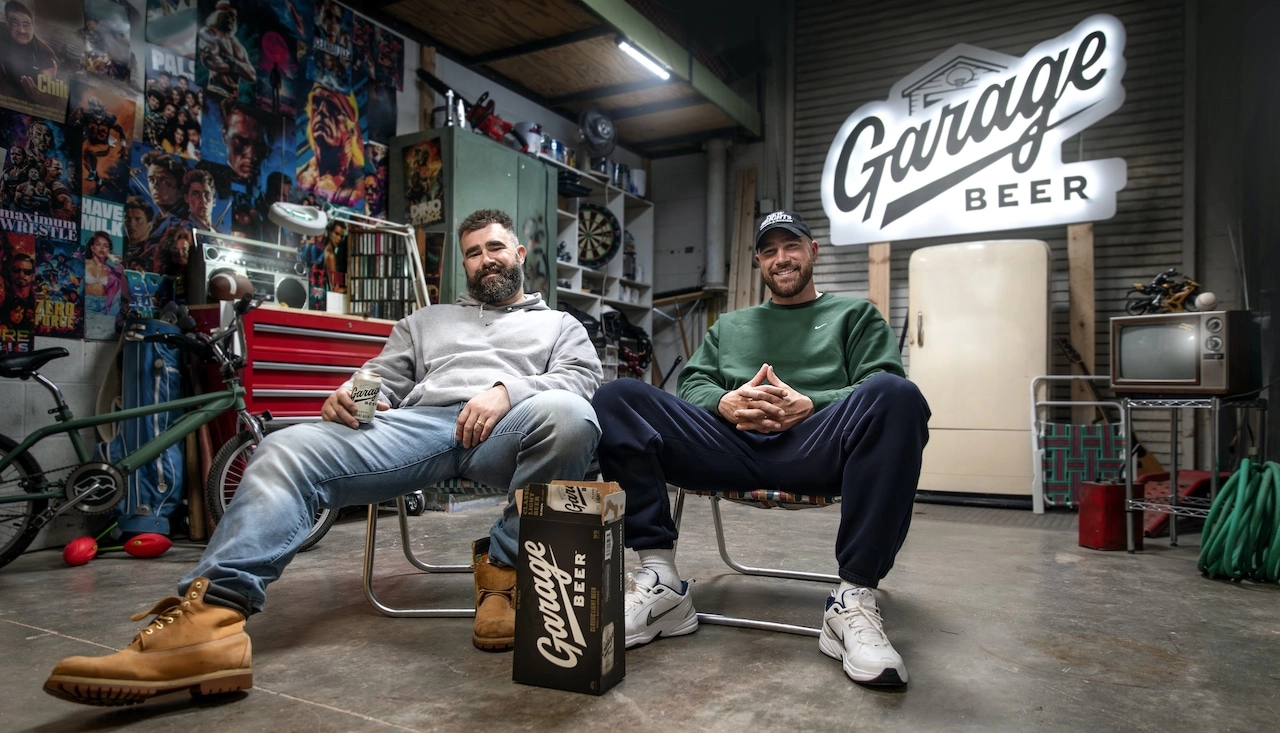
Jason and Travis Kelce are in the beer business. The Cleveland Heights-raised brothers are investors in Garage Beer.
GRAND RAPIDS, MI – Jason and Travis Kelce are looking at some local breweries in Michigan to potentially be a leading contract brewer for the star football players’ beer brand, Garage Beer.
The Kelce brothers announced in a June 12 press release that they are significant owners and operators of the Ohio-based business, their home state.
If you purchase a product or register for an account through a link on our site, we may receive compensation. By using this site, you consent to our User Agreement and agree that your clicks, interactions, and personal information may be collected, recorded, and/or stored by us and social media and other third-party partners in accordance with our Privacy Policy.
Zambaldi Beer Extends ‘Pints with a Purpose’ Initiative in Collaboration with Rise Up Athletics
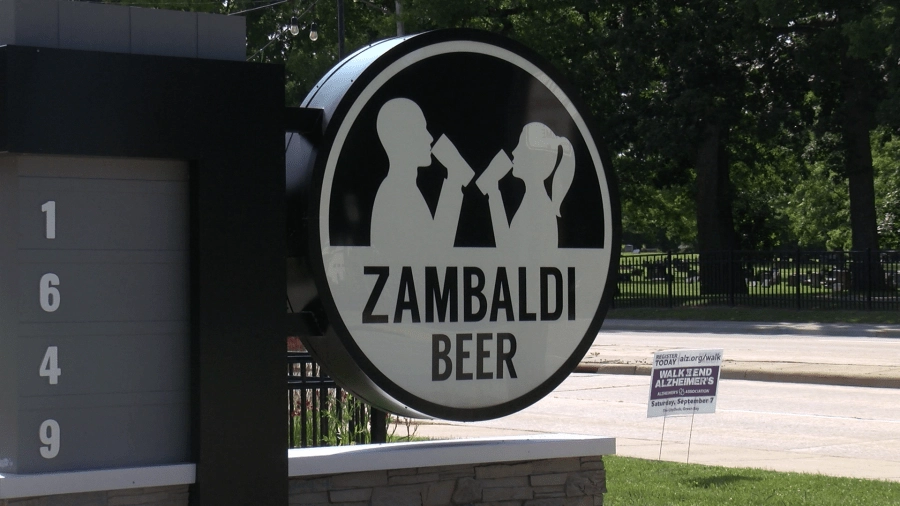
GREEN BAY, Wis. (WFRV) – Zambaldi Beer in Green Bay continues its Pints with a Purpose program to support the local community in collaboration with Rise Up Athletics.
For every pint, flight, to-go growler, or to-go six-pack purchased, the program contributes $1.
Local 5 News spoke with Billy Yang, the boys’ basketball coordinator at Rise Up Athletics, about the organization and the benefits of their partnership with Zambaldi Beer.
“We supply athletic gear, training, transportation, and other necessities to kids in our area who are in need,” Yang explained. “We help to cover the gaps they face.”
If you can’t attend the event at Zambaldi Beer to support Rise Up Athletics through Pints with a Purpose, you still have the option to contribute by visiting Rise Up Athletics’s website here.
Copyright 2024 Nexstar Media, Inc. All rights reserved. This material may not be published, broadcast, rewritten, or redistributed.
For comprehensive updates on the latest news, weather, sports, and streaming video, visit WFRV Local 5 – Green Bay, Appleton.