Beer-articles 1026
Cheers to Nostalgia: 10 Classic Beer Commercials That Defined a Generation

(Budweiser Whassup / Courtesy Anheuser-Busch)
Beer commercials have been a significant presence in television advertising for decades, skillfully mixing humor, iconic characters, and memorable slogans that have ingrained themselves in our pop-cultural landscape.
Here are ten timeless beer commercials that have left a lasting impression.
Budweiser – “Whassup?” (1999)
One of the most iconic beer commercials, Budweiser’s “Whassup?” campaign became a cultural phenomenon. The simple greeting between friends quickly caught on, becoming a popular catchphrase.
Budweiser – “Wassup 8 Bit” (2020)
Budweiser revisited their classic “Whassup?” ad with a twist, creating an 8-bit version for the quarantine era. It was a nostalgic nod to the original, appealing to both old and new audiences.
Budweiser – Clydesdales “Respect” (2002)
Following the events of September 11th, Budweiser delivered a poignant salute that was broadcast only once during Super Bowl XXXVI. This homage, displaying their iconic Clydesdales bowing in front of the NYC skyline, still resonates deeply with audiences due to its significant emotional weight.
Bud Light – “Real Men of Genius” (1998-2007)
A revered ad series that humorously spotlighted ordinary folks as unsung heroes, this campaign is well-known for its overdramatic narrations. Each spot celebrated quirky traits or activities, exemplified by titles like “Mr. Really Really Bad Dancer.”
Miller Lite – “Great Taste, Less Filling” (1970s-1980s)
Miller Lite’s slogan became one of the most recognizable in beer advertising history. The commercials often featured celebrities and athletes debating whether the beer’s best attribute was its great taste or its lower calorie content. In 2024, Miller Lite revived this iconic campaign with a modern twist, showcasing an all-star ensemble.
Coors Light – “Love Train” (2003)
This commercial utilized the iconic track “Love Train” by The O’Jays to unify individuals in celebration, all while enjoying frosty Coors Light beers. The advertisement showcased the communal enjoyment of beer, presenting a pleasant and convivial atmosphere. A modern take on this classic can be seen in 2024 featuring LL Cool J, accessible here.
Guinness – “Surfer” (1999)
The acclaimed Guinness “Surfer” advertisement is frequently regarded as one of the top commercials ever produced. It employed a majestic black-and-white aesthetic to depict surfers on waves that morph into galloping horses, representing the strength and anticipation encapsulated in a flawless pint of Guinness.
Heineken – “The Entrance” (2011)
Heineken’s “The Entrance” featured a suave individual captivating attention as he made an extravagant entry at a social gathering, charming various attendees in an elegant and unforgettable manner. The advertisement became popular due to its chic aura and engaging soundtrack.
Dos Equis – “The Most Interesting Man in the World” (2006-2018)
Dos Equis introduced the suave and adventurous “Most Interesting Man in the World,” whose legendary exploits and witty sayings made the commercials instantly memorable. His catchphrase, “Stay thirsty, my friends,” became widely known.
Old Milwaukee – Will Ferrell Super Bowl Ad (2012)
In an unexpected twist, Will Ferrell starred in this deliberately low-budget Super Bowl commercial for Old Milwaukee that aired only in select local markets. The bizarre and humorous ad featured Ferrell enjoying an Old Milwaukee in slow motion, adding to its quirky charm.
Posted by: AmericanCraftBeer.com August 9, 20240
Cheers to Nostalgia: Top 10 Classic Beer Commercials That Defined an Era

(Budweiser Whassup / Courtesy Anheuser-Busch)
Beer commercials have been a staple of television advertising for decades, blending humor, memorable characters, and catchy slogans that have, over the years, become part of our pop-cultural DNA.
And here are ten classic beer commercials that have stood the test of time.
Budweiser – “Whassup?” (1999)
One of the most iconic beer commercials, Budweiser’s “Whassup?” campaign became a cultural phenomenon. The simple greeting between friends quickly caught on, becoming a popular catchphrase.
Budweiser – “Wassup 8 Bit” (2020)
Budweiser revisited their classic “Whassup?” ad with a twist, creating an 8-bit version for the quarantine era. It was a nostalgic nod to the original, appealing to both old and new audiences.
Budweiser – Clydesdales “Respect” (2002)
Following the tragic events of 9/11, Budweiser broadcasted a poignant homage that showcased their renowned Clydesdales kneeling before the skyline of New York City. This powerful commercial was shown just once during Super Bowl XXXVI and continues to be memorable for its profound emotional resonance.
Bud Light – “Real Men of Genius” (1998-2007)
The “Real Men of Genius” series humorously honored unsung heroes with each ad spotlighting peculiar or comical traits such as “Mr. Really Really Bad Dancer” through a melodramatic voice-over, creating a memorable and entertaining campaign.
Miller Lite – “Great Taste, Less Filling” (1970s-1980s)
Miller Lite’s slogan became one of the most recognizable in beer advertising history. The commercials often featured celebrities and athletes arguing whether the beer’s best quality was its great taste or its lower calorie count. And in 2024 Miller Lite updated the classic campaign with an all-star cast.
Coors Light – “Love Train” (2003)
This commercial, set to the tune of “Love Train” by The O’Jays, showcases a community coming together to enjoy chilled Coors Light, emphasizing the beer’s role in social gatherings and celebration. In 2024, the ad received a fresh twist with an appearance by LL Cool J, see the updated version here.
Guinness – “Surfer” (1999)
Often regarded as one of the top advertisements ever, the Guinness “Surfer” commercial presents a dramatic and artistic narrative with surfers battling monumental waves that morph into powerful horses, evoking the strength and thrill associated with waiting for the ideal pint of Guinness.
Heineken – “The Entrance” (2011)
Heineken’s advertisement titled “The Entrance” features a suave gentleman attending a party, engaging with several attendees in a charming and unforgettable manner. The commercial’s appealing vibe and engaging soundtrack contributed to its popularity.
Dos Equis – “The Most Interesting Man in the World” (2006-2018)
Dos Equis introduced the suave and adventurous “Most Interesting Man in the World,” whose legendary exploits and witty sayings made the commercials instantly memorable. His catchphrase, “Stay thirsty, my friends,” became widely known.
Old Milwaukee – Will Ferrell Super Bowl Ad (2012)
In an unexpected twist, Will Ferrell starred in this deliberately low-budget Super Bowl commercial for Old Milwaukee that aired only in select local markets. The bizarre and humorous ad featured Ferrell enjoying an Old Milwaukee in slow motion, adding to its quirky charm.
Posted by: AmericanCraftBeer.com
August 9, 2024
Deftones Launches New “Bored” Blueberry Beer: A Must-Try for Fans and Craft Beer Enthusiasts

“`html
The post Deftones Unveil “Bored” Blueberry Beer appeared first on Consequence.
Sitting around with nothing to do? Deftones have just the beer for the occasion: Bored Blueberry Wheat Ale, the latest collaboration between the alt-metal heroes and the Belching Beaver brewing company.
Bored beer — named after the leadoff track on the band’s 1995 debut album Adrenaline — is flavored with blueberries and a touch of vanilla, and it’s not too strong at 4.5% ABV. It will be available at all Belching Beaver taprooms beginning this Friday (August 9th), and can be ordered online via CraftShack.
“`
Deftones have collaborated with Belching Beaver on a number of beers over the years, including Phantom Bride IPA, Swerve City IPA, and Good Morning Beautiful brown ale, among others.
The band’s new beer arrives following their Lollapalooza performance, and preceding their upcoming one-off show with System of a Down at Golden Gate Park in San Francisco on August 17th.
Deftones are also set to headline the 2024 edition of their annual Dia De Los Deftones festival on November 2nd in San Diego, where they’ll be joined on the bill by IDLES, Sunny Day Real Estate, Health, and more.
Both the San Francisco gig and the Dia De Los Deftones festival are sold out, but fans can check for tickets on StubHub, where your purchase is 100% guaranteed through StubHub’s Fan Protect program.
“`html
Deftones are just one of many rock bands who have their own line of craft beer and liquor products. Pick up spirits from Metallica, Slipknot, Def Leppard, 311, KISS, and more at this location.
Deftones Unveil “Bored” Blueberry Beer
Popular Posts
David Lynch Suffers from Emphysema, No Longer Able to Direct in Person
“`
Ms. Lauryn Hill Cancels US Leg of Co-Headlining Tour with Fugees At Last Minute Without Explanation
Stray Kids Took on Lollapalooza and Emerged Triumphant: Interview + Set Recap
St. Vincent Thinks John Mayer’s “Daughters” Is the Worst Song Ever Written
Aerosmith Retire from Touring Due to Steven Tyler’s Vocal Injury
Ms. Lauryn Hill Blames Media “Sensationalism” For Low Ticket Sales, Tour Cancelation
Mighty Craft Beer Collapse: Creditors Owed $22 Million

“`html
Copy link
Copied
Copy link
Copied
“`
Subscribe to gift this article
Gift 5 articles to anyone you choose each month when you subscribe.
Already a subscriber?
Creditors to the collapsed beverages company, Mighty Craft, are owed about $22.3 million led by convertible bondholder Pure Asset Management.
The craft beer and spirit group, which went into administration on July 22, owns 25 percent of the fast-growing zero-carb brewer Better Beer along with the gin business Kangaroo Island Spirits.
“`html
Copied
Subscribe to gift this article
Gift 5 articles to anyone you choose each month when you subscribe.
Already a subscriber?
“`
Follow the topics, people, and companies that matter to you.
Fetching the latest articles
New Release Alert: Stellar Craft Distillery Unveils Whiskeys Finished in Beer and Wine Casks

Whiskey fans have been waiting for the American single malt category to finally get its own legal definition for about two years, and a coalition of distilleries just sent a letter to the TTB urging action on the matter. In the meantime, both legacy and craft distilleries continue to release this still under-the-radar style of American whiskey. One of the best is Seattle’s Westland Whiskey, which just announced the release of two new single malts finished in beer and wine casks.
These new entries in the Cask Exploration Series were conceived of as a tribute to Westland’s home in the Pacific Northwest, so the distillery team worked with local breweries and wineries—and there indeed many in the region—to source used casks. “We’re delving into the vast possibilities of cask finishing with these new releases,” said master blender Shane Armstrong in a statement. “The Pacific Northwest is known for its exceptional beer, wine, and whiskey. These expressions bring those delicacies together.”
More from Robb Report
This Stellar Texas Whiskey Distillery Just Dropped One of Its Oldest Bourbons
Woodford Reserve Just Dropped a Limited Blended Malt Whiskey
Taste Test: This New Bourbon From Old Forester’s Former Master Taster Is Her Best Yet
The first expression in the pair is the Beer Cask Finish American Single Malt Whiskey (this is not the first time Westland has used this type of finish, as the distillery worked with various local breweries for its Cask Exchange series). This whiskey was made from a mashbill of specific varietals of malted barley, some of which is commonly used to make beer, including Washington Select Pale Malt, Munich Malt, Extra Special Malt, Brown Malt, Pale Chocolate Malt, Pilsen Malt, and Maris Otter Malt. It was aged for a minimum of eight years—originally in new American oak and ex-bourbon and rye whiskey barrels, and then in casks that were previously used to age Scotch ale, stout, brown ale, doppelbock, saison, and stock ale. According to the official tasting notes, the result is a bright whiskey with a malt-forward flavor that has notes of vanilla pastry cream, caramel sauce, and lavender green tea on the palate.
The second of the pair is the Wine Cask Finish American Single Malt Whiskey. The barley used for this mashbill consisted of Washington Select Ale Malt, Munich Malt, Extra Special Malt, Brown Malt, and Pale Chocolate Malt. This whiskey was also aged in new and used oak barrels, this time for a minimum of five years, and then finished in five different types of wine cask: Tempranillo, WA Red Blend, Cabernet Sauvignon, Syrah, and Petit Verdot. Official tasting notes describe a fruity whiskey with notes of chocolate raspberry turnover, Earl Grey tea, and dried strawberry on the palate. Both of these whiskeys were bottled at 46 percent ABV.
The Cask Exploration Series is being released in limited numbers, with about 11,000 bottles of the Beer Finish and 14,600 of the Wine Finish. The initial launch will be at the distillery and from its website (SRP $75 for each expression), while a national rollout will begin in September with the potential of future batches on the way in the coming years. You can find the rest of the Westland lineup available to purchase from websites like ReserveBar.
Best of Robb Report
Why a Heritage Turkey Is the Best Thanksgiving Bird—and How to Get One
9 Stellar West Coast Pinot Noirs to Drink Right Now
The 10 Best Wines to Pair With Steak, From Cabernet to Malbec
Sign up for Robb Report’s Newsletter. For the latest news, follow us on Facebook, Twitter, and Instagram.
Why You Should Avoid Cooling Down Beer in the Freezer

There’s nothing like a piping hot chug of foamy beer on a summer’s day. Right? Oh, wait. Strike that. If you plan to enjoy a few brews, you might think tossing them in the freezer would be the quickest way to chill your beer, but it’s a bad idea (and actually freezing your beer is even worse). You’ll be sacrificing the quality of your beer by putting it in the freezer.
If a beer spends too much time in the freezer, it could easily explode or, at the very least, break its seal. A broken seal will release the carbonation and lead to a flat drink. A lot of things can go wrong if you choose to freeze and then thaw out a beer to drink, but the worst consequence for a beer lover is how this affects taste. Losing carbonation isn’t the only, nor the most egregious, reason why cooling your beer down in a freezer is a bad idea.
Read more: 3 Smarter Ways To Hack A Bag Of Ice Apart
It might sound like a cool, refreshing idea if your beer actually freezes solid, but the thawing process can come with some challenges. For example, if you don’t let the beer thaw completely, you’ll end up with sips of mostly straight-up alcohol while the water content of the beer stays frozen.
Another issue with freezing and thawing beer is that it can change its color and aroma. The Beer Syndicate conducted a taste test in which participants drank frozen to thawed beer and an “unadulterated” beer. Participants were not told which beer had been thawed and were told to identify the beer they thought was different.
Of the participants, 75% were able to identify the thawed beer, and those who described the beer said it had a duller flavor, less carbonation, and less aroma. It was also noted that the thawed beer had a lighter, hazier color compared to the non-frozen beer. The haziness is caused by proteins in the beer separating and binding together after being thawed. So, though you may want an ice-cold beer, it may be best to aim for a well-chilled can instead. (Surprisingly, though, you shouldn’t be afraid to let a chilled beer get warm and be re-chilled).
For more food and drink goodness, join The Takeout’s newsletter. Get taste tests, food & drink news, deals from your favorite chains, recipes, cooking tips, and more!
Read the original article on The Takeout.
A&W Offers Free Root Beer Floats with a Catch: Are You Up for the Challenge?
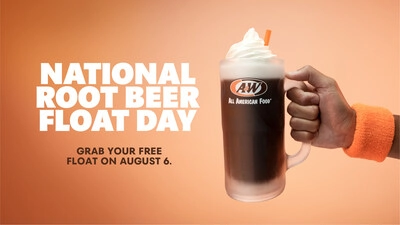
“Float Flex” Asks Americans to Train to Lift One of Fast Food’s Heaviest Drinks
LEXINGTON, Ky., Aug. 5, 2024 /PRNewswire/ — A&W, America’s oldest franchised restaurant chain, is bulking up its annual National Root Beer Float Day promotion this August 6th with a nationwide challenge for those who think they’ve got the muscle to handle one of the heaviest drinks in fast food: Want a free float? Show off your flex.
On National Root Beer Float Day, August 6, simply show off your “Float Flex”—that is, flaunt your new physique with your best muscle-flexing pose—at any participating U.S. A&W location between 2 p.m.–8 p.m. local time for a free, small Root Beer Float.
The “Float Flex“ campaign encourages Americans to prepare their bodies for the roughly 3 pounds 5 ounces of Made Fresh Root Beer and creamy vanilla soft serve in a frosty glass mug that make up the massive A&W Root Beer Float known around the world for over 100 years.
The brand tapped social influencers like Keith Habersberger of The Try Guys to get the word out, and even created a home exercise kit featuring weighted Root Beer Float replicas, headbands, wristbands, and more to help float fans pack on muscle before the big day. A&W will be promoting “Float Flex” content on their own social media channels, as well as with paid social ads targeting existing customers and other fast food fans.
No purchase is necessary. Just a suggested donation to A&W’s nonprofit partner DAV (Disabled American Veterans). Since the start of the annual promotion, A&W has contributed over $1 million for veteran-related charities.
“A&W’s iconic Root Beer Float is without a doubt one of the heaviest drinks in the quick service restaurant industry,” said Liz Bazner, VP of Marketing & Innovation at A&W. “It’s so heavy that we worried we might be missing out on a whole untapped market of folks that simply can’t handle its hugeness. This National Root Beer Float Day, we wanted to get everyone pumped up and ready to enjoy their free float.”
Anyone aged 13 and up can get a free Root Beer Float every year on their birthday, plus more exclusive deals on A&W’s All-American Food, by joining Rooty’s Mug Club at awrestaurants.com/float-flex.
About A&W Restaurants
Founded in 1919, A&W is America’s oldest franchised restaurant chain. Known for its All American Food, as well as Root Beer that is made fresh in each restaurant and served in frosty mugs, there are more than 900 A&Ws in the U.S. and Asia. Visit awrestaurants.com and awfranchising.com for more information.
View original content to download multimedia: https://www.prnewswire.com/news-releases/aw-is-giving-away-free-root-beer-floatsif-you-can-handle-the-weight-302214388.html
SOURCE A&W Restaurants
From Humble Beginnings in a Beer Garden: The Evolution of Krug Park into ‘Omaha’s Polite Resort’
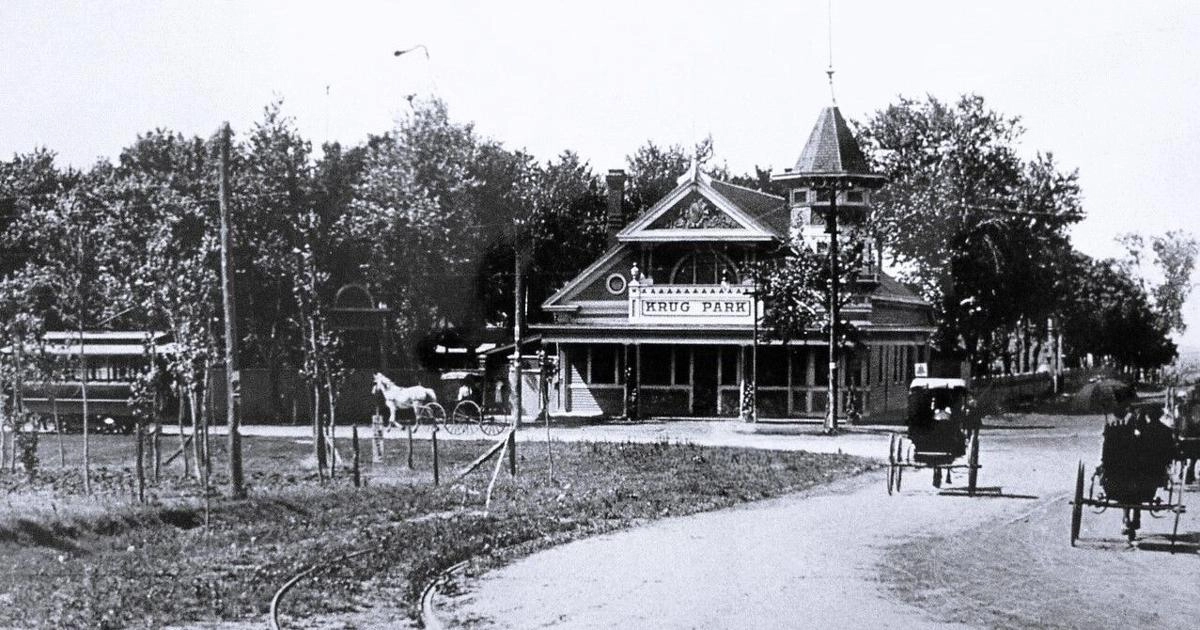
Krug Park was known as “Omaha’s Polite Resort,” “Everybody’s Playground,” “Home for Picnics,” and “Omaha’s Joy Acres.”
The taglines varied during the time the amusement park, situated northwest of 52nd and Maple Streets — the current location of Gallagher Park — was operational, with some interruptions, from 1897 to 1939.
Within its 20 acres, the park featured a one-acre swimming pool and beach with bath houses, bowling alleys, athletic arena and ballfields, a ballroom, picnic grounds, a roller rink, and carnival rides.
Krug Park’s third management invested $300,000 in a swimming pool, bathhouse, and beach, as shown in a July 3, 1919 photo.
Among the rides was the Big Dipper, on which four people were killed in 1930 in what remains the deadliest roller-coaster accident in U.S. history.
Krug Park supplanted the Tietz Park beer garden started by German immigrant Charles Tietz sometime before 1885, when the Military Road had its share of roadhouses and saloons outside the western city limits of Omaha.
“A pleasant and desirable place for families,’’ an early newspaper ad proclaimed. Every Sunday there was a concert by a military band.
Carriages and the Benson electric streetcar shared the road passing the Krug Park entrance in 1900.
Tietz Park could be a family place. The Jolly Painters of Omaha had their July Fourth celebration in 1893 in the park, with “dancing, base ball, foot ball and amusements of every description.” A bowling alley was among the amusements.
But the park also condoned illicit activity such as dog and cock fights and boxing. At least three men leased the park between 1887 and 1894.
“(It’s) wide open every Sunday and beer and whisky flow free,’’ The World-Herald reported in 1893. “It is a rendezvous for ex-pugilists and men of very shady character.
“It has been the only available place to obtain liquor Sundays and as a result fully 100 men are found there gambling and plying their nefarious games. It is a great resort for lewd women and has answered splendidly for a place of assignation.”
Charles Tietz had his share of tragedy. His first wife died in 1886, leaving eight children without a mother. He accidentally, fatally, shot an employee, Hans Puls, the next year.
After several citations for selling liquor without a license, Tietz in January 1895 sold the remaining 16 acres from his 1873 purchase of 40 acres to the Fred Krug Brewing Co. for $12,000. Tietz relocated to Papillion, where he tended bar before his death in June 1897.
The Krugs saw Tietz Park having the potential to be a park with entertainment and high-class musical and refreshment features. Said William Krug, a son: “I want to make this the most beautiful place of the kind in the world. I want to make it even rival the famous old Kroer garden of Berlin and if I live I shall.”
Improving the old grounds — and the park’s reputation — took several years. In 1897, the year the name changed to Krug Park, residents of the West Omaha precinct that included the yet-incorporated village of Benson objected to the Krugs getting a liquor license.
In 1898, some of the area’s earliest bowling competition — 3-, 4-, 9- and 10-pin games — were held on the Krug Park alleys in the winter and spring. The outdoor facilities at the “Great Family Resort,” including swings for the kids, opened on June 5. Sunday band concerts came back.
Donkey rides in 1899 were the first step toward a true amusement park. “Beautiful Krug Park” was open afternoons and evenings for 20 weeks starting in May, with the bowling alleys reserved for ladies only on Wednesdays. Omahans seeking relief from the heat could board the Walnut Hill trolley car and transfer to the Benson electric cars that passed the park.
A new neighbor for Krug Park was the Omaha Country Club, which built its first golf course in 1900 across Military Avenue from it. Parkgoers that year could bowl, shoot billiards or stroll the grounds while children partook of the swings, “goats to drive and donkeys to ride.”
By 1901, Krug Park was said to be Omaha’s answer to Denver’s Elitch Gardens. William Krug took ideas from a visit to the best parks in Europe. He added a merry-go-round, a menagerie exhibit of rare birds and animals, and shooting galleries. He installed more than 1,000 electric lights on the grounds and brought in weekly entertainment acts and had a 30-piece house concert band play daily.
Under the management of the new Western Amusement Co., “Omaha’s Polite Resort” (1901) touted balloon ascensions (1901), reproductions of the Oberammergau Passion Play (1901-06), a soda fountain, fine dining featuring sirloin steaks and mutton chops (1902) and its first rollercoaster (1903).
The first of the park’s several setbacks was a fire before its opening in 1904. On Friday the 13th, the flagpole on the roller coaster tower was blown over and damaged the ride. Several picture machines fell out of a wagon.
Bad omens. For the next day, with defective wiring blamed, the new $15,000, 700-seat pavilion with a second-floor café (no alcohol served) seating 200, the bandstand, the bowling alleys, the stables and sheds and all buildings along the east boundary except the office were destroyed. The insured loss was estimated at $25,000.
The park opened for the season on time on Memorial Day. It also withstood a brief tornado spin-up a month later that destroyed the big top of the Kilpatrick Brothers circus that was the week’s attraction.
Krug Park built an early version of Disney’s Small World ride in 1905 with Wonderland, a half-mile artificial river ride winding through caverns, bowers and grottos. It was among 100 other attractions.
In July 1908, however, the lights went out, the rides were turned off and the new Japanese tea garden shuttered. A temperance movement in Benson, which had annexed the park, challenged the park’s liquor license renewal and won in court on a technicality. The park, which lost money the previous year, needed beer sales for sustainability.
Brothers Joseph and Herman Munchoff re-opened the park in 1912 on a five-year lease from the Krugs (William Krug died the year before in an Omaha auto accident). Among the new rides at “Everybody’s Playground” were a carousel, ferris wheel, miniature railroad and roller rink.
The park was closed for the 1917 season, with Prohibition on its way and the Munchoffs moving on to build Lakeview on Carter Lake in East Omaha.
It reopened in 1918 by the Ingersoll Amusement Co. of Detroit on a 20-year lease.
Brothers Fred and L.F. Ingersoll spent $200,000 on the “New Krug Park” just in 1918. They obtained the carousel from the 1915 Panama Pacific International Exposition in San Francisco. The mile-long roller-coaster was proclaimed by designer John Miller of Chicago his best work. Danceland was a pavilion that could accommodate more than 1,000 couples.
The next year’s outlay — by the Krug Park Amusement Co. that L.F. Ingersoll and two others from St. Joseph, Missouri, formed — was $350,000 for “American’s Largest Swimming Pool” ($300,000) and the water ride “Swanee River” ($50,000).
It was the Roaring Twenties and Krug Park, “The Home of Picnics,” was thriving. In 1925, park attendance was 555,672. The roller coaster grew longer and more thrilling.
But what goes up usually comes down. Fred Ingersoll committed suicide in a park concession stand in 1927.
Then came the tragic evening of July 24, 1930. Our narrative picks up there next time.
That idea to move traffic from 30th Street has been bandied about since the 1930s.
Many Omahans of a certain age remember visiting Santa at Toyland in the Brandeis department store. The tradition dated to the 1900s when J.L. Brandeis and Sons were the proprietors of the Boston Store.
The Benson and the Hanscom are just two of the more than 70 theaters that emerged outside downtown Omaha during the first half of the 20th century. Most of these theaters opened — and subsequently closed — during the era of silent films.
Omaha’s first auto club, established in 1902, comprised 20 of the city’s 25 car owners. Their inaugural event was a road rally to Blair and back.
Explore the history of the Chermot Ballroom and some of the famous names that graced its stage.
The New Tower’s front lobby featured a Normandy castle theme with grand stone walls, heraldic crests, and a wood-burning fireplace. This majestic style extended into the Crest Dining Room with its massive beams and lofty ceilings.
A generation of Omahans — and newcomers to the city — likely are unaware that Peony Park, the major amusement spot from the 1930s through 1994, was at 78th and Cass Streets.
Pardon the pun, but another of my deep digs has turned up forgotten burial grounds across Douglas County.
The fame of Curo Springs was so far-reaching that in pioneer days — every fall and spring — people from 100 miles away (some crossing the Missouri in crude boats) would come to load up with the water.
Here are some books relating to Omaha and Nebraska history, many by local authors, to check out.
They were the twin banes in Omaha’s pioneer years. One of them came back to life during the nighttime deluge that hit the area last weekend.
The Omaha Chamber of Commerce was prepared to remove its $35,000 hangar — built in modular sections — until the city was ready to build a municipal airport. Then came back-to-back windstorms.
Research has turned up a juicy nugget — the whereabouts of the burial site of Omaha, the Triple Crown horse in 1935. Hint: there are people resting every night on top of it.
Keystone has become the name applied to the area bounded by 72nd and 90th Streets, Maple Street, Military Avenue, and Fort Street. It has expanded since Keystone Park was platted in 1907.
Ezra Meeker’s crusade is credited for reawakening awareness of the Oregon Trail in the early 20th century. In the process, he erroneously linked Omaha to the trail and others took his word for it.
An Omaha real estate firm had the idea in the heyday of the ’20s that it could sell 1,500 cottage lots platted away from the lakes and the Platte River. So what happened?
Check out a glimpse of Omaha’s Black history before 1880.
The Dan Parmelee-Tom Keeler feud, which included an Old West shootout on the outskirts of old Elkhorn in December 1874, left Keeler dead and made news nationwide.
In the 1950s and 1960s, Omahans had their pick of drive-in movie theaters. Cars with families and cars with teens — some watching the film and others, well, you know — side by side, wired speakers hanging inside a car door.
Clontarf never was incorporated as a village, but functioned like one and wielded political clout larger than its 47 acres. There was a lawless element, too.
‘Mascotte was a big joke but it looked good while it lasted.’ The village had a factory, railroad depot, hotel, general store, school and about 40 cottages. By 1915, it was all gone.
West Dodge Road has been rebuilt over and over. And along the way, the Old Mill area has lost its mill, its hazardous Dead Man’s Curve and the most beautiful bridge in the county.
With a weekly newsletter looking back at local history.
Reporter – High school sports
{{description}}
Email notifications are only sent once a day, and only if there are new matching items.
Comparing the Cost of a 16-Ounce Beer at All 32 NFL Stadiums in 2023

People go to NFL games for fun and enjoy themselves before at tailgates — often with a beer in hand. Once inside the venue, though it’s not B.Y.O.B., so fans are left having to pay a pricey amount for a brew at the stadium concessions. How much does a 16-ounce beer cost at each NFL stadium?
Here’s the breakdown…
Cost of a 16-oz. beer: $6.26
Cost of a 16-oz. beer: $6.59
Cost of a 16-oz. beer: $7.50
(Matt Kartozian-USA TODAY Sports)
Cost of a 16-oz. beer: $8
(Tommy Gilligan-USA TODAY Sports)
Cost of a 16-oz. beer: $8.13
(Brian Fluharty-USA TODAY Sports)
Cost of a 16-oz. beer: $8.40
(Photo by Jamie Squire/Getty Images)
Cost of a 16-oz. beer: $8.50
Cost of a 16-oz. beer: $8.63
Cost of a 16-oz. beer: $8.80
(USA TODAY Sports)
Cost of a 16-oz. beer: $9.29
(Chris Humphreys-USA TODAY Sports)
Cost of a 16-oz. beer: $9.50
(Kirby Lee-USA TODAY Sports)
Cost of a 16-oz. beer: $9.56
(Jim Dedmon-USA TODAY Sports)
Cost of a 16-oz. beer: $10.50
(Kevin R. Wexler-USA TODAY Sports)
Cost of a 16-oz. beer: $11
(Kyle Terada-USA TODAY Sports)
Cost of a 16-oz. beer: $11.50
(Kyle Terada-USA TODAY Sports)
Cost of a 16-oz. beer: $12
Cost of a 16-oz. beer: $13.75
(Mark J. Rebilas-USA TODAY Sports)
Cost of a 16-oz. beer: $14.67
This article originally appeared on List Wire: The cost of a 16-ounce beer at all 32 NFL stadiums
‘I Tried the World’s Strongest Beer — Here’s What Happened When It Hit My Tongue’

Dan, known for his one-minute beer reviews, left fans in stitches with his reaction to tasting the ‘world’s strongest beer’ which has 75% alcohol content
A man left social media users in stitches after he tried the ‘world’s strongest beer‘ that felt like fire on his tongue.
Dan, who posts online as @1minutebeerreviews, is known online for his speedy reviews about some of the most unique beers from around the world. He has reviewed more than 1,900 bevvies so far from spicy beers to non-alcoholic ones.
But one beer, which has the highest alcohol content in the world, made him wretch and sweat – leaving fans howling with laughter in the comments. In the video, which has resurfaced because it’s International Beer Day (August 2), which has gained more than 1,600 likes, the bloke said: “One-minute beer review, beer number 1988. It’s my birth year, and you all seem to think I look like Eddie Hall – some here we go with the world’s strongest beer.”
He pulled out a bottle of Scottish Beithir Fire, which is 75% alcohol by volume from the 88 Brewery in Edinburgh. The 330ml bottle retails for £45.9 on their website.
It even comes with a warning label that recommends people “don’t exceed 35ml in one sitting.” Thewebsite notes: “As the warning label states, due to the extremely high alcohol content of the beer, it should be treated with respect and handled responsibly.”
But Dan couldn’t resist giving it a go as he poured himself a serving into a snake venom glass. “Let’s get it in the face,” he said as he knocked it back, but the beer was so strong it started burning immediately.
“It tastes like burning; my tongue is now numb,” he said, wiping the sweat from his brow with a tea towel and taking deep breaths. TikTok users were left in stitches over the review in the comments.
One user said: “Least I know what not to buy,” while a second commented: “That will get your night going.” Meanwhile, a third added: “That can’t be beer anymore… Surely….” Someone else wrote: “Have watched this half a dozen times! Can’t stop laughing…’I need to have a lie down!’.”
According to the 88 Brewery website, Scottish Beithir Fire takes two months to be brewed, and is blended with the “purest Scottish spirit to create. 75% liquid”. It continues: “After fermentation the beer is filtered 3 times removing any impurities.”
Sign up to FREE email alerts with news to brighten your day.