Beer-articles 1026
Pabst Unleashes Exciting Monster Beer Package Just in Time for Post-Season Celebrations!

Pabst Blue Ribbon (PBR) has made waves by reintroducing a colossal 99 Pack of beer, just in time for the NFL post-season. This impressive package, which includes 99 cans of PBR, boasts illustrations inspired by the iconic Godzilla, thanks to the creative talents of artist ATTACK Peter. This collaboration follows a recent partnership with Toho International, marking PBR’s first foray into themed packaging since the last 99 Pack was released in 2023.
The latest edition of the 99 Pack contains an original design featuring characters from the Godzilla franchise, such as Ghidorah and Mechagodzilla. Rachel Keeton, senior brand director for PBR, humorously suggested carrying this hefty package with a friend, since it weighs over 80 pounds and contains about 9.28 gallons of beer, nearly equating to half of a keg.
Available at around $99—a dollar per can—this limited run of 4,000 packs has already begun to hit shelves nationwide, targeted towards fans looking to add a bit of excitement to their game-day festivities. Keeton noted that this special release offers PBR fans a chance to celebrate the post-season in style.
The 99 Pack has a history with the brand dating back to 2019 and has brought joy to fans occasionally over the years. With its Godzilla-themed design, the latest edition continues to solidify the brand’s connection with pop culture, as the monster genre remains ever-popular.
As Keeton put it, "It’s exciting to see his design show up in such a big way at stores," reflecting the anticipation fans have for both Pabst and Godzilla.
The Stars Behind the Hype: Unmasking the Most Overrated Light Beer on Store Shelves

We may receive a commission on purchases made from links.
In a recent ranking of popular light beer brands by Tasting Table, Garage Beer, co-owned by NFL stars Travis and Jason Kelce, ended up at the bottom. Despite its promotional tagline of “beer flavored beer,” it seems that even an ice-cold pour wasn’t enough to elevate its taste. Originally launched in 2018 by Braxton Brewing Company in Covington, Kentucky, Garage Beer aimed to present itself as a straightforward and clean option. However, the Kelce brothers took over as majority owners in 2024, and the beer quickly gained traction in the market, boasting a 252% sales growth in 2023.
Even with the boost from its celebrity owners, the beer has received mixed reviews. Many customers describe it as lacking depth and character, with some comparisons to Bud Light, suggesting a “boneless” quality to its flavor profile. Concerns about its taste emerged particularly after it scaled production. Some discussed on social media platforms, like Reddit, have mentioned that the beer was much better before its expansion, claiming it now tastes "cheap" and unappealing.
Garage Beer has become widely available, thanks to its rapid growth, but customer reviews indicate it may not hold up long-term in the increasingly competitive light beer market. Despite its initial success, the question remains whether the brand can maintain momentum given its lackluster taste, especially when compared to more established beers.
For those considering a light beer, Tasting Table’s ranking suggests looking elsewhere unless you simply prefer something straightforward. Investing in more flavorful options might be a better choice if you’re looking for an enjoyable drinking experience.
For more information about Garage Beer, you can visit their website and check their product locator for availability.
Paul Newman’s Favorite Brew: Unveiling His Daily Beer Ritual

In the realm of celebrity habits, Paul Newman is often remembered not just for his illustrious acting career but also for his curious beverage choice. Known for founding the popular food brand Newman’s Own, Newman was a fan of beer—specifically, St. Pauli Girl.
During an interview with Town and Country magazine in 1968, Newman, then 43 and already an iconic figure for films like "Cool Hand Luke" and "Cat on a Hot Tin Roof," declared his affinity for this German lager. He candidly remarked, "I drink ten or more beers every day… if it’s good enough to be my favorite for the rest of the year, it’s good enough for special occasions."
St. Pauli Girl, originating from Bremen, Germany, has been brewed since the 17th century and follows strict German purity laws, consisting solely of barley, hops, water, and yeast. While the lager was relatively new to the American market during the late 1960s, it has since become one of the most popular German beers in the U.S.
Newman’s love for St. Pauli Girl wasn’t merely a fleeting trend; even in the years that followed, he remained loyal to the brand amidst an expanding market of beer options. However, he wasn’t exclusive—Newman also openly enjoyed Coors, a beer that was once highly coveted among enthusiasts in the U.S.
His diet reflected a diverse palate beyond beer, incorporating elements of his Hungarian heritage. Newman’s culinary preferences included hamburgers, salads, and fish, presenting a stark contrast to the exaggerated eating scenes he portrayed in films, such as the infamous egg-eating challenge in "Cool Hand Luke," which was achieved with clever editing rather than real consumption.
Despite the story of his beer preference being larger than life, St. Pauli Girl remains a viable option for fans looking to toast like the legendary actor, as it is still available today, now distributed by Anheuser-Busch.
For more details on Newman’s food preferences and celebrity culinary habits, see Mashed’s article.
Madison Beer Dazzles in a Stunning White Latex Dress in Her ‘Bad Enough’ Music Video

Madison Beer shines in a striking white latex dress for her music video "bad enough." The outfit, which she previously wore during her captivating performance on "The Tonight Show Starring Jimmy Fallon," is designed with a halter neck and a corseted bodice that has a dramatic thigh-high slit.
In a first-look clip, Madison Beer can be seen holding an axe while exploring a dark, forest-like environment. As the scene progresses, she’s shown leading a larger figure, embodying a mix of intensity and joy. This visually arresting moment coincides with the release of her new album titled "locket," which debuted on January 16.
For more details, check Madison’s performance on The Tonight Show and learn about her music video here.
Madison Beer: How Her New Album Marks a Pop Breakthrough

Madison Beer, who embarked on her musical journey after being discovered by Justin Bieber at just 13, has officially stepped into the spotlight with her third album, Locket. After years of building her presence in the pop landscape, she finally reached the Billboard Hot 100 with her breakout track "Bittersweet." This song is a poignant exploration of post-breakup emotions, showcasing her growth both lyrically and vocally.
Locket is an impressive collection of 11 tracks that blend dreamy electropop with emotional depth. Within its sound, Beer expresses a mature understanding of relationships, as exemplified in "Bittersweet." The chorus reveals her readiness to move on while acknowledging the hurt she endured: “I’m getting over what you put me through/And I’d say I’m done crying, but baby/I don’t lie like you do.” This admission demonstrates a new level of emotional honesty within her music.
Produced brightly and effectively, the album includes tracks like “angel’s wings,” a sweet piece that encapsulates tender moments of romance, and “complexity,” which calls on a partner to sort out their issues amid pulsating beats. The closing track, "nothing at all," highlights Beer’s vocal range over an escalating dance rhythm, finishing with a cathartic blend of her voice and layered synths.
Madison Beer is no longer an icon-in-waiting; with Locket, she is poised for pop stardom, asserting herself as a powerful voice in the music industry.
Madison Beer Electrifies in White High Slit Latex Dress: Channeling Her Inner ‘Angel’

Madison Beer recently captured attention with her stunning appearance on “The Tonight Show Starring Jimmy Fallon,” where she performed her song “bad enough” wearing a show-stopping white latex dress. The form-fitting gown featured a striking deep neckline, halterneck design, and a corseted bodice that flared into a skirt with a dramatic high slit. Her stylist, Harper Slate, showcased the outfit through several photos and videos shared on social media.
Complementing the dress, Madison adopted a minimalist approach to her makeup with a soft pink blush and nude lip, expertly done by Kelli Anne Sewell. Her hair was styled in loose waves parted down the middle. Fans quickly took to social media to express their admiration, with comments labeling her an "angel" and noting that this may be her most gorgeous look yet.
For more details on Madison Beer’s fashion statement, you can visit theFashionSpot.
Madison Beer Dazzles in a Chic White Dress with Striking High Slit: A Photo Gallery

Madison Beer made a striking appearance on "The Tonight Show Starring Jimmy Fallon" on January 13. The singer stunned the audience in a sleek white dress that featured a daring high slit and a form-fitting silhouette, captivating viewers as photos of her outfit were shared widely on social media.
Her minimalist style highlighted the elegance of the dress, accentuating her figure and adding an element of drama. To complement her look, Madison accessorized with a ring, bracelet, and earrings, and opted for a soft glam makeup style that enhanced her overall presentation.
The audience’s reaction to her appearance showcased her ability to turn heads and maintain a sophisticated yet striking presence. The fashion statement she made continues to be discussed online as fans express their admiration for her chic style.
Madison Beer Turns Heads in Stunning Thigh-Slit Dress

Madison Beer recently made a stunning appearance on "The Tonight Show Starring Jimmy Fallon" while performing her song “Bad Enough.” She turned heads in a striking thigh-high slit dress that showcased her figure and elegance. The white gown featured a plunging U-shaped neckline, perfectly complemented by minimal accessories—a simple silver bangle and earrings.
Fans were quick to praise Beer on social media following the show. Comments included compliments about her beauty, with one user exclaiming, “She is so beautiful,” and others expressing awe at her gorgeous appearance.
Madison’s makeup was flawless, with light pink blush, red lipstick, and accentuated eyelashes, contributing to her overall radiant look. Her hair was styled with a middle part, flowing beautifully in waves and twirls.
The excitement surrounding her appearance highlights her status as a rising star in the music industry.
For more details, you can check the original report on Mandatory.
Madison Beer Stuns Fans in Trendy Crop Top and Ultra Short Shorts

Renowned singer and social media influencer Madison Beer recently captivated fans with a stunning Instagram post featuring her in a stylish outfit. In the photograph, Beer showcased striking high-waisted black shorts paired with a black off-shoulder crop top that featured a unique cutout neckline. She accentuated her look with sheer, thigh-high stockings that had a torn design.
To add a distinctive touch, Beer wore a delicate golden heart-shaped locket as a belt. She opted for high heels that complemented her stockings and completed her glamorous appearance with dramatic makeup, including a dark lip shade. In the caption, she hinted at her upcoming album, writing, “one …. week …… til locket.”
Fans were quick to express their admiration in the comments. One user mentioned that they were inspired by Beer’s belt choice and decided to wear a locket in a similar fashion. Others echoed their excitement, calling her a "baddiiiieee" and a “cutie pie.” As of now, the photo carousel has received an impressive 813.6k likes, further demonstrating Beer’s strong fan following and influence in the fashion realm.
For more details, check Madison Beer’s original post on Instagram.
Who is Justin Herbert’s Girlfriend? A Look into the Relationship with Chargers QB’s GF Madison Beer
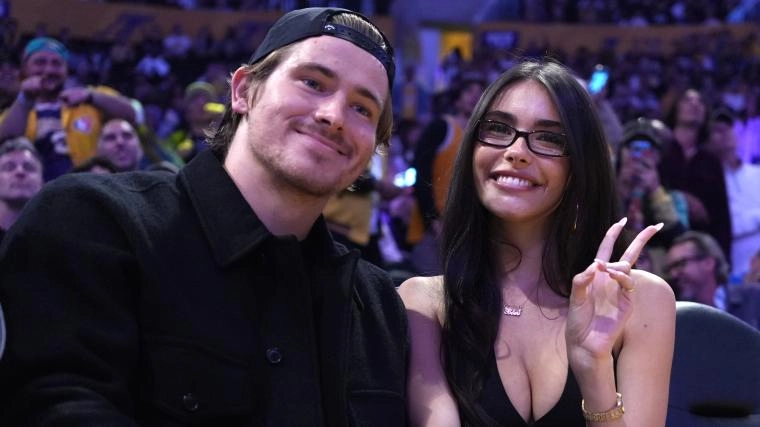
Justin Herbert and the Los Angeles Chargers are gearing up for their NFL playoff mission as they face off against the New England Patriots. This season marks a significant personal milestone for Herbert as he enters the playoffs while dating Madison Beer.
The couple sparked romance rumors back in August, and in a recent discussion with podcaster Alex Cooper, Beer expressed how comforting and supportive their relationship has been. She stated, "I feel, like, taken care of in a way that I can break down and like I have someone to lean on. And I think it’s important."
Madison Beer is not just known for her relationship with Herbert; she is also a talented musical artist. Beer first gained public attention when Justin Bieber shared her YouTube cover, which catapulted her into the spotlight. Her recent album, Silence Between Songs, received a Grammy nomination for Best Immersive Audio Album in 2023, while her track "Make You Mine" was nominated for Best Dance Pop Recording in 2024. In addition to her music career, she has ventured into acting and provided voice work for films.
As the Chargers prepare for the playoffs, Herbert’s performance on the field will continue to be under scrutiny, with hopes that his relationship with Beer brings him the support needed for success.
For further information on the Chargers and their playoff journey, follow the links below: