A new flagship beer has been announced by the local brewery.
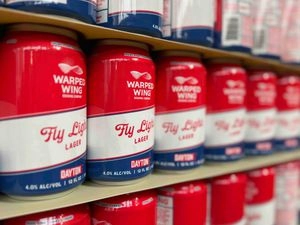
Warped Wing Brewery, a local favorite, has recently announced the exciting launch of their newest flagship beer. But this isn’t just any ordinary beer release – it’s a special brew that aims to show support for the athletes who proudly wear Dayton Flyers jerseys. This collaborative effort between Warped Wing and Dayton 6th, an NIL collective supporting both men’s and women’s basketball players at the University of Dayton, carries a meaningful message.
The beer in question is named “Fly Light Lager” and it’s set to become Warped Wing Brewery’s sixth flagship beer, joining the ranks of Trotwood, Gamma Bomb, Flyer Red, RadioVision, and Plane ol’ Pils. As the brewery’s inaugural light beer, Fly Light Lager embodies the spirit of unity and celebration. Its refreshing taste pays homage to Dayton’s rich tradition, offering a crisp and satisfying experience with only 95 calories, 5 grams of carbs, and 4% ABV.
The launch of Fly Light Lager couldn’t have come at a better time. The University of Dayton’s basketball teams have a loyal fanbase known as the “Flyer Faithful.” This new brew is a tribute to these passionate supporters and their unwavering dedication to the teams. It’s a drink that brings people together, igniting a sense of community and camaraderie.
Starting Thursday, beer enthusiasts can enjoy Fly Light Lager on tap at all Warped Wing Taprooms. For those attending the University of Dayton, you’ll be able to partake in the celebration starting Sunday, just in time for the Flyers’ exhibition game against Ohio State. Excitingly, Fly Light Lager will also be available at various retail locations, bars, and restaurants starting as early as October 23rd.
This collaboration between Warped Wing Brewery and Dayton 6th is a perfect blend of passion for sports and the craft of brewing. It’s a delightful way for fans to support their favorite athletes and enjoy a quality beer while doing so.
If you want to learn more about Fly Light Lager and the story behind this special partnership, you can visit Dayton 6th’s website for additional details. So, mark your calendars and get ready to raise a glass in support of the Dayton Flyers. Cheers to unity, celebration, and a great new beer!
New followers in the US are embracing ancient natural wine-making traditions.

Introducing: The Natural Wine Revolution
The wine industry is experiencing a shift, as wine made in ancient ways gains new fans. Natural wine, which embodies sustainability and minimal processing, is capturing growing interest in the United States. Surprisingly, this surge comes at a time when overall wine consumption has been declining since 2015, according to IWSR Drinks Market Analysis, a reputable research firm. Although natural and other sustainable wines accounted for less than 1% of sales in 2021, their demand was outpacing the entire wine category, as reported by alcohol delivery site Drizly.
So, what makes natural wine different? Natural wine is crafted from hand-picked organic grapes that have not been exposed to herbicides or pesticides. Following the ancient practices of the Romans, these grapes are gently crushed — sometimes using the winemaker’s own feet, embracing tradition. Then, the natural fermentation process takes place, with no addition of water, yeast, or other ingredients. Some natural winemakers opt to add sulfites, a naturally occurring chemical found in grapes, as a preservative, while others refrain. Additionally, some filter their wines, while others leave them unfiltered, resulting in a cloudy appearance and sediment. The end product is wines that are earthy, savory, and less predictable compared to those mass-produced by large wine producers.
Naturally, a trend as promising as natural wine is not without its challenges. Unlike organic wine, which requires government certification, natural wine lacks a formal definition in the United States. It is also challenging to find in stores, as most natural wines do not explicitly label themselves as such. “Natural” may sound appealing, but Anita Oberholster, a professor at the University of California, Davis, suggests that “conventional wine is pretty natural too.” Therefore, defining and researching natural wine will be crucial for its growth.
One winemaker who has taken up the mantle of championing natural winemaking is John Keller, the owner and winemaker at Neu Cellars in Northern Michigan. Armed with a biochemistry degree, Keller previously worked for a large winemaker in California but became disillusioned by the heavy chemical manipulation involved in ensuring consistency in each bottle. In 2019, Keller and his father opened Neu Cellars with a singular focus on producing natural wines. Last year, they proudly produced 3,000 bottles. Keller describes natural winemaking as a nerve-wracking process, as he can only practice once a year and cannot resort to additives if something goes wrong. It’s a process that requires trust in the natural elements and the conditions for the best outcome.
While natural wine may seem like a recent fad, Erin Coburn, owner of Minimo, a natural wine bar in Oakland, California, explains that it is more akin to a return to tradition. In countries like Georgia, winemakers never ceased producing natural wine; they continue to ferment grapes in egg-shaped clay pots that have been used for thousands of years. However, drawing a line between natural and conventional wines can be challenging, particularly when it comes to high-quality wines made with exceptional grapes. Many additives commonly used in winemaking, such as yeast for fermentation, are natural substances found in vineyards. Moreover, many conventional wines are crafted without the addition of additives.
To address the need for distinction, some in the industry advocate for adopting standards for natural wine, as seen in France. The French wine industry approved the “vin méthode nature” label and certification process in 2020. Since then, over 430 vintages have proudly displayed this label, according to the Union for the Defense of Natural Wines. Brian Gelb, Vice President of Wine for Total Wine, a major retail chain with stores across the United States, has been responding to the growing demand by introducing natural wines onto their shelves over the past two years. However, Gelb acknowledges the difficulty in determining how much of their inventory already falls under the “natural” category. Thus, having consistent terms and phrases that are universally understood would greatly benefit both consumers and retailers.
In conclusion, the rise of natural wine represents a revolution within the wine industry. As consumers become increasingly conscious of sustainability and minimal processing, the demand for natural wine continues to grow, defying the overall declining trend in wine consumption. Although obstacles remain, such as the lack of a standardized definition and limited availability, the passion and commitment of winemakers like John Keller are driving the movement forward. Natural wine is not just a passing fad; it symbolizes a return to tradition and an appreciation for the individuality and character that can be found in a bottle. So, the next time you raise your glass, consider indulging in the flavors and stories woven into a natural wine, and join the natural wine revolution.
The fascinating world of wine is one filled with complexities and nuances. From the grape varieties to the aging process, every aspect of winemaking adds to the final product. But in recent years, there has been a growing concern about the use of natural imagery by wine brands without clear transparency about what “natural” really means.
Anthony Zhang, the co-founder and CEO of Vinovest, a wine investment company, has highlighted this issue. He believes that some wine brands are taking advantage of the lack of standards surrounding the term “natural” and using it as a marketing tool. This can mislead consumers, who are often willing to pay a premium for wines made by smaller producers using natural methods.
One example of this is Absentee Red, a natural California red blend that costs around $26 per bottle. Vivino, an online wine merchant, states that similar conventional wines start around $14. This significant price difference suggests that consumers are willing to pay more for wines labeled as “natural.”
However, not all winemakers are enthusiastic about the idea of standards. While Keller, a winemaker who uses organic grapes, supports the concept, he feels that the cost and rules associated with certification are not justifiable. Furthermore, Cheryl Stanley, a food and beverage management lecturer at Cornell University, raises questions about what truly defines a “natural” wine. With so many different perceptions, she wonders if any wine can truly be considered completely natural, considering the human intervention involved throughout the winemaking process.
Despite these challenges, there is hope for greater transparency in the future. Starting in December, wines sold in the European Union will be required to carry ingredient labels and nutrition information. This change can empower consumers by providing them with more information about the wines they purchase. It is expected that the United States will follow suit in the coming years.
Pax Mahle, the proprietor and winemaker at Pax Wine Cellars, is an advocate for natural winemaking. He crushes his grapes by foot, showing his dedication to traditional methods. However, he also believes in the freedom to make small adjustments, such as adding sugar or acid if necessary. Mahle’s approach emphasizes the importance of making high-quality wine, rather than adhering to strict absolutes.
In the end, the natural wine movement is not about absolute rules but rather about producing exceptional wines. While standardized definitions and labeling can help consumers make more informed choices, it is crucial to remember that the true value of a wine lies in its taste and quality. So, the next time you raise a glass of wine, take a moment to appreciate the craftsmanship behind it and savor the unique experience it offers.
Some exceedingly limited beer is now being sold by Tesla.
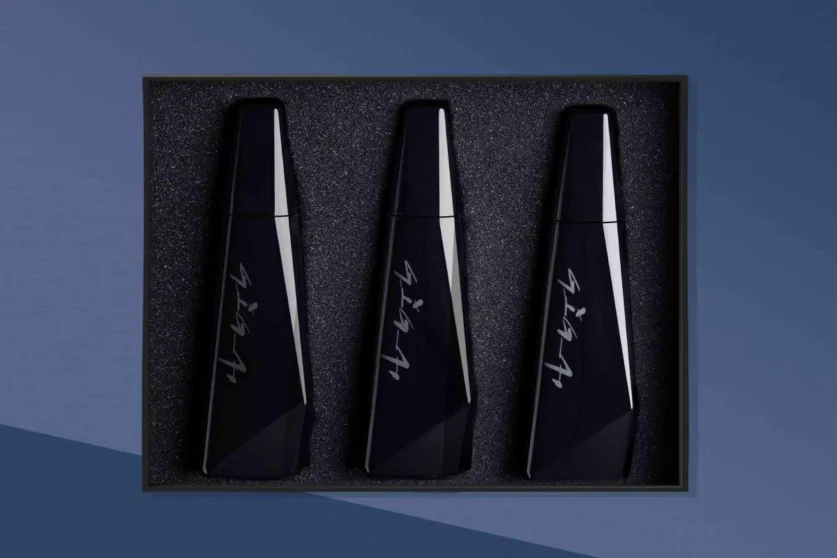
Get Your Hands on a Cold One While You Wait for the Tesla Cybertruck
It’s no secret that Tesla CEO Elon Musk loves to make bold promises and deliver on them in his own unique way. Two years ago, at an event in Berlin, Musk unveiled his plans for the company’s Gigafactory, complete with an on-site beer. Little did we know at the time, that beer would eventually become a reality.
In May of this year, GigaBier, a German pilsner, became available for purchase in select parts of Europe. With its eye-catching bottle inspired by the Cybertruck, it quickly gained popularity among beer enthusiasts. However, American fans were left disappointed as they were unable to get their hands on this unique brew.
Fortunately, Tesla has heard the pleas of its American customers and has come up with a solution. Introducing Tesla CyberBeer, now available for order in limited-edition two-packs. Each set also includes a pair of reusable ceramic CyberSteins, ensuring that you can enjoy your beer in style.
The CyberBeer, much like its European counterpart, is packaged in an angular glass bottle that unmistakably resembles the highly anticipated Cybertruck. With its black design and CyberBeer watermark, this beer is as aesthetically pleasing as it is delicious. The label even features a whimsical illustration of a hedgehog raising a glass, adding a touch of playfulness to the experience.
According to Tesla, the CyberBeer is a Helles Lager brewed with two noble hops, Saaz and Hallertau Mittelfrüh. With a 7% ABV, it promises a flavorful and refreshing experience. Tasting notes describe the beer as having a distinct herbal and spicy flavor, with hints of tea and citrus. Brewed by Buzzrock Brewing Company in Torrance, California, this beer is a testament to Tesla’s commitment to quality and innovation.
Of course, this unique brew doesn’t come cheap. The limited-edition set, including two bottles and two CyberSteins, retails for $150, with an additional $15 for shipping. Unfortunately, the stainless steel CyberOpener, priced at $50, has already sold out, showing just how popular Tesla’s merchandise can be.
While the CyberBeer may be available for order now, the same cannot be said for the Cybertruck. Despite production starting this summer, Tesla has yet to announce a delivery date. Customers eagerly awaiting their Cybertruck may find solace in the fact that they can at least enjoy a cold one while they wait.
So, if you’re a Tesla enthusiast or a beer lover looking for a unique and flavorful experience, the CyberBeer is the perfect choice. Get your hands on this limited-edition set and raise a glass to innovation and the anticipation of what the future holds.
For more exciting news and updates, be sure to sign up for our newsletter. Cheers!
Purchasing a 6-pack of this beer will provide support to a metropolitan university.
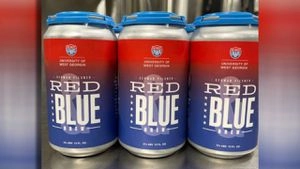
A local metro brewery is making a big impact on the college student community. Printer’s Ale Manufacturing Company recently announced the release of their special beer, “Red & Blue Brew.” What sets this beer apart is not only its unique label design, which features the same colors as the University of West Georgia logo in Carroll County, but also its purpose. All proceeds from the sales of “Red & Blue Brew” will be donated to the university.
In a Facebook post, the company stated, “When you purchase a six-pack of ‘Red & Blue Brew,’ you’re not just enjoying a delicious beer with a visually appealing label created by the talented wolves themselves, but you’re also contributing to a worthy cause.”
The beer itself is a German pilsner. According to craftbeer.com, pilsners are known for their light color and short finish. They have become a popular choice for beer enthusiasts worldwide, and American craft brewers have put their own unique spin on this classic German style.
A classic German-style pilsner is characterized by its straw to pale color and malty sweetness in both aroma and flavor. It also has a medium to high perceived hop bitterness, with moderate and obvious noble-type hop aroma and flavor. Unlike Bohemian-style pilsners, the German-style pilsners are lighter in color and body, with a lower perceived hop bitterness.
“Red & Blue Brew” can be found at various stores in the Carrollton area. By enjoying this beer, not only will you have a refreshing beverage, but you will also be supporting the local university and its students.
In a time where college expenses and education funding are always a concern, it’s heartening to see a local business like Printer’s Ale Manufacturing Company stepping up to make a difference. Their commitment to giving back to their community and helping college students is commendable. So why not grab a six-pack of “Red & Blue Brew” and toast to supporting education and enjoying a delicious beer?
The first limited release whiskey is offered by a 7th generation bourbon maker.
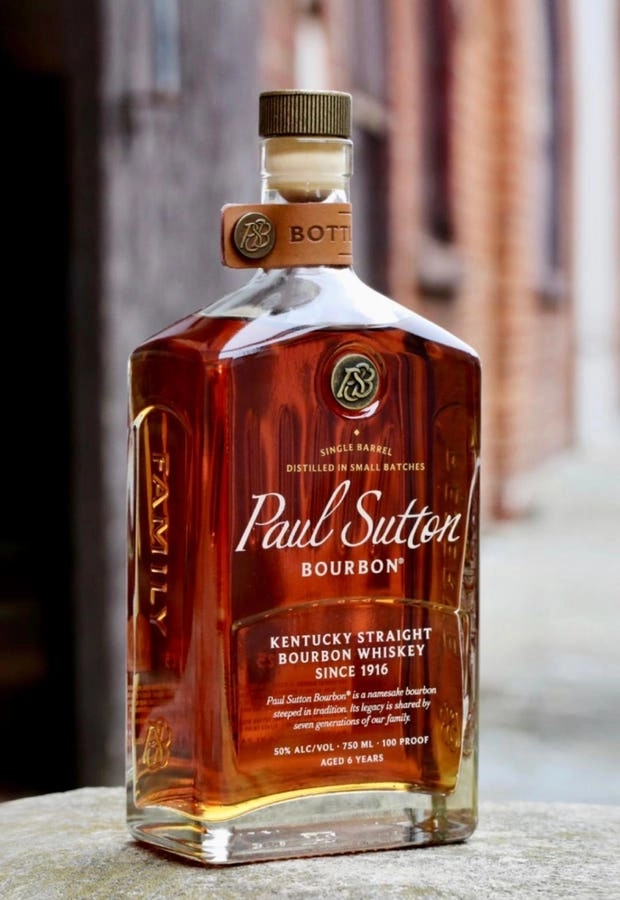
Paul Sutton Bourbon is set to release its first limited-edition whiskey, featuring a distinctive leather tie around the neck of the bottle. This release is particularly special as it marks the debut of Myra Barginear, a seventh-generation bourbon maker, in the commercial whiskey market. Barginear hails from a family with a long history of whiskey production, dating back over 100 years. However, she is the first in her family to bottle and sell the product.
Founded in 2013, Paul Sutton Bourbon has now crafted its first limited release. Available in only ten states, this premium whiskey is bottled at cask strength and priced at $89. Barginear explains that the bourbon, named the “Heritage Collection,” is a tribute to her daughter Holland, whose name starts with an “H,” and also honors bourbon heritage month. The product has been carefully selected by the distillery’s head distiller from 25 of their best barrels, aged for seven years, representing Barginear’s seventh generation.
Barginear is proud to carry on her family’s bourbon-making legacy. She fondly remembers her grandfather, Ronnie Sutton, who was an engineer by trade but had a true passion for whiskey production. His meticulous and innovative approach, utilizing a sweet mash process and barrel aging, set their bourbon apart. However, when Sutton passed away 15 years ago, he took his mash recipe with him. This loss deeply affected Barginear, who likened it to a family chocolate cake recipe that no one could recreate exactly.
Driven by a desire to preserve her family’s heritage, Barginear embarked on a mission to rediscover the lost recipe. Armed with samples of her grandfather’s bourbon, she turned to scientific methods to reverse-engineer the mash bill and yeast strain. Collaborating with Ferm-Solutions, she flew to Kentucky with a mason jar of the bourbon. The analytical techniques employed by the experts provided her with the precise details needed to recreate the century-old recipe.
Barginear’s dedication to her grandfather’s legacy led her to co-found Paul Sutton Bourbon alongside her husband. While her grandfather may no longer be with them, she believes he would be proud of the family’s achievements and the bourbon they are sharing with the world. Being close to her grandfather, he affectionately called her Magoo, a reference to the cartoon character Mr. Magoo. Barginear can almost hear him cheering her on, saying, “You got this, Magoo.”
This limited release from Paul Sutton Bourbon not only signifies Barginear’s entry into the commercial whiskey market but also showcases her commitment to preserving and honoring her family’s bourbon-making traditions. With the precise recreation of her grandfather’s mash recipe, she has not only produced a remarkable bourbon but also etched her family’s legacy in the annals of the whiskey industry. As Barginear looks ahead, she feels that this is just the beginning of their journey, allowing her family’s passion for bourbon making to flourish and continue making its mark.
Canned cocktails will now feature a combination of Absolut Vodka and Coca-Cola’s Sprite.

Attention cocktail enthusiasts, get ready to raise your glasses! Exciting news has just come in from the world of beverages. Two industry giants, Pernod Ricard and Coca-Cola, have joined forces to bring you a delightful concoction that will revolutionize your drinking experience.
You’ve probably savored the refreshing taste of Absolut Vodka and the zesty zest of Sprite separately. But now, picture the best of both worlds melded together in a single can. That’s right, Pernod Ricard and Coca-Cola have collaborated to create a pre-mixed version of Absolut Vodka and Sprite, the beloved lemon-lime soft drink.
Launching in select European markets, including Britain, the Netherlands, and Spain, from early 2024, the Absolut & Sprite canned cocktail promises to be a game-changer. These sleek cans will showcase the iconic logos of both brands, instantly capturing attention and building anticipation for the exquisite blend contained within.
This partnership comes as no surprise, as beverage companies have been exploring the untapped potential of the alcohol market. Coca-Cola, in particular, has been venturing into the world of spirits, exemplified by its successful partnership with Jack Daniels whiskey. By delving into pre-mixed cocktails, these companies are responding to the growing demand for convenient and flavorful alcoholic beverages.
But it’s not just the soft drinks makers who are pursuing this golden opportunity. Spirits manufacturers are also eager to capitalize on a market that is projected to grow by a staggering $11.6 billion between 2022 and 2026, according to industry tracker IWSR.
As consumers, we are the ultimate winners, treated to an array of innovative and tantalizing options. The Absolut & Sprite canned cocktail is poised to become a staple at parties, picnics, and social gatherings, effortlessly satisfying our craving for a delightful and hassle-free beverage.
So mark your calendars for early 2024, when these delightful canned cocktails will hit the shelves. Prepare to indulge in the perfect blend of Absolut Vodka and Sprite, expertly mixed and conveniently packaged for your enjoyment. This fusion of flavors is set to redefine the way we experience cocktails.
As the world evolves, so do our drinking preferences. Pernod Ricard and Coca-Cola have not only recognized this, but they have also acted upon it. Through their innovative collaboration, they have elevated the art of mixology, crafting a convenient, irresistible, and undoubtedly delicious beverage.
Stay tuned for more updates on this exciting development. With the Absolut & Sprite canned cocktail, your favorite drink just got a sparkling new twist. Cheers to the perfect fusion of spirits and soda!
In the Bay Area and beyond, the ancient methods of natural wine are gaining popularity among new enthusiasts.

title: The Growing Popularity of Natural Wine: Embracing Ancient Traditions
Introduction:
In recent years, there has been a notable shift in the wine industry, with natural wine gaining traction among wine enthusiasts. Despite an overall decline in wine consumption since 2015, the demand for sustainable and minimal processed wines has been steadily rising. This shift raises questions about what sets natural wine apart and the challenges it faces as it seeks to carve its niche in the market.
The Essence of Natural Wine:
At the core of natural wine is a focus on sustainability and minimal intervention. Natural winemakers primarily use hand-picked organic grapes that have not been subjected to herbicides or pesticides. Following ancient methods, these grapes are often crushed by foot, paying homage to ancient Roman traditions. The fermentation process is kept pure, without any added water, yeast, or other artificial ingredients. While some natural winemakers use sulfites, a naturally occurring chemical in grapes, as a preservative, others forgo this addition. The result is a distinct type of wine that showcases earthy and savory flavors, offering a unique and less predictable experience when compared to mass-produced wines.
The Challenges Faced by Natural Wine:
Despite its increasing popularity, natural wine encounters several hurdles that impede its growth. Unlike organic wine, which must receive government certification, there is no formal definition of natural wine in the United States. Furthermore, natural wines often lack explicit labeling, making it difficult for consumers to identify them on store shelves. Anita Oberholster, a professor at the University of California, Davis, suggests that research and a clear definition are necessary to strengthen the natural wine industry. By establishing standards, natural wine can overcome these obstacles and gain wider recognition.
Returning to Tradition:
For many, natural wine represents a return to traditional winemaking methods. In countries like Georgia, winemakers have continued producing natural wine throughout history, fermenting grapes in clay pots, a practice that has endured for thousands of years. Nevertheless, critics argue that the line between natural and conventional wines is thin, particularly for high-quality wines made from excellent grapes. Many additives found in conventional wines, such as yeast, are naturally occurring substances already present in vineyards. Therefore, some argue that natural winemaking may not be as distinct as it seems.
The Importance of Standards:
France has taken steps towards standardization in the natural wine industry. In 2020, the wine industry approved the “vin method nature” label and certification process, enabling consumers to identify natural wines more easily. Over 430 vintages have utilized this label since its inception. Brian Gelb, the vice president of wine for Total Wine, a leading retail chain, believes that adopting consistent terms and phrases will benefit consumers and help navigate the complexities of the market. However, winemakers may have mixed feelings about adopting standards due to associated costs.
Conclusion:
Natural wine is not merely a passing fad but rather a movement that draws inspiration from ancient winemaking traditions. Although its growth may be hindered by the lack of a formal definition and inconsistent labeling, the demand for natural wine is undeniably on the rise. As the industry continues to evolve, establishing clear standards and definitions will contribute to the growth and success of natural wine. Ultimately, natural wine offers wine lovers an exciting alternative, embracing sustainability and offering a connection to age-old winemaking practices.
An Unconventional Take on the Natural Wine Movement
The natural wine movement has gained significant momentum in recent years, as consumers show a growing interest in wines made with minimal intervention and additives. However, as the movement gains popularity, questions arise about what truly defines a natural wine.
One winemaker, Keller, has been using organic grapes for his wines but has chosen not to pursue the organic certification due to the high cost of repeated inspections. This raises an important point – if a wine is made with organic grapes, but not certified as organic, can it still be considered natural?
Cheryl Stanley, a food and beverage management expert, argues that standardizing the term “natural” in the wine industry would be a challenge. This is because there are various perceptions and interpretations of what constitutes a natural wine. After all, from the way grapes are trellised to the date they are harvested, there is human intervention at every step of the winemaking process.
Transparency in labeling is one way to address this issue. Starting in December, wines sold in the European Union will be required to carry ingredient labels and nutrition information. This move towards greater transparency will make it easier for consumers to identify wines that are made without additives. It is expected that the United States will also adopt ingredient labeling in the coming years.
Pax Mahle, a winemaker who is devoted to natural winemaking, offers a thought-provoking perspective. While he crushes his grapes by foot and strives to minimize intervention, he believes that the natural wine movement should not be bound by absolutes. He expresses that the addition of small amounts of sugar, acid, or sulfur can sometimes be necessary to refine the quality of the final product. For Mahle, the focus should be on making good wine rather than adhering strictly to arbitrary rules.
This alternative viewpoint challenges the conventional understanding of natural wine. While purists argue that any intervention disqualifies a wine from being considered natural, Mahle asserts that the true measure of a wine’s quality lies in its taste, not its adherence to rigid guidelines.
In conclusion, the natural wine movement finds itself at a crossroads. The lack of consensus on what defines a natural wine, combined with the practical considerations faced by winemakers, necessitates a nuanced understanding of this growing phenomenon. Greater transparency through labeling can provide consumers with the information they need to make informed choices. Ultimately, the goal should be to encourage the production of exceptional wines while maintaining a commitment to sustainability and minimal intervention.
Delaware’s Culinary Coast guarantees an exciting experience with fresh craft beer, mouthwatering seafood, and a thriving wildlife.
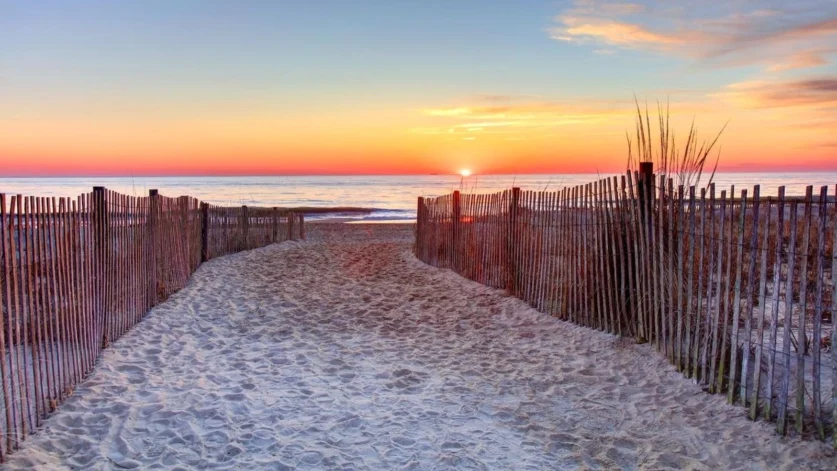
Delaware may be small in size, but it is packed with attractions that make it a great destination for a memorable vacation. Located on the coast, Sussex County is especially appealing, offering a combination of incredible seafood, top-notch craft beer, and stunning wildlife. Just a short drive south of the capital city of Dover, this vast seaside region is a true gem of the Atlantic and a must-visit spot for any traveler exploring the First State.
Delaware earned its name from English trader Thomas West, 3rd Baron De La Warr. One of the highlights of Sussex County is the city of Rehoboth Beach. Established in 1873, it has become one of the most picturesque beach towns on the Delmarva Peninsula. Its idyllic shoreline, excellent restaurants, and cozy hotels have earned it abundant acclaim. For a truly relaxing vacation, the Avenue Inn & Spa is the place to stay. The hotel offers a rooftop hot tub, a large indoor pool, and a delightful nightly treat of free chocolate chip cookies in the lobby. After a day of exploring, guests can dine at the on-site restaurant, The Blue Hen, and savor delicious dishes like smoked fish chowder and lobster toast.
In addition to its seafood, Rehoboth Beach is also a haven for craft beer enthusiasts. The city is home to several outstanding brewpubs that offer a wide variety of polished brews. The most famous among them is Dogfish Head Brewings & Eats, which has been making waves since its launch in 1995. Guests can enjoy their renowned IPAs, such as the 60, 90, and 120 Minute IPAs, as well as taproom-only selections. Another excellent option is Thompson Island Brewing Company, which offers tropical fruit-forward IPAs and decadent sloppy joe egg rolls. However, those in search of a truly exceptional beer experience should not miss Revelation Craft Brewing. This laid-back venue boasts an impressive selection of brews on tap, catering to every palate. From fruity sours to bold IPAs, there’s something for everyone. And for a delightful food pairing, just a few steps away is DaNizza, a local food truck specializing in savory Italian fare.
Peach pie holds a special place in Delaware’s heart, as it was designated the state dessert in 2009. While Rehoboth Beach is the most popular resort city in Sussex County, there are other communities worth exploring during a trip to Delaware. Just a short drive north of Rehoboth Beach is the town of Lewes. With its population of under 3,500 residents, it offers a serene and peaceful atmosphere. Despite its small size, Lewes has developed an impressive dining and drinking scene. Start your day at Nectar Cafe and Juice Bar, where you can enjoy a cilantro-loaded Heavy Metal Detox and avocado toast in a cozy setting. For waterfront dining with breathtaking views, head to Harbour Restaurant for dishes like crab chowder and bacon-loaded clams oreganata. And for the ultimate seafood experience, a visit to Lewes Oyster House is a must. This sophisticated establishment showcases the best of Delaware’s seafood scene, with a rotating menu of local oysters, delicious starters, and lavish main dishes like butter poached Atlantic halibut.
Sussex County truly has it all, from beautiful beaches to delectable food and drinks. Whether you’re a nature lover, a seafood enthusiast, or a craft beer connoisseur, a trip to this coastal region of Delaware is sure to leave you with unforgettable memories. Don’t miss the chance to explore the First State’s hidden gem and experience the charm and splendor of Sussex County.
Expanding the Craft Beer Scene in Lewes
Dogfish Head may be the most well-known brewery in Rehoboth Beach, but it is not the only one worth mentioning in the area. Lewes, the neighboring town, has a growing craft beer scene with a few breweries that are definitely worth a visit.
One of these hidden gems is Brick Works Brewing and Eats, located in Long Neck. This brewery serves up some seriously delicious fruit-forward sours and their incredible crab dip is not to be missed. It’s a perfect spot for those willing to venture out and explore beyond the city limits of Rehoboth Beach.
For a more laid-back experience, check out Crooked Hammock Brewery. This brewery offers an open-air patio, cornhole boards, and even a playground for younger guests. It’s the perfect place to enjoy a crisp and refreshing Hammock Light lager on a beautiful sunny day.
If you’re planning on spending a few nights in the Lewes area, Hotel Blue is an excellent choice for accommodation. It offers idyllic rooms with fireplaces, lofty balconies perfect for admiring the local wildlife, and a seasonal rooftop pool where you can relax and unwind.
While both Rehoboth Beach and Lewes are known for their seafood restaurants, there’s more to the local wildlife than just what’s on your plate. Sussex County’s beaches are famous for being covered in horseshoe crabs during mating season, which takes place from May to June. For a deeper look into the biology of these fascinating creatures, a visit to the DuPont Nature Center in Milford is a must. The center offers detailed displays, aquarium tanks full of local marine life, and even a live camera showcasing the many shorebirds that populate the nearby beach.
Delaware is also a haven for birdwatchers. The Prime Hook National Wildlife Refuge is a must-visit for bird lovers, covering an impressive 41 square kilometers. For an unforgettable birdwatching experience, Delmarva Birding Weekends is the go-to company. With expert birders leading expeditions, you can explore the First State’s avifauna in all its glory.
Cape Henlopen State Park is another fantastic spot for birdwatching. Once a military base during World War II, it has since become a sanctuary for native birds. From horned grebes to cedar waxwings, you’ll find a rich diversity of bird species in this area.
After a day of birdwatching, it’s time to indulge in some delicious seafood. Delaware Cultured Seafood offers a unique “Seed to Supper” day tour from June to November that showcases the life cycle of native oysters. You’ll not only learn about these fascinating mollusks but also get the chance to spot crabs, fish, and birds while cruising across the water.
From its thriving craft beer scene to its abundant wildlife, Delaware is a small state with a lot to offer. Whether you’re a beer enthusiast, a birdwatcher, or simply someone who appreciates the beauty of nature, Lewes and its surrounding area have something for everyone. So, next time you visit the First State, make sure to venture beyond Rehoboth Beach and explore the hidden treasures of Lewes.
Lake Norman’s Bin110 will have even more space for whiskey, music, and yes, brunch.

Lake Norman is definitely a place you don’t want to miss if you’re a whiskey enthusiast and enjoy live music. The good news is that this beloved spot is expanding! Bin110, owned by Andy Upchurch and his wife, Tallie, is getting a makeover that will triple its occupancy, going from six tables inside to 15-20 tables.
The renovation plans include new bathrooms, an expanded kitchen, and more space for entertainers. Although the bar is currently still open, it will eventually shut down for 4-6 weeks to knock down the wall between the existing space and the one next door. This expansion is expected to be completed after Thanksgiving, and the Upchurches plan to reopen by January.
The upgraded space will grow from 1,500 square feet to 2,500 square feet. While the outdoor seating will remain the same with 30-40 seats available, there will be a significant increase in indoor seating. Andy Upchurch jokingly expressed his wish to go to sleep and wake up to a finished project.
In terms of food offerings, Bin110 currently serves small bites. However, with a bigger kitchen, they plan to open for brunch on Saturdays and Sundays. In addition to brunch, they will also introduce a variety of tasty food options, including different types of flatbreads. So, you can sip on your favorite whiskey while enjoying a delightful meal.
Since its opening in November 2017, Bin110 has become one of the top upscale night spots in the Lake Norman area. The bar takes pride in its extensive beverage selection, with nearly 450 whiskies and 100 wines, most of which are available by the glass. Furthermore, Bin110 is known for its live entertainment, hosting 150 acts each year. Their lineup includes a range of musical genres, from ’80s and ’90s rock to country. Notably, the bar has even welcomed talented singers from popular shows like “The Voice,” “American Idol,” and “America’s Got Talent.”
Moving forward, Bin110 aims to provide more space for entertainers, allowing them to bring in larger bands. They also plan to enhance the overall sound system quality and install acoustic panels to create a comfortable atmosphere where guests can enjoy live music and hold conversations simultaneously.
Before starting Bin110, Andy Upchurch had a successful career as a financial adviser for three decades, while Tallie Upchurch worked in the pharmaceutical industry, despite her degree being in hospitality. Together, they have accomplished their goal of creating a bar they would personally love to patronize, offering an extensive selection of whiskies and wines. Customer service is also a top priority for them, and Andy takes pride in training his staff in the art of whiskies, certifying 300 individuals as bourbon stewards.
Apart from their dedication to providing great service, the Upchurches are also passionate about offering unique tasting experiences. They frequently travel to Napa, California, with patrons to explore new wine offerings. To stay updated with all the happenings, make sure to follow Bin110 on Facebook and Instagram.
The Upchurches are proud of the work they do and are grateful to be able to do it in their local area. They appreciate the convenience of staying close to home rather than having to drive 25 miles to Charlotte.
To experience the wonderful world of Bin110, pay them a visit at 19712 One Norman Blvd Suite 110, Cornelius, NC 28031. You can also check out their menu and stay connected with them on Instagram: @bin110lkn
Get a sneak peek of the upcoming opening of Dover’s new Rail Haus indoor-outdoor beer garden.
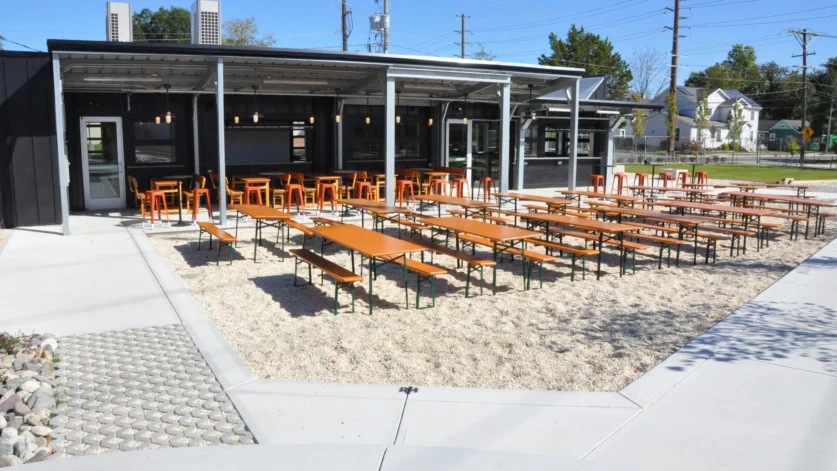
An Air Force veteran’s dream restaurant and bar is almost a reality in Dover, and downtown development leaders are hopeful that his venture will encourage more investment in the area. Donny Legans wanted to open a beer garden that would serve as a community gathering place, much like the one that helped revitalize his former neighborhood in Philadelphia. “That beer garden was not only aesthetically pleasing, but it also motivated other investors to open businesses in that area. I hope to see the same thing happen here,” Legans said. He and his wife purchased a home in Dover because she frequently traveled there while serving in the Air Force Reserves. “We fell in love with the community,” Legans said. They chose the location for their beer garden at the vacant building on 92 N. West St., which was the former site of Southern States. The building is situated just a block north of Division Street. They named their German-style beer garden Rail Haus because it is located near the railroad tracks and “haus” means “house” in German. Legans’ wife spent time in Germany during her active duty in the Air Force. The couple plans to open their establishment in about two weeks. “I feel relieved,” Legans said about completing the project. “It turned out even better than I expected, and we can’t wait to open the doors and welcome everyone.” For the interior, Rail Haus measures around 2,500 square feet and can accommodate approximately 80 people. It features a bar and overhead doors that can be opened for outdoor seating when the weather permits or closed to ensure customer comfort. However, it is the outdoor space that sets the restaurant apart as a beer garden. With nearly 20,000 square feet, customers can enjoy outdoor dining and relaxation with long beer garden-style tables, chairs, three fire pits, a large sand box for kids to play in, and various games for the whole family such as cornhole and bocce. Dogs on leashes are also welcome in the outdoor area. Additionally, the restaurant plans to have live music occasionally and multiple speakers playing background music throughout the extensive yard. Legans intends to offer free fitness classes in partnership with local fitness clubs. “The idea is to work out and then have a drink and chat with friends,” he said. “This would also be a great place for running groups and cycling groups to gather before and after their activities.” Rail Haus will provide a full bar service with a selection of wine, liquor, cocktails, and frozen drinks. However, the main focus will be on German beers and craft beers from Delaware and surrounding states. The menu will consist of bratwurst, burgers, salads, and döners, which is a German dish similar to Greek gyros. Another possibility is a brunch menu, likely on Saturdays, offering a variety of egg dishes and Bloody Mary-inspired drinks. Legans plans to hire around 30 employees initially. Although he and his wife have no experience in running a restaurant, their business partner has operated multiple restaurants, and the manager has worked at the restaurant 33 West in Dover. To fund the renovations at Rail Haus, Legans and his wife sold some of their investment properties in Philadelphia. The entire process has taken nearly three years, from the time they began searching for buildings to purchasing the property and acquiring city approval. They bought the former Southern States building for $110,000, but the total investment in Rail Haus amounts to just over $3 million, according to Legans. Environmental inspections were necessary due to the presence of underground fuel storage tanks. Once the tanks were removed and the necessary inspections were completed, the project received city approval in December, allowing Legans to commence renovations and site work. Demolition began in January, with crews gutting the interior and making improvements to the foundation, roof, siding, and insulation. New appliances, furnishings, and overhead doors were installed, and the parking lot was paved and striped. The final step was the landscaping of the yard. Legans stated that the possibility of grants from state, county, and city programs influenced their decision to invest in downtown Dover, and they are hopeful that their establishment will contribute to its ongoing development.
(Source: https://www.delawareonline.com/story/news/2022/02/28/dover-restaurant-rail-haus-southern-states-gathering-space-beer-garden/6879952001/)
Rail Haus, a new year-round beer garden, has opened its doors in downtown Dover, Delaware. The owners, Mark and Julie Legan, had a vision to create a unique space that would attract both locals and visitors from the surrounding region. Little did they know that their decision would be rewarded with over $600,000 in grants.
The first grant they received was a $50,000 EDGE grant from the Delaware Division of Small Business. This grant, which stands for “encouraging development, growth, and expansion,” was intended to support businesses like Rail Haus in their initial stages. The Legans were grateful for this financial boost, as it allowed them to begin implementing their plans for the beer garden.
The second grant came from the state Downtown Development District program. This $311,000 grant was earmarked specifically for revitalizing properties in downtown areas. Rail Haus was the perfect candidate for this funding, as it aimed to transform an underutilized space into a vibrant destination. With this grant, the Legans were able to make significant improvements to the building and create an inviting atmosphere for customers.
But the grants didn’t stop there. The Legans also received $300,000 from the Downtown Dover Partnership’s critical improvements program, funded by the state. This program specifically targeted businesses renovating buildings to comply with fire safety requirements and the Americans with Disabilities Act. Rail Haus was able to make necessary updates, such as installing ramps, accessible restrooms, wider doors, and halls. These improvements not only made the beer garden more inclusive but also created a safer environment for all patrons.
In addition to the grants for building improvements, Rail Haus also received funding for bike racks and trees. The Downtown Dover Partnership recognized the importance of creating a bike-friendly community and worked with the Kent Metropolitan Planning Organization to secure this additional funding. Being located on the Senator Bikeway, Rail Haus is now easily accessible for cyclists looking for a refreshing beer after a ride.
The community has been buzzing with excitement about Rail Haus. Diane Laird, executive director of the Downtown Dover Partnership, expressed her enthusiasm, stating, “It is unlike anything we have right here in downtown, and considering it’s Delaware’s only year-round beer garden, it will entice not only Dover residents but also draw those from around the region.” Laird believes that projects like Rail Haus are vital for revitalizing downtown areas, sparking discussions of redevelopment, instilling confidence in other potential investors, and creating new opportunities for housing, retail, and restaurants.
Tina Bradbury, the downtown partnership’s economic development and operations manager, believes that Rail Haus will be a significant economic driver for the area. She states, “With Rail Haus being downtown, this is a definite economic driver as it will attract people from all over as beer enthusiasts are always on the hunt to find new places. With both the Delaware on Tap and DE Brew Trail sites, there will be a built-in stream of people to seek out the Rail Haus and, in turn, downtown Dover.”
The Legans’ attention to detail and consideration for the surrounding community have not gone unnoticed. Ken Anderson, the downtown partnership’s property development director, commended their plans for creating a family-friendly venue. He stated, “That is validated by support from houses of worship and a community center near its location. Their attention to detail and consideration of these surrounding community factors has been top shelf.”
Rail Haus has already proven to be a success, attracting beer enthusiasts from near and far. The Legans’ vision, combined with the support of various grant programs and the Downtown Dover Partnership, has transformed a once-overlooked space into a thriving beer garden that contributes to the revitalization of downtown Dover. This success story serves as an inspiration for other aspiring entrepreneurs and showcases the power of collaboration between business owners, community organizations, and local government in driving economic development.