2024 IWSC: Discover the World’s Best American Whiskey

Sazerac 18 Year Old Rye takes home the top rating for American Whiskey
If it seems like every week there’s a new competition out there revealing its list of the best boozes on the planet…Well, there is. The lucrative enterprise has blossomed into a full-fledged cottage industry. And consumers, thirsty for more knowledge on how to direct their spending, are forever eager for the guidance that this industry promises to provide.
But for the folks at the International Wine & Spirits Competition, this isn’t any sort of novel utility. IWSC has been judging its namesake liquids since 1969. That makes them among the oldest such organizations on earth. Every year its prestigious panel of judges convene in London, and the trade eagerly awaits its anointments.
Now the 2024 results are in. The trusted pros of IWSC have tasted through thousands of spirits—hailing from over 90 countries across the globe—to reveal the top rated tipples currently on shelves. Today we take a look at the highest-rated American whiskey from these evaluations: out of a possible 100 points, Sazerac Rye 18-Year-Old recorded an astounding 98.
What makes this supremely allocated spirit so special? Well, it comes from Buffalo Trace, which might be the most awarded distillery on earth. However, those accolades are typically amassed by its bourbon labels; EH Taylor, George T. Stagg, WL Weller, Pappy Van Winkle, and Eagle Rare, to name a few recent examples.
Sometimes overlooked is this 18-year-old rye, which has been a pillar of the venerated Buffalo Trace Antique Collection since its inception in 2000. It enjoyed a brief moment of glory back in 2005 when a prominent spirits publication dubbed it the “Whiskey of the Year.” Shortly thereafter, the distillery emptied this prized stock into steel tanks to preserve it and—between 2006 through 2015—this was the juice that entered glass each year.
Fresh-from-the-barrel Sazerac 18 returned to the collection in 2016 and has taken some time to win over connoisseurs. By many standards, the first standout release from the 2.0 era didn’t emerge until 2022; a spry juice driven by clove and anise aromatics and finishing poignantly with menthol and eucalyptus.
The tasting panel at IWSC, which included legendary malt maker Dr. Bill Lumsden, had this to say about the prize-winning liquid: “Juicy fruits, beautiful balance, and outstanding clarity of flavors. Oranges, leather, and toasted bread with a touch of cloves. The finish is classic and easy drinking, bottled at a good ABV.”
It’s true, the 90-proof bottling is an ideal delivery vehicle for this specific flavor profile. It amplifies the earthier elements of rye grain without drowning out its subtleties in a wash of heat. The only real drawback of this dram is how complicated it is to actually procure it. Despite the fact that it’s rarely accused of being the star of any annual BTAC release, it remains an ultra-aged whiskey from Buffalo Trace.
Translation: you’re never going to get it for anywhere near its listed retail price, which here ought to be around $125. The 2023 release is currently fetching upwards of $1580 per bottle on the secondary market.
We wish we could offer you some cost-cutting workaround. The best we can suggest, however, is to keep a careful lookout for this year’s edition of Sazerac 18 when it goes to market in November—aka “BTAC Season.” Perhaps by that time the majority of whiskey fans will be dreaming instead of Sazerac’s bourbon brethren. But you’ll know better than to sleep on a rye like this.
One Community. Many Voices. Create a free account to share your thoughts.
Our community is about connecting people through open and thoughtful conversations. We want our readers to share their views and exchange ideas and facts in a safe space.
In order to do so, please follow the posting rules in our site’s Terms of Service. We’ve summarized some of those key rules below. Simply put, keep it civil.
Your post will be rejected if we notice that it seems to contain:
User accounts will be blocked if we notice or believe that users are engaged in:
So, how can you be a power user?
Thanks for reading our community guidelines. Please read the full list of posting rules found in our site’s Terms of Service.
Nothing’s April Fools’ Beer Prank is Actually Real: Here’s the Scoop

Nothing is sacred anymore as April Fools’ morphs into a new way to stealth launch weird products.
Top Gift Ideas for Wine Lovers to Make Every Sip Special
“Hearst Magazines and Yahoo may earn commission or revenue on some items through these links.”
Searching for a gift for the connoisseur in your life — whether they be grilling gurus, travelers, or coffee snobs — can be daunting. These experts know all of the ins and outs about super niche specialties and can be relatively intimidating, but perhaps the most intimidating of them all is the wine-o. Surely, you’re aware of how hard it is to find the best gifts for wine lovers when you, yourself, might not be the most knowledgeable on the subject. No worries, though. Our expert gift finders came up with a foolproof list that’ll impress everyone from the sommelier of the friend group to the person who’s always buying two-buck-chuck.
Our wine lovers’ gift guide includes everything from automatic bottle openers (a lifesaver), to tiered and rotating serving platters (complete with wine glass and bottle holders) to hilarious custom face cork stoppers (that are painstakingly designed to look just like your giftee — it’s wild).
Read on below for the best gifts for wine lovers. Everything is under $100, and some of our favorite finds are under $10. Cheers!
First thing first: If you’re looking for a wine gift you can give anybody from casual sippers to serious wine-o, this electric wine opener is it. It’s on sale for under $10 and makes opening a bottle so seamless.
Senior Editor Summer Cartwright owns this cheap gadget and says, “It’s so simple to use and makes wine nights easy, breezy, beautiful. Simply plop it on top of your bottle, press a button, and the cork is removed in seconds.”
Head’s up: If you’re gifting this, include a pack of AA batteries — it requires four of ’em and they’re not included.
Electric Wine Opener
$9.96
This serving set is the perfect gift for wine lovers who also love to host. The set of three bamboo serving platters fit perfectly atop empty (or full) bottles of wine to create a gorgeous set-up that’ll wow guests and help spread out the space.
When your loved one uses these, they’ll be able to fit more munchies underneath the platters to expand their offerings. Also, for just $20 more, you can customize the platters with names or initials of whatever you’d like.
Wine Bottle Topper Serving Set
uncommongoods.com
$50.00
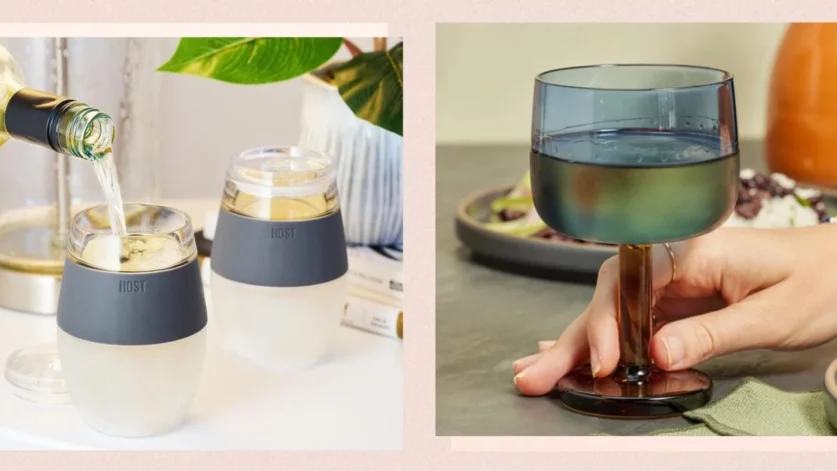
If your giftee enjoys a chilled glass of white, rosé, or orange wine (especially during the summertime), gift them this cooling wine cup designed to keep their favorite beverage as crisp as possible. The cups come in sets of two, each featuring a 360-degree comfort grip.
Cooling Wine Freeze Cup
amazon.com
$19.99
You know those things you see that make you think, “Wow, humanity really is evolved?” This is one of them. The set of wine glasses is designed to aerate as you pour in your vino. No extra stuff is necessary. Just pour it in and watch as it aerates in a few seconds.
Stemless Aerating Wine Glass
amazon.com
$50.00
Think about how hilarious it’d be to gift a wine stopper to your friend who looks exactly like them. This Etsy seller crafts personalized wine stoppers designed to look exactly like who you please — from your puppy to your best friend.
Personalized Wine Cork Stopper
$38.40
If you’re racking your brain trying to think of the best gift for a wine lover you know but not well enough to know whether they’ll like something quirky, stick to the basics. You can never go wrong with a gorgeous set of new wine coupes. This foursome is stackable, making it a great gift for those who live in an apartment or are tight on space. A total win.
Party Coupes
fromourplace.com
$76.00
Think of this as a lazy Susan — but for happy hour. The rotating carousel fits a whole bottle in the center, six glass holders, plus space at the bottom for snacks.
Wine & Cheese Carousel
uncommongoods.com
$130.00
If you’re looking to gift the perfect pour, these things work wonders. They fit into wine bottles and act as spouts so that when you or your giftee starts pouring a cabernet out, it’ll land precisely where you’re aiming. A pack of 50 sells for under $10, so it’s a stellar gift box addition or stocking stuffer.
50 Pieces Silver Wine Pourers
amazon.com
$7.99
Breaking news: We’ve found the cutest pair of earrings ever created and your giftee will love you so much if you gift these to them. The BaubleBar gems are a cute accessory that’ll spice up any outfit they wear.
Nothing to Wine About Earrings
$48.00
We’ve all been there — you buy a fabulous bottle of white and want to drink it ASAP but have to wait a half-hour so it can chill in the fridge. Or, you bring it to a picnic, and by the time you set everything up outside, the bottle is no longer cold. Enter this iceless wine chiller. You freeze the thing and plop it into your wine when you’re ready to drink.
It works in just 15 minutes to chill the whole bottle, acts as an aerator thanks to its clever pouring spout, and functions as a stopper.
4-in-1 Iceless Wine Chiller
amazon.com
$24.89
This isn’t the sexiest of wine gifts, BUT it will certainly be the most used. Help your giftee survive accidents on their clothes, couches, and everything in between with this best-selling stain remover. (While wine’s in the name, it also works magic on other hard-to-remove coffee, dye, and ink stains.)
Red Wine Stain Remover
amazon.com
$19.99
If your giftee is a dapper dude who loves to look as such, gifting them these cuff links will be a hit. He’ll be able to wear it to the next happy hour to show off to the crew.
Wine and Bottle Cuff Links
nordstrom.com
$85.00
Does your giftee love to camp, or do you two bond over outdoor sips? This outdoor wine table would be a great present for them. It’s basically like a stake, so you can push it into grass or sand to make it stick. The table holds a bottle and two glasses and has a flat surface for snacks. Pretty stellar.
Outdoor Wine Table
$62.00
Is your friend the pretentious type who thinks they know more about wine than actual sommeliers? Gift them this wine trivia game and get the whole friend group to play together to see who really reigns supreme. It includes questions about grapes, wine storage, tasting, cork culture, and so much more. Oh, and it’s meant to be paired with a lot of wine. Duh.
“`html
Wine Wars: A Trivia Game for Wine Geeks and Wannabes
amazon.com
$24.84
“`
You Might Also Like
The Paris Hilton Housewares Collection Brings ‘That’s Hot’ Energy to Your Kitchen
16 Best Noise-Canceling Headphones Perfect for Rocking Out in Quiet Bliss
Beyoncé Uses This $26 Amazon Product for Her Glossy Blonde Hair
Unlocking the Secrets: Experts Reveal the Right Way to Enjoy Vodka

Despite its humble Eastern European origin, vodka is the best-selling spirit in the U.S. and one of the most popular alcoholic drinks globally. The popularity is not surprising; it is easy to make and can be distilled from virtually anything, which means production is accessible and not region-specific. The final product is a crystal clear and pristine spirit without intrusive flavors and aromas, which most people prefer. As a bonus, its uncomplicated character makes this clear spirit the ideal addition to cocktails and mixed drinks.
Regardless of how much we like to drink vodka, we still haven’t figured out the best way to taste and experience this legendary spirit, and it seems we’ve made many mistakes along the way. That’s why we got a few expert opinions to point out the problems and define the best ways to get the most out of it. We talked to Thomas Gibson, president of Blue Ice Vodka, Tina Karras, owner and founder of Tina’s Vodka, and Leah van Deventer, a WSET Spirits Educator and spirits professional. All three experts discussed the mistakes we’re making when consuming vodka and offered valuable advice on the best vodka-drinking practices.
Read more: Popular Vodka Brands Ranked From Worst To Best
As one of the most consumed spirits in the world, it’s surprising that some facts about vodka are still not familiar or communicated, leading to common misconceptions, such as the popular myth that it’s only made from potatoes. Similarly, Gibson claims the biggest mistake people make is overlooking the amazing variety of high-quality vodka brands.
“Most people who consume vodka don’t have a deep understanding of the different brands, and what makes them different from each other,” explains Gibson. He believes that the approach of buying brands you’re familiar with or labels you’ve seen other people purchase is preventing you from exploring the variety on the market. More importantly, this method means you’re missing out on the high-quality offerings that get overshadowed by big names.
If you don’t know where to start or you come across a tempting label you’re not familiar with, Karras suggests an easy solution to get the full picture: “Since we all have smart phones now, I would do a quick search online for reviews, thewebsite and the story behind the brand, and what the brand does to give back to the environment.”
When choosing which vodka bottle to purchase, our experts suggest reading the back label. Gibson claims the back label and ingredient list can tell you much more about the spirit than the brand name and logo. He looks for potatoes in the ingredient list, explaining, “potatoes, when made well, give vodka a smooth, velvety texture.” He mentions that cheaper versions might use corn as the base which makes for a sweeter product, while wheat is a good option if you’re looking for a bready quality.
Karras agrees and suggests, “if there isn’t [an ingredient list], look for things like Organic or non-GMO.” If possible, she also recommends pouring a few drops on your hands. If it leaves a sticky film, it means there is probably syrup, sugar, or another additive in the mix.
Van Deventer claims the worst mistake people make when drinking vodka is thinking “it’s the ‘cleanest’ or ‘healthiest’ liquor available.” She emphasizes that in the U.S., sugar and citric acid can be added post distillation. Avoid nasty surprises by taking the time to check the back label to get a rough idea of what’s in the bottle.
Chilling vodka in the freezer has become something of a standard, so an ice-cold glass is ready any time you want. As it turns out, the practice is not generally recommended. As this is a high-proof spirit with 40% ABV, it won’t freeze in a standard home freezer, but the cold temperature will affect its texture and alter the taste and aroma.
“Vodka should be kept in the refrigerator and served around 35 degrees, not the freezer,” argues Gibson. He claims that serving it straight from the freezer kills all its character. This is especially troublesome if you have a nuanced version with subtle characteristics that you want to come through on the nose and on the palate. For more generic expressions, using the freezer method should not be particularly problematic.
Gibson also offers a solution for room-temperature vodka, suggesting a quick shake over ice to chill it and bring it to the right drinking temperature.
Price is a common factor when choosing which vodka to purchase. Though it carries some weight, your decision should never be made solely on the price as it’s not a consistent indication of quality.
Gibson is unambiguous, claiming that “Price doesn’t matter — price is based on marketing budgets!” Some brands want to project a specific image that relates to luxury, which can include exclusive collaborations that justify the high price. This means an expensive label does not guarantee quality, nor does an affordable bottle necessarily mean you’re going to get a throat-burning spirit.
Also, make sure not to fall for some common marketing labels declaring the number of times the spirit has been distilled or highlighting words such as premium or limited edition that might want to justify the price. Use research tools to get to know other brands, read the back labels, and perhaps only then consider the price and whether it fits your budget.
There are many good ways to drink vodka, but chugging it down too fast to appreciate its qualities is one to avoid. Karras is on board with this statement and claims the biggest mistake we make when drinking vodka is “Shooting it and drinking it too fast.” Instead, enjoy the process and the drink without the unnecessary rush.
Ideally, don’t serve this potent spirit in short and narrow shot glasses. Opt for a wide-rim glassware or a tumbler that will allow more aromas to come through. Before going straight to drinking, Van Deventer recommends to “smell the spirit with short sniffs.” When you’re ready to taste it, hold and swirl the drink in your mouth for a couple of seconds. This method will allow your palate to uncover all the nuanced flavors. Van Deventer explains, “While both the aroma and flavor should be fairly neutral, there are characterful vodkas, where the raw material may come through, or the texture may be pronounced.”
When serving vodka, you should also reconsider how much liquid to pour in the glass. We often see it filled to the brim, but if you want to be more sophisticated and not seem like an overzealous college kid, stick to filling the glass halfway.
Whether you’re serving your vodka neat or in a cocktail, garnishes are always welcome, but don’t make the mistake of smothering the spirit with robust and powerful add-ons or using low-quality options that will change its whole character.
Pair your vodka with garnishes that will accentuate its subtle flavor and aroma. Van Deventer recommends lemon as a suitable partner and adds, “lime and cucumber work well too.” Most citrus fruits go well with it, whether you want to add a wheel, wedge, or just the rind, as they impart a lot of freshness. Cucumber has the same qualities, but it also creates a subtle herbal background that matches well with vodka. Fresh fruit such as berries or more subtle herbs would also be good options, but avoid sugar-coated rims or smoky notes that would clash with its clean character.
Karras also mentions that using low-quality garnishes is another common problem, especially when choosing olives for a classic martini. She mentions that many producers pack olives with chemicals and that it’s best to avoid these altogether. “Many actually leave a chemical film floating in the drink. Look for organic and non-GMO olives that have only one or two ingredients like olives and salt brine,” she recommends. Remember that neutral spirits can’t mask faults, so make sure only to pair vodka with top-notch garnishes.
The best way to taste vodka to determine its aroma, flavor, and quality is to serve it neat, but our experts suggest adding ice or a splash of water for an upgraded experience. This is not an unusual practice, especially for spirits packed with complex aromas. For vodka, it may not yet be thoroughly adopted, but it’s high time we rethink our habits and add a splash of water or ice cubes.
Karras and Gibson advocate the idea of serving it on the rocks. Gibson argues it’s the best way to judge the quality of the spirit, while Karras claims that “tasting a vodka with one ice cube is the best.” Van Deventer is a fan of adding water to the glass, and claims it will “reduce the proof and make the flavors easier to identify.” For a bubbly alternative, she also suggests pairing the drink with soda water, ice, and a slice of lemon.
When mixing vodka with ice or water, you should think about their quality too. The liquor will only highlight the other flavors, so make sure you don’t use old ice that has soaked freezer aromas or anything other than high-quality water.
In Eastern European tradition, vodka originated as a spirit intended for drinking neat and was traditionally only paired with some light snacks on the side. Only in the mid-20th century did mixologists start prominently using it as a cocktail ingredient. Still, it took a long time for vodka to build its reputation as it was considered too subtle and neutral to create complex drinks, and bartenders often ignored the whole spectrum of varieties and brands that could showcase different qualities. Now we know that this strong spirit is a must for any reputable bar and that it makes some of the best cocktails in the world.
Because it is so subtle, vodka provides a perfect base to play with different flavors. Van Deventer explains that a good vodka cocktail will depend on the other ingredients that are added to the mix. “Some of my preferred vodka cocktails are a Vodka Martini, White Russian, Lemon Drop and Espresso Martini,” she states. Some other must-tries are the legendary Bloody Mary or a zesty Moscow Mule that pairs it with ginger beer. Cosmopolitans, Mudslides, and Greyhounds are other classics worth exploring, proving the spirit does not have to dominate. Rather, it can act as the perfect partner to amp up other ingredients and create balanced and enjoyable cocktails.
Using vodka in cocktails and mixed drinks is highly encouraged, but our experts warn about combining skillfully crafted bottles with cheap, sugar-laden, subpar mixers, as the neutral liquor can’t mask bad flavors. Additionally, these mixers tend to be too powerful, completely smothering the vodka’s taste and failing to allow its sharp and clean profile to come through.
Karras believes that combining vodka with low-quality mixers is one of the most common mistakes people make when adding the spirit to cocktails. She explains that she opts for non-GMO ingredients, real cane sugar, and mixers without any suspicious ingredients. “What’s the point of a spirit being clean if your mixers are dirty?” asks Karras.
Gibson feels the same way about sugary mixers. He claims that sugar-packed elements will take over the whole drink. Worse, he notes that sugar is one of the culprits for the headache that usually appears the day after sipping a colorful vodka-based drink.
During the global vodka expansion, the tradition of serving the liquor with some nibbles on the side was somehow lost, but it’s high time we go back to the roots and start thinking of it as a worthy food companion. Traditionally, this regional spirit was served with zakuski, which could be translated as Russian tapas, as it incorporates hot and cold dishes, usually arranged on small plates. Typical dishes like veggie and meat preserves, such as pickles and sausages, canned fish, caviar, or aspic are included in the selection. But you should not limit yourself to traditional food pairings.
Karras is delighted with the idea of having vodka as a food chaser and claims it is a versatile food partner, specifying that her favorite pairing is “a nice piece of wild caught salmon with lemon.” Van Deventer stays in a similar domain, suggesting serving it with “pickles, caviar, sushi, sardines, salmon, and smoked sausages.” Gibson offers a different perspective, claiming that vodka can go with anything, depending on how you serve it. “I like it shaken with a twist of lemon with a great steak,” he recommends and adds, “I drink potato vodka, and I like to say it’s my potatoes with my steak.” Alternatively, he says, “Drinking vodka chilled neat with sushi is also very good.”
Flavored vodka has long been labeled as the infamous variety that should be avoided at all costs. Once recognized by the vibrant liquid and colorful, kitschy labels that usually hid a foul-tasting, sugary drink that had nothing to do with pure, high-quality spirits, things have changed. Nowadays, it seems the market includes many flavored vodkas worth exploring.
Gibson and Van Deventer agree there are some well-crafted options. “Flavored vodka can be great, as long as the taste isn’t hidden behind a lot of sugar,” claims Gibson. He’s a fan of Ketel One infused with botanicals and the new Double Espresso and Huckleberry from Blue Ice. Van Deventer emphasizes that the quality of flavored spirit will be determined by the quality of the add-ins. “I like Absolut Citron, Ketel One Cucumber and Mint, and Finlandia Cranberry,” she says.
Avoid labels with suspiciously vibrant-looking liquids. This is usually not a good sign, and these varieties are most likely packed with sugar, artificial flavorings and aromas, and coloring agents, resulting in a cloying drink that is not pleasant to drink neat or in cocktails. Karras generally avoids these bottles and notes, “I would recommend finding a mixer, syrup, or bitters and add flavors yourself.”
Though flavored vodka has become a standard these days, if you can’t find one you like then consider making creative home infusions. Van Deventer is a fan and says, “try adding berries, spices, herbs, or even sweets to your vodka and see what works.” You can opt for a single flavor, or if you feel confident enough, try pairing different but complementary flavors in the same batch.
Everyone can make these infusions at home. First, you’ll need the base spirit for your infusion; you don’t have to go with the most expensive bottle, but it’s best to go with high-quality varieties, as the base will dictate the quality of the final product. Of course, make sure to use unflavored vodka without any additions. The infusion is best assembled in wide-rim jars so you can easily add the ingredients. If you plan to use fruit or veggies, clean them well beforehand. Then, just add the ingredients to the jar, close the lid, and wait for the liquor to soak up all the flavors.
The recommended infusion period is three to five days, but it’s best to taste and check. When the time is up, strain the spirit and your infusion is ready. You can drink these infusions neat or play with different garnishes to make creative cocktails and mixed drinks.
Read the original article on Mashed.
Top Sipping Rums for Beginners: Recommendations from a Spirits Expert

Rum is an excellent substitute for vanilla extract when baking and wonderful to use to make cocktails. Did you know, however, that rum is also lovely to sip neat or on the rocks? For beginners, it’s important to figure out which rum is the best to sip. To help you on your rum sipping journey, we sat down with an expert, Molly Horn, Chief Mixologist and Spirits Educator for Total Wine & More, and asked her to recommend the best sipping rum for beginners to try.
Her answer was quite definitive. Horn stated, “My recommendation is an aged rum, particularly those from Barbados … Barbadian rums are known for being rich, nuanced, and somewhat sweeter than other styles.” She listed her personal favorites from Barbados: Kaniche XO and Plantation OFTD.
Aged rums are one of 13 types of rum we’ve explained in the past and are ideal for beginners to sip on the rocks or neat. When you sip aged rum by itself, it’s delicious, and you get to appreciate all of its flavors, tasting notes, and the time spent aging the spirit. Sometimes, it takes years for all those flavors to develop. Aged rum goes down smoothly, so you don’t need a chaser or mixer.
Read more: 13 Liquors Your Home Bar Should Have
Additionally, Molly Horn recommended that beginners sip aged rum from Guatemala, with her favorites being Ron Zacapa and El Pasador de Oro. She explained, “Guatemalan rums are full-bodied with deep, robust flavors.” If you’re looking to appreciate bolder flavors, sip a Guatemalan aged rum. But if it’s sweetness you’re looking for, choose a Barbadian aged rum.
Horn added, “The approachability and depth of flavors in these styles of rum, as well as the characteristics of oak aging that add flavors similar to Bourbon, make them an excellent entry point for those new to rum!” Bourbon has nine common tasting notes, including smoke, spices, vanilla, wood, and nuts. Since Bourbon is also a spirit people often sip neat or on the rocks, it feels good to know aged rum shares Bourbon’s characteristics.
After you try sipping an aged rum for the first time and become a fan, you can start expanding your horizons and consider these top 15 sipping rums to enjoy in 2024. Additionally, check out why some people drink rum with a splash of water added to open up all of its flavors.
Read the original article on Tasting Table.
14 Expert-Approved Wine Pairings Perfect for Your Picnic Favorites
“`html
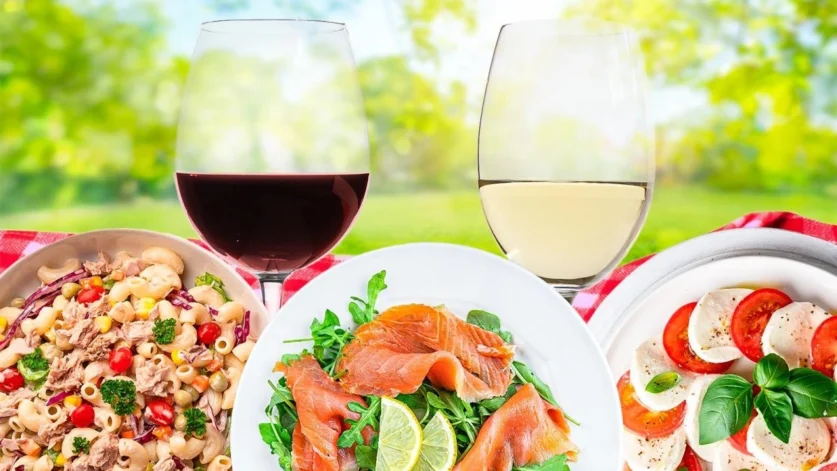
Eating outside is one of the benefits of warmer weather, and summer is the time to fine tune your outdoor dining habits. Choosing the right recipes for a perfect picnic is part of that mission, of course, but so is selecting a wine to pair with your go-to picnic dishes. After all, the right wine can lift any outdoor meal from ordinary to extravagant with minimal effort.
While al fresco dining isn’t necessarily the moment to bring out a rare vintage and tote along your finest wine glasses, that doesn’t mean you have to resort to a bottle of Two Buck Chuck or equivalent when planning a picnic menu. Whether your setup is a simple blanket on the grass, or you’ve scored a table at the park, any occasion is right for a good wine.
As a Certified Specialist of Wine and former winery employee on four continents, I’ve put together a selection of wine recommendations to complement your favorite picnic foods. If you’re looking for the right celebratory bottle to pop open with your spread or something to pair with a selection of fine meats and cheeses, I’ve got you covered. Read on to discover the ideal bottle of wine to pair with your favorite go-to picnic dishes and complete the meal.
Read more: 13 Simple Tricks To Pick The Best Fresh Fruit Every Time
“`
You don’t need to limit yourself to serving Italian red wines with a saucy pasta dish or cheesy pizza. While some bolder styles warrant heartier fare, a bottle of chianti pairs well with a versatile selection of foods. The variety of charcuterie, of course, makes it a must at any picnic with meat eaters. More than that, the dish’s flavor-packed options — such as smoked ham, bresaola (air-dried beef), pancetta, prosciutto, and cured sausages like chorizo or salami — make it an excellent match for this wine.
Chianti wine is medium-bodied and produced primarily with the sangiovese grape. It has a moderately high acidity and notable tannins, which provide a palate cleanser for fatty meats. Whether you’re serving charcuterie solo or with bread or crackers, the herbaceous and fruity notes of the wine marry well. Look for plum and cherry aromas, as well as an earthy leather note that highlights chianti’s elegant rusticity. For a classic example from a reputable producer, try San Felice’s Chianti Classico, which displays red fruits and violets on the palate, along with smooth tannins and a refreshing finish.
Pinot grigio might seem like a basic white wine option — and some simpler, one-note versions certainly lack a bit of nuance. But the grape flourishes in the right place and can hold its own when paired with a wide range of foods. In fact, thanks to its freshness and light fruit flavors, pinot grigio makes a great pairing with a cheese board, cleansing your palate with every sip. It’s especially suited to richer options, like an unctuous Brie or tangy goat cheese, though it pairs well with a salty cheddar or Parmesan, too. Reach for jellies and chutneys with pear, lemon, and apple notes to complement the wine’s aromas.
Castelfeder winery produces an excellent bottle, Mont Mès, that is sure to match your cheesy spread. Additionally, if you’re looking for something more interesting than the usual citrusy palate, try a pinot grigio from South Tyrol in Northern Italy. The region’s Dolomite mountains offer prime terroir for the grape variety, allowing the wines to display more complexity and retain a refreshing acidity.
Chicken salad is great for picnics, where you can eat it by the forkful, load it between two pieces of bread, or wrap it with a large lettuce leaf for a fresh bite. Not to mention, the recipe itself is incredibly versatile, whether you’re going for a creamy curried chicken salad or something with a fruity element, like a cranberry and pecan chicken salad. Regardless of the specifics, sparkling wine is sure to wash it all down smoothly. But instead of the usual suspects, seek out a bottle of pignoletto for a novel twist on Italian bubbly.
Made with the grechetto grape in the northern region of Emilia Romagna, pignoletto is a delightful alternative boasting a range of aromas and a fresh finish. Although it’s not as ubiquitous as prosecco stateside, you can track down a bottle by Fattoria Moretto. Crisp and dry, it features delicate notes of white flowers, citrus, and fresh herbs on the palate, making it a tasty match for a creamy chicken salad.
Smoked salmon is a perfect accompaniment for cheese or charcuterie boards, salads, and bread. It infuses your meal with a salty note and keeps better than other types of seafood thanks to the smoking process. There are countless ways to serve it, as well, from a simple open-faced smoked salmon sandwich (with a layer of sour cream or cream cheese and fresh herbs) to classic salmon rillettes. You’ll want a zesty, aromatic white wine that complements the salty smoked fish without getting lost behind the bold flavors, like a bottle of torrontés wine.
Torrontés is a group of white wine grapes primarily grown in the Salta province in Argentina. With its proximity to the Andes, the region’s vineyards are found at high altitudes, producing fruit with developed aromas and a refreshing acidity. Brimming with fragrance yet usually vinified in a dry style, this wine’s characteristics make for a delicious pairing with smoked salmon — no matter how you serve it.
Zuccardi is a third-generation, family-owned winery in Argentina and a reliable source for the country’s wines. Try a bottle of its Torrontés Serie A for a vibrant smoked salmon pairing brimming with citrus, peach, and floral notes.
Pasta salad gets a bad rap at times from people who’ve never made the dish themselves. But the carb-heavy side has far more potential than many sad deli options would have you believe. It’s all about choosing the ingredients you want to include, so arm yourself with tips for making the ultimate pasta salad, and you might find a new mainstay of all your picnics — one that pairs well with a bright white wine like aligoté.
Whether you’re going for a creamy and decadent pasta salad or a zingy variation, aligoté wine is a great match. Burgundy, France might be famous for its elite chardonnay and pinot noir wines, but aligoté is a lesser-known local variety that will suit your needs. Green apple notes with hints of white flowers and fresh herbs mingle with a backbone of acidity that serves as an excellent palate cleanser.
The wine works alongside a Southwest pasta salad with mayo and sour cream, or a Caesar chicken pasta salad with mayo, Parmesan, and the usual salad add-ins. Try a different take with a veggie antipasti Italian pasta salad featuring a tangy vinaigrette and add grilled chicken or chickpeas for extra protein. However you make your pasta salad, Albert Bichot winery is a prime producer, so consider picking up a bottle of Bourgogne Aligoté for a top-notch version.
“`html
Bread and dip is a winning combination — and when there’s pillowy focaccia in the picture, it’s that much better. You can bake an easy homemade focaccia loaf or stop by a bakery en route to your picnic destination. Regardless of the focaccia and dip combo, be sure to pair this comforting duo with another Italian star: pecorino wine (not the cheese).
This grape variety comes from central and coastal provinces in Italy and produces medium- to full-bodied white wines. Pecorino wine has an herbal, floral, and mineral character with nutty notes and a crisp acidity that goes well with any number of options. Rosemary and sea salt focaccia makes a good foundation for flavorful dips, as well as whatever cheese and charcuterie selection you bring along. Keep the dip basic with a garlic and herb-packed olive oil or opt for something more elevated like a whipped feta dip or simple creamy hummus recipe.
As for the wine, consider picking up a bottle of Pecorino Colline Pescaresi by Cirelli Wines to wash down the doughy focaccia. Brimming with stone fruit, citrus, almonds, and salinity, it will complement an assortment of dips, too.
Depending on the menu, picnics might require a bit of prep work. Then again, while making Vietnamese summer rolls may take some extra effort, it’s worth it once you’re able to relax and enjoy the spread. This go-to picnic item isn’t as hard to make as it looks, either, and you’ll get to pack in all your favorite ingredients, like with these vibrant rainbow summer rolls (with mango, avocado, cucumber, bell peppers, carrots, fresh herbs, and more). On that note, when you’re looking for a wine to pair with the crunchy rolls, a dry riesling will do the trick.
“`
Now, most rieslings feature a zingy acidity with a fruit presence to round it out. Lime, white floral notes, and a mineral essence shine in every sip, offering an excellent accompaniment for the fresh vegetables in Vietnamese summer rolls and a palate cleanser for the typically rich dipping sauce (like peanut or almond). Eden Valley in Australia is a great place to seek out a bottle. Pewsey Vale Vineyard exclusively grows riesling grapes, so if you’re looking for a stellar example of the regional style, you can’t go wrong with one of the winery’s products.
A well-rounded mixed salad will add plenty of pizzazz to your picnic meal, particularly if you incorporate some easy hacks to make a better salad. Of course, fresh greens and vibrant veggies pair beautifully with an equally zesty wine. Since sauvignon blanc has an herbaceous character with notes of tropical fruit, it will elevate any salad — whether you’ve added seeds or nuts for some crunch, sprinkled on crumbled cheese, or tossed in some grilled chicken.
Be sure to chill the wine well and pack it in a cooler for optimal freshness. Also, unless your picnic destination is close and you’re planning to dig in the moment you arrive, store any salad dressing separately and add it right before serving.
Additionally, there are countless sauvignon blanc producers to choose from in Marlborough, New Zealand — which has been recognized as a prime spot for this grape variety since the ’80s — but a bottle of Tinpot Hut sauvignon blanc will win you over. Notes of fresh herbs, grapefruit, and melon mingle on the palate, balanced by a bold acidity that can stand up to any vinaigrette.
When tomatoes are in season, it’s almost foolish to dress them up with elaborate ingredients. On that note, simplicity reigns in a classic Caprese salad with tomato slices, fresh mozzarella, fresh basil, and olive oil. You can whip up a cherry tomato Caprese salad with mozzarella balls and a drizzle of balsamic vinegar, then serve it with a crusty baguette or pack the ingredients between two slices of bread to make a tasty sandwich (just be sure to assemble it on-site to prevent the bread from getting soggy). As for a refreshing drink to pair with these simple ingredients, go with vinho verde wine.
There are plenty of light and easy vinho verde bottles available on the market, typically featuring varying amounts of six Portuguese grapes. The wines are fruity, with notes of citrus and flowers, as well as a gentle spritz on the palate. These flavors will complement the sweetness and acidity of the tomatoes and work well with the herbal characteristics of the basil in your picnic-ready Caprese salad.
For a reliable expression of the wines, pick up a bottle of Aveleda Fonte Branco, or elevate your tasting experience by trying a regional wine made with only one of the grape varieties. Anselmo Mendes is a prime producer, and its Pássaros Loureiro wine displays tropical fruits and a salty essence.
Picnics and rosé go hand in hand — so much so that you might forget the food part and just enjoy sitting in a park with a glass of chilled wine (avoid drinking alcohol on an empty stomach, though). Since rosé is a super versatile wine, it deserves to be paired with an assortment of dishes — like potato salad — to savor the combination.
Any well-planned picnic needs a potato salad, after all, and there are endless variations to try out for every taste. You could go heavy on the herbs with a creamy dill potato salad, amp up the protein and crunch with a classic Southern potato salad, or make it extra salty with a bacon and egg ranch recipe. Whether you go for a rich and luscious rendition or a tart one with a zingy vinaigrette, a crisp rosé from Southern France is an excellent match. The acidity makes for the perfect palate cleanser between bites and prevents the wine from being washed out by a vinegary sauce.
Although the pretty pink color might mislead you into thinking the wine is sweet, French rosé is more commonly dry. Guigal is an iconic producer in the Rhône Valley, and a bottle of its rosé is a fantastic choice for casual and serious wine drinkers. With notes of red fruit and citrus on the palate, this elegant wine will elevate your potato salad in no time.
Vegetable quiche makes a chic addition to your picnic spread. It can be served cool or at room temperature once baked, making it a suitable option for an open-air picnic (though the custardy filling won’t last forever on a warm day). Try a spring quiche recipe packed with greens like leeks, spinach, and arugula with goat cheese, or make a loaded vegetarian quiche with mushrooms, bell peppers, zucchini, and onion. Whether you opt for a store-bought pie crust or make your own, wash down the flaky dough and creamy filling with a crisp glass of chablis wine.
This style of chardonnay is made in Northern Burgundy and is sure to win over any self-reported chardonnay haters. Delightfully fresh with high acidity and chalky notes, these wines typically have citrus and apple aromas with a bone dry finish. Chill a bottle of chablis by Domaine du Colombier to pair with your vegetable quiche.
Any celebratory picnic (or any picnic, really) is instantly elevated with bubbly wine like prosecco. Another fail-safe option for an al fresco meal is a plate of deviled eggs. Pair the two together for a successful duo that will please all your dining companions. Everyone should have an easy deviled egg recipe in their repertoire, but you don’t have to stick to classic versions. Countless ingredients will seriously upgrade your deviled eggs, such as bacon, honey, olives, pesto, and avocado. Add crispy toppings to contrast the rich filling, and pair them with prosecco for an enjoyable match.
Make sure to cool the bottle sufficiently before heading out and bring a cooler with ice to keep it extra cold. Alternatively, invite a handful of people and you won’t have to worry about the bottle having time to warm up. Sample a bottle of Corazza Prosecco made with the local glera grape, which offers a balance between sweet and dry notes and displays pear aromas on the palate.
Salads are an obvious winner when it comes to picnic food, because you can add your choice of ingredients with relatively low effort. Since a bean salad is packed with protein and fiber, it’s a popular option to serve to vegetarians and meat-eaters alike. When serving a bean salad at the picnic, go with an aromatic white wine made with the gewürztraminer grape.
This wine gets its name from its heavily perfumed and spiced notes, which make it a total stand out in the glass. Notes of rose, lychee, ginger, orange blossom, and Turkish delight are often present, living up to its name. No matter how you customize your bean salad — with spice and color in a jalapeño-lime three bean salad or focused on one legume with a limey black bean couscous salad — gewürztraminer will mesh well.
Although the grape is most commonly grown in France and Italy, wineries around the world are producing it. Try a bottle from Gundlach Bundschu on the Sonoma Coast for a dry and spiced pairing.
You can’t forget to bring a fruit salad to your picnic to showcase the season’s bounty. Chopped tropical fruits, berries, and fresh herbs are a timeless way to finish off a meal, after all. But just because the main course is over, it doesn’t mean you have to miss out on a wine pairing. While some people stick to serving bubbles as an aperitif, who’s to say you can’t enjoy them as a digestif? Make it extra special by opting for a bottle of sparkling rosé.
As for options, crémant is a high-quality French sparkling wine made following the same method as Champagne but in different regions of the country with various grapes. Rosé crémant is a dazzling accompaniment for a fruit salad, with its berry aromas and crisp finish. Try a bottle of Crémant de Bourgogne by Henri Champliau, made primarily with pinot noir grapes. The pale pink hue hints at the wine’s elegance and fine mousse, which is complemented with notes of red berries and flowers.
Read the original article on Tasting Table.
The Top American Whiskey of 2024: Winner of the International Wine and Spirits Competition

Sazerac 18 Year Old Rye takes home the top rating for American Whiskey
If it seems like every week there’s a new competition out there revealing its list of the best boozes on the planet…Well, there is. The lucrative enterprise has blossomed into a full-fledged cottage industry. And consumers, thirsty for more knowledge on how to direct their spending, are forever eager for the guidance that this industry promises to provide.
But for the folks at the International Wine & Spirits Competition, this isn’t any sort of novel utility. IWSC has been judging its namesake liquids since 1969. That makes them among the oldest such organizations on earth. Every year its prestigious panel of judges convene in London, and the trade eagerly awaits its anointments.
Now the 2024 results are in. The trusted pros of IWSC have tasted through thousands of spirits—hailing from over 90 countries across the globe—to reveal the top rated tipples currently on shelves. Today we take a look at the highest-rated American whiskey from these evaluations: out of a possible 100 points, Sazerac Rye 18-Year-Old recorded an astounding 98.
What makes this supremely allocated spirit so darn special? Well, it comes from Buffalo Trace, of course, which very well might be the most awarded distillery on earth at this point. But those accolades are typically amassed by its bourbon labels; EH Taylor, George T. Stagg, WL Weller, Pappy Van Winkle, Eagle Rare, to name a few recent examples.
Sometimes overlooked is this 18-year-old rye, which has been a pillar of the venerated Buffalo Trace Antique Collection since its inception in 2000. It enjoyed a brief moment of glory all the way back in 2005, when a prominent spirits publication dubbed it the “Whiskey of the Year.” Shortly thereafter, the distillery emptied this prized stock into steel tanks in order to preserve it and—between the years of 2006 through 2015—this was the juice that entered glass each year.
Fresh-from-the-barrel Sazerac 18 returned to the collection in 2016 and has taken some time to win over connoisseurs. By many standards, the first standout release from the 2.0 era didn’t emerge until 2022; a spry juice driven by clove and anise aromatics and finishing poignantly with menthol and eucalyptus.
The tasting panel at IWSC, which included legendary malt maker, Dr. Bill Lumsden, had this to say about the prize winning liquid: “Juicy fruits, beautiful balance, and outstanding clarity of flavours. Oranges, leather, and toasted bread with a touch of cloves. The finish is classic and easy drinking, bottled at a good ABV.”
It’s true, the 90-proof bottling is an ideal delivery vehicle for this specific flavor profile. It amplifies the earthier elements of rye grain without drowning out its subtleties in a wash of heat. The only real drawback of this dram is how complicated it is to actually procure it. Despite the fact that it’s rarely accused of being the star of any annual BTAC release, it remains an ultra-aged whiskey from Buffalo Trace.
Translation: you’re never going to get it for anywhere near its listed retail price, which here ought to be around $125. The 2023 release is currently fetching upwards of $1800 per bottle on the secondary.
We wish we could offer you some cost-cutting workaround. The best we can suggest, however, is to keep a careful lookout for this year’s edition of Sazerac 18 when it goes to market in November—aka “BTAC Season.” Perhaps by that time the majority of whiskey fans will be dreaming instead of Sazerac’s bourbon brethren. But you’ll know better than to sleep on a rye like this.
NASHVILLE, TENNESSEE – AUGUST 24: Event partner Buffalo Trace Distillery product at the ACM Party … [+] For A Cause at Ascend Amphitheater on August 24, 2021 in Nashville, Tennessee. (Photo by Erika Goldring/Getty Images for ACM)
One Community. Many Voices. Create a free account to share your thoughts.
Our community is about connecting people through open and thoughtful conversations. We want our readers to share their views and exchange ideas and facts in a safe space.
In order to do so, please follow the posting rules in our site’s Terms of Service. We’ve summarized some of those key rules below. Simply put, keep it civil.
Your post will be rejected if we notice that it seems to contain:
User accounts will be blocked if we notice or believe that users are engaged in:
So, how can you be a power user?
Thanks for reading our community guidelines. Please read the full list of posting rules found in our site’s Terms of Service.
‘The Simpsons’ Producer Debunks Duff McKagan’s Claim About Inspiring the Show’s Fictional Beer Company

The Simpsons have “predicted” dozens of eerie moments in history. Ironically, they never saw a recent callout from Guns N’ Roses bassist Duff McKagan coming down the pipeline.
On June 7, during a chat with Stereogum, McKagan claimed that the show’s fictional adult beverage company, Duff Beer and by extension Duffman, was actually named after him. However, writer and producer, Jay Kogen slammed the accusation to TMZ.
Although the band has certainly influenced a generation of rockers and music lovers alike, Kogen rattled off two reasons why McKagan’s supposed “King Of Beers” nickname had nothing to do with the ‘The Simpsons’ beloved booze brand.
According to Kogen, “there actually wasn’t any deep reasoning behind choosing the name Duff,” it was a toss around idea. Ultimately, the team landed on Duff for comic reasons. “It’s a synonym for butt, tushy, booty, and so on,” he said. “Duff is a beer for people who sat on their fat ass all day.”
The second reason, according to Kogen, “‘The Simpsons’ writers and producers back in the day didn’t know anyone in Guns N’ Roses beyond [frontman] Axl Rose.”
In the interview, McKagan also claimed to have been approached by the show between 1988 and 1989. McKagan eluded that the denial was tied to its financial stake in its branding and merchandising profits. “So I think it’s very probably business savvy of them to say that’s not true,” he said. “But if you just do your own math behind it, look at when they started off with the King of Beers, and I had my King of Beers belt I wore all the time.”
But Kogen doubled down on his stance. “It’s very weird, this Duff McKagan guy wants to claim credit for Duff Beer,” he said. “[When Duff] had zero to do with it.”
How Smaller Cities in Arkansas Are Tapping into the Booming Craft Beer Market

Grabbing a locally made beer has become easier in small towns across Northwest Arkansas and the River Valley.
Twenty breweries opened in Arkansas between 2019 and 2022, according to the National Brewers Association.
Already a subscriber? Log in!
Discover the World’s Best American Whiskey of 2024: Awarded by the International Wine and Spirits Competition
Sazerac 18 Year Old Rye takes home the top rating for American Whiskey
If it seems like every week there’s a new competition out there revealing its list of the best boozes on the planet… Well, there is. The lucrative enterprise has blossomed into a full-fledged cottage industry. And consumers, thirsty for more knowledge on how to direct their spending, are forever eager for the guidance that this industry promises to provide.
But for the folks at the International Wine & Spirits Competition, this isn’t any sort of novel utility. IWSC has been judging its namesake liquids since 1969. That makes them among the oldest such organizations on earth. Every year its prestigious panel of judges convene in London, and the trade eagerly awaits its anointments.
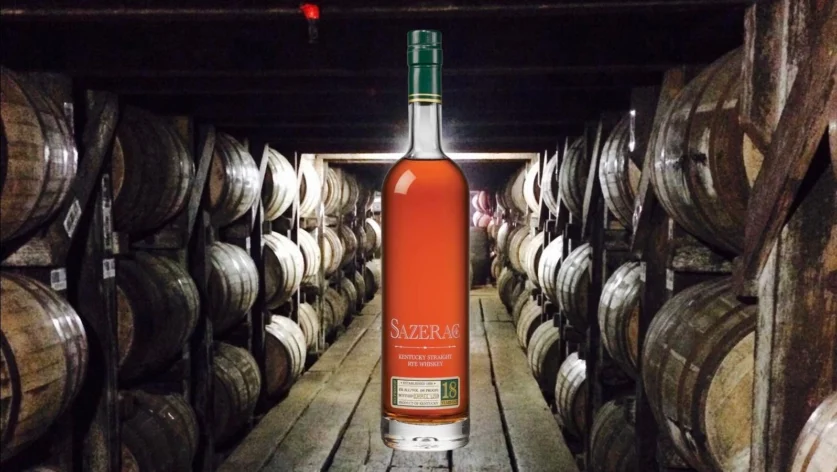
Now the 2024 results are in. The trusted pros of IWSC have tasted through thousands of spirits—hailing from over 90 countries across the globe—to reveal the top rated tipples currently on shelves. Today we take a look at the highest-rated American whiskey from these evaluations: out of a possible 100 points, Sazerac Rye 18-Year-Old recorded an astounding 98.
What makes this supremely allocated spirit so darn special? Well, it comes from Buffalo Trace, of course, which very well might be the most awarded distillery on earth at this point. But those accolades are typically amassed by its bourbon labels; EH Taylor, George T. Stagg, WL Weller, Pappy Van Winkle, Eagle Rare, to name a few recent examples.
Sometimes overlooked is this 18-year-old rye, which has been a pillar of the venerated Buffalo Trace Antique Collection since its inception in 2000. It enjoyed a brief moment of glory all the way back in 2005, when a prominent spirits publication dubbed it the “Whiskey of the Year.” Shortly thereafter, the distillery emptied this prized stock into steel tanks in order to preserve it and—between the years of 2006 through 2015—this was the juice that entered glass each year.
Fresh-from-the-barrel Sazerac 18 returned to the collection in 2016 and has taken some time to win over connoisseurs. By many standards, the first standout release from the 2.0 era didn’t emerge until 2022; a spry juice driven by clove and anise aromatics and finishing poignantly with menthol and eucalyptus.
The tasting panel at IWSC, which included legendary malt maker, Dr. Bill Lumsden, had this to say about the prize winning liquid: “Juicy fruits, beautiful balance, and outstanding clarity of flavours. Oranges, leather, and toasted bread with a touch of cloves. The finish is classic and easy drinking, bottled at a good ABV.”
It’s true, the 90-proof bottling is an ideal delivery vehicle for this specific flavor profile. It amplifies the earthier elements of rye grain without drowning out its subtleties in a wash of heat. The only real drawback of this dram is how complicated it is to actually procure it. Despite the fact that it’s rarely accused of being the star of any annual BTAC release, it remains an ultra-aged whiskey from Buffalo Trace.
Translation: you’re never going to get it for anywhere near its listed retail price, which here ought to be around $125. The 2023 release is currently fetching upwards of $1800 per bottle on the secondary.
We wish we could offer you some cost-cutting workaround. The best we can suggest, however, is to keep a careful lookout for this year’s edition of Sazerac 18 when it goes to market in November—aka “BTAC Season.” Perhaps by that time the majority of whiskey fans will be dreaming instead of Sazerac’s bourbon brethren. But you’ll know better than to sleep on a rye like this.
NASHVILLE, TENNESSEE – AUGUST 24: Event partner Buffalo Trace Distillery product at the ACM Party For A Cause at Ascend Amphitheater on August 24, 2021 in Nashville, Tennessee. (Photo by Erika Goldring/Getty Images for ACM)
One Community. Many Voices. Create a free account to share your thoughts.
Our community is about connecting people through open and thoughtful conversations. We want our readers to share their views and exchange ideas and facts in a safe space.
In order to do so, please follow the posting rules in our site’s Terms of Service. We’ve summarized some of those key rules below. Simply put, keep it civil.
Your post will be rejected if we notice that it seems to contain:
User accounts will be blocked if we notice or believe that users are engaged in:
So, how can you be a power user?
Thanks for reading our community guidelines. Please read the full list of posting rules found in our site’s Terms of Service.