Creating a Spiked Hot Chocolate with Equiano Rum: A Step-by-Step Guide
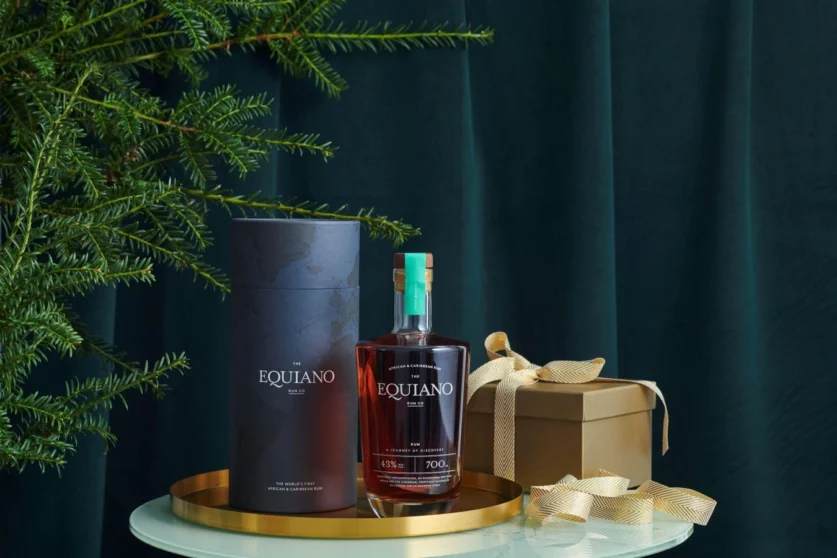
Now that the excitement of the holidays is over, we’re all in need of something to make those cold, dark days of winter a little more fun. Equiano Rum is 100 percent natural rum with no added sugars, colourants or spices. It’s also the world’s first African and Caribbean rum. A spiked hot chocolate made with this true rum is just the thing to warm you up on a cold night.
The Equiano Holiday Gift Box will brighten up a cold winter.
“As the world’s first African & Caribbean rum, the uniqueness in liquids from each location plays an important role in our blend,” say founders Aaisha Dadra and Amanda Kakembo. “In Equiano Original the African component, from Mauritius, is tropically aged in ex-Cognac barrels which offers a natural sweetness to the blend. In Equiano Light, we’ve introduced fresh sugar cane juice rum from Africa which adds a grassiness to the blend. And Barbados produces some of the best rums in the world, so we feel honoured that it’s a key component in both Equiano Original and Equiano Light.”
Ready to make Equiano Spiked Chocolate? Here’s what you need:
Ingredients:
• 3 tablespoons cocoa powder
• 2 cups 2% milk
• 3 tablespoons soft muscovado sugar
¼ teaspoon vanilla extract
1 pinch cinnamon
¼ cup (1 ½ ounces) semisweet or dark chocolate chips
2 ounces (¼ cup) Equiano Original Rum
Whipped Cream (Optional)
Method:
The Equiano holiday gift box is available for purchase online – for both the Equiano Original and the Equiano Light. Looking into 2024, Equiano is looking forward to more exceptional rum being enjoyed around the world, more unique blends from Africa and the Caribbean, more limited-edition blends, and more support of emerging African distilleries as they venture beyond the 30 countries they are in today.
Reasons To Resist Spending On Premium Vodka For Your Bloody Mary
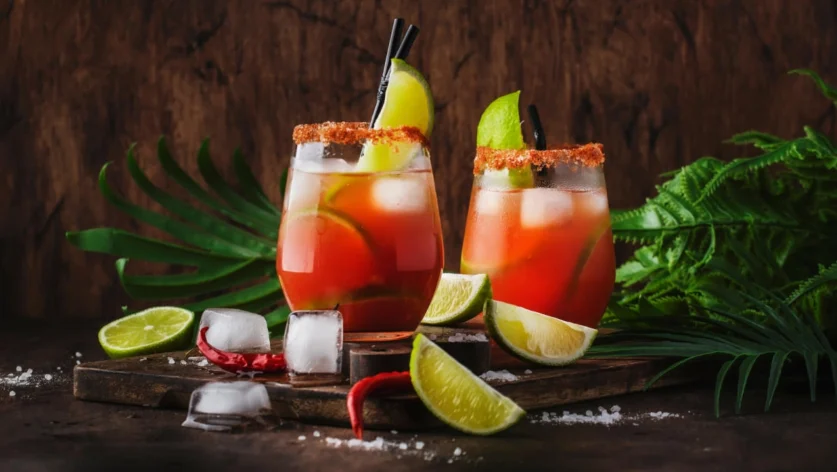
The Bloody Mary ranks alongside margaritas and martinis as one of the most recognized cocktails. Noted for its distinctive bold, spicy flavors and a stunning red color, the making of this renowned cocktail begins with a vodka and tomato juice base, with the flavor intrigue brought in by a selection of spices and condiments. Ingredients can vary from common items like hot sauce and lemon juice to more daring choices such as Worcestershire sauce and horseradish.
While the complex and spicy flavor of Bloody Mary garners much attention, vodka plays a pivotal part. Vodka’s clean, neutral taste creates a backdrop for the cocktail’s spices and seasonings to come to the forefront. Precisely because the vodka is not intended to steal the show, there’s no need to opt for high-end brands when making a Bloody Mary. With so many flavors and spices at play, the nuances offered by top-shelf vodkas are likely to get washed out and wasted.
It would be more judicious to go for a more budget-friendly vodka and invest the savings into superior mix ingredients. Consider top-quality tomato juice, fresh lemon or lime juice, gourmet hot sauces, and fresh spices. These are more likely to boost the quality of your Bloody Mary than even the finest vodkas!
Read more: 23 Cocktails To Try If You Like Drinking Gin
The best vodka for your Bloody Mary is one that complements the spices and flavors without stealing the show. Look for mid-range vodkas like Smirnoff, Absolut, or Stolichnaya; they’re well-distilled, providing the needed smoothness and neutrality without breaking the bank.
It’s worth noting that when we say “bottom-shelf vodka,” we don’t mean you should scrape the shelves’ bottoms and buy the absolute cheapest bottles available. Ultra-cheap vodkas often undergo minimal distillation and prioritize cost savings over flavor in their production, resulting in a sharper, more “ethanol-like” taste due to higher levels of fermentation byproducts called congeners. That’s not what you want in your Bloody Mary! A handy rule of thumb is to choose a vodka that you’d enjoy sipping on its own. If it’s smooth when sipped neat, it’s likely to work well in your Bloody Mary.
In case you want to get creative, some bartenders suggest trying flavored vodkas like pepper or citrus-infused types to add an extra flavor kick. But remember, this is entirely up to your taste. Plus, adding flavored vodka to a Bloody Mary can be a bit tricky, as it will affect the balance of flavors. So, it’s a good idea to have a recipe on hand (like this Kimchi Bloody Mary recipe!) to make sure everything tastes just right when you give it a go!
Read the original article on Tasting Table.
Exploring the Finest Luxe and Limited-Edition Whiskeys of 2023

2023 was year of eye-popping luxury whisky releases.
This year has been one of crazy whiskey releases as distilleries released rare, old and incredibly special liquid as demand for these luxury bottles rose. These are some of the most impressive whiskeys I’ve seen this year above the $500 mark, while most of them cost much, much more.
According to the Distilled Spirits Council of the United States, during the five years between 2017 and 2022, all spirits categories included in the luxury index (bottles priced at more than $50) increased at an average rate of 21 percent. But anecdotally, it appears that high-end whiskey collection is hotter than ever, with companies like Diageo and Edrington offering bespoke client experiences and American bottles going for prices that were once thought only possible for Scotch [note: prices in this article are release prices, not what they are going for on the secondary market].
And while you should try a dram of one of these if you can get your hands on it, it portends very well for what we’ll be seeing in 2024.
The Dalmore Cask Curation Series The Sherry Collection
The Dalmore Cask Curation Series, The Sherry Edition, $37,000
The Dalmore launched the first set in a four-year program of rare whisky collections this year with The Sherry Edition. Each of the 150 sets come in a leather travel case holding the three expressions: A 26 Year Old finished in a rare Gonzalez Byass 2002 vintage, a 28 Year Old finished in a Gonzalez Byass 30 Year Old Matusalem Sherry Cask and a 43 Year Old, finished in very rare Gonzalez 30 year old Apostoles Sherry Cask. The collection highlights The Dalmore’s century-old exclusive partnership with Gonalez Byass, sherry winemakers in Jerez de la Frontera, Spain.
The Dalmore is known for being a pioneer in multi-cask maturation since 1868. These three expressions highlight that practice — they were primarily aged in ex-bourbon casks, and finished in each of the rare, old casks. The set gives a window not only into how the malt itself ages, but the impact finishing barrels can have. The 26 Year Old is a bright whisky, with berry, orange and honey notes. The 28 Year Old is a darker whisky with more tannins, dried fruit and baking spices. The 43 Year Old has almond and molasses notes, along with tropical fruit.
Next year the series will feature Port finishes.
Dewar’s Double Double 37
Dewars Double Double 37, $1,800
While single malts are often in the spotlight, luxe blended whiskies have made a lot of noise this year. This one is a blended malt (malted barley) and no grain whiskies (usually corn) in this blend. Master Blender Stephanie Macleod oversaw the four-stage aging process. Malt whiskies are aged in casks for 37 years and then blended in casks to marry for a month. That malt is then blended with Double Double 36 which was finished in madeira barrels for a year. That blend is combined for a month in Oloroso sherry casks which previously held Aultmore single malt whisky. The madeira and sherry aging impart chocolate and spices to the whisky, but there are still delicate honey, floral and citrus notes that are typical to the Speyside region. Honoring the region is what this new series is about — it’s the first of four in a Collector’s Series highlighting what makes the Scottish region so special. The set comes with two Baccarat Massena crystal tumblers.
Aberfeldy 25 Year Old
Aberfeldy 25 Year Old, $550
To celebrate the distillery’s 125th anniversary, Aberfeldy, considered the heart malt of Dewar’s, released this 25-year-old limited edition in a gilded commemorative pack. It was aged in a combination of refill hogsheads and butts, and then finished for more than a year in first-fill Oloroso Sherry casks. Aberfeldy is known for its floral, honey, citrus and vanilla notes because it has a long fermentation, before going through long, slender stills which create a more delicate single malt.
Teeling 33 Year Old
Teeling 33 Year Old, $3,700
Teeling, the first distillery to open back up in Dublin in 125 years, is known for innovation, and its older special releases are prized. The latest in a range of single cask bottlings, this one uses Pineau des Charentes, a fortified wine made with unfermented grape juice and Cognac eau-de-vie. It’s usually drunk as an aperitif and is only produced in a small region in western France, and is mostly consumed locally. Despite Pineau being a dessert wine, the resulting dram is a bit savory and dry, with tropical and stone fruit notes and a long finish with some ginger spice and cherry.
Talisker Glacial Edge
Talisker Glacial Edge 45-Year-Old, $5,000
This is the third and final release in the Xpedition Series, a line of experimental whiskies from Talisker. The release is both a nod to the whisky’s adventurous past: The founders were the MacAskill brothers who sailed from the Isle of Eigg to found the distillery on the Isle of Skye, as well as the brand’s current conservation efforts, especially regarding oceans, marine life, and oysters.
The latest release was aged for more than 40 years before being finished in ice-fractured oak casks. Twelve casks were taken to Canada’s ice fields, where a specialized cooper removed the ends of the casks, exposing them to sub-zero temperatures and arctic winds for 96 hours. The cold fractured the wood, which allowed for more surface area in the casks for the liquid to interact with during the final finishing period back in Scotland. It’s still got a lot of smoke and chili for a whisky this old, and evokes a salty, smoky toffee. If you add water, it gets even brinier, and mellows out the pepper.
Talisker made the journey with partner Parley For the Oceans and glacier scientist Dr. Alison Criscitiello. A portion of proceeds will go towards Parley’s conservation efforts.
Laphroaig Ian Hunter Book 5: Enduring Spirit $1,400
Book 5 commemorates the last of a series of annual Laphroaig editions that pay tribute to Ian Hunter, the past proprietor known for his pivotal role at the distillery from 1908 to 1944. Each book sheds light on different aspects of Hunter’s influential contributions. For instance, Book 3 celebrated his water conservation initiatives. This particular release underlines the lasting impact of Hunter’s decisions at Laphroaig in defining its fundamental character. He pioneered the use of American oak ex-bourbon barrels for maturation, a practice as alive and prevalent today as the malting floors at the distillery. Laphroaig’s signature peat quality matures distinctively with age, hitting a stride in its third decade, unfolding exotic tropical fruit undertones like mango and pineapple, reminiscent of dipping into the world’s most opulent barbecue spread. The whisky undergoes a final phase of maturation in European oak ex-Pedro Ximenez barrels, imparting a hint of red berry and dried fruit nuances that culminate in a lingering sweet aftertaste.
Barry MacAllfer, the Distillery Manager, commented, “It’s more than just a beverage, it’s a portal to a yesteryear.” Buying a bottle serves as a ticket to a competition where the lucky winner gets a chance to partake in a tasting session with him.
Below is a selection of the 100th Anniversary releases from Suntory.
Suntory 100th Anniversary Releases, multiple
Suntory celebrated their 100th anniversary with a video campaign featuring Keanu Reeves and directed by Sophia Coppola. They also marked the occasion with several limited release whiskies. Among these were three premium options: the Mizunara matured Yamazaki 18 Year Old ($1,500), the gently peated Hakushu 18 Year Old Malt ($1,200), and the Mizunara influenced 21 Year Old Hibiki 21 ($5,000) re-blended limited edition whisky.
Fuji Single Grain Japanese Whisky
FUJI 30-Year-Old Single Grain Whiskey, $3,000
In celebration of Mt. Fuji Distillery’s 50th anniversary, FUJI introduced a 30-year-old single grain whiskey to the U.S. market. It’s a blend of several Canadian-style grain whiskies, aged 30 to 40 years. The product was made on a mix of kettle and column stills, and aged in first and second fill white oak American barrels. Its tasting notes are of honey and dark chocolate. The Mt. Fuji Distillery is distinct for creating whiskies in four international styles: Japanese, American, Canadian, and Scotch. A 50th Anniversary Edition Single Malt Japanese Whisky is slated for release in spring 2024.
Dickel Bourbon Aged 18 Years
Dickel 18 Year Old Bourbon Whiskey, $510
This year, Dickel released its oldest whiskey to date, and it’s a stunner. Master Distiller Nicole Austin has done several things to innovate at the Tennessee-based brand, and one was to add some whiskeys categorized as bourbon in addition to the Tennessee whiskey, which tends to be a bit mellower in style. Austin felt these barrels, which were aged in single-story rick houses, had stone fruit and vanilla crème brûlée notes that kept it more in line with a bourbon.
“I’m excited for people to try Dickel Bourbon Aged 18 Years because it’s a rare and beautifully aged whisky, but still exhibits a surprising brightness and wide range of complexity that is not often found in American Whiskies of this age,” Austin said in a press release.
Eagle Rare 25
Eagle Rare 25, $10,000
Another record breaker, this bourbon is the oldest Eagle Rare ever released. This release was the result of an innovation program and the first release from Warehouse P, which was specifically built to extend the aging and maturation process for American whiskey and bourbon, which, due to the hot aging climate and use of virgin barrels traditionally take on too much oak flavor and become too bitter and tannic. This was avoided by moving barrels in 2018 to Warehouse P, which was temperature and humidity controlled.
“We closely monitored Eagle Rare 25 throughout the aging process and discovered that the impact over time due to controlled, extended aging was optimally mature whiskey – by that, I mean whiskey that is uniquely smooth and complex with deep, mature flavors around every corner,” said Buffalo Trace Distillery Master Distiller Harlen Wheatley in a statement. “Eagle Rare 25 is unlike any other extra-aged bourbon on the market today. We are quite proud of this bourbon.”
The dram still will appeal to ultra-aged bourbon fans, and is somewhat tannic with notes of leather and oak, but there’s also traditional bourbon notes of vanilla and caramel with cherry overtones.
How San Diego’s Brewery-Free Craft Beer Brands Thrive with the Aid of Contractors

Big beer giants like Anheuser-Busch InBev and Molson Coors Beverage are known for brewing beers from diverse brands in their huge production plants. What might surprise many is the fact that various craft-beer brands operate without their own breweries, instead choosing to sign contract-brewing agreements with other brewing firms.
Typically, oversize brewing firms with free production capacity and brewing schedule space undertake the task of brewing beers for a different business. This encompasses brewing, fermenting, cellaring, and packaging into kegs, cans, and bottles. Generally, it also involves cold storage after packaging, before the client company distributes its beers to vendors.
In the late 1990s and early 2000s, contract brewing was viewed negatively. Many within the brewing sector perceived it as a short-cut used by brewers devoid of passion or skill. Fans of craft-beer during that period came to share those views and showed a distrust in a brand’s beers if they were brewed by a different entity. This wasn’t helped by the fact that beers brewed under contract were typically of uninteresting, commonplace styles offered by brands lacking an interesting narrative, point of view, or marketing moxie.
However, contract-brewing has evolved significantly over the past ten years, particularly in San Diego County, where it is increasingly common. It is benefitting both the companies that provide these services and their customers.
It’s not uncommon for business proprietors to choose to have their beers brewed by a different establishment. This choice can stem from various motivators.
A significant portion of these entrepreneurs harbor ambitious business goals and possess the acumen to attain them by establishing a brand and marketing beer. However, they may lack the desire or means to create and oversee a production facility. Constructing such a facility is not only a time-consuming endeavor but also a financially demanding one. Despite the possibility of reducing time expenditure by taking over a pre-existing brewery, the financial outlay is substantial. As a result, newcomers to the industry often find themselves with little capital to start with.
Electing to have one’s beers contract-brewed provides a business owner with the opportunity to concentrate on marketing and selling their product, as well as bringing in revenue. This option eliminates the expenses and liabilities associated with operating a brewery. Added benefits include not having to hire staff for production, cellaring, or packaging purposes. This circumstance allows a business owner to maintain a small, concentrated team primarily dedicated to sales and other revenue-generating sectors of the business. Additionally, clients significantly save on utility bills and other circumvented overhead expenses.
Apart from monetary incentives, hiring a contract brewing company also offers the advantage of professional expertise, particularly important for business owners with limited or no experience in brewing. Most brewing companies that provide contract services expand to a size capable of doing so based on their product’s quality.
A prime example of local contract brewing is AleSmith Brewing. This Miramar-based brewery has been around for 28 years and has been contract brewing for roughly ten. Known globally for their award-winning beers, AleSmith offers a diverse range of services in recipe development and refinement according to their clients’ needs. They are experts in their brewing system, beer styles, and ingredients while their clients appreciate the guidance they receive from the AleSmith brewing team.
Contract brewing is not only for entrepreneurs who do not own breweries. Brewery owners whose production capabilities are at full capacity also enter into contract brewing agreements. In such scenarios, the brewery owner will have their best-selling beers replicated as closely as possible by the contract brewing operation.
Typically, the contract brewery will have a larger setup and be capable of brewing the client’s popular beers in significantly larger batches. This is particularly beneficial for breweries that are expanding their distribution into new regions or states.
So, who contracts brewing and who is under contract?
AleSmith has become a contract-brewing powerhouse, joining Mission Brewery in the East Village, which has been a player in the arena for well over a decade. Miramar-based Ballast Point Brewing and North Park-based Mike Hess Brewing are other large operations that diversify their revenue streams in this manner, but other smaller breweries have dabbled in contract-brewing as well.
Earlier this year, San Marcos-based Creative Creature Brewing began working with Riverside County homebrewer and podcaster Justin Allen to produce the beers of his side hustle, BeerDad’s Brew Works. And over the summer, local chef and cookbook author Lauren Lawless teamed with Vista-based WestBrew to unveil the inaugural blonde ale of her Flawless Beer brand. While Lawless has plenty of experience developing flavors, she had zero experience with brewing or background in how beer is made. Working with experienced brewing professionals has allowed her to pour all of her energy into marketing her beer via television, magazines and news outlets, and getting her beer sold by bars, restaurants and other retail establishments.
Other local brands getting along with some help from their contracting friends include Cerveza Xteca, Hillcrest Brewing, Latitude 33 Brewing, Mason Ale Works, Paradise Hills Brewing, Shoots Beer and SouthNorte Beer. The lattermost of those concerns has won multiple gold medals for its beers at the most prestigious professional brewing competition in the world — Denver’s Great American Beer Festival — proving the quality that can be achieved in the modern era of contract-brewing, another key reason it’s now seen as a viable and intelligent option for certain individuals looking to make a splash in the beer industry.
Brandon Hernández is founder of San Diego Beer News (www.sandiegobeer.news), a site providing daily coverage of the county’s brewing industry, a beat he’s covered for 17 years. Follow him @sdbeernews or contact him at: brandon@sandiegobeer.news
Dry January Spotlight: Exploring the Best Non-Alcoholic Wine Alternatives with Veuve du Vernay

Let’s usher in 2024 with the hangover from your New Year’s Eve and New Year’s Day celebrations hopefully a thing of the past. It’s officially time to welcome Dry January! This campaign, aimed at reducing alcohol consumption, is poised to saturate your social media feeds and echo in your preferred restaurants and bars. If drinking less is among your New Year’s Resolutions, Dry January is likely right up your alley. Not everyone can go an entire month without indulging in a little alcohol, and that’s not for me to judge. Reduce your consumption as best you can, find substitutes that you enjoy, and if alternative wines serve you well and keep you smiling, then it’s a win-win! Bear in mind, Dry January is a suggestion, not an order. Do what benefits you 🙂 And now, allow me to kick off our Dry January Spotlight with a French sparkling wine brand that recently launched their first alcohol-free offering: Veuve Du Vernay.
Image courtesy of Veuve du Vernay
Veuve Du Vernay, considered one of the leading sparkling wine brands in France, has debuted a wonderfully lively alcohol-free sparkling wine for your Dry January evaluation.
Produced following the traditional winemaking process, the VdV team selects the finest Muscat grapes from the Mediterranean coast for harvest once they reach the necessary maturity to provide the best sparkling wine possible. After crushing the grapes they move to a cold-soak process before fermentation. This is done to extract the maximum flavors and aromas from the skins to the juice. When the maceration has finished, a low-temperature fermentation takes place to preserve the aromas.
Once the wine is produced, VdV dealcoholizes using the Reverse Osmosis process: This nanofiltration method remains the most efficient alcohol removing technique, retaining the flavors, aromas, and other elements (nutrients, minerals, vitamins…) present in the wine.
Through this process, the aroma compounds are filtered out and preserved before the alcohol is removed by evaporation. Water and ethanol being the smallest molecules in wine, they pass through the filter more easily than the other elements. Since all the aromatic and nutritive components are not exposed to the heat and turbulence caused by the evaporation, this method allows them to keep the highest integrity of the wines intact, maintaining the original bouquet, character, color, and flavors.
Men’s Journal strives to highlight the finest products and services. Should you make a purchase using one of our links, we might obtain a commission.
Step-By-Step Guide to Create Spiked Hot Chocolate with Equiano Rum

Now that the excitement of the holidays is over, we’re all in need of something to make those cold, dark days of winter a little more enjoyable. Equiano Rum is a 100 percent natural rum with no added sugars, colorants, or spices. It’s also the world’s first African and Caribbean rum. A spiked hot chocolate made with this true rum is just the thing to brighten up a cold night.
The Equiano Holiday Gift Box will surely make a cold winter day warmer.
“As the world’s first African & Caribbean rum, the uniqueness in liquids from each location plays an important role in our blend,” say founders Aaisha Dadra and Amanda Kakembo. “In Equiano Original, the African component, from Mauritius, is tropically aged in ex-Cognac barrels which offers a natural sweetness to the blend. In Equiano Light, we’ve introduced fresh sugar cane juice rum from Africa which adds a grassiness to the blend. And Barbados produces some of the best rums in the world, so we feel honored that it’s a key component in both Equiano Original and Equiano Light.”
Ready to make Equiano Spiked Chocolate? Here’s what you need:
Ingredients:
• 3 tablespoons cocoa powder
• 2 cups 2% milk
• 3 tablespoons soft muscovado sugar
• ¼ teaspoon vanilla extract
• 1 pinch cinnamon
• ¼ cup (1 ½ ounces) semisweet or dark chocolate chips
• 2 ounces (¼ cup) Equiano Original Rum
• Whipped Cream (Optional)
Method:
The Equiano holiday gift box is available for purchase online for both the
and the
Looking into 2024, Equiano is looking forward to more exceptional rum being enjoyed around the world, more unique blends from Africa and the Caribbean, more limited-edition blends and more support of emerging African distilleries as they venture beyond the 30 countries they are in today.
Reasons To Avoid Splurging On Top-Shelf Vodka For Your Bloody Mary

The Bloody Mary holds a special place among popular cocktails like the margarita and the martini, known even to those who are not cocktail enthusiasts. What sets it apart are the bold and spicy flavors along with its distinct red color. It starts with a base of vodka and tomato juice and the rest of the complexity comes from a mix of spices and flavorings. These can be common ingredients like hot sauce and lemon juice or more adventurous items such as Worcestershire sauce and horseradish.
While the Bloody Mary is acclaimed for its complex and spicy taste, vodka is a critical element of the cocktail. The clean, neutral flavor of vodka actually provides the backdrop on which the vivid flavors of the cocktail emerge. Because the vodka is not meant to be the star of the show, there is no need to use top-shelf vodkas as their intricate nuances will be overshadowed by the flavors of the spices and flavorings in the cocktail.
Rather, it is suggested to use a more budget-friendly vodka and divert the savings to high-quality mixers. Choose good quality tomato juice, fresh lemon or lime juice, high-quality hot sauces, and fresh spices. These will make a much more substantial difference in your Bloody Mary than what even the most premium vodkas can offer!
Read more: 23 Cocktails To Try If You Like Drinking Gin
The best vodka for your Bloody Mary is one that complements the spices and flavors without stealing the show. Look for mid-range vodkas like Smirnoff, Absolut, or Stolichnaya; they’re well-distilled, providing the needed smoothness and neutrality without breaking the bank.
It’s worth noting that when we say “bottom-shelf vodka,” we don’t mean you should scrape the shelves’ bottoms and buy the absolute cheapest bottles available. Ultra-cheap vodkas often undergo minimal distillation and prioritize cost savings over flavor in their production, resulting in a sharper, more “ethanol-like” taste due to higher levels of fermentation byproducts called congeners. That’s not what you want in your Bloody Mary! A handy rule of thumb is to choose a vodka that you’d enjoy sipping on its own. If it’s smooth when sipped neat, it’s likely to work well in your Bloody Mary.
In case you want to get creative, some bartenders suggest trying flavored vodkas like pepper or citrus-infused types to add an extra flavor kick. But remember, this is entirely up to your taste. Plus, adding flavored vodka to a Bloody Mary can be a bit tricky, as it will affect the balance of flavors. So, it’s a good idea to have a recipe on hand (like this Kimchi Bloody Mary recipe!) to make sure everything tastes just right when you give it a go!
Read the original article on Tasting Table.
Kick-Start Your New Year with These Low-Calorie Wines: Wine Press Review

Learn more about which wines have the fewest calories this week. (Photo by Ken Ross)
Tis the season to make a fresh start.
And for many people, that means cutting back a bit on many things, including food, alcohol or spending.
That’s why I thought I would kick off the new year with a wine column devoted to low-calorie wines.
And if you’re taking a break from alcohol altogether this month, you can read all about no-alcohol wines next week.
So hopefully, these suggested wines this week and next week will come in handy for anyone turning over a new leaf.
Then it’s back to the grindstone and recommending more great wines the rest of the year.
Hope you enjoy.
HOW MANY GLASSES OF WINE IN A BOTTLE?
First, let’s get a few numbers out of the way.
A standard bottle of wine contains 750 milliliters or roughly 25 ounces of wine.
According to the U.S. Department of Agriculture (USDA), one bottle of wine contains five glasses of wine.
However, many people, including myself, still believe that a bottle of wine contains four glasses of wine, which works out to 6.25 ounces per glass.
So below, you can find information about how many calories are in a 5-ounce glass and 6.25-ounce glass.
WHICH WINES HAVE THE FEWEST CALORIES?
In most cases, most wines contain roughly 570 to 650 calories per bottle, according to the USDA. The difference between 570 and 650 might not seem like a lot. But when most people only consume 2,000 to 2,700 calories per day, two glasses of wine can add up fast over the course of a meal.
So how many calories do different wines have in each glass? The USDA has information about the number of calories found in a 5-ounce glass of most wines. You can find those numbers below, along with the number of calories for the same wines for a 6.25-ounce glass.
There’s also another wine, Muller Thurgau, that weighs in at 113 calories, but this white wine grown primarily in Germany and Austria isn’t easily available in many American wine stores.
Fortunately, you should have no problem finding gamay wines. Some of the most popular red wines made with gamay grapes can be found in France’s Beaujolais region. This includes Beaujolais Nouveau, the red wine made with gamay grapes fermented for just a few weeks.
Two of my favorite white wines near the top of the list of low-calorie wines: Gewurztraminer (there are many great, affordable ones from the Alsace region of France) and Chenin Blanc (the grape used to make many great, dry white wines from the Vouvray region of France).
The next two wines on the list – sauvignon blanc and riesling – are also some of my favorite white wines. You can find some great, affordable sauvignon blancs from New Zealand. As for riesling, you can find delightful ones throughout the world, including ones made in Germany’s Mosel region, France’s Alsace region and Canada’s Niagara region.
Let me add that most winemakers don’t list how many calories are in each bottle of wine. Why? I suspect it’s because they know that most people don’t want to count calories while they’re drinking their favorite wine.
Wine’s more than just something you have with dinner. It’s a beautiful expression of a particular region’s soul, its character, its rich, dark, soil.
So just because some wines have fewer calories, that doesn’t mean you have to sacrifice anything to find great, distinct, delicious ones.
Cheers!
Wine Press by Ken Ross appears on Masslive.com every Monday and in The Republican’s Weekend section every Thursday.
If you purchase a product or register for an account through a link on our site, we may receive compensation. By using this site, you consent to our User Agreement and agree that your clicks, interactions, and personal information may be collected, recorded, and/or stored by us and social media and other third-party partners in accordance with our Privacy Policy.
Predicting Trends and Changes in the 2024 Beer Industry: A Beer Nut Perspective

Happy New Beer Year!
After looking back over 2023 in last week’s column, today we will look ahead and offer some thoughts, predictions and a resolution for 2024.
It seems that the days of craft brewing being an automatic cash cow (for those who do it well) are gone. While the pandemic certainly took its toll, I believe that the craft beer market had already started to slow down before that. After all, we couldn’t count on double-digit percentage sales increases forever.
I think that this means 2024 will be a year of slight growth, but guided by cautious hands on the rudder. This is both a pretty safe call and a good thing, I believe. Although we all enjoyed seeing new breweries pop up all over the map (and seemingly every week), I think there truly can be “too much of a good thing.” Having an endless array of choices can be exciting, but it also can be paralyzing. Few if any of us have unlimited cash to spend on trying every brew that floods down the pike.
If I ruled the craft beer world, I’d love to see most small-to-medium breweries narrow their focus a bit. It’s great to have a varied portfolio, but that doesn’t mean you have to have a dozen different styles, or even a dozen different beers. There’s nothing wrong with featuring an IPA, a stout, a pale ale, a sour and maybe one or two other styles.
Lagers, of course, are always refreshing to see in a craft brewery’s lineup, but we all know lagers take more time to make and aren’t always feasible, depending on the brewery’s capacity and schedule.
On the other hand, there are cases where I’d love to see a bit more diversity from some breweries. But I am certainly not going to tell anyone to change a business model that works for them.
One trend that I’d love to see slow down a little is the New England IPA haze craze. But again, if tons of people are still buying them at a heady clip, then so be it. I just wish I could find more diversity in the IPA category on beer shelves now.
My final wish today (and every day, frankly) is for more cask beer to be available. As always, I understand the ephemeral nature of real (cask) ale and the risks of trying to sell it. And maybe that leads me to the resolution part of today’s column: If you’re a craft beer fan, I assume you love real ale, so make sure you resolve to support any event that features it.
And don’t be afraid to ask about it at your local brewery. The only way the place is going to try it is if they think they can sell it. And they’ll only think they can sell it if enough people ask.
I hope you all have a marvelous 2024. Cheers.
You can reach me at geolenker@yahoo.com.
If you purchase a product or register for an account through a link on our site, we may receive compensation. By using this site, you consent to our User Agreement and agree that your clicks, interactions, and personal information may be collected, recorded, and/or stored by us and social media and other third-party partners in accordance with our Privacy Policy.
Captivating Visuals: Highlights from Thursday’s Photo of the Day featuring a Rum-Soaked Saint & Flour Fight

The Guardian’s picture editors select photographs from around the world
Thu 28 Dec 2023 08.23 EST
Last modified on Fri 29 Dec 2023 04.11 EST
Photograph: Phil Noble/Reuters
Photograph: Rodrigo Garrido/Reuters
Photograph: snapshot/Future Image/U Stamm/Rex/Shutterstock
Photograph: Mahmud Hams/AFP/Getty Images
Photograph: Adrian Kraus/AP
Photograph: Jeffrey Arguedas/EPA
Photograph: Jade Gao/AFP/Getty Images
Photograph: Anadolu/Getty Images
Photograph: Davide Bonaldo/Rex/Shutterstock
Photograph: Arun Sankar/AFP/Getty Images
Photograph: Marco Trovati/AP
Photograph: Alexander Nemenov/AFP/Getty Images
Photograph: Menahem Kahana/AFP/Getty Images
Photograph: Anadolu/Getty Images
Photograph: Nhac Nguyen/AFP/Getty Images
Photograph: Jaime Reina/AFP/Getty Images
Photograph: Rex/Shutterstock