January 2024 145
Future Forecast: Rum Market Projected to Reach US$ 35.5 Billion by 2033 – A Persistence Market Research Study

The growth of the rum market is projected at a CAGR of 3.9% by 2033, a trend buoyed by the millennial demographic who appreciate the affordability and desired alcohol content of rum. Their substantial financial clout and preference for rum over other beverages are key factors in the market’s global expansion.
New York, Jan. 15, 2024 (GLOBE NEWSWIRE) — A Blithe Prospective on Rum Market
Rum is an alcoholic beverage distilled from sugarcane derivatives such as molasses or sugarcane juice. It’s highly consumed worldwide and has a broad spectrum of applications in cocktails, spirits, and culinary arts. Presently, the global Rum market holds a valuation of USD 17.6 billion. With a CAGR of 3.9%, the market is predicted to ascend to a valuation of USD 35.5 billion by the time span 2023–2033. Factors contributing to this growth include the skyrocketing popularity of Rum-based cocktails, increasing demand for crafted and premium spirits, and the quest for new flavor profiles.
Rum stands out as a versatile alcoholic beverage with a complex taste spectrum. Although originating from the Caribbean, it is now produced worldwide, distinguished by unique fermentation and distillation processes. The market offers various rum categories including white, dark, spiced, and aged rums, to cater for varying consumer tastes. With its use as a central ingredient in signature cocktails and as an individual sipping spirit, rum keeps acquiring popularity among different age groups.
The Rum Market has seen considerable growth in the previous years, significantly driven by a renewed interest in handcrafted, premium spirits. The burgeoning curiosity of consumers towards distinctive and exotic tastes has sparked a rise in the production of artisanal and small-batch rum, providing the market a substantial boost. Further, the escalating cocktail culture and development of mixology has reinforced rum’s position as a flexible and essential spirit. Exploring varieties of aged and vintage rum has set the market on a path of continuous growth, thereby attracting both traditional aficionados and bold explorers.
Looking for more profound insights into Competitor Analysis? Request a sample of the Report Now! https://www.persistencemarketresearch.com/samples/19588
The scope of the Rum Market Report:
Report coverage
Details
Market Revenue 2023
USD 17.6 billion
Estimated Revenue 2033
USD 35.5 billion
Growth Rate – CAGR
3.9 %
Forecast Period
2023-2033
No. of Pages
292 Pages
Key Market Segments Covered
Type
Nature
Sales Channel
Region
Regions Covered
North America
Latin America
Europe
South Asia & Pacific
East Asia
The Middle East & Africa
Key Companies Profiled
Diageo PLC
Pernod Ricard SA
William Grant & Sons Ltd.
Remy Cointreau Group
Westerhall Estate Ltd.
Cayman Spirits Co.
Mohan Meakin Ltd.
Halewood International Holdings PLC
Suntory Holdings Limited
Arehucas
What are the Key Trends in the Market for Rum?
The rum sector is journeying towards a promising future, fueled by an uptick in demand for upscale, creative, and eco-friendly products. Here are 10 of the most noteworthy trends and advancements molding the industry:
1. Premiumization: The market is increasingly seeing a consumer preference for superior quality, matured rums with intricate flavor patterns. Cottage distilleries and autonomous bottlers are spearheading this trend, offering exclusive variants from different regions and types of sugarcane.
2. Flavor Innovation: With vanilla and cola taking a backseat, rum is now being infused with fruits, herbs, mushrooms, and even coffee beans. This is paving the way for innovative new flavors for cocktails and neat drinks.
3. Sustainability: With growing environmental awareness, consumers are seeking rums manufactured with eco-friendly methods, such as organic cultivation, water preservation, and use of alternative energy. Look out for brands that emphasize their dedication to environmental sustainability.
Aged Rum Renaissance: Aged rums are experiencing a resurgence, due to their depth and complexity. Consumers are increasingly drawn to the distinguished tasting profile offered by longer aging periods and unique finishing techniques.
Single Estate Rums: In a similar trend to single-origin coffee, single estate rums are currently on the rise. This type of rum originates from one singular sugarcane plantation, thus encapsulating a distinct character that strongly reflects their specific terroir.
Rum Cocktails Evolve: Thanks to the ongoing craft cocktail movement, there’s an expanding horizon in the realm of rum mixology. Bartenders are utilizing their creativity to experiment with both traditional and unconventional cocktails, allowing the rum’s versatility to shine beyond its standard mojito and daiquiri presentations.
Rum Education: Coinciding with the rising popularity of premium rums, consumers are expressing more desire to learn about this spirit. Activities such as rum tastings, distillery tours, and educational initiatives are significantly gaining traction.
8. Online Sales Boom: The e-commerce boom is reaching the rum market, making it easier for consumers to discover new brands and products from around the world.
9. Ready-to-Drink (RTD) Rums: Convenience is key, and RTD rum cocktails are gaining popularity. These pre-mixed beverages offer a premium experience without the hassle of bartending.
10. Beyond the Caribbean: While the Caribbean remains the heart of rum production, other regions like Latin America, India, and Australia are producing exciting new rums, diversifying the market and offering unique flavor profiles.
In a nutshell, the Persistence Market Research report is a must-read for start-ups, industry players, investors, researchers, consultants, business strategists, and all those who are looking to understand this industry. Get a glance at the report at – https://www.persistencemarketresearch.com/market-research/rum-market.asp
Market Drivers for the Rum Market:
The emergence and growth of global cocktail culture, particularly in urban hubs, is a significant factor in the booming rum market. The increasing trend and popularity of mixology across the globe is stimulating demand for a variety and premium rums, used in creating innovative cocktail recipes.
The increased interest and participation in cultural activities, including rum tastings and distillery tours, is also a noteworthy driver of the market. Tourists in search of authentic local beverages contribute to the growing demand for rums unique to particular regions, which in turn supports the steady growth of the industry.
The trend of premiumization, especially in the spirits market, is helping boost the rum market. Consumers show a higher willingness to pay for premium, artisan rums that offer unique flavor profiles, encouraging more innovation and opening up new market opportunities.
Health Conscious Choices: As consumers become more health-conscious, the perception of certain types of rum as a natural and gluten-free alternative to other alcoholic beverages is driving demand. This health-conscious approach positions rum as a more versatile and inclusive beverage option.
Market Restraints for the Rum Market:
Stringent Regulatory Compliance: Regulatory challenges, including strict labeling requirements and taxation policies, pose a significant restraint to the rum market. Navigating through complex regulations can be a barrier for both new entrants and existing players.
Impact of Climate Change on Sugarcane Production: The rum industry heavily relies on sugarcane production, and climate change poses a threat to the stability of this supply chain. Erratic weather patterns and natural disasters can impact sugarcane yields, leading to potential shortages and increased production costs.
Intense rivalry from other spirits namely whiskey, vodka, and gin is a major hurdle to the rum industry. In order to retain their market position, rum producers need to consistently innovate and distinguish their offerings.
Economic instability and inconsistent currency exchange rates can impact customers’ buying capacity, influencing the cumulative sales of premium and high-priced rum types.
Potential Growth Areas for the Rum Industry:
Expanding e-commerce: The rising trend of online shopping for alcoholic beverages presents immense potential for the rum industry. Building a robust online presence and effective distribution channels can attract a wider group of consumers.
Innovative Flavor Profiles and Blends: Crafting unique flavor profiles and blends provides a chance to stand out in the crowded market. Trying out unique ingredients and production tactics might draw in shoppers seeking exclusive and unforgettable taste experiences.
Sustainability and Eco-Friendly Practices: Adopting green and sustainable practices during the production, packaging, and distribution stages can draw in eco-aware customers. This environmentally friendly approach meets customer values and also paves the way to new market segments.
Expanding into Emerging Markets: Venturing into untapped markets, particularly in emerging economies with a growing middle class, offers a prospect for expansion. Tweaking marketing tactics to cater to varied cultural tastes can help tap into these emerging markets.
Pioneers Driving Innovation
The spirits sector, marked by notable names and a deep-rooted history, is experiencing notable changes driven by key contributors like Diageo PLC, Pernod Ricard SA, William Grant & Sons Ltd., Remy Cointreau Group, Westerhall Estate Ltd., Cayman Spirits Co., and Mohan Meakin Ltd.
Diageo PLC, an international frontrunner, leads the innovation charge, with a concentration on upscale trends, ecological responsibility, and the digital sphere. Their adherence to diversifying their range, boasting well-known labels like Johnnie Walker and Guinness, mirrors their astute comprehension of shifting consumer tastes.
Pernod Ricard SA, a fellow industry heavyweight, places a strong emphasis on innovation via strategic purchases and a commitment to sustainability. Their assortment, housing brands such as Absolut Vodka and Jameson, highlights their devotion to catering to the requirements of contemporary consumers.
William Grant & Sons Ltd., a family-led distiller, has set themselves apart through a tradition of skill and innovative practice. Labels including Glenfiddich and Hendrick’s Gin are a testament to their dedication to excellence and flavor variations.
Remy Cointreau Group is famed for its luxurious spirits including Rémy Martin cognac. The company’s focus on traditional crafting methods, legacy, and creative innovations establishes them as a formidable force influencing running trends in the sphere.
A key Caribbean entity, Westerhall Estate Ltd., propels creativity and originality by stressing on localized ingredients and vintage distillation techniques. This ideology gels with the burgeoning consumer interest in authentic, distinctive spirits.
Known for its artisanal method, Cayman Spirits Co. manufactures small-scale spirits like Seven Fathoms Rum. With their emphasis on quality and invention, they add to the range and variation of the spirits market.
A potent contender in the Indian market, Mohan Meakin Ltd., boasts a history going all the way back to the 19th century. The company’s adeptness in adapting to fluctuating consumer likes and leveraging its legacy establishes it as an entity contributing to innovation in growing markets.
Rum Industry Research by Category
The Rum Industry research offers an inclusive segmentation, based on a variety of key categories to reveal the various dynamics within the industry.
By Type: The classification of the industry is done based on the type of rum, including White Rum, Light/Gold Rum, Dark Rum, and Spiced Rum. Each of these types has their own unique traits, flavors, and uses, meeting the needs of a varied set of consumers with different likes.
By Nature: The nature of rum production is divided into two sections, Organic and Conventional. The focus on nature is indicative of the mounting trend of organic and sustainable practices in the rum business, in line with the growing consumer call for products that are eco-friendly and created in an ethical manner.
The rum industry divides its sales channels into several categories such as Business to Business (B2B), Business to Consumer (B2C), Hypermarkets/Supermarkets, Specialty Stores, Online Retail, and Others. Such a diversity of distribution channels demonstrates the industry’s flexibility to adapt to different methods of reaching the consumers.
The Business to Business (B2B) model includes transactions between businesses, which can be seen in bulk purchases for establishments like bars and restaurants.
Business to Consumer (B2C) refers to the direct sales from the business to the final consumer via several platforms.
Hypermarkets/Supermarkets are part of the traditional retail environment, providing a convenient and accessible shopping experience for a wide range of consumers.
Specialty Stores specialize in providing customers with distinct and high-quality rum options, usually offering a meticulously chosen selection.
Online Retail has risen to prominence, presenting a handy platform for customers to explore and purchase a broad spectrum of rum products.
Additional channels may encompass duty-free outlets, airport commerce, and other specific distribution avenues.
By Region: The regional breakdown entails North America, Latin America, Europe, South Asia & Pacific, East Asia, and the Middle East & Africa. Each area contributes uniquely to the rum market, shaped by cultural predilections, historical importance, and economic variables.
Both North America and Europe boast a rich tradition in the consumption of rum, which is seeing a trend towards more craft and premium varieties.
An intrinsic connection to rum production exists in Latin America, with significant contributions made by countries such as the Dominican Republic, Puerto Rico, and Cuba.
The taste for rum is evolving and consumer interest is increasing in emerging markets like the Middle East & Africa, East Asia, and South Asia & Pacific.
The rum industry’s complex segmentation is laid bare through this comprehensive analysis, shedding light on the need for businesses to adapt and mould their strategies according to regional dynamics, sales channels, production techniques, and types of rum. This diversity also highlights the necessity for flexibility within the industry to cater to varying consumer demands around the globe.
Factors Shaping the Future: Sailing into Uncharted Waters
Elements of Sustainability and Social Responsibility: In a period where environmental consciousness is more heightened, consumers are appreciating sustainability more. Distilleries using environmentally-friendly methods, backing their local societies, and valuing fair labour practices stand a chance to garner favor from a tactful and socially responsible market.
Role of Innovation and Experimentation: The market for rum has a lot of scope for experimentation. Customers are keener on trying out new and stimulating flavours. Whether it’s unusual ageing processes or extraordinary cask finishes, distilleries stretching the boundaries of the routine while preserving excellence have a great prospect of being successful.
Impact of Digital Transformation: The landscape of digital platforms is revamping how customers search and purchase spirits. The influence of online spaces, social media platforms, and digital tastings over customer preferences is growing. Distilleries which are welcoming digital marketing and e-commerce stand a better chance of reaching out to a vast and globally diverse market.
The rising demand in emerging markets is a result of increased disposable incomes, which has led to a surge in the demand for premium and imported spirits. Countries in Asia, Africa, and Eastern Europe are becoming crucial growth territories for the rum industry. By understanding and meeting the specific needs of these markets, businesses can achieve sustained success.
Persistence Market Research:
Persistence Market Research’s business model is built on a foundation of business intelligence. They employ multidimensional resources that include big data, customer experience analysis, and real-time data collection. Persistence Market Research’s focus on ‘micros’ helps companies overcome their ‘macro’ business challenges.
Persistence Market Research prides itself on its ability to offer market solutions much before the companies/clients have an insight into the market. Their proactive approach helps companies/clients gain access to techno-commercial insights in advance, simplifying their subsequent actions.
Contact Us:
Persistence Market Research
Teerth Technospace, Unit B-704
Survey Number – 103, Baner
Mumbai Bangalore Highway
Pune 411045, India
Email: sales@persistencemarketresearch.com
Web: https://www.persistencemarketresearch.com
Testing the Viral Red Wine Stain Removal Hack with White Wine: A Surprising Experience!

After a busy 2023, my best friend, husband, and I ushered in the New Year by watching movies and enjoying our preferred Noble Vines Cabernet Sauvignon. Even though the evening was relaxed and cosy, I ended up being clumsy and accidentally spilled wine on my favourite tea towel while pouring our second glasses. As a keen follower of #CleanTok, I recalled a video by the acclaimed TikTok personality Grandma Babs as I was getting over the shock of potentially ruining my festive holiday tea towel. But, the ensuing process shocked me even more as this was the first instance where a viral trick did not work as expected.
The red wine stain removal hack of Grandma Babs required a surprising ingredient: more wine! Specifically, white wine. In the video shared by Babs, the white wine miraculously erased the dark red stain right after she soaked up the excess with paper towels. Fortunately, I had a roll of paper towels and a bottle of Sauvignon Blanc, typically used for cooking, but it seemed good enough for the task at hand.
I poured an equal amount of white wine corresponding to the spill (a little less than 1/4 cup) and let it rest for approximately a minute. I began blotting with the paper towels and even used one in between the towel to soak up as much red wine as possible. At first, when I saw some red colour on the paper towels, I harboured some hope, but it soon vanished as the stain appeared almost identical to when I had just spilled the wine.
My best friend, who is a big fan of cleaning hacks just like me, proposed using some baking soda. I sprinkled sufficient amount to cover the stain and lightly rubbed it in, allowing it to sit for five minutes to work its magic. Unfortunately, after wiping off the baking soda, the three of us were horrified to see a black blotch ruining my beloved tea towel.
Because home remedies didn’t seem to be working, I decided to put some OxiClean Stain Remover on the stain, let it sit for 15 minutes, and throw my tea towel in the wash as my last resort. I was relieved to find out it worked — for the most part, at least.
There was a very faint stain, but overall my tea towel was restored back to its cute glory. Even though Grandma Babs’ wine stain removal trick didn’t work for me, I’ll definitely continue to follow her sage advice, hacks, and tips and keep up with the trials and errors of home cleaning. Moral of the story? Always be skeptical of viral cleaning tips and tricks — and when all else fails, stick to tried-and-true cleaning methods (like these red wine stain removal tricks).
Ignite Your Cinnamon Whiskey with Dried Red Peppers: A Guide
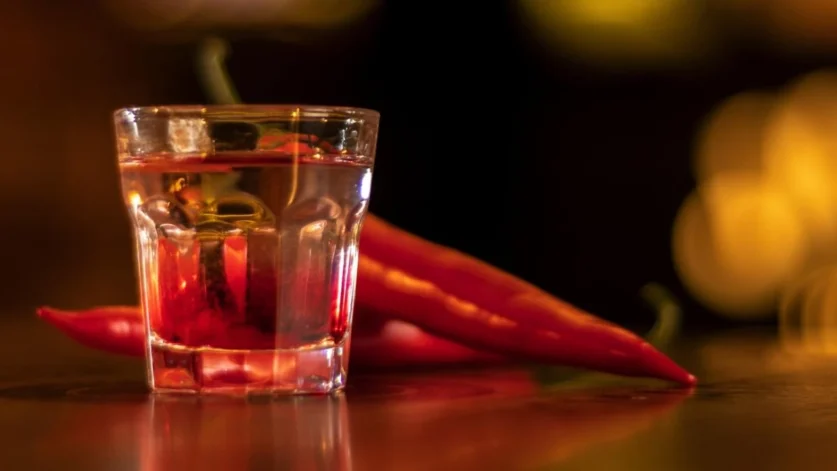
Many whiskey enthusiasts express their concern about flavored whiskey, equating the addition of any flavoring to an excellent whiskey as blasphemy. However, the continued production of the same by notable distillers like Jack Daniel’s, is evidence of its popularity. Flavored whiskeys infused with apple, honey, or cinnamon, our focus today, provide a delightful twist from the traditional oaky content. Navigate to this page for an insightful read on flavored whiskeys.
A standout in the flavored whiskey world is undoubtedly Cinnamon whiskey. Infusion of fresh cinnamon sticks into the drink brings forth a unique mix of teasingly sweet and spicy notes, distancing it from the overly sweet options such as apple or honey-flavored whiskey. If you ever enjoyed the tingling sensation of cinnamon candies as a child, a sip of this beverage is a sure trip down nostalgia lane. The whiskey begins with a sweet undertone and then escalates into a distinctive spicy flavor, a different experience from the typical alcohol burn.
Such a rapid transition from a gentle warmth to an intense punch is why cinnamon whiskey, with Sazerac’s Fireball being especially favored, is the go-to for those seeking a thrill with their alcohol. However, if you’re feeling adventurous, you could intensify this experience by incorporating dried red chili peppers into the mix. The chili peppers’ heat couples surprisingly well with the cinnamon warmth in the whiskey, leading to a more exhilarating and complex flavor combination portraying the beverage’s bold character and taste.
Additional reading: The 25 Best Bourbon Brands, Ranked
Making your own cinnamon and chili whiskey at home is easier than you might think. Here’s what you’ll need: a standard 750-milliliter bottle of whiskey, about five to six cinnamon sticks, ¾ of an ounce of simple syrup, and four to five dried red chili peppers. Opt for a lower-shelf whiskey since the infusion will wash out all the subtle finishes. Instead, save the good stuff for sipping straight!
Start by pouring the whiskey into a mason jar, then add the cinnamon sticks and simple syrup and give it a good stir for about a minute. Seal the jar tightly, shake it well, and then place it in a cool, dark spot for five days. Give it a good shake every day during this time. After these five days, you’ll have your very own homemade cinnamon whiskey ready to enjoy! At this point, you can take a swig and see how you like it.
If it’s not spicy enough for your liking, toss in the dried red chili peppers, seal the jar again, shake it up, and let it sit for an extra two days. Give it another taste afterward. Want more heat? Seal it back up and let it infuse for a day or two more. Once you’re happy with the spice level, simply run the whiskey through a strainer to filter out the cinnamon sticks and chili peppers and your homemade chili-cinnamon whiskey is ready to go!
Read the original article on Tasting Table.
Unveiling the Secret Weapon for Mouthwatering Chili: Root Beer!
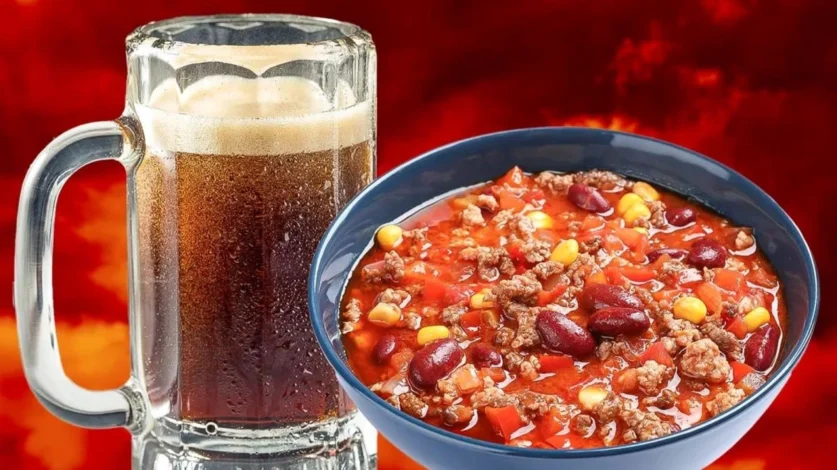
The real reason root beer was invented wasn’t for the creation of root beer floats, although these delightful ice cream based drinks are a wonderful fringe benefit. It was actually a result of colonial settlers’ innovation to attempt beer production without hops. Despite not becoming a true beer, this beverage has developed its own unique place in our assortment of drink choices over time. Root beer has earned its position in the cooling box full of soda for outdoor gatherings, but interestingly, it also has a place in your favourite pot of chili. This seemingly odd inclusion may actually be a secret weapon to make this well-loved dish enjoyable for both children and adults.
The addition of root beer provides the chili with both a subtle sweetness and a sharp, herbal spice that gastronomy enthusiasts will find tantalizing on the palate. This fizzy drink incorporates flavours extracted from sassafras root, licorice, wintergreen, vanilla, cloves, cinnamon, molasses, and sugar. These are all flavours that perfectly complement a bowl of chili. The soda’s sweetness is well-balanced and helps to alleviate some of the spiciness of the chili recipe. Simply replace some of your tomato juice with root beer or use it instead of the beer that you would normally add.
Read more: Tips You Need When Cooking With Ground Beef
However, it’s important to remember to add your root beer to your chili slowly due to the carbonation. Bubbles will fizz and sizzle when exposed to heat. As the root beer cooks along with your ingredients, its flavour is going to intensify, and it will assist in tenderizing the meat in your hearty winter dish.
Be careful about being heavy-handed when you pour. Root beer, by its nature, is sweet, so it may take some trial and error to discover just how much of it you want to add. Some recipes call for a single can while others suggest using more. Just remember, chili is about balance. You want to make certain the sweet, the savory, and the heat are all aligned. If one is out of sync, it throws the whole pot off. So, if you find your chili is teetering towards too sweet, reach for a little squeeze of lemon or a splash of vinegar to smooth it out. Try this root beer trick the next time you make Texas red chili or live on the wild side and give your classic Cincinnati chili a new take.
Read the original article on Tasting Table.
Innovative Booze Company Creates Vodka from Climate-Warming Carbon Dioxide

A tech start-up aspires to decrease the beverages industry’s carbon emissions by half by employing atmospheric carbon dioxide to produce a vodka-like liquor that might hit UK shelves in the next three years.
Salute! A liquor company claims to have discovered an environmentally friendly method of enjoying a drink while also aiding the planet. Aircohol, a tech start-up, is developing vodka-esque spirits using solely the greenhouse gas carbon dioxide. They project it could be available for purchase in the UK in as little as three years for those who enjoy a drink.
The founder, Simo Hämäläinen, shares that early tasting sessions hinted at flavors of “grass, earth, and sweetness,” which he assures is uncommon but pleasant.
However, Aircohol’s biggest selling point is its potential to significantly reduce the beverage industry’s carbon emissions.
Studies have compared alcohol production’s yearly greenhouse gas emissions to the combined emissions of every car in the United States—roughly 276 million. “Aircohol could potentially arrive in the UK market within two or three years. It’s in our sights,” said Simo. “Our goal in Finland is to bring a product to market this year.”
Aircohol’s distinguishing element is a bioreactor, which rapidly converts carbon dioxide into alcohol via a two-day fermentation process, producing zero greenhouse gases. The resulting alcohol is distilled, similar to the process used for vodka production, resulting in a robust spirit of up to 60% strength, ready for consumption. It’s possible to produce beers as well, but this would necessitate the addition of extra ingredients, such as malts.
Established in 2022, Aircohol asserts that its procedure not only reduces carbon emissions, but also conserves vital resources such as wheat and barley, which are typically utilized in the production of alcohol.
In the previous year, the company embarked on a collaboration with Brukett, a Finland-based brewery known for producing beverages like Magners cider. Aircohol, currently employing six people, recently amassed €2.4m (£2m) in funding and reports it is in discussion with prominent alcohol corporations worldwide.
Sign up to receive email updates from our environment editor concerning green affairs and measures you can partake in.
My Personal Selection of Natural Wine Bars and Restaurants in Paris

For more than a decade, our Parisian natural wine bar and restaurant project has been thriving. We’re not particularly fixated on “natural wines”, as they can be hit or miss, but we have companions who appreciate these wines greatly. Therefore, in the spirit of friendly gatherings and culinary exploration, we occasionally host diner parties at “natural wine bars” or more often, “natural wine restaurants”, and always insist on trying a new place each time. This pursuit has led us on a delicious journey filled with remarkable restaurant discoveries across Paris, the finest of which you can find in this blog section.
With an overwhelming number of around 26,000 restaurants in Paris, making a dining decision can prove to be quite a challenge. Although, the international media do offer noteworthy recommendations in their restaurant reviews, these mostly incline towards popular tourist dining spots and often keep circling back to the same few establishments. Possibly, this is because once a restaurant gets recognized by the media, it is bound to receive additional coverage.
However, this project of ours doesn’t aim to merely follow the masses. We favor local, neighborhood-style establishments over touristy, glamorous ones, with our primary focus being on quality food and drinks. So when compared to majority of the media features, our chosen restaurants are often reasonably priced and tucked away in the less trodden districts of Paris.
Note on photography: The image “Restaurant Simone, Paris” was provided by BKWine Photography and has been removed to comply with the blog’s content guidelines.
The project has been ongoing for more than a decade, with visits to around 50 different dining establishments. The focus on “natural wine” isn’t a major concern. A few that our friends find appealing is sufficient. Alternatively, some organic wines could serve the purpose. Nowadays, virtually all eateries in Paris offer a range of so-called natural wines for selection.
Your preference for natural wines doesn’t significantly impact this, as these restaurants offer excellent food and wine options. They reflect the relaxed vibe of Parisian neighbourhoods, deviating from luxury or fine dining, making them ideal places to hang out with friends.
To provide some guidance, here’s our list of top 47 (counting till now) restaurants included in the project:
Restaurant Chez Nathalie, Paris, copyright BKWine Photography
9 rue Decres, 75014 Paris.
Really nice small restaurant behind the Gare Montparnasse. Very much “neighbourhood” style.
13 rue des Petits Champs, 75001 Paris.
A long-time classic and favourite run by Mark Williamson for more years than he’d like to admit. Not particularly oriented towards natural wine but an outstanding wine list and excellent food. Read more on Willi’s Wine Bar and Maceo in this article.
14 rue du Jura, 75013 Paris.
A tiny neighbourhood restaurant close to Salpetrière and rue Monge. The kind of place that you wish you had around the corner to pop into when you don’t care for cooking. Good food, short wine list.
Restaurant Tadam, Paris, copyright BKWine Photography
49 Avenue Jean Moulin 75014 Paris.
Once upon a time, the location occupied by La Régalade was a renowned restaurant operated by Yves Camdeborde, who is credited as a pioneer of Parisian “bistronomy”. Today, the place is under new management with a different name, but it remains a delightful venue for classic French fare. The restaurant also boasts a commendable wine list.
The restaurant is located at 45 Rue Vandrezanne, 75013 Paris.
On the eastern edge of the city, close to La Butte aux Cailles and just behind Place d’Italie, you can find another charming neighborhood eatery. This restaurant offers the luxury of outdoor seating, completely free of traffic, making it an idyllic spot for a warm summer evening. The menu, although concise, features dishes influenced by Oriental cuisine and is paired with a curated selection of wines.
You can find this restaurant at 1 Rue Charles Fourier, 75013 Paris.
More of a regular café-bistrot indeed, but its lovely location features a large “terrasse” on a quiet square in the less-traveled area of Paris known as Les Peupliers. It’s definitely worthwhile to take a stroll in this neighborhood and discover its architectural gems, such as the houses on rue du Docteur Lery and La Cité Fleurie.
You can find this charming café at 15 Rue des Petits Champs, 75001 Paris.
Belonging to the same family as Willis Wine Bar, this place is owned by Mark Williamson as well. While the Wine Bar maintains a casual vibe, this one offers an elegant ambiance. You can expect great value for your money in a calm and serene environment coupled, of course, with Mark’s exceptional wine list.
The address is 33 boulevard Arago, Paris 13.
We had previously visited this place, receiving an exceptional dining experience with their five-course tasting menu. Although not as phenomenal this time around, it was nonetheless enjoyable and definitely warrants a revisit. The restaurant, a small but ambitious establishment, provides enjoyable outdoor seating which we could avail in September. Their selection of wines is also commendable – an added advantage is their adjacent wine shop.
The location is 151 Rue Marcadet, 75018 Paris.
Found on the less-visited backside of Montmartre hill, it maintains a certain exclusivity, which we found refreshing. Despite its simplicity in style (which we prefer – no pretentious designer tables or overwhelming lighting), their ambitions are high when it comes to food. There is also an abundance of enticing wines. It’s unfortunate that this gem of a place is quite a distance from us on the other end of Paris. Paris 18 and surrounding areas prove to be great hunting grounds for natural wine restaurants or wine bars.
Restaurant Bistrotters, Paris, copyright BKWine Photography
19-21 fossées St Jacques, Paris 5.
This sought-after venue often features in discussions on natural wines or wine bars (restaurants) in Paris. Its longevity is only one of its many charms. Located merely a stone’s throw away from Panthéon, the place offers a fusion of comfort and taste. Despite its crowded and slightly cramped ambience, a short menu filled with traditional café favorites like oeuf mayo and an elaborate wine list cater to every preference. Added bonus: a delightful terrace.
5 rue des Petits Hotels, Paris 10.
Be prepared to discover a gem in the heart of Paris. Albeit small, the location leaves a big impact with its slightly Asian and Latin influenced affairs (“Japanese fusion” anyone?). Thanks to a short and dynamic menu coupled with a unique and captivating wine list, food lovers are in for a treat. Notably located near Gare du Nord and Gare de l’Est. It is also in the vicinity of l’Eglise Saint Vincent de Paul which is surrounded by other notable restaurants.
4 rue Biscornet, Paris 12.
Located in the less heralded 12 arrondissement, this splendid eatery is just a short walk from La Bastille, tucked away in a tranquil street.
37 rue du Couedic, Paris 14.
A recently inaugurated eaterie during our visit. Predominantly Italian, although this isn’t overtly noticeable in their menu, the restaurant emphasizes on natural wines in their wine list. It’s a quaint and pleasing place, notably distanced from crowded tourist spots. You’ll find it near Place Alésia in the 14th.
28 rue Notre Dame des Victoires, Paris 1.
Near La Bourse (Palais Brongniart), it boasts a sophisticated ambiance. While its name implies “I’ve forgotten the name,” the restaurant indeed remains memorable with its excellent cuisine.
10 rue de la Butte aux Cailles, Paris 13.
Nestled in the lesser-known but decidedly charming area of Paris, Le Butte Aux Cailles – just a short distance from Place d’Italie. Many excellent eateries are available here and this one is traditional (perhaps vintage?) café-bistrot.
25 rue de Bruyère, Paris 9.
“Your neighborhood bistro”, certainly, a charming community restaurant (which is still present!), the kind that you can only discover in France. Situated between Pigalle and Gare St Lazare.
8 rue de Mont Louis, Paris 11.
Nearby the Père Lachaise cemetery on a miniature side-street. A classic, small bistro that seems to maintain multiple locations in Paris, even on Champs Elysées.
35 rue Nationale, Boulogne Billancourt.
This establishment ranks highly for the superior quality of its cuisine. Nonetheless, it appears to have metamorphosed into a more refined (and somewhat pricier) dining venue that exclusively offers prix fixe meals.
30 rue de la Folie Méricourt, Paris 11.
A surprisingly large local eatery, rumored to have a fireplace. Traditional French food, fine wines. Incredible it perseveres in the neighborhood.
22 rue du Plateau, Paris 19.
The first dinner in our Paris natural wine bar and natural wine restaurant project. One of the perhaps now legendary bistronomique restaurants up at the Butte Chaumont. Excellent wine selection and good food (but a bit disappointed by the service). It’s still there so it must be doing something right.
—Per Karlsson
608 Brewing’s ‘Hot for Chancellor’ Beer Sells Out Amid Controversy in La Crosse
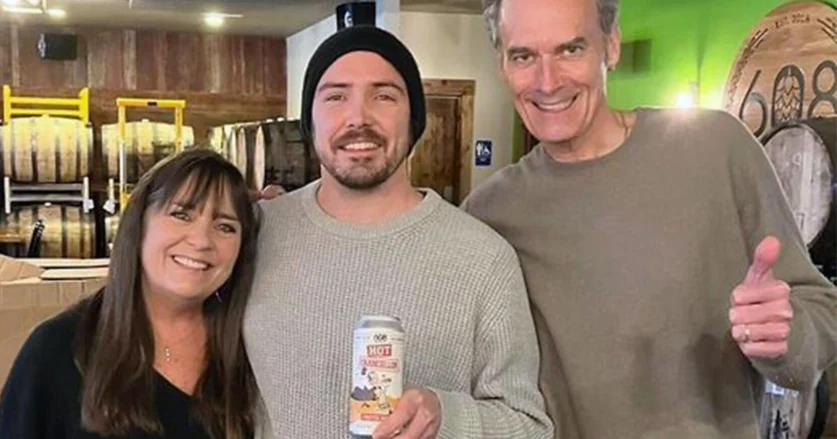
Carmen Wilson, Will (the can designer), and Joe Gow take a picture together with the “Hot for Chancellor” sour ale at 608 Brewing Co.
The UW-La Crosse Chancellor, Joe Gow, who was recently dismissed because he was sharing adult content videos with his wife, is now being made fun of through a new beer that was released on Tuesday at a brewing company in La Crosse.
The sour ale which comes from 608 Brewing Co is titled “Hot for Chancellor” to hint at Van Halen’s famous song “Hot for Teacher”. The sour ale has a variety of fruity flavors including cherries, apricots, peaches, and vanilla. It also has an alcohol content of 5 percent.
The Universities of Wisconsin Board of Regents dismissed Gow on December 27. The reason for his dismissal was because he starred in and shared online explicit movies that featured himself, his wife, and other adult actors. Despite the circumstances, Gow defended his actions by claiming it fell under protected speech.
General Manager at 608 Brewing Co. Justin Kotlarz pours a glass of the brewery’s “Hot for Chancellor” beer on Thursday, Jan 11. The limited edition beer cans sold out in 30 minutes, and the remaining brew will be available on tap until it runs out.
608 Brewing Co. owner Phil Humphrey said the sour beer was already on hand as the Gow story was coming to light. Normally, it would take two to three weeks to get a new beer going.
The 608 Brewing staff came up with the can design on a whim, knowing the sour beer was available for a new design. The presentation came together more quickly than most of ideas as the process took off.
“We don’t get a whole lot of things in La Crosse that go national in a way that’s not highly political. We prefer to steer clear from the intense political dramas. So, it happened rather unexpectedly I guess,” Humphrey articulated. “There isn’t a concrete reason or precedent of how it occurred, we were merely tossing around ideas.”
An exemplar can of 608 Brewing Company’s “Hot for Chancellor beer,” boasts an artistic rendering of the former UW-L Chancellor Joe Gow, who was dismissed from his role in December.
Gow and his wife made a visit to the brewery on Wednesday and posed for a photo with the creative mind behind the can design. Humphrey indicated that the couple appeared to be enjoying the playful design and were supportive of the concept.
“They didn’t appear to interpret it as a form of slander or anything of that sort — which it clearly was not. We were simply making light of the entire situation. They expressed their fondness of the beer and conveyed their gratitude,” Humphrey pointed out. “For us, this is somewhat amusing. I am aware that some individuals may not find it comedic. We’re not intending to cause any distress, merely playfully poking fun at the circumstances.”
The cans sold out in 35 minutes Tuesday. The sour ale remains on tap at the brewery for the time being. The brewery tries to debut a new beer with new designs weekly.
608’s limited edition brew gets its color from the cherries used in the brewing process.
Karlie Somerton, a brewer at 608 Brewing Company, holds the last remaining four-pack Thursday of the limited edition “Hot for Chancellor” beer, which was reserved by an employee.
Get local news delivered to your inbox!
Joe Gow was fired Wednesday by the UW Board of Regents for starring in and posting pornographic films featuring him, his wife and other adult …
On Thursday, fired UW-La Crosse Chancellor Joe Gow said he and his wife have been filming pornographic encounters with various adult entertain…
Check out the latest news as the second big snowstorm of the week moves through southern Wisconsin on Friday.
Big Whiskey’s Expands with Two More Locations in SW Missouri as Two Springfield Restaurants Shut Down
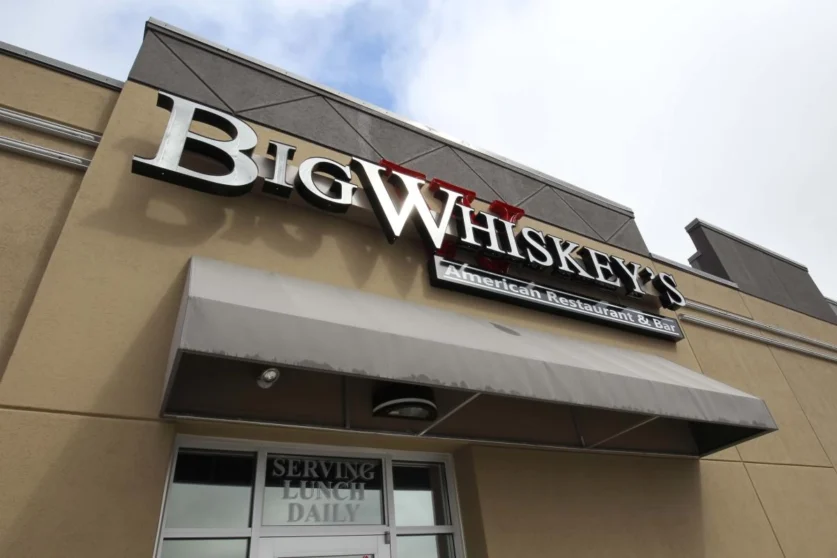
This week in Springfield-area restaurant and food news: Big Whiskey’s announces plans for new locations, a favorite buffet closes, Gettin’ Basted branches out in Branson and a Chinese food restaurant closes.
Big Whiskey’s announced last week that two new Ozarks locations would be opening in 2024, according to a press release.
Stores in Neosho and Lebanon are slated to open in early summer 2024.
“Neosho and Lebanon are growing and developing communities. We love being in cities like this where we get to be a part of all of the celebrated moments of life, whether it is catching the big game or celebrating a little league win; we aim to be the place where life happens,” said Paul Sundy, Big Whiskey’s co-owner, in the press release.
Golden Corral, 2734 N. Kansas Expressway, closed without warning earlier this week. The Kansas Expressway location is listed as permanently closed on the Golden Corral website.
A sign on the door thanked patrons for 18 years at the location.
Don’t want to miss out? Stay in the loop with the News-Leader’s Restaurant Roundup newsletter
Owners of Gettin’ Basted have opened a sandwich shop in Branson: Mythical ‘Wich at 113 E. Main St.
The store launched in the later part of December 2023 and offers breakfast all day, sandwiches, and a variety of soups and salads. Mythical ‘Wich is operational from 9 in the morning to 6 in the evening on all days.
CreAsian, located at 501 W. Chestnut Expressway, has unfortunately shut its doors. As per a notice on its main entrance, the establishment ceased operations on Dec. 25th, 2023.
Any attempts to reach out to the provided email address on CreAsian’s Facebook page were futile as it bounced back, undelivered. The website, too, remains unreachable.
CreAsian first opened its doors in Springfield in 2011, as per the original business license issued by the City of Springfield.
Susan Szuch reports on health and food for the Springfield News-Leader. Follow her on X, formerly known as Twitter, at @szuchsm. Story idea? Email her at sszuch@gannett.com.
This article originally appeared on Springfield News-Leader: Ozarks to get 2 more Big Whiskey’s; 2 Springfield restaurants close
Planteray Rum”: The New Name for Plantation Rum
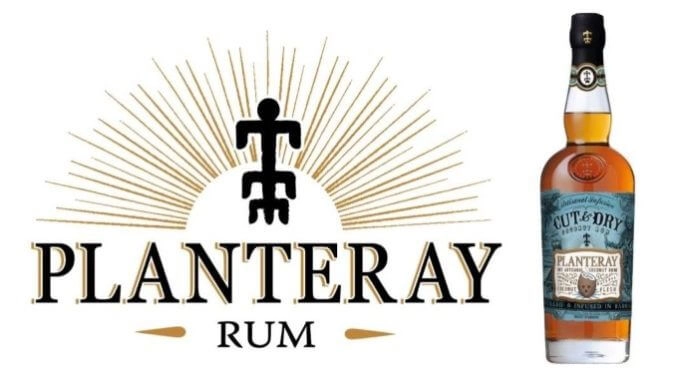
After a lengthy period of contemplation and public feedback, Maison Ferrand has finally decided to change the name of their Plantation Rum brand. The brand will now be known as Planteray Rum, an announcement that was made by Maison Ferrand owner Alexandre Gabriel at the West Indies Rum Distillery in Barbados. The first product to carry the new name will be Cut & Dry Coconut Rum, with follow-up brands to be released as soon as the existing supply of bespoke bottles run out.
In a recently held press conference, Gabriel explained that the new name is a tribute to the sugarcane plant and the sunbeams necessary for its growth and maturity. Despite this explanation, the new name has received mixed feelings from the public with some people interpreting it as ‘planetary’. However, it’s clear the idea behind the new name was to retain some visual similarities with the word ‘Plantation’, while distancing itself from the old name’s controversial and racially charged history.
The selection of the name ‘Plantation’ was widely criticised due to its historical connection to slavery, particularly during the Black Lives Matter protests in 2020. Before these protests, the brand stated that the name ‘Plantation’ was simply related to the French term for ‘farm’. However, in light of recent events and public sentiment, the brand acknowledged the hurtful associations the word ‘Plantation’ might evoke, especially considering its association with the horrific realities of the past.
Consequently, Maison Ferrand, who also owns Citadelle Gin and Ferrand Cognac, set out to find a new name for their rum brand. The search for a new name took more time than anticipated, which upset many activists who accused the company of intentionally delaying the process. However, Alexandre Gabriel in a 2022 interview, refuted these claims by arguing that international business and trademark laws significantly slowed down the process. He described the process as ‘daunting and lengthy’ and stated that the final name had to be globally marketable in more than 100 countries where the company has its distribution network.
It would seem that Planteray Rum is that name, odd though it may sound at first blush. Regardless, it could be quite a while longer before the name starts showing up on familiar Plantation Rum brands in the U.S., as the company works through a sizeable supply of custom glass embossed with “Plantation.” Eventually, however, the new name will appear front and center on all the company’s products, with the rest of the labels remaining unchanged. Here’s hoping that “Planteray” doesn’t turn out to be insensitive in some other manner, when all it said and done.
Jim Vorel is a Paste staff writer and resident liquor geek. You can follow him on Twitter for more drink writing.
GET PASTE RIGHT IN YOUR INBOX
The best music, movies, TV, books, comedy and more.
<!– –>
<!– –>
Innovative Booze Company Transforms Climate-Warming Carbon Dioxide into Vodka

A tech start-up aims to cut the beverage industry’s carbon emissions in half by utilizing atmospheric carbon dioxide to produce a vodka-like spirit. This innovative product could potentially hit UK shelves in a mere three years.
Cheers to saving the earth! Alcohol company Aircohol claims to have discovered an eco-friendly method of creating spirits, specifically a vodka-like concoction, solely from the climate-heating gas, carbon dioxide. Coincidentally, Brits who enjoy a tipple might see this product available for purchase in their country in as little as three years.
The company’s founder, Simo Hämäläinen, shared that the early taste trials of the spirit have resulted in tasting notes of “grass, earth, and sweetness” – an unusual but positively received combination.
Despite the unique taste profile, the selling point for Aircohol remains its potential impact on the climate as it has the capacity to substantially decrease the beverage industry’s carbon emissions.
Emission research indicates that annual alcohol production produces the equivalent amount of greenhouse gasses as all of America’s personal cars combined – that’s approximately 276 million vehicles. Simo expressed optimism about Aircohol’s potential, stating, “We could be seeing Aircohol in the UK within the next two or three years. It’s one of our target markets. We also plan to unveil a product within Finland this year.”
Aircohol’s groundbreaking technology is a bioreactor that transforms carbon dioxide into alcohol via a swift, two-day fermentation process that doesn’t produce any greenhouse gases. This alcohol is then distilled, much like vodka, into a potent liquor that can reach up to 60%, making it ready for consumption. Beers can also be created, although they necessitate additional ingredients such as malts.
The company Aircohol, established in 2022, asserts that their procedure reduces carbon emissions and conserves raw resources such as wheat and barley, which are commonly used in alcohol production.
In the previous year, the company formed a collaboration with Brukett, a brewery based in Finland, which manufactures beverages such as Magners cider. Aircohol, which employs six people, recently secured an investment of €2.4m (£2m), and is reportedly in discussion with top alcohol companies globally.
Sign up for email updates from our environment editor for updates on green matters and actions you can execute.