Beer-articles 1026
Reflecting on the Chaos: 50 Years Since Cleveland’s Infamous 10-Cent Beer Night

The Plain Dealer’s front page coverage was extensive, spanning six columns with two headline decks, a format typically used for significant news stories and major events.
Take me out to the riot
Let us drink, drink, drink, for the home team,
If they don’t win, we’re to blame.
For it’s beer in a cup, at 10 cents a pop
At the old ball game.
CLEVELAND — Stories abounded last week here and elsewhere marking Tuesday’s 50th anniversary of the memorable 10-cent Beer Night at Municipal Stadium. Some of them cranked out the old saw speculating that, while the official attendance had been 25,134, in the retelling, the number of people who claimed they were there that night would total many times that.
Well, I was there, and I’ve got the bylines to prove it.
For some time, I had the uncanny ability to attend sports events that ended up having quite odd outcomes.
I happened to be at the Cleveland Browns Stadium during the incident famously known as “Bottlegate,” which took place on December 16, 2001, during a match against the Jacksonville Jaguars. That day, Cleveland fans famously threw a fit, launching plastic bottles at the officials and everyone nearby, resulting in a 20-minute delay with just about 40 seconds of the game left to play. expressing their disappointment.
I was also present at the old Municipal Stadium shortly before the notorious Beer Night. It was a regular game against Kansas City, but The Great Wallenda decided to walk a tightrope set up high above the infield before the game started. The umpires, perhaps jokingly, declared a new rule stating that if a ball hit the wire, it would count as a ground rule double. Remarkably, Vada Pinson hit the wire with what seemed like a normal infield pop-up, turning it into a double.
At another game, a vocal fan teased Albert Belle about his drinking issues with a shout, “Keg party at my house, Joey!” In response, Belle threw a baseball hitting the fan squarely in the chest, leaving an imprint of the ball’s stitches on him. Although I did not witness it firsthand, I wrote about the incident, commending Belle for his precision and hinting that the fan perhaps deserved it.
Returning to the eventful Beer Night – the scene was already set for chaos.
Only a week prior, the Cleveland Indians had clashed with Manager Billy Martin and his Texas Rangers in a fiery encounter in Texas. The renowned sports talk show host Pete Franklin had been stirring excitement for the Rangers’ upcoming visit to Cleveland. Although I worked as a sportswriter for the Lake County News-Herald, that night I was simply a fan, there with my brother and a college friend, ready to sip some lackluster 3.2% beer and watch the unfolding drama.
As expected by anyone familiar with the volatile combination of copious amounts of alcohol and intense sports rivalry, the result was utter chaos.
In the early stages, spectators behind the Rangers’ third-base dugout exchanged what seemed to be friendly jeers with Martin and his players. From my spot in the first row of the upper deck along the first-base line, the exchanges appeared harmless. At one point, Martin humorously waved a white towel as if to surrender.
Initially, the crowd was spirited yet manageable, but as more alcohol was consumed, the atmosphere deteriorated.
A woman unexpectedly kissed the home plate umpire, Nestor Chylak. Streakers appeared, and several attendees invaded the playing field, prompting security to intervene. Spectators began to hurl hot dogs and beer at the players.
By the middle innings, the scene near the Rangers’ dugout became hostile. People climbed onto the dugout roof, banging on it furiously, which angered Manager Martin. In a heated moment, he gathered gravel from the warning track and threw it at the fans behind the dugout, escalating the unrest.
The chaos intensified as fans started to throw objects other than food. I saw a man rush by with a disused beer bottle wedged in twin paper cups, hurling it a significant distance onto the playing field.
He went back for more ammo and the next time he came down, I threw out my arm to stop him and hit him in the chest. He was a big guy, and as he looked blearily at me, I thought the next thing to go over the side might be me. But he just headed a couple of sections away and threw more missiles toward the field.
I’ve seen it written that the Indians were charging toward a game-winning rally at the end. But from my memory, the Rangers had the game under control heading into the bottom of the ninth inning with a 5-3 lead, and it was the crazies who kick-started the comeback.
As bottles, chairs and anything else the fans could get their hands on rained down on the field, the Rangers pitcher got understandably rattled and the Indians tied the game at 5-5, before Chylak, the umpire crew chief, rightfully ended it with a forfeit.
I had my press pass with me, and as it became clear that things were going to end badly, I went over to the press box and offered to help Hank Kozloski, who was covering the game for the News-Herald. So I wound up doing stories from the umpires’ room and the visiting clubhouse. I saw longtime Plain Dealer baseball writer Paul Hoynes in there, then working for the Painesville Telegraph, who also started the night as a fan but quickly kicked into work mode, too.
I’ll never forget Chylak, a decorated veteran of the Battle of the Bulge, raging as blood ran down his temple from where he had been hit by a chair: “Those people were animals!” he said. “The last time I saw animals like that was in the zoo! The zoo!”
Martin, in the post-game locker room, was in barely controlled fury, describing why he grabbed a bat and led his team out to rescue his right fielder, Jeff Burroughs, who was being surrounded by fans:
“You’re damn right I thought somebody was going to be very badly hurt, that’s why we went out after Jeff.”
Then, as I wrote for the next day’s paper, Martin poured himself a mug of beer and studied the innocent-looking white foam that started it all: “It’s a sad day when a bunch of drunks can run on the field and make a team win or lose,” he said. “It looks like the fans just can’t handle beer night. It’s a real shame.”
A unique story that I haven’t encountered elsewhere is told by former Indians catcher Duke Sims, who recounted an evening out with his Texas teammates, Joe Lovitto and Rich Billings. They ventured into town the previous night.
During their exploration, they encountered a young woman who professed to be a witch and foretold their deaths the next night.
“We all laughed at her,” recounted a perturbed Lovitto after the eventful night. “But after tonight, maybe I’ll take people more seriously if they tell me they’re a witch. It seems she was somewhat right, wasn’t she?”
Ted Diadiun is part of the editorial board at cleveland.com and The Plain Dealer.
To reach Ted Diadiun: tdiadiun@cleveland.com
Have something to say about this topic?
* Send a letter to the editor, which will be considered for print publication.
* Email general questions, comments or corrections regarding this opinion article to Elizabeth Sullivan, director of opinion, at esullivan@cleveland.com.
If you purchase a product or register for an account through a link on our site, we may receive compensation. By using this site, you consent to our User Agreement and agree that your clicks, interactions, and personal information may be collected, recorded, and/or stored by us and social marketing and other third-party partners in accordance with our Privacy Policy.
Celebrating a Decade of Cheers: REO Town’s 10th Annual Beer Fest Returns

The 10th Annual Beer Fest occurred in REO Town on Saturday, featuring over 20 Michigan breweries and hundreds of beers and ciders.
Brewery Rowe: U-T’s Veteran Beer Writer Confronts the Ultimate Taste Test

The formula for crafting Pete’s Wicked Pale Ale was straightforward:
Begin with 30 kilograms of Rahr pale ale malt.
Incorporate three kilograms of Carared malt.
Introduce a vial of yeast.
Ditto, bags of Cascade and Centennial hop pellets.
Stir well with the can-do spirit and crack brewing chops of Guilherme Hoffman.
“It’s just chemistry,” said Hoffman, Novo Brazil’s brewmaster, trying to calm my brewing concerns. “You can do anything you want — there’s no can’t.”
After accepting Novo Brazil’s invitation to brew a beer at its Mission Valley brewpub, I began to have doubts. Having covered this topic for 29 years, I’ve learned a bit about beer. Namely: I’m a writer, not a brewer.
Hoffman has proven his expertise in brewing, achieving recognition through various national awards in Brazil before moving to San Diego in 2021. He soon became the lead brewer at Novo Brazil, a distinguished brewery in Chula Vista known for blending Brazilian vibrancy with the laid-back Southern California style.
Tonight at 6 p.m., our newest creation will be available at Novo Brazil’s Mission Valley location. We invite you to taste and pass judgment: should we keep it or not?
The first feedback has been positive.
“It’s good,” Hoffman remarked. “It’s really good.”
Novo Brazil is at 1640 Camino del Rio N., Suite 341, SanDiego.
Long ago, I stopped trying to judge the intimate relationships of others. Are their joyful exteriors genuine or do they mask interior sorrows? Not for me to say.
By all appearances, though, Sapporo and Stone — hitched in June 2022, when Japan’s oldest brewery acquired San Diego County’s largest craft brewery — are enjoying a prolonged honeymoon.
Sapporo-Stone Brewing, as the company is now known, recently held an open house/press conference/lovefest at the Escondido brewery.
“We are thrilled to carry forward Stone’s legacy and we are committed as a full team to the Sapporo brand,” expressed Hiro Kitaoka, the chairman. “Together, we are stronger and take pride in our expansion as a San Diego enterprise.”
Over the recent two years, Sapporo has allocated $20 million into enhancing the Escondido location, and an additional $40 million into upgrading the Stone facility in Richmond, Virginia.
Defying the current downturn in beer sales, both the Stone and Sapporo brands have seen an impressive growth of over 13 percent in 2023. This year, the company is projected to produce 700,000 barrels, each being 31 gallons, with an equal production split between the Sapporo and Stone brands.
Among the visitors of the Escondido brewery was Steve Wagner, a retired co-founder. He observed the large operational brewing and packaging facilities, buzzing with activity, in what is known as the nation’s 12th largest brewery.
Was this his goal when he and his partner, Greg Koch, opened Stone in 1996?
He shook his head. “My goal was just to make great beer,” he said.
Sunday: Some books inspire reflection; Johanna Flashman’s “Beer Hiking Southern California” inspires strolls and sips. At 9 a.m., she and the Earth Discovery Institute will lead a 1.6-mile hike below Mother Miguel Mountain, followed by a hydration stop at Chula Vista Brewery. Mother Miguel Mountain Trailhead: 2345 Paseo Los Gatos, Chula Vista. Chula Vista Brewery: 871 District Place, Suite 102, Chula Vista. Register at earthdiscovery.org
Thursday: Hops on the Fairway, the 10th annual San Diego Brewers Guild golf tournament, tees off 10 a.m. at The Links at Lakehouse, San Marcos. Entry fees, $200 on up, include reception, tournament and dinner; proceeds benefit the Guild. 10 a.m. June 13. The Links, 1750 San Pablo Drive, San Marcos. Register at sdbeer.com.
Clara
From: Puesto, San Diego
ABV (Alcohol By Volume): 4.7 percent
Style: Mexican Lager
Drink or dump: Drink. Doug Hasker, Puesto’s brewmaster, is celebrated as San Diego’s lager expert, and Clara is a testament to his expertise. This beer is light and refreshing, characterized by its lively carbonation and a solid malty backbone. The hops are subtle, becoming more apparent towards the end, where they contribute a gentle yet persistent bitterness.
Sapporo Premium Beer
From: Sapporo-Stone, Escondido
ABV: 4.9 percent
Style: Japanese Lager
Drink or dump: Drink. The signature beer from Japan’s Sapporo, now produced in the Stone’s Escondido facility. It features a light body, a subtle yet persistent herbal hop flavor, gently sweet malts, and lively carbonation.
Japanese Lager
From: Harland Brewing, San Diego
ABV: 5 percent
Style: Japanese Lager
Drink or dump: Drink. Step aside, Miller Lite. Offering a less filling, yet great tasting experience and the distinction of being a craft beer, Harland’s Japanese Lager serves as an excellent refreshment for summer days. It incorporates both Puffed Jasmine rice and toasted rice flakes, imparting a distinctive, crisp, and light flavor.
Rowe is a freelance writer.
Top Hazy IPAs from the World Beer Cup: Expert Picks and Reviews

Over 326 hazy IPAs were entered into this year’s World Beer Cup. Below are the judges’ top three selections. The World Beer Cup is highly regarded in the craft beer community, particularly for its juicy or hazy IPA category. This year, over 326 hazy and hoppy IPAs competed. From these, only three were awarded medals, with one claiming the gold.
This unfiltered beer variety is true to its name, featuring a hazy, cloudy look. Hazy IPAs are famed for their intense hop aroma and minimal bitterness, alongside a smooth, pillowy texture and vibrant, juicy tropical tastes. This style has dominated the industry over the last decade, although it’s challenging to perfect. Since hazy IPAs are unfiltered, they must be consumed promptly to maintain their peak flavor, which can quickly decline. Moreover, poorly crafted variants may retain excess yeast, causing an undesirable “yeast burn” flavor. Despite my numerous disappointing experiences with this type, leading me to generally avoid it when the brewery is unknown, a well-crafted hazy IPA remains a remarkable find, like the award-winners mentioned below.
This particular IPA, brewed with Citra and Mosaic hops, features a 6.9% ABV and 45 IBU. It’s not just a World Beer Cup winner; it also claimed gold at the 2019 Great American Beer Festival. While it isn’t available for nationwide shipping, it’s certainly worth a visit to Chicago to try.
This California brewery is “Inspired by a spirit of adventure, creative thinking and a healthy respect for the great outdoors.” The beer list is constantly rotating, so you may not be able to find Art Isn’t Real but there are other hazy options always available on tap and beers from the brewery have won previous accolades. If you live in California, you can have MadeWest beers shipped directly to your house.
According to the brewery, “This Hazy IPA hits all the notes with a nice soft body, easy bitterness, and [is] bursting with tropical fruit.” It has a 7.2 ABV and features Sultana, Simcoe, HBC 586, and HBC 630 Citra, hops. The beer’s name is based on fun brewery lore: the brewery’s unofficial mascot is King Lupu and Queen Lupu is a follow-up a King Lupu beer that was previously brewed.
One Community. Many Voices. Create a free account to share your thoughts.
Our community is about connecting people through open and thoughtful conversations. We want our readers to share their views and exchange ideas and facts in a safe space.
In order to do so, please follow the posting rules in our site’s Terms of Service. We’ve summarized some of those key rules below. Simply put, keep it civil.
Your post will be rejected if we notice that it seems to contain:
User accounts will be blocked if we notice or believe that users are engaged in:
So, how can you be a power user?
Thanks for reading our community guidelines. Please read the full list of posting rules found in our site’s Terms of Service.
Brewing Made Easy: Discover the Ultimate Machine and Ingredient Kits for Homemade Beer

Posted on Jun 5, 2024 9:00 AM EDT
If you thought nothing could beat the feeling of cracking open a cold one on a hot summer day, try brewing your own beer. Years ago, that meant learning what was basically wizardry, but now you can get this all-in-one machine that makes it easier than making your morning coffee.
The iGulu brewer comes with three beer kits, but you can also try your own recipes, like kombucha. Add one to your cart and sip away at home craft beer all summer long for $699 (reg. $806.97) and get it shipped free.
Can you believe it only takes three small steps to make your own beer? Just stir the ingredients into filtered water, tell iGulu what you’re brewing, wait seven days, and pour yourself a frosty glass.
Choose from the Amber Lager, Pale Ale, or Bavarian Wheat Hefeweizen kits and enjoy a fresh gallon for up to 30 days. These are all excellent summer choices and are generally likable if you aren’t familiar with craft beers but want to try something new.
The fastest way to make it yours is by heading directly to checkout now.
For a limited time, the iGulu beer-making kit includes the Master Mode feature for free—an app-enabled option that lets you brew your own beer recipes, a value of $100. You can look up recipes online or create your own mix.
The iGulu device can also be used as a kegerator for 5-gallon kegs, providing a convenient option to chill store-bought kegs during the summer.
Additionally, the company is in the process of developing kits for brewing kombucha, allowing you to enjoy a variety of fermented drinks.
Skip to checkout and make this summer unforgettable with the iGulu brewer available for $699 with free shipping, originally priced at $806.97.
StackSocial prices subject to change.
New York Beer Project Gears Up for the Grand Opening of Beer Lodge in Orchard Park
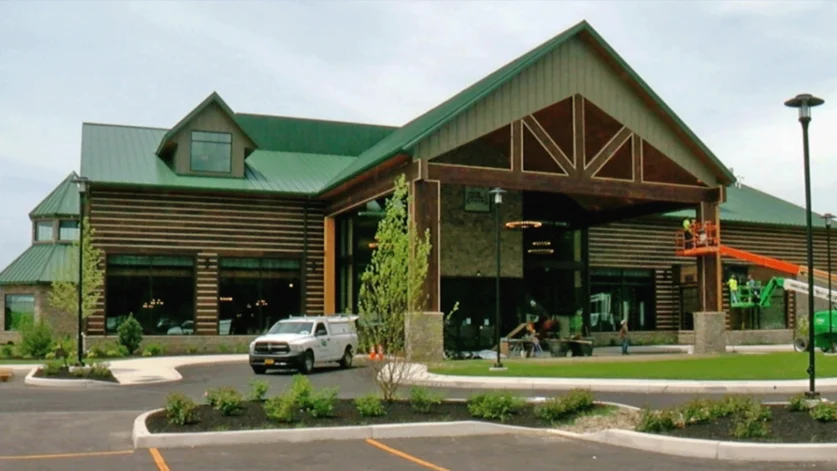
New York Beer Project is preparing to launch its fourth venue, situated in Orchard Park, named the “New York Beer Project Beer Lodge.”
From Hops to Highlights: Loophole Brewing’s Jeff Goulet Dishes on Craft Beer and the Worthy Beer Fest
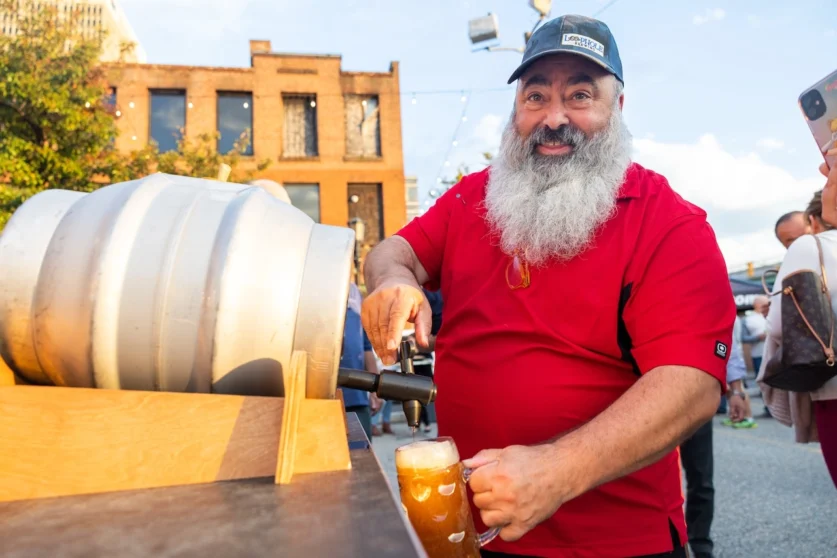
Jeff Goulet, from Loophole Brewery, served himself a drink at the 87th Mighty Oktoberfest on Fort Street in Springfield on the evening of Friday, October 7, 2022.
In the Spanish-speaking world, Bruce Springsteen is referred to as “El Jefe” (“The Boss”).
However, in the beer circles of Western Massachusetts, the title of “The Boss” is owned by Jeff Goulet.
No one perhaps is more fitting of the title than Goulet, not only a co-founder of the fresh Loophole Brewing in Downtown Springfield, but also a pivotal figure in establishing the Worthy Craft Beer Showcase. This annual beer festival is set to take place from noon to 4 p.m. on June 15 this year on Worthington Street.
With Loophole now fully operational following its phased launch in April and with Worthy Fest fast approaching, it seemed like an ideal moment to interview El Jefe (a nickname based on his actual name).
The first thing you should know is that Goulet entered the brewing industry later than many—his journey began out of a sheer annoyance with beer.
“When I was in college, I really hated beer,” he admitted. “I drank gin and tonics and wine. I think what bothered me was the mass-produced quality of the beer. I experimented a bit with some friends who were homebrewing beer and cider, as well as mead and cyser. That experience really captivated me.”
Years later, Goulet was driven by his ongoing dissatisfaction with the norm to start a beer festival of his own.
“So a good friend of mine and I were pretty frustrated with brewfests. Nothing worse than spending tons of time waiting in line to get in, then waiting in another line for an ounce of beer, which you drink while in line for the next,” he said. “We wanted something to showcase the beers, not just consumption. We wanted something staffed by brewery owners, brewers, and brand ambassadors, not brewfest volunteers that likely know little to nothing about your beer.”
One of the ales available at Loophole Brewing is named after Duryea Way in Springfield. (George Lenker photo)
Goulet & Co. also interviewed the other side – the breweries themselves – to see what they liked and disliked about beer fests.
“Many brewfests later, many miles, and even a couple countries, we had a plan set to launch The Worthy.”
The Worthy distinguishes itself with a unique setup of 60 brewers, split evenly between 30 professionals and 30 amateurs, each presenting their finest brews. The vigor and dedication of the participants are what inspire Goulet to orchestrate the event annually.
“It’s the fervor and skill of the home brewers that captivate me. It’s particularly rewarding to watch individuals transition from the amateur tent to the professional brewers’ tent,” Goulet shares about his most cherished aspect of the festival.
By a happy coincidence, Loophole Brewing is located just around the corner from The Worthy’s venue. This year, the festival will expand to include the nearby Duryea Way, a move that Goulet believes is serendipitous.
“We are excited about enlarging The Worthy’s presence this year,” Goulet remarks. “The festival initially began with just closing off Worthington Street, then it expanded into Stearns Square, and now includes Duryea Way.”
While that all seems like a beautifully executed plan, fate definitely seems to have had a hand in the result. Goulet said Loophoole had already had several other potential sites fall through.
“Finding a home for Loophole, believe it or not, has been pretty difficult,” he said. “Finding a place that makes sense for a brewery is a much harder task. Over the past five years, there have been three other locations we were set on opening, but for all different reasons, that never happened.”
The brewery itself is large and spacious, with two floors, a beer garden, a rooftop space overlooking the garden, and an upstairs room with a stage for performers. The capacity is 525 – 325 on the first floor and 200 on the second floor. There are 10 taps. John Geraci (formerly of Amherst Brewery) serves as head brewer, and Goulet has two other partners: Todd Snopkowski, and Aaron Saunders.
Goulet also said that the brewery has no specific targets as far as styles or market segment.
“No particular goals, no specific market segment. We consciously focus on being a well-rounded brewery, offering a variety of styles. We also offer nonalcoholic beer, wine, prosecco, and liquor. Something for everyone,” he said.
What has surprised Goulet the most about his new venture?
“How many people can’t find the building and don’t know we are open. We are at 51-59 Taylor St. in Springfield,” he said. “It’s a giant 15,000-square foot building. Pretty hard to miss.”
Last but not least, which Loophole beer would he recommend to someone visiting the brewery for the first time?
“Easiest question so far – First Encounter. It’s our flagship, our first contracted beer, our first canned beer, etc. It was originally made for the 100th anniversary of Western New England University, back in 2019.”
If you purchase a product or register for an account through a link on our site, we may receive compensation. By using this site, you consent to our User Agreement and agree that your clicks, interactions, and personal information may be collected, recorded, and/or stored by us and social media and other third-party partners in accordance with our Privacy Policy.
Brew Beer Like a Pro: Get Over $100 Off This Fully Automated Home Brewing System!
Thanks for contacting us. We’ve received your submission.
TL;DR: Ever dreamed of making delicious, refreshing beer at home? It’s easier than ever with the iGulu, an all-in-one, fully automated home brew system that’s on sale for $699 (reg. $806).
The modern beer drinker has far more options and flavors to explore than those who came up in generations past. For those of us who have taken to the revolution of craft beer with enthusiasm and excitement, you can finally create your own ale from your apartment with an affordable and capable product.
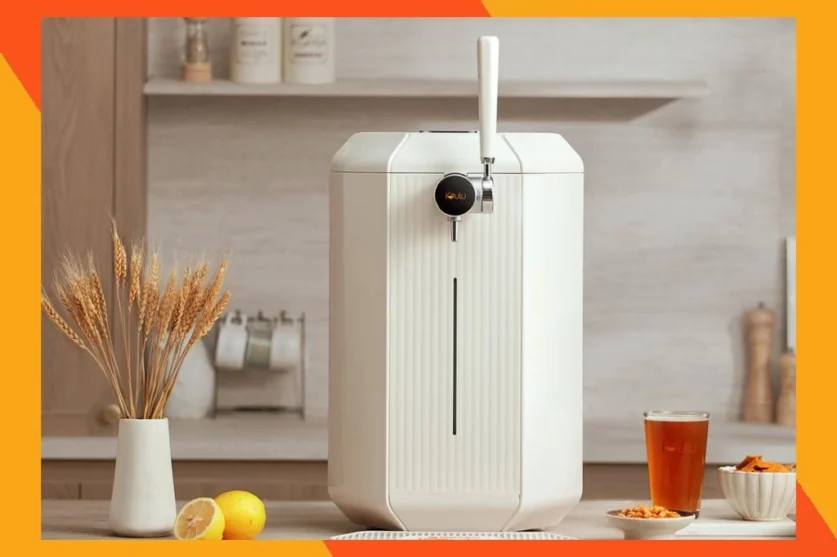
How? With the iGULU F1, an all-in-one, fully automated home brew system designed to make brewing high quality, fresh beer easier than ever and in just a few clicks. Now, this nifty device is on sale for $699 (reg. $806).
Designed to simplify the process of brewing beer in your own home, the iGulu F1 allows its users to brew with ease, much like preparing a cup of coffee in the morning. It involves a straightforward three-step brewing process.
These steps are:
The iGulu is equipped with a variety of functionalities that enable brewing beer at home feasible, including an integrated air pump that streamlines the brewing operation.
Additionally, an automated temperature control maintains the quality of the brewing, while the automatic pressure control and release ensure that the brewing process remains safe and easy for beginners.
This ingenious system features an intelligent fermentation system that actively monitors and adjusts your brew’s fermentation temperature to ensure optimal results. Additionally, its advanced cooling technology and DC compressor offer a wide temperature spectrum and can infuse CO2 into your beer, maintaining its freshness for up to two weeks!
Interested in crafting a specific beer brand at home? The iGULU is compatible with famed brands such as Benediktiner Weissbier and Heineken. Beyond beer, this versatile system also enables you to brew kombucha and other delicious fermented beverages.
iGulu has earned acclaim from both users and experts. It has been highlighted by media outlets including Stuff, Digital Trends, Digital Journal, and CNET.
There’s no need to visit the local beer hall or brewery to enjoy exquisite brews — you can craft them right in the comfort of your home.
Don’t miss your chance to pick up the iGulu F1 All-in-One Automated Home Craft Beer Brewer for $699 (reg. $806).
StackSocial prices subject to change.
Non-Alcoholic Beer Gains Popularity: Could It Dominate at the Paris Olympics?
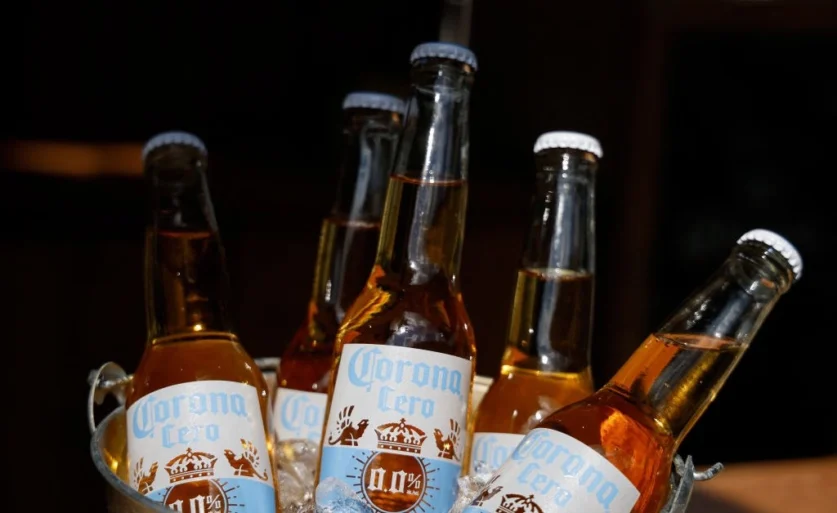
Bottles of beer adorned with the five Olympic rings are currently being produced at Anheuser-Busch InBev NV’s brewery in Belgium, gearing up for the upcoming Paris Olympic Games.
This event marks the first time in 100 years that Paris has hosted the summer Olympics, and the city is determined to make a significant impact, especially after the challenges presented by the Covid-19 pandemic at the virtually spectator-less Tokyo Games. Remarkably, this year’s event will also introduce beer as an official sponsor for the first time in Olympic history, highlighting athletic excellence.
Interestingly, the sponsored brew, Corona Cero, is a non-alcoholic beverage.
Anheuser-Busch InBev, the largest brewer globally, seeks to promote this non-alcoholic variant, launched in Europe only two years prior. With the Paris Olympics poised to be a massive promotional platform, AB InBev aims to capitalize on this opportunity to cement its standing in the fast-growing non-alcoholic segment of the beer market.
Read More: Why Beer Is the World’s Most Beloved Drink
Worth $13 billion and counting, brands from Heineken to Guinness, and now Corona Cero, see a cohort of health-conscious consumers—many young, others older and wanting out of a booze culture—whose wallets they can tap.
Master brewers have been working on formulas to try to replicate the taste and texture of the real thing. Heineken, Guinness and Budweiser are all now available alcohol-free, while hundreds of craft brewers and newer labels are emerging to target the market.
For Michel Doukeris, the chief executive officer of AB InBev, it’s quite simple: “The consumer has changed.”
No-alcohol beer, which consists of beers with an alcohol content below 0.5%, represents a small niche in the beverage market with its annual production of 31.4 million hectoliters. This is significantly less compared to the 1.93 billion hectoliters of alcoholic beer produced globally, data from GlobalData Plc suggests. However, this segment has seen a notable compound annual growth rate of 3.6% since 2018, in contrast to the 0.3% growth rate for alcoholic beer. In the United States, the percentage of adults aged 18 to 34 who report consuming alcoholic beverages has declined from 72% in the early 2000s to 62%, according to Gallup.
These trends are significant for businesses, particularly for major players like AB InBev, which has acknowledged it will likely miss its target of generating 20% of its sales from low or no-alcohol beer by the year 2025. See report.
“Many prominent sports events like the Olympics often feature 0% alcohol variants of flagship beer brands,” explained Susie Goldspink, head of no and low alcohol insights at market researcher IWSR. “This emerging focus is aligned with the growing trend as well as promoting a moderation agenda for responsible consumption.”
This market dynamic also offers broader advantages for beer companies. By marketing their non-alcoholic products under the same brands as their alcoholic versions, these companies enhance brand recognition and navigate the growing restrictions on alcohol advertising more effectively.
The promotion of non-alcoholic beers through sports events is on the rise, with notable examples like Heineken 0.0’s association with Formula 1 and Diageo Plc’s Guinness 0.0 at the Six Nations rugby. Last year, Carlsberg A/S distributed 400,000 cans of the non-alcoholic French beer, Tourtel Twist, at the Tour de France cycling event.
Read more: How to Talk About Beer Like a Pro
Amid increasing brand competition, Carlsberg is strategically placing Tourtel Twist as the preferred non-alcoholic beer for the upcoming Paris Games.
“We are the official beer of Paris and France,” said Jacob Aarup-Andersen, CEO of Carlsberg. “They are the official beer of the Olympic movement. At the events, Tourtel will be the beer you’re served.”
U.S.-based Athletic Brewing Co., which specializes in non-alcoholic beverages, believes that an Olympic sponsorship promotes the growth of the entire category.
“Sometimes to move the needle you need bigger players that can help drive awareness,” said John Walker, the company’s co-founder.
For beverage companies, adapting to shifting trends is critical. These changes have contributed to the downfall of numerous establishments with over 7,000 bars closing in the last decade in the U.K., reports the British Beer and Pub Association. Factors such as alcohol duties, high rents, and stringent regulations have influenced these shifts, alongside evolving consumer drinking habits.
With a focus on millennials and Gen Z, who often use social media and look to decrease their alcohol consumption, it’s crucial for companies to offer appealing alternatives to conventional alcoholic beverages, rather than lose these consumers to competing brands or simpler choices like soda or water.
Heineken 0.0 currently leads the global market in non-alcoholic beer sales, with other top contenders including Suntory All-Free from Japan and Brahma 0.0%, which is owned by AB InBev.
In Germany, home to the world’s oldest brewery still in operation, non-alcoholic beers have been produced since the early 1990s. In 2020, responding to increased demand, Weihenstephan, owned by Bavaria, significantly expanded its production of non-alcoholic beers. Now, its non-alcoholic wheat beer comprises nearly 10% of its total sales and ranks as the third most popular product.
However, extensive marketing alone cannot sustain the non-alcoholic beer segment if the products are not appealing.
Historically, non-alcoholic beer was often viewed as inferior in taste compared to its alcoholic counterpart, which disappointed many consumers. Breweries faced a significant challenge: how to replicate the rich flavor profile of their beers without the alcohol. The question was whether to prevent the formation of alcohol during fermentation or to extract it post-brewing a normal strength beer.
According to Jim Koch, chairman of Boston Beer Company, which brews Samuel Adams, recent taste advancements were achieved as brewers mastered a low temperature distillation technique. The company introduced its non-alcoholic beer, Just The Haze, in 2021.
Introduced in 2017, Heineken 0.0 is crafted using water, barley malt, hop extracts, and yeast—the same ingredients as Heineken. The alcohol is removed through vacuum distillation, and then natural flavorings and aromas are added back to closely mimic the original’s taste.
“For a couple of years, I refused to start developing Heineken 0.0,” commented Willem van Waesberghe, Heineken’s global master brewer. “Because I’d never tasted a good one.”
The Olympic Games are set to begin in two months, with the Opening Ceremony scheduled for July 26. AB InBev is preparing to launch details of its campaign aimed at “accelerating no-alcohol beer growth.”
Beyond that, getting no-alcohol beer on tap is expected to deliver the next leap in terms of volumes, increasing sales in bars by making the drinks more socially acceptable. It’s yet another technical challenge, but one that brewers are working on.
“It’s like rosé in the south of France is always better than at home,” said Waesberghe. “And in a bar you like the draft, it gives you the impression of authenticity.”
Salt & Straw Unveils Exciting New Beer-Based Ice Cream Line
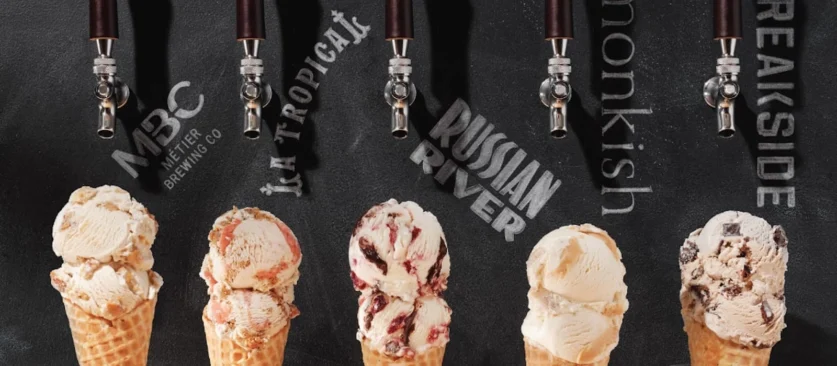
Beer and ice cream are quintessential summer delights.
However, it’s not as simple as mixing a scoop of mint chip into a pint of pale ale.
Instead, you might trust one of the top ice cream parlors to craft a selection of beer-infused ice creams, creating the ideal summer combination as temperatures rise and pool season begins.
The Salt & Straw Brewer’s Series offers a collection of five unique flavors, each blending a distinct beer from various American microbreweries. This series was launched today in stores and online for nationwide delivery, and it will be available until the end of June.
The collection offers a diverse range of flavors, featuring a porter, stout, lager, ale, and hazy IPA. However, the process of making beer-infused ice cream is more complex than just mixing beer with ice cream.
As explained by Tyler Malek, co-founder and head ice cream maker at Salt & Straw, beer alone does not have a strong enough flavor profile to counterbalance the rich fat content of ice cream. Efforts to enhance the beer’s flavor by heating it ended up altering its inherent qualities. Therefore, Tyler had to meticulously break down each beer and reconstruct it into a creamy, sweet version that faithfully represents the original beer flavor in every spoonful. This meticulous process benefits the consumer immensely.
Here is a list of the five distinct flavors available, including details about the breweries involved and the methods used to create these ice creams.
Métier’s Black Stripe Porter & Bread Pudding
Métier Brewing, located in Seattle, stands out as one of the few black-owned breweries in the country and exemplifies how such establishments can foster a sense of community through beer. Tyler combines three types of malts, one variety of barley, and toasted coconut, which he then mixes with additional hops to forge an ultra-concentrated syrup. This concoction is transformed into an unfiltered coconut beer, mirroring the flavor elements of Métier’s Black Stripe Porter. Subsequently, this syrup is blended into an ice cream base along with Donna Moodie’s acclaimed gooey bread pudding from Seattle and crunchy toffee.
Breakside’s Barrel-Aged Chocolate Stout
Located in Portland, Oregon, Breakside Brewery holds recognition as an esteemed microbrewery. Collaborating with lead brewer Ben Edmunds, Tyler created a bespoke barrel-aged beer named Shasta Taffy for this particular flavor. Cocoa nibs are immersed in the brew for four days, post which they are dried and incorporated into chocolate to craft a chocolate bark. This beer-infused bark is then whisked into the ice cream, interlaced with a homemade tres leches cake swirl that uses two types of milk, with the stout serving as the third component.
Russian River’s Supplication Ale w/ Manchego
Russian River Brewing, located in Santa Rosa, California, is renowned for its creation of hoppy and Belgian-style beers. Their notable Supplication Ale is crafted by aging it in pinot noir barrels along with sour cherries for 12 months, and it’s released annually. This distinctive sour brown ale is innovatively combined with a creation of light fudge made by Tyler, infused with three-month-aged Manchego cheese and tart-cherry marmalade, giving a unique twist inspired by a classic beer and cheese tasting experience.
Monkish’s Space Cookies & Cream Hazy IPA
Located in Torrance, California, Monkish Brewing is an Asian-owned establishment that focuses exclusively on Belgian-style beers and is amongst the pioneers of the hazy IPA on the West Coast. Tyler extracts flavors from their Space Cookies beer, reminiscent of ‘nilla wafers, to craft an ice cream. This includes making a hops-flavored simple syrup blended with a citrus syrup crafted from fresh grapefruits and orange zest, mirroring the beer’s flavors, and integrating this with a swirl of ‘nilla wafer cookie butter.
La Tropical’s La Original Lager w/ Guava
La Tropical, which began in Cuba, ceased operations for 60 years following the revolution, only to be revived in 2020 in the Wynwood district of Miami. Using their century-and-a-half-old Cuban Ambar Lager recipe, Tyler crafts a uniquely tropical ice cream. This creation features homemade flan topped with sweet guava drizzle and infused with hints of honey.