Beer-articles 1026
Exploring the Key Differences Between Lager and Stout Beer: A Comprehensive Guide
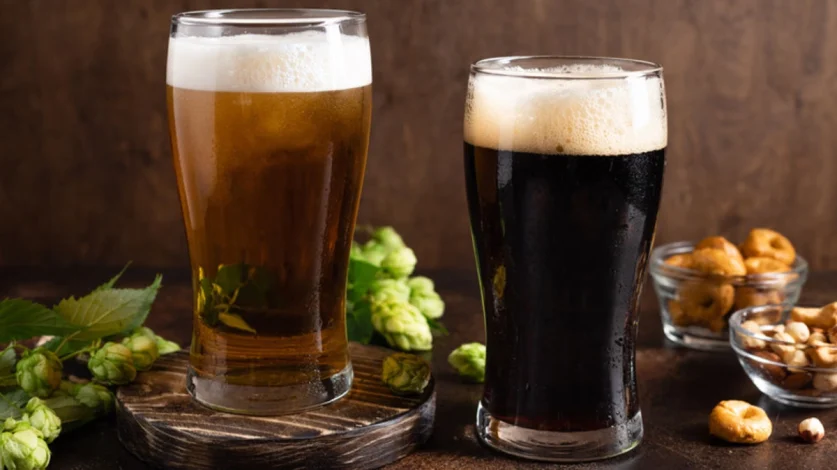
Beer offers a rich diversity, with various brewing techniques, flavor profiles, and alcohol content. Despite the numerous varieties available, all beers fall into two primary categories: ales and lagers. The main difference lies in the fermentation process: ale yeast ferments on the surface, while lager yeast sinks to the bottom.
Among ales, stouts stand out as a significant subcategory known for their darker color and robust flavors. One of the most recognized stouts is Guinness, a staple in the U.S. beer market and even deemed the signature beer in states like Oklahoma and Virginia. Conversely, lagers, which dominate North America’s beer scene, have a lighter and crisper flavor.
The Fermentation Process
Stout and lager fundamentally differ in fermentation methods. Stouts utilize top-fermenting yeast, which operates at warmer temperatures (64-68°F), leading to fruity and spicy flavor profiles. Lagers employ bottom-fermenting yeast, which ferments at cooler temperatures (32-36°F), resulting in a cleaner, crisp taste that many find more refreshing.
Malt and Flavor Variations
Malt plays a crucial role in defining flavors in beer. Stouts often use roasted malts, lending their dark color and deeper flavors reminiscent of chocolate and coffee. While Guinness famously incorporates unmalted roasted barley, other stouts like oatmeal stouts mix in oats for a distinctive nuttiness.
Lagers, typically lighter, also feature malts but focus more on the crisp taste characteristic of the style. Darker lagers, such as bock, do leverage malts extensively, achieving richer flavors while maintaining the refreshing quality of lagers.
Serving Temperatures
The serving temperature of these beers complements their unique characteristics. Stouts are best served at warmer temperatures (50-60°F) to highlight their complex flavors. Conversely, lagers are ideal when chilled (39-45°F), which enhances their clean and crisp qualities.
Alcohol By Volume (ABV)
A general guideline in the beer world is that darker beers usually have a higher ABV. Stouts, with their rich flavors and heavier texture, often have a more substantial ABV, especially Imperial stouts that can reach 10% or more. Lagers, however, typically range from 4.5% to 6%, suitable for more casual drinking and accompanying a wider array of foods.
From their fermentation differences to serving suggestions, the distinction between lagers and stouts reveals much about the art of brewing and what makes each style unique.
Top German Beers in America: Customer Favorites You Need to Try
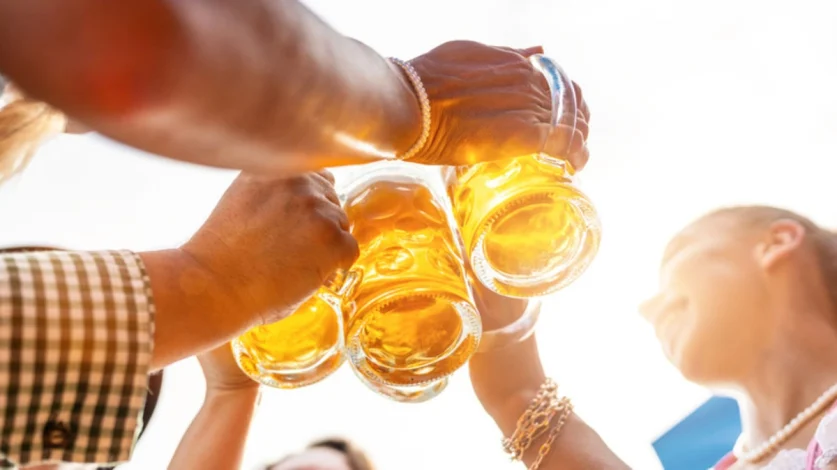
Weihenstephaner Hefeweissbier has become a staple among beer enthusiasts in the United States, embodying the quintessential Bavarian beer experience. With a brewing heritage that dates back to 1040, this wheat beer is recognized as the world’s oldest continuously operating brewery. Renowned for its refreshing taste, the Weihenstephaner Hefeweissbier boasts a 5.4% ABV and a "World-Class" rating of 98 out of 100 on BeerAdvocate, where it consistently ranks as the top Hefeweizen worldwide.
This exceptional beer is characterized by its distinct aromas of sweet banana and spicy clove, complemented by notes of citrus zest. The overall flavor profile is creamy yet carbonated, delivering a smooth drinking experience that keeps fans returning for more. While most feedback is overwhelmingly positive, some reviewers with different taste preferences have found its fruity profile too sweet, particularly if they favor crisper macro lagers.
To enjoy the authentic experience of Weihenstephaner Hefeweissbier, pairing it with food can elevate the tasting. It pairs well with hearty dishes, including traditional German white sausage (Weißwurst) and rich Bavarian cheese spreads. Its unique characteristics even allow it to complement desserts like vanilla custard, making it one of the more versatile beer styles.
For the best tasting experience, traditional Bavarian pouring technique is recommended. This involves filling three-quarters of a tall, flared weizen glass, swirling the remaining beer in the bottle to mix the yeast at the bottom, and then topping off the glass. This method creates the signature cloudy appearance and foamy head that is emblematic of a great Hefeweizen.
Weihenstephaner Hefeweissbier is widely available across the United States, making it easy for enthusiasts to find it in major grocery stores and local specialty shops. For those interested in discovering where to procure this iconic beer, the Weihenstephaner Product Finder can assist in finding it nearby.
A Toast to Tradition: The 13 Oldest Beer Brands in the US
Beer has been a companion to humanity since ancient times, evolving from simple fermentation practices to becoming a staple of modern culture. The rich history of brewing can be traced back to the very dawn of agriculture, with some brands still available today dating back long before the Civil War. While many breweries have come and gone, certain beer brands have withstood the test of time, producing beverages that continue to be enjoyed across the nation.
Here are some of the oldest beer brands in the U.S.:
Schaefer (1842)
Schaefer beer began with Frederic Schaefer, who arrived in America from Prussia in 1838. In 1842, Schaefer and his brother took over a Manhattan brewery, marking the beginning of their lager production. Schaefer gained significant popularity, especially in New York, but eventually became less common and faced several ownership changes, currently being owned by Pabst.
Miller (1855)
Founded by Frederick J. Miller in Milwaukee, Miller has shaped the American beer landscape since it was created in 1855. The brand adapted during Prohibition by producing malt syrup and soda. It made waves in the industry by introducing Miller Lite, the first successful light beer, and has remained one of the best-selling beer brands in the U.S.
Point (1857)
Point beer hails from Stevens Point, Wisconsin, where it was first brewed by Frank Wahle and George Ruder. This brand has historical significance, serving Civil War troops on the front lines. Point has endured through challenging times, including the Great Depression, and continues to thrive today.
Schell’s (1860)
In Minnesota, August Schell established a brewing company influenced by his German roots. The company has continuously produced beer since its founding, showcasing a strong commitment to quality and heritage, which is still evident in their diverse product line today.
Frankenmuth (1862)
Frankenmuth Brewery began as a venture by German settlers in Michigan, who sought to maintain their traditions. The brewery grew under Johann Geyer and endured multiple setbacks, such as fires and tornadoes, but has successfully revamped its operations over time, welcoming visitors to its historical space.
Leinenkugel (1867)
The Leinenkugel family started brewing beer in Wisconsin shortly after arriving from Germany. The brewery has expanded greatly since its inception, with products like the popular Summer Shandy capturing the interest of national audiences.
Yuengling (1873)
This legendary Pennsylvania brewery, founded by David Gottlieb Jüngling, is recognized as the oldest American brewery still in operation. Originally named Eagle Brewery, it underwent a rebranding in 1873, which came after a fire and the involvement of Jüngling’s son.
Coors (1873)
Adolph Coors, having apprenticed in Germany, founded Coors Brewing Company in Colorado, where it flourished. Despite challenges, including family tragedies, Coors remains a household name, primarily known for Coors Light and Coors Banquet.
Budweiser (1876)
The transformation of E. Anheuser & Co. into Anheuser-Busch began with Eberhard Anheuser and Adolphus Busch. Budweiser, launched in 1876, became widely recognizable thanks to innovative brewing techniques that enabled shipping across the nation.
Genesee (1878)
Originally part of Rau & Reisky Brewery, the Genesee Brewing Company in Rochester, New York, transitioned ownership, and underwent a revitalization post-Prohibition. Genesee Cream Ale has garnered a solid reputation, solidifying its place in American beer culture.
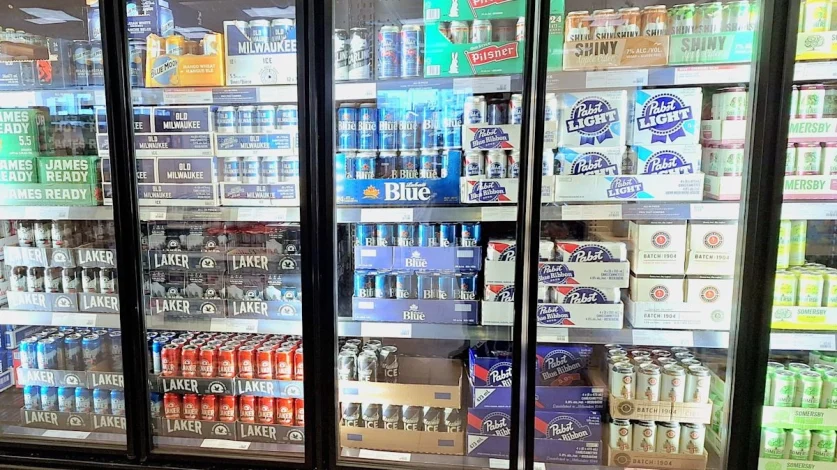
Pabst Blue Ribbon (1895)
The Pabst brand’s roots trace back to 1844 with Best Brewing Company, but it transformed into Pabst Blue Ribbon under Frederick Pabst’s leadership. The iconic beer gained fame through its quality and marketing strategies, including the famed blue ribbon.
Anchor (1896)
Recognized as America’s first microbrewery, Anchor Brewing Company opened in San Francisco. It became well-known for its craft beers, especially Anchor Steam, before facing production struggles that led to its eventual closure in 2023.
Shiner (1909)
Shiner Bock originated in Texas when Czech and German immigrants established a brewery by a well. Under Kosmos Spoetzl’s leadership, the brand thrived and became a significant player in the craft beer scene.
These breweries have their unique tales, full of resilience and adaptation, reflecting the broader history of beer in America. Whether you prefer a classic lager or a modern craft brew, these long-standing brands have shaped what we know and love about beer today.
The Timeless Appeal of Our Favorite Cheap Beer: A Miner’s Best Friend
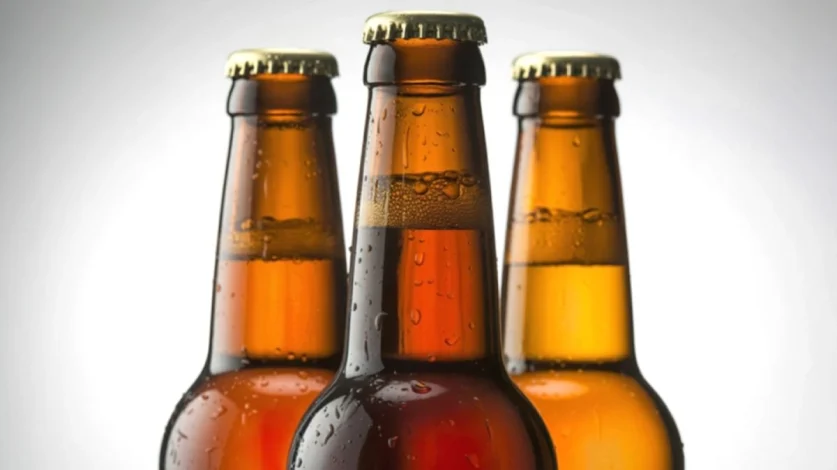
Coors Banquet has been celebrated as a beloved cheap beer, not just among average consumers but also reflecting its historical significance during the mining era in the United States. Founded in 1873 in Golden, Colorado, Coors was birthed in a mining town during the Colorado Gold Rush. Miners, after long, grueling days of work, often enjoyed a hearty meal called a "banquet," and beer quickly became a staple of these gatherings.
The original brewing methods employed by Adolph Coors used pure Rocky Mountain water and quality Moravian barley, which contributed to the beer’s crisp taste. Over the years, Coors Banquet has maintained its traditional brewing style, allowing it to flourish while also becoming symbolic of a simpler, more satisfying beer experience—one that harkens back to the nostalgia of the 1970s.
Coors Banquet has a distinct golden color, often seen in its cans and bottles, which is fitting given its roots in a town named Golden. After decades, it became available nationwide in the United States in 1991, letting a wider audience appreciate its unique qualities. Not only is Coors Banquet a favorite among consumers today, but it continues to honor its legacy, reminding us of the hardworking miners who helped shape its early success.
For more about Coors and its historical context in beer culture, consider exploring these links:
Unpacking the ‘Beer’ Label: The October Tax Increase and the Curious Case of ‘Third-Category Beer’ Cans

In October, when the tax on ‘third-category beers’ was raised, it prompted a deeper reflection on our understanding and naming of what we call ‘beer.’
As I stood in my kitchen calling for a beer, I realized that the can I meant wasn’t labeled ‘beer’ at all; rather, it bore the designation of happoshu or ‘third-category beer.’ Despite this, no one at the dining table seemed to care about the accuracy of the name. For years, we’ve referred to these drinks as ‘beer’ without question.
On October 1st, a significant change occurred: the liquor tax on beer-like beverages was unified, with a set rate of 54.25 yen for every 350ml can. This had been a gradual adjustment since 2020, wherein the tax on traditional beer decreased while that on happoshu and new genre drinks increased. The distinctions that once existed essentially vanished over six years.
This shift hasn’t gone unnoticed among beverage manufacturers. Suntory announced it would categorize its flagship drink, ‘Kinmugi,’ as beer starting October 6 while maintaining its name. Other companies are following suit, converting their flagship new genre products to the beer category. This raises a poignant question: what have we been calling ‘beer’ all this time?
An interesting historical perspective can be traced back to the Nara period. The ‘Shoku Nihongi,’ an official history completed in 797, recounts Empress Gensho’s visit to a notable spring on Mount Tado. The spring was described not as a source of sake, but as ‘water that nourishes the aged’—its value based on the reputed benefits it offered rather than its classification.
Within the same year, it was declared that the spring, which purportedly had healing properties, prompted the Empress to change the era’s name to Yoro—a name still associated with the Yoro Falls in Gifu Prefecture. The historical significance of this spring was tied to its health benefits and its auspiciousness according to Chinese traditions.
However, several hundred years later, tales began to emerge in which this spring was now linked to sake. Stories from the 13th century describe a filial son in Mino Province who, wishing for that water to be sake for his father, ultimately finds a yellow-colored beverage gushing forth from the rocks. Here, the narrative swings from a historical account of the spring’s effects to one emphasizing filial duty and the transformative power of intention.
In folk traditions, there are variations of this storyline, such as in Narashinohara, where a son draws clear water that is perceived as sake by his father but remains plain water to him. This indicates that the true essence of the beverage we call ‘sake’—or in our current context, ‘beer’—is not the liquid itself but the sentiments attached to it.
Returning to contemporary discussions, the classification of beer and similar drinks has long been dependent on the malt ratio, affecting taxation and production methods. As the Ministry of Finance aims for fairness in the tax burden, this has, in turn, influenced how these beverages are made.
At home, however, the culinary naming operates on a different plane entirely. Regardless of official classifications, many would assert that the cold can from the refrigerator is simply ‘beer.’ There is a dissonance between government regulations and the casual parlance of dinner tables.
As the tax classification evolves and unifies, the distinction between beer, happoshu, and new genre drinks has diminished. As cans labeled ‘Kinmugi’ transition into beer, one cannot help but wonder if we will continue to use the term ‘beer’ interchangeably or reassess whether the content truly warrants the name.
Ultimately, when we request a ‘beer’ in the twilight of our day, we are not merely asking for a liquid classification but for a symbol of relaxation and self-care. Before you crack open your next can, consider what you’re really inviting into your evening. This reflection may transform our understanding of what we have long referred to as ‘beer.’
Crafting St. Louis Beer Blends: Delicious Combinations to Try at Home
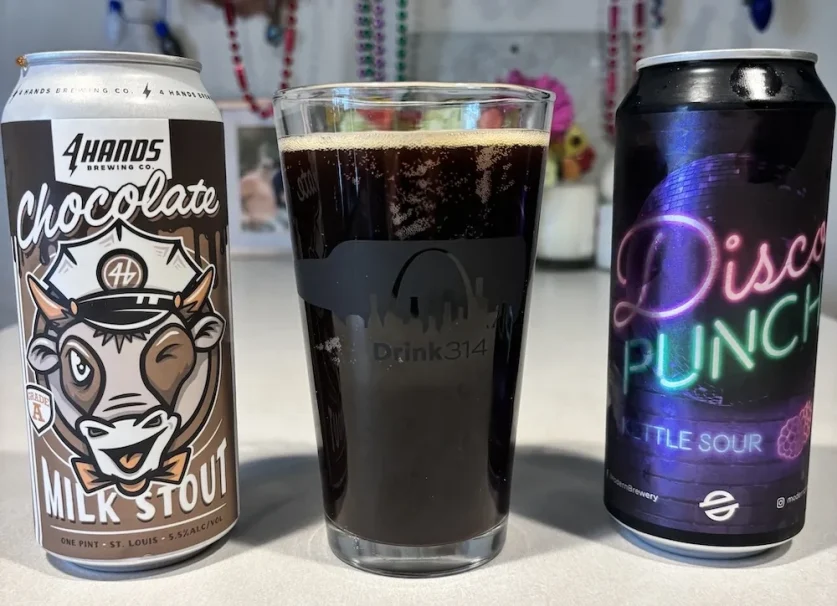
Six years ago, I explored the intriguing world of beer blending, which involved combining two distinct beers to create a unique drinking experience. The inspiration struck at Schlafly’s Cabin Fever festival when I learned that one of their imperial pumpkin beers was crafted from a blend of Pumpkin Stout and Oatmeal Stout. This revelation sparked my imagination about what other combinations could elevate flavors, leading to my article titled The Art of Mixing Beers. Surprisingly, this piece gained consistent traction over the years, even as the featured beers faded from the market.
As I reflected on my previous experiments, the time felt right to merge my knowledge of beer blending with local beers from St. Louis and its surroundings. The core question was simple: Can two finished beers come together to yield an entirely new flavor profile?
One key lesson I learned was the importance of ratios. In my earlier attempts, a straight 50/50 blend seldom resulted in balance; generally, one beer would overpower the other. Therefore, I shifted my approach to consider factors such as ABV, bitterness, and flavor profiles in determining starting points for my blends.
Here are some suggested combinations to try at home:
-
Logboat Snapper IPA + Shortleaf Blood Orange Wheat
DIY White IPA
Suggested ratio: 1 part Snapper to 2 parts Blood Orange Wheat. The Snapper’s strength is moderated by the wheat beer, which highlights the citrus notes. -
Side Project For Friends Golden Lager + Bluewood We All Scream For Oat Cream!
DIY hoppy lager
Suggested ratio: 3 parts lager to 1 part IPA. This straightforward blend allows the light lager to shine, enhanced by hoppy aromas. -
4 Hands Chocolate Milk Stout + Modern Disco Punch
Chocolate-covered fruit
Suggested ratio: 2 parts stout to 1 part sour. The maltiness of the stout balances the fruity tartness of the Disco Punch. -
Schlafly Oktoberfest + Rockwell Now Streaming
DIY hoppy amber
Suggested ratio: 3 parts Oktoberfest to 1 part IPA. This combination maintains the lauded malty character of Oktoberfest while introducing hops. -
O’Fallon Pumpkin Beer + Piney River Old Tom Porter
Dark pumpkin pie
Suggested ratio: 2 parts pumpkin to 1 part porter. The sweetness and spice of the pumpkin beer are complemented by the roasty notes of the porter. -
Narrow Gauge Peanut Butter & Stout + 2nd Shift Enchanted Garden
The WTF blend
Suggested ratio: 3 parts Berliner Weisse to 1 part imperial stout. Tartness from the Berliner Weisse contrasts with the thick, rich stout. -
Urban Chestnut Mercator + Alpha Believers Brew
Chocolate Berry
Suggested ratio: 2 parts Mercator to 1 part Believers Brew. A classic blend of fruity tartness and rich chocolate flavors. -
Deep Sleep Train of Four + Third Wheel Gotta Have It
DIY Cascadian dark ale/Black IPA
Suggested ratio: 1:1. Balanced bitterness and robust flavors from both the stout and the IPA make this combination stand out. -
Civil Life American Brown Ale + Brick River Cornerstone
Candy apple
Suggested ratio: 3 parts brown ale to 1 part cider. A sweet caramel apple flavor emerges from this delightful mix. -
Big Muddy Blueberry Blonde + Iron Hops Soothsayer Weizenbock
Blueberry bread
Suggested ratio: 1:1. This pairing harmonizes blueberry notes with a wheat and clove background. -
4 Hands Incarnation IPA + Narrow Gauge Meersalz Double Raspberry
Tart IPA
Suggested ratio: 2 parts IPA to 1 part sour. A balance between fruity tartness and hoppy bitterness perfectly characterizes this blend. -
Side Project Revived + 4 Hands Pineapple Fruit Whip
Tropical dessert stout
Suggested ratio: 3 parts Revived to 1 part Fruit Whip. For a decadent combination of coconut, pineapple, and vanilla flavors. -
Perennial Southside Blonde + Heavy Riff Vanilla Coffee Underbrown
Belgian mocha
Suggested ratio: 2 parts Belgian blonde to 1 part brown ale. This mix brings a light, fruity character together with rich coffee notes.
Feel free to adjust these suggestions according to your own palate, embracing the fun and creativity that comes with mixing beers. After all, the joy of beer blending lies in experimentation and personal preference.
Behind the Brew: How This Alberta Brewery Crafted the World’s Best Lambic-Style Beer

Blind Enthusiasm Brewing in Edmonton has made waves in the craft beer community by winning two prestigious awards at the 2026 World Beer Awards. While they are inspired by the lambic style, which originates from Belgium’s Zenne Valley and is protected by the EU, they do not claim to produce authentic lambic. Their unique process and modern facility, known as The Monolith, allow them to create spontaneously-fermented beers that have gained international recognition.
Doug Checknita, the head brewer, highlighted that the design of their brewery facilitates exposure to naturally-occurring microbes, which are used in the fermentation process. The beer is aged in barrels that house a variety of microbes, creating complex flavors through a cooperative fermentation process.
Blind Enthusiasm’s Grand Manifesto was named the World’s Best Gueuze. This beer is a blend of two, three, and four-year-old spontaneously-fermented beers. Checknita emphasized that this particular blend is among their finest work. The brewery has also been recognized for its Fruitful Pursuits: Cherry, which was awarded the title of World’s Best Kriek for the second consecutive year. Initially hesitant to create a kriek, Checknita changed his mind after tasting incredible cherries from British Columbia’s Okanagan Valley, recognizing the potential for a truly exceptional beer.
Blind Enthusiasm’s beers are available for purchase in Canada and internationally, including markets in the United States, the Netherlands, and Japan. The brewery’s blend of historical methods and contemporary techniques has positioned them as a significant player in the craft beer scene, and they continue to attract attention from beer enthusiasts and industry experts alike.
Voodoo Ranger’s Spooktacular Offer: Free Beer for Every Michael Myers Fan!
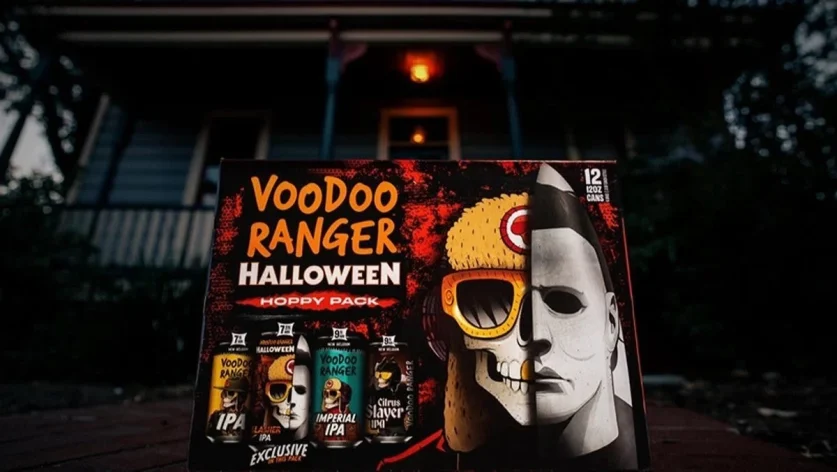
Craft beer company Voodoo Ranger is initiating a creative promotion to celebrate the spooky season. They are launching a contest titled "Slasher Manhunt" where anyone legally named Michael Myers can win free beer for a year. This giveaway coincides with the release of their limited-edition Slasher IPA as part of the Halloween Hoppy Pack promoting the upcoming Halloween: The Game.
The contest runs until October 7, culminating in a special event in New York City called the "Party Without Fear." Here, participants named Michael Myers can present valid identification to claim their prizes, which include slashed bar tabs, game demos, and other giveaways. The lucky winner who secures a year’s worth of beer will be announced on October 19, coinciding with the iconic slasher’s fictional birthday.
Kiron Chakraborty, Voodoo Ranger’s Marketing Director, stated, "Being named Michael Myers has come with enough baggage, so we’re here with the beer," highlighting the brand’s humorous take on a name associated with horror. They aim to ensure that Halloween is celebrated with joy, backed by the tagline that there’s no better beer for the occasion than Voodoo Ranger.
Those interested can participate through Voodoo Ranger’s official site. Additionally, anyone of legal drinking age can purchase the Halloween Hoppy Pack while supplies last.
For further details, you can visit: Voodoo Ranger Contest and Hoppy Pack.
National Drink Beer Day: Celebrating a Hoppy Tradition Since 2005
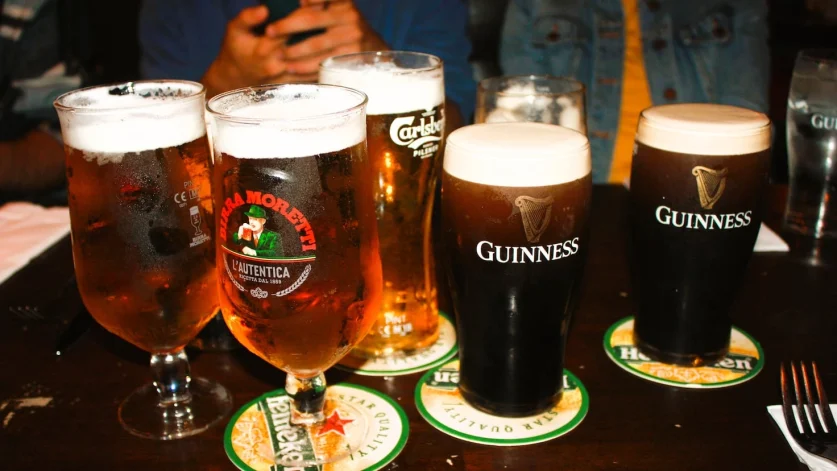
Today, September 28, is celebrated as National Drink Beer Day, a day dedicated to appreciating one of the oldest alcoholic beverages in the world. Beer, the third most consumed drink globally after water and tea, has a history of fermentation that goes back approximately 13,000 years to ancient Middle Eastern civilizations.
Celebrating this day is straightforward: simply grab your favorite beer—whether it’s a lager, ale, or stout—and relax.
Origins and History of National Drink Beer Day
The true origins of National Drink Beer Day are somewhat murky. Some believe the date is significant because it is close to the birth of Arthur Guinness, the founder of the iconic Irish brewery, who was born on September 24, 1725. However, this connection is tenuous at best.
Another theory links the day to the Oktoberfest, which has been celebrated in Munich since 1810 and attracts over six million visitors annually. Despite its proximity to Oktoberfest, there’s no solid evidence suggesting that National Drink Beer Day was established in connection with this famous festival, although many local bars might offer German-style beers in its honor.
Interestingly, another day dedicated to beer occurs in the U.S.—National Beer Day, which is celebrated on April 7. This date marks the enactment of the Cullen-Harrison Act, which allowed the sale of beer containing up to 3.2% alcohol, signaling the decline of Prohibition.
When Did National Drink Beer Day Begin?
As with its origins, the exact date when National Drink Beer Day started is unclear. Some sources claim it can be traced back to the early 1900s, but reliable documentation is lacking.
Regardless of when it began, the day has found its place on the national calendar, allowing beer enthusiasts to come together and celebrate. So, let’s raise a glass to National Drink Beer Day! Cheers!
The Top Beer Choice for Gen X: Breaking Down 2026’s Favorite Brew
Although lagers have dominated American beer sales for decades, the preferences of beer drinkers have evolved over time. As trends change, so do the brands that capture the hearts of each generation. For Generation X, those born between 1965 and 1980, the most popular beer as of 2026 is Blue Moon, according to a report from YouGov.
Blue Moon is an unfiltered Belgian-style wheat ale with an ABV of 5.4%. It is characterized by a sweet and citrusy profile that is lightly spiced, thanks to ingredients such as coriander and orange peel. The beer is famously garnished with an orange slice, a tradition established by its creator, Keith Villa.
Despite being marketed as a craft beer, Blue Moon is produced by MillerCoors, known for other popular beers like Miller Lite and High Life. Thus, it occupies a unique space in the market as a major brand that presents itself with a craft identity, garnering a loyal following without being an independent brewery or an imported brand.
The journey of Blue Moon began in 1995 at the Coors-backed Sandlot Brewery located at the Coors baseball field in Denver, Colorado. Its initial sales were limited to this venue, but word-of-mouth and favorable reception quickly pushed Coors to expand distribution to 22 states within a year, followed by broader marketing efforts.
Over the years, Blue Moon has grown to be widely available across the country, capturing the loyalty of Gen X drinkers, many of whom have strong connections to sports, particularly Major League Baseball (MLB). The beer is often enjoyed alongside traditional stadium fare and is well-promoted in contexts like golf, where it partners with professional players. Celebrity endorsements, including collaborations with Colin Jost from "SNL," have helped to maintain and strengthen its appeal among Gen X.
Blue Moon has also adapted to modern drinking trends, with the introduction of a non-alcoholic version and flavored varieties. This ability to innovate while maintaining its signature taste has helped solidify Blue Moon’s status as a go-to beer for Generation X into 2026.
For more insights, you can read the original article on Food Republic.