Gregg Popovich and a dynasty in San Antonio were fueled by an ultra-rare, exclusive dessert wine.

Immersed in the World of Wine and Basketball
Two distinguished representatives from a renowned French institution prepare for a journey to Texas to meet with the respected leader of an equally esteemed NBA institution. Both institutions are known for their attention to detail and consistently high standards. The representatives oversee a rare and highly sought-after commodity, one with a rich history dating back to the Middle Ages. This commodity, like the glorious NBA championships won by their host, possesses a color synonymous with its success. Tonight, Lorenzo Pasquini and Mathieu Jullien find themselves at the Terrace Restaurant in the beautiful Maybourne Hotel in Beverly Hills.
As they settle into their seats, the soothing melody of a piano fills the air, accompanied by the vibrant ambiance of the busy restaurant. It is the end of a long day, during which they tirelessly promoted the release of the 2019 vintage of Chateau d’Yquem, a renowned dessert wine from the Sauternes region of Bordeaux. Pasquini serves as the estate manager at d’Yquem, while Jullien holds the position of marketing and sales director at LVMH, the company that acquired d’Yquem in 1999.
Their day was consumed with describing the wine and addressing inquiries from interested parties. However, their focus now shifts to the iconic coach they are scheduled to meet. This invitation from the coach himself has piqued their curiosity, particularly regarding his immense success throughout his nearly two-decade tenure in San Antonio. They are intrigued by the coach’s motivational strategies, his leadership style, and his ability to consistently achieve exceptional results. Pasquini acknowledges, “For us, managers like him are a true inspiration.”
Pasquini describes the dedicated team at d’Yquem, who meticulously tend to the legendary vineyards in order to produce the notoriously challenging wine. The staff meticulously guide the growth of the vines, trim leaves, position grape clusters to receive the appropriate amount of sunlight, and navigate through various weather conditions that may jeopardize the harvest. While Pasquini has never visited San Antonio, and Jullien has never set foot in Texas, their excitement soars. Their brief visit will include an arrival in the afternoon, followed by dinner and a departure to New York.
The anticipation heightens as they join a small group at a San Antonio restaurant, where they dine with Popovich and other members of the Spurs organization. Fine wines are poured, and laughter fills the air as toasts are made. Popovich, as always, shares his wisdom on leadership. He emphasizes the importance of building chemistry outside of the workplace, especially at the dinner table. His reputation for forging strong bonds over exquisite meals has become legendary in the NBA.
This evening is not only memorable for Pasquini and Jullien, but also for Popovich himself. His affinity for d’Yquem matches his passion for food and wine. The head coach’s love affair with this exquisite wine has spanned decades. For many who have had the privilege to serve him the wine, as well as some of his players and staff who have noticed his fondness for it, Popovich’s connection with d’Yquem is profoundly fitting. The parallels between his devotion to the wine and the winemakers’ dedication to their craft speak to a deep mutual respect.
As their evening unfolds, Pasquini and Jullien are reminded of the profound intersection between the worlds of wine and basketball. Both realms demand painstaking attention to detail, an unwavering commitment to excellence, and a deep appreciation for the fruits of one’s labor. Tonight, these representatives from the French institution and the NBA institution share a bond born from the pursuit of greatness. The story continues, with countless chapters yet to be written, as game recognizes game in the realms of basketball and winemaking.
A new brand of vodka was inspired by a meeting of minds.
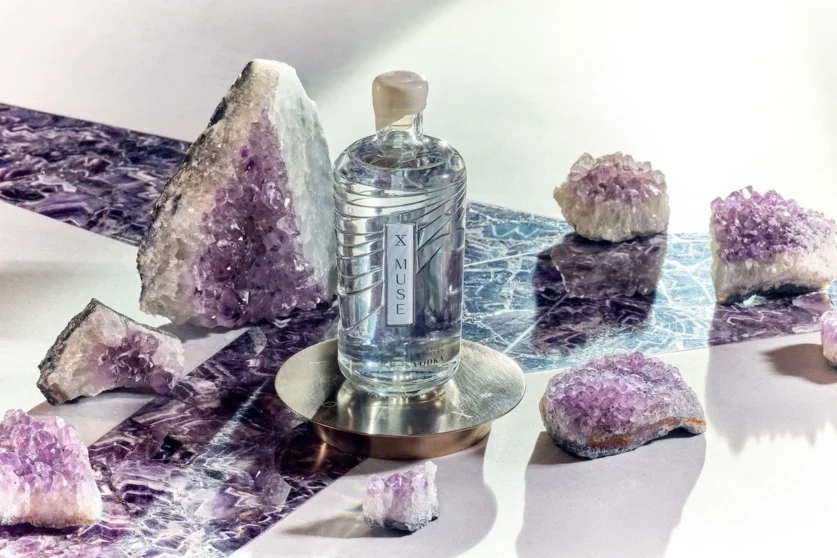
Embracing the Unconventional: The Story of X Muse Vodka
High-end spirits brands often have intriguing genesis stories, and X Muse Vodka is no exception. It begins with a wealthy art enthusiast crossing paths with a former executive from a renowned spirits company. The natural outcome? A collaboration to launch a premium vodka. So far, the story follows the familiar path, with the vodka made from two distinct strains of barley, carefully distilled and blended with pure Scottish aquifer water. But this is where things take an unconventional turn.
The founders of X Muse have a unique approach to business, embracing esoteric practices such as alchemy, geomancy, and other occult philosophies. Robert Wilson, the chairman of A Nelson & Co – the UK’s largest alternative medicine company and an art lover – joins forces with Vadim Grigoryan, a former Pernod Ricard executive with a background in rocket science, philosophy, and metaphysics. Together, they bring their alternative philosophies and unconventional thinking to the spirits industry.
Their discussions led them to explore the historical connections between alchemy, early medicine, and alcohol distillation in Europe’s ancient monasteries. “We didn’t set out to create a spirits brand,” Wilson explains. “But our conversations naturally gravitated towards the links between these practices.”
Their vision for X Muse was to create a cultural product deeply rooted in the history of alcohol. Grigoryan adds, “In most languages, the words for alcoholic spirits and spirit, as in the intangible essence of a man, share the same origins. There is a metaphysical connection.”
This is where the mysticism of X Muse comes into play. The water used in the vodka production undergoes a unique process involving “magic drops” passed through a vortex and rested on amethyst crystals, with the intention of infusing the vodka with calming energy. The name X Muse, pronounced as “tenth muse,” is inspired by a sculpture by Scottish artist-philosopher-gardener Ian Hamilton Finlay, symbolizing a spirit beyond the traditional nine Greek muses.
However, Wilson and Grigoryan do not present themselves as pseudo-scientific zealots. “We don’t claim X Muse is an elixir,” clarifies Wilson. “Even if you don’t share our openness to ancient wisdom, you can still appreciate the beautifully crafted product and experience a moment where time stands still, much like when admiring great art.”
So, while X Muse Vodka may have an unconventional approach to the spirits industry, it’s rooted in a rich history and philosophical exploration. Whether you’re drawn to the mysticism or simply appreciate the craftsmanship, it’s clear that X Muse stands as a unique player in the world of high-end spirits.
Limited-edition bourbon and vodka bottles have been released by the Broncos and Breckenridge Distillery.

The Broncos have partnered with Breckenridge Distillery, the Official Hometown Bourbon of the team, to bring fans two limited-edition bourbon blends and a commemorative vodka bottle. This exciting collaboration has sparked much anticipation among Broncos enthusiasts.
As part of the agreement, Breckenridge Distillery has become the Official Vodka of the Denver Broncos and will release a limited-edition vodka bottle inspired by the team’s white alternate helmet. This bottle features a stunning depiction of the “Snowcapped” helmet, which will be worn during two home games in the upcoming 2023-24 season.
The bourbon blends have been aptly named the “Back-to-Back Blend” in honor of the Broncos’ consecutive Super Bowl victories in 1997 and ’98. These special bottles will come with either an orange or blue label, representing two distinct groups of Broncos alumni, Denver Broncos Cheerleaders alumni, and super fans who contributed to the blending process. Notable alumni Ed McCaffrey (orange) and Alfred Williams (blue) from the 1998 winning team have lent their expertise in crafting these remarkable blends.
Fans aged 21 and older can get involved by scanning a QR code on the label and voting for their favorite blend (orange or blue). By participating, they also stand a chance to win exciting prizes. This interactive element adds an extra layer of engagement and excitement to the release.
In addition to these offerings, Breckenridge Distillery will release select ready-to-drink “RIKI” canned cocktails to commemorate the 25th anniversary of the legendary 1998 Super Bowl. These cans will feature the Broncos’ logo alongside text celebrating their monumental World Championship win.
Expanding on their partnership, the Broncos recently announced the creation of the Breckenridge Bourbon Club at Empower Field at Mile High. This exclusive hospitality space promises an unrivaled experience for members, complete with access to the ground-level area, all-inclusive food and beverage options, complimentary parking, and lower 100-level seating. The club is set to debut this season and is sure to become a cherished haven for devoted Broncos supporters.
If you’re interested in learning more about Breckenridge Distillery and their exceptional offerings, you can visit their website at http://breckenridgedistillery.com/bourbon-of-denver-broncos/.
Founded in 2008, Breckenridge Distillery is proudly known as the “World’s Highest Distillery,” hailing from the beautiful state of Colorado. Their expertise lies in crafting award-winning blended bourbon whiskey, a high-rye mash American-style whiskey. Their remarkable achievements include being named 3x Icons of Whisky and winning Best American Blended Whiskey at the World Whiskies Awards by Whisky Magazine (2016, 2017, 2018, 2019, 2021, 2022, and 3x in 2023), as well as being named Colorado Distillery of the Year 4x by the New York International Spirits Competition. Notably, their Breckenridge High Proof won the esteemed title of World’s Best Blended Whiskey at the World Whiskies Awards, joining their Breckenridge Gin, which was named 2021 World’s Best Compound Gin at the World Gin Awards by Gin Magazine.
This collaboration between the Broncos and Breckenridge Distillery promises to enhance the fan experience in a unique and exciting way. Whether you’re a bourbon connoisseur, a vodka lover, or a die-hard Broncos fan, these limited-edition releases are a must-have addition to your collection. Stay tuned for more updates and be sure to participate in the voting process to have your say in the future of Broncos-inspired spirits.
There is a surprising truth about beer made from wastewater.

Embracing Innovation: From Wastewater to Beer
Climate change and its consequences are becoming increasingly evident, with droughts being one of the most palpable ways we are impacted. As a result, individuals and organizations are rethinking their water usage strategies, not only aiming to conserve water but also finding innovative ways to reclaim and reuse it. Enter Epic Cleantec, a startup specializing in wastewater reclamation, and Devil’s Canyon Brewing Company, based in San Carlos, California, who are collaborating to challenge skeptics and highlight the culinary potential of recycled water through an unconventional product – beer.
The beer, aptly named Epic OneWater Brew, is brewed in the Kölsch style, known for its refreshing and low alcohol content, making it an ideal summertime option. But what sets this beer apart is its main ingredient: recycled water derived from a luxury high-rise apartment building in San Francisco. Yes, it includes used shower and laundry water – sources most people wouldn’t consider drinking. However, Aaron Tartakovsky, co-founder and executive at Epic Cleantec, aims to demonstrate that purified wastewater can be both palatable and safe. And using beer as a starting point seems like a clever strategy.
Surprisingly, this is not the first time recycled wastewater has been utilized in brewing. In 2019, the water department in Scottsdale, Arizona, gave ten local breweries the opportunity to use water from its advanced treatment plant. The resulting brews were showcased at an arts festival, accompanied by an explanation of the purification system and its completely safe output. Although the idea of drinking water from toilets and showers may sound peculiar, research from Stanford University validates the efficacy and safety of this process. In fact, the ultra-purified water obtained through reverse osmosis, a rigorous filtration technique, can be as safe, if not safer, than traditional water sources like groundwater or rivers.
While Scottsdale’s public water supply doesn’t currently incorporate ultra-purified water, it undergoes extensive processing, including reverse osmosis, ozone infusion, microfiltration, and ultraviolet light treatment. Moreover, some cities like Aurora, Colorado, and Atlanta, Georgia, have already integrated reused potable water into their drinking water supplies. This demonstrates that recycled water is much more commonplace than one might think.
The thought of consuming beer brewed with wastewater might still elicit discomfort for some, but it is important to recognize the progress and innovation associated with water reclamation. After all, if it is good enough for astronauts who rely on recycled water systems, it should be good enough for the rest of us. Embracing these advancements and raising an ice-cold beer to a more efficient future seems like an appropriate and celebratory response to the challenges imposed by climate change.
To stay updated on more intriguing food and beverage news, be sure to sign up for The Takeout’s Newsletter and follow them on Facebook, Twitter, and Instagram.
Click here to read the original article from The Takeout.
Madison Beer has recently released the track list for her new album, titled “Silence Between Songs.”

Madison Beer is undoubtedly a rising star in today’s internet culture, and her fans (including myself) couldn’t be more excited about her upcoming album. Following the success of her debut album, Life Support, released in 2021, Madison is back with a highly-anticipated second album titled Silence Between Songs. As a devoted fan, I already have her first single, ‘Home to Another One’, on repeat!
If you’re as eager as I am to learn everything about Madison’s new album, then you’re in luck. On August 9th, Madison shared the tracklist for Silence Between Songs in a charming cottage-core inspired video. In the video, we see her lying in bed, writing the tracklist on a whiteboard. The album consists of 14 songs that delve into themes of love, relationships, and breakups. Here’s the full tracklist:
1. Spinnin’
2. Sweet Relief
3. Envy The Leaves
4. 17
5. Ryder
6. Nothing Matters But You
7. I Wonder
8. At Your Worst
9. Showed Me
10. Home To Another One
11. Dangerous
12. Reckless
13. Silence Between Songs
14. King Of Everything
Drum roll, please… Silence Between Songs will be released on September 15th, and I couldn’t be more thrilled. Madison’s fans were over the moon when she dropped the news about her sophomore album on May 31st. On Instagram, she expressed her excitement and gratitude, saying, “The closer it gets, the more we’ll talk about it, but I am just so excited to release this record. I’m so excited for it to be yours.”
In an interview with Rolling Stone, Madison opened up about what inspired the songs on her new album. She revealed that there are some deeply personal and emotional tracks on the record. One particularly touching aspect is her exploration of her relationships with her family members, including her father. Madison admitted that discussing this topic was difficult for her, but she wanted to express how these experiences have shaped her as a person. She emphasized her love for her father, despite the pain that some of their interactions have caused her.
Moreover, Madison named one of the tracks, “Ryder,” after her younger brother. She discussed how her choices and career path have unintentionally affected him over the years, as she started her journey at a very young age. Reflecting on these experiences, Madison acknowledges the impact she has had on her brother’s life.
Additionally, Madison shared that she drew inspiration from some of her favorite artists, including Tame Impala, The Beatles, and Lana Del Rey. It’s fascinating to see how these influences have shaped her musical journey and contributed to the creation of Silence Between Songs.
As a Madison Beer fan, I can’t wait to immerse myself in the world of her new album. I’m confident that Silence Between Songs will showcase her growth as an artist and continue to captivate audiences worldwide. September 15th can’t come soon enough!
According to Google reviews, these are the top 5 places in the Myrtle Beach area to get beer.

Are you in the mood for a cold beer after a day spent enjoying the sun on Myrtle Beach? Well, you’re in luck because the Grand Strand has a fantastic selection of beer-focused businesses just waiting to satisfy your ale craving. Whether you prefer IPAs or lagers, you’ll find a wide range of craft beers from local breweries and tap houses in the area. To make your beer adventure even more exciting, why not embark on the Myrtle Beach Beer Trail and visit 10 breweries from Ocean Isle Beach to Pawleys Island? If you’re not sure where to start, here are the top five breweries and tap houses in the Myrtle Beach area, according to the trusty reviews on Google.
First up, we have Tidal Creek Brewhouse, located at 3421 Knoles St. in Myrtle Beach. With a rating of 4.7/5 from 541 Google reviews, this place is definitely worth a visit. Situated close to the main Market Common shops, Tidal Creek Brewhouse offers a variety of house-made beers in a charming coastal setting. Take your pick from over 15 different brews on tap and enjoy delicious food from breakfast to dinner. Plus, there’s a grassy outdoor seating area and dog park, so your furry friend can join in on the fun!
Next on the list is New South Brewing, a Myrtle Beach staple since 1998. Located at 1109 Campbell St., this brewery has a rating of 4.8/5 with 321 Google reviews. At New South Brewing, you can indulge in their ales and lagers, all brewed in their impressive 20 barrel brewhouse. From their Dirty Myrtle Double IPA to seasonal favorites like Oktoberfest, there’s something for everyone to enjoy in their downtown Myrtle Beach warehouse.
If you’re looking for an ocean view while sipping on your beer, head over to Grand Strand Brewing Company at 819 N. Kings Highway, Unit 101. With a rating of 4.5/5 from 319 Google reviews, it’s clear that this place is a hit. Just a short walk from the Myrtle Beach Boardwalk, Grand Strand Brewing Company offers a range of creatively named drinks, such as the Sandy Cheeks west coast IPA and the Jolene Red Ale. Not only can you enjoy their fantastic brews, but you can also indulge in their delicious smashburgers and have some fun playing giant outdoor beer pong.
For a selection of beers from all over South Carolina and beyond, Atlas Tap House is the place to go. Located at 1004 Chester St. in Myrtle Beach, this tap house has a rating of 4.5/5 with 703 Google reviews. Housed in a converted house between Ocean Boulevard and Kings Highway, Atlas Tap House not only serves a wide variety of beers but also offers cocktails, paninis, and pizza. It’s the perfect spot to try something new and expand your beer horizons.
Last but not least, we have Main Street Taphouse, situated at 693 Main St. in North Myrtle Beach. With a rating of 4.6/5 from 73 Google reviews, this family-owned establishment is a hidden gem. Offering over 20 beers on tap, Main Street Taphouse is the perfect place to find your new go-to pub in the heart of North Myrtle Beach. Enjoy a game of music bingo or trivia, and during football season, catch a Baltimore Ravens game.
So, whether you’re a beer connoisseur or just looking for a refreshing beverage to cool off after a day in the sun, the Myrtle Beach area has plenty of options to satisfy your beer cravings. Don’t forget to check out these fantastic breweries and tap houses on your next visit!
Indulge in a glass of wine while you immerse yourself in a well-loved novel at this snug vintage bookshop in NY.
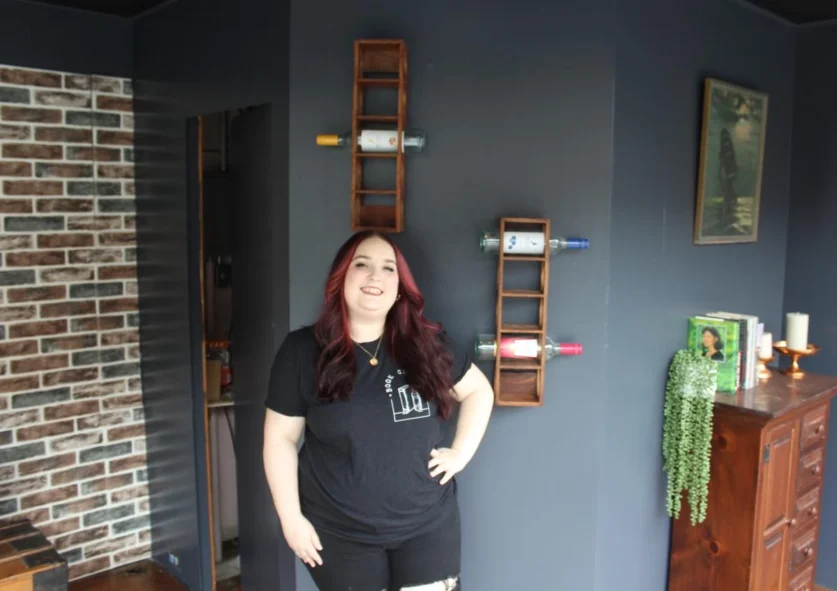
Tori Koch has always had a passion for books. Growing up, she frequented the Used Book Shop on Wellsville’s Main Street, finding hidden gems that would captivate her for weeks. Although the bookshop has now been replaced by Prima Salon, Koch still holds onto the memories and the longing for a cozy little bookstore.
And now, her dream is about to become a reality, with a twist.
Koch is on the verge of opening Book Cellars, located at 86 N. Main St. This unique establishment combines a vintage book shop with a wine bar and event venue. While the idea may seem unconventional, Koch believes that the wine bar and the bookshop are the perfect pair to create a one-of-a-kind experience for visitors.
The support from the community has been overwhelming. People have been donating books and expressing their excitement for a used book shop to finally open its doors again. Koch is grateful for the love and support and hopes to offer something for everyone at Book Cellars.
The space for Book Cellars is located in the historic Rockwell’s building, just across the street from the old Used Book Shop. Koch knew immediately that it was the perfect location for her venture. The space features a display area and a reading room with Main Street views, an enclosed gift shop, an open space for book sales and events, and a separate area in the back for the wine bar.
Koch has spent months collecting vintage furniture to decorate the building, aiming for a “dark and moody, academia vibe.” Her vision for Book Cellars is to create a cozy, inviting space that hasn’t been seen in the area before. She wants to combine a historic, back-in-time feel with a modern touch.
In addition to books and wine, Book Cellars will offer a light food menu with options like charcuterie boards, pizza, pasta, and sandwiches. Koch is also planning to partner with local restaurants to provide catering for events such as baby showers, bridal showers, and birthday parties.
But Book Cellars won’t just be a place to buy books and drink wine. Koch hopes to bring the space to life with events, craft workshops, and book club meetings. In fact, a romance book club is already in the works, and an author has agreed to host a book signing at the venue.
The goal of Book Cellars is to bring together a community of book lovers who often feel overshadowed by the popularity of movies and TV shows. Koch believes that there are many hidden book lovers out there, and she wants to create a space where they can connect and share their love for literature.
The grand opening for Book Cellars is scheduled for August 19th, with a soft opening for family and friends a few days prior. After the grand opening, Book Cellars will be open from 5-10 p.m. Monday through Saturday. The bookshop will accept used books for buy-sell-trade and will feature all genres except for children’s books. The gift shop will carry book and wine-themed merchandise, products from local artisans, and even dog bandanas crafted by Koch’s side business.
Koch credits her entrepreneurial spirit to her mother, who owns her own business. She has always wanted to support women-owned businesses and now has the opportunity to open her own. With Book Cellars, Koch hopes to not only fulfill her childhood dream but also provide a haven for book lovers in the community.
Book Cellars is more than just a bookstore or a wine bar. It’s a unique space that combines two passions and creates a welcoming environment for all who enter. So, if you find yourself in Wellsville, make sure to stop by Book Cellars and indulge in the joy of both literature and wine.
Introducing Wellsville’s Unique Fusion: Where Literary Bliss Meets Tantalizing Wine Adventures
Have you ever wondered what it would be like to stroll through a charming bookstore while sipping on a glass of exquisite wine? Well, look no further because Wellsville has just welcomed its newest Main Street addition, a one-of-a-kind establishment that combines the love for books with the allure of a wine cellar. Prepare to be delighted as we take you on a journey through this extraordinary fusion.
Tucked away on the bustling Main Street of Wellsville, this enchanting new spot effortlessly merges the worlds of literature and oenology, offering visitors an experience like no other. With its cozy and inviting atmosphere, it’s a haven for bookworms and wine enthusiasts alike. You might be wondering how this seemingly unlikely pairing came to be, so let’s dive into the story.
The visionary behind this innovative concept is none other than the brilliant entrepreneur, Rachel. As an avid reader and a passionate wine connoisseur, Rachel always dreamt of combining her two loves in a single space. Inspired by her belief that books and wine both have the power to transport and elevate our senses, she embarked on a mission to create a haven where these worlds could harmoniously coexist.
Walking into this haven, you’ll be greeted by rows upon rows of carefully curated books, catering to a wide range of interests and tastes. From classic literature to gripping thrillers, there’s something to satiate every reader’s appetite. The shelves are adorned with recommendations and personal notes from Rachel herself, making your browsing experience all the more engaging and personalized. As you peruse the literary gems, you can’t help but feel the enchanting allure of the written word beckoning you closer.
But that’s not all – just beyond the bookshelves lies an entirely different adventure. The scent of aged oak and the soft glow of dimmed lights invite you to uncover the hidden wine cellar, where a world of tantalizing flavors awaits. Handpicked by Rachel, the collection features a carefully selected array of local and international wines, each with its own unique story to tell. Whether you’re a seasoned wine aficionado or just starting to explore the world of viniculture, the knowledgeable and friendly staff are always ready to guide you through this thrilling journey.
Take a seat at one of the cozy tables nestled between the bookshelves, and allow yourself to get lost in the magic of the moment. With a glass of velvety red in hand or a crisp white to refresh your palate, the world around you seems to fade away as you immerse yourself in the book you’ve chosen. The fusion of literary bliss and the richness of wine creates an ambiance that elevates the senses and sparks conversations, making this haven not just a place to satiate your individual passions but also a communal space for connection and shared experiences.
Rachel’s unique establishment has quickly become a cherished gem in the heart of Wellsville. Whether you find solace in the pages of a well-written novel or delight in exploring the depths of a newly discovered wine, this fusion of a bookshop and wine cellar promises to transport you to a realm of pure bliss. So, the next time you find yourself strolling along Main Street, be sure to step into this enchanting sanctuary and let the enchantment captivate you. Cheers to literary and oenological adventures!
Pairing Wine with Exotic Cheese
Cheese and wine are a classic pairing that has been enjoyed for centuries. When it comes to selecting the perfect wine to accompany your favorite cheeses, there are a few guidelines to keep in mind.
I had the privilege of sitting down with Marguerite Merritt, the marketing manager and cheese emissary of Rogue Creamery, a renowned cheese producer in the Rogue Valley. We discussed the art of pairing cheese with wine, and Marguerite shared her insights and expertise on the matter.
First and foremost, Marguerite emphasized that there is no one-size-fits-all approach to pairing wine with cheese. However, she did offer some general recommendations. One versatile option is Champagne or other sparkling wines, which pair beautifully with a wide range of cheeses, from Brie to Blue and everything in between.
When it comes to white wines, Marguerite suggests choosing a medium-bodied wine with a moderately fruity profile. Chenin Blanc, a white Rhône blend, or even an unoaked Chardonnay can complement a variety of cheeses. For red wines, Syrah and Oregon Pinot Noir are both known for their versatility.
In terms of pairing guidelines, Marguerite advises matching wines and cheeses of similar weight and intensity. A strong blue cheese, for example, would not pair well with a delicate Sauvignon Blanc. If you have a cheese with powerful flavors, opt for a wine with more body and fruit. On the other hand, if your cheese is subtle and nuanced, a lighter-bodied wine will be a better fit. Marguerite also highlights that contrasting pairings can be successful. For example, an earthy cheese can be beautifully accompanied by a bright and zesty wine with high acidity.
When it comes to the age-old debate of red versus white wine with cheese, Marguerite encourages an open mind. There are no strict rules, and many cheeses can work well with both types of wines. It ultimately comes down to personal preference and experimentation.
The timing of your cheese and wine pairing can also influence the choice of wine. If you’re enjoying a cheese course before dinner, Marguerite suggests white or sparkling wine as a successful pairing. Conversely, if you’re serving cheese alongside or just before dessert, red or fortified dessert wines might be more appropriate.
Accompaniments can play a significant role in enhancing the wine and cheese pairing experience. Marguerite recommends selecting complementary items that don’t overwhelm the flavors of the cheese. Something sweet, like jam, chocolate, or honey, can counterbalance the salt and bitterness of the cheese. Something salty, such as olives or salted chocolate, can accentuate subtle cheese flavors. Something savory, like salami or pate, can provide a fulfilling and fatty component. Crunchy elements like nuts or crackers add texture, while juicy options like olives or fresh fruit cleanse and refresh the palate. When it comes to selecting crackers, Marguerite advises opting for unflavored varieties or baguettes to avoid flavor clashes with the cheese and wine. The crackers should also be able to cleanse the palate between different cheeses.
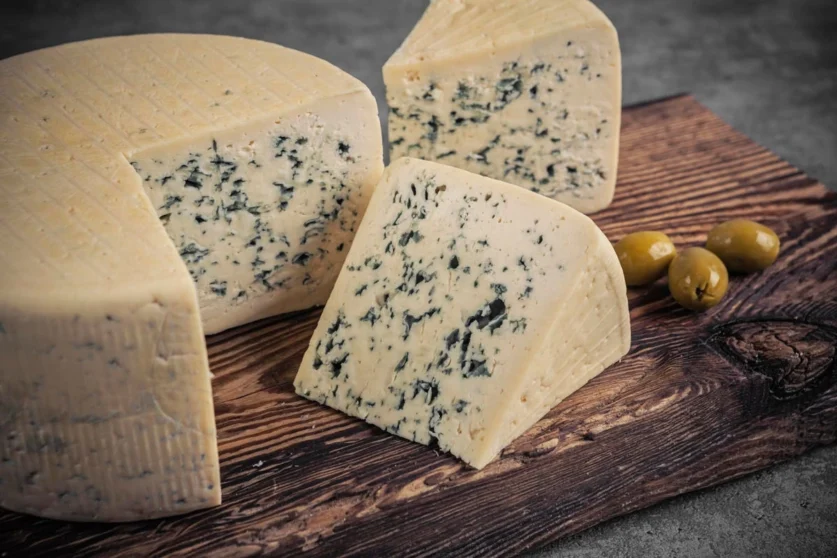
Finally, we explored the common refrain that blue cheese is challenging to pair with wine due to its strong flavor. While Marguerite agrees that pairing blue cheese can be trickier compared to more subtle options like Manchego or Swiss, she notes that it’s still possible to find suitable matches. More intensely flavored blues may pose a greater challenge, but milder, cave-aged blues can be paired with complimentary wines.
In conclusion, pairing cheese with wine is an art that requires experimentation and an understanding of flavor profiles. While there are no hard and fast rules, following some general guidelines, like matching weights and intensities, can lead to successful combinations. With the right wine and accompaniments, you can elevate your cheese tasting experience to new heights. So, go ahead and explore the vast world of cheese and wine pairings with confidence and curiosity!
Rogue Creamery’s Oregon Blue, a versatile blue cheese, offers an array of wine pairings that cater to both white and red wine lovers. When it comes to blue cheese, experts have always emphasized the importance of selecting a wine with a touch of sweetness. The reason behind this suggestion lies in the fact that the sugar in the wine helps to balance out the inherent bitterness of the blue cheese.
Personally, I have discovered that a Riesling with a subtle hint of residual sugar makes for an exquisite companion to most blue cheeses. The combination of the slight sweetness in the wine and the bold flavors of the cheese create a harmonious taste experience that is simply delightful. However, if Riesling is not your cup of tea, fret not! There are other captivating options to explore.
Viognier and Chenin Blanc, for instance, can also offer splendid pairings with blue cheese. The smoothness of these white wines complements the creamy texture of the cheese while bringing out its distinct flavors. Furthermore, if you prefer red wines, there are a few selections that can equally captivate your palate.
Syrah, Tempranillo, Merlot, and Zinfandel can all be exceptional red wine choices to accompany blue cheese. These wines possess their own unique characteristics that beautifully intertwine with the rich and tangy flavors of the cheese. The result is a remarkable synergy of tastes that will undoubtedly leave you craving for more.
In conclusion, Rogue Creamery’s Oregon Blue is a cheese that truly opens up a world of possibilities when it comes to wine pairings. Whether you lean towards white or red wines, there are various options to explore and discover what works best for your palate. So step out of your comfort zone and embark on a culinary adventure, as the perfect wine and blue cheese combination might just be waiting to surprise and delight you. Cheers to the art of pairing!
One of the most ambitious whiskey distilleries on earth resides in a nation that has more sheep than people.

The Faroe Islands is poised to make a big splash in the world of whiskey. If you’ve never heard of this remote country before, you’re not alone. Tucked away in the North Atlantic, the Faroe Islands boast stunning cliffs, more sheep than people, and towering waterfalls. While it may seem like a far-off destination, the islands are actually quite accessible from Copenhagen, with a short flight taking you to this hidden gem. And for those who appreciate nature, food, and booze, the Faroe Islands have it all. In fact, a recently opened distillery on the islands believes it can create a single malt whiskey that rivals even their Scottish counterparts.
Faer Isles Distillery, one of the most remote distilleries in the world, was founded in 2018 by a group of whiskey enthusiasts who saw the potential of the Faroe Islands’ unique conditions for producing exceptional whiskey. According to Dánial Hoydal, a founding partner of Faer Isles Distillery, if whiskey needs consistent air pressure, high salinity, and high humidity, then the Faroe Islands are the perfect locale for this process. Situated in Vestmanna, about a 40-minute drive from the capital of Torshavn, Faer Isles Distillery sits on a pier overlooking an inlet. The distillery may be small and unassuming, but it is dedicated to crafting a distinctly local whiskey.
So why did it take until 2018 for whiskey to find its way to the Faroe Islands? The answer lies in the strict prohibition imposed in the early 20th century. After several farmers lost their land due to excessive drinking and gambling, a ban on alcohol was enacted. It wasn’t until the 1980s that beer was allowed, and full prohibition wasn’t repealed until the early 1990s. Despite this late start in distilling, there is a strong belief that the Faroe Islands can produce a beautiful spirit.
To achieve their ambitious goals, the team at Faer Isles started with a simple approach. They used Scottish grain and American bourbon barrels as the foundation for their whiskey-making process. However, they added a subtle but significant twist in how the barrels are aged. In the Faroe Islands, there is a unique flavor and process known as Ræest. This flavor is experienced through the eating of meats traditionally aged outside on the islands, giving them a taste reminiscent of jamón infused with blue cheese. It is a distinct and unforgettable flavor that has captivated both locals and visitors alike.
The idea behind Faer Isles’ whiskey production is to let these barrels Ræest, allowing the cold Atlantic Ocean air to wash over them while they sit just offshore. The hope is that this process will infuse the whiskey with a one-of-a-kind Faroese maritime flavor. However, whether this plan will succeed or not remains to be seen, as the whiskey still needs time to age.
In a world dominated by Scottish whiskey, the Faroe Islands are ready to make their mark. With their remote and breathtaking landscapes, the Faroe Islands offer the perfect backdrop for creating a distinct and unforgettable spirit. If you’re a whiskey lover, a visit to Faer Isles Distillery should certainly be on your bucket list. While it may be a small country, the Faroe Islands are making big waves in the world of whiskey, and their unique approach to whiskey-making is certainly something to be celebrated.
Title: Discover the Fascinating World of Faer Isles Distillery in the Faroe Islands
Introduction:
Welcome to the enchanting world of Faer Isles Distillery, situated in the breathtaking Faroe Islands. This hidden gem holds promises of unique flavors and captivating stories waiting to be unveiled. Join us on a journey through the intricate production process, where tantalizing spirits are forged and legends are born.
A Glimpse into the Future:
Faer Isles Distillery is devoted to crafting exceptional whiskies that will leave enthusiasts yearning for more. Although their much-anticipated release is still a few years away, there is an undeniable aura of greatness surrounding their creations. I recently had the pleasure of tasting their unaged malt, and I couldn’t help but anticipate the brilliance that will surely shine through upon its public debut.
Immerse Yourself in the Secrets:
If you desire further proof of the distillery’s forthcoming success, I encourage you to embark on a guided tour of Faer Isles Distillery. Witness firsthand the magic that unfolds within their production facilities and gain a deeper understanding of their meticulous craftsmanship. Immerse yourself in the captivating stories shared by the co-founders, who are passionate about their art and are delighted to indulge visitors with tales of their journey.
Delight in the Unconventional:
In addition to their remarkable whiskies, Faer Isles offers an array of other delightful spirits. Their dry gin, expertly distilled with various types of seaweed, promises a taste resembling an oceanic symphony with a hint of indulgent richness. Sipping a briny martini made with this gin seems like the perfect way to elevate an evening. The distillery also produces an aquavit infused with seaweed, but it is the vodka that steals the spotlight.
Unearthed Freshwater Treasure:
One of the unique aspects of the Faroe Islands is its interconnectedness through a network of undersea tunnels spanning almost seven miles. During the construction of these tunnels, a surprising discovery was made – a plentiful freshwater source nestled beneath the seabed. Faer Isles Distillery harnesses this extraordinary water to craft their remarkable vodka. Imagine the crisp and unparalleled purity that awaits within each sip, connecting you directly with the essence of the Faroe Islands.
Unveiling an Abundance of Stories:
The Faroe Islands are not only a treasure trove of natural wonders but also a land teeming with captivating stories. Faer Isles Distillery is determined to share these tales, allowing visitors to immerse themselves in the rich history and culture of the region while savoring a glass of their locally crafted whiskey. Prepare to be captivated by the warmth of the people, the untamed beauty of the landscapes, and the magic that permeates the air.
Conclusion:
The Faer Isles Distillery in the Faroe Islands embraces the spirit of adventure, beckoning whiskey enthusiasts and curious souls alike to embark on a truly memorable experience. As we eagerly await their future release, we can indulge our curiosity by visiting the distillery, witnessing the production process, and tasting their remarkable line of spirits. Let the Faroe Islands weave their enchanting stories around you as you savor every sip of their exceptional creations. Cheers to the captivating world of Faer Isles Distillery!
Brugal infused their new premium rum with hints of chocolate using unique toasted barrels.

If you’re a rum connoisseur, you’re probably familiar with the wide variety of rums produced in the Dominican Republic. However, there’s one brand that stands out among the rest – Brugal. With a history dating back to 1888, Brugal has firmly established itself as a producer of exceptional rums. And now, they’re taking things to the next level with the release of their new limited edition rum – Colección Visionaria.
What sets Colección Visionaria apart from other rums is its unique aging process. This 100 percent Dominican rum is finished in a barrel that has been seasoned with toasted cacao beans. Yes, you read that right – cacao beans. The barrels, made from virgin European oak, are toasted with local cacao beans, creating a truly distinctive flavor profile. The beans are then removed before the rum is added, ensuring that no sugar or additives are used in this particular rum.
The result? A rum that captures the essence of the Dominican Republic. According to the tasting notes, Colección Visionaria boasts rich aromas of chocolate, toasted oak, and citrus on the nose, followed by flavors of vanilla, caramel, dark chocolate, and dried fruits on the palate. It’s a sensory experience that transports you to the cacao fields of the Dominican Republic.
This limited edition rum is not easy to come by, with only four batches being distilled and released globally. With a suggested retail price of $100, it’s a true collector’s item. If you’re lucky enough to find it, grab a bottle before it’s gone. Alternatively, you can explore other offerings from the Brugal lineup, which are available for purchase online.
Brugal has truly outdone themselves with Colección Visionaria. They’ve taken the traditional rum aging process and turned it on its head, infusing the spirit with the flavors of their home. It’s a testament to their commitment to innovation and craftsmanship.
So, if you’re a rum enthusiast looking for something truly special, keep an eye out for Colección Visionaria. It’s a rum that not only tells a story but also delivers an exceptional taste experience. Cheers to Brugal for pushing the boundaries and creating rums that are truly visionary.