Beer-articles 1026
The start of Oktoberfest sees crowds flocking to Munich as beer flows abundantly.

Prost! Oktoberfest Kicks Off in Munich with a Bang
It’s that time of the year again when the people of Munich, and beer enthusiasts from all over the world, come together to celebrate the world-renowned Oktoberfest. The Bavarian capital was abuzz with excitement as millions of visitors flocked to the festival grounds for the official opening.
At the stroke of noon on Saturday, Mayor Dieter Reiter did the honors, tapping the first keg with the cry of “O’zapft is” (“It’s tapped”). This symbolic act marked the start of the 18-day festivities and sent waves of excitement through the crowd. The tents filled up rapidly with festively dressed revelers, eager to get their hands on the traditional 1-liter (2-pint) mugs of beer.
Before the first keg was tapped, Bavarian Gov. Markus Soeder seized the moment to address the eager festivalgoers. With utmost enthusiasm, he declared Oktoberfest as “the most beautiful, biggest, most important festival in the world.” The vibrant crowd erupted in cheers and applause, affirming their shared sentiment.
While the COVID-19 pandemic disrupted the annual celebration for the past two years, 2022 brought back the long-awaited return of Oktoberfest. The absence of the festivities only intensified the anticipation, making this year’s event all the more special.
As customary, Oktoberfest attracts an astonishing number of visitors, typically reaching around 6 million each year. This remarkable turnout reflects the festival’s lasting popularity and its enduring appeal among people of all backgrounds.
However, like many things in life, even Oktoberfest is not immune to the realities of inflation. This year, the price of a 1-liter mug of beer ranges between 12.60 euros and 14.90 euros ($13.45 to $15.90), marking a modest increase of approximately 6% compared to last year. Despite the slight bump in prices, it seems unlikely to dampen the festive spirit or deter the beer enthusiasts from savoring their favorite Bavarian brew.
This year’s Oktoberfest, the 188th edition, promises to be a spectacular affair. Running through October 3rd, attendees can look forward to an array of traditional music, lively dances, delectable food, and, of course, copious amounts of beer. The vibrant atmosphere, coupled with the camaraderie shared among revelers, creates an experience like no other.
As the festivities commence, let us remember to embrace the Oktoberfest spirit and exhibit kindness and respect to one another. Among the revelry and merriment, a culture of civility and compassion can thrive, ensuring a memorable and enjoyable celebration for all.
So, raise your 1-liter mug high, say “Prost,” and let the merrymaking begin! Oktoberfest 2022 has arrived, and it’s time to make unforgettable memories in the heart of Bavaria.
In Riverbend, Calliope Beer Works presents a diverse menu.
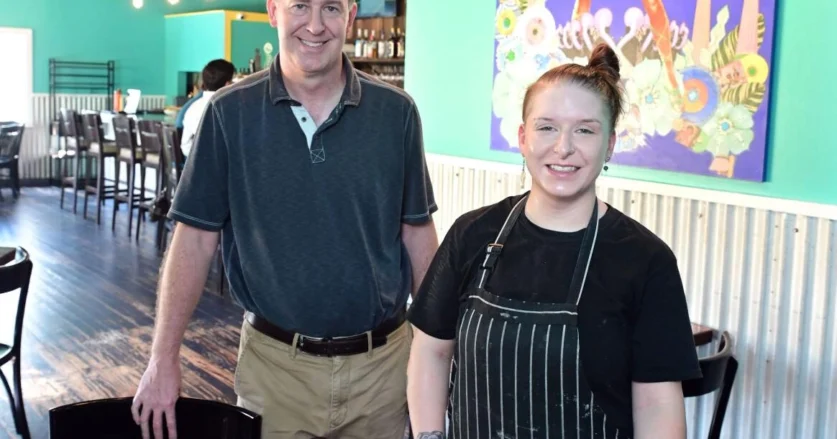
In the charming neighborhood of Riverbend, there’s a new hotspot that has captured the attention of locals. Calliope Beer Works, owned by Rich Szydlo and helmed by chef Amber Benson, has quickly become a favorite among those seeking a casual and friendly dining experience. However, there’s one item missing from their menu that has caught the curiosity of patrons – the burger.
According to Szydlo, the decision to hold off on introducing a burger to the menu was a deliberate one. They wanted to take their time and ensure that their burger would stand out and offer something unique to diners. In the previous years, the space was occupied by the popular Cowbell, known for its mouthwatering burgers. Szydlo and his wife, Nicole Russell, who is an attorney, were fans of Cowbell and wanted to put their own twist on the space.
The transformation of the former garage at the end of Oak Street is remarkable. Szydlo and his team have given the space a fresh and vibrant look, with sunny yellow accents and teal exteriors. The outdoor seating areas, wrapped around the building, are perfect for enjoying the lively atmosphere. Inside, the wooden floors and slat walls create a warm and inviting ambiance, complemented by local artist Nicole Todaro’s pop art pieces. One particularly eye-catching portrait at the entrance, inspired by a punky Greek Muse, serves as the inspiration behind the restaurant’s name – Calliope.
Szydlo and his wife have been in New Orleans for eight years, falling in love with the city while attending Tulane Law School. Szydlo, with over two decades of experience in the hospitality industry, always had a passion for brewing his own beer. In 2013, he founded Big Shoulders Beer Co., a contract brewery in his hometown of Chicago. When the opportunity to open a brewery and restaurant in their own neighborhood arose, Szydlo knew it was a perfect fit.
While they await the arrival of their own craft brews, which will be available in early October, Calliope Beer Works is offering a selection of beers from local breweries such as Zony Mash Beer Project and Gnarly Barley. Szydlo’s strategy is to offer a variety of beers to cater to different preferences and keep guests curious and engaged. In addition to beer, there’s also a full bar with frozen and batched cocktails, as well as a curated wine list.
When it comes to the food menu, Szydlo and Benson have created a selection of dishes that are both affordable and satisfying. From lettuce boats filled with grilled shrimp to fried portobello fingers served with queso, there’s something for everyone. The menu also features seasonal offerings like a melon mix with watermelon, cantaloupe, honeydew, and feta. For those seeking heartier fare, there’s a fried chicken thigh drizzled with hot honey and sandwiched between Belgian waffles, as well as a pimiento cheese grilled cheese sandwich with fried green tomatoes and bacon.
Benson, who honed her culinary skills in various kitchens in New Orleans, including the butcher shop at Whole Foods, brings her expertise and creativity to the kitchen at Calliope Beer Works. This is her first time running her own kitchen, and she’s eager to showcase her culinary talents to the local community. Marcus Osborne, originally from Oakland, manages the front of the house, ensuring that guests have a seamless and enjoyable dining experience.
Calliope Beer Works recently expanded its hours to include Friday lunch and service on Sundays before New Orleans Saints games, catering to the growing demand from locals. Looking ahead, they are excited to participate in the Oak Street Po-Boy Festival, where they will have a booth offering their delicious beer and sandwiches to festivalgoers.
As news of Calliope Beer Works spreads, more and more people are discovering this hidden gem in Riverbend. Szydlo and his team are dedicated to providing a memorable dining experience, and their commitment to quality and creativity shines through in every aspect of the restaurant. If you’re in the area, be sure to stop by and experience the flavors and atmosphere of Calliope Beer Works for yourself. It’s a place that will leave you wanting to come back for more.
**Support Your Local Newspaper and Keep New Orleans Strong!**
Greetings, fellow New Orleanians!
For years, Gambit Weekly has been your vibrant and reliable source of news, events, and entertainment. We have proudly stood by your side through thick and thin, celebrating our beloved Saints’ victories and mourning our collective losses. We have danced in the streets together, cried together, and fought for our city together. And we’re not done yet – we’re here to stay, but we need your support!
As you might already know, media outlets face numerous challenges in the digital age. The shift to online platforms has disrupted the traditional newspaper industry, and many publications struggle to survive. However, Gambit Weekly is determined to adapt and thrive in this rapidly changing landscape. With your help, we can continue to be your trusted source of local news and stories, ensuring that our community stays informed and connected.
Becoming a Gambit member is your chance to contribute to the future of our city and show your support for independent journalism. By joining our membership program, you’ll not only receive exclusive benefits but also play a vital role in sustaining the heartbeat of New Orleans. Whether it’s covering important local issues, showcasing the city’s rich culinary scene, or keeping you up-to-date with the latest events, your membership will make a difference.
With our dedicated food and drink team, we strive to cater to your taste buds and keep your cravings satisfied. Feel free to reach out to us at dining@gambitweekly.com with any suggestions, recommendations, or stories you’d like us to cover. We value your input and want to ensure that our coverage reflects the diverse and vibrant spirit of New Orleans.
As a Gambit member, you’ll also receive email notifications, keeping you in the loop with daily updates on the stories that matter most to you. We respect your time and ensure that you’ll only receive one email per day, listing any exciting new articles, events, or features that have caught our attention.
Speaking of events, don’t forget to check out Gambit’s comprehensive Events Calendar at calendar.gambitweekly.com. Whether you’re looking for live music, art exhibitions, community gatherings, or anything else that tickles your fancy, our calendar has got you covered. Stay in the know and never miss out on the vibrant tapestry of events that make New Orleans one of the most captivating cities in the world.
New Orleans, our love for you runs deep. Gambit Weekly has been a part of your daily life for years, and we are committed to being here for many more. We believe in the power of local journalism, and with your support, we can continue to shine a light on the stories, people, and issues that help shape the fabric of our unique city.
So join us, become a Gambit member today, and let’s continue this amazing journey together. Together, we can ensure that New Orleans remains strong, vibrant, and connected for generations to come.
Email Gambit’s food and drink team at dining@gambitweekly.com to sign up and make a difference.
Stay informed. Stay connected. Stay Gambit.
With gratitude,
The Gambit Weekly Team
Top 15 beer varieties that are perfect for batter.
The rich and indulgent depth of beer batter has the power to transform a variety of foods into crispy, golden delights that practically melt in your mouth. Just imagine the stomach-warming comfort of biting into a perfectly fried fish and chips, the satisfying crunch of onion rings, or the flaky texture of fried zucchini, still warm and delicious from being cooked to perfection. It’s enough to make anyone’s mouth water.
Creating a basic beer batter is surprisingly simple, requiring just four essential ingredients: all-purpose flour, baking powder, a pinch of salt, and, of course, the star ingredient – beer. But not just any beer will do. The choice of beer you use can add subtle undertones or robust flavors to your batter, playing a crucial role in the final taste of your fried masterpiece. And once you’ve whipped up your preferred beer batter, you have the option of using it immediately or storing it in a sealed container for a few days. Just be aware that refrigeration can cause the batter to thicken, but fear not – you can easily thin it out with a bit of water or even more beer.
Now, let’s dive into the topic at hand – which beers make the cut when it comes to creating the perfect beer batter for specific dishes.
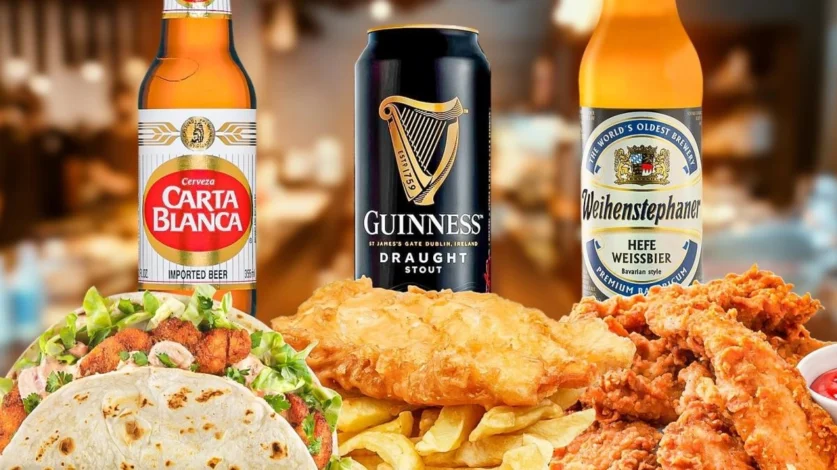
First up, let’s talk about everyone’s beloved fish tacos. These delightful creations have earned their rightful place as one of our favorite comfort foods, thanks in large part to the delicious combination of flaky fish, tangy slaw, and creamy sauces. But ask any taco lover, and they’ll tell you that the batter is what truly takes a fish taco from good to unforgettable. For this particular dish, I highly recommend Carta Blanca, a beer originally from Monterrey, Mexico. Its clean and crisp taste, with subtle malty undertones, evokes memories of sunny afternoons spent by the sea on the enchanting Mexican coast. When incorporated into a batter, Carta Blanca lends a lightness that results in a gloriously golden and crunchy exterior, enveloping the fish inside. What sets Carta Blanca apart is its versatility, as it complements both delicate white fish and richer, more flavorful varieties. The beer’s effervescence ensures a delightfully airy and light batter, while its nuanced flavor adds a touch of magic to the fish. Give this beer-battered fish taco recipe a try with Carta Blanca, and you won’t be disappointed.
Moving on to an unexpected choice for frying – IPAs. Traditionally, the intricate floral hop flavors of IPAs can be lost during the cooking process, leaving behind only a bitter taste. However, this bitterness can actually be an asset when paired with the right ingredients. Take Harpoon IPA, for example, and its delicious compatibility with fried potatoes. Yes, it is bitter, but it strikes a perfect balance that doesn’t overwhelm the palate. At the same time, the beer’s maltiness is prominent without overshadowing the star of the dish – the potatoes. When you coat potato slices in a beer batter infused with Harpoon IPA, something magical happens. The bitterness of the beer counteracts the natural sweetness of the potatoes, while the mild maltiness adds a layer of depth to the crispy exterior. The result is a truly satisfying bite that is both rich and fulfilling. In addition to potatoes, Harpoon IPA’s well-balanced profile also pairs wonderfully with chicken and pickles.
Finally, let’s talk about the ultimate comfort food – fish and chips. There’s something incredibly special about indulging in a hearty plate of beer-battered fish and chips in a cozy British pub, with the wind and rain creating a comforting ambiance outside. But what if you could recreate this experience at home? Well, creating the perfect beer batter for fish and chips involves one standout tip: use Guinness. At first, Guinness might not seem like an obvious choice with its rich and dark profile. However, it’s precisely these characteristics that make it an exceptional partner for this classic dish. As a member of the stout family, Guinness defies the heavy stereotypes often associated with its kin. Instead, it offers a surprisingly light and crisp flavor, enhanced by a delightful creamy texture and just the right touch of carbonation. These qualities make it an ideal candidate for creating a batter that leans towards the thicker and more robust side. Additionally, Guinness’s widespread availability and affordability worldwide make it a go-to choice for many when it comes to beer-battered fish and chips. However, it’s worth noting that Guinness’s strong character might not be suitable for every palate.
In conclusion, the art of beer batter is a simple yet versatile technique that can elevate a range of dishes to new heights of deliciousness. Whether you’re indulging in fish tacos, fried potatoes, or the classic fish and chips, choosing the right beer for your batter can make all the difference. So next time you find yourself in the mood for some crispy, golden goodness, don’t be afraid to experiment with different beers and see how they can enhance your fried masterpieces. Cheers to the rich and flavorful world of beer batter!
In the world of food pairings, sometimes the most unconventional combinations can be the most memorable and delicious. Take, for example, the pairing of a rich, indulgent Imperial Porter like the Morning Wood from the Funky Buddha Brewery with a fried Twinkie. While it may initially raise eyebrows, this unexpected duo offers a delightful blend of flavors and textures.
Morning Wood is not your everyday beer. It brings forth a cascade of flavors, including coffee and maple syrup, mixed with the smoothness of bourbon. Each sip is akin to a lavish morning breakfast. Now, imagine this beer lending its flavor to the batter of a fried Twinkie. The coffee notes in the beer underline the golden-fried exterior, while the hints of maple saturate the creamy center of the Twinkie. This pairing is all about contrasts – deep flavors with light textures, sweet with bitter, and tradition with innovation. For those looking to up their dessert game, this unexpected duo is worth a try.
Moving on to savory snacks, let’s talk about fried pickles. Take the classic full-sour dill pickle with its tantalizing tang and crisp bite. Now, reimagine this beloved snack in a light, bubbly beer batter made with none other than America’s favorite light lager: Bud Light. Believe it or not, Bud Light can be the unsung hero behind fried pickles. With its subtle malt undertones and refreshingly crisp finish, an IPA like Bud Light provides the ideal counterbalance to the vibrant sourness of dill pickles. When mixed into the batter, the beer’s vivacity ensures that each pickle slice is encased in an airy, light coating. Paired with a condiment like honey Dijon mustard, sweetness, tang, and creaminess converge for a truly mouthwatering experience.
Onion rings, another beloved bar snack, can be taken to the next level with a delicious beer batter made with Samuel Adams Boston Lager. With its rich malt complexity and subtle hint of bitterness, this lager adds a depth of flavor to the batter. The character of the beer not only enhances the taste but also ensures an exquisitely crispy texture. Sweet onions are often recommended for their flavor, as their natural sweetness pairs impeccably with the maltiness of the lager. However, almost any onion will do the trick. And if you happen to have leftovers, simply store them in an airtight container in the refrigerator. When the craving strikes again, a quick trip in the air fryer will restore their optimal crunch and warmth.
Chicken tenders, a beloved comfort food, can also benefit from the addition of beer in the batter. Hailing from the world’s oldest brewery, the Weihenstephaner Hefeweissbier wheat beer is known for its hints of banana and clove. When incorporated into the batter for chicken tenders, it adds an unexpected elegant twist. The tender chicken shines through the airy and light batter, while the delicate notes of the beer strike a pleasant balance with the savory profile of the tenders. Serve these beer-battered chicken tenders as appetizers at your next dinner party, and delight your guests with their flavorful, juicy, and exquisitely crispy goodness. And of course, don’t forget to pair them with delicious condiments like ranch dressing, barbecue sauce, or sweet and sour sauce.
In summary, when it comes to elevating your favorite dishes, a beer batter can make all the difference. Whether it’s the rich and indulgent Morning Wood Imperial Porter with a fried Twinkie, Bud Light with fried pickles, Samuel Adams Boston Lager with onion rings, or Weihenstephaner Hefeweissbier with chicken tenders, these unexpected duos offer a delightful blend of flavors and textures. So don’t be afraid to get creative in the kitchen and explore the wonderful world of beer-battered delights. Your taste buds will thank you.
with a decadent dessert like fried Oreos, the combination is surprisingly delightful. The subtle flavors of Miller Lite blend perfectly with the rich chocolatey goodness of the Oreo, creating a treat that is crispy on the outside and gooey on the inside. To make these mouthwatering treats, simply dip the Oreos into a batter made with Miller Lite, fry them until golden brown, and dust them with powdered sugar. The result is a sinful indulgence that will satisfy all your sweet cravings. Serve them with a scoop of vanilla ice cream for an extra special touch. So the next time you are looking for a unique and delicious dessert, give fried Oreos with a twist of Miller Lite a try. You won’t be disappointed.
unique twist. The combination of the malty lager and the sweet, tart apples creates a delightful contrast that will have your taste buds dancing with joy. The carbonation in the beer also adds a light and airy texture to the fritter batter, resulting in a perfectly crispy and golden exterior.
To make these delectable beer-battered apple fritters, start by peeling and slicing some ripe, juicy apples. In a mixing bowl, combine flour, sugar, baking powder, and a pinch of salt. Slowly pour in Brooklyn Lager, stirring continuously until a smooth batter forms. The beer’s malt undertones will infuse the batter with a rich, complex flavor.
Dip the apple slices into the batter, making sure they are fully coated. Carefully drop them into hot oil and fry until golden brown and crispy. The result will be irresistible fritters that are crispy on the outside and soft and juicy on the inside.
Serve the beer-battered apple fritters hot, sprinkled with a dusting of powdered sugar for an added touch of sweetness. The combination of the sweet, tart apples, the malty lager, and the crispy batter is a match made in dessert heaven.
If you’re feeling adventurous, try pairing these fritters with a scoop of vanilla ice cream or a dollop of whipped cream. The creamy, cold texture of the ice cream will complement the warm, apple-filled fritters perfectly.
Whether you’re hosting a gathering or simply treating yourself to a sweet indulgence, these beer-battered apple fritters are sure to impress. The unique combination of flavors and textures will have everyone coming back for seconds. So grab a bottle of Brooklyn Lager and get ready to take your apple fritters to a whole new level of deliciousness. Cheers to beer and desserts that go hand in hand!
When it comes to indulging in one of life’s simple pleasures, there is nothing quite like sinking your teeth into a warm, freshly baked croissant. With its crisp exterior and a tender, airy inside, this French pastry is a true delight for the senses. But what if we were to approach writing about this delectable treat in a different way?
Imagine a world where the words on a page have the power to transport you into a bustling bakery, the tantalizing aroma of butter and flour wafting through the air. Close your eyes and envision yourself standing before a counter lined with rows upon rows of golden-brown croissants, each one more tempting than the last. Can you feel the anticipation building?
Now, let’s dive into the story of the croissant, keeping its original logic intact but presenting it in a unique and unexpected format. Instead of a traditional blog post, we’ll explore the narrative through an imaginary conversation between two friends, Marie and Philippe, as they embark on a croissant adventure.
Marie: Philippe, have you ever wondered about the magic behind a perfectly baked croissant?
Philippe: Oh, Marie, you know me too well. There’s something extraordinary about that golden crust and those layers that just melt in your mouth. How do they achieve this culinary masterpiece?
Marie: Well, my dear friend, let me take you on a journey to demystify the croissant-making process. Picture a humble baker, hands covered in flour as they expertly fold butter into the dough. This stage, known as lamination, is key to creating those flaky layers we adore.
Philippe: Ah, I can almost see it now, the butter being encased in a delicate dough envelope. But how do they ensure that perfect balance between a crisp exterior and a tender, airy inside?
Marie: Timing and precision, my friend. The dough must be left to rest and rise, allowing the yeast to work its magic. Then, it’s meticulously rolled out, cut into triangles, and carefully shaped into the iconic crescent form. These steps ensure that delightful contrast we crave.
Philippe: Fascinating! So, Marie, are there any tips for someone attempting to bake croissants at home?
Marie: Absolutely, Philippe! But remember, patience is key. Give the dough plenty of time to rest and chill, allowing the gluten to relax and the flavors to develop. And when it’s time for that all-important bake, remember to preheat your oven properly, ensuring that satisfying crispness we all desire.
Philippe: I will keep those tips in mind, Marie. But, tell me, why are croissants so popular worldwide?
Marie: Ah, Philippe, that’s a question with many answers. Perhaps it’s the universality of that moment when you break a croissant in half, revealing its luscious interior. Or maybe it’s the joy of sinking your teeth into that flaky goodness, knowing that in that moment, you are experiencing a culinary masterpiece that has stood the test of time.
Philippe: Well, Marie, I must say, after this imaginary journey, I am now craving a croissant like never before!
Marie: Then, my friend, let’s seek out the nearest bakery and satisfy that craving together. For in the world of croissants, there is no greater pleasure than experiencing that crisp exterior and tender, airy inside.
As we have seen, a simple change in format can breathe new life into a familiar story. By turning a typical blog post into an imaginative conversation, we invite readers to engage with the content in a unique and immersive way. So, next time you find yourself writing, remember the power of storytelling and the endless possibilities it holds. Bon appétit!
The 6th anniversary of the ‘Couve Brew Bevy’, a beer group for women in Vancouver, will be celebrated.

The Couve Brew Bevy, a group of women who share a love for beer and connection, will be celebrating the sixth anniversary of their first “Bevy Meet Up” on Wednesday. Founded by Kimberly Johnson, the bevy aims to bring women together around craft beer and create a space for them to connect and have “our” time together.
The anniversary gathering will take place at Final Draft Taphouse, owned by Johnson and her husband, Mike Bolt. Mallory Brown, a sales and distribution rep for Corvallis’ Block 15 Brewing, will be a special guest at the event, sharing her journey with craft beer and her experience in the industry. She will also provide insights into Block 15 and its upcoming Bloktoberfest festival. As a special treat, the bevy will be giving away two tickets to the festival.
Kimberly Johnson emphasizes that the Couve Brew Bevy events are all about fun, mingling, and getting to know each other over a pint. While the group comes together because of their love for beer, the connections they make go beyond that. The monthly meet-ups, held on the third Wednesday of every month, are also open to newcomers, providing an opportunity for more women to join the community.
In addition to the Couve Brew Bevy celebration, this weekend marks the finale of Northbank Beer Week. The Brewing Bridges Collaboration Fest will feature over 20 southwest Washington breweries that have collaborated on new beers with breweries from outside the area. Held at the Fort Vancouver National Historic site, the festival offers food, pours, and a glass with no tokens required. Tickets are available online.
For those in Portland, the Portland Oktoberfest promises an experience that blends the vibrant cultures of Germany and the city. The festival will feature food from Portland’s Urban German Wursthaus, a selection of German-style beers, and authentic imports from Munich. Alongside traditional polka bands, there will also be live music, costume contests, and stein-holding competitions. Tattoo enthusiasts can even get new ink from INKBUS Tattoo. The festival will take place at Pioneer Courthouse Square and is open to those 21 and over.
Lastly, Lucky Labrador Brewing will be celebrating its nearly three-decade tradition, Dogtoberfest. The event, which started in 1994, continues to attract beer lovers and dog enthusiasts alike. While more details about Dogtoberfest are yet to be revealed, attendees can expect a fun-filled experience.
Overall, the beer scene in the Vancouver/Portland area is thriving with various events and opportunities for beer enthusiasts to come together, celebrate, and make connections. Whether you’re a woman looking to join the Couve Brew Bevy, a fan of collaboration brews at the Brewing Bridges Collaboration Fest, or excited about the unique experience that Portland Oktoberfest promises, there’s something for everyone in the beer community.
Calling all dog lovers and beer enthusiasts! Get ready for the 29th annual Dogtoberfest, happening on September 30th in Southeast Portland. This beloved event has been raising funds for the Dove Lewis Emergency Animal Hospital since 1996, specifically for their Canine Blood Bank. The Dogtoberfest beer, a classic German lager, will be served by the Lab, a well-known brewery in the area.
But Dogtoberfest is not just about beer and dogs. It’s also a celebration of the brewery’s longevity and resilience in the face of economic challenges. Lab co-founder Gary Geist expressed his gratitude for surviving and continuing to serve their customers and employ their dedicated staff. Cheers to that!
If you’re looking for more beer-related events in Portland, there are plenty of options coming up. Hetty Alice Beer is celebrating its 1st anniversary with a party at Belmont Station on September 15th. They’ll be pouring the most Hetty beers ever in one place and releasing a special anniversary Italian Pilsner.
For those who want to feel a little Irish, Kells Brewery is hosting its annual Halfway to St. Patrick’s Day Festival on September 17th. Enjoy Irish dancing, live music, bagpipes, beer, and food while supporting the Center for Medically Fragile Children.
The Oregon Zoo is getting into the fall spirit with their first-ever Fall Beer and Cider Festival on September 29th and 30th. With over 40 Northwest breweries and cideries, live music, and local food carts, this festival is perfect for beer and animal lovers alike.
Breakside Brewery is bringing the community together with their Slabtown Block Party on September 16th. Expect beer, live music, local vendors, face painting, and even a dunk tank! Proceeds from this event will benefit New Avenues for Youth, an organization dedicated to preventing youth homelessness.
And of course, it wouldn’t be September without Oktoberfest celebrations. Mount Angel Oktoberfest, known as the largest folk festival in the Northwest, is happening from September 14th to 17th. With a wide variety of beers, wines, ciders, and entertainment, this festival is a must-visit for Oktoberfest enthusiasts.
Loyal Legion is also hosting their own Oktoberfest celebration, offering 25-ounce steins and Octoberfest food specials. Check their Southeast Portland and Beaverton locations from September 16th to October 3rd.
If you’re looking for a family-friendly Oktoberfest experience, head to Oaks Park for their annual Oktoberfest family fall festival. Enjoy authentic German food and beer, polka music, traditional dancing, kids’ activities, cooking shows, and thrilling rides.
Whether you’re a dog lover, beer enthusiast, or simply looking for some fun events in Portland, these upcoming festivities have something for everyone. So mark your calendars and get ready to indulge in good food, great beer, and unforgettable moments!
Blog Post: The Ultimate Guide to Oktoberfest Events in Portland
Are you ready to celebrate Oktoberfest in Portland? With the pandemic now under control, breweries and event organizers are thrilled to bring back the annual festivities. From live music to delicious beers and mouthwatering food, there’s something for everyone to enjoy. In this guide, we’ll highlight some of the top events happening in the city. So grab your lederhosen or dirndl and get ready for a weekend of fun!
1. Deadtoberfest at Montavilla Brew Works:
Founder Michael Kora has been dreaming of hosting an Oktoberfest event for years, and now it’s finally happening. Join them for a Grateful Dead tribute show by “The Weir Dose” along with an array of delicious MBW beers and German-style Bratwurst. This all-ages event takes place on Saturday, Sept. 23, from 3-9 p.m. at 7805 S.E. Stark St.
2. Oktoberfest by Buoy Beer:
Buoy Beer is hosting a one-day extravaganza filled with beers, music, food, and the Stein-ly Cup stein-holding competition. Don’t miss the opportunity to taste new and favorite beers from Buoy Beer, as well as collaborations with Obelisk Beer Co. and Ecliptic Brewing. Enjoy fresh-hopped beers flowing into half- and full-liter steins, along with water-pong and corn-hole tournaments, a costume contest, and activities for the kids. This event takes place on Saturday, Sept. 23, from 11 a.m.-10 p.m. at Astoria Armory, 1636 Exchange St., Astoria.
3. Forest Grove Oktoberfest Celebration:
Join the third annual Oktoberfest Celebration in Forest Grove for a day filled with live music, wiener dog races, stein races, and an abundance of vendors. This free family-friendly event offers something for everyone, including a bounce house, hot-dog eating contest, costume contest, and dunk tanks. Head over to downtown Main Street in Forest Grove on Saturday, Sept. 23, from 1-7 p.m. to join in the fun.
4. Occidental Brewing Oktoberfest:
Occidental Brewing is bringing back their beloved Oktoberfest event for the first time since 2019. This all-ages festival takes place from noon-9 p.m. on Saturday, Sept. 23, at the brewery located at 6635 N. Baltimore Ave. For $12, you’ll receive an Oktoberfest mug and one beer, with additional beers available for $6. They’ll also have wine, cider, and non-alcoholic drinks on offer. Enjoy live music all day and savor delicious food from Urban German. Don’t miss Occidental’s Festbier and a full lineup of their tasty brews, including Fresh Hop Pilsner and three brews from the new Further Beer brand.
5. The Littlest Oktoberfest in the World at Little Hop Brewing:
Little Hop Brewing, the tiniest tap house in Portland, is hosting their very own brand of Oktoberfest. This intimate event will feature a special beer debut and a limited amount of custom stoneware steins. Join them on Saturday, Sept. 23, from noon-7:30 p.m. at 4400 S.W. Garden Home Road. Check out @littlehopbrewing for more details.
6. Widmer Brothers Oktofest:
Welcome back Widmer Brothers to the craft beer scene by attending their 19th annual Oktofest in the Rose Quarter, just outside the Moda Center. Enjoy delicious food, live music, and a variety of Widmer beers. This event takes place on Saturday, Sept. 30, from 11 a.m.-8 p.m. and is open to all ages. Purchase the advance mug and beer token package online, which includes one Oktofest commemorative mug (required for beer service) and three beer tokens. Food and non-alcoholic beverages will also be available for purchase on-site.
Fresh-Hop Beer Festivals:
In addition to Oktoberfest celebrations, Portland is also hosting several fresh-hop beer festivals. One standout event is Roscoe’s Fresh Hop Kumite, which features a tournament-style blind tasting of eight curated fresh-hop IPAs. Enjoy a lineup of 15 fresh-hop beers, participate in blind tastings and indulge in delicious food. Join the festivities on Saturday, Sept. 30, from 11 a.m.-6 p.m. at 8105 S.E. Stark St., as part of Roscoe’s 14th annual fresh-hop summit.
Wrap-Up:
There you have it, a round-up of the top Oktoberfest events happening in Portland. Whether you prefer traditional German festivities or fresh-hop beer tastings, there’s an event for every beer lover and festival-goer. Don’t miss out on these exciting opportunities to celebrate the arrival of autumn in style. Grab your friends, put on your best Oktoberfest attire, and get ready for a weekend of fun and indulgence. Cheers!
Get ready, beer lovers! The fresh-hop festival season is upon us, and there are some exciting events happening in and around Portland. Whether you prefer cask beers, ciders, or the classic fresh-hop brews, there is something for everyone to enjoy.
One festival that is not to be missed is the Fresh Hop Pop-Up Beer Festival at Prost! Marketplace on North Mississippi Avenue. This 17-day event features a rotating selection of 16 fresh-hop beers, cask beers, and ciders. Last year, they tapped an impressive 125 unique fresh-hop beers, and this year they are aiming to match or even surpass that number. The best part? Admission is free, and there are no tickets, wristbands, or special cups required. So grab your friends and head over to the Bloodbuzz bar to enjoy the outdoor beer garden deck, surrounded by 10 delicious food trucks. Plus, there will be tap takeovers from top fresh-hop breweries and themed nights celebrating different regions, hop varieties, and beer styles.
Another festival worth checking out is the Chill N Fill food cart pod grand opening and Fresh Hop Fest. This event takes place at the Chill N Fill taproom in North Portland and coincides with the opening of a new food cart pod. From noon to midnight on September 16th, you can enjoy fresh-hop beers, live music, and even bring your furry friend along, as the event is dog-friendly.
For those of you in Northeast Portland, Level Beer is hosting their Fresh Hop American Summer festival. Lawn games, merchandise packages, barbecue, vendors, and live music will accompany the pouring of fresh-hop beers from Level and 10 guest breweries. The event takes place on September 16th at 5211 N.E. 148th Ave, so mark your calendars!
If you’re looking to support a good cause while enjoying some delicious beers, the Oregon Brewers Guild’s Portland Fresh Hops Festival is a great choice. Celebrating its 19th anniversary, this festival will be held at Oaks Amusement Park in Southeast Portland. In addition to a wide variety of fresh-hop beers on tap, the guild will release the next fresh-hop iteration of its State of Excitement Collaboration Series. Proceeds from the event go towards promoting and protecting the Oregon craft beer industry, so you can feel good about having a pint or two.
Hood River Hops Fest is also returning for its 19th year, bringing together more than 30 breweries and over 40 fresh-hop beers. This family-friendly event, held on October 7th, features food vendors, live music, and a collectible tasting glass. Located in Hood River, it’s the perfect opportunity to enjoy some fresh-hop brews while taking in the beautiful scenery.
If you’re in Northwest Portland, be sure to check out Function PDX’s fresh-hop events. Throughout the month, they will be featuring Single Hill Brewing of Yakima, known for their incredible fresh-hop beers. From live sets by DJ Vinnie Toma to a fresh-hop takeover, there will be plenty of opportunities to enjoy some refreshing brews.
Lastly, there is the St. Paul Fresh Hop Festival, held in the heart of hop country. This annual event brings together farmers and craft brewers to raise money for the local community. With college football on big-screen TVs, delicious food, and a wide selection of fresh-hop beers and hard ciders, it’s a fun event for a good cause.
So, mark your calendars and get ready to hop from one fresh-hop festival to another this season. With so many incredible events happening in and around Portland, it’s the perfect time to explore the world of fresh-hop beers and celebrate the craft beer industry. Cheers!
**Title: The Beer Enthusiast’s Guide to Fresh-Hop Season in Oregon**
Are you a beer lover in Oregon? If so, you’re probably eagerly awaiting the arrival of fresh-hop season. This time of year, breweries across the state release their highly anticipated fresh-hop beers, brewed with recently harvested hops that are bursting with flavors and aromas. Today, we’ll take a look at some of the must-try fresh-hop beers available in Oregon this season.
One of the standout offerings comes from Montavilla Brew Works – the Fresh Hop Flam Tap IPA. Brewed with 200 pounds of fresh Centennial hops from Goschie Farms, this beer is a true citrus bomb, packed with vibrant flavors. It’s super drinkable and perfect for anyone who loves Northwest-style IPAs. Make sure to grab a can of this limited edition beer before it’s all gone!
Fort George Brewery in Astoria has also joined the fresh-hop frenzy by introducing two new IPAs to their year-round lineup. The Sherman IPA and Electric Surfboard Double IPA are now available at the brewery and in distribution. If you find yourself in Astoria, don’t miss the opportunity to try these exciting new additions.
But that’s not all – Fort George has another treat in store for you this week. They have just released their fresh-hop beer, made in collaboration with Double Mountain Brewery & Cidery. Three freshies are on offer, ready to tantalize your taste buds. Whether you prefer drafts or bottles, you can find these innovative beers at Double Mountain’s various locations.
Wolves & People, a brewery located in Newberg, is offering two fresh-hop beers that shouldn’t be missed. Pay a visit to the brewery at Springbrook Farm and indulge in the 1979 Pale Ale, a collaboration with Elephants Delicatessen. This beer is a tribute to Elephants’ 44 years of serving the Portland market and is sure to impress.
Looking for something different? Migration Brewing has collaborated with Elephants Delicatessen to create a unique fresh-hop beer named Migration 1979. It pays homage to the year Elephants started serving the Portland market and is a true delight for the senses. You can find this special beer at Migration locations and in its regular distribution channels.
For those who enjoy German-style lagers, Rosenstadt Brewery has released three fall-inspired beers that are perfect for the season. Look for Festbier, Dunkel, and Houblon-Pils French-style Pilsner in Fred Meyer and other grocery stores and retailers throughout Oregon. These finely crafted lagers are sure to satisfy even the most discerning beer connoisseur.
If you’re a fan of sour beers, Mt Tabor Brewing has just what you need – the Berry Stand Mango Passion Sour. Part of their Berry Stand series, this beer is made with seasonally available ingredients and is packed with tart and crisp flavors. Find it in 16-ounce cans and draft at Mt Tabor locations and other distribution outlets.
Last but not least, Ferment Brewing in Hood River has captured the essence of fresh hops in their Fresh Hop Centennial IPA. With loads of fresh Centennial hops infused into the brewing process, this beer delivers bold floral notes, juicy citrus, and a fresh piney aroma. You can grab it in 16-ounce cans and on draft at the brewery and other locations.
So, whether you’re a hop aficionado, a lover of German-style lagers, or a fan of innovative collaborations, Oregon’s fresh-hop season has something for everyone. Make sure to visit your favorite taprooms, bottle shops, or grocery stores to get a taste of these incredible beers. Don’t miss out on the opportunity to indulge in the finest brews Oregon has to offer!
‘My life has had many dark points,’ said Madison Beer, the pop star, when discussing fame, Justin Bieber, and family guilt.

Hey there, it’s Madison Beer. I hope you’re doing well. I have a crazy story to share with you today. So, I was on a Zoom call recently, just chatting away, when all of a sudden, a recording of my own voice starts playing. Can you believe it? I couldn’t. I mean, I just clicked one button, and now my voice is playing on its own. Talk about confusing!
Now, let’s backtrack a bit. I’m sure you’re wondering why I was working on a self-tape when I’m known as a pop singer, not an actor. Well, it’s interesting how things unfold in life. You see, I’ve been in the music business for over a decade now – yes, since I was a child pop star and viral sensation. Back when I was just 13, Justin Bieber himself discovered me and things took off from there.
Fast forward to today, and I’ve released an album, an EP, and numerous singles, all showcasing my radio-ready pop vocals. But guess what? I’m about to release my second album, Silence Between Songs. It’s a project that holds a lot of meaning for me, and that’s why I was working on a self-tape. Sometimes you have to explore different creative outlets to express yourself fully.
So, picture this – I’m lounging on my bed at home in sunny Los Angeles, all cozy with a stack of pillows behind me, and my laptop on my lap. I’ve just woken up, but I’m still looking put together in my oversized sweater that boldly says “EXCUSE ME!” across the front. My hair cascades down my shoulders, perfectly framing the slogan on my chest.
Now, let’s go back to where it all began. It was the comb-over era of Justin Bieber, and he tweeted a link to a video of me singing Etta James’s “At Last”. Can you believe that? I was only 13 years old! Bieber, the superstar himself, recognizing my talent and calling me a “future star”. That moment changed my life forever, and soon enough, I signed with Island Records and became part of Bieber’s manager Scooter Braun’s roster.
With the support of my amazing mother, Tracie, who put her interior design career on hold to help navigate the music industry, I became a rising star. It was an exciting time for pop music, with hits like “Call Me Maybe” and “Starships” dominating the airwaves. And just imagine this – for my 14th birthday, Bieber surprised me by bringing me on stage at the O2 Arena in London and singing happy birthday to me in front of a massive crowd. It was surreal.
But as time went on, I started feeling trapped by the “Disney queen” image that was thrust upon me. So, I made the decision to go independent after three years with Island Records. I wanted to explore different genres and find my own sound. I collaborated with DJs Jax Jones and Martin Solveig, tried my hand at R&B, and even launched my own makeup line with Morphe. It was all part of my journey to express myself authentically.
Unfortunately, fame came at a price. When I was just 16, private and intimate photos of me were leaked online without my consent. That whole experience was absolutely devastating, and the hate that followed was relentless. It took a toll on my mental health, and I even contemplated suicide. It was a dark and lonely time for me, feeling like no one could truly understand what I was going through.
That brings us to where I am now, on the verge of releasing my second album, Silence Between Songs. This album is a cathartic experience for me, a way to confront the emotions and struggles I’ve faced over the past decade. It’s a departure from the catchy bubblegum pop I was known for, and it’s more aligned with the vulnerable and introspective style of Lana Del Rey in her Born To Die era.
So, there you have it – the journey of Madison Beer, from a young girl recording covers in her bedroom to a force to be reckoned with in the music industry. It hasn’t been an easy road, but I’ve grown so much as an artist and as a person. I’m grateful for every experience, both the highs and the lows, because they’ve shaped me into the artist I am today.
I hope you’ll join me on this next chapter of my musical journey. Let’s embrace the “Silence Between Songs” and discover the raw and authentic Madison Beer together. Thank you for being part of my story.
A difficult task for critics to decipher. When her debut studio album Life Support was released in 2021, Dani Blum, a writer for Pitchfork, labeled it as “ambitious yet shallow,” insinuating that Beer was determined to prove herself as a serious musician. Initially, it took some time for people to recognize Beer as an artist. She was often referred to as a “social media star” before being acknowledged as a musician (probably due to her staggering number of Instagram followers, which currently stands at 37 million). But does Beer feel like she is not taken seriously? “Yes, I mean, by the general public,” she sighs. However, she seems to have moved past it now. “But honestly, I don’t think it matters to me anymore because I have accepted it,” she explains. Despite her previous work, Silence Between Songs feels more honest and revealing than anything she has done before.
In her song “King of Everything,” Beer confronts a powerful man who has taken advantage of young individuals, expressing her hope that he receives what he deserves. She explains, “I wanted to write a song about powerful men I have encountered firsthand – those who believe they are at the pinnacle of the world when, in reality, they sleep alone and have no one to turn to. It’s just sad.” Moreover, Beer is an ardent music enthusiast. She is fascinated by The Beatles (expressing her fear that if she ever met Paul McCartney, she might not make it out alive). On her album, she draws inspiration from a variety of artists, including The Beach Boys, Tame Impala, and Lana Del Rey. For instance, “Home To Another One” blends bouncy synths with Tame Impala-esque influences, while “Nothing Matters” channels Del Rey’s style, evoking a sense of an orchestral love song suitable for a Disney princess movie.
In the song “Ryder,” Beer searches for a different kind of justice. Apologizing to her younger brother, Ryder, who is three years her junior, she softly sings, “I always left you out, you still love me somehow, you just wanted a friend, didn’t know it then.” Throughout their upbringing, Beer’s fame often cast a lengthy shadow, obscuring Ryder’s presence. Beer states that this song is the most “sacred” on the album, explaining, “I had a genuine apology to offer [Ryder], and I felt that he deserved to hear everything I had to say.” She adjusts herself more comfortably under her duvet and adds, “But I believe he also found peace in it. I think it means a lot to have someone acknowledge the things you have gone through.”
Recently, Beer has become more open about her experiences. Her memoir, titled The Half of It, was released in April and chronicles her journey from getting signed to discovering that nude photos of her were being circulated online. Each chapter of the memoir contains journaling prompts and mental health advice that Beer has acquired throughout her life. She expresses her hope that the readers gain a greater sense of empathy towards one another. In comparison to individuals like Pamela Anderson or Paris Hilton, both of whom have recently released memoirs discussing years of mistreatment by Hollywood and the mainstream media, Beer chose to release hers at an earlier stage. “People have seriously misunderstood my character and who I am as an individual,” she confides. “I have been unfairly judged, and it is a terrible feeling. It is disheartening to realize that the girl they talk about doesn’t actually exist. I wanted readers to put down my book and reconsider the numerous people they have misjudged.”
Does Beer feel like she was forced to grow up too quickly? “Absolutely,” she responds instinctively. “I have been working since the age of 12, and that is far from normal. In many ways, I was rushed into adulthood because of my industry involvement… Now, I’m like, ‘poof!’ Just like that, I’m 24 years old, but mentally, I still feel like I’m 19 or 20. Sometimes, it truly baffles me.”
Title: Madison Beer’s Connection with Fans: Beyond the Music
Introduction:
In a recent Instagram Stories clip, Madison Beer’s emotional connection with her fans becomes evident. As she listens to her latest album, Silence Between Songs, for the first time with her devoted followers, the scene exudes a profound sentiment. Some shed tears while embracing each other, while others gaze into the distance, seemingly contemplating life’s intricacies. In this blog post, we explore the unwavering bond between Madison and her fans, transcending mere popularity and establishing a genuine connection that has stood the test of time.
Growing Up Together:
Madison Beer’s journey in the music industry has been a frenzied whirlwind, leaving little room for stopping to savor life’s simple pleasures. As she aptly sings, “All my life, I never had the chance to stop and smell the flowers.” The pressure to mature prematurely due to her involvement in the industry was immense. However, Madison’s fans have been witness to her growth, supporting her every step of the way. Fans who have followed her from the early years, even participating in group chats, have become an integral part of her artistic journey.
The Abandonment of Popularity:
Amidst the bright lights and the allure of fame, Madison Beer has made it clear that her fans take precedence over everything else. The clamor for public recognition or validation has lost its significance long ago. It is not the “general public” that Madison seeks to impress, but rather the fans who have embraced her as a true artist. The love and passion for her music that exist within this resolute fan base outweigh any external judgment or doubters.
Seriousness and Authenticity:
Madison acknowledges that there are those who might dismiss her as “not a real artist.” However, it is her unwavering belief in her fans’ loyalty, their genuine appreciation for her craft, and their commitment to attending her performances and touring that fuel her artistic drive. The number of individuals who truly take her music seriously far outweighs those who cast doubt upon her abilities. Madison remains unfazed by the cynics, knowing that her true supporters will always be there by her side.
Conclusion:
Madison Beer’s recent album release, Silence Between Songs, serves as a testament to her artistic growth and the evolving bond she shares with her fans. Her maturity as an individual resonates through her music, and her fans have been there to witness her transformation. Madison’s prioritization of her fans over public opinion demonstrates her authenticity and unwavering dedication to her craft. As we delve into the soulful melodies and heartfelt lyrics of Silence Between Songs, let us appreciate the deep connection that Madison Beer fosters with her fans, transcending the boundaries of popularity and establishing a bond rooted in mutual admiration and support.
The saying about ‘beer before liquor’ is something you’ve been deceived about.

Is the “Beer Before Liquor” Saying Actually True?
If you’ve ever consumed alcohol in your life, there’s a good chance you’ve probably heard a certain rhyming phrase: “Beer before liquor, never been sicker.” And you’ve likely heard the second part of the saying, too: “liquor before beer, you’re in the clear.” It’s the type of expression people repeat during a night out. Many people wholeheartedly believe in the sentiment and swear by starting with hard alcohol before transitioning to beer and wine. But is it actually based on facts?
We’re breaking down everything you need to know about the “beer before liquor” phrase: from its origins to the science behind how our body metabolizes alcohol. We ultimately don’t know where this phrase comes from, because it’s been around for centuries. There are derivatives of the “beer before liquor” sentiment in different languages around the world.
The general philosophy claims that if you start drinking beverages with a lower amount of alcohol before transitioning into higher-proof spirits later in the night, you’ll end up with a nasty hangover. According to the New York Times, some arguments blame carbonation for the sickness. Beer, sparkling wines, and other carbonated drinks supposedly irritate our stomach lining, which speeds up alcohol absorption and allegedly makes you drunk faster.
It’s time to clear the air: the “beer before liquor” saying is just a long-standing myth. It’s not true. Every claim that validates the theory is rooted in purely anecdotal evidence. There is no scientific proof that indicates that the order in which you consume different alcoholic beverages has an impact on how it affects your body. In fact, one 2019 study dispelled the concept entirely.
So, if the saying is just a myth, is there anything else that impacts how alcohol affects our bodies? There are two main factors that actually make a difference when it comes to a hangover the next day. The most important one is simply the quantity of alcohol you consume. Experts estimate that this is actually the underlying explanation behind the “beer before liquor” phrase. The saying likely came to be after a long night of drinking multiple forms of alcohol, except the order wasn’t the culprit; it was the amount.
Another factor that comes into play and can have an impact on your body’s metabolism is the amount of food you’re eating. Gastroenterologist Dr. Roshini Rajapaksa told the New York Times that having food in your system slows the absorption of alcohol and can minimize the sickness you feel. Conversely, drinking on an empty stomach can get you drunk faster.
So next time you hear the phrase, “beer before liquor, never been sicker,” don’t let it impact your night of drinking. Just make sure to eat enough food and drink in moderation. After all, it’s the quantity of alcohol you consume and the presence of food in your stomach that truly make a difference when it comes to how you feel the next day.
According to Dylan Mulvaney, doing a Super Bowl beer commercial ‘in approximately 10 years’ would be absolutely ‘epic’.

Trans activist and influencer, Dylan Mulvaney, recently spoke about their plans and aspirations for the future. One of the goals Mulvaney shared was their desire to star in a Super Bowl commercial. Specifically, Mulvaney, who identifies as a transgender woman, expressed interest in appearing in a beer advertisement during the highly anticipated sports event. This aspiration comes after Mulvaney faced significant backlash earlier this year due to a partnership with Bud Light.
The controversy surrounding Mulvaney’s collaboration with Bud Light resulted in substantial financial losses for Anheuser-Busch, the parent company of the beer brand. The company’s revenue decreased by nearly $400 million in the past year. Critics argued that this decline was a direct consequence of a conservative boycott prompted by Mulvaney’s association with the brand.
Mulvaney voiced their disappointment with Anheuser-Busch, highlighting their lack of communication and response during the backlash. The influencer explained that the negative attention led to anxiety and fear, admitting to feeling scared to leave their own home for a period of time.
In a surprising turn of events, Anheuser-Busch recently announced the sale of eight of its labels to Tilray Brands, a New York-based cannabis company. The acquisition will include popular brands such as Shock Top, Breckenridge Brewery, and Blue Point Brewing Company, among others. This decision has sparked mixed reactions, especially from Anheuser-Busch heir Billy Busch, who expressed his disheartenment at seeing Bud Light, a brand he cherished from his childhood, lose its reputation for prioritizing customers and employees.
Looking beyond their Super Bowl commercial aspirations, Mulvaney disclosed other future goals, including a desire to meet Meghan, the Duchess of Sussex, and Jill Biden, the First Lady. As an influential figure in the trans community, Mulvaney strives to use their platform to create meaningful connections and make a positive impact.
While keeping the core story and logic intact, this alternative blog post presents the details in a distinct format. By incorporating a more narrative approach, the post attempts to engage readers through storytelling while conveying the same information.
According to Straits Research, the projected growth rate for the Beer Market is 6.9%, and it is expected to reach a size of USD 1315.46 billion by 2031.

The Beer market is booming, and it’s no surprise considering its popularity as the third most consumed beverage in the world, following water and tea. With a projected value of USD 1315.46 billion by 2031, this industry is growing at a steady CAGR of 6.9% during the forecast period (2023-2031).
One of the key factors driving the demand for Beer is the changing lifestyles and rising standards of living of people. As people’s preferences and habits evolve, they are gravitating towards alcoholic beverages, and Beer, with its mild and refreshing taste, is gaining popularity. This trend is particularly evident among young adults, who are increasingly embracing all types of Beer, from lager to ale and craft.
Beer is made from malted cereal grains, hops, and yeast, which are carefully fermented over time to create its distinct flavor. While the nutritional value of Beer may vary depending on the brand, on average, it contains 0.5 g of protein, 4 mg of sodium, 27 mg of potassium, and about 43 calories per 100 ml.
The rising demand for Beer is also attributed to the increase in breweries worldwide and the consistent growth in the demand for alcoholic beverages. As urbanization spreads across developing nations and lifestyles change, the consumption of Beer is becoming more prevalent. Western entertainment and values are being embraced by young people in these countries, leading to increased acceptance and demand for Beer. This trend is expected to continue in the Asia Pacific and Middle Eastern regions, where alcohol consumption is traditionally viewed as a negative habit.
In addition to alcoholic Beer, the market for non-alcoholic Beer is also experiencing exponential growth. Health-conscious individuals are increasingly seeking alternatives that align with their wellness goals. Non-alcoholic Beer provides a solution with fewer calories and various health benefits. These products can be customized to include dietary fibers and amino acids, appealing to fitness enthusiasts and individuals looking to reduce their alcohol consumption. The availability of non-alcoholic Beer is expanding, with these products being sold in fitness centers, grocery stores, and even fast-food chains. This trend opens up new opportunities and experiences for consumers, especially in regions with strict alcohol laws.
The success of non-alcoholic Beer can be seen through the example of Heineken. In 2021, Heineken sold 13.1 million hectoliters of Beer without alcohol, representing a significant portion of their product portfolio in various markets. Heineken aims to continue expanding the reach of their non-alcoholic Beer, with a target of it making up 5% of their portfolio in the United States by 2023.
In conclusion, the Beer market is thriving, driven by changing lifestyles, rising standards of living, and the increasing preference for alcoholic beverages. The growth of non-alcoholic Beer further expands the market, catering to health-conscious individuals and those seeking alternative options. With its refreshing taste and global appeal, Beer is poised to continue its upward trajectory in the coming years.
Global Beer Market: A Refreshing Tale of Growth and Opportunities
Beer, one of the world’s oldest and most beloved beverages, continues to be a significant player in the global market. With its refreshing taste and growing popularity, it comes as no surprise that the beer market is anticipated to witness substantial growth in the coming years. Let’s dive deeper into the dynamics and highlights of this thriving industry.
Asia Pacific Emerges as the Leader in the Global Beer Market
When it comes to beer consumption, Asia Pacific takes the crown as the most significant shareholder in the global market. Countries like China, Japan, South Korea, and India contribute significantly to the region’s share worldwide. In fact, Chinese beer companies reported a staggering total profit of USD 2.74 billion in 2021, representing a remarkable 38% increase from the previous year, according to data from the National Bureau of Statistics.
India, with its rapid urbanization and increase in disposable income, has seen a surge in beer consumption in urban areas. This trend is expected to continue as the country progresses further, making it a promising market for beer manufacturers.
Europe’s Brewing Success
Europe, known for its rich brewing traditions and love for beer, is also expected to play a significant role in the global beer market. Currently, there are approximately 8,500 breweries operating in Europe, with an impressive 20 new ones opening each week, as reported by Brewers of Europe. Additionally, data from 2019 reveals that 8.4% of adult European Union citizens regularly consume alcohol, pointing to a favorable environment for the region’s beer market.
North America’s Thirst for Growth
North America is forecasted to experience rapid growth in the beer market, displaying the highest compound annual growth rate (CAGR) from 2023 to 2031. This can be attributed to factors such as the expanding young-adult population in the region and the rising demand for beer. In fact, alcohol consumption in the United States increased more in 2020 than it had in the previous 20 years, indicating a growing affinity for beer among consumers.
Middle East and Africa Cheers to Reforms
The Middle East and Africa region is poised for significant expansion in the beer market, primarily due to a rise in tourism and more tolerant government alcohol consumption regulations. In 2021, the UAE government implemented several reforms in alcohol-related laws and rules, paving the way for increased beer consumption in the region. These developments are expected to contribute significantly to the growth of the beer market in the Middle East and Africa.
Key Highlights and Market Segmentation
The global beer market is valued at USD 721.12 billion in 2022 and is projected to reach USD 1315.46 billion by 2031, growing at a CAGR of 6.9% during the forecast period (2023-2031). To better understand the market, it is categorized based on product type, category, production, packaging, and distribution channels.
– Product Type: The beer market offers a variety of options, including ale, lager, malt, and stout & porter. Lager, with its wide popularity, holds the highest contribution to the market.
– Category: Beer is classified into popular priced, premium, and super-premium categories. The premium segment leads the market, driven by the desire for higher quality and unique flavors.
– Production: Beer production can be divided into micro-brewery, macro-brewery, and craft-brewery. The macro-brewery segment holds the largest market share, indicating the dominance of major players.
– Packaging: The packaging options for beer include PET bottles, glass bottles, and aluminum cans. The market is mainly dominated by glass bottles, preferred for their traditional appeal and recyclability.
– Distribution Channel: Supermarkets take the lead in the distribution of beer, followed by liquor stores, convenience stores, on-premises establishments, and internet retailing.
Competitive Landscape
The global beer market is highly competitive, with several key players vying for a substantial share. Some prominent names in the industry include Beijing Yanjing Brewery, Anheuser-Busch InBev, Carlsberg Group, The Boston Beer Company, Inc., and Heineken N.V., among others.
In conclusion, the global beer market presents a refreshing tale of growth and opportunities. With Asia Pacific leading the charge, Europe, North America, and the Middle East and Africa also contribute to the market’s expansion. As consumer preferences evolve and new trends emerge, beer manufacturers must adapt to meet the demands of an ever-thirsty market.
Introduction:
Welcome to a unique and unconventional blog post! Today, we will be discussing the value propositions and market analysis of different types of beer. However, instead of presenting this information in a traditional format, we will be taking a different approach. Get ready for a journey through the world of beer, as we explore its various categories, production methods, packaging options, and distribution channels.
Value Lager, Value Malt, and Value Stout & Porter:
Let’s start our adventure by exploring the different types of beer based on their value proposition. We have Value Lager, known for its refreshing taste and affordability. Next up, we have Value Malt, which offers a richer and more complex flavor profile. Finally, Value Stout & Porter, known for its dark and robust characteristics. These beers cater to those who prioritize value for money without compromising on taste.
Categories of Beer:
Moving on, let’s delve into the various categories of beer available in the market. We have Popular Priced beers, which are widely consumed due to their affordable prices. Premium beers, on the other hand, are crafted with higher quality ingredients and offer a more sophisticated taste. For those seeking the utmost quality and exclusivity, Super-Premium beers are the way to go. These categories cater to different consumer preferences and budgets.
Production Methods:
Now, let’s shift our focus to the production methods of beer. Micro-Breweries excel in producing small-batch, artisanal brews. Macro-Breweries, on the other hand, are known for their large-scale production and wide distribution. Craft-Breweries strike a balance between craftsmanship and scalability, offering unique and high-quality beers to a broader audience. Each production method brings a distinct flavor and experience to beer lovers.
Packaging Options:
Moving on, packaging plays a vital role in beer marketing. Here, we will explore three common packaging options – PET Bottles, Glass Bottles, and Aluminum Cans. PET Bottles are lightweight and convenient for on-the-go consumption. Glass Bottles, on the other hand, exude elegance and preserve the beer’s flavor. Lastly, Aluminum Cans offer portability and better protection against light and oxygen. The choice of packaging can impact the consumer’s perception and experience of the beer.
Distribution Channels:
Finally, we will discuss the various distribution channels through which beer reaches consumers. Supermarkets offer convenience and a wide selection of beers. Liquor Stores provide a specialized range of alcoholic beverages, including beer. Convenience Stores offer accessibility for impulse purchases. On-Premises establishments such as bars and restaurants allow consumers to enjoy beer in a social setting. Lastly, Internet Retailing has gained popularity, allowing consumers to order beer from the comfort of their homes.
Market Analysis:
Now, let’s take a closer look at the beer market in different regions. In North America, the market is segmented based on product types such as Ale, Lager, Malt, and Stout & Porter. Each category caters to specific consumer preferences. Similarly, in Europe, we observe a similar segmentation pattern with countries like the U.K., Germany, France, Spain, Italy, Russia, and the Nordic and Benelux regions.
APAC Market Analysis:
Moving on to the APAC region, we find a similar segmentation pattern with countries like China taking the lead. The Chinese market offers a wide range of beer types such as Ale, Lager, Malt, and Stout & Porter. These categories cater to the diverse tastes of consumers in the region. Additionally, distribution channels also play a crucial role in reaching consumers effectively.
Conclusion:
In conclusion, we have explored the world of beer from a unique perspective. By breaking down beer into different value propositions, categories, production methods, packaging options, and distribution channels, we have gained a comprehensive understanding of this beloved beverage. Whether you prefer a value lager or a super-premium craft brew, there is a beer out there for everyone. Cheers to the diversity and enjoyment that beer brings to our lives!
Title: The Evolving Landscape of the Global Beer Market
Introduction:
The global beer market has witnessed significant growth in recent years, driven by changing consumer preferences and the rise in craft breweries. This blog post explores the market dynamics and trends across different regions, product types, categories, production methods, packaging, and distribution channels. Additionally, a competitive assessment of leading market players and a discussion on research methodology are included.
Regional Analysis:
The beer market is analyzed across various regions, including Asia-Pacific, Middle East and Africa (MEA), and Latin America (LATAM). In Asia-Pacific, countries like Korea, Japan, India, Australia, Taiwan, and Southeast Asian nations are experiencing robust growth. Meanwhile, the Middle East and Africa region, particularly the UAE, Turkey, Saudi Arabia, South Africa, Egypt, and Nigeria, are witnessing an increasing demand for beer. The LATAM market is also expanding, with countries such as Brazil, Mexico, Argentina, Chile, and Colombia contributing to the growth.
Product Type and Category Analysis:
The market is segmented based on product types, including ale, lager, malt, stout & porter. Furthermore, different categories such as popular priced, premium, and super-premium beers are also analyzed to understand consumer preferences and market trends.
Production and Packaging Insights:
The production of beer is analyzed based on the value contribution from micro-breweries, macro-breweries, and craft breweries. The packaging segment delves into the market shares of PET bottles, glass bottles, and aluminum cans.
Distribution Channel Dynamics:
The distribution channels for beer include supermarkets, liquor stores, convenience stores, on-premises consumption, and internet retailing. A comprehensive analysis of each channel’s market share and growth potential is presented.
Competitive Assessment:
The market share and revenue ranking of key players in the beer industry are assessed. Leading companies, such as Beijing Yanjing Brewery, Anheuser-Busch InBev, Carlsberg Group, The Boston Beer Company, Inc., Dogfish Head Craft Brewery, and Sierra Nevada Brewing Co., are evaluated based on their business information, revenue, average price, and gross margin.
Research Methodology:
The research methodology involves collecting primary and secondary data from reliable sources. Bottom-up and top-down approaches are utilized to estimate market size, projections, and industry insights. The report includes information on data sources, assumptions, limitations, and a risk assessment.
Market News:
Recent industry developments are highlighted, including United Breweries’ launch of Heineken Silver in India and the Boston Beer Company’s introduction of its first spirit-based seltzer. Additionally, the growth of the global ginger beer and sugar alcohol markets is discussed, providing insights into related market trends.
Appendix:
The blog post concludes with a discussion guide, customization options, and related reports, allowing readers to explore the topic further. A disclaimer is also included to ensure accurate interpretation of the information.
Conclusion:
The global beer market is witnessing significant growth and evolving dynamics across regions, product types, categories, production methods, packaging, and distribution channels. This comprehensive analysis provides valuable insights into the market, enabling industry stakeholders to make informed decisions and stay ahead of the competition.
Market: Information by Type (Carbohydrase, Proteases), End-user (Food & Beverages, Pharmaceutical), and Region — Forecast till 2030
Hello readers,
Today, I would like to introduce you to a market intelligence company called Straits Research Pvt. Ltd. that provides global business information reports and services. But instead of presenting it in a traditional blog post format, I will tell you a story about how this company came to be and how they provide actionable market research data.
Once upon a time, in a world filled with businesses seeking to thrive and succeed, there was a company called Straits Research Pvt. Ltd. This company had a unique approach to market intelligence – they believed in the power of quantitative forecasting and trends analysis to provide forward-looking insight for decision-makers.
But Straits Research Pvt. Ltd. knew that providing data and analysis alone was not enough. They understood the importance of understanding their clients’ needs and challenges, and they sought to collaborate with them to deliver a broader spectrum of results.
One of the ways they did this was by recognizing and deciphering the target group of their clients. They knew that each client had different needs and goals, and they wanted to provide them with personalized solutions. So, they went the extra mile to generate leads with utmost precision, ensuring that their clients received the most relevant and valuable market research data.
Their services were not limited by geographical boundaries. They understood that businesses operated not only in their local town but also across continents. So, they expanded their reach and provided market research data for business sectors worldwide.
Straits Research Pvt. Ltd. believed in the power of knowledge and the impact it could have on decision-making and ROI. They knew that providing actionable market research data was essential for businesses to make informed decisions and achieve success.
If you are interested in learning more about your target market and how Straits Research Pvt. Ltd. can assist you, they are just a phone call or email away. You can reach them at:
– Phone: +1 646 905 0080 (the U.S.)
– +91 8087085354 (APAC)
– +44 203 695 0070 (the U.K.)
– Email: sales@straitsresearch.com
You can also follow them on LinkedIn, Facebook, Instagram, and Twitter for regular updates and insights.
So, there you have it – the story of Straits Research Pvt. Ltd. and how they provide actionable market research data. Their unique blend of quantitative forecasting, trends analysis, and personalized solutions sets them apart in the market intelligence industry.
Next time you find yourself in need of market research data, think of Straits Research Pvt. Ltd. and their commitment to delivering valuable insights for decision-making and ROI.
Thank you for reading, and until next time!
*Disclaimer: This blog post is a fictional representation of Straits Research Pvt. Ltd. and does not reflect actual events or individuals.*
The US has a selection of 15 top low carb craft beer brands.

There has been a recent surge in the popularity of low carb craft beers in the United States. While traditionally, beers have not been low in carbs, craft breweries are now seizing this opportunity to cater to a growing base of health-conscious consumers. In this article, we will present the top 15 low carb craft beer brands in the US.
In the past, craft lager beers typically contained around 12g of carbs, while IPAs had an average of 12-15g of carbs per 12 oz beer. While this may not seem like much, for individuals following a keto or low-carb diet, consuming just one beer can quickly exceed their daily carb limit, which is typically 20-25g.
As the popularity of keto and other low-carb diets continues to rise, breweries have been actively searching for ways to reduce the carb content of their beers. One method that has gained significant attention in the beer industry is the use of amyloglucosidase, a fungal enzyme that is a key component of Brut IPAs. This enzyme has revolutionized the way brewers are able to reduce carbs in their beers.
However, despite the growing interest in light beers, craft beer consumers have historically been turned off by the idea of “light” beers. Craft beer enthusiasts prioritize flavor and are not willing to compromise taste for low calories or carbs. In response to this demand, brewers have been striving to create full-flavored craft beers with lower calorie and carb counts.
The recent shift in the beer market has forced breweries to explore new avenues to attract customers. With a significant portion of the population being calorie and carb-conscious, it is crucial for breweries to offer options that align with these dietary preferences. By providing flavorful craft beers that still adhere to macro goals, breweries are able to stay competitive in the market.
One company that has made strides in reaching this new category of consumers is Constellation Brands, Inc. (NYSE:STZ). In May of this year, Constellation Brands introduced its latest product innovation, Modelo Oro. Positioned as a high-end light beer, Modelo Oro aims to deliver a smooth, elevated light beer experience while reducing the carb content. This innovation has been well-received by consumers, with Modelo Oro being a top 10 share gainer in its initial test markets.
Another major player in the beer industry, Anheuser-Busch InBev SA/NV (NYSE:BUD), has also recognized the importance of low carb offerings. Last year, the company launched Bud Light NEXT, the first ever zero-carb, zero-sugar beer from the brewing giant. With this new extension, Anheuser-Busch InBev aims to usher in a ‘new era’ for its flagship brand, Budweiser. This low carb beer has already been heavily promoted, including a featured spot during the Super Bowl with a 30-second ad.
In addition to Bud Light NEXT, Anheuser-Busch InBev also offers Michelob Ultra, another popular low-carb option for consumers.
As the demand for low carb craft beers continues to grow, breweries are adapting to meet the needs of health-conscious consumers. By creating flavorful, low carb options, breweries can forge ahead in the ever-evolving beer market. So, if you’re on a low-carb diet or simply looking for a lighter beer option, check out the top 15 low carb craft beer brands in the US.
Brewing has always been a competitive industry, with companies constantly vying for the top spot in the market. And when it comes to the American beer market, one brand has reigned supreme for nearly two decades – Bud Light. However, recent controversy has sent shockwaves through the industry, causing Bud Light to lose its crown as the top-selling beer in America. This turn of events has left Anheuser-Busch InBev SA/NV (NYSE:BUD), the parent company of Bud Light, facing some significant headwinds.
The controversy surrounding Bud Light began on April 1 with a social media post by Dylan Mulvaney, a disgruntled customer. Mulvaney’s post quickly went viral, igniting a fiery backlash among Bud Light customers across the country. As a result, volumes of Bud Light have seen a sharp decline, and competitors have been gaining market share at the expense of Anheuser-Busch InBev.
The operational deleveraging caused by this backlash is set to have a heavy impact on US margins, especially amid peak demand pressure in the second quarter. As a result, second-quarter operating profit may be only half of last year’s levels. Despite these challenges, Broyhill Asset Management still expects Anheuser-Busch InBev to grow consolidated operating profit at a mid-single-digit rate for the full year.
Investor sentiment for Anheuser-Busch InBev is currently low, with the stock approaching a double-digit free cash flow yield. However, Broyhill Asset Management sees significant upside potential due to the understanding of the company’s current issues and the reverse of FX headwinds and rising input costs. As margins increase, positive surprises are anticipated in FY24, bringing more value to shareholders.
While Anheuser-Busch InBev navigates these challenges, let’s shift our focus to the top low carb craft beers in America. We’ve conducted extensive research, referring to reputable sources like The Beer Connoisseur, VinePair, Men’s Journal, and Reddit, to compile a list of the best low carb craft beer brands in America. We assigned scores based on the number of times the beers appeared in these sources and ranked them accordingly.
One notable low carb craft beer is Brut-Hero, a 7% ABV IPA produced by Revolution Brewing, the largest craft brewery in Illinois. With its white grape, passion fruit, and lemon notes and a dry champagne-like finish, Brut-Hero offers a high ABV while maintaining low carb content.
Another noteworthy option is Southbound Brewing Co.’s light lager, explicitly named the Southbound Light Lager. This beer is not only smooth and effervescent but also suitable for keto dieters, as it allows them to enjoy their favorite beverage without breaking ketosis.
Victory Easy Ringer Lo-Cal IPA, produced by Victory Brewing Company, offers a crisp and light IPA with passionfruit and citrus notes. With only 96 calories, this beer is ideal for those looking for a low carb option without compromising on flavor.
Lastly, Local’s Light by Short’s Brewing is an American Lager that boasts a 5.2% ABV. Known as “Beer in its Simplest Form,” this all-grain lager is crisp, clean, and perfect for any occasion.
These low carb craft beers provide a refreshing and flavorful alternative for those looking to reduce their carbohydrate intake without sacrificing taste. So, whether you’re a fan of Bud Light or exploring new options, these beers are worth considering.
The brewing industry is ever-evolving, and Anheuser-Busch InBev’s recent challenges are a testament to the competitiveness of the market. As the company strategizes to regain its position in the American market, other craft breweries continue to innovate and create exciting options for beer enthusiasts. Cheers to exploring new flavors and enjoying a refreshing pint!
Title: Diverse Low Carb Craft Beer Brands in the US
Introduction:
When it comes to craft beer, people’s tastes vary widely. Some prefer bold flavors, while others seek low-calorie options. In this article, we will explore a range of low-carb craft beer brands that cater to different preferences, from fruity and elegant to zesty and refreshing. Join us as we uncover the uniqueness of these breweries and their offerings.
1. A Delicate Rosé Lager:
Surly Brewing Co., a Minnesota-based craft brewery, has garnered attention for their innovative creation, the Surly Rosé Lager. This gluten-reduced beer captivates with its refined nature and elegant flavor profile. Bursting with currants and strawberries, it offers a fruit-forward experience that surprises and delights. With just 2.25 grams of carbs per 12 oz serving, Surly Rosé Lager is a keto-friendly craft beer option that satisfies the most discerning palate.
2. An All-American Pilsner:
For those seeking a low-carb craft beer with a zesty twist, Da Shootz by Deschutes Brewery is a perfect choice. This all-American Pilsner combines Tettnang, Lemondrop, and Azacca hops to create a citrusy and slightly spicy tasting experience. Deschutes Brewery, a family-owned and operated establishment, has gained recognition as one of the most famous breweries in the US. With a low carb content of 2.6 grams, Da Shootz offers a satisfying guilt-free indulgence.
3. The Next Generation of Light Beer:
Yuengling Flight, the brainchild of six generations of brewing expertise, aims to elevate the drinking experience for beer enthusiasts. This upscale light beer brings a new dimension of taste to the refreshment category, with low carbs and calories. Born from the Yuengling family’s brewing legacy, Flight by Yuengling offers a satisfying and flavorful option for those seeking a lighter beer without compromising on taste. Ranking 6th on the list of the top low-carb craft beer brands, Yuengling Flight is a testament to the brewery’s commitment to quality.
4. A Healthy Indulgence:
Abita Brewing Company, nestled in the piney woods north of New Orleans, crafts a top-notch low-carb craft beer, perfect for those looking for a wholesome indulgence. With its all-malt lager brewed from pilsner and Carapils malts and Vanguard hops, Abita delivers a crisp and refreshing experience. Boasting only 95 calories and 2.6 carbs, this brew pairs well with a variety of occasions, be it a gathering with friends, a post-workout treat, or simply enjoying some outdoor activities.
5. Gluten-Reduced Innovators:
BrewDog, the rebellious beer punks from Scotland, have made a name for themselves with their gluten-reduced beer, Vagabond Pale Ale. Putting beers through a gluten removal process significantly reduces their carb content. With an annual production exceeding 800,000 hectoliters, BrewDog claims the title of the largest craft beer maker in Europe. The company’s commitment to innovation is evident in their gluten-reduced creations. Vagabond Pale Ale, one of the top 10 low-carb craft beers, combines flavor and health-consciousness seamlessly.
Conclusion:
Craft beer enthusiasts looking for low-carb options now have a diverse range of choices from breweries across the US. From the delicate elegance of Surly Rosé Lager to the zesty notes of Da Shootz, there is something for everyone. The innovation and dedication these breweries bring to the craft beer scene have not only expanded choices but also catered to the health-conscious consumer. Take a sip and experience the flavorful creations that redefine low-carb craft beer.
Looking to enjoy a craft beer while watching football this season? Check out the eight local breweries in North Jersey for a satisfying experience.

September is here, and along with it comes all the joys of fall. From football Sundays to cozying up with a warm beverage, this season has so much to offer. While many people opt for sports bars to enjoy their favorite team’s game, why not try something different? Instead of the typical sports bar scene, why not support local breweries and enjoy a cold beer in a relaxed environment? North Jersey is home to a plethora of breweries, each offering a unique experience and delicious brews. So, this football season, why not take a tour around the Garden State and spend your Sundays at one of these local breweries? Here are eight breweries across North Jersey where you can enjoy football Sundays or discover your next favorite beer.
One of the standout breweries in North Jersey is Seven Tribesmen Brewing, which opened as Wayne’s first brewery in 2020. While initially offering pick-up only purchases due to the Covid-19 pandemic, the brewery has since evolved to offer a full-service brewery experience. Housed in an old woodworking shop and art gallery, Seven Tribesmen Brewing pays homage to its Hungarian-American heritage with its custom-made bar, hand-carved tap handles, and a mural depicting the Seven Tribesmen chieftains. With 12 different beers on tap and a beer garden for outdoor enjoyment, this brewery is a must-visit.
For those looking for a newer brewery, Five Dimes Brewery in Westwood is a great option. Opening in 2022, Five Dimes Brewery takes its name from the former business located on the site, a five-and-dime store. The brewery features industrial-style rooms, wood tables and bars, lounging couches, and even a pet-friendly rooftop space. With eight taps for craft beers and the option to try flights, Five Dimes Brewery is the perfect place for those looking to explore different brews.
Brix City Brewing in Little Ferry is another gem in North Jersey. Founded by two long-time high school friends in 2015, this brewery is known for its unique New England-style IPAs. However, they also offer a variety of other styles, including sours, traditional Pilsners, and barrel-aged stouts. With up to 15 beers on tap, Brix City Brewing has something for everyone. They also offer to-go purchases and delivery service, making it convenient for customers to enjoy their brews at home.
Hackensack Brewing Company is a noteworthy brewery that opened its doors in 2019. As one of four Black-owned breweries in North Jersey, it holds a special place in the local brewing community. Located in an open warehouse in Hackensack, the brewery pays tribute to the city’s musical past with its taproom walls adorned with music memorabilia. One of their popular beers, Moment’s Notice, is named after a John Coltrane song recorded in Hackensack. With 16 beers on tap and a selection of canned brews, Hackensack Brewing Company is a must-visit for any beer enthusiast.
Cricket Hill Brewery in Fairfield is one of New Jersey’s original craft breweries, having opened its doors in 2001. With indoor seating in the taproom and a pet-friendly outdoor beer garden, this brewery offers a welcoming atmosphere for all. Cricket Hill Brewery boasts a diverse lineup of tap and canned craft beer styles, including IPAs, ales, sours, lagers, stouts, and bourbon barrel-aged beers. Whether you’re looking for a pint, a 4-pack, or a keg to take home, Cricket Hill Brewery has you covered.
Montclair Brewery is another fantastic option, especially if you’re interested in supporting Black-owned businesses. Husband and wife co-owned, this brewery opened its doors in 2018 and quickly gained a loyal following. With up to 20 beers on tap, Montclair Brewery offers a mix of styles, including West African and Caribbean influences alongside traditional European-style beers. Whether you want to sit in their taproom or grab some beers to go, Montclair Brewery has something for everyone.
Last but not least, Alementary Brewing is a must-visit brewery in North Jersey. Located in Hackensack, this brewery prides itself on its innovative and experimental brews. From hazy IPAs to rich stouts, Alementary Brewing offers an array of unique flavors for beer enthusiasts to try. With a cozy taproom and a welcoming atmosphere, Alementary Brewing is a great place to spend your football Sundays.
As you can see, North Jersey has no shortage of breweries to explore. Whether you’re a fan of IPAs, sours, stouts, or something in between, there is a brewery for you. So, this football season, trade in the sports bar scene for a local brewery and support the thriving craft beer community in the Garden State. Cheers to a fall filled with great beer and memorable football Sundays!
Step into the World of Craft Beer: Exploring North Jersey’s Brewery Scene###
In the vibrant and diverse landscape of North Jersey, a remarkable craft beer revolution has been taking place. It’s a movement that celebrates the artistry and science behind brewing, showcasing the talent and creativity of local brewers. If you’re a fan of football and beer, why not combine the two and explore some of the amazing breweries in the area? Here are eight must-visit destinations for beer enthusiasts looking to embark on a unique tasting adventure this football season.
1. Alementary Brewing Company:
Located in Hackensack, Alementary Brewing Company has been a haven for beer geniuses since it first opened its doors in 2016. Co-founded by former chemical engineer and molecular biologist Mike Roosevelt and Blake Crawford, this establishment offers an impressive array of craft beer. With 9 taps pouring a diverse range of styles, from Stouts to Ales and IPAs, as well as 12 canned options, Alementary Brewing Company ensures that there’s something to satisfy every palate. Whether you’re looking to enjoy a drink on-site or grab some beer to go, this laboratory of flavors is bound to impress.
2. Fort Nonsense Brewing Company:
Originally established in Denville in 2018, Fort Nonsense Brewing Company found its current home in Randolph in 2021. Nestled amidst charming surroundings, this brewery invites visitors to experience a taproom and pet-friendly beer garden. Boasting up to 16 taps of craft beer, the selection at Fort Nonsense is ever-evolving, with daily updates shared on their Facebook and Instagram pages. Their canned beer offerings provide a convenient option for those eager to savor their brews at home. The laid-back atmosphere and dedication to quality make Fort Nonsense a must-visit spot for beer enthusiasts.
But that’s not all – North Jersey has even more enticing breweries to offer:
– Four City Brewing Company, Orange
– Ghost Hawk Brewing Company, Clifton
– North Jersey Beer Company, North Bergen
– 902 Brewing Company, Jersey City
– Man Skirt Brewing, Hackettstown
– Angry Erik Brewing, Newton
– Muckraker Beermaker, Franklin
– Skylands Craft Beer and Wine Garden, Wantage
– Departed Soles Brewing Co, Jersey City
– Magnify Brewing Company, Fairfield
– Twin Elephant Brewing Company, Chatham
Whether you’re a seasoned beer connoisseur or just dipping your toes into the world of craft brewing, these breweries provide an opportunity to discover new flavors, support local businesses, and indulge in the camaraderie that comes with a shared love for beer. Additionally, the tapping of a fresh keg or the cracking open of a can adds an exciting dimension to your football season – cheering on your team while sipping on a perfectly crafted brew.
So, the next time you’re looking to elevate your football experience, consider venturing beyond the stadium and into the thriving beer scene of North Jersey. With these exceptional breweries as your guide, you’re bound to find your new favorite pint in no time.
This article originally appeared on NorthJersey.com: Eight NJ breweries you must visit this football season.